A California Crack-Up?

We can only hope.

There has been a small flurry of news articles covering the success of a political initiative by a Silicon Valley entrepreneur to split California into six states rather than one. If this sounds familiar, it’s because many Notewriters have been advocating for more decentralization – both in the US and abroad – since NOL was founded back in 2012. Because breaking up states within free trade zones is such a sophisticated idea, many mainstream pundits have been reluctant to read up on it. Instead, Left-wing reactionaries (and really, are there any other kind?) simply resort to slandering the entrepreneur responsible for the initiative (his name is Timothy Draper, by the way, and you can look up his wiki here), slandering libertarianism, and slandering rich people (Slate, predictably, covers all of the fallacious bases in one fell swoop).

Luckily, the internet now provides people with more than three television channels.

There are two things you need to know about secession within the US free trade zone. First, it is extremely hard to break up one state into many. There is a constitutional process for the whole idea (I don’t understand why the framers, and subsequent legal experts, can respect secession within free trade zones but cannot bother to apply their reasoning to secession in matters outside of a free trade zone’s jurisdiction; Texas, for example, provides us with a great case study of what happens when an administrative polity breaks away from a federal state only to join a rival federal state; Why should this concept not be applied to the West’s foreign policies today?).

In order for a potential administrative unit (“state”) to become an actual US state, it must first be approved by state legislatures. So, in California’s case, only the California legislature needs to approve of the secession. However, there are rules in the constitution allowing for states to join up with each other, or for one region between two US states (like the hippie area in northern California and southern Oregon) to apply for statehood as well. When two or more states are involved, the legislatures of each state must approve of the secession (or marriage). Are we all clear?

Second, after the state legislature(s) approve of the secession, the move must then be approved by the US Congress (both houses). Andrew Prokop, of the Left-wing site vox.com (lest I be accused of being too ideological), explains well what this means:

The biggest difficulty of all would be getting Congressional approval. Giving California 12 Senate seats would be an extremely tough sell. Though those seats wouldn’t necessarily be overwhelmingly Democratic […] they would dilute the power of every existing senator.

Indeed. Now you can hopefully see why libertarians generally support decentralized governance (and let it be remembered that federalism – even a territorially-expansionist federalism – is likely to be the quickest, but still legally-soundest, way towards decentralized governance). As I wrote in a ‘comments’ thread last September (2013):

[…] the federal pie itself would not grow in the event of a few states splitting up.

Think of it this way: suppose the federal budget is $100 for the year. Currently, there are 100 Senators and 435 members of the House, so altogether there are 535 politicians dividing up the $100 pie.

Now suppose the number of states suddenly doubled. You now have 200 Senators and say 870 members of the House.

Numbers like this guarantee that each politician will have less power.

Additionally, you cannot grow the federal pie simply by creating new states out of thin air. If this were the case, then politicians and intellectuals who favor the government redistribution of wealth approach would have long ago advocated for more states. Advocates of redistribution recognize that more decentralization of power makes it harder to come to a consensus about policy options.

And the less government does, the better off everybody will be.

Now, with this being said, there is more than one type of pie. There are state pies and county pies and private sector pies, too. Secession would weaken the power of state-level politicians (Governor Brown could only inflict damage on northern Californians rather than all Californians, for example).

County pies may or may not grow, but in my estimation I do not think growth at the county level is all that important.

The one pie that would grow would be the private sector pie, largely due to the lack of consensus (or, in other words, the greater amount of special interests) at the federal level that decentralization brings about.

Speaking of ‘comments’ threads: One of the things I like most about blogs is the fact that many of the insights I receive about an idea or an event are found in the ‘comments’ threads rather than in an original post. The openness of the blogging platform provides not only an avenue for individuals to express their thoughts, no matter how primitive or vulgar, but also a way for people to expand their horizons and learn something new. This is one of the reasons I try to encourage readers, as well as my fellow Notewriters, to get more involved in the ‘comments’ threads, although y’all are understandably weary of trolls.

Another Liberty Canon: Foucault

Michel Foucault (1926-1984) was a French writer on various but related topics of power, knowledge, discourse, history of thought, ethics, politics, and so on. His name to some summons negative associations of French intellectual fashion, incomprehensibility, and refinements of Marxist anti-liberty positions.

However, his influence in various fields has become too lasting, and too much taken up by people who do not fit into the categories just mentioned, for such reactions to be considered adequate. Foucault himself resisted and mocked labels, which was a serious issue for him because in his work he tried to question the absolute authority of any one system of knowledge and the  authority of isolated great thinkers.

He said that once he had written something it was no longer what he thought, which is in part a playful attempt to resist labelling, but also a rather serious point deeply embedded in his thought, about the nature of subjectivity, how it is always more than what we say or more than the identity that power relations impose on us.

It seems to me that any ethics of subjectivity has pro-liberty implications, and despite the image some might have of Foucault as morally irresponsible or indifferent, he increasing developed the idea of  self-invented subjectivity, based on care of the self, the art of existence, and related terms.

The self-invention does not mean that Foucault thought we can arbitrarily will our self to be anything, it does mean that he thought we have possibilities to cultivate ourselves to live in a way that relates to, and challenges our existing strengths and goals.

Despite the image for some of intellectual fashion round Foucault, these ideas were partly developed through study of Ancient Greek and Roman ideas about ethics and style of living, which included interaction with scholars in the field.

Another theme he developed through his interests in antique knowledge and culture was that of ‘parrhesia’, Greek word that refers to free speaking, which in the context of ancient city states, particularly the Athenian democracy, had strong overtones of courage in truth telling before the city assembly, a prince of any other source of power.

The ethic of truth telling relates to Foucault’s own work on the language of knowledge and the history of science, as well his political ideas. He did not believe in absolute final systems of knowledge, autonomous of context, but he did believe that trying to find truths within whatever perspectives was an ethical enterprise connected with the kind of self cultivation he advocated.

Foucault’s own father had been a doctor and on at least one occasion Foucault suggested his own work was a continuation of the doctors work that evidently combines ethical and scientific aspects. It must also be said that Foucault was a great critic of the authority of experts, including doctors, so he might also be seen as struggling with the memory of his father.

The ambiguity and the personal involvement in ideas suggested there is very much at work throughout Foucault’s writing, in its tension and energy. It is part of his ‘difficulty’, which also comes from the philosophical and literary interests he had, which relate to the creative possibilities of linguistic disruption. We can see that in the most obvious way when he quotes literary texts of Borges, Beckett and so on.

The existential commitments in Foucault’s work is clear if we think about the book that made him famous, History of Madness (also known as Madness and Civilisation), and his personal experience of mental ill health and psychiatric treatment, particularly in his student years.

We can also think about his constant critique of power and his individual  willingness to physically confront power, as in the beatings he received from the police at demonstrations for rights in both France and in Tunisia (where he taught for a few years just after becoming a celebrity public intellectual in France).

Returning to the topic of experts and power, one of Foucault’s most pervasive ideas now is of ‘biopolitics’, that is the way that power expresses itself through prolongation of life. As the state has moved from a basis in the power of death over criminals and other supposed enemies, to a promotion of population, public health, and prolongation of life, it has demanded corresponding powers of intervention and control.

At the extreme this means the ‘racial hygiene’ ideas that German National Socialists used to justify the Holocaust, and in a more routine way means expanding state activity justified by public health goals. We can readily see the contemporary significance of Foucault’s ideas here in relation to ever expanding state and ‘expert’ attempts to limit smoking, drinking alcohol and supersized fizzy drinks, eating sugary and fatty foods, and so on.

The ideas about biopolitics builds on the discussion of modern power in maybe his most widely read book, Discipline and Punish, which deals with the way that the prison becomes the central means of punishment after the eighteenth century Enlightenment, and suggests the dangers of Enlightenment becoming a controlling form of rationalism.

The way the prison works, around observation, or surveillance, of prisoners to ensure adherence to prison routine was the model of modern power for Foucault including factories, schools, and armies, in a model of ‘disciplinarily’. Again Foucault’s intellectual interests correspond with life commitments, as he was a prominent campaigner for prisoner rights, under the inspiration of the man with whom he shared his life, the academic sociologist Daniel Defert.

Foucault’s analyses in Discipline and Punish, and related material, draw on the ‘classical sociology’ of Emile Durkheim and Max Weber with regard to norms and authority, as his views on the emergence of the modern state draw heavily on the ‘pre-sociology’ to be found in the historical and social work of the classical liberal thinkers Charles-Louis de Secondat, Baron of La Brède and Montesquieu and Alexis de Tocqueville.

There is some drawing on Marx, but one should be wary of those left socialist inclined advocates of Foucault who emphasise this strongly, since they don’t mention the other points of orientation so much. The same applies to remarks Foucault made about the importance of the twentieth century Marxist theory of the Frankfurt School, as those who emphasise such remarks ignore accompanying remarks about the importance of Max Weber and ‘Neoliberalism’ (i.e. classical liberal and libertarian thought since the Austrian Liberal school of Menger, Hayek, Mises etc).

Strange as it might seem, Foucault suggests we take Marx, Weber, the Frankfurt School, and Neoliberalism together as attempts to explore liberty and power. Maybe it shouldn’t seem so strange, however awful the consequences of Marxist ideas coming in power have been, that does not mean we should ignore Marx and Marxism, which starts by drawing heavily on classical liberalism and does have some noteworthy things to say about constraints on liberty in a capitalist society, even if offering bad solutions.

Certainly Foucault is not your man if you think a pro-liberty position means uncritical embrace of the links between private enterprise and state power, but since the liberty tradition has in a very significant way been concerned with criticism of rent seeking and crony capitalism, of the drives within capitalism to betray itself, then I don’t think we need to reject Foucault in this area. Indeed it is even a part of the liberty tradition to reject ‘capitalism’ as tied to the state and concentrations of power and argue for markets, property, and association rights liberated from state alliances with economic power.

This is the core of left-libertarianism, and even Foucault’s most Marxist leaning fans would find it hard to deny that left-libertarian is an appropriate label for Foucault. Clearly he was a natural maverick and critic of all power, including state socialist power. I suggest his life, his activism, and his writing, can be taken as an inspiration for all liberty-inclined people. Even on the more conservative side, Foucault’s thoughts about self-cultivation are a version of virtue theory, of an emphasis on cultivating virtue, so Foucault has a lot to offer to all streams of liberty thought.

Those Foucault texts most relevant to political thought about liberty

Monographs 

History of Madness (also published as Madness and Civilisation)

Discipline and Punish

History of Sexuality (3 volumes: Will to Knowledge, The Uses of PleasureThe Care of the Self)

Collected lectures

(Foucault’s rather early death means that much of his work was in lectures that would have been later revised into published material. The task of bringing those lectures into print is still underway).

Fearless Speech

The Government of Self and Others

The Birth of Biopolitics 

Security, Territory, Population 

Hermeneutics of the Subject 

Society Must be Defended 

How the Rentenbank Stopped Inflation

After World War I, Germany had to pay reparations to the United Kingdom and France. Having sold off its gold, the German government had no specie with which to back its currency, the mark. Therefore Germany issued fiat money, not backed by anything. It was called the Papiermark, the paper mark.

With its economy in ruins, the German government printed more and more currency with which to pay its bills, and the German expansion of money became the world’s most famous example of hyperinflation.

The inflation induced alternative currencies in Germany. In 1922, the Roggenrentebank was established, issuing notes backed by rye grain. In 1923 several local governments issued small-denomination loan notes denominated in commodities such as rye, coal, and gold. The commodity front served as a price index relative to marks for the notes.

The inflation came to a halt with the replacement of the Papiermark with a new currency, the Rentenmark on October 15, 1923*. One Rentenmark could be exchanged for a trillion Papiermarks.

The Rentenmark was fronted by bonds indexed to amounts of gold. Since the US dollar was backed by gold then, the Rentenmark was thus also pegged to the US dollar at 4.2 RM to $1. To “back” a currency means to exchange it for a commodity at a fixed rate. It was not enough to merely index the units of the Rentenmark to gold. To become stabilized, the new currency needed to be fronted by a commodity that was actually used. That commodity was real estate.

The Deutschen Rentenbank, the central bank of Germany, established reserves that included industrial bonds as well as mortagages on Germany’s real estate. A currency is fronted when the issuer has collateral that it can deliver in exchange for indexed units of the money. Real estate rentals payable in Rentenmarks were fronts for the new German currency. “Rente,” derived from French, means income in German, such as a pension.

After having stabilized the money, the Rentenmark was replaced by the legal-tender Reichsmark in 1924 one-to-one, although Rentenmark notes continued to serve as money until 1948.

Previous attempts to front a currency with land value failed, because such frontage is insufficient. In France during the early 1700s, John Law’s bank issued money on the collateral of land in Louisiana, but that hypothetical land value did not constrain the over issue of the banks’ notes. Then during the French Revolution, the government issued “assignats” on the collateral of confiscated church land, but that too did not prevent the inflation of the money.

Land rent cannot “back” a currency, since there are no uniform units of land that can be exchanged for units of money. But land rent can be a “front” for money when taxes are payable in that currency, which helps give that money its value. But that alone does not prevent an excessive expansion of the money. To stabilize the currency, it also needs to be backed by or indexed to some commodity. And gold has been a common and suitable backing for paper and bank-account currency.

The German experience also shows that the gold backing does not require large amounts of gold. It is sufficient for stabilization that there is some credible limit to the expansion of the money. The Germans were lucky in 1923 in having monetary chiefs such as Hans Luther of the Finance Ministry, and Hjalmar Schacht, Commissioner for National Currency, who maintained the gold index by limiting the expansion of the new currency.

But as the experience of France, shows, it is risky to depend on the integrity of monetary chiefs. Permanent monetary stability requires a structure of money and banking that is self-correcting. That structure is best provided by free-market banking, in which the real money (outside money) is some commodity beyond the control of the banks, and the banks issue “inside money” or money substitutes backed by the real money. Competition and convertibility prevent inflation.

Any kind of tax can serve to help endow money with value, but a land-value tax offers the greatest frontage for currency, because in effect, LVT acts as a mortgage on land value, and the government can take over land when the tax is not paid. Unlike with taxes on income, nobody goes to prison for not paying a real estate tax, because the rent serves as a reliable collateral. Land rent can serve as collateral not just for real estate loans, but also for taxation, and for currencies. All countries can have “renten money” when they covert from market-hampering taxes on production to market-enhancing taxes on the economic surplus that is land rent.

* This was corrected from an earlier typo listing the year as 2013 instead of 1923.

Tabarrok on “Bernanke vs. Friedman”

Alex Tabarrok has a very flattering post at Marginal Revolution about my 2011 article,  “Ben Bernanke versus Milton Friedman: The Federal Reserve’s Emergence as the U.S. Economy’s Central Planner.” It seems that the President of the Richmond Fed has independently just made a similar argument.

Riding Coach Through Atlas Shrugged. Chapter 1: The Calendar Hung Itself.

50th Anniversary Edition pages 11-20*

*Note: The actual chapter ends on page 33 but I am splitting these up based on POV changes for easier digestibility.

Chapter Summary: White-collar worker Eddie Willars runs into a peculiar homeless man, reflects on a decaying city, and attempts to convince his boss of an urgent matter in Colorado.

My initial impressions are all pretty positive. The opening line: “Who is John Galt?” accomplishes everything an opening should and most importantly sets up a mystery to pique the reader’s interest.

Even with my limited knowledge of small parts of this book I was still immediately hooked by the questions presented on the first page: “Who is John Galt?”, “Why does it [the above question] bother you?”, and without missing a beat (or answering those questions) Rand describes the world that frames these questions quite beautifully with several potent, if a bit obvious, metaphors.

The bum as the faceless masses, intelligent but wearied and cynical without the energy to change their station but able to if inspired. “The face was wind-browned, cut by lines of weariness and cynical resignation; the eyes were intelligent.”

It also seems to be relevant that the bum is our introduction to the character of John Galt. The nameless, faceless masses knowing about the coming change almost instinctively and long before the more comfortable and well off middle class.

The city, in my estimation, represents society as a whole. Once beautiful but now decaying and, like the old tree on the Taggart estate, hollow and rotting from within. “…the shafts of skyscrapers against them were turning brown, like an old painting in oil, the color of a fading masterpiece.” The seed of beauty and triumph is there but it has rotted from within.

Eddie is who really intrigued me though; he reminded me a lot of Tolstoy’s Ivan Ilyich. A middle man in society who knows something is wrong but doesn’t have the skills to do anything about it. While he cannot identify the sinking feeling that permeates every fiber of his being he does have a stable foundation to latch onto.

“When he was asked what he wanted to do [in life], he answered at once, “whatever is right”…”twenty two years ago. He had kept that statement unchallenged ever since; the other questions had faded in his mind…[B]ut he still thought it self evident that one had to do what was right; he had never learned how people could want to do otherwise.”

As a natural-rights libertarian I believe that there are absolute moral and ethical truths and Eddie’s commitment to a similar personal philosophy deepened my ability to relate to the character. It also stands in stark contrast to more modern interpretations of ethics such as “rule utilitarianism” which will always decay to subjective act-utilitarianism.

“David Lyons argued that collapse occurs because for any given rule, in the case where breaking the rule produces more utility, the rule can be sophisticated by the addition of a sub-rule that handles cases like the exception. This process holds for all cases of exceptions, and so the ‘rules’ will have as many ‘sub-rules’ as there are exceptional cases, which, in the end, makes an agent seek out whatever outcome produces the maximum utility.”

In short, any attempt to prevent the “ends justify the means” outcome of utilitarian ethics, without some sort of higher moral authority, inevitably fails and the system is reduced to one of pure utilitarianism. I was actually under the impression that Rand was a bit of a utilitarian herself so I will be interested to see if this commitment to the universal “right” turns out to be a character flaw in Eddie or whether it remains an ideal to be upheld.

Eddie’s confrontation with James Taggart was also quite inspiring. A man who knows he is stepping out of line but is willing to do so for the sake of his personal convictions is an ideal that many of us could due to imitate. I will save my examination of James until the next installment but the important thing I took from this interaction between James and Eddie was how uncomfortable James grew when Eddie looked into his eyes.

“What Taggart disliked about Eddie Willars was this habit of looking straight into people’s eyes. Eddie’s eyes were blue, wide and questioning; he had blond hair and a square face, unremarkable except for that look of scrupulous attentiveness and open, puzzled wonder.”

If, as I suspect, Eddie is the everyman (or reader avatar) in this story and James is an (the?) antagonist then what I am supposed to take from this is that the villains in this world, and in ours, cannot stand up to scrutiny. They are filled with uneasiness when we examine their actions and question their motivations. If Eddie is an ideal, then his attentiveness is an ideal as well.

Eddie’s relationship with the Taggarts as a whole is something I hope is explored more. It is obvious he admires and respects Dagny since they grew up together and the fact that he still has some sort of respect for James leads me to believe that the latter wasn’t always so insufferable. What made Eddie so devoted to this family? Was it simply their entrepreneurial spirit or was there something more?

I had a few small criticisms but I am going to have to wait to see how they play out. As I mentioned briefly at the start of this entry Rand’s metaphors were really straight forward which isn’t bad in and of itself but simply something I am taking note of and will look for as the chapters go by.

I cringed a bit when Eddie admitted that he was simply a serf pledged to the Taggart lands. The whole feudalism angle is one that I am going to keep an eye on since one of the most common attacks on libertarianism is that it would descend into a neo-feudal corporatist society.

Of course I may be taking the line a bit too seriously since Eddie was simply trying to get James to agree to his requests to support the Rio Norte line. In fact it could very well turn out to be a rebuke of that attack once all is said and done.

Finally I have no idea what the giant calendar is supposed to represent or foreshadow. Perhaps it is simply a literal translation of the city’s days being numbered which would both be very clever and kind of groan-worthy at the same time. Hopefully Eddie shows up again soon to let us know but I have a sneaking suspicion that our protagonist isn’t Mr. Willars despite my initial preoccupation with his character.

Check in next time for first impressions of Dagny, a word of support for monopolies, and our first real look at James Taggart. I wish this was a George R.R. Martin novel so maybe he would be dead before the book was over. Hey, I never said I would be impartial.

Part 2

Into the ear of every anarchist that sleeps but doesn’t dream…

We must sing, We must sing,We must sing…


There is no libertarian art.

Well, that is a slight exaggeration, but not much of one. Art is a vital part to any social movement and it is one area where libertarians suffer immensely. Sure there are libertarian leaning authors such as Robert Heinlein and modern Austrian economic art like the guys over at www.econstories.tv but for the most part there are few non-academic ways to inspire potential libertarians.

This is a problem I lament when I am feeling negative about the prospects for a free society which, to be fair, is usually the case. Sometimes reading an article about Intellectual Property just isn’t enough to get the passion flowing.

“But Wait!” You say, “you failed to mention the author who brought tens of thousands of people into the libertarian fold. The late, the great, the Ayn Rand!”


….yea about that.


I don’t like Ayn Rand. There, I said it. Bring out the pitchforks and tie me to a Rearden Steel railroad track if you must but I stand by my statement. Now I know what you are all thinking: “But her works exemplify the individual freedoms that a libertarian society should strive for!” or “Dagny is a strong independent woman who don’t need no government!”

Yes, I am aware, but it isn’t Ayn Rand the author I dislike. Actually it isn’t even Ayn Rand the person that I dislike. I don’t like the idea of Ayn Rand. The metaphysical zeitgeist that surrounds and worships her throughout every circle of the libertarian movement from Walter Block to Milton Friedman to every other subscriber on www.reddit.com/r/libertarian.

All too often I have had to argue about libertarianism through the lens of someone whose only exposure to the philosophy is Ayn Rand and the objectivist selfishness that nearly everyone associates with capitalism. In short, I think she is bad for libertarianism and provides no end of ammunition that can be used against those of us with a more nuanced moral/ethical position.

Here is the kicker though. I have not read a single Ayn Rand novel. Not Anthem, not the Fountainhead, and especially not her magnum opus Atlas Shrugged. My knowledge of her works (outside of objectivist philosophy) comes mostly through a bit of osmosis during many diatribes in my conversion to libertarian thought and the first few chapters of Anthem I read in high school before being bored to tears.

I feel that my lack of personal experience with the work of Ayn Rand is a great injustice to someone so influential to many (but certainly not all) of the ideals that I hold so dear and maybe, just maybe, I can siphon off some of the passion that so many others feel when reading her novels.

So it is my objective to spend the next several weeks (months perhaps) reading Atlas Shrugged along with you, the faithful readers here at www.notesonliberty.com, and recording chapter based summaries of my thoughts, opinions, and analysis from a literary, ethical, and philosophical standpoint. These will be full of personal anecdotes and armchair analysis so be prepared for a tumultuous ride through one of the “great?” works of the 20th century.

Part one of many comes tomorrow morning.

How to Achieve Peace in Gaza

Israel’s bombing of Gaza has not stopped its rocket attacks, so it is counterproductive. Instead, Israel should help the people of Gaza establish a communitarian democracy.

The government of Israel would announce on radio, television, web sites, and leaflets, that it will be sending in troops, not to fight against the people of Gaza, but to empower their communities.

The Israeli government would also apologize for its misguided policies of the past, and for the suffering and humiliation it caused for the Gaza Palestinians. Of course the Israelis have suffered also, but if one demands a counter apology, one is not really repenting and regretting.

The Israeli administration would designate neighborhood boundaries for communities of about 1000 residents and also enterprise owners. Residents would volunteer to serve on the community council. The Israeli troops would defend the community from any extremist opponents of the new democracy. The communities would set up their own protective elements, and the Israeli troops would withdraw.

Israel should have democratized Gaza in 1967 rather then let the area fester. Then in 2005, Israel removed its settlements without negotiating with the Palestinian rulers. Now Israel should do what occupiers world-wide have failed to do, lay down an infrastructure of democracy.

The community councils of Gaza would elect representatives to regional associations, and the regions would elect representatives to a Gaza parliament. The Palestinians of the West Bank should also elect their own parliament. Then the two parliaments would elect a Palestinian federation of two provinces, Gaza and the West Bank (perhaps renamed East Palestine). It would be best to leave local matters to the two provinces.

Israel should then stop imposing tax policy on the Palestinians and let them set up their own public finances. But advisers should encourage the Palestinian councils to collect the land rent and use that for public revenue rather than tax their wages and goods.

Unfortunately the Palestinian governors have focused their resources on fighting Israel rather than economic development. But after the communities in Gaza have become empowered, Gaza will no longer be occupied territory. Israel would remove the barriers around Gaza gradually, since there will still be extremists who seek destruction. But Israel should facilitate the greatest possible mobility for the Palestinians under the constraint of protection, rather than treat the Palestinians with the arrogance that has been practiced in the past. “No more humiliation” should be the stated slogan.

A similar policy should be pursued in the West Bank. The Palestinian authority chiefs will resist transferring power to the people and their local councils, but a democratic Gaza (or West Palestine) will cause the East Palestinians to demand genuine democracy. A bottom-up governance in the West Bank would then result in a federation of West and East Palestine that would then negotiate a lasting peace with Israel.

There have been some peace gatherings among Israelis and Palestinians to humanize their relations and to see that individuals are people much like themselves. But such personal interactions are no substitute for confronting the essential issue of who shall own the land.

The solution that is both just and politically feasible is to recognize the pre-1967 boundaries and then convert the Israeli settlements as leaseholds that pay rent to the Palestinian government.

Ideally all landowners in Israel and Palestine should pay the market rent of their land possessions. Land rent would serve as the best public revenue for a Confederation of Israel and Palestine. Palestine would be a state within the Confederation and would itself also be a federation of West and East Palestine.

The other contentious issue has been the return of displaced Palestinians to their pre-1948 lands. A peace treaty should allow a limited return of Palestinians to Israel, with some compensation for lands that have become homes for others. So long as justice is sought, the maximalists will usually be in the minority.

If justice is not established, time will be an enemy of both the Israelis and the Palestinians, as extremists and nuclear perils are on the rise. The choice is either justice now or destruction later.
————————————-
Note: this article is also at http://www.progress.org/views/editorials/democracy-and-justice-for-gaza/

1953

In 1953 I was just old enough to have some sense of what was going on in the world.  Have things gotten better since then or worse?  On the whole, better, I’d say.  Herewith, two lists to which many more items could be added.

Ten things that were better then:

  1. Clean entertainment, tuneful music
  2. Safe streets
  3. Good schools
  4. Low rate of illegitimate birth
  5. Predominance of two-parent families, most mothers staying at home
  6. Stable neighborhoods
  7. High standards of dress and deportment
  8. Less intrusive government
  9. Lower tax burden
  10. Korean war ending, cold war not yet ramped up

Amplifications:

  • That great scourge of western civilization, rock-and-roll “music,” was still over the horizon.
  • The best schools were not as good as today’s best schools: no AP programs, limited facilities.  The worst schools were far better than today’s worst schools.  On average, I would say schools were better.
  • The top marginal income tax rate was very high but hardly anyone paid that rate.  In Ohio, there was no state income tax and the state sales tax was 3%.

Ten things that weren’t so good

  1. Polio
  2. Crummy cars
  3. Three TV channels, primitive receivers
  4. Expensive monopoly telephone service
  5. De facto segregation, marginalization of women
  6. Air and water pollution
  7. Primitive medicine and dentistry
  8. The military draft
  9. Atmospheric nuclear weapons tests
  10. CIA overthrow of elected leaders in Guatemala and Iran

Amplifications:

  • Polio was a crippling and and contagious disease.  Our municipal swimming pool was closed during the summer of 1953 because of fears of polio.  The Salk vaccine was just over the horizon.
  • Car fenders would begin to rust through after a couple of years because of road salt.  It was common to have to grind the valves at 35,000 miles or so.  A 60,000-mile car was ready for the junk pile.
  • Air quality had improved somewhat due to the post-war switch from coal-fired furnaces to natural gas.  But if you painted your house white it would gradually take on a reddish tinge due to emissions from factories and foundries.  Lake Erie was unsafe for swimming within 50 miles either side of Cleveland.
  • If you were black, you couldn’t buy a house or rent an apartment in suburbs like Cleveland Heights where I lived.  There were no legal barriers, just an understanding among sellers and landlords.
  • The detrimental effects of ionizing radiation were not well recognized, not just with regard to weapons tests.  Dental X-rays inflicted 50 times as much radiation as they do now.  When my mother took me shopping for shoes, I stuck my feet into slots at the bottom of a machine called a fluoroscope with three viewing ports on top that showed X-ray images of my feet, to show whether a candidate pair of shoes fit well.  One such exposure probably didn’t hurt me, but the cumulative effect of many such exposures might have.
  • Opportunities for women were beginning to spread beyond the traditional fields of nursing, teaching, clerking and a few others.  Professions weren’t closed to women, but there were hurdles.

The Origin of Expression “Nazi” and How it was Introduced into English Usage

My hearty greetings to the Notes on Liberty “tribe” and special thanks to Brandon for inviting me to become part of this forum. I would like to share with you my side project that recently mutated into an article submitted to Independent Review. Last June, I was doing research in Vienna, Austria, working on a totally different topic (Mongol-Tibetan religious prophecies (Shambhala and the like) and their perceptions by Westerners). Taking advantage of my stay in that gorgeous city, in my spare time, I visited local museums and various prominent landmarks.

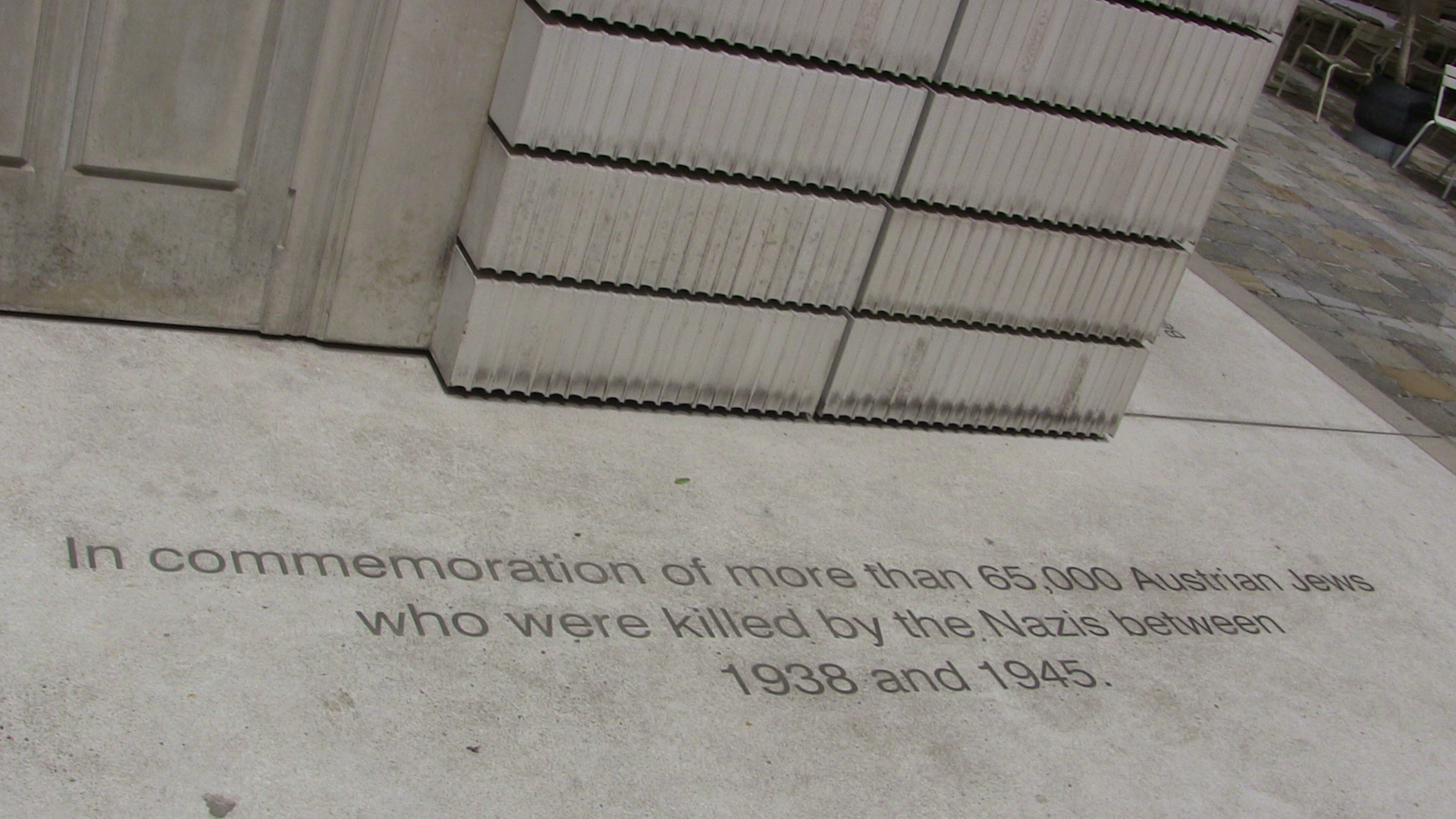
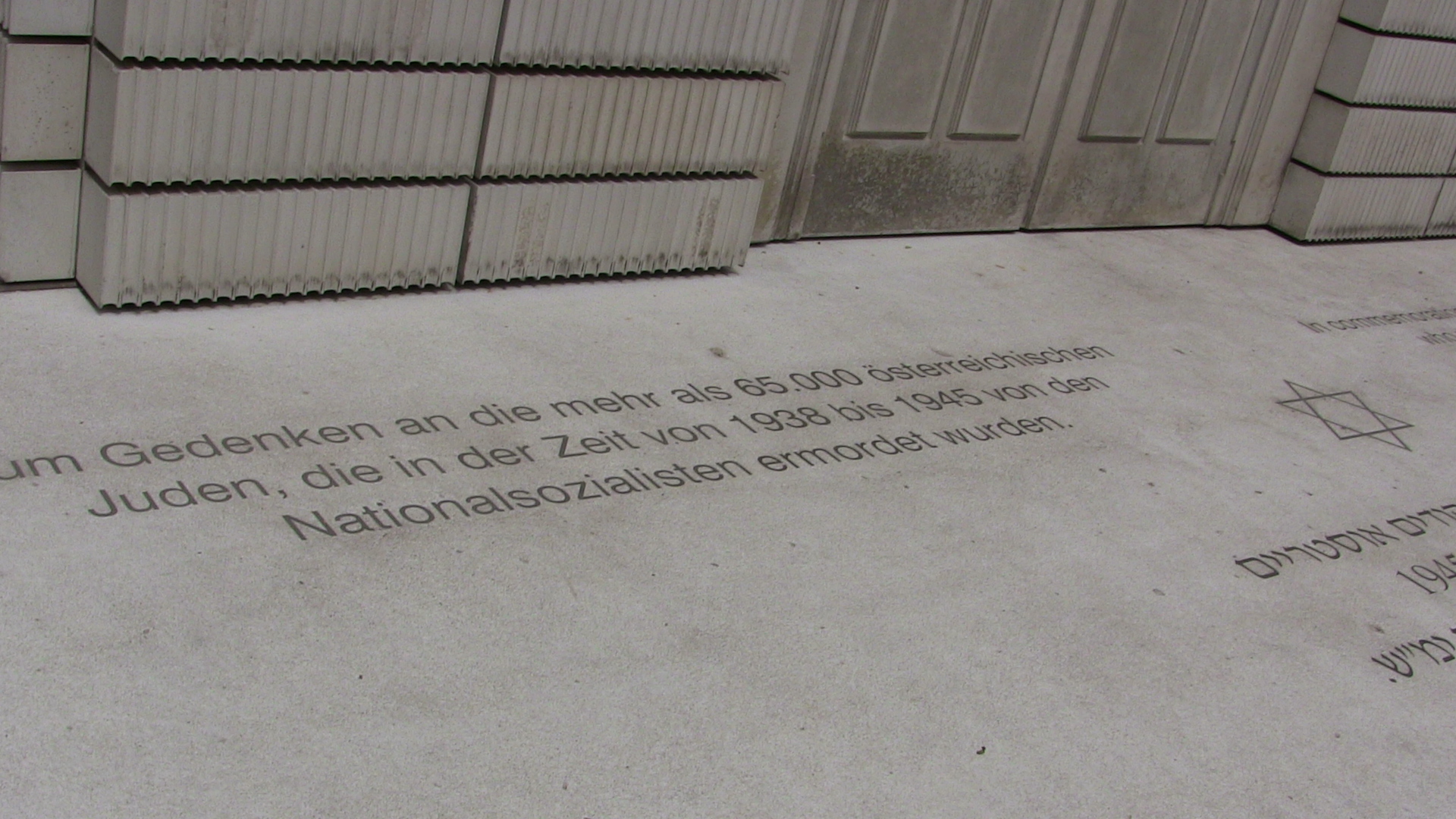
Thus, I strolled into so-called Jewish Plaza in downtown Vienna. The place has a monument that commemorates the memory of 65,000 Austrian Jews murdered by Hitler’s regime during World War II. In fact, I briefly visited this place earlier during one of my previous trips to Vienna. Yet, now looking at three identical inscriptions in three languages at the foundation of the monument I noticed something that earlier had not caught my attention. The inscription on the left is in German, the one on the right is in English, and the one in the middle is in Hebrew. The German one says, “In commemoration of more than 65,000 Austrian Jews who were killed by the National Socialists between 1938 and 1945.” So does the Hebrew one in the middle. Yet, the English version reads: “In commemoration of more than 65,000 Austrian Jews who were killed by the Nazis between 1938 and 1945.”

IMG_0687

IMG_0694

IMG_0698

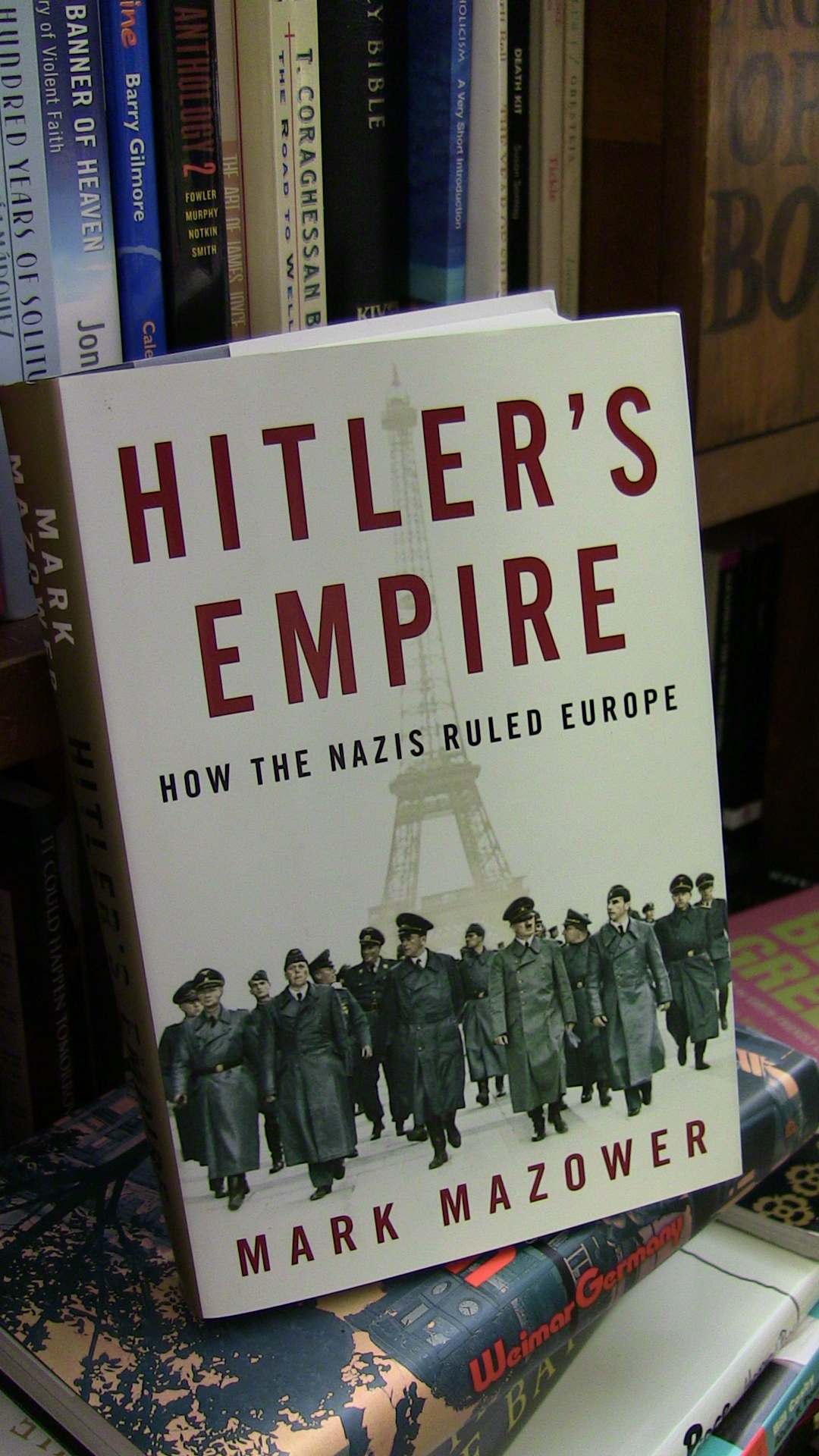
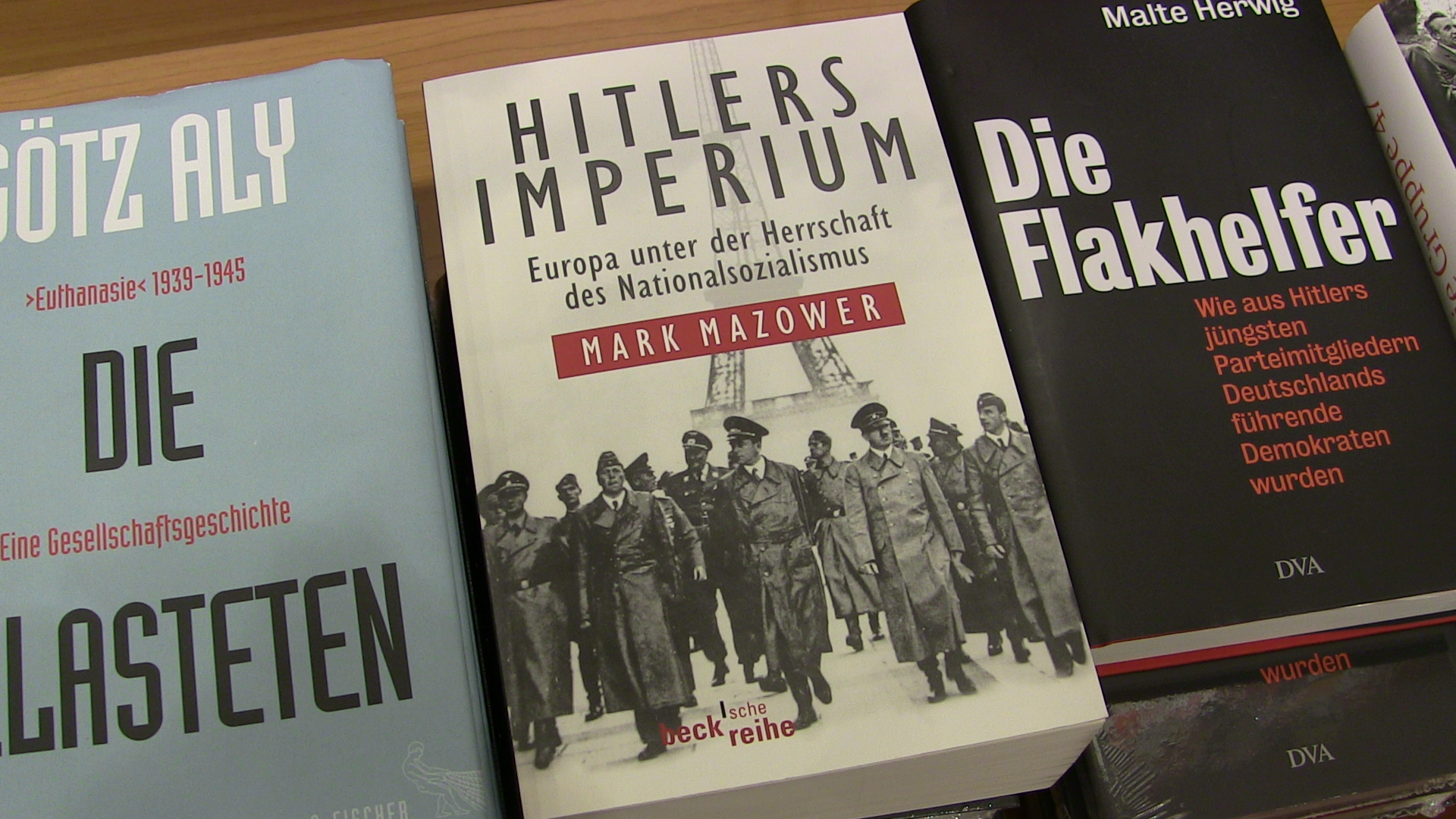
The same day I happened to go to Thalia, the biggest bookstore in Vienna. There, browsing shelves with social science and humanities literature that I stumbled upon a German translation of Hitler’s Empire: How the Nazis Ruled Europe, a 2009 book by the noted American historian Mark Mazower. The German edition of that book, which has the same cover picture, reads Hitlers Imperium: Europa unter der Herrschaft des Nationalsozialismus [Hitler’s Empire: Europe under the National Socialism Rule.]

IMG_0951IMG_0855

So I became curious about this linguistic discrepancy. Eventually, my curiosity took me further and further. The first thing one notices is that when English-speaking people write and talk about the 1930s-1940s’ Germany, more often than not they routinely use the word “Nazi.” Thus, in English we have books and articles about Nazi economy, Nazi labor policy, Nazi geopolitics, Nazi genetics, and so forth. In contrast, when Germans refer to the same turbulent years, they usually say “National Socialism” (Nazionalsozialismus).

So here is the result of my quest – an attempt to answer why in English we use “Nazi” and also who and why introduced this expression in English. The article has not been published yet. At first, I decided to prepare a brief digest of that paper and post it on this forum. Then I changed my mind. To make things more interesting, I decided to prepare a small multimedia audio presentation about why, how, and when the expression “Nazi” emerged in the first place and how it was introduced in English language and post it as a 20-minute video clip on my YouTube channel maguswest. Here it is:

National Socialists into Nazi: Politics and the English Language

A good friend of mine, who is an excellent narrator, assisted me in this. Click this link to see/listen to this talk and, if you wish, give me your critical feedback: Do not skip the ending of the clip, for it features a music tune (so-called Aviation march) that was shared by both Soviet Stalinist and National Socialist marching bands in the 1930s (words are different but music is the same).

Another Liberty Canon: Arendt

Hannah Arendt (1906-1975) was one of the more influential writers on political thought during the twentieth century. Born in Germany, her political views and Jewish origins (she was also Jewish in identity though not in religion) meant not only that she had to leave Germany after the Nazi takeover, but that she had to escape from Gestapo interrogation. A period in Paris was ended by the 1940 German invasion, which led to another escape from detention, and her final destination of the United States. She was able draw on this direct experience of totalitarianism and antisemitism to write The Origins of Totalitarianism, one of the classic works on this topic, which also considers the role of political anti-Semitism, as distinct from older religious prejudice, in the formation of the modern phenomenon of totalitarianism.

Arendt reached beyond an academic and scholarly audience in her most widely ready book, Eichmann in Jerusalem: A Report on the Banality of Evil, based on her journalistic reporting on the trial of one of the major administrators of the Holocaust, Adolf Eichmann. Though the book did much to draw attention to the extreme horror of  Holocaust, and and its history, which strange as it might seem now was not the object of a great deal of public or scholarly discussion in the immediate postwar period, also led Arendt into a morass of angry criticism and even hatred, in part for supposedly trivialising Eichmann’s criminality. However, the point of referring to the ‘banality of evil’ was not to say that the Holocaust was trivial, or to deny Eichmann’s criminality, but to suggest that as a person he was more of a small minded conformist than a grandiose anti-hero of apocalyptic evil.

From the point of view of Arendt’s work in political theory, her writing on the Holocaust and totalitarianism, contributed to her understanding of modern politics in its darkest possibilities, which were distinct from older forms of tyranny. That understanding itself drew on the breadth of her historical approach, including literary and cultural interest, which went back to the Ancient Greek beginnings of western political thought. Her understanding also included the ethical and religious thought of late antiquity, as can be seen in her doctoral dissertation, Love and Saint Augustine. She had a general appreciation of the whole of human life, with regard to consciousness and action, which is behind The Life of the Mind and can be found in some of her political theory, most obviously The Human Condition.

Arendt’s interest and appreciation of ancient politics, particularly the democracy of city state Athens,  sometimes leads to her being labelled a nostalgic and a believer in anti-individiualistic integrated communities. This can only be a parody though, Arendt thought that there might be some things to learn about modern politics through comparison with antiquity, but she did not advocate a return, and her interest in antiquity was in those communities like Athens and the Roman Republic, where we can see individualism growing and a decline in community based on adherence to tradition and to communal assumptions.

Arendt thought that the Athenians had achieved liberty of a significant kind for the aristocracy, and to some degree for the lower classes, on a real but limited basis in which some had the leisure to think and argue about the rules and laws of the city state. That form of library rested on ‘heroic’ and patriarchal values according to which the home and family are the place of economic production and therefore the place of necessity.

Liberty was understood with reference to the tradition of  heroes going to war or to a more recently evolved habit of widespread public free speech about public affairs. Arendt did not argue for this as the all time ideal, but as a moment with some ideal aspects, which was bound to fail. Partly it failed because law was understood as custom and communal obligation, rather than as concerned with contracts between free individuals.  In her historical analysis, the Romans made progress on the legal front, because they saw  that law can and should evolve with regard to the best ways of grounding freely chosen contracts,  while also failing to maintain political liberty as the republic gave way to Imperial autocracy

Arendt emphasised that the Roman model inspired modern movements for liberty, particularly the French and American Revolutions (the comparison is made in On Revolution). Though she wrote about the motives and early actions of French revolutionaries with great sympathy, she pointed out that it had all ended in revolutionary terror and then country-revolutionary autocracy, so that the American Revolution had created a better model, as shown in the long lasting nature of the Constitution. She both respected that achievement and pointed out that it rested on assumptions about the dominance of a land owning class, so that it could not in itself provide all the answers for modern liberty, even it established an enduring framework, which survived major shifts in the location of economic wealth and the sources of political power.

For Arendt, the modern capitalist world undermined the idea of a strict separation between a private realm of economic production, based on family ownership and use of land, as economic activity became what happened in factories and other enterprises, with regard to national and world markets. The social-cultural result was an undermining of the antique assumption that intellectual life is superior to, and dominant over, physical activity and economic life. It also  resulted in states that seemed more remote from traditional forms of allegiance and everyday customs, because the state became increasingly something concerned with legislative and administrative activity that aimed to enable production and trade, so for the first time establishing the state as something that aims to constantly elevate material wealth and ‘national welfare’. Arendt, in this way, argues that commercial society tends to create its own statist reaction.

Arendt equivocated to some degree about whether capitalism was to be preferred to socialism, but in political writing emphasised enhancing individuality and a spirit of competition and that can only be seen as directed against the expanding administrative state, particularly as she argued for more separation between political questions and social welfare questions. She looked for ways in which modern political participation could focus on the best parts of the antique legacy: public speech focused on the conditions of liberty rather than on expanding state activity, contests for esteem in the public sphere rather than levelling down egalitarianism.  Perhaps her equivocation about socialism can be seen as leaving the way open for ‘socialism’ as defined by left libertarians, markets without a state that promotes politically inspired concentrations of wealth and power. She was certainly a prominent critic of Soviet style state socialism.

Arendt had a grasp based in rather classically oriented political theory, of how capitalism tends to produce statist reactions to itself, which parallels the more political economy and economics oriented work of Austrian economics and Virginia Public Choice theory on  the rise of the administrative state and rent seeking.  Together with her interests in how to avoid antique tyranny and modern totalitarianism, this makes her a great twentieth century pro-liberty voice, particularly for those interested in the historical, psychological, moral, and literary aspects of political thinking.

All of Arendt’s major contributions to political thought are mentioned above. A good starting point for those new to Arendt might be the essays collected in Between Past and Future or The Promise of Politics

Entendiendo la inmigración a los Estados Unidos

El día de hoy murieron una o dos personas intentando cruzar la frontera entre México y Estados Unidos. El número de fallecidos es, sin embargo, ignorado pues la mayoría de la información existente sobre la situación migratoria en el sur de Estados Unidos se encuentra oculta por un manto de ignorancia y desinterés político crónico que ha desgastado los incentivos para discutir y explorar el tema migratorio.

Los datos provistos por el gobierno de los Estados Unidos de América son, sin embargo, alarmantes. Desde octubre, 2013 hasta junio de este año más de 52,000 niños sin acompañantes alcanzaron la fronteras superando en un 200% la cantidad reportada por el gobierno el año anterior.  Se espera que en el año 2014 más de 70,000 niños intentaran cruzar la frontera.

Tres niñas en vestido de quinceañeras juegan en Tijuana al lado del muro de la frontera México-USA. Fotografía: Romel Jacinto. Flickr. CC.
Tres niñas en vestido de quinceañeras juegan en Tijuana al lado del muro de la frontera México-USA.
Fotografía: Romel Jacinto. Flickr. CC.

La crisis aumentó cuando las imágenes de niños en campos de deportación empezaron a ser compartidas en las redes noticiosas y redes sociales. El gobierno de Barack Obama (quien ganó el premio Nobel de la Paz en el año 2009) reaccionó solicitando al Congreso de los Estados Unidos la cantidad de US$3,700 millones para empezar a responder a la emergencia humanitaria. El plan, en general, es una campaña cortoplacista que busca apaciguar las aguas en espera de que los medios de comunicación se interesen por otros temas.

En los países centroamericanos (la región de donde provienen la mayoría de estos niños) los gobiernos también reaccionaron rápidamente solicitando recursos económicos para financiar campañas de ‘educación’ y ‘concientización’ sobre las amenazas que representa realizar el viaje de alrededor de 2,000 millas. Estos gobiernos también reaccionan en espera de que la atención de este urgente problema se desvíe hacia los otros problemas cotidianos de seguridad, hambre, corrupción, insalubridad y pobreza que afectan la región.

La única solución para frenar esta crisis humanitaria, sin embargo, está muy lejos o es prácticamente imposible de conseguir si las condiciones globales actuales no cambian. Además, la solución a la situación migratoria requerirá que acciones legales, económicas y sociales sean tomadas en los países de Estados Unidos, México y Centro América para encontrar respuestas a largo plazo en estos países. De no hacerse nada, la actual situación migratoria continuará sin solucionarse de la misma manera en que la Guerra contra las Drogas continúa año con año aumentando.

Actualmente, la reforma migratoria no será discutida en el Congreso de los Estados Unidos de América y las acciones necesarias para atacar el flujo originario de inmigrantes indocumentados en los países de origen implican un reto dantesco. Los migrantes centroamericanos viajan al norte en busca de empleos y escapando de la violencia en la que fue inmersa el Istmo Centroamericano desde finales del siglo XX por el crecimiento del crimen organizado, las mafias del narcotráfico y la incapacidad de los gobiernos por afrontar los cambios globales fomentando un desarrollo económico sostenible para responder a las demandas de la economía mundial.

A pesar de la firma de un tratado de comercio regulado entre Estados Unidos y Centroamérica en el año 2005 conocido como DR-CAFTA, los países centroamericanos han sido incapaces de aprovechar las ventajas competitivas del tratado y los beneficios han sido para tan solo algunos sectores económicos.

Inmigrantes hondureños y salvadoreños que cruzaron la frontera entre Mexico-USA detenidos en Tejas.  Fotografía: Eric Gay/AP
Inmigrantes hondureños y salvadoreños que cruzaron la frontera entre Mexico-USA detenidos en Tejas.
Fotografía: Eric Gay/AP

Pero no crea estimado lector que la batalla está totalmente perdida para las miles de personas que buscan mejorar sus condiciones de vida mediante la migración forzosa de la que son víctimas. A continuación les comparto algunos estudios y ensayos que analizan el tema y profundizan en la compleja situación migratoria que enfrenta el continente americano. Al final del día, es solo educándonos y compartiendo el conocimiento adquirido que podremos contribuir a la búsqueda de soluciones a este tema migratorio que hasta el día de hoy ha sido detenido por una filosofía política inmoral y inhumana.

Ensayos:

Libros:

The European Union Needs More States, Not More Territory

The recent uproar over the upcoming vote on the potential secession of Scotland from Great Britain illustrates well the European Union’s foreign policy weaknesses. The EU’s potential to increase the number of states within its borders without having to expand its geographic space is an overlooked avenue to reaching a bolder, more sophisticated foreign policy.

Regional aspirations for more political autonomy have been voiced since the time of the creation of Germany and Italy in the late 19th century, but wars, nationalism, economic concerns, and fear of wars (along with the presence of the American military, of course) have largely kept these aspirations on the fringe of domestic political debates in Europe.

Steven Erlanger’s 2012 piece in the New York Times explains well why this is changing and what is currently happening in the European Union:

The great paradox of the European Union, which is built on the concept of shared sovereignty, is that it lowers the stakes for regions to push for independence.

Erlanger also goes on to quote a scholar at the European Council on Foreign Relations:

‘The whole development of European integration has lowered the stakes for separation, because the entities that emerge know they don’t have to be fully autonomous and free-standing,’ said Mark Leonard, the director of the European Council on Foreign Relations. ‘They know they’ll have access to a market of 500 million people and some of the protections of the E.U.’

The European Union has essentially taken the place of the nation-state as the chief entity in charge of standardizing trading policies in Europe. This political setup is a great opportunity for regions that have been absorbed into larger nation-states to assert more fiscal and political independence because of these regions’ new interdependence with a larger part of the European economy. The confederation has provided an opportunity for smaller states to emerge while at the same time providing these small state polities with a range of options and allies that are often missing from small states’ repertoires. The best of both worlds has a chance to flower: local governance and total participation in world trade.

This is better understood with a quick historical sketch of 19th and 20th century Europe in mind.

In the last decades of the 19th century the large nation-states of central Europe – Germany and Italy – had just been formed after centuries of being composed of hundreds of small polities. These small polities were parochial, and many of these polities’ elite factions had erected protectionist barriers around their small territories. These newly established nation-states were flanked on their eastern borders by cosmopolitan-but-despotic empires operating from Vienna, Moscow and Istanbul, and to the south were small Muslim polities haphazardly connected to the Ottoman Empire and economically dependent on Mediterranean piracy and Saharan trade routes. To the north and west: oceans and the seafaring, imperial regimes of Great Britain, the Netherlands, and France.

A map of Europe in 1800 AD. Look at how many polities are in what is now Germany and Italy. Thanks goes to euratlas.com

The formation of these larger nation-states were undertaken, generally speaking, in order to unify territories considered to be connected under various broad cultural domains into a cohesive political units and mercantile trading blocs.

After Germany and Italy achieved political unification, programs geared towards creating economic spheres of influence within the territory of the new nation-states began to be implemented. The creation of nation-states in central Europe had the contradictory result of opening up free trade zones within the territories of nation-states while simultaneously erecting new trading barriers that targeted individuals and factions not connected with the new nation-states. Free trade won in the domestic arena of these new states, but it also lost out internationally.

The political unification of these nation-states did not go down well with a myriad of factions. The reasons for resistance were varied, but suffice it to say that there was an intense backlash against the centralization of power and the nationalization of everyday life in the new nation-states of central Europe.

To counter regional resistance, proponents of political centralization argued that political union halted the wars that had wracked Europe for centuries (the economic benefits of freer trade were touted as well, but this argument did not have the same clout as it does today). However, this intellectual argument was framed in nationalistic terms, so when it trickled down into the public sphere of European life what emerged was a solid case against regional fracture that involved one part peace and one part national chauvinism.

The end result of this was the destruction of Europe through two large-scale, horrific wars.

The European Union has succeeded where the nation-states of Germany and Italy failed: by creating a massive free trade zone that eliminates protectionism (as the German and Italian nation-states did), and the necessity of cultural chauvinism (“nationalism”)  to maintain legitimacy (which the German and Italian nation-states could not do), the European Union has provided Europe with an incredible opportunity to build a lasting peace.

Adopting a requirement for member states  to incorporate a constitutional option that allows for referendums on secession would be a bold move that would not only bring a higher level of sophistication to EU foreign policy, but also fluster Moscow without edging closer to its borders (think about the example this would set in Russia’s own self-styled federation).

Around the Web

  1. The first Gulf War in 1991 was the US’s opening Iraqi mistake
  2. The art history of an unknown Korea
  3. Damon Root sums up Obama’s disappointing year with the Supreme Court
  4. Brazil: Cinema’s most radical battleground
  5. How to have law without legislation
  6. If Scotland Goes: First the empire disappeared. Now Britain itself could crumble. Scottish independence would have global implications

Deviant Tendency: An inside look at the politics of Iran

[Editor’s note: the following is a short essay by Payam Ghorbanian. Payam was born in Tehran, Iran. He got his bachelor of science in Engineering from Zanjan University in Zanjan, Iran. He has been participating in liberal political activities and he was involved with some think tanks in Iran. He is doing research in the field of international relations and Iran’s foreign policy as an independent activist. He is now living in San Jose, California.

I am excited to post his thoughts because of their potential as a conduit for intercultural dialogue and exchange. I have left his essay largely intact, but did break up some of his longer paragraphs for clarity’s sake. Thanks to Payam for taking the time to write this, and you can find his other essay at Notes On Liberty here, here, and here]

Last month was kind of exciting for me. Mahmoud Ahmadinejad’s brother said “… my brother has gotten rid of his deviant friends…”. The term “Deviant Tendency” has been using in Iran for calling Mr. Esfandiar Rahim Mashaei and his followers. Mr. Mashaei had been represented by Ahmadinejad for being the next president of Iran but the Guardian Council of the Constitution turned that willing down. Therefore Ahmadinejad left his office while he was so disappointed and at that time he said that the council has just deprived Iran of having a distinguished president. Although with “Approbation Supervision”, which implies the right for acceptance or rejection of elections legality and candidate’s competency, probably just the supreme leader and his followers can be qualified through the barrier of the Guardian Council.

I do not really care about this rumor whether or not Ahmadinejad and Mashaei are separated, the issue would be what Mr Mashaei’s political and social views are and what it is wrong with that. Also why the supreme leader and his followers do not like him? Why they tried to make him isolated even though he has no official title? As you might know during the second term of Ahmadinejad’s presidency, Mashaei was the chief of staff of the president of Iran. But why are they still scared of him? I should mention this that from my point of view, I am 100 percent sure that they (Ahmadinejad and Mashaei) just made this ending relations story up to have this chance for getting qualified for the next presidency election. But why are the supreme leader’s followers so excited of hearing that rumor? Apparently they still like Ahmadinejad but just him and as they said there would not be another chance for the combination of Ahmadinejad plus Mashaei to survive.

Now pay attention to these quotes:

“The area of Islamism has come to end, we had an Islamic revolution in 1979 but the area of Islamism is finished”

or

“Today, Iran is friend with American and Israeli people, No nation in the world is our enemy.”

These sentences and quotes have been told by the nearest person to Mahmoud Ahmadinejad, who is Mr. Rahim Mashaei. Obviously one could talk about these ideas in the free world and no one is going to be prosecuted because of that. However, talking about ending of Islamism inside a revolutionary country like Iran would be insane. I believe these types of moderation comments about Islam and also talking about people of Israel and United States not to be enemy of the Iranian people were all about politics, and Mr. Mashaei did not believe in what he said. But what were his points at that time?

It was the time that Green Movement and protestors confronted against rigged election. I would say Mashaei did all these things to reduce pressures over Ahmadinejad and in order to deceiving and poisoning the people’s mind, those people of the middle class who desperately believe in the new relations between Iran and the free world. Also I believe Mashaei did all these things to be a target instead of AhmadiNejad, which is literally about what old friends do for each other.

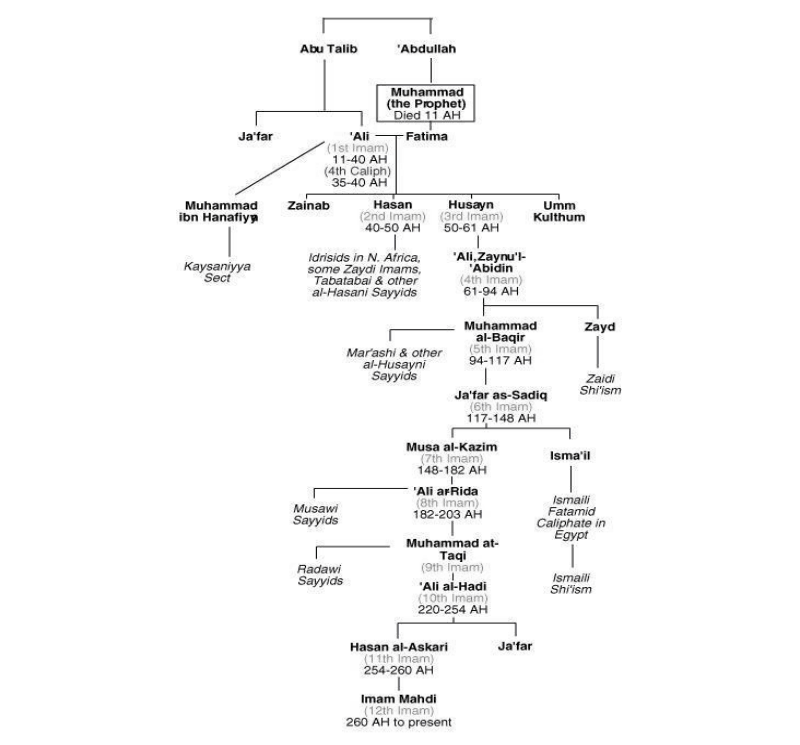
In Iran and especially in Shia beliefs of Islam, an ultimate savior of humankind and the final Imam of the twelve Imams will emerge with Jesus Christ and will set the kingdom of heaven on the earth to bring peace and justice to the world. It is the belief that the twelfth Imam disappeared hundreds of years ago and went into occultation state, but he will definitely re-appear around the end of the world, before the Day of Judgment. Before the Islamic revolution in Iran and probably before uprising of Ayatollah Khomein, there was a common trend that Shia would wait up until its survivor comes back. However, Khomeini argued that government should be run with traditional Islamic rules and for this to happen a leading Islamic jurist must provide “Guardianship” and as he said “Wilayat” over the people. This guardianship would be remained till the Twelfth Imam returns.

At that time this theory was accepted by the revolutionists and as the result of that, the last king of Iran felt down and “Wilayat AL Faqih” (guardianship of the Islamic Jurists) popped up. The terms of your majesty were destroyed and the Imam and the Wilayat was established and then the supreme leader was considered as the twelfth Imam’s deputy, which means that his orders are the lord’s orders and any questions or criticizes would be called as hostility against the twelfth Imam. This chart will help you out to understand more clearly about the hierarchy of Imams in Shia.

When I was living in Iran I always heard some rumors about the distinguished people who they or their followers believe that they are in connection with the twelfth Imam. They claim they can talk to him in person and get orders from him without any problem. Probably in the past they could take advantage of people’s stupidities. However, they had never been accepted by the politicians inside Iran before Ahmadinejad’s presidency started. Now you can tell why they have been called as Deviant Tendency. Mashaei claimed that he could talk to the twelfth Imam in person and he believed that when we can have access to the real source, why we should follow his deputy, who does not have any confirmation from the real lord.

chart of persian imams

Before Mashaei tried to extend his theory, the revolutionary guard crippled all of his ambitions subsequently. His followers were arrested and he was about to get caught too but it seemed that Ahmadinejad was completely in agreement with what he was saying. Ahmadinejad tried to protect Mashaei but as you know he lost the protection of the supreme leader. As a result, his authority dropped considerably. He got teased and he lost his connections and finally he got kicked out of the power circle and all of these were about his friendship with Mashaei, which he truly believed in him.

And now the new game has just started. First it was announced by Ahmadinejad’s brother that there would not be any connection between his brother and the deviant tendency. Then Ahmadinejad had a speech in Mashahd, one of the most religious cities in Iran where the 8th Imam of Shia has been buried, and he said:

“… the only way to overcome the enemies of the nation is standing on the value of our goals in the same way that Khomeini has showed us. I would totally remain on that way to serve the nation and revolution and its values and principles.”

He also tried to imply on revolution principles, the principles that revolutionists believe has been neglected after Rohani became a president.

Another Liberty Canon: Nietzsche

The political interpretation of Friedrich Nietzsche (1844-1900) is a constantly fraught issue. Amongst other things he has been taken as an anti- or non-political thinker and as responsible for the worst aspects of German politics in the twentieth century. However, that latter view is not supported by any Nietzsche scholars.

The reasons for that include his opposition to the anti-Semites of his time (after a youthful leaning in that direction with regard to culture rather than race) and his opposition to the militarist-statist-nationalist aspects of Prussian and German politics in his time, again after early leanings towards culturally oriented nationalism. The tendency to put culture above the state and take it as something of a replacement for politics was constant.

The anti-politics is itself not incompatible with some kinds of libertarian and classical liberal thinking, though in Nietzsche’s case it goes along with a constant inclination to talk about power, the state, and other politically charged issues. He was stateless for most of adult life, as he had to renounce Prussian citizenship to take up a Professorship in Basel, Switzerland in 1869, not long before the King of Prussia became the Emperor of a newly unified Germany, dominated by Prussia. Nietzsche himself was in any case from a part of Saxony, annexed by Prussia early in the nineteenth century.

In any case, Nietzsche did not present himself as a Saxon or a Prussian after leaving Germany and only lived in Germany after 1889, when he was incapacitated by paralysis, now generally believed to the the result of a brain tumour, and was looked after by his mother and sister.  Nietzsche did not have any citizenship after moving to Basel and though it was easier to travel round Europe in those days  without a state issued passport, it is still a remarkable position.

Nietzsche was not completely free of racist assumptions, but hardly to a degree at all unusual for his time, and he did not see race as a suitable basis for analysing the Europe of his time, since he thought races had become completely mingled in antiquity. He was inclined towards various forms of elitism, sometimes in a quite extreme way as when he claimed admiration for the Indian caste system, though in a very brief provocative way.

On the whole his elitism was devoted towards the self-creation of an individuality of great strength, great plural possibilities and the capacity to unify those possibilities in creation and in a creatively lived life. He had anxieties about mass culture and the rise of democracy, but there is not much to separate his substantive concerns from the general concerns of liberals of the nineteenth century, as in Alexis de Tocqueville’s analysis of the ‘tyranny of the majority’ and democratic mediocrity in culture in Democracy in America.

Nietzsche is sometimes referred to as the definitive anti-liberal, but a lot of this rests on associating liberalism with egalitarian (i.e. left, progressivist) liberalism. If we look at the classical liberals from Locke to Mill (who is a bit transitional between the two broad liberal approaches), we of course see that egalitarianism at least with regard to distribution of income and property, is not a central goal. There is growing interest in expanding legal and political equality beyond an aristocratic elite to the population as a whole, and criticism of aristocratic, monarchical, guild, and merchant-financial wealth where linked to political-monopolistic-protectionist privileges.

Nietzsche regards threats to personal, intellectual and cultural excellence as a possible outcome of democracy, but is also critical of the traditional state, referring to it sometimes as monstrous, and allows for the possibility of it becoming much reduced through transferring functions to the private economy. He was concerned that liberalism might betray liberty by building institutions which constrain the original liberal ideas. So he was not a complete critic of liberalism, but rather sets out ideals of self-development and individual flouring which are likely to be constrained by the state.

Though he mentions the possibility of replacing state functions with private economic activity, he was critical of commercial spirit. He feared that commercial orientation tends to reduce individual capacities, because of the ways in which it leads to individuals concerning themselves with the wants of other individuals. For most pro-liberty people, this is Nietzsche accurately identifying something good about capitalism and then rejecting it, which does at least leave Nietzsche as a good analyst.

Beyond this though, Nietzsche who never advocates a socialist economy or a return to pre-capitalist economics, is doing something similar to his criticism of liberal political institutions. He is showing that liberal commercial society both sets up an ideal of strong individuality, which it needs and then undermines it through the constraints of economic life. So the reason for a critical attitude towards capitalism is recognition of the tension between the kind of individuality produced by earlier societies which revolves around struggling with nature for survival and often wars with other states, and the kind of individuality produced by working to provide more than the mere means of survival for others in societies based round rising economic prosperity.

This tension was recognised by classical liberal thinkers like Adam Smith and Wilhelm von Humboldt.  Nietzsche takes further the concern that individualism requires an individual self-directed struggle for increased physical and psychological capacities, and that the culture of commercial society produces an economic elite that seems hardly distinguished from the mass in its personal style and culture, so fails to provide any example of greatness and excellence in these respects.

A classical style liberal of the twentieth century, Joseph Schumpeter (most famous as author of Capitalism, Socialism and Democracy, 1942), argued that individualistic capitalism tends to undermine itself through the creation of corporate bureaucracies, where commercial constraints may become separate from much decision making, and where individual creativity is stifled. Many liberty oriented thinkers have noted the tendency of capitalists to undermine capitalism by seeking a privileged relation with the state, so accepting the mediocrity of state imposed uniformity.

Nietzsche was hyperbolic and expressive and little informed about economics, but the hyperbole has a precise aim in drawing our attention to problems, and Nietzsche’s cultural capacities (including a strong interest in natural sciences) made him sensitive to some features of capitalist and democratic societies, which need to be counteracted if excellence is to flourish.

If one thinks that liberty merely, only, and purely means lack of state constraint, Nietzsche’s thoughts may not seem so meaningful. However, if we see liberty as including not only restraints on state power, but the value of individual pursuit of excellence for its own sake and to produce individuals who are not conformist and state-centered, then Nietzsche must be one of the great thinkers about liberty.

As with Kierkegaard, it is difficult to recommend a single major Nietzsche text on political thought. On the Genealogy of Morality tends to be the starting point for discussion of his political ideas, but covers many other topics, and Human, All Too Human contains his thoughts on the possibility of a reduced state in a commercial society. Untimely MeditationsDawnThus Spoke Zarathustra, Beyond Good and Evil, Twilight of the IdolsThe Anti-Christ, Birth of Tragedy, Ecce Homo, and The Gay Science are the other books of Nietzsche, and all contain passages discussed by commentators on Nietzsche and politics.