A libertarian case for Hillary Clinton

I have abstained from commenting on the American presidential race between Donald Trump and Hillary Clinton (sorry Rick) for so long because I just wasn’t very interested in it. I’m still not that interested in it, but the topic has come up quite a bit lately here at NOL so I thought I’d throw in my two cents.

First, though, I thought I’d use up a couple of paragraphs to explain why I don’t really follow American presidential elections, even though most intelligent people, in most parts of the world, do. American presidents simply don’t have a lot of power in domestic American politics. Congress controls the purse strings, makes the laws, and, in the case of the House of Representatives at least, is closer to the People than is the President. The Supreme Court is in charge of deciding which laws are good and which are not, and in some cases even has the power to create laws where Congress or the People simply aren’t getting the job done (Proposition 8 in California comes to mind). To me, that makes the executive branch the most boring branch of government.

The one area in American politics where the head of the executive branch does have a lot of leeway, foreign policy, is one area where I’m not particularly worried about either candidate. I’m not worried because both, despite holding views of the world I strongly disagree with, are not advocating anything radical or unpredictable. I’d rather have a presidential candidate advocate the same old garbage of getting in Russia’s face and keeping troops in South Korea because that way I know they’re ignorant and, more importantly, I know they know they’re ignorant on such matters because they defer to the Washington Consensus.

Libertarians don’t like statists and we don’t like statist policies. Some of us don’t even think voting is worth the effort (or even a good idea). I think there is a case to be made, though, for Libertarians and libertarians to get out and vote this fall for Hillary Clinton over Donald Trump. My case rests on 3 hugely important facts (at least to libertarians and Libertarians).

Fact #1: Thanks to the recent wikileaks revelations, we know for sure that Hillary Clinton is in favor of free trade. This is THE most important reason to vote for Hillary Clinton in the fall. Imagine if the United States, led by Trump’s isolationism, were to begin breaking its trade agreements with the rest of the world. Yikes. Free trade has lifted hundreds of millions of people out of poverty over the last 30 years, but because the majority of beneficiaries to trade liberalization have happened to not be American citizens, demagoguery ensues. I understand that Clinton has expressed skepticism in US free trade agreements on the campaign trail, but when you’re in a party that is vying for potential voters who feel they have been hurt by free trade, you’ve gotta do what you’ve gotta do.

Regardless of what Clinton says to the masses, her record on free trade while holding political offices is impressive (a ‘No’ vote on CAFTA notwithstanding). Free trade, or trade liberalization, is one of the fundamental tenets of libertarianism. Individual liberty cannot be realized or even partly realized without markets that are free from the constraints of governments and the factions that manipulate them. Donald Trump, like Bernie Sanders, wants to reverse decades of trade liberalization and the benefits that such a policy has bestowed upon humanity.

(Digression: Libertarians and libertarians are so adamant about free trade not only because it loosens the grip of the state over peoples’ lives, but also because it makes everybody – not just fellow countrymen – better off. When libertarians and Libertarians hear protectionist sentiments from the political class, you will often see or hear us point out that the Great Depression of the 1930s was hastened not only because of central banking policies but also because of the isolationist tariffs that Congress threw up as a response to the economic downturn caused by the new central bank’s policies. Free trade is a BFD.)

Fact #2: Hillary Clinton is much more individualist than Donald Trump. Women’s rights is an individualist issue, and always has been, even though Clinton has made a mockery of the historical movement by playing the “gender card” and defending (and pledging to expand) subsidies in the name of women’s rights. Trump wants to “make America great again,” but Hillary just wants your vote, any way she can get it. If that ain’t individualist, I don’t know what is.

Hillary Clinton is not a racist, either. She marched against The State’s oppression of black Americans in the South and against The State’s discrimination against black Americans in the rest of the country throughout the 1960s. (For what it’s worth, I don’t think The Donald is a racist. Businessmen rarely are, for reasons that should be obvious to any fair-minded person, but his rhetoric on race is absolutely toxic, and he knows it. His deplorable actions bring to mind a certain F-word I won’t mention here.)

Trump may or not be a racist – I’ll give him the benefit of the doubt – but I don’t know for sure. Clinton is definitely not a racist.

Fact #3: Hillary Clinton is a lawyer and she knows how our government is supposed to work (even if she doesn’t like it). One could make the case that Trump knows how our federal system of government works, too, given his braggadocio about buying off politicians, but his is a vulgar understanding of what is, after all, a magnificent example of compromise and diplomacy over our more primal urges. Lawyers make better politicians than businessmen. As Alexis de Tocqueville remarked way back in his 1831 ethnography of the United States:

“the authority [Americans] have entrusted to members of the legal profession, and the influence which these individuals exercise in the Government, is the most powerful existing security against the excesses of democracy […] When the American people is intoxicated by passion, or carried away by the impetuosity of its ideas, it is checked and stopped by the almost invisible influence of its legal counsellors, who secretly oppose their aristocratic propensities to its democratic instincts, their superstitious attachment to what is antique to its love of novelty, their narrow views to its immense designs, and their habitual procrastination to its ardent impatience.”

Lawyers, Tocqueville observed, make up a sort of informal aristocracy in America because their training in the field of law requires them to have a deep respect for precedent and “a taste and a reverence for what is old.” Businessmen are not used to the clumsy, inefficient coalition-building necessary for good governance. That’s why businessman George W Bush was such a failure and attorney Bill Clinton was such a success. Any good libertarian needs to acknowledge the benefits that come from specialization and the division of labor. Any really good libertarian, the kind that has actually read a little bit of FA Hayek’s work, knows that change in the political and institutional arena needs to be done slowly, and preferably through the legal system (no matter how imperfect it may be).

I know all about the bad stuff that Hillary has supported and voted for in the past (especially on foreign policy, and even more especially on foreign policy in Africa). I get it. I really do. But Donald Trump represents a very nasty strain of thought that has swept into power of the country’s Right-leaning political party. His nationalism is antithetical to libertarianism in a way that Clinton’s typical corruption and condescension is not: libertarianism has a long history in this country of dealing with Clinton-esque figures. The American polity was forged by consensus and thus has recourse, perhaps more so than any other presidential system, to constrain exactly this type of persona. This persona is egotistical and out for personal glory and prestige, but libertarians, progressives, conservatives, and others here in the United States have institutions and networks that were created specifically for presidencies run by people like Clinton.

We’re small in number, too small to have a significant impact if we all voted for Clinton, but we have an outsized impact in the realm of ideas and policy. Get behind Clinton in any way that you can, because more of the same ain’t all that bad.


Words and Actions of Trump the Horrible

I spent yesterday listening in horrified fascination to the mass media creating a crude amalgam of Trump’s sins in the so-called video, yes, that old video.

Nearly all the media, including, I am afraid, the Wall Street Journal, put together or often mix in the same sentence two elements of Trump’s objectionable aspects: words and possible actions. The two deserve completely different treatments. There is no excuse for confusing them except a desire to win at all costs.

Words first: Trump referred to women in obscene terms. This is not in dispute. Calling women “pussies” may tell you something about his present character. (Although that happened fifteen years ago, when he was a registered Democrat.) I don’t see what it tells you that’s new. The man is crude. He is crude in precisely the same way that millions of American men are. I am completely innocent of that particular sin myself (because I was raised overseas) but I have several friends who qualify. It’s interesting that they are, by and large, the same male friends I would describe as “pussy-whipped.” (This is another topic, an interesting one I can’t deal with here: Married American men are exceptionally submissive.) I think the brouhaha about Trump’s obscene words is completely hypocritical and massively promoted by media that lost their intellectual self-respect some time ago. Public discourse also stopped being sensitive a long time ago irrespective of what the current neo-Victorians would have you believe: A young woman I have never met except on-line a couple of days ago, a Clinton supporter, recently invited me on Facebook to “suck my dick!” (She meant her own non-existent appendage.)

Then, there are Trump actions as revealed on the video. Fact is, the video reveals no, zero, objectionable acts. Instead, it reveals Mr Trump bragging about engaging in sexually assaultive behavior. The report is not a fact. Fake confessions are legion, especially within a bragging context. Donald Trump may have never, not once, done the things he says in the video he does, not even the slightest crotch grab. Now, if he is guilty of this kind of boasting, characteristic of teenage boys everywhere, you may decide he is too immature for the job but he is not (NOT) an unpunished criminal.

A stupid braggart and a rapist are different creatures. If you think they are more or less the same, you are full of shit and we need someone like Trump to clean house, because of you, precisely. You are poison while he, Trump, is only moronic.

Let’s focus on various forms of sexual assault. Trump committed some, at least one, or (OR) he did not. There is nothing in between. The function of the amalgam I heard all day yesterday is to spread the credibility of the reports of obscene talk onto the supposition of sexual assault: It’s true that he referred to women in a sexually crude manner, therefore, (THEREFORE), he must have assaulted women sexually. This kind of verbal ploy sometimes actually works. It works with fools and with fanatics.

Now I imagine I might be on a jury regarding Mr Trump’s sexual assault(s) (one or several). I would not have the option to find him a “little bit guilty,” or “sort of guilty,” or “mostly guilty,” or “not actually guilty but he might have done it; look how he refers to women.” The only options available are guilty/not guilty. That’s it. For once, judicial conventions correspond well with logic: He did it (any “it”), or (OR) he did not. There are almost an infinity of offenses a person can be charged with so, there is no reason to come up with unclear verdicts. The prosecutor can charge with attempted sexual battery, sexual battery, aggravated sexual battery, different kinds of rape, etc., exactly so a clean verdict is possible without violating factual evidence. Those who do not know this to be true don’t understand either the US Constitution nor basic fairness. They are temperamentally fascists. (There are other forms of fascism on the Clinton side, following Mr Obama.)

What we see right now is a massive and concerted display of hypocrisy on the part of the bulk of the kind-of-educated class, beginning with the media. It’s so obvious that I think that if Jesus were around today, He would be for Trump. Fact is, there is no record of his speaking up against obscenity while he repeatedly and vehemently attacked hypocrisy.

PS I am wavering in my support of Trump. It’s not because Clinton has become less than a total horror but because he falls too easily into her traps. It bothers me.

Intervention for your own good

Insider trading feels unfair, but increases the efficiency of financial markets. A price should reflect an estimate of the future profitability of the underlying asset, and insider trading allows those with the most information to have more of an impact on that price.

The Supreme Court is currently considering a case that will determine how broadly to define insider trading. If the defendant loses, then cases where a family member of an insider benefits from a stock tip could be considered insider trading. If he wins, it will probably be much more difficult to prevent insider trading. But why should we?

Some argue that the possibility of insider trading creates a problem of asymmetric practicable information–insiders always know more, but if they’re allowed to act on that information, outside investors lose incentive to invest in potentially valuable projects. That may be, but does it justify prohibiting insider trading? No.

The problem of asymmetric information requires a commitment device, but that device doesn’t have to be one-size fits all. Let businesses and investors solve this problem themselves with contracts.

O que é socialismo?

Alguns posts atrás fiz uma exposição sobre o que é capitalismo, e também procurei expor e desmistificar alguns equívocos a respeito dele. Nos próximos posts pretendo fazer algo semelhante com o socialismo: explicar o que é e desfazer alguns mitos e equívocos. Falando a respeito de capitalismo, expliquei que esta palavra é utilizada de forma bastante livre, e assim há muitas variedades de capitalismo. Optei por expor um tipo de capitalismo associado ao pensamento de Adam Smith e à tradição liberal, algo que pode ser chamado de liberdade econômica, liberdade de mercado ou liberdade de escolha. O socialismo também aparece em variadas formas. O que exponho aqui é a variedade associada a Karl Marx. Marx foi um historiador, filósofo e sociólogo, mas o que me interessa aqui é principalmente sua teoria econômica.

A teoria econômica de Marx começa com a teoria do valor trabalho. De acordo com esta pressuposição, o que dá valor a um produto é a quantidade de trabalho envolvida na produção. Em outras palavras, o trabalho (trabalho braçal, entenda-se) é a fonte de todo valor. Esta percepção de valor trabalho pressupõe uma ligação entre mais valia e acumulação de capital. Marx argumentou que toda a riqueza é fruto do esforço dos trabalhadores. No entanto, os trabalhadores não recebem um salário correspondente ao valor pelo qual sua produção é vendida. Na percepção liberal, a diferença entre custo de produção e valor de venda é chamada de lucro. Na percepção de Marx, isto é mais valia: os donos das fábricas (ou donos dos meios de produção) enriquecem a custa do esforço dos trabalhadores. Mas esta é uma relação insustentável: para lucrar os empresários precisam pagar aos trabalhadores o mínimo possível, somente o suficiente para garantir a sobrevivência e reprodução dos trabalhadores. Com o tempo, os lucros iriam cair, o capital (ou os recursos de produção) iriam se concentrar em poucas e imensas fábricas (fabricas menores seriam levadas à falência pela competição), haveria dificuldade de transferência de capital (os investimentos seriam cada vez menos rentáveis), o número de desempregados se elevaria, a capacidade de venda cairia, crises cada vez mais profundas e frequentas ocorreriam, todo o sistema iria inevitavelmente chegar ao fim. Uma sociedade socialista, onde os trabalhadores seriam donos dos meios de produção, surgiria.

No coração da teoria econômica de Marx está o conceito de mais valia: os trabalhadores não recebem o que merecem pelo seu trabalho. Ao invés disso, eles são explorados pelos patrões. Acredito que esta noção de exploração comove muitas pessoas, mas ela não faz o menor sentido. Marx não está dizendo que alguns patrões exploram os trabalhadores. Ele está dizendo que, por definição, todos os patrões exploram os trabalhadores, pois retém na mais valia uma riqueza que não lhes pertence.

A pedra fundamental da teoria econômica de Marx é a teoria do valor trabalho: o que confere valor a um produto é o trabalho que se tem para produzi-lo. Daí que necessariamente haja exploração. Mas a teoria do valor trabalho está certa? Ela corresponde à realidade? Acredito que está bem claro que não: posso ter muito trabalho para produzir uma escultura de palitos de fósforo no meu quintal, e nunca conseguir vende-la, pois ela não tem valor para mais ninguém. Todo o meu trabalho, todo o meu esforço, é inútil e sem valor se eu não estiver produzindo algo que seja do interesse de outra pessoa. Além disso, a revolução marginalista do final do século 19, e particularmente a Escola Austríaca, veio demonstrar que valor é algo subjetivo e sujeito a condições de tempo e espaço.

A questão clássica a respeito de valor é: “porque diamantes, que não alimentam, são tão caros, enquanto que água, que é essencial à vida é tão barata?”. A resposta do valor trabalho é que dá muito trabalho conseguir diamantes, enquanto que água literalmente cai do céu. Mas esta resposta é incompleta: em alguns lugares água não cai do céu. No deserto do Saara, morrendo de sede, uma pessoa pode trocar muitos diamantes por copo de água. Em outras palavras, se a teoria do valor trabalho está correta, então há um valor objetivo: é possível calcular com precisão o valor de alguma coisa considerando o trabalho empregado em sua produção. Mas é manifesto que isto não é verdade: produtos tem seu valor afetado por muitas circunstâncias, e o esforço empregado na produção pode não ter qualquer relevância no valor final.

A conclusão é simples: se a teoria do valor trabalho está errada, toda a teoria econômica de Marx está errada. Isto quer dizer que patrões nunca exploram seus empregados? Claro que não! Isto quer dizer apenas que esta exploração não ocorre segundo a explicação de Marx.

As previsões de Marx (salários menores, maior desemprego, crises econômicas recorrentes e profundas) foram desmentidas uma a uma: a Europa do final do século 19, progressivamente marcada pelo liberalismo econômico, experimentou uma prosperidade impar em sua história. Num quadro mais amplo, nações que optam pelo liberalismo econômico prosperam, e principalmente prosperam os trabalhadores. Basta comparar Coreia do Norte e Coreia do Sul, China e Hong Kong, Alemanha Ocidental e Alemanha Oriental, EUA e URSS e assim por diante. Entendo que muitas pessoas se encantam com o marxismo (e como o socialismo) por se apiedarem das condições muitas vezes precárias dos trabalhadores. Porém, não basta ter o coração no lugar certo. É fundamental ter uma compreensão correta da realidade. Caso a exploração dos trabalhadores seja uma preocupação para você, sugiro considerar o capitalismo e esquecer qualquer forma de socialismo.

The trade offs of Hillary vs Donald

An interesting thing to talk about is whether one ought to support the Donald or the Hillary. And it’s my impression that those who are marginally in favor of Donald and vice versa do that with a completely different view on the risks associated with either of them.

People who favor Hillary have something like this in mind:

Hillary will continue with the status quo that started with George W. Bush (especially foreign policy) and continued under Obama (who added domestic trends such as Obamacare). Trump, on the other hand, is a complete wild card who will transform the (fragile) political institutions we have into something of an even more authoritarian system. And having an authoritarian figure with his fingers on the red button just seems like a very bad idea.

People who favor the Donald are seemingly thinking something like this:

Hillary will continue with the status quo that started with George W. Bush (especially foreign policy) and continued under Obama (who added domestic trends such as Obamacare). Trump, on the other hand, will be such a weak politician that he will get almost nothing done. Even in his own party, he is so unpopular that he won’t get executive discretion even if he asked for it. He won’t be able to achieve anything and he might even get impeached. But regardless, he will be an overall failure of a politician, and that’s a good thing relative to the trend that Hillary started.

I could be wrong, of course, but this seems like the trade off that people are making. We know, with a reasonably high certainty margin, what kind of policies Hillary will favor. Trump, however, is a complete wild card. Some people think the wild card will accomplish very little (and thereby show a high confidence in the current workings of the American governmental system), so therefore he is preferable to Hillary. Other people think he will accomplish a lot (and thereby showing very little confidence in the current workings of the American governmental system.)

I think this trade off is basically right: where you stand on Hillary versus Trump depends on your view in the likelihood they’ll achieve what you think their plans are. Which of these have the correct view, I do not know. But it’s an interesting question nonetheless.

Peter Singer vs The Poor

I am new at Notes On Liberty, graciously invited by Brandon Christensen. I’ll be blogging about a range of things, some of which will include political philosophy.

I am currently working on a paper on Peter Singer’s famous “Famine, Affluence and Poverty” paper that argues that we have a moral obligation to donate a lot of our current holdings to poor people. His argument is pretty straightforward.

Premise 1: I begin with the assumption that suffering and death from lack of food, shelter, and medical care are bad.

Premise 2: if it is in our power to prevent something bad from happening, without thereby sacrificing anything of comparable moral importance, we ought, morally, to do it. By “without sacrificing anything of comparable moral importance” I mean without causing anything else comparably bad to happen, or doing something that is wrong in itself, or failing to promote some moral good, comparable in significance to the bad thing that we can prevent. This principle seems almost as uncontroversial as the last one. It requires us only to prevent what is bad, and to promote what is good, and it requires this of us only when we can do it without sacrificing anything that is, from the moral point of view, comparably important. I could even, as far as the application of my argument to the Bengal emergency is concerned, qualify the point so as to make it: if it is in our power to prevent something very bad from happening, without thereby sacrificing anything morally significant, we ought, morally, to do it.

Example: An application of this principle would be as follows: if I am walking past a shallow pond and see a child drowning in it, I ought to wade in and pull the child out. This will mean getting my clothes muddy, but this is insignificant, while the death of the child would presumably be a very bad thing.

And therefore, he concludes, there is a strong moral imperative to donate a lot of money to poorer people who are in dire need of assistance.

However, there seems to be something obvious that is overlooked, something that I haven’t encountered in the literature on the topic. Namely, Singer discusses the implications this principle has for rich people, they have to donate a lot of money, because being poor and suffering because of lack of food is bad. However, this principle doesn’t limit itself to creating obligations for those in affluence. It should, ipso facto, also create implications for those in poverty.

Premise 1: Poverty and the suffering it causes is bad. (It seems hard for Singer to disagree with this.)

Premise 2: If it is in our power to prevent something bad from happening, without sacrificing something of comparable moral worth, we ought, morally, to do it.

Ok, fair enough. But if poverty is bad: why doesn’t this principle create a very strong moral obligation for people in poverty to not get children (and thus putting more people in this situation?) Maybe one could argue that getting children is a great moral good (or that not getting children is a great moral evil), but it seems weird to say that putting people into something that (by implication of Singer’s views) is considered a great moral evil is somehow a good thing.

So if I am right, Singer needs to accept that his views create a strong moral obligation towards poor people not to get children.

Even more so. If this is the case, it follows that everyone every has a strong moral implication not to get children, because we will always be poorer than we’ll collectively be 100 years in the future. (Were the original cave dwellers immoral people for getting children then?)

Maybe one can argue that even though suffering is bad, but on net, a human life is still a good thing. The marginal choice leads us to say ‘we need another life’ (that’s on net good) but when a specific human life is in need, we need to help that life, on that margin, because on that margin, we can still alleviate suffering (which is generating ‘less bad and more good’). The issue with this line of argument seems that it has a very strong assumption that a life is, on net, a good thing. But even ignoring that, it does open the gate towards a comment from the ‘rich people’ to say: ‘well, if those parents don’t have a moral obligation to not get children because on net a human life is still worth living, even if there is some suffering, why do we have an obligation then to help at the point of suffering? The life, on net, was still a good life.’ (This point follows from the assumption that it isn’t unethical for those parents to get children, despite their poverty and the suffering that results from it.)

I invite any and all comments on this issue.

What is the state of experimental social science?

This is a genuine question: What is the state of experimental social science?

What I know of experimental social science comes largely from Vernon Smith and his colleagues from George Mason and Chapman Universities. From the way the topic was discussed I assumed the field was in its infancy and limited to a few economic departments. During my undergrad I recall my professors discussing a job candidate that specialized in experimental methods, but from their tone it was clear they were skeptical of what could be learned from it. Back then I could hardly believe that experimental methods were being toyed with in the other social sciences.

It was only about a year ago that I learned from a friend that psychology had its own experimental methods movement. From what I could make out experimental psychology was being developed independent of experimental economics. Even then I assumed that experimental methods were on the fringe.

I am genuinely surprised then to find that experimental methods exist in political science and, from what I can make up, part of the mainstream research. As NoL readers may know I recently started my PhD in Political Science at UC Riverside. My training up till now has been in Economics. What I find interesting about the political science literature is that it seems heavily influenced by the experimental psychology field, but not experimental economics.

Here is one of the better examples of experimental political science I’ve come across. In this paper participants role play as bureaucrats who have to distribute $1,500 in funds between two applicants of various race and work ethic, in addition to having the choice of reducing the government deficit. Note the citations include several psychology journals, but no mention of the economics literature.

Also note that, unlike experimental economics, there is no pay off for acting in a given way. This I think is a major error since the researchers are trying to measure degree of racism, but in this experiment there is no ‘cost’ to being racist. In real life though racism comes at a cost. If you’re racist you lose out not on potential trade partners, but potential friends and even lovers. Anyway;

So I ask, especially to those of you with backgrounds outside economics, what is the state of experimental methods in your field? Is it considered mainstream or is it a novel technique? Has it been influenced by experimental methods in another social science? And if so, which one?

BC’s weekend reads

  1. Smuggling Nikita Khrushchev’s memoirs out of the USSR
  2. Are memes disrupting American politics? So asks a Leftist
  3. The 4th Amendment, policing, and pedagogy
  4. At least the end of the War on Drugs is nigh
  5. A new (old) strategy for a polycentric world (but why not federation?)
  6. A simple map of Brazil and its states

Sexism, Trump, and American Media

Almost everything has been said about that rather boring first presidential debate on Monday. One observation missing: It’s amazing how the progressive-liberal narrative categories have invaded even Republican understanding and vocabulary. Two examples.

During the first presidential debate, the moderator unambiguously presented as racist the “birther” preoccupation, the belief that Mr Barack Hussein Obama was not born in the US. It makes absolutely no sense why this should be considered racist. If a presidential candidate of Polish ancestry with blue eyes etc… had presented himself for years through his literary agent as born in Cracow, there would be those who would doubt aloud his constitutional qualification to be president. Those so inclined would be considered racist? If the answer is “no,” are we facing a situation where any negativity toward a black person is by definition racist? If a black-looking person steals a parking spot from me and I call him an “asshole” that makes me a racist although that’s exactly what I have called several white persons who have done the same to me in the past? Are we drowning in absurdity? Have we collectively lost the ability to recognize simple sense? In the parking case example above, a better case could be made, given my intemperate verbal habits, that not calling the black driver an asshole would be racist.

Second example. At the very end of the debate, when he placed the accent on the fact that Mrs Bill Clinton is the first female candidate nominated by a major party, the moderator qualified as sexist the Trump statement that Mrs Clinton does not have the stamina to be president. Same problem of logic. If Mr Trump had said this of any male opponent it would have been considered legitimate. Making the statement about a female candidate makes the statement automatically sexist. But the statement is sexist only because it concerns a female. It posed the question of whether there exists any negative statement about a female politician that is not sexist? I think the answer is quickly becoming “No!”

The wing of the Democratic Party now on the ascendant is deeply totalitarian. It shows in the small things, as in the two examples above. It knows no dissent that is legitimate when it comes down to it. It’s important to stop them even if we have to take the considerable risks inherent in the Trump candidacy. One sure thing about Donald Trump: He is not coherent enough to become a Mussolini.

Some thoughts on Rio de Janeiro elections

I’m a great fan of the Lord of the Rings, both the books and the Peter Jackson movies. Overall I believe the movies are pretty faithful to the books. There are, of course, some differences, but I generally accept the explanation that adapting a book to a movie is hard and some changes have to be made. There is, however, a whole chapter from the books absent from the movies that I believe shouldn’t be. If you haven’t seen the movies or read the books, be warned, spoiler alert. The said chapter is called “The Scouring of the Shire.” In the movies, when the hobbits return home from the War of the Ring, hardly anything has changed. It seems like the Shire has not been affected by the events in the world around it at all. In the books, however, Saruman the White, the evil wizard, escapes to the Shire after been defeated in the battle of Isengard. He ends up governing the Shire in secret under the name of Sharkey until the events of “The Scouring of the Shire,” when the hobbits return and lead a rebellion, defeating the intruders and exposing Saruman’s role. I believe this chapter is important because it shows that evil is not somewhere far from home. We may fight a war overseas, but evil may end up lurking really close to us.

This last Sunday Brazil had municipal elections. The Workers Party (PT), the political party of impeached president Dilma Rousseff and the almost convict ex-president Luis Inácio Lula da Silva, was the great loser. Some cities will still have a second round of votes, but it is clear that in the process PT will lose a great number of prefectures, city halls, and with it many commissioned positions as well. In sum, the process of rejection that started with the impeachment goes on and well. Or almost. In Rio de Janeiro the elections will be decided in second round between Marcelo Crivella and Marcelo Freixo. Crivella is a licensed bishop of the controversial Universal Church of the Kingdom of God, and Freixo is a member of the Socialism and Freedom Party (PSOL). Crivella was Rousseff’s ally almost until the very end, when his party decided to vote for the impeachment. PSOL is a dissent from PT that left the former party in 2004, believing that Lula was too pro-market in his policies.

Saruman took refuge in the Shire and changed his name to Sharkey. The inhabitants of the Shire were too unaware of the events of the War of the Ring to understand what was going on. Saruman was the White Wizard. He was supposed to be good, but ended up being one of Sauron’s greatest allies. Freixo is Saruman: he may try to hide as much as he wants to, and even change his name, but he is an ally to the worst things in Brazilian politics. He poses as someone pure (or White), but just like Saruman he actually has a robe of many colors, depending on who he wants to impress. PT changed its name to PSOL and is now trying to hide in my Shire. I hope the cariocas will not let it happen.

PSOL is popular mostly among the young, artists, and rich people from rich neighborhoods, so I don’t actually believe Freixo will become mayor. But their plan is, following Antonio Gramsci, to create a cultural hegemony and thus to win elections on the long run. PT did exactly this, but it seems like Brazilians are beginning to understand that socialists care only for other people’s money and little else. PSOL even has liberty in its name, but of course they aren’t going to offer any liberty to the people. Slavery can be defined as forced labor to someone else’s benefit. And that is also the exact definition of socialism: you work, they take your money and they give it to someone else. As Alexis de Tocqueville said it, “socialism is a new form of slavery.” I hope people in Brazil, and especially in Rio, will realize it.

Taxes, Free-riding, and Federation

Check out Adam Smith complaining about the rent-seeking that the UK’s North American colonies were practicing back in 1776:

The expence of the ordinary peace establishment of the colonies amounted, before the commencement of the present disturbances, to the pay of twenty regiments of foot; to the expence of the artillery, stores, and extraordinary provisions with which it was necessary to supply them; and to the expence of a very considerable naval force which was constantly kept up, in order to guard, from the smuggling vessels of other nations, the immense coast of North America, and that of our West Indian islands. The whole expence of this peace establishment was a charge upon the revenue of Great Britain, and was, at the same time, the smallest part of what the dominion of the colonies has cost the mother country. If we would know the amount of the whole, we must add to the annual expence of this peace establishment the interest of the sums which, in consequence of her considering her colonies as provinces subject to her dominion, Great Britain has upon different occasions laid out upon their defence. We must add to it, in particular, the whole expence of the late war, and a great part of that of the war which preceded it. The late war was altogether a colony quarrel, and the whole expence of it, in whatever part of the world it may have been laid out, whether in Germany or the East Indies, ought justly to be stated to the account of the colonies. It amounted to more than ninety millions sterling, including not only the new debt which was contracted, but the two shillings in the pound additional land tax, and the sums which were every year borrowed from the sinking fund.

This comes from Book 4, the third (and last) part (“Part Third”) of Chapter 7 in Smith’s famous book The Wealth of Nations (TWON). (Here is a great link to the whole chapter, courtesy of the Library of Economics and Liberty. I read the Bantam Classics version for my Honors seminar on Liberty in Western Political Thought, led by Andrew Sabl, who is currently a Visiting Professor at Yale, though I don’t have it with me so I can’t cite, let alone remember, the page numbers.)

Let me throw a little bit of historical context for this excerpt at you. Smith wrote TWON before the onset of the first Anglo-American war (TWON was published in 1776, which means it did not influence the American colonists in any way, shape, or form; think about the way information spread back in those days), and the war was largely the result of a quarrel between the UK and its North American colonies over taxation. The taxation, though, was needed in order to pay for a war (the Seven Years’ War) that the colonies had initially lobbied the British government to fight for them. The British colonies in North America had much more leeway than their French, Spanish, Portuguese, and Dutch counterparts, and a number of these colonies wanted to expand westward, into the Ohio Valley, where the French state had made claims that were recognized under international treaties.

To make a long story short: Several colonial factions picked a fight with the French and their Native American allies, and this little schoolyard brawl turned into a global war (with fighting in North America, India, Africa, South America, and East Asia) that saw the United Kingdom become the world’s preeminent imperial power and France lose almost all of its North American colonial possessions.* When the war was over, the British parliament wanted to tax the colonies to pay for their fair share of the war, and the colonists said “No taxation without representation!” Smith summed up the situation as thus:

In order to put Great Britain upon a footing of equality with her own colonies […] it seems necessary, upon the scheme of taxing them by parliamentary requisition, that parliament should have some means of rendering its requisitions immediately effectual, in case the colony assemblies should attempt to evade or reject them […] The parliament of Great Britain insists upon taxing the colonies; and they refuse to be taxed by a Parliament in which they are not represented.

This is quite the conundrum, and Smith put forth a proposal that I found quite novel when I first read it as an undergraduate. But before I get to his proposal, I want to make sure that everyone understands the situation here. The UK fought an expensive war at the behest of its colonies, and the colonies, once the war was over, refused to pay for it. Sound familiar? It should. Today the United States finds itself in this situation often (just replace the word “colonies” with “allies”).

Smith proposed the following deal instead of war or civil oppression (such as economic sanctions):

If to each colony […] Great Britain should allow such a number of representatives as suited the proportion of what is contributed to the public revenue of the empire, in consequence of its being subjected to the same taxes, and in compensation admitted to the same freedom of trade with its fellow-subjects at home. [Were British America] to send fifty or sixty new representatives to parliament, […] there is not the least probability that the British constitution would be hurt by the union of Great Britain with her colonies. That constitution, on the contrary, would be completed by it, and seems to be imperfect without it. The assembly which deliberates and decides concerning the affairs of every part of the empire, in order to be properly informed, ought certainly to have representatives from every part of it. That this union, however, could be easily effectuated, or that difficulties and great difficulties might not occur in the execution, I do not pretend. I have yet heard of none, however, which appear insurmountable. The principal perhaps arise, not from the nature of things, but from the prejudices and opinions of the people both on this and on the other side of the Atlantic. […]

Why didn’t the UK just federate with its North American colonies? Smith cited British fears of an unbalanced political constitution that the North American colonies might bring to such a union, and North American fears of being completely dominated by a faraway parliament were they to join such a federation. He countered both fears well, but check out what he predicted would happen if such a federation were to actually take place:

The distance of America from the seat of government […] would not be of very long continuance. Such has hitherto been the rapid progress of that country in wealth, population, and improvement, that in the course of little more than a century, perhaps, the produce of American [taxation] might exceed that of British taxation. The seat of the empire would then naturally remove itself to that part of the empire which contributed most to the general defence and support of the whole.

Interesting, right? Smith argued that the American colonies would become so rich and so populous that the capital of his proposed British federation would “naturally” move from London to somewhere in North America.

Smith was wrong in a general way, but correct in an even more general way. Let me explain.

Smith was wrong because the United States – once separated from the United Kingdom – evolved into the wealthiest, most innovative society the world has ever known. The reason for this is the aristocratic upper house of a legislative institution (“Senate”) that the 13 states had to create in order for all of them to join a federation. If Smith had had his way, the world would have never known the American Senate, and I doubt very much that the 13 colonies would have grown to become as innovative and wealthy as they are today without this vital institution of governance.

Smith was also wrong to make his argument for such a federation to be based on tax revenue rather than principled representation (though see Warren’s infamous post arguing for just such a proposal). The tax revenue argument might be more economically efficient, but it would not give polities seeking federal bonds the guarantee of some sort of equality (two representatives in the aristocratic chamber of the legislative assembly) that they would need to join such a federation. On these two points Smith’s argument was wrong, but what did he and other republicans and federalists get right?

To answer that I think it’s best to ask another question: What would happen if the UK and the US were to federate today?

The UK would be the poorest state in the union (as measured by GDP PPP per capita), if it were admitted as one state.

The stark difference in living standards doesn’t stop there, though. Suppose the SNP finally gets its way and Scotland leaves the UK. Even if England (intl$ 32,669), Wales (intl$ 25,947), and Northern Ireland (intl$ 27,573) were admitted into the US as three separate states, they would all be at the bottom of the living standards barrel. Were Scotland to go along with the other polities in the UK and federate with the US as a separate state, she would rank second-to-last (intl$ 33,791), just in front of Mississippi but behind Idaho. The rankings would look like this:

49. Idaho

50. Scotland

51. Mississippi

52. England

53. Northern Ireland

54. Wales

Smith’s argument suddenly looks a whole lot better, right? At least if you think living standards as they are measured by economists are a good way to gauge the overall health and wealth of a given society.

A federation is basically a huge, actual free trade zone (both capital and labor can move freely) coupled with a binding military pact and some institutions that allow factions to openly argue and contest for spoils that end up in a state’s treasury, but that’s not what the US has with any of its military allies or trading partners. What I find interesting is that the objections to federation between the UK and its North American colonies that Smith listed are essentially the same ones that crop up when such a federation is proposed between the US and its various allies and partners. The difference between now and then, though, is the Senate. Sending representatives based purely on population or tax revenue would most likely contribute to an unbalanced political constitution, but having two guaranteed representatives in a political body that’s heavily aristocratic and lightly democratic would surely guarantee an equality that all sides could eventually agree upon.

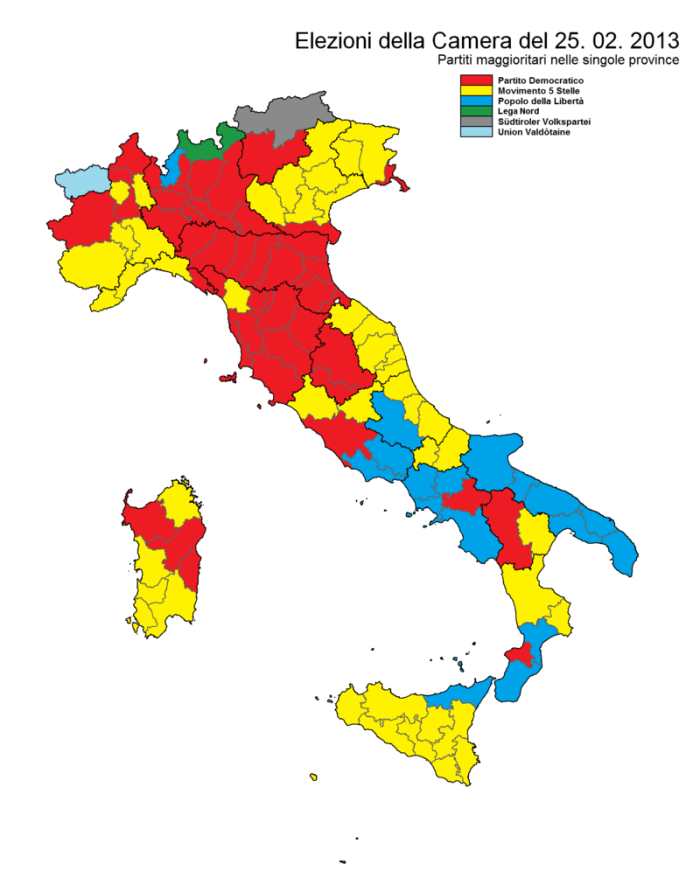
There is also an interesting cultural development to think about as well. The states in Western Europe and East Asia sans China have helped to develop a political culture that is more closely aligned with the one found in the US, Canada, and Australia/New Zealand, one where citizenship trumps ethnic identity. Identity based on citizenship is not as strong as the one found in the Anglo-Saxon world, and ethnic differences do pop up from time to time (largely due to linguistic differences), but the states of Western Europe and East Asia have taken many steps in the right direction to help eradicate the parochial tribalism that has long plagued European and Asian societies and replace it with citizenship. Take a look at the political constituencies of the following three countries:

blog-2013-elections-germany
Germany’s 2013 federal elections (source)
blog-2016-elections-south-korea
South Korea’s 2016 legislative election (source)
blog-2013-elections-italy
Italy’s 2013 legislative election (source)

They are largely based on a Left-Right divide rather than the ethnic ones we find in less economically-developed, less politically-integrated, post-colonial states. This Left-Right divide would fit in perfectly with the Madisonian constitution, as administrative units (i.e. Northern Ireland, Gangwon, Bavaria, or Trentino instead of the UK, South Korea, Germany, or Italy) could be added in a manner so as not to upset the balance between Left and Right currently found in the US. Political coalitions would wax and wane with time, of course, but if we want a world where the East Asians and Western Europeans pay their fair share, and where they are protected from Moscow and Beijing, then federation is as moderately radical as you can get.

Just ask Adam Smith.

New issue of Econ Journal Watch is out!

For those of you who don’t already know, Warren is the math reader for EJW and one of NOL‘s co-founders, Fred Foldvary, is an editor for the journal, so this is very much a family affair. Here are some of the articles that caught my eye:

You get what you measure: Daniel Schwekendiek explains how South Korea followed a proven template of incentivizing exports to boost Web of Science publications and raise the rankings of its academic institutions.

Now entering a Republican-free zone: Mitchell Langbert, Anthony J. Quain, and Daniel Klein report on the voter registration of faculty at 40 leading U.S. universities in Economics, History, Journalism, Law, and Psychology.

Whither science in gender sociology? Charlotta Stern investigates whether gender sociologists blinker themselves from scientific findings about sex differences.

How to Do Well by Doing Good! In this 1984 essay, Gordon Tullock counsels young economists that doing well and doing good go together.

You can download and read the whole thing here (pdf).

On granting the Nobel to Kirzner

In a little over a week, the Nobel Prize in economics will be unveiled. A part of me wishes that Robert Barro wins or maybe Dale Jorgenson or even William Baumol. However, I would be thrilled if Israel Kirzner won. Back in 2014, he was mentioned for the prize and it was the year that Jean Tirole, deservedly, won the prize. Since then, I have been dreaming of it as it would cement into the mainstream the best that the Austrian school of economics can offer.

Unlike many of colleagues, I have always had sympathies for numerous points made by the Austrians. Throughout my training, the Austrian school of economics was largely derided as cranks. Initially, I jumped on the bandwagon and I believed the Austrians to be crazy. However, I became exposed to many of their key points and like Edmund Phelps, I felt that the “best of the Austrians” could not be rejected so easily. True, there is some wheat to sort from the chaff, but the same applies for every school of thought.  I realized that most of their inputs in macroeconomics were largely incorporated in models like Lucas’ Islands Model or in Prescott’s Time to Build. However, what most intrigued me was how they used general equilibrium as a teaching tool, but not as a research tool. General equilibrium is useful for understanding key axiomatic assertions, but when you have an “applied economics” question, it is a hard tool to use – especially for an economic historian like me.

Kirzner is the perfect representation of the best that the Austrian school has to offer. In a way, his entire work can be summarized as such: it is the process leading to (new) equilibrium(s) that is the most interesting aspect of economics.

It is when I understood that insight that I finally grasped the deeper meaning of Hayek’s claim that “competition is a discovery process”. Entrepreneurs are people who look for the $100 bill on the sidewalk by innovating, by exploiting arbitrage opportunities and by discovering what consumers really want. They are constantly heading towards an equilibrium point. But as they try to do so, they shift the ability to produce and consume to greater levels and, in doing so, they generate a new equilibrium. And the process continues as long as human beings are humans.

For someone who studies economic history like I do, this is the most fruitful way of looking at social interactions. After all, the industrial revolution is everything except an equilibrium and the industrial revolution is most momentous structural break in history. The search for equilibrium and the creation of new equilibriums are by far more useful tools for questions like the end of “Malthusian pressures” or the beginning of the Industrial Revolution.

Of course, I am veering into excessive simplification of Kirzner’s contribution. But consider his book, Competition and Entrepreneurship. Alone, it has 7,362 citations (according to google scholar).  This is half the citations obtained by the most cited article in the American Economic Review (Armen Alchian and Harold Demsetz’s Production, Information Costs and Economic Organization). It’s close to 3,000 more citations that Deaton and Muellbauer’s “Almost Ideal Demand System” (4,775 citations). And Deaton won the Nobel last year!

By virtue of being affiliated with the Austrians, mainstream economists could have relegated him to obscurity. However, for such a citation count to be achieved, he must have been to showcase the best that the Austrian school has to offer. Just for that, maybe his contribution should be recognized.

O capitalismo explora os trabalhadores?

Um dos argumentos contra o liberalismo econômico que tenho ouvido recentemente (ou contra a liberdade de mercado, com pouca ou nenhuma intervenção do estado) é que as relações entre patrões e trabalhadores são desiguais, e logo então desfavoráveis para os trabalhadores; cabe ao estado intervir a favor dos trabalhadores; o liberalismo econômico não é bom para os trabalhadores. Tenho dificuldade com este argumento, pois ele passa a ideia de que os patrões não trabalham. Seja como for, acredito que posso aceitar parte do que está sendo dito: é lógico que alguns patrões irão tentar pagar o pior salário possível aos trabalhadores para conseguir os maiores lucros possíveis. É lógico que muitos patrões irão ver qualquer investimento em segurança, bem estar, saúde e outros “direitos” como gastos incômodos, e irão tentar evitar estes gastos. É lógico que o trabalhador está pleiteando a vaga, e neste sentido está à mercê do patrão que a oferece. Tudo isto é não apenas lógico, mas empírico. Pessoalmente já vi estas coisas acontecendo “com estes olhos que a terra há de comer”. Há patrões que irão tentar fazer todas estas coisas e outras ainda, aproveitando-se da situação vulnerável dos trabalhadores. Irão tentar. Mas irão conseguir?

Segundo me parece, uma forma de evitar que patrões se aproveitem da situação vulnerável dos trabalhadores é apelar para a caridade dos patrões. Embora eu suspeite que esta abordagem possa soar romântica para muitos, o fato é que empiricamente ela funciona com alguma frequência. Historicamente, foi o cristianismo de muitos empresários que possibilitou a melhora das condições de trabalho na Europa e Estados Unidos durante o primeiro século de Revolução Industrial. Portanto, esta é uma abordagem que, acredito, não deve ser desconsiderada.

Uma segunda forma de evitar que patrões se aproveitem da situação vulnerável dos trabalhadores é criar leis trabalhistas. Ao invés de esperarmos que os patrões sejam voluntariamente bons, podemos usar a violência legítima do estado para força-los a serem bons. Esta abordagem possui efeitos positivos, mas também muitas consequências inesperadas. Basicamente o objetivo de qualquer lei é tornar os relacionamentos humanos mais padronizados. Uma maneira mais negativa de dizer a mesma coisa é falar que leis engessam a sociedade. Leis trabalhistas criam “direitos”, mas também impedem que trabalhadores e empregadores negociem voluntariamente outras possibilidades de relacionamento. Um exemplo bastante conhecido é o salário mínimo, que contra intuitivamente prejudica os trabalhadores mais do que os ajuda. Finalmente, leis só fazem sentido caso sejam amparadas por um estado. E com mais leis, mais estado. Nossa relação com o estado já é por definição desigual: o estado possui o monopólio do uso legitimo da violência; nós não. Aumentar o tamanho do estado é aumentar nossa vulnerabilidade dentro de uma relação desigual, o que vai contra exatamente o que está sendo discutido aqui.

Uma terceira forma de evitar que patrões se aproveitem da situação vulnerável dos trabalhadores é a liberdade econômica. Sim, como eu comecei dizendo, é lógico e empírico que alguns patrões irão tentar se aproveitar de situações de vulnerabilidade dos empregados. Mas irão conseguir? Numa sociedade orientada pela liberdade de mercado, é mais provável que não. Com liberdade de mercado, a tendência é o surgimento de concorrência, além de uma maior diversidade de atividades econômicas. Neste cenário, patrões que procurem abusar dos trabalhadores correm o rico de perder os trabalhadores para outros patrões. Mesmo no cenário improvável de todos os patrões serem abusivos, tratar bem os trabalhadores torna-se um imperativo para manter os lucros. A alternativa seria um acordo geral dos patrões abusivos, mas isto tornasse empiricamente infactível numa sociedade progressivamente marcada por liberdade de escolha. Uma última observação nesta lista muito longe de exaustiva de benefícios do livre mercado para o trabalhador é que no livre mercado a tendência é de aumento da produtividade. E nada está mais ligado a aumentos de salários do que aumento de produtividade. De fato, onde há liberdade de mercado os salários aumentam, assim como o poder de compra.

Em resumo, sim, há patrões que se aproveitam das relações desiguais com trabalhadores para exercer poder sobre estes mesmos trabalhadores. Isto é não apenas lógico, mas empírico. Mas qual é a melhor solução para este problema? Apelar para a boa vontade dos patrões? Criar leis que deem aos trabalhadores mais direitos? Favorecer uma maior liberdade de mercado? Minha resposta é: criar leis que favoreçam maior liberdade de mercado, e ao mesmo tempo apelar para a boa vontade dos patrões, até porque num cenário de maior liberdade econômica, patrões abusivos estão indo contra seus próprios interesses.


Referências:

O capitalismo explora os trabalhadores?

The Great Blessings of Cash

Paper money offers the benefits of anonymity, immediate payment, no identity theft, and no transaction charges. Government also benefits by printing notes with much greater value than the cost of the paper. However, some economists argue that cash has social costs that outweigh these blessings, and advocate the reduction and eventual elimination of paper cash. Several countries are planning to discontinue their largest currency notes. The European Central Bank is phasing out its 500-euro note; it will stop issuing new ones in 2018. The Scandinavian countries are reducing their paper cash.

Kenneth Rogoff, professor at Harvard University, has written a book, The Curse of Cash, in which he argues that the elimination of large-denominations of paper money would be good for society. Cash is a curse, he says, because criminals use the large bills, and because it limits the ability of central banks to have negative interest rates.

The use of cash by the underground economy is a symptom of bad policy, and the elimination of cash treats the effects rather than the causes. The reason economic activity goes underground is that governments have prohibited economic transactions.

Although some U.S. states have decriminalized medical marijuana, the substance remains illegal in federal law, which prevents the sellers from using the normal banking system. Therefore they use paper money. The prohibition of drugs generally drives the industry towards the use of large denominations, especially “Benjamins,” the US $100 bill depicting Benjamin Franklin. The elimination of Benjamins would make it less convenient to sell illegal drugs. The higher cost would raise the price of illegal drugs, but since the quantity demanded by addicts is not very responsive to a change in price, the drug dealers would find ways to do their transactions.

The legalization of drugs would eliminate the cause of the high demand for paper cash. Just as with alcohol, producers would then use the normal banking system.

The underground economy uses cash also for activities that are legal if taxes are paid on the income and sales. Again, the elimination of cash would make tax evasion less convenient, but not eliminate the incentives to evade having substantial amounts of gains taxed away. Rogoff thinks that if the government prohibits the legal use of Benjamins, the remaining notes would lose value, as they would no longer be legally convertible into small denominations and not be legally payable for goods. But large notes could circulate as a medium of exchange within the underground economy as an alternative currency. Moreover, there are underground currency traders in all countries that impose artificial currency exchange rates.

The problem originates in evadable taxation. The remedy that eliminates the cause is to make taxation unevadable. The main resource that cannot hide is land. The taxation of land value, based on its best possible use regardless of current use, cannot be evaded. The elimination of all other taxes would bring production, trade, and consumption above ground and eliminate the current high demand for paper cash.

Another “curse of cash” argued by Rogoff is that paper money prevents central banks from lowering the transaction rate of “interest” much below zero. Suppose a bank has a negative 5 percent charge on deposits, so that the depositor has to pay $5 per year per $100 deposited. Many people would withdraw the money and hold it in paper cash. Companies would offer to securely store your cash in insured vaults. If all notes above $10 were made illegal, the storage and insurance costs would rise substantially, and the banking system would be better able to have the negative rates.

The alleged benefit of negative rates is that, because the banks also pay negative rates on their deposits with central banks, financial institutions would scramble to loan out the money to investors who would pay a positive rate, or become partners in ventures.

It is bad enough now that savers, especially retired folks, are getting close to a zero return on their retirement savings. Negative returns on, say, large certificates of deposit would further ruin those who depend on income from savings. Again, the artificial device of pushing the nominal rate of interest below zero is an attempt to treat the symptoms rather than cure the causes.

Some blame a glut of global savings for the low rates of interest. But technology is marching forward, to artificial intelligence, robots, medical advances, better batteries, and many other frontiers. There is no shortage of possible investment projects. But governments world-wide stifle investment with taxes and restrictions. The USA, for example, has choked investment since 2008 with tighter banking restrictions and higher costs such as medical mandates.

What is needed is the ultimate supply-side policy, cutting marginal tax rates on labor and investment yields to zero, with a prosperity tax shift, replacing all other taxes with a single tax on land value. The land-value tax would also push land to its most productive use, stimulating productive investment and employment.

As to money, attempts to skew markets almost always fail, so it would be best to eliminate central banks and their manipulations of nominal interest rates. Let markets set the money supply and restore the positive natural rate of interest based on the human-nature tendency to prefer to have goods sooner rather than later.

Controlled market manipulations are failing, and so statist advocates propose even more artificial controls such as eliminating paper money and pushing interest rates below zero. But the further we get from economic freedom, the worse the outcome. Interest rates and money evolved in markets; let them return to their natural base.

Note: this article is also in http://www.progress.org under the title The Blessings of Cash.