What I’ve Been Reading

Hello all. Apologies in advance for not posting more often since graduation. I’ve been reading a lot of books lately, rather than stuff on the internet, so I haven’t had much to link to lately.

Here is a list of a few books I have been working on:

  • 1493: Uncovering the New World Columbus Created by the science journalist Charles C Mann. I know I’ve blogged about this book before, but I’ve finally got a little bit of free time to hunker down and read the whole thing. I’m about halfway through and it’s really good.
  • Mastering Space: Hegemony, Territory and International Political Economy by the Marxist political geographers John Agnew and Stuart Corbridge. This is a pretty crummy book, but it was recommended because of some good critiques of the IMF and the World Bank that it supposedly has. I’ll keep ploughing through and hope for the best.
  • The Embarrassment of Riches: An Interpretation of Dutch Culture in the Golden Age by the historian Simon Schama. This is a very well-written book about Dutch culture (not Culture) in the seventeenth century and so far I have not been disappointed. Schama eschews the political and economic aspects of the Dutch republic in favor of examining the everyday lives of its citizens.
  • Democracy in Botswana which is edited by John D Holm and Patrick Molutsi. I picked this up for a research project I was doing last quarter and have not been able to let it go yet. It brings together a compendium of talks given at a conference held in Gaborone in 1989 to assess Botswana’s current status in the world, in sub-Saharan Africa and according to the citizens of Botswana.

Of the four books, I’d recommend 1493 to the intelligent layman, but the other three are definitely tough slogging.

Eye Candy

It’s just beneath the fold…

Continue reading

Capitalism: Making Lives Miserable Since at least the Late 18th Century

Brad Plumer of The Washington Post has a great post up on 31 different charts “that will destroy your faith in humanity.” Here was one of my favorites:

After reading through the charts, come back and let me know what you think of them. For more optimistic garbage, be sure to check this out.

Breton Religion

[Excerpt from Jacques Delacroix’s book of memoirs: “I Used to Be French: An Immature Autobiography.” Delacroix is looking for an agent, a publisher, or some sort of non-venal help.]

The church, the café, and the saints

There was no not going to mass except for the schoolteacher who could only play his part as a soldier of the secular Republic if he was an atheist. Mass always played out the same way: The notables’ families had their pews upfront, reserved by brass-plate names. Other families sat on benches wherever else they wanted but the women tended to position themselves near the front of the church, with the children, and the men gathered toward the back, near the main door. This was before Vatican II and Catholic Mass was interminable in this very religious part of France. It was also mostly in what I understand to have been despicable Latin, with some bad Ancient Greek mixed in. The sermon was in accented French rather than in local dialect, perhaps in part for the benefit of the outsiders, including baigneurs like me. The priest knew pretty well of what kind of sins his year-around parishioners were capable. He may just have let his imagination run a little wild in connection with the sins of the lightly clad baigneurs. Hence, he probably surmised they needed his sonorous sermons more than did the locals whose sins were mostly a little boring to his mind.

As the service droned on and thundered in turn, some old men, all widowers, would slip out the back and cross the square to the café. Little by little, in groups of two or three, for strength and courage, other men would join them in order of descending age. The last ones to leave were newlyweds whose young wives kept an eye on them above their shoulders, young wives who still thought they possessed a vulgar means of retorsion against their husbands embarrassing them before the community. By the time of the “Ite, misa est,” the only adult men remaining, in addition to the priest, were the Count and his relatives. I supposed these retired then to the manor’s grand salon to sip champagne (or, possibly, whisky; they were terribly Anglophile, or rather, Britophiles), while the common men threw a last one down the gullet at the café to conclude the weekly conversation. Continue reading

A Possible Explanation for Greece’s Economic Woes

And one that does not have to do with Athens’ infamous bookkeeping practices. From the New York Times:

But property ownership in Greece is often less than clear cut. So Mr. Hamodrakas put a padlock on his gate and waited to see what would happen. Soon enough, he heard from neighbors. Three of them claimed that they, too, had title to parts of the property.

In this age of satellite imagery, digital records and the instantaneous exchange of information, most of Greece’s land transaction records are still handwritten in ledgers, logged in by last names. No lot numbers. No clarity on boundaries or zoning. No obvious way to tell whether two people, or 10, have registered ownership of the same property.

Yikes. There is more here. I highly recommend it.

Forget fiscal and monetary policy, Greece needs to instate a decent property rights regime before it can become a wealthy and healthy property-owning democracy.

This should not be surprising for a couple of reasons, but only if one is somewhat familiar with the modern history of the region. The Balkans has been, until very recently, under the thumb of various empires governed from afar (Ottoman and Austro-Hungarian). Once independence from foreign despots was attained (through war) in the nineteenth century, these states then had to survive more war (World Wars), endure more occupation (through the same world wars), and then navigate their young states through the Cold War (where dictatorship was sometimes preferable to ideological considerations, and sometimes integral to ideological considerations). In addition, Balkan states have had to constantly deal with threats from each other as well.

If anything, the inclusion of these states into the European Union is probably the best thing to happen to them in a long, long, long time. It is unfortunate that bureaucrats in Brussels decided to hastily implement a single currency without first ensuring that each of the member states possessed the institutions necessary for protecting clear and well-defined property rights.

Update: On the other hand, entry into the EU was probably (correctly) seen as a way to strengthen institutions associated with protecting property rights.

Around the Web: Disappearances

1. Ron Unz, founder and editor of The American Conservative, skewers the mainstream American media for dropping the ball on all sorts of major scoops, including:

2. Richard Nixon’s abandonment of hundreds of surviving American prisoners of war after the end of hostilities, at a time when he had declared that all surviving POW’s had been repatriated; and

3. John McCain’s exceptionally weird and disturbing role in the decades-long stonewalling of investigations into the fate of these men and efforts to repatriate any survivors.

4. On a separate but similar topic, a discussion of some possible fates of Indian independence leader and Axis collaborator Subhas Chandra Bose. Bose, aka Netaji, officially died in a plane crash in Taiwan, but is widely believed to have died in the Soviet Gulag, to have disappeared into civilian life in asylum in the Soviet Union, and to have lived into his eighties as a “mysterious holy man” in Uttar Pradesh.

Optimism and Despair in a World of Injustice

The infamous development economist William Easterly recently tweeted that writing about spontaneous order without citing Friedrich Hayek is now “mainstream cool,” while writing about spontaneous order and citing Hayek makes one an ideological extremist. This biting critique of intellectual discourse, a mere 140 characters long, does more than just expose the drastic ideological shortcomings of the modern Left. It highlights the endlessly interesting obstinate ignorance that collectivists of all stripes have historically displayed toward the basic theoretical and moral insights advanced by libertarians.

In a recent Freeman essay by anthropologist Mike Reid, a pattern similar to the one noticed by Easterly emerges in the actions of central planners aiming to preserve the cultural heritage of a number of ethnic groups that have been deprived of their property rights by the very governments now looking to preserve their cultures for them. Reid takes examples from India and Canada and finds that the logic of preserving a specific culture does not hold up to scrutiny.

On the policies of the government of India, Reid writes: Continue reading

Prêtez attention aux scandales (pluriel) de l’administration Obama

Richard Nixon était parti en disgrâce pour bien moins que l’utilisation de la puissante administration fédérale des impôts (“IRS”) à des fins politiques. Je veux dire l’IRS d’Obama qui a délibérement persécuté ses adversaires politiques à grandeéchelle.

Ce que personne (sauf moi) n’a encore dit à haute voix: La noirceur de peau du président le protège actuellement des conséquences légales et politiques de la noirceur de ses actions autant que de ses omissions.

L’emprise du politiquement correct est tellement grande aux EU qu’on n’y considère même pas (encore) la possibilité de jeter le premier président noir pour les grotesques abus de pouvoir de son administration.

Suivez mon analyse en Anglais sur le meme blog.

Around the Web

  1. A Brief History of IRS Political Targeting.
  2. Listen to the fascists sing.
  3. Philosopher Kevin Vallier’s response to a hatchet job on FA Hayek in a stale (and apparently desperate) Left-wing publishing outlet.
  4. Political scientist Samuel Goldman’s response to the same hatchet job.
  5. The aforementioned hatchet job (in The Nation).
  6. Monkey Gone to Heaven.

Genocidio(s) y modernidades múltiples

2011-08-19_2pm_FreedomLab

La tipificación del delito de genocidio por el derecho internacional -occidental y dominante- en Guatemala es un delito que comprende los actos de

“quien con el propósito de destruir total o parcialmente un grupo nacional, étnico o religioso efectuare cualquiera de los siguientes hechos: 1.- Muerte de miembros del grupo. 2.- Lesión que afecte gravemente a la integridad física o mental de miembros del grupo. 3.- Sometimiento del grupo o de miembros del mismo a condiciones de existencia que pueda producir su destrucción física, total o parcial. 4.- Desplazamiento compulsivo de niños o adultos del grupo. 5.- Medidas destinadas a esterilizar a miembros del grupo o de cualquiera otra manera de impedir su reproducción.”

Este delito sin embargo ha sido sujeto a interpretaciones por distintos grupos que buscan adaptarlo al contexto histórico, social, político y económico de los distintos pueblos y naciones, y de las distintas posturas -emic o etic- de estudio del mismo.  Así, algunos autores explican que el genocidio no es una definición legal hegemónica, occidentalizada y dominante no sujeta a distintas lecturas sino que es un término construido por un pueblo -el dominante occidental- para historicizar eventos del pasado y que, el mismo, puede y debe ser denunciado -del inglés contested- por las víctimas y pueblos no hegemónicos.   Resultando así, en que esta definición pueda y deba estar sujeta a distintas evaluaciones del delito por las víctimas, por sus ejecutores, por sus historiadores -emic y etic- y por sus juzgadores -emic y etic-.  Así, dependiendo del sujeto que lo evalúa y/o de las víctimas cualquier acto podría ser o no juzgado como un delito de genocidio en contra de pueblos y naciones minoritarias y no hegemónicas.  En cierta manera, esta fue la postura tomada por los compiladores del informe de la Memoria del Silencio de la Comisión para el Esclarecimiento Histórico (CEH) y finalmente, constatada  el viernes pasado, 10 de mayor de 2013, con la histórica sentencia que emitió el Tribunal Primero A de Mayor Riesgo contra Ríos Montt, de 86 años, responsabilizandolo por la matanza de 1 mil 771 indígenas durante su régimen de facto entre 1982 y 1983.

Así, unos argumentan, las estrategias de guerra empleadas en la lucha armada contra un grupo de insurgentes por el ejército de Guatemala fueron percibidos por sus víctimas colaterales (poblaciones indígenas de la región Mesoamericana) como actos de destrucción parcial de la sociedad y del tejido sociocultural de la identidad de esos pueblos indígenas y que, por lo tanto, los líderes de esta lucha contrainsurgente podrían ser -y fueron- acusados del delito de genocidio.

Es mi opinión como historiador que la sentencia del tribunal sería pertinente y válida si este delito se refiriese a los actos de “(…) destruir total o parcialmente un grupo nacional, étnico o religioso efectuare cualquiera de los siguientes hechos: 1.- Muerte de miembros del grupo. 2.- Lesión que afecte gravemente a la integridad física o mental de miembros del grupo. 3.- Sometimiento del grupo o de miembros del mismo a condiciones de existencia que pueda producir su destrucción física, total o parcial. 4.- Desplazamiento compulsivo de niños o adultos del grupo. 5.- Medidas destinadas a esterilizar a miembros del grupo o de cualquiera otra manera de impedir su reproducción.

Sin embargo, el delito de genocidio se refiere a la intención del acusado de actuar con la idea preconcebida de “(…) destruir total o parcialmente un grupo nacional, étnico o religioso (…)”.  A pesar de que existen evidencias de violaciones y crímenes de lesa humanidad, las mismas no presentan evidencias concretas de que existiera un acto intencionado de cometer genocidio y el delito aún no ha sido demostrado dejando a un lado de la discusión (hasta el momento más polémica que honesta discusión)  los crímenes de lesa humanidad -masacres, violaciones y torturas, entre otros- que sí se cometieron y que podrían quedar invalidados si la sentencia del tribunal fuera impugnada.

La historia viene en distintas formas y tamaños; no debemos de confundir la vasija -la historia- con su contenido -las historias-, aún cuando la vasija misma sea la que le da la forma al contenido.  El Contenido que se forma debido a los distintos procesos de transmisión y comunicación -social- que predeterminan lo que se puede conocer -los hechos históricos- y/o sobre cómo el contenido es seleccionado -historizado- para su estudio y entendimiento por los actores pueden y deben ser sujetas a ser denunciadas.  Esto no implica que, a la vez, todo sea relativo al contexto y sujeto estudiados y, por lo tanto, no tengamos definiciones concretas para términos en situaciones como esta.

Sin duda, este no es un tema sencillo y queda aún muchísimo por discutir y aprender.

El grave error del libertarianismo guatemalteco en el juicio contra el ex-dictador Efraín Ríos Montt

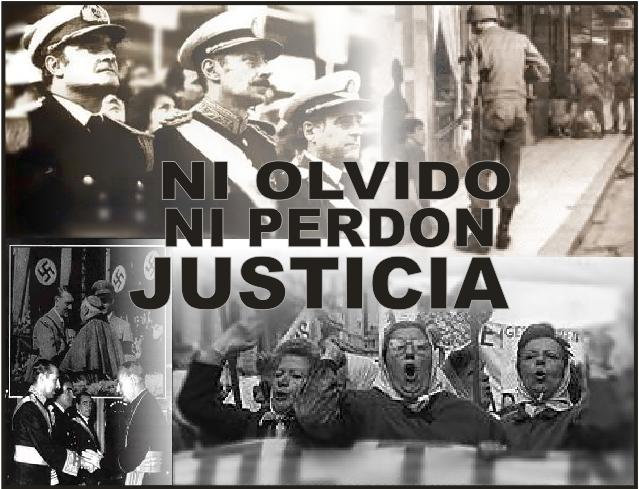
Justicia

El presente artículo busca conversar con un grupo específico de personas: libertarios y/o simpatizantes con las ideas libertarias que han tomado una postura pública en defensa de los generales Efraín Ríos Montt y José Mauricio Rodríguez Sánchez, acusados de los delitos de genocidio y crímenes de lesa humanidad durante los años 1982-83 en Guatemala quienes no han dicho, también, y con el mismo peso en sus artículos impresos, entrevistas y demás presentaciones públicas que exigen se haga justicia por los crímenes de lesa humanidad cometidos contra civiles durante el gobierno de facto de estos militares y por los crímenes cometidos durante los 36 años de conflicto armado por el ejército y la guerrilla. Continue reading

Welcome to the New Bohemia

[Editor’s note: I first came across this article while living in Santa Cruz. It was in one of those trashy “arts and events” weeklys that you find littering every city in America. I have tried to locate the author of the piece but he appears to have written it under a pseudonym, and the weekly is now defunct. So, I figured I’d reprint the whole damn thing here. You can find an archived copy here]

———————————————————————————————————

We are the modern equivalent of the ancient city-states of Athens and Sparta. California has the ideas of Athens and the power of Sparta. —Gov. Arnold Schwarzenegger

California is like an artificial limb the rest of the country doesn’t really need. You can quote me on that. —Saul Bellow

Perhaps Schwarzenegger and Bellow divined what’s now painfully clear to everyone: Arnie’s California is Humpty-Dumpty, the Hindenburg and some kind of sociopolitical Holocaust all rolled up into one overstuffed exploding burrito. It’s an ungovernable, near criminally impotent and outdated mess. Remedying California’s woes requires draconian cutbacks to essential services and infrastructure. Anyway, that’s what we are told, grand allusions to Athens and Sparta notwithstanding. Others insist the fix lies with the Feds, that the U.S. Treasury need to bail California out at the begrudging consent of Congress. But another still largely muted scenario is slowly gaining traction. Continue reading

Syria and the Failure of Imperialisms (Old and New)

Dr Delacroix has recently left a question in the form of a comment that I think deserves to be answered. He asks:

If you were 100% convinced that Assad of Syria had used chemical weapons on civilians, would it affect your judgment about the desirability of American intervention in Syria?

Andrew shares his thoughts here. Rick Weber chimes in here (why isn’t he blogging with us, by the way?). I have written about Syria and military intervention here before, so I thought I’d just try to add a bit more clarity to the topic. First though, I think it is important to take  a closer look at Dr Delacroix’s question.

In it, he seems to be assuming that I don’t think the American government should do anything in this case. Now, he is of course referring to military action in Syria – which I absolutely oppose – but it would be nice if Dr Delacroix employed less trickery in his questioning.

Instead of taking the usual tactic of trying to explain what I think the US could do (see Rick’s piece on this), or why I think another war in the Middle East would be a disaster, I’m going to take a different path altogether and offer a defense of both the Hussein regime and the Assad regime, thus rendering the US wars, or potential wars, in the region immoral and unjustified.

To put it bluntly: both regimes were perfectly justified in undertaking the actions that they did, and there was (is) no justification whatsoever for American military involvement.

Imperialists like to pretend that the Middle East is a simple place with simple people performing simple tasks and largely worshiping a simple religion (Islam). The results of applying imagination to the real world can be found first in the mandate system devised by British and French imperialists at the end of World War I. These two states really screwed up the region. They drew arbitrary borders that did not conform to any pattern whatsoever among the indigenous population (Dr Delacroix is fond of using Kurdish autonomy in Iraq as a justification for imperialism, but it was imperialism in the first place that left the Kurds without sovereignty).

Out of these arbitrary borders came the nation-states of the Middle East that we all know and love today. Prior to the entrenchment of these borders (borders which were later to be blessed by the United Nations) a number of political proposals put forth by the indigenous population itself were heard. One historian from UCLA has documented just how trusted the United States was in the region at one point in time:

[…] the elected parliament of Syria that met after the war, the Syrian General Congress, declared that it wanted Syria to be independent  and unified. By unity, the representatives meant that Syria should include territories of present-day Syria, Lebanon, Israel/Palestine, and Jordan. If Syria had to have a mandatory power overseeing it, a majority of the representatives declared, it should be the United States. (87)

It goes without saying that the democratically-elected Syrian General Congress – the one crushed by French imperialism – included representatives from Lebanon, Israel/Palestine and Jordan. The question of why the US has fallen so far from grace in the eyes of many Arabs (and other peoples around the world) is far beyond the scope of this post, but it shouldn’t be too hard to figure out that the United States of America decided it wanted to step into the imperialist boots worn by France and Great Britain during the 19th century rather than pursue a policy of peace, commerce and friendship.

After the French crushed democracy in Syria (Britain did the same in Iraq), it began to carve up their mandates into smaller territories. The goal behind this policy was not to improve efficiency in government, but to create a system of government where religious minorities – specifically Christian minorities – would be able to control the levers of power.

After the French were kicked out of Syria (and the British in Iraq), sectarian violence began. The international legal order, as exemplified by the United Nations, played a lead role in deepening the crisis: by recognizing the legitimacy of these arbitrary states and the sanctity of their borders, the UN contributed directly to the bloodshed that occurred as rival factions sought power over the center of these states (think Washington DC). Because these states were legitimized by the UN, the rival factions could simply seize control of the center and automatically gain legitimacy from the very international order that had created this clusterfuck in the first place. In essence, the United Nations has simply served to further the imperial ends of the British and French in the Middle East (and elsewhere).

The stakes for contesting the center were very high. In Iraq, Arabs who were also Sunni Muslims or Christians, as well as other small religious and ethnic minorities, banded together to counter the violence directed at them by Sunni Kurds and Shia Arabs.

In Syria, Arabs who were also Shia Muslims or Christians, as well as other small religious and ethnic minorities (such as the Kurds or the Alawites), banded together to counter the violence directed at them by Sunni Arabs.

When the dictators of Iraq and Syria murdered thousands of people within the borders created and sanctified by the international system, they did not do so because they viewed some of their fellow citizens – Syrians and Iraqis – as refusing to obey orders. Hussein and the Assads murdered droves of people because they viewed these people as enemies and threats to their own survival (as well as to the survival of their kin and allies) rather than as fellow citizens.

I am not justifying the violence perpetrated by the minority regimes of Iraq and Syria, I am only putting their tactics into context. Without the repressive measures that these regimes had at their disposal, the ethnic and religious minorities that these regimes protected would have been slaughtered just as callously as those who were actually slaughtered.

Here is where the immorality of American foreign policy comes into play. Here also is where the immorality of imperialism comes into play. But I repeat myself.

Saddam Hussein ruled Iraq for 24 years. Bearing in mind the situation that Iraqis were presented with as a result of British imperialism (outlined above), it is estimated that his regime killed 250,000 Iraqis. That’s pretty bad.

It took the unprovoked invasion and occupation of Iraq by the US military about a third of the time (nine years) to reach just under half the total body count of the Hussein regime (roughly 110,000 dead Iraqis).

If the US military had stayed as long as Saddam Hussein ruled Iraq, and trends continued to remain steady (and there are no signs to suggest that they wouldn’t have), then the US military would have been responsible for more Iraqi deaths than the Hussein regime. The great, disgusting irony of it all is that the Hussein regime was at least defending a significant minority of the population. The US has left the minorities of Iraq in the hands of the dominant Shia majority (Dr Delacroix’s precious democracy).

The same situation is currently in place in Syria. The Assad regime is basically fighting against al-Qaeda and Hizbollah. The Assad regime is also the only thing stands between significant minority populations and the large Arab Sunni majority of Syria, a majority that has been violently kept out of the center since Assad’s father seized power over Syria’s center in 1970. If the US were to intervene on behalf of al-Qaeda and Hizbollah, what do you think the outcome would be?

Less bloodshed? Less cronyism?

These are fantasies. The states created and sanctified by imperial decree (British, French and UN) are by their very nature destined to be cradles of autocracy.

The best policy that the United States could pursue in regards to the Syrian question, and in regards to most post-colonial states, is to simply stop recognizing these polities as legitimate. The rest of the West would follow suite. This would relieve the pressure associated with seizing the center of these states and force the people of the Middle East to compromise. The United States should not recognize any government in the Middle East until a delegation of representatives – like the one in the interwar years – is sent to Washington, by the people of the Middle East, to argue their case for sovereignty and induction into the liberal international order.

In a world of second bests, it would be wise to eliminate all sanctions on the Syrian state, including weapons sanctions. This would have the effect of leveling the playing field (states often enjoy an advantage in weaponry once sanctions are imposed upon a warring area because a state’s resources are likely to crowd out smaller competitors [i.e. “the rebels”] in the black market). The usual diplomatic caveats apply as well.

Assuming, as Dr Delacroix does, that military intervention would do the Syrian people any good is as preposterous as it is condescending.

I would need some hard data to challenge my intuition (outlined above) on this matter.

Sobre genocidio, filosofía y diálogos

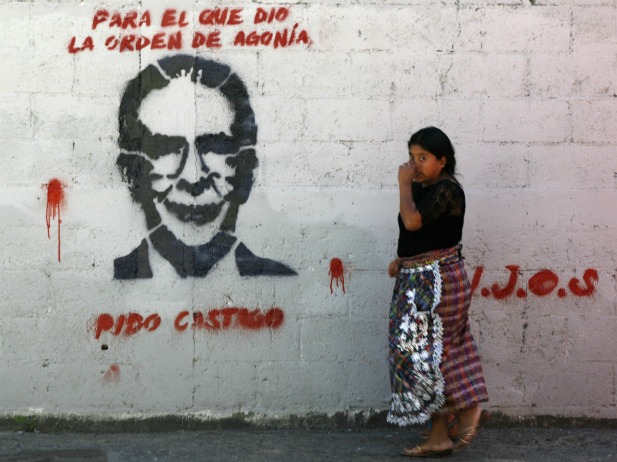
Pido-castigoDurante las últimas semanas, muchas de las discusiones intelectuales en Guatemala han girado en torno al juicio en contra del ex Presidente de facto, General Retirado del Ejército y ex Presidente del Congreso de Guatemala José Efraín Ríos Montt.  Ríos Montt enfrenta un juicio por los  delitos de genocidio y crímenes de lesa humanidad.  Este juicio y su resolución tendrá una relevancia de alto impacto en la lucha que realizan movimientos progresistas (conocidos también como liberales en EE.UU., liberales de izquierda, y/o como seguidores del social liberalismo) en la búsqueda por resolver conflictos históricos que armonicen el funcionamiento de un mercado regulado con una participación del Estado en la garantización de igualdad de  competencia y la corrección de desigualdades heredadas del período colonial y/o desigualdades que resultaron de la institucionalización política o social de prácticas racistas, clasistas, machistas, entre otras.

El juicio contra Ríos Montt, que podría convertirse en el “Juicio del siglo” de los intereses ideológicos progresistas latinoamericanos, tomó vuelo luego de que el 19 de marzo de 2013, una jueza guatemalteca abriese formalmente juicio contra el exdictador, acusándolo de genocidio contra miles indígenas durante su régimen de gobierno (1982-1983).  El genocidio es un delito internacional que comprende “cualquiera de los actos perpetrados con la intención de destruir, total o parcialmente, a un grupo nacional, étnico, racial o religioso como tal; estos actos comprenden la matanza de miembros del grupo, lesión grave a la integridad física o mental de los miembros del grupo, sometimiento intencional del grupo a condiciones de existencia que hayan de acarrear su destrucción física, total o parcial, medidas destinadas a impedir nacimientos en el seno del grupo, traslado por la fuerza de niños del grupo a otro grupo.” (via: Estatuto de Roma de la Corte Penal Internacional, 1998-2002 y la Convención para la Prevención y la Sanción del Delito de Genocidio de 1948).  La legislación guatemalteca incluye pena de prisión de 30 a 50 años para los culpables de estos delitos. Continue reading

Eye Candy

Just below the fold… Continue reading