Is Fundamentalism a problem?

Today when a terrorist attack happens, the press too often avoids naming the perpetrators and instead seeks to be uncompromised by phrases like “car hits people.” But not long ago, the press usually blamed fundamentalists for terrorist attacks.

The name fundamentalist originated, interestingly enough, in Protestant circles in the US. Only much later was it used to describe other religions, and then mostly to Muslims. Among Protestants, the name fundamentalist was used to designate people against theological liberalism. I explain. With the Enlightenment, an understanding grew in theological circles that modern man could not believe in supernatural aspects of the Bible anymore. The answer was theological liberalism, a theology that tried to maintain the “historical Jesus,” but striping him from anything science couldn’t explain. Fundamentalism was an answer to this. Fundamentalists believed that some things are, well… fundamental! You can’t have Jesus without the virgin birth, the many miracles, the resurrection, and the ascension. That would be not Jesus at all! In other words, it is a matter of Principia: either science comes first and faith must submit, or faith comes before science.

The great observation made by fundamentalist theologian Cornelius Van Til is that fundamentalist Protestants are not the only fundamentalists! Everybody has fundamentals. Everybody has basic principles that are themselves not negotiable. If you start asking people “why” eventually they will answer “because it is so.”

If everybody has starting points that are themselves not open to further explanation, that means that our problem (and the problem with terrorism) is not fundamentalism per se. Everybody has fundamentals. The question is what kind of fundamentals do you have. Fundamentals that tell you about the holiness of human life, or fundamentals that tell you that somehow assassinating people is ok or even commendable?

Nightcap

  1. TV’s third “Golden Age” BK Marcus, FEE
  2. The life and death of North Africa’s first superstar Chris Silver, History Today
  3. The Pope that came from the South Avedis Hadjian, FOX News
  4. Globalization and Marxism JN Nielsen, Grand Strategy: The View from Oregon

The Impossible Trinity of Liberal Democracy

In the first part of my series on democracy published a few years ago, I made a distinction between four senses in which the term “democracy” is used. To briefly recap, I made they were: a) a term of empty political praise for policies which partisans like b) an institutional decision-making process emphasizing the primacy of majoritarian opinion c) a generic term for the type of procedures which have been prevalent in the west, and d) an overarching term for the ethical commitments of liberals. In that series, I focused on the tension b) and d), mostly ignoring a) and c). (For Present purposes, my highly speculative musings on anarchism are irrelevant.

In a recent podcast of the Ezra Klein show  (which I highly recommend) discussing his book The People vs. Democracy: Why Our Freedom Is in Danger and How To Save It, Harvard political theorist Yascha Mounk and Ezra Klein were debating how pessimistic we should be about the prospects for the future of American Democracy. I don’t really wish to comment on whether we should be pessimistic or not, but I want to make a further distinction that clarifies some of the disagreements and points towards a deeper issue in the workings of democratic institutions. I will argue that democracy consists of a liberal, majoritarian, and procedural dimension and these dimensions are not reconcilable for very long.

Mounk makes a similar distinction to the one I made between democratic majoritarianism and liberalism as a reason to be pessimistic. Klein tended to push back, focusing on the ways in which modern American political culture is far more ethically liberal than it has ever been, as seen through the decline in racism since the middle of the twentieth century and decline in homophobia since the 1990s. Mounk, however, emphasized how respect for procedure in the American political process has declined during the Trump Era, as evidenced by Trump’s disrespect for the political independence of courts and agencies like the Department of Justice.

However, throughout Klein’s and Mounk’s debate, it became clear that there was another distinction which needed to be made explicitly, and one which I have tended to heavily under-emphasize in my own thinking on the feasibility of democracy. It seems to me there are at least three dimensions by which to judge the functioning of democracies which are important to distinguish:

  1. Majoritarianism—the extent to which a democracy is sensitive to majority public opinion. Democracy, in this dimension, is simply the tendency to translate majority opinion to public policy, as Mounk puts it.
  2. Liberalism—this refers to the ethical content towards which democracies in the west try to strive. This is the extent to which citizens are justly treated as moral equals in society; whether minority religious freedoms are respected, racial and ethnic minorities are allowed equal participation in society (economically and politically), and the extent to which general principles of liberal justice (however they may be interpreted) are enacted.
  3. Legal proceduralism—the extent to which political leaders and citizens respect the political independence of certain procedures. This dimension heavily emphasizes the liberal belief in the rule of law and the primacy of process. This can include law enforcement agencies such as the Department of Justice or the FBI, courts, and respect for the outcomes of elections even when partisan opponents are victorious.

It seems that there are reasons why one would want a democracy to retain all three features. Majoritarianism could be desirable to ensure stability, avoiding populist revolutions and uprising, and perhaps because one thinks it is just for government to be accountable to citizens. Liberalism, clearly, is desirable to ensure the society is just. Proceduralism is desirable to maintain the stability of the society given that people have deep political and philosophical disagreements.

Klein and Mounk’s debate, considering this explicit triadic distinction, can be (crudely) seen as Mounk initially emphasizing the tension between majoritarianism and liberalism in modern democracies. Klein pushes back saying that we are more liberal today than we’ve ever been, and perhaps the current majoritarian populist turn towards Trump should be put in context of other far more illiberal majoritarian populist impulses in the past. Mounk’s response seems to be that there’s also been a decline in respect for legal procedure in modern American politics, opening a danger for the instability of American democracy and a possible rise of authoritarianism.

First, it seems to me that both Mounk and Klein overemphasize respect for procedure in the past. As Robert Hasnas has argued, it has never been the case that anyone treats the law as independent simply because “the law is not a body of determinate rules that can be objectively and impersonally applied by judges” and therefore “what the law prescribes is necessarily determined by the normative predispositions of the one who is interpreting it.” There is always an ethical, and even a partisan political dimension, to how one applies procedure. In American history, this can be seen in ways that courts have very clearly interpreted law in motivated ways to justify a partisan, often illiberal, political view, such as Bowers v. Hardwick. There has always been a tendency for procedures to be applied in partisan ways, from the McCarthyite House Unamerican Committee, to the FBI’s persecution of civil rights leaders. Indeed, has Hasnas argues, the idea that procedures and laws can be entirely normatively and politically independent is a myth.

It is true, however, that Mounk does present reason to believe that populism makes disrespect for these procedures explicit. Perhaps one can say that while procedural independence is, in a pure sense, a myth, it is a constructive myth to maintain stability. People believing that elections are not independent, Trump’s disrespect for the independence of courts and justice, allows for a disintegration of those institutions into nothing but a Carl Schmitt-style, zero-sum war for power that can undermine stability of political institutions.

On the other hand, it seems worth emphasizing that there is often a tension between respect for procedure and the ethics of liberalism. Klein points out how there was large respect for legal procedure throughout American history that heavily undermined ethical liberalism, such as southerners who filibustered anti-lynching laws. Indeed, the justification for things such as the fugitive slave law was respect for the political independence of the legal right to property in slaves. All the examples of procedure being applied in politically biased and illiberal ways given moments ago support this point There is nothing in the notion that legal and electoral procedures are respected that guarantees those procedures in place will respect liberal principles of justice.

I remain agnostic as to whether we should be more pessimistic about the prospects for democracy in America today than at any other point in American history. However, at the very least, this debate reveals an impossible trinity, akin to the impossible trinity in monetary policy, between these three dimensions of democracy. If you hold majority opinion as primary, that includes populist urges to undermine the rule of law. Further, enough ink has been spilled on the tensions between majoritarianism and liberalism or effective policy. If you hold respect for procedure as primary, that includes the continuation procedures which are discriminatory and unjust, as well as procedures which restrict and undermine majority opinion. If you hold the justice of liberalism as primary, that will generate a tendency for morally virtuous liberals to want to undermine inequitable, unjust procedures and electoral outcomes and to want to restrict the ability of majorities to undermine minority rights.

The best a conventional democrat can do, it seems to me, is to pick two. A heavily majoritarian democracy where procedures are respected, which seems to be the dominant practice in American political history, is unlikely to be very ethically liberal. An ethically liberal and highly procedural government, something like a theoretically possible but practically unfeasible liberal dictator or perhaps a technocratic epistocracy (for which Jason Brennan argues), is a possible option but might be unstable if majorities see it as illegitimate or ethically unpalatable to procedural democrats. An ethically liberal but majoritarian democracy seems unworkable, given the dangers of populism to undermine minority rights and the rational ignorance and irrationality of voters. This option also seems to be what most western democracies are currently trending towards, which rightly worries Mounk since it is also likely to be extremely unstable. But if there’s a lesson to be learned from the injustice of American history and the rise of populism in the west it’s that choosing all three is not likely to be feasible over the long term.
Nightcap

  1. So you want my opinion (as an economist)? Scott Sumner, EconLog
  2. Don’t Let Doubts About Blockchains Close Your Mind Tyler Cowen, Bloomberg View
  3. Hayek, Radner, and Rational-Expectations Equilibrium David Glasner, Uneasy Money
  4. Beautiful art from the Armenian diaspora Avedis Hadjian, Le Monde Diplomatique

Can you spot the most important information in this title?

The Diplomat has a piece up with the following title: “Russia’s Sole Aircraft Carrier to Be Fitted With Advanced New Air Defense System.”

The author of the piece goes on to wax poetic about the advanced new air defense system, but that’s not the most important information being conveyed. It’s the fact that Russia – Russia – has a single aircraft carrier.

Here is Popular Mechanics on countries and their aircraft carriers.

Nightcap

  1. China’s Christianity problem (and Islam too) Ian Johnson, NY Times
  2. An Indian Merchant in Marseilles, 1792 Blake Smith, the Appendix
  3. The Island Where France’s Colonial Legacy Lives On Maddy Crowell, the Atlantic
  4. The Ugly Critique of Chick-Fil-A’s Christianity Stephen L. Carter, Bloomberg View

“The staying power of ‘Citizen Kane'”

That’s the title of my Tuesday column over at RealClearHistory. An excerpt:

The relevant socio political commentary is more interesting, in part because people today still use the film to attack media moguls they don’t like (such as Fox News’ Rupert Murdoch). One narrative about the film’s sociopolitical impact even likens the film to a subtle anti-fascist, and pro-war, production because of the attention it draws to the immense power media moguls wield, and the incentive structures they face (and produce). This argument has at least some bite to it, as one of America’s most powerful media moguls in the 1940s, William Randolph Hearst, refused to give the film any sort of advertisement in any of his many publications. This blackballing on the part of the powerful led, of course, to the Citizen Kane’s relative flop at the box office.

Read the rest, baby!

Nightcap

  1. An ancient epic poem recounts the ‘Indian war’ of Dionysus Blake Smith, the Wire
  2. Sketchbook of 15th-century engineer Johannes de Fontana Bennett Gilbert, Public Domain Review
  3. Van Gogh’s love affair with Japan Joe Lloyd, 1843
  4. Relatedness: De-toxifying the mind Peter Miller, Views

Lunchtime Links

  1. 25 years after Waco Freedom of Conscience and the Rule of Law
  2. The US-Japan Alliance and Soviet competition | Some thoughts on “Thinking About Libertarian Foreign Policy”
  3. Japan’s rent-a-family industry | In Search of Firmer Cosmopolitan Solidarity
  4. The story of the skull of a victim of the Indian Uprising of 1857 | Myths of Sovereignty and British Isolation, III
  5. Reviving India’s classical liberal party | Classical Liberalism and the Nation State
  6. The decline of regional American art | A History of Regional Governments
  7. Michelle Pfeiffer keeps getting better and better | On the paradox of poverty and good health in Cuba
  8. “It was the most devastating loss in the history of the Library.” | No, natural disasters are not good for the economy

Beijing and the India-Pakistan conundrum

During the course of the Shanghai Cooperation Organization (SCO) meeting in China, and days before Indian Prime Minister Narendra Modi arrived in China for his summit with Chinese President Xi Jinping, an editorial in Pakistan’s premier English-language daily (Daily Times) titled ‘China’s re-assurance on CPEC‘ made an interesting point:

If anything Beijing has been asking Islamabad to engage with New Delhi and keep tensions to a minimum. Such an environment is also conducive to timely completion of various projects under CPEC [China-Pakistan Economic Corridor] and transforming South and Western Asia into a high economic growth zone. Keeping the economy first is a lesson that our state has yet to learn from its big brother in the hood.

Zardari’s recommendation in 2012

Interestingly, during his meeting with former Indian Prime Minister Dr Manmohan Singh, in April 2012, former Pakistan President Asif Ali Zardari (Pakistan People’s Party — PPP) had also stated that Pakistan and India should seek to follow the Pakistan-China model of engagement. Zardari meant that, like India and China, India and Pakistan too should follow an incremental approach, with more frequent high level interactions and a heavy focus on economic cooperation.

It might be mentioned that between 2012 and 2013 some important leaps were made in the economic sphere between both countries, with the most noteworthy development being the setting up of the Integrated Check Post (ICP) at Attari (Amritsar, India). The ICP’s motive was to accelerate bilateral trade through the only land crossing (Attari-Wagah) between India and Pakistan. During this period, a number of high level delegations interacted, including the Commerce Ministers of both countries.

Pakistan also seemed prepared to grant India MFN status, but a change of government (along with domestic opposition from certain business lobbies as well as hardliners) in Islamabad (2013) and then New Delhi (2014) meant that this decision could not go ahead. Since then, relations have been tense, and there has been no opportunity to make any progress on this.

Tensions in the past 4 years: CPEC and terrorism emanating from Pakistan Continue reading

Nightcap

  1. The West’s bombing of Syria meets some approval from Muslims Bruce Clark, Erasmus
  2. Should the Italian Prime Minister support the Democrats? Michelangelo Landgrave, NOL
  3. The ugliness of international politics Edwin van de Haar, NOL
  4. Rent-Seeking Rebels of 1776 Vincent Geloso, NOL

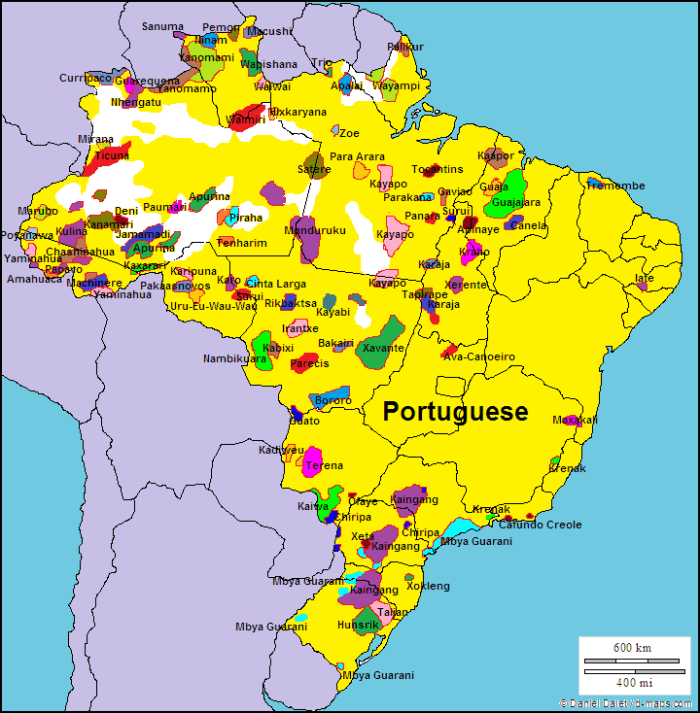
Eye Candy: the languages of Brazil

NOL map Brazil languages
Click here to zoom

My only question: no Spanish, anywhere? Not even along the borders?

Nightcap

  1. What is the cost of “tractable” economic models? Beatrice Cherrier, Undercover Historian
  2. Facts vs. hand-waving in economics Chris Dillow, Stumbling and Mumbling
  3. How factories changed the world Donald Sassoon, New Statesman
  4. Defending the Mughals became a way to defend colonial rule Blake Smith, the Wire

Explaining current Brazilian politics to known-Brazilians and why I believe this is time for optimism

It seems that many observers believe that Brazil’s current political situation is one of instability and uncertainty. Since the mid-1990s the national political scene has been dominated by two parties: the Worker’s Party (Partido dos Trabalhadores, PT, in Portuguese) and PSDB. Now, with the main leader of the PT imprisoned – former president Lula da Silva – the PSDB also seems to have lost its rationale. It is clear that this party never had faithful voters, only an anti-PT mass who saw in it the only viable alternative. Given these factors, it is true that a political cycle that began in the 1990s is coming to an end, but far from being a moment of uncertainty and pessimism, this may be the most fruitful moment in the country’s history, as it seems that finally classical liberalism is being vindicated in Brazil.

Brazil began its political history as a semi-parliamentary monarchy. As one observer of the time put it, the country had a “backward parliamentarism”: instead of parliament controlling the monarch, it was the emperor who controlled parliament. Moreover, the Brazilian economy was extremely based on slavery. In theory, Brazil was politically and economically a liberal country. In practice, it was politically and economically a country controlled by oligarchies.

With the proclamation of the republic in 1889, little changed. The country continued to be theoretically a liberal country, with a constitution strongly influenced by the North American one and a tendency to industrialization. In practice, however, Brazil continued to be politically and economically dominated by oligarchic interests.

The republic instituted in 1889 was overthrown in 1930 by Getúlio Vargas. Vargas was president from 1930 to 1945, and his political circle continued to dominate the country until 1964. Once again, political language was often liberal, but in practice the country was dominated by sectorial interests.

Vargas committed suicide in 1954, and his political successors failed to account for the instability the country went through after World War II. The Soviet Union had been trying to infiltrate Brazil since the 1920s, and this was intensified with the Cold War. The communist influence, coupled with the megalomaniacal administrative inability of Vargas and his successors, led the country to such an instability that the population in weight clamored for the military to seize power in 1964.

The military that governed Brazil between 1964 and 1985 were influenced mainly by positivism. In simple terms, they were convinced they could run the country like a barracks. For them, the motto “order and progress” written on the Brazilian flag was taken very literally. One great irony in this is that Auguste Comte’s positivism and Karl Marx’s communism are almost twin brothers, products of the same anti-liberal mentality of the mid-19th century. The result was that Brazilian economic policy for much of the military period was not so different from that of the Soviet Union at many points in its history: based on central planning, this policy produced spectacular immediate results (the period of the “Brazilian miracle” in the early 1970s), but also resulted in the economic catastrophe of the 1980s.

However, the worst consequence of the military governments was not in the economy but in the political culture. The military fought against communism in a superficial way, overpowering only the guerrillas and terrorist groups that engaged in armed struggle. But in the meantime, many communists turned to cultural warfare, joining schools, universities, newsrooms, and even churches. The result is that Brazilian intellectual life was taken over by communism.

Fernando Henrique Cardoso, elected president in 1994, is an important Brazilian intellectual. Although not an orthodox Marxist, his lineup is clearly left-wing. The difference between FHC (as he is called) and a good part of the Brazilian left (represented mainly by the PT) is that he, like Tony Blair in England and Bill Clinton in the US, opted for a third way between economic liberalism and more explicit socialism. In other words, FHC understood, along with leading PSDB leaders, that the Washington Consensus is called a consensus for good reason: there is a set of economic truths (pejoratively called neo-liberals) that are no longer the subject of debate. FHC followed these ideas, but he was heavily opposed by the PT for this.

Since the founding of the PT, in the late 1970s, Lula’s speech was quite radical, explicitly wishing to transform Brazil into a large Cuba. But Lula himself surrendered to the Washington Consensus in the early 2000s, and only then was he able to be elected president. Once in office, however, Lula commanded one of the greatest corruption scandals in world history. In addition, his historical links to the left were never erased. Although in his first term economic policy was largely liberal, this trend changed in his second term and in the presidency of his successor, Dilma Rousseff.

Today Brazil is still living in an economically difficult period, but an ironic result of more than a decade of left-wing government (especially the PT) is the strengthening of conservative and libertarian groups in Brazil. In the elections from 2002 to 2014 it was virtually impossible to identify candidates clearly along these lines. In this year’s election, we expected several candidates to explicitly identify themselves as right-wing. Jair Bolsonaro, the favorite in contention, is not historically a friend of the free market, but his more recent statements demonstrate that more and more he leans in this direction.

It is possible that in 2018 Brazil will not yet elect an explicitly libertarian president. But even so, the economic transformations initiated by FHC seem now to be vindicated. Only with the strengthening of the Internet did Brazilians have real access to conservative and libertarian ideas. With that, one of the most important political phenomena in Brazil in the last decade is the discovery of these ideas mainly by young people, and it is these young people who now cry for a candidate who defends their ideas. Bolsonaro seems to be the closest to this, although there are others willing to defend similar economic policy. After more than a decade of governments on the left, it seems that Brazil is finally going through a well-deserved right turn.

Nightcap

  1. The end of empire and the birth of neoliberalism Deirdre N. McCloskey, Literary Review
  2. Gimme shelter: safe spaces and f-bombs in higher ed Irfan Khawaja, Policy of Truth
  3. Can Fresno State fire a professor for being an ass on Twitter? Ken White, Popehat
  4. The worst effects of climate change may not be felt for centuries Charles C. Mann, TED Ideas