Sensitive and Crucial: on Measuring Living Standards in the 18th Century

In the course of the twitterminar on the High-Wage Economy argument (HWE) which generated responses from John Styles on his blog (who has convinced me that the key solution to HWE rests in Normandy, not the Alsace) and many other on Twitter. In the course of that discussion, I skirted a point I have been meaning to make for a long time. However, I decided to avoid it because it is tangentially related to the HWE story. Its about how we measure living standards over space in the past.

Basically, the HWE story is a productivity story and all that matters in such a story is wage rates relative to other input prices. Because we’re talking about relatives, the importance of proper deflators is not that crucial. However, when you move beyond HWE and try to ask the question regarding absolute differences over space in living standards, the wage rates are not sufficient and proper deflators are needed.

They are many key issues to estimating living standards across space. The largest is that given that very few goods crossed borders in the past, converting American incomes into British sterling units using reported exchange rates would be rife with errors and calculating purchasing power parities would be complicated. The solution, very simple and elegant by its simplicity, is to rely on the logic of the poverty measures. Regardless of where you are, there is a poverty threshold. Then, all that is needed is to express incomes as the ratio of income to the poverty line. If the figure is three, then the average income buys three times the poverty line. Expressed as such, comparisons are easy to do. This is what Robert Allen did and it was basically a deeper and more complete approach than Fernand Braudel’s “Grain-Wages” (wage rates divided by grain prices).

Where should the line be?

While this represents a substantial improvement for economic historians like me who are deeply interested in “getting the data right”, there are flaws. In the course of my dissertation on living standards in Canada (see also my working papers here and here), I saw one such flaw in the form of how long the length of the work year was. In fact, a lot of my comments in this post were learned on the basis of Canada as an extreme outlier in terms of sensitivity. In Canada, winter is basically a huge preindustrial limitation on the ability to work year-round (thus, the expression mon pays ce n’est pas un pays, c’est l’hiver). But this flaw is only the tip of the iceberg. First of all, the winter means that the daily energy intake must substantially greater than 2,500 calories in order to maintain body mass. The mechanism through which the temperature increases the energy requirements of the human metabolism is in part the greater weight carried by the heavier clothing in addition to the energy needed by the body to maintain body temperature. At higher altitudes, these are compounded by the difference in air pressure.In their attempt to construct estimates of the living standards of Natives in the Canadian north during the fur trade era, Ann Carlos and Frank  Lewis assert that it is necessary to adjust the basket of comparison to include more calories for the natives given the climate – they assert that 3500 calories were needed rather 2500 calories for English workers.In Russia, Boris Mironov estimated that the average calories ingested stood at 2952 per day between 1865 and 1915 while the adult male had to consume 3204 calories per day. In Canada in the 18th century, it was estimated that patients at the Augustines hospital in Quebec City required somewhere 2628 calories and 3504 calories per day while soldiers consumed on average 2958 calories per day and the average population consumed 2845 calories per day (see my papers linked up above).  The range of calorie requirements for soldiers (which I took from a reference inside my little sister’s military stuff) is quite large: from 3,100 in the desert at 33 degrees Celsius to 4,900 in artic conditions (minus 34 degrees Celsius) – a 58% difference. So basically, when we create welfare ratios for someone in, say, Mexico, the calories needed in the basket should be lower than in the Canadian basket.

Another issue, of greater importance, is the role of fuel. In the welfare ratios commonly used, fuel is alloted at 2MBTU for the basic level of sustenance which. This is woefully insufficient even in moderately warm countries, let alone Canada. My estimates of fuel consumption in Canada is that the worst case hovers around 20MBTU (ten times above the assumption) if the most inefficient form of combustion (important losses) and the worst kind of wood possible (red pine). Similar levels are observed for the American colonies.

Combined together, these corrections suggest that the Canadian poverty threshold should be higher than the one observed in France, England, South Carolina or Argentina. These adjustments can more or less be easily made by using military manuals. The army measures the basic calories requirements for all types of military theaters.

How to factor in family size and use equivalence scales. 

Equivalence scales refer to the role of family size. Given the same income, families of different size will have different levels of welfare. Thanks to economies of scale in housing, cooking, lighting and heating, larger households can get more utility out of one dollar of income. That adjustments are required to render different households comparable is well accepted amongst economists. However, given the sensitivity of any analysis to the assumptions underlying any adjustments, there is an important debate to be had.

The convention among economic historians has been to assume that households have three adult equivalents. This assumption has gone largely undiscussed. The problem is “which scale to use”. The conversion into adult equivalents is subject to debates. Broadly speaking, three approaches exist. The first uses the square root of the number of individuals. The second attributes the full weight of the first adult, half the weight of the second adult and 30% for each child. This approach is commonly used by the OECD, Statistics Canada and numerous government agencies in Canada The third approach is the one used by the National Academy of Sciences in the United States which proposed to use an exponent ranging between 0.65 and 0.75 to household size but only after having multiplied the number of children by 0.7. As a result, a family of four (two parents, two infants) can have either 2 adult equivalents (square root), 2.1 adult equivalents (OECD and Statistics Canada approach) or 2.36 adult equivalent (NAS approach). The differences relative to the square roots approach are 5% and 18%. If we move to a family of 6 persons, the differences increase to 10.22% and 34.72%.  If we are comparing regions with identical family structures, this would not be a problem. If not, then it is an issue. The selection of one method over another would have important effect on the cost of the living basket, with the NAS approach showing the costliest basket. Using a method relatively close to that of the OECD (although not exactly that measure), Eric Schneider found that the relatively small size of families in England led Allen to underestimate living standards. In a more recent paper, Allen alongside Schneider and Murphy pointed out that extending Schneider’s analysis to Latin America where “family sizes were likely larger (…) than in England and British North America” would amplify the wage gap between the two regions.
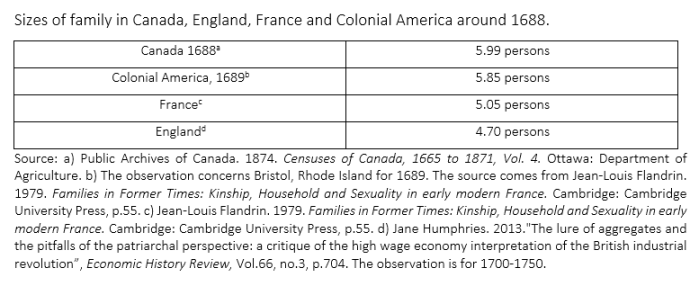
familysize

The table above shows how much family size varied around the late 17th century across region. Clearly, this is a non-negligible issue.

Sensitivity of estimates

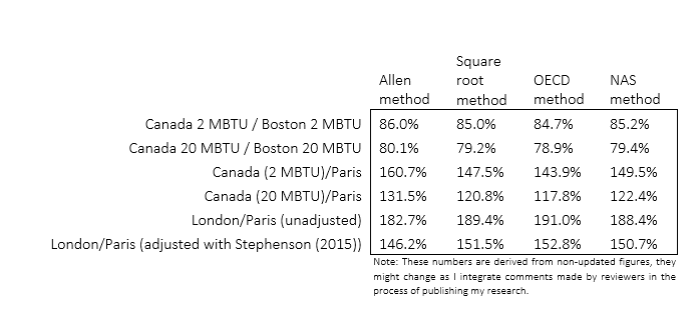
Just to see how much these points matter, let’s modify for two easily modifiable factors: household size (given the numbers above) and fuel requirements (calories from food are harder to adjust for and I am still in the process of doing that). Let’s recompute the welfare ratios (those classified as bare bones) of Canada (the outlier) relative to the other according to different changes circa the end of the 17th century. How much does it matter?

Comparing New World places like Canada and Boston does not change much – they are more or less similar (family size and relative price-wise). However, just adjusting for family size eliminates a quarter of the gap between Canada and Paris (from 61% to somewhere 43.9% and 49.5%). Then, the adjustment for the fact that it is freezing cold in Canada eliminates a little more than half the advantage Canada enjoyed. So roughly two third of the Canadian advantage over Paris (the richest place in France) is eliminated by adjusting for family size and fuel consumption without adjusting for food requirements. However, family size does not affect dramatically the comparison between Paris and London (regardless of whether we use the Allen figures or the Stephenson-Adjusted figures).  Thus, most of the sensitivity issues are related to comparing the New World with the Old World. effectofcorrections
Still, there are some appreciable differences from family structures within Europe (i.e. the Old World) that may alter the relative positions.  For example, Ireland had much larger families than England in the 18th century (see here – the authors shared their dataset with me and a co-author): in 1700, England & Wales had an average household size of 4.7 compared with 5.32 in Ireland. That would moderately disrupt the comparison. Not as much as comparison between the New World and Old World, but enough to make cautious about European differences.

Conclusion

I have seen many discussions regarding the sensitivity of welfare ratios in numerous papers. I am not attempting to make my present point into some form of revolutionary issue. However, all the sensitivity estimates were concentrated on a case or another and they all concern a specific problem. No one has gathered all the problems in one place and provided a “range of estimates”. Maybe its time to go in that direction so that we know which place was poor and which was not (relative to one another, since anything preindustrial was basically dirt-poor by our modern standards).
On Capitalism and Slavery : Pêle-Mêle Comments

Last week, a debate was initiated via an article in the Chronicle of Higher Education that relates to the clash between historians and economists over the topic of slavery. The debate seems acrimonious given the article and at the reading of a special issue of the Journal of Economic History regarding the Half has never been told by Edward Baptist, its hard to conclude otherwise. Pseudoerasmus published comments on the issue in a series of posts and a Trumpian twitterstorm (although the quality is far from being Trumpian). I find myself largely in agreement with him in response to the historians, but there are some pêle-mêle points that I felt I needed to add.

On Historians Versus Economists

To be honest, when I took my first classes in economic history, it seemed clear that there were important points that were agreed upon in the literature on slavery. The first was that the accounting profitability of slavery was not the same as the economic profitability (think opportunity cost here) of slavery. Thus, it was possible that (concentrating on the US here) the peculiar institution could more or less thrive regardless of the social costs it imposed (i.e. slavery is a tax on leisure which also increases the expropriation rate from slaves, and non-slaveowners often had to shoulder the cost of enforcing the institution). This argument is not at all new; in fact it is basically a public choice argument that Gordon Tullock and Anne Krueger could have signed on to without skipping a heartbeat (see Sheilagh Ogilvie – one of my favorite economist who does history in equality with Jane Humphries). The second point of agreement is that no one agreed on how to measure the productivity of slavery in the United States and the distribution of its costs and gains. The second point has been a very deep methodological debate which related to the method of measuring productivity (CES vs Translog TFP – stuff that would make your head blow and which also lead to the self-invitation of the Cambridge Capital Controversy to the debate). The quality of the data has been at the centre-stage as well, and datasets on slave prices, attributes, tasks and many other variables are still being collected (see notably the breathtaking work of Rhode and Olmsted here and here).

Thus, I will admit to being unimpressed by the use of oral histories to contest that literature. In addition, the absence of theory in Baptist’s work yields an underwhelming argument. Oral histories are super-duper important. The work of Jane Humphries on child labor is a case in point of the need to use oral histories. She very carefully used the tales told by children who worked during the industrial revolution to document how labor markets for children worked. The story she told was nuanced, carefully argued and supported by other primary evidence. This is economic history at its best – a merger of cliometrician and historian. In fact, while this is an evaluation that is subjective, the best economists are also historians and vice-versa. The reason for that is the mix of theory with multiple forms of evidence. But they key is to have a theory to guide the analysis.

Unexpectedly for some, the best exposition of this argument comes from Ludwig von Mises in his unknown book Theory and HistoryI was made aware of that book in a discussion with Chris Coyne of George Mason University and I proceeded to reading it. I was surprised how many similarities there were between the Mises who wrote that book and the Douglass Norths and the Robert Fogels of this world. The core argument of Theory and History is that axiomatic statements can be applied to historical events. The goal of historians and economic historians is to sort which theory applies. For example, the theory of signaling and the theory of asymmetric information are both axiomatically true. Without the need for evidence, we know that they must exist. The question of an economic historian becomes to ask “did it matter”? Both theories can compete to offset each other: if signaling is cheap, then asymmetric information can be solved; if it is not, asymmetric information is a problem. Or both may be irrelevant to a given historical development. To explain which two axiomatic statements apply to the event (and in what dosage), you need data (quantitative and qualitative). Thus, Theory and History actually proposes the use of econometrics and statistical methods because it does not try to predict as much as it tries to a) sort which axiomatic statements applied; b) the relative strengths of competing forces; c) the counterfactual scenario.

Without theory, all you have is Baptist’s descriptions which tell us very little and can, incidentally, be distorted by he who recounts the tales he read.

On the Culture of Peasants/Slaves/Slaveowners

When I started my PhD dissertation Canadian economic history, the most annoying thing I saw was the claim that the French-Canadians had “different mentalities” or “more conservative outlooks”. This was basically the way of calling them stupid. This has recently evolved to say that they “maximized goals other than wealth”. Regardless, this was basically: the French-Canadian was not culturally suited for economic development.

But culture is not a fixed variable, it is not an exogenous variable. Culture is basically the coherent framework built by individuals who share certain features to “cut out” the noise. Everyday, we are bombarded with tons of pieces of information and there is no way that the human brain can process them all. Thus, we have a framework – culture (ideology does the same thing) – which tells us what is relevant and what is irrelevant and what interpretation to give to relevant information.

People can cling to old beliefs for a long time, but only if there is no cost to them. I can persist in terrible farming practices if I am not made aware of the proper valuation of the opportunity I am foregoing. For example, British farmers who arrived in Quebec in the 19th century tended to use oxen as they did in England for tilling the soil. They had probably been taught to do that by their parents who learnt it from their grandparents because it was part of the farming culture of England. The behavior was culturally inherited. However, when they saw that the French-Canadians were using horses and that horses – in the Canadian hinterland – got the job done better, they shifted. The culture changed at the sight of how important was the foregone opportunity by continuing to use oxen. Where the British and the French co-existed, both were equally good farmers. Where they could not observe each other, they were all sub-optimal farmers. Seeing the other methods forced changes in culture.

The same applies to slaveowners and slaves! Slaveowners were a more or less tightly knit group that frequented similar circles and were constantly on the lookout to increase productivity. If some master had noticed that he could increase production by whipping more slaves, why would he not adopt this method? Why would he leave 100$ bill on the street? Why did the masters growing cotton in South Carolina not adopt the method of whipping adopted by growers in Louisiana? Without a theory of how culture changes (and what purposes it serves beyond the simplistic Marxist power structure argument), there is no answer to this question. With the work of Rhode and Olmstead, there is an answer: the type of cotton that had higher yields was not suited for growing everywhere! In this case, we are applying my comment from the section above on Historians versus Economists. There are competing theories of explaining increasing output: either some slave masters were unable to observe the other slave masters and adopt the torture methods they had (which would need to be the case for Baptist to be right) or there were biological limitations to growing the better crops in some areas (Rhode and Olmstead).

Two competing theories (they are not mutually exclusive though) that can be tested with data and they set a counterfactual. That is why you need theory to make good history.

One last thing: slave owners were not capitalists

This is probably the most childish thing to come out of works like those of Baptist: to assert that because slaves were capital assets, that the owners were capitalists. That is true if you want to adhere to the inconsistent (and self-contradicting) Marxist approach to capital. In fact, as Phil Magness pointed out to me, slave owners were not free market types. They were very much anti-capitalists. Slavery apologists like Fitzhugh and Carlyle were even more anti-capitalists than that. It’s not because you own capital that you are a capitalist unless you adhere to Marxist theory.

But, capital is just a production input. Its value depends on what it can produce. As Jeffrey Hummel pointed out, there is a deadweight loss from slavery: enforcement costs, the overproduction of cotton because slavery is basically a tax on leisure and the implicit taxation of the output produced by slaves. All three of these factors would have slowed down economic growth in the south. Thus, as capital assets, slaves were relatively inefficient.

Wars and Presidents: Avoiding the Power-Display Bias

This week on EconTalk, Russ Roberts interviewed Bruce Bueno de Mesquita on how presidents who took the United States to war find themselves higher in the rankings of “Great Presidents” (see this paper by Henderson and Gochenour on the issue)  For some time now, I have found myself in agreement with that contention as wars are generally momentous events that stand out in history. In contrast, the man who sits by and does nothing except preventing a war or making it easier for people to trade, that is harder to observe.  But why would evaluating Presidents be associated with such a premium? Individuals are aware that wars are bad, so why are they praising this? On other metrics, how do Presidents fare?

On the power-display bias 

In my forthcoming book on Canadian economic history (published by Palgrave McMillan as part of their Studies in Economic History), I reviewed some pantheons and counter-pantheons of Presidents (which I will present below) and I felt I had to offer my argument regarding these pantheons:

The established pantheon and the counter-pantheon differ mostly due to people’s bias towards positively assessing outward signs of power. When he wrote to one of his correspondents that “absolute power corrupts absolutely,” British historian Lord Acton was not only speaking of politicians, but also of those would retroactively judge them: Acton was referring to a general human tendency – accentuated amongst historians – to be more forgiving of those who hold power, because the powerful are judged by their actions. Indeed, it is easier to size up a politician who undertook significant reforms – regardless of the results obtained thereby – than to evaluate the achievements of one who passively held the line. If the reformer fails, it can be said that at least he tried. Moreover, a given president’s place in the pantheon is closely linked to how many Americans he killed during the military conflicts that defined his reign. The more Americans killed per capita overall, the higher a given president’s ranking in the list of “greats.”

Economic history teaches us, however, that the most proactive presidents may not be the most beneficial to their country, on the contrary. For several years now, Franklin Delano Roosevelt (1933-1945) has been the subject of increased criticism in the economic literature for his interventionist economic policies between 1932 and 1939. Economists Albrecht Ritschl, Monique Ebell, Lee Ohanian and Harold Cole have determined that FDR’s interventionist policies in fact served to prolong the Great Depression.

In other words, the bias we have when evaluating men with power is that we evaluate based on the exercise of displaying the use of power. Those who refrain from using it are, properly, not recorded as historical events are conflicts/tensions/oppositions. This I think is generally a bias that is easily to fall prey to. I am not immune to that even if I happen to have libertarian leanings. I often see in one politician or another in history a man/woman that I wish would be here today to “save the day” (one of my childish belief). But each time I dig around that person, I am less enthused. For example, I used to be an admirer of William Pitt the Younger – a fierce one. After all, he had assisted Wilberforce in ending the slave trade, he had instituted a sinking fund to repay the British public debt (he had willfully tied his hands) and he he had been moderately sympathetic to the American revolution. I saw his role in the wars against France as a contest of circumstances. But, that was the point, I was ready to discount the war. In addition, as I read the work of Jane Humphries on child labor in industrializing Britain (here and here), I discovered more unsettling things.  During the French Wars, the build-up of the British state did lead to some crowding-out on factors markets, notably the labor market. Upon complaints of manufacturers, Pitt proposed to “Yoke Up the Children”. More precisely, he proposed the use of orphan in the public care to work as pauper apprentices to firms at pences on the shilling (bad pun of pennies on the dollar). He “lent” orphans to private firms and its hard to assume that they consented to work (as Humphries’s use of oral histories makes clear). If a person with libertarian leanings like me was willing to excuse such a man before, it is quite telling of how limited knowledge shores up the reputations of powerful men. This is because their use of power overshadows all the rest. Their use of power is like the joke about economists looking where the lamppost is: we evaluate them on what their use of power has illuminated.

Other Metrics

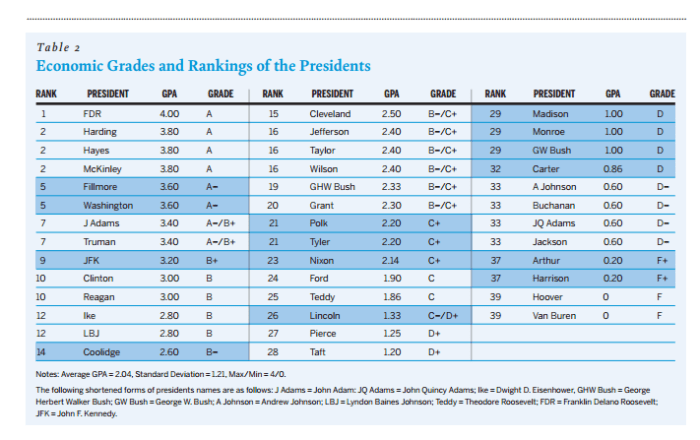
So, are there any other metrics that are less subjected to our inherent power-display bias? Obviously, anything that has a subjective element will be biased. However, evaluating the evolution of living standards under their rule is one way to go at it. Mark Zachary Taylor, in an article published in PS: Political Science and Politicsproposed an economic ranking of US Presidents since 1789. Whichever way you cut it, there is a weak rank correlation between the rankings of presidential greatness and the ranking of economic grades.

Ranking.png

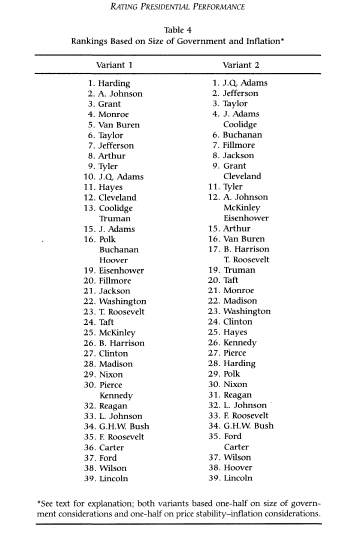
There is another type of ranking, which is more subtle. It measures how much Presidents refrained from expanding federal power. This exercise was made by Richard Vedder and Lowell Gallaway (two great economic historians) who measured presidents based on their changes to the size of government and inflation. This measure alone (see table below) is not sufficient to be convincing, but taken as part of a constellation of rankings, it provides a key piece of evidence. This is really a counter-pantheon to the rankings of presidential greatness. In fact, one could see it as the cost for societies of presidential greatness.

presidentialgreatness

When comes the time to evaluate great rulers, being aware of our biases is crucial (as Lord Acton, I think they should rarely be excused based on flimsy excused like circumstances – the virtue of being an historian/economic historian is that we have enough hindsight to say how terrible certain choices were).  And that awareness should lead us to develop a “dashboard” of rankings to properly weigh the impact of such rulers.

Communism and reading

Below is an excerpt from my book I Used to Be French: an Immature Autobiography. You can buy it on amazon here.


My parents pro-Americanism must have been displayed often because faith in Communism was on the ascendancy during the miserable post-war years. That was when a significant fraction of French public opinion became mindlessly and reflexively anti-American, seemingly forever. Yet, rampant anti-Americanism hardly interfered with American cultural influence. The first movie I saw was a Charlie Chaplin, the first cartoon, Snow White. Every week, when I had been good, I had my copy of Mickey Mouse Magazine (“Mikay Mooze”), although there were excellent French and Belgian children’s periodicals. One of the best French-language children’s periodical had a Far-West serial, “Lucky Luke” that still amazes me for its historical and geographic accuracy. Somebody in the France of the fifties was an attentive student of Americana. Made-in-America action hero comics were forbidden fruits though. To this day, I don’t know why they were prohibited. Perhaps my mother thought them “vulgaires,” like many other things. Later, the first music I paid attention to was jazz.

Movies played a big role in shaping my world-view. I did not develop a sense for what was an American movie rather than a French movie until I was about fifteen. My real second language was thus the extremely bad, stilted French dubbing of American motion pictures. The dubbing is awful to this day. When the hero shoots the bad guy in the gut with a “Take this, you motherfucker!” it comes out in French like this: “This will teach you a lesson, mean man.” All dubbing is done in France by people who don’t know English well, I suspect. The same dozen voices are used over and over again. The dubbers are immortal, it seems. You might say that I was brought up in good part by a curiously distorted Hollywood.

Regional jealousies and transboundary rivers in South Asia

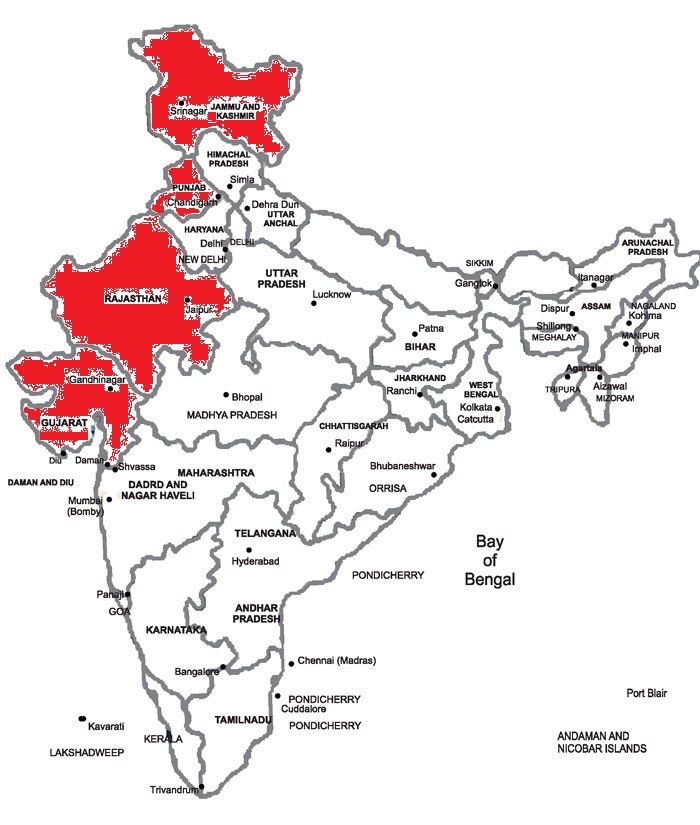
In the final reckoning, Pakistan got about 80 per cent of the Indus and India 20 per cent. India has limited rights on the western rivers and cannot undertake projects on those rivers without providing all the details to Pakistan and dealing with Pakistan’s objections. Why did India put itself in that position? The answer is that if Pakistan got the near-exclusive allocation of the three western rivers, India for its part got the eastern rivers. This was important from the point of view of the Indian negotiators because the water needs of Punjab and Rajasthan weighed heavily with them in seeking an adequate allocation of Indus water for India. Yet, Punjab had a serious grievance over the signing of the IWT [Indus Waters Treaty] by the union government. Citing provisions of the IWT which caused transfer of three river waters to Pakistan, Punjab had terminated all its water-sharing agreements with its neighbouring states in 2004.

The demand of Kutch (in Indian Gujarat), which used to fall into a catchment area of River Indus, decades back, was not taken into consideration despite many petitions, arguing about their historical claim on its water, sent by the prominent Kutchi leaders, in 1950s, to India’s Ministry of Irrigation and Power. Also people from the Indian side of Kashmir always show their ire against the IWT. On 3 April 2002, the Jammu & Kashmir Legislative Assembly, cutting across party affiliations, called for a review of the treaty. The state government has been contending that in spite of untapped hydroelectric potential, the state has been suffering from acute power deficiency due to restrictions put on the use of its rivers by the Indus Treaty. They claim that their interests were not taken into consideration and their views were not taken while signing the treaty. (6-7)

This is from my latest paper, “Disputed Waters: India, Pakistan and the Transboundary Rivers,” published by Studies in Indian Politics, and which you can find here.

Here is a map of all the Indian states mentioned in the excerpt above:

blog-india


Testing the High-Wage Economy (HWE) Hypothesis

Over the last week or so, I have been heavily involved in a twitterminar (yes, I am coining that portemanteau term to designate academic discussions on twitter – proof that some good can come out of social media) between myself, Judy Stephenson , Ben Schneider , Benjamin Guilbert, Mark Koyama, Pseudoerasmus,  Anton Howes (whose main flaw is that he is from King’s College London while I am from the LSE – nothing rational here), Alan Fernihough and  Lyman Stone. The topic? How suitable is the “high-wage economy” (HWE) explanation of the British industrial revolution (BIR).

Twitter debates are hard to follow and there is a need for summaries given the format of twitter. As a result, I am attempting such a summary here which is laced with my own comments regarding my skepticism and possible resolution venues.

An honest account of HWE

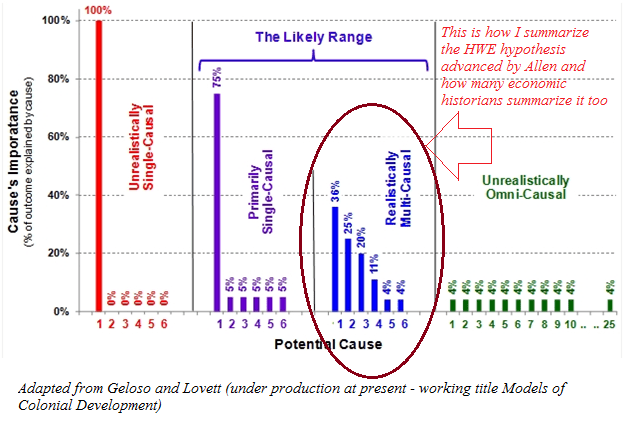
First of all, it is necessary to offer a proper enunciation of HWE’s role in explaining the industrial revolution as advanced by its main proponent, Robert Allen.  This is a necessary step because there is a literature attempting to use high-wages as an efficiency wage argument. A good example is Morris Altman’s Economic Growth and the High-Wage Economy  (see here too) Altman summarizes his “key message” as the idea that “improving the material well-being of workers, even prior to immediate increases in productivity can be expected to have positive effects on productivity through its impact on economic efficiency and technological change”. He also made the same argument with my native home province of Quebec relative to Ontario during the late 19th century. This is basically a multiple equilibria story. And its not exactly what Allen advances. Allen’s argument is that wages were high in England relative to energy. This factors price ratio stimulated the development of technologies and industries that spearheaded the BIR. This is basically a context-specific argument and not a “conventional” efficiency wage approach as that of Allen. There are similarities, but they are also considerable differences. Secondly, the HWE hypothesis is basically a meta-argument about the Industrial Revolution. It would be unfair to caricature it as an “overarching” explanation. Rather, the version of HWE advanced by Robert Allen (see his book here) is one where there are many factors at play but there is one – HWE – which had the strongest effects. Moreover, while it does not explain all, it was dependent on other factors that contributed independently.  The most common view is that this is mixed with Joel Mokyr’s supply of inventions story (which is what Nick Crafts has done). In the graph below, the “realistically multi-causal” explanation is how I see HWE. In Allen’s explanation, it holds the place that cause #1 does. According to other economists, HWE holds spot #2 or spot #3 and Mokyr’s explanations holds spot #1.

hwe

In pure theoretical terms (as an axiomatic statement), the Allen model is defensible. It is a logically consistent construct. It has some questionnable assumptions, but it has no self-contradictions. Basically, any criticism of HWE must question the validity of the theory based on empirical evidence (see my argument with Graham Brownlow here) regarding the necessary conditions. This is the hallmark of Allen’s work: logical consistency. His work cannot be simply brushed aside – it is well argued and there is supportive evidence. The logical construction of his argument requires a deep discussion and any criticism that will convince must encompass many factors.

Why not France? Or How to Test HWE

As a doubter of Allen’s theory (I am willing to be convinced, hence my categorization as doubter), the best way to phrase my criticism is to ask the mirror of his question. Rather than asking “Why was the Industrial Revolution British”, I ask “Why Wasn’t it French”. This is what Allen does in his work when he asks explicitly “Why not France?” (p.203 of his book). The answer proposed is that English wages were high enough to justify the adoption of labor-saving technologies. In France, they were not. This led to differing rates of technological adoptions, an example of which is the spinning jenny.

This argument hinges on some key conditions :

  1. Wages were higher in England than in France
  2. Unit labor costs were higher in England than in France (productivity-adjusted wages) (a point made by Kelly, Mokyr and Ó Gráda)
  3. Market size factors are not sufficiently important to overshadow the effects of lower wages in France (R&D costs over market size mean a low fixed cost relative to potential market size)
  4. The work year is equal in France as in England
  5. The cost of energy in France relative to labor is higher than in England
  6. Output remained constant while hours fell – a contention at odds with the Industrious Revolution which the same as saying that marginal productivity moves inversely with working hours

If most of these empirical statements hold, then the argument of Allen holds. I am pretty convinced by the evidence advanced by Allen (and E.A. Wrigley also) regarding the low relative of energy in England. Thus, I am pretty convinced that condition #5 holds. Moreover, given the increases in transport productivity within England (here and here), the limited barriers to internal trade (here), I would not be surprised that it was relatively easy to supply energy on the British market prior to 1800 (at least relative to France).

Condition #3 is harder to assess in terms of important. Market size, in a Smithian world, is not only about population (see scale effects literature). Market size is a function of transaction costs between individuals, a large share of which are determined by institutional arrangements. France has a much larger population than England so there could have been scale effects, but France also had more barriers to internal trade that could have limited market size. I will return to this below.

Condition #1,2,4 are basically empirical statements. They are also the main points of tactical assault on Allen’s theory.  I think condition #1 is the easiest to tackle. I am currently writing a piece derived from my dissertation showing that – at least with regards to Strasbourg – wages in France presented in Allen (his 2001 article) are heavily underestimated (by somewhere between 12% and 40% using winter workers in agriculture and as much as 70% using the average for laborers in agriculture). The work of Judy Stephenson, Jane Humphries and Jacob Weisdorf has also thrown the level and trend of British wages into doubts. Bringing French wages upwards and British wages downwards could damage the Allen story. However, this would not be a sufficient theory. Industrialization was generally concentrated geographically. If labor markets in one country are not sufficiently integrated and the industrializing area (lets say the “textile” area of Lancashire or the French Manchester of Mulhouse or the Caën region in Normandy) has uniquely different wages, then Allen’s theory can hold since what matters is the local wage rate relative to energy. Pseudoerasmus has made this point but I can’t find any mention of that very plausible defense in Allen’s work.

Condition #2 is the weakest point and given Robert Fogel’s work on net nutrition in France and England, I have no problem in assuming that French workers were less productive. However, the best evidence would be to extract piece rates in textile-producing regions of France and England. This would eliminate any issue with wages and measuring national productivity differences. Piece rates would perfectly capture productivity and thus the argument could be measured in a very straightforward manner.

Condition #4 is harder to assess and more research would be needed. However, it is the most crucial piece of evidence required to settle the issue once and for all. Pre-industrial labor markets are not exactly like those of modern days. Search costs were high which works in a manner described (with reservations) by Alan Manning in his work on monopsony but with much more frictions. In such a market, workers may be willing to trade in lower wage rates for longer work years. In fact, its like a job security argument. Would you prefer 313 days of work guaranteed at 1 shilling per day or a 10% chance of working 313 days for 1.5 shillings a day (I’ve skewed the hypothetical numbers to make my point)? Now, if there are differences in the structure of labor markets in France and England during the 18th and 19th centuries, there might be differences in the extent of that trade-off in both countries. Different average discount on wages would affect production methods. If French workers were prone to sacrifice more on wages for steady employment, it may render one production method more profitable than in England. Assessing the extent of the discount of annual to daily wages on both markets would identify this issue.

The remaining condition (condition #6) is, in my opinion, dead on arrival. Allen’s model, in the case of the spinning jenny, assumed that labor hours moved in an opposite direction as marginal productivity. This is in direct opposition to the well-established industrious revolution. This point has been made convincingly by Gragnolati, Moschella and Pugliese in the Journal of Economic History. 

In terms of research strategy, getting piece rates, proper wage estimates and proper labor supplied estimates for England and France would resolve most of the issue. Condition #3 could then be assessed as a plausibility residual.  Once we know about working hours, actual productivity and real wages differences, we can test how big the difference in market size has to be to deter adoption in France. If the difference seems implausible (given the empirical limitations of measuring effective market size in the 18th century in both markets), then we can assess the presence of this condition.

My counter-argument : social networks and diffusion

For the sake of argument, let’s imagine that all of the evidence favors the skeptics, then what? It is all well and good to tear down the edifice but we are left with a gaping hole and everything starts again. It would be great to propose a new edifice as the old one is being questioned. This is where I am very much enclined towards the rarely discussed work of Leonard Dudley (Mothers of Innovation). Simply put, Dudley’s argument is that social networks allowed the diffusion of technologies within England that fostered economic growth. He has an analogy from physics which gets the point across nicely. Matter has three states : solid, gas, liquid. Solids are stable but resist to change. Gas, matter are much more random and change frequently by interacting with other gas, but any relation is ephemeral. Liquids permit change through interaction, but they are stable enough to allow interactions to persist for some time. Technological innovation is like a liquid. It can “mix” things together in a somewhat stable form.

This is where one of my argument takes life. In a small article for Economic Affairs, I argued (expanding on Dudley) that social networks allowed this mixing (I am also expanding that argument in a working paper with Adam Martin of Texas Tech University). However, I added a twist to that argument which I imported from the work of Israel Kirzner (one of the most cited books in economics, but not by cliometricians – more than 7000 citations on google scholar). Economic growth, in Kirzner’s mind,  is the result of entrepreneurs discovering errors and arbitrage possibilities. In a way, growth is a process of discovering correcting errors. An analogy to make this point is that entrepreneurs look for profits where the light is while also trying to move the light to see where it is dark. What Kirzner dubs as “alertness” is in fact nothing else than repeated and frequent interactions. The more your interact with others, the easier it becomes for ideas to have sex. Thus, what matters is how easy it is for social networks to appear and generate cheap information and interactions for members without the problem of free riders. This is where the work of Anton Howes becomes very valuable. Howes, in his PhD thesis supervised by Adam Martin who is my co-author on the aforementioned project (summary here), showed that most innovators went in frequent with one another and they inspired themselves from each other. This is alertness ignited!

If properly harnessed, the combination of the works of Howes and Dudley (and also James Dowey who was a PhD student at the LSE with me and whose work is *Trump voice* Amazing) can stand as a substitute to Allen’s HWE if invalidated.

Conclusion

If I came across as bashing on Allen in this post, then you have misread me. I admire Allen for the clarity of his reasoning and his expositions (given that I am working on a funded project to recalculate tax-based measures in the US used by Piketty to account for tax avoidance, I can appreciate the clarity in which Allen expresses himself). I also admire him for wanting to “Go big or go home” (which you can see in all his other work, especially on enclosures). My point is that I am willing to be convinced of HWE, but I find that the evidence leans towards rejecting it. But that is very limited and flawed evidence and asserting this clearly is hard (as some of the flaws can go his way). Nitpicking Allen’s HWE is a necessary step for clearly determining the cause of BIR. It is not sufficient as a logically consistent substitute must be presented to the research community. In any case, there is my long summary of the twitteminar (officially trademarked now!)

P.S. Inspired by Peter Bent’s INET research webinar on institutional responses to financial crises, I am trying to organize a similar (low-cost) venue for presenting research papers on HWE assessment. More news on this later.

How I Helped Win World War Two

Below is an excerpt from my book I Used to Be French: an Immature Autobiography. You can buy it on amazon here.


All of a sudden, that road was flooded by a long column of trucks overflowing with big, loud, laughing men in distinctive uniforms. People were shouting greetings and waving flags. It seems that an American soldier jumped off his vehicle, swept me up into his arms and kissed me on both cheeks. That may have been because my mother, who had wanted her second child to be a daughter, processed my long blond hair into Goldilock-style ringlets. That I am straight today is a testimony to the resiliency of genetic programming. My mother always insisted the kissing soldier was black. On the one hand, she may have made up this detail for colorful effect. On the other hand, there were so many trucks the soldiers may have belonged to a transport unit and hence, probably to a black unit in the segregated Army of the day.

It was August 1944. I was two and my family lived in a (nice) city project right on the periphery of Paris, near one of its main access roads. One thing that bothers me about this visual and auditory recollection is that we lived on the east side of Paris. American soldiers should have been arriving from Normandy, in the west. Yet, the memory is clear.

Before the American forces reached Paris, my mother had sewn a makeshift tricolor French flag. The blue came from my father’s old military service flannel sash (a forgotten and now incomprehensible item of clothing). The red came from a Nazi flag my father had stolen from a German general’s car he was supposed to guard. (The Germans were packing up at the time and very nervous. He might have been shot on the spot if he had been caught.) At a loss for white, my mother made the center piece out of one of my diapers. That’s why I have always felt I played a part, although a small one, in the liberation of Paris, a symbolically important phase of WWII.

I was born and conceived during the Nazi Occupation of France when life was tough and entertainment scarce. My father was a Paris cop. His life was not so tough, however, that he did not have the energy to make my mother pregnant one more time before the Liberation, this time with twins. There was little to eat and milk was rationed so, my mother breastfed me for the longest time. I was precocious. At one point, I think I was able to ask for the breast in grammatically perfect French. It must have been embarrassing for her. Or perhaps I made this up on the basis of bits and pieces I picked up while I was growing up, like some of the other early recollections in these truncated memoirs. They stop at age 21 when I moved to the US for good. I made that choice because I think the second part of my life would be less  interesting to an American readership than the first, the preparatory phase, so to speak.

I  described above my first, full, cinematographic memory. From the days before the Liberation, I remember bit and pieces, like still photographs with some sound, glimpses of German uniforms and the vast, beautiful fire of the Paris general mills, a mile away, set by the US Army Air Corps. It’s a little known fact that the Allies bombed the hell out of France right before and during the Normandy landing. The French never complained much; they were different then, and too sick of the German presence to bitch about collateral damage. When the air raid siren sounded, my mother would wrap me up in a blanket and take me down to the basement of our seven-story apartment house. Some tenants were so jaded by then that they did not bother to take shelter. The basement was a crowded but not especially tragic place.

In spite of this dramatic, first, fully formed memory, nothing really important ever happened to me. I have escaped the Chinese curse, of “living in interesting times,” although I did live in fact in quite interesting times. I waltzed through the murderous second half of the twentieth century with hardly a scratch to show for it. All my life, I have been mostly fortunate. The undeserved lucky breaks more than made up for the few unjustified blows fate has dealt me. The luckiest break was my first coming to the US at eighteen, a prelude to immigration three years later. In this country, no one ever oppressed me successfully though a few tried.  Many gave me a push at just the right moment. Mine is a happy story. This makes it worth telling to the largely glum denizens of the twenty-first century.

I live in the sunny, warm climate I longed for as a child, near the sea I always loved, in a small town rich with the small pleasures I have always appreciated: a variety of movies, a good café in an interesting, animated downtown, several bookstores within easy reach, and young people everywhere. My wife is a talented painter whose work I enjoy so much I don’t ever like her to sell it. She has few obligations, and she has not had many for  quite a while. That’s what keeps her beautiful, I think. She is also an immigrant, from the other side of the world from me, yet we see eye-to-eye on most matters. Nevertheless, we each have our own house, feet apart, each gracious in its own way. Although, it’s in the center of town, our tiny plot contains an apple tree, a plum tree, two lemon trees, and a big fig tree. All bear fruits, especially the fig tree, a sort of miracle I never fully grasp, for reasons that will become clear below.

I am a retired university professor and scholar, fairly proud of my scholarship, happy to have been a professor and equally happy to not be one anymore. Most mornings, weather permitting (it permits often, here in California), after the gym and after coffee at Lulu’s, I am forced to decide whether I want to go sailing, or fishing, or just putter about my boat, or start one of my sometimes fairly good postcard paintings, or again, write a micro-story. Sometimes, I just simply spend the whole day reading, for no particular reason and to no particular purpose. I read much history but also almost anything anyone hands me. That would include a fair amount of trash. You guessed it: I am a satisfied lazy man.

The pages below tell the tale of the unlikely beginnings of the journey that brought me to my current state of beatific smugness.

On Cuba’s Fake Stats

On Monday, my piece on the use violence for public health purposes in Cuba (reducing infectious diseases through coercion at the expense of economic growth which in turn increases deaths from preventable diseases related to living standards) assumed that the statistics were correct.

They are not! How much so? A lot! 

As I mentioned on Monday, Cuban doctors face penalties for not meeting their “infant mortality” targets. As a result, they use extreme measures ranging from abortion against the mother’s will to sterilization and isolation.  They also have an incentive to lie…(pretty obvious right?)

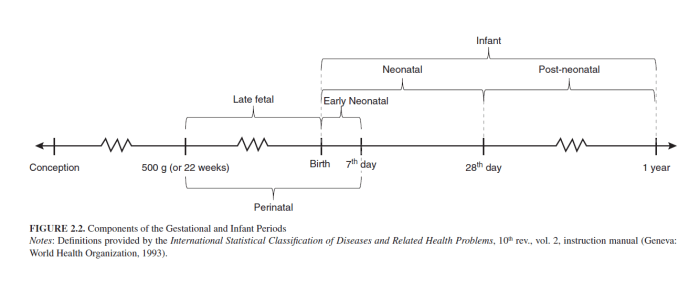
How can they lie? By re-categorizing early neonatal (from birth to 7th day) or neonatal deaths (up to 28th day) as late fetal deaths. Early neonatal deaths and late fetal deaths are basically grouped together at “perinatal” deaths since they share the same factors. Normally, health statistics suggest that late fetal deaths and early neonatal deaths should be heavily correlated (the graph below makes everything clearer).  However late fetal deaths do not enter inside the infant mortality rates while the early neonatal deaths do enter that often-cited rate (see graph below).

Death Structures.png

Normally, the ratio of late fetal deaths to early neonatal deaths should be more or less constant across space. In the PERISTAT data (the one that best divides those deaths), most countries have a ratio of late fetal to early neonatal deaths ranging from 1.04 to 3.03. Cuba has a ratio of more than 6. This is pretty much a clear of data manipulation.

In a recent article published in Cuban Studies, Roberto Gonzales makes adjustments to create a range where the ratio would be in line with that of other countries. If it were, the infant mortality of Cuba would be between 7.45 and 11.16 per 1,000 births rather than the 5.79 per 1,000 reported by the regime – as much as 92% higher. As a result, Cuba moves from having an average infant mortality rate in the PERISTAT data to having the worst average infant mortality in that dataset – above that of most European and North American countries.

So not only is my comment from Monday very much valid, the “upside” (for a lack of a better term) I mentioned is largely overblown because doctors and politicians have an incentive to fake the numbers.

Castro: Coercing Cubans into Health

On Black Friday, one of the few remaining tyrants in the world passed away (see the great spread of democracy in the world since 1988). Fidel Castro is a man that I will not mourn nor will I celebrate his passing. What I mourn are the lives he destroyed, the men and women he impoverished, the dreams he crushed and the suffering he inflicted on the innocents. When I state this feeling to others, I am told that he improved life expectancy in Cuba and reduced infant mortality.

To which I reply: why are you proving my point?

The reality that few people understand is that even poor countries can easily reduce mortality with the use of coercive measures available to a centralized dictatorship. There are many diseases (like smallpox) that spread because individuals have a hard time coordinating their actions and cannot prevent free riders (if 90% of people get vaccinated, the 10% remaining gets the protection without having to endure the cost). This type of disease is very easy to fight for a state: force people to get vaccinated.

However, there is a tradeoff to this. The type of institutions that can use violence so cheaply and so efficiently is also the type of institutions that has a hard time creating economic growth and development. Countries with “unfree” institutions are generally poor and grow slowly. Thus, these countries can fight some diseases efficiently (like smallpox and yellow fever), but not other diseases that are related to individual well-being (i.e. poverty diseases). This implies that you get unfree institutions and low rates of epidemics but high levels of poverty and high rates of mortality from tuberculosis, diarrhea, typhoid fever, heart diseases, nephritis.

This argument is basically the argument of Werner Troesken in his great book, The Pox of LibertyHow does it apply to Cuba?

First of all, by 1959, Cuba was already in the top of development indexes for the Americas – a very rich and healthy place by Latin American standards. A large part of the high levels of health indicators were actually the result of coercion. Cuba actually got its very low levels of mortality as a result of the Spanish-American war when the island was occupied by American invaders. They fought yellow fever and other diseases with impressive levels of violence. As Troesken mentions, the rate of mortality fell dramatically in Cuba as a result of this coercion.

Upon taking power in 1959, Castro did exactly the same thing as the Americans. From a public choice perspective, he needed something to shore up support.  His policies were not geared towards wealth creation, but they were geared towards the efficient use of violence. As Linda Whiteford and Laurence Branch point out, personal choices are heavily controlled in Cuba in order to achieve these outcomes. Heavy restrictions exist on what Cubans can eat, drink and do. When pregnancies are deemed risky, doctors have to coerce women to undergo abortion in spite of their wishes. Some women are incarcerated in the Casas de Maternidad in spite of their wishes. On top of this, forced sterilization in some cases are an actually documented policy tool.   These restrictions do reduce mortality, but they feel like a heavy price for the people. On the other hand, the Castrist regime did get something to brag about and it got international support.

However, when you look at the other side of the tradeoff, you see that death rates from “poverty diseases” don’t seem to have dropped (while they did elsewhere in Latin America).  In fact, there are signs that the aggregate infant mortality rates of many other Latin Americans countries collapsed toward the low-levels seen in Cuba when Castro took over in 1959  (here too). Moreover, the crude mortality rate is increasing while infant mortality is decreasing (which is a strong indictment about how much shorter adult lives are in Cuba).

So, yes, Cuba has been very good at reducing mortality from communicable diseases and choice-based outcomes (like how to give birth) that can be reduced by the extreme use of violence. The cost of that use of violence is a low level of development that allows preventable diseases and poverty diseases to remain rampant. Hardly something to celebrate!

Finally, it is also worth pointing two other facts. First of all, economic growth in Cuba has taken place since the 1990s (after decades of stagnation in absolute terms and decline in relative terms). This is the result of the very modest forms of liberalization that were adopted by the Cuban dictatorship as a result of the end of Soviet subsidies. Thus, what little improvements we can see can be largely attributed to those. Secondly, the level of living standards prior to 1990 was largely boosted by the Soviet subsidies but we can doubt how much of it actually went into the hands of the population given that Fidel Castro is worth 900$ million according to Forbes. Thus, yes, Cubans did remain dirt poor during Castro’s reign up to 1990. Thirdly, doctors are penalized for “not meeting quotas” and thus they do lie about the statistics. One thing that is done by the regime is to categorize “infant deaths” as “late fetal deaths” – its basically extending the definition in order to conceal a poorer performance.

Overall, there is nothing to celebrate about Castro’s dictatorship. What some do celebrate is something that was a deliberate political action on the part of Castro to gain support and it came at the cost of personal freedom and higher deaths from preventable diseases and poverty diseases.

H/T : The great (and French-speaking – which is a plus in my eyes because there is so much unexploited content in French) Pseudoerasmus gave me many ideas – see his great discussion here.

England circa 1700: low-wage or high-wage

A few months ago, I discussed the work of my friend (and fellow LSE graduate) Judy Stephenson on the “high-wage economy” of England during the 18th century. The high-wage argument basically states that high wages relative to capital incite management to find new techniques of production and that, as a result, the industrial revolution could be initiated. Its a crude summary (I am not doing it justice here), but its roughly accurate.

In her work, Judy basically indicated that the “high-wage economy” observed in the data was a statistical artifact. The wage rates historians have been using are not wage rates, they’re contract rates that include an overhead for contractors who hired the works. The wage rates were below the contract rates in an amplitude sufficient to damage the high-wage narrative.

A few days ago, Jane Humphries (who has been a great inspiration for Judy and whose work I have been discretely following for years) and Jacob Weisdorf came out with a new working paper on the issue that have reinforced my skepticism of the wages regarding England. A crude summary of Humphries and Weisdorf’s paper goes as such: preindustrial labor markets had search costs, workers were willing to sacrifice on the daily wage rate (lower w) in order to obtain steady employment (greater L) and thus the proper variable of interest is the wage paid on annual contracts.

While their results do not affect England’s relative position (it only affects the trend of living standards in England), it shows that there are flaws in the data. These flaws should give us pause before proposing a strong theory like the “high-wage economy” argument. Taken together, the work of Stephenson (whom I am told is officially forthcoming), Humphries and Weisdorf show the importance of doing data work as the new data may overturn some key pieces of research (maybe, I am not sure, there is some stuff worth testing).

Adios a Fidel

It was so romantic when those truckfuls of young men with beards took over the cesspool of Havana on New Year’s Eve (a scene immortalized in The Godfather Two). They were bringing freedom and relief from poverty to the beleaguered people of Cuba who had suffered under American imperialism for more than sixty years.

When his main acolyte was through shooting a few hundred political opponents – which took weeks – the business of revolutionary construction began in earnest. Soon, the Revolution had to face an invasion from disgruntled sons of the exiled Cuban upper-class. The invasion was roundly betrayed by the fabled Pres. John F. Kennedy. After that, the Revolution found extravagant financial support from the Soviet Union, a poor country itself but a large one.

Later, the leader of the Cuban Revolution tried to get the US nuked by his big Russian brother. That cool leader must have had his reasons, I am sure.

The stubbornness of opponents (“worms”) was so great that the Revolution was forced to jail a few thousand of them, including poets (along with thousands of men whose crime was homosexuality). Other obdurate traitors to the Revolution left Cuba on balsa rafts and on rafts made with old barrels. Many drowned at sea. Their choice! After a while, one Cuban in five was living abroad, away from the workers’ paradise.

The Revolution triumphed in the fields of education and public health. Nowadays, Cubans’ level of literacy is a high as that of other Latin American countries. Although it’s not really free, the Cuban public health service is pretty good, what with its separate public-public sector and its sector for Communist Party members only, the two equal to each other, of course.

When the first leader became too old, somehow, the best revolutionary found to succeed him was his little brother, as happened in other people’s democracies such as North Korea.

In the meantime, there had been several military adventures, all in tropical countries where even ordinary Cuban privates could afford bananas for once. That they did not win anywhere was not their fault. One prominent general even had to be shot by the leadership because he was dealing drugs. His trial lasted a whole week.

Today, after fifty years, progress is so great that ordinary Cubans easily earn forty or fifty dollars a month. Many earn three times more by renting their bedroom to foreign visitors. Take university professors and medical doctors. They can always make much more than fifty a month by driving a taxi. And meat is now available six days a month instead of the customary four. You can’t argue with this!

As Westerners, we must be especially grateful that the Cuban Revolution has made the island into one of the best destinations for sex tourism in the world.

Yes, Fidel was really, really cool and we will all miss him. He was our youth. He embarked on a great experiment in human happiness. That it failed is not his fault at all. Nobody is perfect. At least, his long life of power and influence has had the great merit of showing what happens to Communist take-overs in the long run, when no external factor puts a precocious end to them.

PS To this day, many Cubans and an embarrassing number of western leftists believe that the Cubans’ poverty is mainly due to the US BLOCKADE of the island. Well folks, there was a blockade, in the early sixties. It lasted two weeks (fourteen or fifteen days). Since then, there has been an American economic embargo on Cuba. It means that Americans cannot buy from or sell most items to Cuban economic actors. Cubans could always buy anything from and sell anything to anyone else in the whole wide world, including our Canadian cousins who have everything we have. We are talking here of a fifty year-old grand lie. You had to be cool, like Fidel and his little brother to pull it off!

From the Comments: Lenin knew what he was doing when he picked Stalin

Barry and William had an interesting discussion in the ‘comments’ threads of Dr Rosi‘s post about Lenin. At the heart of the dialogue is whether or not Lenin thought Stalin was an incompetent fool. Here is Dr Stocker’s final response:

This all depends on accepting that a text written by Krupskaya was Lenin’s own view. Leaving that aside, Kotkin is very against the idea that Stalin was stupid and I don’t think we should equate Stalin’s crassness with stupidity. Even leaving aside Kotkin, it is clear that Stalin did intellectually demanding things over many years, with regard to political organisation, political journalism and writing on Marxist doctrine (particularly the national question and this was before the Revolution long before issues of Stalin getting people to write things for him).

General Secretary of the Party was a very influential job, which meant selecting the people to run the party and therefore the country along with a complex range of other tasks which require some intellectual capacity. If Lenin appointed Stalin believing that Stalin was not very bright and could therefore be given an unimportant job, he was bizarrely mistaken about the demands and influence of the party secretary, the head of the Party in a party-state. Lenin did not need this title as he was the undoubted leader and instigator of the October Revolution. After he was off the scene, the party secretary would inevitably be the most powerful person in Russia. Stalin was at all times crude, brutal, cunning, calculating and dishonest in his behaviour, but this is not same as intellectual lack.

As Robert Service, amongst others, have pointed out Trotsky portrayed himself as the great intellectual with the right to inherit Lenin’s mantle and needed to portray Stalin as stupid and maybe needed to believe that someone lacking in his formal education, knowledge of foreign languages and manners associated with intelligentsia culture really was stupid. Well Stalin won the power struggle and I think it had something to do with intelligence behind the crassness.

Lenin and Trotsky themselves have been exaggerated as Great Thinkers by their followers. Clearly they had some scholarship and intellectual capacity, but what did they write which anyone would care about if they hadn’t come to power in 1917? Interest in Lenin’s writings has dropped off in a quite extreme way since Leninism stopped being the official ideology of what used to be the USSR, allied regimes and some large allied political parties outside the socialist bloc. Sort of equalises the intellectual legacy of Lenin, Trotsky and Stalin.

Read the whole thing.

Explicando a eleição de Trump para brasileiros

Para qualquer um que acompanhou as notícias pela grande mídia brasileira (leia-se especialmente Globo e Globonews) a eleição de Donald Trump para a presidência dos EUA parece ter sido em primeiro lugar uma surpresa imprevisível e em segundo lugar a maior desgraça que poderia se abater sobre aquele país e o mundo, quando ao mesmo tempo estes perderam a chance de serem agraciados com a primeira mulher presidente dos EUA, a imaculável Hillary Clinton. Para responder a esta avaliação, faço aqui algumas observações a respeito do sistema político e eleitoral dos EUA.

Há basicamente dois partidos políticos nos EUA: Democratas e Republicanos. Diferente de algumas bobagens que vi nos principais canais de notícias, o Partido Democrata não remonta a Thomas Jefferson. Remonta sim a Andrew Jackson, primeiro presidente populista dos EUA e notório assassino de índios. Ao longo do século 19 o Partido Democrata foi o grande defensor da escravidão, e com a abolição desta nefasta instituição tornou-se o grande defensor da segregação. Woodrow Wilson e Franklin Delano Roosevelt, famigerados presidentes democratas, muitas vezes tratados como grandes heróis da democracia, foram grandes expansores do governo federal e enfraquecedores da economia americana. Na década de 1960 o Partido Democrata criou uma versão norte-americana de Welfare State que desde então mais prejudica do que ajuda os mais pobres. Do século 19 ao 21, o Partido Democrata está sempre ao lado dos mais poderosos e contra os mais pobres, não importa se dizem o contrário.

A origem do Partido Republicano é menos antiga. O GOP (grand old party), como é chamado, foi formado pela união de vários movimentos abolicionistas, e seu primeiro presidente foi Abraham Lincoln. Em resposta à eleição de Lincoln, estados escravistas do sul dos EUA romperam com a União, dando início à Guerra Civil. Embora a história do GOP esteja cheia de controvérsias, o fato é que ao longo do tempo este partido foi mais inclinado ao livre mercado, defensor mais forte dos direitos individuais e menos populista do que seu adversário Democrata.

Para além dos partidos, a população dos EUA se divide basicamente em duas correntes políticas: liberais e conservadores. Diferente do que ocorre no Brasil ou na Europa, o termo liberal é utilizado nos EUA para indivíduos de esquerda. O termo liberal passou por uma mudança na virada do século 19 para o 20, sendo adotado por indivíduos do movimento progressivista (notoriamente o já citado presidente Woodrow Wilson), que defendia a expansão dos poderes do estado e menor liberdade de mercado. Eventualmente o termo liberal tornou-se associado aos Democratas.

Conservadores nos EUA são as pessoas que querem conservar o país como este foi fundado no final do século 18. Conservadores são mais constitucionalistas do que os liberais, defendem um governo mais limitado e maior liberdade de mercado. Em outras palavras, conservadores são liberais clássicos, enquanto que liberais deturparam este termo, quando deveriam se chamar de progressivistas (embora seja altamente questionável se sua posição promove algum progresso). Eventualmente conservadores também se tornou um termo ligado a cristãos, embora esta ligação seja menos necessária do que possa parecer. Conservadores estão particularmente ligados ao Partido Republicano.

Evidentemente é impossível que a população de um país grande como os EUA se encaixe perfeitamente em somente dois partidos políticos ou duas tendências ideológicas. Os liberais em geral defendem liberdades sociais (como legalização das drogas e união civil de homossexuais), mas são contra liberdades econômicas (como contratos livres entre trabalhadores e empregados). Conservadores são contra liberdades sociais e favoráveis a liberdades econômicas. Pessoas favoráveis aos dois tipos de liberdade sentem-se pouco representadas nos dois principais partidos, e, embora em geral optem pelo GOP, também tem como opção o Partido Libertário ou o movimento Tea Party (não um partido político formal, mas sim um movimento de protesto contra o crescimento do estado, em favor do retorno aos parâmetros constitucionais). Há também socialistas, ambientalistas, comunistas, e todo o tipo de tendência política nos EUA. O fato é apenas que somente dois partidos possuem uma representatividade nacional.

O fato de que os EUA possuiriam somente dois partidos políticos expressivos foi previsto bastante cedo por James Madison, um dos Pais Fundadores e principal autor da Constituição. No final do século 18, Madison previu que devido ao tamanho do país (ainda pequeno se comparado com as dimensões atuais) e sua diversidade, um partido de projeção nacional precisaria evitar extremismos e se focar em posições moderadas, que pudessem atender à população como um todo. Foi o que aconteceu. Ao longo de toda a sua história os EUA tiveram um sistema bipartidário, variando apenas os partidos que compõem este sistema. Republicanos e Democratas tem sido estes dois partidos desde meados do século 19.

Na primeira metade do século 19 outros partidos compuseram o sistema bipartidário previsto por Madison. Mudanças variadas levaram partidos antigos a perder relevância e serem substituídos por novos. É possível que o mesmo fosse ocorrer com Democratas e Republicanos, mas mudanças na lei eleitoral realizadas especialmente na década de 1970 tornaram mais difícil a entrada de competidores nas eleições. Estas mudanças são em parte responsáveis pela animosidade de grande parte do eleitorado, que não se sente representado por nenhum dos partidos, e consequentemente não se importa em votar. Este quadro é um alerta para pessoas que defendem uma genérica reforma política no Brasil, particularmente uma que limite a entrada de novos partidos.

Há em geral uma grande distância entre o que políticos falam em uma campanha e o que fazem uma vez nos cargos. Isto é particularmente verdade a respeito de Hillary Clinton. Graças à sua vasta experiência em cargos públicos, podemos dizer com segurança que Clinton é uma política profissional que busca angariar votos com argumentos que não necessariamente irão guiar suas ações uma vez no cargo. Trump é um político novato, e assim esta mesma avaliação torna-se impossível de fazer, mas há a impressão de que sua campanha foi conduzida como um dos reality shows de que ele fazia parte anos atrás: trata-se de uma realidade produzida com o objetivo de alcançar audiência, não de realidade real. É bastante provável que Trump presidente seja bem mais moderado do que Trump candidato, para o bem ou para o mal. Simpatizantes de Hillary podem se impressionar, assim como eleitores de Trump podem se sentir traídos.


Early childhood memories of a Cambodian refugee camp

In 1991, sixteen Khmer families from Cambodian refugee camps (mostly from Khao I Dang) received asylum in the Netherlands. This Saturday, November 5, we will celebrate the 25th anniversary. To commemorate our stay in the Netherlands, I would like to share some of my early childhood memories about being born in a Cambodian refugee camp in 1986.

I understand that my story is just one small, but essential part of my family’s overall journey for safety from the civil war (1967-1975), Khmer Rouge (1975-1979) regime, and the subsequent Vietnamese occupation. According to some estimates, 2 million out of 8 million people died during this long period. This figure has been contested many times. I don’t think anyone knows how many people have actually died, but if I look at the family members of my parents’ households: 40% from my mum’s side died and 25% from my dad’s side.

Khao I Dang, the refugee camp where I was born

My parents were forced to work in labour camps in the countryside in Battambang by the Khmer Rouge. They eventually met each other while fleeing from Battambang to the Thai border when the Vietnamese invaded Cambodia. As with most fleeing Cambodians, my parents decided to get together – not out of love, but more out of the need and desire to share their hardships. This was after all, a months-long journey through the heart of the Cambodian jungle in which my father lost his father, the granddad I never came to know. My mother lost her brother and her father. As my mother was separated from her brother early on during the Khmer Rouge regime and never witnessed his death, she had always held hope that one day she would find him again.

My parents’ long journey towards Thailand brought them to the Sa Kaeo camp which was the first organized refugee camp that opened in 1979. Within just 8 days, the refugee population grew to 30,000. The camp eventually closed down half a year later, because of unfavorable conditions. The drainage in the campsite was for example so poor that several refugees, too weak to lift their heads, drowned from a flood as they laid on the floor in tents made of plastic sheets.

One month after the opening of Sa Kaeo, the Khao I Dang camp was opened and many people were repatriated into Khao I Dang. My parents eventually ended up there as well.

Khao I Dang camp

Khao I Dang was a refugee camp on the Thai-Cambodian border where I was born. It was a bamboo village with dirt roads, barbed wire, and armed guards. Within just 5 months, the camp’s population reached 160,000. Population wise, this would make the camp the 11th largest municipality in the Netherlands.

Although the camp gave us more safety, violence and theft ran rampant.

Religion and death

People continued their religious activities and some houses were transformed into places for Buddhist ceremonies. In this picture you see my two brothers, my father, and I wearing our best clothes. We just came back from a visit to a local ‘temple’. The husband of my aunty, who had just been allowed to find refuge in Australia, had recently died in the camp.

My two brothers, me, and my father

Behind me is a grave of him. My father hired a photographer to take this picture so that he could send it to my aunty. I am the one barefooted.

Hospital

My father worked at the hospital. The hospital was a large hall with beds placed next to each other. I remember that I visited the hospital where I was given a doctor’s gloves to play with. I would blow it and enjoy a child’s kick out of it.

Hospital in Khao I Dang

Night raids

I remember that during some nights, rebels with guns would raid people’s houses to steal their belongings. Often, the word about night raids spread faster than the rebels themselves, and so most of the times we were warned before the rebels reached us. I remember very well one incident when we did not flee early enough.

My brothers and I ran after my father, while my mother took my baby sister in her arms to flee in separate directions. My father brought us into a nearby canal to hide there. When the Thai patrolling soldiers within the camp arrived at the scene, shooting between the two groups erupted. When I think back to this moment, I can still clearly feel the fear I had. I wanted to cry, but my father put his hands tightly on my mouth so that I would not make any sound. We then fled to the hospital where my father was working, and stayed there during the night. We were too afraid to go back home, and waited until the next morning.

In another incident, our neighbors were too late to flee and somehow for reasons unknown, a rebel threw a hand grenade inside their little home that killed the whole family.

Kindergarten

Despite the violence and misery, people tried to rebuild their normal lives. I went to kindergarten and remember so well one incident that I played hooky.

I was 4 years old and walking to school by myself, I stopped and decided to return home to my mother’s small shop. This is an incident that I am personally extremely proud of. As long as I can remember, I have always detested school. I hated to sit still and to be told what to do and what not to do. I took this attitude with me to the Netherlands, and still today I am very critical of schooling. My mother, a soft young woman, let me stay with her at the shop. But then my father came by, got angry with me, and spanked me for not going to school. Until this day I still don’t think that I did anything wrong.

Our little shop

Trade went on. Although it was illegal, industrious people were trying to make money by starting small businesses. This shows to me that entrepreneurship is natural to us human beings, and that economics and trade are naturally emerging processes as people are always looking for ways to improve their lot and to fulfill their needs.

Thai merchants would come to the fences, away from the Thai soldiers who were patrolling, in order to sell food to the refugees inside. Such activities occurred during night-time. When Thai soldiers would find out that we were trading with outsiders, they would beat us and take away our belongings. We, refugees, were also not allowed to get outside of the camp or we would risk being shot dead by Thai soldiers.

My mother, my brothers and I at our little shop. I am the one in the blue jersey

During day-time, people inside the camp would expose their new belongings and small shops would emerge. My mother sold small products of convenience. Some of it was smuggled by Thai people into the camps that we, Cambodians, were selling to other Cambodians. Other things like oil and sugar were given to us as part of a food relief program that we used sparingly so that we could sell it further. With the money we earned, we could then buy other goods that we needed more.

Other ways through which we made money was by brewing alcohol made from rice and apples. Although alcohol was illegal, it did not stop my parents from brewing it. Whenever a Thai soldier would come to our house for inspection – I don’t think you can really hide the alcoholic odor that was surrounding our little house when we were brewing alcohol – my parents would bribe him with money so that he would leave us alone.

Continuing story

These are some of my childhood memories of our lives in Khao I Dang. Maybe next time I can tell more about our life in the camp, share some of my older brothers’ memories, our cat that was lost, killed and eaten by someone or my first encounter with inspiring Superman and Spider-Man comic books. Maybe, I will also write about our continuing journey to the Netherlands and the psychological impact my experiences in Khao I Dang had on me. I can tell about the nightmares that haunted me until my teenage years, how I always felt alienated from the people here and the inferiority complex towards Dutch people that I developed as a little child for feeling different. Feeling different made me feel insecure. Every time I met someone, and I think it lasted until my later teenage years, I would always ponder whether the person would kill me if he would be put in similar circumstances as those many killers from the Khmer Rouge period. In other words: as a child, I already wondered excessively about the “banality of evil”. These thoughts were of course extremely unhealthy, especially when you are as young as 4 or 5 years old.

The biggest lesson I have learned from my childhood is that both good and bad experiences are important in our lives. Happiness, in my opinion, is very much overrated and hardship is at least as valuable.

I have not written this so that people pity me. Pity, and in particular self-pity, is an extremely damaging emotion. It multiplies our suffering and reveals an extremely pathological egoism. When I look back at the hardships my family has overcome, I like to remind myself of Haruki Murakami’s saying that “only assholes feel sorry for themselves”.

The legacy of autocratic rule in China

What is the long-term legacy of political persecutions? Here I want to present the main findings of my recent research with Melanie Meng Xue (UCLA Anderson). Our research is an attempt to undercover how a legacy of political persecution can shape social capital and civil society by studying imperial China. The full version of the paper is available here.

We know from other research that particular institutions, policies, and events can have a detrimental and long-lasting impact on economic and political outcomes (e.g. Nunn 2011, Voigtländer and Voth, 2012). But it is hard to find a setting where we can study the long-run impact of autocratic institutions. A key feature of autocracy is the use of persecutions to intimidate potential opponents. In our paper, Melanie and I argue that the intensification of imperial autocracy that took place in the High Qing period (1680-1794) provides an ideal setting to study the impact of such persecutions.

Qing China

The High Qing period was one of great political stability, imperial expansion, and internal peace. Economic historians like Bin Wong and Ken Pomeranz have shown that China possessed a flourishing market economy during this period; it experienced Smithian economic growth and a massive demographic expansion. Rulers such as the Kangxi (1661-1722) and Qianlong Emperors (1735-1794) are seen as among the most successful in Chinese history. Nevertheless, as ethnic Manchus, these rulers were extremely sensitive to possible opposition from the Han Chinese. And during this period Qing tightened control over the gentry and implemented a policy of the systematic persecution of dissent. (Figure 1 depicts the Manchu conquest of China.)

chinamingqing
The Qing conquest of China

The Literary Inquisitions

The focus of our paper is on the impact of persecutions conducted by Qing China against individuals suspected of expressing disloyalty. We study the impact of these state-orchestrated persecutions on the social fabric of society. This allows us to speak to the kinds of concerns that authors like Hannah Arendt and George Orwell expressed about the long-run impact of totalitarianism in the 20th century.

These persecutions are referred to by historians as ‘literary inquisitions’. Existing scholarship suggests that the resulting fear of persecution elevated the risks facing writers and scholars, and created an atmosphere of oppression and a culture of distrust which deterred intellectuals from playing an active role in society. But these claims have never been systematically investigated. Putting together several unique datasets for historical and modern China, we explore the impact of literary inquisitions on social capital in Qing China and trace its long-run impact on modern China through its effect on cultural values.

spence
Jonathan Spence provides an excellent account of one of the most famous and unusual inquisition cases in his book Treason by the Book

To conduct our analysis, we use data on 88 inquisition cases. We match the victims of each case (there are often multiple victims per case) to their home prefecture. This data is depicted in Figure 1. Since prefectures varied greatly in their economic, social, and political characteristics we conduct our analysis on a matched sample. This ensures that the prefectures “treated” by a literary inquisition are similar in terms of their observables to those we code as “untreated”. As our data is a panel, we are able to exploit variation across time as well as variation in space.

While individuals could be persecuted for a host of reasons, these were all but impossible to anticipate ex ante. Cases were referred to the emperor himself. Frederic Wakeman called this “the institutionalization of Imperial subjectivity.” The standard punishment in such cases was death by Lingchi or (slow slicing) and the enslavement of all one’s immediate relatives. In some cases, however, the guilty party would be executed by beheading. These persecutions aimed to deter opposition to Qing rule by signaling the ability of the Emperor to hunt down all potential critics or opponents of the regime.

Map.jpg

The Impact of Literary Inquisitions on Social Capital

We initially focus on the impact of persecution on the short and medium-run using our historical panel. We first examine the effects on the number of notable scholars.  In our preferred specification we find that a literary inquisition reduced the number of notable scholars in a prefecture by 33 percent relative to the sample mean.

We go on to show the effect of persecutions on collective participation among the gentry in China. Our measure of collective participation in civil society is the number of charitable organizations. Charitable organizations played an important role in premodern China providing disaster relief and local public goods such as repairing local roads. They were non-governmental organizations and played an important role alongside the government provision of disaster relief. In our preferred empirical specification, we find that a persecution number of charitable organizations by 38 percent relative to the sample mean.

These results are in keeping with the argument that literary inquisition had a major psychological impact on Chinese society. They are consistent with the rise of “inoffensive” literary subjects during the Qing period that have documented by historians. To reduce the risk of persecution, intellectuals scrupulously avoided activities that could be interpreted as constituting an undermining of Qing rule. Instead they “immersed themselves in the non-subversive “sound learning” and engaged in textual criticism, bibliography, epigraphy, and other innocuous, purely scholarly pursuits” (Wiens, 1969, 16).

The Impact of Literary Inquisitions on 20th Century Outcomes

We go on to examine how the effects of these persecutions can be traced into the 20th century. In particular, we focus on the provision of basic education at the end of Qing dynasty. In late 19th and early 20th century China, there was no centralized governmental provision of primary schools.  Basic education remained the responsibility of the local gentry who ran local schools.

Thus the provision of education at a local level was dependent on the ability of educated individuals to coordinate in the mobilization of resources; this required both cooperation and trust. We therefore hypothesize that if the persecution of intellectuals had a detrimental impact on social capital, it should also have negatively affected the provision of basic education.

We find that among individuals aged over 70 in the 1982 census – hence individuals who were born in the late Qing period – a legacy of a literary inquisition is associated with lower levels of literacy. This reflects the impact of literary inquisition on the voluntary schools provided by the gentry and is not associated with lower enrollment at middle school or high school. We show that result is robust to controlling for selective migration and for the number of death caused by the Cultural Revolution.

Finally, we show that literary inquisitions generated a cultural of political non-participation. Drawing on two datasets of political attitudes – the Chinese General Social Survey (CGSS) and the Chinese Political Compass (CPoC) – we show that individuals in areas in which individuals were targeted during literary inquisitions are both less trusting of government and less interested in political participation.

Finally, we find that individuals in prefectures with a legacy of literary inquisitions are less likely to agree that: “Western-style multi-party systems are not suitable for China” (Q 43.). This suggests that in areas affected by literary inquisitions individuals are also more skeptical of the claims of the Chinese government and more open to considering alternative political systems. Similarly, individuals in affected prefectures are more likely to disagree with the statement that: “Modern China needs to be guided by wisdom of Confucius/Confucian thinking.”

In summary, our analysis suggests that autocratic rule reduced social capital and helped to produce a culture of political quietism in pre-modern China. This has left a legacy that persisted into the 20th century. These findings have implications for China’s current political trajectory. Some scholars anticipate China undergoing a democratic transition as it’s economy develops (Acemoglu and Robinson, 2012). Others point to China as an example of “authoritarian resilience.” By showing that a long-history of autocratic rule and political persecutions can produce a culture of political apathy, our results shed light on a further and previously under-explored source of authoritarian resilience.