Afternoon Tea: The waterfall of Amida behind the Kiso Road (1827)

From the Japanese artist Katsushika Hokusai:

nol art hokusai the waterfall of amida behind the kiso road 1827
Click here to zoom

In Defense of Not Having a Clue

Timely, both in our post-truth world and for my current thinking, Bobby Duffy of the British polling company IPSOS Mori recently released The Perils of Perception, stealing the subtitle I have (humbly enough) planned for years: Why We’re Wrong About Nearly Everything. Duffy and IPSOS’s Perils of Perception surveys are hardly unknown for an informed audience, but the book’s collection and succint summary of the psychological literature behind our astonishingly uninformed opinions, nevertheless provide much food for thought.

Producing reactions of chuckles, indignation, anger, and unseeming self-indulgent pride, Duffy takes me on a journey of the sometimes unbelievably large divergence between the state of the world and our polled beliefs about the world. And we’re not primarily talking about unobservable things like “values” here; we’re almost always talking about objective, uncontroversial measures of things we keep pretty good track of: wealth inequality, share of immigrants in society, medically defined obesity, number of Facebook accounts, murder and unemployment rates. On subject after subject, people guess the most outlandish things: almost 80% of Britons believed that the number of deaths from terrorist attacks between 2002 and 2016 were more or about the same as 1985-2000, when the actual number was a reduction of 81% (p. 131); Argentinians and Brazilians seem to believe that roughly a third and a quarter of their population, respectivelly, are foreign-born, when the actual numbers are low single-digits (p. 97); American and British men believe that American and British women aged 18-29 have had sex as many as 23 times in the last month, when the real (admittedly self-reported) number is something like 5 times (p. 57).

We can keep adding astonishing misperceptions all day: Americans believe that more than every third person aged 25-34 live with their parents (reality: 12%), but Britons are even worse, guessing almost half (43%) of this age bracket, when reality is something like 14%; Australians on average believe that 32% of their population has diabetes (reality more like 5%) and Germans (31% vs 7%), Italians (35% vs 5%), Indians (47% vs 9%) and Britons (27% vs 5%) are similarly mistaken.

The most fascinating cognitive misconception is Britain’s infected relationship with inequality. Admittedly a confusing topic, where even top-economists get their statistical analyses wrong, inequality makes more than just the British public go bananas. When asked how large a share of British household wealth is owned by the top-1% (p. 90), Britons on average answered 59% when the reality is 23% (with French and Australian respondents similarly deluded: 56% against 23% for France and 54% against 21% for Australia). The follow-up question is even more remarkable: asked what the distribution should be, the average response is in the low-20s, which, for most European countries, is where it actually is. In France, ironically enough given its current tax riots, the respondents’ reported ideal household wealth proportion owned by the top-1% is higher than it already is (27% vs 23%). Rather than favoring upward redistribution, Duffy draws the correct conclusion:

“we need to know what people think the current situation is before we ask them what they think it should be […] not knowing how wrong we are about realities can lead us to very wrong conclusions about what we should do.” (p. 93)

Another one of my favorite results is the guesses for how prevalent teen pregnancies are in various countries. All of the 37 listed countries (p. 60) report numbers around less than 3% (except South Africa and noticeable Latin American and South-East Asian outliers at 4-6%), but respondents on average quote absolutely insane numbers: Brazil (48%), South Africa (44%) Japan (27%), US (24%), UK (19%).

Note that there are many ways to trick people in surveys and report statistics unfaithfully and if you don’t believe my or Duffy’s account of the IPSOS data, go figure it out for yourself. Regardless, is the take-away lesson from the imagine presented really that people are monumentally stupid? Ignorant in the literal sense of the world (“uninstructed, untututored, untaught”), or even worse than ignorant, having systematically and unidirectionally mistaken ideas about the world?

Let me confess to one very ironic reaction while reading the book, before arguing that it’s really not the correct conclusion.

Throughout reading Duffy’s entertaining work, learning about one extraordinarily silly response after another, the purring of my self-indulgent pride and anger at others’ stupidity gradually increased. Glad that, if nothing else, that I’m not as stupid as these people (and I’m not: I consistently do fairly well on most questions – at least for the countries I have some insight into: Sweden, UK, USA, Australia) all I wanna do is slap them in the face with the truth, in a reaction not unlike the fact-checking initiatives and fact-providing journalists, editorial pages, magazines, and pundits after the Trump and Brexit votes. As intuitively seems the case when people neither grasp nor have access to basic information – objective, undeniable facts, if you wish – a solution might be to bash them in the head or shower them with avalanches of data. Mixed metaphors aside, couldn’t we simply provide what seems to be rather statistically challenged and uninformed people with some extra data, force them to read, watch, and learn – hoping that in the process they will update their beliefs?

Frustratingly enough, the very same research that indicate’s peoples inability to understand reality also suggests that attempts of presenting them with contrary evidence run into what psychologists have aptly named ‘The Backfire Effect’. Like all force-feeding, forcing facts down the throats of factually resistent ignoramuses makes them double down on their convictions. My desire to cure them of their systematic ignorance is more likely to see them enshrine their erroneous beliefs further.

Then I realize my mistake: this is my field. Or at least a core interest of the field that is my professional career. It would be strange if I didn’t have a fairly informed idea about what I spend most waking hours studying. But the people polled by IPSOS are not economists, statisticians or data-savvy political scientists – a tenth of them can’t even do elementary percent (p. 74) – they’re regular blokes and gals whose interest, knowledge and brainpower is focused on quite different things. If IPSOS had polled me on Premier League results, NBA records, chords or tunes in well-known music, chemical components of a regular pen or even how to effectively iron my shirt, my responses would be equally dumbfunded.

Now, here’s the difference and why it matters: the respondents of the above data are routinely required to have an opinion on things they evidently know less-than-nothing about. I’m not. They’re asked to vote for a government, assess its policies, form a political opinion based on what they (mis)perceive the world to be, make decisions on their pension plans or daily purchases. And, quite a lot of them are poorly equipped to do that.

Conversely, I’m poorly equipped to repair literally anything, work a machine, run a home or apply my clumsy hands to any kind of creative or artful endeavour. Luckily for me, the world rarely requires me to. Division of Labor works.

What’s so hard with accepting absence of knowledge? I literally know nothing about God’s plans, how my screen is lit up, my car propels me forward or where to get food at 2 a.m. in Shanghai. What’s so wrong with extending the respectable position of “I don’t have a clue” to areas where you’re habitually expected to have a clue (politics, philosophy, virtues of immigration, economics)?

Note that this is not a value judgment that the knowledge and understanding of some fields are more important than others, but a charge against the societal institutions that (unnaturally) forces us to. Why do I need a position on immigration? Why am I required (or “entitled”, if you believe it’s a useful duty) to select a government, passing laws and dealing with questions I’m thoroughly unequipped to answer? Why ought I have a halfway reasonable idea about what team is likely to win next year’s Superbowl, Eurovision, or Miss USA?

Books like Duffy’s (Or Rosling’s, or Norberg‘s or Pinkers) are important, educational and entertaining to-a-t for someone like me. But we should remember that the implicit premium they place on certain kinds of knowledge (statistics and numerical memory, economics, history) are useful in very selected areas of life – and rightly so. I have no knowledge of art, literature, construction, sports, chemistry or aptness to repair or make a single thing. Why should I have?

Similarly, there ought to be no reason for the Average Joe to know the extent of diabetes, immigration or wealth inequality in his country.

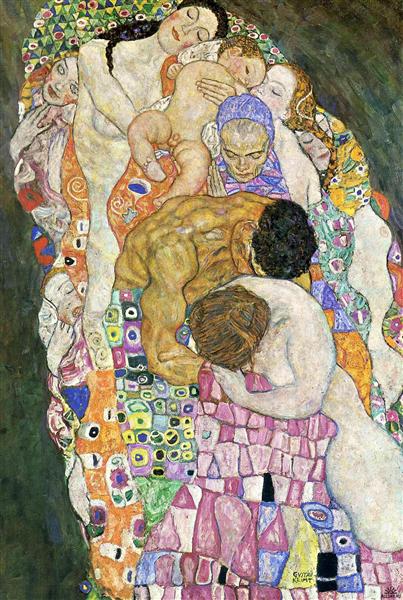
Afternoon Tea: Death and Life (1916)

From my favorite artist, the Austrian Gustav Klimt:

nol art klimt death and life 1916
Click here to zoom

My son was born a few hours ago. If all went according to plan (I scheduled this post last weekend), I am in a state of pure love and joy as a another Christensen is added to the troop.

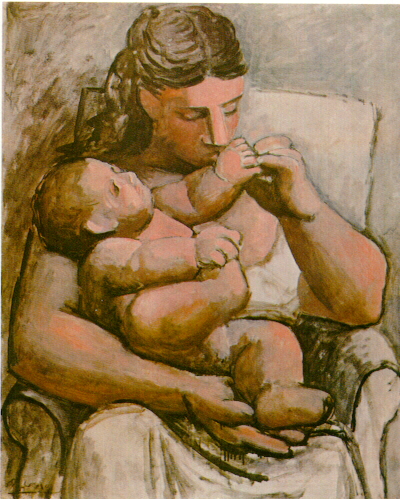
Afternoon Tea: Mother and child (1921)

nol art picasso mother and child 1921
Click here to zoom

A Pablo Picasso classic. This one is in a private collection somewhere.

In the Spirit of Socialist Realism: Sampling American Multikulti Cinema

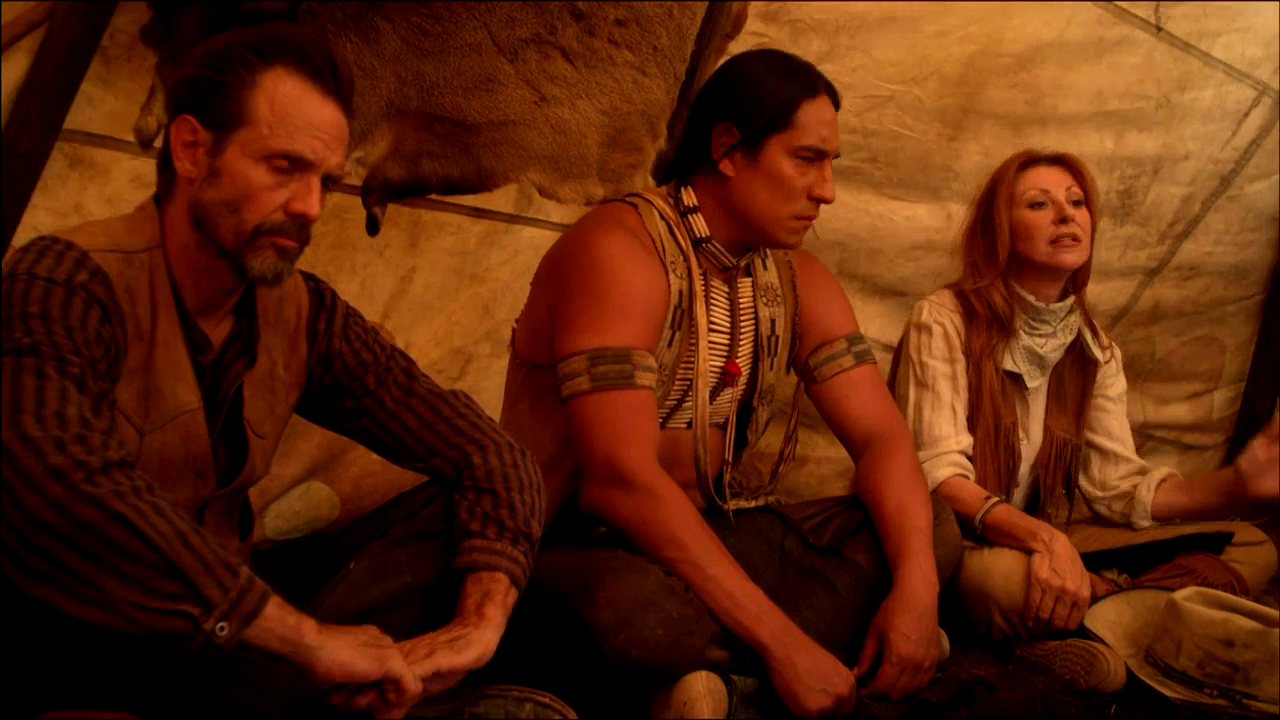
On the new year day, searching on Youtube for something to watch, by chance, I stumbled upon a low budget and poorly made Western Yellow Rock (2012). By now, I watched enough of Hollywood products that were tailored to current “diversity” ideology and PC tastes. At least, some of them (e.g. Django Unchained, Black Panther, Dances with Wolves) were well crafted . But this Yellow Rock really “rocks.” It totally “overwhelmed” me. 

An official plot description is rather innocent:

“A man searching for his missing son hires a group of rugged cowboys to take him into territory controlled by the Black Paw Indians. When they come upon an ancient burial ground, their own greed tears them apart, as the posse turns on itself.”

Yet, in reality, from the first scenes, you are literally plunged into the “diversity pulp fiction”: caricature whisky-drinking and swearing white male rednecks (the posse) approach a camp of no less caricature noble American Indians who are taken care of by an all-female team of noble physicians and nurses. The head of the posse claims that he is looking for his missing son. Yet, in reality, they need to secure a permission from the tribe to cross Indian lands to reach an abandoned gold mine to get hold of some sacks with gold dust. Through their wooden characters, from the very beginning, producers defined clearly ideological sides: noble victims (Native Americans), allies (white women), and oppressors (white males). Not a single shade of grey. The only exception is a white male alcoholic scout who takes the posse into the wild. As a victim of his addiction, he is also somewhat qualified to be noble, and, in fact, he acts as an ally too.

nol_4The cliche plot is painfully predictable: the posse of the “whitey” wants to cross straight across Indian burial grounds, although the “Injuns” warn them not to do it. Of course, by violating the sacred land, the “whitey” offend local spirits, who send against the rednecks a pack of wolves who appear as grotesque caricature shiny silver wolves resembling their brethren from New Age postcards and posters. Finally, the evil posse, which en route harasses an accompanying female physician and a male Indian, finds the gold. Yet, driven by an expected greed, the members of the posse take on each other. The rest of them are finished by the physician who is able to snatch a gun and by Black Paw Indians who arrive just in time to commit the act of justice. The movie ends with a scene of a slow motion collective execution of the last greedy redneck by a group of the Black Paws who repeatedly shoot the guy holding tightly a sack of gold. When the justice warriors lean over the dead corpse, they find out that gold dust somehow miraculously turned into regular dust; elements of paranormal and New Age mystique are rather common in latter day Westerns.

nol_2

I would not have ventured into the description of this “movie” unless it had not provoked me to jump to an obvious conclusion: at times a trashy cultural product might serve as a good learning tool. Trashy stuff highlights dominant ideological cliches and sentiments more than any other more or less well crafted movie. Like an imbecile who mimics the behavior of surrounding people, such “masterpieces” clone the mainstream ideology that is superimposed on people in public schools and colleges. To me, Yellow Rocks demonstrated how deeply the educational system (film studies along with the rest of humanities) and print media has ingrained in the minds of movie makes the pillars of what people on the right label Cultural Marxism and that people on the left call Critical Theory. In its turn, this elusive theoretical “beast” served as a major fountainhead of the Multiculturalism ideology.

nol_34

Watching that particular movie, I suddenly felt catapulted to the “good old” Soviet Union. Replace noble Indians+female do-gooders with noble workers (proletarians) and greedy white evil males with greedy capitalists and you will get a solid Soviet movie tailored according to the cliches of Socialist Realism. For those who do not know what Socialist Realism is, I want to note that it was a Stalinist doctrine that required from movie makers, poets, writers, and the rest of the intellectual gang to depict the surrounding life not as it was but as should be in the ideal future. I have also realized that comparing old Soviet and communist Chinese movies with current multikulti products in European and American realms might have a pedagogical value. It will allow us to trace the genetic links between the Marxism of old that had been obsessed with political economy and class warfare and the current Cultural Marxism that is obsessed with racial and gender identity wars. In the 1920s and the 1930s, both in the Soviet Union and Western progressive subculture the ultimate noble savage was a metaphysical muscular male proletarian.

Since the 1960s, “noble savages” of old Marxism became replaced by the new cultural left with new “noble savages”: third world, people of “color,” females, gays….The list of victims who are simultaneously to act as redeemers from the evil Western civilization is not yet complete.

In a typical Soviet heroic movie a people-friendly misfit character without a stable class-based moral compass chaotically fought against oppression. He or she needed a solid back up form a wise muscular industrial proletarian who, with his working class salt of the earth wisdom, was to take this character to the highest level of consciousness. In Yellow Rock, the alcoholic scout similarly was upgraded by female and Indian wisdom. Incidentally, the same trope one can observe in the third part of the famous (and well made) Hunger Games trilogy that I watched again last night. The major character, Katniss Everdeen, a noble female warrior, was not complete without receiving an endorsement (in the final scene of that trilogy) from the victim/redeemer of a “higher caliber.” After Everdeen defeats dictator Snow, an aged cunning white male, a black female elder approaches Everdeen and gently leads her to the center of the new power, where masters of the multikulti paradise gathered to usher the new world.

nol_9

Afternoon Tea: The Self Immolation of Gogol (1909)

This is by the Russian painter Ilya Repin:

nol art repin the self immolation of gogol 1909
Click here to zoom

Nikolai Gogol, a famous Russian author, went mad in his 40s and burned the manuscript for the second part of Dead Souls, a classic novel about Russian life in the 19th century.

Fantasy and politics

I wish fantasy novels offered more political diversity. I adore fantasy, but I’ve begun to chafe at the ironic lack of creativity when it comes to political regimes. The genre may be missing a great opportunity. Or maybe I’m reading the wrong books.

While I don’t really mean this as a criticism so much as an observation, monarchy and feudalism abound in most other-world fantasies. Or the politics are indistinct. Despite my deep love for Tolkien, he falls into this category as well–either political control is unclear in regions like the Shire, or the region is ruled by an absolute ruler. His most well-known series culminates with the return of the benevolent dictator to the throne, Aragorn King of all the Dunedain (granted, there is intentional Christian symbolism here).

Modern fantasists follow a similar trend. Brandon Sanderson’s books, while wonderful, tend to involve worlds replete with absolute rulers. In fact, in the original Mistborn trilogy, a naive emperor tries to impose a more representative system of government, fails, and then decides that a firm hand is what’s called for. He and other authors like Robert Jordan dabble with some interesting political ideas and do provide a great deal of political detail, but they ultimately tend toward absolutism of some variety. Terry Pratchett’s main city-state on Discworld, Ankh-Morkpork, is ruled over by an absolute ruler, but Pratchett at least takes plenty of opportunity to poke fun at the masses’ constant yearning for a noble king to tell them what to do. Really, all these books are splendid, and politics are typically not their centerpiece–I just think some more variety may be valuable to the genre. (I’m not pointing fingers, as I’m guilty of the same problem–my forthcoming fantasy novel takes place in an empire with an absolute ruler and a largely meaningless parliament).

Fantasists could perhaps take a page from their science fiction comrades, where experiments with politics seem more common. Fantasy authors could do more than tinker with small tweaks to the monarchy and mercantilism of a pre-enlightenment age.  I can’t help but roll my eyes when I hear Tyrion Lannister on Game of Thrones gushing about how Daenaerys Targaryen is the only person who can swoop in and save the Seven Kingdoms from itself. That’s remedial polisci–surely we can do better. Who wouldn’t want to read about an anarcho-capitalist Iron Islands or a post-communist King’s Landing?

If you have any good recommendations for other-world fantasies that take up this challenge, I’d love to hear them!

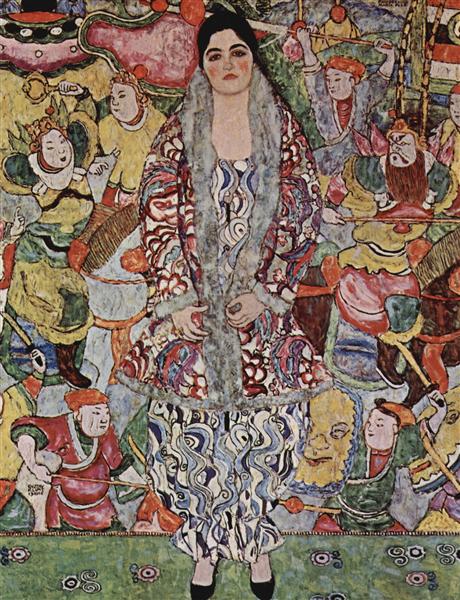
Afternoon Tea: Fredericke Maria Beer (1916)

By the Austrian painter Gustav Klimt:

NOL art Klimt fredericke maria beer 1916
Click here to zoom.

This beauty is in a private collection, somewhere on this planet…

Afternoon Tea: Rest on the Flight Into Egypt (1597)

By the Milanese (Italian) painter Caravaggio:

NOL art Caravaggio rest on the flight into egypt 1597
Click here to zoom.

Caravaggio is one of Jacques’ favorites…

Afternoon Tea: The Three Ages of Woman (1905)

By the Austrian painter Gustav Klimt:

NOL art Klimt the three ages of woman 1905
Click here to zoom.

Why Christmas materialism is awesome

It has always struck me as odd that capitalism’s usual defenders abandon it when commercialism seems to be on its best behavior. Every year, we religionists love to rail against Christmas materialism. What a terrible curse–people in the marketplace thinking of others’ interests and needs for once.  All the efficiency of the market PLUS good will toward men–why are we complaining, again?

Yet we do. Without fail, twitter feeds and chapel lecterns ring with invectives against Christmas commercialism. The warning voice, though, never seems to strike with precision. The concern seems to be that a focus on stuff gives rise to an idolatrous dethroning of deity.  This religious criticism appears to mimic the secular and progressive criticism that commerce somehow defiles us and strips us of virtues like compassion or solidarity.

I don’t buy either of these criticisms, largely for the same reasons: commerce brings people together, builds trust, and fosters goodwill. These benefits are in addition to the efficiencies that market advocates typically emphasize. And these three aspects of commercial exchange are in special abundance during Christmas.

Perhaps the materialism complaint stumbles at the outset by focusing on the largely mythical human calculator that predominates in economic theory–the man focused only on maximization of personal utility. That portraiture does not explain the fact that so much commerce occurs on behalf of someone else–a reality underscored and amplified during holiday shopping. Thus, Christmas supports Amartya Sen’s critique of the rational-man theory: “The purely economic man is indeed close to being a social moron.” He’s the one who gives you lotion samples and leftover hotel shampoo in your stocking. But most of us don’t do that. Instead, the market provides a forum for us to express and cultivate virtue. As Deirdre McCloskey says, “In other words, it’s not the case that market capitalism requires or generates loveless people. More like the contrary. Markets and even the much-maligned corporation encourage friendships wider and deeper than the atomism of a full-blown socialist regime.” I think a simple test proves this point. If you walk about a shopping mall during the Christmas holiday (setting aside for a moment your inner misanthrope), how are people behaving? By and large, there is an overpowering sense of goodwill among people engaged in (shudder) holiday materialism. I’d say this is mostly true at any time of year, but we may as well notice this phenomenon when it stands at its apex.

Beyond just the goodwill generated by the act of commerce, the materialism critique seems to ignore the very purpose of the materialistic behavior being condemned. Shouldn’t we celebrate this key example of how commercialism can enhance friendship through gift-giving? If you’re a religious capitalist, what is there not to like here?

A friend pointed out recently that Christmas giving seems fruitless, since the value-for-value gift exchanges offset each other. He concluded we may as well just keep our money. From an efficiency standpoint, it does seem strange to engage in a transaction cost without any expectation that you’ll achieve a pareto-efficient state of affairs. Samuelsonian economics alone can’t really explain why people engage in this ritual. That’s probably because the ritual is not purely economic. It’s about connection, relationship, and opportunity to think beyond ourselves. In other words, at bottom, it really is not about materialism in the shallow, desiccated sense that these Christmas puritans rail against. Commerce can be about compassion and camaraderie–not just self-interested calculation (though there’s nothing wrong with that either).

I don’t think the Babe of Bethlehem would disagree. After all, Jesus, while no aristocrat, was not a severe ascetic by any means–somewhat of a contrast to his cousin, John the Baptist. Perhaps the most poignant example of his view toward extravagant gift-giving occurs when a woman anoints him with an extremely valuable ointment. His disciples complained of the waste, griping that the ointment should’ve been sold and the proceeds given to the poor. Jesus defended her: “Let her alone; why trouble ye her? She hath wrought a good work on me.” In other words, a materialistic act can still be a virtuous one. In fact, I’d go as far as to say that the vast majority of them are. We need, after all, an earthly vehicle by which to exercise heavenly virtue. The market is well-suited for that role. God can be in a market–he’s that good.

Of course, a post about Christmas and materialism must make obligatory mention of Ebenezer Scrooge. Dickens was no fan of capitalism, but his reformed villain ironically proves a point about Christmas materialism: it’s the lack of virtue in the individual operating in the market, not the market itself, that desiccates the soul. So perhaps I can end with a simple “Scrooge” test: is Scrooge the guy standing back and pointing the finger, or is Scrooge the person that the finger aims at–the mom who braves the crowded mall to plop her kids on Santa’s lap and wraps gifts until 3:00 AM in the morning?

Twelve Things Worth Knowing According to Jacques Delacroix, PhD, Plus a Very Few Brain Food Items.

Note: I wish you all a prosperous, healthy, and writerly year 2019. (No wishes for happiness, it will come from all the above.)

I have a French nephew who is super-smart. Not long after graduating from the best school in France, he moved to Morocco where he married a super-smart Moroccan woman. He is so smart that he asked me for my intellectual will before I depart for another planet. It’s below.

Here are my qualifications: I taught in universities for thirty years, including twenty-five years in a business school in Silicon Valley. My doctorate is in sociology. (Please, don’t judge me.) My fields of specialization are Organizational Theory and the Sociology of Economic Development. My degree is from a very good university although I am a French high school dropout. My vita is linked here (pdf). Its academic part is respectable from a scholarly standpoint, no more. There is much additional info in my book: I Used to Be French: an Immature Autobiography, available from me, and on Amazon Kindle, and in my electronic book of memoirs in French: “Les Pumas de grande-banlieue: histoires d’émigration”, also on Amazon Kindle.

1. When the facts don’t fit your perspective you should change …. ? (Complete sentence.)

2. One basic complex idea worth knowing that resists learning: natural selection.

Note: the effective mechanism involved is multi-generational differential reproduction. You don’t understand natural selection until you can put a meaning on all three words.

3. Another basic idea worth knowing, a counter-intuitive one, that also resists learning: the principle of Comparative Advantage: If you are not working at what you do the very best, you are impoverishing me. There is a ten-lesson quick course on my blog to explain this. Look for short essays with the word “protectionism” in the title. A longform version can also be found, here.

4. Taking from the poor is a stupid way to try to become rich when you can invent a new world – like Steve Jobs – and be immensely rewarded for it. Or open a decent restaurant and be well rewarded, or learn welding. There isn’t much you can take from the poor anyway because they are poor. Plus, the bastards often resist!

5. Culture is in the heads (plural). Everything else isn’t “culture.”

6. How a body of people act is not simply the addition of the thinking of its individual human members. (There is a sociology!)

7. Beware those pesky fractions. Quick test: Five years ago, my income was 40% of yours. Now, my income is only 20% of yours. Am I earning less than I did five years ago?

8. Correlation is not causation but there is no causation without some sort of correlation.

9. Statistical significance is significant even if you don’t quite know what it signifies. Find out. It’s not hard.

10. Use statistical estimation methods even if you don’t understand them well. It will improve your reasoning rigor by confronting you brutally with the wrongness of your guesses. And you can only become better at it with practice.

11. There is not text that’s not improved by extirpating from it half of all adjectives and adverbs.

12. Reading is still the most efficient way to improve your comprehension of the world.

It seems to me that if you understand these twelve points inside out, you are well above average in general culture; that’s even true on a global scale.

Below are some intellectual anchoring points of my life. They are subjectively chosen, of course. Don’t lend them too much credence.

My favorite singer-composers: Jacques Brel; the Argentinean Communist Atahualpa Yupanqui. (I can’t help it.)

My favorite instrumental musics: baroque music, the blues.

My favorite painters: Caravaggio (link); Delacroix (Eugene); Delacroix (Krishna).

I don’t have a favorite book because I read all the time without trying to rank books. These three books have made a lasting impression, changed my brain pathways forever, I suspect: Daniel Defoe, Robinson Crusoe; George R. Stewart, Earth Abides; Eric Hoffer, The True Believer: Thoughts on the Nature of Mass Movements.

The only two intelligent things I have said in my life:

“Once you know a woman well vertically, you know nothing about her horizontally.”

“There is not bad book.”

Damares Alves and the left’s hypocrisy

The last polemic in Brazilian politics was due to a testimony of Damares Alves, chosen by Jair Bolsonaro to be his minister of human rights. In a video that is available on YouTube, during a religious service, Damares tells how in her childhood, between 6 and 8 years of age, she was systematically sexually abused by someone close to her family (some sources I found say that the abuser was her uncle). To add to the sexual abuse, the criminal also exploited her psychologically: he told Damares that if she denounced him, he would kill her father. He also said, taking advantage of the religious beliefs of Damares, that she would not go to heaven because she was “impure.”

Damares tells that she unsuccessfully tried to ask for help from people in her family and her church. She would frequently climb a guava tree in her backyard to cry. When she was 10 years old, she climbed that same tree, having rat poison with her, in order to commit suicide. She tells that this is when she saw Jesus, coming to her. Jesus climbed the tree and hugged her. She felt accepted by Jesus, and she gave up the suicidal ideas.

Damares went on to become a lawyer. For many years she has been defending women who like her are victims of sexual abuse. Because of the violence she suffered as a child, she can’t bear children. However, she adopted an Indian child who would otherwise be murdered by her parents – some tribes in the Amazon believe that some children must be murdered at birth due to a series of reasons. Damares saved one of these children.
Someone cut from the video only the part where Damares says that she saw Jesus from the guava tree. The video went viral, and “crazy” is one of the milder insults directed at Damares on social networks.

In sum: the Brazilian left makes fun of a woman who was sexually abused as a child. Damares’ religious faith helped her cope with the pain. To be honest, I am usually skeptic about stories like the one she told. But what does it care? Somehow her faith in Jesus helped her to cope with one of the most horrendous things that can happen to a person. But it seems that Bolsonaro’s political adversaries have no sensitivity not only to a person’s religious beliefs but to the violence women and children suffer. When the violence does not fit their cultural and political agenda, they don’t care.

As I wrote here, Liana Friedenbach, 16 years old, was kidnaped, raped, and killed by a gang led by the criminal Champinha. Defending Liana, Bolsonaro wanted laws to be tougher on rapists. Maria do Rosário did not agree with Bolsonaro, and even called him a rapist. Bolsonaro offended her saying that “even if I was a rapist, I would not rape you.” The left in Brazil stood with Maria do Rosário and condemned Bolsonaro. The same left today mocks a woman who was sexually abused in her childhood, but who grew to help women in similar situations. Instead, they prefer to make jokes about Jesus climbing guava trees.

No Country for Creative Destruction

Imagine a country whose inhabitants reject every unpleasant byproduct of innovation and competition.

This country would be Frédéric Bastiat’s worst nightmare: in order to avoid the slightest maladies expected to emerge from creative destruction, all their advantages would remain unseen forever.

Nevertheless, that impossibility to acknowledge the unintended favourable consequences of competition is not conditioned by any type of censure, but by a sort of self-imposed moral blindness: the metaphysical belief that “being” is good and “becoming” is bad. A whole people inspired by W. B. Yeats, they want to be gathered into the artifice of eternity.

In this imaginary country, which would deserve a place in “The Universal History of Infamy” by J.L. Borges, people cultivate a curious strain of meritocracy, an Orwellian one: they praise stagnation for its stability and derogate growth because of the stubborn and incorruptible conviction that life in society is a zero-sum game.

Since growth is an unintended consequence of creative destruction, they reason additionally, then there must be no moral merit to be recognised in such dumb luck. On the other hand, stagnation is the unequivocal signal of the good deeds to the unlucky, who otherwise could suffer the obvious lost coming from every innovation.

In this fantastic country, Friedrich Nietzsche and his successors are well read: everybody knows that, in the Eternal Return, the whole chance is played at each throw of the dice. So, they conclude, “if John Rawls asked us to choose between growth or stagnation, we would shout at him: Stagnation!!!”

But the majority of the inhabitants of “Stagnantland” are not the only to blame for their devotion to quietness. The few and exceptional proponents of creative destruction who live in Stagnantland are mostly keen on the second term of the concept. That is why some love to say, from time to time, “we all are stagnationist” – the few contrarians are just Kalki’s devotees.

These imaginary people love to spend their vacations abroad, particularly in a legendary island named “Revolution”. Paradoxically, in Revolution Island the Revolutionary government found a way to avoid any kind of counter-revolutionary innovation. It is not necessary to mention that Revolution Island is, by far, Stagnantlanders’ favourite holiday destination.

They show their photos from their last vacation in Revolution Island and proudly stress: “Look: they left the buildings as they were back in 1950!!! Awesome!!!” If you dare to point out that the picture resembles a city in war, that the 1950 buildings lack of any maintenance or refurbishment, they will not get irritated. They will simply smile at you and reply smugly: “but they are happy!”

Actually, for Stagnantlanders, as for many others, ignorance is bliss, but their governments do not need to resort to such rudimentary devices as censure and spying to prevent people from being informed about the innovations and discoveries occurring in other countries, as Revolutionary Island rulers sadly do. Stagnantlanders simply reject any innovation as an article of faith!

Notwithstanding, they allow to themselves some guilty pleasures: they love to use smartphones brought by ant-smuggling and to watch contemporary foreign films which, despite being realistic, show a dystopian future to them.

As everything is deteriorated, progress is always a going back to an ancient and glorious time. In Stagnantland, things are not created, but restored. As with Parmenides, they do not believe in movement, but if there has to be an arrow of time, you had better point it to the past.

Moreover, Stagnantland is an imaginary country because it does not only lack of duration, but of territory as well. As the matter of fact, no man inhabits Stagnantland, but it is indeed stagnation that inhabits the hearts of Stagnantlanders. That is how, from dusk to dawn, any territory could be fully conquered by the said sympathy for the stagnation.

Nevertheless, if we scrutinise the question with due diligence, we will discover that the stagnation is not an ineluctable future, but our common past. Human beings appeared very much earlier than civilisation. So, all those generations must have been doing something before agriculture, commerce, and institutions.

Before the concept of creative destruction had been formulated by Joseph Schumpeter, it was needed a former conception about how people are conditioned by institutions: Bernard Mandeville pointed out how private vices might turn into public benefits, if politicians arranged the correct set of incentives. The main issue, thus, should be the process of discovery of such institutions.

That is why the said aversion to competition and innovation is hardly a problem of a misguided sense of justice, but mostly a matter of what we could coin as “bounded imagination”: the difficultly of reason to deal with complex phenomena. Don’t you think so, Horatio?

Main Street in Gopher Prairie (and elsewhere)

…but there are also hundreds of thousands, particularly women and young men, who are not at all content. The more intelligent young people (and the fortunate widows!) flee to the cities with agility and, despite the fictional tradition, resolutely stay there, seldom returning even for holidays. The most protesting patriots of the towns leave them in old age, if they can afford it, and go to live in California or the cities.

This is from Main Street, the 1920 classic by American Nobel Prize winner Sinclair Lewis. Lewis won his Nobel Prize for his 1925 work, Arrowsmith, and was so upset about not winning the Prize for Main Street that he refused his award for Arrowsmith and publicly complained that he should have won the award for Main Street rather than Arrowsmith (he eventually accepted his prize, years later).

Main Street is a mean book about small town life (Gopher Prairie, Minnesota) in the United States of America. It’s mean because it’s true. It’s amazing and worth reading and blogging about nearly 100 years later because it still resonates powerfully with today’s reader. The more things change, technologically, the more they stay the same, sociologically.

Lewis was a dissatisfied left-liberal who never quite could make the transition over to socialist, though he was sympathetic to their views and aims. In Main Street, in fact, he lambastes the dissatisfied rural gentry (left-liberals, all) for their condescending dismissal of socialist arguments without ever actually considering them fully. Lewis grew up in a small town in Minnesota, where the majority of the plot of Main Street takes place, and was the son of a country doctor. His privileged, rural upbringing no doubt weighed heavy on his mind when he attacked the American small-town way of life.

He (Lewis) wasn’t an America hater, and neither are most left-liberals. Their conservatism betrays their progressive senses. They don’t want or desire revolution, they want change, and they believe the founders, most of whom were slaveholders, instituted a government that could be run by the people. Left-liberals often come across as bitter and hate-filled, and this essence can seem especially true when contrasted with the thoughts of a conservative-liberal. Lewis was certainly a bitter man (he died of alcoholism in Rome in the 1951), but his mean-spirited attacks on American society were, to him and his fans, the work of a patriot (that most conservative of citizen).

If you haven’t read Main Street yet, I recommend doing so. It’s nearly 100 years old now, a fact that made me smile to myself as I realized I was reading a 98-year old novel. (Sinclair Lewis is somewhat fashionable again due to the popular quote “if fascism comes to America…” being misattributed to his name. The freshness of seeing his name on a bumper sticker just makes the reality of how old his works are that much more interesting.) If you don’t, at some point in your life, read one of Lewis’ major works (Babbitt, Main Street, or Arrowsmith), you will die a philistine.

I finally read Main Street after years of it taunting me on the bookshelf. It was worth it, all the more so because I am dissatisfied with where I am at in life. I don’t quite live in a small town, but I do live in a college town after spending the last 7-8 years or so of my life in major American cities that also happen to be sexy American cities, and the culture shock has been hard to confront. Contrary to popular belief, college towns don’t have all that much “culture” in them. Instead, you have a small population of seasonal migrants and a larger (but still small) population of “locals” who live off of the migrants and off of the few industries that have manged to take root in the community. In order to have any sort of leisure in the American college town you must be either a professional or a shopkeeper. Otherwise, you’re shit out of luck.

Main Street reminded me of the streak of dissatisfaction that runs deep in American society. There’s a plan in motion, here in Waco, that involves professionalizing my wife, so I cannot be bitter, but I am dissatisfied. The large Baptist university here is too practical. Its students (Rand Paul is an alum) are dull, and most are philistines, replete with all the usual stories about traveling “abroad” (to western Europe, where the drinking age is 18…) and not knowing a lick of the region’s rich history. There are no Jews, no Koreans, no South Asian Muslims, and few homosexuals. There is a relatively large black population here, but it is, alas, just as conservative as the white one.

Naturally, Californians are reviled. As are college graduates. As are liberals of any kind.

One bright spot here is, of course, the food. Bar. Bee. Q. Even this, though, the one lone bright spot so far, is brought down despairingly by the fact that pants in my size are rare, if you get my drift. My inner celebration of the stereotype of the parochial and bumbling Southerner, now reinforced by real life, coupled with Main Street‘s piercing insights, have provided me solace in an otherwise empty period of intellectual stimulation in my life.