“The staying power of ‘Citizen Kane'”

That’s the title of my Tuesday column over at RealClearHistory. An excerpt:

The relevant socio political commentary is more interesting, in part because people today still use the film to attack media moguls they don’t like (such as Fox News’ Rupert Murdoch). One narrative about the film’s sociopolitical impact even likens the film to a subtle anti-fascist, and pro-war, production because of the attention it draws to the immense power media moguls wield, and the incentive structures they face (and produce). This argument has at least some bite to it, as one of America’s most powerful media moguls in the 1940s, William Randolph Hearst, refused to give the film any sort of advertisement in any of his many publications. This blackballing on the part of the powerful led, of course, to the Citizen Kane’s relative flop at the box office.

Read the rest, baby!

Nightcap

  1. An ancient epic poem recounts the ‘Indian war’ of Dionysus Blake Smith, the Wire
  2. Sketchbook of 15th-century engineer Johannes de Fontana Bennett Gilbert, Public Domain Review
  3. Van Gogh’s love affair with Japan Joe Lloyd, 1843
  4. Relatedness: De-toxifying the mind Peter Miller, Views

Lunchtime Links

  1. 25 years after Waco Freedom of Conscience and the Rule of Law
  2. The US-Japan Alliance and Soviet competition | Some thoughts on “Thinking About Libertarian Foreign Policy”
  3. Japan’s rent-a-family industry | In Search of Firmer Cosmopolitan Solidarity
  4. The story of the skull of a victim of the Indian Uprising of 1857 | Myths of Sovereignty and British Isolation, III
  5. Reviving India’s classical liberal party | Classical Liberalism and the Nation State
  6. The decline of regional American art | A History of Regional Governments
  7. Michelle Pfeiffer keeps getting better and better | On the paradox of poverty and good health in Cuba
  8. “It was the most devastating loss in the history of the Library.” | No, natural disasters are not good for the economy

Beijing and the India-Pakistan conundrum

During the course of the Shanghai Cooperation Organization (SCO) meeting in China, and days before Indian Prime Minister Narendra Modi arrived in China for his summit with Chinese President Xi Jinping, an editorial in Pakistan’s premier English-language daily (Daily Times) titled ‘China’s re-assurance on CPEC‘ made an interesting point:

If anything Beijing has been asking Islamabad to engage with New Delhi and keep tensions to a minimum. Such an environment is also conducive to timely completion of various projects under CPEC [China-Pakistan Economic Corridor] and transforming South and Western Asia into a high economic growth zone. Keeping the economy first is a lesson that our state has yet to learn from its big brother in the hood.

Zardari’s recommendation in 2012

Interestingly, during his meeting with former Indian Prime Minister Dr Manmohan Singh, in April 2012, former Pakistan President Asif Ali Zardari (Pakistan People’s Party — PPP) had also stated that Pakistan and India should seek to follow the Pakistan-China model of engagement. Zardari meant that, like India and China, India and Pakistan too should follow an incremental approach, with more frequent high level interactions and a heavy focus on economic cooperation.

It might be mentioned that between 2012 and 2013 some important leaps were made in the economic sphere between both countries, with the most noteworthy development being the setting up of the Integrated Check Post (ICP) at Attari (Amritsar, India). The ICP’s motive was to accelerate bilateral trade through the only land crossing (Attari-Wagah) between India and Pakistan. During this period, a number of high level delegations interacted, including the Commerce Ministers of both countries.

Pakistan also seemed prepared to grant India MFN status, but a change of government (along with domestic opposition from certain business lobbies as well as hardliners) in Islamabad (2013) and then New Delhi (2014) meant that this decision could not go ahead. Since then, relations have been tense, and there has been no opportunity to make any progress on this.

Tensions in the past 4 years: CPEC and terrorism emanating from Pakistan Continue reading

Nightcap

  1. The West’s bombing of Syria meets some approval from Muslims Bruce Clark, Erasmus
  2. Should the Italian Prime Minister support the Democrats? Michelangelo Landgrave, NOL
  3. The ugliness of international politics Edwin van de Haar, NOL
  4. Rent-Seeking Rebels of 1776 Vincent Geloso, NOL

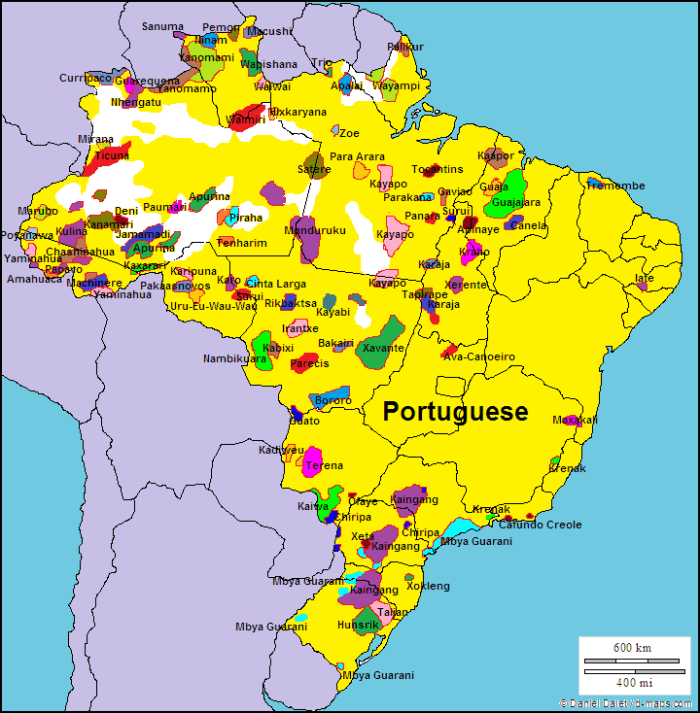
Eye Candy: the languages of Brazil

NOL map Brazil languages
Click here to zoom

My only question: no Spanish, anywhere? Not even along the borders?

Nightcap

  1. What is the cost of “tractable” economic models? Beatrice Cherrier, Undercover Historian
  2. Facts vs. hand-waving in economics Chris Dillow, Stumbling and Mumbling
  3. How factories changed the world Donald Sassoon, New Statesman
  4. Defending the Mughals became a way to defend colonial rule Blake Smith, the Wire

Explaining current Brazilian politics to known-Brazilians and why I believe this is time for optimism

It seems that many observers believe that Brazil’s current political situation is one of instability and uncertainty. Since the mid-1990s the national political scene has been dominated by two parties: the Worker’s Party (Partido dos Trabalhadores, PT, in Portuguese) and PSDB. Now, with the main leader of the PT imprisoned – former president Lula da Silva – the PSDB also seems to have lost its rationale. It is clear that this party never had faithful voters, only an anti-PT mass who saw in it the only viable alternative. Given these factors, it is true that a political cycle that began in the 1990s is coming to an end, but far from being a moment of uncertainty and pessimism, this may be the most fruitful moment in the country’s history, as it seems that finally classical liberalism is being vindicated in Brazil.

Brazil began its political history as a semi-parliamentary monarchy. As one observer of the time put it, the country had a “backward parliamentarism”: instead of parliament controlling the monarch, it was the emperor who controlled parliament. Moreover, the Brazilian economy was extremely based on slavery. In theory, Brazil was politically and economically a liberal country. In practice, it was politically and economically a country controlled by oligarchies.

With the proclamation of the republic in 1889, little changed. The country continued to be theoretically a liberal country, with a constitution strongly influenced by the North American one and a tendency to industrialization. In practice, however, Brazil continued to be politically and economically dominated by oligarchic interests.

The republic instituted in 1889 was overthrown in 1930 by Getúlio Vargas. Vargas was president from 1930 to 1945, and his political circle continued to dominate the country until 1964. Once again, political language was often liberal, but in practice the country was dominated by sectorial interests.

Vargas committed suicide in 1954, and his political successors failed to account for the instability the country went through after World War II. The Soviet Union had been trying to infiltrate Brazil since the 1920s, and this was intensified with the Cold War. The communist influence, coupled with the megalomaniacal administrative inability of Vargas and his successors, led the country to such an instability that the population in weight clamored for the military to seize power in 1964.

The military that governed Brazil between 1964 and 1985 were influenced mainly by positivism. In simple terms, they were convinced they could run the country like a barracks. For them, the motto “order and progress” written on the Brazilian flag was taken very literally. One great irony in this is that Auguste Comte’s positivism and Karl Marx’s communism are almost twin brothers, products of the same anti-liberal mentality of the mid-19th century. The result was that Brazilian economic policy for much of the military period was not so different from that of the Soviet Union at many points in its history: based on central planning, this policy produced spectacular immediate results (the period of the “Brazilian miracle” in the early 1970s), but also resulted in the economic catastrophe of the 1980s.

However, the worst consequence of the military governments was not in the economy but in the political culture. The military fought against communism in a superficial way, overpowering only the guerrillas and terrorist groups that engaged in armed struggle. But in the meantime, many communists turned to cultural warfare, joining schools, universities, newsrooms, and even churches. The result is that Brazilian intellectual life was taken over by communism.

Fernando Henrique Cardoso, elected president in 1994, is an important Brazilian intellectual. Although not an orthodox Marxist, his lineup is clearly left-wing. The difference between FHC (as he is called) and a good part of the Brazilian left (represented mainly by the PT) is that he, like Tony Blair in England and Bill Clinton in the US, opted for a third way between economic liberalism and more explicit socialism. In other words, FHC understood, along with leading PSDB leaders, that the Washington Consensus is called a consensus for good reason: there is a set of economic truths (pejoratively called neo-liberals) that are no longer the subject of debate. FHC followed these ideas, but he was heavily opposed by the PT for this.

Since the founding of the PT, in the late 1970s, Lula’s speech was quite radical, explicitly wishing to transform Brazil into a large Cuba. But Lula himself surrendered to the Washington Consensus in the early 2000s, and only then was he able to be elected president. Once in office, however, Lula commanded one of the greatest corruption scandals in world history. In addition, his historical links to the left were never erased. Although in his first term economic policy was largely liberal, this trend changed in his second term and in the presidency of his successor, Dilma Rousseff.

Today Brazil is still living in an economically difficult period, but an ironic result of more than a decade of left-wing government (especially the PT) is the strengthening of conservative and libertarian groups in Brazil. In the elections from 2002 to 2014 it was virtually impossible to identify candidates clearly along these lines. In this year’s election, we expected several candidates to explicitly identify themselves as right-wing. Jair Bolsonaro, the favorite in contention, is not historically a friend of the free market, but his more recent statements demonstrate that more and more he leans in this direction.

It is possible that in 2018 Brazil will not yet elect an explicitly libertarian president. But even so, the economic transformations initiated by FHC seem now to be vindicated. Only with the strengthening of the Internet did Brazilians have real access to conservative and libertarian ideas. With that, one of the most important political phenomena in Brazil in the last decade is the discovery of these ideas mainly by young people, and it is these young people who now cry for a candidate who defends their ideas. Bolsonaro seems to be the closest to this, although there are others willing to defend similar economic policy. After more than a decade of governments on the left, it seems that Brazil is finally going through a well-deserved right turn.

Nightcap

  1. The end of empire and the birth of neoliberalism Deirdre N. McCloskey, Literary Review
  2. Gimme shelter: safe spaces and f-bombs in higher ed Irfan Khawaja, Policy of Truth
  3. Can Fresno State fire a professor for being an ass on Twitter? Ken White, Popehat
  4. The worst effects of climate change may not be felt for centuries Charles C. Mann, TED Ideas

“10 little-known fascist governments”

That’s the subject of my weekend’s RealClearHistory column. An excerpt:

7. Romania and the Iron Guard. Sandwiched between the communist Soviet Union and the fascist Axis powers of central Europe, Romanian society struggled to find its footing after a comparatively wonderful campaign during World War I, but Bucharest eventually chose to side with Berlin and Rome instead of Moscow. Romanian fascism was known for including the Orthodox Church into its anti-communist, anti-Semitic, and anti-capitalist rhetoric. Romania’s fascists almost made the Nazis look like boy scouts, especially when the Iron Guard organized and implemented one of Europe’s bloodiest pogroms, ever: the Iași pogrom. Just over 13,000 Jews, along with their liberal and Orthodox defenders in the city of Iași, were butchered on the streets where they once plied their trades. Romania, a member of the Axis for most of the war, was second only to Germany in the number of Jews it killed during World War II.

Please, read the rest.

Oh, and I wrote about America’s greatest maritime disaster on Tuesday for RCH‘s blog, the Historiat.

Nightcap

  1. One of the 19th century’s most mysterious and eccentric figures Rhys Griffiths, Public Domain Review
  2. Internationalists are more libertarian than non-interventionists Isabel Hull, London Review of Books
  3. Why is the US military all over Africa? Eric Schewe, JSTOR Daily
  4. California is a model for divorce, not domination David French, National Review

Nightcap

  1. The cursed wonders of India Rishika Yadav, Spontaneous Order
  2. Robot of Jihad? A Guide to Tipu’s Tiger Blake Smith, the Appendix
  3. Black pictures (film) Darryl Pinckney, New York Review of Books
  4. A Male Feminist’s Crisis Michael Friedrich, New Republic

Explaining Jair Bolsonaro to non-Brazilians

I wrote about Jair Bolsonaro here some time ago, but I believe that, with the recent political changes in Brazil, it is worthy to write about him again.

Jair Messias Bolsonaro is a pre-candidate to the Brazilian presidency. Elections will happen in October, and so, following Brazilian electoral law, his candidacy won’t be official until later this year. However, it is already very public that he is going to run for president of the country.

Bolsonaro has been a congressman from Rio de Janeiro state since the 1990s, but he only achieved national notoriety fairly recently, during the last decade of government by the Worker’s Party (Partido dos Trabalhadores, PT, in Portuguese). A former captain of the Brazilian army, he entered politics mainly to defend the interests of his colleagues. As with much of South America at some point between the 1960s and 1980s, Brazil was ruled by the military from 1964 to 1985. Since those governments, there is a tendency of loss of prestige of the armed forces in the country. Bolsonaro defended simply better pay and better work conditions for his fellow soldiers.

In the 1990s he opposed several policies of the Fernando Henrique Cardoso (FHC) government. FHC was responsible for bringing Brazil closer to the Washington Consensus, modernizing the Brazilian economy in many ways. Bolsonaro, however, believed that FHC was selling Brazil to foreigners. Ironically, in that opinion, he was in the company of the Worker’s Party. When the Worker’s Party came to power in 2003, Bolsonaro remained in silence for quite a while. His public opposition to the Lula and Dilma governments began only when the Ministry of Education tried to send to public schools material concerning gender ideology. Bolsonaro and others saw in that an infringement of the separation between the responsibilities of church, government, and state.

Because of his opposition to gender ideology in public schools, Bolsonaro is constantly unjustly accused of misogyny and homophobia, something silly to say the least. Bolsonaro is not a hater of women and homosexuals, at least not more than the majority of the Brazilians. The only thing one can say about him is that, as with many Brazilians, he is very crude with his language. One anecdote might help to explain. When Bolsonaro was already father to four sons, he had his first daughter. Joking, he told his friends that “he’d got weaker.” To many in the Brazilian leftist press, this means that Bolsonaro thinks that women are lesser than men. The same press, however, is not as judicial with the language of other politicians, including former president Lula da Silva, who commonly makes much worse statements. Bolsonaro’s every statement has been scrutinized by people on the left searching for something to blame.

The truth is that apparently unknowingly, Bolsonaro was one of the first Brazilian politicians to consistently fight against Gramscianism. I explain. As I was saying before, from 1964 to 1985 Brazil was ruled by the military. This happened because since the 1920s Brazil was a target of influence by the USSR. Luís Carlos Prestes, one of the most important historical leaders of the Brazilian Communist Party (Partido Comunista Brasileiro, PCB, in Portuguese), trained in the Soviet Union in the 1930s. All leftist parties in Brazil today (including the Worker’s Party) have some historical connection to the PCB. The Soviets (and Chinese, and Cubans) intensified their pressure on Brazil in the 1950s and 1960s. The result was that the vast majority of Brazilian society urged the militaries to take power in 1964.

The armed forces were great in fighting the conventional war against the communists, defeating several guerrillas in the Brazilian interior. But they were simply awful in fighting the cultural war. Early on, many on the Brazilian left noticed that they shouldn’t fight the government in a conventional Marxist-Leninist style, trying to come to power by force. Instead, they should follow Italian socialist leader Antonio Gramsci, and get to power winning hearts and minds first. And so they did. While the soldiers were busy fighting guerrillas, communist occupied schools, universities, the press, and even churches (mainly the Roman Catholic) by the Liberation Theology.

Thanks to Gramsci and his followers, when the military regime was over, Brazilian culture was majorly leaning to the left. The Worker’s Party, publicly socialist, came to power not by force, but by votes. However, Marxism as an economic agenda died a long ago. Lula and Dilma know perfectly well that classical liberalism is the way to go in economics. The aim of the Worker’s Party and associated political groups – most of whom are economically illiterate – is to transform culture. In post-marxism, the “oppressed” are no longer the factory workers, but women, homosexuals, blacks and however fits their agenda for power. We have to sympathize with some of the leftist agenda in Brazil. Historically, thanks to the false capitalism practiced there, Brazil was not a good place for minorities. The individual was never privileged in Brazil. However, the leftist solution (socialism) only makes things worse. Many countries in Latin America, starting with Cuba and Venezuela, can testify to that.

Back to Jair Bolsonaro. Bolsonaro came to the opposition of the Worker’s Party because of the falsely progressive agenda the ruling party was trying to implement. However, since then, Bolsonaro is becoming more and more convinced of the entirety of the liberal-conservative agenda, including its economics. By liberal-conservative I mean the tradition of John Locke, Adam Smith, the Founding Fathers, Edmund Burke, Von Mises and others. Bolsonaro was intelligent and honest enough to cry that “the king is naked.” The Brazilian left doesn’t care about minorities. If they did, they would be conservative or libertarian. Classical liberal ideas have a proven record of helping the poor and the oppressed. Socialism continues to hurt everybody but the very few in power.

The leftist media covering Brazil is frightened and trying everything possible to denigrate Bolsonaro. However, so far their strategy is backfiring. Bolsonaro’s popularity in Brazil grows with every attack. On the internet, his followers call him “Mito” (Myth, in Portuguese). In every city that he visits he is followed by a large crowd of fans. In that sense, he is very much a Brazilian Donald Trump. The left insisted so much on talking about minorities that now the large minority that doesn’t fit into leftist stereotypes found his candidate.

Brazil has severe problems and one solution: rule of law. Bolsonaro seems to be not a populist, but someone who understands that society and economy need order to thrive. And it is becoming very apparent that, to the despair of the left, he might be the next Brazilian president.
Nightcap

  1. Why the West is Suicidal Daniel McCarthy, Modern Age
  2. US Constitution requires congressional authorization for war Ilya Somin, Volokh Conspiracy
  3. When autarky becomes the only solution Branko Milanovic, globalinequality
  4. Revolution, Lightning, and the People’s Will Kevin Duong, Public Domain Review

Low-Quality Publications and Academic Competition

In the last few days, the economics blogosphere (and twitterverse) has been discussing this paper in the Journal of Economic PsychologySimply put, the article argues that economists discount “bad journals” so that a researcher with ten articles in low-ranked and mid-ranked journals will be valued less than a researcher with two or three articles in highly-ranked journals.

Some economists, see notably Jared Rubin here, made insightful comments about this article. However, there is one comment by Trevon Logan that gives me a chance to make a point that I have been mulling over for some time. As I do not want to paraphrase Trevon, here is the part of his comment that interests me:

many of us (note: I assume he refers to economists) simply do not read and therefore outsource our scholarly opinions of others to editors and referees who are an extraordinarily homogeneous and biased bunch

There are two interrelated components to this comment. The first is that economists tend to avoid reading about minute details. The second is that economists tend to delegate this task to gatekeepers of knowledge. In this case, this would be the editors of top journals. Why do economists act as such? More precisely, what are the incentives to act as such? After, as Adam Smith once remarked, the professors at Edinburgh and Oxford were of equal skill but the former produced the best seminars in Europe because their incomes depended on registrations and tuition while the latter relied on long-established endowments. Same skills, different incentives, different outcomes.

My answer is as such: the competition that existed in the field of economics in the 1960s-1980s has disappeared.  In “those” days, the top universities such as Princeton, Harvard, MIT and Yale were a more or less homogeneous group in terms of their core economics. Lets call those the “incumbents”. They faced strong contests from the UCLA, Chicago, Virginia and Minnesota.  These challengers attacked the core principles of what was seen as the orthodoxy in antitrust (see the works of Harold Demsetz, Armen Alchian, Henry Manne), macroeconomics (Lucas Paradox, Islands model, New Classical Economics), political economy (see the works of James Buchanan, Gordon Tullock, Elinor Ostrom, Albert Breton, Charles Plott) and microeconomics (Ronald Coase). These challenges forced the discipline to incorporate many of the insights into the literature. The best example would be the New Keynesian synthesis formulated by Mankiw in response to the works of people like Ed Prescott and Robert Lucas. In those days, “top” economists had to respond to articles published in “lower-ranked” journals such as Economic Inquiry, Journal of Law and Economics and Public Choice (all of which have risen because they were bringing competition – consider that Ronald Coase published most of his great pieces in the JL&E).

In that game, economists were checking one another and imposing discipline upon each other. More importantly, to paraphrase Gordon Tullock in his Organization of Inquiry, their curiosity was subjected to social guidance generated from within the community:

He (the economist) is normally interested in the approval of his peers and and hence will usually consciously shape his research into a project which will pique other scientists’ curiosity as well as his own.

Is there such a game today? If in 1980 one could easily answer “Chicago” to the question of “which economics department challenges that Harvard in terms of research questions and answers”, things are not so clear today. As research needs to happen within a network where the marginal benefits may increase with size (up to a point), where are the competing networks in economics?

And there is my point, absent this competition (well, I should not say absent – it is more precise to speak of weaker competition) there is no incentive to read, to invest other fields for insights or to accept challenges. It is far more reasonable, in such a case, to divest oneself from the burden of academia and delegate the task to editors. This only reinforces the problem as the gatekeepers get to limit the chance of a viable network to emerge.

So, when Trevon bemoans (rightfully) the situation, I answer that maybe it is time that we consider how we are acting as such because the incentives have numbed our critical minds.