- Cairo’s Chinatown
- Informational post on Turkish grand strategy
- Free speech for me, but not for thee (SPLC edition)
- Experts and the gold standard and, really, a big key to continued economic development
- A bunch of new earth-like planets have been found. The Long Space Age (peep the dates)
free speech
An argument against Net Neutrality
First off, Comcast sucks. Seriously, screw those guys.
But let’s assume a can opener and see if that doesn’t help us find a deeper root problem. The can opener is competition in the ISP network. Let’s consider how the issue of Net Neutrality (NN) would play out in a world where your choice of ISP looked more like your choice of grocery store. Maybe a local district is set up to manage a basic grid and ISPs bid for usage of infrastructure (i.e. cities take a page out of the FCC’s playbook on spectrum rights). Maybe some technological advance makes it easy to set up decentralized wireless infrastructure. But let’s imagine that world.
Let me also assume a bit of regulation. The goal is to create some simple rules that make the market work a bit better. Two regulations that I’d like to see are 1) a requirement that ISPs have a public list of any websites they restrict access to*, and 2) a limitation on how complicated end user agreements can be. I’m not sure these things would be possible in my anarchist utopia, but in a second best world of governments I’m pretty comfortable with them.
Let’s also create a default contracts for content providers with ISPs. “Unless otherwise agreed to, content providers (e.g. YouTube, my crazy uncle Larry, the cafe around the corner, etc.) relationship with ISPs is assumed to take the following form:…” An important clause would be “access/speed/etc. to your content will meet ______ specifications and cannot be negatively altered at the request of any third party.”
A similar default contract could be written for ISPs and end users. “Universal access under ____________ conditions will be provided and cannot be negatively altered at the request of any third party.”
Explicitly and publicly setting neutral defaults means we can get NN by default, but allow people the freedom to exchange their way out of it.
Do we need, or even want, mandated NN in that world? There are some clear potential gains to a non-neutral Internet. Bandwidth is a scarce resource, and some websites use an awful lot of it. YouTube and Netflix are great, but they’re like a fleet of delivery trucks creating traffic on the Information Super Highway. Letting them pay ISPs for preferred access is like creating a toll lane that can help finance increased capacity.
Replacing NN with genuine competition means that consumers who value Netflix can pay for faster streaming on that while (essentially) agreeing to use less of the net’s bandwidth for other stuff. We should encourage faster content, even if it means that some content gets that extra speed before the rest.
Competing ISPs would cater to the preferences and values of various niches. Some would seem benign: educational ISPs that provide streamlined access to content from the Smithsonian while mirroring Wikipedia content on their volunteer servers. Bandwidth for sites outside the network might come at some price per gigabyte, or it might be unlimited.
Other ISPs might be tailored for information junkies with absolutely every website made available at whatever speed you’re willing to pay for. Family friendly ISPs would refuse to allow porn on their part of the network (unsuccessfully, I suspect), but couldn’t stop other ISPs from anything. Obnoxious hate group ISPs would probably exist too.
There would be plenty of bad to go along with the good, just like there is in a neutral network.
I’m okay with allowing ISPs to restrict access to some content as long as they’re honest about it. The Internet might not provide a universal forum for all voices, but that’s already the case. If you can’t pay for server space and bandwidth, then your voice can only be heard on other people’s parts of the Internet. Some of those people will let you say whatever you want (like the YouTube comments section), but others are free to ban you.
Similarly, big companies will be in a better position to provide their content, but that’s already the case too. Currently they can spend more on advertising, or spend more on servers that are physically closer to their audience. A non-neutral net opens up one more margin of competition: paying for preferred treatment. This means less need to inefficiently invest physical resources for the same preferred treatment. (Hey, a non-neutral net is Green!)
There might be reason to still be somewhat worried about the free speech implications of a non-neutral net. As consumers, we might prefer networks that suppress dissident voices. And those dissident voices might (in the aggregate) be providing a public good that we’d be getting less of. (I think that’s a bit of a stretch, but I think plenty of smart people would take the point seriously.) If that’s the case, then let’s have the Postal Service branch out to provide modestly priced, moderate speed Internet access to whoever wants it. Not great if you want to do anything ambitious like play Counter Strike or create a major news network, but plenty fine for reading the news and checking controversial websites.
tl;dr: I can imagine a world without Net Neutrality that provides better Internet service and better economizes on the resources necessary to keep the Information Super Highway moving. But it’s not the world we currently live in. What’s missing is genuine market competition. To get there would require gutting much of the existing regulatory frameworks and replacing it with a much lighter touch.
What I’m talking about seems like a bit of a pipe dream from where we’re sitting. But if we could take the political moment of the Net Neutrality movement and redirect it, we could plausibly have a free and competitive Internet within a generation.
*Or maybe some description about how they filter out websites… something like a non-proprietary description of their parental filters for ISPs that (attempt to) refuse adult content access.
Is persecution the purpose?
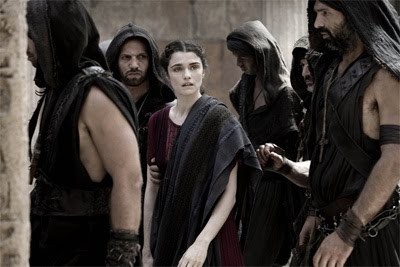
Last week, Rebecca Tuvel, an Assistant Professor of Philosophy, had her recent article in Hypatia, ‘In Defence of Transracialism’, denounced in an open letter signed by several professional scholars (among others). They accused her of harming the transgender community by comparing them with the currently more marginalized identity of transracialism. William Rein, on this blog, and Jason Brennan at Bleeding Heart Libertarians, have written valuable defences of Tuvel’s right to conduct academic research in this area even if some find it offensive.
Events have moved fast. The associate editors initially seemed to cave in to pressure and denounced the article they had only just published. The main editor, Sally Scholz, has since disagreed with the associate editors. Critically, Tuvel’s colleagues at Rhodes College have given her their support so it looks like the line for academic freedom might be holding in this case. Without wishing to engage too much in the hermeneutics of suspicion, I think there are grounds to doubt the depth of the critics’ attitudes. I base this on my reading of Judith Butler, who is one of the signatories to the open letter arguing for Tuvel’s article to be retracted.
Seven years ago, I managed to read Judith Butler’s Gender Trouble. Although there are many variations in the movement, Butler is a central figure in the post-structuralist , non-gender-essentialist, feminism that inspires much of the contemporary ‘social justice’ movement. When I got past Butler’s famously difficult prose, I found a great deal of ideas I agreed with. I wrote up a brief piece comparing Butler’s concerns with violently enforced gender conformity to classical liberal approaches to personal autonomy. I also identified some problems.
First, Butler’s critique of the natural sciences seems to completely miss the mark. Butler associates gender essentialism with the study of genetics, when, in fact, genetics has done more than almost anything else to explore the contingency and variation of biological sexual expression in nature. The same applies to race and ethnicity.
Second, more importantly, Butler insists that there is no underlying authentic gender or sexual identity. All identities are ultimately constituted by power relations and juridical discourses. You find this argument repeated among social justice proponents who insist all forms of identity are products of ‘social construction’ rather than ever being based on natural facts. As a result, all personal identity claims are only ever historical and strategic. They are attempts to disrupt power relations in order to liberate and empower the subaltern and oppressed albeit temporarily
I don’t think this is perfectly factually true but lets accept it for now as roughly true. This means that transracialism itself might become, or could already be, another example of the strategic disruption of contemporary juridical discourses, this time about race and ethnicity. The same people currently denouncing Tuvel could very easily insist on the acknowledgement of transracial identity in five or ten years time, and denounce those who hold their current views. From their own position, which explicitly rejects any ultimate restrictions on identity formation, we have no warrant to know otherwise.
In this sense, Tuvel might not be ‘wrong’ at all, just slightly ahead of the social justice curve. And her critics wouldn’t actually be changing their minds, just changing their strategies. Meanwhile, people who actually take their identities seriously should be wary of their academic ‘allies’. They can quickly re-orientate their attitude such that a previously oppressed identity comes to be re-configured as an oppressive and exclusionary construct.
If all claims in this area are strategic, rather than factual, as Butler claims, then why try to damage a philosopher’s career over it? Why provoke an academic journal almost to self-destruct? Rather than working out which ideas to denounce, we should critique the strategy of denouncement (or calling out) itself. In that vein, much as I disagree wholly with the stance of its editorial board, I think calling into question Hypatia’s status as an academic journal, is premature.
Where is the line between sympathy and paternalism?
In higher-ed news two types of terrifying stories come up pretty frequently: free speech stories, and Title IX stories. You’d think these stories would only be relevant to academics and students, but they’re not. These issues are certainly very important for those of us who hang out in ivory towers. But those towers shape the debate–and unquestioned assumptions–that determine real world policy in board rooms and capitols. This is especially true in a world where a bachelor’s degree is the new GED.
The free speech stories have gotten boring because they all take the following form: group A doesn’t want to let group B talk about opinion b so they act like a bunch of jackasses. Usually this takes place at a school for rich kids. Usually those kids are majoring in something that will give them no marketable skills.
The Title IX stories are Kafkaesque tales where a well-intentioned policy (create a system to protect people in colleges from sexism and sexual aggression) turns into a kangaroo court that allows terrible people to ruin other people’s lives. (I hasten to add, I’m sure Title IX offices do plenty of legitimately great work.)
A great article in the Chronicle gives an inside look at one of these tribunals. For the most part it’s chilling. Peter Ludlow had been accused of sexual assault, but the claims weren’t terribly credible. As far as I can tell (based only on this article) he did some things that should raise some eyebrows, but nothing genuinely against any rules. Nonetheless, the accusations were a potential PR and liability problem for the school so he had to go, regardless of justice.
The glimmer of hope comes with the testimony of Jessica Wilson. She managed to shake them out of their foregone conclusion and got them to consider that women above the age of consent can be active participants in their own lives instead of victims waiting to happen. Yes, bad things happen to women, but that’s not enough to jump to the conclusion that all women are victims and all men are aggressors.
The big question at the root of these types of stories is how much responsibility we ought to take for our lives.
Free speech: Should I be held responsible for saying insensitive (or unpatriotic) things? Who would enforce that obligations? Should I be held responsible for dealing with the insensitive things other people might say? Or should I even be allowed to hear what other people might say because I can’t take responsibility for evaluating it “critically” and coming to the right conclusion.
Title IX: Should women be responsible for their own protection, or is that akin to blaming the victim? We’ve gone from trying to create an environment where everyone can contribute to taking away agency. In doing so we’ve also created a powerful mechanism that can be abused. This is bad because of the harm it does to the falsely accused, but it also has the potential to delegitimize the claims of genuine victims and fractures society. But our forebears weren’t exactly saints when it came to treating each other justly.
Where is the line between helping a group and infantilizing them?
At either end of a spectrum I imagine caricature versions of a teenage libertarian (“your problems are your own, suck it up while I shout dumb things at you”) and a social justice warrior (“it’s everyone else’s fault! Let’s occupy!”). Let’s call those end points Atomistic Responsibility and Social Responsibility. More sarcastically, we could call them Robot and Common Pool Responsibility. Nobody is actually at these extreme ends (I hope), but some people get close.
Either one seems ridiculous to anyone who doesn’t already subscribe to that view, but both have a kernel of truth. Fair or not, you have to take responsibility for your life. But we’re all indelibly shaped by our environment.
Schools have historically adopted a policy towards the atomistic end, but have been trending in the other direction. I don’t think this is universally bad, but I think those values cannot properly coexist within a single organization.
We can imagine some hypothetical proper point on the Responsibility Spectrum, but without a way to objectively measure virtue, the position of that point–the line between sympathy and paternalism–its location is an open question. We need debate to better position and re-position that line. I would argue that Western societies have been doing a pretty good job of moving that line in the right direction over the last 100 years (although I disagree with many of the ways our predecessors have chosen to enforce that line).
But here’s the thing: we can’t move in the right direction without getting real-time feedback from our environments. Without variation in the data, we can’t draw any conclusions. What we need more than a proper split of responsibility, is a range of possibilities being constantly tinkered with and explored.
We need a diversity of approaches. This is why freedom of speech and freedom of association are so essential. In order to get this diversity, we need federalism and polycentricity–stop trying to impose order from the top down on a grand scale (“think globally, act locally“), and let order be created from the bottom up. Let our organizations–businesses, churches, civic associations, local governments and special districts–adapt to their circumstances and the wishes of their stakeholders.
Benefiting from this diversity requires open minds and epistemic humility. We stand on the shore of a vast mysterious ocean. We’ve waded a short distance into the water and learned a lot, but there’s infinitely more to learn!
(Sidenote: Looking for that Carl Sagan quote I came across this gem:
People are not stupid. They believe things for reasons. The last way for skeptics to get the attention of bright, curious, intelligent people is to belittle or condescend or to show arrogance toward their beliefs.
That about sums up my approach to discussing these sorts of issues. We’d all do better to occasionally give our opponents the benefit of the doubt and see what we can learn from them. Being a purist is a great way to structure your thought, but empathy for our opponents is how we make our theories strong.
A short note on monarchical nostalgia
Kingship organizes everything around a high centre. Its legitimacy derives from divinity, not from populations, who, after all, are subjects, not citizens. In the modern conception, state sovereignty is fully, flatly, and evenly operative over each square centimetre of a legally demarcated territory. But in the older imagining, where states were defined by centres, borders were porous and indistinct, and sovereignties faded imperceptibly into one another. Hence, paradoxically enough, the ease with which pre-modern empires and kingdoms were able to sustain their rule over immensely heterogeneous, and often even contiguous, populations for long periods of time. (19)
This passage, from Benedict Anderson’s much-cited book on nationalism (Imagined Communities), does a good job of summarizing what the world looked like politically prior to the Industrial Revolution. It does a less good job of summarizing what monarchy is, politically (see this or this), but does do a great job of explaining why monarchies were able to exert governance over populations that were linguistically, religiously, and ethnically diverse.
What is less clear in this passage is its explanation for why paleolibertarians are so enamored with monarchy and why some non-paleo libertarians often write nostalgically about imperial pasts. Even though this is not clear in the passage (I doubt Anderson had intra-libertarian squabbles in mind when he wrote Imagined Communities), it is a great way to explore why libertarians have nostalgia for monarchy and empire.
Let’s start from the top, though. Libertarians don’t like nation-states because of nationalism, because of borders with taxes and restrictions on movement of goods and people, and because of the power that governments can exert over well-defined spaces of territory. So, instead of delving into the intricacies of why nation-states are around, some libertarians reach back to an older age, where “borders were porous and indistinct,” state sovereignty was not the end game of geopolitics, and governments had ways other than nationalist propaganda to bring diverse populations to heel. So on the surface, nationalism was non-existent, borders were open, and diverse groups of people lived together in relative harmony under one roof. What libertarian wouldn’t like that? Fred Foldvary’s post on restoring the Ottoman Empire is a good example of this kind of historical naivety. (Barry and Jacques have both written good rebuttals to this kind of wishful thinking.)
Historical naivety is one thing, but the arguments of so-called “anarcho-monarchists” are quite another. Arguing that monarchy is anarchy because monarchs don’t reign over a nation-state (instead they rule over the private property of the crown) is disingenuous at best, and nefarious at worst. Royal property and private property are two different things (“L’etat c’est moi“). This argument leads directly to the awful, embarrassing arguments of Hans-Hermann Hoppe and his acolytes, who have a bad habit of claiming that anarcho-monarchism is somehow libertarian. I’m going to skip over the specifics of their arguments (Zak has done great work on this topic, but in short Hoppeans claim that anarcho-monarchist societies would be able to physically remove undesirable people from their societies; “undesirables” mostly mean socialists, homosexuals, and non-Europeans), and instead point out that Hoppe and company are simply wrong about what a monarchy actually is.
Monarchies had porous borders, they constantly warred against their neighbors (sometimes for “interests of state”), and their populations were polyglot and illiterate. I haven’t spent any time reading Hoppe, so maybe I am treating him unfairly here and he is perhaps an advocate of a new type of monarchy, but as a student of Habermas I would assume Hoppe likes to use history as a guide for understanding and explaining the world around him. How on earth could he be so wrong about what monarchy actually is, unless he is being disingenuous about his whole anarcho-monarchist utopia?
On a completely unrelated note, Benedict’s Anderson’s book on nationalism is published by Verso Books, rather than a traditional academic press (such as Princeton University Press or University of California Press). Verso Books is a left-wing publishing house dedicated to radical critiques of everything non-leftist, so I find it a bit odd that Anderson’s book has come to be so well-cited in the academic literature on a number of topics. It’s a great book, don’t get me wrong, but I think it’s popularity, despite being an explicitly ideological book rather than an academic one, explains much of the strife currently happening on campuses across the West regarding freedom of speech and freedom of assembly.
Dear Muslim Fellow Citizens:
President Trump’s executive order temporarily barring entry into the US to those coming from seven countries was a rude act.* To make things worse, it was badly implemented, causing inconvenience and even distress to a number of innocent travelers. What’s more, it’s unlikely to be very effective in its stated goal of keeping Americans safe. The reason the administration gave for the order was to give the appropriate agencies some time to improve their techniques for vetting ordinary travelers from those countries.
As I write, the bar is in circuit court where it will be decided whether a previous federal judge’s order suspending application of the bar holds or not. There is a mano-a-mano between a largely liberal circuit court and a fairly conservative and decisive new executive. Whether the executive prevails or not, the order was given and it will be remembered as one of the first acts of the Trump administration. It’s worth discussing.
Much of what has been said about the order is false, ridiculous, or dishonest. I urge you to preserve your collective credibility by not falling for the falsehoods, and worse, for partially true but misleading statements you have heard. Some, you have heard repeatedly.
Beyond this, I suspect you have not done enough collective self-examination. I suspect this because no one reasonable talks to you frankly about matters concerning you. There are plenty of ill-informed hysterical, obscene anti-Muslim shouts which you probably (rightly) shut out. The rest of America is too paralyzed by political correctness to say anything to you that may seem critical. I am reasonable and I am not paralyzed by political correctness. In addition, there is a good chance I am pretty well informed. (Go ahead, Google me.) Where I am not, I listen to advice and corrections with an open mind. I wish to talk to you about mistrust of Muslims and about what you may not have done to represent yourselves in a light inducing others to be fair. Lastly, I wish to address you about what you have done that has not been helpful.
The persecution of Muslims
Fact: The seven countries the executive temporary banning order targeted are all predominantly Muslim countries.
That does not make the order an anti-Muslim measure. If President Trump had wanted to persecute Muslims, Indonesia, Pakistan, Egypt and even India (yes, India) would be heading the list. There are something like forty predominantly Muslim countries in the world. How do you think the seven were chosen?
The seven were originally selected by the Obama administration as dangerous countries from which it was difficult to obtain enough information to vet travelers. This explains why most Muslim countries – by a long shot – did not make the list. In the case of five Arab Muslim countries on the list, they are there because they are failed states unable to provide credible information if they want to. Iran is a special case. President Trump, and some of us, think that the information should not be trusted that comes from a country where the political class has been smiling benevolently for the past thirty years on demonstrators whose main demand is “Death to America!” Taking people at their word is not a dirty trick, right? The sixth country on the list, Sudan, is there for both reasons. It’s an ineffective state and its leadership is openly hostile to America. It’s unable to cooperate in vetting and it will not.
Why should President Trump want to go to extraordinary lengths to vet travelers from those particular countries, you wonder suspiciously? It’s because – you are right – the Muslim world is widely thought to be a privileged source of terrorism. That’s in the 21st century. In the 20th century, it would have been (largely Catholic) Ireland, the (Catholic) Basque area of Spain and, especially, the (Hindu) Tamil area of Sri Lanka. The fact that no IRA terrorist, no ETA terrorist and no Tamil Tiger terrorist ever claimed to be acting in the name of God or of his religion may make a difference though. What do you think?
Personally I don’t see how anyone can disagree with the proposition that Muslim countries (not all, some, of course) generate large numbers of terrorists when those same terrorists massacre many more Muslims than they do anyone else? I can’t believe you are not aware of the many car bombs detonated near mosques during prayer from Pakistan and Afghanistan to Iraq. And have you ever thought of what the proportion of Muslims must have been at the massacres in the French night club or during the Bastille Day festivities, in Nice, France? Let me tell you: Many French Muslims are immigrants from rural areas in Africa. It’s been true for a long time. They have more children than people born in France. Whenever you find children and young people, in France, you are looking at many young Muslims. And, go back to the “Underwear Bomber” trying to blow up a plane over largely Muslim Detroit, during Christmas Eve, of all times. Who do you think would have died, primarily? How many Christians are on a plane on that night? (Reminder: He is a young man from a good Nigerian family. He is having a bad time in federal prison, right now.) It’s your duty to be informed about the people who are massacring both your people and your neighbors, I think.
Incidentally, the fact that Muslims die much more than other people under the knife of neo-jihadists does not give your passivity a pass.
This all is sufficient to explain well why there are only Muslim countries on the ban list. It would have been more polite of the Trump administration to add, say Iceland, Paraguay, and Laos, or Timor. Perhaps, they did not think of it. No one is perfect. Perhaps they did think of this trick and decided to not implement it to signal that political correctness has to go, at last.
Before I move on, note what the paragraphs above do not (NOT) say, lest your memory tricks you later: They do not say that “most Muslims are terrorists,” as stupid liberals allege such statements mean. I don’t think most Muslims are terrorists. I do not think that many Muslims are terrorists. I am not even sure the terrorists who claim to be Muslims are Muslims, or good Muslims. I don’t really know. However much I regret it, I can see how it is easy to find justification for religious acts of violence in the Islamic sacred Scriptures. (Ask me or tell me plainly that I am wrong, that there are no such justifications in the Scriptures.)
Trump’s order was intended to keep terrorists where they are for the time being, until we learn better to spot them. It was intended to protect me and my children, and you and your children. I have my doubts about its efficacy, as I have said elsewhere. You should feel free to criticize it on that ground without going to motives you have little way of knowing. “Stupid” is not the same as “prejudiced.”
The Muslim contribution to the mistrust of Muslims: Inaction
Next, I need to ask you if Muslims collectively have done anything to contribute to widespread mistrust of Muslims in America. First I need to ask what American Muslims did not do that they should have done – and can still do. This can be brief.
Large American Muslim organizations have put themselves repeatedly on the public record denouncing terrorism perpetrated by those who claim to be inspired by Islam. They are quick to assert that religious violence is incompatible with Islam, that the neo-jihadists are simply bad Muslims, or even, not Muslims at all. This is all for the good although – I am sorry – most of the protestations sound hollow. One of the things missing, incidentally – is condemnations by obvious religious authorities.
What bothers me personally, and probably others who don’t have the time to think about it, is the lack of individual faces to accompany condemnations of neo-jihadist barbarism. There are two exceptions I know of, two Arab-American men who sometimes come on TV to reject barbarism or any links to American Muslims vigorously. I don’t have either name in mind right now and I would not name them anyway because I don’t have a clear idea of the risks they are taking.
What I am missing is reactions from individual, private persons of Muslim faith, people with a face. I ask how many of you said anything – outside the family – when ISIS was beheading an American journalist and then, an American social worker, all on video. I wonder if you said anything, at work, even if only at the water fountain, when ISIS was burning people alive in cages. How many of you expressed horror aloud or when it was turning thousands of young women and girls into sex slaves. How many dismiss Boko Haram which is burning its way through North Western Nigeria as a (black) African monstrosity?
Some of you, most of you, or all of you, think these questions are superfluous and even, that my expectations are outrageous. I have a friend, a young Muslim woman who tells me straight up that terrorism is no more her problem than mine. It’s unrealistic and it’s false. The abstract category “American Muslims” (I am not using “community” deliberately) turns out enough terrorists and would-be terrorists to destroy this presumption of distance between you and the prevalent kind of barbarism. Note also that, irrespective of provocations, since the masterful, well-planned, very successful aggression of 9/11, there has not been a single act of private terrorism against Muslims or Muslim institutions in America. (Hectoring of women wearing the hijab in public places does not quite count as terrorism.) Mind what I am really saying: It’s not your job to stop terrorism committed in your names but you would be wise to reject it forcefully and loudly, and also in person when you have a chance.
The Muslim contribution to mistrust of Muslims: Actions
There are also the things American Muslims did that contributed to the process leading to the Trump administration temporary ban on travel from seven Muslim countries.
Let me help you remember. In 2008, you voted for Barack Obama in large numbers although he was a leftist of zero demonstrable achievement but one. (He did pass the bar exam.) I don’t know if you did it because the father he never knew was a Muslim (a drunken Muslim), or because his middle name is “Hussein,” or because you were caught up in the great Democratic emotional sweep. Later, in 2016, you largely supported the candidacy of an obvious liar and cheat who had already sold some of the country to foreign powers before even being elected. What’s more, she presented herself squarely as President Obama’s successor. Many of you just bet on the wrong horse without much of an excuse for doing so. (I think I have read somewhere that American Muslims are better educated than the average American. Correct me if I am wrong.)
Had more of you voted Republican, they just might have influenced the result of the primary, perhaps, Marco Rubio (my candidate) would have won it, or the honorable Mayor Giuliani. The presidential election could have played out differently. If it hadn’t, there is a chance you would have still earned a voice within Republican politics. You chose instead to trust in liberal cliches to go with the easy flow of falsely generous liberalism.
Even with Donald Trump as president, you would have avoided getting trapped in the Democratic identity mishmash. You would have saved yourselves the embarrassment of ending up squeezed in their book between illegal aliens from China and transgender activists. At this point, your main public, visible representation in American politics – by default, I realize – is the pathetic, corrupt loser’s personal assistant. She is very elegant but she is married to a gross pervert. The fact that her parents are members of the Muslim Brotherhood does not help. It’s not a terrorist organization exactly but it’s very unfriendly to America and to its main values. By the way, you appear to still not be paying enough attention. The fact is that, right now, thousands of Americans are talking (and screaming) in the streets in defense of, and often in the names of, Muslims in general. Yet, the voices of American Muslims themselves are hard to perceive in the din. It makes no difference; when the fog clears up, some Americans are going to blame you for the riots. You are innocent, of course but, to a large extent, you put yourselves there.
There is danger in letting others speak in your place on the public square. It’s the same others who recently used the armed power of government to force others to violate their conscience. (By forcing a Catholic nuns’ order, for example, to provide contraceptive services to their employees.) How is this going to play out tomorrow when your own religious practice needs protection, I wonder.
The executive order and our constitutional order
There is much misunderstanding everywhere about the legal nature of the order. It’s all over the media and elsewhere. One Iranian woman, a distinguished MD, I am told, is suing the federal government because she suffered some travel inconvenience as a result of the executive order. (I don’t know if she is a Muslim; it does not matter.) I hope the suit only shows confusion about the American Constitution rather than some sinister plot. Whatever some little liberal judge in the boondocks may say, the Constitution does not apply to those who are not under the power of the US government. This includes citizens, legal permanent residents, illegal permanent residents, prisoners of war, to some extent, and those who are already on US soil by whatever means, or otherwise under exclusive US control. It does not apply to Mr Yokama in Osaka, to Mrs Dupont in Marseille, or to Ms Reza in Iran, or on a layover in Dubai.
The media have also shown growing confusion about the nature of a visa. It’s not a contract between a government and a private foreign party. It’s not enforceable in any court. It’s a promise to admit and evidence that someone is considered acceptable at a particular time. Either of these assessments can change in minutes. Incidentally, American immigration officers at all levels have always had discretion to do what they think is best: You can arrive at LA International from Finland, with a perfect visa, and have a fat federal employee in short sleeves get suspicious of you and deny you admission on the spot. There is no legal recourse, never has been.
Nation-states avoid canceling visas in ways that would look arbitrary, for two reasons. First it makes the relevant government lose international credibility. That’s a subtle phenomenon. No one knows how much denials and cancellation push the relevant country over the brink. Thus, any government, including, the Trump administration assumes it has a good deal of discretion in this matter. The second possible consequence of many negative visa events is that other governments may take retaliatory measures: You do it to us, we do it to you or even, we deny your citizens any visa. It’s not surprising that some governments of small, poor countries just don’t care much about serving up reciprocation to a large, desirable country such as the US. If you are an alien and you have a visa for the US, it means that you have a good chance to get in. It’s not a guarantee.
The president and his conservative supporters are not responsible for the confusion about the Constitution whipped up and smartly supported by liberal opinion.
Islamophobia
By now, I suspect, you are thinking “Islamophobia.” I don’t quite know how to defend myself against accusations sitting in your mind about what’s going on in my own mind. It’s like suspecting me of watching porn inside my head. How can it convince you that I don’t? Nevertheless, for what it’s worth, nothing predisposes me to a blind, irrational hatred of Islam or of Muslims. I have known Muslims all my life. I have had nothing but harmonious personal relationships with them. I think there is much to love in Islamic culture. For example I am fond of calligraphy in Arabic, the language of the Koran, so fond that the Profession of Faith (the Sha’hada) hangs over my bed. (I wouldn’t be surprised if this usage by a non-believer is considered blasphemy, somewhere or other.) The few times I have lived among Muslims, I have liked it. There is even a Muslim country where I would like to live permanently now that I am old. (My wife won’t hear of it; what do you know!)
“Islamophobia” is not a real concept anyway. It was invented by liberal intellectuals to shut up debate up. If it were not so, there would be other similarly formed words such as “Protestanphobia” and “Bhuddistphobia.” The impression that Muslims in America take refuge behind that rotten old hyena hide is deplorable. It feeds many unfair stereotypes.
And, by the way, what would be wrong with being an Islamophobe? I mean in the American tradition of freedom of conscience and freedom of speech? Being a Muslim is not a race, an unalterable fact about a person. It’s a choice. If I understand a little about Islam, it’s even the supreme choice. There is widespread confusion there also.
Why should anyone not be morally, intellectually allowed to detest a choice you can reverse any time you wish? Take me, for example. I used to be a Catholic. I am not anymore. I am an ex-Catholic. Anyone could have blamed me for being a Catholic, a believer in fairy tales and a supporter of an organization massively complicit with child rape. “Catholicophobe” would not become an insult; it did not. Why would you deserve special treatment, in this regard?
No one at all blames me either for being an ex-Catholic, by the way. There is (well-founded) Catholicophobia in this country. There is no such thing as “ex-Catholicophobia.” I am also aware as I write that changing religion is called “apostasy.” I am further aware that apostasy is punishable by death in a number of countries. They are all Muslim countries, as far as I know. (Please, correct me if I am wrong on this.) One of the advantages of living in the US, as you and I do, is that there is no penalty here for transgressions of conscience. There is no punishment for walking away from a set of beliefs. This is never discussed in narratives that use the word “Islamophobia.” We don’t speak enough about such matters. Muslims, in particular, don’t speak enough. (And, I don’t believe the media suppress such conversations. The liberal media will print anything said by anyone identified as “Muslim,” especially if the speaker wears a hijab.) I realize that one can find many statements by American Muslims on the Internet. That’s not good enough; I shouldn’t have to do research.
There is also much confusion – often spread by the liberal media – about the First Amendment to the US Constitution. That main amendment to the Constitution is widely misunderstood, by native-born citizens and by many others as well. It states categorically that government cannot have a favorite religion; it says that government cannot interfere with religious practice or belief. Moreover, the Constitution forbids government to administer religious tests as a precondition to holding any government office. That’s it!
There is no part of the US Constitution that protects anyone from criticism by private parties. There are countries where such criticism is illegal; the US is not one of them. Personally, I hate Communism and Devil worship, and I also detest obsessive talk about baseball statistics, for example. Do I have a right to my dislikes? May I express them openly? Should I count on the protection of my government – whose first assignment is to protect me – when I express these dislikes? May I say safely, “Devil worship is an abomination”? How about, “Christianity is a false religion”? Should you, personally, have to forbid yourselves from detesting Devil worship aloud? How does the Constitution answer these questions?
Since I began talking calmly about things some Muslims don’t enjoy hearing, let me continue a little way. Let me affirm as a preamble that you have as much right to be here as anyone. If you are an immigrant like me, you might have even a little bit more right than most. (Immigrants contribute somewhat more than the native-born.) Irrespective of your rights, if you are a person who dislikes the separation of Church and State, if the gap between religion and government is anathema to you, I hope you will leave. I won’t do anything about you but you must know that I don’t want you as a fellow-citizen. And, if you take my suggestion, please, take with you as many Baptists, Lutherans and Catholics of the same belief you can find. I hope our government will do its best to limit or prevent the entry of people who hold such beliefs.
To end: It’s likely that most of you are people with whom I would like to have a cup of coffee or a meal. I suspect that we have more in common than not. You would yourselves be astonished at what a pleasant person of culture I am in real life. (Go ahead, Google me.) We would talk about our children and our grandchildren. We would share our experiences in the country I chose. This probable commonality creates no obligation for me to tolerate nonsense. The Trump temporary executive order of mention may well be regrettable. If it’s unlawful – I don’t see how – it will not be implemented. Our institutions are working. In the meantime, it’s not the end of the world. We, Americans, you and I, have bigger fish to fry.
About Syria: There are tens of thousands of Syrian refugees we could take in without endangering ourselves. We should do it, for two reasons. First, it the right thing to do and it’s good for our souls. Second, we are partly responsible for the unending disaster in Syria. I have not forgotten the red line in the sand the dictator Assad was not supposed to cross or else…. That was before the Russians were heavily involved. At the time, the US Air Force and the US Navy could have destroyed 95% of Assad’s planes and helicopters in one morning if there had been political will. It would have made it extremely more difficult for him to continue fighting and to massacre civilians. We did not intervene. Now, we have to give a hand, a big hand. I don’t see why this help should include a path to citizenship.
*The executive order has been suspended by a judge (a single judge) as I write. The Administration fast track appeal has been rejected. Afterwards, the administration appealed to the 9th Circuit Court. Our institutions are doing their work even if it’s at the cost of some judges believing it’s their job to make laws. To my mind, the fact that the order was issued at all is important whether it’s ultimately put to work or not.
My favorite posts at NOL this year
Last week I promised y’all a post on my favorite reads at NOL this year. I almost always keep my promises, so below is a long-ish list of essays I really enjoyed reading and learning from this year.
My absolute favorite essay of 2016 at NOL was Barry Stocker’s analysis of the attempted coup in Turkey. Dr Stocker has spent a quarter of a century in the Turkish-speaking world and all of his acquired wisdom of the region is on display in the piece. Barry didn’t post much here this year, but I am hoping that, given the geopolitical situation in his neck of the woods (Dr Stocker teaches political philosophy at Istanbul Tech), he’ll be able to provide much more insight into the challenges the region will face in 2017.
Jacques, who has become sidetracked ever since Donald Trump became the GOP nominee, had an excellent post titled “A Muslim Woman and the Sea” that everyone should read. I don’t agree with it, but the quality of his writing almost demands that you read through the entire piece. In it is the peaceful nostalgia for both youth and French Algeria, the almost careless way he describes his surroundings, and the slow, deliberate manner in how he attacks his enemies. It is all on display for you, his audience, to devour at your leisure. Dr Delacroix is a world-class storyteller.
Mark Koyama’s piece on Jewish communities in premodern Europe garnered a lot of praise, but I found his post on medieval China to be much more fascinating. In the post, Dr Koyama summed up his recent paper (co-authored with UCLA Anderson’s Melanie Meng Xue) on literary inquisitions during the Qing era (1644-1912). What they did was tally up the number of times the state dragged scholars and artists to court in order to accuse them of delegitimizing the Qing government. This had the unfortunate (but predictable) effect of discouraging discussion and debate about society in the public sphere, which stifled dissent and emboldened autocratic impulses.
Chhay Lin had a number of great posts here, some of which were picked up by major outlets like RealClearWorld and 3 Quarks Daily, and Notes On Liberty is lucky to have such a cool cat blogging here. My favorite post of his was the one he did on his childhood in a Cambodian refugee camp along the Khmer-Thai border. What an inspiring story! I hope there are more to come in 2017. (Chhay Lin, by the way, splits his time at NOL with SteemIt, so be sure to check him out there).
Zak Woodman had lots of good posts in his debut year (including NOL‘s most-read article), but the two I enjoyed most were his thoughts on empathy in cultural discourse and his Hayekian take on safe spaces. Both pieces took a libertarian line on the freedom of speech, but Mr Woodman’s careful articles, which are as much about being true to the original meaning of some of the 20th century’s best thinkers as they are about libertarianism, suggests that he has a bright future ahead of him as one of the movement’s deeper thinkers (he’s an undergraduate at UM-Ann Arbor). I look forward to his thoughts in 2017.
Bruno Gonçalves Rosi burst on to NOL‘s scene this year with a number of posts (in both English and Brazilian Portuguese). His blistering critiques of socialism were fundamental and – to me, at least – reminiscent of the debates between libertarians and statists here in the United States in the 1970s and 1980s. My favorite of Dr Rosi’s 2016 posts, however, was his reflection of the 2016 Rio Paralympics that took place in the late summer (at least it was late summer here in Texas). Bruno brilliantly applied the Games to the famous argument about inequality between 20th century American philosophers Robert Nozick and John Rawls. I hope the piece was but a glimpse of what’s to come from Dr Rosi, who also has a keen interest in history and international relations.
Lode Cossaer is probably busy with his very intriguing dissertation (“the institutional implications of the tension between universal individual rights and group self governance”), but he did manage to find some time to dip his feet into the blogging pool with a few insightful posts. My favorite was his explanation of Donald Trump’s Carrier move, which was blasted from all sides of the political spectrum (including libertarians) for being a prime example of “crony capitalism.” Cossaer, in his own delightfully contrarian manner, pointed out that there is a trade-off between the rule of law and lower taxes. This trade-off might not be pretty, but it exists regardless of how you feel about it. Lode, in my opinion, is one of very few thinkers out there who can walk the tight-rope between Rothbardian libertarianism and plain ole’ classical liberalism, and he does so ruthlessly and efficiently. I hope we can get more contrarianism, and more insight into Cossaer’s dissertation, in 2017.
Vincent has been on a roll this month, and I simply cannot choose any single one of his 2016 posts for recognition. His pêle-mêle comments on the debate between historians and economists over slavery is well-worth reading, especially his insights into how French Canadians are portrayed by economic historians in graduate school, as are his thoughts on the exclusion of Native Americans from data concerning living standards in the past. These posts highlight – better than his more famous posts – the fact that economists, along with political philosophers and anthropologists, are doing way better historical work than are traditional historians. Dr Geloso’s post on fake news as political entrepreneurship did a wonderful job, in my eyes, of highlighting his sheer passion for history and his remarkable ability to turn seemingly boring topics (like “political entrepreneurship”) into hard talking points for today’s relevant policy debates.
Federico is still practicing corporate law in Argentina, so every article he writes at NOL is done so in his free time. For that I am deeply grateful. His early August question, “What sort of meritocracy would a libertarian endorse, if he had to?” was intricately stitched together and exemplifies Federico’s prowess as one of the world’s most novel scholars of Hayekian thought. I also enjoyed, immensely, a careful, probing account of human psychology and our ability to act in this short but rewarding post on homo economicus. I look forward to a 2017 filled with Hayekian insights and critical accounts of social, political, and economic life in Buenos Aires.
Rick spent the year at NOL blogging about whatever the hell he wanted, and we were all rewarded for it. Dr Weber is obviously emerging as important conduit for explaining how “politics” works in democratic societies, and perhaps more importantly how to be a better, happier person within the American system. I hope Rick continues to explore federalism though a public choice lens, but I also suspect, given Dr Weber’s topics of choice this year, that Elinor Ostrom would have been interested in what he has to say as well. 2017 awaits! Here is Rick breaking down Trump’s victory over Clinton. You won’t get a finer explanation for why it happened anywhere else. Oh, and how about a libertarian argument for an FDA?
Michelangelo, who is now a PhD candidate in political science at UC Riverside, won my admiration for his brave post on safe spaces and the election of Donald Trump. While 2017 may be composed of uncertainties, one thing that is known is that Trump will be president of the United States. We need to be wary and vocal (just as we were with Bush II and Obama). Michelangelo was in top form in his piece “…Why I Don’t Trust the Police,” so much so that it stuck with me throughout the year. It is libertarianism at its finest.
William Rein, a sophomore (“second-year”) at Chico State, has been impressive throughout the year. His thoughts do very well traffic-wise (literally thousands of people read his posts), and it’s all well-deserved, but I thought one of his better pieces was one that was relatively slept on: “Gogol Bordello & Multiculturalism.” Mr Rein points out that Political Correctness is destroying fun, and the election of Donald Trump is merely the latest cultural challenge to PC’s subtle tyranny. William weighed in on the safe spaces concept as well and, together with Zak’s and Michelangelo’s thoughts, a coherent libertarian rationale has formed in response to this cultural phenomenon. If you want to know which clouds young libertarian heads are in, NOL is a great place to be.
Edwin initiated the best debate of the year here at NOL with his post on classical liberalism, cosmopolitanism, and nationalism. Barry replied (in my second-favorite post of his for 2016), and Dr van de Haar responded with a third volley: “Classical Liberalism and the Nation-State.” At the heart of their disagreement was (is?) the concept of sovereignty, and just how much the European Union should have relative to the countries comprising the confederation. Dr Stocker concluded the debate (for 2016, anyway) with a final post once again asserting that Brexit is bad for liberty. For Edwin and Barry, sovereignty and international cooperation are fundamental issues in Europe that are not going away anytime soon. NOL is lucky to have their voices and, like Dr Stocker, I hope Dr van de Haar will be able to provide us with many more fascinating and sometimes contrarian insights in 2017.
Lucas Freire wasn’t able to post much here this year (he is doing postdoc work in South Africa), but his post on economics in the ancient world is well worth reading if you are at all interested in methodology and the social sciences. Dr Freire has continually expressed interest in blogging at NOL, and I am almost certain that 2017 will be his breakout year.
Those are my picks and I’m sticking to ’em (with apologies to Rick). Notewriters are free to publish their own lists, of course, and if readers would like to add their own in the ‘comments’ I’d be honored (you can always email me, too). The post I most enjoyed writing this year, by the way (thanks for asking…), was a snarky one questioning the difference between Saudi Arabia and Islamic State. Thanks for everything.
“Apparently they have been whispering while others have been shouting obscenities and interrupting guest speakers.”
This is an observation found in the ‘comments’ threads of economist Mark Perry’s blog, Carpe Diem, on a post he did about the reaction of students at the University of Michigan-Ann Arbor to their president’s remarks about Donald Trump.
(I’m not going to summarize it here, because you are all probably familiar with this storyline. You can read Perry’s whole post here.)
I wanted to highlight that this comment basically summed up my political experience on campus. I am by no means a conservative, but there was no way in hell I was going to pipe up in class discussions on alternative understandings of “neoliberalism” or even play the role of contrarian. Doing so would have hurt my GPA. It would have resulted in a loss of social standing. It would have invited accusations that I was racist, or sexist, or – gasp! – conservative.
So instead I started this blog and talked about sports or homework with my peers.
My guess is the guy who left this comment was a libertarian or conservative in college back in the 70s or 80s. Michelangelo recently blogged about his experience on campus, but has anyone else found that this is the norm on campuses in the West?
I understand that conservative and libertarian groups like to get obnoxious sometimes, by carrying out public demonstrations like “affirmative action bake sales” or whatever, but the fact that these don’t work (they do help promote a culture of toleration on campuses, albeit in an indirect manner, so I guess I should be thankful for that, but if this is the case then the drum-beating and chanting done by Leftists on campus does the same thing for me in this regard) in convincing the other side of their wrongness suggests that the quiet whisperers are the better thinkers.
A Hayekian View of Safe Spaces
The concept of a “safe space” has dominated the discourse in identity politics for the last several years. Proponents of safe space, mostly left-leaning millennials are now demanding that colleges, schools, corporations, and various other institutions remove potentially offensive or triggering ideas or images that might harm minorities. Much of the time, this leads to hilariously captious nitpicking over things like Halloween costumes and ethnic food. Other times, it leads to what critics (mostly conservatives and libertarians) see as threats to free speech. It has led to violent reactions to opposing candidates, the ridiculous firing of college presidents, and censoring of speakers at universities.
Largely, the conservatives and libertarians are right. College and society as a whole are not and should not be “safe spaces.” Especially in education, one should be exposed to offensive, radically different ideas and world views. The reason free speech and academic freedom exists, as JS Mill argued in On Liberty, is because stifling freedom of expression robs humanity of potentially true ideas in the future. There is a similarity the merits of freedom of speech and entrepreneurship in the market; dissenters with public opinion are essentially ideological entrepreneurs who are discovering better vocabularies and better ways of thinking. If we stifle the free market, we are stuck with the same suboptimal products, services, technologies and methods of production; if we stifle free speech we risk being stuck with the same false ideas.
There is little I can say in defense of free speech on college campuses that hasn’t been said before. How coddling the youth leads to intellectual stagnation, or how tolerance is a two-way street and if we are to tolerate liberal point of views, we should tolerate bigotry. However, there are two points that are too often overlooked in the debate over safe spaces by the right wing critics.
First, the idea that the drive for safe spaces and censorship of ideas is solely a left-wing phenomenon is a complete and total myth. Conservatives like to fashion themselves as the “strong” defenders of free speech and inquiry, and the wimpy leftists as fascists seeking to protect their fragile little feelings. Beyond the fact that these are over-generalizations, it is a fact that conservatism is occasionally as much an enemy to free speech in trying to create “safe spaces” for people who agree with conservative, Christian values as the leftists are in trying to create safe spaces for minorities. I might have selection bias in that I recently left the ultra-conservative Hillsdale College, but there were many comical attempts there to censor ideas of those who disagreed with the college’s overwhelming conservatism; whether it was the administration’s banning of an LGBT group, students protesting a theatrical performance that included gay characters, or the students throwing a fit over the college using Starbucks because their CEO is a liberal. Look no further than some of the policies at colleges like Bob Jones, Patrick Henry, or Liberty University (my mother’s alma mater, for the record) where free speech is regularly suppressed to support conservative propaganda. Or the events which bear an uncanny resemblance to the recent incident at Claremont at William and Mary last decade.
As a further anecdote, I was a co-founder of the Gadfly Group at Hillsdale which sought to intellectually provoke Hillsdale students by promoting non-conservative political and philosophical viewpoints. One day, the president of the college (Dr. Larry Arnn) flat out told me and the group’s main founder that he didn’t think the group should or needed to exist on campus. While we were forming, at least according to Arnn, one of the deans had attempted to stop our approval by the administration (though, thankfully, the provost disagreed). After the group’s formation, though we had a number of popular events and many of the students were supportive of us, many students ridiculed us as “pseudo-intellectuals” engaging in “intellectual masturbation” (actual words said to me), calling us “angry libertarians” (even though I was the only libertarian in the group and we did events on people like Rawls), and some students were extremely offended by our presence and said the group should be banned. If that’s not evidence of right-wing censorship on college campuses, I don’t know what is. It’s enough that I’d consider writing a book in the spirit of Buckley entitled Ubermensch and Man at Hillsdale College.
Second, despite the problems with safe spaces when applied to macro level social institutions, freedom of association is consistent with a limited concept of safe spaces when applied to micro level social organizations. Though I detest their means, I do sympathize with many of the ends of these so-called “social justice warriors.” I am a liberal in the Rortian sense that I think cruelty is the worst thing you can do, and much of this attempt to create “safe spaces” is an attempt to what they perceive reduce cruelty to minority groups. Of course, they take it way too far in complaints about cultural appropriation which are not cruel to anyone, but it doesn’t diminish the fact that safe spaces are a potentially useful construct if done correctly.
The biggest problem that the Social Justice Warriors commit is a problem that Hayek pointed out so eloquently in The Fatal Conceit. As Hayek points out, modern man exists in “two worlds at once.” One, we live in the micro-level war world of intimate social relations such as families, immediate communities, and friends. (The type of people who are included in Dunbar’s number.) But we also exist in the “extended order,” the macro-level relationships that include humans we interact with and know, but only distantly; like trading partners in a large market, other citizens of a nation, or other members of our larger culture. Hayek’s writings on this are worth quoting at length:
Moreover the structures of the extended order are made up not only of individuals but also of many, often overlapping, sub-orders within which old instinctual responses, such as solidarity and altruism, continue to retain some importance by assisting voluntary collaboration, even though they are incapable, by themselves, of creating a basis for the more extended order. Part of our present difficulty is that we must constantly adjust our lives, our thoughts and our emotions, in order to liver simultaneously within different kinds of orders according to different rules. If we were to apply the unmodified, uncurbed rules of the micro-cosmos (ie., of the small band or troop, or of, say, our families) to the macro-cosmos (our wider civilization), as our instincts and sentimental yearnings often make us wish to do, we would destroy it. Yet if we were to apply the rules of the extended order to our more intimate groupings, we would crush them. So we must learn to live in two sorts of worlds at once. (Bold mine, Italics his)
Those who would seek to create a safe space out of the entire university or society at large are applying the rules of our macro-cosmos to our micro-cosmos. The idea that we should not bring up certain topics or ideas in certain social situations out of considerations for our fellow human beings is the truth behind the safe space. But to apply that principle to every social situation within a university or nation is a huge mistake. Safe spaces make sense for some of those overlapping sub-orders and micro-level organizations, but not for the extended order of society. So while it is a huge mistake and assault to make a safe space out of an entire college campus, perhaps it is reasonable to make safe spaces out of a dorm room, or a professor’s office, or a meeting for a student group. While it is obviously a huge act of the most heinous form of censorship to ban people from questioning the morality of homosexuality, perhaps it makes sense to not bring up that topic at a college GSA meeting where many of the LGBT students are just seeking a place to belong, or when talking to a group of LGBT students who are facing severe psychological issues while being discriminated against.
If you think applying the concept of safe spaces everywhere and anywhere is always wrong, you’re probably apt to attack me for being “politically correct” for defending the concept in some situations. I agree, we shouldn’t be “politically correct” in the way that term is typically used, but perhaps we should be decent human beings and allow people to freely associate.
Should UNM replace its seal?
The University of New Mexico is under fire to change its seal. The current seal depicts two Spanish conquistadors. This is part of a wider movement asking for universities to remove controversial symbols. This includes calls to rename Calhoun College at Yale, remove Wilson imagery at Princeton, or change the Harvard Law School Crest. This movement is not exclusive to the US. Similar calls are being made to remove perceived symbols of colonialism in South Africa and elsewhere. Nor are these calls exclusive to the political left. Conservatives at my alma mater want to get rid of a Che Guevara mural.
I for one am against these calls.
I am against these calls on the basis that I do not feel college campuses should be safe spaces. Students should be exposed to ideas they may found troubling in college. Students need not embrace these ideas. I am not making the case that we should re-institute slavery or attack the nearest Indian reservation. Students are free to, and I hope, reject these ideas but they should be exposed to them if only so they know their weaknesses.
More importantly though I feel that it whitewashes history. I am against these calls for the same reason I dislike seeing whites celebrate Native American Day. Removing symbols of colonialism or observing an indigenous people’s day are good symbols that efforts are underway to correct historical injustices. However in practice they are a way for people to pat themselves on the back for being socially progressive and little else.
There are many things that could be done to improve the welfare of Indians, but few have the drive to carry them out. Why should they? Instead of changing bad public policy they can get rid of a seal or statue and think they’ve done their part. If they’re particularly lazy they can change their facebook display image to include a rainbow or French flag. Symbols of colonialism should be kept and used to remind people that historical injustices continue to be propagated.
In the specific case of the UNM seal I am concerned that it is too easy for attacks against Spanish conquistadors to be turned into general attacks against the Columbian exchange. The enslavement and massacre of Indians was awful. However it is difficult, especially since I am a mestizo, to believe that the interaction between the two worlds was ultimately for the worse. To the contrary the exchange made the world richer.
Pizza is a prime example of this. Pizza could not exist prior to the Columbian exchange. Europeans lacked tomatoes and native Americans lacked wheat. The first pizza was made in Italy, but even then what most of us think of pizza has its roots in New York City. Pizza is a mestizo, half European half American. If UNM does change its seal it should consider having a native and conquistador sharing a slice.
Declining to Wed Gay Couples: Right or Wrong?
News item: the Georgia governor has just vetoed a bill that would, among other things, have allowed ministers to decline to wed gay couples.
What a tangle. Let’s see if we can sort things out.
First of all, many decent people, your humble servant included, find the concept of “gay marriage” troubling. I believe any two adults (or three or more) should be free to make any contract they like regarding sharing assets, pledging fidelity, and so forth. I just wish they wouldn’t call it “marriage.” That term is taken.
Second, hate is not a crime. Some people express repugnance or hatred for homosexuality. Ayn Rand called the practice immoral, an attitude that is hard to fathom in this day and age but perhaps understandable given the tenor of her times. Some go farther and express hatred for homosexuals per se. But as long as these people refrain from initiating force or fraud, they should not be molested. Boycotts, shunning, and criticism are legitimate responses to such people, but forcible restraint is not.
Third, rights are not granted by governments. Rights derive from our basic nature as humans, as thinkers such as Ayn Rand and Murray Rothbard have so eloquently demonstrated. Contractual “rights” should have a different name, perhaps “privileges.” These are actions that have been legitimized by a voluntary agreement. Thus for example, no one has free speech “rights” on a campus. Students may have free speech “privileges” on a campus if the owners of the campus have granted that privilege in a written or implied contract.
Fourth, freedom of association is a basic human right, and includes freedom of dissociation, whether in personal or business relations. Some years ago I posted a defense of the late Lester Maddox who famously attempted to exclude blacks from his chicken restaurant. My post generated considerable blowback, but I stand by it and note that in this day and age, anyone who tried to exclude blacks would not be elected governor of Georgia as Maddox was, but instead lose most of his customers and close his doors.
In summary, no minister needs permission from the state to deny wedding services to a gay couple. And religion has nothing to do with it. Anyone should free to decline business or personal relationships with anyone, for any reason whatever, or for no reason at all.
Freedom of Speech on Campus
Much controversy rages over campus speech these days. Examples abound; here’s one from George Washington University about students hanging flags from their dorm windows. What legitimate free speech rights do students enjoy on campus? The answer is: it depends.
Before examining the dependency, let’s distinguish natural rights from contractual rights. Natural rights are entitlements that stem directly from our humanity. It’s often said that freedom of religion and freedom of speech are natural rights but they aren’t. The only genuine natural rights are property rights: control of our own body, control of our own material and intellectual creations, and control of things we have acquired through voluntary transactions.
Contractual rights arise from an exchange that plays out over time. If I’m a student at GWU, a private University, I may have been promised that in return for my tuition, I will acquire a number of entitlements including freedom of speech on campus, within limits (no yelling “fire!” in a crowded lecture hall). That’s the only freedom of speech I have on campus. If GWU should want to forbid pro-Israel speeches on campus, for example, and I accept that as a condition of admission, then I have no right to lobby for Israel on campus.
Things get complicated when the institution is publicly owned.[1] Who owns San Jose State University? Not “the people”—that would be meaningless. The owner is the person or group who has final say over campus property and policies. That might be the Board of Trustees of the California State University, but how much of their control have they relinquished to what other parties? Hard to say, and in particular it’s hard to say who gets to set restrictions on campus speech—and of course all manner of such restrictions are necessary if the business of the University is to go forward. No blocking hallways, no disrupting classes, etc. In the case of a public university, somebody has to decide what sort of speech is allowed, usually according to what is politically palatable to the loudest voices.
To repeat, the only genuine natural rights are property rights. Freedom of speech or religion are not fundamental rights but are contingent on the ownership of property involved in any particular speech or religious activity.
[1] “Public ownership” is actually an oxymoron because ownership means some people are excluded while public means everybody is included.
BC’s weekend reads
- France has less and less influence in the EU, and fears to use what it still has (peep B-Stock here at NOL from awhile back, too)
- U of Missouri Student VP: “I think that it’s important for us to create that distinction and create a space where we can all learn from one another and start to create a place of healing rather than a place where we are experiencing a lot of hate like we have in the past.” Mmhm. And what better way to learn from one another than by restricting what can and cannot be said?
- Along the Divide: Israel’s Allies (long book review)
- Standing Up for Migrant Workers in the Arab Gulf (don’t forget Amit’s piece on migrant workers from Bangladesh here at NOL)
- Economic rationality versus full rationality
- Rand Paul strikes back
- The Case for Brexit (contra B-Stock here at NOL)
Liberty or “Security”: An Old Debate, A Familiar Straw Man
Ho hum. Jacques wants his government to do three things in the name of fighting Muslim terrorism (not to be confused with other, more numerous kinds of terrorism): 1) allow for an armed, perpetually-on-alert military to be active on US soil, 2) allow for a surveillance state that can do as it pleases in regards to Muslims only, and 3) initiate ideological quotas for Muslim immigrants.
The entire ‘comments’ thread is well worth reading, too. Dr Amburgey, who came from the same doctoral program as Jacques, brings the quantitative fire; Dr Khawaja, the qualitative. Jacques has responded to each of them.
The absurdity of Delacroix’ argument speaks for itself. I will come back to it shortly, but first I want to address a couple of his points that are simply made in bad faith. Observe:
(Yes, Mohammed did behead every man of a vanquished enemy tribe on the battlefield. Incidentally, they were Jews. The Prophet then “married ” their wives, he raped them, in others words. Bad example? Talk about this genuine part of Muslim tradition?)
Murdering and raping Jews is a “Muslim tradition”? I am sure this is news to Uighurs in China and the Javanese of Indonesia. I think there is a good case to be made for a present-day Arab cultural chauvinism that rests in part on what could be called “Muslim tradition,” but this is not a nuance that Jacques – the retired college professor – cares to address. I wonder why. If we’re going to go back to the 7th century to find cultural defects, can anybody think of something nasty that was going on in what is now France at the time? In what is now the US? What an odd historical anecdote to include in an argument.
Here, too, is another whopper:
One article of faith among literalist Muslims is that government must come from God. That’s why the Supreme Leader of the Shiite Islamic Republic is explicitly a cleric, couldn’t be an elected civilian or a general. This belief also explains the search for a Caliphate among Sunni jihadists, a polity where administrative and religious powers are one and the same.
What is a “literalist Muslim”? Nevermind. The government of Iran, its structure, is based on Plato’s Republic, not the Qur’an. The “Supreme Leader” Jacques identifies is based on the notion of a philosopher-king, not a Shiite cleric. This was done to protect the new dictatorship from its many enemies, including those loyal to the old dictatorship (the one supported by the United States; the one that Washington installed after helping to remove a democratically-elected Leftist government during the Cold War). The rhetoric of the Iranian dictatorship is explicitly religious, but in reality it’s just plain, old-fashioned despotism.
In a similar vein, “Sunni jihadists” (to use Jacques’ term) do not search for a Caliphate because of a belief that government should come from God, but instead look to a mythical Caliphate that they believe existed from the 7th to early 20th centuries as inspiration for creating a society that cannot be pushed around by murderous Western governments. Pretending that Arab Sunnis want to create a Caliphate in order to strengthen the link between government and God can only be described as “dishonest” when it comes from the mouth of a sociologist with a doctorate from Stanford.
At best, it could be argued that Jacques is simply making these types of points because they are pervasive throughout American society, and thus we – as libertarians of all stripes – have our work cut out for us. Now that I think about it, Jacques’ argument is so silly that it has to be an exercise in critical thinking. Nobody of his stature could say something so stupid, right?
Those are just two examples of, uh, the misrepresentation of reality by Jacques. There are many more, and I don’t think he got those myths from an academic journal. He got them from Fox News. That’s not good. That means libertarians are not taking advantage of their right to free speech, like conservatives and Leftists do. Why aren’t you blogging more often?
I’d like to turn back to his policy proposals. Here they are again:
- an armed, perpetually-on-alert military on US soil,
- a surveillance state that can do as it pleases in regards to Muslims only, and
- ideological quotas for Muslim immigrants.
The first two proposals look like they were copied directly from the playbook of the Third Reich (I hope you’ll reprimand me in the ‘comments’ section if you think I am being overly dramatic, or strawmanning Jacques’ argument). Just replace “US” with “Germany” and “Muslims” with “Jews” and voila, you have an answer for your Muslim (“Jewish”) problem. (RE Policy #3: National socialists, of course, don’t like anybody immigrating to their territories, whereas Jacques, in his infinite kindness and wisdom, seeks only to allow those who think like him into his territory.)
Again, Jacques’ argument is silly. It is both vulgar and unintelligent. It is misinformed. And yet I have to ask: Who is winning the PR battle here, conservatives on the one side or left-liberals and libertarians on the other?
Everyone carries a part of society on his shoulders; no one is relieved of his share of responsibility by others. And no one can find a safe way out for himself if society is sweeping toward destruction. Therefore, everyone, in his own interests, must thrust himself vigorously into the intellectual battle. None can stand aside with unconcern; the interest of everyone hangs on the result. Whether he chooses or not, every man is drawn into the great historical struggle, the decisive battle into which our epoch has plunged us.
That’s from Ludwig von Mises, the libertarian Austrian (and Jewish) economist who had to flee his homeland as the Third Reich took power. Speak your mind!
Confederate Flag Hysteria
So the Stars and Bars is coming down from the South Carolina statehouse to the accompaniment of whooping and hollering by breast-beating politicians. If you have the stomach, you can watch some of it here. Now, sure as clockwork, politicians are tripping all over each other to get on the bandwagon. Flags are coming down all throughout the South. You can no longer buy them on Amazon or at Walmart, although at this writing they’re still seen on eBay. Statues of Confederate heroes are in danger of being ground up for use as concrete aggregate.
What’s the meaning of the Confederate flag, anyway? It depends whom you ask. It means nothing to me. To some white Southerners, it’s a reminder of their brave forbears’ fight for their honor. To many blacks, perhaps most, it’s a symbol of hate. Who’s right? All of the above; none of the above—it’s whatever you want to make of it. What’s disturbing is the widespread ignorance of what the Civil War was about. It was about secession, first and foremost, and only secondarily about slavery. Lincoln freed the slaves as a tactical matter, and only in the re-conquered Southern states, and not until two years into the war. Before the war he made it quite clear that his goal was to preserve the union, and if freeing the slaves would further that goal, he would free them, and if not, not.
It is the height of oversimplification to cast the rebels as bad guys and the yankees as good guys. There were many acts of kindness between whites and blacks on both sides of the line and of course, many atrocities on both sides. This doesn’t justify slavery the least little bit. But the war was the wrong way to end it. If the South had been allowed to go its way, 600,000 lives plus uncounted misery and destruction would have been averted. Slavery would not have lasted much longer in the South for economic and moral reasons. One economic reason is that the best slaves would have escaped to the North where they would no longer fear being deported. The gradual mechanization of farms is another. On the moral front, although ideas moved more slowly in those days, thoughtful Southerners would gradually come to see slavery as abominable and indefensible. (Highly recommended: Jeff Hummel’s groundbreaking revisionist treatment of the war, “Freeing the Slaves, Enslaving Free Men.”)
I take their word for it that blacks see the flag as a symbol of oppression. Given that, I would have to agree with the action in South Carolina notwithstanding the insult to Southern pride. But I’m not so naïve as to believe race relations will improve as a result. In fact, I fear they’ll get worse. If the flag wasn’t a symbol of racial animosity before, it is now. Positions will be hardened. White Southern conservatives, having recently taken a beating on gay marriage, will be further marginalized and polarized. The “progressives,” having smelled blood, will be on the warpath (oops—is that word racially insensitive?). They’ll be out on search-and-destroy missions, hunting down vestiges of Southernism.
My humble suggestion: let’s not get so worked up about symbols, whether they’re flags, crosses, Mohammed cartoons, or even the dollar sign on the last page of Atlas Shrugged.
 Notes On Liberty