Are small autonomous political units economically viable?

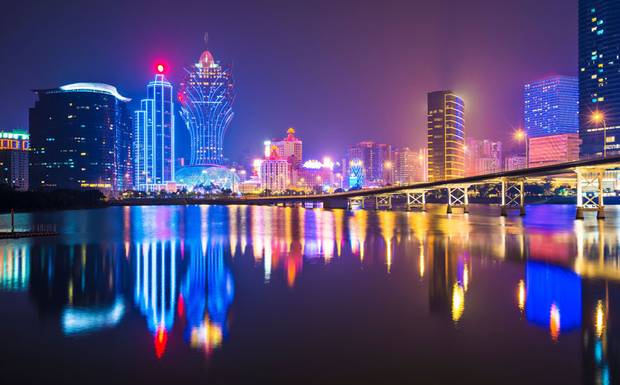
Macau Skyline

I am at the moment enjoying my end-of-year-holidays in Macau, a micro-state next to Hong Kong and like Hong Kong also a Special Administrative Region (SAR) of China. Being a SAR basically means that Macau is allowed political and economic autonomy, but still belongs to the People’s Republic of China. This construction is also known as the “One Country, Two Systems” constitutional principle. Being here makes me realize once again the unique position of micro-states. Although I understand that GDP per capita is no measure of everyone’s personal income, I would still like to stress that Macau has the second highest GDP per capita income in the world in 2014 according to the World Bank and that the CIA has placed Macau at spot number 3. Macau has furthermore the 2nd highest life expectancy rate (CIA, 2012). Some other interesting facts about Macau:

  • 0% VAT;
  • max. personal income tax rate of professional practices is 12% and only for incomes above MOP424,000 (~ 53,000USD);
  • currently 30% of this professional tax is waived;
  • tax free income threshold stands at MOP144,000 (~ 18,000USD);
  • Macanese residence in possession of an ID-card receive a yearly refund of 60% of the professional tax paid, subject to a cap of MOP12,000 (~ 1,500USD);
  • Macau is also known as a gambling/entertainment hub of Asia with the gambling/entertainment industry making up around 50% of the economy.

It is sometimes claimed that small autonomous political units are economically unviable, but Macau – like Hong Kong, Singapore, Monaco, Liechtenstein, Luxemburg and more – disprove this claim. Two reasons that are often given for the unviability of small autonomous political units are (a) economies of scale is difficult to realize in small states, and (b) they are vulnerable to trade shocks because their size prevents the states from wide diversification in economic activities. If these reasons would hold, then we would certainly find that micro-states are generally poorer than larger states. However, Easterly and Kraay (1999) have empirically found that micro-states[1] are 40-50% richer than other states when controlled for location by continent, controlled whether they are oil producers, and controlled whether they are members of OECD. In addition, Easterly and Kraay have found that life expectancies in these states are about four years higher and that the under-five infant mortality is lower by 22 per thousand. This suggests that micro-states do not suffer from developmental disadvantages.

Micro-states have been particularly more successful, because without abundant access to land and labour they are pressured to specialize their national economies[2] and to engage in international trade. International trade is particularly important in order to acquire goods that cannot be produced nationally. This pressure to trade encourages peaceful inter-state cooperation. Moreover, due to its small size, public policies are easier to follow which tends to result in greater political transparency. It hence increases the incentives of citizens to become politically involved. The rule over a small territory makes public policy targets also more efficient, and as a result fewer taxes are required. Nevertheless, one could still argue that micro-states in Easterly and Kraay’s research are large enough to be economically viable, but that especially those states that consist of maybe as few as 100 members would suffer from developmental disadvantages. This however, is a question of what the smallest possible size is for an economically well-functioning state. It is an interesting question that I unfortunately cannot answer. I will nonetheless leave a note from Plato on the subject to emphasize the importance of the division of labour in any well-functioning state. In Plato’s Republic, Socrates asserts that the state arises from the division of labour through which goods are efficiently supplied so that its citizens’ needs are fulfilled. The smallest notion of the state, as Socrates then asserts, exists of at least four persons who can produce the greatest human necessities: a farmer, builder, weaver, and shoemaker. I do not share the opinion that these specific four occupations are necessities for a small state, but I think you get the gist: for a (minimal) state to function well, you need at least division of labour.

Reference
Easterly, W., & Kraay, A., (1999). Small States, Small Problems? The World Bank.

Footnotes
[1] Micro-states are defined by Easterly & Kraay as states with populations of 1 million or less. Some examples of the 33 investigated states are Belize, Cyprus, Gabon, Iceland, Luxemburg and Suriname.
[2] Specialization increases productivity, and hence competitiveness.
Giving Up On The Masses

In 2012, during Ron Paul’s second presidential candidacy as a Republican, I felt deflated with the masses again. Again, the masses were not going to vote a libertarian into office. It was the same year in which I read Murray Rothbard’s Ethics of Liberty and Hans-Hermann Hoppe’s Democracy: The God That Failed. What struck me at that time was the realization that democracy is actually an extremely poor political system to make society become more libertarian. Democracy is not even a guarantee whatsoever for political and economic freedoms. Its success is dependent on the uprightness of the masses, but where are the masses to stand up against war, bank bailouts, taxation, police aggression etc? If the government is truly a gang of thieves and murderers, as I believe it is, then the voting masses are advocates of theft, harassment, assault, and murder.

I do not believe that the masses are ready for freedom, because freedom means taking responsibility for one’s life and actions – a frightening prospect for the masses who lack the strength to face insecurities in life. Ingrained with fear of their own and their neighbours’ incapability to live a ‘responsible’ life, they are attracted to masters who can arrange their lives for them. The masses have also never thirsted for truth. Whoever can supply them with illusions is easily their master, and whoever attempts to destroy their illusions is always their victim. They want to be comfortable and cuddled to death. Thinking is too much hassle for the mass-man. The masses have moreover a love for egalitarianism and a disdain for those who are different, who are more successful and more beautiful. They hate freedom, because in freedom man naturally maintains his distance from his fellow human beings.

Being discontent with the masses and deflated in my philosophical views on politics and economics, I took Peter Thiel’s following dictum to heart: “The masses have given up on unregulated capitalism, so those who still support unregulated capitalism should give up on the masses.” Instead, I have put my hope on such technological advances of decentralization as cryptocurrencies, seasteading, 3D-printing, and localized energy conservation and production.

From the Comments: What is a “National Interest”? (Why not federalism?)

Michelangelo writes:

I sympathize with your pro-federation views, but it is admittedly a difficult position to argue from a purist libertarian view. I would support offering statehood to Japan and South Korea, as I mentioned earlier this week.* I would not however offer the same deal to Ukraine or the Baltic states. If pressed why I would be okay with federation with one group of countries but not another is because I consider the Ukraine/Baltic region to have little value to American interests. I can see Japan/South Korea federation helping economic growth and military might to the US and therefore in our interests. Note my use of plural pronouns.

From a purely libertarian basis what regions would you offer federation with? Or, if you’d offer federation to all of them, which regions would you offer federation with first? Taiwan might entertain an offer to join the federation tomorrow, but I suspect the PRC or Russia wouldn’t.

*I imagine they’d join as multiple states in practice. I wouldn’t offer Japan 114 seats in the senate, but I would entertain giving them 10 senators.

Why only ten? Michelangelo’s quibble about the number senators can illustrate why federation is more libertarian than isolationism (I’ll get to his question in just a minute).

The Japanese would never accept any sort of union where they give up some sovereignty for other benefits and only have ten representatives in the senate. That wouldn’t be a bargain for the Japanese; it’d be highway robbery. The key conceptual point to keep in mind in this scenario is that there are two sides bargaining and cooperating with each other in order to arrive at a mutually beneficial deal. Japan and the US cease to exist as sovereign political units but become more secure militarily, economically, and politically through a federation with each other.

Contrast this view with what, say, isolationists such as Doug Bandow or Daniel McAdams argue; they want much less cooperation and, by implication, much less choice. Cooperation would be limited to negotiating trade details, arming factions, and coordinating responses to natural disasters. This is radically different from the status quo, but not in a beneficial way. Think of all the things isolationism and the status quo exclude from their policies. People in Japan and the US are overwhelmingly in favor of a continued US presence in Japan. The reasons for this are clear, but as it stands the Japanese are taking the US for a ride. Isolationist arguments are arguably worse, as they’d remove US troops (angering vast swathes of both societies in the process), which would put Japan in a position to fend for itself. Isolationism is “doing something,” and it’s doing something uncooperative.

I agree wholeheartedly with mainstream libertarians about the unfair nature of the status quo. I just think their proposals are equally unfair (if not worse). A libertarian position should emphasize cooperation, choice, and trade-offs above all else. The current stable of libertarian foreign policy experts don’t do this, despite their pertinent critiques of the status quo.

Now, before I get to Michelangelo’s question of who (I promise it’s coming), I want to spend a little time on his proposal for 10 senators, and tie it into the concept of “national interest,” which is a fuzzy concept and hence popular to wield in public discourse.

What is the national interest (or US interest)?

Think it through and write down your answer on a piece of scratch paper you have lying around.

Go ahead. I’ll wait patiently.

Is your answer really the national interest, though? Why is your definition of the national interest true and Walter Russell Mead’s not? Here is how I defined the concept of a national interest back in 2014:

…the national interest is an excuse [scholars and activists use] for a policy or set of policies that [they believe] should be taken in order to strengthen a state and its citizens (but not necessarily strengthen a state relative to other states…)

Now go back and look at what you wrote down as “the national interest.” Am I right or am I right? There’s no such thing as a national interest. Cooperation, choice, and trade-offs do exist, though, and I think they can walk us through a hypothetical federation between Japan and the US.

Michelangelo rightly decries the fact that Japan, a country with 126 million people in it (California has 40 million) should get 114 senators. Yet 10 senators seems far too few to give up sovereignty for federation. This appears to be a stubborn impasse, right? Wrong! One of the great benefits of cooperation is having to learn new things.

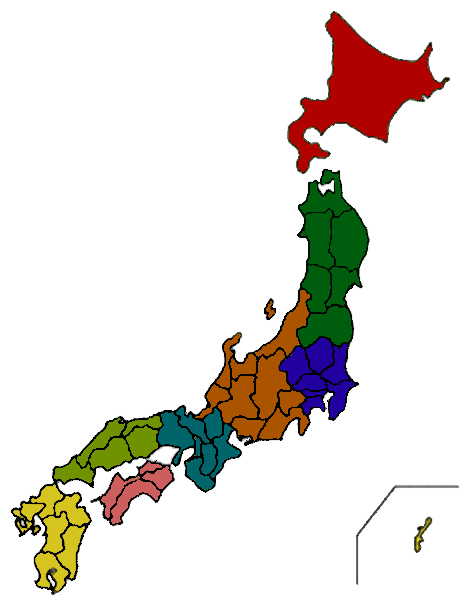
The 47+ prefectures of Japan, for example, have been in use since 1888. The prefectures had steadily been declining in number as the Meiji oligarchy began in earnest to nation-build in what is now Japan. Up until the surrender of Japan to the US, these prefectures were not representative and had little say in how each prefect was to be governed. MacArthur’s constitution gave these 47+ prefectures some autonomy in 1947, but recent attempts at reforming the administrative units of Japan have called for the abolition of these prefectures in favor of fewer administrative units that will also have much more independence from Tokyo. The policymakers who want to take this track are not creating these fewer administrative units out of thin air, either. Rather, reformists are calling for representative units to be based on the unofficial cultural areas of the country that have been around for centuries. Check out the map:

This map shows nine regions, but some people argue that there are actually 13-14 cultural regions within the country (a tough problem to have!). source: wikipedia
This map shows eight cultural areas, but some people argue that there are actually 12-14 cultural regions within the country. source: wikipedia

A cooperative approach to tackling free-riding and imperial expenses would be to reach out to the factions that want fewer administrative states with more autonomy. Adding anywhere from 8 to 14 administrative units into the Madisionian system is much more doable than, say, trying to incorporate 47 administrative units, especially since the latter units have little experience with the autonomous governance that federalism requires of its “states.” At most, there would be 28 additional members of the Senate. The costs associated with free-riding would be gone, and the Japanese people would get the benefits of being a part of the most powerful military the world has ever seen.

Would 28 Senate seats be enough to give up sovereignty? I don’t know, but I do know that the status quo is unsustainable and so, too, are current alternatives.

To finally answer Michelangelo’s question (“From a purely libertarian basis what regions would you offer federation with? Or, if you’d offer federation to all of them, which regions would you offer federation with first?”), I’d start with the Canadian provinces and Mexican states (though I would make it clear that any region is welcome to apply for membership). Then I’d approach the Caribbean islands, the administrative units in Western Europe (including the Baltic states but excluding Ukraine), and the administrative units in Japan and South Korea. Good neighbors and military allies.

My reasoning behind this approach is simply that 1) most of these regions are almost as rich as the United States, 2) they have a good history of actually being representative of their constituents, 3) they have a long history of either interacting with the Madisonian system or acknowledging its tremendous benefits, and 4) they have experience with being somewhat autonomous in a federal system (a federal system that is much less liberal than the one found in the US, but a federal system nonetheless).

Again, I’m not opposed to allowing poor regions to apply and join such a federation, but I think they would be less inclined to do so. Why? Because poorer states are more parochial, more protectionist, and more likely to be uncooperative than rich ones. If regions within these poorer states wanted to apply for membership, we should be open to it, but we’d have to recognize that these poorer regions have a long, hard slog ahead of them. They would, for example, have to market reasons for why they should no longer be a part of a poor state, and they’d have to do it under the harsh watch of the said poor state. Not an easy task, to be sure, but it can be done and the Madisonian federation should be open to the idea of picking apart post-colonial states if it means federating with an oppressed (or poorly governed) region.

Why “post-colonial”? Because of Realpolitik. Entertaining applications from the likes of Tibet or Chechnya is too risky. Entertaining applications from Baluchistan or Biafra? I’d have no problem risking the ire of Pakistan or Nigeria if it meant partnering up with people who want a better life and are willing to cooperate in order to get it.

PS: I think the dialogue in the ‘comments’ thread of this 2014 piece is also worth reading in tandem with my thoughts on Michelangelo’s comment here.

To Pledge or Not to Pledge

I attended a public meeting last night as I do from time to time. It’s a bad habit I can’t seem to shake. Like many of the more formal public meetings in this country, it started with the Pledge of Allegiance. (Foreign readers may not know that this is a 31-word quasi loyalty oath of allegiance to “the flag.”) When the time comes, everyone is supposed to stand, put their heart on their hand, face the flag, and recite the Pledge in unison, which is drummed into all schoolchildren.

My policy during the last several years has been to stand and remain silent with my hands at my side. I don’t make a spectacle of myself by staying seated, but I’m not willing to say the Pledge, for several reasons.

  • It’s too much like religion, and not just because of the “Under God” phrase
  • I don’t like feeling like a sheep following the herd
  • I don’t like the implication that we should bow and scrape to our rulers

Plenty of people would brand me a traitor for my attitude, an ingrate who doesn’t appreciate the benefits of living in the good ol’ U.S.A. In fact, I am quite grateful that I live in the U.S.A. because

  • I grew up in this culture and feel a part of it (omitting rock “music”)
  • The land is beautiful
  • Our politicians are less rapacious than in some other countries
  • We still have a reservoir of individualist sentiment that resists the “Progressives” and the neocons and their relentless push for a made-in-America brand of fascism
  • The libertarian movement has grown enormously in the years since 1971 when I signed on

I do indeed feel some kind of loyalty to the land and the people. But not to the government. And to swear allegiance to the Constitution, as the newly elected councilmen did last night, is a farce because the Constitution was shredded years ago, starting with Abraham Lincoln and perhaps earlier. At the federal level, they swear allegiance to the Constitution and then turn around and spit on it.

But wait, you might say, if you’re loyal to the people you have to be loyal to the government because we elect our leaders. But that’s a slender thread indeed. The government is controlled by unelected bureaucrats and powerful special interests. The government is not “the people.”

So, with only the mildest misgivings, I’ll go on boycotting the Pledge.

El Día que los Argentinos Superamos el Cinismo

Hace una semana que Mauricio Macri (Cambiemos) es el nuevo presidente electo de Argentina y ya todo parece distinto. A pesar de muchas y muy perjudiciales medidas del gobierno kirchnerista saliente (nombramiento de personal, sanción de leyes controvertidas, emisión de dinero, endeudamiento de último momento) la mayoría de los ciudadanos nos sentimos optimistas respecto del futuro en Argentina. Incluso ya nos hemos puesto a debatir acerca de las ventajas y desventajas de tal o cual ministro elegido por Macri, como si viviéramos en un país normal.

El domingo pasado, cuando ya era seguro que Macri había ganado las elecciones y estaba dando su discurso, lloré. No era un llanto triste, ni siquiera un llanto de emoción, era un llanto de alivio. Luego algunos amigos y familiares me confesaron que también habían llorado. Sentí (sentimos) que nos habían sacado el pie del pecho, que nos ahogaba desde hacía mucho tiempo.

Macri ganó en una segunda vuelta contra Daniel Scioli (Frente para la Victoria), candidato del gobierno kirchnerista. Pero no es la figura de Macri ni las propuestas de políticas públicas de Cambiemos (coalición del partido de Macri -Propuesta Republicana-, la tradicional Unión Cívica Radical y el partido de Lilita Carrió, Coalición Cívica) las que nos hicieron saltar las lágrimas. Era el sentir que, finalmente, podíamos descomprimir, que podíamos proyectarnos, planear; que, después de mucho tiempo, podíamos opinar sin miedo.

Y creo que esa emoción estaba conectada, a su vez, con la sensación de que los argentinos (o la mayoría al menos) habíamos dado un primer paso hacia la superación de un profundo cinismo que tiñó la política, e incluso todas las relaciones sociales en la Argentina los últimos años y que el modelo kirchnerista supo explotar y profundizar, enseñando con el ejemplo.

¿A qué me refiero con el cinismo?

Mucho se ha hablado del resentimiento argentino pero, a mi entender, el cinismo es un paso posterior y más profundo de este sentimiento. Al resentimiento lo entiendo como un derivado de la envidia en su aspecto más negativo. Es decir, como el deseo de tener lo que el otro tiene o de estar en una situación (más privilegiada) en el que el otro se encuentra y que uno no puede alcanzar. Es algo así como la suma de la envidia y la impotencia. El resentido prefiere que nadie goce de aquel “privilegio” del que él no puede gozar. Lo más insólito es que en Argentina el resentimiento se da en todas sus variedades, no sólo de los pobres a los ricos, de los viejos a los jóvenes, de los feos a los lindos, de los gordos a los flacos, sino que uno puede encontrar una persona joven, linda, flaca y rica que sea tremendamente resentida (porque los padres no lo quisieron, porque creen que no tienen las oportunidades que tendrían en otros países, porque no encuentran motivación en nada, porque quiere que alguien lo admire y no encuentran quién, etc.).

A pesar de esto, encuentro en este sentimiento todavía un resabio positivo: el resentido entiende, todavía, que alguien puede llegar a algo bueno a través de medios legítimos u honestos. No descree totalmente de la posibilidad de que a alguien (no a él) le haya ido bien, se haya hecho rico, sea admirado o tenga algún talento por derecho propio. El resentido sólo siente que él no es capaz de tal proeza y, por lo tanto, preferiría que nadie lo pueda lograr.

Creo que el cinismo implica un paso más, aquel que sostiene la idea de que nada puede ser obtenido legítimamente, de buena fe. Que no existen caminos honestos, legítimos, correctos, meritorios u honorables que nos puedan llevar a un bienestar personal o material. Para el cínico todo es engaño, trampa, privilegio o arbitrariedad. Así, se sospecha que toda persona que tiene dinero, lo obtuvo de forma ilegítima, como producto de una actividad ilegal (corrupción, negociado), o de alguna trampa o subterfugio (no pagar impuestos, estafar) o que, meramente, es una persona de suerte (herencia). Incluso si esta persona no ha realizado ninguna actividad inmoral o ilegal, probablemente la haya realizado su antecesor (padre, abuelo) o alguien por él. Pero esto no se aplica sólo a la fortuna material, el cínico argentino ya no cree que se pueda lograr nada (título, puesto, premio, honores) de forma legítima. Es seguro que detrás de ello ha habido contactos, favores, negocios ilegales, trampas.  Lo peor es que, finalmente, lleva adelante una vida plagada de mentiras, trampas y violación de las reglas, creyendo que está justificado, que así son las cosas. “Es lo que hay” reza una de las frases más horribles del vocabulario argentino actual.

El cinismo, así, se ha independizado ya del resentimiento y cuenta ahora con fuerza propia, sosteniendo toda una estructura de creencias y relaciones. Si llevamos esta cosmovisión a la política, vemos cómo ésta se ha concebido últimamente sólo como el medio particular donde se busca desembozadamente el poder (y la riqueza mal habida) y donde se habilitan todos los medios para llegar a este objetivo. En definitiva, la política representa una forma velada de violencia que ya no es quizás, física, pero si es psicológica, social, institucional. De esta manera, aquellos que (por fuerza o por azar) obtienen la mayoría, pueden, entonces, hacer lo que quieran, interpretando las reglas a su favor e incluso cambiándolas cuando no les convengan. Estoy segura que durante mucho tiempo, muchos argentinos no criticaban las formas autoritarias y, en muchos casos, delictivas del gobierno porque consideraban que, de ellos estar en su lugar, hubieran hecho lo mismo. Esto representa, en mi opinión, el sumun del cinismo. Ya no se tiene confianza ni siquiera en la constitución moral de uno mismo.  Esto nos ha llevado a la situación penosa en la que nos encontramos, no sólo de pobreza material (a causa del delito público y privado) sino de fragilidad institucional, en la cual nadie puede crear expectativas, planear, crecer, cooperar o siquiera, coordinar con los demás.

El triunfo de Macri puede leerse de muchas formas pero, independientemente de sus características como líder, hubo un gran número de personas que lo eligieron porque preferían votar cualquier candidato al candidato del kirchnerismo, Daniel Scioli. Éste, aunque al principio parecía mucho  más abierto al diálogo y  moderado que la familia Kirchner, terminó representando al “modelo” kirchnerista, un paquete muy pesado compuesto por una forma muy autoritaria de ejercicio del poder, un embrollado conjunto de consignas y prejuicios y una forma muy sospechosa de hacer negocios.

Macri se presentó como un candidato de “buena fe” (lo repetía siempre que podía) y el mero hecho de que mucha gente haya creído posible que nos gobierne una persona que se presente de esta manera ya significa, para mí, un gran paso hacia el abandono del cinismo.

Varios elementos más se suman a este panorama: más allá de las críticas, todos los candidatos de Cambiemos hicieron un gran esfuerzo por no contestar los agravios que, desde la “campaña del miedo” de Scioli, no faltaban ni un solo día. Además, la imagen franca y honesta de María Eugenia Vidal y su victoria como gobernadora de la provincia de Buenos Aires (tradicionalmente gobernada por caudillos peronistas) dejó entrever que los ciudadanos tienen un límite respecto de cuánta agresión, falta de gestión y maltrato pueden soportar. Por último, el macrismo ofrece gestión, dialogo, equipos, aprendizaje, todo un vocabulario ajeno al debate político nacional de los últimos doce años.

Por una vez, muchos votantes comenzaron a pensar que tal vez tanto descreimiento en sí mismos y en las instituciones –que, en definitiva, son el fruto de las interacciones de los individuos-, nos habían llevado a la pobreza e inseguridad en la que vivíamos.  Que quizás ya era momento de abandonar la sospecha constante, el enfrentamiento sin cuartel, la resignación frente al delito, el abandono de la libertad y el gobierno del miedo.

No sé cómo gobernará Macri a nivel nacional pero le auguro lo mejor a él y a su equipo. Ya llegará el momento de analizar sus decisiones y planes de acción. Mientras tanto, me alegro de que gran parte de los argentinos, de una vez (y espero que para siempre) hayamos comenzado a abandonar el cinismo y a creer en los caminos de esfuerzo, talento, trabajo, confianza, cooperación. Por último, espero que este camino nos lleve a confiar más en nosotros, en nuestras capacidades y valores y que gocemos del valor de ejercer nuestra libertad.

A Victory for the Big Center

“To my left, the wall,” Argentina’s President Cristina Fenández de Kichner (CFK) had expressed some months ago. Many of her detractors agreed with her on this opinion, while some others doubted where exactly to place the wall -and how far. The label of “Populist” might be subject to controversy as well, but everyone will at least agree on one single definition: her political strain could be everything but centrist.

Notwithstanding “Peronism vs anti Peronism,” “Populism vs Rule of Law,” “Left vs Right,” “Kirchnerism vs anti Kirchnerism” were some of the terms articulated along the presidential campaign whose run off has just had been won by Mauricio Macri, from the challenging front “Cambiemos” (Let’s Change), the decisive point of discussion of the past election was “Big Center vs Hegemony.”

The Big Center could be defined as the coalition of the Center-Left and the Center-Right in order to preserve a political system which allows the competition between both wings from the menace of a radical hegemonic force. That is why it would be a mistake to characterize the winning coalition as a Center-Right or a non-Populist political party. “Cambiemos” (Let´s Chance) has won the election with the support of both Centre-Right and Centre-Left voters and both Populist and non-Populist strains. Its political platform contains an orthodox monetary policy as well as the continuity of the policies on helping to alleviate poverty. Mauricio Macri won in the main cities with European ancestry population, such as Buenos Aires, Córdoba, Rosario, Mendoza, and also won in the Province of Jujuy, where he finished his campaign with a ancient ritual salutation to the Pachamama, one of the most important pre-Columbian deities.

By the width of “Cambiemos” coalition one could imagine how much was at stake. Which will be the final turn of the new government is something that generates no concern among its supporters. It is clear that it will remain circumscribed to the “Big Center.” Perhaps the definition will depend upon the ability of the Peronist Party -from now on in the opposition- to reassess its political strain: to turn into a Center-Right party, or into a Center-Left one or to insist on becoming a radical force. Given that “Cambiemos” has been delimiting its political discourse as a mirror of the “Kirchnerism,” we can expect the former to place itself in the political spectrum in reaction to its opposition. Nevertheless, all of us are convinced that Argentina’s political language will return to the categories of the Modern democracies.

Putting a stop to the Argenzuela Project

[Editor’s note: The following piece is written by Dr Nicolás Cachanosky, an economist at Metropolitan State University, Denver and a native Argentinian. Dr Cachanosky hails from the same PhD program (at Suffolk University) as Rick, who introduced us. His homepage is here, and he is also a member of the group blog Punto de Vista Económico (which you can find on the blogroll here at NOL). Check out his popular work for the Mises Institute, too. – BC]

For the last 12 years Argentina was under the influence of the Kirchner administration. First by President Néstor Kirchner (NK), and then two terms by her wife (and widow since 2010) Cristina Fernandez de Kirchner (CFK). Their plan, as perceived by many, was to alternate presidential terms between NK and CFK and remain in power endlessly. While this plan came to an end with NK’s death in 2010, CFK started to entertain the idea of reforming the Constitution to be able to run a gain for office. Because this was not possible, she chose Daniel Scioli, the Governor of Buenos Aires Province to be her successor. Last Sunday, November 22nd, Mauricio Macri, Mayor of Buenos Aires City beat Scioli in a ballotage and became president elect starting his term this coming December 10th.

Argentina was in path to become what is referred as Argenzuela. Namely, the Kirchner administration was taking the country, step-by-step, to become the next Venezuela of Latin America in a close way to what has been described as the four stages of populism. Under the Kirchner administration, the government increased their political ties with Venezuela, Iran, and China, at the expense of political relations with countries like the United States, Germany, and the United Kingdom. But the resemblance was not only in terms of political friendship, but on institutional and economic reforms. Argentina became a country where “Republic” is just a word on paper without a real presence in the country’s institutional reality. According to the Fraser Institute’s Economic Freedom of the World, in 2003 Argentina ranked 99 out of 153 countries. By 2012 it ranked 149 out of 152 countries. The loss of economic freedom was fast and significant. Economic troubles and imbalances did not take long to appear.

Macri’s victory in the presidential elections put a stop to the Argenzuela project. We know what a presidency by Macri won’t look like. But it is still hard to say what it will actually look like. Macri is known for his emphasis not in free or unfree markets, but on an efficient administration. While not difficult to be more free market than the Kirchners, it might prove difficult to describe Macri’s political movement, Pro, as a free market party. The Kirchner administration has refused, at least so far, to share information with Macri and his appointed ministers, so the real situation of the economy and the Treasury remains unknown. Macri and his team are working on reform plans half-blinded because they don’t have reliable economic information, if they have it at all.

Specific reforms by Macri are still unknown (at the time of writing these lines), but his team of Ministers has already been announced. The people he’s bringing to the government with him show significant successful careers in government, the private sector, and international organizations (her chosen Chancellor is the Chief of Staff of Ban Ki Moon, General Secretary of the United Nations.) This is a clear contrast with the Kirchner administration, where all the Ministers showed a strong ideological motivation before professional accomplishments.

The economic crisis in Argentina hands Macri a unique opportunity to carry long needed significant reforms. He has, also, a unique political position. His political party has not only won the presidential election, with Pro Macri has also retained the Mayor’s office of Buenos Aires City and also won the Governor elections for the Buenos Aires Province. Macri’s Pro is in charge of the three most economically and political important districts. Let us hope that Macri does not become yet another lost opportunity in Argentina’s history.

Small Thought On The Terrorist Attack in Paris, France

What the attack in Paris has made clear to me is that there is a deep hatred amongst people against the west. I believe that much of this hatred stems from the same roots from which my discontents with the west had also grown – western interventionist policies with foreign nations. I also sense such discontents among the few people that I know from Pakistan, Nigeria, Afghanistan, Iraq, Morocco, and Serbia.

My displeasures with the west originate from the personal stories of my parents who, before they became victims of the Khmer Rouge, were also victims of American bombings of Cambodia – a fact that is not widely known. The bombardments that started in 1965 ended in 1973, and had killed hundreds of thousands of Cambodians. Indeed, before the Khmer Rouge took power over Cambodia in 1975 and before they sent all people to the rural areas to grow foodstuffs for ‘Angkar’ (the Organization/the State), there were already widespread famines and scores of displaced people due to the bombings. It had created a chaotic climate in which the anti-western, anti-capitalist, and anti-imperialist propaganda of the Khmer Rouge found their way into people’s minds – mostly into the minds of those poor rural Cambodian people that were suffering most from the secret bombings. Ben Kiernan writes in ‘Bombs over Cambodia’ (2004):

Years after the war ended, journalist Bruce Palling asked Chhit Do, a former Khmer Rouge officer, if his forces had used the bombing as antiAmerican propaganda. Chhit Do replied:

“Every time after there had been bombing, they would take the people to see the craters, to see how big and deep the craters were, to see how the earth had been gouged out and scorched . . . . The ordinary people sometimes literally shit in their pants when the big bombs and shells came. Their minds just froze up and they would wander around mute for three or four days. Terrified and half crazy, the people were ready to believe what they were told. It was because of their dissatisfaction with the bombing that they kept on co-operating with the Khmer Rouge, joining up with the Khmer Rouge, sending their children off to go with them. . . . Sometimes the bombs fell and hit little children, and their fathers would be all for the Khmer Rouge.”

Cambodia, together with Laos, still remains one of the heaviest bombed countries in the history of the world.[1] My parents were just 7-8 years old at the advent of the secret bombings. Imagine that a drone would bomb the school of your child or the hospital in which your loved ones are, would you not feel enraged? Would you not want to take revenge on those that are responsible?

A pre-moral person looks at the consequences of the actions. He sees the attacks, he acknowledges the dead, he becomes emotional and judges firmly. A moral person withholds his judgements and attempts to comprehend the causes of the attackers’ actions. I do not want to justify the killings of the French people, but I would like to emphasize that if we were really to honor the victims, we should reflect on the question why there are people that hate the west so fiercely. Maybe our society itself is part of a larger machine that is the origin of foreign hatred against the west. We must not only realize that religious fundamentalism is a danger to the world, but that there is a more contemptible false idol which is democratic fundamentalism – the uncritical acceptance that democracy is equal to liberty, that it is always superior and that, if necessary, it should be spread with violence.

As long as we, as a society, fail to reflect on ourselves and the political system we participate in, we will never find a fundamentally peaceful solution.

Footnote
[1] See Ben Kiernan’s ‘Bombs Over Cambodia: New Light On US Air War

Philosophical Research on Seasteading

The Seasteading Institute has recently published my philosophical dissertation on ‘Seasteading’. You can find it in the key research section of their Law and Policy page: http://www.seasteading.org/law-and-policy/.

Wayne Gramlich and Patri Friedman[1] founded the Seasteading Institute in 2008 in order to promote the seasteading movement, which has intellectually attracted mostly libertarian-minded individuals. The institute has also attracted funding from Paypal cofounder and early facebook investor Peter Thiel.[2]

A seastead is a permanent habitable dwelling on the ocean that preferably lies outside governmental waters. The Seasteading Institute believes that the creation of permanent societies on the seas can provide an experimentation space for innovative forms of socio-political organizations. The ultimate aim of seasteading is that newly emerging societies will inspire social changes around the world and contribute to human flourishing. First seasteads will be small-scale projects and they may even be constructed within existing governmental territories. However, seasteads could expand organically as technologies improve and innovative ideas of the functions of seasteads would emerge. One of the core ideas of seasteading is that an open experimentation space for social organizations will lead to progress in social rules and legislations, just as an experimentation space for new technologies leads to technological progress.

It is undeniable that social rules and legislations heavily influence all aspects of life, including technological progress and social well-being. One could for example compare North and South Korea, two countries that separated from each other in 1945. Both countries have had more or less the same culture and similar natural resources. However, what differs is their form of social organization; the North came under communist rule, whereas the South embraced western-style capitalism and democracy. Almost 70 years later, the differences in wealth, technological advancement, and social well-being are striking. South-Korea’s GDP per capita is for example 18 times larger, its internet penetration is more than 815 times greater, its life expectancy rate is 10 years longer, and the heights of South Korean pre-school boys are on average 4 centimeters longer. (Taylor, 2013, April 8).

The Seasteading Institute believes that, given that social progress and well-being heavily depend on how society is structured, mankind could make a huge step forward by letting social entrepreneurs start up seasteads to compete with governments in the industry of law-making and by letting millions engage in the experimentation with new forms of social organization.

In the paper, I provide a philosophical investigation of the concept of seasteading from a libertarian anarchist perspective. My investigation revolves around the following research question: “given that governments are resistant to structural changes of governance, how can mankind discover better forms of social organization?”

I argue that seasteading can fulfill that important role of moving mankind forward by experimenting with and finding new forms of social organizations that are best for human flourishing.

In the first chapter, I maintain that one core focus of political philosophy is to deal with the realities of value pluralism and political disagreements. I also contend that the most common form of social organization, representative democracy, does not satisfactorily deal with these realities. Hence, we should look for political possibilities beyond representative democracies. In order to discover these possibilities, we should experiment with new forms of social organization.

Chapter two discusses why there is currently little experimentation with social orders. I approach the issue from a meta-system level perspective and contend that all land on earth is more or less already claimed by states, which leaves little opportunity for people to start new societies on land. By applying the theory of monopoly economics, I maintain that the state’s monopoly on jurisdiction and coercion does not encourage them to provide good rules of law. It rather makes states extremely resistant to large-scale social changes. The obvious solution for finding better forms of governance then would be the introduction of competition into the industry of governments.

Chapter three deals with the epistemological attitude required for the experimentation space. I maintain that this attitude consists of having a sociological imagination, being epistemologically modest, realizing that social order can emerge spontaneously, and that the utopian dream of a single perfect society is impossible.

Chapter four discusses seasteading as the means by which the experimentation space could be realized. By homesteading the seas, a community can build and test new forms of social organization outside the scope of current governments’ control. It could generate new knowledge on social orders, thereby contributing to political philosophy and the social sciences. It could moreover also ease political tensions between citizens with different comprehensive doctrines.

Finally, I raise two objections to seasteading and address them accordingly.

If you would like to see an awesome seastead design, you should watch this video here:

Footnotes
[1] It may be interesting to know that Patri Friedman is the grandson of Milton Friedman and the son of libertarian anarchist David Friedman.

[2] Peter Thiel, previously a student of Political Philosophy at Stanford University, is also founder of the libertarian-minded newspaper The Stanford Review. He is a venture capitalist who is very much influenced by the Austrian School of Economics. With this in mind, it may not be surprising that the early mission of PayPal was to give its users more control over their money by enabling them to switch currencies. The goal of PayPal was to make it, in Thiel’s words (1999), “nearly impossible for corrupt governments to steal wealth from their people through their old means [inflation and wholesale currency devaluations] because if they try the people will switch to dollars or Pounds or Yen, in effect dumping the worthless local currency for something more secure” (Jackson, 2004).

References
Jackson, E.M. (2004). The PayPal Wars: battles with eBay, the media, the mafia, and the rest of planet earth. Los Angeles: World Ahead Publishing, Inc.
Taylor, A. (2013, April 8). A Crazy Comparison of Life in North Korea and South Korea. Retrieved from http://businessinsider.com
Thiel, P. (2009). The Education of a Libertarian. Retrieved from http://cato-unbound.org

A Phony Race Scandal

You heard it from me first: The scandal at the University of Missouri that led to the resignation of its president recently (11/8/15) stinks to high heaven. It’s a phony. It’s fabricated. How do I know? The real redneck racists being evoked, outlined, sketched in the story would have been proud just to find the can of spray paint to decorate a university building with a swastika. The problem with plotters is that they usually go too far, that they try too hard. The plotters in this case used the supreme refinement of doing the swastika in human feces. That takes effort, planning. It’s just too good to be true!

Why did the president and the chancellor both resign? Two reasons. But first, they did not “resign;” they were pushed out and for good reason. (See below.) Number one reason: University administrators have no backbone, as a general rule. A few years ago, my attorney and I beat up a dozen of them. We made them eat sand; we made them cry. Second reason: University administrators almost always have golden parachutes. Resigning, for such people, is like taking a vacation for others.

Why were they pushed out? There is big money involved although U of Missouri football has not been shining lately, I am told. U. of Missouri, like many other universities, has made itself a financial hostage to a handful of black gladiators they shamelessly insist on calling “students.” Someone correct me if I am wrong but I heard on NPR that one of the “students’” “demands” was for more hires for the university’s black studies program. Sounds tremendously familiar! Same thing happened thirty years ago all over the nation.  The plotters have good memories and no original thought at all. At my former university employer, ten years ago, there were protests leading to the university administration making a large lounge available for the use of “students of color.” (It’s true that no (No) sign was actually posted forbidding entry to whites; fair is fair!)

A student at U. of Missouri staged a hunger strike. Sorry, a hunger strike for five days is just a weight reduction experience. I realize this is an insensitive remark but, W.T. F.! We are witnessing a flurry of artificial racial protests nation-wide because the Democratic Party is desperate about its geriatric, dishwater white line-up. Even if it should win the election, the Democratic Party will still face a tremendous identity crisis. I don’t rejoice. Massive, collective dishonesty soils the water in which we all try to swim.

Republican Tax Plans are Misguided

Predictably, Republican candidates are showcasing tax plans offering goodies for everybody. When some spoilsport has the nerve to point out the worsening deficit that would result, the most common retort is that the tax cut will spur economic growth enough to overcome the higher deficit. Some day. Somehow.

Of course lower tax rates will spur growth so that the loss in tax revenue will be less than proportional to the cut in tax rates. But it is foolish to think that we’re ensconced on the far side of the Laffer curve, for those who know that phrase, which simply means that tax rates are so high that cuts will produce higher revenue.

What about the claim that a flat tax is fairer than the graduated rates we have now? Perhaps, but how does one judge the fairness of any tax? The usual answer is that taxes should be based on the taxpayer’s ability to pay. But that is a nebulous concept at best. It means that somehow we figure out how much income is necessary and how much is up for grabs by politicians  Do we need a cell phone, cable TV, air conditioning? Who’s to say?

At least a flat tax would treat everybody alike. Or would it? Under a flat tax, where everybody hands over the same percentage of their income, those who earn a lot pay more money than those who don’t. Why? Do the high earners consume more government services? Are high earners bad people who deserve punishment?

I concede that some tax schemes could be fairer than others. For example, much as I might like the idea of complete tax exemption for septuagenarian European-American males, I’ll grant that would be a bit unfair. But in the end no tax can be entirely fair because taxation is coercive activity: stealing if you like.

Don’t get me wrong: I like tax cuts, preferably across the board, but targeted cuts are fine with me too. But the focus on the tax code is misplaced. The root problem is the amounts of real goods and services that are consumed by politicians and bureaucrats. Whether they are financed by taxation or borrowing is a secondary issue.

Republicans should be drawing up lists of programs to reduce or eliminate. “Defense” spending should be at the top of the list. The list should be broad enough that everybody’s ox is gored. Who knows, this approach might actually gain some traction with the fed-up electorate.

Assessing Elections in Poland and Argentina in the Context of Populism and Liberalism in Europe and South America II (liberalism in the classical sense of course).

The Argentine election was for the state president, who is head of government as well as head of state. An expected first round victory for the Peronist party (formally known as the Justicialist Party) candidate Daniel Scoli disappeared as he failed to clear 45%. He is clearly ahead of Mauricio Macri, Mayor of Buenos Aires, running on behalf of a three party centre-right alliance which contains the less statist, and populist elements of Argentine politics, but at least the hope exists of a second round triumph over the Peronists.

The third candidate is also a Peronist, showing the difficulty of overcoming that legacy and why even just turning the Presidential election into a competition between a Peronist and a non-Peronist is a victory of some kind. The sitting President Christine Kirchner pushed at the limits of the Argentine constitution, which prohibits more than two terms for any President, by alternating in power with her late husband Nestór Kirchner. If he had not died in 2010, we might now be looking forward to a fourth consecutive term in power for team Kirchner.

Peronists or the army have run Argentina almost constantly since the 1940s. The periods of army rule give a good indication of how successful Juan Perón and his widow Isabel (the third wife) were in stabilising Argentine society and political institutions. Nevertheless the Peronists have been the only party with a record of electoral success in Argentina and have improved from the chaos that Juan and Isabel instigated in more recent appearances in government.

As such a dominant party they have relatively centrist technocratic elements (most notably ex-president Carlos Menem) as well as the hard core statist populist nationalists. The Kirchner years have tended increasingly towards the more populist end, stoking nationalist sentiment over the islands in the south Atlantic known in Argentina as the Malvinas and in the UK, which has sovereignty over the islands, as the Falklands.

There has been economic growth under the Kirchners, but it has now very much slowed as policy has tended towards high inflation, currency controls, confrontation on debt owed to foreign creditors and increasing budget deficits. There has been social liberalism, most obviously, on attitudes to the LGBT communities, but in a context of nationalist sovereigntist politics. At least we can hope that if Scoli wins, he will feel obliged to shift towards genuine economic sustainability and a less populist politics.

In general, this adds to a feeling that South America has passed the peak of leftist populism which has influenced most countries outside Colombia in the last two decades. The more respectable end of that spectrum in Brazil’s Workers’ Party, which had been fairly successful economically, appears to be declining under the weight of corruption scandals, economic recession and incapacity in delivering on the more populist side. On the less respectable side, Venezuela has lost its status as model for the world’s radical left as corruption, economic decay, state brutality, election rigging and persecution of the opposition has become too extreme to ignore, particularly since the state socialist hegemony no longer has Hugo Chavez as a charismatic frontman.

Brazil and Venezuela were the models of the left, reformist and revolutionary respectively, and no longer have that status. If there is a model now it is the Evo Morales Presidency in Bolivia, which in some respects is radical left, but not consistently enough to get the kind of model status previously accorded to ‘Lula’ (now caught up in corruption scandals as his successor Dilma Rousseff) in Brazil and Chavez in Venezuela (whose successor Nicolás Maduro is a blatant and charmless neo-Stalinist thug-apparatchik). The Morales regime has received some cautious support from those inclined towards liberty on the grounds that he has pursued an overdue reduction of the power of traditional rent seeking elites in Bolivia and engaged in an economic pragmatism certainly distasteful to former Chavez admirers, and not even entirely comfortable for former admirers of Lula.

The leftist populist tide in south America has not entirely receded, but is now discussed with increasing nostalgia and an increasingly elegiac tone by left socialist observers, and as it has receded has tended to leave only embarrassments for the socialist left or reformist pragmatist examples of at least some interest to the liberty community. We are not looking at a strong shift towards liberty in all its forms in that region, but at least we see some shifts opening the possibilities of new movements towards liberty in markets, rule of law, individual rights, and social openness.

Assessing Elections in Poland and Argentina in the Context of Populism and Liberalism in Europe and South America I (liberalism in the classical sense of course).

Election results I’ve seen today from weekend elections in Argentina and Poland and the more general thoughts they have inspired. Rather longer than I anticipated so posted in two parts, though not separated in time given that I am articulating immediate reactions.

The Polish parliamentary election has been bad news for those who share the perspective of Notes on Liberty in that Law and Justice, a social-national-religious sort of conservative party with strongly statist and populist inclinations, has taken over from the more open market/open society inclined Civic Platform. However, a new party, Modern (strictly speaking ‘.Modern’, but I’ll ignore that in the future as too likely to be mistaken for a typo, it is at least worth noting as suggesting a technocratic commitment to a digital age, reminiscent of the development of the e-state in post-Communist Estonia) which leans towards liberty in economic and social spheres, in comparison with most of Civic Platform and even more in comparison with Law and Justice, has entered the National Assembly, compensating for some of the votes lost by Civic Platform to the populist right.

We might at least hope that the next election in Poland produces a coalition government between Modern and Civic Platform, and hope that Law and Justice does not do too much harm during the coming years in which it will control the government and the (non-executive) presidency on its own.

The Polish political party structure has been confusingly variable since the end of Communism, with names of politicians reappearing from now extinct parties in new parties gathering a different if overlapping spectrum, and with different international partners. Modern’s leader, Ryszard Petru, is at least connected with the early phase of post-Communist politics as a disciple of Leszek Balcerowicz, who played a leading role in the transition to market capitalism and the earlier phase of liberal-centrist politics. Both Petru and Balcerowicz are ‘Europeanist’ in the sense of taking a positive attitude to the European Union, which is also the outlook of Civic Platform. Balcerowicz is even director of the College of Europe, a postgraduate institution in Bruges, Belgium, which educates many of those working in European institutions and in their general atmosphere.

This illustrates a major claim I put forward here about European politics, that is of a drift of market liberals, classical liberals and libertarians towards advocacy of the European Union, and an increasing tendency of the ‘Eurosceptic‘ right, even those with some libertarian-conservative history, to be caught up with hardcore populists even if some of the Eurosceptic right has pro-liberty inclinations. That part of the European right has always been more libertarian-conservative than libertarian-cosmopolitan.

The leading ideologue of libertarian-conservative Eurosceptics in Britain, Conservative Party Member of the European Parliament, Dan Hannan is very touchy about suggestions of backward looking nationalism and chauvinism, emphasising a cosmopolitan family background. However, despite these protestations, Hannan is a great believer in the superiority of British (and Anglosphere) ways, and in addition has always been for ‘democratic controls on immigration’, i.e. populist limitations on the market in labour and individual rights to mobility. The second leading British ideologue in that spectrum, and previously a close associate of Hannan, Douglas Carswell has joined the the United Kingdom Independence Party (UKIP), which has unmistakably populist inclinations in economic and social policy beyond restrictions on immigration. Hannan prefers to praise UKIP as ‘patriots’ rather than confront this.

Hannan engineered the formation of a eurosceptic right group in the European Parliament after David Cameron was persuaded that leaving the main centre-right group (European People’s Party) was a necessary price for keeping Tory Eurosceptics acquiescent with his leadership. Hannan’s European Conservative and Reformists Group does not include Modern or Civic Platform, but it does include Law and Justice, which gives a good idea of what part of the European political spectrum it appeals to, i.e. not those inclined to social and cosmopolitan liberty. Most disturbingly associate members include the Justice and Development Party in Turkey, i.e. the AKP of Recep Tayyıp Erdoğan associated with corruption, police brutality, politicisation of the judiciary, social media blocks, attacks on the media and all free speech, along with the demonisation of anyone not part of the more conservative parts of majority Turkish culture.

The idea that liberty can be combined with Eurosceptic discourse is declining, though it has been influential in some libertarian circles, particularly in the UK and Slovakia to be the best of my knowledge. There has been a recovery of pro-EU views (if highly qualified by the wish for reform) amongst the Greek liberty community, even after the recent Euro currency disasters. The Slovak eurosceptic libertarians seem to have collapsed. The Czech hero of European right wingers of that tendency, Vacláv Klaus, has turned out to be a harsh social conservative and Putin fellow traveler of a type obnoxious to the anyone of genuinely pro-liberty tendencies, leading to his exclusion from polite libertarian circles as seen in the loss of his Cato fellowship. A warning there surely about the perils of regarding the sovereigntist eurosceptic right as natural allies of liberty. Personally I believe the same applies to the Republican right in the US. That is of course another story, but just look at Donald Trump’s ascendancy and think about that. The German Free Democrats are making a come back after a period it seemed they might lose the most economically free market part of the electorate to AfD.

Small indications in some cases, but it all adds up to an overall and increasingly dominant picture (though course with exceptions) in which consistently pro-liberty forces support the European Union, which is very much the case in Turkey, even if desiring considerable reform. The strengthening of the populist right (Northern League in Italy, National Front in France, Swedish Democrats, Golden Dawn in Greece, Freedom Party in the Netherlands etc as well as those already mentioned) together with a populist-socialist surge has pushed those engaged with a consistent politics of individual rights and cosmopolitan openness towards a pro-EU centre.

The left populist surge has already receded in Greece where Syriza is in transition to standard social democracy while still using a more radical rhetoric, but has some energy elsewhere in Europe: Podemos in Spain, two left of social democracy parties in Portugal, Sinn Fein in Ireland, Jeremy Corbyn’s election as Labour leader in Britain. The left populist surge is less strong than its right wing equivalent and despite what the socialist intelligentsia in the UK believe the socialist surge within the Labour Party does not reflect a broader shift in British public opinion. Anyway, we are in a period where pro-liberty forces are coalescing with centrist forces in defence of a continuing EU of some kind, with some limitations on national sovereignty, not completely closed to refugees, not in thrall to an enclosed defensive traditionalist, legacy Christian identity politics.

From the Comments: Trying to Make Sense of Left and Right (Again)

This one is from yours truly, in a delightful back-and-forth with Dr Amburgey:

Ok. Clearly we need to be using terms that mean the same things to both of us. It’s your thread so tell me what constitutes ‘The American Right’ and what constitutes ‘The American Left’. Once we have a common understanding of terminology we can resume the discussion.

I have been working on a post about this very topic, and this conversation is helping me immensely. Thanks.

First, I think there is a distinction that has to be made between the ‘ideological’ and the ‘political’. The ideological rests atop a higher tier than does the political, like a pyramid. The ideological tier houses philosophical and moral insights, which are produced through the academy and in think tanks. The political tier houses organizations dedicated to parties (I think that factions and parties are two different components of a society, and that factions represent a tier below the ideological and above the political).

The American Right is ideological. The GOP is political. (Factions would consist of actors like bureaucracies, trade unions, industrialists, banks, medical doctors, etc., but can also be used to describe intra-party, or coalitional, differences) The American Right is currently home to three broad ideologies: neo-conservatism (elite and moderate), libertarianism (elite and radical), and traditionalism (populist and radical). I emphasize ‘currently’ because neoconservatives and libertarians were at one point Leftist factions in US history, and could easily end up there again in the near future. In many post-colonial and post-socialist societies, for example, both of these ideologies are considered to be on the Left.

The American Left is currently home to three broad ideologies: fascism, communism, and racism. Just kidding! The three ideologies are, I would argue: New Deal liberalism (elite and moderate), technocratic liberalism (elite and radical), and progressivism (populist and radical).

New Deal liberals and neo-conservatives are only moderate because they are dominated by Baby Boomers and Baby Boomers dominate the population at the moment. Libertarians and the technocrats are broadly younger and more cerebral (hence the radicalism). Traditionalism and progressivism are ideologies for the vulgar mob, of course.

Ideology, using the pyramid analogy, trickles down from the top tier into the factional and political tiers. This is just how it works in societies governed by laws rather than by men. Libertarians have been dominating the ideological discussion for the last 30 years or so, and the technocrats have been playing defense, largely because they are politically aligned – wrongly, of course – with socialism’s failure, but also because technocrats are just libertarians who don’t have the chutzpah to become non-conformists.

Successful politicians from the Democrat Party have been trying to balance their New Deal liberalism with the insights of their technocratic betters, but have been calling themselves ‘progressives’ because of the populist narrative and the fact that they need the votes of the vulgar mob to be successful.

I already don’t like this because I don’t think the Left deserves to be considered ‘liberal’ at all, and there is also the shortcoming of being strictly American in scope. We have got to think in internationalist terms when we discuss power and liberty. NOL has tried to hash this whole issue out before, by the way, and numerous times.

European Union: Creative Destruction Wave?

Some thoughts in reply to Edwin’s recent very interesting piece on the European Union.

The Greek crisis, the refugees crisis and the recently announced German suspension of the Schengen agreement on free movement are all very testing for the European Union. I certainly agree with Edwin that ideas of a highly integrated European Union superstate are in a bad state, but that has been the case for some time now, it is just that some European Commission people and ‘federalist’ enthusiasts have been very slow to realise this. I put ‘federalist’ in the scare quotes because ‘federalist’ can mean so many things as a form of relation between existing states and should not be only identified with highly integrated forms of federation in which the central state is dominant. Any such idea was effectively killed off  years ago by a mixture of British opt outs from the Maastricht Treaty and the Danish referendum rejection of that treaty.

Of course these were thought by some to be secondary events which could be given temporary ad hoc solutions while the integrated superstate juggernaut rolled on. It is worth remembering that the phrase ‘ever closer union’ was in the Maastricht Treaty as a substitute for ‘federalism’ at the insistence of John Major (the then British Prime Minister) as a way of signalling the end of federalist ambitions. Since ‘ever closer union’ is open to not just integrated federalist meanings, but even unitary state interpretation, this is perhaps a bit strange, but the fact is the phrase signalled an end to integrationist federalist dreams in which John Major was probably quietly supported by some other states (including the Netherlands I believe) which did not want to stand out as anti-superstate. All this created the illusion of a process that only the UK and Denmark were standing aside from and they could be expected to join in later.

However, the integrated superstate model of federalism was already a paper tiger, a rhetoric only used as a way of legitimising a Franco-German dominated Europe, in which EU unity was heavily dominated by the wish to keep the French-German partnership going and offer everyone else the hope of a voice in an essentially Franco-German dominated process in which the two key states sought trade offs between individual national goals. Events since then have unravelled the superstate ideology as the French-German partnership has been reduced in importance by German unification, with some help from French failures at internal reform. The emergence of a reality concealed by the older sort of ‘federalist’ language can be seen in the referendum ‘no’ to the Lisbon Constitution in a few countries and the move to a Treaty. The Lisbon process was one of shifting power to the Council, to the place where intergovernmental decisions are made. The Eurozone upheavals have made it clear that Germany has a role in the EU unmatched by France.

On the current refugee crisis, the suspension of Schengen free movement is very disappointing, but an unavoidable response to such a massive tide of refugees. To my mind it may well be possible to integrate them, but clearly it is a challenge and clearly it is a challenge that public opinion does not seek, or not beyond some defined number of the most ‘real’ refugees. Anyway, this is not a completely new problem for the EU, France for example, has previously imposed border controls to deal with migrant influxes and deported unemployed migrants from eastern EU member states. This is a crisis situation which would exist with or without the EU and would lead to exceptional measures with regard to external border controls and internal security measures, including checks on identity papers. So I suggest it is not in itself an end to free movement within the EU, but more an indication that free movement will be subject to qualification in any foreseeable future. That still leaves the very real achievement of the EU in making movement between states easier, with all the attendant benefits for individual liberty and prosperity.

The Greek crisis has emphasised a form of economic integration in the Eurozone dominated by Germany, which is not what anyone would have put on paper as a federalist dream, but the reality is that the Eurozone was always about turning the Deutschmark into a European currency in which all members would benefit from the German reputation for sound finances and a strong currency, and therefore a de facto agreement to be subject to German economic discipline. No one used those words in public and everyone hoped that the crisis situation in which someone would have to impose order would never arise, but it has and we can see what was really been agreed to in the first place. That arrangement has worked at least moderately well so far. Ireland has actually done very well out of going along with German economic discipline. Italy, Spain and Portugal at the very least seem to have got past the worst. Greece is the most dubious case, but wild left populism has now receded in that country and that must be a success for the German led Eurozone. We are waiting to see whether the deal works in the long term in Greece. This does not have to be a complete German hegemony. In defence and foreign affairs, for example France and the UK are still strong compared with Germany.

The current regional tensions make it unlikely to my mind, as Edwin suggests, that the EU will not develop in the foreign and defence spheres. It would be more accurate, I believe, to say that the EU will develop an opt in personality in these areas in which not all states participate, but the core makes the EU more important in that field. Putin’s direct and indirect provocations, the nightmare in Syria and Iraq, and the threat of Islamist fundamentalism in west Africa, have all pushed EU states and previously neutral European states to become more engaged with security and defence issues. Now of course NATO is important here, but US willingness to look after Europe’s security for it is in decline and rightly so.

A response to the dangers I’ve just mentioned requires increased defence spending and and co-operation for European states and we can see this happening. Some of it cuts across the EU, as in co-operation between Nordic countries including Norway, which is outside the EU, but does not separate defence from the EU sphere. The membership of previously neutralist Sweden and Finland in the EU is clearly helping them co-operate with NATO countries. EU states are increasingly working with regard to a total European defence presence in which smaller states will limit the military spheres which the operate so that there is a co-ordinated division of labour. The UK is engaged in co-operation with the EU states on the border and hinterland problems in eastern Europe and the Middle East and this is likely to be a way over time in which the UK becomes more European oriented. This is a gradual process in which we will not see a Euro-army and a treaty in which the EU becomes sovereign in security matters, but we will see the EU mattering more in the defence and security sphere. One of the factors contributing to this is the refugee crisis.

Edwin raises some issue of (classical) liberal thinking in these areas and that is the final topic I will address, hopefully providing a framework for addressing the public policy and institutional issues above. Edwin is correct to say that voters want to see some important issues addressed on the national level and feel remote from the EU level, but let us be clear about what this means in reality. No individual voter has more influence over national policy that EU policy. Even in Luxembourg any one voter has no real voice, does not make a difference, in a community of three hundred thousand. There is no real difference between Luxembourg and the 500 million of the EU on this issue.

What people like when they think of the national level is that decisions are made by people like them, people with whom they can identify. Immigration and other forms of social change which undermine notions of self-contained homogeneity, such as the Internet, increased travel, decreasing identity with national religion, and regionalist movements, do not put am end to national identity, but they do qualify it. The recent EU crises have increased the visibility of European leaders across the continent, Angela Merkel must be more familiar to most Europeans than all but a handful of their own national politicians. The national level will  not disappear and we will probably seem more shifts towards national and inter-governmental decision making, but let us not ignore the qualifications and opposite tendencies.

The point of the above paragraph is that we are not returning to the time of absolutely sovereign national governments in Europe (and of course the sovereignty was always limited in practice, particularly for the smaller and poorer countries) and I dispute what I take to be Edwin’s assumption that this is what is happening and should be welcomed. Apologies for any misunderstanding, but it looks very much to me as if he is saying that classical liberalism has preferred and should continue to prefer interaction between sovereign states over federalisation of any kind. He mentions David Hume, Adam Smith and Friedrich Hayek in this context.

However consider this quotation from Adam Smith: ‘Were all nations to follow the liberal system if free exportation and free importation, the different states into which a great continent was divided would so far resemble the different provinces of a great empire.’ (An Inquiry into the Nature and Causes of the Wealth of Nations. IV.v.b). Surely this contradicts Edwin’s claim. Hayek was the author of ‘The Economic Conditions of Inter-State Federalism’, which advocates federation between democracies to entrench free trade and basic rights. Similar comments can be found in The Road to SerfdomNow maybe Hayek did not mean to advocate something like the EU as it is now, and even less what the most pure advocates for integrationist federalism wish for, but he did offer support to federation and constraints on national sovereignty.

Going back to the Enlightenment, Immanuel Kant, a liberal advocate of market economies, limited government and freedom under law, wrote essays favouring ‘federation’ or ‘confederation’ to enforce world peace. We can take it that Kant meant a kind of European federation as like most of the time he did not really regard non-Europeans as equals, even if he should have according to his own philosophical principles. Anyway, he had liberal arguments for constraints on national sovereignty, even if very limited in scope.

Edwin may perhaps feel that what Smith, Kant and Hayek said fits with what appears to be his desire for a European Union limited to free trade issue. However, it is important to establish that classical liberalism is open to federation or ’empire’ (which for Smith can be a confederation) and furthermore that a federation for very limited purposes is likely to spill over into other spheres. How do you guarantee peace, security and free trade without a lot of other connected  government functions. It could be argued that classical liberal federation is limited to pure minarchist functions of national defence, and enforcement of laws, but why should we expect transnational  federal states to stay limited within such a sphere when national states never do.

Liberal economics leads us to regard upheaval, change and destruction as healthy, within the limits of law and contract, as this is how there can be innovation and prosperity. We can think of politics in the same way. Current crisis conditions will change the EU but are at least as likely to do so in ways which reconstruct its various activities, and the ways in which they are conducted, to the benefit of its health, as to lead to an EU restricted to free trade or in a state of complete collapse.