Monday’s hints and suggestions, rumors and hunches

Or, some Monday links – on thinkers, their devices and “ad hoc” cities, above/ below the sea surface

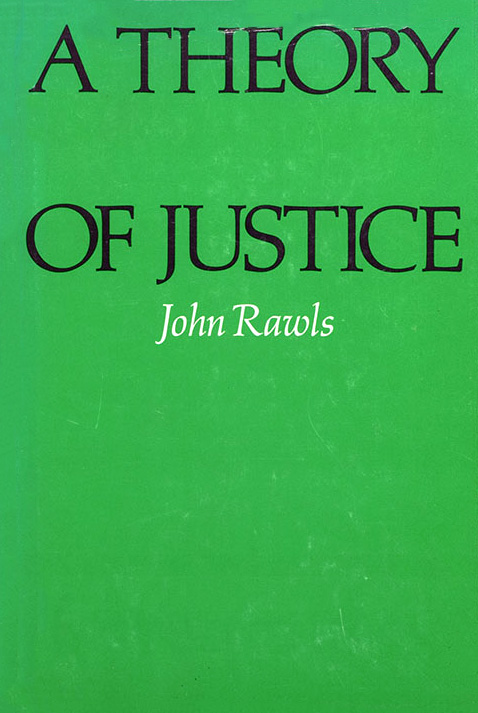
Back in February, Nick Cowen here at NOL pointed the 100th anniversary of John Rawls’ birth. At the time I somehow caught that this year also marks 50 years since his Theory of Justice book publication (a rather banal discovery it seems now, but still). The “veil of ignorance” was a strong introduction to the world of ideas and one of the few things to make it past my undergraduate studies.

The 1st American edition – source

Beyond those lectures (early 00s), I have yet to read the book. I suspect that it could belong to the “books everyone would like to have read, but almost no one actually reads” list, along with that Beveridge Report (this quip about the Report I read somewhere I cannot remember). Anyway, here be a fresh tribute proper:

On the Legacy of A Theory of Justice (Law & Liberty, there are responses to the main essay, too)

As far as round anniversaries involving nice thought experiments go, I would also note that Judith Jarvis Thomson’s “violinist” and Herbert A. Simon’s “alien telescope” papers were published in 1971 and 1991, respectively. The first is a defense of the right to abortion, while the second is a tool to discern social structures (guess what, I have not read the “violinist” paper either. It seems interesting and timely enough – the top courts in US and Germany decided on abortion in 1973/75 – but I firstly found out about it, and some relevant criticisms, only last year. Simon, the Nobel Memorial Prize in Economic Sciences laureate 1978, provided insights across a few fields over the years):

The trolley problem problem (Aeon)

Organizations and Markets (Journal of Economic Perspectives)

Getting to more recent staff, Brandon the other day expressed his doubts about the new charter city project in Honduras (Próspera). Find below a comprehensive read on the matter:

Prospectus On Próspera (Astal Codex Ten)

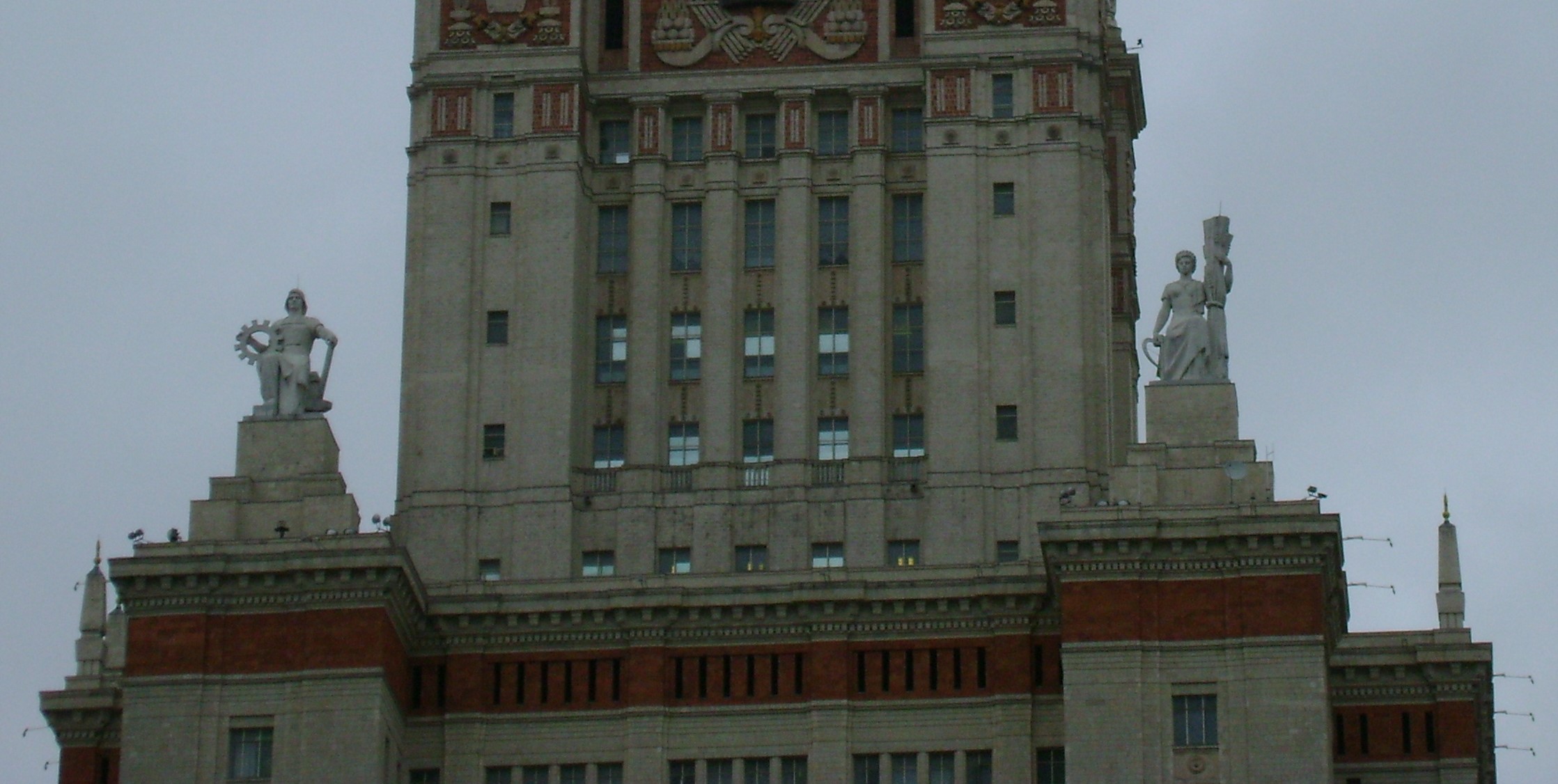
Now, as a pc gamer of yore, I have been expecting more nods to the underwater city of Rapture from the Bioshock game series, maybe. Rapture was a utopia free of state intervention, purportedly founded top-down on individualistic ideals in 1946, that failed. No, not quite libertarian ideals, more of a wildly objectivist kind, with a paternalistic edge. The adherence to laissez-faire, but not to laissez-passer (the founder forbid any relations with the rest of the world), brought smuggling, inequality and eventually the downfall of the city.

Not Rapture, but close enough style-wise (Moscow State University main building) – source: my own archive

At least this is how I understand it (right, I have not played any of these games. Survival/ horror FPS, nope. I do appreciate the games’ grandeur for 40s-50s ideas and architecture, though). As for any relevance to the Próspera project – come to think of it again – I admit the whole comparison is tempting, but way overblown, ok. Próspera is a public/ private law creature, envisaged in the constitution of a sovereign state. I desist.

Why Bioshock still has, and will always have, something to say (Ars Technica)

Ideology in Bioshock: A Critical Analysis (Press Start)

“The Legacy of Colonial Medicine in Central Africa”

Between 1921 and 1956, French colonial governments organized medical campaigns to treat and prevent sleeping sickness. Villagers were forcibly examined and injected with medications with severe, sometimes fatal, side effects. We digitized 30 years of archival records to document the locations of campaign visits at a granular geographic level for five central African countries. We find that greater campaign exposure reduces vaccination rates and trust in medicine, as measured by willingness to consent to a blood test. We examine relevance for present-day health initiatives; World Bank projects in the health sector are less successful in areas with greater exposure.

Woah, this, from Sara Lowes and Edward Montero, is crazy (link fixed) and hopefully gives pause to colonialism’s few living defenders…

Charter cities aren’t all that libertarian, and I doubt they’ll work either

Is economist Tyler Cowen bullish on a new charter city in Honduras? He says he’ll go and report on it if it ever gets off the ground. But let’s be honest with ourselves, it’s not going to ever get off the ground. Why? Two reasons. First (from Cowen’s excerpt):

It has its own constitution of sorts and a 3,500-page legal code with frameworks for political representation and the resolution of legal disputes

This is too many rules and not enough boundaries. A constitution of sorts? 3,500 pages of legal code, based off of…what, exactly? Some guys decided that they could purchase sovereignty (not a bad idea, actually) and then create – out of thin air and by using heterodox economic theory as their guide – all of the rules and regulations that this sovereign body would need to govern effectively? Did I get this right?

Second, when has a top-down central planning ever worked for something like this? Top-down central planning barely works for corporations when they reach a certain size threshold, and we all know how well this type of planning works in the public sphere. Even the U.S. federation – which can be considered a sort of top-down plan from a certain point of view – was built on top of already existing politico-legal institutions. Hong Kong and Singapore, two city-states that have long been the apple of libertarian eyes, were around long before they became city-states in the Westphalian state system. The British just grafted their imperial system onto already-existing indigenous politico-legal orders.

This charter city in Honduras is (I am assuming) not grafting itself onto an already existing indigenous politico-legal order. It is trying to forge an entirely new system out of thin air. That’s too rich for my blood.

Francophonie et connerie

Comme c’est souvent le cas le soir, je lézarde devant TV5, la chaîne francophone internationale. C’est l’heure du journal télévisé. L’annonceur, francais selon sa diction, annonce gravement que ce jour est l’anniversaire de la mort des époux Rosenberg, exécutés en 1953 “parce qu’ils étaient Communistes”. Comme, à cette époque, il y avait au moins 100 000 Communistes aux Eats-Unis, ces deux-là n’auraient vraiment pas eu de chance!

Un autre jour, je regarde un documentaire français: “Gharjuwa, épouse de la vallée.”  C’est sur une ethnie népalaise qui pratique la polyandrie: une femme, plusieurs maris. Le sujet est intrinsèquement intéressant, Et puis, le fait que la femme polygame ait le gros sourire aux lèvres tout le long de l’interview confirme pas mal de mes à-priori sur ce qui rend les femmes heureuses, en fin de compte! (Ce n’est pas sorcier.) Et puis, le tout se passe dans un environnement montagneux magnifique. Comme c’est le cas pour la plupart des documentaires français que je connais, la photo est excellente.

L’une des tâches de la femme polygame est de préparer la bière. Une voix masculine dit le commentaire en Français. Soyons francs: je ne sais pas si c’est le commentateur qui a rédigé le texte. En tous cas, il nous avise de ce qu’au Népal, la bière ménagère se prépare en faisant “cuire ensemble” une céréale (ou plusieurs; maïs ou blé noir, ou les deux, je ne suis pas sûr) et de la levure. Je fais un retour en arrière mental. C’est bien ce qu’il a dit. Mais, la levure, c’est ce qui transforme les sucres des céréales en alcool et en CO2. Mais la levure se compose d’organisme vivants qui trépassent vite à la chaleur. Pas question de la faire cuire avant qu’elle ait fait son travail. Ou alors, on a de la bouillie plutôt que de la bière. La description qu’on nous donne  est donc aussi fausse qu’absurde.

A priori, selon son accent et sa diction, le commentateur est français ou belge. Il vient donc d’un pays célébré dans le monde entier pour ses vins et aussi pour ses bières, ou alors, massivement, seulement pour ses bières. Des pays respectés aussi pour la supériorite de leur boulangerie et de leurs pâtisseries levées. Vins, bières, pains, pâtisseries exigent la maîtrise des levures. Comment peut-on être aussi ignorant d’une partie aussi importante de sa culture materiélle pourtant séculaire? Et puis, je sais bien qu’en principe, l’ignorance et la connerie sont des choses différentes. Pourtant, il y a des cas où on a du mal a distinguer l’une de l’autre. Je me demande comment on peut avoir été élevé dans la culture française ou la culture belge et être si profondément mal informé, à moins d’être également stupide.

Mais j’éprouve aussi de l’indignation comme ainsi dire au second degré: Comment les public francais et autres francophones peuvent-ils laisser passer de telles manifestations d’ignardise grossière sans se plaindre, sans réagir? Le fait est courant, répandu selon mon usage de l’éventail, il est vrai limité, de media francophones à ma disposition. J’ai d’ailleurs inventé la formule suivante, (en Anglais) : “Si vous voulez apprendre rapidement quelquechose de faux, suivez simplement les cinq premières minutes d’un documentaire en Français!”

J’ai du mal à souscrire à l’idee que la langue francaiss, la langue de Diderot, serait intrinsèquement porteuse d’insouciance vis-à-vis de la vérité toute simple bien que cela ne soit pas complètement impossible.

Je m’interroge donc sur les possible causes sociologique de ce qui me paraît plus qu’un accident. Je veux parler de l’apparente indifférence aux faits associée à l’usage de la langue française contemporaine. Je ne sais pas s’il s’agit vraiment d’ un phénomène culturel en profondeur: Les faussetés ne dérangent simplement pas beaucoup les Francais. (Il me semble, subjectivement, que les autres francophones, Canadiens, et Belges, par exemple, sont moins coupables.) Je me demande si les causes des ces frequentes débâcles factuelles sont plus tortueuses et donc, moins directement culturelles:

“France 2 fait un documentaires sur les Népalaise à plusieurs maris. C’est chouette. Je vais téléphoner à Robert pour lui demander s’il peut prendre mon neveu Charlot pour le narrer. Justement, en ce moment, il ne fait pas grandchose.”

De vraies questions. Toutes les réponse m’intéressent, celles provenant de France autant que celle émanant d’autres pays francophones. Ecrire à jdelacroixliberte@gmail.com.

Le beau et ignare documentaire en question sort de chez Atmosphère  Production  avec le concours du Centre national du cinéma. (“Evidemment”, j’ai envie de d’ajouter.)

Former president Lula out of jail… again

Former Brazilian president Luiz Inácio Lula da Silva is currently considered innocent and can run for president in 2022 if he wishes. Lula was arrested in April 2018 under Operation Car Wash, conducted by judge Sérgio Moro in the Brazilian southern city of Curitiba, in the state of Paraná. In November 2019, the Supreme Federal Court ruled that incarcerations with pending appeals were unlawful and Lula was released from prison as a result. Yesterday, March 8, 2021, the Supreme Court Justice Edson Fachin ruled that all Lula’s convictions must be nullified because Lula was tried by a court that did not have proper jurisdiction over his case. This is so complicated that I had to check in Wikipedia to make sure I’m getting the basic facts straight.

Now I wonder: what changed between April 2018 and November 2019? And what changed yesterday? Don’t know! Was Lula illegally arrested in April 2018? What kind of country is this, in which people are arrested unlawfully?! Why it took Edson Fachin almost three years to realize that Sérgio Moro had no jurisdiction in this case?! Is Brazilian law really so complicated that it takes even to a supreme court judge three years to realize that something is wrong? What is going to happen to Lula now? After all, he was in jail unlawfully for more than a year! But mind this: Edson Fachin didn’t say that Lula is innocent! He said that Sérgio Moro had no jurisdiction to judge him. Theoretically, Lula can be judged by a new court, with the same proofs, and be condemned… again. You know, Seinfeld was right:

“What are lawyers, really? To me a lawyer is basically the person that knows the rules of the country. We’re all throwing the dice, playing the game, moving our pieces around the board, but if there’s a problem, the lawyer is the only person that has read the inside of the top of the box. I think one of the fun things for them is to say, ‘objection.’ ‘Objection! Objection, Your Honor.’ Objection, of course, is the adult version of, ‘’fraid not.’ To which the judge can say two things, he can say, ‘overruled’ which is the adult version of ‘’fraid so,’ or he could say, ‘sustained,’ which is the adult version of ‘Duh.’”

I’m afraid that in the case of Brazil, if the supreme court judges don’t quite understand the rules of the game, neither can I.

Cave Paintings and Elementary Science

This is a travel story of sorts of travel through time, to an extent. Be patient.

Directly to the east of Marseille, the second largest city in France are a series of beautiful, narrow coves, like fjords, situated in a sort of desert. They are called “calanques” in French. They are accessible only by sea or through a long walk on hot rocky ground. Although they constitute a separate world, the calanques are close to Marseille, as the crow flies. They used to be a major fishing resource for the city. You can be sure they were never forgotten during the 2600 years of the city’s existence. Also, the city was founded by Greeks and thus, it always had a literate population, one that kept records.

Marseille and its environs are where SCUBA was invented, the first practical solution to the problem of men breathing underwater. Accordingly, the calanques were always and thoroughly explored after 1950. In 1985, one of the co-inventors of SCUBA discovered a deep cave in one of the calanques. He couldn’t resist temptation and swam into it until he reached a large room emerging above the water level. I mean a cave where he could stand and breathe regular air. The explorer’s name was Cosquer.

Cosquer visited several times without saying a word about his discovery. Soon, he observed dozens of beautiful wall paintings belonging to two distinct periods on the upper walls of his cave. The art of the first period was mostly hand imprints or stencils. The art of the second, distinct period, comprised 170-plus beautiful animals including many horses, ibex and others mammals, also fish, seals and other sea creatures. Archeologists think the painting of the first period were done about in about 25,000 BC, those of the latter period date back to about 18,000 BC, they believe.

Today, the entrance to the cave is about 125 feet below sea level. We know that paleolithic men did not have SCUBA. They simply walked into the cave for their own reasons, with their own purposes in mind. Thus, the sea level was at least 125 feet lower then than it is today. The people of Marseille never saw the cave. They would have written about it. There would be records. They would not have forgotten it. They simply did not know of its existence during the past 2600 years or so, since the foundation of their city.

Sometime in the past 20,000 years, the sea rose 125 feet or more. That’s an amplitude several times greater than any of the direst predictions of the official United Nations Intergovernmental Panel on Climate Change for the next century. The IPCC squarely blames a future ocean rise (one that has not been observed at all, yet) on abnormal emission of several gases, especially CO2. These abnormal emissions in turn, the IPCC affirms, are traceable to human activities such as driving cars and producing many useful things by burning fossil fuels.

It seems to me that basic good science requires that causal analysis begin with a baseline. In this case, it would mean something like this: In the absence of any burning of fossil fuels, the ocean rose 125 feet sometimes during the past 20,000 years. Let’s see if we can find evidence of the ocean rising above and beyond this order of magnitude since humanity began burning fossil fuels in large quantities.

The conclusion will likely be that nothing out of the ordinary happened. Hence, fossil fuel emissions are probably irrelevant to this particular issue. (This leaves open the possibility that such emissions are odious for some other reason. I mean CO2 is plant food. Too much CO2 may promote weed growth in our fields and gardens.)

The ocean is not currently rising and if it is, the existence of the Cosquer cave suggests that it’s rising to a minuscule degree. Let’s keep things in perspective. Let’s discard openly and loudly every part of the building of a complex hypothesis that does not work. Those who don’t take these obvious cleansing measures simply have a lot of explaining to do. They should not be allowed to wrap themselves in the mantle of science while violating Science 101 principles.

One of the conceits of the Warmist movement (re-branded “Climate Change” something or other) is that you don’t have a right to an opinion unless you possess a doctorate in Atmospheric Science. By this dictate, anybody who has to keep a job, raise children, or pay a mortgage is out of the discussion. This is the typical posturing of intellectual totalitarianism. Note what’s missing in the story above: It says nothing about what did cause the ocean to rise between 18,000 years ago and today. It’s enough to know that whatever it was, it was not the massive burning of fossil fuels. And, if factors other than burning fossil fuels explain large rises in sea level, they should first be applied to a tiny rises in sea rises before other explanations are tried. That’s just good practice.

The Cousquer cave story is now complete as is. Yes, that simple.

John Rawls at 100

Neoliberal Social Justice available April 2021

John Rawls, the most influential political philosopher of the 20th century, was born 100 years ago today. He died one year before I first read A Theory of Justice as part of my undergraduate degree in philosophy at University College London. This year, Edward Elgar publishes Neoliberal Social Justice: Rawls Unveiled, my book which updates Rawls’ approach to assessing social institutions in light of contemporary economic thought.

Mike Otsuka (now at the LSE) introduced us first to the work of Robert Nozick and then to Rawls, the reverse of what I imagine is normally the case in an introductory political philosophy course. Most people ultimately found Rawls’ the more attractive approach whereas I was drawn to Nozick’s insistence on starting strictly from the ethical claims of individuals. I wondered why something calling itself ‘the state’ should have rights to coerce beyond any other actor in civil society.

Years of working in public policy and studying political economy made me recognise a distinctive value for impersonal institutions with abstract rules. Indeed, I now think the concept of equal individual liberty is premised on the existence of such institutions. Although the rule of law could theoretically emerge absent a state, states are the only institutions that have been able to generate it so far. Political philosophy cannot be broken down into applied ethics in the way Nozick proposed.

Some classical liberals and market anarchists are increasingly impatient with the Rawlsian paradigm. Michael Huemer, for example, argues that Rawls misunderstands basic issues with probability when proposing that social institutions focus on maximising the condition of the least advantaged. Huemer argues that Rawls ultimately offers no reason to pick justice as fairness over utilitarianism, the very theory it was directed against.

I think these criticisms are valid for rejecting the blunt assessments of real-world inequalities that some Rawlsians are apt to make. But I do not think Rawls himself, nor his theory when read in context, made these elementary errors. Rawls’ principles of justice apply to the basic structure of social institutions rather than the resulting pattern of social resources as such. Moreover, the primary goods that Rawls take to be relevant for assessing social institutions are essentially public goods. It makes sense to guarantee, for example, basic civil liberties to all on an equal basis even if turns out to be costly. I can think of two reasons for this:

  1. In a society not facing acute scarcity, you would not want to risk placing yourself in a social position where your civil liberties could be denied even if it was relatively unlikely.
  2. Living in a society where basic liberties are denied to others is going to cause problems for everyone, whether through regime instability or fraught social and economics relationships that are not based on genuine mutual advantage but coercion from discretionary powers.

To be fair to utilitarians, J.S. Mill went in this direction, although one had to squint to see how it fit into a utilitarian calculus. But if Rawls was ultimately defending a more principled approach to social relationships using the tools of expediency, I see that as a valuable project.

So, I think that the Rawlsian approach is still a fruitful way to evaluate the distinctive problem of political order. His theory offers the resources to resist not just utopian libertarian rights theorists, but also socialists and egalitarians who similarly fail to account for the distinctive role of political institutions for resolving problems of collective action. Where I think Rawls erred when endorsing what amounts to a socialist institutional framework is on his interpretation of social theory. Rawls argued that people behave pretty selfishly in market interactions but could readily pursue the public good when engaged in everyday politics. I argue otherwise. Here is a snippet from Neoliberal Social Justice (pp. 96-97) where I make the case for including a more consistently realistic account of human motivation within his framework:

Problems of justice are not purely about assurance amongst reasonable people or identifying anti-social persons. Instead, we must consider the anti-social person within ourselves: the appetitive, biased, narrow-minded, prejudicial self that drives a great deal of our every-day thoughts and interactions (Cowen, 2018). If we are to make our realistic selves work with each other to produce a just outcome, then we should affirm institutions that allow these beings, not just the wholesome beings of our comfortable self-perception, to cooperate. We have to be alive to the fact that we are dealing with agents who are apt to affirm a scheme as fair and just at one point (and even sincerely mean it), then forgetfully, carelessly, negligently or deliberately break the terms of that scheme at another point if they have an opportunity and reason enough to do so. Addressing ourselves as citizens in this morally imperfect state, as opposed to benighted people outside a charmed circle of reasonableness, is helpful. It means we can now include such considerations within public reason. The constraints of rules emerging from a constitutional stage may chafe at other stages of civil interaction. Nevertheless, they may be fully publicly justified.

Power outages in Texas

From an email I sent my principles of economics students:

Since we can’t have classes this week and the midterm is postponed a week, I felt chatty and wanted to share at least a few thoughts about why so many people are without power.

tl;dr: see the graph below. Prices are fixed. Supply shifts left, demand shifts right = instant shortages. This is not an easy problem to solve.

Issue #1 is that bad weather events increase demand – demand shifts to the right. Issue #2 is that energy prices are really sticky. We’ll be getting to this in March, but in energy markets we sign contracts with our energy providers that lock in the price of electricity for 1-2 years at a time. When demand increases, the price doesn’t! Further, some contracts allow us to smooth the bill out over 12 months, so if I need extra $12 of electricity today, I don’t actually pay for it today: I’ll pay for it by having a $1 higher electricity bill over a 12 month period. That does two things. a) It means that energy demand curves are really vertical, a small change in price doesn’t change my electricity consumption much; and b) when demand increases, prices don’t. That ruins the market price signal that tells you and me to conserve electricity. Issue #3 of course is that it is really amazingly expensive to increase electric capacity. That means that energy supply curves are also really vertical. Even if energy firms COULD raise prices, they can’t increase the quantity supplied in the short run. In the longer run, we have time to build more plants and add capacity, but in the short run we’re stuck with what we have. 

The graph above shows the marginal cost of different types of energy. Some are energy that is easy to turn on and off, but expensive (eg. oil). Some are energy that is really, really hard to turn on and off at will (eg. nuclear) but very cheap. And producing more energy than you need is bad. So you build enough cheap stuff that you know for 100% positive will always be needed, and then you build expensive stuff to handle changes in demand. That’s the short version, anyway. It means that producing a little extra electricity is really expensive and there is a hard limit to much extra we can produce – eventually supply curves are completely vertical!

My friends on the right tend to send blame towards green energy. And they have a point! Renewables are temperamental – with too many clouds solar doesn’t do anything, and frozen blades can’t turn wind energy turbines. The impact of the storm is to shift energy supply curves to the left, and the more the grid relies on renewables, the bigger that shift is. The basic problem renewables have had is that it’s really difficult to STORE their energy for future use. If we could create really large energy reservoirs, we could store Texas’ abundant solar and wind energy for a literally-rainy day. 

So we have supply curves shifting left at the same time demand curves are shifting right and prices can’t move … the final result is massive shortages! Now what could be done about that?

My friends on the left tend to blame deregulation. Sadly, not one of them is spelling out exactly what regulation they think would solve this problem. Let me be generous to them and imagine they mean the following: if the government ran (rather than regulated) the energy grid, they would build a greater capacity than we typically use. 

And they have a point. Energy is like the opposite of the hotel industry. In the hotel industry, you don’t build the hotel based on AVERAGE, normal operations. In Stephenville, you build a hotel large enough to accommodate people who come for graduation. The cost of having unused rooms is fairly low – you still need to keep the room cool in case someone needs it, and you want to hire someone to dust it, but it just sits there most of the time. Then you rake in big money when demand suddenly increases. The energy industry is the opposite: it is very expensive to build capacity and it is also expensive to maintain it. Whether you are a private firm or a government, the money to maintain unused generators has to come from somewhere.

How do we afford that? In the market, energy prices are actually set a little bit higher than equilibrium so that supply > demand. That ensures we have plenty of electricity to handle normal, typical demand fluctuations. We pay for that excess capacity during the normal part of the year so that when temperatures are particularly high or extra low, the grid can handle it.

The government has a different problem, though. If electricity is publicly-run, they will tend to set the price lower than the market would and make up the differences with taxes. That further divorces energy use from the price paid. We would have a higher quantity demanded at all times (wasteful). Add in that governments generally do a bad job running businesses (wasteful) and in order to have that excess capacity we would have to be willing to pay higher taxes (and lower energy bills) for many years to make up for the extra expense. Most governments, like most markets, will therefore tend to undersupply for an emergency because the voters don’t want to pay higher taxes and there is no such thing as a free lunch. So it’s not 100% clear that this would solve the problem. Europe has power outages that affect millions too. 

Why? Healy and Malhotra: Governments respond to incentives, and voters give the wrong incentives: “Do voters effectively hold elected officials accountable for policy decisions? Using data on natural disasters, government spending, and election returns, we show that voters reward the incumbent presidential party for delivering disaster relief spending, but not for investing in disaster preparedness spending. These inconsistencies distort the incentives of public officials, leading the government to underinvest in disaster preparedness, thereby causing substantial public welfare losses. We estimate that $1 spent on preparedness is worth about $15 in terms of the future damage it mitigates. By estimating both the determinants of policy decisions and the consequences of those policies, we provide more complete evidence about citizen competence and government accountability.”

Bottom line: there isn’t an easy solution to weather events that happen once in a hundred years, whether it’s floods or hurricanes or … whatever this white, powdery substance is that’s blanketing my lawn. The basic problem is scarcity in a market where price signals don’t work (by design) at a time when supply shifts left and demand shifts right. To the extent climate change means more frequent extreme events, this will be a growing problem.

Affirmative Guilt-Gradient and the Overton Window in Identity-Based Pedagogy

Yesterday, I came across this scoop on Twitter; New York Post and several other blogs have since reported it.

Regardless of this scoop’s veracity, the chart of Eight White identities has been around for some time now, and it has influenced young minds. So, here is my brief reflection on such identity-based pedagogy:

As a non-white resident-alien, I understand the history behind the United States’ racial sensitivity in all domains today. I also realize how zealous exponents of diversity have consecrated schools and university campuses in the US to rid the society of prevalent racial power-structures. Further, I appreciate the importance of people being self-critical; self-criticism leads to counter-cultures that balance mainstream views and enable reform and creativity in society. But I also find it essential that critics of mainstream culture don’t feel morally superior to enforce just about any theoretical concept on impressionable minds. Without getting too much into the right vs. left debate, there is something terribly sad about being indoctrinated at a young age —regardless of the goal of social engineering— to accept an automatic moral one-‘downmanship’ for the sake of the density gradient of cutaneous melanin pigment. Even though I’m a brown man from a colonized society, this kind of extreme ‘white guilt’ pedagogy leaves me with a bitter taste. And in this bitter taste, I have come to describe such indoctrination as “Affirmative Guilt-Gradient.”

You should know there is something called the Overton Window, according to which concepts grow larger when their actual instances and contexts grow smaller. In other words, well-meaning social interventionistas easily view each new instance in the decreasingly problematic context of the problem they focus on with the same lens as they consider the more significant problem. This leads to unrealistic enlargement of academic concepts that are then shoved down the throats of innocent, impressionable school kids who will take them as objective realities instead of subjective conceptual definitions overlaid on one legitimate objective problem.

I find the scheme of Eight White identities a symptom of the shifting Overton Window.

According to Thomas Sowell, there is a whole class of academics and intellectuals of social engineering who believe that when the world doesn’t reconcile to their pet theories, that shows something is wrong with the world, not their theories. If we are to project Thomas Sowell’s observation on this episode of “Guilt-Gradient,” it is perfectly reasonable to expect many white kids and their parents to refuse to adopt these theoretically manufactured guilt-gradient identities. We can then —applying Sowell’s observation—predict academics to declare that opposition to the “Guilt Gradient” is evidence for many covert white supremacists in the society who will not change. Such stories may then get blown up in influential Op-Eds, leading to the magnification of a simple problem, soon to be misplaced in the clutter of naïve supporters of such theories, the progressive vote-bank, and hard-right polemics.

We should all acknowledge that attachment to any identity—be it majority or minority—is by definition NOT a hatred for an outgroup. Assistant Professor of Political Science at Duke University, Ashley Jardina, in her noted research on the demise of white dominance and threats to white identity, concludes, “White identity is not, a proxy for outgroup animus. Most white identifiers do not condone white supremacism or see a connection between their racial identity and these hate-groups. Furthermore, whites who identify with their racial group become much more liberal in their policy positions than when white identity is associated with white supremacism.” Everybody has a right to associate with their identity, and equating one’s association with an ethnic majority identity is not automatically toxic. I feel it is destructive to view such identity associations as inherently toxic because it is precisely this sort of warped social engineering that results in unnecessary political polarization; the vicious cycle of identity-based tinkering is a self-fulfilling prophecy. Hence, recognizing the Overton Window at play in such identity-based pedagogy is a must if we have to make progress. We shouldn’t be tricked into assuming that the non acceptance of the Affirmative Guilt Gradient is a sign of our society’s lack of progress.

Finally, I find it odd that ideologues who profess “universalism” and international identities choose schools and universities to keep structurally confined, relative identities going by adding excessive nomenclature so they can apply interventions that are inherently reactionary. However, isn’t ‘reactionary’ a pejorative these ideologues use on others?

The 1971 war and the creation of Bangladesh: 50 years later

2021 happens to be the 50th anniversary of the 13-day Indo-Pakistani War of 1971, which also resulted in the creation of Bangladesh. In 2011, I co-edited a book titled Warriors after War which consists of interviews with retired Army officials from India and Pakistan. Here is an excerpt:

Tridivesh Singh Maini recalls that part of the inspiration for this book arose from the history of this incident, and the fact that the original impetus for change had arisen not from politicians but from ex-military figures in Pakistan and India. Subsequently, he carried out the interviews with all the Indian ex-military figures for this volume, while his colleague in Pakistan, Tahir Malik, carried out all but one of the interviews with Pakistani ex-military figures (Brigadier Shaukat Qadir was interviewed by Richard Bonney).

It is difficult to emphasize sufficiently the uniqueness, importance and timeliness of this volume. Relations between Pakistan and India were strained from the outset as a result of the events of Partition in 1947, when the mass migration of the populations in opposite directions and the slaughter that occurred on both sides led to mutual recrimination. (pgs 34-35)

Here is a link to the book on Amazon. Here is a pdf of the entire book.

How Falsehoods Take Root

“On the afternoon of January 6, most Americans watched in horror as an armed mob stormed the US Capitol….” (Emphasis mine.)

This is part of the opening sentence of an essay in the Wall Street Journal by Steven B. Smith (weekend edition, Jan 23-24, C5). The piece is entitled: “The Two Enemies of Patriotism.” It’s described as adapted from the author’s forthcoming book to be published soon by Yale University Press. The author is a professor of political science at Yale. Even a superficial survey shows he possesses very good academic credentials. His PhD is from the University of Chicago. He seems to be a specialist in Spinoza, which I find especially disturbing, personally (more on this below).

My question: were the protesters who breached the US Capitol on January 6 “armed,” as Mr Smith asserts? The answer to this question matters because it’s one of the dividing line between two interpretations of the same events. In one interpretation, the notably unmasked protesters went too far and engaged in unlawful entry, small amounts of vandalism (some windows were broken), and in disorderly conduct – that most subjective of all kinds of law breaking – which, together, made the unaccountably thin line of Capitol police feel threatened and forced them to retreat. As I write, a little over one hundred and twenty participants have been charged, almost all with the kinds of crimes mentioned above. No one has been charged with murder or any other crime I would consider serious.

In the alternative interpretation, a real “insurrection” took place with the aim to….Well, no one explained what a credible aim the “insurrectionists” might have had besides what the protesters actually achieved: putting off a ceremonial congressional proceeding of counting electoral vote by several hours without altering its results in any way.

It seems to me that reasonable people should agree that the presence or not of real weapons marks the line dividing somewhat riotous protest from insurrection, which must be armed, it seems to me. Is there any historical example of an event called an “insurrection” when weapons were absent? Or is this a novel use of the word? I say “should agree” because in the two weeks since the event, what I think of as reasonable people seem to have largely vanished recently.

Here are the facts as I am able to gather them from the internet. After the breaching of the Capitol, police found two vehicles nearby (I don’t know how near), each with a varied panoply of weapons. Whether the owners broke any laws by carrying their several weapons, I can’t tell from the media reports. Here, I would like to have a baseline: In an ordinary day when nothing much happens, how many vehicles with weapons inside would be found in a police sweep of the same area? At any rate, none of those weapons were in the possession of the crowd that breached the Capitol’s weak defenses.

In addition, one identified Capitol protester (one) was arrested at his hotel in possession of a Taser. There is no reason to believe he had this weapon in the Capitol. (Burden of proof is on the accuser). Another protester was found with plastic ties in his possession while he was on Capitol grounds. He said he found them there. They might actually have fallen out of a Capitol policeman’s pocket. At any rate, whether plastic ties are “arms” is a real question. If a civilian without a weapon orders me to put my wrists behind my back so that he can secure them with plastic ties, I will just say “No.” Someone else?

The media made much of the news that several pipe bombs were also found on the ground not far from the Capitol. The first one found was at the National Republican Committee. I have to ask, of course: why on the ground, why at a Republican building? (Some really clueless Trump supporter?)

One protester present on the Capitol grounds during the breach did have a pistol; that’s one, one!

So far, as of today, two people died in the Capitol or as a direct result of the breach by Trump supporters. The latter were re-enforced by an unknown number of left wing radicals, or, at least, by one, a young man named Sullivan. I understand that one is one, that this fact may not mean much. Same rules apply against and for the argument I am making.

One Capitol policeman was killed by a heavy object (not precisely an “arm,” a weapon) by a person or by persons unknown. The killer or killers seem to have been present in the invading crowd.

Finally, a Capitol policeman shot to death one avowed Trump supporter from a short distance. The victim was allegedly killed while entering through a broken window. She was unarmed. I did not find a commentary about a Congressional legal policy making breaking-and-entering a capital case punishable by death. The speaker of the House, Nancy Pelosi, had nothing to say on the topic although Congress is in charge of its own policing.

In brief: Using public sources, I don’t find the armed mob of Prof. Smith’s opening sentence. A “mob”? Maybe that’s a subjective designation, but I understand the impression that particular crowd made and I too think it was disorderly. But, I am pretty sure it takes more than one individual to make up a “mob.” So, either, it was not a mob, or it was not armed.

Why did Prof. Smith begin an essay surely only intended to promote his scholarly book with a reference to an armed mob, specifically, in spite of the shortage of supporting evidence? Four possibilities.

First, he lied shamelessly in the service of his ideological and political preferences, including a hatred of Trump supporters;

Two, Mr Smith displayed an appalling lack of information. It’s only appalling because the man is a scholar, and a political scientist to boot, one who should follow current political events a little carefully. One would reasonably expect him to be attentive when the word “insurrection” is used repeatedly.

Three, Mr Smith was a little distracted when he wrote the above lines, not especially interested, and he just followed passively the narrative prevailing in his faculty club with a care to preserving his dedicated place at the table in the same faculty club’s dining room.

Four, he thinks one protester with a handgun constitutes an “armed mob.”

The later possibility should not be brushed off too easily. We live under constant hysteria.

Mr Smith is a scholar of Spinoza, the 17th century Dutch philosopher. Spinoza was one of the originators of undiluted rationalism and thus, a founding father of Western civilization (thus far). He even paid a high personal price for his courage in renouncing the theological certainties of his age. I suppose you can be an expert on the works of another scholar and remain morally unaffected by his example. If this is uncommon, Mr Smith is showing the way.

Now, for consequences of word choice, just compare two short narratives about the same event;

“About one hundred to two hundred unmasked and mostly unarmed protesters forced their way into the Capitol. ‘Mostly unarmed’ because one protester was found to have a handgun.”

“…an armed mob stormed the Capitol….”

Which of these two narratives would lend implicit support to the view that Trump supporters should be treated as “domestic terrorists” with the expectable outcomes for individual rights?

Whatever the real explanation for Prof. Smith’s departure from the truth, it seems obvious to me that it constitutes one of the roots, a minor one perhaps, that will help grow and help propagate that particular falsehood. The fact that he is an academic operating from a respected university makes the verbal dishonesty worse. The fact that the falsehood appears in a well-esteemed and mostly conservative newspaper makes the breach of truth worse again.

I have been saying for months now that American universities are committing suicide. Professors’ irresponsibility, such as in this case one, are just another one of a thousand cuts. Very sad!

PS I voted for Mr Trump twice. I am a white supremacist, of course.

And the Surfers Shall Lead the Revolution

The central coast of California where I live has been cursed and blessed by sunny weather this winter; it has also been blessed and cursed by unusually high waves. The curse of good weather when it should be raining, known as “drought,” is that it may feed into more horrendous forest fires next summer, same as we had last summer. The blessings of sunny weather are obvious. The curse of very high waves is that they cause some damage to infrastructure and that they sometimes claim lives. The blessing of high waves is that surfing is thriving like never before in “Surf City,” Santa Cruz, my town.

On a Wednesday or Thursday afternoon of January, the beach two miles from my house is crowded like in June (not quite as much as in August). It’s largely covered with family clusters. Look at it in context. Children are not allowed to go to school (although they are almost completely immune); many moms who would otherwise work have been laid off from their more or less precarious jobs. Many dads have been laid off too; others “work from home.”

The kids are restless, the sun is shining, the temperature is better than OK; the beach is within the reach of many. (More on this later.) What are we going to do? Let’s spend the middle of the day at the beach, of course.

I should have have been able to predict it because I am a serious beach social scientist. I missed the boat. Santa Cruz was one of the best small towns I knew only seven or eight years ago. Then, the homeless started drifting in and they never left. Some are in the last stages of a life dedication to drugs; others are rationality challenged; a few are both. For the past five years or so, there have been enough of them to affect the quality of life for everyone else. Their presence determines to an extent where one can take one’s children in town. (Sorry, I call them as I see them; no judgment involved.)

Then, the COVID fell upon us from China. In short order, the authorities, including the local powers, found their authoritarian footing, or they got in touch with their own panic. And panic is often a handmaiden to petty authoritarianism. They began prohibiting this, and that, and that public behavior, this and that kind of work, etc.

Santa Cruz is becoming a ghost town, one restaurant closing at a time, one store closing at a time. The movie theaters are shut down, the biggest one forever. The one large bookstore does remain open though. You can still pick up and return books at the public library but either you can’t browse or it’s fiendishly complicated to do so on-line. Besides, one can only read so many hours a day if one is under fifty, so many minutes if under fifteen.

Just from looking around, I assume that many school-age children have taken the opportunities on-line learning offers to become even more adept at using the internet. Such skills come handy in times of extreme idleness. I believe a good many kids are on TikTok and similar on-line alternate worlds six or seven hours a day, some amassing “followers.” (Don’t ask me why I believe this, it’s very personal; I just know.) But although such games are addictive, they too become tiresome and children crave direct social contact anyway. So, eventually, many kids end up at the beach with their parents and with their siblings and their parents or, with adult neighbors and their children.

In point of fact, many of the family clusters on the sand are further grouped into larger ensembles including some ten or fifteen adults and thirty or forty children. I haven’t yet figured out whether they are grouped on the basis of school, church, or just neighborhood. Whatever the case, it’s pretty impressive. No one is wearing a mask.

On weekends, visitors from far afield join those mostly local people on the beach, increasing again the crowding. There are several ways to spot the visitors. Some play loud music- a sure activator of xenophobia; others send their kids to the water with a life jacket on top of their wetsuits. (Not cool.) Some wear masks.

Speaking of wetsuits, a new thing, something I have never seen before, is that dozens of little kids are in wetsuits. This is a rare sight because in normal times, parents tell themselves: Not worth buying the kid a wetsuit; he is going to outgrow it in months.

The calculation has changed because of a virus. The parents are largely unable to spend money on dining out, other shopping opportunities are limited and inconvenient; for the well-heeled, this year, there has been no winter vacation to spend on; for the least well endowed, there are not even school supplies expenditures. I am saying that under current circumstances, unlike in previous years, almost any parents feel that they can afford to buy one or two children’s wetsuits (at about $125 or less each). This changes everything.

More importantly, perhaps, but I won’t dwell on this because I can’t afford to lose half of humanity as potential friends, for the first time in my experience, you see dozens of mature women in wetsuits. I have to be cautious here because, let’s say that the wetsuit as a garment is not all that flattering to the mature female shape.

The beach I have in mind is a few hundred yards around a point from globally famous Steamer Lane where world surf championships are held most winters. The waning rollers of Steamer Lane land on that beach and they are suitable, the farthest ones for intermediate surfers, and the closest, for beginners. So, almost every family cluster on the beach includes one, two, or three surfers.

Learning a new sport is often wonderful; learning it as a family is terrific. Coming out of the water cold but exhilarated and sharing a sandwich with your kids and with your spouse is like a return to a lovely, simpler past most people today have only heard of, if that.

Downbeach some way, three tiny girls in tiny bikinis chase one another in the small waves. Their squeals gladden the heart. A couple of boys nearby are on the wet sand absorbed by a hydrokinetic project. They ignore the girls as is proper. A smart white egret has figured out that humans are not predators. It picks sand crabs right between the feet of children. At least some creatures are enjoying a new freedom and that’s all good (except for the sand crabs).

Surfing, loosely defined, plus the new pleasant, voluntary family closeness around it, has become the first recourse but also the last recourse of many of the locked-down. It must be pretty much irreplaceable for them under the current circumstances of health-based restrictions, and health pretext-based restrictions on ordinary activities, circumstances of forced idleness and, of unnatural family interaction in a closed space. Surfing is the thin pillar around which some people are building a small, fragile edifice of freedom and joy.

If the local health authorities try – as they did last spring – to restrict parking near the beach, I believe all hell will break loose. (And, I am being polite, I was thinking of fans, not fanatics, air circulation devices.) That’s true, although Santa Cruz is largely a “progressive” town. Every material obstacle to parking is one less family group able to have recourse to the last recourse. The real surfers among them, advanced or not, are tough people. They immerse themselves voluntarily for hours in cold water. (Wetsuits don’t protect faces and hands, and the rest of the body, only imperfectly). They deliberately submit themselves, and often their children, to the dangers of breaking surf. And, I don’t even mention sharks, known to frequent the area because we have many sea lions. (The last fatal shark attack was about 18 months ago, a long time ago or yesterday, depending.)

At any rate, the surfers won’t go meekly. They are not likely to submit to orders to stay away from waves that are extremely unlikely transmitters of viruses. If the authorities even attempt to take away this last vestige of personal freedom, the surfers will proclaim and lead a sort of revolution. Also, if I were the authorities, I would think twice before turning draconian because many law enforcement people (and firefighters) are surfers themselves so, the expected instruments of repression would be somewhat unreliable. And no one, but no one hates surfers except other surfers. So, don’t go seeking allies in repression.

Local tyrants – however well meaning you are – don’t even think about it! You don’t want to face the full anger of barefoot families in wetsuits who have been enduring for a year a bunch of largely ineffectual, ill-explained, and often idiotic regulations.

Pandemics and Hyperinflations

I wrote an article a few years ago about hyperinflation in ancient Rome (and blogged about it here), arguing that the social trust in issuing bodies has been a foundation for monetary value long before modern institutions.

I got a random notification that someone had actually read and cited my work in a recent article “The US Money Explosion of 2020, Monetarism and Inflation: Plagued by History?” I really liked the author’s concept: inflation during pandemic periods is staved off for years because of saving rates, but then the post-crisis period is actually when the most inflation occurs.

This passed my ‘gut check’: during a crisis, who blows their entire budget? It also passed my historical-precedent check, and not only because he researched the Spanish flu and medieval precedent; in the Roman hyperinflation, the inflation lagged decades behind the expanded monetary volume, and in fact came right as the civil wars that nearly brought the Empire to its knees came to an end.

So, in short, inflation-hawks, you are probably right to fear the dramatic expansion of the money supply; however, you won’t feel vindicated for potentially years to come. In an age where people look for causes today to become results tomorrow (EVERY DAY, the WSJ tells me “stocks moved up/down because MAJOR EVENT TODAY”), we need to lengthen our time horizons of analysis and recognize that, just maybe, the ramifications of today’s policies will not really be felt for years. Or, put in a more dire light, by the time we realize who is right, it will be too late to reassert social trust in monetary value, and the dollar will follow the denarius into histories of hyperinflations.

The Al Ula Accord: Qatar’s gains, the UAE’s losses, and Iran’s quiet win

Introduction 

Days after the signing of the solidarity and stability agreement – the Al Ula accord – between Qatar, Saudi Arabia, and Saudi Arabia’s allies, the Qatari Foreign Minister, Sheikh Mohammed bin Abdulrahman al-Thani, made it clear that Doha would continue to pursue an independent foreign policy driven by its own national interest. The Qatari Foreign Minister was alluding to demands by Riyadh and other countries that Qatar should re-assess its ties with Iran and Turkey in the aftermath of the agreement.

Days after the imposition of the blockade, Saudi Arabia and other countries had stated that they would remove the blockade provided that Doha accepted a list of 13 demands. One of these demands was that Doha should downgrade ties with Tehran and Ankara. Qatar categorically refused to accept this demand.  

The UAE’s response to the accord  

While all other signatories have hailed the agreement, the United Arab Emirates (UAE) has said that while the signing of the agreement is a welcome step, there is no clarity with regard to contentious issues – such as Doha’s relations with Ankara and Tehran. Expressing the UAE’s skepticism, its Minister of State for Foreign Affairs, Anwar Gargash, said

Some issues are easier to fix and some others will take longer. We are off to a very good start…but we have issues with rebuilding trust.

The UAE had opened land, sea, and airports with Qatar on January 8, 2021 (Saudi had opened the borders on January 4, 2021). According to many observers, the accord will give a boost to bilateral economic links between the UAE and Qatar (the UAE’s tourism and construction sectors are likely to benefit significantly from the agreement).

It would be important to point out that, till a few months ago, the UAE had been opposed to the removal of the blockade on Qatar, but was compelled to sign it, given the changing dynamics in the Middle East. 

Iran, Turkey, and the agreement 

The key objective of both the US (White House Senior Advisor Jared Kushner had visited the Middle East in December) and Saudi Arabia in removing the embargo on Qatar was reducing the latter’s dependence upon Iran. Qatar has been using Iranian air space ever since the blockade was imposed in June 2017.

On the other hand, Doha realizes that its independent foreign policy, and good relations with Washington and Tehran and Ankara, are an asset. The latest agreement, which will improve ties with Saudi Arabia, could further bolster its strategic importance and foreign policy options. Qatar has consistently batted in favor of reduction of tensions between the US and Iran, and after the signing of the agreement, it has offered to intervene between Saudi Arabia and Iran and Saudi Arabia and Turkey (both Turkey and Iran had also welcomed the Al Ula accord, and expressed optimism that it would pave the way for stability in the Middle East). 

Mutlaq Al-Qahtani, Special Envoy of the Qatari Foreign Minister for Combating Terrorism and Mediation in the Settlement of Disputes, while commenting on the possible role of Qatar in reducing tensions between Ankara and Tehran, stated:

If these two countries see that the State of Qatar has a role in this mediation, then it is possible to do so.

The UAE is not too happy with Qatar’s increasing clout as a result of the agreement (for long the UAE has viewed itself as a key player in the Gulf Cooperation Council [GCC] and a bridge). While the UAE itself has maintained back channels with Iran, especially in the midst of the covid-19 pandemic, it has serious differences with Turkey and has not been comfortable with Qatar’s increasing proximity with Ankara. 

Conclusion  

In conclusion, the agreement is an important step but the geopolitics of the Middle East are extremely complex. Qatar is unlikely to drastically alter its approach vis-à-vis Turkey and Iran; in fact it would like to view itself as a peacemaker rather than just a mere bystander. The fact that Qatar was able to deal with the economic implications of the blockade has only strengthened its position (in 2021, it is likely to grow at 2.7%, the second highest rate within the GCC). 

It remains to be seen how the Saudis and the US view the role of Qatar within the GCC. What would also be important to watch is how the UAE deals with the changing landscape in the Middle East.

Greenwald on Silicon Valley

On Thursday, Parler was the most popular app in the United States. By Monday, three of the four Silicon Valley monopolies united to destroy it.

With virtual unanimity, leading U.S. liberals celebrated this use of Silicon Valley monopoly power to shut down Parler, just as they overwhelmingly cheered the prior two extraordinary assertions of tech power to control U.S. political discourse: censorship of The New York Post’s reporting on the contents of Hunter Biden’s laptop, and the banning of the U.S. President from major platforms. Indeed, one would be hard-pressed to find a single national liberal-left politician even expressing concerns about any of this, let alone opposing it.

Not only did leading left-wing politicians not object but some of them were the ones who pleaded with Silicon Valley to use their power this way. After the internet-policing site Sleeping Giants flagged several Parler posts that called for violence, Rep. Alexandria Ocasio-Cortez asked: “What are @Apple and @GooglePlay doing about this?”

The rest is here. Do read it. (H/t Mark from Placerville)

I haven’t jumped into American domestic politics for a long, long time. It’s nice to see that Glenn Greenwald is still the same ol’ Glenn Greenwald. I saw on Twitter awhile back that some Leftists were savaging him because he refused to take their side on something or other.

The tribal trend is one that is here to stay, I think, at least for the duration of my lifetime. In the old days, in the United States, politics was more polarized. Whole families based part of their identity on a political party. What we are seeing is a return to the norm after 80 years of postwar boom (and bust), when being an American trumped being a Democrat/Republican. Coming to terms with a bug in the democratic system (polarization), is going to be difficult for a lot of Americans.

The problem is not just ignorance with polarization, either. Before the postwar boom, America’s federal government did a lot less than it does now. Our polarized society, which again is a normal feature of democracies that don’t win world wars, is fighting for resources that are now wielded largely by one entity rather than by hundreds of local entities. There are plusses and minuses to this. The federal government is more professional about such things, and graft is harder to commit, but this also means that there will be more losers (for those federal goodies).

In the past, violent riots were the product of racist and Nativist animosities that were not dealt with effectively by local authorities. Basically, black Americans and immigrants were not able to get any public goods from local and “state” governments unless they literally fought for a place at the table. Today, and for the foreseeable future, the animosities are going to be federal in scope rather than local, so violence will not be a product of racist or Nativist abuse. Violent riots will probably flare up more often than they once did, too, but they won’t be as deadly as the racist or Nativist riots of old.

I hope I’m wrong, but I rarely am.