An Excellent Analysis of Karl Marx and His System by Leszek Kolakowski

Many Western Marxists used to repeat that socialism such as it existed in the Soviet Union had nothing to do with Marxist theory and that, deplorable as it might be, it was best explained by some specific conditions in Russia. If this is the case, how could it have happened that so many people in the nineteenth century, especially the anarchists, predicted fairly exactly what socialism based on Marxist principles would turn out to be namely, state slavery? Proudhon argued that Marx’s ideal is to make human beings state property. According to Bakunin, Marxian socialism would consist in the rule of the renegades of the ruling class, and it would be based on exploitation and oppression worse than anything previously known. According to the Polish anarcho-syndicalist Edward Abramowski, if communism were by some miracle to win in the moral conditions of contemporary society, it would result in class division and exploitation worse than what existed at the time (because institutional changes do not alter human motivations and moral behavior). Benjamin Tucker said that Marxism knows only one cure for monopolies, and that is a single monopoly.

These predictions were made in the nineteenth century, decades before the Russian Revolution. Were these people clairvoyant? No. Rather, one could make such predictions rationally, and infer from Marxian anticipations the system of socialized serfdom.

Read the whole thing. It’s relatively short and has a lot of good insights. The part about Marx cheating on the wages of European workers, and his views on the non-European world, are alone worth the price of admission. Kolakowski was a Polish philosopher and Cold War dissident.

A Brief Glimpse into Autarky: Russian Edition

Libertarians loathe autarky (economic, and therefore political and cultural, isolationism), and for good reason. As Dr Delacroix puts it, economic autarky (protectionism) is the “royal road to collective poverty.”

The recent invasion and occupation of Crimea by the Russian state has led many observers to bring up the still unofficial ideology of the Kremlin these days. One part neo-imperialism and one part pan-Slavism, and mixed together with shards of religious conservatism, ecology (Russia has a long tradition of ecology that is distinct from the West, but still similar since it’s an idea and ideas tend to outweigh cultural and material differences in societies; our own Dr Znamenski is an expert on just this subject), and socialism, the Kremlin’s ideological glue is slowly being melded into something that resembles a Russian-led bloc that is completely self-sufficient from the West and culturally distinct from its trading partners on Russia’s China-led eastern border and its Muslim-led southern border.

If Moscow is trying to forge a society that is completely self-sufficient from the West, we have little to fear from such actions (I say ‘little’ because there is the possibility that such an order would end up like North Korea, and the irrational actions associated with Pyongyang would have a much bigger influence if transposed to a Moscow-led autarky; I don’t think such a scenario likely because of the sheer geographic size of the Russian state and its clients).

Here is a glimpse of what a self-sufficient Russia would like (thanks to the sanctions currently in place):

[…m]ore than 6,000 animals in Russia’s largest zoo have been caught up in the worst fight between Russia and the West since the Cold War. A wide-ranging ban on Western food announced this week by the Kremlin has forced a sudden diet change for creatures that eat newly forbidden fruit.

The sanctions against meat, fish, fruits and vegetables from the United States, the European Union and other Western countries were intended to strike a counterblow to nations that have hit Russia over its role in Ukraine’s roiling insurgency. But the measures will also have an impact on stomachs at the zoo.

The sea lions crack open Norwegian shellfish. The cranes peck at Latvian herring. The orangutans snack on Dutch bell peppers. Now the venerable Moscow Zoo needs to find politically acceptable substitutes to satisfy finicky animal palates.

“They don’t like Russian food,” zoo spokeswoman Anna Kachurovskaya said. “They’re extremely attached to what they like, so it’s a hard question for us.

[…]

None of the animals eat such a specialized diet that they will starve, she said […]

The Russian people are not worried, of course. The response to Moscow’s sanctions on Western food is one that hearkens back to history: The Russian people have been through worse times. This is nothing to them, and Putin is fighting a righteous war against an immoral West so the sacrifices are worth it.

WordPress was recently unblocked in Russia, so hopefully Evgeniy can offer readers some insights into the logic of the Russian street.

From the Comments: Military Alliances and the Free Rider Problem

Dr van de Haar’s excellent post on secession and alliances prompted the following from yours truly:

I think you highlight well the difference in opinion, on foreign policy, between libertarians/classical liberals in Europe and the United States. Alliances are sometimes a good option, and it pains me to see American libertarians dogmatically reject alliances in a spirit of reaction.

At the same time, European libertarians have yet to acknowledge a problem as old as Thucydides’ writings on the Delian League: that of free-riding. As NATO stands today, the European partners in the alliance (save for the UK and some newer, Eastern members) have been taking the US taxpayer for a ride.

This is a small injustice in the grand scheme of things, but it is an injustice nonetheless. The problem of alliances and free-riding extends far beyond NATO, of course. This is why I argue that alliances should be eschewed in favor of federations. I got this this idea from the likes of Ludwig von Mises, Adam Smith, and FA Hayek. The logic behind opting for federation over alliance runs something like this: if two or more countries can pledge mutual military aid to each other, but cannot abide forging closer economic and political ties, then the likelihood of each member of the alliance adhering to an agreed-upon charter is going to be very low.

Federation gets around this problem. Isolationism and empire do not.

Be sure to check out the back-and-forth between Edwin and General Magoon, too.

Fiction Reading

I’m not really a big fan of fiction. I’m a big non-fiction kind of guy. I like my economics from textbooks, my ethnographies under 200 pages, my political theory in thick books, my history riddled with theory, and my law in blog form. If I do read fiction I normally pick up something by a Nobel Laureate or a popular foreign work rather than whatever is in fashion at the moment here in the States. Over the past four months, though, I’ve found myself delving in to some stuff I never thought I’d be interested in. I recently read Ayn Rand’s The Fountainhead and have just begun reading George RR Martin’s Game of Thrones series.

Rand’s book was excellent. The speech at the end was weird, though, but it was not enough to keep me from putting Atlas Shrugged on my “to do” list. I know many of the Notewriters have issues with Rand’s non-fiction work, and many of them have clashed with Objectivists over the years (libertarians and Objectivists are old enemies, largely because the latter are a cultist bunch), but I found myself unable to put down The Fountainhead. I have a tendency to put a work of fiction into the context of the time period it was written in, so for me Rand’s work is all the more compelling (The Fountainhead came out when news traveled slowly and uneven reports of communist atrocities in the USSR and China were derided as ‘political’ by Western Leftists).

Martin’s book is equally excellent. I have never tackled a fantasy book before, but I have so far been pleasantly surprised. Fantasy books are looooong, but I am enjoying the plot line so far. I like the Night Watch guys the best (I am only in Chapter 17, of 72, so nobody spoil anything!), and I do not like the Lannisters.

Nobody leave any spoilers!

From the Comments: Does Israel have the moral upper hand on Palestinians in Gaza?

In the ‘comments’ thread on his excellent post about Israel/Palestine (I hope he produces Part 2 soon), Matthew reveals some of the skepticism he has regarding Israel’s current policy towards Gaza. You should read the whole thing. Matthew does an exceptional job of summarizing the thoughts of millions of Americans – especially younger ones – regarding the US’s relationship with the Jewish state. Here was my response:

I think the allegations of anti-Semitism can be found if you follow along with me while I tease this out.

First, though, an important geopolitical thought. The settlements in the West Bank are the worst policy to come out of a Western government since overthrowing democratically-elected Leftist governments during the Cold War. The settlements are absolutely toxic to peace and prosperity in the region, and for this reason I cannot count myself among the “supporters” of Israel.

The reasoning behind this policy probably has to do with the buffer zone, though. If I were an Israeli I would view the settlements as an important “human buffer,” if you will, to another (another) invasion from the east. I don’t think the settlements are a nefarious attempt on behalf of Right-wing Israelis to ethnically cleanse the West Bank of indigenous Muslims (that is a charge being leveled by some otherwise serious Leftist quarters). My opposition to the settlements in the West Bank is more of a strategic one than a moral one (though the moral argument underlies the strategic). A human buffer zone will not prevent another invasion from the east any more than an Iron Dome will discourage rocket attacks from Gaza. All these settlements do is stir bad blood between already hated enemies, and that is as stupid as you can get.

Speaking of Gaza, I can agree to an extent that Israelis should try to limit civilian casualties as much as possible. This is a standard that should be held up to all of the world’s states (even if it is not). However, Israel and Hamas are fighting an undeclared war and as such I do not think it just to condemn Israel and overlook the targeting of civilians by Hamas. (I am sure you are in agreement on this.) As a rule of thumb I don’t trust governments to take necessary precautions of any kind when it comes to interests of state, but I think the overwhelming scrutiny that Israel faces from the international community pressures it to take precautions that would be unheard of in the non-Western world. Hence I am caught between disavowing war – as all good libertarians must do – and acknowledging that Israel is fighting a just one.

On to the implicit anti-Semitism of Israeli criticism. Usually I can spot anti-Semitism by the reliance upon conspiracies or money to explain events pertaining to Jews or Israel, but the pinkwashing argument – which I suspect is anti-Semitic, or at least anti-Western – is a tougher nut to crack.

Pinkwashing is certainly anti-Western, as you don’t see many organizations – especially those on the Left – criticizing policies of despotic non-Western governments that would be condemned outright in Western states. Anti-Semitism exists, indeed permeates, Arab and European societies in a way that is hard to fathom in places like the United States or, say, India. Thus I conclude that the criticisms of Israel that do not include equal criticisms of Hamas or other non-Western organizations, and that stem exclusively from Arab or European capitals, are anti-Semitic. I know this is a broad brush and there are certainly principled dissenters among the ranks of anti-Israeli critics in these regions, but sometimes all you can do is call a ‘cat’ a ‘cat’.

If you delve into the critiques of Israel that come from European or Arab capitals, you will often find such critiques to be superficial and, indeed, relying upon conspiratorial explanations for Israeli actions. This is of course not true in the American or Israeli media, where critics are often more principled and have a better understanding of the mechanisms of Israeli society.

In this sense, you are right to criticize Netanyahu for dissemblingly conflating Israeli society with Jewish society, but in another sense Netanyahu and other Israeli politicians are dealing with factions that extend far beyond the borders of the United States or Israel, and these are factions that I would describe as being most savage in nature.

Your responses to my analysis would be most welcome. It seems to me that the global Left and the Arab Right is unwilling to look at the issue at fairly. Israel is a state, and it exists in the Middle East. Opponents of Israeli tactics in the most recent fighting hardly mention this, though. Instead, I can barely sort through the muddle of ‘Zionist’ or ‘imperialist’ epithets hurled its way (and at anybody willing to suggest that Israel is not 100% at fault for the violence).

Some of this, especially from Western Leftist quarters, can be viewed as more of an opposition to colonialism than to Israel itself, but for the most part – after reading accounts from many different sides – I find the opponents of Israel to be engaging in a battle that is far removed from reality.

This is not to say that Israel should not be criticized (especially given its socialist roots), but in order for criticism to be effective it has to be smart and objective, and this is completely lacking in the accounts offered up by many Leftists and virtually all Muslims.

Again I’d love to hear your thoughts, especially from our Middle Eastern readers.

“Cut the crap about the gender pay gap”

That is the title of this piece in the Left-wing British zine spiked online by Joanna Williams, a lecturer in higher education at the University of Kent. Here is the money shot:

A gender pay gap, albeit one that is rapidly decreasing, still exists; but the good news is that when occupation, contracted hours and most significantly age are taken into account, it all but disappears. In fact, the youngest women today, even those working part-time, are already earning more each hour than men. We need to ask why this is not more widely known and question the motives of those who seem so desperate to cling to a last-ditch attempt to prove that women remain disadvantaged. We should be telling today’s girls that the potential to do whatever job they want and earn as much money as they please is theirs for the taking, rather than burdening them with the mantle of victimhood.

The emphasis is mine. I know Jacques has dealt with the pay gap canard many times on this blog before (“Yes, women earn less than men but it’s not a case of unequal pay for equal work. It’s a case of unequal pay for unequal work.“), but it is still worth asking why politicians and so-called feminists are still beating such an obviously dead horse.

Politicians, especially anti-market ones, can use the pay gap to gain votes and hurt their rivals. This is an easy one.

Feminists are a horse of a different color, though, largely because there are so many variants of feminism out there (I am feminist in the sense that I think women are people, just like the old bumper sticker says!). Again, some of the peddling of this myth in feminist quarters is due to Left-wing animosity against markets, and some of it is just women in their thirties trying to remember what it was like to be in college.

Another reason might simply be economic. If an individual can get away with playing the victim in a business setting, why would she not do so? That is to say, if the rules are set to reward “playing the victim,” or if the rules were made several decades ago in order to combat an injustice (whether real or perceived), the most logical thing to do would be to play along with such rules.

The pay gap is therefore a political problem, not an economic one, and political solutions tend to be ones gained from obfuscating or ignoring outright the relevant facts of the matter.

The political undertones of the pay gap are exemplified by this 1995 paper (h/t Dr A) by two academic sociologists whose empirical work justifies Dr Delacroix’s and Dr Williams’s arguments (“it’s not a case of unequal pay for equal work”). In the conclusion of the paper, though, the sociologists go on to suggest that more legislation is needed to account for the overall pay gap. Why? Because men tend to find work in fields that pay more than women, and men don’t have vaginas with which to push out babies. In the minds of the sociologists, then, the best thing to do to ameliorate a non-existent problem (the pay gap that does not account for occupation, age, or hours worked) is to pass legislation that will somehow create more female engineers out of thin air (hello double standards, or hello decline in quality education).

h/t Mark Perry

Around the Web

  1. Arms in the Several States. This is a great post by a law professor at Fordham (Nicholas Johnson) on the legal history behind the struggle of black Americans to arm themselves in the face of State oppression.
  2. World War I and Australia
  3. Held up in customs: Life in China gave Brittany Griner more than she bargained for. This is an excellent piece on the life of a female (former) college basketball star living in China.
  4. Putin’s Cold New World. This is a piece in Dissent magazine by a Polish Left-wing sociologist who deplores what he thinks of as inadequate protection from the United States. Interesting to read in tandem with the knowledge of factions and rent-seeking that is often addressed here at NOL.
  5. The House sues Obama: Political theatre, political pain. A penetrating insight from Will Wilkinson into the House’s decision to sue the Obama administration. The best account I’ve read of the drama so far.

Updates and Accolades

Hello loyal readers. I apologize for being so absent from this blog lately (not that most of you are here for me, but I digress). I’ve been hitchhiking around Colorado and Utah and trying to “suck out all the marrow of life,” as it were. I’ve been busy preparing for graduate school applications, and enjoying the company of my family.

First off, updates. LA Repucci, a guest blogger here at the consortium, has launched a project of his own, and I can’t wait to see what he comes up with. Please be sure to support his endeavor.

Second, I’ve been in talks with a number of scholars around the world and am pleased to announce that I suckered a number of them into participating in this experiment with spontaneous order. You may have noticed that the ‘Recommendations‘ section, for example, has been revamped and that the Fundación Instituto David Hume, based in Buenos Aires, Argentina, is now placed prominently alongside some of the other organizations with which Notewriters are associated with.

This is because Federico Sosa Valle and Eliana Santanatoglia – the founders and most prominent researchers for the institute – will soon be blogging with us, and mostly in Spanish to boot! Federico, if you’ll remember, has actually started already.

I’ve also managed to convince Lucas Freire, who works with Dr van de Haar on libertarianism and International Relations, to begin blogging with us in both English and Portuguese. Be sure to give him a warm, NOL-style welcome when he begins.

You’ve already met Dr Barry Stocker, but in any case here is his official profile page. Be sure to keep those ‘comments’ coming!

I’ve managed to pester two historians into contributing the blog, Andrei Znamenski and Jonathan Bean. Dr Znamenski already made his debut post and you can find out more about him on his profile page. Dr Bean is currently enjoying his summer but you can check out his most recent book, Race and Liberty in America, on the sidebar.

Last but certainly not least is Michelangelo Landgrave, an economics graduate student at Cal-State Long Beach. You can check out his profile page here, and here is some of his work at .Mic and more here at Open Borders. I’m very excited to have him on board.

Our work here at Notes On Liberty has recently been featured at RealClearMarkets and at Reason magazine’s Hit & Run blog. While this is nothing to the authors who were actually featured, Dr Foldvary and Dr Hummel respectively, it is always nice to know that your project – started from scratch – has gained such a prominent readership. We couldn’t have done it without your support and especially your comments. Have a great weekend!

Delacroix’s new book is available in hard copy

As you all know, Dr Delacroix recently called it quits here at Notes On Liberty (he still blogs at Facts Matter), but I thought I’d give his new book a shout-out:

My book:

Jacques Delacroix: I Used to Be French: an Immature Autobiography

is available from me by email : jdelacroixliberty@gmail.com. Please, send me $17 so I can buy fishing bait. Please, add $1.50 for taxes and $4 to help support the US Post Office. Total: $22.50

This is cheap for much entertainment and a little bit of
enlightenment. The book contains many items of esoteric high-brow trivia you will be able to use to make yourself sound brilliant at cocktail parties (Marin County) and at barbecues (elsewhere).

The electronic version is also available in the Kindle Store at:

http://www.amazon.com/dp/B00JY0G3SA

On reading devices other than Kindle: August 2nd

The electronic version costs only $7. (Every time you buy one I can afford another cappuccino.)

Other unimportant news: My slim collection of stories and essays in French will be on Amazon (electronic only) soon. It’s entitled: Les Pumas de grande-banlieue.

You can also find his book on the sidebar of the blog here.

Around the Web

  1. Paupers and Richlings: Piketty’s ‘Capital’ by Benjamin Kunkel (h/t Mark Brady)
  2. The neoconservatives have ramped up their attacks on Rand Paul. This means his foreign policy ideas are winning out, of course. Neoconservatives have also begun blaming libertarians rather than liberals for the failure of their Iraq war campaign
  3. Liberals and libertarians have been finding common ground in the US House of Representatives
  4. What does the BRICS bank mean? From Dan Drezner
  5. Want to solve the border crisis? Give free drugs to addicts. This is from Marc Joffe, and includes a very thoughtful analysis of charter cities and how they can help improve the institutional problems that would still plague Central America even if the drug war were to end
  6. Help! I’m a Marxist who defends capitalism

A California Crack-Up?

We can only hope.

There has been a small flurry of news articles covering the success of a political initiative by a Silicon Valley entrepreneur to split California into six states rather than one. If this sounds familiar, it’s because many Notewriters have been advocating for more decentralization – both in the US and abroad – since NOL was founded back in 2012. Because breaking up states within free trade zones is such a sophisticated idea, many mainstream pundits have been reluctant to read up on it. Instead, Left-wing reactionaries (and really, are there any other kind?) simply resort to slandering the entrepreneur responsible for the initiative (his name is Timothy Draper, by the way, and you can look up his wiki here), slandering libertarianism, and slandering rich people (Slate, predictably, covers all of the fallacious bases in one fell swoop).

Luckily, the internet now provides people with more than three television channels.

There are two things you need to know about secession within the US free trade zone. First, it is extremely hard to break up one state into many. There is a constitutional process for the whole idea (I don’t understand why the framers, and subsequent legal experts, can respect secession within free trade zones but cannot bother to apply their reasoning to secession in matters outside of a free trade zone’s jurisdiction; Texas, for example, provides us with a great case study of what happens when an administrative polity breaks away from a federal state only to join a rival federal state; Why should this concept not be applied to the West’s foreign policies today?).

In order for a potential administrative unit (“state”) to become an actual US state, it must first be approved by state legislatures. So, in California’s case, only the California legislature needs to approve of the secession. However, there are rules in the constitution allowing for states to join up with each other, or for one region between two US states (like the hippie area in northern California and southern Oregon) to apply for statehood as well. When two or more states are involved, the legislatures of each state must approve of the secession (or marriage). Are we all clear?

Second, after the state legislature(s) approve of the secession, the move must then be approved by the US Congress (both houses). Andrew Prokop, of the Left-wing site vox.com (lest I be accused of being too ideological), explains well what this means:

The biggest difficulty of all would be getting Congressional approval. Giving California 12 Senate seats would be an extremely tough sell. Though those seats wouldn’t necessarily be overwhelmingly Democratic […] they would dilute the power of every existing senator.

Indeed. Now you can hopefully see why libertarians generally support decentralized governance (and let it be remembered that federalism – even a territorially-expansionist federalism – is likely to be the quickest, but still legally-soundest, way towards decentralized governance). As I wrote in a ‘comments’ thread last September (2013):

[…] the federal pie itself would not grow in the event of a few states splitting up.

Think of it this way: suppose the federal budget is $100 for the year. Currently, there are 100 Senators and 435 members of the House, so altogether there are 535 politicians dividing up the $100 pie.

Now suppose the number of states suddenly doubled. You now have 200 Senators and say 870 members of the House.

Numbers like this guarantee that each politician will have less power.

Additionally, you cannot grow the federal pie simply by creating new states out of thin air. If this were the case, then politicians and intellectuals who favor the government redistribution of wealth approach would have long ago advocated for more states. Advocates of redistribution recognize that more decentralization of power makes it harder to come to a consensus about policy options.

And the less government does, the better off everybody will be.

Now, with this being said, there is more than one type of pie. There are state pies and county pies and private sector pies, too. Secession would weaken the power of state-level politicians (Governor Brown could only inflict damage on northern Californians rather than all Californians, for example).

County pies may or may not grow, but in my estimation I do not think growth at the county level is all that important.

The one pie that would grow would be the private sector pie, largely due to the lack of consensus (or, in other words, the greater amount of special interests) at the federal level that decentralization brings about.

Speaking of ‘comments’ threads: One of the things I like most about blogs is the fact that many of the insights I receive about an idea or an event are found in the ‘comments’ threads rather than in an original post. The openness of the blogging platform provides not only an avenue for individuals to express their thoughts, no matter how primitive or vulgar, but also a way for people to expand their horizons and learn something new. This is one of the reasons I try to encourage readers, as well as my fellow Notewriters, to get more involved in the ‘comments’ threads, although y’all are understandably weary of trolls.

The European Union Needs More States, Not More Territory

The recent uproar over the upcoming vote on the potential secession of Scotland from Great Britain illustrates well the European Union’s foreign policy weaknesses. The EU’s potential to increase the number of states within its borders without having to expand its geographic space is an overlooked avenue to reaching a bolder, more sophisticated foreign policy.

Regional aspirations for more political autonomy have been voiced since the time of the creation of Germany and Italy in the late 19th century, but wars, nationalism, economic concerns, and fear of wars (along with the presence of the American military, of course) have largely kept these aspirations on the fringe of domestic political debates in Europe.

Steven Erlanger’s 2012 piece in the New York Times explains well why this is changing and what is currently happening in the European Union:

The great paradox of the European Union, which is built on the concept of shared sovereignty, is that it lowers the stakes for regions to push for independence.

Erlanger also goes on to quote a scholar at the European Council on Foreign Relations:

‘The whole development of European integration has lowered the stakes for separation, because the entities that emerge know they don’t have to be fully autonomous and free-standing,’ said Mark Leonard, the director of the European Council on Foreign Relations. ‘They know they’ll have access to a market of 500 million people and some of the protections of the E.U.’

The European Union has essentially taken the place of the nation-state as the chief entity in charge of standardizing trading policies in Europe. This political setup is a great opportunity for regions that have been absorbed into larger nation-states to assert more fiscal and political independence because of these regions’ new interdependence with a larger part of the European economy. The confederation has provided an opportunity for smaller states to emerge while at the same time providing these small state polities with a range of options and allies that are often missing from small states’ repertoires. The best of both worlds has a chance to flower: local governance and total participation in world trade.

This is better understood with a quick historical sketch of 19th and 20th century Europe in mind.

In the last decades of the 19th century the large nation-states of central Europe – Germany and Italy – had just been formed after centuries of being composed of hundreds of small polities. These small polities were parochial, and many of these polities’ elite factions had erected protectionist barriers around their small territories. These newly established nation-states were flanked on their eastern borders by cosmopolitan-but-despotic empires operating from Vienna, Moscow and Istanbul, and to the south were small Muslim polities haphazardly connected to the Ottoman Empire and economically dependent on Mediterranean piracy and Saharan trade routes. To the north and west: oceans and the seafaring, imperial regimes of Great Britain, the Netherlands, and France.

A map of Europe in 1800 AD. Look at how many polities are in what is now Germany and Italy. Thanks goes to euratlas.com

The formation of these larger nation-states were undertaken, generally speaking, in order to unify territories considered to be connected under various broad cultural domains into a cohesive political units and mercantile trading blocs.

After Germany and Italy achieved political unification, programs geared towards creating economic spheres of influence within the territory of the new nation-states began to be implemented. The creation of nation-states in central Europe had the contradictory result of opening up free trade zones within the territories of nation-states while simultaneously erecting new trading barriers that targeted individuals and factions not connected with the new nation-states. Free trade won in the domestic arena of these new states, but it also lost out internationally.

The political unification of these nation-states did not go down well with a myriad of factions. The reasons for resistance were varied, but suffice it to say that there was an intense backlash against the centralization of power and the nationalization of everyday life in the new nation-states of central Europe.

To counter regional resistance, proponents of political centralization argued that political union halted the wars that had wracked Europe for centuries (the economic benefits of freer trade were touted as well, but this argument did not have the same clout as it does today). However, this intellectual argument was framed in nationalistic terms, so when it trickled down into the public sphere of European life what emerged was a solid case against regional fracture that involved one part peace and one part national chauvinism.

The end result of this was the destruction of Europe through two large-scale, horrific wars.

The European Union has succeeded where the nation-states of Germany and Italy failed: by creating a massive free trade zone that eliminates protectionism (as the German and Italian nation-states did), and the necessity of cultural chauvinism (“nationalism”)  to maintain legitimacy (which the German and Italian nation-states could not do), the European Union has provided Europe with an incredible opportunity to build a lasting peace.

Adopting a requirement for member states  to incorporate a constitutional option that allows for referendums on secession would be a bold move that would not only bring a higher level of sophistication to EU foreign policy, but also fluster Moscow without edging closer to its borders (think about the example this would set in Russia’s own self-styled federation).

Around the Web

  1. The first Gulf War in 1991 was the US’s opening Iraqi mistake
  2. The art history of an unknown Korea
  3. Damon Root sums up Obama’s disappointing year with the Supreme Court
  4. Brazil: Cinema’s most radical battleground
  5. How to have law without legislation
  6. If Scotland Goes: First the empire disappeared. Now Britain itself could crumble. Scottish independence would have global implications

Deviant Tendency: An inside look at the politics of Iran

[Editor’s note: the following is a short essay by Payam Ghorbanian. Payam was born in Tehran, Iran. He got his bachelor of science in Engineering from Zanjan University in Zanjan, Iran. He has been participating in liberal political activities and he was involved with some think tanks in Iran. He is doing research in the field of international relations and Iran’s foreign policy as an independent activist. He is now living in San Jose, California.

I am excited to post his thoughts because of their potential as a conduit for intercultural dialogue and exchange. I have left his essay largely intact, but did break up some of his longer paragraphs for clarity’s sake. Thanks to Payam for taking the time to write this, and you can find his other essay at Notes On Liberty here, here, and here]

Last month was kind of exciting for me. Mahmoud Ahmadinejad’s brother said “… my brother has gotten rid of his deviant friends…”. The term “Deviant Tendency” has been using in Iran for calling Mr. Esfandiar Rahim Mashaei and his followers. Mr. Mashaei had been represented by Ahmadinejad for being the next president of Iran but the Guardian Council of the Constitution turned that willing down. Therefore Ahmadinejad left his office while he was so disappointed and at that time he said that the council has just deprived Iran of having a distinguished president. Although with “Approbation Supervision”, which implies the right for acceptance or rejection of elections legality and candidate’s competency, probably just the supreme leader and his followers can be qualified through the barrier of the Guardian Council.

I do not really care about this rumor whether or not Ahmadinejad and Mashaei are separated, the issue would be what Mr Mashaei’s political and social views are and what it is wrong with that. Also why the supreme leader and his followers do not like him? Why they tried to make him isolated even though he has no official title? As you might know during the second term of Ahmadinejad’s presidency, Mashaei was the chief of staff of the president of Iran. But why are they still scared of him? I should mention this that from my point of view, I am 100 percent sure that they (Ahmadinejad and Mashaei) just made this ending relations story up to have this chance for getting qualified for the next presidency election. But why are the supreme leader’s followers so excited of hearing that rumor? Apparently they still like Ahmadinejad but just him and as they said there would not be another chance for the combination of Ahmadinejad plus Mashaei to survive.

Now pay attention to these quotes:

“The area of Islamism has come to end, we had an Islamic revolution in 1979 but the area of Islamism is finished”

or

“Today, Iran is friend with American and Israeli people, No nation in the world is our enemy.”

These sentences and quotes have been told by the nearest person to Mahmoud Ahmadinejad, who is Mr. Rahim Mashaei. Obviously one could talk about these ideas in the free world and no one is going to be prosecuted because of that. However, talking about ending of Islamism inside a revolutionary country like Iran would be insane. I believe these types of moderation comments about Islam and also talking about people of Israel and United States not to be enemy of the Iranian people were all about politics, and Mr. Mashaei did not believe in what he said. But what were his points at that time?

It was the time that Green Movement and protestors confronted against rigged election. I would say Mashaei did all these things to reduce pressures over Ahmadinejad and in order to deceiving and poisoning the people’s mind, those people of the middle class who desperately believe in the new relations between Iran and the free world. Also I believe Mashaei did all these things to be a target instead of AhmadiNejad, which is literally about what old friends do for each other.

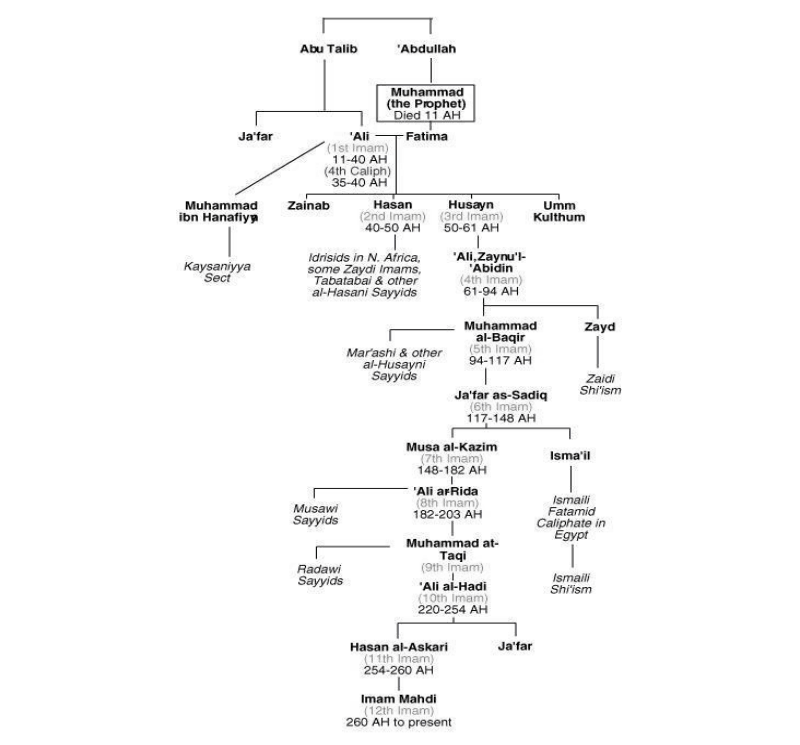
In Iran and especially in Shia beliefs of Islam, an ultimate savior of humankind and the final Imam of the twelve Imams will emerge with Jesus Christ and will set the kingdom of heaven on the earth to bring peace and justice to the world. It is the belief that the twelfth Imam disappeared hundreds of years ago and went into occultation state, but he will definitely re-appear around the end of the world, before the Day of Judgment. Before the Islamic revolution in Iran and probably before uprising of Ayatollah Khomein, there was a common trend that Shia would wait up until its survivor comes back. However, Khomeini argued that government should be run with traditional Islamic rules and for this to happen a leading Islamic jurist must provide “Guardianship” and as he said “Wilayat” over the people. This guardianship would be remained till the Twelfth Imam returns.

At that time this theory was accepted by the revolutionists and as the result of that, the last king of Iran felt down and “Wilayat AL Faqih” (guardianship of the Islamic Jurists) popped up. The terms of your majesty were destroyed and the Imam and the Wilayat was established and then the supreme leader was considered as the twelfth Imam’s deputy, which means that his orders are the lord’s orders and any questions or criticizes would be called as hostility against the twelfth Imam. This chart will help you out to understand more clearly about the hierarchy of Imams in Shia.

When I was living in Iran I always heard some rumors about the distinguished people who they or their followers believe that they are in connection with the twelfth Imam. They claim they can talk to him in person and get orders from him without any problem. Probably in the past they could take advantage of people’s stupidities. However, they had never been accepted by the politicians inside Iran before Ahmadinejad’s presidency started. Now you can tell why they have been called as Deviant Tendency. Mashaei claimed that he could talk to the twelfth Imam in person and he believed that when we can have access to the real source, why we should follow his deputy, who does not have any confirmation from the real lord.
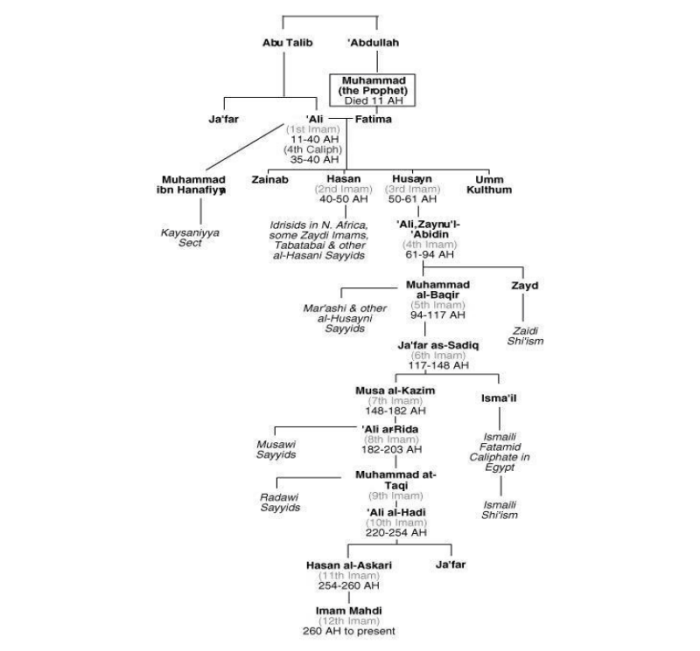
chart of persian imams

Before Mashaei tried to extend his theory, the revolutionary guard crippled all of his ambitions subsequently. His followers were arrested and he was about to get caught too but it seemed that Ahmadinejad was completely in agreement with what he was saying. Ahmadinejad tried to protect Mashaei but as you know he lost the protection of the supreme leader. As a result, his authority dropped considerably. He got teased and he lost his connections and finally he got kicked out of the power circle and all of these were about his friendship with Mashaei, which he truly believed in him.

And now the new game has just started. First it was announced by Ahmadinejad’s brother that there would not be any connection between his brother and the deviant tendency. Then Ahmadinejad had a speech in Mashahd, one of the most religious cities in Iran where the 8th Imam of Shia has been buried, and he said:

“… the only way to overcome the enemies of the nation is standing on the value of our goals in the same way that Khomeini has showed us. I would totally remain on that way to serve the nation and revolution and its values and principles.”

He also tried to imply on revolution principles, the principles that revolutionists believe has been neglected after Rohani became a president.

From the Comments: Has the deontological puzzle been solved?

Dr Fred Foldvary (yes, THE Fred Foldvary, the one who predicted the 2008 crash in 1998writes:

It is not clear what the policy consequences are regarding those who lose out due to competition. If we are free to choose our friends, there will be losers who lose someone’s friendship. Should we be forced to stay friends with those we no longer like? If not, then such a loss has no policy implication. Such incidental injuries have less damaging consequences than a law that prohibits ending a friendship. Thus the deontological and consequential effects are complements: Likewise, the consequences of prohibiting economic competition are worse than the losses due to competition. And entrepreneurs should know that the system is a profit and loss system, and anyone in business is vulnerable to losses. The losses due to competition are not torts and they are not coercive harms. They are injuries not deliberately inflicted but incidental to individuals and firms pursuing their happiness.

This is in response to my short post on the ethical divide within libertarianism between deontologists and consequentialists. I don’t think there is too much that we disagree on here; Indeed, it seems as if we are complimenting each other quite nicely (if I do say so myself!).

My one quibble is more of a question than a quibble: Although we cannot predict who will lose out to competition in markets, shouldn’t we be able to make some solid inferences? For example, if the US and Europe were to abolish subsidies to farmers and open up their markets to foreign competition, it stands safe to reason that Western farmers will lose out, at least in the short-run.

The logic behind Dr Foldvary’s comment is relatively clear: abolish protectionist subsidies (which are aggressive legislative acts perpetrated against Western consumers and foreign farmers) and this paves the way for non-aggression. Not only is this logic clear, it is irrefutable. It also shows how deontology and consequentialism are complimentary. However, logic and facts are not very useful when it comes to persuading the public. Philosophically this argument makes perfect sense, and politically and rhetorically Dr Foldvary makes it work, but in the general public sphere (especially the internet) the appeal to deontology has earmarked liberalization for disaster.

I suppose, if we follow Jacob Huebert’s line of reasoning, that the politics and the rhetoric of our ideas should not matter, but on the other hand we live in a world where even in the West libertarians have become a minority. The world will continue to liberalize as long as libertarians continue to be as lucid as Dr Foldvary, but I fear that men of his caliber are in very short supply today.