From the Comments: Was Colonialism Good for the Natives?

NEO, in response to my musings on the rule of law in Africa, writes:

Thanks, Brandon. Like I said, I don’t know very much at all about Africa, right now I’m looking a bit more at the British in Egypt/Sudan. But currently I know mostly what I read and I suspect you know what I see, so I’m not about to argue with you on it.

Given what you know, I see really good things ahead for them. And that is very good, both for them and us. Somebody once said that prosperous folks try to avoid wars because its hard on the china. I know, it’s simplistic but, its also true.

I get the impression, and I could easily be wrong here, that it might have been better for everyone if the Empires had lasted a few more decades, it looks to me like the people learned the lessons but not the mechanics of creating the institutions.

Excellent point NEO, especially about wars being bad for the china.

Now, the colonial empires were bad for just about everybody (the factions that were able to capture the rent generated by imperial policies were excepted, of course). While European imperialism did open up the markets in Africa and Asia to their mercantile spheres of influence, these policies did not open up the markets to genuine world trade. This has had several ramifications for individual liberty in the post-colonial world.

In order to open up the economies of Africa and Asia to their mercantile systems, the Europeans created a great legal code for the mercantile systems. These legal codes helped reduce transaction costs and protected the private property of European citizens abroad, which helped to foster more trade within the mercantile systems. Unfortunately, the legal codes of both the British and the Dutch (I can’t speak for the Latin states, but judging by the state of affairs that these regions are now in, I assume that such policies were just as bad, if not worse) created a two-tiered system of justice: Europeans and a small number of local elites were able to count on the legal system to protect their private property, but everybody else was relegated to a second-class citizenship. This two-tiered system was not good for the populations of Africa and Asia, nor were they good for European citizens.

It goes without saying that the colonial apparatuses did not have to do much work in regards to grafting the indigenous legal and political systems of the African and Asian polities onto the mercantile system. Most of the African and Asian polities that the Europeans subdued were already protectionist and despotic, so colonial policy became a careful matter of picking the right factions to ally with. It is important to note that the policies of the polities in Africa and Asia were responsible for their weakened state, not any sort of cultural attributes. Up until the Napoleonic Wars, Europe was still pretty much on par with the rest of the world as far as living standards went. With the advent of peace on the continent, and new legal codes that extended private property rights (including rights to freer trade in the world) to a larger segment of its citizens, Europe became far too powerful for everybody else.

We could argue, of course, that certain cultural attributes of Europeans at that time contributed to successful implementation of such policies (and we would be right), but culture is always changing. It is our task to ensure that we continue to contribute to a culture that values individual liberty above all else.

Again, this is not say that African and Asian peoples have never known liberty. Private property has been around for a long time. The arrival of European states (not merchants) into these regions of the world created a burgeoning market for all things war, and as hostilities increased, so too did the health of these states.
What’s Up with New Zealand?

Economist Scott Sumner’s 2010 piece on the unacknowledged success of neoliberalism (which I linked to yesterday and you should definitely read or reread) poses an interesting question:

There are two obvious outliers [to aggressive neoliberal reforms]. Norway, the highest-income country, is much richer than other countries with similar levels of economic freedom, and New Zealand, at 80 on the economic freedom scale and only $27,260 in per capita income (US PPP dollars), is somewhat poorer than expected […] Perhaps New Zealand’s disappointing performance is due to its remote location and its comparative advantage in agriculture holding it back in an increasingly globalized economy in which many governments subsidize farming.

Rather than challenge Sumner’s thoughts as to why New Zealand is much poorer (I think his guess explains a lot), I think I can add to it: The Maori.

The Maori are the indigenous inhabitants of New Zealand, and can be compared – socially – to the Native Americans of the New World or the aborigines of Australia. Unfortunately I know next to nothing about the Maori (or other South Pacific cultures), but I do know how to draw rough inferences about things by using data!

The Maori comprise about 15% of New Zealand’s population, whereas in other states settled by Anglo colonies the population of the natives relative to the overall population of the country is minute (aborigines in Australia comprise 3% of the population, for example, and in Canada and the US the indigenous make up about 2%).

The relatively large percentage of indigenous citizens in New Zealand can better explain why New Zealand is an outlier among rich countries, but I also think it’s important to ask why the Maori (and other indigenous populations in Anglo-settled colonies) have failed to match the demographic trends of their European and Asian counterparts.

Institutions are, to me, the obvious answer, but I’m curious as to what the rest of you think. I’d also like to add that I don’t think enough of us think about the issue of land (as in ‘land, labor and capital’ when we discuss the huge demographic gaps found between – for lack of better terms – settlers and natives in Anglo-American countries).

Pesos, medidas e as instituições

Douglas Allen, em seu ótimo, The Institutional Revolution, defende a tese de que uma revolução institucional teria precedido a famosa revolução industrial. Texto importante, é que, para mim, já é candidato a livro-texto básico de qualquer bom curso de História Econômica.

Como sempre, senti falta de alguma coisa mais, digamos, tropical, no livro. Bom, mas como é que vou cobrar isto de um livro que não se propõe a contar a história das instituições em Portugal? Não posso. Isto é mais uma deixa para os pesquisadores brasileiros. Dica de amigo, quem sabe, para alguém que deseje fazer uma dissertação de mestrado sobre o tema.

Mas eu sou uma pessoa perigosamente curiosa. Fiquei intrigado com a questão dos pesos e medidas. No argumento do autor, a questão dos pesos e medidas, ou melhor, a questão da padronização de pesos e medidas, está diretamente relacionada com a mensuração de produtos, o que gera uma importante alteração nos custos de se trocar mercadorias (ou seja, nos custos de transação). Afinal, nada mais óbvio do que achar mais interessante comprar um quilo de abacate sem levar para casa meio quilo do mesmo.

No caso do Brasil colonial, então, pensei, deveria ser como em Portugal. Para checar isto, consultei este documento. Vejamos alguns trechos:

No que se refere às unidades de medidas adotadas ao longo do período colonial, o quadro não difere, como é natural, daquele oferecido por Portugal. A vara, a canada e o almude constituíam as medidas de uso mais comum, ainda que seu valor pudesse variar de região para região. Os produtos importados traziam consigo suas próprias medidas e, quanto mais geograficamente restrita uma atividade econômica, mais específico era o sistema de medidas utilizado. (…)

Vale dizer: nada muito diferente do restante da Europa.

Assim, a primeira menção expressa à atividade metrológica, em documentos coloniais, refere-se precisamente à fiscalização do funcionamento de mercados locais. Como em Portugal, o funcionário colonial mais diretamente envolvido com a fiscalização de pesos e medidas era o almotacé, mencionado pelas Ordenações Manuelinas e Filipinas e previsto pela organização do município de São Vicente, em 1532. Em número de dois, eleitos mensalmente pela Câmara Municipal, os almotacés tinham como atribuição básica manter o bom funcionamento dos mercados e do abastecimento de gêneros, além de fiscalizar obras e manter a limpeza da cidade. Como parte de suas responsabilidades, deveriam verificar mensalmente, com o escrivão da almotaçaria, os pesos e as medidas. Tal disposição estimulava, dada a dispersão e a diversidade dos municípios, a multiplicação dos padrões de medidas.

Veja só a importância do ofício. Alguém imaginaria que carregar uma régua ou uma fita métrica, hoje em dia, seria uma profissão digna de tanta importância? Bem, numa época em que o governo descobre que medir ajuda a maximizar sua receita, nada mais natural, não? Até eleição para o cargo havia.

No caso dos gêneros estancados ou submetidos a controles mais rígidos, a Coroa cuidava da melhor organização das atividades metrológicas. O estabelecimento do monopólio do tabaco, por exemplo, levou à criação, em 1702, do Juiz da Balança do Tabaco, nas alfândegas de Salvador e Recife. No caso das minas, o regimento do Intendente do Ouro, de 26 de setembro de 1735, mencionava expressamente sua obrigação de manter as balanças e marcos da Intendência aferidos, pesando o ouro corretamente, sem prejuízo das partes nem da Fazenda Real, atribuição expressamente mantida no regimento de 1751.

Como se percebe, a questão institucional é indissociável da questão econômica. Veja aí o depoimento do próprio autor: tem monopólio? Quem é o “dono” do monopólio? A Coroa. Reza o dito popular – e a teoria econômica – que “o olho do dono engorda o cavalo” – e não é diferente neste caso.

Pois bem, falta-nos – alô, colegas de História Econômica! – um estudo mais detalhado do papel dos almotacés (ou me falta mais pesquisa e leitura, vai saber…), não falta? Vou procurar meu exemplar de Fiscais e Meirinhos para rejuvenescer, digamos assim, meu interesse pelo tema.

Novamente, percebemos que a História Econômica não precisa nos dar sono.

Why is India so poor? A macro approach

India’s total area, in square kilometers, is 1,222,559 3,166,414.

The total area of France, Germany, the UK, Ireland, the Netherlands, Belgium, Luxembourg, Denmark, Sweden, Iceland, Norway, Finland, Switzerland, Austria, Italy, the Czech Republic and Slovakia (or “the West”), in square kilometers, is 1,223,543 3,106,585.

Think of this comparison in terms of regions: one region is India, the other is the West. Both regions are densely populated. Both regions have a number of languages and an even greater number of regional dialects. Yet one region is wealthy, and the other is poor.

One way to look at this phenomenon would be to glance at the macro institutional structures in place in these two regions. India is one country. The West is composed of 6 17 countries. That’s six seventeen centers of power, as opposed to one, within territorial spaces that are roughly equivalent in size.

If we think about these macro institutions and incorporate them into other institutional arguments that focus on the micro institutions, then India actually has a lot of hope. The West saw numerous wars before it finally came to the arrangements it now has (six seventeen independent centers of power and a free trade zone binding them together), so India has a great blueprint for improving its macro institutions.

On the downside, of course, is the fact that many factions won’t really care if India becomes freer and more prosperous, so long as they get theirs. Along with the standard public choice explanation, the path dependency argument also suggests that India has a tough road ahead.

Sometimes being a libertarian sucks.

Update: Dr Gibson was kind enough to point out that I had initially calculated India’s size in square miles rather than square kilometers. I have taken that into account and updated it accordingly. Conceptually, my argument actually grows in strength with the corrected size. 

Geoffrey Wheatcroft on Zionism’s Colonial Roots

Today, Benjamin Netanyahu is seen widely as a leader of the Right (although in comparison with Avigdor Lieberman and others who have held office in Israel lately, Netanyahu could look moderate), and Israeli politics have long been categorized in terms of Left and Right, with the Revisionists cast as right-wing no-goodniks. That was so from the 1930s: with the rise of fascism, it became quite common to characterize Jabotinsky as a fascist, a word widely used by his Zionist foes. Rabbi Stephen Wise, a prominent liberal Jewish American of his day, called Revisionism “a species of fascism,” while David Ben-Gurion—the leader of the Labor Zionists in the Yishuv (the Jewish settlement in British Palestine) and then a founding father and first prime minister of Israel—referred to his foe privately as “Vladimir Hitler,” which didn’t leave much to the imagination. And to be sure, while Jabo called himself a free-market liberal with anarchist leanings, the oratory of Revisionism—“in blood and fire will Judea rise again”—and the visual rhetoric—the Betarim in their brown shirts marching and saluting—had alarming contemporary resonances.

Read the rest, it’s very good throughout.

Another Fascinating reddit Thread

This time one of my pieces has been the subject of debate.

What fascinates me most is simply how often people get their facts totally, utterly and completely wrong. If everybody were operating under the same set of facts, I think there would be much more room for libertarian policies to be implemented. Unfortunately, I think the enemies of freedom know this, so they spew lies that lead to assumptions like those being debunked in the linked-to thread above…

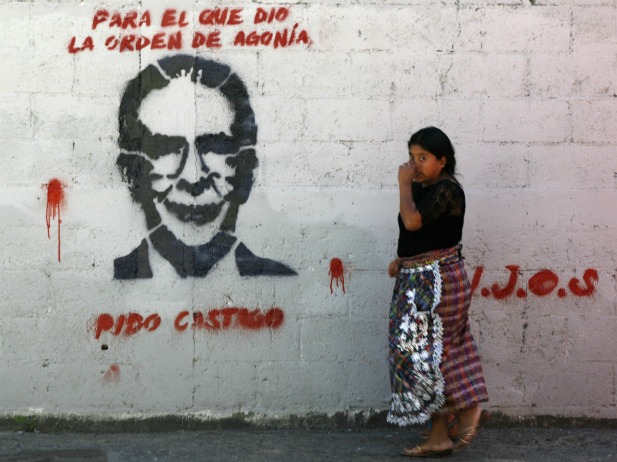
Sobre genocidio, filosofía y diálogos

Pido-castigoDurante las últimas semanas, muchas de las discusiones intelectuales en Guatemala han girado en torno al juicio en contra del ex Presidente de facto, General Retirado del Ejército y ex Presidente del Congreso de Guatemala José Efraín Ríos Montt.  Ríos Montt enfrenta un juicio por los  delitos de genocidio y crímenes de lesa humanidad.  Este juicio y su resolución tendrá una relevancia de alto impacto en la lucha que realizan movimientos progresistas (conocidos también como liberales en EE.UU., liberales de izquierda, y/o como seguidores del social liberalismo) en la búsqueda por resolver conflictos históricos que armonicen el funcionamiento de un mercado regulado con una participación del Estado en la garantización de igualdad de  competencia y la corrección de desigualdades heredadas del período colonial y/o desigualdades que resultaron de la institucionalización política o social de prácticas racistas, clasistas, machistas, entre otras.

El juicio contra Ríos Montt, que podría convertirse en el “Juicio del siglo” de los intereses ideológicos progresistas latinoamericanos, tomó vuelo luego de que el 19 de marzo de 2013, una jueza guatemalteca abriese formalmente juicio contra el exdictador, acusándolo de genocidio contra miles indígenas durante su régimen de gobierno (1982-1983).  El genocidio es un delito internacional que comprende “cualquiera de los actos perpetrados con la intención de destruir, total o parcialmente, a un grupo nacional, étnico, racial o religioso como tal; estos actos comprenden la matanza de miembros del grupo, lesión grave a la integridad física o mental de los miembros del grupo, sometimiento intencional del grupo a condiciones de existencia que hayan de acarrear su destrucción física, total o parcial, medidas destinadas a impedir nacimientos en el seno del grupo, traslado por la fuerza de niños del grupo a otro grupo.” (via: Estatuto de Roma de la Corte Penal Internacional, 1998-2002 y la Convención para la Prevención y la Sanción del Delito de Genocidio de 1948).  La legislación guatemalteca incluye pena de prisión de 30 a 50 años para los culpables de estos delitos. Continue reading

Ron Paul and the American Right

It boils down to foreign policy. President Obama has proved more competent than Bush in this area, but being a more competent beehive whacker does not take a whole hell of a lot of work. Most of Rep. Paul’s domestic policy proposals would have to go through that beautiful, awe-inspiring labyrinth of constitutional checks-and-balances created by the Founding Fathers of this great republic. However, Presidents have much more leeway when it comes to foreign policy. This is something that Ron Paul has talked about checking, but it is also something that could convince independents on the Left to vote for Ron Paul.

Think about it: he would (unfortunately) have a tough time getting some of his domestic policy proposals passed, but as President he commands the military, and he wants to bring our troops home.

My main concern upon writing this little blurb is the Right’s reluctance to embrace Ron Paul’s foreign policy of freedom, commerce, and honest friendship. The following is meant to convince those of you on the Right who would otherwise vote for Ron Paul if it weren’t for his foreign policy views.

The reluctance on the Right to yield to both superior reasoning and common sense on the issue of American foreign policy stems from three basic points: Continue reading

Department of Oops!

One of the most influential anthropologists to my own way of analyzing global society and how it interacts with each other is Edwin Wilmsen, whose book Land Filled with Flies: A Political Economy of the Kalahari has deeply influenced my thoughts about intercultural (“foreign”) relations (the other two most influential books on me so far have been Peace Pact… and 1491…). I am currently doing a research project and came across the following sentence, which deserves to be deeply pondered by anthropologist and layman alike:

[…] those who have been responsible for formulating and implementing policy towards [the San] have relied on a functionalist equilibrium model derived from ethnography grafted onto a residual colonial construction of a static San social condition […] A key element in this ideology [governing Botswana policy towards the San] is the mystification of [San] uniqueness, a condition that [has] been imposed on them by other, hegemonically dominant ethnic groups.  Among these hegemonically dominant groups – I urge that we not forget this point – are ethnographers, whose work serves as scientific sanction for this mystification.

Wilmsen is a Marxist, and Land Filled with Flies… was written before the collapse of the Berlin Wall, but I nevertheless find his work extremely satisfying. Can anybody see why this is such a powerful critique of collectivism? Admittedly, I have depraved this post of its rich context, but I think readers here at Notes On Liberty are smart and thoughtful enough to find some gems among this deceptive-looking rock pile.

An online profile of Edwin Wilmsen.

African Political Structures: A Debate

I just hooked a big fish on the end of my line when I tweeted about my support for secession of Azawad to Dr. George Ayittey, an economist at American University and one of Africa’s leading lights of classical liberalism.  I have a talent for ribbing people in just the right place at just the right time, and the following response I got from Dr. Ayittey confirms my magnificent talent (some may disagree with the label ‘talent’, but I digress).

In response to my support for Azawad, Dr. Ayittey tweeted the following: Continue reading

Mali: Let It Collapse, Duh! Part 2

I just came across an article in the New York Times via Bill Easterly, and it is very discouraging. The article is, of course, about the aspirations of Azawad, the breakaway region of Mali that just declared its independence. The article outlines the slim-to-none chances Azawad has of breaking free from the shackles of colonial legacy and African despotism:

“[…] there is little likelihood that anyone will defeat the Tuaregs on the battlefield anytime soon.

Still, they face slim odds of establishing a nation. Just ask Ahmed Abdi Habsade, a government minister in Africa’s other unrecognized state, Somaliland. ‘We have many problems,’ Mr. Habsade said in a telephone interview from Somaliland’s capital, Hargeysa. ‘The country cannot get donations from the U.N. or other governments. We are not having a budget to develop our country.’

Somaliland, which sits in the northwestern corner of Somalia, has been a de-facto independent nation for the better part of two decades, and an oasis of calm in the chaos that has swept up Somalia. Its claims to independence date from the colonial era, when it was a British protectorate while Somalia was controlled by Italy. The two states merged after independence, but the Somalilanders had almost immediate regrets, and have been trying to break free ever since.

Somaliland has had successes, including holding peaceful elections, yet it has struggled without an international stamp of Continue reading

The Arab-Israeli Mess

I am currently studying the Arab-Israeli conflict under the tutelage of this professor, a world-renowned scholar on the subject.  We are reading a very good text, A History of the Arab-Israeli Conflict, by Bickerton and Klausner, and I am just curious as to what readers have to say on this subject.  I am all in favor of a two state solution myself, but am open to other options if the case is well presented.

What are your thoughts on this conflict?

A State Called Libya

Over at The Week, Dr. Daniel Larison brings up the situation of a state called Libya.  One year ago the West led a bombing campaign that ousted the brutal dictator Moammar Ghaddafi.  A problem or two arose though:

The internal disorder and regional instability that the West’s assault created were foreseen by many critics. And yet, Western governments made no meaningful efforts to prepare for them. No one planned to stabilize Libya once Moammar Gadhafi was overthrown, and the National Transitional Council (NTC) rejected the idea of an outside stabilization force […]

The NTC Larison speaks of is, of course, the entity that the West has blessed with steering the Libyan state’s course to democratic paradise.  Think here of the Transitional Federal Government of Somalia.  It gets worse too: Continue reading

More Musings on Colonialism

I recently attended an excellent lecture at Cabrillo College, located in central California, by an International Relations scholar who focused on the effects of colonialism. We took a solid look at the ‘World Systems Theory’ of why the developing world is, well, developing, and it was great to go over this school of thought’s main arguments.

For those of you who don’t know, World Systems Theory is a Marxian analysis that basically states that poor countries are poor because of the effects of colonialism, and the evidence supporting their claims is pretty damn solid. Basically, the World Systems theorists argue that when the various European powers gained outright control of non-European lands (this process in itself took centuries, by the way, and I deplore the historical narrative that argues Europeans set out to conquer foreign lands and divide up the spoils of war for reasons outlined in the link provided), the European powers set up states that were designed specifically to export raw agricultural materials to European factories, to be produced by European workers, and to be consumed by European (and elite non-European) consumers.

This is pretty much what happened, and explains why most of the developing world is dependent upon raw commodity exports (that are shipped to European markets) for most of their well-being. Unfortunately, the very solutions that the World Systems theorists propose to dismantle the structural inequalities that exist in this world will (and have) actually led to more of the same structural inequality.

Allow me to explain. Continue reading

Colonialism: Myths and Realities

My only claim to fame in regards to colonial scholarship rests on a paper I wrote for an Honors course in Western Civilization as an undergraduate. The paper won a spot at an Honors consortium held at Stanford, so I was able to do even more research on the subject. The following post is a summation of my research in blog form.

The first task I have is to explain what colonialism is not. Colonialism is not a European invention or concept designed specifically to keep non-white people down. The myth of the evil white colonialist is one of the most pernicious myths espoused today, and for a couple of big reasons. The first reason is that colonialism has been around for a long time. Today, the Han practice colonialism through the fascist Chinese state. In the 19th century, the Ashanti practiced colonialism throughout their slave-trading empire. The Ottoman Turks practiced colonialism until their empire collapsed in 1923 (and with it a 600 year period of colonialism). The theocratic Javanese state of Mataram practiced colonialism until its demise in the 17th century. The Incan state was also well-versed in colonial practices.

It is important to remind readers of colonialism’s history because of a lack of criticality on society’s part. This lack of critical thinking skills stems from the condescending view of non-Western societies that the modern Western citizen has adopted. As co-blogger Jacques Delacroix so eloquently states:

Liberals profess to reject American military intervention abroad because of a strong myth of people of color’s virtuousness. According to this liberal myth, people of color, non-whites, seldom ever do anything wrong by any standard. When they do, as when they eat their neighbors, for example, it’s always somehow because of something or other that Westerners, Whites, usually Americans have done to them, or to someone else. Or something. And then, of course, you shouldn’t do anything to them or in connection with them.

The idea that Western civilization is somehow responsible for inventing and propagating colonialism is actually a condescending one, and, conveniently enough, permits me to segue into reason number two for combating the pernicious myth that White European society is to blame for all the world’s problems: the myth doesn’t allow for any intrigue or guile or cunning or Realpolitik on the part of colonized societies.

Continue reading