- It’s not gerrymandering if it benefits Democrats Aaron Bycoffe, FiveThirtyEight
- Just because you’re paranoid doesn’t mean they aren’t out to get you Rod Dreher, the American Conservative
- Planting trees beneath Turkish bombs in Syria Matt Broomfield, New Statesman
- In the long run we are all dead Charles Goodhart, Inference
Christianity
Nightcap
- Catholic Debate Over Kidnapping A Jewish Boy Korey Maas, the Federalist
- God’s Own Music Ian Bostridge, New York Review of Books
- Church property cases and “neutral principles” Samuel Bray, Volokh Conspiracy
- What to Do About the Money Frank McGough, Origins
Worth a gander
- the Reformation’s controversies are as relevant as ever
- who stole Burma’s royal rubies?
- the Madras Observatory: from Jesuit cooperation to British rule
- “There are few better illustrations of how a whole host of people can manage to understand absolutely nothing, act in an impulsive and idiotic way, and still drastically change the course of history.“
- MacLean’s new book is bad news for the political Left
- fascism explained via 90-year-old sci-fi film (are you using hyphens correctly?)
- bawdry in the bloodstream (Bohemian nonsense)
Why I’m No Longer a Christian: An Autobiographical/ Philosophical/ Therapeutic Explanation to Myself
Note: This was written about 18 months ago and posted on my now-defunct blog. I figure it might be worth reposting, mostly for posterity.
Throughout most of my youth, like the majority of middle-class Americans, I was raised as a Christian. As an argumentative and nerdy teenager, much of the intellectual energy throughout my adolescence was dedicated to the fervent apologetics of the Christian faith. In my eyes, I was trying to defend some deep, correspondent truth about the Lord. Today, I realize that was mostly youthful self-deception. I was trying to make beliefs I had made an epistemic and personal commitment to due to my social situation work with the experiences of the modern world I was thrust into. There is nothing wrong with my attempts to find some reason to cling to my contingent religious beliefs, and there is nothing wrong with people who succeed in that endeavor, but it was wrong for me to think I was doing anything more than that—something like defending eternal truths I knew certainly through faith, which I did so dogmatically.
As the title of this post suggests, my quest to make my religious beliefs work was ultimately unsuccessful, or at least have been up until this point (I’m not arrogant enough to assume I’ve reached the end of my spiritual/religious journey). For a variety of personal and intellectual reasons, I have since become a sort of agnostic/atheist in the mold of Nietzsche, or more accurately James (not Dawkins). Most of the point of this post is to spell out for my own therapeutic reasons the philosophical and personal reasons why I have the religious beliefs I have now at the young age of twenty. To the readers, this is ultimately a selfish post in that as the target audience is myself, both present and future. Nonetheless, I hope you enjoy this autobiographical/religious/philosophical mind vomit. Please, read it as like you would a novel—albeit a poorly written one—and not a philosophical or religious treatise.
Perhaps the best place to start is at the beginning of my childhood. But to understand that, I guess it’s better to start with my mother and father’s upbringing. My mother came from an intensely religious Baptist household with a mother who, to be blunt, used religion as a manipulative tool to the point of abuse. If her children disobeyed her, it was obviously the influence of Satan. Of course, any popular culture throughout my mother’s childhood was regarded as the work of Satan. I’ll spare you the details, but the upshot is this caused my mother some religious struggles that I inherited. My father came from a sincere though not devoted Catholic family. For much of my father’s young adulthood and late adolescence, religion took a backseat. When my parents met my father was an agnostic. He converted to Christianity by the time they married, but his religious beliefs were always more intimately personal and connected with his individual, private pursuit of happiness than anything else—a fact that has profoundly influenced the way I think about religion as a whole.
Though neither of my parents were at all interested in shoving religion down my throat, I kind of shoved it down my own throat as a child. I was surrounded by evangelical—for want of better word—propaganda throughout my childhood as we mostly attended non-denominational, moderately evangelical churches throughout my childhood. My mother mostly sheltered me from my grandmother’s abuses of religion, and she reacted to her grandmother’s excesses appropriately by trying to make my religious upbringing centered on examples of God’s love. However, her struggles with religion still had an impact on me as she wavered between her adult commitments to an image of an all-loving deity with the remnants of her mother’s conception of good as the angry, vengeful, jealous God of the Old Testament. She never really manifestly expressed the latter conception, but it was implicit, just subtlety enough for my young mind to notice, in the way some of the churches we chose in my youth expressed the Gospel.
At the age of seven, we moved from Michigan to the heart of the Bible belt in Lynchburg, VA, home to one of the largest evangelical colleges in the world: Liberty University. Many of the churches we attended in Virginia had Liberty professors as youth leaders, ministers, and the like, so Jerry Falwell’s Southern Baptist conception of God which aligned closely with my grandmother’s was an influence on me through my early teenage years. Naturally, religion was closely linked with political issues of the day. God blessed Bush’s war in Iraq, homosexuality was an abhorrent sin, abortion was murder, and nonsense like that was fed to me. Of course, evolution was an atheist lie and I remember watching creationist woo lectures with my mother while she was taking an online biology course from Liberty (she isn’t a creationist, for the record, and her major was psychology, which Liberty taught well enough).
Though it certainly wasn’t as extreme, some of the scenes in the documentary Jesus Camp are vaguely like experiences I had around this time. I was an odd kid who got interested in these serious “adult” issues at the age of nine while most of my friends were watching cartoons, so I swallowed the stock evangelical stance hook, line, and sinker. But there was something contradictory between my mother’s reservations about an angry God and refusal to push my religious beliefs in any direction thanks to the influence of her mother, my father’s general silence about religious issues unless the conversation got personal or political, and the strong evangelical rhetoric that the culture around me was spewing.
Around seventh grade, we moved from Virginia to another section of the Bible-Belt, Tennessee. For my early high school years, my interest in evangelical apologetics mostly continued. However, religion mostly took a backseat to my political views. With the beginning of the recession, I became far more interested in economics: I wanted an explanation for why there were tents with homeless people living in them on that hill next to Lowe’s. My intellectual journey on economics is a topic for another day, but generally, the political component of my religious views was slowly becoming less and less salient. I became more apathetic about social issues and more focused on economic issues.
It was around this time I also became skeptical of the theologically-justified nationalistic war-mongering fed to me by the Liberty crowd in Virginia. We lived near Ft. Campbell and I had the displeasure of watching family after family of my friends ruined because their dad went to Afghanistan and didn’t come back the same, or didn’t come back at all. The whole idea of war just seemed cruel and almost unjustifiable to me, even though I still would spout the conservative line on it externally I was internally torn. I would say I was beginning to subconsciously reject Christianity’s own ontology of violence (apologies to Millbank).
It was also around this time, ninth grade, that I began more systemically reading the Old Testament. War is a common theme throughout the whole thing, and all I could think of as I read about the conquer of Israel, the slaying of Amalekites, the book of Job, and the like were my personal experiences with my friends who were deeply affected by the Wars in Iraq and Afghanistan. At this point, there was skepticism and doubt about how God could justly wage war and commit cruel mass-killings in Biblical times.
Around tenth grade, I became immaturely interested in philosophy. I’m ashamed to admit it today, but Ayn Rand was my gateway drug to what would become an obsession of mine up until now. I loved elements of Rand’s ethics, her individualism, her intense humanism (which I still appreciate on some level), and of course her economics (which I also still appreciate, though they are oversimplified). But her polemics against religion and her simplistic epistemological opposition between faith and reason put me in an odd position. What was I, a committed evangelical Christian, to do with my affinities with Rand? Naturally, I should’ve turned to Aquinas, whose arguments for the existence of God and his unification of faith and reason I now can appreciate. However, at the time, I instead had the misfortune of turning to Descartes, whose rationalism seemed to me seemed to jive with what I saw in Rand’s epistemology (today, I definitely would not say that about Rand and Descartes at all as Rand is far more Aristotelian, ah the sophomoric follies of youth). Almost all of my subsequent intellectual journey with religion and philosophy could be considered a fairly radical reaction to the dogmas that I had bought at this time.
I had fully bought perhaps the worst of Rand and Descartes. Descartes’ philosophical method and “proofs” of God, with all the messy metaphysical presumptions of mind-body dualism (though I might’ve implicitly made a greater separation between “mind” and “spirit” than Descartes would’ve), the correspondence theory of truth, quest for certainty, and spectator theory of knowledge, the ego theory of the self, and libertarian free will. From Rand I got the worst modernist presumptions she took from Descartes, what Bernstein calls the “Cartesian Anxiety” in her dogmatic demand for objectivism, as well as her idiosyncratic views on altruism (though I never really accepted ethical egoism, or believed she was really an ethical egoist). The flat, horribly written protagonists of Atlas Shrugged and Fountainhead I took to be somehow emblematic of the Christian conception of God (don’t ask me what in the hell I was thinking). Somehow, I couldn’t explain it then coherently and cringe at it now, I had found a philosophical foundation of sorts for a capital-C Certain belief in protestant Christianity in God and a watered down Randian ethics. Around this time, I also took an AP European History class, and my studies (and complete misreadings of) traditional Lutheranism and Catholicism reinforced my metaphysical libertarianism and Cartesian epistemological tendencies.
Around this time, my parents became dissatisfied with the aesthetic and teachings of evangelical non-denominational churches, and we started attending a run-of-the-mill, mainline PCUSA church my mom had discovered through charity programs she encountered as a social worker. I certainly didn’t buy Presbyterianism’s lingering affinities for Calvinism inherited from Knox (such as their attempt to retain the language of predestination while affirming Free Will), but the far more politically moderate to apolitical sermons, as well as focus on the God of the New Testament as opposed to my Grandmother’s God, was a refreshing change of pace from the evangelical dogmatism I had become accustomed to in Virginia. It fit my emerging Rand-influenced transition to political libertarianism well enough, and the old-church aesthetic and teaching methods fit well with the more philosophical outlook I had taken on religion.
In eleventh grade, we moved back to Michigan in the absolute middle of nowhere. Virtually every single protestant church within a twenty-mile radius was either some sort of dogmatically evangelical nondenominational super-church where the populist, charismatic sermons were brought to you buy Jesus, Inc.; or an equally evangelical tiny rural church with a median age of 75 where the sermons were the somewhat incoherent and rabidly evangelical ramblings of an elderly white man. Our young, upper-middle-class family didn’t fit into the former theologically or demographically and certainly didn’t fit into the later theologically or aesthetically. After about a year of church-shopping, our family stopped going to church altogether.
Abstaining from church did not dull my religion at all. Sure, the ethical doubts I was having at the time and the epistemological doubts caused by my philosophical readings were working in the background, but in a sense, this was my most deeply religious time. I had taken up fishing almost constantly all summer since we lived on a river, and much of my thoughts while sitting with the line in the water revolved around religion or politics. When my thoughts turned religious, there was always a sense of romantic/transcendentalist (I was reading Thoreau, Emerson, and Whitman in school at the time) sublimity in nature that I could attribute to God. Fishing, romping around in the woods, hunting, and experiencing nature became the new church for me and was a source of private enjoyment and self-creation (you can already see where my affinities for Rorty come from) in my late teens. Still, most of my intellectual energy was spent on political and economic interests and by now I was a fully committed libertarian.
Subconsciously earlier in my teens, but very consciously by the time I moved to Michigan, I had begun to realize I was at the very least on the homosexual spectrum, quietly identifying as bisexual at the time. The homophobic religious rhetoric of other Christians got on my nerves, but in rural northern Michigan I was mostly insulated from it and it never affected me too deeply. Since I assumed I was bi, it wasn’t that huge a deal in terms of my identity even if homosexuality was a sin, which I doubted it was though I couldn’t explain why, so I never really thought too deeply about it. However, it did contribute to my ethical doubts about Christianity further; if God says homosexuality is a sin, and Christians are somehow justified in oppressing homosexuality, how does that bode for God’s cruelty? It became, very quietly, an anxiety akin to the anxieties I was having about war when I moved to Tennessee.
Though abstaining from church didn’t cheapen my experience of religion, my exposure to my grandmother’s angry God did. Up until that point, I had mostly been ignorant of her religious views because we lived so far away; but moving back to Michigan, as well as some health issues she had, thrust her religious fervor back into my—and my mother’s—consciousness. The way she talked about it and acted towards non-Christians reeked of the worst of I Samuel, Johnathan Edwards, John Calvin, and Jerry Falwell rolled into one. My skepticism towards the potential cruelty of the Christian God caused by my experiences with war and homophobia were really intensified by observing my maternal grandmother.
The year was 2013, I had just graduated from High School, I had just turned eighteen, and I had chosen my college. I had applied to some local state school as a backup which I only considered because it was a full-ride scholarship, my father’s alma-mater, the University of Michigan, and Hillsdale College. After the finances were taken care of, I’m fortunate enough to be a member of the upper-middle class, the real choices were between Michigan and Hillsdale. For better or for worse, I chose the latter.
My reasons for choosing Hillsdale were mostly based on misinformation about the college’s mission. Sure, I knew it was overwhelmingly conservative and religious. But I thought there was far more of a libertarian bent to campus culture. The religious element was sold to me as completely consensual, not enforced by the college at all other than a couple vague comments about “Judeo-Christian values” in the mission statement. I wanted a small college full of intellectually impassioned students who were dedicated to, as the college mission statement said, “Pursuing Truth, Defending Liberty.” The “defending liberty” part made me think the college was more libertarian, and the “pursuing truth” part made me assume it was very open-minded as a liberal arts education was supposed to be. I figured there’d probably be some issues about my budding homosexuality/bisexuality, but since it wasn’t a huge deal at the time for me personally, and some students I’d talked to said it wasn’t a big deal there, I thought I could handle it. Further, I suspected my major was going to be economics, and Hillsdale’s economics department—housing Ludwig von Mises’ library—is a dream come true (my opinion on this hasn’t changed).
If I ever had problems misunderstanding the concept of asymmetric information, the lies I was told as an incoming student to Hillsdale cleared them up. The Hillsdale I got was far more conservative than I could ever imagine and in a ridiculously dogmatic fashion. It was quickly revealed to be not the shining example of classical liberal arts education I had hoped for, but instead little more than a propaganda mill for a particularly nasty brand of Straussian conservatism. The majority of the students were religious in the same sense of my grandmother. Though they would intellectually profess to a different concept of God than my grandmother’s simplistic, lay-man Baptist understanding of God as an angry, jealous judge, the fruits of their faith showed little difference. My homosexual identity—by this point I’d abandoned the term “bisexual”—quickly became a focal point of my religious anxiety. Starting a few weeks in my freshman year, I began to fall into a deep depression, largely thanks to my treatment by these so-called “Christians”—that would cripple me for the next two years and that I am still dealing with the after-shocks of as I write this.
Despite the personal issues I had with my peers at Hillsdale, the two years I spent there were hands-down the two most intellectually exciting years of my life until that point. My first semester, I took an Introduction to Philosophy class. My professor, James Stephens, turned out to be a former Princeton student and had Richard Rorty and Walter Kauffman as mentors. His introductory class revolved first around ancient Greek philosophy, in particular, Plato’s Phaedo, then classical epistemology, particularly Descartes, Kant, and Hume, and a lot of experimental philosophy readings from the likes of Stephen Stitch and Joshua Knobe. The class primarily focused on issues in contemporary metaphysics which I had struggled with since I discovered Rand—like libertarian free will and theories of the self—epistemological issues, and metaphilosophical issues of method. Though only an intro class outside of my major, no class has changed my worldview quite as much as this.
In addition to the in-class readings, I read philosophy prolifically and obsessively outside of class as a matter of personal interest. That semester I had finished Stitch’s book The Fragmentation of Reason (which I wouldn’t have understood without extensive talks with Dr. Stephens in office hours), worked through most of Kant’s Critique of Pure Reason, basically re-learned Cartesianism, and read Hume’s Treatise. By the end of the class, I had completely changed almost every element of my philosophical world view. I went from a hardcore objectivist Cartesian to a fallibilist pragmatist (I had also read James due to Stitch’s work with him), from a fire-breathing metaphysical libertarian to a squishy compatibilist, from someone who had bought a simple referential view of language to a card-carrying Wittgensteinianist (of the Investigations, that is).
Other classes I took that first semester also would have a large impact on me. In my “Western Heritage” class—Hillsdale’s pretentious and propagandized term for what would usually be called something like “History of Western Thought: Ancient Times to 1600”—I essentially relearned all the theology I had poorly understood in my high school AP Euro class by reading church fathers and Catholic saints like Augustine, Tertullian, and, of course, Aquinas as well as rereading the likes of Luther and Calvin. Additionally, and this would have the most profound intellectual influence on me of anything I have ever read, I read Hayek’s Constitution of Liberty in my first political economy class cemented my epistemological fallibilism (although, I also read Fatal Conceit for pleasure which influenced me even more).
Early on that year, after reading Plato and Augustine, I began to become committed to some sort of Platonism, and for a second considered some sort of Eastern Orthodoxy. By this point, I was a political anarchist and saw the hierarchical and top-down control of Catholicism as too analogous to coercive statist bureaucracy. By contrast, the more communal structure of Orthodoxy, though still Hierarchical, seemed more appealing. To paraphrase Richard Rorty on his own intellectual adolescence, I had desperately wanted to become one with God, a desperation I would later react to violently. I saw Plato’s ideas of the Forms and Augustine’s incorporation of them into Christianity as a means to do that. But as I kept reading, particularly James, Hume, Kant, and Wittgenstein, the epistemological foundations of my Platonist metaphysical and theological stances crumbled. I became absolutely obsessed with the either-or propositions of the “Cartesian anxiety” and made a hobby of talking to my classmates in a Socratic fashion to show that they couldn’t be epistemically Certain in the Cartesian sense, much to the chagrin of most of my classmates. You could’ve played a drinking game of sorts during those conversations in which you took a shot every time I said some variation “How do you know that?” and probably give your child fetal alcohol syndrome, even if you weren’t pregnant or were a male.
In the second semester of my freshman year, I had turned more explicitly to theological readings and topics in my interests. (Keep in mind, I was mostly focusing on economics and math in class, almost all of this was just stuff I did on the side. I didn’t get out much in those days largely due to the social anxiety caused by the homophobia of my classmates.) My fallibilist/pragmatist epistemic orientation, as well as long with conversations with a fellow heterodox Hillsdale student from an Evangelical background, wound up with me getting very interested in “radical theology.” That semester, John Caputo had come to Hillsdale to discuss his book The Insistence of God. I attempted to read it at the time but was not well-versed enough in continental philosophy to really get what was going on in it. Nonetheless, my Jamesean orientation had me deeply fascinated in much of what Caputo was getting across.
My theological interests were twofold: first, more of an epistemic question, how can we know God exists? My conclusion was that we can’t, but whether God exists or not is irrelevant—what matters is the impact the belief of God has on our lives existentially and practically. This was the most I could glean out of Caputo’s premise “God doesn’t exist, he insists” without understanding Derrida, Nietzsche, Hegel, and Foucault. I began calling myself terms like “agnostic Christian,” “ignostic Christian,” or “pragmatist Christian” to try and describe my religious views. This also led me to a thorough rejection of Biblical literalism and infallibility, I claimed it was more a historical document on man’s interaction with God from man’s flawed perspective.
But, now in the forefront, were questions of Christianity’s ethical orientation that had lingered at the back of my mind since the early teens: why did the Christian God seem so cruel to me? I had resolved most of it with my rejection of Biblical infallibility. Chances are, God didn’t order the slaughter of Amalekites, or Satan’s torture of Job, or any of the other cruel acts in the Old Testament—the fallen humans who wrote the Bible misunderstood it. Chances are, most of the Old Testament laws on things like homosexuality were meant specifically for that historically contingent community and were not eternal moral laws and God of the New Testament, as revealed by Jesus, was the most accurate depiction of God in the Bible. Paul’s prima facie screeds against homosexuality in the New Testament, when taken in context and hermeneutically analyzed, probably had nothing to do with homosexuality as we know it today (I found this sermon convincing on that note). God sent Jesus not as a substitute for punishment but to act as an exemplar for how to love and not be cruel to others. I could still defend the rationality of my religious faith on Jamesean grounds, I was quoting Varieties of Religious Experience and Pragmatism more than the Bible at that point. I also flirted with some more metaphysically robust theologies. Death of God theology seemed appealing based off of the little I knew about Nietzsche, and process theology to me bore a beautiful resemblance to Hayek’s concept of spontaneous order. Even saying it now, much of that sounds convincing and if I were to go back to Christianity, most of those beliefs would probably remain in-tact.
But still, there was this nagging doubt that the homophobic, anti-empathetic behavior of the Hillsdale “Christians” somehow revealed something rotten about Christianity as a whole. The fact that the church had committed so many atrocities in the past from Constantine using it to justify war, to the Crusades, to the Spanish conquistadors, to the Salem witch trials, to the persecution of homosexuals and non-believers throughout all of history still rubbed me the wrong way. Jesus’ line about judging faith by its fruits became an incredibly important scripture for me with my interest in William James. That scripture made me extremely skeptical of the argument that the actions of fallen humans do not reflect poorly on the TruthTM about the Christian God. What was the cash value of Christian belief if it seemed so obviously to lead to so much human cruelty throughout history and towards me personally?
That summer and the next semester, two books, both written by my philosophy professor’s mentors coincidentally enough as I had independently come across them, once again revolutionized the way I looked at religion. The first was Richard Rorty’s Philosophy and the Mirror of Nature, the second was William Kaufmann’s Nietzsche: Psychologist, Philosopher, Antichrist which I had read in tandem with most of Nietzsche’s best-known work (ie., Beyond Good and Evil, Thus Spake Zarathustra, Genealogy of Morals, and, most relevant to this discussion, The Antichrist).
Rorty had destroyed any last vestiges of Cartesianism or Platonism I had clung to. His meta-philosophical critique of big-P Philosophy that tries to stand as the ultimate judge of knowledge claims of the various professions around me completely floored me. His incorporation of Kuhnian philosophy of science and Gadamer’s hermeneutics was highly relevant to my research interests in the methodology of economics. Most importantly for religion was his insistence, though more explicit in his later works I had noticed it fairly heavily in PMN, that we are only answerable to other humans. There is no world of the forms to which we can appeal to, there is no God to whom we are answerable to, there is no metaphysical concepts we can rely on to call a statement true or false. The measurement of truth is the extent to which it helps us cope with the world around us, the extent to which it helps us interact with our fellow human beings.
Nietzsche’s concept of the Death of God haunted me, and now that I was beginning to read more continental philosophy some of the concepts in Caputo that flew over my head began to make sense. The Enlightenment Project to ground knowledge had made God, at least for much of the intellectual class who were paying attention to the great philosophical debates, a forced option. No longer could we rely on the Big Other to ground all our values, we had to reevaluate all our values and build a meaningful life for ourselves. Additionally Nietzsche’s two great criticisms of Christianity in the Antichrist stuck in my mind. Nietzsche’s critique that it led to the inculcation of slave morality, a sort of resentiment for the “lower people” didn’t quite stick because it seemed cruel. But his view that Christianity’s command to “store our treasures in heaven” took all the focus off of this world, it ignored all those pragmatic and practical results of our philosophical beliefs that had become so important to me thanks to Matthew 7:16 and William James, and instead focused on our own selfish spiritual destiny did stick.The first critique didn’t quite ring with me because Nietzsche’s anti-egalitarian, and to be honest quite cruel, attitude seemed as bad as what I saw the Christians doing to me. But his criticism of Christianity’s afterworldly focus on the afterlife rather than the fruits of their faith in this life posed a serious threat to my beliefs, and helped explain why the empathetic, homophobic hatred I was experiencing from my classmates was causing so much religious anxiety and cognitive dissonance.
(Note: Clearly, I’m violently oversimplifying and possibly misreading both Nietzsche and Rorty in the previous two paragraphs, but that’s beside the point as I’m more interested in what they made me think of in my intellectual development, not what they actually thought themselves.)
Still, through most of my sophomore year, I tried to resist atheism as best I could and cling to what I saw as salvageable in Christianity: the idea of universal Christian brotherhood and its potential to lead people to be kind to each other was still promising. Essentially, I still wanted to salvage Jesus as a didactic exemplar of moral values of empathy and kindness, if not in some metaphysical ideal of God, at least in the narrative of Jesus’s life and his teaching. Ben Franklin’s proto-pragmatic, yet still virtue ethical, view on religion in his Autobiography lingered in my mind very strongly during this phase. I still used the term “agnostic Christian” through most of that time and self-identified as a Christian, but retrospectively the term “Jesusist” probably better described the way I was thinking at that time.
I came to loathe (and still do) what Paul had done to Christianity: turning Jesus’ lessons into absolutist moral laws rather than parables on how to act kinder to others. See, for example, Paul’s treatment of sexual ethics in 1 Corinthians. Paul represented the worst slave-morality tendencies Nietzsche ridiculed to the extreme, and the way he acted as if there was only one way—which happened to be his what I saw as very cruel way—to experience Jesus’ truth in religious community in all his letters vexed me. Additionally, I loathed Constantine for turning Christianity into a tool to justify governmental power and coercion, which it remained throughout the reign of the Holy Roman Empire, Enlightenment-era absolutism, and into modern social conservative theocratic tendencies in America.
But the idea of an all-loving creator, if not a metaphysical guarantee of meaning and morality, sending his son/himself as an exemplar for what humanity can and should be still was extremely—and in many ways still is—attractive to me. I flirted with the Episcopalian and Unitarian Universalist churches, but something about their very limited concept of community rubbed me the wrong way (I probably couldn’t justify it or put my finger on it).
Clearly, my religious and philosophical orientation (not to mention my anarchist political convictions) put me at odds with Hillsdale orthodoxy. I started writing papers that were pretty critical of my professor’s lectures at times (though I still managed to mostly get A’s on them). These essays were particularly critical in my Constitution (essentially a Jaffaite propaganda class) and American Heritage (essentially a history of American political thought class, which was taught very well by a brilliant orthodox Catholic Hillsdale grad) classes. I was writing editorials in the student paper subtlety ridiculing Hillsdale’s homophobia and xenophobia, and engaging in far too many Facebook debates on philosophy, politics, and religion that far too often got far too personal.
In addition, in the beginning of my sophomore year, I came out as gay publicly. With the Supreme Court decision coming up the following summer, never had Hillsdale’s religiously-inspired homophobia reached such a fever-pitch. I could hardly go a day without hearing some homophobic slur or comment and the newspaper was running papers—often written by professors—claiming flat out false things about gay people (like comparing it to incest, saying that no society has ever had gay marriage and the like). The fruit/cash value of Jesus’ teachings was quite apparently not turning out to be the empathetic ethos I had hoped for, the rotten elements of the Old Testament God which my grandmother emphasized, the Pauline perversions, and Constantine’s statism were instead dominating the Christian ethos.
At the end of that academic year (culminating with this) I suffered a severe mental breakdown largely due to Hillsdale’s extreme homophobia. By the beginning of the next school year, I was completely dysfunctional academically, intellectually, and socially; I was apathetic about all the intellectual topics I had spent my entire thinking life occupied with, completely jaded about the future, and overall extraordinarily depressed. I’ll spare the dirty details, but by the end of the first month of my Junior year, it became clear I could no longer go on at Hillsdale. I withdrew from Hillsdale, and transferred to the University of Michigan.
That pretty much takes me up to present day. But coming out of that depression, I began to seriously pick back up the question of why Christianity—even the good I saw in Jesusism—no longer seemed true in the pragmatic sense. Why was this religion I had spent my whole life so committed to all of a sudden utterly lacking in cash value?
I found my answer in Rorty and Nietzsche one cold January day while I took a weekend trip to Ann Arbor with my boyfriend. I sat down at a wonderful artisan coffee shop set in a quaint little arcade tucked away in downtown Ann Arbor, and was re-reading Rorty’s Contingency, Irony, and Solidarity. Rorty’s continued insistence that “cruelty is the worst thing you can do,” even if he couldn’t metaphysically or epistemically justify it, seemed to be a view I had from the very beginning when my doubts about the Christian faith started thanks to my experiences with the victims of war.
Now, I can say that the reason I’m not a Christian—and the reason I think it would be a good idea if Christianity as religion faded out as a public metanarrative (though not as a private source for joy and self-creation that my dad exemplified)—is because Christianity rejects the idea that cruelty is the worst thing you can do. According to Christian orthodoxy (or, at least, the protestant sola fide sort I grew up with), you can be as outrageously, sadistically, egomaniacally cruel to another person as you want, and God will be perfectly fine with it if you believe in him. If Stalin would “accept God into his heart”—whatever that means—his place in paradise for eternity is assured, even if he had the blood of fifty million strong on his hands.
I have no problem with that per se, I agree with Nietzsche that retributive justice is little more than a thinly veiled excuse for revenge. Further, I agree with Aang from Avatar: The Last Airbender in saying “Revenge is like a two-headed rat viper: while you watch your enemy go down, you’re being poisoned yourself.” As an economist, the whole idea of revenge kind of seems to embrace the sunk cost fallacy. I still regard radical forgiveness and grace as among the best lessons Christianity has to offer, even forgiveness for someone like Stalin.
What seems absurd is that while Stalin could conceivably get a pass, even the kindest, most genuinely empathetic, and outstanding human being will be eternally damned and punished by God simply for not believing. For the Christian, the worst thing you can do is not be cruel, the worst thing you can do is reject their final vocabulary. When coupled with Nietzsche’s insights that Christianity is so focused on the afterlife that it ignores the pragmatic consequences of actions in this life, it is no wonder that Christianity has bred so much cruelty throughout history. Further, the idea that we are ultimately answerable to a metaphysical Big Other rather than to our fellow human beings (as Rorty would have it) seems to cheapen the importance of our other human beings. The most important thing to Christians is God, not your fellow man.
Of course, the Christian apologist will remark that “TrueTM” Christianity properly understood does not necessarily entail that conclusion. No true Scotsman aside, the point is well taken. Sure, the concept of Christian brotherhood teaches that since your fellow man is created in God’s image harming him is the same as harming God. Sure, Jesus does teach the most important commandment is essentially in line with my anti-cruelty. Sure, different sects of Christianity have a different view of divinity that are more nuanced than the one I gave.
But, again, if we judge this faith by its fruits, if we empirically look at the cash value of this belief, if we look at the revealed preference of many if not most Christians, it aligns more with my characterization than I would like. Between the emphasis on the afterlife, the fundamentally anti-humanist (in a deep sense) ethical orientation, and the belief that cruelty is not the worst thing you can do, I see little cash value to Christianity and a whole bunch of danger that it is highly apt—and clearly has been empirically—to be misused for sadistic purposes.
This is not to say Christianity is completely (pragmatically) false. I also agree with Rorty when he says the best way to reduce cruelty and advance human rights is through “sentimental education.” The tale of Jesus, if understood the way we understand a wonderful work of literature—like Rorty himself characterizes writers like Orwell—should live on. It may sound corny and blasphemous, but if “Christian” were simply the name of the Jesus “fandom,” I’d definitely be a Christian. I also certainly don’t think Christianity is something nobody should believe. The cash value of a belief is based on the myriad of particular contingencies of an individual or social group, and those contingencies are not uniform to my experience. However, from my contingent position, I cannot in good faith have faith.
Perhaps it is a sad loss, perhaps it is a glorious intellectual and personal liberation, and perhaps it is something else. Only time will tell. Anyways, 6,325 words later I hope I have adequately explained to myself why I am not a Christian.
The Protestant Reformation and freedom of conscience II
Some months ago I posted a text on the connection of the Protestant Reformation and freedom of conscience. About it, fellow Notewriter Mark Koyama tweeted:
“Disagree or at least the effect of the Reformation on freedom of conscience was indirect. Just read Luther or Calvin on religious freedom!”
I’m not sure what he means. What should I read that Luther or Calvin wrote? Please, be more specific. I read a lot of Calvin and a little of Luther, but I maintain my point: there is a strong connection between the Protestant Reformation and freedom of conscience. I may, however, agree that this connection is indirect.
When Max Weber connected the protestant ethics to the “spirit” of capitalism, he was very careful to say the following: John Calvin and Martin Luther couldn’t care less about economics. The salvation of the soul, and only that, was their concern. Nevertheless, the ideas they preached set in motion a process that resulted in the development of modern capitalism. My observation about the connection between the Protestant Reformation and Freedom of Conscience is similar to that: maybe we will not be able to find in Luther or Calvin an advocacy of what we understand today as freedom of conscience. But it is my firm understanding that we will find in them the seeds for it. Actually, it’s more than that: we would find the seeds for it in Jesus Christ himself. When Jesus said “give to Caesar what is Caesar’s and to God what is God’s” he already established the separation of church and state. The Apostle Peter did the same when he said that “it is more important to obey God than men”, and so did the Apostle Paul when he established limits to the power of secular authorities in his epistle to the Romans. We could go even further and find seed to it in the prophet Samuel, when he warned the people of Israel of the potential tyranny of kings. All this was somehow lost when, from Constantine to Theodosius I, Christianity became the official religion of the Roman Empire, and also when Charlemagne was crowned emperor by Pope Leo III. The wall between church and state was severally breached.
So, again, I never actually said that John Calvin or Martin Luther were, to our modern standards, champions of religious freedom. That’s a statement I never made. Both were opposites of the Anabaptist and wrote extensively against them. Granted, some Anabaptists were very much the 16th century version of ISIS (important! I’m in no way putting an equal sign between these two groups! Please, don’t misread what I write), and I’m actually really happy those two opposed them. But other Anabaptists were peaceful (such as the Mennonites) and suffered along. We can also mention the bitter opposition Luther had to Jews at one point in his life. But regardless. What I said is that the religious freedom we enjoy in our world today is to a great degree a product of the Protestant Reformation. As much else in history, this is not a clear cut transformation, but a gradual one.
What I proposed was technically a counterfactual: no Protestant Reformation, no freedom of conscience as we know today. Of course, history has one big problem with counterfactuals: we can never rewind the tape of history and then play it again changing just one detail. But I believe that, as much as we can compare History to a more empirical discipline, we can say that without the Protestant Reformation we would not know freedom of conscience as we know today. As I mentioned in my first post, this was not a clear cut passage in history. When we talk about causality in history, very few things are. What I meant is that the Protestant Reformation was to a major degree the breaking point that lead to our modern understanding of freedom of conscience.
But what was the Protestant Reformation, anyway? The Protestant Reformation was mainly a religious movement in Western Europe that lead to the break of the unity of Western Christianity. It was not a perfectly cohesive movement. When we talk about “Protestants”, the group that best fits this description are some Lutheran princes that “protested” against the anti-Lutheran policies in the Holy Roman Empire in the 1520s. But very soon the name protestant began to be used to describe any non-catholic group that appeared in Western Europe in the 16th century. From that we have four main protestant groups: Lutherans (called simply evangelicals in Germany and other areas in Europe), Reformed (or Calvinists, after the major influence of John Calvin over this sect), Anabaptists and Anglicans (who sometime don’t even like to be called protestants).
Martin Luther and John Calvin may have been the great stars of the reformation, but they were most certainly not alone. Just to mention a few, we can remember Huldrych Zwingli, Martin Bucer William Farel, Thomas Cranmer and John Knox as great leaders of the reformation. These men were united in their opposition to the Pope in Rome, but had many disagreements among them. Certainly they knew what united them and where they disagreed. But they were not wish-wash about what they believed. But still we can notice the desire to tolerate differences and unite on essentials. Philip Melanchthon, a great friend to Martin Luther and also a great early Lutheran theologian would be an excellent example of this attitude. Zacharius Ursinus, the main author of the Heidelberg Catechism would fit just well.
Extremely early on in the history of the Reformation we have Martin Luther on the Diet of Worms stating that “Unless I am convinced by the testimony of the Scriptures or by clear reason (for I do not trust either in the pope or in councils alone, since it is well known that they have often erred and contradicted themselves), I am bound by the Scriptures I have quoted and my conscience is captive to the Word of God. I cannot and I will not recant anything, since it is neither safe nor right to go against conscience. May God help me. Amen.” Yeah, some people may contest that he never uttered these words, and that the whole episode is but a myth. Regardless, it came to encompass the spirit of the Reformation as few other moments.
Some may say that I have a very stretchy definition of the Reformation, but in general, when I think about it, I define it chronologically as a period that goes from Luther to the Westminster Standards, so, about a century and a half of religious transformations in Europe. In that way, Luther was just the start of this religious movement. Calvin was already a second generation reformer. Many theologians would follow in the next century or so. Each one would build on the knowledge of the previous generation, coming, among other things, closer to our modern understanding of religious freedom and freedom of conscience. That’s why we may be unable to find much about religious freedom in Luther or Calvin (as Mark seems to claim in his tweet), but we already find a whole chapter on it in the Westminster Confession of Faith.
Between Luther and the Westminster Assembly we had many notable events. For instance, the Augsburg Peace of 1555, that already granted some level of religious freedom to Catholics and Lutherans in Germany. It was not a perfect agreement, so much so that it couldn’t avoid the Thirty Years War (1618-1648), ended by the Peace of Westphalia. This peace agreement took religious liberty to a new level. Very importantly, as Daniel Philpott already observed: no Protestant Reformation, no Thirty Years War, no Peace of Westphalia, no International Relations as we know today. I could add no secular states and no religious freedom and freedom of conscience as we know today. We also had the English Reformation, with the Puritan Reformation in between. From England to the other side of the Atlantic the story was even more interesting, with puritans and nonconformist seeking for a place where they could exercise their religion freely.
I’d like to remember also that one of the mottos of the Reformation was “Ecclesia semper reformanda est,” the church must always be reformed. There is a classical period of the Reformation, stretching from the 16th to the 17th century, or from Luther’s 95 Theses to the Westminster Standards. But the Reformed (or more broadly, protestant) churches didn’t stop there. We still have important developments in protestant theology in the following centuries, and even today. Maybe John Calvin and Martin Luther are not the best way to look for a broader version of freedom of conscience. But the religious movement they helped to start, building on their foundations, helped more than anything I can think of to establish what we know today as freedom of conscience. In my last post I mentioned John Wesley. But I could just as well mention William Penn, Roger Williams and many others. William Penn, a Quaker, founded Pennsylvania, to where many people (Catholics included) fled in search of freedom of conscience. Roger Williams, a Baptist, was the original source for the concept of “wall of separation” between church and state, that years later, in 1802, Thomas Jefferson would quote in a letter to the Danbury Baptist Association.
Anyway: as I mentioned several times already, very few changes in history are clear cut. It is also pretty trick to identify causality in history. But I believe that, as far as we can go with that, the Protestant Reformation was a major changing point to what we have today as freedom of conscience, a freedom as basic as one can get in a classic liberal society.
Main postmodern theorists and their main concepts
Postmodernism has been defined as “unbelief about metanarratives.” Metanarratives are great narratives or great stories; comprehensive explanations of the reality around us. Christianity and other religions are examples of metanarratives, but so are scientism and especially the positivism of more recent intellectual history. More specifically, postmodernism questions that there is a truth out there that can be objectively found by the researcher. In other words, postmodernism questions the existence of an objective external reality, as well as the distinction between the subject who studies this reality and object of study (reality itself), and consequently the possibility of a social science free of values, assumptions, or neutrality.
One of the main theorists of postmodernism (or of deconstructionism, to be more exact) was Jacques Derrida (1930-2004). Derrida noted that Western intellectual history has been, since ancient times, a constant search for a Logos. The Logos is a concept of classical philosophy from which we derive the word logic. It concerns an order, or logic, behind the universe, bringing order (cosmos) to what would otherwise be chaos. The concept of Logos was even appropriated by Christianity when the evangelist John stated that “In the beginning was the Logos, and the Logos was with God and the Logos was God,” identifying the Logos with Jesus Christ. In this way, this concept is undoubtedly one of the most influential in the intellectual history of the West.
Derrida, however, noted that this search for identifying a logos (whether it be an abstract spiritual principle, the person of Jesus Christ, or reason itself) implies the formation of dichotomies, or binary oppositions, where one of the elements of the binary opposition is closer to the Logos than the other, but with the two cancelling each other out in the last instance. In this way, Western culture tended to value masculine over feminine, adult over child, and reason over emotion, among other examples. However, as Derrida observes, these preferences are random choices, coupled with the fact that it is not possible to conceive the masculine without the feminine, the adult without the child, and so on. Derrida’s proposal is to identify and deconstruct these binaries, demonstrating how our conceptions are random.
Michel Foucault (1926-1984) developed a philosophical system similar to that of Derrida. At the beginning of his career he was inserted into the post-WWII French intellectual environment, deeply influenced by existentialists. Eventually Foucault sought to differentiate himself from these thinkers, although Nietzsche’s influence can be seen throughout his career. One of the recurring themes in Foucault’s literary production is the link between knowledge and power. Initially identified as a medical historian (and more precisely of psychoanalysis), he sought to demonstrate how behaviors identified as pathologies by psychiatrists were simply what deviated from accepted societal standards. In this way, Foucault tried to demonstrate how the scientific truths elaborated by the doctors were only authoritarian impositions. In a broader sphere he has identified how the knowledge produced by individuals and institutions clothed with power become true and define the structures in which the other individuals must insert themselves. At this point the same hermeneutic of the suspicion that appears in Nietzsche can be observed in Foucault: distrust of the intentions of the one who makes an assertion. The intentions behind an assertion are not always the explicit ones. Foucault’s other contribution was his discussion of the pan-optic, a kind of prison originally envisioned by the English utilitarian philosopher Jeremy Bentham (1748-1832) in which the incarcerated are never sure whether they are being watched or not. The consequence is that the incarcerated need to behave as if they are constantly being watched. Foucault imagined this as a control mechanism applied to everyone in modern society. We are constantly being watched, and charged to suit our standards.
In short, postmodernism questions Metanarratives and our ability to identify absolute truths. Truth becomes relative and any attempt to identify truth becomes an imposition of power over others. In this sense the foundations of modern science, especially in its positivist sense, are questioned. Postmodernism further states that “there is nothing outside the text,” that is, our language has no objective relation to a reality external to itself. Similarly, there is a “death of the author” after the enunciation of a discourse: it is impossible to identify the meaning of a discourse by the intention of the author in writing it, since the text refers only to itself, and is not capable of carrying any sense present in the intention of its author. In this way, discourses should be analyzed not by their relation to a reality external to them or by the intention of the author, but rather in their intertextuality.
Cristianismo, socialismo, heresia e vale da estranheza
Eu sou viciado em YouTube. Uma das coisas que mais gosto de fazer nas horas livres é assistir vídeos, e assim, ao longo dos anos tenho aprendido muitas coisas novas. Um dos meus canais favoritos é o Vsauce, um canal de popularização de ciência, ou uma versão para jovens e adultos de O Mundo de Beakman. Foi num vídeo do Vsauce chamado “Why Are Things Creepy?” que aprendi o conceito de uncanny valley. Creepy é uma palavra inglesa de difícil tradução para o português. Alguns traduzem como assustador ou arrepiante, mas penso que isso não traz o significado exato. Creepy é algo que causa uma sensação desagradável de medo ou desconforto. Uma arma apontada para você é assustadora, pois é uma ameaça clara à sua integridade. Creepy é usado para coisas que não são ameaças óbvias, mas que ainda assim causam desconforto. Um bom exemplo é o uncanny valley.
Uncanny valley é igualmente um conceito de difícil tradução. O artigo em português da Wikipédia traduz como vale da estranheza. Provavelmente é um falso cognato, mas canny me faz lembrar canonical, e assim quando ouço ou leio uncanny valley penso em vale não canônico, ou vale fora do padrão. Talvez seja minha confusão entre inglês e português, mas me ajuda a compreender melhor o conceito. Uncanny valley é um conceito criado pelo professor de robótica, Masahiro Mori e utilizado atualmente na robótica e na animação 3D para descrever a reação de seres humanos a réplicas humanas se comportam de forma muito parecida — mas não idêntica — a seres humanos reais. Derivado do conceito há a hipótese de que “à medida que a aparência do robô vai ficando mais humana, a resposta emocional do observador humano em relação ao robô vai se tornando mais positiva e empática, até um dado ponto onde a resposta rapidamente se torna uma forte repulsa”. Ou seja, réplicas humanas quase reais são muito creepy: elas causam alguma repulsa, embora a razão da repulsa não seja clara. O fato é que sabemos instintivamente que um robô ou um personagem de animação 3D não é um ser humano real, por maiores que sejam as semelhanças com um.
Os conceitos de creepy e uncanny valley me vieram à cabeça pensando a respeito de socialismo e cristianismo. A meu ver o socialismo é uma heresia do cristianismo. Mas uma maneira mais popular que pensei de falar isso é dizer que o socialismo é um clone deformado do cristianismo que causa essa sensação de creepy. É um robô ou um personagem 3D que tenta copiar a coisa real, mas instintivamente sei que não é a mesma coisa. A diferença é que Masahiro Mori acredita que o uncanny valley pode ser superado, levando inclusive à interessante hipótese de não podermos mais distinguir entre o que é um ser humano natural e um ser humano artificial. Já o socialismo jamais irá se equiparar ao cristianismo desta forma. Ao contrário: num estágio inicial o socialismo se parece com o cristianismo, e pode causar alguma empatia. Porém, quanto mais o socialismo se aprofunda, mais seu caráter artificial causa repulsa a quem conhece bem o cristianismo.
Para ser totalmente honesto, estou consciente de que há variedades de socialismo e não quero cometer a falácia do espantalho. O socialismo que tenho em mente consiste numa preocupação com os mais pobres e num desejo por mais igualdade econômica e social. Considerando o que ouço de pessoas ao meu redor, este é o socialismo corrente, e não o marxismo. A maioria das pessoas não leu Marx e não conhece realmente a definição de socialismo dele. Seria interessante saber o que aconteceria caso conhecessem. Seja como for: esta preocupação com os pobres e este anseio por maior igualdade econômica e social também está presente no cristianismo. Na verdade, se você não tem uma preocupação especial com os pobres, você não pode ser chamado de cristão. Porém, as semelhanças são superficiais. O cristianismo possui uma densidade e profundidade ausentes neste socialismo que descrevi. O cristianismo é a coisa real. O socialismo a cópia infeliz que causa repulsa.
Dentro da perspectiva cristã as causas para a pobreza podem ser muitas, variando entre a injustiça e a preguiça. As soluções também são variadas, e vão de alguma ação do governo à caridade ou simplesmente disciplina. A antropologia cristã é extremamente densa, marcada especialmente pelo conceito de pecado original. Somos criados à imagem e semelhança de um Deus perfeito, mas também somos adulterados pelo pecado. Na concepção calvinista, totalmente depravados. Na concepção luterana, ainda que convertidos ao cristianismo e salvos, justos e pecadores. Outro conceito profundo do cristianismo, especialmente do calvinismo, é a dinâmica relação entre a soberania de Deus e a responsabilidade humana. Em geral esta discussão vira os olhos das pessoas, mas esta é apenas uma demonstração de como o cristianismo é profundo ao tratar da nossa condição de indivíduos racionais, tomando decisões, mas confrontados com situações que estão além do nosso controle.
Mesmo pensadores não cristãos têm sido beneficiados ao longo do tempo por autores clássicos como Agostinho, Tomás de Aquino, Pascal e João Calvino. Seus insights a respeito da natureza humana e da fragilidade da nossa existência são densos como chumbo. Em comparação, o socialismo, sendo o sofisticado marxismo acadêmico ou a versão mais popular, são apenas cópias superficiais e sem a mesma essência.
Se você não tem uma preocupação especial com os pobres e um desejo por justiça social, você não pode ser chamado de cristão. Ainda que você não seja cristão, a filosofia produzida por cristãos ao longo de 2 mil anos pode ser uma rica fonte de reflexão a respeito da nossa vida como indivíduos ou em sociedade. Caso você se considere cristão e socialista, você certamente ainda não conhece realmente uma dessas duas coisas. Ou as duas. Caso você se considere socialista por se preocupar com os pobres e ter um desejo de justiça social, suas ideias e sua ação podem melhorar muito se você desviar o olhar do clone e olhar para a coisa real.
Final thoughts on Rio Olympics
Rio Olympics are over, and it seems to me, they are leaving a great impression. Despite all the problems the city and the country faced in recent years, not to mention the fact that Brazil is still a developing country, all ends well for Summer Olympics 2016.
One final comment I would like to make about the events once again relates to Brazilian athletes: Brazil scored an unprecedented 19 in the medal table (7 golds, 6 silvers and 6 bronzes), establishing a new record for itself. Among Brazilian medalists were people like Martine Grael, who won gold in Sailing, 49er FX Women. Martine is the daughter of twice Olympic gold medalist in sailing Torben Grael. Her brother Marco and uncle Lars also sailed in the Olympics. We also had people like Isaquias Queiroz dos Santos, who won Silver in Canoe Sprint, Men’s Canoe Single 1000m, Bronze in Canoe Sprint, Men’s Canoe Single 200m, and again Silver in Canoe Sprint, Men’s Canoe Double 1000m, becoming the first Brazilian athlete to ever win three medals in a single edition of the Olympic Games.
Isaquias was born in a very poor region of Brazil, and has been through great adversity before becoming an Olympic medalist: as a child he poured boiling water on himself and spent a month in hospital recovering; at the age of 5 he was kidnapped and offered up for adoption before being rescued by his mother; at the age of 10 he fell out of a tree and lost a kidney. In his teenage years he severed the top third off his left ring finger. He started training in a social project supported by Brazilian Federal government.
I am pretty sure that this picture happens with athletes and medalists from other countries: on one hand we have medalists like Martine, coming from a well-to-do environment and with a family of athletes who introduced her to the sport. On the other hand we have medalists like Isaquias, who had to face great hardships but was helped by social programs to become an Olympic athlete. Considering that, should the government create more programs to develop more people like Isaquias? Should the government prevent the privileges of people like Martine? Questions like these may sound preposterous to many, but they actually reflect much of the political discussion we have today: should the government help kids from poor families with education, healthcare and other things in order to create a head start? Should the government overtax the rich (and their heritage) in order to create more equality? In other words, what we have here is a discussion of equality versus freedom. In order to talk about that we have to understand what is equality and what is freedom.
There are many senses in which Isaquias and Martine will never be equals: they were born in different places, to different families. They had different life stories. There is a sense in which no two individuals are equal: each one of us is in each one way unique. And that makes us all special in each one way. Of course, when talking about equality most people are thinking about equality of outcome. But they forget (or ignore) that in order to have this kind of equality you need to ignore all the differences between individuals – the very same thing that makes us all unique and special – or to use government force to take from one and give to another. So, unless you are willing to ignore all the differences that make us all unique or to use force against non aggressors, you have to accept at least some income inequality as part of life. The classical liberal answer to that is that we need to be equal before the law: a great part of the liberal project in previous centuries was basically to abolish privileges (private laws) and to make all equally responsible before government. That is an equality we can all have. And we should.
The second point is freedom. Freedom from what? Or to do what? There are at least two kinds of freedom discussed in the context of the liberal revolutions in the 18th and 19th centuries. One is related to John Locke and the Founding Fathers, the other to Jean-Jacques Rousseau. In the Declaration of Independence Thomas Jefferson wrote that “all men are created equal, that they are endowed by their Creator with certain unalienable Rights, that among these are Life, Liberty and the pursuit of Happiness.” The discussion about this phrase can go really long, but I want to emphasize simply that in Jefferson’s view you have the freedom to pursue your own understanding of happiness. I may completely disagree with what you are choosing for your life, but at the same time I am not to force you in any way to change your choices. I am not to force upon you my brand of happiness, not matter how much I am sure I have the correct one.
Rousseau’s version of freedom is very different: as he famously stated, “whoever refuses to obey the general will shall be compelled to do so by the whole of society, which means nothing more or less than that he will be forced to be free.” In other words, if you are a minority (and especially if you are an individual, the smallest minority possible) people can force upon you their brand of happiness. That is one reason why Rousseau is called “the philosopher of vanity”: he refuses to accept that people see life in a different way from his own. Rousseau’s vision of freedom is connected to his troubled relation with Christianity – where indeed you need to have a relationship with God through Jesus to become free. But the catch is that in Christianity God never forces you. Rousseau’s god is very different, and as such, Rousseaunism is just a Christian heresy.
To conclude, in order to create more income equality you have to destroy the classical liberal version of freedom – or to change to another version that inevitably leads to totalitarianism. As Milton Friedman said, “A society that puts equality — in the sense of equality of outcome — ahead of freedom will end up with neither equality nor freedom. The use of force to achieve equality will destroy freedom, and the force, introduced for good purposes, will end up in the hands of people who use it to promote their own interests.” I just hope we can have more people like Isaquias and Martine, who achieve great goals, sometimes with the help of friends and family, sometimes in completely unpredictable ways.
BC’s weekend reads
- The Criminalization of Curiosity
- Britain needs Christianity – just ask Alan Partridge
- Libertarians have nowhere to turn
- In light of ongoing events in Poland, this October piece by Dr Stocker here at NOL is worth reading again
- The West in the Arab world, between ennui and ecstasy
BC’s weekend reads
- The debt of a Pope called Francis to past Syrian refugees, Part 1 (be sure to check out parts 2 and 3, too)
- Ten Things I Want My Children To Learn From 9/11 (and also “Ten (or So) Lessons of 9/11“)
- Hellburners Were the Renaissance’s Tactical Nukes
- The Inevitable Divorce: Secular France and Radical Islam
- How Petty Traffic Fines Ruin Lives in Milwaukee (and Everywhere in America)
- Edwin and Barry both have excellent posts on current events in Europe and the Near East (Jacques has a related post); be sure to scroll through all the comments in their respective threads…
Larry Siedentop’s Straw Dog
I finally had the chance to finish reading Larry Siedentop’s Inventing the Individual: The Origins of Western Liberalism.
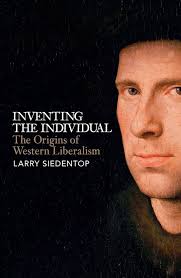
It is a great book, and especially informative for those not well-versed in the intellectual history of political ideas within (mainly) Christian thought. The arguments starts with the Ancient traditions, to the early years of Christianity, all the way to the fifteenth century. According to Siedentop (p. 332) the main goal of the book is:
‘to show that in its basic assumptions, liberal thought is the offspring of Christianity. It emerged as the moral intuitions generated by the Christianity were turned against an authoritarian model of the church. The roots of liberalism were firmly established in the arguments of the philosophers and canon lawyers by the 14th and 15th centuries: belief in the fundamental equality of status as the proper basis for a legal system; belief in that enforcing moral conduct is a contradiction in terms; a defense of individual liberty, through the assertion of fundamental or ‘natural rights’ and, finally, the conclusion that only a representative form of government is appropriate for a society resting on the assumption of moral equality’.
Siedentop clearly succeeds in making this point. As said, the book can be warmly recommended. The question is, however, why does he care about this issue? Siedentop (pp. 334-338) clarifies that he wants to fight the dominant idea that liberalism sprang from the Renaissance, and that liberalism almost equates secularism, or is even anti-religion, at least in the public sphere.
You do not need to be a scholar of the liberal history of ideas to raise more than a few eyebrows here. What liberalism is Siedentop taking up for argument? He is unclear about this, as he does not care to define this liberalism, nor does he provide references to liberal thinkers. That is where the trouble starts.
Undoubtedly there are some modern social-liberals who claim that liberalism is secular and that the state and lawmaking should be strictly neutral in religious terms. Arblaster in The Rise and Decline of Western Liberalism even explicitly refutes any liberal traces before the Renaissance. Unclear is how dominant these voices are, especially outside academia. One thing is certain, these do not comprise classical liberals.
In the Scottish Enlightenment, in many ways the birth grounds of classical liberalism, the place of religion in life, and religion as a source of morality, was discussed. In contrast to most other thinkers, -Smith included- Hume even criticized religion, albeit most openly after his death in Dialogues concerning Natural Religion. Yet to my knowledge, no thinker actually denied the role of Christianity as a source of important ideas, certainly not the role of individuality.
Modern writers, who are more aware of classical liberalism as a tradition do not deny this either. Let me give a few examples.
Hayek in an essay on liberalism (in New Studies in Politics, Philosophy Economics and the History of Ideas) writes that it traces back to classical antiquity and certain medieval traditions. He actually attacks ‘some nineteenth century writers’ who denied ‘that the ancient knew individual liberty in the modern sense’. In his general overview entitled Liberalism, John Gray (then still in his liberal days), also neatly points to the pre-modern and early modern times for the development of liberal ideas as we now know them. David Schmidtz and Jason Brennan pay their due respect to these older sources in A Brief History Of Liberty and the same goes for George H. Smith in The System of Liberty, and David Boaz in The Libertarian Mind.
Of course, none of them made detailed studies of these influences because their books had different purposes than Siedentop’s. Yet all deal with it in a few paragraphs or even a separate chapter, making clear to their readers that (classical) liberalism has older roots then the Renaissance, that there are important Medieval and Ancient thinkers who all left their mark on the development of (classical) liberal thought.
Siedentop wrote a great book, that unfortunately is a straw dog as well: his portrayal of ‘liberalism’ is erroneous, either deliberately or not. It denies the views of the founding and one of the main liberal variants. That is sloppy, to say the least, for such a learned and experienced scholar. With the use of these general terms Siendentop’s attack is simply off target. He should have taken far more time to define the ‘liberalism’ and the liberal scholars subjected by his attack.
Around the Web
- GOP Presidential Candidates: The More the Scarier; I didn’t think that political competition could be a bad thing, though. Perhaps it’s only scary to those who are (and especially have been) active, willing participants in GOP machinations…
- Paul’s Gospel
- Sanders is not like Trump. Sanders is like Rand Paul.
- Postcards from Abu Dis: Checking out the Checkpoints (Part Nine); Dr Khawaja has been teaching philosophy in the West Bank this summer, and while I’ve linked to his latest installment, the whole series (nine parts so far) is well worth the read.
- Must religious bakers bake cakes for gay weddings?
Milton on Free Political Institutions: ‘The Tenure of Kings and Magistrates’ (1649), ‘A Treatise of Civil Power in Ecclesiastical Courts’ (1659), ‘The Ready and Easy way to Establish a Free commonwealth’ (1660)
“He was, as every truly great poet has ever been, a good man; but finding it impossible to realize his own aspirations, either in religion or politics, or society, he gave up his heart to the living spirit and light within him, and avenged himself on the world by enriching it with this record of his own transcendental ideal.” (Comment on John Milton by the English poet Samuel Taylor Coleridge, 1772-1834)
For my introduction to Milton see here, for my post on freedom of the press in Milton see here.
Milton made important arguments for the kind of political institutions which would serve liberty, as well as discussing to goal of freedom in discussion of opinion. Though there are two basic Milton texts identified here, I will not attempt to distinguish them here, let alone take into consideration every possibly relevant text by Milton. This is a period of rapid change in political institutions in England (also applying but unevenly and differently in Ireland and Scotland; at this time Wales has to be considered part of England), of experimentation including the execution of King Charles I just before the publication of the first essay identified was published and the institution of a Commonwealth and Free State, in that year, and of reaction in the sense of royal Restoration in the year that the last essay identified was published. Context matters and so does change, but I think for the purposes of this post as opposed to a blog about the details of Milton’s life as a man of letters and politics, this will be mostly an overview rather than a tracking of Milton’s evolution.
As with his views on free speech, Milton’s views on political institutions mix religious commitments with knowledge of English history and great scholarship of ancient texts. The knowledge of ancient texts to some degree overlaps with the knowledge of religious texts, which is one reason why intensified study of the Bible in the sixteenth and seventeenth century tended to serve general cultural development and liberty.
Milton’s objections to monarchy are partly established through his reading of the Old Testament/Hebrew Bible where he argues that God warned the ancient Jews against adopting the institution of monarchy. Anyone interested in following up which parts of Hebrew scripture Milton is using here should start with the First Book of Samuel, Chapter 8. Disasters that befall the Biblical Jews are in some measure the consequence of ignoring God’s counsel in this matter. Of course, many have seen the Bible as justifying not just monarchy, but absolute monarchy so Milton goes to some effort to argue that monarchy was a second best institution for the Jews from God’s point of view and that the Jews never gave their monarchs absolute power.
The view that Milton has then, of the rights and powers of kings, is that they are established by covenant with the community and not a divine authority which the community must obey. The idea of covenant is important in Christianity, with regard to the view that the ancient Jews had a covenant with God as his chosen people and that Christ offered a new covenant for all humans willing to follow him as the son of God. These covenants were very much emphasised in the Protestant culture of the sixteenth and seventeenth centuries, which thought it was returning to a relation with God obscured by centuries of Catholic interposition of church hierarchy between believer and divine word.
The idea of covenant moved quite quickly from theology to political and legal thought in Hugo Grotius (1583-1645), a Dutch theologian and legal-political thinker who was one of the major shapers of modern thought in these matters. Milton does not emphasise him in these essays, but he was certainly an influence. For Grotius, the covenant is at the centre of theology, and influences his view of the obligation to obey law and government, though he does not use the language of covenant greatly in that context. The point being in political terms that in some way laws and political institutions rest on some choice of the community to obey them. In Grotius’s thinking, this is more about the reason for obedience than an incitement to rebellion where laws and institutions lack popular backing, but the latter aspect is necessary outcome. This ambiguity carries on into the Leviathan of Thomas Hobbes (1551) which takes a foundational social covenant (defined more in legalistic than theological terms) as the basis of absolute obedience to the sovereign, but certainly influences the view of John Locke’s Essay Concerning Civil Government (1690) according to which ‘the people’ (in practice Locke meant the upper classes reğresented in Parliament) the right to overthrow government.
So Milton precedes Locke’s view that rebellion against unjust government is lawful, even admirable, and that laws are uniquely made by ‘the people’ in Parliament and never by a monarch. Milton himself draws on earlier historical precedent for this view of government as based on contract and the right of rebellion against government which ignores that contract. Particularly important is the Dutch Revolt of the late Sixteenth Century, in which merchant towns rebelled for political, commercial, and religious reasons against the absolutist Catholic monarchy of Spain which had acquired them for rather accidental dynastic reasons in recent history. Final agreement with Spain took a long time, but the new Dutch Republic quickly established the possibility of a mercantile republic in modern Protestant Europe and offered support to those who considered republics to be more Protestant than monarchies. Milton draws further on recent Scottish history, pointing out that a Protestant Scottish parliament had deposed Mary, Queen of Scots, in the preceding century. In general, Milton argues that the idea of monarch contradicts the idea of an ordinary human with an ordinary body, with legal accountability like anyone else, and so can never be incorporated properly into a state of free citizens.
Though monarchy which obeys such agreements is allowable from Milton’s point, it is not ideal and is very likely to decay into outright tyranny. Nevertheless he offers examples of how great monarchs of European history, including Roman Emperors, accepted that their power was only justified by serving law and the good of the community. As Milton emphases the last great Roman Emperor Justinian (ruling from Constantinople towards the end of the period during which any Roman Emperor controlled much territory beyond Anatolia and the Balkans) produced the greatest codification of Roman law, making himself the servant of law, not god on Earth. In any case is monarchy might be just about tolerable in many societies for Milton, the proper practice of Protestant Christianity certainly required a freedom from the religious and institutional church authority demanded by kings. Protestant ideas of free discussion of religious ideas and self-governing groups of believers could not thrive under a king (which was a reasonable estimate since Protestant Dissenters were not really equal citizens until the nineteenth century when the monarchy had become largely ceremonial, and indeed the last monarch who really struggled for a more than figurehead role, George III, was en enemy of religious emancipation).
Milton developed a view of how a republic, or commonwealth, might survive over the long term, certainly a longer term than the period it lasted in England, in its purest form only from 1649-52, and then the Lord Protectorship of Oliver Cromwell until 1658 and his heir Richard Cromwell until 1660. He thought that while the country might need a new parliament in 1660, once elected it should serve permanently, replacing dead or absent members through its own method. What Milton seems to advocate here though is not a permanent republican law, but something necessary to institute a permanent republic. Milton thinks of the beginnings of a republic as embattled and as needing to act more like an army than a fully stabilised and secure civil republic should. Both the chance for election and eligibility to vote can be restricted while the republic secures itself against selfish internal a faction and external danger. Here Milton runs into the problem Niccoló Machiavelli, an ardent republican despite frequent misrepresentations, encountered in The Prince, how to get a people that is not very republican and maybe not very ready for a republic to the point where civic virtue and understanding of public good are strong enough for a workable republic.
Milton’s life and public service under the take over of the English republic by the quasi-monarch Oliver Cromwell, followed by his life and exile from public life under the restored monarchy, is the context for the quotation from Coleridge at the head of this post. For Milton, republicanism and associated ideals, became more and more associated with some better and other world. After the Restoration Milton certainly became the author of poetry rather than political essays, producing in particular Paradise Lost, a religious epic which places him just below Shakespeare in general evaluation of English literature. We could look there for a more ‘transcendental’ exploration of republicanism and liberty, and I had hoped to do so. However, this task will be deferred as I think a responsible investigation of republicanism in Milton’s poetry, though a recognised area of discussion, is just too big and different to incorporate into this sequence of posts. Later I hope.
Milton on Freedom of Printing: Areopagitica
Areopagitica
A Speech of Mr John Milton for the Liberty of Unlicensed Printing to the Parliament of England (1644).
(For my general introduction to Milton, click here)
‘We turn for a short time from the topics of the day, to commemorate, in all love and reverence, the genius and virtues of John Milton, the poet, the statesman, the philosopher, the glory of English literature, the champion and martyr of English liberty’, Thomas Babington Macaulay (Whig-Liberal historian, writer and government minister), 1825.
The digitised text of Areopagitica can be found at the Online Library of Liberty here.
The strange sounding title is a reference to one of the key institutions of ancient republican and democratic Athens, the court of Areopagus. Appropriately, as we are looking at an essay on politics by a great poet, the Areopagus and its mythical foundation was celebrated as the core of Athenian justice in Aeschylus’ tragic trilogy, the Oresteia. The Areopagus was itself an aristocratic institution preceding democracy in Athens and as such can be seen as what balanced the changeable majorities of the citizens’ assembly with enduring standards of justice, which have meaning in all ways of constituting political institutions.
What Milton looks for in this great institution of early experiments in constituting liberty is a standard for freedom of publication and finds that it offered a very tolerant standard, at least in the context of the seventeenth century. Milton suggests that the only restrictions the Areopagus placed on books of the time (all handwritten manuscripts of course) was with regard to atheism and libel. We are not going to look back at Milton or the Areopagus now as the most advanced instances of liberty when they prohibit expressions of atheism, but these are times when the idea that a good and rational person could not be an atheist were all pervasive and the assumption can still be found later in the seventeenth century in John Locke, one of the general heroes of modern thinking about liberty.
The restraint on libel applies in all societies and all political thinking I am aware of, but one should never discount the possibility of an interesting exception. Leaving aside possible interesting radical alternatives, there is nothing repressive by the standards of general thinking about liberty in restraining libel. Milton’s interest in the standards of pagan Greece is itself a tribute to a spirit of pluralism and open mindedness in someone generally inclined to take moral and political guidance from the religious traditions of Hebrew Scripture and the Gospels, along with the writings of early Christians, and the Protestant thinkers of the sixteenth century Reformation.
The Reformation, as Milton himself emphasises, relied on the printed word, and it is no coincidence that Protestantism emerged soon after Europe discovered printing (after the Chinese of course), as a weapon against the institutional authority of the Catholic Church and its hierarchy. The structure of the Catholic Church was not just a matter of church offering a choice to people seeking a faith-based life, it was connected with state power and pushed onto societies as the only allowable life philosophy. The politics of religion comes up in Milton’s essay, including the issue of the relation of the state to the church hierarchy.
While England had a Protestant Reformation in the sixteenth century (England including Wales, but excluding Scotland which had its own distinct Reformation before union with England), it had retained a state church, the Church of England, with Bishops. Milton, like many on the side of Parliament in the Civil War, was against Bishops, referred to as prelates, as part of the old Catholic hierarchy in which the ‘truth’ was given from above to the mass of believers.
Inspired by the pamphlets of and books of Protestant reformers, Milton argues that truth can have many forms and that while Christianity may require acceptance of central truths, they can be expressed in more ways than the Catholic hierarchical state-backed tradition allows. State backing, of course, included the imprisonment, torture, and burning to death of ‘heretics’ by the Inquisition.
Milton refers to the last pagan Roman Emperor, Julian ‘the Apostate’ (reigned 361-363) with regard to his policy of banning Christians from pagan education. Milton argues that this was the biggest possible blow to Christianity, because it deprived believers of the intellectual capacity and credibility to influence pagan inhabitants of the Empire. Christian truth could only be convincingly understood, communicated, and taught if it drew on all areas of learning including what had been produced by pagans.
Truth benefits from being tested in argument and contestation, something undermined by state-enforced church power as well as by the monarchical institution of courts full of sycophants and yes-sayers. Political liberty requires republican representative institutions and truth, including the truths of religion, require testing in conditions of liberty.
Unfortunately, Milton supported legal discrimination against Catholics, but as with prohibitions on expressions of atheism, this was part of the general understanding of a just state at the time, and Milton was more tolerant than many on the Protestant as well as Catholic sides. His arguments make up a part of the general movement to tolerance and freedom of speech, making very powerful points on behalf of liberty, enabling us to take them beyond the limits within which he constrained them.
Next post, Milton on political institutions
Harrington, Commonwealth of Oceana, and A System of Politics (Expanding the Liberty Canon): First of Two Parts
James Harrington (1611-1677) was synonymous with the idea of democracy in Britain for centuries, but is not much read now beyond the ranks of those with strong interest in seventeenth century British history or the history of republican thought. Republicanism was the word used for thought about a political system under law and in which power is shared, with some protection of individual liberty, until the word liberal started being used in the eighteen century, with more emphasis though on the idea of liberty of trade and commerce. The republican tradition certainly stretches back to Aristotle in ancient Greece and can be taken back to his teacher Plato, though that often troubles modern readers for whom Plato seems disturbingly indifferent to individual rights and hostile to change. That will be a topic for another post, but for now it is enough to say that Aristotle is likely to seem relevant to ideas of individual liberty for the contemporary reader in ways that Plato may not and Aristotle’s own criticisms of his teacher are likely to seem appropriate to such a reader.
Harrington’s texts are not an easy read in that their structure is not clear and he does not have much in the way of literary style. This explains to a large degree why he is not a familiar name now along perhaps with the appearance of more recent writers in English concerned with liberty and democracy who are both more readable and more concerned with liberal democracy as it has developed since the late eighteenth century, particularly John Stuart Mill. In comparison Harrington seems stuck in early modern idea of democracy and republicanism which are expressed through a knowledge of texts which though not forgotten now are less obviously known to the educated reader. That is the texts of the ancient Greeks and Romans and the Bible. The educated in Harrington’s time were likely to read Latin and often read Greek as well, with major classical texts forming a common frame of reference. The Bible was widely known in the seventeenth century because Christianity was a very dominant force, and Harrington was writing at a time when the Protestant Reformation which led to the translation of the Bible into modern languages and encouragement to the faithful to read the Bible carefully and frequent was still a very living force. Catholics of course read the Bible, but the Catholic authorities resisted translating the Bible into modern languages before the Reformation and gave comparatively less importance to the individual study of it than the Protestant churches. So in short, Harrington’s writing comes from a time of intimate and shared knowledge of ancient and religious texts, and his way of writing is not too suited to expressing itself to those not acquainted with that culture.
In addition Harrington, assumes some familiarity with the British and European politics of his time, though much of it is of lasting interest with regard to understanding of the formation of modern European states and ideas about the most just form of politics for those states. Venice is a very important example of a republic for Harrington, reflecting its status as the longest lived and most powerful republic known to Europeans at that time. The formation of the Dutch Republic in the late sixteenth century promoted a possibly stronger republic, but Harrington regards it as a loose assembly of city and regional republics, so still leaving Venice as the most powerful republic with a unified sovereignty. Italy was not united politically at that time and Venice had existed since the eight century as an aristocratic republic in which aristocratic government combined with merchant wealth to an extent that made Venice a leading trading and naval power in the eastern Mediterranean. The Ottoman Empire appears fleetingly as the model of monarchy, an image which dissipated in the eighteenth century when the Ottomans began to seem backward and despotic, and to be at the head of a declining power. The power and the sophistication of the Ottoman state applying a system of laws and justice across a large and diverse territory made a rather different impression in a seventeenth century Europe suffering from religious wars and internal conflict even within powerful states.
Harrington himself lived through the English Civil War (1642-1651), also known as the The English Civil Wars (because it was a series of wars), the Wars of the Three Kingdoms (because it comprised separate conflicts in England, Scotland, and Ireland), and the English Revolution (because it resulted in the execution of King Charles I along with a period of constitutional innovation in the commonwealth and lord protector systems), which included religious conflict between different forms of Protestantism and political conflict between crown and parliament. Harrington was himself part of the section of the gentry supporting parliament against the king, though he also appears to have had friendly relations with Charles I while he was detained by parliamentary forces.
Oceana was originally banned while being printed during the Lord Protector phase in which the head of the parliamentary armies, Oliver Cromwell had become something close to a king. The book was legally published after negotiations between the Lord Protector’s government and Harrington’s family, with a dedication to Cromwell. Harrington was however accused of treason after the restoration of the monarch and though he was released after a short period of punishment never recovered in mind or body. So Harrington’s life and publication history is itself marked with the historical traumas of the time and the failure to establish enduring republican institutions.
 Notes On Liberty