One Cheer for NATO

The largest military NATO exercise since the end of the Cold War will start shortly in Norway. About 50.000 troops and 10.000 vehicles from all 29 NATO countries plus Sweden and Finland will commence ‘Trident Juncture 2018’ on October 25.

Before the actual exercise starts, there are already logistical tests. As the news release of NATO explains:

Over the next few days, 70 Foxhound, Husky and Landover vehicles will make the 2,000km journey from the Hook of Holland harbour through northern Europe to Norway. The UK convoy’s move through the Netherlands, Germany, Denmark and Sweden will test how efficiently soldiers and equipment can move between European countries. It will also test customs, border regulations and infrastructure’s ability to cope with rapid and heavy troop movements.

“Military mobility is vital, especially to reinforce in a crisis. That’s exactly why we exercise it,” said NATO spokesperson Oana Lungescu. “Over the past few years, NATO has made real progress in improving our ability to deploy troops quickly across Europe. We are overcoming legal hurdles and cutting red tape, including by working closely with the European Union. Looking ahead, we aim to further reduce border-crossing times (clearances within five days by the end of 2019), identify alternative supply routes, and exercise even more to practice military mobility.”

The exercise itself has an article 5 or collective defense scenario, training NATO’s crisis response ability. It will last about two weeks. “NATO is a defensive Alliance. We’re not looking for a fight, but we are committed to defense and deterrence. That’s what this exercise is all about: training to defend, and providing a deterrent effect, ready to respond to any threat from any direction at any time,” commanding officer Admiral Foggo underlined.

I think this exercise, with all NATO members, on this scale, in these uncertain times, deserves one cheer. It shows that the Alliance is still able and willing to get together, to show it is the most powerful military alliance on earth, and that it realizes it needs a lot of training to remain so.

There are still two cheers lacking. The second cheer is lacking because the partnership is still unbalanced. Despite increases in the defense budgets in some of the European NATO members (The Netherlands included), the main burden (also in relative numbers) still falls on the Americans. That is simply wrong. And it is also dangerous, because in current times, for example also with cyber warfare becoming ever more important, any shortage of budget is putting (future) lives at risk. The third cheer is lacking because anti-NATO rhetoric (on both sides of the Atlantic) will sow the seeds of doubt about the use and future of NATO. That is also simply wrong and dangerous. Whether it is Russia, or other powers, the West cannot afford to leave any current or future authoritarian ruler in any doubt about the military ties across the Atlantic, all the way to the Russian border. It is in the best interest of all NATO members, the US included.

Tokyo’s holistic approach to Africa needs to be applauded

A Ministerial meeting attended by representatives from 52 African nations was held ahead of the 7th Tokyo International Conference for African Development (TICAD) to be held in Yokohama in August 2019.

TICAD (which is co-hosted by the Government of Japan, The UNDP, World Bank Group and African Union Commission) was launched over two decades ago, in 1993, with the main objective being to bring back global interest in Africa (a number of key geopolitical developments, such as the end of the Cold War, had resulted in the global community shifting its focus away from Africa).

In the past two decades, TICAD forum has played a key role in Africa’s development. In recent years, the government of Japan has contributed to Africa’s development in a number of important areas. In the phase between 2008-2013, for example, the Government of Japan built a number of elementary and middle schools, upgraded healthcare and medical facilities, and also provided drinking water to rural villages.

During the last TICAD event, in 2016, held at Nairobi (Kenya), Japanese PM Shinzo Abe had committed $30 billion in assistance over a period of three years for key areas such as infrastructure and health care.

Beijing would be closely observing the recent meeting for a number of reasons. Continue reading

Christine Blasey Ford trivializes rape; the Left’s Orwellian doublespeak

I listened to NPR this Sunday morning. (I make myself do it every day or nearly so.) The commentators sounded as if they believe that but for a small sliver of testimony lacking, it would have been definitely proven that Justice Kavanaugh was a rapist at seventeen. There was no hint of recognition that Ms Ford is a proven public liar. (I distinguish carefully between hazy, confused, or artificial memory on the one hand, and lies, which are deliberate conscious constructions, on the other.) Ms Ford lied about being claustrophobic and she lied about her fear of flying.

She should not have been believed at all because a person who tells untruths about yesterday cannot be treated seriously about what she said happened thirty-five years ago. These lies are treated by the media as insignificant inaccuracies and Justice’s Kavanaugh’s six previous FBI investigations as unimportant. We should have been spared the whole undignified circus except for the mendacity, the bad faith of the Dems, beginning with Sen. Feinstein. By the way, Feinstein used to be my model of an honest elected liberal. Finished; I don’t have such a model anymore.

We will soon know if I am wrong. As I have said before, if Ms Ford is telling the truth, she won’t let the outrage of Kavanaugh’s confirmation go unpunished. She will use the million-dollar war chest she was gifted, her notoriety, and her good team of lying attorneys to sue Mr Kavanaugh. I am told there is no statute of limitation for attempted rape where the imaginary event took place. If she does not sue, what are we supposed to think, that the rape wasn’t that bad after all?

I don’t rejoice much in the ultimate victory. Much damage has been done, including a degree of legitimation of the idea that the presumption of innocence is not actually central to civilization. And the rage of the fascist hordes we saw displayed in the Capitol is not going to dissipate. Those people are going away sincerely convinced that not only did a rapist get away with it (as usual!), but that he is going to be the deciding vote on the elimination of women “reproductive rights.” In fact, Roe and Wade is nowhere high on the Republican agenda. In fact, the Supreme Court does not reach out for cases; a relevant case would have to come up. In fact, in the unlikely case Roe and Wade were reversed, the issue would go back to the individual states where it belongs, constitutionally speaking.

It’s hard to tell whether those people are genuine imbeciles, or fooling themselves, or simply lying. Incidentally, note the Orwellian language we have come to accept: “Reproductive Rights” refers to the right to terminate a pregnancy surgically, like my driver’s license gives me the right to not drive! (In case you are wondering, I am for keeping abortion legal by virtue of the ethical principle that we must accept big evils to avoid even bigger evils.)

Of course, predictably, I will be accused of making light of gang rape. No, Ms, YOU are trivializing the violent crime of rape. Even if we took Ms Ford’s words for granted, at 15, after “one beer,” a 17-year old boy groped her through her clothes but fortunately she happened to be wearing a one piece bathing suit! In the meantime, thousands of women suffer real rape in war zones and American feminists keep shamefully silent. The probable idea here is that if you are a woman violently raped by soldiers who are black or brown skinned, it does not really count as rape.

I hope the next partial elections, a month away, turns from a referendum on Mr Trump to one on the Democratic Party’s new fascism.

Please, think of sharing this.

Ottomanism, Nationalism, Republicanism IX

After a break dealing with proofs and indexes of two forthcoming books, a process that overlapped with getting a new university semester started, I can return to this series, which I last added to here. I set the scene of the late 1960s in Turkey, so I will turn to the next big upheaval, the Coup by Memorandum on March 12th 1971.

The Coup by Memorandum followed an attempted coup by far left/third worldist revolutionaries amongst the officer corps. Any unity created by the Kemalist project (secularist national-republican tradition of Turkey’s founder, Kemal Atatürk) was effectively ended, though this decomposition could be said about the whole period from the 1940s to 1971, especially after the adoption of multi-partyism by Atatürk’s successor, İsmet İnönü.

The 1971 coup forced the resignation of the conservative Prime Minister Süyleman Demirel and the implementation of a program to crush the far left, while also implementing some of the more left-wing ideas associated with the 1960 coup (particularly land reform and trade union rights). National View, the first Islamist party in Turkey, founded by Necmettin Erbakan, was closed down along with leftist groups so that an appearance of balance could be maintained in opposing the extremes on both sides. The reality, though, is that the level of state repression, including violence, and further including illegal violence (torture of the arbitrarily detained) directed against the far left, including Kurdish autonomists, drastically exceeded that directed against the far right.

The level of oppression that affected the mainstream right (in that the Justice Party was temporarily removed from government) and religious right was enough to create the idea that the right in Turkey was in some way the liberal part of Turkish politics. This not only influenced liberals, but even some people with very left wing views. It is part of how the AKP could come to power and hollow out state institutions, while subordinating civil society from 2002 onwards. The right continued with a militant anti-communist discourse, in all parts, while in part posing as the liberal friends of leftist rights, along with the rights of the Kurdish autonomists. This was pioneered by Turgut Özal in the 80s and taken further by the AKP. Presumably, Turkish liberals and leftists of the most anti-Kemalist sort have now learned a lesson, but possibly too late to benefit from it for at least a generation.

The military establishment’s implicit tolerance of the religious right, along with the ultranationalist grey wolves, in comparison to the secularist leftists tells an important story about the reality of ‘Kemalist domination’ of Turkey. It had evolved into a Turkish-Islamic synthesis, a compromise with the more conservative parts of the Kemalist establishment, in which the Turkish-Islamic synthesis became more prominent and the ‘Kemalism’ became more and more gestural, including a pointless obsession with preventing young women with covered hair from entering the university, at the same time as the rights of non-Muslim minorities.

The picture is more complicated in that the anti-leftist post-memorandum government in 1971 closed the Greek Orthodox seminary in the Princes Islands off the Marmara Sea coast of Istanbul, as part of a general closure or nationalisation of private (largely foreign) institutions of higher education. This was a policy in accordance with the demands of the far left, including campus radicals. So a measure to deny rights to a Christian minority coincided with the demands of the far left and was undertaken by a notionally secularist government, in reality more concerned with crushing the far left and extending a conservative form of statism.

The above, in any case, did not resolve the real problems of political violence to which the 1971 coup responded. The period between the end of the very temporary government appointed in 1971 and the coup of 12th September 1983 was one of increasing political violence and extremism, with a lack of stable governments as the Justice Party lost majority support (though it remained in government most of the time). Neither it nor the Republican People’s Party were able to form stable coalitions or parliamentary agreements, while the economy suffered and political violence increased between far left and far right groups. Unexplained massacres of demonstrators and political assassinations accompanied barricades that violent groups put up to signify control of urban areas.

The National Assembly failed to elect a President of the Republic in 1980, despite 115 rounds of voting during increasing political and economic disruptions. When the army seized power again on the 12th September, there was widespread public support, but this was the most brutal of the military governments. Its attempt to create a more ‘stable’, i.e. authoritarian, democracy gave Turkey a constitution and system which enabled the AKP to come to power with 35% of the vote in 2002 and then erode the weak restraints on executive powers when held in conjunction with a one party majority in the National Assembly.

More on this in the next post.

The EU’s laudable Asia Connectivity Strategy

The European Union (EU) has put forward a plan for enhancing connectivity within Asia, and has been dubbed as the Asia Connectivity Strategy.

The EU does not want to give an impression that the Asia Connectivity Strategy (ACS) is a counter to the Belt and Road Initiative (BRI). Yet, senior officials of the EU, while commenting on the broad aims and objectives of the project, have categorically stated that the primary goal of the Asia Connectivity Strategy is enhancing connectivity (physical and digital) while also ensuring that local communities benefit from such a project, and that environmental and social norms are not flouted (this is a clear allusion to the shortcomings of the BRI). There are no clear details with regard to the budget, and other modalities of the project (EU member countries are likely to give a go ahead for this project, before the Asia-Europe Meeting in October 2018). The EU has categorically stated that it would like to ensure that the ACS is economically sustainable.

Other alternatives to BRI: the US

It is not just the EU, but also the US, along with Japan and Australia, which are trying to create an alternative vision to the BRI.

Continue reading

China-Myanmar Economic Corridor and the limits of ‘Cheque Book Diplomacy’

On September 9, 2018 Myanmar and China signed a memorandum of understanding (MoU) for establishing the China-Myanmar Economic Corridor (CMEC), as part of China’s ambitious Belt and Road Initiative (BRI). The corridor will traverse a distance of approximately 1700 kilometres and seeks to connect Kunming (in China’s Yunnan Province) with Myanmar’s key economic points – Mandalay, Yangon, and Kyauphkyu.

According to the MOU, both sides have agreed to collaborate in a number of areas. Some of the important areas identified for collaboration by both countries are: infrastructure, construction, manufacturing, agriculture, transport, finance, human resources development, telecommunications, and research and technology.

Chinese Foreign Minister Wang Yi had first announced the proposal to build CMEC during his meeting with Myanmar’s State Counselor Aung San Suu Kyi in November 2017. The MOU had been finalized in February 2018.

The CMEC is an ambitious project from which Myanmar could benefit immensely. Yet, there have been apprehensions with regard to the economic feasibility of the project, and Myanmar does not want to meet the fate of other countries which have fallen into what has been dubbed as a ‘Debt Trap’.

Opposition to Kyauphkyu

There has been skepticism with regard to the BRI project in general, and China’s involvement in the SEZ and Sea Port to be set up in Kyauphkyu (a coastal town in the Rakhine Province) in particular. Large sections of the population have been questioning the economic rationale of the project – and the benefits for Myanmar. CITIC (China’s biggest financial conglomerate) was awarded both projects, but it had to reduce its stake from 85 percent to 70 percent in the Sea Port after vehement opposition from the local population. Locals found the 85-15 arrangement unreasonable. Fearing a debt trap, the NLD government in Myanmar has also reduced the initial value of the Sea Port project – a whopping $7.3 billion USD to $1.3 billion. There has been opposition to the SEZ as well (mainly on environmental grounds), and while the initial Chinese take in the SEZ (originally valued at $2.7 billion) was 51 percent, it is likely to be revised.

U Kan Zaw, a Minister in the erstwhile Than Sein government (and Chairman of the Kyauphkyu SEZ tender committee), confessed that Myanmar was not very keen for Chinese investment (it had sought investments from the UK and Europe), but it was not left with any other option once other countries declined to invest.

China beginning to acknowledge shortcomings of BRI projects

Of late Beijing has expressed a willingness to re-examine some aspects of BRI-related projects (including CMEC and the China Pakistan Economic Corridor – CPEC). On the face of it, at least Beijing seems open to addressing the worries of countries which are part of the BRI.

Chinese media itself is trying to send a message that Beijing is responsive to concerns of countries which are part of the BRI initiative. A recent example is an article in CGTN on CMEC, which acknowledged not just the drawbacks of the project, but also the fact that the response to CMEC has been tepid so far in Myanmar. Said the article:

CMEC is temporarily suffering from a cold reception, we believe that it is an excellent endeavor.

The authors of the article also makes a significant point: that Chinese businessmen are not familiar with Myanmar. While the article could be referring to the lack of familiarity with Myanmar’s policies, many host countries have been critical not just of the ‘one sided’ nature of Chinese economic investments, but their unwillingness to understand local cultures, and the fact that they remain aloof from the local population.

On a number of occasions, Chinese businessmen have even misbehaved with locals. In Pakistan, on two occasions, Chinese businessmen have beaten up policeman, and this did not go down well with the local population.

While alluding to the failure of big ticket infrastructure projects, the article also refers to the need for Chinese investments in ‘light industry’ as opposed to ‘heavy industry’ (in a reference to infrastructural mega projects, such as those which were scrapped by Malaysian Prime Minister Mahathir Mohammad).

One of the interesting aspects of CMEC is that Myanmar was keen to have third party investments, and not restrict itself only to Chinese investments. Investments will come from countries in South East Asia and East Asia — Thailand, South Korea, and Japan. While China’s economic presence in Myanmar is staggering, this has not gone unchallenged and of late countries like South Korea are also increasing their presence in Myanmar. The authors of the CGTN article also try to pitch for Chinese cooperation with other countries, arguing that joint investments will mean not only lesser economic and political burden for China, but that they could also reduce hostilities between Western and Chinese companies.

Finally, the article speaks about the need for greater cooperation between Myanmar and China in the sphere of agriculture (especially aquaculture), and that this cooperation should be economically beneficial for the local population.

Conclusion

It remains to be seen whether China will actually acknowledge the genuine concerns of countries participating in the BRI, and whether or not it will actually take some tangible steps to address the apprehensions. As stated earlier, Beijing seems slightly more flexible in its negotiations, but whether this is a short term trend (which many would argue is a consequence of Malaysian PM Mahathir Mohammad’s straight talking with China) or not remains to be seen.

China may be further compelled to change its approach towards overseas economic investments after the recent electoral rout of Abdulla Yameen (outgoing Maldivian President), considered to be pro-China. One trend which is clearly emerging, as was evident from the electoral verdict of Maldives, was that leaders (many of whom position themselves as strongmen) blindly following Chinese diktats for short term economic goals does not go down well with ordinary citizens, and China may need to address its perception problem by looking beyond Cheque book Diplomacy.

India’s approach towards BRI: Need for pragmatism

(new title)

Recently, China’s consular general in Kolkata, Ma Zhanwu, while speaking at a function, proposed a bullet train connecting Kunming (in China’s Yunnan Province) with Kolkata, the capital of India’s eastern state of West Bengal. Said Ma:

With joint efforts of India and China, a high-speed rail link could be established between the two cities.

It would be pertinent to point out that the proposal for a bullet train connecting Kunming and Kolkata had been discussed earlier at the Greater Mekong Subregion (GMS) meet in 2015. In fact, enhancing connectivity between India and China through the Kolkata-Kunming multi-modal corridor (officially the Bangladesh-China-India-Myanmar Economic Corridor, or BCIMEC), which covers a distance of 2,800 kilometres, has been under discussion for over 2 decades, through the Track II K2K (Kolkata-Kunming) dialogue. During former India Prime Minister Manmohan Singh’s China visit, in October 2013, sister city relations were established between Kunming and Kolkata.

In recent years, China has been pro-actively reaching out to West Bengal Chief Minister Mamata Banerjee, and has invited her to visit on repeated occasions, though she has been unable to visit (she was all set to visit in June 2018, but her trip was cancelled at the last moment). Apart from this, a number of Chinese investors have expressed interest in investing in West Bengal and even attended the Bengal Global Business Summit 2018.

Given the increasing emphasis on connectivity with South East Asia, through India’s North East (one of the key aims of India’s ‘Act East Policy’), it was believed that the BCIMEC would tie in neatly with India’s vision for connectivity.

However, tensions between India and China – due to the Doklam standoff as well as Beijing’s insistence that BCIMEC be included in its official Belt and Road Initiative (BRI) –  have contributed to a wane in New Delhi’s interest in the project, at least for the time being. The Rohingya crisis, and more general tensions between Bangladesh and Myanmar, are also a major impediment to the project.

The China Myanmar Economic Corridor: Why New Delhi should pay close attention

While a high speed train is an ambitious project, New Delhi can not be closed to the BCIMEC and should pay close attention to the China-Myanmar Economic Corridor (the Memorandum of Understanding for this project was signed on September 9, 2018). While the China-Myanmar Economic Corridor (CMEC) has been under discussion for some time, there have been numerous debates with regard to the economic implications for Myanmar (the Kyaukphyu Deep Sea Port project, as well as Special Economic Zones, have been contentious). The increasing debate on the issue of ‘debt trap diplomacy’ has only increased apprehensions within sections of the Myanma government (the stake of Chinese conglomerate CITIC in the deep sea port has been reduced from 85 percent to 70 percent due to domestic pressures). Myanmar has also made it clear that it would not like to depend only on Chinese investments, and the recently-signed MOU categorically states that third party investments from Japan, South Korea, and Thailand in CMEC projects are more than welcome. Interestingly, an article on CMEC in Chinese media acknowledges some of the apprehensions vis-à-vis CMEC, and also bats for closer cooperation between China and other Asian and Western countries.

The proposal for the bullet train connecting Kolkata-Kunming came days after the agreement had been signed between China and Myanmar. China would like to extend this corridor all the way to India (while speaking about rail connectivity between Kunming and Kolkata, the Chinese diplomat also spoke about an industrial cluster along the route).

How should New Delhi play it?

While New Delhi’s objections to the BRI are valid, it does need to shed blinkers. It is free not to participate in those components of the project with which it is not comfortable, but there are projects, like the BCIMEC, where it can easily find common ground with China. This will give a boost to India’s infrastructure in the eastern and northeastern part of the country, and complement it’s Act East Policy. If third countries are allowed to invest in CMEC, Indian companies should explore opportunities, as this will enhance their presence in Myanmar while also bolstering the Act East Policy.

China’s narrative in South Asia

Post the Wuhan Summit, there has been a clear change of narrative from the Chinese side. China has expressed its keenness to work jointly with India in Afghanistan – in capacity-building projects. This was unthinkable a few years ago.

China’s burgeoning economic relationship with Nepal has sent alarm signals in New Delhi. China’s decision to give Nepal access to its ports (Tianjin, Shenzhen, Lianyungang and Zhanjiang) raised the hackles in New Delhi. Pragmatists realize that New Delhi can not dictate Nepal’s ties with China, and the fact is that Kathmandu would like to benefit economically from its ties with both China and India.

Interestingly, China has been urging Nepal to strengthen economic ties with India. During his visit to Beijing, Nepal’s Prime Minister, K.P. Oli, made an unequivocal pitch for strong ties between Kathmandu and New Delhi (as well as Kathmandu and Beijing). He stated that the economic progress of both India and China was an opportunity for Nepal, and stated that Nepal wanted to emerge as a bridge between both countries, and would not like to get embedded in zero sum geopolitical games. Nepal’s former Prime Minister, Prachanda, during his visit to India, also referred to the need for close ties with both India and China.

India should also keep in mind a few other points

While many in New Delhi are pointing to Malaysian Prime Minister Mahathir Mohammad’s stand against Chinese projects, it is important to keep in mind that while the Malaysian PM has scrapped a few projects, he has continued to reiterate the relevance of the China-Malaysia relationship (there is need for nuance). Second, it is one thing to point out the shortcomings of the BRI project, but India needs to prove its own track record in big ticket connectivity projects (New Delhi has been extremely slow when it comes to the implementation of connectivity projects within the neighbourhood). Third, there are areas where India is already working with China, so rigidity and paranoia do not make much sense. If even Japan is willing to participate in certain projects of BRI, there is absolutely no reason why India should not at least be open to elements of the project. It is also important to look at connectivity from an economic dimension and not a narrow security prism as large sections of India’s strategic community do. Finally, New Delhi can not put all its eggs in the American basket. While India’s strategic relationship with the US has witnessed an improvement, and Washington has repeatedly spoken about the need for greater connectivity within the ‘Indo-Pacific’, the US is not likely to invest significantly in economic connectivity projects. India thus can not be totally dismissive of Beijing-led connectivity initiatives.

While New Delhi needs to exhibit pragmatism, Beijing on its part needs to address the concerns of India, and other countries, with regard to the BRI.

A short note from New Delhi on the 2018 Eastern Economic Forum

Chinese President Xi Jinping recently attended the Eastern Economic Forum (EEF), hosted by the Russian city of Vladivostok, which was held on September 11th and 12th of 2018. President Xi (who became the first Chinese President to attend the EEF) met with Russian President Vladimir Putin for the third time in as many months. Significantly, Japanese Prime Minister Shinzo Abe also attended the Forum, which was titled “The Russian Far East: Expanding the Range of Possibilities.”

Both Xi and Putin repeatedly referred to not just their close personal rapport (Chinese President Xi Jinping, while referring to their individual ties, stated that his and Putin’s ‘friendship was getting stronger all the time’), but also the deepening of economic and strategic ties between Russia and China, as well as the convergence on key global issues (neither side missed the opportunity to target the US for it’s inward looking economic policies).

China was also participating in military exercises, held in Siberia, which have been dubbed ‘Vostok 2018’ (Beijing clarified that these military exercises were not targeted at any third party). The military exercise (September 11-17, 2018) involves 300,000 troops, 1,000 planes, and a number of warships. China sent over 3,000 People’s Liberation Army personnel for the military exercises.

China-Russia Economic Times

A number of issues were discussed during the course of the Forum. Both sides agreed that there was a need to accelerate bilateral economic ties. Trade has witnessed a significant rise in recent years, while in 2017 it was estimated at over $80 billion. In 2018, bilateral trade could surpass $100 billion. Chinese investments in Russia have also been increasing. According to the Russia-China Investment Fund (RCIF; set up in 2012), 150 representatives from China and Russia have already identified 73 projects estimated at $100 billion. Also according to the RCIF, 7 projects estimated at well over $4 billion have already been undertaken.

Both sides also agreed to promote stronger synergies between the Belt and Road Initiative (BRI) and the Eurasian Economic Union (EEU).

Given the fact that the Forum was held in Russia’s Far Eastern Region (RFE), the need to increase Chinese investment in the RFE was high on the agenda. President Xi stated that China has always been a key participant in development projects in the Eastern parts of Russia. China’s Shandong Hi-Speed Group is also likely to invest in highway projects in the RFE.

Recent years have witnessed an increasing Chinese economic presence in Khabarovsk, which is the second largest city in the Eastern Region and 800 kilometres from Vladivostok. It may also be pertinent to point out that a large number of Russians have been uncomfortable with the growing Chinese economic clout, as well as immigrants. In 2010, the Chinese population in the Russian Far East was estimated at less than 30,000, though according to some estimates the population is much higher.

Protectionism

Both Russia and China warned against growing economic protectionism. Xi stated that he was all for greater international cooperation, and even lashed out at the growing tendency towards protectionism. Xi’s views were echoed by Putin, who stated that ‘the world and global economy are coming up against new forms of protectionism today with different kinds of barriers which are increasing.’

Putin made the point that protectionism was a threat, especially to Asia-Pacific (significantly, the current Trump administration has been using the term ‘Indo-Pacific,’ much to the chagrin of the Chinese).

What was also significant was that Xi came down heavily on ‘unilateralism’ at a time when China itself is being accused of ‘expansionist tendencies’ and promoting ‘Debt Trap Diplomacy.’ What was even more interesting was a reference to ‘UN Charter.’

The message emanating from the forum was clear: that the economic as well as strategic partnership between Moscow and Beijing is likely to strengthen, and both will try to develop an alternative narrative to that currently emerging from Washington.

Significance of meeting: Why India would be watching

New Delhi would be observing the Forum and meetings between Putin and Xi, since it’s own relations between Russia and China are of vital importance. While Russia is important in the security context, economic ties with Beijing are important for New Delhi.

New Delhi attaches immense significance to ties with Moscow

There are many in analysts in New Delhi who argue that India should be cautious in strengthening strategic ties with the US, given that this could cause friction in New Delhi’s relations with Moscow (Russia’s improved defense ties with Pakistan are often cited as a consequence of New Delhi moving too close to Washington DC). There are others who argue that New Delhi’s ties with Moscow are robust and time-tested, and will not be impacted by close ties with Washington DC. Russian President Vladimir Putin will be visiting India in October 2018 (for the 19th annual India-Russia Summit), while Indian External Affairs Minister Sushma Swaraj, during her Moscow visit, met with Deputy Prime Minister Yuri Borisov. Both of them jointly chaired the 23rd India-Russia Inter-Governmental Commission on Trade, Economic, Scientific, Technical, and Cultural Cooperation (IRIGC-TEC) meeting. A number of issues, including the need to boost bilateral trade and enhance people-to-people contact, were discussed. Significantly, this was Swaraj’s third visit to Russia in 11 months and she stated that India accorded ‘high priority’ to ties with Russia.

The fact that Swaraj’s visit to Russia took place after a successful 2+2 dialogue with the US, where a number of important defense agreements including COMCASA were signed, shows that New Delhi realizes the importance of ties with Russia. India is likely to sign a deal with Russia for the procurement of the S-400 air defence system, even though the USA has not given India any assurances with regard to a waiver from CAATSA (Countering America’s Adversaries through Sanctions Act) if India purchases defence equipment from Russia. During the visit, India is also likely to go ahead with an agreement with Russia for four frigates for the Indian Navy. While two of these will be manufactured in Kaliningrad, two will be manufactured in Goa.

New Delhi-Beijing ties

The issue of trade tariffs, which was highlighted by Putin and Xi, has also not gone unnoticed by New Delhi. One of the reasons (apart from the desire for peace and tranquility on borders) why India has been pro-actively reaching out to China is a convergence on economic issues. In fact, days after the 2+2 Summit, US President Trump, while referring to India and China, stated that the US has been providing subsidies to India and China for far too long and can not afford to do so any longer.

In terms of investments, there has not been much progress so far due to political disputes, but there is scope for greater economic cooperation between both countries through enhanced connectivity. New Delhi, on its part, should be open to projects like BCIM Corridor (Bangladesh, China, India, Myanmar). The recent proposal out of Beijing to start a railway line from Kunming to Kolkata may not seem possible in the short run, but in the long run it is definitely worth examining, and would give a boost to economies of India’s Eastern and North Eastern states. Interestingly, on September 9th, 2018, Myanmar signed a memorandum of understanding (MoU) with China for agreeing to establish the China-Myanmar Economic Corridor (CMEC). New Delhi should see this connectivity project as an opportunity rather than an obstacle.

Conclusion

New Delhi, while enhancing strategic cooperation with Washington, needs to keep in mind that there is a plethora of economic as well as other issues of global importance where New Delhi can find common ground with Beijing and Moscow. India bilaterally shares robust economic ties with China, and a strategic relationship with Russia. All three countries are also working closely in BRICS as well as SCO. New Delhi also needs to keep in mind that while strategic ties with Washington are important, Trump’s unpredictability will compel New Delhi to keep all its options open and think in a nuanced manner. While historically New Delhi shares close ties with Moscow, the logic of geography can not be ignored in the context of India-China ties.
Pakistan-China ties and CPEC

Abdul Razak Dawood, Prime Minister Imran Khan’s Adviser on Commerce, Textile, Industry & Production and Investment, told the Financial Times that the previous Pakistan Muslim League (Nawaz ) government did not get a good deal for Pakistan in CPEC (China Pakistan Economic Corridor), and that Pakistan has lost out as a result of poor negotiations.

Dawood also made the point that some of the CPEC projects could be put on hold for a year, and CPEC can be stretched up to five years. Said Dawood: ‘Perhaps we can stretch CPEC out over another five years or so.’

Interestingly, during Chinese Foreign Minister Wang Yi’s  recent Pakistan visit, Pakistan’s Foreign Minister, Shah Mehmood Qureshi, assured the former that Pakistan would accord high priority to CPEC — which was of immense economic and strategic importance for Pakistan. Qureshi also stated that projects would be implemented at the earliest outset. Even the normally outspoken Pakistan Finance Minister, Asad Umar, was cautious, and categorically said that ‘We don’t intend to handle this process like Mahathir.’ Imran Khan also met with Wang Yi, and a statement from the Pakistani side read as follows:

‘The Prime Minister reiterated that the Government is committed to the implementation of the CPEC.’

Wang Yi on his part emphasized on the fact that CPEC was not responsible for Pakistan’s debts. He also stated that Beijing was willing to re-negotiate a Free Trade Agreement which, according to many in Pakistan, was heavily skewed in favour of China and has faced domestic opposition.

During the course of a meeting between the Planning, Development and Reforms Commission of Pakistan and the National Development and Reforms Commission (NDRC) of China, two interesting aspects were added to the existing agreement. The first, that third countries would be allowed to invest in the upcoming 9 Special Economic Zones (SEZs) of CPEC. The Chinese delegation during the meeting is supposed to have conveyed the point that it was open to investment from countries which were friendly to both Pakistan and China to invest in the SEZs. Some of the potential countries discussed were Turkey, Russia, and Saudi Arabia

Second, ‘social sector’ schemes and regional development schemes were added to the existing CPEC projects. Social sector schemes include drinking water, health, education, and technical training. The inclusion of these areas was done keeping in mind the priorities of the current government.

Is a significant re-think towards CPEC possible?

There is no doubt that Islamabad’s dependence upon China would have increased as a consequence of its current economic situation and it’s deteriorating ties with Washington (days before US Secretary of State Mike Pompeo landed in Islamabad, military aid to the tune of $300 million was withdrawn). Yet, some re-think vis-à-vis CPEC can not be ruled out because a number of Pakistani politicians have expressed discomfort with the lack of transparency regarding the project.

Transparency with regard to the CPEC project

When in opposition, Imran had himself spoken about the need for greater transparency and openness with regard to the project. Before the elections in July 2018, many analysts argued that the Chinese would be far more comfortable with parties like the PPP and the PML-N as opposed to Imran Khan.

The protests of Khan and his party (PTI) against the previous PML-N government were also viewed with skepticism by the Chinese who believed that these protests would be detrimental to the progress of the project. Khan during his meeting, in 2016, with the Chinese Envoy to Pakistan tried to address the apprehensions of the Chinese by saying he was all for the project.

One of the objections of Pakistani politicians from Non-Punjabi provinces (across parties), as well as analysts, was that the project was Punjab Centric. In November 2017, members from the Senate, including the then-ruling party, PML-N, had spoken about the lack of transparency of CPEC, and had also alluded to the fact that China was benefitting at Pakistan’s expense.

Apart from domestic politics, the firm stance taken by Malaysian Prime Minister Mahathir Mohammad with regard to some Chinese projects (the Malaysian PM scrapped projects worth $20 billion) is also important and has forced a rethink in Pakistan . An editorial in Dawn titled ‘Rearranging CPEC’ also cited Mahathir’s stance against Chinese projects. While it is unlikely that Pakistan may follow suit as was stated by the Finance Minister, Asad Umar, as well as by Abdul Razak Dawood himself (Dawood in fact had to clarify that his remarks with regard to CPEC had been quoted out of context), there will be groups in Pakistan (especially members of the business community) who could nudge the current government towards tweaking the CPEC agreement further as well as resetting the Pakistan-China economic relationship to some extent.

China itself can not afford to ignore Mahathir’s stance, as well as his statement about the rise of a ‘new colonialism’. The address of Chinese President Xi Jinping at the Africa-China Summit, as well as Wang Yi’s statements during his Pakistan visit, are clear indicators that China is not taking Mahathir’s statements lightly. Whether Imran Khan can be a Mahathir of course is a different issue.

Lack of options and GHQ

While there may be certain personalities within the current government who are making the right noises with regard to the CPEC project, Islamabad’s economic situation has reduced its options.

Apart from this, the Pakistan army (which runs the show when it comes to complex foreign policy issues) has robust ties with Beijing, and will prevent any drastic changes to the CPEC agreement. During his meeting with Wang Yi, Pakistan’s Chief of Army Staff, General Qamar Javed Bajwa, assured the visiting Chinese Minister of full support. The Chinese also had a robust relationship with former Pakistan Army Chief, Raheel Sharif.

A re-think on CPEC, as well as Pakistan-China economic relations (highly unlikely in the short run), would benefit not just Pakistan, but could have broader ramifications, and may compel more countries to rethink their ties with China.

Mahathir Mohammad deserves credit for highlighting the shortcoming of China’s infrastructural projects as well as its economic ties with certain countries. This debate is not likely to die down soon, though not every country is in a position to take a bold stand like Mahathir. Imran Khan, in private, may be supporting Mahathir’s approach towards China, but can not afford to do so publicly.

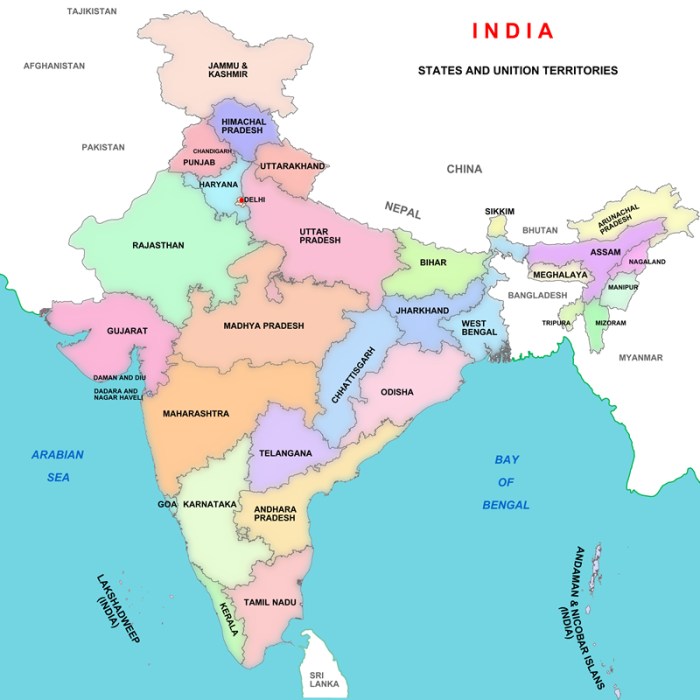
Eye Candy: the states in India’s federation

NOL India's states
Click here to zoom

Stay tuned for more on India from a sub-state perspective. I’m going to find the GDP (PPP) per capitas of these states. I’m going to find their population densities. I’m going to find their literacy rates and their life expectancy rates. I’m going to find out much more about India over the coming 12 to 16 months.

In the meantime, here are all of NOL‘s posts from Tridivesh, a resident of New Delhi. And here are all of NOL‘s posts from Shree, a resident of New York.

Jair Bolsonaro suffers a knife attack.

Jair Bolsonaro, Brazil’s presidential candidate and leader in opinion polls, suffers a knife attack. According to close sources, his condition is grave. The aggressor is a militant of the Workers Party of Lula da Silva. Bolsonaro’s supporters resisted the temptation to lynch and directed the attacker to the police. Dilma Rousseff stated that Bolsonaro was the victim of his own hate speech. It is the left blaming the victim and justifying the aggressor. This is the “peace and love” left.

The Incomplete Counterfactual Fallacy

Mariana Mazzucato has some interesting ideas, but her basic thesis (which I’m guessing based only on her recent Freakonomics interview) forgets a simple fact: had the government not made GPS, not only would we not have GPS, resources would have been allocated somewhere else.

In other words, she’s right that without government involvement we’d miss all sorts of valuable things like the basic research it turns out government has financed, physical infrastructure (no matter how neglected), GPS, the specific form the Internet we got, etc., etc.

But that’s only half the story. What happens if DARPA closes shop just before starting on GPS? Those engineers end up somewhere else, the money for the project goes somewhere else, the steel and titanium for the satellites they would have built end up in some other shop.

If we could know that nothing else would have happened at that point, then GPS is a free lunch–some bold committee scooped up a handful of clay, handed it to brilliant engineers, and created something from nothing.

More likely some of those engineers would have made dozens of other projects a little bit better, and one or two of them might even have, through some series of unpredictable events, ended up creating some totally different innovation that would have put us on to an entirely different path.

Which is the better path? There’s no way to know. The people on that other path exist in a completely different paradigm from our own. It’s comparing meta-apples with meta-oranges. We are where we are and we ought to appreciate all the costs and benefits of the system we’ve inherited. I think Mazzucato is right that many of us have underrated the government. (Certainly 23-year-old-Rick was guilty of the over-complete counterfactual fallacy.)

She makes a compelling argument that Solyndra doesn’t look like such a boondoggle when you take the wider view we would expect of the smallest venture capital investor. But if it’s true that pointing at government failures is invalid, then so is pointing at government success.

What’s important is improving the future performance of our current institutional mess. To do that, I think we’re better off backing away from her broad claims and focusing on her more sensible (and jarring) arguments about how the current system encourages destructive rent seeking through intellectual property protection of basic research that might be better left in the public domain.

Vox on Puerto Rican statehood

Vox, a left-wing publication founded by a fellow Bruin (Ezra Klein), has a pretty good piece up on Puerto Rico’s inability to “gain statehood,” i.e. to become a full-fledged member of the American federation. I say “pretty good” instead of great because the author, Alexia Fernández Campbell, does too much Trump-bashing and not enough focusing on the issue at hand.

Look, I didn’t vote for Trump. I don’t like Trump. But the Left’s infatuation with him is unhealthy, the way the Right’s infatuation with Obama was unhealthy. When Obama was president, I wanted so badly to rely on the right-leaning press for excellent opposition coverage of the Obama administration but, with few exceptions, all I got was garbage. The experience jaded me, and I expect less of the press, so the Left’s inability to look at the Trump administration’s many wrongdoings with clear-eyed sobriety is annoying rather than disheartening.

For instance, Campbell points out many problems facing the pro-statehood faction in Puerto Rico: a century-old racist SCOTUS ruling, the lack of a clearly-defined process for gaining statehood, anti-statehood factions in Puerto Rico, Washington’s lack of interest in adding another state, and Donald Trump being A Very Bad Man. One of these problems doesn’t fit into Puerto Rico’s decades-long campaign to gain statehood. Can you guess which one? Annoying!

At any rate, Campbell misses one of the problems facing pro-statehood factions: Puerto Rico would be a “blue” state (overseas readers: “blue state” means a reliable vote for the Democratic Party). If Puerto Rico really wants to become a member of the American federation, its policymakers would do well to start looking for a “red” state (reliable vote for the Republican Party) lobbying partner.

Are Swedish University Tuitions Fees Really Free?

University tuition fees are always popular talking points in politics, media, and over family dinner tables: higher education is some kind of right; it’s life-changing for the individual and super-beneficial for society, thus governments ought to pay for them on economic as well as equity grounds (please read with sarcasm). In general, the arguments for entirely government-funded universities is popular way beyond the Bernie Sanders wing of American politics. It’s a heated debate in the UK and Australia, whose universities typically charge students tuition fees, and a no-brainer in most Scandinavian countries, whose universities have long had up-front tuition fees of zero.

Many people in the English-speaking world idolize Scandinavia, always selectively and always for the wrong reasons. One example is the university-aged cohort enviously drooling over Sweden’s generous support for students in higher education and, naturally, its tradition of not charging tuition fees even for top universities. These people are seldom as well informed about what it actually means – or that costs of attending university is probably lower in both England and Australia. Let me show you some vital differences between these three countries, and thereby shedding some much-needed light on the shallow debate over tution fees:

The entire idea with university education is that it pays off – not just socially, but economically – from the individual’s point of view: better jobs, higher lifetime earnings or lower risks of unemployment (there’s some dispute here, and insofar as it ever existed, the wage premium from a university degree has definitely shrunk over the last decades). The bottom line remains: if a university education increases your lifetime earnings and thus acts as an investment that yield individual benefits down the line, then individuals can appropriately and equitably finance that investment with debt. As an individual you have the financial means to pay back your loan with interest; as a lender, you have a market to earn money – neither of which is much different from, say, a small business borrowing money to invest and build-up his business. This is not controversial, and indeed naturally follows from the very common sense principle that those who enjoy the benefits ought to at least contribute towards its costs.

Another general reason for why we wouldn’t want to artificially price a service such as university education at zero is strictly economical; it bumps up demand above what is economically-warranted. University educations are scarce economic goods with all the properties we’re normally concerned about (has an opportunity cost in its use of rivalrous resources, with benefits accruing primarily to the individuals involved in the transaction), the use and distribution of which needs to be subject to the same market-test as every other good. Prices serve a socially-beneficial purpose, and that mechanism applies even in sectors people mistakenly believe to be public or social, access to which forms some kind of special “human right.”

From a political or social-justice point of view, such arguments tend to carry very little weight, which is why the funding-side matters so much. Because of debt-aversion or cultural reasons, lower socioeconomic stratas of societies tend not to go to university as much as progressives want them to – scrapping tuition fees thus seems like a benefit to those sectors of society. When the financing of those fees come out of general taxation however, they can easily turn regressive in their correct economic meaning, disproportionately benefiting those well off rather than the poor and under-privileged they intended to help:

The idea that graduates should make no contribution towards the tertiary education they will significantly benefit from it, while expecting the minimum wage hairdresser in Hull, or waiter in Wokingham to pick up the bill by paying higher taxes (or that their unborn children and grandchildren should have to pay them due to higher borrowing) is highly regressive.

Although not nearly enough people say it, university is not for everyone. The price tag confronts students, who perhaps would go to university to fulfill an expectation rather than for any wider economic or societal benefit, with a cost as well as a benefit of attending university.

Having said that, I suggest that attending university is probably more expensive in your utopian Sweden than in England or Australia. The two models these three countries have set up look very different at first: in Sweden the government pays the tuition and subsidies your studies; in England and Australia you have to take out debt in order to cover tuition fees. A cost is always bigger than no cost – how can I claim the reverse?

With the following provision: Australian and English students don’t have to pay back their debts until they earn above a certain income level (UK: £18,330; Australia: $55,874). That is, those students whose yearly earnings never reach these levels will have their university degree paid for by the government regardless. That means that the Scandinavian and Anglophone models are almost identical: no or low costs accrue for students today, in exchange for higher costs in the future provided you earn enough income. Clearly, paying additional income taxes when earning high incomes but not on low incomes (Sweden) or paying back my student debt to the government only if I earn high incomes rather than low (England, Australia) amounts to the same thing. Changing the label of a financial transfer from the individual to the government from “debt-repayment” to “tax” has very little meaning in reality.

In one way, the Aussie-English system is somewhat more efficient since it internalises costs to only those who benefited from the service rather than blanket taxing everyone above a certain income threshold: it allows high-income earners who did not reach such financial success from going to university to avoid paying the general penalty-tax on high-incomes that Swedish high-earners do.

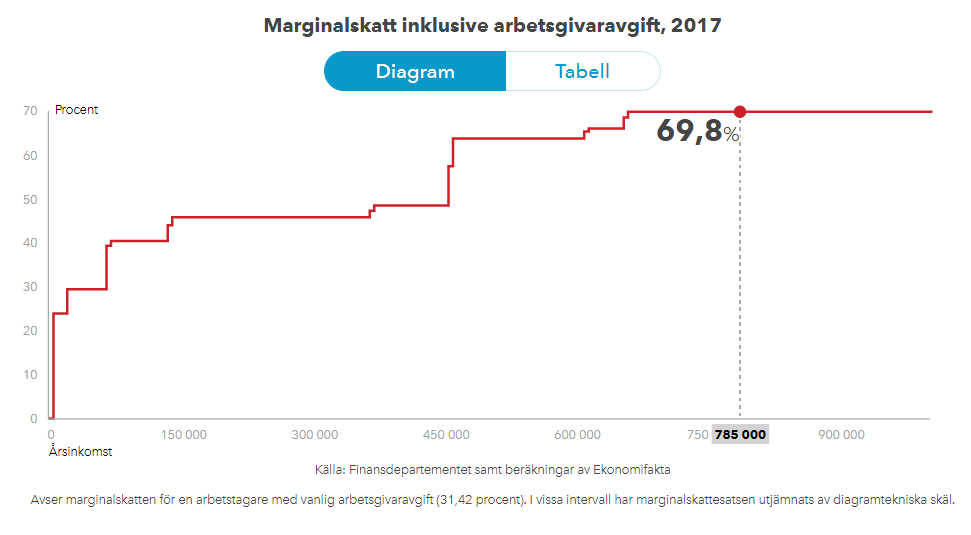
Let me show the more technical aspect: In England, earning above £18,330 places you at a position in the 54th percentile, higher than the majority of income-earners. Similarly, in Australia, $55,874 places you above 52% of Aussie income-earners. For Sweden, with the highest marginal income taxes in the world, a similar statistics is trickier to estimate since there is no official cut-off point above which you need to repay it. Instead, I have to estimate the line at which you “start paying” the relevant tax. What line is then the correct one? Sweden has something like 14 different steps in its effective marginal tax schedule, ranging from 0% for monthly incomes below 18,900 SEK (~$2,070) to 69.8% for incomes above 660,000 SEK (~$72,350) or even 75% in estimations that include sales taxes of top-marginal taxes:


If we would place the income levels at which Australian and English students start paying back the cost of their university education, they’d both find themselves in the middle range facing a 45.8% effective marginal tax – suggesting that they would have greatly exceeded the income level at which Swedish students pay back their tuition fees. Moreover, the Australian threshold would exchange into 367,092 SEK as of today, for a position in the 81st percentile – that is higher than 81% of Swedish income-earners. The U.K., having a somewhat lower threshold, converts to 217,577 SEK and would place them in the 48th percentile, earning more than 48% of Swedish income-earners – we’re clearly not talking about very poor people here.

The fact that income-earners in Sweden face a much-elevated marginal tax schedule as well as the simplified calculations above do indicate that despite its level of tuition fees at zero, it is more expensive to attend university in Sweden than it is in England or Australia. Since Australia’s pay-back threshold is so high relative to the income distribution of Sweden (81%), it’s conceivably much cheaper for Australian students to attend university than for it is for Swedish students, even though the tuition list prices may differ (the American debate is much exaggerated precisely because so few people pay the universities’ official list prices).

Letting governments via general taxation completely fund universities is a regressive measure that probably hurts the poor more than it helps the rich. The solution to this is not some quota-scholarships-encourage-certain-groups-version but rather to a) increase and reinstate tuition fees where applicable or b) cut government funding to universities, or ideally get government out of the sector entirely.

That’s a progressive policy in respect to universities. Accepting that, however, would be anathema for most people in politics, left and right.

We have seen the algorithm and it is us.

The core assumption of economics is that people tend to do the thing that makes sense from their own perspective. Whatever utility function people are maximizing, it’s reasonable to assume (absent compelling arguments to the contrary) that a) they’re trying to get what they want, and b) they’re trying their best given what they know.

Which is to say: what people do is a function of their preferences and priors.

Politicians (and other marketers) know this; the political battle for hearts and minds is older than history. Where it gets timely is the role algorithms play in the Facebookification of politics.

The engineering decisions made by Facebook, Google, et al. shape the digital bubbles we form for ourselves. We’ve got access to infinite content online and it has to be sorted somehow. What we’ve been learning is that these decisions aren’t neutral because they implicitly decide how our priors will be updated.

This is a problem, but it’s not the root problem. Even worse, there’s no solution.

Consider one option: put you and me in charge of regulating social media algorithms. What will be the result? First we’ll have to find a way to avoid being corrupted by this power. Then we’ll have to figure out just what it is we’re doing. Then we’ll have to stay on top of all the people trying to game the system.

If we could perfectly regulate these algorithms we might do some genuine good. But we still won’t have eliminated the fundamental issue: free will.

Let’s think of this through an evolutionary lens. The algorithms that survive are those that are most consistent with users’ preferences (out of acceptable alternatives). Clickbait will (by definition) always have an edge. Confirmation bias isn’t going away any time soon. Thinking is hard and people don’t like it.

People will continue to chose news options they find compelling and trustworthy. Their preferences and priors are not the same as ours and they never will be. Highly educated people have been trying to make everyone else highly educated for generations and they haven’t succeeded yet.

A better approach is to quit this “Rock the Vote” nonsense and encourage more people to opt for benign neglect. Our problem isn’t that the algorithms make people into political hooligans, it’s that we keep trying to get them involved under the faulty assumption that people are unnaturally Vulcan-like. Yes, regular people ought to be sensible and civically engaged, but ought does not imply can.