O Desconforto da Pobreza

A pobreza é um desconforto. Quem é pobre, obviamente, sabe disto. Mas a pobreza é um desconforto para políticos também. Ainda bem que assim o seja, pois, caso contrário, perderíamos um incentivo para que os mesmos buscassem minimizar a pobreza afim de ganhar votos.

Entretanto, também é verdade que minimizar a pobreza significa que a mesma deixará de existir em algum momento, obrigando os políticos a inovarem na busca de novos problemas que possam, potencialmente, resolver, afim de ganharem votos. 

Nada disto é novidade ou contra-intuitivo. Qualquer estudante de Escolha Pública já pensou sobre isto por mais de cinco minutos. Mas, o desconforto da pobreza tem uma dimensão adicional quando se pensa no seu impacto no mercado de trabalho. Recentemente, o Brasil passou por um processo de crescimento desigual, no qual os pobres foram favorecidos. 

A classe média brasileira cresceu incluindo os mais pobres – agora um pouco menos pobres – e as consequências disto são várias. Por exemplo, o governo e seus políticos forçaram um aumento das regulações em diversos setores da economia com mais facilidade. Dado que os pobres enfrentam um sério problema de analfabetismo, populistas conseguiram obrigar o setor privado a se tornar mais desleixado com o ensino do português (melhor que uma lei, um sinal claro disto é um ministro dizer, por meio da imprensa, que ortografia é um detalhe “burguês”, quase com estas palavras…).

O setor privado também se curvou, na terra do rent-seeking tropical, e aceitou uma política que nem a ditadura militar nacionalista teve coragem de impor: a bizarra exigência de conteúdo nacional na TV paga e, mais ainda, em horários fixados pelo regulador. É quase como ouvir um político dizer: “se o pobre aprende inglês, vai ter acesso a mais cultura e poderá até emigrar, levando consigo nossos votos….não, precisamos dele em seu curral, para que possa garantir a continuidade de minha dinastia política”. 

Os anos 90 se foram e, com eles, o otimismo do consumidor. Outrora um orgulhoso brasileiro que exigia educação, cortesia e cumprimento de regras por parte dos prestadores de serviços (públicos ou privados), sob a mudança promovida pelos governos de esquerda – notadamente no campo da ética, com a “relativização” da corrupção – hoje o mesmo brasileiro pode ser quase visto como um ser quadrúpede, que ignora a falta de educação do prestador, os maus-tratos que recebe e, como um bom cidadão cubano (ou norte-coreano), acostumou-se com a ineficiência: é capaz de ficar horas na fila de um caixa de supermercado ou de uma repartição pública sem reclamar.

O país mudou. Os burocratas passaram a se achar como os verdadeiros donos da verdade. Sua arrogância média parece ter aumentado nos últimos anos. Falam do poder de mudar o mundo como se vivessem em um outro mundo. Os cidadãos passaram a aceitar a ineficiência como regra. Criam filhos sem educá-los. Não impõem limites – coisa de “neoliberal” ou de “conservadores” – e deixam a educação em último plano. O número de pais reclamando que o menino tem “muita prova para fazer” numa reunião de pais e mestres aumentou. Pais querem filhos que se divertem, mesmo que não saibam a tabuada. 

Estes mesmos pais aplaudem qualquer movimento de jovens (maoístas?) que saem às ruas pedindo por “almoço grátis”. Protestos contra a corrupção? Não, isto não os incomoda. É até perigoso porque, gostoso mesmo, é participar da suruba da corrupção com seu vizinho, seu amigo e com o burocrata cafetão da esquina. O “sexo nos trópicos” ganhou um novo significado: vivemos na orgia constante em que todos são de todos e ninguém é de ninguém. Uma perfeita negação dos princípios básicos de como se pode crescer e distribuir renda de forma eficiente. 

O desconforto da pobreza desaparece para o pobre que, graças ao mercado, pode sair do desconforto material com um emprego um pouco melhor. Ainda bem. Mas se não estudar mais, não conseguirá melhorar mais e apenas terá um alívio no curto prazo. É claro que o ex-pobre percebe isto melhor do que ninguém. Mas ele apenas despertou para o problema insolúvel – no curto prazo – que é o de demandar mais atuação do governo e, ao mesmo tempo, ter que pagar mais impostos. Ainda cheio de doutrinação socialista vinda dos bancos escolares, ele pensa que o governo pode gastar sem arrecadar. Ou pensa que apenas ricos devem pagar impostos. Não pensa com ciência, mas com ideologia. Nada que não possa mudar ao longo do tempo com educação (a verdadeira, não a doutrinação), leituras e, claro, com a própria experiência de vida.

A discussão é difícil e não tenho a solução para este problemas. Mas só há um jeito de começar isto: discutir os problemas institucionais do país. Instituições no sentido de Douglass North. Caso nada dê errado, é o que tentarei fazer por aqui nos próximos posts

Bom final de semana!

Production bias in economic intervention

When an intervention is proposed, it’s usually offered that it will create jobs, or somehow otherwise create work. In Clash of Economic Ideas I’m reading about Indian economic planning and how in the early 5-year plans they proposed to subsidize low-scale labor-intensive cloth making. Otherwise power looms could take their jerbs! On the face of it, it looks like a policy where home weavers get more money (and maybe the price of cloth goes up… but people will be richer because of jobs, right?), but if we strip away the monetary veil, things look different.

What would this policy look like on Gilligan’s Island? The professor comes up with a way to harness the tide so that Gilligan doesn’t have to ride a stationary bike to generate power (bankrolled by Thurston Howell III). But the Skipper can’t let them take Gilligan’s job! So he forbids the professor from using his labor saving invention and there’s no costly transition from the status quo. Essentially the Skipper is consigning Gilligan to work harder than he otherwise would. For his own good!

Okay, that example is too easy, so let’s take it a step further. The Skipper decides they need a bridge (to where? Never mind, it’ll create jobs!) and sets Gilligan to work collecting materials while the professor draws up plans. This time the jobs created will actually result in something new, which is good. But is it good enough? If the discounted present value of the bridge is less than the present value of the costs they will have to incur, then a bridge building policy is like forcing or tricking Gilligan to work at a low wage when he would rather relax on the beach. Or if he pays Gilligan a good wage, then it’s like forcing the island’s tax payers to buy overpriced goods they don’t want; If I make you buy a Hyundai for $200,000, it hardly matters that you ended up with a reliable and efficient car because you got ripped off! The only alternative is that the person who decides to build the bridge eats the loss.

Entrepreneurs make mistakes, and that’s part of the learning process of the market. These sorts of mistakes are not just economically superior than poor policy, but they are ethically superior to state intervention or full-blown socialism. Let’s imagine that a government policy is passed with the expectation that it will be a net gain for the economy (tough, right?). This project is financed by either forcing/tricking someone to pay for it (taxes or inflation), or directly forcing someone’s hand (regulation or conscription). Even if the project turns a profit and the financiers are paid back, there’s something unsettling about the use of coercion. Contrast that with an honest mistake made by an entrepreneur. The financiers make a loss, but by their own volition. Nobody forced their hand, but they learned something and they can use what they learn to guide their actions in the future. Not so with a government failure.

tl;dr: Focusing on a policy’s effects on producers (“the seen“) overlooks what’s going on behind the veil of money: more work for producers without a commensurate gain is simply making them work harder than they need to, and it’s cruel. If (as is more often the case) it’s really a matter of making taxpayers buy something they don’t want for the price, it’s a ripoff and equally cruel. Even the ethical standing of “good” policies is questionable because it removes the element of choice from the individuals forced into backing the project.

The Tyranny of Darth Obama

Commentary by LA Repucci

 November 14th, Washington DC

President Obama spoke from the White House this morning regarding a proposed ‘fix’ to his failed health care policy in an effort to edify his fellow democrats through the next election cycle.

After publicly promising the American people that they could keep their insurance plans 30 times, the president has received flack due to the fact that millions are losing their insurance policies due to the Affordable Healthcare Act, commonly referred to as Obamacare.

In his address this morning, the president announced a ‘delay’ of the portions of the law to enable insurers to re-instate individual policies purchased on the “old individual market” to avoid losing their coverage…presumably, for another year.  Obama offered no details or legal explanation as to how this radical change in the law of the land would be implemented.

Okay — let’s suspend the fact that our Constitution very clearly states the government is prohibited from compelling the people to purchase a product or service.  Let’s pretend that the government, having betrayed this constitutional provision time and again (Social Security comes to mind), may simply call a compulsion to purchase a ‘tax’ as chief justice Roberts ruled regarding the health insurance mandate, circumvent one of the clearest directives of the US Constitution, and may compel the people to purchase a product or service. Even with this egregious transgression of the sovereignty of the people as a given, the State seems unable to obey its own new laws these days.  The federal government has been exposed time and again in the last few months (and decades) as the primary and frequent transgressor of our laws – the confirmed reports of illegal mass warrant-less surveillance are only the latest example of complete disregard for and perversion of the law to come from this administration.

There is a single mechanism by which our federal government transgresses the will of the people; one over-arching distortion of sanity by which the administration, law-makers and courts continue to exploit (at accelerating pace) and abridge the will of the people.  President Obama is merely the culmination of this singular corruption of constitutionality that transforms our nation from the rule of law toward the rule of tyrants.  As a student of constitutional law, Mr. Obama must know precisely what he is doing. Even if he didn’t, ignorance would not save his neck from the block that is the US constitution.

The truth is this:  all three branches of the federal government disregard the rule of law.  They are all traitors to the republic, and as such, should be tried, convicted, and sentenced for high treason.

How can a president (and constitutional scholar) mandate the people’s purchase of a product in clear violation of our supreme law, then claim the power to arbitrarily change his own law simply by decree?  The answer is two-fold.  First, a legitimate president cannot – a tyrant can and will do anything they please.  Second; as a tyrant by definition does not respect law in any case, once abridged, law may be changed without the legislative process or will of the governed, by decree.

Obamacare is unconstitutional – the state-appointed high-priests of the Supreme Court aren’t required to understand that simple point.  As an unconstitutional law issued by the fiat of a tyrant, supported by a false legislative process of ‘democracy’, it should be taken as given that law will now be dictated from the executive office out of hand, as the now impotent legislative and judicial bodies meekly question ‘can the president make law by decree? Law, by definition, is the littoral antipode of decree.

Dictation is the province of dictators – those who would destroy the rule of law and institute the rule of decree.  Ayn Rand prophesied this exact eventuality for American politics in her opus Atlas Shrugged, within the pages of characters decry ‘pragmatic, relative flexibility’ to be superior to principle.  When the state abandons duty to the law of the people, then it is the duty of the people to abandon the state.  A state that represents not the interest of the people, is anathema to the rule of law. According to Rand’s prophecy, this perversion of the very concept of law will accelerate dramatically as more ad-hoc tyrannical declarations are needed to patch the tower of babel created by the abomination that is the rule of man.  If Rand is right, this will all get much more absurd and destructive before it gets any better.

Obama’s decree this morning illustrates the now obvious point that the Affordable Health Care Act is HIS law, and not the law of the people.  The people change laws through the legislative process and the ballot — a tyrant changes his laws by decree.

Gravity is a law.  It needs no paper legislation, no judicial review, no vote of democratic tyranny to ‘be’ a law. It is a natural force acting upon reality whether people consent to it or not.  Markets are the same – they are a natural law.  They exist whether or not they are acknowledged by the state — and will continue to exist so long as there is a society within which to emerge and operate.  ‘Regulating’ an economy or market is akin to regulating gravity.  Paper law — Obama’s law, is not law at all. In fact, it is now specifically the opposite of law – it is the whim and decree of a despotic megalomaniac — it is Canute ordering the tides back.  Let’s all hope this tyrant drowns quickly so that our nation may once again be ruled by the laws of the natural universe, and the US government may return to performing its sole legitimate function – safeguarding the liberty of the people against tyrants like Obama.

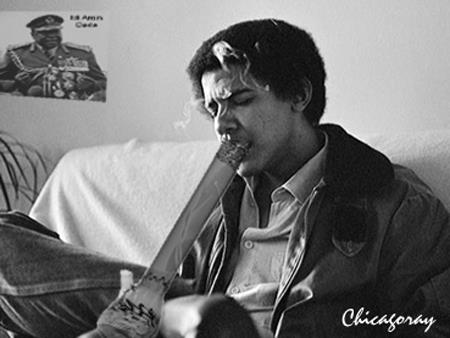
Image

Our President minored in bong rips, honoring his predecessors’ commitment to cocaine and drunk driving.

I am considering sending Mr. Obama a copy of Bastiat’s “The Law” – apparently, this foundational primer, along with Locke and Jefferson aren’t required reading in the Columbia University constitutional law curriculum.  Is it intellectually honest to assume that the nations’ chief executive is ignorant of the school of thought that is the genesis of our nations’ supreme law?  Likely not – either Mr. Obama is ignorant of the very nature and definition of law itself, or he is openly perverting its’ mechanisms in an effort to destroy the liberty of the people and supremacy of the Constitution.  Darth Sidious, evidently, trained another apprentice after the death of Vader.

Oh Jedi, where art thou?


Disgusted and Furious,

LA Repucci

How China could Conquer the US

The US owes big money to China. And sooner or later, the Chinese are going to come collect it. And they will conquer the US. But the question is, how will they do it? There will not be a military invasion, nor an armed war between the US and China. Chinese troops will not land in the United States. Unless, of course, they are invited by the US government. So how will this happen? It will likely be a slippery slope. This article draws upon real things that have already happened in history, and compares them to things that could easily happen today.

Disclaimer: This article is about the government of the People’s Republic of China, and its affiliated state-owned corporations, not Chinese people in China, nor Chinese-Americans.

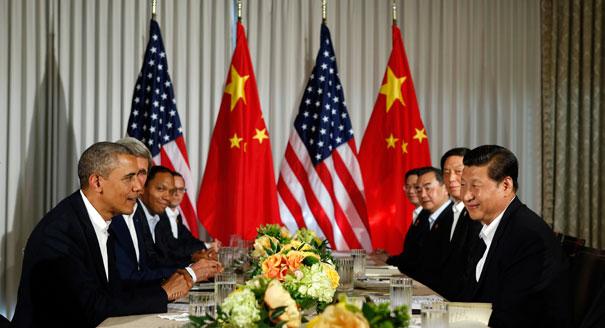
obama and chinese

Step One. The Chinese will take the private sector.

While young American professionals are often underemployed after majoring in liberal arts, students in China focus on training in the STEM (science, technology, engineering, math) fields. Many Chinese professionals are already being invited over in droves to work at American companies. Many end up becoming naturalized citizens, many do not. The Chinese are stereotypically a very stern, serious and hardworking people. They are known to not shirk tasks, and not to complain. Many  cultures in the Far East teach their youth to show limited emotion, and keep the collective of society in mind. The same cannot be said about Americans, who are often narcissistically individualist.

As more and more American businesses are vacuumed into conglomerates, they will focus on the international market. There will be capitalism with no borders. The Chinese have already begun to buy some American companies, such as Smithfield Pork. They will buy more and more. Americans will not see dozens of Chinese employees walking around big companies, but the top corporate executives of the major international companies will be from China. Americans will remain in management. Eventually, the Chinese executives will begin planting fellow Chinese in management, until it becomes obviously noticeable.

Step Two. The Chinese Raj in America.

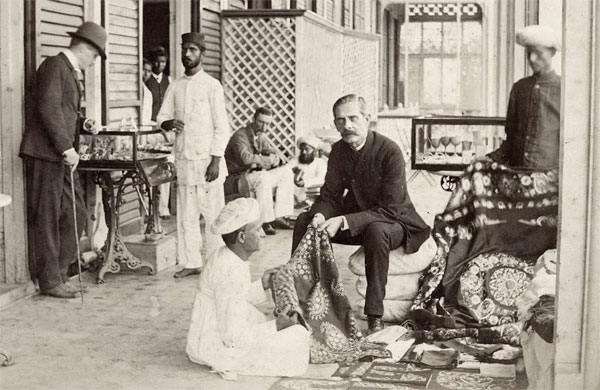
On April 13, 1919, in Amrtisar, India, hundreds of Indian men women and children were shot dead. The officer who yelled, “FIRE!” was a British colonel named Reginald Dyer. But he was born in India. And every finger that pulled a trigger that day was one that belonged to an Indian native. The British did not land in India with guns blazing. They arrived as merchants. And were welcomed by the rich Brahmins ruling India at the time. Britons and Brahmin Indians lived side by side. The Indians were not slaves to the British, they were slaves to other Indians. Some Britons grew up in India and never even saw Great Britain (covered in films the Secret Garden and the King and I).

The British Raj was corporate first, government second. And that is exactly what the Chinese could do to Americans. Also, notice that the British did not start converting to Hinduism and assimilating with the Indians (at least not until the days of the Beatles). They remained 100 percent British. Because they considered themselves superior, and the Chinese corporate executives will act in a similar way. Keep in mind, these are not poor immigrants coming to a work a low-wage labor job; they will arrive with a position of corporate power waiting for them. A new generation of Americans, thirty years down the road, could grow up speaking Chinese as second language, and adopting some aspects of Chinese culture.  Yes, it can happen, as that is what it may take for Americans to succeed in business, especially international business. We are fully aware that most American politicians would sell Americans to a foreign government for profit. That much is perfectly clear.

british raj

Step Three. The Chinese take the International Military.

It is highly unlikely that Chinese and American soldiers will ever shoot at each other with guns. But a peaceful, quiet, military takeover is possible and probable in the long-term. To those who believe this is an out-in-space idea: it is not when you realize that the US did to Great Britain in 1917, and sealed the deal by 1944. US troops joined UK troops in the trenches, and General Pershing and General Haig co-commanded. By the Second World War, there were many UK marshals and generals, but most accept that General Ike wore the trousers in that relationship.

The US troops never packed up and went home after WWII. The base in Germany is still there, protecting Europeans. It is likely that China will act as a neutral mediator as things get gradually more aggressive in the Middle East between the USA and Russia. China has a shoe in each door. China does not need to make one military threat, but they can pull financial plugs. The Middle Eastern foreign policy will continue in a more UN-overseen way, with cooperation between the US and China.

The Chinese Army has three million soldiers. Although few Americans would ever entertain this, it is possible that China could have better soldiers. In the same way as the stereotypical Far Eastern work ethic, their use of pure logic and their hidden strength behind humility makes them the most ruthless of soldiers. A cool, calculating, collectivist mentality is the backbone of a powerful military. Add to that the fact that they have ample bodies to throw. This is what won the war for the Soviets on the Eastern Front, and the Union Army in the Civil War.

Step Four. Robots, Technocracy, and the New Age future.

Much of the ideas of Chinese nationalism or American nationalism will fade into obscurity as the Chinese corporatist government will begin building rapidly advanced technology, push towards technological singularity, and become the ultimate technocratic progressives. When the main business language becomes programming language, the linguistic differences between Chinese and English will matter very little. The STEM-oriented Americans (future versions of people such as Bill Gates and Mark Zuckerberg) will unite with the Chinese to move forward in the Space Race. The cultures will be indistinguishable because everyone will think in a technological mindset. Of all the world’s peoples, the Chinese certainly need what they call “living space” and space is the last frontier.

bill gates and jinping

Wake up the People.

Draconian laws not only deserve lampoonery, they require it. Alert your community to the truth and drive a dialogue of liberty amongst the people. The NSA is directly assaulting free speech, attempting to silence the voice of the people — exercise your rights or lose them!

A Warm Welcome, and other assorted editorial duties

Hello all. I’m proud to announce and introduce Jesper Ahlin to the blogging team here at NOL:

Jesper Ahlin received his B.A. in philosophy from Linköping University and is now a graduate student in philosophy at Uppsala University. He has conducted Stureakademin, a study program run by the classical liberal think tank Timbro, and is the local coordinator for European Students For Liberty in Sweden. As a right-libertarianish thinker he enjoys reading Mises and Rothbard as well as Hayek and Nozick. He also likes ice hockey, music and traveling.

Jesper’s debut post can be found here. He’s currently hanging out in Washington and New York City, but do look for more of his posts in the near future. I, for one, am very excited to be blogging alongside Jesper.

In other news around the blog, Andrew is shocked – SHOCKED! – to find Senator Elizabeth Warren in the company of other rich, white (class-wise, of course) liberals. What would a “sincere and credible populist” be doing rubbing elbows with rich, white (class-wise, of course) Leftists? After all, Senator Warren, a Native American, was a law professor at Harvard. Think of all the glass ceilings she shattered. Do read the whole thing. As always, it’s very well-written.

‘Populism’ is just a quaint term for ‘fascism’ and ‘fascism’ is just a fancy term for ‘nationalism’. All three terms are useful if you want a society to be culturally, economically and politically stagnant. What, for example, is the criteria for being an ‘American worker’ (one segment of society that Senator Warren holds especially close to her heart)?

The guy who works twelve hours a day at a hospital, four days a week?

The guy who works twenty hours a week at a deli slicing pastrami?

And what, for example, characterizes an ‘American worker’ from, say, a ‘German worker’?

Nobody in Warren’s populist camp ever really defines what it means to be an ‘American worker.’ Policy matters, and policies targeting certain segments of society – whether for good or for ill – will only guarantee stagnation, especially if the certain segment of society is only vaguely defined. Not everybody can drive a BMW to work and, more importantly, not everybody wants to.

Elsewhere, Hank and NEO and Edmund argue about political power. It seems to me that they are simply arguing about how this power should be shared, rather than how it should be shorn. This is a dangerous precedent, in my opinion. Read Edmund’s whole piece, and the exchange that follows.

Personally, I don’t care which party is in office, as long as laws that are anathema to libertarianism can be repealed. Conservatives are often an embarrassment to themselves and to their countrymen. They rarely travel, are often less educated than their Leftist peers and usually possess a deep belief in the power of magic and sorcery to solve the social and personal problems that they inevitably come to face in life.

For all this, at least they aren’t Leftists.

Thanks for reading and, more importantly, for sharing your thoughts in the ‘comments’ section. Together, through arguing, we are doing the fine-stitching of democracy.

Gentrifying Tacky Sac: not bad if you can stomach the corruption and iniquity

A few months ago, I lit into the Capital Area Development Authority, or CADA, for redlining a significant portion of Midtown Sacramento to exclude poor and middling tenants. What I find particularly objectionable about this redlining is that it is done as a matter of deliberate government policy, since CADA is a joint powers authority chartered by the Sacramento municipal and California state governments, and that there seems not to have been any pushback from local activists or the courts.

CADA administers a huge amount of residential property to the east and south of the Capitol, enough to unilaterally set housing policy on a number of blocks. Some of the conditions that it sets for tenants are draconian, among them, open lines of credit with on-time payment histories, high credit scores, stable, long-term tenancies with landlords who are not friends are relatives, and absolutely no negative references from past landlords. These conditions are objectively discriminatory against poor applicants, who are often forced to rely on makeshift living arrangements with friends or relatives, unable to pay bills on time because they simply lack the money, and preyed upon and retaliated against by systematically criminal slumlords. The question is not whether discrimination against the poor is taking place here, but whether or not it is morally and legally acceptable.

There’s another question that really muddies the waters: is discrimination against the poor practical? Having spent quite a bit of time in Midtown and Downtown over the past few months, I have no doubt that CADA has done a lot to clean Midtown up. Midtown doesn’t have anything like the hordes of shambling homeless mentally ill, patina of grime, and trails of trash that one finds on the K Street light rail mall, or, as it’s lovingly called by its marketeers in the (posh) drinking industry, “The Kay.” The 16th Street light rail station has a bit of that dysfunction going on, but it’s safe to assume that CADA’s redevelopment activities, some of them only a block to the north, have brought some degree of improvement to the station by increasing the sheer number of non-derelict passengers using the station at off-peak hours. If this is the case, it has to have marginally improved the quality of life for the disproportionately poor passengers who change trains there. (16th Street is the last station leaving downtown before the Gold and Blue Lines split, the former east towards the dodgy neighborhoods of Rancho Cordova, the latter south towards the much scarier ghetto sector of inland South Sacramento.)

CADA’s territory in Midtown is more or less free of the malt liquor bottle shops, intractable pants-on-the-ground al fresco alcoholics, undermedicated long-term outpatients, and criminal underclass elements that plague many parts of Sacramento and its suburbs. These things have been driven out by clean and orderly businesses and the sort of clean and orderly people who patronize them, who are also the sort of people one is not scared to encounter on the streets late at night. I’ve come to the conclusion that, questions of equity aside, CADA is clearly doing something right.

This still leaves troubling questions of civics. I would have much weaker objections to a private developer applying such conditions to prospective tenants at a luxury apartment complex that was built entirely on the free market, i.e., completely without eminent domain, weaselly tax-break inducements, or other government favors. (These conditions are met disgustingly less often than developers would like us to believe). At a high enough level, any residual objections I might have to the abuse of credit rating inquiries or other background investigations would be moot anyway, since serious high-rollers in real estate consider cash on the barrel head the offering that covers a multitude of sins, a most fitting sacrifice of first fruits.

The problem is that draconian tenancy conditions are applied most heavily against those who can least manage to meet them. Many rental markets are monopolies or oligopolies controlled by slumlord thieves who steal tenants’ security deposits as a matter of course. In these markets, the idea of tenants of limited means being able to exercise a right of free association to find better landlords or some sort of roommate arrangement sounds like a cruel joke. On the whole, American housing law is de jure equitable but de facto a dual system of high and low justice.

The proper role of government intervention in such a market is to enforce equity standards on landlords, many of whom are easily shown to be in willful and material violation of federal racketeering law. As a matter of equity at law, government agencies have absolutely no business helping unethical and often criminal landlords and banks entrench themselves as private tyrants by allowing them to help redline the poor out of apartment complexes that are tantamount to public housing.

One of the great intellectual frauds of agencies like CADA is their false promotion as civic and community organizations. CADA is more accurately described as a regulatory capture apparatus operating at the behest of neighborhood business interests. A huge amount of what passes for community civics in the United States is in fact business marketing strategy enforced through government policy. This is classic regulatory capture. What business owners want in these cases is to flood the neighborhood with their target demographic. Sure enough, CADA’s rental conditions are perfectly designed to flood Midtown Sacramento with yuppies and their disposable incomes.

This is a point that cannot be made clearly enough: the purpose of CADA’s draconian rental conditions is NOT to ensure that its tenants are orderly, peaceable, acceptable risks to their landlord, and capable of improving community life through their presence; it is to ensure that they’re moneyed enough to patronize the local yuppie joints at a suitable price point. These conditions are patently not designed just to screen out risky applicants who have trashed previous rental units, worked crack territories on Hella South Stockton, held meth bake sales in Rancho Cordova, or had regular 3 am bruiser sessions with their live-in lovers and the Sheriff’s Department’s night watch. They are also designed to screen out perfectly peaceable and civic-minded applicants who brew their own Sanka at home and eat pork and beans out of a can instead of dropping thirty dollars a day on lattes and Thai food. Some of these people are exactly the types whose eyes are good to have on the street. Do we want maternal 7-Eleven clerks and home health aides from the trailer parks and the ghettos moving into the neighborhood to keep their eyes on the streets? As a matter of civics, we do. As a matter of economics, it probably depends on whether they’ll buy their pork and beans at the Midtown Safeway or trek out to the Rancho Cordova Grocery Outlet, but the answer is: No, they’re poors.

And no, this is not being done so that these mother hens will continue to grace their old neighborhoods with their wisdom and supervision. Any self-described progressive who says otherwise is concern-trolling the Sacramento banlieue with suggestions that the crabs all work to keep each other safely within the barrel. If anyone in charge of policy at CADA gives a shit about Rancho Cordova, I’m Mother Teresa.

It isn’t about high civics; it’s about marketing through government policy, a much crasser proposition. Many elements in the business community do their level best to elide the difference between civics and business, but it’s a real and serious one. CADA’s class-based redlining is effective policy, but it is not equitable or ethically sound policy. Don’t think for a split second that they’re the same thing.

Filosofiska skillnader och likheter mellan liberalism och libertarianism

Libertarianismen betraktas ibland som en förlängning av liberalismen, men trots att de båda idétraditionerna har mycket gemensamt finns det också mycket som skiljer dem åt. Båda anammar filosofiskt metodologisk individualism och utgår därför i sin verklighetsbeskrivning från individen. Båda är också stora förespråkare av frihet – akademisk frihet, social frihet, ekonomisk frihet, och så vidare. Men tittar man på de båda traditionernas grundvalar är skillnaderna tydliga. Liberalismen förespråkar frihet och endast frihet, libertarianism förespråkar rättigheter och endast rättigheter.

Eftersom liberalismen utgår från att individen ska vara fri utgör idétraditionen av hel familj av idéer. Man kan påstå att frihet är ”frånvaro av hinder”, vilket brukar kallas för negativ frihet, men man kan också säga att frihet är samma sak som ”möjligheter”, vilket brukar kallas för positiv frihet. I det förra fallet krävs endast att omgivningen avstår från att ingripa medan det senare kräver någon slags insats från omgivningen så att individen ska uppnå ett visst tillstånd. Man kan också påstå att frihet kräver en viss variant av rättvisa, vilket åtminstone sedan John Rawls enorma nedslag i den politiska filosofin på sjuttiotalet är en vanligt återkommande tanke. Det går idag knappast att diskutera politisk filosofi på allvar utan att på något sätt förhålla sig till Rawls rättviseteori.

Libertarianismen har (åtminstone enligt många) samma förfader som liberalismen i sextonhundratalsfilosofen John Locke. Locke argumenterade för att människan genom Gud har tilldelats en naturlig rätt till sin egen kropp. Det är ur denna tanke som liberalismen hämtar sin idé om individens frihet, medan libertarianismen hämtar sin idé om individens rätt. Gud, säger libertarianen, har ingenting med saken att göra, men det är ett obestridligt faktum att människan till fullo äger sin egen kropp. Ingen har rätt till hela eller ens en del av någon annans kropp, utan dessa våra fysiska uppenbarelser i världen är våra egna tempel att förvalta efter bästa förmåga och förstånd. En av de mest framstående utvecklingarna av detta sätt att tänka finns att hämta i Robert Nozicks ”Anarki, Stat och Utopi”, som Nozick skrev som svar på Rawls rättviseteori. Liksom att en seriös filosofisk debattör måste ta hänsyn till Rawls måste hon också ta hänsyn till Nozicks undersökning av individens rätt till sig själv.

Libertarianismen är inte lika lätt som liberalismen att dela upp eftersom ”rätten till sig själv” helt enkelt är svår att bryta ned i mindre beståndsdelar. Det är en svår grundsats att bestrida, och det är inte heller där som konflikten med andra idétraditioner utspelar sig – åtminstone inte enligt libertarianismens motståndare. Om det är sant att varje individ har fullständig rätt till sin egen kropp måste det nämligen följa logiskt att ingen har rätt till någon annans kropp, och att man därför inte med moralen i behåll har rätt att inskränka på någon annans handlingar utom när dessa strider mot andras motsvarande rätt till sina respektive kroppar. Det vill säga, jag får exempelvis inte svinga min knytnäve på ett sätt som hindrar ditt huvud från att fungera så som du vill att det ska fungera. Jag är fri att slå med mina nävar, men inte om mina slag träffar dig. Hur går en sådan fullständig själväganderätt ihop med att man måste betala skatt? Med att man inte får använda narkotika? Eller med ett samhällskontrakt som man aldrig har skrivit under? Det går helt enkelt inte. En fullständig själväganderätt är helt och hållet oförenlig med all form av ofrivilligt samhällsdeltagande. Om det är sant att individen har fullständig rätt till sin egen kropp finns det alltså inget sätt på vilket man kan motivera en stat moraliskt.

Den liberala diskussionen om vad frihet är har sin motsvarighet i libertarianismens diskussion om vad individen har rätt till av det som inte tillhör hennes kropp. En fullständig själväganderätt tycks i de flestas ögon vara rimlig, men konsekvenserna av en sådan själväganderätt verkar i stället orimliga. Många tycker helt enkelt att skatt, förbud mot narkotika och ett statligt våldsmonopol är nödvändiga för att samhället ska fungera, och alltså måste det finnas något fel med libertarianismen. Man hittar sin angreppspunkt i externt ägandeskap, alltså individens ägande till annat än sin egen kropp. Kan det vara så, argumenterar man, att individen måhända äger sig själv, men att allt som befinner sig över, under och mittemellan individer tillhör alla?

Liksom att liberalismen delas upp i negativ och positiv frihet delas libertarianismen därmed upp i höger och vänster. Nej, säger högerlibertarianer, individen äger sin egen kropp till fullo och äger därmed också allt som hon med hjälp av sin arbetskraft omvandlar till ägodelar. Det finns ingenting som heter ”gemensam” egendom, för endast individer kan utöva ägandeskap över fysiska ting. Ja, säger vänsterlibertarianer, individen äger sin kropp till fullo, men allt som hon blandar sin arbetskraft med tillhör alla – alltså är det inte individens äganderätt till sig själv och sitt arbete som ska inskränkas på, utan det som hon med sin kropp bearbetar till egendom. Jorden, träden, vattnet och allt annat tillhör alla och måste fördelas därefter enligt något annat och från individen skilt mekaniskt schema. Inkomstskatt är grovt omoraliskt, men skatt på den mark som arbetsplatsen befinner sig på är ett måste så att inte naturens resurser fördelas orättvist.

Det finns alltså både likheter och skillnader mellan liberalism och libertarianism. Ingen seriös tänkare kan utan goda skäl avfärda någon av de två och fortfarande förvänta sig att bli tagen på allvar. Tankeströmningar som vanligtvis tar starkt avstånd från metodologisk individualism och (särskilt) ekonomisk frihet har faktiskt också anammat frön från de båda idétraditionerna. Föreställ dig exempelvis om den politiska debatten inte hade behandlat frågor som ”integritet” och vad det hade gjort för realpolitisk skillnad. Hade sjukjournaler varit offentliga handlingar? Skulle terroristlagar någonsin kritiseras? Vilka begränsningar skulle FRA ha?

En politisk tänkare, oavsett vilken roll denne spelar, borde ägna tid och energi åt att undersöka vad självägandeskap egentligen innebär moraliskt. Det finns handlingar som obestridligt är fel. Man straffar inte en oskyldig för sitt eget höga nöjes skull. Varför inte? Därför att individen har ett värde. Vad detta värde är, och hur det kan och bör realiseras i politiken, är en oerhört viktig diskussion som inte får åsidosättas. Libertarianismen är den politisk-filosofiska gren som har de mest välutvecklade argumenten för individen och borde därför uppskattas och respekteras av varje seriös debattör. Om man inte tar individen på allvar förtjänar man nämligen inte själv att tas på allvar.

Forty years after the launch of feminism

On Halloween afternoon I was downtown Santa Cruz on a candy expedition, escorting my grand-daughter the delightful M., five. M., a brown-skinned child, was Rapunzel. She was wearing a purple sequined dress with a petty-coat showing its pale blue border beneath, white gloves, and a blond wig to her ankles. She would have easily won the contest if there had been one. All afternoon women voiced their appreciation of her look.

My perspicacious observations on that occasion:

All little girls still want to be princesses or fairies. None wants to be a fire man, or a firegirl, or a fireperson. None wants to dress in neutral colors. If it’s not pink, it’s purple.

Nearly all little boys want to be dressed as anything with a gun, or a sword, or anything with a truck. Those I saw who are dressed as anything else were obviously forced by their politically correct or social climbing Moms. The way you know is that they sulk in spite of the large amounts of candy in their loot bags. A small number of little boys do want to dress as fairies but that’s nothing new. And it has nothing to do with feminism.

Fat women take Halloween as just another opportunity to wear a push-up bra and to hang out (or to almost hang out).

Almost no straight man wants to wear a costume. Those few men who do wear one have been blackmailed by their wives. You know it because they are costumed to represent the minor part of a pair or of a trio of which Mrs is the principal, the Tin Man of Wizard of Oz, for example. Costumed straight men are thus merely fashion accessories, as well they should be.

Forty years later: Feminism: 0; Mother Nature: 1.

I am not making this up. Open your eyes for the Goddess’s Sake!

And I know it’s completely different in San Francisco but it has nothing to do with feminism, one way or the other, or the other.

Liberty Movement Cannot Just Rely on the Right

In order for the liberty movement to make things work, they need to do a little bit of the left and right at both times. For every “liberal” government program they cut, they have to cut a “conservative” government program. For every right-wing cause they champion, they must champion a left-wing one. The severity of this problem really sunk in when I noticed how much the Koch brothers had co-opted the Liberty Movement. If libertarians do not stress their common ground with liberals, they are going to be screwed. Sure, it is important to take over the Republican Party, but at the same time, they have to appeal to a significant portion of liberals and Democrats.

I’ve been to many events that I suspect were likely funded by the Kochs, to one degree or another. Although I support the economic ideas promoted, they speak half-truths and promote half-ideas. They use silence to omit half of the core libertarian message. They use the word “liberty” over and over again, until the word loses meaning. They are obsessed with “taking over the Republican Party”, and marginalize all those who support the Libertarian third party. They talk about repealing Obamacare, cutting taxes, loosening regulations, and cutting welfare, but that is about it. Koch-sponsored events barely scratch the surface on the following topics: the drug war, the police state, the neoconservative Middle Eastern foreign policy, the growth of the defense department, corporate bailouts, corporate subsidies, private prisons, CIA-backed dictatorships overseas, or any of the social issues linked to the Christian Right.

I have become incredibly jaded and exhausted with the talk about “appeasing to the Republican base”. There is no longer any reason to care what pro-lifers and evangelicals say, or cater to their opinions. No one need care what some old, chubby, white haired, closet racist, small town gladhanders have to say. They are old, and will be dead or retired by the end of the decade. Their opinion should be irrelevant. It is time to pick the battles. The old Republicans are stupid, senile, and reactionary, and are completely incapable of challenging political enemies on a modern stage. Meanwhile, liberal Democrats have brainwashed the whole younger generation, and are on the verge of causing us economic collapse (not entirely their fault – ie. Bush). And all the Republicans can come up with is to scream the same reactionary, obstructionist things instead of coming up with new ideas. Here is a link to an article discussing the demographic reality.

Hosting forums on fighting Obamacare, heavy-handed regulations, gun control, and high taxes is all well and good. When taken out of context from the rest of the libertarian message though, it makes libertarianism repulsive to the left. It looks like a bunch of straight white males wearing bowties, complaining about welfare and taxes. We all know what reaction this triggers from liberals. The paragraphs below contain are the message that libertarians actually say. The highlighted bracketed sections are what liberals hear them say, at least when Koch Industries controls the message.

Poor people are arrested for drugs and other embellished charges because of the police state, and are sent to private prisons, and leave their families behind, and when they get off they have no choice but welfare. We need to stop the police state that ruins the lives of the poor, and then {cut the welfare that the poor have become dependent on} as they no longer will need it.”

or

“{We need to loosen regulations on American companies and remove mandatory union laws}, because corporate robber barons will go overseas to countries with CIA-backed dictatorships and exploit poor people in the third world, causing blue-collar Americans to lose their jobs and get on welfare. When the jobs return to America, {we should cut welfare}.”

Taken out of context, the libertarian looks exactly like the stereotype that statist liberals want to play up. The statist liberals are viciously dedicated to ruining the libertarian image in front of anti-war, pro-civil liberties liberals who should join the cause. And with their four-fifths of the media, Obama’s Hollywood friends, and poorly informed immature university students trying to rage out against their parents’ corny world, they have far more campaign power than any conservative or libertarian.

That brings us to Rand Paul, and his modus operandi for 2016. The word on the street is that Rand is a libertarian like his father, pretending his best to be an “establishment Republican”. As a result, he is incredibly careful about the libertarian things he says. Or is he? Despite the fact that Roe vs. Wade is upheld by the Supreme Court, that no one will ever overturn, he’s still wasting his time trying to appeal to the pro-life evangelical crowd. Supporting pro-life legislation does more harm than good in today’s climate, especially with the venomous reaction it causes from four-fifths of the media and the young activists. It is not a battle worth fighting.

Here is what Rand Paul has going for him.

  • He opposed the Syrian War

  • He’s opposing mandatory minimums for drugs

  • He’s opposed NSA espionage

  • He said GOP needs to “agree to disagree” on gay marriage

  • He filibustered drones

  • He supported an end to foreign aid (specifically to countries who persecute Christians)

  • He has pledged to filibuster Janet Yellen’s taking office of the Fed until it is audited. (Of course, given that most people know nothing about the Fed, the media outlets will likely portray this as Rand “being sexist and opposing a woman taking an key position”)

Of course, many Obama supporters will stick their head in the send and ignore all of these things. In terms of Syria, NSA, and drones, all liberal Democrats have to say is, “OF COURSE HE’S OPPOSING THE WAR BECAUSE HE’S JUST OBSTRUCTING OBAMA!!!!! IF BUSH WAS PRESIDENT, ALL THOSE STUPID FUCKING REPUBLICANS LOVE WAR AND WOULD BE SUPPORTING IT!!!!!!” Statements like the above were floating all over the media and internet during Rand’s filibuster.

Rand Paul is obviously not afraid of stating his opinion on the Civil Rights Act, which is that although he believes any discrimination enforced by law is utmost unconstitutional, and should be overturned, he believes that a privately-owned establishment has the right to refuse service to whomever for whatever reason. (To put this in context, private establishments in Southern states before 1964 had to comply with Jim Crow regulations enforced by the state government. The greater blame falls on state politicians, as opposed to private business owners.) Like Barry Goldwater in 1964, Rand Paul believes that the free market would end private discrimination.

If Rand Paul is willing to come out and state this rigid extreme libertarian opinion, then why the hell is he so afraid of promoting libertarian ideas about drug wars, foreign policy, the military-industrial complex, and the prison-industrial complex. Let everyone be warned, if Rand runs in 2016, his Goldwaterite opinion on the Civil Rights Act is the only thing Democrats will talk about it. They will repeat this over and over again, making it the headline every time Rand’s name is mentioned on the news.

I just trust that with every move Rand Paul makes, he is listening to his father on how to go about it. It is just time for Rand to come out as a libertarian on more issues than the typical Tea Party ideas. I am not sure why so many libertarians want to kiss the tushes of “establishment Republicans”, as Republicans are statistically and numerically doomed, by demographics and age. There are characters all over the media who will do whatever it takes to see Rand destroyed. The time to think ahead is now.  It is equally important to garner the support of common ground liberals and progressives as it is to take over the Republican Party. Anyone who does not see this is a fool.

Civilization: A Praxeology

…and they say praxeology is flawed…

A thought-game by L.A. Repucci

Okay; suppose civilization collapses.  Positing the end of our current human paradigm — the sum of our economic, governmental and technological works subtracted — is a non-partisan exercise.  Both ends the ideological spectrum are ever doomsday prophets, decrying an immanent collapse, undone either by means of our State or our Liberty.

‘Resources are held in Common!’ cries the socialist.  ‘Property is product of my Life and Liberty’ cries the anarchist…both claim we are robbing ourselves blind.  Let’s skip  the part of the process where the libertarians and collectivists argue about roads and markets, and just imagine the ‘end’ is behind us all, and we (any two or more parties) survived, and are left to re-establish civilization.  This proposition is essentially a ‘dropped on a deserted island’ scenario — an exercise in pure a priori, inductive inquiry.

We are left to our own devices; a natural state with no default preset values, no existing law or paper contracts, no social institution, normative or common tradition.

It’s just you, me, and the pile of radioactive rubble that previously was a long-defunct post office.

How to proceed?  What rules shall we make for ourselves, and how should we best go about the process of survival?

Please, feel free to take your turn by leaving a comment — this is an open-ended invitation to engage in the process of civilization. In the interest of intellectual honesty, I would offer that it is entirely my intention to pursue a libertarian outcome, to our mutual benefit.

Game On. =)

Freedom of Speech? No Such Thing!

I get lots of solicitations for libertarian groups and I’m very pleased that there are so many of them these days. I can’t possibly support them all but I recently ponied up for an organization called F.I.R.E. (Freedom for Individual Rights in Education). Their focus is on fighting suppression of free speech on college campuses. Thus, for example, FIRE announces its Speech Code of the Month for October 2013:

Salem State University in Massachusetts prohibits “cultural intolerance” in its residence halls—a broad ban that threatens debate on controversial issues in a place where students often speak the most freely. Making matters worse, the policy applies not only to “actions” but also to “omissions,” broadening its scope to include not only speech but also a student’s personal decision not to speak.

It burns me up to see self-appointed fascist administrators launching attacks on individuals who dare to speak their minds in unpopular ways. And yet, there is a problem, centered on the distinction between public and private institutions. Suppose a small Baptist college decided that students would not be allowed to mock Christianity or promote Islam on campus. Could there be any objection to such a policy? Now suppose that same college decided it would not admit black students. Any thoughtful libertarian would have to defend this policy, distasteful though it may be, on grounds of freedom of association. The bottom line is clear: owners of private colleges have every right to determine whom they will admit as students or hire as faculty and how they are required to act on campus.

Now what about state colleges such as Salem State? Such institutions are “public property,” an oxymoron if we think about it. “Property” denotes the right to use or dispose of some valuable asset, implying an exclusion of non-owners or others who have not been invited to use the property. On the other hand “public” means, if anything, that anybody is allowed to use the asset and nobody is excluded. Who owns San Jose State University where I teach? The California State University Board of Trustees is the most likely candidate, but the faculty has a lot of control through the faculty unions and faculty senates. The Governor and the legislators wield a lot of influence too. The citizens own the place in theory but the connection between SJSU and the citizenry is so remote that it might as well be non-existent. The lack of clarity about who owns the place is the source of most of the idiotic, wasteful, and sometimes downright offensive policies that we see at SJSU and all other government agencies.

So what sort of speech is to be allowed at SJSU? I would say anything goes except shouting down lecturers. Objectionable behavior such as name-calling should be met with ostracism and boycotting or perhaps tit-for-tat. No need for prohibitions. But the people who have power over these matters no doubt see it differently.

Thinking about it more, there really isn’t any such thing as freedom of speech. Speech is not carried out in a vacuum (literally: there can be no sound waves!). If you’re speaking you are standing on someone’s property; if writing you’re using pen and paper or a computer. Land, pen, paper and computers are all resources whose owners have the right to determine who uses them and how. I have no right to invade your house and deliver a speech in your living room nor to grab your computer and compose a blog. Freedom of speech can only mean freedom to use one’s property, or the property of another who has given consent, for speaking purposes. (This, by the way, solves the fire-in-a-crowded-theater conundrum. Prohibitions on yelling “fire” are not a diminution of freedom of speech but rather a recognition of a theater owner’s right to control behavior on his property. See Rothbard’s excellent Ethics of Liberty p. 114.)

In the end, as Rothbard points out, there is no dichotomy between property rights and “civil” rights. There are only property rights, recognizing one’s own body as one’s primary form of property.

Shopping in communism versus capitalism

In a narrative portion of his latest (and characteristically riveting) novel the author has written the following sentence that prompts me to wag my finger at him a bit. “Now it was a Western-style shopping mall stuffed with all the useless trinkets capitalism had to offer…” Daniel Silva, The English Girl (2013). The sentence reveals something very important about capitalism as well as Silva’s apparent failure to understand it.

Silva was contrasting the Soviet style, drab, grey shopping center with the more recent type that have been springing up in Russia and the former Soviet bloc. Yet instead of showing appreciation for the mall with its great variety of trinkets, which include both what he can consider useless and the useful kind, he appears to show disdain for it.

It is precisely the fact that such malls include thousands of trinkets, some useful to some, some not, that makes capitalism so benevolent. Unlike the Soviet Union and its satellites, where only what the leadership deemed to be useful got featured in shopping malls (such as they were), in Western-style malls millions of different individual and family preferences are on display and for sale, aiming to satisfy the huge variety of tastes and preferences.

I recall many moons ago there was a fuss about the popularity of the Pet Rock! It was — may still be — a trinket sold as a novelty item. I remember defending it from its disdainful, snooty critics, arguing that there may well be a few people for whom it would be suitable gift.

Say your grandfather worked in a mine or quarry and now on his 80th birthday you want to get him something not quite useful but meaningful! He has everything useful already, so you pick the Pet Rock for him. It would make a nifty memento! Might even bring tears to his eyes.

For millions of others it would indeed be a “useless trinket” but not for old granddad. And for every other item that author Silva may consider useless, there will be someone who finds it touching!

That is precisely what individualism implies. Something Marxists cannot appreciate since for them only what advances the revolution counts as useful. Individuals as such, with their idiosyncrasies, do not count for anything! And capitalism rejects this misanthropic doctrine, which is why the enormous variety of goods and services is part of it while under socialism and communism only what is proper for the revolution makes sense to produce!

I wish Mr. Silva had indicated some of this as he derided those Western-style shopping malls. Even if he cannot find something useful for himself in them, he can at least appreciate them as contemporary museums of possibilities.

YAL member speaks at County Cannabis Regulatory Hearing

On October 22, 2013, the Santa Cruz County Board of Supervisors convened to vote on re-regulating medical cannabis cultivation and distribution via local grow operations and a local dispensary. Unfortunately, while the public applauded my comments regarding the issue, the County Board were not swayed from moving forward a “regulatory scheme” as Board member John Leopold commented after the 3-2 vote to further restrict the liberty of free people.

From the Comments: Liberalization is about much more than just the economy

Andrew is skeptical of NAFTA’s achievements:

NAFTA isn’t the only major factor at play, although you’re right that it has provided Mexico with some huge economic benefits. This is especially true in the factory towns along the US border, which are able to absorb a much larger absolute amount of surplus labor from poorer, less developed parts of the country today than they could a generation ago. That said, I’m still ambivalent about NAFTA on account of the severe short-term economic and social dislocation it caused, e.g. to US factory workers who were undercut by Mexican competitors and to small Mexican farmers who were undercut by major US agribusinesses. It strikes me as a hastily and abruptly implemented policy change that caused a lot of needless collateral damage in the short term. Whether this damage was worthwhile in the long term depends a lot on one’s role in the North American economy at the time. On the whole, I’d say NAFTA has been a mixed bag.

This, I think, is in response to the 2003 academic paper (published by three economists) that I cited in defense of NAFTA’s success. It is a paper that only focuses on economic indicators (such as per capita income or total factor productivity). Here is what it found: NAFTA has not had a discernible effect on the US or Mexican economies. The displacement of US factory workers and Mexican farmers that Andrew mentions had been going on long before the implementation of NAFTA. Basically, NAFTA merely reduced the amount of paperwork associated with the changes in both economies. It has not hastened the changes.

Similarly, it appears that the growth of Mexican and American purchasing power parity are simply part of a hemisphere-wide trend that has also been going on for decades. In short, economists have found the economic effects of NAFTA to be negligible. So why do they continue to overwhelmingly support it?

My answer to this question can be found, I think, in Andrew’s keen perception of the changes in Mexican society:

Over the same time that NAFTA has been in place, Mexico has also become much more Protestant and nondenominational in religious affiliation, better educated, and, as I understand it, somewhat better governed and administered. Maybe I’m mistaken, but I have no reason to suspect that the religious shift had anything in particular to do with Mexico’s improving economy or trade liberalization. “Church-planting” missionaries of the sort that have evangelized Latin America don’t look for a particular economic or policy profile in a country before imposing themselves on it, although they do generally appreciate a certain amount of poverty and dysfunction, as long as they’re reasonably reasonably safe in country, since people in economically healthy, well-governed countries are less receptive to their pitches. This is a very cynical analysis, but the cravenness in “mission field” circles can be mindblowing.

What’s happened in much of Latin America in the last decade or so is that these evangelism programs have hit critical mass. They’re now self-sustaining operations being run mainly by Latin American evangelists pestering their own countrymen, or sometimes people in nearby countries. Gringo missionaries are still working in Latin America, but they’re no longer critical to the growth of evangelical churches there. (Besides, there’s much more street cred to be had in evangelizing a recently restive Muslim village in Northern Ghana, or, as my relatives and everybody at their church called it, Africa. I bless the rains….)

Liberalization is about much, much more than economic growth. The decline of Catholicism in Mexico, for example, is an incredibly good trend. This is not because Catholics suck, but because Mexican society is becoming more diverse. Liberalization means opening a state’s political, economic and social institutions to the world.

Undertaking liberalization thus exposes a society to changes. Sometimes societies may have a tough time with changes, especially if there are deeply entrenched political structures in place. Most often, though, these changes tend towards more political liberty (see “1994 Mexican Elections: Manifestation of a Divided Society?” and “Institutionalizing Mexico’s New Democracy,” both by Joseph Klesner, and be sure to read between the lines), more social diversity and, yes, more economic growth.

Of course, with new and overall positive changes come new challenges. The differences between the old challenges and the new, however, are cavernous. Politically, gridlock supplants revolution. Socially, vice replaces desperation. And economically, policy replaces cronyism.

Now, this is a broad view, but I think it is a concrete one nonetheless. There are two major objections to liberalization that I would like to briefly discuss.

The first is my assumption that diversity is, in and of itself, a good thing. Some people simply cannot stand diversity, whether it be of the ethnic and linguistic variety or of the intellectual variety. The former form of intolerance is often to be found among conservatives; the latter in Leftist circles. However, the fact that people I don’t like disapprove of diversity is not a good excuse for being a proponent of diversity.

So what follows is my concise defense of diversity. Diversity opens individuals up to higher degrees of tolerance. It gives individuals more choices. Its very nature makes people smarter by exposing them to more points of view. Added together, these benefits are a recipe for wealth and stability and peace.

There is a tendency, however, for diverse organizations (including societies) to have more conflict. It is this conflict that conservatives and Leftists alike point to as proof that diversity is an undesirable plague. Yet, under the right framework, conflict from diversity produces immeasurable amounts of wealth (see also this paper by economists Quamrul Ashraf and Oded Galor). This framework revolves largely around well-protected property rights and the protection of a handful of other rights (free speech, free press, etc.).

It is this framework that, conveniently enough, allows me to segue into the next most common objection to liberalization: that it doesn’t work and often makes things worse for a society. The data in this regard is not much clearer than the data on NAFTA’s effects on Mexico. That is to say, there is not enough evidence to prove conclusively that trade liberalization leads to economic growth. However, data over the past 30 years or so does suggest that states which undergo liberalization efforts tend to have economies that grow steadier, polities that oppress less and societies that adapt to cultural change more easily. If you can find evidence that you think may refute my argument (“that the rough overall trend of liberalization is beneficial to mankind”), you know where the ‘comments’ section is.