Don’t Forget

Michael Adamson’s new book, A Better Way to Build…, comes out on the 15th of this month. You can check out more of Dr. Adamson’s (bad ass) work in the ‘recommendations‘ section of the blog. He’s got stuff on Native American property rights (or lack thereof), US foreign policy, and the decline of Argentina just hanging out online waiting for curious minds to read and process.

Dr. Adamson is a historian by trade, and we’re lucky to have him on board here at the consortium. Also, check out his demolishing of the rationales used by the Bush administration to go to war in Iraq (the second time around).

The Holy Roman Empire was…

…_______________ (fill in the blank!).

I’ve been meaning to link to a fascinating article in the Economist on the parallels between the Holy Roman Empire and the European Union, but travels, getting ready for school, and other stuff has gotten in the way.

Among the gems:

The empire faced the same problem as today’s EU, only worse. The EU currently has 27 member states. During its final 150 years, the empire had more than 300 territories (the number varied). Should each member get one vote? If so, any hillbilly could block progress. Or should votes be weighted by territory? If so, big princes could bully little ones. Should decisions be taken by simple majority, qualified majority or unanimity? The empire answered these questions as the EU does: with a characteristically decisive it-all-depends.

Do read the whole thing.

My only critique of the article is that it misses a huge piece of the puzzle: the presence of the US military, as a conquering power, on the continent. As long as Uncle Sam is around, Europeans don’t have to worry about descending into yet another war. None of them will ever admit this, though. Europeans would rather spend their time ignoring this point while simultaneously assaulting the very political and economic system that enables the US to provide for Europe’s security.

I’ve written about this before, but due to the inevitable fiscal constraints of empire I think American military policy towards Europe needs to go one of two ways: 1) either withdraw our troops completely or 2) start implementing trade policies that would make living, working, and traveling between the US and Europe much, much easier. Like moving to Louisiana from Languedoc should be as easy as moving from California to Connecticut.

Taking the second route would pay for itself and much, much more. Unfortunately, there are too many isolationists and too many reactionaries (mostly on the Left) on both sides of the pond that would oppose such a policy no matter how much it would benefit themselves and everybody around them. The second route might be the one we need to take. Both, as I mentioned, are going to have to be necessary if the US is going to get its fiscal house in order.

Federal Deposit Insurance: A Banking System Built on Sand

Federal deposit insurance grew out of a turbulent time in American history: the Great Depression. During two waves of bank failures in the 1930s an astonishing 9,000 banks closed and millions of depositors lost some or all of their savings. The Federal Deposit Insurance Corporation (FDIC) began operations in 1934, insuring deposit accounts up to $5,000 per person (roughly $80,000 in today’s money).

The bank failure rate then dropped dramatically and never again rose anywhere close to the level of the 1930s. And such bank failures that have occurred have cost insured depositors nothing; many uninsured depositors were made whole as well. Bank runs are a distant memory, revived occasionally by reruns of It’s a Wonderful Life.

Yet it may be premature to pronounce deposit insurance a success. It can take a long time for an unsustainable program to unravel: Witness Social Security and Medicare. Seventy-five years after the start of Social Security and 45 years into Medicare, it’s common knowledge that both programs are headed for a financial cliff. A closer look at deposit insurance will show cracks in its edifice, raising questions about its sustainability as well as the distortions that it has introduced into the economy.

Before we take that closer look we might ask whether, as is widely assumed, the bank failures of the 1930s were an example of unregulated free markets run amok. During that time, as Milton Friedman and Anna Schwarz pointed out in their classic, A Monetary History of the U.S., the number of bank failures in Canada was exactly zero. Canada is closely linked to the United States economically and culturally, making this episode as near to a controlled experiment as any macroeconomist could wish for.

The difference? Canada had just ten nationwide banks with about 3,000 branches, while branch banking across state lines, and often within states, was prohibited by U.S. law. Thus smaller communities could only be served by relatively weak, poorly capitalized banks. A hailstorm might be enough to topple the local bank in a small farming community as surely as if it were built from straw.

The banking system was also caught in the downdraft of a plummeting money supply. When banks hold only a fraction of their liabilities as reserves, deposit inflows cause the money supply to multiply, but the reverse happened during the Depression as worried depositors began to cash out their accounts. The economy could have adjusted to a declining money supply in one of two ways: either by lowering prices and wages or by Federal Reserve injection of new money. Hoover’s jawboning and Roosevelt’s New Deal legislation precluded the first solution, while the Fed, out of ignorance or confusion, failed to inject new money. With economic adjustment prevented by government policies, a vicious cycle of souring bank loans, liquidation of deposits, further declines in the money supply, and more business failures took hold.

Interestingly, Milton Friedman and Murray Rothbard, both free-market economists, reached opposite conclusions about the declining money supply. While Friedman blamed the Fed, Rothbard celebrated what he saw as the people’s attempt to overturn fractional-reserve banking, which he believed is inherently fraudulent. Either way, the fingerprints of government were all over the bank failures of the 1930s and the Great Depression generally.

With the failure of so many banks, U.S. Representative Henry Steagall vigorously pushed deposit insurance legislation. Franklin Roosevelt was among his opponents. Indeed, when asked about guaranteeing bank deposits four days after his inauguration in March 1933, Roosevelt said he agreed with Herbert Hoover:

“I can tell you as to guaranteeing bank deposits my own views, and I think those of the old Administration. The general underlying thought behind the use of the word ‘guarantee’ with respect to bank deposits is that you guarantee bad banks as well as good banks. The minute the Government starts to do that the Government runs into a probable loss. . . . We do not wish to make the United States Government liable for the mistakes and errors of individual banks, and put a premium on unsound banking in the future.”

FDR was right. Deposit insurance generates moral hazard: an incentive to engage in more reckless behavior when one’s misdeeds are covered by someone else. Bank managers tend to make riskier loans than they would without insurance, and depositors don’t worry about the lending practices of the banks they patronize. Currently many people, including me, buy bank certificates of deposit through online brokers, perhaps not even learning the name of the bank that got our money. The magic letters FDIC are all we look for.

Savings & Loan and Moral Hazard

The savings and loan crisis of the late 1980s saw a catastrophic explosion of moral hazard. Deregulation had lifted interest rate caps for S&Ls and allowed them to expand from residential mortgages into commercial and consumer lending. Competitive pressures sent managers scrambling into these markets, which were mostly unfamiliar to them, while at the same time they had to compete vigorously for deposits. With deposit insurance offered to all chartered institutions regardless of risk, S&Ls made many preposterous loans. When the dust settled, roughly half had failed. A massive taxpayer bailout followed and, as very rarely happens to failing government agencies, the Federal Savings and Loan Insurance Corporation was abolished in 1989—though its responsibilities were shifted to the FDIC.

Moral hazard is an aspect of all insurance, public or private. But private insurance companies, if they wish to survive and prosper, must find ways to limit policyholders’ risky behavior. Deductibles, copays, threats of cancellation, and rewards for prudent behavior return some monetary incentive to policyholders. In addition, insurance companies try to educate policyholders about prudent behavior. Crucially, in a free market private insurance companies’ profit-and-loss statements tell whether they’re getting it right. Government agencies lack profit-and-loss discipline and are inevitably subject to political pressure. The FDIC’s legally mandated requirement to hold reserves to back its liabilities may resemble market discipline, but as we shall see, when the mandate was violated, no one lost his job and no investors lost any capital.

Private insurance companies invest most of their reserves in productive activities such as corporate securities or real estate. They count on earnings from these investments to balance low or even negative returns on their pure underwriting activities. The FDIC, by law, holds its reserves in the form of Treasury securities. Any alternative would certainly be riskier and more politically charged. Yet we must recognize that this arrangement, as with the Social Security Trust Fund, is merely a pass-through of the FDIC’s liabilities to U.S. taxpayers.

The FDIC reserve fund is called the Deposit Insurance Fund (DIF). For most of its history, the DIF was kept within its statutory limit, which has varied over time but is currently a range of 1.15 to 1.25 percent of insured deposits. At least, that’s the statutory range. It’s actually essentially zero. But are the statutory numbers the right ones? No one can be sure, but again, the FDIC lacks a profit motive to help get it right.

A spate of bank failures in 2008 and 2009, while far less severe in number and magnitude than in the 1930s, left the DIF with no unencumbered assets at all. The pace of bank failures continued during the first three months of 2010, while the number of problem banks on the FDIC’s secret list jumped 27 percent in the fourth quarter of 2009, to 702. In short, the FDIC is in trouble.

A restoration plan has been proposed to get the DIF back to 1.15 percent of insured deposits by about 2017, a date that has been pushed back more than once. The plan relies heavily on an assumption that the economy will soon resume robust growth and that “only” about $100 billion in failure costs will be incurred between 2009 and 2013, with most of those costs coming in 2010. For the shorter term, the proposal calls on commercial banks to prepay their deposit insurance premiums through 2011. When they do so, a new asset will appear on their balance sheets: a prepaid expense. To gain their acceptance and cooperation, the FDIC proposes that this prepaid expense be counted as an asset that is just as safe as U.S. government securities and therefore does not require additional capital backing. This shuffle will be pretty much a wash for the commercial banks, and the upshot is that the FDIC will indirectly borrow its own future premium income, hoping that income will materialize in amounts sufficient not only to cover future bank failures but also to rebuild the DIF. We shall see.

The DIF is not the FDIC’s only problem. When closing a failed bank, the agency tries to sell as many of the bank’s assets as possible, including branches, loans, and securities holdings. The FDIC’s goal is usually to make all depositors whole, not just insured depositors. It sometimes takes possession of assets for which it can’t get an acceptable bid. In doing so it acquires assets that are difficult to evaluate and thus greatly complicate estimates of future liabilities.

Disguised Risk

Now let’s take a longer look at the business of banking. The very words we use, like “bank” and “deposit,” can distort our thinking. The word “bank” comes from the bench or counter where medieval money changers did business. The word “deposit” suggests something like an ore deposit in the ground: the minerals are there and can be gotten out. We think of banks as custodians of our money, keeping it safe for us and making it available whenever we need it. But present-day banks are not deposit banks, locking our money away in a vault as the term would suggest, but rather loan banks. Most of our deposits are loaned out and not all of them could be redeemed on short notice. This works fine as long as there is no large and sudden short-term demand for withdrawals. But we have come to believe, in part due to misleading terminology, that we can have rewards without risk. Interest paid on bank deposits is now essentially zero but as depositors, we still reap benefits such as ATMs and online banking with no fee and no apparent risk. In short, as in so many areas of contemporary life, we have been led to expect something for nothing.

Thus proper labeling could help rationalize banking. Those who want utmost safety in the form of true deposit banking should be free to pay for it with fees for storage of their currency or gold. Liability insurance for true custodial service should be very cheap. Those who wish to entrust their money to loan banking should accept the risk, and if they want insured accounts, they—not taxpayers—should be prepared to pay for the insurance, at least indirectly.

While there is nothing inherently wrong with loan banking, we get too much of it when it is disguised as deposit banking and backed by mispriced and politically motivated government insurance. The result is a banking system that is more highly leveraged than it otherwise would be. This in turn increases the severity of business cycles—booms and busts.

FDIC Incentives

Back to the FDIC. As we have seen, banks pay for its service in the form of insurance premiums. Coverage is not mandatory, so the organization looks somewhat like a private business. But in fact it is a monopoly supplier to banks (with a parallel institution serving credit unions). Private competitors are locked out, perhaps not by statute, but by the FDIC’s implicit and explicit backing by the Treasury (explicit in the form of a line of credit). Without a profit motive, the FDIC lacks the incentive to serve its bank customers and its indirect depositor customers by offering innovative services with effective moral-hazard controls.

Though the FDIC lacks market incentives, it is awash in political incentives. Thus in 2008 Congress voted for an increase in deposit coverage from $100,000 to $250,000 with little or no discussion of the costs of this move. This “temporary” increase has been extended once and will likely become permanent. Members of Congress are of course motivated by the campaign contributions of bankers and others, and may not know or care about the long-term consequences of such actions.

Private Options

How might private firms handle bank deposit insurance? Before the government takeover of the banking system, private clearinghouses sometimes provided mutual aid among member banks. The Suffolk Bank in Boston was a notable example in the early 1800s. It supported country banks in New England for many years by clearing their transactions and accepting their currency at par. It earned a profit doing so.

But could private firms ever be big enough to provide bank deposit insurance in today’s multitrillion dollar economy? Reinsurance firms offer evidence that they could. As their name indicates, General Re and other such firms insure insurance companies. Who insures the reinsurance companies? No one. Absent government intervention, these firms would experience diseconomies of scale when they grow too large, provided it is clear that they would not be in line for a government bailout should they get into difficulty.

Failure is an important aspect of the free market. Economist Joseph Schumpeter’s pithy phrase “creative destruction” captures this notion and reminds us that failures, which will always be with us, should be liquidated so that others can pick up the remains and apply them to more promising enterprises. Shouldn’t this idea apply to banks as well? Rothbard actually celebrated occasional bank runs as a way of putting the fear of God into bank managers and depositors alike. Amazingly, Roosevelt’s initial response to the deposit insurance proposal echoed Rothbard’s: “There are undoubtedly some banks that are not going to pay one hundred cents on the dollar. We all know it is better to have that loss taken than to jeopardize the credit of the United States Government. . . .”

Washington-Wall Street Banking Cartel

Make no mistake, our current banking system is, and has long been, a cartel run for the mutual benefit of Wall Street financiers and their regulator friends in Washington. Case in point: Goldman Sachs and Morgan Stanley were allowed to convert to bank holding companies so that they could receive federal bailout money. The $180 billion AIG bailout provided Goldman with 100 cents on the dollar for its holdings of AIG credit default swaps.

Let us not be so naive as to believe that government deposit insurance is any different. Any benefit this system provides to small depositors is incidental to its real objective: to serve the cartel.

The banking system is in need of real reform. More regulation? More virtuous regulators? Only the naive, the ignorant, or the disingenuous can believe these answers in the face of regulation’s long history of failure, the practical impossibility of detailed oversight, and the perverse political incentives that always operate. The solution lies not in wiping out risk—there can be no real economic growth without risk. Instead, we need rational incentives: Let risks be borne by those best able and willing to take them.

[Editor’s note: this essay first appeared in the Freeman on May 20 2010]
GDP: Who Needs It?

“For so it is, oh my Lord God, I measure it, but what it is that I measure I do not know.” –St. Augustine

Gross Domestic Product (GDP) gets a lot of attention these days. It’s fair game for bloggers, talking heads, perhaps your local barber.  While most agree that higher GDP is better than lower, there are problems, some better-known than others. Some theorists have considered the concept hopeless, such as Austrian economist Oskar Morgenstern, who called GNP (the predecessor to GDP) “primitive in the extreme and certainly useless.” Lamenting the idea that the whole of a nation’s economic activity could be captured in a single number, he said that “very few men, even few economists, or should I say regretfully, especially economists, have a real appreciation and understanding of the immense complexity of an economic system.”

Let’s get the formal definition out of the way. GDP is the market value of all final goods and services produced in a particular country in a given year. The federal Bureau of Economic Analysis computes this number and releases it quarterly. The level of GDP is used as a basis for evaluating other things, like the national debt, which currently stands at about 85 percent of one year’s GDP in the United States. GDP growth rates are closely followed. These are inflation-adjusted, seasonally adjusted, and annualized, and are of course supposed to tell us how well the economy is doing.

Simon Kuznets gets credit for the first serious attempt to calculate national income figures, publishing his first work on the subject in 1941. Following in his footsteps, calculation of GDP and other “national income accounts” has become a core area of the economics profession. The explosion of economic and financial news has thrust GDP into the limelight in recent years. Continue reading

From the Comments: Militias and the Second Amendment

Longtime reader (and blogger) Hank Moore has been on a roll lately. In response to a condescending (and fact-free) comment made by a Leftist concerning gun rights, Hank responds with this:

That is very interesting that you would bring up the militia. Were you sincere and knowledgeable on this matter you might know that THIS, the militia, more properly to keep the militia from becoming a rabble and to circumvent the need for a standing army, was the main point of the Second Amendment. Not gun ownership.

The right to own whatever you could legally acquire without causing harm to someone by way of that acquisition was (and is) already an inalienable right, protected not only by the Constitution’s very structure (negative law) but by the Ninth and in a sense Fourth and Tenth Amendments as well.

The Second Amendment threw in that much-hyped line about the right to bear arms precisely so people like you wouldn’t interpret “well-regulated militia” as anything other than what it was (FYI, it had absolutely nothing to do with “conquering the frontier”). That is, a group of local men banding together when the need arose to protect what’s theirs (including their guns). But that is exactly what you have done. Misinterpreted it. But not because the language of that particular Amendment is so unclear (although I do wonder if their is a language barrier between collectivists and people who like to mind their own business, and no I don’t refer here to that obnoxious limey Piers Morgan’s pretentious accent), but because as a whole, the document the Constitution has fallen into disuse. In the era of positive law and positive rights, why even have one?

The answer is so that you (the politician or the lobby or the activist) can appeal to people who know deep down that arbitrary power is morally reprehensible, and thus bitterly cling to some semblance of a social contract; but who still have stupid ignorant ideas (by this I mean gun-control) that they want to shove down everyone else’s throat. Oh, and our founders wouldn’t know what you meant by military style weapons. Do you mean the military-style weapons that they used to defeat the British and would have been mercilessly slaughtered without? Or do you mean today’s military-style weapons that only certain classes of benign uniformed government-employees are permitted to own under your reading of the Second Amendment?

Anybody out there care to answer Hank’s questions? Well done! Here is Hank’s blog one more time. Do check it out.

America and Firearms (Explained to Overseas Readers)

The other day, I am watching the news on TV5, the international French language network. I am doing this to get away from the spectacle of the impending economic disaster in the US where I live. This is shortly after the massacre of school children in Connecticut. One item draws my attention: The cute, airhead French female announcer (or “anchorette”) states that last year about 28,000 people in the US lost their lives to guns.

Here we go again, I think. More half-assed information that is worse than no information at all. I have witnessed European media disseminating misleading information about the US for more than forty years. This time again, I have to intervene to help overseas of observers of the international scene who want to know about reality and who might happen to read this blog.

I can’t tell you how often I have witnessed the following: European commentators making sarcastic, superior comments about some American event or custom, or some American way of doing things and then, their society adopting uncritically the same American event, or custom, or way of doing things ten years later, or even later. Right now, for example, I would bet you anything that one of the novelties on French radio is 1990s American popular music. That would be especially true on the channel that calls itself without batting an eye-lash, “France culture.”

The tendency of Europeans to copycat the United States is so pronounced that it even affects social pathologies, the last thing you should want to imitate. Accordingly, it seems that the French expression for “serial killer” is: “serial killer.” N.S. ! (Would I make this up?) Continue reading

The Mystique of Hedge Funds

Hedge funds are controversial these days. Though it’s unlikely that the average citizen or the average congressman could say just what hedge funds do, many are certain they must be reined in by additional regulation because they can—and do—cause widespread damage to our financial system. Almost everyone takes it for granted that regulation of some sort is the solution, ignoring the possibility that at least some of the problems are actually caused by regulation.

What is a hedge fund? The name implies hedging, a strategy that reduces risk. If you bet on several horses in a race, you are hedging your bets—spreading your risk. You can buy gold to hedge against inflation. You can sell interest-rate futures to hedge the risk that rising interest rates would pose to your bond portfolio.

The first hedge fund was created in 1949 by Alfred Jones. He believed he could pick stocks that would outperform and those that would underperform the overall market. But Jones didn’t know where the overall market was going, so he would buy his expected outperformers and sell short the expected underperformers. He thereby insulated his portfolio from general market moves, which would affect about half his holding positively and half negatively.

Most present-day hedge funds don’t do much hedging, but the name persists. Instead, they engage in a bewildering variety of trading methods, including buying on margin (using borrowed funds) and selling short (selling borrowed assets so as to profit from a price drop). They trade stocks, bonds, options, currencies, commodity futures, and sophisticated derivatives thereof. Some try to anticipate global political or economic events, while others seek opportunities in specific industries or companies. Continue reading

Forward to the Failed Past

Some politicians like to use the slogan, “forward.” Sometimes it is more emphatic: forward!

But one may well ask, forward to what? Time and the current of events are always moving us forward already, so evidently the forward-seekers want to change the existing flow sideways. The slogan “forward” has often been used by those who seek greater state-imposed collectivism. As propaganda, “forward!” sounds better than “leftward!” or “towards ever greater statism!”

Several publications of socialist parties during the 1800’s were titled “Forward.” Lenin continued this tradition when he founded the Bolshevik newspaper “Vpered” (or “Vperyod”), which is “forward” in Russian. German socialists had already published the periodical “Vorwärts,” and the German national socialists continued the use of the slogan. Several communist and socialist parties still use “Forward” as the title of their publications. Continue reading

Race and Ethnicity

My Facebook friend, VXA who is a disgruntled Afghan immigrant but quite smart some of the time asks this question: What’s the difference between race and ethnicity?

I am a sociologist by trade and I think I know the answer.

Both are vague terms. Race is a well established habit to classify people according to certain selected physical characteristics. The physical features are selected generally according to their usefulness within a given social agenda. Thus the presence or absence of  hair on the second knuckle of the index finger never is selected because it’s not useful. Skin color and hair shape often are because they allow for quick classification.  Medieval Europeans had no category “negro.” They would describe people in physical terms without assigning them to a  social category “Du Guesclin, the Marshall, was very dark of skin and hair.” It turns out that famous French historical figure was probably a man of some African blood. He would have been considered “colored” in Georgia in 1850. Same goes for Pushkin, the Russian national poet. Continue reading

The Israeli-Palestinian Mess: Some Historical Context

I just finished up an anthropology course on the Middle East as a culture area, and for reasons beyond my explanatory power, I got to look at the Israeli-Palestinian conflict a bit more in depth. A brief narrative of the Israeli-Palestinian conflict follows.

The historical context of the Israeli-Palestinian conflict can best be understood by breaking it up into three separate but interrelated segments: the collapse of cosmopolitan empires, the emergence of nation-states, and seismic shifts in demography that accompanied collapse and rebirth.

The post-World War I era can be defined largely in terms of the collapse of the cosmopolitan Austro-Hungarian and Ottoman empires. The spectacular collapse of these centuries-old empires has been attributed to the policies of democrats in western Europe and the President of the United States at the time, Woodrow Wilson, by a number of historians. The underlying idea being promoted by Western elites for central and eastern Europe was that of national self-determination, a belief that each ethnic and linguistic group should have the right to govern itself within a free and democratic state. The movement was intended to break the back of “despotism” in eastern and central Europe (as well as the Near East), but the policies unleashed instead a hotheaded nationalism amidst pockets of power vacuums prevalent throughout the now-dead empires. Continue reading

Abe Lincoln and the Historical Record

A new article is out on Abe Lincoln’s plans to ship former slaves to some part of the world’s tropical regions rather than make them U.S. citizens. From the New York Times:

But stepping back a moment, the assumption that Lincoln must have shunned colonization by 1865, and that the debate revolves around identifying its time of death, betrays a misplaced burden of proof and an incredibly narrow argumentative scope.

We can be defense lawyers, or we can be historians.

The whole article is fascinating, and I know that there are a few of you who read Tom DiLorenzo and are eager to get some dirt on Honest Abe.

The author of the piece is an Englishman who specializes in 19th century American history. For some reason that seems weird to me.

Globalization: Its Context and Its Virtues

In my spare time I try to read literary masterpieces and popular non-fiction. The latest book that I’ve picked up is Charles Mann’s 1493: Uncovering the New World Columbus Created. I picked it up because the author’s previous work 1491, had a profound impact on my way of thinking about the world. The new book doesn’t disappoint. An excerpt:

One way to summarize [scholar’s] efforts might be to say that to the history of kings and queens most of us learned as students has been added a recognition of the remarkable role of exchange, both ecological and economic.

[…] In some respects this image of the past – a cosmopolitan place, driven by ecology and economics – is startling to people who, like me, were brought up on accounts of heroic navigators, brilliant inventors, and empires […] It is strange, too, to realize that globalization has been enriching the world for nigh on five centuries.

Indeed. I want to use this quote to level two separate criticisms, one at the Left and one at the Right. Continue reading

Around the Web: “I’m Stuffed” Edition

I’m so full from food and dessert it’s not even funny. I’m back home in NorCal, too. I hope your holiday has been everything that mine has and more.

  1. Immigration: Giant low-hanging fruit.
  2. Have you ever heard of Opera, the browser? I have, and I tried it out at one point, but Google’s Chrome is where its at. Anyway, Opera is the most used browser in Belarus…and no where else. Find out why, in the Atlantic.
  3. Some literary history. From FEE.
  4. China in Revolt.
  5. Contra #4, Hayek in China.

Happy holidays to you all, and tell your moms I said ‘hi’!


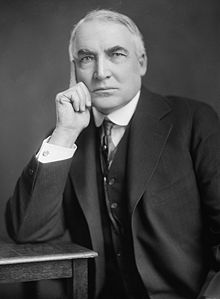
Warren Harding’s Fiscal Cliff

The economy is in rough shape right now but suppose it were even worse: unemployment at 12% rather than 8%; GDP falling at a 17% annual rate rather than rising slowly.  A close advisor to the President counsels an array of interventions to stimulate the economy but is ignored.  Instead, the President cuts Federal spending in half and engineers drastic reductions in income  tax rates for all groups.  Meanwhile the Federal Reserve, rather than cranking up the printing presses for a round of monetary stimulus, snoozes through the whole year.

Now there’s a fiscal cliff for you.  If today’s thinking about the fiscal cliff of Jan. 1, 2013 held true, surely such policies would tank the economy big-time.

The foregoing scenario actually happened.  The year was 1920, the President was Warren G. Harding and his close advisor was none other than Herbert Hoover, who as President from 1929 to 1933 would have his way – raising taxes, jawboning wages, and slapping a killer tariff on the economy, thereby doing a great deal to turn the rather mild downturn of 1929-30 into the Great Depression which, with lots of help from Franklin Roosevelt, would plague the nation for another decade.

So what happened in Harding’s time?  Things were pretty rough for a while but by the summer of 1921, signs of recovery were already visible.  The following year, unemployment was back down to 6.7% and hit 2.4% by 1923 (source: Thomas Woods, “The Forgotten Depression of 1920″).  A budget surplus arose resulting in a noticeable decline in the national debt.  Business confidence soared and the 1920’s boom was off and running.

President Harding has gotten a bad rap from history because of the scandals that erupted during his administration as well as his chronic womanizing and his passion for the bottle.  But in the countdown of 20th century Presidents that I might do for this blog should I ever get ambitious, I will start with Harding as the least bad President of that sad century and work my way down from there.  I’ll let you  guess who I will honor as the Worst President of the Century.

How does the looming fiscal cliff compare with the policies of 1920?  In case you’ve been hiding under a rock lately (not a bad way to ride out the election campaign!), the fiscal cliff is the set of automatic tax increases and spending cuts that were agreed to when the debt ceiling was raised in 2011.  Congress decided to force its future self to act by lighting a time bomb that it would surely – surely! – defuse before it could go off.  The fuse has now burned to within 1/8 inch of the bomb.

The bomb’s tax increases and spending cuts would reduce the deficit by an estimated $600 billion in one year.  That may be the most accurate estimate but it’s only an estimate.  Congress can set tax rates but tax revenues depend on the size of the tax base.  If highly productive people, those who would take the biggest hit, decide to Go Galt, the tax base could shrink.  And as Jeff Hummel likes to point out, tax rates, particularly the top marginal rates, have varied drastically over the years and yet tax receipts have not varied much from 20% of GDP, excepting the World War II years.

Not only might tax receipts fall short, but expenditures could rise if additional welfare payments such as unemployment benefits or food stamps were to rise.

But let’s assume the fiscal cliff happens and the deficit is indeed reduced by $600 billion. Using figures for the fiscal year just ended, we would still have a $400 billion deficit which would have to be financed by borrowing.  As always, this would be new borrowing, on top of the borrowing needed to roll over the daily stream of maturing debt.  And we mustn’t forget the Social Security Trust Fund which until last year has mitigated the deficit by “investing” its surpluses (FICA tax revenues minus benefit payments) in Treasury securities.  Those FICA surpluses have now turned to deficits which for the present are offset by interest payments on Trust Fund holdings but will eventually require the Trust Fund to stop rolling over maturing securities and, should the trend continue, to deplete its holdings entirely.  All of these developments exacerbate the main federal deficit.  The same applies to the much smaller Medicare Trust Fund.

So I say, with a glance over my shoulder at 1920, bring on the fiscal cliff!  Let the cuts happen, thereby ending a lot of wasteful and harmful spending – particularly “defense” spending.  Let tax rates rise; people will work around them.

But it won’t happen because too many special interests will rise up to prevent it:

  • There are enough military personnel, military contractors, their suppliers, relatives and hangers-on to prevent significant cuts in defense spending.
  • The 27% cut in Medicare physician fees will lead doctors to brush away their Medicare patients like flies, sending those patients hobbling off to howl at their their Congressmen.
  • Millions of middle class people will gasp when their tax preparer tells them they’ve been caught in the dreaded Alternative Minimum Tax trap.  Others will escape the trap only to find that their ordinary income tax rates have risen substantially.
  • Still more millions will see their FICA (Social Security) tax rate revert to the 2010 rate of 6.2% from the current 4.2% “stimulus” figure.

The fiscal cliff won’t happen, at least not all of it, except perhaps for a brief period in January which will be fixed retroactively.  And so, though I hate to say it, I think the longer-term odds of pulling out of our fiscal death spiral are pretty slim.  Many think the government will resort to the time-honored remedy of the printing press, but Jeff Hummel has made a solid argument as to why this option won’t work and why there will be a default on Treasury securities instead.

Hummel also urges economists to do whatever they can to warn people not to count on government largess.  Most young people have written off Social Security for their future and that’s a good thing.  (Not so good for Social Security recipients like me who are increasingly unemployable yet hope to live another 25 years.)  We must take responsibility for our own health care, first by watching our health habits and second by cultivating a personal relationship with a physician, perhaps offering him or her cash payments.  We should be leery of Treasury Securities or of banks, mutual funds, etc. that rely heavily on these securities.  Sock away a few gold and silver coins.

We’re in for a rough ride, I fear, over the next few years.  But the sun will still rise and tangible assets will remain.  Provided enough of us have taken precautions, social unrest will be manageable and maybe, just maybe, the cancer that is called Social Democracy will be shaken off once and for all.

Foldvary on the Concept of “Forward”

Co-editor Fred Foldvary has an excellent post on the historical meaning of the Obama campaign’s choice of the word “Forward” as its political slogan. He writes:

The issue here is not about any political campaign, but the social concept of “forward.” Socialism is, first of all, a family of concepts. Some socialists seek greater statism, the control of society by the state. Other seek “social democracy,” whereby people vote on the major policy options. There are also socialists who seek to put the means of production, land as well as capital goods, in the hands of worker cooperatives.

Usually the “forward” thinkers seek, if not as an ultimate goal, then as the instrumental goal, a governmental control at least of the “commanding heights” of the economy: the financial system, the highways, education, medical care, and retirement pensions. Socialists seek strong controls on the remaining private production, and they also seek an equalization of wealth through a massive redistribution, with highly progressive taxation.

But the world has already experienced the results of “forward” policies in the failed economies of the old USSR, the China of the 1950s and 1960s, Cuba, North Korea, and Eastern Europe. The “forward” socialists seek a progression to the failed past. Of course they claim that their brand of socialism is different from that of the collapsed USSR, but the evidence of history reveals what was attempted in practice world-wide, even when it differs from hypothetical doctrines.

And this, too:

Instead of “forward,” a better metaphor may be “upwards.” Upward takes us to a higher place, and also to the origin of a flow such as a river. But how do we know which way is “up”?

Do read the whole thing, and what do you guys think of Dr. Foldvary’s suggestion of moving “upwards”?