Trump and Tillerson Could Save Our Bacon

If Trump is anything like the deal-maker he claims to be, and if Tillerson can translate the expertise and connections he gained as CEO of a gigantic international corporation into diplomatic skills, we could be spared from a nasty confrontation with a nuclear-armed Russia.

Putin is not a nice man. His incursions into Crimea and Ukraine are inexcusable. But he does have a rationale for his claim of aggressive threats from NATO, and this has served hun well in diverting attention away from the drastic declines in liberty and prosperity in Russia. As this article indicates, the West promised not to expand NATO into Eastern Europe but did so anyway, even threatening to include Ukraine and Georgia, which are geographically Russia’s underbelly. How would we like it if the Soviet Union had proposed including Cuba in the Warsaw Pact?

Trump and Tillerson should make a deal with Putin. It must give Putin incentives to pull out of Ukraine and perhaps Crimea, although the latter was historically Russian and Tatar. It must give him something to brag about to his people.  This in contrast to Obama, who declared Russia to be merely a regional player.  Who could blame all Russians for taking this as an insult? He should have praised Russia as a major international player, capable of great contributions to world peace, while taking quiet steps to keep them from making trouble.

The Baltic states are indefensible. Neutralization has worked well for Finland and it ought to work well for the Baltics and Ukraine. Putin could be given a green light to take over Belarus, a socialist basket case that is ethnically very similar to Russia. He could even be invited to join NATO.  This may not be so crazy given that Russia and the West share Christian roots and a common threat from Islamo-fascists.

Some would bring up Chamberlain’s capitulation to Hitler. Skillful negotiations should be able to avoid that trap. The stakes are high, and right now Trump and Tillerson are our best hope of avoiding a possible catastrophe.

On Capitalism and Slavery : Pêle-Mêle Comments

Last week, a debate was initiated via an article in the Chronicle of Higher Education that relates to the clash between historians and economists over the topic of slavery. The debate seems acrimonious given the article and at the reading of a special issue of the Journal of Economic History regarding the Half has never been told by Edward Baptist, its hard to conclude otherwise. Pseudoerasmus published comments on the issue in a series of posts and a Trumpian twitterstorm (although the quality is far from being Trumpian). I find myself largely in agreement with him in response to the historians, but there are some pêle-mêle points that I felt I needed to add.

On Historians Versus Economists

To be honest, when I took my first classes in economic history, it seemed clear that there were important points that were agreed upon in the literature on slavery. The first was that the accounting profitability of slavery was not the same as the economic profitability (think opportunity cost here) of slavery. Thus, it was possible that (concentrating on the US here) the peculiar institution could more or less thrive regardless of the social costs it imposed (i.e. slavery is a tax on leisure which also increases the expropriation rate from slaves, and non-slaveowners often had to shoulder the cost of enforcing the institution). This argument is not at all new; in fact it is basically a public choice argument that Gordon Tullock and Anne Krueger could have signed on to without skipping a heartbeat (see Sheilagh Ogilvie – one of my favorite economist who does history in equality with Jane Humphries). The second point of agreement is that no one agreed on how to measure the productivity of slavery in the United States and the distribution of its costs and gains. The second point has been a very deep methodological debate which related to the method of measuring productivity (CES vs Translog TFP – stuff that would make your head blow and which also lead to the self-invitation of the Cambridge Capital Controversy to the debate). The quality of the data has been at the centre-stage as well, and datasets on slave prices, attributes, tasks and many other variables are still being collected (see notably the breathtaking work of Rhode and Olmsted here and here).

Thus, I will admit to being unimpressed by the use of oral histories to contest that literature. In addition, the absence of theory in Baptist’s work yields an underwhelming argument. Oral histories are super-duper important. The work of Jane Humphries on child labor is a case in point of the need to use oral histories. She very carefully used the tales told by children who worked during the industrial revolution to document how labor markets for children worked. The story she told was nuanced, carefully argued and supported by other primary evidence. This is economic history at its best – a merger of cliometrician and historian. In fact, while this is an evaluation that is subjective, the best economists are also historians and vice-versa. The reason for that is the mix of theory with multiple forms of evidence. But they key is to have a theory to guide the analysis.

Unexpectedly for some, the best exposition of this argument comes from Ludwig von Mises in his unknown book Theory and HistoryI was made aware of that book in a discussion with Chris Coyne of George Mason University and I proceeded to reading it. I was surprised how many similarities there were between the Mises who wrote that book and the Douglass Norths and the Robert Fogels of this world. The core argument of Theory and History is that axiomatic statements can be applied to historical events. The goal of historians and economic historians is to sort which theory applies. For example, the theory of signaling and the theory of asymmetric information are both axiomatically true. Without the need for evidence, we know that they must exist. The question of an economic historian becomes to ask “did it matter”? Both theories can compete to offset each other: if signaling is cheap, then asymmetric information can be solved; if it is not, asymmetric information is a problem. Or both may be irrelevant to a given historical development. To explain which two axiomatic statements apply to the event (and in what dosage), you need data (quantitative and qualitative). Thus, Theory and History actually proposes the use of econometrics and statistical methods because it does not try to predict as much as it tries to a) sort which axiomatic statements applied; b) the relative strengths of competing forces; c) the counterfactual scenario.

Without theory, all you have is Baptist’s descriptions which tell us very little and can, incidentally, be distorted by he who recounts the tales he read.

On the Culture of Peasants/Slaves/Slaveowners

When I started my PhD dissertation Canadian economic history, the most annoying thing I saw was the claim that the French-Canadians had “different mentalities” or “more conservative outlooks”. This was basically the way of calling them stupid. This has recently evolved to say that they “maximized goals other than wealth”. Regardless, this was basically: the French-Canadian was not culturally suited for economic development.

But culture is not a fixed variable, it is not an exogenous variable. Culture is basically the coherent framework built by individuals who share certain features to “cut out” the noise. Everyday, we are bombarded with tons of pieces of information and there is no way that the human brain can process them all. Thus, we have a framework – culture (ideology does the same thing) – which tells us what is relevant and what is irrelevant and what interpretation to give to relevant information.

People can cling to old beliefs for a long time, but only if there is no cost to them. I can persist in terrible farming practices if I am not made aware of the proper valuation of the opportunity I am foregoing. For example, British farmers who arrived in Quebec in the 19th century tended to use oxen as they did in England for tilling the soil. They had probably been taught to do that by their parents who learnt it from their grandparents because it was part of the farming culture of England. The behavior was culturally inherited. However, when they saw that the French-Canadians were using horses and that horses – in the Canadian hinterland – got the job done better, they shifted. The culture changed at the sight of how important was the foregone opportunity by continuing to use oxen. Where the British and the French co-existed, both were equally good farmers. Where they could not observe each other, they were all sub-optimal farmers. Seeing the other methods forced changes in culture.

The same applies to slaveowners and slaves! Slaveowners were a more or less tightly knit group that frequented similar circles and were constantly on the lookout to increase productivity. If some master had noticed that he could increase production by whipping more slaves, why would he not adopt this method? Why would he leave 100$ bill on the street? Why did the masters growing cotton in South Carolina not adopt the method of whipping adopted by growers in Louisiana? Without a theory of how culture changes (and what purposes it serves beyond the simplistic Marxist power structure argument), there is no answer to this question. With the work of Rhode and Olmstead, there is an answer: the type of cotton that had higher yields was not suited for growing everywhere! In this case, we are applying my comment from the section above on Historians versus Economists. There are competing theories of explaining increasing output: either some slave masters were unable to observe the other slave masters and adopt the torture methods they had (which would need to be the case for Baptist to be right) or there were biological limitations to growing the better crops in some areas (Rhode and Olmstead).

Two competing theories (they are not mutually exclusive though) that can be tested with data and they set a counterfactual. That is why you need theory to make good history.

One last thing: slave owners were not capitalists

This is probably the most childish thing to come out of works like those of Baptist: to assert that because slaves were capital assets, that the owners were capitalists. That is true if you want to adhere to the inconsistent (and self-contradicting) Marxist approach to capital. In fact, as Phil Magness pointed out to me, slave owners were not free market types. They were very much anti-capitalists. Slavery apologists like Fitzhugh and Carlyle were even more anti-capitalists than that. It’s not because you own capital that you are a capitalist unless you adhere to Marxist theory.

But, capital is just a production input. Its value depends on what it can produce. As Jeffrey Hummel pointed out, there is a deadweight loss from slavery: enforcement costs, the overproduction of cotton because slavery is basically a tax on leisure and the implicit taxation of the output produced by slaves. All three of these factors would have slowed down economic growth in the south. Thus, as capital assets, slaves were relatively inefficient.

Does socialism need to be corrupt?

Brazil is going through a deep crisis right now. It is tempting to say that this is the greatest crisis in the country’s history, but I am quite afraid to make this comment. Unlike England and the United States, which have experienced significant institutional stability in the past 200 or 300 years, Brazil has gone through several political breakdowns in its history, and the current economic crisis is far from the hyperinflation of the 1980s. But there is a characteristic that links the present crisis to the previous ones: the presence of a tendentially authoritarian state.

Although Brazil was governed by an openly socialist party only between 2003 and 2016, this does not mean that socialist characteristics were not present in the country much earlier. One of the central theses of F.A. Hayek in the Road to Serfdom is that the democratic socialist parties of Western Europe (notably the Labor Party in England) had more features in common with the Nazis and fascists than they would have liked to admit. In other words, the differences between left (even a moderate left) and extreme right were illusory: they both had the fundamental characteristic of trying to plan society centrally.

The opposition between spontaneous order and central planning was one of the central theses in Hayek’s career. In Fatal Conceit he develops this theme a lot, showing how the opposition between central planning and lack of planning is a fallacy: society will forcibly be planned. The question is by whom: for a small group of people on behalf of all the others, or for a large group of individuals, each with limited responsibilities? According to Hayek, this distinction between central planning and individual planning is one of the central separations between an authoritarian society (left or right) and a truly free society.

It is difficult to say if the PT (“worker’s party”) government between 2003 and 2016 was the most corrupt in Brazilian history. Homesick people can always claim that corruption was also present in previous governments (it was just not investigated), and possibly they would be right. Before becoming a country ruled by a socialist party, Brazil has always been a patrimonialist country. And this is a fundamental point that adherents of socialism cannot understand: Brazil has never been a capitalist country, at least not in the sense that the liberal tradition employs.

Starting from Hayek, we conclude that central planning is impossible. Planners do not have the information they need to make their plans. As Mises taught, without private property there is no price formation, and without price formation the economic calculation is impossible. This opens space for what Hayek calls a fatal conceit: the assumption that it is possible to run a country from a central body, a presupposition that not only fails to achieve its goals, but also leaves piles of corpses on the way.

The PT government was probably the most corrupt in Brazilian history because it was what most rejected capitalism. The opposite of the free market is the attempt to centrally plan the economy. To centrally plan the economy, an army of administrators is needed. To watch over these administrators, a host of supervisors is needed, and so on. Corruption is inevitable.

Socialist governments are always among the most corrupt, and the reason is simple: the more government, the more corruption. A simpler, more decentralized government is not perfect. But it’s the best we can wish for. It would certainly be a government with less control over money, and thus less likely to steal.

In Cuba, not having a car might save your life

My two blog posts on the health statistics of Cuba have convinced me to try to assemble a research article on the topic of assessing health outcomes under Castro’s regime. My first blog post was that there is a trade-off (the core of the article) that Castro decided to make. He would use extreme coercive measures to reduce some forms of mortality in order to shore up support abroad. The cost of such institutions is limited economic growth and increased mortality from other causes (dying from waterborne diseases or poverty diseases rather than dying from measles).

When I thought of that, I was inspired by Werner Troesken’s Pox of Liberty on the American constitution and the disease environment of the country. I was mostly concerned by direct medical interventions. However, the extent of coercive measures used by Castro go well beyond simple medical care (or medical imposition). Price controls, rationing and import restrictions on many goods could also help improve life expectancy. Indeed, rationing salt at 10g (hypothetical number) per person per day is a good way to prevent dietary diseases that emerge as a complication from overconsumption of salt. That will, by definition, raise life expectancy.

And so will bans on importing cars.

There is an extensive literature on the role that car fatalities has on life expectancy. This paper in Demography (one of the top demographic journals) finds that male life expectancy in Brazil is lowered by 0.8 years by traffic deaths. And traffic has very little to do with the quality of health care services. Basically, the more you drive, the more chances you have of dying (duh!). But, people don’t care much because the benefits of driving outweigh the personal risks.

In Cuba, people don’t get to make that choice. As a result, the very few drivers on Cuban roads have few accidents. According to WHO data, the car fatality rate is 8.15 per 100,000. There is also only 55 cars per 1,000 persons in Cuba. The next closest country is Nicaragua at 93 cars per 1,000 and the top country is Uruguay at 584 cars per 1,000. When you compute reported (rather than WHO estimated) car fatalities per 1,000 cars (rather than persons), Cuba becomes the unsafest place to drive in Latin America (1.46 fatalities per 1,000 cars) after El Salvador (2.22 fatalities per 1000 cars but only 129 cars per 1000), Ecuador (1.78 fatalities per 1000 cars but only 109 cars per 1000) and Bolivia (1.53  fatalities per 1000 cars and only 113 cars per 1000).

The graph below shows the relation between car fatalities per 100,000 inhabitants and life expectancy. Cuba is singled out as a black square. Low rate of car fatalities, higher life expectancy. Obviously, this is not a regression and so I am not trying to infer too much. However, it seems fair to say that Cuba’s life expectancy can easily be explained by the fact that Cubans face stiff prohibitions on the ability to drive. Those prohibitions give them a few extra years of life for sure, but would you really call that a ringing endorsement of the health outcomes under Castro’s regime? I don’t…

life-expectancy

Regional jealousies and transboundary rivers in South Asia

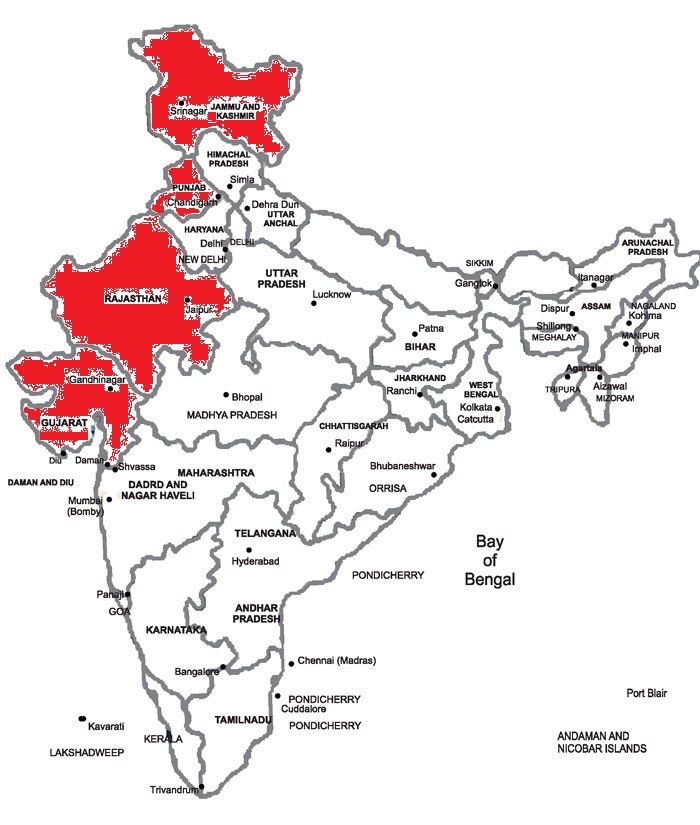
In the final reckoning, Pakistan got about 80 per cent of the Indus and India 20 per cent. India has limited rights on the western rivers and cannot undertake projects on those rivers without providing all the details to Pakistan and dealing with Pakistan’s objections. Why did India put itself in that position? The answer is that if Pakistan got the near-exclusive allocation of the three western rivers, India for its part got the eastern rivers. This was important from the point of view of the Indian negotiators because the water needs of Punjab and Rajasthan weighed heavily with them in seeking an adequate allocation of Indus water for India. Yet, Punjab had a serious grievance over the signing of the IWT [Indus Waters Treaty] by the union government. Citing provisions of the IWT which caused transfer of three river waters to Pakistan, Punjab had terminated all its water-sharing agreements with its neighbouring states in 2004.

The demand of Kutch (in Indian Gujarat), which used to fall into a catchment area of River Indus, decades back, was not taken into consideration despite many petitions, arguing about their historical claim on its water, sent by the prominent Kutchi leaders, in 1950s, to India’s Ministry of Irrigation and Power. Also people from the Indian side of Kashmir always show their ire against the IWT. On 3 April 2002, the Jammu & Kashmir Legislative Assembly, cutting across party affiliations, called for a review of the treaty. The state government has been contending that in spite of untapped hydroelectric potential, the state has been suffering from acute power deficiency due to restrictions put on the use of its rivers by the Indus Treaty. They claim that their interests were not taken into consideration and their views were not taken while signing the treaty. (6-7)

This is from my latest paper, “Disputed Waters: India, Pakistan and the Transboundary Rivers,” published by Studies in Indian Politics, and which you can find here.

Here is a map of all the Indian states mentioned in the excerpt above:

blog-india


On the trade off between the rule of law and lower taxes

The recent Carrier deal has caused some controversies in liberty-oriented circles. For example, The Mises Institute published a defense of the deal, arguing (along other lines, please read the article yourself):

there is nothing inherently wrong with an administration focused on keeping jobs in America — especially if this is accomplished by relieving tax and regulatory burdens.

The point I wish to make here is a general point, so I won’t go into the specifics of the Carrier deal. Among other reasons: I don’t know the specifics of the deal (I don’t know the content and I don’t know how the deal came to pass.) What I wish to do here is to argue the general case on how to view these kinds of tax exceptions.

The point we ought to remember, I think, is that there are a trade offs between two important liberal values, although they are important in different ways. On the one hand, we have the idea of rule of law, the idea that the law is general, not specific, applies to everyone rather than some, and that it’s not designed to favor some because it should serve an open-ended order. Things that contribute to such a legal order are ipso facto prima facie good, things that take away from such a legal order are ipso facto prima facie bad.

On the other hand we have the idea that taxes are bad. Things that lower taxes are prima facie good, things that increase taxes are prima facie bad.

But neither of these things trump all other considerations. Let me give you two examples.

  • Suppose there was a law that said that the taxes on, for example, business started by family members of politicians are automatically exempted from taxes. Would this be a good law?
  • Suppose there was a law that said that everyone has to be drafted and has to serve mandatory military service overseas, except the family members of politicians. Again: would this be a good law?

In both of these questions, the answer depends on the liberty-inspired framework you use to answer the question. If you think the value of the rule of law outweighs the value of individual liberty of those family members (who are, after all, not responsible for the actions of their political family members) than you think these are bad laws. If you think the increase in individual liberty for those family members is more important than the violation of a rule of law principle, than you think these are good laws. My point is not to say how one should determine this, my point is that there are two liberty-inspired frameworks that can justify an outcome, and both of these frameworks are relevant in determining what kind of laws we ought to support.

To make the issue slightly more applicable: is the increased damage on the rule of law (created by allowing a specific exception on the general laws on taxes) larger or smaller than the benefits that allow a company to have less taxes?

Some people have tried to argue by analogy – for example, comparing it to the draft. The problem is that analogies quickly run into the problem of changing the relative values of the two important concepts. For example: is it a good thing that women are exempted from the draft? Yes, this seems like obviously a good thing. Would it be a good thing that male children of politicians would be automatically exempted from the draft? This seems like less obviously a good thing.

Would it be a good thing if white people were automatically exempted from the draconian drug laws? Maybe it would, but maybe that also lowers the chance of getting rid of the drug laws altogether. Different margins matter in these kinds of evaluations.

The wrong thing to think is that all policies are pro tanto good just because they increase liberty on some margin for some people, especially if this allows for the prolonging of bad policies by the current ruling class. Some policies can be bad on some margins and good on others and reasonable people can disagree whether the complete net effect of this is good for all.

Maybe it’s a good thing that some people are exempted from evil laws (such as taxes), but it’s not good that the political class gets to choose who does so. Because those who will be exempted will be those who are connected to the political class. So one can absolutely like lower taxes, oppose politicians’ power to choose who is exempted and oppose that, and still be happy for a company that they got a tax cut. (Unless, of course, the company itself is evil. This is certainly possible if they are partners in, for example, the wars that the USA commits.)

So tl;dr. As I posted somewhere on facebook:

Rule of law and lower taxes are two good things. A president (or important person connected to the ruling class such as the president elect) getting to pick and choose winners isn’t desirable, but a tax break is. A higher tax isn’t desirable, but a rule of law is.

Trying to argue the case based on principle seems wrong. It depends on the margins. In the case of the draft, the margin *against* rule of law seems important enough to say it’s a clear victory for liberty to not have women included.

In the case of tax breaks, this is less obvious and reasonable people can come out on different sides of this, I think.

What if fake news was merely an attempt at political entrepreneurship?

Fake news! The new plague that besets mankind! That is largely the new name given to what 19th century folks would have called “yellow journalism“.

Yellow journalism was sensationalist to the point of distorting the news in order to carry a very emotional message. Generally embedded in that message was a political narrative supporting progressive reforms (not all yellow journalists were progressive but it seems that most were).

The aim of many progressives was to design a new society, to reform the old society by getting rid of old institutions. In many cases, economic historians have documented that these reforms (like with prohibition, workers compensation, antitrust) ended up serving very narrow interest groups who either allied themselves with reforming zealots (as in bootleggers helping baptists pass Sunday sales bans), gained through the restriction of competition or gained at the expense of future workers and minorities. But it is not as if the “previous” order was paradise. The postbellum era prior to the progressive era was highly protectionist, used public funds to bailout poorly performing railways and solicited the federal army to deal with natives rather than peacefully deal with them.  Basically, both eras had their political entrepreneurs who found their way in the political process to obtain favors.

Progressives who indulged in yellow journalism merely wanted to replace one set of political entrepreneurs with another. Just like the Alt-Right, from which emanates most of the fake news. In a way, both are exactly the same. Many members of the Alt-Right are not interested in restraining government abuses, they’re in favor of redirecting government indulgences towards them (Trump did promise less immigration with paid maternity leaves and no reduction in social transfers). Some are well-meaning like the baptists of lore. But there are still bootleggers (example: Steven Mnuchin from Goldman Sachs) who co-opt the process in order to continue indulging in rent-seeking just as they did before.

Are we about to swap one bad set of institutions for another? Given that all I see is the same type of political entrepreneurs (after all, Bannon from the flagship of the fake news alt-right outlet Breitbart is now a member of the government) as those we saw during the progressive era, I am inclined to respond “yes”.

Socialism is just a new form of slavery

When Fidel Castro died he was totally alone. It doesn’t matter if relatives or friends were standing beside him: in the end, we are all alone. We experience the world through our sense of perception. Of the things themselves we have no experience. On the other hand, all humans have perception of themselves. We just know that we are. This self awareness is a fundamental aspect of what it is to be human. Castro’s death already received a lot of attention, but I believe it is a moment really worthy of reflection. Under his half-century regime millions died or suffered, and it’s always important to remember that we are talking about a little country, an island in the Caribbean. Cuba was one of the most prosperous nations in the Americas, and today it is one of the most miserable.

It is really sad to see that most of my colleagues are unable to call evil by its name. In the mid-nineteenth century Karl Marx predicted that capitalism was going to collapse because of its internal contradictions. He was not saying that he wanted capitalism to collapse. He was saying that this was a scientific fact, as sure as the next eclipse predicted by an astronomer. Capitalism, of course, didn’t collapse. Marx’s economic theory was simply nonsensical, and was contradicted by logic and facts. But Marxists couldn’t admit it. Instead they replaced economics with culture, and the working class with Others as the oppressed. Blacks, women, Native Americans, underdeveloped countries and many others became the new oppressed class. Fidel Castro fit beautifully in the Marxism of the New Left. He was the charismatic dictator of the charming island nation of Cuba. The US, ruled by leftists in the 1960s and 1970s, was unable to give a consistent answer to it. Latin America, ruled by dictatorships that the left called “right” (no one wants to take their dictators home), was also not in place to contrast the evils of the Castro regime. A perfect storm.

Castro, for all we know, died with no regrets for the evils he committed in life. Political commentators say that history will judge him. But this is a lie. History can’t judge anyone. Only people can judge people. And it is fundamental that political commentators today judge Castro for all the evil he has done. Castro didn’t kill people in Cuba only. He supported, in one way or another, brutal regimes all over the world, mostly in Latin America. To this day he is partly responsible for the evils of Foro de São Paulo. But many political commentators insist in the lie that in Cuba there’s true freedom: they have enough to eat, universal healthcare and universal education. Why would they want freedom?

Freedom is the fundamental state of human beings. We are, in the end, all alone. Of what goes in our hearts, only we are aware of. Sometimes not even us. All of us make choices based on knowledge that’s unique. Circumstances of time and space shape the choices that we make. And life is made of choices. Marxism, socialism, and all forms of statism go against these fundamental truths.

People in Cuba are not free. They are all slaves to the Castro family. Some people want to have life in a cage, as long as they receive food every day. Of course this is a lie. In order to live in a cage you need to have someone outside the cage bringing the food. Someone has to be free. This person becomes your slave as well, and this constitutes a fundamental contradiction of socialism: Alexis de Tocqueville mentioned that socialism is just a new form of slavery. In slavery someone is forced to work for somebody else under the threat of physical violence. Under socialism everybody is forced to work for everybody else. Let’s hope that Castro’s death may help put socialism in the past, where slavery is, and that Latin America may finally see the light of freedom.

Identity Politics, the Alt-Right, and Empathy in Cultural Discourse

“Identity politics” have been an intensely large obsession of the American left or the past forty or so years. Academic leftists have devoted their entire careers and even the organizations of their departments to studying notions of identity and the specific history and interests of certain identity groups—such as women’s studies, African-American studies, and other similar programs. The Democratic Party has put special emphasis on mobilizing various minority groups based on identity, focusing on “Women’s issues” such as abortion or “the needs of the African-American community” such as police reform or “gay rights” to get a certain of segment of voters to turn out in elections.

Yet, with the election of Trump, many moderate leftists are questioning the utility of identity politics. Mark Lilla had a prominent recent piece in The New York Times declaring the “end of identity liberalism.” Lilla’s main criticisms of identity politics focus on it as a “strategic mistake” in electoral politics and how it has made liberals and progressives “narcissistically unaware of conditions outside of their self-identified groups,” particularly white, middle class, working men in the Midwest. Matt Yglesias, meanwhile, responded by sounding off that all politics is identity politics, people always organize themselves in interest groups, writing that “any plausible account of political behavior by actual human beings needs to concede that politics has always been practiced largely by mobilizing people around salient aspects of group identity rather than detailed policy proposals.” The left, he says, can’t abandon identity politics because “[t]here is no other way to do politics than to do identity politics.”

Those on what is traditionally considered the “right” end of the political spectrum (ignoring the specific phenomena of Trump voters and alt-righters, that is) tend to be dismissive of the whole project of identity politics. This approach is embodied by Robby Soave’s recent article in Reason claiming that identity politics is just a form of tribalism that seeks to subvert individual rights and overall social welfare to  the tribalist demands of some salient group people self-identify with. Soave also sees the rise of Trumpism as itself a form of identity politics for white men, a claim which I’ll address at length in a moment.

What is one to make, then, of identity politics in the Trump era? First, it seems there is considerable confusion about what identity politics even is in the first place. Lilla, for an example, seems to imply that the left’s obsession with appealing to minority political coalitions is merely a strategy for winning elections. Soave thinks it’s pure tribalist and collectivist ideology, and Yglesias defines it so broadly that any political mobilization at all is considered identity politics. How are we to understand what operative definition of what is commonly called “identity politics” is most useful, or at least is closest to how its commonly used in political discourse?

Lilla and Yglesias understanding, it seems, misses the point about why so many leftists are so passionate about identity politics. People who are interested in cultural dramas and issues related to group identity are not just Democratic strategists in campaign war-rooms, but, as I mentioned earlier, academics, and “true believer” bleeding-heart progressive activists. It seems to me that identity politics—at least at first (and still is in the minds of the true believers post-1960s progressivism)—is not about an election strategy. It’s certainly become that for Democratic strategists, but it originally was motivated by the old liberal concern with ending the misery for stigmatized groups. Identity politics is not merely a political strategy, but a strategy the left used for getting rid of racism, homophobia, and otherization of outgroups in society at large.

The idea is like this: try to get, for example, white people to sympathize with black people by getting whites to recognize that black people have their own meaningful web of cultural associations which is just as valid as those of the dominant culture. Its roots are in cultural studies academia, such as the writings of Judith Butler and Nancy Fraser. Essentially, identity politics is rooted in philosophical attempts to end prejudice through emphasizing “cultural recognition” of despised groups. As Richard Rorty wrote in describing this strategy:

It helps, when trying to recognise a common humanity in a person of another gender, class, or ethnicity, to think of them as having as rich an inner life as one does oneself. To picture such an inner life, it helps to know something about the web of memories and associations which make it up. So one way to help eliminate prejudice and erase stigma is to point out that, for example, women have a history, that homosexuals take pride in belonging to the same stigmatised group as Proust, and that African-Americans have detailed memories of the battles which make up what Russell Banks calls “the three hundred year War Between The Races in America” – the sort of memories whites are currently learning about from Toni Morrison’s novels. It helps to realise that all such groups wrap a comforting blanket of memories and traditions, customs and institutions, around themselves, just as do classical scholars, old Etonians, or members of the Benevolent and Protective Order of Elks.

Thus treating identity politics just as a way to get electoral coalitions out to vote, and also (as Soave does) as simply tribalism ideology when it was started as a strategy to mitigate tribalism, misses the point about why the left is so passionate about these cultural issues. It isn’t simple collectivism nor Machiavellian political strategy, but (hopefully) genuine concern for stigmatize groups that mobilizes this obsession.

Of course, as Rorty well-recognized, this way of ending prejudice is not the only way nor is it the most effective. First, it does make the left appear as this overly sensitive “politically correct” group of elitists who care little for the concerns of working class whites. As Rorty wrote that the left’s preoccupation with cultural identity politics would mean “the straight white male working class in America may find it tempting to think that the leftist academy is uninterested in its problems.” Indeed, most of why Lilla is concerned that identity politics has failed so spectacularly as an electoral strategy is that it has isolated progressives from middle America.

More importantly, however, is that emphasizing cultural difference has failed spectacularly at its initial aim of ending prejudice. The whole point of Soave’s Reason column is that leftist identity politics has become its own form of tribalism and have given rise to the right-wing identity politics of Trump. Not only have leftists often gotten so caught up in the identity politics language game that they call their own (such as Bernie Sanders) white supremacists for not playing along, it has created its own prejudice backlash. If your way of getting straight white males to recognize non-straight white males as worthy of equal treatment is to say “Those who are unlike you have different cultural values that are worth being celebrated and protected,” the response of straight white males is to say “Do not I also have a different culture worthy of being celebrated and protected?”

Indeed, this type of rhetoric is at the heart of the rise of the alt-right. It isn’t mere hatred of others that is animating this new populist, fascist movement (though that is certainly a concerningly large part of it), it is that they are making this hatred seem legitimate by couching it in terms of advancing “white interests” in a very similar rhetorical manner that the left has pushed the interests of minority groups. Richard Spencer’s “mantra” for the alt-right is “race is the foundation of identity” (emphasis mine) and calls himself an “identarian.” Even outside the small niche of the alt-right, average Trump voters often say they want a way to express and defend their identity—whether it is in the form of white nationalism or in forms of defending Christian “religious liberties” as its own identity coalition against gay rights.

Soave is correct that left-wing identity politics has given us this right-wing identity politics, and it is something Rorty himself saw as a potential consequence of this approach. In his 1998 book Achieving our Country, he explicitly predicted that the white working class would become disconnected from the academic left, and would “start looking around for a strongman to vote for—someone willing to assure them that, once he is elected, the smug bureaucrats, tricky lawyers, overpaid bond salesmen, and postmodernist professors will no longer be calling the shots[.]” He also predicted that when this strongman assumes office, “gains made over the past forty years by black and brown Americans, and by homosexuals, will be wiped out.” It is no coincidence that this sounds quite a bit like Trump.

It’s not surprising that emphasizing differences between the majority and a scapegoated group would mean that the majority group would start taking “pride” in its difference from the scapegoated. Of course, anyone who understands systemic power structures or how sociological hierarchy works understands why this response is not the same. There is a difference between cherishing the cultural differences of a scapegoated minority and using institutional power to coercively protect the cultural interests of the majority group at the expense of the minority. But you can’t expect a white adolescent basement-dwelling troll on 4-Chan or even a working class white voter from central Michigan to understand and fully internalize that difference, and they are likely to be very reluctant or overtly hostile to acknowledging it. All the alt-right has done is take identity politics and turn it against its original aim to advance the exact tribalism leftists have been trying to use identity politics to end.

A better strategy the left could have used was the strategy the old left used through classical feminism, abolitionism, the sixties Civil Rights movement, or some new progressives through the more pop-culture current of the gay rights movement. Rorty describes it beautifully:

Another way is to get the prejudiced to see the stigmatised as having the same tendency to bleed when pricked as they themselves: they too worry about their children and parents; they are possessed by the same self-doubts, and lose self-confidence when humiliated; their difficulties in moving from one stage of life to another are much like everyone else’s, despite the fact that their life-chances may be minimal. These ways of emphasising commonality rather than difference have little to do with “cultural recognition.” They have to do with experiences shared by members of all cultures and all historical epochs, and which remain pretty much the same despite cultural change.

There’s no real way for bigots to co-opt this approach to advance their bigotry. In fact, it explicitly avoids framing the discussion not as some necessary “culture war” between an oppressive majority and an oppressed minority as current identity politics rhetoric implies and alt-right identitarians have assumed as their rallying cry. Instead, it emphasizes the need to end culture wars in the first place by progressing people’s sentiments to stand in solidarity with an ever-growing chunk of humanity—it seeks to replace simple identity with empathy.

Is this approach still in the vein of “identity politics” as we currently understand it? If we take Yglesias’ understanding, sure it still “concede[s] that politics has always been practiced largely by mobilizing people around salient aspects of group identity,” but it seeks to make salient aspects of group identity as banal as possible, to make people stand in solidarity based off empathy for everyone’s common human shortcomings rather than based off who they happen to be culturally similar to, to make one’s ingroup as inclusive as impossible. It certainly isn’t tribalist or collectivist as Soave is concerned. Though it still recognizes diversity as important, Rorty still explicitly says that we should see this diversity “as a diversity of self-creating individuals, rather than a diversity of cultures[.]” This liberal (and classical liberal as I see it as drawing off of Hume, Smith, and Mill more than anything) vision is one that is both pluralistic and individualistic.

Is this, however, a winning electoral strategy, as Lilla is concerned? I’m not sure. Tribalist urges of racism are certainly very powerfully woven into how humans have psychologically evolved, and perhaps in our current broken discourse of race relations it isn’t the best electoral strategy. There is, however, some reason for optimism; popular support for gay rights is at an all-time high, after all, and this was probably more a function of the victory of emphasizing the similarity of love between gays to that of straights then getting straight allies to march in gay pride parades. Regardless of electoral outcomes, shouldn’t the goal of civil discourse not be to win elections, but to ensure the most just, peaceful, and prosperous civil society—the zero-sum game of coercive politics be damned? Leftists should try to change the current broken discourse, rather than try to work within it to gain political power.

Adios a Fidel

It was so romantic when those truckfuls of young men with beards took over the cesspool of Havana on New Year’s Eve (a scene immortalized in The Godfather Two). They were bringing freedom and relief from poverty to the beleaguered people of Cuba who had suffered under American imperialism for more than sixty years.

When his main acolyte was through shooting a few hundred political opponents – which took weeks – the business of revolutionary construction began in earnest. Soon, the Revolution had to face an invasion from disgruntled sons of the exiled Cuban upper-class. The invasion was roundly betrayed by the fabled Pres. John F. Kennedy. After that, the Revolution found extravagant financial support from the Soviet Union, a poor country itself but a large one.

Later, the leader of the Cuban Revolution tried to get the US nuked by his big Russian brother. That cool leader must have had his reasons, I am sure.

The stubbornness of opponents (“worms”) was so great that the Revolution was forced to jail a few thousand of them, including poets (along with thousands of men whose crime was homosexuality). Other obdurate traitors to the Revolution left Cuba on balsa rafts and on rafts made with old barrels. Many drowned at sea. Their choice! After a while, one Cuban in five was living abroad, away from the workers’ paradise.

The Revolution triumphed in the fields of education and public health. Nowadays, Cubans’ level of literacy is a high as that of other Latin American countries. Although it’s not really free, the Cuban public health service is pretty good, what with its separate public-public sector and its sector for Communist Party members only, the two equal to each other, of course.

When the first leader became too old, somehow, the best revolutionary found to succeed him was his little brother, as happened in other people’s democracies such as North Korea.

In the meantime, there had been several military adventures, all in tropical countries where even ordinary Cuban privates could afford bananas for once. That they did not win anywhere was not their fault. One prominent general even had to be shot by the leadership because he was dealing drugs. His trial lasted a whole week.

Today, after fifty years, progress is so great that ordinary Cubans easily earn forty or fifty dollars a month. Many earn three times more by renting their bedroom to foreign visitors. Take university professors and medical doctors. They can always make much more than fifty a month by driving a taxi. And meat is now available six days a month instead of the customary four. You can’t argue with this!

As Westerners, we must be especially grateful that the Cuban Revolution has made the island into one of the best destinations for sex tourism in the world.

Yes, Fidel was really, really cool and we will all miss him. He was our youth. He embarked on a great experiment in human happiness. That it failed is not his fault at all. Nobody is perfect. At least, his long life of power and influence has had the great merit of showing what happens to Communist take-overs in the long run, when no external factor puts a precocious end to them.

PS To this day, many Cubans and an embarrassing number of western leftists believe that the Cubans’ poverty is mainly due to the US BLOCKADE of the island. Well folks, there was a blockade, in the early sixties. It lasted two weeks (fourteen or fifteen days). Since then, there has been an American economic embargo on Cuba. It means that Americans cannot buy from or sell most items to Cuban economic actors. Cubans could always buy anything from and sell anything to anyone else in the whole wide world, including our Canadian cousins who have everything we have. We are talking here of a fifty year-old grand lie. You had to be cool, like Fidel and his little brother to pull it off!

When are safe places okay?

I am against the idea of safe places (see my previous post on the issue), especially in academia. I believe that if an idea is worthwhile it should be able to survive critic from all sides and safe places, regardless of their intent, hamper that process. How can you critic something if you aren’t supposed to even acknowledge its existence?

I also believe that, if our pluralistic society is to continue, we need to be able to empathize with those who are our intellectual opponents. I’m not saying we should become Marxists and rename the site The People’s Notes. Nor should we become Trumpistas. However we should be able to break bread with non-liberals and hear their side of the story out. We can continue to disagree with them, but we need to be careful to not de-humanize someone because of their ideological leanings. Safe places make this hard to do. If X group isn’t politically correct to talk about, much less with, how can we learn about them?

Safe places are, in more than one way, harmful to a free society.

-But they may still have a place in a free society.

Why the change of heart? It is this whole Trump fiasco. If you haven’t read them yet, several NoL bloggers have written about it here, here, here, etc.

I have seen several extreme reactions to the election of Trump, including quite a bit of anger and sadness. I cried for a good six hours myself when I saw the election results; as I’ve mentioned before I’m an illegal alien and so there is a very real chance I’ll be deported and torn away from the country I’ve loved since childhood. After drying up my eyes though I put that aside and went back to work. How I see it, as liberals we are constantly fighting against anti-liberal forces.

Am I sad that Trump won? Yes, but Hillary wasn’t an angel either. Before Trumpistas we had to fight Communists, Fascists, and every other type of ‘ists’ imaginable. After the Trumpistas are defeated we will have new enemies pop up. I am optimistic that in the grand scheme of things the future is better than the past, but I don’t think we will ever be rid of anti-liberal thought. Equilibrium is an illusion.

But I digress. I went back to work after my crying session, but many others around me didn’t. They couldn’t. And we shouldn’t try to force them to.

I still think safe places are a bad idea in so far that we are concerned about promoting free discussion and would never want to go into one. However maybe I can tolerate one or two of them if they help others improve their mental health. Maybe I can use ‘undocumented’ instead of ‘illegal’ if people are really that emotionally disturbed by it. Maybe I can use someone’s preferred pronoun if ‘he’ really hurts them that much. Maybe I can keep my mouth shut and just listen to someone who is in pain.

I think that in the long run we need to be able to stand up to our critics. If you’re gay, you’ll eventually find someone who goes out of their way to tell you your leading a sinful life. If you’re a woman and feel that the patriarchy is why you’re paid less, an economist will eventually lecture you on why that’s wrong. Infantilizing people doesn’t help them. The world is tough, and you need to be rough to survive it. 

However if someone needs a bit more time before they go out and face that world, is it wrong to provide a safe place for them until they feel ready? If I want to make a controversial remark, maybe I shouldn’t do so in the middle of the class. Maybe I should just blog it on NoL.

As always thoughts and comments are always appreciated.

So, something that makes me smile for a change.

It’s a fact that I feel pain in several parts of my body, including in parts I did not know I had. One of the sources of pain is permanent shingles. I only mention this in the hope that it will trigger some of you to get vaccinated or to get their aging parents vaccinated.

So, anyway, recently, someone who ought to know (if you know what I mean) convinced me to try cannabis for my pains. So, I went to the specialized doctor (at least, I think he is a doctor). I gave him $100 and I came out with a medical marijuana card.

I went straight to the dispensary and purchased some cookies, of the kind my adviser had previously let me taste. The effect on my pain was almost miraculous. I felt none from about five pm until I went to bed around 10 pm.

Several things sill trouble me. First, I can’t find a dose small enough to avoid getting a little high, which I would like to avoid. Second, it makes me hungry (surprise!). Third, what if frequent use re-ignites my passions, what then? Fourth, I am really, really pissed off about the $100 because it looks like Californians just passed a recreational cannabis law.

My sage adviser is an excellent auto mechanic in his spare time. You write me, I will give you his name. That would be for mechanical services, of course.

Fight for your economic right to party

pubestablish.jpg

Two months ago, London’s iconic Fabric nightclub was shut-down by Islington Council on the dubious grounds that it had failed to adequately search club-goers for drugs. Fabric, a sprawling multi-level concrete venue, is dear to the heart of many Londoners. Its dramatic closure came as a shock. David Nutt blamed our hypocritical drug laws, while others spied conspiracies to turn the venue over to housing developers. In response to the public outcry, this month, London Mayor Sadiq Khan has appointed Amy Lamé as ‘night tzar’ (some use the even grander title Night Mayor) with the task of reviving London’s nightlife and especially trying to save venues like Fabric.

Tzars sound great in theory but tend to fail in practice. They are meant to break-up bureaucratic silos and join-up policymaking so that it conforms to a grand plan in a particular policy area. Rather than following rules regardless of outcomes, they have an outcome that the executive asks them to pursue remorselessly. However, I argue that this is precisely the opposite of what you want if your goal is a sustainable, thriving night-life culture. London night-life has suffered because of its politicization, not from a lack of it. The answer is strong rights for entrepreneurs to provide entertainment to willing consumers. This means reforming of government powers to license venues and prohibit development on arbitrary grounds. While ending drug prohibition is of deep importance, here the drug-use excuse was the face of a more pernicious power that local governments have to shut down successful businesses on arbitrary grounds.

In the United Kingdom, land development and property-use decisions have essentially been nationalized since 1947. While building still takes place, it only happens following detailed, expensive consultation with local planning authorities with significant input from local residents. As a result, the supply of building amenities has become unmoored from demand. The most noticeable impact has been rising house prices and rents in areas where the economy is growing. This is a boon to landlords lucky enough to own property in areas of high demand. But it causes those without property to suffer significantly higher living costs. It has led to bizarre developments such as it being easier to open a new golf course in the South-East than to start a new housing development.

While the majority of people feel the strain primarily through higher rents, less visible is the impact on businesses who are equally constrained by planning laws. They struggle to find suitable buildings for their commercial activities. Competitors and local residents can use the planning process to block new construction or changes to lawful uses for particular venues. Businesses lack legitimate expectations about where they will be allowed to expand. Those that do succeed need to invest heavily in lobbying and legal support. The result is that people end up travelling further to get to shops and to their places of work.

Club venues face a number of additional biases in this process. Local officials are more likely to be blamed for noise and crime associated with clubs but not praised for their fun and economic benefits. This fosters risk-aversion amongst local policymakers. At the same time, club-goers may outnumber local residents but most are not able to vote in local council elections. Residents might well have originally moved into a central London location precisely to experience fun, exciting nightlife. But once there, perhaps especially as they get a little older, their priorities change. They realize that they may want to live in an exciting city, but just so long as their particular neighborhood is a little less exciting. Rather than move to a quieter area, they express their preferences through the political process and demand that venues that have been around a lot longer than they have be closed.

Unfortunately, if too many residents in the city come to the same conclusion, you end up shutting down historic clubs on the slightest pretext. When it comes to hosting unlawful activities, businesses can be presumed guilty, with no secure way of ever proving their innocence.

In this context, having a tzar is an understandable response as a counter-balance to the call of the NIMBYs. But it doesn’t solve the core problem which is a system that cannot adequately represent revelers but augments complaints. The tzar can champion venues but will be silenced once these entrenched interests turn up the noise. Instead, we need a system that recognizes the presumptive right of businesses to market entertainment to willing consumers. Only provable nuisance should be cause to fine or eventually close venues. Once established, entertainment venues should not have to regularly prove their social worth to a licensing committee (the fact that they have willing customers is sufficient warrant for that).

Most importantly, complaints from recent arrivals against historic venues that have always hosted loud parties should be discounted. This works in a fashion in Tokyo, where mixed development is widely permitted (no one stops people from taking up residence in an otherwise commercial district) but without any assumption that those residents can then alter the make-up of their community through the political process.

Trump Will Probably Win the Election

What’s that you say? The election is over? In fact, the presidential election will be held on December 19, at which time each state’s chosen electors will meet in their respective state capitals to cast their votes. The results are due in Washington about a week later.

Did you really think you voted for President? In California, you voted for a slate of 55 electors who were appointed by your favorite party. You can find their names online.

The number 55 comes from the number of senators plus representatives. In Maine and one or two other states, each congressional district picks its own elector, and two more are selected at large. Maine’s delegation is split 3/1 for Clinton. That seems like a fair way to go. California, like most other states, is a winner-take-all state. Boo!

Does all this make any difference? I say it ain’t over till it’s over. There have been a few scattered instances of electors jumping ship, most recently Roger McBride, a Republican elector who changed his vote from Republican to Libertarian in 1972. Trump now has 290 electoral votes plus 16 more likely for a total of 306. If 37 of those people could be persuaded to change their votes, Trump would fall below the 270 needed to win. If that put Clinton over 270, she would win. If some of the votes went to Johnson or Sanders or Donald Duck, the election would be thrown into the House where each state would get one vote. Then the fireworks would start!

Why would they change their votes? I wouldn’t put it past the Clintonistas to resort to bribes or threats. A long shot to be sure, but stay tuned!

Lifehacks: How to use Facebook better

Despite disagreeing with many (most?) of my friends on political issues I don’t think I’ve lost any Facebook friends this election. Let me share my secrets.

Step 1: Empathize. Life is hard, and few of us are trained for political life.

Step 2: Listen. We all have the same goal… getting other people to agree with us. You’re not going to be successful by telling people their stupid. You’ll get lots of Internet points… but only from people who already agree with you. You’re actually making things worse because fewer people will listen to people who are apparently incapable of treating them like a decent human being (and most people outside the Beltway are, in fact, decent and human).

Step 3: Filter. (This is the big one.) You’re not going to convince everyone. For good or ill, morality isn’t about rationality for most people. So click that little “V” in the top right of your idiot friend’s post and tell Facebook to hide it.
fb-posts

Step 4: Relax. This stuff works by osmosis. You’re not going to change anyone’s mind over night (certainly not anyone over the age of 25). Be like the Colorado river. You don’t get a Grand Canyon of tolerance by refusing to trickle over land that doesn’t already agree with you.

Step 5: Step back. The government is about 20% of the economy. Try not to let it be more than 20% of your life. Your attention is scarce. Political life matters, but don’t let it get out of proportion. The Internet isn’t just for getting angry, it’s also for adorable gifs and pictures of pigs wearing boots.

Meta-intolerance doesn’t work. Take the worst case scenario: you’re Facebook friends with actual Hitler. You’ve got three options: A) Argue with him constantly. B) Unfriend him. C) Ignore his hateful posts and like his posts about his art. Which will do the most good for the world? Alright, potential employers and friends would probably prefer to avoid Hitler’s friends. But they’ll be more tolerant of your crazy uncle Rudy and you’ll do more good by being an occasional voice of reason in his feed than by stepping out of his Internet bubble entirely.

Most people are basically good even if they’ve got silly opinions about how to be good. And communication is hard. We speak different languages when we talk about politics and few of us have the tools to properly express ourselves. When people support politicians or policies you dislike, it might just be that they think that’s the lesser of two evils. (I’ve got opinions on why it’s sad that people think they’re “wasting” their vote by voting with their conscience, but I can hardly be mad at them for learning the fallacious reasoning that’s been foisted on them since high school civics. Let me add that if Vermonters had voted Stein and New Hampshirtonians had voted Johnson, then maybe next cycle we’ll get better options and we might push out of this two party system so many people dislike.)

I promised you Facebook lifehacks. They all boil down to this: tend your Internet bubble. You can do this with three easy steps:

  1. Like more non-controversial stuff than controversial stuff.
  2. Ignore and hide infuriating posts from people you’d rather respect (and imagine that you live in a world of respectable but flawed people instead of a world of evil charlatans).
  3. excellent