How will Imran Khan’s electoral triumph affect Pakistan’s relationship with India?

Many analysts (internal and external) believed that the 2018 election would be a tough fight with the PTI (Pakistan-Tehreek-I-Insaaf) having a slight edge (as a consequence of support from Pakistan’s deep state). Surveys also predicted a close fight (the importance of undecided voters was highlighted in all of these) with the PTI having a slight edge.

Former PM Nawaz Sharif’s return to Pakistan, along with daughter Maryam Nawaz Sharif, in spite of both facing jail terms, was thought of by many as a gamble which could have been a game changer in Punjab. Sharif returned to Pakistan, leaving his ailing wife Kulsoom Nawaz in London, and this, many believed, would help PML-N (PTI’s chief rival) in securing sympathy votes.

Ultimately, the PTI actually romped home quite comfortably, and emerged as the single largest party with 119 parliamentary seats, while the PML-N was a distant second with 63 seats (PML-N did emerge as the single largest party in the provincial election) and the People’s Party of Punjab (PPP) was at the third position.

Imran Khan’s India Policy

While there has been a lot of focus on the support which PTI has received from the army, there is also curiosity about what sort of policy Imran Khan will follow vis-à-vis India. It has been argued that the Indian establishment is not particularly comfortable with Imran Khan (who, unlike Sharif, may not challenge the Pakistan army’s India policy). The Indian High Commission in Islamabad is supposed to have been in touch with some of his close advisors (every government keeps channels of communications open with all political forces, and there is nothing unusual about this) in the run up to the elections.

At this stage, it is very tough to predict Imran Khan’s precise approach towards India. On the one hand, he has made belligerent statements against India, accusing Nawaz Sharif of being soft on India. While speaking in 2016, Khan had stated:

‘Our premier [Nawaz Sharif], instead of raising voice [for Kashmiris], is busy in making his business flourish there.

On another occasion he had taken a dig at Nawaz Sharif, saying that not every Pakistani is more concerned about his business than his country.

In fact, a day before the polls, Khan stated that Nawaz Sharif was more concerned about India’s interests and was even willing to discredit Pakistan’s army, which is why India preferred him.

How seriously should we take Imran Khan’s rhetoric

In the past few elections, including Nawaz Sharif’s triumphs in 1997 and 2013, anti-India propaganda did not find much traction, and the PML-N itself has indulged in anti-India rhetoric. So Khan’s statements should not be taken seriously.

A retired diplomat who has served in Pakistan, TCA Raghavan, also the author of a book titled People Next Door very aptly stated:

These statements are very common in Pakistan politics. We have to separate political rhetoric from what he actually does when he is in power.

No substantial headway can be expected over the next few months, between both countries, given the mammoth geopolitical and economic challenges which Imran Khan is facing. On the Indian side too, no grand gesture can be expected, given the fact that elections are to be held in May 2019. Backdoor diplomacy, of course, cannot be ruled out. A meeting between Imran Khan and Indian Prime Minister Narendra Modi on the sidelines of the United Nations General Assembly (UNGA) is also a possibility.

In the long run however, there could be some movement forward. In his first address to the Pakistani people, Imran Khan spoke in favor of resolving contentious issues through dialogue, while also pitching for closer economic linkages and jointly combating poverty.

In a media interview recently, he stated:

If you have a good relationship with India, it opens up trade, and trade with a huge market. Both countries would benefit.

PTI has made strong inroads into Punjab, and the business community of the province has been in favour of closer economic ties with India for sometime.

Imran’s familiarity with India

During Khan’s address to the Pakistani people, he also spoke about his familiarity with India, as well as personal ties through his cricketing career.

In 2015, during his visit to India, Imran met with PM Modi and backed peace initiatives between both countries. During his visit, Imran also met with Delhi Chief Minister Arvind Kejriwal (who he praised) and, in the past, he has had kind words for Nitish Kumar’s governance.

Even some of Khan’s close advisors, like former Foreign Minister Khurshid Kasuri and current Vice President of PTI Shah Mahmood Qureshi (who also served as Foreign Minister during the PPP government led by Asif Ali Zardari), are experienced and are familiar with India. Kasuri has numerous personal friendships in India, Qureshi, an agriculturalist, was president of the Farmers Association of Pakistan and has strong links in Indian Punjab.  

Conclusion

Pakistan is facing numerous internal challenges and it is virtually impossible to comment on how things will pan out in the context of India-Pakistan ties. A lot will, however, depend upon the intent of the Pakistan army, as well as ties between Imran Khan and the army, and the role which both China and the United States play in South Asia. While Imran Khan’s initial overtures should be welcomed, it is best to wait and watch and not prophesize, as far as India-Pakistan relations are concerned.

The Helsinki Follies

Myself, my wife, Rush Limbaugh, and a couple of others on FB, alone of those who express themselves publicly, have taken leave of their senses. The obvious has stopped waiving at the American intelligentsia (Russian word, on purpose).

Mr Mueller, in charge of demonstrating that Russia gave Mr Trump the election, announces three days before a president’s meeting with Mr Putin that he has charged 12 Russian military intelligence officers with crimes (presumably, violations of American law).

Several things are wrong with this picture.

First, is it a surprise that Russian military intelligence is trying to mess with us? Is this new? Did they used not to? Why make a major announcement of it? It’s routine stuff. Catch them; slap them! Is it the case that US intelligence agencies never tried to mess with Mr Putin’s endless re-elections? What’s their excuse if they did not? Is it the case that our intelligence agencies are not interfering with, say, Venezuela’s political processes today? Really? I liked better the days when our CIA had balls and was the scourge of everything and everyone progressive and socialist.

Second, ignoring the futility of the charges, what’s the chance any of the twelve is going to show up to be tried in America? Not great? Reminder, tentative reminder: Kidnapping them on foreign soil to bring them to American justice would probably violate someone’s law. So, why bother; why indict them? What was the purpose? What was the purpose, a couple of days before President Trump was to meet Mr Putin publicly? Was the purpose other than satisfying justice? Was the purpose to cover up and distract from something more important? Did it have to do with Mrs William Clinton?

Mr Putin offered – short of extraditing the twelve – several compromise solutions so that Mr Mueller could interrogate the Russian intelligence officers named. Will Mr Mueller accept any of those offers? Why not? Give a good reason why he should not.

Reminder: Extradition treaties between countries are always reciprocal: I send you the people you charge; you send me the people I charge. There are really good reasons the US should not want to have such a treaty with Russia.

Does Mueller really want to interrogate the Russian intelligence officers he charged, really? Does he want the truth? (Isn’t it already known?)

How was Mr Trump supposed to respond to such a brutal and vicious attack on his honesty, proffered by Mr Mueller while he was going to be on foreign soil? Was he supposed to lower his eyes, smile sweetly and keep mute? I would not have! He should not have! Should he not have allowed doubt about our intelligence agencies pass his lips, after what the FBI, for example, did? Is he crazy; is he stupid?

Putin is a brutal dictator, a meddler, and probably a murderer. With its nuclear arsenal, his country is the only one really capable of hurting us irreversibly. Good reason to talk to him. We don’t have to be friends but some formal courtesy is required.

The collective reactions of the American political class to the Helsinki meeting tells me that it has lost touch with elementary reality. It’s folly; it’s in a state of collective hysteria. I remember being there before. That was in the eighties.

Warning: If you are sensitive, please, don’t read the next sentences.

In the 80s, the media were awash with denunciations of brutal sex abuse of small children by Satanic cults. People were charged, convicted and sentenced on the testimony of four-year-old coached by eager, man-hating social workers. I remember well, especially, a story in The Atlantic. A father of two confessed to nailing his small daughters to the floor of his living room so his buddies could rape them. The next day, the girls would go to school as usual. No problem! I believe no apologies were ever issued. The justice system was very reluctant to let go of the imprisoned.

A senior Wall Street Journal journalist, Dorothy Rabinowitz, had a solitary struggle of several years to get the wrongs righted.

Wake up, America; get a grip! Those are wooden nickels you are taking!

RCH: Terrorism, libertarianism in the mountain west, global gold rushes, and more!

Woah, I’ve been busy.

Somehow, they haven’t canned me over at RealClearHistory yet, so I’mma keep going. Here’s the latest:

Two of those gold rushes are happening right now. Why aren’t they famous in the same way that 19th century gold rushes are? You’ll have to check out the link to find out!

Battling Time and Ignorance: Mario Rizzo at 70

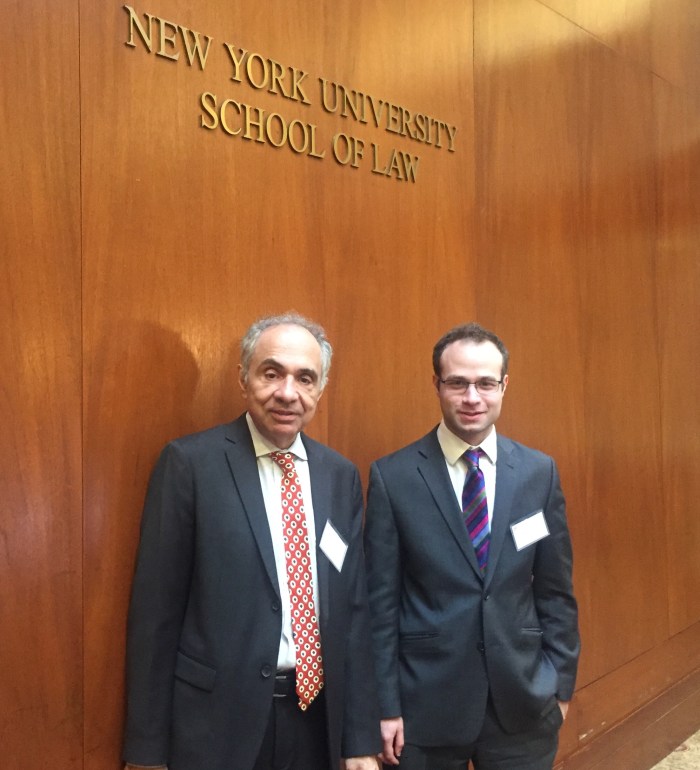
Last week my friend and colleague Mario Rizzo, a scholar central to the revival of  contemporary Austrian economics, turned 70. This occasion prompted a spontaneous outpouring of praise for his work, as well as messages of gratitude for his support of students and fellow academics over his decades as an intrepid professor with his home firmly at NYU. They are collected over at ThinkMarkets. Jeffrey Tucker has written an excellent summary of Mario’s intellectual contributions at the American Institute for Economic Research. Below is a segment of my birthday message:

In my home, the United Kingdom, classical liberal thought has until recently been virtually unheard within much of academia. As a student and think-tank researcher ravenous for liberal approaches to public policy, I gorged on Mario’s blog posts from ThinkMarkets. Together with Marginal Revolution and Cafe Hayek, ThinkMarkets was a critical lifeline for me facing an intellectual world dominated by various visions of authoritarianism and only slightly more benign variants of paternalism.

Thanks to Mario’s selfless contributions to the revival of Austrian economics, that intellectual world is changing, even in the UK. His co-founding of the Society for the Development of Austrian Economics and hosting the Program on the Foundations of the Market Economy at NYU has provided support and inspiration for countless young scholars.

I am very fortunate to be among that multitude.

IMG_5104


Brexit Breakdown

Ir has been obvious for at least a month now that soft Brexit has won out in the UK, though the Prime Minister Theresa May would never admit such a thing directly. Government discussion of access to the EU internal market at its existing level, or very close, and keeping the border open between the Republic of Ireland and Northern Ireland (a fundamental of the peace settlement in the north) would at the very least require continuing regulatory alignment in goods (that is, following the rules made by the European Union).

It seems very likely that negotiations of the terms of exit with the EU itself would make even this partial alignment with the internal market inadequate in order to get the desired level of access. At the very least EU negotiators would demand some inclusion of services (financial services are the big issue here) and something at least resembling free movement of labour.

That inclusion would be full UK access to the internal market after exiting and would require at least a Swiss style relationship with the EU, in which there is full market access in exchange for accepting EU rules and something close to free movement of labour. Such a relationship would mean accepting judgments of the European Court of Justice even if they are not incorporated into UK law. The UK might not follow Switzerland into EFTA (European Free Trade Association, see paragraph below).

It has even been suggested that the UK might find it necessary to adopt a ‘Norway’ solution, in which the UK is directly a member of the European Economic Area. Norway has free movement but opts out of common agricultural and fisheries agreements. It is not part of the EU customs agreement. Like Iceland, Lichtenstein, and Switzerland, it is a member of the European Free Trade Area, which essentially harmonises regulations between these countries and the EU; that is, EU regulations are enforced by EFTA institutions.

It is clear that most Conservative MPs and businesses (though more large business than small business) regard something like the arrangements above, soft Brexit, as preferable to hard Brexit (trade agreement with the EU as a completely external country, possibility of no deal). These MPs and business people, along with most Treasury economists and economists in general, believe that keeping complete access to EU markets is more valuable than vague claims of a trade boom through deals with non-EU states across the world.

Hard Brexiteers believe that economic growth of other parts of the world requires breaking free of EU shackles on global free trade. The soft Brexit, as well as Remain, argument is that membership of the EU does not prevent trade with the rest of the world and that some EU countries are already doing that very well compared with the UK. On this argument, geographical proximity will always make EU trade disproportionately important so that limiting access to EU markets in the hope that non-EU countries will want free trade agreements is unnecessary and probably very damaging.

May’s drift towards soft Brexit after presenting herself as the guardian of hard Brexit has the support of most of the Cabinet, and Conservative MPs, but has been disappointing hard Brexiteers for some time. An agreement of the full cabinet at the Prime Minister’s country residence for soft Brexit has led to the resignation of the two most hard Brexit-oriented ministers.

It seems unlikely this this will deter May from a soft Brexit policy, which everyone agrees can only become more soft in negotiations with the EU to achieve an agreed exit. It also seems unlikely that most Conservative MPs will resist this policy. The biggest problem for May could be that the opposition parties want to vote against the government in call circumstances, so could vote with hard Brexit Conservative MPs to bring down any Brexit agreement.

At this point Brexit might completely break down, with the UK becoming a full member of EFTA, so in practice a member of the EU which exchanges some opt-outs for absence from the decision making processes and institutions. It might even lead to a suspension of Brexit, or a second referendum in which the electorate chooses between the exit package and staying in the EU.

At present, the most likely options in descending order are: 1. soft Brexit, outside formal association with the EU, but like that in practice, 2. formal association with the EU, maybe meaning membership of EFTA, 3. the complete breakdown of Brexit. This could change and so far change has been to move further and further away from hard Brexit.

Personally I support continuing membership of the EU. It is inevitable that large parts of the UK economy will ‘align’ with EU regulations, so it is best to be part of the institutions and processes which decide on these regulations. That is the most pragmatic version of my argument.

I am also a strong European integrationist, even a federalist romantic. The qualification of this idealism is that integration should not go further than public opinion or institutional capacity can accept at any one moment and that economic realities should guide the relationship with Europe for and against the kind of integration I favour at heart.

My own ideal is a kind of revival of the medieval dreams of ‘universal’ (i.e. European) Empire. The poet Dante was a great exponent of such a vision in his classic of political thought On Monarchy, which does not exclude city republics, even favours them under a high European sovereign. We can join it with Marsiglio of Padua’s slightly later call for an empire with elections to have something like democratic federation for Europe.

Leaving my European romanticism aside for the moment, the current realities are that the UK’s exit from the EU has become more and more complicated by the disadvantages of disentangling complex and far reaching institutional and economic links, particularly when most people involved want to keep an open border with the Republic of Ireland and keep 100% of the current level of access to the internal market.

Turkey at the start of one-man rule

1. Yesterday (Monday) Recep Tayyıp Erdoğan took office under the system of executive presidency, which gives him arbitrary personalised powers, based on the claim that a system of such extreme powers for one person is the most democratic system if that person is elected. The changes came about as the result of a referendum last year, which gave a narrow victory for the constitutional changes. It seems to me, and many others, that rigging allowed victory in the election. For the first time in Turkey, all ballot papers unstamped by an electoral officer were counted, allowing unlimited fraud. There are other issues about intimidation and irregularities, but this is not the moment to go into further detail, but I will just point out that radical changes to the constitution were ‘legitimised’ by pseudo-democratic fraud.

2. The constitutional changes enable the President to: legislate by decree, appoint most Constitutional court judges, appoint the army chiefs, appoint police chiefs, appoint all higher level members of the bureaucracy, appoint government ministers and vice-presidents without reference to the National Assembly. There is no Prime Minister. The President, Vice-Presidents, and Ministers are not obliged to answer questions in the National Assembly. In principle the National Assembly can reverse decrees as laws, but to allow the President to legislate in such an unaccountable way in the first place undermines all understanding of what a national assembly is for and what the limits on the head of government or head of state (now the same person) should be in a state which is constitutional and democratic.

3. Ministerial appointments have most notably included the elevation of Erdoğan’s son-in-law, Berat Albayrak, to the Ministry of Treasury and Finance. Albayrak is a major businessman whose rise in business and then politics have taken place since Erdoğan became the most powerful man in Turkey in 2002.

4. Other appointments have given business people ministerial posts for areas of the economy in which they have a dominant market position. Erdoğan’s own family doctor who owns a medical business is health minister. The education minister owns a private college.

5. The appointments of business people and a son-in-law show carelessness about propriety in the separation of the administration of public affairs from private and family interests, to put it in the mildest way possible. It also suggests that Erdoğan thinks he is too big for the party which brought him to power, AKP. It has been clear for some time that the most powerful people in the AKP are this son-in-law and one of the sons. That is, the AKP exists as a vehicle of one family, and its businesses associates. In this case, it is hardly a properly functioning democratic party.

6. The appointments were preceded by a presidential decree on the appointment of the governor and vice-governors of the central bank, which reduces its autonomy and makes it more vulnerable to Presidential pressure. Erdoğan has clearly been struggling to live with central bank decisions to raise interest rates in response to inflation and the falling value of the Turkish Lira. Anyway, the currency lost 20% of its value and inflation is at nearly 16% though the central bank’s target is 5%.

7. Market confidence in Turkey, even of a very minimal kind, was resting on one man, Mehmet Şimşek, who has western training in economics and is the last remnant of the days when the AKP appeared to many to be a centre-right reformist party, and did manage to behave in part like such a party. Şimşek appears to have been increasingly unhappy with his situation, putting a rational face on polices he knows are going in the wrong direction, occasionally winning battles to raise interest rates. One of Erdoğan’s main obsessions is that interest creates inflation. He has found it necessary to curtail that belief on occasions. Şimşek apparently wanted to resign from government recently, but no one ‘betrays’ Erdoğan in that way. Şimşek was bullied into staying and has now been sacked. His replacement is Erdoğan’s son-in- law. The markets have been spooked and the lira fell very sharply yesterday evening.

8. The Erdoğanists do have a solution to lack of international market confidence in Turkey. It is to create a Turkish ratings authority which will rate Turkish government credit as the government wishes! This absurd proposal, which will only reduce the credibility of the lira and government debt, shows the depths to which economic policy run on political paranoia has sunk in Turkey. Political paranoia because low credit ratings are due to foreign conspiracies!

9. Going back to last month’s election, about 2% of ballots cast have been declared invalid by the Supreme Electoral Council. HDP (Kurdish rights and leftist party) has pointed out that most ‘invalid’ ballots are from polling stations where it did not have observers. The HDP is defined as ‘terrorist’ by the followers of Erdoğan and its presidential candidate is in prison on ‘terrorism’ charges. This is all based not on credible evidence of co-operation with the PKK, which does have common roots with HDP, but on absurdly broad definitions of terrorism which take in people who do not oppose the PKK enough or which offer any criticism of state policy towards the PKK.

10. Based on point 9, it looks very much like 2% of votes cast were spoiled to take votes from the HDP. It hardly seems likely that would be the limit of fraud. As mentioned in point 1, all ballots were counted which did not have the basic security guarantee of a stamp from an electoral official on the ballot itself or the envelope containing the ballot. It is inherently difficult to arrive at accurate figures in this matter, but it looks very much like at least 4% of the ballot was fixed (that would merely double the most obvious form of rigging, which I do not think is an extravagant assumption, after all most rigging will take place in very hidden ways). If I am correct then the pro-Erdoğan electoral list for the National Assembly did not get a majority of votes and Erdoğan did not get a majority of votes in the presidential election.

11. The government-state machine extends claims that the HDP is terrorist to the main opposition party, CHP, on the grounds that the CHP has offered some criticisms of the detention of the HDP presidential candidate, and that some CHP supporters voted HDP to help it overcome fraud and reach the 10% of votes necessary to enter the National Assembly. CHP provincial leaders have been banned from attending the funerals of soldiers killed by the PKK, soldiers who in some cases will be CHP supporters, showing the kind of spite, vengefulness, and abuse of state power driving the AKP.

12. The Istanbul municipal government has announced that public transport will be ‘only’ half price during next month’s Kurban Bayram (Sacrifice Festival; religious festival and public holiday) instead of free as has been normal for a long time. This shows the strains that public finances are under in Turkey. The AKP are specialists in providing ‘free’ benefits to electors, along with favours for individuals and families, building up a base in local government in this way before they came to power nationally. The Istanbul news is a small thing in itself, but is suggestive of a decline in the capacity of the AKP to use public money to buy votes.

13. Given increasing personal indebtedness, rising inflation, the falling value of the currency, the decline of foreign investment and the credibility of government debt instruments, we could see some very difficult economic times in Turkey. It is clear that this process was important in holding the recent election 18 months early. The loyalty of the AKP and Erdoğanist base is intense, but was formed at a time of economic growth and expanding public services. We see going to see what happens to loyalty in less happy circumstances.

Could free speech have led to overseas empires?

Tridivesh’s recent post on China’s multilateral struggles got me thinking about the difference between the United States and China when it comes to coalition-building and international affairs more broadly.

I don’t think the Chinese are purposely attempting to smaller countries in debt so that Beijing may have a shorter leash for them. I think Beijing simply doesn’t know what it’s doing, and is proceeding apace with multilateral initiatives like the BRI through a trial-and-error process. Unfortunately, trial-and-error processes only work if there is a mechanism to identify the error that takes place during the trial. In the West, we call this mechanism “free speech.” In China, free speech ruins order and is thus discouraged at best and disposed of at worst.

China’s expansionist efforts will probably, as a result of the lack of free speech, end poorly for the regime. Beijing’s reputation will suffer, and it will have to resort to more coercive tactics to secure its alliances and influence over its smaller neighbors.

This thought process, in turn, got me thinking about how the West came to churn out so many powerful worldwide empires in such a short span of time, and how these empires managed to coexist with each other at various points in time. Given China’s troubles with establishing hegemony, the fact that the United Kingdom, the Netherlands, France, and the United States were able to achieve what they achieved is amazing. Throughout most of history, empires (or wanna-be empires) have sought to expand abroad while keeping order at home, just like China is doing today. In the sixteenth-century West, order at home was rejected in favor of liberty at home, and as a result the few societies that tried liberty ended up being able to afford overseas empires, where order was sought instead of liberty!

The short-sightedness of imperialists continues to astound me. If liberty at home leads to opportunities to establish colonies abroad, why on earth would you try to stamp out liberty in the colonies you’ve been able to establish thanks to liberty? Imagine if the people living in Indonesia, or India, or Algeria, or the Philippines, had all the liberty that Americans and western Europeans had. Alas…

Eye Candy: Mexican election results (2018)

NOL Mexican elections
Click here for data

Yikes, the red team is a left-wing populist party (like the one that governs Venezuela). How did it come to this? Here’s a more optimistic take.

Hegemony is hard to do: China, globalization, and “debt traps”

As a result of an increasingly insular United States, with US President Donald Trump’s imposition of tariffs, China has been trying to find common cause with a number of countries, including US allies such as Japan, India and South Korea, on the issue of globalization.

While unequivocally batting in favor of an open economic world order, Chinese President Xi Jinping has also used forums like Boao to speak about the relevance of the Belt and Road Initiative (BRI) (also known as the One Belt and One Road Initiative, or OBOR). At the Boao Forum (April 2018), the Chinese President sought to dispel apprehensions with regard to suspected Chinese aspirations for hegemony:

China has no geopolitical calculations, seeks no exclusionary blocs and imposes no business deals on others.

There is absolutely no doubt that the BRI is a very ambitious project, and while it is likely to face numerous obstacles, it is a bit naïve to be dismissive of the project.

Debt Trap and China’s denial

Yet China, in promoting the BRI, is in denial with regard to one of the major problems of the project: the increasing concerns of participant countries about their increasing external debts resulting from China’s financial assistance. This phenomena has been dubbed as a ‘debt trap’. Chinese denialism is evident from an article in the English-language Chinese daily Global Times titled ‘Smaller economies can use Belt and Road Initiative as leverage to attract investment’. The article is dismissive of the argument that BRI has resulted in a debt trap:

It is a misunderstanding to worry that China’s B&R initiative may elevate debt risks in nations involved in massive infrastructure projects. Countries are queuing up to cooperate with China on its B&R initiative, but many Western observers claim the initiative will create a problem of debt sustainability in countries and regions along the routes, especially those with small economies.

The article begins by citing the example of Djibouti in Africa, and how infrastructure projects are generating jobs and also helping in local state-capacity building. It then cites other examples, like that of Myanmar, to put forward the point that accusations against Beijing of promoting exploitative economic relationships with participant countries in the BRI is far from the truth.

The article in Global Times conveniently quotes Myanmar’s union minister and security adviser, Thaung Tun, where he dubbed the Kyaukpu project a win-win deal, but it conveniently overlooked the interview of Planning and Finance Minister, Soe Win, who was skeptical with regard to the project. Said Soe Win in an interview with Nikkei:

[…] lessons that we learned from our neighboring countries, that overinvestment is not good sometimes.

Soe Win also drew attention to the need for projects to be feasible, and for the need to keep an eye on external debt (Myanmar’s external debt is nearly $10 billion, and 40 percent of this is due to China).

The case of Sri Lanka, where the strategically important Hambantota Port has been provided on lease to China (for 99 years) in order to repay debts, is too well known.

The new government in Malaysia, headed by Mahathir Mohammed, has put a halt on three projects estimated at over $22 billion. This includes the $20 billion East Coast Railway Link (ECRL), which seeks to connect the South China Sea (off the east coast of peninsular Malaysia) with the strategically important shipping routes of the Straits of Malacca to the West. A Chinese company, China Communications Construction Co Ltd, had been contracted to build 530km stretch of the ECRL. On July 5, 2018 it stated that it had suspended work temporarily on the project, on the request of Malaysia Rail Link Sdn Bhd.

The other two projects are a petroleum pipeline spread 600km along the west coast of peninsular Malaysia, and a 662km gas pipeline in Sabah, the Malaysian province on the island of Borneo.

During a visit to Japan, Mahathir had categorically said that he would like to have good relations with, but not be indebted to, China, and would look at other alternatives. The Malaysian PM shall also be visiting China in August 2018 to discuss these projects.

Conclusion

While Beijing has full right to promote its strategic interests, and also highlight the scale and relevance of the BRI, it needs to be more honest with regard to the issue of the ‘debt trap’ (especially if it claims to understand the sensitivities of other countries, and does not want to appear to be patronizing). While smaller countries may be economically dependent upon China, the latter should dismiss the growing resentment against some of its projects at its own peril. Countries like Japan have already sensed the growing ire against the Chinese, and have begun to step in, even in countries like Cambodia (considered close to China). A number of analysts are quick to state that there is no alternative to Chinese investment, but the worries in smaller countries with regard to Chinese debts proves the point that this is not the case. China needs to be more honest, at least, in recognizing some of its shortcomings in its dealings with other countries.

Eye Candy: Each (American) state’s biggest export trading partner

NOL map US state trading partners
Click here to zoom

Those tariffs will work wonders for the economy, I’m sure…

Pakistan’s dynastic politics and the PML-N’s Sharif family

As in other parts of South Asia, dynastic politics is an integral feature of Pakistan’s politics. Both the PPP (Pakistan People’s Party) and the PML-N (Pakistan Muslim League-Nawaz) are essentially family-run political parties. While the PPP has been dominated by the Bhutto family, the PML-N has been dominated by the Sharif family.

Resentment against family domination in PML-N

In the recent past, there has been resentment against the rise of both Maryam Nawaz Sharif (daughter of former Prime Minister Nawaz Sharif) and Hamza Shehbaz, son of Shehbaz Sharif (PML-N party chief and younger brother of Nawaz Sharif).

The latest resignation from PML-N was that of Zaeem Qadri, once a confidante of Shehbaz Sharif, who was denied a seat for the NA-133 (an electoral constituency in Pakistan). Qadri used some harsh words for Hamza Shahbaz, saying ‘Hear Hamza Shahbaz! Lahore is neither your, nor your father’s property.’ Qadri also stated, that one of the reasons he did not get the ticket was that he did not possess adequate resources.

In the run up to the elections, internal dynamics of the PML-N, as well as the role of the Pakistan military, will be crucial (it has been lending tacit support to the opposition, to weaken the PML-N, especially in the party’s citadel of Punjab).

Dynastic politics and differences within the Sharif family

If one were to look at the resentment against Maryam Nawaz, only last year, Chaudhry Nisar, former Interior Minister, who does not share particularly cordial relations with the Sharifs, said that it is too premature to compare Maryam Nawaz with Benazir Bhutto. Said Nisar in an interview with Geo TV:

Comparing Maryam Nawaz to Benazir Bhutto is wrong […] Maryam Nawaz should understand and partake in practical politics. Only then can she be considered a leader.

Another minister, Saad Rafique, too had stated that Maryam Nawaz should be ‘cautious while addressing public meetings.’

Rivalry between Hamza Shehbaz and Maryam Nawaz

It has been argued that one of the main reasons for the strained relationship between Shahbaz Sharif and Nawaz Sharif was the rivalry between their children. After Nawaz was removed from Prime Ministership in July 2017, one of the reasons why Shahbaz (now the PM candidate) was not immediately appointed interim Prime Minister, as well as President of the PML-N, was that there was a clamor for Hamza Shahbaz as Chief Minister of Punjab and Nawaz’s family was not comfortable with an arrangement where both father and son would be powerful. Later on, Nawaz appointed Pervez Malik, instead of Hamza Shehbaz, as campaigner in charge for NA-120, which was fought by his wife Kulsoom Nawaz.

Military’s behind the scenes manuevres and defections

In recent months, the Pakistan army has been trying to engineer a number of defections from the PML-N to PTI, and even though the military shares a comfortable relationship with Shehbaz, as compared to Nawaz, it is believed that now they would be most comfortable with Imran Khan as PM. There have also been reports of the military not just arm twisting political leaders of the PML-N, but censoring the media as well. Whether the latest resignation was prompted by the military is in the realm of speculation of course.

The Army and Nawaz’ reaction to the resignation of Qadri

Interestingly, Qadri’s resignation may be welcomed not just by the military, since it would have come across as a setback to the PML-N, which is considered the dominant force in Punjab. In his heart of hearts, Shahbaz’ brother Nawaz too may not mind this, since it will not only clip Hamza’s wings but also weaken Shahbaz’ position to some extent. During his press conference, Qadri made a mention of Nawaz Sharif, saying that the Former PM had told Qadri that many within the PML-N were not happy with his presence in the party.

While the two brothers share a very strong rapport, in spite of temperamental differences in the past year, there has been a degree of friction. After Nawaz’ remarks on the Mumbai attacks, where he blamed Pakistan for delaying the trial of the accused, Shahbaz had to intervene, and apparently told Nawaz not to talk to the press without consulting Shehbaz. In an interview to the Dawn newspaper, Nawaz had said:

Militant organisations are active. Call them non-state actors, should we allow them to cross the border and kill 150 people in Mumbai? Explain it to me […] Why can’t we complete the trial?

In spite of the differences within the PML-N, and some tensions between both brothers, there is a strong realization that the main crowd puller for the PML-N still remains Nawaz Sharif, and with the elder Sharif being in London due to his wife’s ill health (she has been on ventilator since June 14 2018) it is unlikely that he will be able to spearhead the campaign.

On the whole, defections like Qadri’s are not likely to have much of an impact on the prospects of the PML-N, given Nawaz’ charisma and goodwill, along with the fact that he is looked at as an individual who has taken on the army, and Shahbaz Sharif’s performance as Chief Minister. What will really be crucial is the success of the Pakistan military’s back door machinations, and to what extent will it go all out to back PTI Chief Imran Khan, who himself has been in the eye of a storm after a book written by his former wife and senior journalist, Reham Khan, has made some serious accusations against him, and could dent his prospects amongst certain sections.

Conclusion

It is in Pakistan’s interest that the 2019 election verdict results in the strengthening of the democratic set up. Apart from a dire need for change in the military’s mindset, political parties in Pakistan (like in other South Asian countries) too need to get their house in order and move beyond being family concerns. It is also important to have greater intraparty democracy.

Turkey after the Election

Grim Facts

Turkey held National Assembly and Presidential elections last Sunday (24th June). Recep Tayyıp Erdoğan won an overall majority of votes and retained the presidency without a second round of voting. The pro-Erdoğan electoral list of his AKP (Justice and Development Party/Adelet ve Kalkınma Partisi) and the older (the second oldest party in Turkey) but smaller MHP (Milliyetçi Hareket Partisi/Nationalist Action Party) took a majority of votes. The MHP took more votes than the breakaway Good Party (İYİ Parti/IP), though IP’s leader (Meral Akşener) is more popular than the MHP leader (Devlet Bahçeli) and the IP has more members.

The MHP broke through the 10% barrier to entry into the National Assembly in the votes cast for it, within the joint electoral list, though it was mostly expected to fall short by a distinct margin. Since the more moderate elements of the MHP joined IP, MHP forms part of a presidential majority in the National Assembly, with its authoritarian monolithic variety of nationalism unrestrained.

The main opposition party, the Republican People’s Party (Cumhuriyet Halk Partisi/CHP, a centre left and secularist-republican party), lost about one tenth of its National Assembly votes. The third party in the opposition electoral list, SP (Saadet Partisi/Felicity Party), a religious conservative party with the same roots as AKP, failed to get up to 1% in either the presidential or National Assembly elections, thus failing to increase its vote significantly and failing to take any notable fraction of the AKP vote.

CHP and then IP leaders failed to live up to promises to demonstrate outside the Supreme Election Council building in Turkey to protest against likely electoral rigging. Opposition data on voting gathered by election monitors ended up almost entirely coinciding with ‘official’ results (strictly speaking official results will not be available until 5th July) and earlier information is preliminary only.

Qualification of Grim Facts 

The above gives the bare facts about the results with regard to the most disappointing aspects from the point of view of the opposition. This is a disappointing result for anyone opposed to the authoritarian regime of Recep Tayyıp Erdoğan, which began by appealing to supporters of reform in a country with rather limited liberalism in its democracy.

Erdoğan has since made it clear that he regards democracy as the unlimited power of one man who claims to represent the People against liberal, westernised, secularist, and leftist ‘elites’ and ‘marginals’, along with foreign and foreign manipulated conspiracies against the Nation.

One qualification to the bad news above is that the opposition during the election is fighting against bias, exclusion, threatening accusations, harassment, violence and legal persecution from the state apparatus, state media, private media effectively under state direction (which is most of the private media), and gangs of thugs, some armed. At the very least the opposition held its ground in terrible circumstances, which have been getting continuously worse for years.

Another ‘optimistic’ aspect is that while there was certainly some vote rigging of a kind it was difficult for opposition monitors to capture. This includes pre-marked voting ballots. As in last year’s referendum vote, videos of pre-marking of ballots have been circulating on social media.

In the referendum campaign the electoral authorities broke the law by accepting ballot papers which had not been stamped by a polling station official. This was legalised in time for the election and broadened to allow counting of ballot papers in unstamped envelopes.

Legal changes have also made it easier for state authorities to move polling stations and remove ballot boxes from polling stations to be counted elsewhere. On a less official level, reports indicate harassment of voters by armed gangs and some employers requiring evidence from a phone camera photograph of voting for the government.

There have been problems for decades with polling stations (especially in areas where the opposition does not send monitors because of a small local base) ignoring opposition votes and recording ‘100%’ for the party in control of the state at the time.

It is very difficult to know what the overall number of votes is changed by these malpractices. It is, however, clear that the southeast of the country (that is the Kurdish majority region) is much more vulnerable to such practices because of the atmosphere created by PKK (far left Kurdish autonomy terrorist/insurgent group) and the security-state counter operations.

The main Kurdish identity party, the leftist HDP (Halkların Demokratik Partisi/Peoples’ Democratic Party), competes with the AKP for first place in the southeast. It is regularly accused of supporting PKK terrorism and even of being an organic part of the PKK in government oriented media and legal cases opened by highly politicised state prosecutors.

There is certainly overlap between PKK sympathisers and HDP supporters, but ‘evidence’ that the HDP supports terrorism consists of statements calling for peace, criticising security operations against the PKK and it’s Syrian partner (PYD), and criticising state policy towards the PKK. Whatever one might think of the HDP’s policies and statements, these are not evidence that it is a terrorist organisation. The idea that it is legitimises official harassment (including imprisonment) and less officials forms of intimidation and vote rigging. It also legitimises less widespread but very real harassment of the CHP on the grounds that some supporters voted HDP to get is past the 10% thresh hold and, in a limited and very moderate way, the CHP has expressed some sympathy for persecuted HDP leaders and activists.

I can only make guesses but I think it is reasonable to estimate that 1% of votes have been historically manipulated and that this has increased along with the strengthening grip of the AKP on the state and parts of civil society, and also with its increasing demonisation of opposition.

I’ll estimate 3% for the votes manipulated.

Election evening results indicated just over 53% for Erdoğan as president and for the electoral list backing him. This has however been going down as later ‘preliminary’ results so it may now be about 52% for both votes. In this case, if 3% of votes are manipulated (a very sober estimate in my view) then we could be looking at 49% for Erdoğan and his supporters. This might still give a slight majority in the National Assembly, as distribution of seats is biased towards rural and small town conservative areas, and since 100% of votes are not represented by seats in the National Assembly in even the most pure form of proportional representation (because there are always some micro-parties which get some votes but do not enter the National Assembly).

A run-off for president after Erdoğan gets 49% seems very likely to still set up Erdoğan as the winner in the second round. It is of course wrong in principle to rig at this level but it doesn’t change anything important presuming rigging is at the level I’ve suggested. I will have a clearer idea about this when all results are officially released on 5th July.

On further relatively good news, the CHP vote in the presidential election was at 30%, about one fifth higher than before.

The presidential candidate Muharrem İnce turned out to be an inspiring campaigner and public speaker able to appeal to a variety of sections of Turkish society. He seems like a natural fit for the leadership of CHP, though so far the incumbent, Kemal Kılıçdaroğlu has been slow to step down and clear the way.,

The final results seem likely to show at least a slight decline for Erdoğan since the 2014 presidential election. IP is new and has no local government base. As there are local elections at the end of March next year, they should be able to establish local strongholds and build on that nationally.

The AKP does not have a majority in the National Assembly for the first time since 2002. MHP makes up the majority at present and as stated above seems likely to behave in a very nationalist-authoritarian way. However, its vote seems to have been increased by disaffected AKP voters (particularly in the southeast) who are not ready, so far, to vote against Erdoğan and a pro-Erdoğan electoral list. This makes their support rather unstable and the MHP is likely to see advantage in turning away from Erdoğan at some point, or at least cause him trouble by asserting its independence. Erdoğan is not someone to welcome, or live with, this kind of division in his support bloc and a conflict of some kind seems likely at some point.

Busy, busy, busy

Hey folks, I’ve been busy. I just moved from Austin to Waco, and found out child #2 is on the way. Holy crap!

Here is my Tuesday column at RealClearHistory, on Rod Blagojevich, and here is my weekend column for the same site, on the World Cup. Be sure to check them out! I’ve got two columns per week at RealClearHistory, one comes out Tuesdays and the other on Fridays.

I hope you’ve been enjoying yourselves here at NOL. Awhile back, Michelangelo suggested I shift more of my writing focus here to be on libertarian parenting, but I thought that might be a bit too personal. (There’s a lot of weirdos out there.)

I’ve invited Joakim, Shree, Ethan, and Mary to join us at the consortium, and I do hope you’ve been enjoying their stuff so far (I know I have). You can find out what everyone has been up to lately by starting here (or here, if you’re on Twitter).

Have a good weekend!

Red Lobsters and Black Swans

Back In 2007 Nassim Nicholas Taleb had estimated that, in the following years, the rate of irruption of highly improbable events that change our way to perceive reality would be on the increase. Using his terminology, we would swiftly drift from Mediocristan out to Extremistan. People would have to deal with black swans more often and adapt to the new scenario.

The sudden spreading of Jordan Peterson’s lobsters might be a confirmation of Taleb’s surmise (in Extremistan, the term “surmise” has not any derogatory connotation). “Stand up straight with your shoulders back” is a piece of advice aimed at people who feel overwhelmed by a state of affairs, both personal and public, whose complexity they can hardly grasp. In Taleb’s terms, Jordan Peterson wants to prepare you for a world in which the Black Swans are the underlying reality.

Our quantitative patterns about reality -both physical and social- contribute to preserve fixed relationships among the terms that build up our world and subjectivity -while every now and then the “untimely” burst into our sense of reality. The Nietzschean “untimely” had always been there, out of the reach of our horizon of perception, but ready to appear suddenly and unexpectedly, like the plague in Thebes.

Nevertheless, perhaps there is no underlying chaotic reality, but a Hofstadter’s braid, where Apollo and Dionysus are intertwined: simple and complex phenomena, back to back, the beauty and the sublime. Upon one side, the train of events represented by a correlative train of thoughts; on the reverse, a plane of unarticulated notions that are inherent to those representations.

In this sense, the matrix of Taleb’s Black Swans might not inhabit the undertow of our perceptions, but stand above them, in a plane of a higher degree of complexity. Each new event triggers our brain to readjust our system of classifications. But this readjustment, at its time, triggers off a reconfiguration in the said plane of unarticulated notions that give support to our set of representations. In principle, an arrangement of such events would remain stable, but sometimes some unintended consequences could arise. That is the dynamic of events that Friedrich Hayek had once tried to convey with his concept of spontaneous or abstract order.

Peterson’s Red Lobsters try to make us reflect on the edge of our common patterns of conduct, whereas Taleb’s Black Swans incite us to perform the speculative activity of throwing hypothesis over the singularity of the abstract order, so that to anticipate any unintended consequences of our individual or collective behaviour. Notwithstanding the huge differences that there might be between them, what deserves our main attention is the acknowledgement of that the unplanned, the unexpected, the uncertain, are not alien forces, but the inherent articulation of the patterns of events that constitute the matter we are face to deal with.

Eye Candy: 2026 World Cup votes, by country

NOL map World Cup 2026 vote
Click here to zoom

My only question is why did 3 countries that could easily (and have, in the past) host the World Cup on their own gang together? Mexico, Canada, and the United States are wealthy countries. Why gang up?

My guess is that wealthier countries are going to have to do a lot more cooperating if they want to host world-level events from now on, due to the fact that the selection process for these types of events has become democratized. Economist Branko Milanovic has a thoughtful piece on FIFA (the governing body for world-level soccer events) and corruption that ties in to all of this.