“Horrors Didn’t End When Bataan Death March Did”

That’s the title of last week‘s Tuesday post over at RealClearHistory. I’ve been so busy I forgot to share it here. Check it out:

Camp O’Donnell was no relief from the Death March of Bataan. In it, disease spread like wildfire and starvation was rampant. The Japanese, who were fighting Americans elsewhere and Filipino guerrillas close by, had no empathy for their prisoners. The prisoners who survived the harsh march from Bataan had another 3 ½ years of hard manual labor in prison camps to look forward to, if they survived the horrific conditions of the camps.

As the Allies began slowly retaking the Philippines from Japanese forces, these prisoners of war were shipped from one of the 70 prisoner camps on the archipelago to China and Japan itself to continue their slave labor for the Empire. The Japanese shipped these prisoners to the mainland on unmarked vessels, a violation of the Geneva Conventions, and it’s possible that the American and British Navies may have inadvertently sunk a number of these vessels.

Please, read the rest.
Nightcap

  1. Syria’s humanitarian disaster is fast becoming a global crisis Bob Seely, CapX
  2. Trump is celebrating torture, not tolerating it Andrew Sullivan, Daily Intelligencer
  3. The brutal legacy of childhood trauma Junot Díaz, New Yorker
  4. Which countries get the most sleep? James Tozer, 1843

Pot smoking and freedom: ‘Murica!

My latest Tuesday column over at RealClearHistory takes aim at the history of marijuana in the United States. I’ve got a 600 word limit, but hopefully I packed in plenty of info. Here’s an excerpt:

During the much-loathed Prohibition era (1920-33), marijuana was targeted along with alcohol and other substances deemed immoral by bootleggers and Baptists. Unlike alcohol, which was re-legalized in 1933, marijuana ended up in a legal limbo that continues to this day. The legal, political, economic, and cultural battles surrounding marijuana use in the United States have helped shape three generations of lawyers, businesspeople, activists, academics, and medical professionals. Thanks to the questions posed by marijuana prohibition, rigorous and creative arguments in favor of the drug’s legalization have contributed to a better understanding of our federal system of government, of Judeo-Christian morality, and non-Western ethical systems (pot-smoking “Buddhists” are practically cliche today), of the human body and especially the brain, of global trading networks throughout history, and of intercultural exchange and communication. Freedom still defines us as a society. Freedom binds Americans together. Freedom drives our conversations and our institutional actors. This may be difficult to remember as the news cycle grows ever more sensational, but this quiet, humble truth still remains.

Please, read the rest.

Nightcap

  1. Skripal Case Descends into a Propaganda War der Spiegel
  2. American options in the face of Turkish-YPG crisis Burak Kadercan, War on the Rocks
  3. Syria’s Nuclear Program Was Always a Doomed Idea Robert Farley, National Interest
  4. How George HW Bush dodged death by cannibalism in WWII Jennifer Wright, RealClearLife

Nightcap

  1. Religion and human rights Bruce Clark, Erasmus
  2. Voltaire and the Buddha Donald Lopez, Public Domain Review
  3. The politics of the past in Europe and Russia Douglas Smith, LA Review of Books
  4. Lessons unlearned, empire falls Niall Ferguson, Vanity Fair

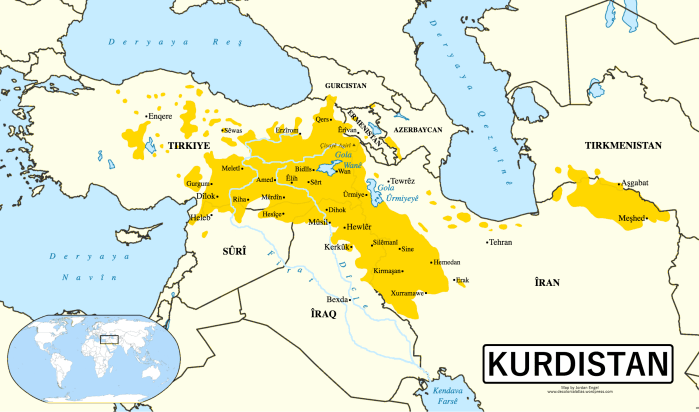
Eye Candy: Kurdistan

NOL map Kurdistan.png
Click here to zoom (courtesy of the excellent Decolonial Atlas)

Countries with significant Kurdish populations in the Near East: Turkey, Syria, Iraq, and Iran.

Countries with significant Kurdish populations in the Near East that the United States has bombed or put boots on the ground in: Iraq and Syria.

Countries with significant Kurdish populations in the Near East that the United States has threatened to bomb and possibly invade: Iran.

Countries with significant Kurdish populations in the Near East that the United States is allied with: Turkey.

Three of the four countries with significant Kurdish populations in the Near East are (or was, in the case of Iraq) considered hostile to the US government, so the use of Kurds to further American Realpolitik in the region is almost obvious, until you consider that Turkey has been a longtime ally of Washington.

Suppose you’re a big-time Washington foreign policy player. Do you arm Kurdish militias in Syria, encourage continued political autonomy in Kurdish Iraq, finance Kurdish discontent in Iran, and shrug your shoulders at Istanbul? Seriously, what do you do in this situation?

Nightcap

  1. The firing of Kevin Williamson was a bad idea Conor Friedersdorf, the Atlantic
  2. Among the abortion extremists Ross Douthat, New York Times
  3. Back alley regulation Bryan Caplan, EconLog
  4. What deterring abortion means Russell Arben Fox, In Medias Res

Nightcap

  1. How British architects conquered the world Joe Lloyd, 1843
  2. The demise of the nation-state Rana Dasgupta, Guardian
  3. The survivors of the Syrian wars Patrick Cockburn, London Review of Books
  4. There is no personality cult around Viktor Orbán Jan-Werner Müller, New York Review of Books

Nightcap

  1. We’ve lost our faith in God *and* reason Kenan Malik, Guardian
  2. Pope Francis is beloved, but disaster looms for the Vatican Ross Douthat, NY Times
  3. What did Karl Marx think about freedom? Daniel Luban, the Nation
  4. Hungary’s slow, sad decline into dictatorship Matthew Engel, New Statesman

Nightcap

  1. What the FBI’s Cohen raid means Ken White, NY Times
  2. Documenting a police detention in New Jersey Irfan Khawaja, Policy of Truth
  3. Why do we have prisons in the United States? Livia Gershon, JSTOR Daily
  4. Erdogan refreshed after talks with Putin, Rouhani Amberin Zaman, Al-Monitor

Nightcap

  1. Slavery didn’t dehumanize anybody Walter Johnson, Boston Review
  2. Some uncomfortable Gaza truths Michael Koplow, Ottomans and Zionists
  3. Some problems in the theory of imperialism Ben Reynolds, Fragments
  4. The new communists (same as the old) Lili Bayer, Politico

Nightcap

  1. The French king who thought he was made of glass Amelia Soth, JSTOR Daily
  2. Uganda: Land of many kingdoms Rhys Griffiths, History Today
  3. Scholarship on African history continues to impress Howard French, NY Review of Books
  4. The illegal slave trade in Texas (1808-1865) Maria Esther Hammack, Not Even Past

Nightcap

  1. The story of our species needs rewriting again Christopher Bae, Aeon
  2. Conjuring anthropology’s future Simon During, Public Books
  3. Picasso’s year of erotic torment Michael Prodger, New Statesman
  4. “What Have the Romans Ever Done For Us?” Robert Darby, Quillette

Eye Candy: Poo-Pooing in Public, Percentages

NOL map open defecation 2015
click here to zoom

My only question is: how do they compile data on this? The World Bank put this thing together, but I can’t see any economists doing fieldwork on this. Maybe the Bank hired anthropologists to do the poo-poo stuff…

Nightcap

  1. Libertarianism is just as feasible as the rest Nikolai Wenzel, Law and Liberty
  2. Trump’s war on the Deep State Conrad Black, National Interest
  3. Black litigation under Jim Crow Melissa Milewski, OUPblog
  4. Avoiding the Cicero trap Bruce Fein, American Conservative