Russia in Syria: A Gift to the West (but not to Syrians)

I don’t see why so many Western commentators and analysts are up in arms over Russia’s move into Syria. (Actually, I do: From Ukraine to Iran to Syria, Moscow has been more active in geopolitics than it has been for nearly 25 years.) Moscow’s move into Syria can only be seen as a gift to the West, in terms of strategy and geopolitics. Think of it this way:

Russia has no military experience whatsoever outside of its borders. The Russian military did a ruthlessly good job of stamping out secessionist movements in the Caucasus, and its internal security bureaucracy has done a great job of stifling dissent and shaping the narrative that Moscow wants to be highlighted. Yet Russia’s success outside of its borders has been paltry, at best.

Intervention in Ukraine has brought widespread, global condemnation upon Russia, and economic sanctions to boot.

The Russians in Syria are going to be ruthlessly slaughtered and exploited by the myriad of factions in the region. Not only is Russia backing the wrong horse (Assad), it is backing it up with hardware and personnel that have no experience with the region. Russia has produced an insular intellectual class over the past 15 or 20 years, and this is going to play out badly for its Syrian intervention.

The West, which has an awful lot of experience playing factions off on each other in the Near East, will most likely take advantage of Russian ignorance (to the detriment of Syrian society as whole) and as a result the world will see a Russian military outsmarted, outgunned, and outmanned by an insurgency with no official support from the outside world. The Russians are going to get bloodied in Syria. I don’t see why Western hawks are so keen on making Russia “pay” for its excursion on the global diplomatic stage.

An update from Memphis (Russo-Baltic edition)

Dr Znamenski (bio, posts) sent me an email updating me on his recent shenanigans:

I also appreciate your remark that we need to reach out to other libertarian-leaning people rather than singing to only a libertarian chorus. Even though I am notorious for not contributing to NOL, I devoted this summer to reach out to liberty-minded people in Europe by going to St. Petersburg, Russia, and delivering there a public talk (in Russian) on “Heroics of the New Deal and Its Critics” at a downtown hotel and afterwards I met with the audience for a free-style interactive talk on current challenges to individual liberty. Then I proceeded to Tallinn, Estonia, where I met a group of Estonian libertarians and delivered a talk (in English) on geopolitical imagination of Russian nationalism (used current Alaska-related Russian patriotic rhetoric as an example). Then proceeded back to Russia, where at Samara University again I gave a talk on the mythology of FDR and New Deal Keynesianism and how it was appropriated in 2003-2008 by the Putin regime that was building the “vertical” of its power. My argument was that politico-economic regime whose “validity” was “scientifically” proven by Keynes in 1936 by now became a kind of a fetish that is associated with a good government. Hence, the “Heroics of the New Deal” title. The Estonian visit was especially pleasant and inspiring.

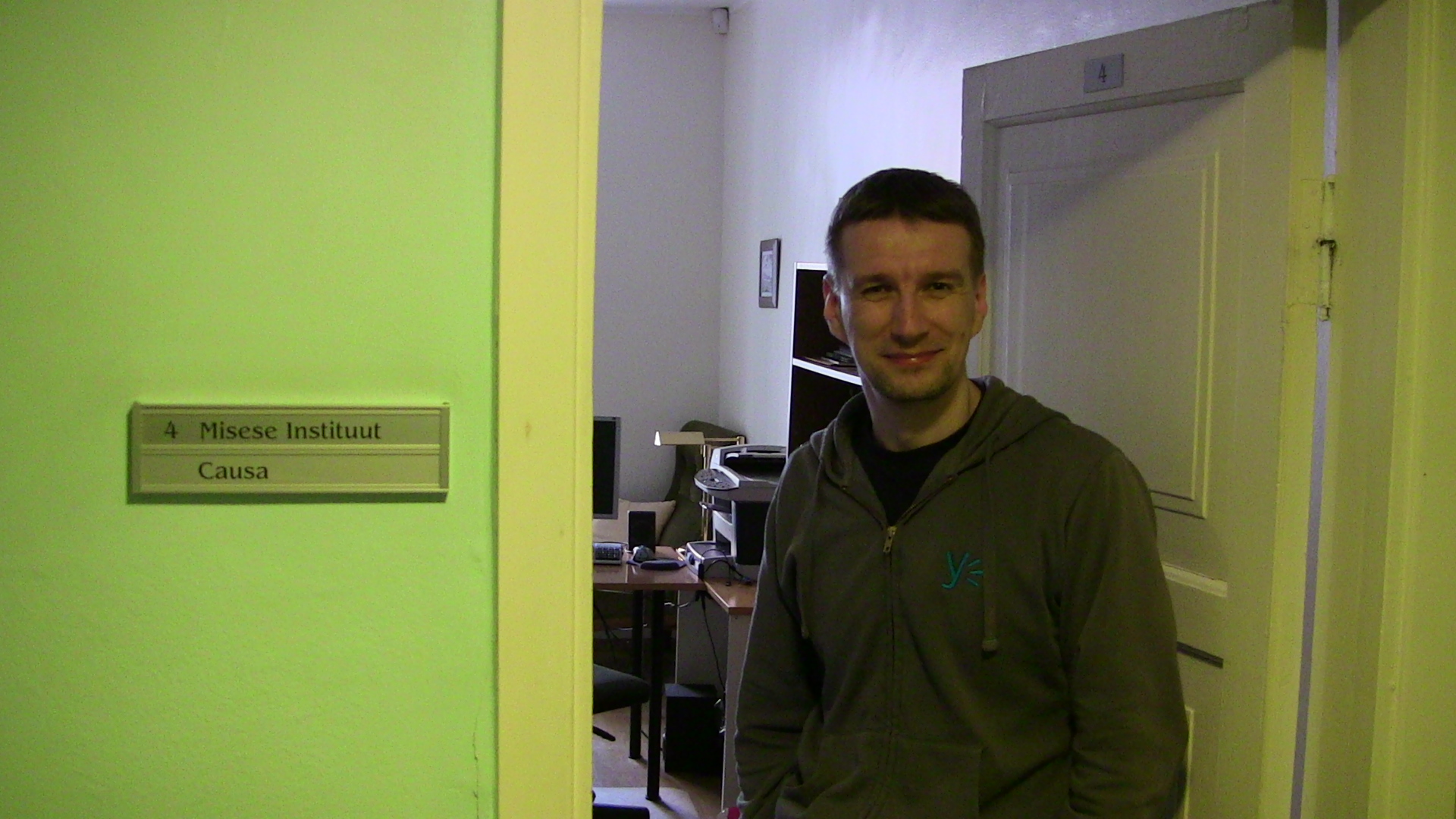
I also met an informal leader of Estonian libertarians […] Very productive and charismatic guy. I need to navigate him to you and to NOL, which will greatly benefit from his contributions (if any). His English is impeccable too. See his picture attached to this letter (they have Mises Institute of Estonia) in addition to a few other images from Estonia (the country where all paper work exists only in electronic form and a flat tax return occupies only one page!). The country [Estonia] was the first in Europe to introduce universal flat tax (1994), which replaced three tax rates on personal income and one on corporate profits. The flat tax rate was on 26%, which later was reduced to 20%. Several countries of Europe followed the suit and benefited from this. Very simple system, which helped this tiny backwater country of 1 million plus something people to dramatically raise its well-being. To their frustration, even Russian nationalists, who remain quite influential in Estonia due to the presence of a large Russian minority, have little economic discontent among Russians to chew on. The latter simply compare their economic situation in their historical homeland where average salary is $500 and Estonia where this salary is $1150.

Dr Znamenski has some excellent ideas brewing (on US-Russian relations in the Arctic, Crimean secession, and Foucault), and hopefully he can find the time to post them in the very near future. Notice, too, that Dr Znamenski refers to Russians as Europeans (or, at least, considers St Petersburg to be European). A small observation, I know, but one that I suspect has big sociological implications. Check out these pictures he sent me:

This is the Estonian libertarian Dr Znamenski mentions above. I hope to someday meet him.
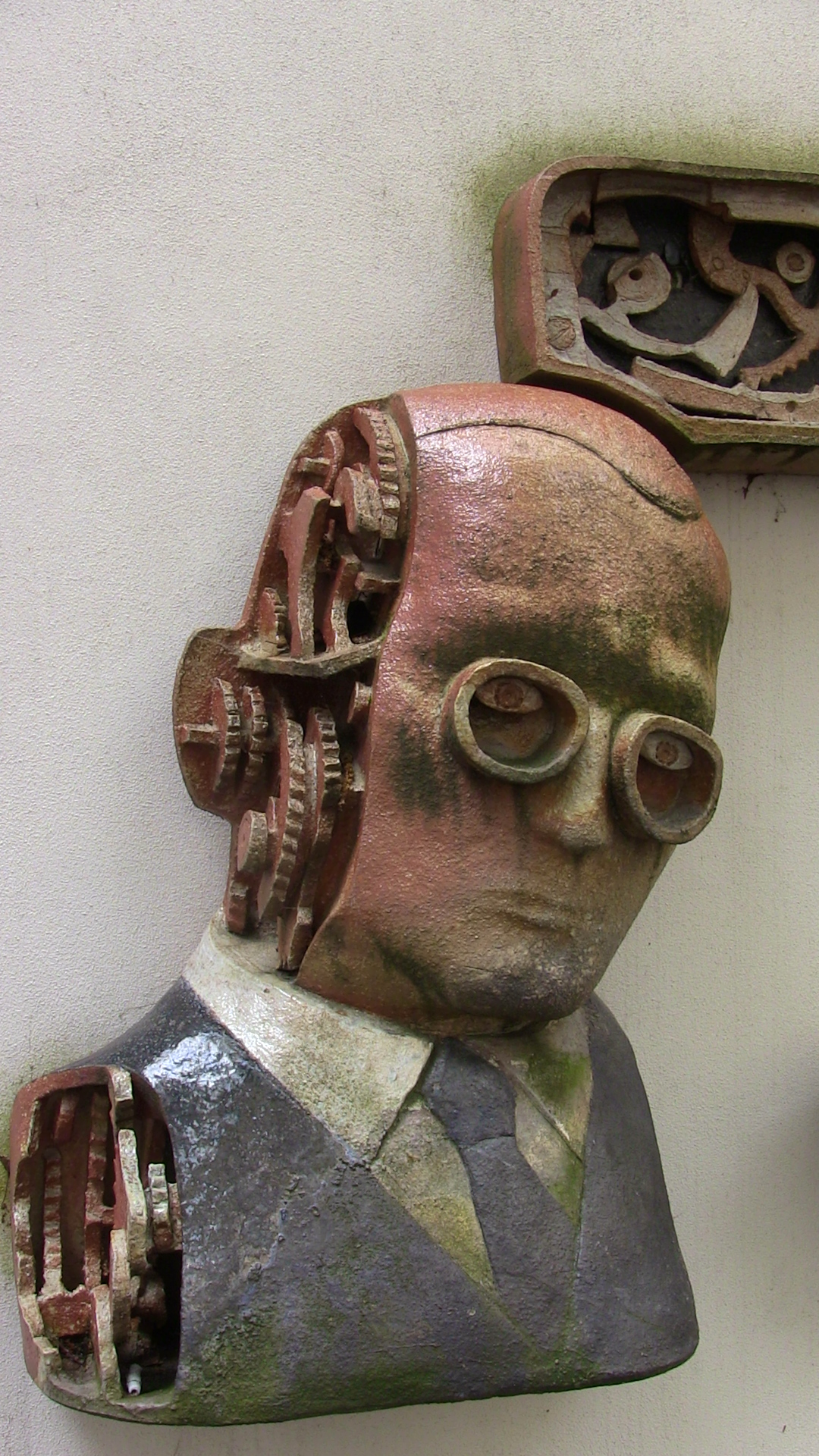
This is a photo from the Museum of the 20th century in Tallinn (the capital city of Estonia).
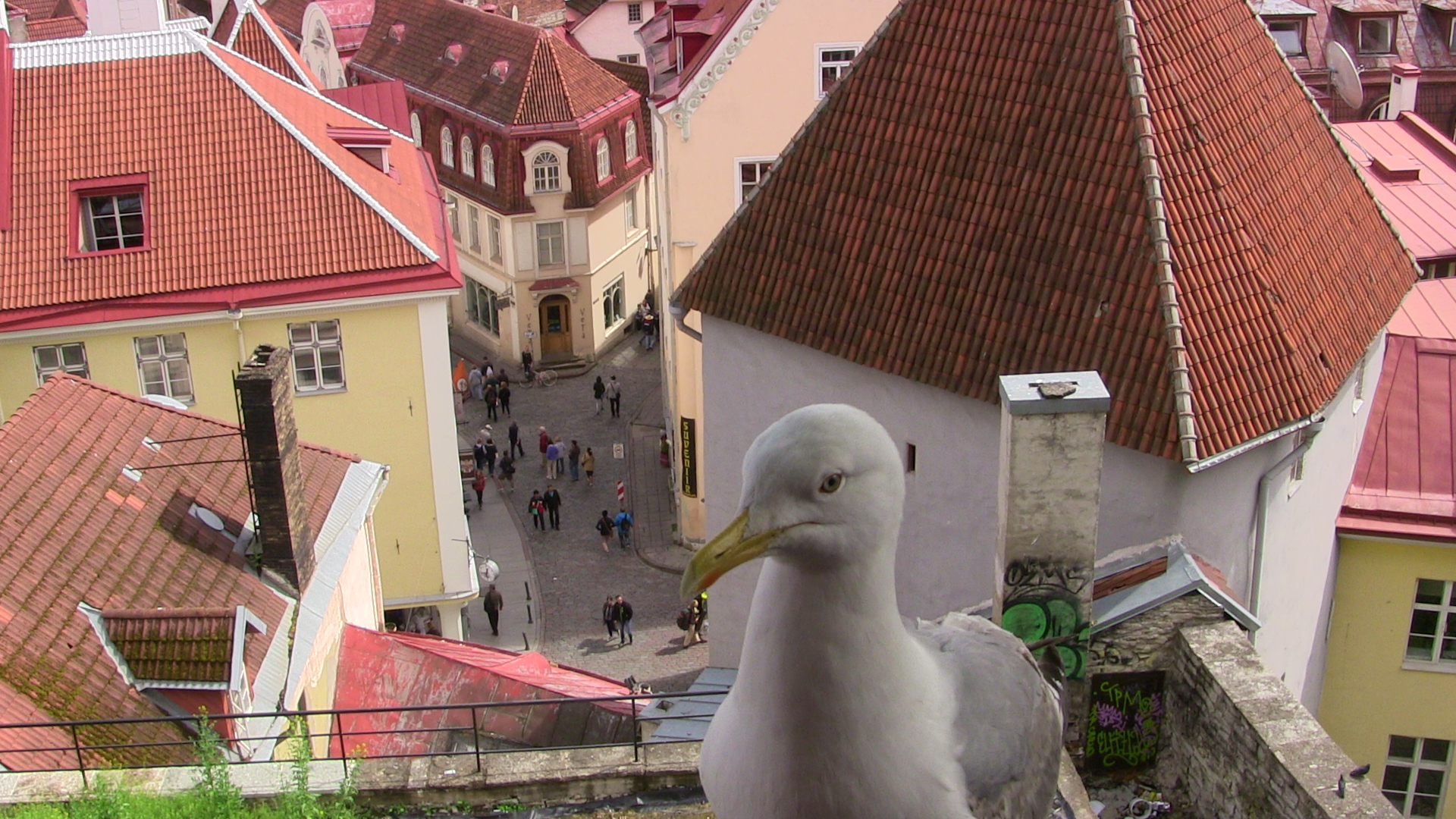
This is my favorite picture. It’s a view of Tallinn with a curious visitor, and highlights Dr Znamenski’s sense of humor, which I greatly appreciate.

USA President Elections. View from Russia

Hello, NOL! Long time no blog. Now I want to share my thoughts on upcoming USA president elections in 2016. This event is very important for me, because I’m interested in American culture and history. I also think that this can be a trigger for reloading relationships between both our countries. So, I watch at pre-election race from position of a free thinker, who want to live in peaceful and secure world. It’s stupid to think about futurecoming President as about pro-Russian activist. It’s impossible, because, as we say in Russia, “your own shirt is closer to your body” which means “do good for yourself and your interests, and after all – for the rest of the world”. A kind of egoistic, but it works well. So I hope that President at least will not drag our relationships back in the times of Cold War.

Propaganda works well. A lot of people in Russia don’t even think about “spring” in relationships. More to say, some kind of russian patriots think that USA is a “territory of evil” and don’t want to have any relationships at all. Quite stupid position. Mono-polar world came to end with the Soviet Union and the truth is simple. We can’t develop without each other. It’s bright as day that we can’t affect on USA president elections, it’s USA business. It’s important for all russians to understand position of every single candidate and to have own opinion on this case: what can be done to improve our relationships and who can do that. Who will chose the path of collaboration and consolidation instead of self-destructive isolation?

Your opinions in comments area are always welcome!

From the Comments: The Contribution of American Allies to Pax Americana

Dr Stocker answers my concerns about free-riding and rent seeking with this gem:

Good points Brandon. On the rent seeking, I think you are broadly correct, but I would offer two qualifications. European nations/the EU often foot a lot of the bill/take on associated civilian tasks where America has taken military action, so that the US is not subsidising the defence and security needs of Europe quite as much as it might seem. So for example, in the Yugoslav breakup led to US military operations and a comparatively passive role for Europe, but a lot of the afterwork was taken on by Europe and there is no point in military intervention without work on building civil society to create long term security and stability. Going back a bit further to the first Gulf War/expulsion of Saddam from Kuwait, Germany and Japan did pay a lot towards the cost in return for not participating. Despite [this] they got a lot of abuse in the US Congress from politicians who don’t appear to understand that their non-intervention in the Gulf owed a lot to constitutions and attitudes which the US encouraged/imposed during post-World War II occupation. Recently, though European govts have been cautious in what they say in public about the Ukraine crisis and containing Putin, there is a growth in military spending and co-operation done in fairly quiet ways largely with the aim of deterring Putin from adventurism in the Baltic states. Just one example, Germany has recently taken 100 Leopard II tanks out of retirement and work is underway for the Leopard III. Moving to the Pacific, Japan is enhancing its military and weakening constitutional restrictions on the deployment of the military (imposed by the US in the post-war Constitution) in reaction to Chinese assertiveness.

While I think it is broadly correct that the US has been paying for a military burden which should be born by Europe and Japan, the situation is not as extreme as it often assumed in the US and as far as I can see is moving in a more balanced direction. In general while it is true that the US has a very impressive military machine with some impressive technology and officers, I think some Americans are a bit over confident about this. A lot of Americans, at least amongst those who take an interest in military kit, appear very convinced that the Abrams 2 is the best tank anywhere, I would suggest that in military capacity, for cost, the Leopard II is probably better (it certainly does much better in export markets) and even in absolute terms ignoring cost, the French Leclerc (which is extremely expensive) has a good claim to be the best tank around, and the Korean K2 is another strong but very expensive candidate. The Abrams is expensive, heavy, difficult to transport and difficult to keep in sufficient fuel, though it can certainly do a very good job. A lot of Americans appear to be incapable of thinking of France as anything other than a surrender monkey joke in military terms, which is really very far from the reality, as can be seen by the very strong role that France is now taking in northwest Africa against violent Islamist fundamentalists. The US military may well be able to have the same military capacity for lower cost if it moves away from the Abrams II model of a tank that is expensive to run and transport as well as build.

So broadly a correct point Brandon, but I think the situation is a bit better than is often understood in America and is moving in the right direction as Japan and Europe are getting used to the idea of taking responsibility for dealing with new threats from China, Putinist Russia and the hydra of Islamist fundamentalists.

A very good point, and an even better angle with which to view the world.

My only quibble is that the right direction American allies are moving can easily be changed without a more fundamental shift in institutional arrangements between us. Some sort of federal or confederal arrangement would go a long way toward addressing this issue, and would further deepen the economic and cultural ties between constitutional democracies.

Or am I just looking for problems where there are none, in order for my arguments to gain ground?

From the Comments: Greece, the Euro zone, and Russian prowess

Dr Amburgey writes:

I just returned yesterday from a week in Athens for an academic conference. There seemed to be a big socio-economic divide in voting intentions. The unemployed and menial workers were definite No votes. The Yes votes were physicians and a few academics. Personally I think they should bag the euro and go back to the drachma.

Brandon: how long do you think it will be before Putin is making deals in Athens? Might be nice to have a friend in the EU when sanctions come up again. Port privileges for the Russian navy would be very conveniently located as well.

Jacques has a good, thoughtful response (“Leaving the Euro zone does not require leaving the European Union”) that I wholeheartedly agree with (and that I’ve blogged about here and here), and it appears Dr Amburgey is in agreement with us (though does he think Greece should stay in the EU?). Contra Dr Foldvary, I do not think there is any need for Greece to leave the EU. If anything, the EU should be adding more states, though not expanding its geographic space.

Regarding Russia, I simply don’t know. Russia – along with Turkey, Iran, and China – is a society that is very hard to understand let alone predict (I would add India/Pakistan to this list, but the states of the Indian subcontinent are traditional post-colonial states and are therefore much easier to predict; the other four were never conquered or carved up by imperial cartographers). The whole Crimea debacle still has me smarting. Nevertheless I’ll add my thoughts to the conversation.

I don’t think Athens will grow closer to Moscow. There are two major reasons:

  1. Greece fears Russia, which is why Athens has remained in NATO for so long.
  2. Most Greeks – even the ‘No’ voters in this recent referendum – don’t want to leave the EU; Greeks overwhelmingly want to be a part of ‘Europe’.

There are couple of minor reasons, too, though I don’t know how minor they are. 1) Greece is not Ukraine. 2) Russia’s economy is in shambles. Greeks have a higher standard of living than do Russians.

On the flip side, the Greeks are always thinking about the Turks. If an opportunity presents itself (though I cannot think of any arising), Athens may start to edge closer to Russia (a traditional enemy of Turkey) if it thinks Ankara is getting antsy about its former province. This is pretty extreme, though. Also, Russia’s economy may be in shambles, but it seems like Moscow always has plenty of money for military expenditures, and rent stemming from a Russian port in the Mediterranean Sea might be too tasty to resist for a country saddled with so much debt.

At this point I don’t think Greece has much clout in European politics, so I don’t see Moscow viewing Athens as a reliable friend in Brussels.

Myths of Sovereignty and British Isolation, II: After Waterloo

The sovereigntist mythology of British history is in any case caught in a rather awkward place in claiming both a unique British role in resisting pan-European tyranny and a separation between Britain and mainland Europe. It is hard to see how both claims  can be completely true. The sovereigntist attempt to finesse this awkwardness is partly to claim that Britain played this unique role against Napoleon (well maybe Russia, Prussia, Austria and Spanish insurgents helped a little) is that Britain was in Europe to do the job and was then out again until destiny called on us to be in Europe again to beat back the Kaiser in 1914.

There is rather a lot wrong with this picture. As mentioned above, Britain shared royal dynasty with the German state of Hanover at the time of Waterloo. It had done so since 1714, when it acquired as king a Hanoverian prince who spoke almost no English. The Hanoverians continued to reign in Britain until 1837, when Princess Victoria was able to become British Queen but was not able to inherit in Hanover due to the exclusion of women from the succession. Anyway, she kept up the German link by marrying Albert of Saxe-Coburg with whom she spoke German at home. William II, the German Kaiser who was the national enemy/European hegemon of 1914, was one of her grandchildren and was apparently very attached to her.

Of course by this time, the royal family reigned in Britain rather than ruling, though Albert was rather keen on the ruling and things could have become very interesting on this issue if he had not died rather young. Anyway, even excluding the royal family, Britain was very involved with the rest of Europe after 1815. This involvement included:

  • possession of Gibraltar on the southern tip of Spain, going back to 1713, and still a British territory;
  • the island of Malta became British during the Napoleonic Wars and continued to be so until the 1960s;
  • the Ionian Islands were transferred to Britain from Napoleonic France, which had recently acquired them as part of a takeover of the Republic of Venice, and the islands remained British until transfer to Greece in the 1860s;
  • Cyprus became de facto British in 1878 with continuing de jure but not very meaningful Ottoman sovereignty until 1914 when the island was annexed, becoming independent in 1960, but even so containing two small parts of Britain in the form of two sovereign military bases.

So Gibraltar and two bases on Cyprus were still British, along with the nineteenth century presence in all of Malta and part of what is now Greece. This is surely rather a lot of European involvement for a country that supposedly experienced a radical separation from Europe after winning the Battle of Waterloo, according to the sovereigntist Eurosceptic narrative.

But that’s not all for nineteenth century British involvement in the rest of Europe. Combined British and French pressure on the Kingdom of the Two Sicilies (i.e southern Italy and Sicily) played a large role in weakening and isolating the state, so that it accepted absorption into the new state of Italy during the Risorgimento. The Crimean War took a British army via Ottoman Varna (now in Bulgaria) to fight against Russia, in alliance with the Ottoman Empire, France, and Piedmont-Sardinia from 1853 to 1856. Of course Britain was sometimes at war with the Ottoman Empire, so that in 1829 the British, French, and Russian navies defeated an Ottoman fleet at Navarino, a major event in Greek Independence. A remarkably brutal Independence War had been going on since 1821, and the Battle of Navarino marks the decision of the Great Powers, including Britain, to arrange a settlement according to their wishes and convenience, with a German king imposed on the new Greek state (which was initially a republic). Presumably the British government believed that if they had a German monarchy so should everyone else. Britain of course continued to be involved in the lengthy process in which the Ottoman state was bit by bit separated from its European possessions, though often tilting towards the Ottomans to pin back the Russians, as in the Crimean War. Anyway, this all amounts to a very busy time in Europe for a country that had supposedly separated itself from Europe, and I’ve only covered the highlights.

The other side of the sovereigntist-Eurosceptic narrative of Britain after Waterloo is that Britain somehow stood alone as a country of liberty, progress towards democracy, law, prosperity and the like, showing the backward Europeans the way. There is some truth in this, on the whole Britain was ahead, but there are so many qualifications to be made that this can only be treated as like being slightly ahead rather than putting Britain in a class of its own, but more on that in the next post.

From the Comments: Russia Resurgent and a Libertarian Strategy

I am working on a speculative piece about the recent assassination of liberal (i.e. libertarian, a.k.a. internationalist) politician Boris Nemtsov in front of the Kremlin. In the mean time, here is an old comment of mine on Russia’s new grand strategy:

Thanks Dr A,

I still think this is all a part of Russia’s symbolic strategy against the West. As you mention, the referendum is not legally binding and nobody aside from Moscow has recognized it.

What I think the best option available to the West would be to go ahead and recognize the independence of regions within Russia’s “official” borders (the territories you mentioned, for example).

To back this up, simply make a mockery of the whole process going on in Crimea. Have a couple of silly press conferences. Then, to add teeth to the recognitions, publicly announce some weapons deals with Georgia and Ukraine. Publicly announce that all Western arms-related bans in the Caucasus are to be repealed.

Then point out, in a rueful manner, that Canada and Mexico are under threat from domestic fascists and must be invaded in order to protect the American citizens and lovers of American citizens in those two countries.

Mocking Russia’s current moves in Crimea will have a much greater impact on policy decisions and public opinion than economic sanctions (which will only make things much, much worse).

Sanctions are a prelude to war.

There is also the issue of secession and political oppression to think about. As it stands, the Crimeans should be able to vote their way out of a political union with Kiev. So, too, should Dagestanis, Chechens, Karelians, etc., be able to vote their way out of a political union with Moscow. The fact that only guns have so far been able to secure a vote in favor of public opinion (Crimean secession from Ukraine) suggests that liberalism has yet to reach enough minds and institutions to have the positive impact that I think it could have on the world.

I also don’t buy the argument, made by some, about the fact that at least one of these oppressed post-socialist, post-Soviet regions was able to secede from a political center it deemed oppressive and should therefore be viewed in a positive light, even if it was Moscow’s guns which brought about the change. To me this line of reasoning is akin to arguing that the US invasion of Iraq was a cautious positive for the world, even though half a million people died due to the invasion, because there is now one less dictator in the world.

Secession needs to be viewed as a legitimate political option for peoples and this recognition needs to be incorporated into the legal systems of liberal societies if we want to avoid more conflicts like the one between Russia and Ukraine. The world is devolving politically, which means secessionist tendencies will increase, and if there is no political or legal mechanism (much less intellectual recognition) for dealing with these aspirations then be prepared for more problems in the post-colonial world (see this and this), but not so much in the West (see this and this). Liberals, of course, have been at the forefront of the secession debate since John Locke first brought it up in his 1689 classic Second Treatise of Government.

A Short Note on Islam and Violence: Russian Edition

Many notable, and many more unnotable, commentators will swear by Islam’s “violent penchant.” They don’t care for nuance. They don’t care for facts. Instead, they adhere to the old principle of repeating something often enough until it becomes true.

I think there is an issue with Sunni Arabs and cultural chauvinism (the Qur’an is supposed to be memorized in the Arabic language only, for example) masquerading as religion. I think religion itself is mentally and emotionally abusive. Yet I am confident in stating matter-of-factly that there is no penchant for violence in Islam. Each instance of violence perpetrated by an Islamist can be explained by his or her political, or better yet institutional, situation. Islamism is, after all, a relatively new political paradigm that has arisen only with the advent of the nation-state in the Middle East.

Incidentally, these same detractors – the ones who repeat themselves over and over again – are also hawks when it comes to Russia. If I am not mistaken, Russia is a Christian nation (with a few exceptions along its peripheries) and unofficially a Christian state (did anyone catch the Patriarch’s recent speech to the Duma?). The Russian state is violent and aggressive. Russian society is violent and parochial. Moscow routinely violates individual rights. Because the vast majority of Russian citizens support the aggressiveness of both the Russian state and the Russian communities in post-Soviet space, this means that all Christians are violent and aggressive, right?

What’s up with Oil and the Saudis?

In case you haven’t noticed, the price of oil has dropped dramatically and has not rebounded as yet. As I write, the price of the most common form of crude oil is under $54 per barrel, about half of what it was in mid-2014. What’s going on?

Several factors contributed to the fall. One was increased U.S. production, much of it shale oil. Also, U.S. consumption has not been rising apace with GDP in part because of higher fuel efficiency. Demand in Europe and Japan is muted due to low growth or recession.

Those things did not happen suddenly, however, so the drop would appear to be overdone. Large producers, who have a lot of pricing power, would normally cut production in this circumstance. (Pricing power means a change in their production has a noticeable effect on the world price.) The Saudis have considerable pricing power and their production decisions are controlled by their government. Why have they not cut production? I believe they are engaging in predatory pricing.

Predatory pricing is illegal in the U.S. and elsewhere, under anti-trust law. Predatory pricing occurs when a supplier cuts his prices for the purpose of bankrupting a competitor, or at least driving the competitor out of the market. The predator is willing to suffer losses or reduced profits temporarily, while holding the prices low. Once the competitor is gone, the predator’s pricing power will have increased enough that he can raise prices a lot and make up for losses suffered during the period of predation. Predatory pricing is definitely possible in free markets but is very risky for several reasons: (1) the predator can’t be sure how long it will take to ruin his competitor, (2) he can’t be sure how long he can maintain low prices without sustaining ruinous losses or perhaps face a shareholder rebellion, (3) it’s possible the competitor, or someone who has bought his assets in bankruptcy, will come back to life and start competing as before. For these reasons (and others, such as the difficulty facing regulators who are supposed to distinguish predatory motives from “innocent” business strategy), I believe there is no reason to outlaw predatory pricing.

The situation is a little different in the international oil market because the Saudis and many other major players are government controlled. They are not constrained (much) by the market forces outlined above. They are not accountable to shareholders and are only vaguely responsible to the population of Saudi Arabia. They have substantial latitude to pursue political motives even if their profits suffer.  And anti-trust law does not operate across national borders.

What might the Saudis want to accomplish politically? They hate Russia and Iran, both of which rely heavily on oil exports. They don’t hate the U.S., at least not openly, but they surely wouldn’t mind sticking it to U.S. and Canadian shale oil producers. Those producers are largely market-driven and thus have limited ability to withstand predatory pricing. The Saudis could indeed drive smaller firms out of the market, and also less profitable operations of larger firms.

That might not be such a bad thing. There has been a huge land rush into shale oil and fracking. In any such boom, whether in energy, mining, or computers, many small firms fall by the wayside. If the Saudis ruin some marginal firms or projects, that’s not such a bad thing.

We little guys are sitting pretty. We’re paying a lot less for gasoline. If we hold shares of the major oil firms we’re probably OK, as their share prices have held up and their dividends look solid. The same is true of the pipeline operators. Only if we hold shares of marginal energy firms or oilfield service companies are we in any trouble.

So – go for it, Saudis! Stick it to the evil governments of Russia and Iran and help us clean out some of our marginal energy operations.

Cold meetings at G-20

Hey gang, what’s up? World leaders meeting came to it’s logical end, so we can discuss that event. Seems that everything was as planned. Ukraine, sanctions, near East, China and koalas… And political rudeness. I know that Russian president isn’t in the stream of world love now, but rudeness is awkward – anyway. But we can’t decline that G-20 meeting was under his shadow. Just check your newspapers: Putin, Putin, rudeness, Putin and Obama, Putin and Merkel, Putin left G-20 before the end of the meeting, bla-bla-bla.

I have a couple of questions to all of you:

  1. What do you think about G-20 meeting? What can change in world after that?
  2. Do you think that political rudeness caused by lack of political will against strong Putin’s charisma and his ability to do as he want?

Welcome to the comments!

Complex interdependence turned around

An interesting analysis in one of the Dutch quality papers today. The analysis was about Russia’s power politics, and especially how it used all kinds of formal and informal tactics in different areas, for example traditional diplomatic canals, covert military action, media, energy politics, espionage, et cetera. Special attention was drawn to the economic aspect. Not so much the economic sanctions, which are mainly making life more expensive for the Russian population, are a nuisance to the people in power, yet lack any pacifying effect.

More interesting was the point that the entanglement between the Russian en European economies actually allows the Russian leaders to be more belligerent, and to make use of the Ukraine crisis to prolong the life of their rule. This is due to the fear of Western governments to lose Russian investments, gas supplies and capital. President Putin and his followers know this too well, and are therefore prepared to take more risks in the Ukraine crisis. Sure there are other factors important as well, yet this economic factor is significant in their power game.

For liberal theory in international relations this is complex interdependence turned around. In 1978 Robert Keohane and Joseph Nye published their influential book Power and Interdependence, which focused on the importance of the multiple ways societies and countries are interconnected. Although a lot can, and has been, said about their analysis, as well as the broader discussion following the book, many liberals read the book as a confirmation of their belief in the pacifying effects of economic interdependence. However, this was not the actual position of Keohane and Nye, who emphasized that interdependence would not necessarily lead to international cooperation, nor did they assume any other automatic benign effects (see page 249 of the second edition, 1989).

If anything, the current situation in the crisis between Russia, Ukraine and the West shows the truth of these careful theoretical remarks. The political effect of economic ties is not automatically benign or peace enhancing.

Sanctions, restrictions and other “accumulations of peace”

Hello there. Long time no blog. I hadn’t enough time and there were a lot of work. From now on I will write in english. As you know, english is not my native language, so I expect a lot of mistakes: please reload your facepalms. By the way, it’s not a point of discussion. I do my best – keep in mind that I live in Russia and I don’t have very special abilities in your-language-speaking. Anyway, I hope that you will understand “main course” of every single post that I’ll write. So.

There are a lot of new restrictions from Happy West now: individual sanctions, military and trading restrictions. Many people think that Russia is “main problem” in Ukrainian issue. I don’t want to argue, because The Great Machine Of Propaganda works well – you have your own position, and I have mine. Every single toaster and fridge in Russia (rest of the world) scream that we not using military force in Ukraine (that Empire Of Evil Soviets trying to conqueer our asses, so behold!!!1). That’s why I don’t want to argue about that. I want to tell you how we live under that restrictions: how workers, engineers and house-hold-wifes are living. Another “by the way” here: I speak russian and english, and now learning norsk, but I don’t have a big vocabulary in my head, so sometimes I will use words that probably did not exist. I will combine simple words that I know in one lo-o-o-o-ong word to describe some events. For example, under “house-hold-wifes” I mean “a wife who sitting at home, preparing food, acting with children, etc.”. So on… Excuse my english.

We have a lot of problems now. Prices are getting higher and there’s lack of foreign food in our stores: milk productions, cheeses, yogurts, fish, sea-products and so on. We are not starving – there are a lot of russian food, but prices getting higher and higher, while salaries are still the same. Sometimes we riding to Finland and buying foreign food from the Union in suomi-shops, but it works well only for ones, who live near that country: people from Moscow, Saint-Petersburg and so on are riding to Finland or Estonia so often… I like these countries, they are beautiful! Nature, lakes, forests, you know. And you can buy everything – if you have money, of course!

I don’t like how all the world are looking at us now. I don’t want to be a part of a country that is under a bullet-less fire, because it’s unfair. Seems that I and every single person in Russia did nothing personally to Union or mr. Obama – but we have problems. Not our government – but we. Citizens. On every single foreign forum I try to make people understand us too, but it’s like a farting in the pond – loud but useless.

But I keep trying.

О психологии законодательной системы в России

Привет, друзья!

Давно ничего не писал, так как не имел такой возможности по причине частичной блокировки сайта wordpress.com в России и соответственно сообщества Notes On Liberty, которое базируется на этой платформе. Как говорится у нас в стране, “горе от ума”, что означает: “чем больше знаешь – тем больше проблем имеешь”. В данном случае с wordpress сработала российская система цензуры. На одном из сайтов, который базируется на этом популярном хостинге, была обнаружена переписка, затрагивающая интересы кого-то из членов правительства. В итоге была команда на удаление. Так как наша организация, отвечающая за блокировку “неугодных” ресурсов не обладает широкими возможностями в области коммуникаций с держателями данных ресурсов, было принято гениальное решение: зачем блокировать отдельный сайт? Давайте заблокируем весь ресурс полностью. Так мы на некоторое время лишились возможности пользоваться wordpress. Однако через неделю решение было найдено и сайт разблокировали, удалив лишь “запрещенный материал”. К сожалению, такая политика действует и с другими ресурсами. Вместо того чтобы лечить вывих пальца – ампутируют руку. Вместо того, чтобы заблокировать один сайт – блокируют весь ресурс, оставляя миллионы пользователей без возможности вести блоги и работать в сети.

Последние недели были не самыми лучшими в российской политике. Я осознанно не затрагиваю вопрос с Украиной и Крымом, потому что меня уже бесит эта тема. Она мне надоела. Помимо этого в мире много всего еще происходит. Если кто-нибудь хочет узнать мое мнение по этому вопросу – я с радостью включусь в дискуссию.

Думаю, что наиболее обсуждаемая тема в мире сейчас – это санкции, которые Россия ввела против стран Европейского Союза и Америки. Как часто бывает, русских граждан они задели даже больше, чем страны, против которых они вводились. Это тоже особенная черта нашей политики: “бей своих, чтобы враги боялись”. Давайте вспомним закон Магнитского. После того как Америка внесла русских политиков, причастных к этому делу в черные списки, – каков был наш ответ? Правильно. Мы запретили американцам усыновлять русских детей из детских домов и фактически перекрыли многим детям дорогу в другую счастливую жизнь. Сейчас примерно такая же ситуация. Стараясь максимально навредить странам, которые ввели против нас санкции, мы бьем по своим же гражданам, лишая их возможности покупать импортные продукты, которые по определенным показателям лучше российских. Фактически нам навязывают, что мы должны есть. Живешь в России – ешь русское. Здесь дело даже не в том, что я или кто-то еще не переживет без норвежской рыбы или французского сыра. Переживем отлично. Проблема в том, что некоторые специфические продукты питания в принципе не производят в России. Например, безлактозное молоко, которое пьют люди со специфическими болезнями, например с непереносимостью молочного сахара. Фактически, эти люди лишаются возможности употреблять молоко вовсе.

Теперь, собственно, о том, как у нас составляются законы.

Недавно я вернулся из поездки в Париж и в Голландию, где прожил суммарно 10 дней. За это время я имел неплохой опыт общения с коренными голландцами и французами. С голландцами общался больше, поэтому буду говорить применительно к Голландии. Я думаю, что принципиальная разница в законотворчестве России и Голландии кроется в психологии законодателей. Так, например, большинство российских законов направлены на запрещение или ограничение чего-либо. Таким образом, в России работает принцип “запретить то, что не разрешено”. С психологической точки зрения – это негативная практика. Человек открывает сборник законов и видит одни лишь запреты, упуская из виду все разрешенное. В Голландии немного другой принцип – “разрешить то, что не запрещено”. На вид обе формулировки одинаковые, но на самом деле они имеют важное принципиальное различие. Имея перед глазами четкий список того, что “можно”, человек будет подсознательно следовать ему. В то время как у нас человеку приходится догадываться самостоятельно – что можно делать, а что нельзя. Незнание законов не освобождает от ответственности, поэтому человеку приходится идти на хитрости.

Мне кажется, что эта изначально “запретительная” система негативно сказывается на настроении людей.
From the Comments: On the Impossibility of Secession Within the European Union

Dr Stocker brings my musings on secession and the European Union back to reality:

Some good historical analysis here, but I’m not so sure about the conclusion. I certainly support a right for regions to secede, but not all EU member states recognise such a right. Spain is the obvious example, since while it gives a high degree of autonomy to regions, including enhanced autonomy for Catalonia and the Basque country, it does not recognise any right to secede except through a law passed by the Cortes (parliament of Spain), which is extremely adverse to allowing any procedure for secession.

Greece has been extremely adverse to secession by Kosovo from Serbia, and does not recognise Kosovo, on the basis that a majority vote within a region-aspirant nation is not enough to justify secession under international law, if opposed by the nation from which the secession is taking place. I suspect there are some other countries with similar barriers to secession.

They’d do well to recognise that right, but the EU can’t force this kind of change on existing member states since unanimous consent would be required for the necessary treaty changes, and even without that barrier, the idea of the EU forcing countries to accept a right to secede and then define when and how that right to secede, which could create conflict with counties like the UK which do recognise the possibility of secession by referendum within the relevant region-aspirant nation, as in the current Scottish vote.

The time might come in the future when all EU countries might recognise a right to secede and then recognising that right could be a requirement for membership. However, it is not Putin’s Russia that would be concerned. Recent events in Ukraine show Putin’s agents fomenting violent secessionism in Crimea etc and a rigged referendum in Crimea. Of course Putin’s meddling is not the same a secessionism exercised peacefully and through fair voting, but such differences are likely to be overlooked by many in light of the still unfinished Ukraine crisis.

My response can be found here. Longtime reader A. Herkenhoff chimes in as well.

A Brief Glimpse into Autarky: Russian Edition

Libertarians loathe autarky (economic, and therefore political and cultural, isolationism), and for good reason. As Dr Delacroix puts it, economic autarky (protectionism) is the “royal road to collective poverty.”

The recent invasion and occupation of Crimea by the Russian state has led many observers to bring up the still unofficial ideology of the Kremlin these days. One part neo-imperialism and one part pan-Slavism, and mixed together with shards of religious conservatism, ecology (Russia has a long tradition of ecology that is distinct from the West, but still similar since it’s an idea and ideas tend to outweigh cultural and material differences in societies; our own Dr Znamenski is an expert on just this subject), and socialism, the Kremlin’s ideological glue is slowly being melded into something that resembles a Russian-led bloc that is completely self-sufficient from the West and culturally distinct from its trading partners on Russia’s China-led eastern border and its Muslim-led southern border.

If Moscow is trying to forge a society that is completely self-sufficient from the West, we have little to fear from such actions (I say ‘little’ because there is the possibility that such an order would end up like North Korea, and the irrational actions associated with Pyongyang would have a much bigger influence if transposed to a Moscow-led autarky; I don’t think such a scenario likely because of the sheer geographic size of the Russian state and its clients).

Here is a glimpse of what a self-sufficient Russia would like (thanks to the sanctions currently in place):

[…m]ore than 6,000 animals in Russia’s largest zoo have been caught up in the worst fight between Russia and the West since the Cold War. A wide-ranging ban on Western food announced this week by the Kremlin has forced a sudden diet change for creatures that eat newly forbidden fruit.

The sanctions against meat, fish, fruits and vegetables from the United States, the European Union and other Western countries were intended to strike a counterblow to nations that have hit Russia over its role in Ukraine’s roiling insurgency. But the measures will also have an impact on stomachs at the zoo.

The sea lions crack open Norwegian shellfish. The cranes peck at Latvian herring. The orangutans snack on Dutch bell peppers. Now the venerable Moscow Zoo needs to find politically acceptable substitutes to satisfy finicky animal palates.

“They don’t like Russian food,” zoo spokeswoman Anna Kachurovskaya said. “They’re extremely attached to what they like, so it’s a hard question for us.

[…]

None of the animals eat such a specialized diet that they will starve, she said […]

The Russian people are not worried, of course. The response to Moscow’s sanctions on Western food is one that hearkens back to history: The Russian people have been through worse times. This is nothing to them, and Putin is fighting a righteous war against an immoral West so the sacrifices are worth it.

WordPress was recently unblocked in Russia, so hopefully Evgeniy can offer readers some insights into the logic of the Russian street.