Great Adaptation of Harrison Bergeron

Youtube video Located Here.

For those of you who don’t know Harrison Bergeron is  a fantastic short story by Kurt Vonnegut, an author near and dear to most upstate New Yorkers.  How many other authors set anything in the city of Schenectady?  The general plot of the story is a description of a world where everyone has been made equal, both physically and mentally, by the “Handicapper General” of the United States.  Full text available here.

Polystate: Book 2

This is my third entry on Polystate and will cover book 2 (entries one and two covered book 1). This section covers a thought experiment in polystates and begins immediately with the flattering implication that macroeconomists can make speculative predictions about complex systems. This is typically where an Austrian would say “the world is too complex to make speculative predictions which is why  we need a flexible system.”

Quick reminder: a polystate is a state that contains non-geographical anthrostates. Anthrostates have rules relevant to their members, while polystates have rules relevant to the interaction of anthrostates and their members.

My first qualm with ZW’s conception of anthrostates is that there are local spillovers in governance, culture, etc. that would likely lead to enclaves. ZW addresses this now with rule number one of polystates being that no anthrostate may claim territory. My general feeling on federalism is that the higher units will have rules that are more universally accepted, so that a nation will have prohibitions on murder, while regions of states/provinces may have fairly uniform rules on abortion, drug use, etc., individual states have their own traffic laws, and cities have their own rules on neighborly conduct. Polystates are a radical form of federalism, but in order for them to work adequately, they must start with fairly uniform basic rules on property rights over land.

Rule two is that individuals choose their anthrostate annually (by birthday). The specific interval is fairly arbitrary but it seems obvious that it should be neither too long (in which case anthrostates gain monopoly power) or too short (in which case they can’t credibly commit to govern in difficult situations such as collecting taxes or enforcing punishments). The alternative to a time-based restriction would be a social-stigma based restriction which has pros and cons of its own but I’m tempted to think would be more effective (though with some very important caveats that warrant further discussion!). The birthday rule is interesting as it staggers political change leading to greater stability than having “global revolution” at each shift; we face a similar problem in today’s world of election days.

Rule three is where things get tricky: anthrostates that take territory lose their government status under the polystate order. This creates a collective action problem among other anthrostates as enforcing this rule won’t be free and won’t have uniform benefits to others. ZW recognizes this, but the problem still stands. This is essentially the same as the national defense problem. This is really the big one: are geostates unnecessary but inevitable? Essentially this book is considering a special form of anarchy and so belongs in the same category of other classic thought experiments.

It obviously isn’t statelessness, and so it isn’t quite anarchy, but I’m not so sure anarchy is quite anarchy either. Even the sort of state imagined by David Friedman has coercion, it’s just decentralized. Likewise, polystates specifically allow anthrostates to act coercively, but it subjects them to competition. In essence, the polystate proposal is to increase competition among governance structures by allowing them to be geographically diffuse.

An interesting institutional feature of polystates is that anthrostates are no longer bound to seek something like an end state. Where as the USA tries to set up a system for the median voter who is expected to be there for life, an anthrostate could specialize in particular stages of individuals’ lives. There could be a state for students and one for seniors (… I wonder what a world with AARP running an anthrostate would look like…).

ZW doesn’t mention this, but if individuals can be members of more than one anthrostate (of course, based on the rules and enforcement of those rules by the relevant anthrostates) then it is conceivable that government services not be so horizontally integrated. This raises an interesting line of inquiry: is a polycentric polystate possible?

A big problem is the “inherent goodness” of imposing rules on people who don’t want them. It’s easy for libertarians to say that drug laws are dumb (because they are), but as Ryan Murphy surely writes somewhere, where people see value/justification in imposing their views on others we run into problems. We’re pretty much all cool with prohibiting murder, but what about less clear cut issues? If I saw veganism as having the same moral weight as murder (“I don’t think humans should be treated like that.”) then I would be morally justified in striking down with great vengeance and furious anger those who attempt to poison and destroy my brothers with icky lentils. The best solution would be for me to stay the hell away from Berkeley. Again, we’ve got local spillovers in governance. We also have tribalistic barriers to the sort of integration economists want to see for the good of everyone.

In the final section on war ZW raises an interesting point regarding the possibility of war-mongers self-selecting into aggressive anthrostates. This is a troubling notion, but such behavior is expensive. North Korea is aggressive, but manageable because Kim Jong Un isn’t wealthy enough to pose a more drastic threat to NATO. With self-sorting, a North Korean anthrostate would lose many of its productive people and be even less of a threat. But ZW doesn’t raise the question of nuclear weapons…

The example of Kidnappocracy drives home the point that ultimately coercion underlies any system of governance. Rights are as rights are enforced. Political structures are created to resolve rights disputes in an amicable (sort of) fashion, and polystates will still need means of resolving these disputes. Even in a geostate, some people are willing to fight and die for their views, but the institutional change to a polystate seems somewhat orthogonal to such issues. Anthrostates will serve as focal points, and having more disparate focal points may increase the possibility for conflict. But mostly it would just be a different sort of federalism; if we don’t see violence between people from different states, and if effective institutions emerge quickly enough, this problem may be small and quickly swamped by other benefits.

Ultimately the resolution of problems between members of different anthrostates would require that 1) their disputes are matters of honest disagreement that can be resolved with arbitration, 2) interactions that may lead to such disputes are minimized by a general refusal to interact, or 3) there is a strong and near universal support for (this sort of) federalism such that people are willing to resolve differences to support the overarching system. The second seems most likely, supporting the hypothesis that geostates will typically be more successful even if they will be less prosperous.

I come away increasingly convinced that perhaps the most fundamental aspect of governance is geographical sorting. I don’t like geostates (I don’t think many people truly do), but I think geographically localized governance is effective because it reduces interaction by people with contradictory conceptions about good behavior and so reduces conflict while supporting order. I think ZW’s ideas are largely influenced by a sort of a sci-fi view (that I’m highly sympathetic to) which reflects the sort of governance we see on the Internet. 4chan is a very different place from Facebook and every subreddit has it’s own unique culture. In such a world, “geography” is a different matter; it takes a different form, but it’s still there.

Secession and libertarianism – Ukraine Edition

The most basic rule of schoolyard behavior is this: Don’t challenge the school bully if your knees are buckling under you. Mr Obama keeps ignoring the rule, with predictable results: One tyrant, one despot after another receives his confirmation that the USA is no dangerous, no matter what you do. Thinking the US in not dangerous is very dangerous for the world. I keep challenging the ones and the others, including mainstream libertarians, to say what will, or should replace the pax americana that has given us relative peace since 1945. No one cares to answer.

This introduction, not by way of beginning to argue that the US should have gone to war over Crimea. I don’t believe it should have; I don’t even think the US should have risked war ever so little because of Crimea. I think rather that Mr Obama should have been absent, with a pass for the nurse’s office, for example. Neither am I being pathetically “realistic,” here. Mine is a principled position. Let me explain.

Anyone who has any libertarian fiber but who maintains his criticality should be instinctively in favor of secessions. Two reasons.

First if being governed is an assault on individual liberty, being governed by those who are unlike you in some fundamental way is a doubly liberticide. Fundamental differences include, but are not limited to, language. That’s because your language largely determines the way you see the world and your sensitivities, what’s important to you as a person. Governors who have different beliefs, who operate on the basis of different assumptions, who nurture different dislikes than you are bound to commit slow rape on you every day of your life. That’s true even if they harbor zero hostile intention toward you. And that’s unless you volunteer, of course, as many immigrants like me – do.

I wish good luck to the Catalan independentists and to the Scottish autonomists. I would even if you proved to me beyond the shadow of a doubt that powerful economic interests undergirth their efforts. It’s true that Catalonia is more prosperous than the rest of Spain. It does not prevent Catalans from feelings how they do. They probably would, if they were less prosperous. I don’t know if the Scots would like to split from the UK absent North Sea oil but, if they do, they do, and that’s it. I believe, of course, that the Tibetans have had a solid claim for secession for all the time they have been under Chinese rule. (And, yes, it may well be that the objective quality of their lives has improved under Chinese Communist Party dictatorship.)

Am I saying that it’s better to be oppressed by those you think of as your kin?

Yes.

The Crimean population overwhelmingly wanted secession from Ukraine. Without the presence of Russian guns, the referendum would have been, maybe, 76 % in favor rather than 96%. The final result would have been the same. It’s not difficult to entertain this double thought: Putin is a gangster and the Crimeans would rather be Russian citizens.

Speaking of Putin: The fact that he used exactly the same arguments as Hitler in 1939 does not logically imply that he did something like dismantling and gobbling up independent Czechoslovakia. The Czechs and the Slovaks, were not volunteers the way most Crimeans are. The annexation of Crimea by Russia changes little to all this. (See below.) Crimeans did not feel Ukrainian, overall and they were tired of being very poor under the Ukraine. They would rather be moderately poor as Russians. It’s not hard to believe either.

The second reason for libertarians to favor secession instinctively is that rational people cannot treat the boundaries of nation-states as if they were sacred, the way most governments pretend to do. At best, one could argue that that fiction contributes to world stability. (I doubt it but it’s not a stupid position.) Rather, the borders of existing nation-states are often the result of centuries of sometimes successful wars (France), or of recent shameless robbery of one’s neighbors (the US), or of colonial bureaucratic insouciance (Iraq). In some cases, the tracing of boundaries looks like a joke: Take for example the long penis-like extension of Afghanistan into China in the eastern part of the former country. The mapmaker, probably a junior English officer must have chuckled with relief in his loneliness.

National boundaries may be useful or even indispensable (to control entry, of undesirables, for example) that makes them a necessity, or a necessary evil. Nothing confers on them a status above critical thinking: Sometimes, the violation of existing borders should not be countenanced; sometimes, such violation deserves only a shrug.

Note with respect to the present annexation of Crimea by Russia following this secession, I am saying nothing about the ensuing strengthening of the Russian kleptocracy. The encouragement of tyrants inherent in the Putin impunity also belongs in another essay.

The fact is that the prevention of secession has always produced tons of mischief, most of it violent, much of it an affront to basic human decency.

Hitler used the existence of a sizable German minority in a strategically important part of Czechoslovakia, of smaller Hungarians-speaking and of Ukrainian-speaking smaller minorities elsewhere to start World War II. It’s possible, even likely that Hitler would have used another excuse absent this one. But linguistic minority aspirations gave a cover of semi-legitimacy to his aggressive action. Without such legitimacy, it is quite conceivable that British and French public opinions would have demanded that Hitler be stopped while it was still possible. (The whole sorry story of Western passivity and vacillation in 1938-39 is recounted in minute, hour-by hour detail in William Shirer’ s classic: The Rise and Fall of the Third Reich.)

In more recent times, we witnessed violent and massive ethnic cleansing in Kosovo , the three-year long siege of a large city one hour flight from Rome, Sarajevo, and the starvation and daily bombing of its civilian population, and the massacre of thousands of men and boys, also in Bosnia. Most of these horrors could have been avoided by finely wrought enough secessions, even at county level if necessary.

A contrario examples abound of the healthful, virtuous nature of secession as a solution to intercommunal tensions. Some come from the most unlikely places.

The dissolution of Czechoslovakia – a radical form of secession – in 1993 was so peaceful that it went almost unperceived . The resulting Czech and Slovak Republics have since continued separately on their fairly prosperous paths. They maintain sound relationships as good neighbors (as very good neighbors, more or less like the US and Canada).

Paradoxically, today’s Iraq offers a striking example of the virtuousness of secession. The world follows with a tired eye Iraqi Arabs eviscerating each other along communal lines. That is, the Sunni Muslim Arabs there and the Shiite Muslim Arabs there are slaughtering each other every day, same as when the presence of Americans was said to cause all the murderous civil strife. Many Sunnis and many Shiites consider themselves members of existentially different groups. They do so for reasons that are probably difficult for Westerners to understand (except those who remember the Wars of Religion in Europe, of course, between 1520 and 1648.) It matters not; as far as they are concerned, those are reasons worth killing and dying for. Keeping them bottled up together, forced co-habitation, is not likely to attenuate these sentiments. (Think of ill-matched college roommates.)

In the meantime, you hardly ever hear of the Northern third of the same country, bloodied Iraq. I refer to “Kurdistan,” still formally a part of the Iraqi republic. Kurdistan, which does not exist officially, is people mostly by Kurds, a group with a distinctive language unrelated to Arabic. They comprise both Sunnis and Shiites. As far as the facts on the ground are concerned, Iraqi “Kurdistan” has achieved secession from its bloodied mother country. No shot was fired in spite of the quick-trigger violence of the Middle-East. The Kurdish area is so prosperous and so peaceful that others go there on vacation. The vacationers are first of all, Arabs from other parts of Iraq seeking relief from incessant violence in their part of the country. Second, Turks are crossing their southern border in increasing numbers for the same purpose . (May of those Turkish tourists are probably themselves ethnic Kurds.)

And we should not lose track of the fact that the 25 years of Saddam tyranny over all of Iraq, accompanied by internal massacres and two wars he started deliberately found what legitimacy it possessed in the supposedly sacred duty to keep Iraq unified. (Keep in mind that the Saddamite regime utterly lacked traditional legitimacy and religious legitimacy, or the political legitimacy that comes from winning fair elections, or any other source of legitimacy.)

Had Iraq broken up earlier into a Kurdish north, a Sunni center and a Shiite south, the world and, especially, the martyred Iraqi people, would have been spared enormous misery. It’s not too late to achieve this end.

I am speculating that many people’s unexamined attachment to the general concept of national border harks back to an earlier time, a time when they were coterminous with economic boundaries and with information boundaries. Not long ago, French citizens ate almost only French food, they wore only French-made clothing (there was even a lively traffic in illegal, smuggled blue jeans), and heard and read only news originating in France in French. All was produced almost entirely with French capital. National boundaries were then the very containers of our existence defined in the most concrete ways. None of this is true anymore for most countries. Borders are porous to most things including words (if not yet to people). Many people are thus ready to fight for a reality that disappeared quite a while ago.

A major more or less unintended effect of this pursuit of ghosts is that it easily turns to bloodshed, domestic and international. So, many Spaniard are resisting the threatened secession of Catalonia as if it would become a catastrophe of sorts for them. There is still little realization that nations that perceived themselves as homogeneous (for whatever reason) are spared major conflicts, including civil conflict. Homogeneous Denmark, with a similar level of development, is more peaceful than bi-community (linguistic communities) Belgium. Either a Walloon or a Flemish secession there would improve the lives of both Walloon and Fleming.

Secession is usually a good thing overall, for peace, and for individual liberties. Let them go and they will lose the ability to stab you in your own kitchen with your own kitchen knife. They may even become your friends, after a while.

N.B. I still have not heard anyone, or heard of anyone saying that he regretted voting for Obama. Amazing!

Recension: The Problem of Political Authority, av Michael Huemer

Michael Huemer, The Problem of Political Authority,  Palgrave Macmillan (2013)

Michael Huemer är professor i filosofi vid University of Colorado och jobbar mest med epistemologi, etik och metaetik. Huemer har sedan sin disputation 1998 skrivit tre böcker och över 40 artiklar, och en sökning på hans namn i Philosopher’s Index ger 75 träffar (som referens ger giganten John Rawls 1863) Han är alltså ingen nybörjare, men heller ingen filosofisk tungviktare (ännu).

Huemers bok The Problem of Political Authority: An Examination of the Right to Coerce and the Duty to Obey är ett lättläst, underhållande och välkommet bidrag till den politisk-filosofiska libertarianismen.* Boken riktar sig till en bred krets och är absolut inte för svårläst för den intresserade lekmannen. Tvärtom. Några grundläggande moralfilosofiska doktriner avhandlas enkelt och lättsamt utan att argumenten förlorar så mycket styrka att yrkesfilosofen lägger boken åt sidan.

Michael Huemer kallar sig själv anarkist, men skriver också att ”although I am an extremist, I have always striven to be a reasonable one.” I sin bok gör han inga omotiverade starka antaganden som motsäger detta. Huemer tillerkänner sig inte den fanatiska libertarianska tradition som hävdar att individens exklusiva självägandeskap trumfar alla moraliska skyldigheter. I stället skriver han ibland, nästan som i förbifarten, att det ena eller det andra säkerligen är moraliskt påbjudet eller förbjudet. Det är just Huemers avslappande stil som gör boken läsvärd. Genom att hänvisa till ”vanligt sunt förnuft” (fritt översatt) menar Huemer att han kan visa hur anarki är ett önskvärt samhällsskick. Och vanligt sunt förnuft kräver inte det tyngsta filosofiska artilleriet.

I det inledande kapitlet skriver Huemer följande:

In my experience, most people appear to be convinced that anarchism is obvious nonsense, an idea that can be refuted within 30 seconds with minimal reflection. This was roughly my attitude before I knew anything about the theory. It is also my experience that those who harbor this attitude have no idea what anarchists actually think – how anarchists think society should function or how they respond to the 30-second objections. Anarchists face a catch-22: most people will not give anarchism a serious hearing because they are convinced that the position is crazy; they are convinced that the position is crazy because they do not understand it; and they do not understand it because they will not give it a serious hearing. I therefore ask the reader not to give up reading this book merely because of its conclusion. The author is neither stupid nor crazy nor evil; he has a reasoned account of how a stateless society might function. Whether or not you ultimately accept the account, it is very likely that you will find it to have been worth considering.

I de efterföljande kapitlen visar Huemer att det finns tyngd bakom dessa ord. Den anarkism som Huemer förespråkar är väl genomtänkt och hans resonemang slår inte dubbla volter för att hantera de moraliska positioner som är vanliga att inta gällande politisk filosofi.

The Problem of Political Authority består av två delar. I den första delen, ”The Illusion of Authority”, går Huemer igenom vanliga strategier för att filosofiskt motivera politisk auktoritet. Den andra delen, ”Society without Authority”, är mer normativ. I denna del blandas empiri med ekonomisk teori medan det rent filosofiska snarare är en underliggande ton. Det är också i denna andra del som boken är som svagast eftersom Huemer i stor utsträckning förlitar sig på tidigare teoretiker. Här finns väldigt lite ”nytt” för den som redan är insatt i libertariansk teori, medan den som inte är insatt säkerligen har följdfrågor på argumenten. Bokens allra sista kapitel, ”From Democracy to Anarchy”, är dock intressant inte bara ur ett filosofiskt perspektiv utan även ur ett realpolitiskt. Huemer visar hur många av de samhälleliga förändringar han själv förespråkar redan har påbörjats, vilket förstås också hans kritiker kan ha nytta av att uppmärksamma.

Det är i bokens första del som politisk auktoritet som sådan ligger under den filosofiska luppen. Både historiska och nutida teorier granskas och förkastas med hänvisning till ”sunt förnuft”. Den klassiska idén om att auktoritet legitimeras genom ett ”socialt kontrakt” avvisas just eftersom det inte finns något faktiskt sådant kontrakt. Något starkare bäring har den hypotetiska kontraktsteorin, och Huemer gör upp med såväl John Rawls som T.M. Scanlon. Ett hypotetiskt kontrakt, menar Huemer, är etiskt irrelevant – oavsett hur rättvist, skäligt eller opartiskt ett sådant kontrakt skulle vara medför det inte rätten att tvinga andra att acceptera det. Inte heller följer en sådan rätt av att beslutet är demokratiskt fattat. Huemer tar också den teoretiska modellen om deliberativ demokrati i beaktande och pekar bland annat på dess praktiska orimlighet som skäl att avfärda påståendet att modellen legitimerar auktoritet.

Idén att jämlikhet med rätta motiverar politisk auktoritet sägs inte kunna trumfa individens självägandeskap, och jämlikhet självt sägs strida med idén om politisk legitimitet. I detta kapitel ligger Huemer närmre den klassiska högerlibertarianismen än vad han gör i andra, men hans argument kan inte helt lätt avvisas. Huemer går vidare till konsekventialismen och ifrågasätter statens förmåga att generera faktiska förmåner, och varför en sådan förmåga skulle påverka individens skyldigheter att erkänna politisk auktoritet. Slutligen görs en psykologisk och historisk analys av attityder gentemot auktoritet, vilket Huemer sammanfattar som följer:

A review of psychological and historical evidence concerning human attitudes to authority suggests two important lessons: first, most individuals have strong pro-authority biases that render their intuitions about authority untrustworthy. Second, institutions of authority are extremely dangerous, and the undermining of trust in authority is therefore highly socially beneficial.

The Problem of Political Authority gräver inte djupare i idéerna om individens exklusiva självägandeskap, och inte heller ligger dess styrka i hur Huemer balanserar olika moraliska värderingar mot varandra. Det är tanken att de så väl underbyggda teorierna om politisk auktoritet är oförenliga med vanligt sunt förnuft som gör Michael Huemers bok intressant.

Den som är intresserad av politik borde lägga Michael Huemers bok till sin läslista. Huemer har en förmåga att få de mest extrema ståndpunkterna att låta förnuftiga, faktiskt helt vardagliga. Anarkism är helt enkelt den simpla idén om att folk inte har moralisk rätt att bestämma över varandra. Kanske borde anarki vara ett samtalsämne vid köksbordet, om så bara för att ge perspektiv på realpolitiken – om anarki är ett samhällsskick vi kan enkelt kan föreställa oss blir tanken på hur stort inflytande politiken idag har över vår vardag absurd. Eller åtminstone någonting som är värt att låta det sunda förnuftet fundera på.

* Jag använder begreppet libertarianism i dess bredaste bemärkelse som omfattar alla slags idéer om en liten eller ingen stat.

Institutions and the GDP

Just playing around with the MIT’s Pantheon and the Development Economics (click on it to enlarge the plot).

Well, I know correlation is not the end of the (hi)story. Maybe it’s just the starting point. The “lpib2000” is the log of the GDP in 2000 (used in several papers, I know) and the “panteon_rank” is just as it says.

So, if you think this is interesting, well, you saw it first here. ^_ ^

Quick thoughts on Mexico and trade

I just got back from a crazy trip in Mexico a couple of days ago, so my presence has been limited here. I hitched a ride down with a buddy of mine (I wanted to get down to LA and thought that Mexico would be nice pit stop).

My buddy’s van broke down outside of Ensenada and it took us a while to get out of there, but not too much longer than it would here in the US. Our problem had more to do with language barriers than with getting parts or getting ripped off. When we finally got to a mechanic shop it was about four o’clock, and the shop closed at 5.

They sent a guy out with us to do work on-site (we tagged along in the company’s truck and there was no charge for gasoline) and about a half-hour to five he called it quits and towed the van (himself) to the shop, where they told us it would be ready about 1 PM the next day.

As typical gringos do, we showed up at 1 they had everything ready for us. They even repaired the leaky radiator at no extra charge.

I think this is a small, anecdotal story that shows just how incredibly beneficial economic integration has been for both the US and Mexico. Imagine that there was no NAFTA in place when my buddy’s van broke down. My story would be radically different. I may have been “stuck” in Mexico waiting two or even three weeks for the right part to be shipped to that particular shop from some parochial partsmaker in Mexico.

Instead, I got to hang out in Ensenada and enjoy the beautiful weather and wonderful people who live in that city.

I think there needs to be more integration between the two countries. Dr Delacroix has a co-authored piece on how we can do just that, although I think that there is no reason not to have a full-fledged union.

I Used to Be French:….

 I Used to Be French: an  Immature Autobiography

Soon for sale from my blog: factsmatter.wordpress.com

Instituições e Cultura do Capitalismo de Compadres

Lá, em meu blog, um breve comentário sobre o novo índice da The Economist.

Диванные войска медленного реагирования

Ситуация на Украине, какой бы драматической и “исторической” она ни была – в любом случае проще чем нам преподносят ее в новостях и по телевизору. Конечно, у России и США, как основных “противоборствующих” наций в данном принципиальном вопросе – принципиально противоположные взгляды на ситуацию и на признание легитимности тех или иных властей. Все знали заранее, что так будет, и никто не удивляется. Как бы наши руководители не жали друг другу руки и не заглядывали друг другу в глаза – где-то на подсознательном уровне, мы для вас все равно “коммунистическая зараза”, а вы для нас “империя зла”. Это сложившаяся исторически реакция двух мировых держав, которые находятся на одной планете, всегда конкурировали и длительное время пребывали в состоянии “холодной войны” – с этим ничего не поделаешь, и это не повод для ругани или взаимных обид и оскорблений. Разумеется, мир ушел далеко вперед, и я, например, не чувствую себя овцой в стаде волков, являясь единственным русским представителем сообщества, которое в большинстве своем поддерживает позицию официального Белого Дома, Пентагона, или что-вы-там-еще-поддерживаете. Я просто знаю, что умные и думающие люди не опустятся до уровня хамства и оскорблений только потому что я не по всем пунктам разделяю позицию Обамы, или потому что я из России.

Я отвлекся. Ситуация на Украине не может быть такой серьезной, как она описывается в новостях со всеми этими внезапными скандалами, интригами и расследованиями. Однако обилие информации обоих направлений в интернете, зачастую публикующихся в непроверенных источниках – это настоящее поле боя для бойцов “диванных войск”. “Диванные войска” – это шуточное название троллей и просто очень глупых и упертых людей, которые с жаром бросаются на баррикады в комментариях, призывают к противоправным действиям, разжигают межнациональную рознь, и являются специалистами во всех областях и по всем направлениям. Разумеется, такие люди очень легко вычисляются, и к ним применимо обыкновенное анти-тролль правило: “не кормите тролля”. Практически любая статья во всех российских интернет-газетах, имеющая отношение к ситуации на Украине в рекордно низкие сроки собирает по 150-500 комментариев от таких вот “солдат”, которые, тщательно скрывая свой юный возраст или какие-либо комплексы и неполноценности строят из себя специалистов по внешней и внутренней политике, ветеранов всех видов десантных войск, морских пехотинцев и геополитических комментаторов. Читать подобные записи смешно. Думаю в ваших странах сейчас похожая ситуация. Однако нередко такие комментаторы способны посеять панику среди тех, кому попался на глаза их комментарий – что и является их основной целью. Друзья, не поддавайтесь на провокации!

Возвращаясь к нашей ситуации…

Привет,  друзья! Сложная ситуация на работе и обилие, собственно, самой работы не позволяет мне очень часто здесь появляться, хотя “историческое” время, в которое мы живем, в общем-то обязывает.

Сперва я думал опять поднять тему Украины, но потом решил слегка сменить курс: я не буду сам рассказывать про текущую политическую ситуацию в  стране, а попрошу вас, чтобы вы сами рассказали, какие сведения преподносят вам ваши новостные каналы, и как вы к этому относитесь. В общем, приглашаю подискутировать на эту тему в комментариях. Чтобы слегка сузить тему обсуждений, давайте поговорим о санкциях, которые зарубежные страны хотят ввести против России, и чем эти санкции могут обернуться для ваших стран. Не будем забывать, что в современном мире все взаимосвязано, и меры против нас неизбежно отразятся на экономике стран, эти меры применивших.

Санкт-Петербург живет своим чередом. Шок от событий в Киеве сменился какой-то апатией. Народ обсуждает новости, прекрасно понимая, что от разговоров ситуация не изменится, и что президент решит сам так, как нам будет лучше, на его взгляд. Несмотря на сильный ветер, в городе много отдыхающих, гуляющих, и туристов. Летние кафе потихоньку организуют обслуживание на свежем воздухе, а у Петропавловской Крепости уже можно встретить первых загорающих на солнце. Мариинский театр показывает спектакли, концерты и балеты. Кинотеатры крутят новинки кинематографа, а в Эрмитаж привозят временные выставки из всех уголков мира. Политика – это политика, а культура и жизнь – это культура и жизнь. По улицам моего города не бегают националисты с бейсбольными битами и призывами к насилию, даже полиция в метро проверяет подозрительных людей крайне деликатно. Периодически проводятся митинги за вмешательство или невмешательство в дела Крыма, на которые приходят разное количество людей: где-то побольше, где-то поменьше. В целом, жители моего города мало чем отличаются от жителей, скажем, Лондона или Лос-Анджелеса. Единственное, что нас сейчас различает – это то, каким образом промывают нам мозги средства массовой информации.

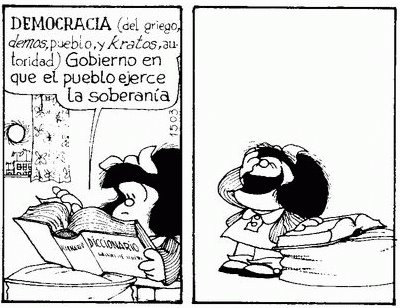
Demos sin cracia

democracia2

Las democracias modernas instituidas como “el gobierno de la mayoría” comenzaron a aparecer ya entrado el siglo XIX y se popularizaron velozmente.  Al lado de ella, la promoción de los ideales del sufragio universal, la igualdad de derechos y obligaciones entre hombre y mujer, la abolición de la esclavitud y del trabajo forzoso de curso legal, entre otros principios empezaron a dispersarse como un veloz germen en las sociedades occidentales y sus ex-colonias.  Han pasado ya 200 años desde que el germen democrático se dispersó por el mundo.  Sin embargo, los más recientes acontecimientos que han perturbado el flujo de las democracias de mayorías se ha visto afectado en Ucrania, Venezuela y desde hace dos días en El Salvador.

¿Por qué será que el ideal de la democracia ha “fallado” en estos países? 

Los argumentos a favor y en contra son muchos y muy complejos. Deben ser comprendidos desde distintas perspectivas y entender las posiciones tomadas por todos los actores que se han visto afectados de manera directa e indirecta por estos eventos.  Nosotros, el resto del mundo observador, podemos participar con ideas para ojalá descubrir más preguntas en nuestro camino. Hoy quiero compartirles una idea que cruzó por mi mente.

¿Acaso nuestro problema no ha sido que hemos tenído más “demos” que “cracia” en nuestro gobierno y en el desarrollo de nuestro rol ciudadano?

¿A qué me refiero con esto?

El término democracia es antiguo y complejo y se forma a partir de los vocablos “demos” traducido al castellano como -pueblo y/o poder- y “cracia” que indica un -gobierno o sistema-.  Así y actualizando el término desde la antigua Grecia a nuestros días, la democracia se refiere al gobierno del pueblo.

¿Pero acaso no ha sido el pueblo el que se ha volcado a la rebelión en Ucrania, Venezuela y El Salvador? Entonces, ¿la democracia reaccionó en estos países contra la democracia?

Quizás lo que ocurre en estos tres países (que son producto de la colonización y de la subyugación a los imperios durante la Guerra Fría) es que quizás no han pasado el suficiente tiempo en independencia institucional y maduración de sus gobiernos como para lanzarse desbocados a procesos democráticos que deben ir de la mano de una reforma educativa y cultural de la ciudadanía.  Pero, ¡alto! Que conste, que no me refiero a que estos países post-coloniales y post-guerra fría deban regresar bajo el control de un dictador o de una metrópoli.  Sino que, la participación del pueblo (demos) no debería avanzar cuando se ha descuidado o se ha impedido continuar el proceso de institucionalización de la democracia en la vida ciudadana.

Ucrania, Venezuela y El Salvador tienen como un común denominador la inmensa pobreza y la enorme desigualdad educativa y cultural entre la elite gobernante que heredó el poder de sus antiguos amos colonizadores y el grueso de la población. La mayoría de la población en estos países ha sido condicionada a servir como un “agente legitimador” al momento de ejercer su voto pero no se le ha permitido adquirir conciencia absoluta de su rol como “ciudadano legitimador empoderado”. Porque es su voto el que le permite exigir responsabilidad, honestidad y resultados en el equipo de gobierno que eligió en las urnas.

Titulo: 7 killed in post-election protests
Via: FoxNews

En Venezuela ha sido la población cansada y agotada de la corrupción la que ha tomado conciencia del poder de su voto al exigir la renuncia del gobierno revolucionario (aún a pesar de que recientemente había sido electo por el voto de las mayorías).  Es acá que el pueblo ha empezado a ilustrarse en su poder como votante y garante.

Titulo: Days of Protest in Ukraine
Via: The Atlantic

En Ucrania ha sido el pueblo el que también ha tomado conciencia del poder de su voto y de su derecho de autodeterminación pidiendo la anexión de Crimea y su mayoría étnica rusa a Rusia debido a sus distintos intereses económicos, políticos y culturales con el resto del país.

Titulo: El TSE pidió a los contendientes que respeten los resultados que el pueblo decida.
Via: http://www.lapagina.com.sv

Y en El Salvador desde el día lunes debido a que las elecciones presidenciales concluyeron con una cercana diferencia de votos entre los partidos ARENA y FMLN. ARENA rechazó el conteo de las elecciones luego del anuncio de su derrota. 6,000 votos marcaron la diferencia y el partido ARENA rechazó la legalidad del proceso democrático.

Espero que no sea aún tarde para extender una invitación a reflexionar a los ciudadanos salvadoreños sobre el funcionamiento del gobierno democrático y de la necesidad de estudiarlo a más profundidad y, quizás, comprender que el voto de la mayoría (aún si efectivamente ganará por 6mil votos de diferencia) no es garante suficiente de legitimidad.  Y que, es urgente que ambos partidos realicen un pacto serio, democrático y honesto antes de queso se derramé una sola gota de sangre.

En Venezuela, Ucrania y El Salvador es aún posible alcanzar acuerdo y pactos de concertación que partan del respeto al gobierno democrático y que busquen una inclusión de ideas, actores y modificaciones a los actuales procesos en los que el Pueblo (demos) colabore en la construcción y progreso del del Sistema de gobierno (cracia).

Esto evitará muertes y violaciones a los derechos individuales.  Pero más importante aún, permitirá la evolución y maduración de sistemas democráticos de gobierno en estos países que aún ahora se vieron afectados por la injerencia de los poderes imperiales en sus asuntos. Que envidia que en estos países quizás estén a las puertas de un desarrollo democrático del cual nuestros países vecinos podrían aprender mucho.

Would you buy “Made in USA by Rich White People”?

You need your lawn mowed,do you hire the kid down the block who’s saving money for a car, or a surgeon? First off, the kid obviously needs the money more. And that matters. Second, do you really want to pull the doctor away from saving lives? What if he isn’t saving lives? He’s still improving lives. This applies to any productive person (okay, maybe not lawyers). This doctor could be doing things I think are a total waste, but the people paying him disagree with you; as long as they’re paying their own way, who am I to disagree?

What am I getting at here? By world standards (and especially by historical standards) American workers are incredibly productive and wealthy. Yeah, everyone’s got money problems, and the mortgage isn’t paying itself, and prices are rising, and all the rest. But at the end of the day, having an American worker do something a Bangladeshi could is analogous to having a surgeon do something a teenager could. Are working conditions in the third world good? No. Should you be concerned with the well-being of Americans? Yes. Does this justify buying American? No! A resounding no!

Natural Law and Economics

The field of “law and economics” applies economic theory to the consequences of law. This branch of economic theory examines the laws that would maximize efficiency and equity. The theory compares, for example, the incentives created by criminal versus tort law to determine the mix of laws that minimize the social cost of wrong-doing. Law and economics studies contract law to determine when a contract is proper, what is the most effective way to enforce contracts, and how best to deal with breach of contract.

The pure market has voluntary exchanges that involve contracts, and so the structure of contract law becomes important. Deficient law and enforcement breeds uncertainty, corruption, and less prosperity. Since contracts are part of the market, contract law is also within the market, and the enforcement and governance that forms the legal infrastructure is part of the market.

Law and economics also deals with external effects, acts that affect others without compensation. The theory examines taxes, regulations, bargaining, and lawsuits as ways to deal with bad effects such as pollution. Another contrast is between property rights and liability rules. A liability rule does not prohibit a trespass, but requires compensation when it happens. And so law and economics contrasts prohibiting an action in advance, versus dealing with the consequences after the act is done.

People think of the market economy as having buying and selling, supply and demand, production and consumption. But there is much more to the market than a customer buying a product. The product may be defective, or the seller might not get paid. There are many legal doctrines that deal with such problems. These are part of the market and part of economics.

A pure free market economy would include the body of law that has evolved over hundreds of years. There are several origins of law: constitutional law, legislated statute law, the common law from decisions by judges, the law merchant of commerce, and natural moral law.

An anarchist society would need much of the law that now applies to marriages and families, lawsuits, crimes, contracts, and uncompensated effects on others. The difference would be that the anarchist society would have voluntary governance, by individual consent, rather than an imposed government. But a network or federation of voluntary communities would need much of the same law that we have today.

One controversial area of law and economics is whether there should be legal monopolies on “intellectual property,” i.e. copyrights on expressions and patents on inventions. Today’s law is mostly utilitarian, providing protection from copying for a limited time in order to provide incentives to creations, although political influence has extended copyright protection for long durations.

The difference between a libertarian society and today’s world is that there would be no laws prohibiting peaceful and honest acts, even if they are offensive. Drugs, prostitution, and gambling would be legal. There would be no restrictions on trade such as with Cuba or on the production, importation, and use of hemp.

Whether in today’s world or a libertarian world, there should be a basic “law of the market” which prescribes that products are presumed to be safe and effective unless stated otherwise. But a pure free market would avoid laws that restrict one’s own use, or consensual use, of property. Lawsuits would mostly adhere to the British system in which the loser of a case would have to pay the legal costs of the winner, which would greatly reduce frivolous law suits, thereby reducing overall litigation costs.

Today’s complex tax laws would be abolished in free-market law and economics, because honest and peaceful transactions would not be hampered by imposed costs. The public finance consistent with a free market would include voluntary user fees, penalties for damage such as pollution, and the land rent that comes from nature or is generated by population and government’s public works. The full employment of a pure free market would provide the job security that comes from employers needing to fill positions, with few idle workers from which to choose.

The complexity of today’s division of labor makes the law that governs relationships necessarily complex, but the clout of lawyers, special interests, and bureaucrats make the law excessively restrictive and needful of attorneys. A truly free society would make the law the servant of the economy and not its master.

What economic theory needs to take into account is that the field of law and economics is not just one of many applications of economics but rather an inherent part of the market economy, and so law has to become more integrated into economic theory. Also, equity is a goal of law and economics, along with efficiency, and an objective application of equity cannot exist without its foundation, natural moral law. “Natural law and economics” needs to become a prominent part of law and economics.

On Stephen Hawking, Vader and Being More Machine Than Human

Is Stephen Hawking more machine than man? The author makes an apt comparison between Hawking and other high profile people with assistants. That comparison should show (contrary to the emphasis the author makes elsewhere) that it’s not so much man/machine, so much as distributed cognition (is that the right term?). And understood as such, this phenomenon is one that we all engage in, and increasingly so in the modern world of mass literacy, peaceful coexistence, pens, paper, and smart phones.

Hawking is the focal point of his network. It’s interesting to note that his output is largely the output of his network, but it’s still directed by him. We should be no more disappointed that he doesn’t do his own calculations than we should be that we don’t wash our own laundry by hand. Hawking can’t do the mechanical, he can only do the thinking. Having assistance surely improves the quality of his thinking, but it is still his mind that we are concerned with. Are his assistants getting short shrift? They aren’t getting the sort of celebrity that Hawking gets, but in their own networks they will certainly do well to be part of his team; his students will have valuable letters of recommendation.

It’s an interesting article that provides insight into how Stephen Hawking works, but it ends on an odd note:

Because, surrounded as we are by our world of technology and digital information, aren’t we all disabled? We, like Hawking, like Obama and his brain trust, are unable to think and complete the results of our thoughts without being attached to a network of people, instruments, machines – and the living laboratories through which it is all distributed.

We are all (Hawking included) able to think without assistance. Yes, our thinking is enhanced by cooperation with others (in conversation and debate, consultation, etc.). Yes, we all require some interface between our thoughts and our audience, whether that’s a pen and paper or a computer, but I think the way to think of it is that we are enabled. Enhancing our thinking isn’t cheating.

El legado de Hugo Chávez

Propuesta del Candidato de la Patria Comandante Hugo Chávez Para la gestión Bolivariana socialista 2013-2019. Via: http://forajidosdelanetwar.blogspot.com/2012/11/caricaturas-e-imaginarios-en-la.html

Hace un año el actual presidente de Venezuela, Nicolás Maduro, anunció la muerte de Hugo Chávez.  Chávez fue el líder de la Revolución  Bolivariana en Venezuela y gobernó el país durante 14 años.  Maduro fue juramentado luego Presidente y recientemente ganó la reelección popular con una campaña que prometía continuar  con el legado de su mentor.

En el 2013, los datos del legado que dejaban los 14 años del gobierno socialista presentados por el Centre for Research on Globalization y por la Embajada Venezolana en los Estados Unidos son reveladores:

  • Venezuela cuenta con servicios de salud y educación universales gratuitos. Antes, 70% de los venezolanos no tenía acceso a servicios de salud.
  • Se eliminó el analfabetismo en el país.  Antes, 40% de los venezolanos eran analfabetos.
  • En los últimos 10 años, el PIB venezolano ha crecido al ubicarse en un nivel alrededor de los 300 mil millones de dólares. Esto representa un crecimiento sustancial frente a la década de los noventa cuando el PIB del país no llegaba a los 100 mil millones de dólares.
  • Se redujo en un 40% el costo de los productos de la canasta básica.
  • Aumentó el salario mínimo en más del 600%
  • Redujo el desempleo del 20% al 6%
  • El Índice de Desarrollo Humano (IDH) en Venezuela aumentó de 0,69 en  1998 a 0,84 en  2008, lo cual eleva a Venezuela a ser un país con rango de desarrollo humano medio a uno con rango alto.
  • De 2008 a 2012, el IDH descendió a 0,748 y alcanza el puesto 71 de 187 naciones y territorios que participaron de la medición.
  • Venezuela ocupa el puesto 71 entre los 179 países que figuran, según el informe anual del Programa de Naciones Unidas para el Desarrollo (PNUD). El coeficiente de Gini, que mide la desigualdad de ingresos, alcanzaron en 0.390 en 2012, el nivel más bajo en la historia de Venezuela y el más bajo en el Continente latinoamericano. En 1998, era de 0,4865.
  • Desde 1999, Venezuela incrementó sus relaciones comerciales con otros países en el hemisferio, así como con otras regiones del mundo. La mayor parte del comercio de Venezuela continúa siendo llevado a cabo en la región, con alrededor del 70% de las exportaciones de petróleo con destino a los países de las Américas, y los mercados de América del Sur, América Central y el Caribe están ganando importancia.
  • En 2012, un año antes de la muerte de Chávez, Venezuela era el tercer socio comercial más grande de Estados Unidos en América Latina y el número 14 más grande en el mundo, además de ser el cuarto proveedor de petróleo a EE UU.

Pero no todo ha sido fácil de conseguir en esta bonanza de estadísticas sociales y los drásticos cambios en el nivel de vida del pueblo venezolano han sido el resultado de muchos sacrificios impuestos en la población venezolana.

Con el ascenso de Chávez y el éxito inmediato de los cambios socioeconómicos en la población, la élite política chavista se aseguró el poder absoluto al conseguir el voto mayoritario en elecciones democráticas gracias a millones de venezolanos beneficiados por las reformas socialistas.  Este poder absoluto (democrático) permitió al gobierno socialista continuar con su plan e imponer restricciones a la libertad de expresión de la oposición, expropió sin muchos problemas industrias, eliminó fácilmente y sin mucha oposición el derecho a la propiedad privada y capturó los ahorros de millones de venezolanos.

Para Maduro, Chávez y muchos otros ideólogos socialistas antes de ellos, cualquier medio era justificable para la consecución del ideal revolucionario socialista.  Latino América, que durante décadas sirvió de laboratorio para experimentos económicos y políticos de líderes del mundo desarrollado fue la arena idónea para regresar a la dulce tentación socialista que había sido lograda con relativo éxito en otros continentes.

La fórmula del legado de Chávez es simple y poderoso:

Populismo anti-imperialista

+

petróleo nacionalizado

=

Socialismo clientelista 

Titulo: Sembrar petróleo. Por Emiliano Teran Mantovani. via: http://forajidosdelanetwar.blogspot.com/2012/11/caricaturas-e-imaginarios-en-la.html

La movilización y apoyo de los votantes en una nación democrática es fácil de conseguir cuando se posee el capital económico, político y/o militar para ofrecer al pueblo una salida de los sistemas de economía mixta extractivos que durante el siglo XX fueron implementados por las naciones desarrolladas del Norte Global y que fueron apoyadas por elites patrimonialistas en los territorios del Sur. El éxito de la revolución Bolivariana aseguró para otros países interesados en este experimento una segura y jugosa fuente de donativos para facilitar el efecto domino socialista que tanto temieron los ideólogos realistas gringos durante la Guerra Fría.  Sin duda, el legado de Chávez sigue vivo un año después de su muerte.

En los últimos dos meses la movilización de un importante grupo de la población venezolana causó manifestaciones en las ciudades más importantes del país.  Los manifestantes tenían muchas peticiones que iban desde reclamos por la corrupción del partido gobernante, reclamos por los altos índices de inflación que afronta el país y solicitudes de renuncia de los líderes de la revolución bolivariana.

Independientemente de cuántos  años más dure el partido revolucionario en el poder es seguro que su legado fue la implementación de una exitosa revolución socialista clientelista sostenida en la venta de petróleo a las economías mixtas del resto del mundo que mejoro los índices de desarrollo humano como nunca antes habíamos visto.  Así es que mientras el mundo siga dependiendo del oro negro, el mundo seguirá escuchando del legado de Chávez.

Este caro legado ha costado la libertad y los derechos de propiedad de miles de individuos. Venezuela sigue y continuará enfrentando desafíos en materia de seguridad, pues la tasa de homicidios de la región es la más alta del mundo. El regimen chavista es diariamente acusado de corrupción, incompetencia y la probabilidad de que esto cambie no es del interés de nadie. El año pasado la inflación fue del 56% y la escasez de productos básicos continuó agudizándose hasta este año.  Caracas se ha convertido en una de las ciudades más caras del mundo ocupando el puesto #6 según datos del WSJ.

Embedded image permalink