Jacques the Moron

The verbal assaults against Pres. Trump, both oral and printed, have become almost mechanical. The concerted attempt to make his presidency seem illegitimate has largely become successful for much of the America population thanks to this systematic demeaning of the man. The above-board conspiracy has mostly won. I am not referring to criticism of Mr Trump’s policies based on facts and analysis. That’s fine and necessary, of course. (I have done some of this myself, right on my FB and on this blog.) I refer to personal attacks. Individuals with zero achievements, many demonstrable morons themselves, routinely call the president a moron. (I am not making this up; I could name names; perhaps I will, right here.)

When opponents are not content with opposing President Trump but insult him too, they also insult me. I voted for Mr Trump for the same reasons million others did. First, his name was not Clinton; second, I thought it was important to seize the chance to appoint a conservative Supreme Court Justice (or two). Since he has taken office, Mr Trump has surprised me pleasantly. There is no doubt in my mind that the current general American prosperity has a great deal to do with his policies, beginning with the general tax cut. Incidentally, I am well aware of the fact that the drop in unemployment began with the Obama administration. Another administration might have stopped it, or slowed it down. So, I have had two years to recant my vote. I have not. If you call the man I voted for a moron; you are calling me a moron.

I am not inclined to be indulgent with respect to the insult because I believe I know where it comes from thanks the many hours I spent at the faculty club. It’s a social class reaction; it’s the offended retort of those who think they are superior because they have read three books. It’s the cry of anguish of the semi-washed against the great unwashed (the “deplorables” in Mrs Clinton precise and unforgettable formula). Those who insult Pres. Trump, and therefore, me, are elitists with little reason to consider themselves an elite of any kind. Obviously, those who merely oppose his policies don’t need to call him names; they just have to describe that which they object to.

The daily name calling is wearying. It will leave a mark on my soul. I am far from sure that I will find it in me to forgive, or if I will ever forget. I think a ditch has been dug that will not be filled.

Nightcap

  1. Don’t believe the myth that this is a nation of Little Englanders Alex Massie, CapX
  2. The American Greatness narrative: a look under the hood Samuel Goldman, Law & Liberty
  3. In South Africa, minorities are at risk (even though it’s Not Yet Genocide) Mpiyakhe Dhlamini, Rational Standard
  4. Military dictatorship in Brazil: was it worth it? Bruno Gonçalves Rosi, NOL

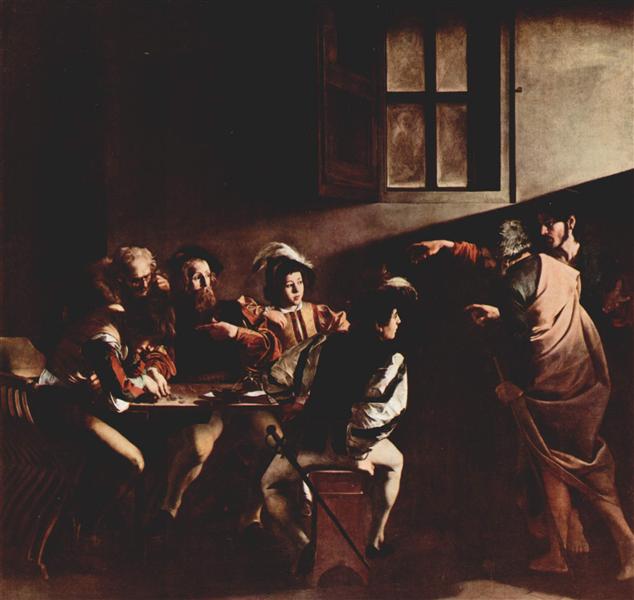
Afternoon Tea: The Calling of Saint Matthew (1600)

From Caravaggio, one of Jacques’ favorites:

nol art caravaggio calling of saint matthew
Click here to zoom

Spaghetti Monsters and Free Exercise

Should Flying Spaghetti Monster worshipers be allowed to wear colanders on their heads in drivers’ license photos? Maybe so. Today, four conservative justices hinted that someone might want to bring them a good Free Exercise case soon so they can unseat a long-standing and long-criticized case called Employment Division v. Smith. That case, penned by Justice Scalia, had in turn uprooted several decades-worth of precedent that had built up a robust bulwark of religious rights under the First Amendment’s Free Exercise Clause.

It’s a funny twist. Liberal justices like Justice William Brennan had built up strong protections under the Free Exercise Clause, such as allowing Amish to pull their children from high school early because of their faith, or allowing Saturday Sabbath worshipers to enjoy certain exceptions to work requirements for unemployment benefits. Then the penultimate conservative justice, Antonin Scalia, dealt a severe blow to those precedents in Smith. Scalia said that religious practices did not merit exemption from generally applicable laws.

Now, the conservative justices want to rethink Smith, while the liberal justices may hang back. Perhaps the shift in the culture wars has caused this parallel shift in jurisprudential alliances. In any case, I think we should welcome reconsideration of Smith.

Scalia’s opinion in Smith raised some legitimate concerns. He argued that if we allowed judges to have a heavy hand in deciding which religious practices deserved special exemptions from the law and which did not, then judges would inevitably engage in subjective judgment calls and descend into the very parochialism that the First Amendment is designed to thwart. He also worried that allowing exemptions from generally applicable law would court anarchy—we would have a legal code peppered with holes for a thousand individualized religious beliefs and practices. Both are legitimate concerns.

Smith did prompt a strong legislative response. Congress and quite a few states thereafter passed Religious Freedom Restoration Acts (RFRAs) that basically revived the pre-Smith law. But legislatures can and do exempt some laws from RFRAs, and many states do not have them.

My primary issue with Justice Scalia’s Smith opinion is that his worry about subjective judgment calls seems to prove too much. Judges are called upon to make these kinds of sensitive and controversial decisions all the time. We rely on things like tenure and salary protection to shelter their independence and impartiality as much as we can, but these kinds of difficult decisions arise in innumerable other contexts. I would prefer a robust and imperfectly enforced Free Exercise Clause to one that does almost nothing at all.

Likewise, the concern about courting anarchy may be overblown. Laws and religious practices usually do not clash in a fundamental way, and under the pre-Smith “compelling interest” test, legislators can still forbid child sacrifice while allowing Muslim police officers to keep their beards. Plus, freedom of speech and many other rights already require exceptions to the scope of otherwise legitimate laws—they just can’t be applied in certain circumstances. The Free Exercise Clause is not unique in that way.

If the Court does confront Smith, it may also have to deal with the Flying Spaghetti Monster problem. That is—the Court may have to address a question which it has mostly avoided: what is a “religion” under the First Amendment. Does the Church of the Flying Spaghetti Monster count? Should Pastafarians be allowed to wear colanders on their heads in drivers’ license photos while everyone else has to go bareheaded? What about the Church of Diego Maradona, a real church dedicated to the Argentine soccer legend? Clearly, asking a court to define a “religion” raises the same concerns of parochial judgment calls that drove the decision in Smith. But maybe the answer is to let them all in, with perhaps just a low-threshold sincerity requirement. Beyond the occasional colander-clad guy in the DMV line, we haven’t seen a huge number of people adopting faux beliefs just so they can get a religious exemption for smoking dope. But then, there is an International Church of Cannabis that would surely see a surge in conversions if Smith is overturned.

Nightcap

  1. The marvel of the human dad Anna Machin, Aeon
  2. No exit? Scott Sumner, EconLog
  3. Big Water and Latin American borderlands Benjamin Nobbs-Thiessen, H-Borderlands
  4. The material power of ideas and knowledge Henry Farrell, Crooked Timber

Why I turned right

I understand things are not the same everywhere in the World, but until just a few years ago, to call yourself “right-wing” in Brazil was virtually unthinkable. The reasons for that are not totally clear, but the fact is that “right-wing” was a name with a very bad connotation. Brazil went through a military dictatorship from 1964 to 1985. This dictatorship was set in place to prevent a perceived communist threat in the country, especially after the Cuba Revolution of 1959. Therefore, it was an anticommunist dictatorship.

My understanding is that, because of that, to be “right-wing” in Brazil was understood as “being in favor of dictatorship”, and left-wing to be “for democracy”. Of course, examining things with just a little more care, nothing could be further from the truth. Fidel Castro and Che Guevara were no democrats. Actually, the military dictatorship in Cuba lives on. Mao Zedong was a horrendous dictator. So were Stalin and Lenin. There is no reason to believe that Trotsky would have been any less authoritarian.

There is no reason to believe that the socialists/communists in Brazil would have been democratic once in power. But they didn’t come to power, and because of that people could fuel the romantic image of revolutionaries unjustly persecuted by the military. Although I disagree with Brazilian philosopher Olavo de Carvalho in many points, I believe he is totally right on this: the military in Brazil was great in fighting the communist guerrilla. Thanks to them, we don’t have something similar to FARC in Brazil today. But when it came to propaganda and cultural war they were just awful. Communists in Brazil (and in other places) were great in selling the image of Che Guevara as a romantic hero fighting against the evil North-American Imperialism.

And this is the paradigm I grew up with. Either you are a freedom fighter, opposing evil capitalists and imperialism, or you are subservient to foreign powers and injustice. Considering this background, of course, nobody would like to be called right-wing. However, things changed.

One of the things that made me turn right was studying the right-wing political ideologies. I discovered that classical liberals and conservatives were not against the poor, just the opposite. The best example I can think of is Adam Smith: his Wealth of Nations is actually a love letter for those who are oppressed by unjust economic exploitation. What Adam Smith was trying to find out is what makes the lives of the simple people better. His answer, in a nutshell, was the free market. Similarly, the Founding Fathers were trying to give the common folk a better living without oppression. And they did. Very different from all the leftist revolutions. In short, free markets and liberal democracy work.

The second thing that made me turn right was the hypocrisy of some leftists. I realized that they want you to have freedom of choice, but only if you choose what they want. If you feel you have homosexual inclinations, they want you to have the freedom to embrace homosexuality. And so do I! But God forbid (or Marx forbid) you decide (for whatever reason) to fight homosexuality and become (or remain) straight.  They want women to have the freedom to get jobs. But they don’t want them to have the freedom to stay home to raise the kids. The examples are many, but the summary is this: I realized that many leftists are not ready to defend your right to be different.

I’m really sorry that things come down to what two consenting adults do in a closed room. I really am. But it seems to me that much of the leftist agenda is to have the freedom to choose only if you choose what they want. And this is what made me turn right: to accept other peoples choices as much as I want them to accept mine. Liking it or not.

RCH: Annexation of the Hawaiian islands

That’s the topic of my latest over at RealClearHistory. An excerpt:

That is to say, there are theoretical lessons we can draw from the American annexation of Hawaii and apply them to today’s world. The old Anglo-Dutch playbook turned out to serve American imperial interests well, especially when contrasted with the disastrous Spanish-American War of 1898, when the United States seized the Philippines, Cuba, Guam, and Puerto Rico from Spain in an unwarranted act of aggression. Hawaii, now an American state, has one of the highest standards of living in the world (including for its indigenous and Japanese citizens), while the territories seized by the U.S. from Spain continue to wallow in relative poverty and autocratic governance.

Please, read the rest.

Nightcap

  1. The Chinese governance system: impressive strengths and appalling flaws Pradnab Bardhan, 3 Quarks Daily
  2. Time to make good on the US-Philippine alliance Poling & Sayers, War on the Rocks
  3. Secession and international alliances go together Edwin van de Haar, NOL
  4. Maps and legends John Holbo, Crooked Timber

Afternoon Tea: Town on the Blue River (1910)

This is from the Austrian painter Egon Schiele:

nol art schiele town on the blue river 1910
Click here to zoom

Schiele was a buddy of Gustav Klimt’s but he died at the age of 28 in the Spanish flu pandemic.

“If you work for peace, stop paying for war”

The most omnipresent slogan of libertarianism in the digital age is the one that argues, or maybe just declares, taxation is A, theft is B, and A is B. Everyone has a gut feeling about being stolen from or coerced into losing his or her property, and so whether it’s extortion or theft anyone is apt to understand what “taxation is theft” means on a primitive level.

Even if anyone can understand what it means, it seems there’s little agreement about what it encourages — since, “the government’s up to no good again” doesn’t really have a telos behind it and pitching a preferred state of arrangements is useless without appropriate connected action.

I was thinking about this, and ran into a short essay by Gina Lunori that looks to answer the question, with the same frustration.

I heard someone praise a conscientious objector who refused
to fight in Iraq, and I asked him if he was still paying taxes. He told
me that the government hadn’t created a “conscientious objector”
category for taxpayers, so he was sorry to say he wasn’t able to
stop paying. As if you only have a conscience when the
government issues you a permit for one!

I told him I know people who’ve stopped paying their taxes
without waiting for permission, just by lowering their income and
living below the tax threshold. He told me that he wasn’t prepared
to make that kind of sacrifice. If I had a pocket calculator I could
have told you the maximum price of his conscience. If I had a
quality postal scale I probably still couldn’t discern its weight.

Like Walter Mitty these armchair peaceniks burn their draft
cards in their daydreams, meanwhile the people who serve in the
military in their place are equipped, and shipped, and paid for by Walter Mitty’s tax dollar.

The biggest obstacles to change aren’t the few who are
abusing the government, but the many who are submitting to it and
facilitating the abuse.

A government that loved liberty would be trying at every
opportunity to expand and protect that liberty. Our government
tries everything it can to evade the few protections that have
survived since its founding. Look at how shamelessly it has
whisked people off to Cuba — Cuba! — in order to sweep them out
from under the protection of the Constitution.

A person who loves liberty would not shovel coal into a
tyrant’s engine just to earn a higher salary. Why does a person in
the United States who claims to love freedom, and who is
intelligent enough to understand that the government is freedom’s
enemy, still feel that it’s worthy of respect to be a taxpayer, and the
more salary — and therefore the more taxes — the more respect?
If you love liberty, if you hate war, you should at once withdraw
your support from the government. Withdrawing your moral
support isn’t enough — it’s your practical support that the
government feeds on — it doesn’t give a damn what your opinions
are.

This is something you must do because you know the
difference between right and wrong and you know, when you look
the facts straight in the face, that when you willingly give practical
support to the government you participate in its wrongs. But this is
more than a matter of personal integrity.

Imagine the power of this statement. What if every person
who felt that the government had lost their moral support also
withdrew their practical support? What if only one in ten did? It
would be the beginning of the end. It would be that nonviolent
revolution we’re praying for.

Maybe the best tests of intellectual integrity are consistency and hypocrisy. How do the people that swear off voting as aggression feel about funneling taxed income to the government to enable its aggression? How do the people that mantra “taxation is theft” feel about surrendering their goods, each and every year, in a way they would never, ever tolerate from a burglar?

Nightcap

  1. In search of non-toxic manhood Ross Douthat, New York Times
  2. How a cartoon depiction of Mohammad provoked Muslim outrage – in 1925 Brian Micklethwait, Samizdata
  3. Carbon taxes and the Marginalists’ difficult idea Stephen Gordon, Worthwhile Canadian Initiative
  4. On scientific mystery and religious mystery Nick Nielsen, Grand Strategy Annex

Asking questions about women in the academy

Doing the economist’s job well, Nobel Laureate Paul Romer once quipped, “means disagreeing openly when someone makes an assertion that seems wrong.”

Following this inspirational guideline of mine in the constrained, hostile, and fairly anti-intellectual environment that is Twitter sometimes goes astray. That the modern intellectual left is vicious we all know, even if it’s only through observing them from afar. Accidentally engaging with them over the last twenty-four hours provided some hands-on experience for which I’m not sure I’m grateful. Admittedly, most interactions on twitter loses all nuance and (un)intentionally inflammatory tweets spin off even more anger from the opposite tribe. However, this episode was still pretty interesting.

It started with Noah Smith’s shout-out for economic history. Instead of taking the win for our often neglected and ignored field, some twitterstorians objected to the small number of women scholars highlighted in Noah’s piece. Fair enough, Noah did neglect a number of top economic historians (many of them women) which any brief and incomprehensive overview of a field would do.

His omission raised a question I’ve been hooked on for a while: why are the authors of the most important publications in my subfields (financial history, banking history, central banking) almost exclusively male?

Maybe, I offered tongue-in-cheek in the exaggerated language of Twitter, because the contribution of women aren’t good enough…?

Being the twenty-first century – and Twitter – this obviously meant “women are inferior – he’s a heretic! GET HIM!”. And so it began: diversity is important in its own right; there are scholarly entry gates guarded by men; your judgment of what’s important is subjective, duped, and oppressive; what I happen to care about “is socially conditioned” and so cannot be trusted; indeed, there is no objectivity and all scholarly contribution are equally valuable.

Now, most of this is just standard postmodern relativism stuff that I couldn’t care less about (though, I am curious as to how it is that the acolytes of this religion came to their supreme knowledge of the world, given that all information and judgments are socially conditioned – the attentive reader recognises the revival of Historical Materialism here). But the “unequal” outcome is worthy of attention, and principally the issue of where to place the blame and to suggest remedies that might prove effective.

On a first-pass analysis we would ask about the sample. Is it really a reflection of gender oppression and sexist bias when the (top) outcome in a field does not conform to 50:50 gender ratios? Of course not. There are countless, perfectly reasonable explanations, from hangover from decades past (when that indeed was the case), the Greater Male Variability hypothesis, or that women – for whatever reason – have been disproportionately interested in some fields rather than others, leaving those others to be annoyingly male.

  • If we believe that revolutionising and top academic contributions have a long production line – meaning that today’s composition of academics is determined by the composition of bright students, say, 30-40 years ago – we should not be surprised that the top-5% (or 10% or whatever) of current academic output is predominantly male. Indeed, there have been many more of them, for longer periods of time: chances are they would have managed to produce the best work.
  • If we believe the Greater Male Variability hypothesis we can model even a perfectly unbiased and equal opportunity setting between men and women and still end up with the top contribution belonging to men. If higher-value research requires smarter people working harder, and both of those characteristics are distributed unequally between the sexes (as the Greater Male Variability hypothesis suggests), then it follows naturally that most top contributions would be men.
  • In an extension of the insight above, it may be the case that women – for entirely non-malevolent reasons – have interests that diverge from men’s (establishing precise reasons would be a task for psychology and evolutionary biology, for which I’m highly unqualified). Indeed, this is the entire foundation on which the value of diversity is argued: women (or other identity groups) have different enriching experiences, approach problems differently and can thus uncover research nobody thought to look at. If this is true, then why would we expect that superpower to be applied equally across all fields simultaneously? No, indeed, we’d expect to see some fields or some regions or some parts of society dominated by women before others, leaving other fields to be overwhelmingly male. Indeed, any society that values individual choice will unavoidably see differences in participation rates, academic outcomes and performance for precisely such individual-choice reasons.

Note that none of this excludes the possibility of spiteful sexist oppression, but it means judging academic participation on the basis of surveys responses or that only 2 out of 11 economic historians cited in an op-ed were women, may be premature judgments indeed.
Nightcap

  1. The many lives of liberalism David Bell, New York Review of Books
  2. Is the political leader teachable? Avi Mintz, Law & Liberty
  3. Why ex-churchgoers flocked to Trump Timothy Carney, American Conservative
  4. A history fit for the Taliban Hugh Beattie, History Today

Nightcap

  1. The extraterrestrial next door Adam Hadhazy, Space.com
  2. Reporting reports: colonial medical institutions Jonathan Saha, Colonizing Animals
  3. The best way to defeat totalitarianism? Treat it as a joke Anna Aslanyan, Spectator
  4. Bureaucrats in the Defense Department: An ethnography Jonathan Wong, War on the Rocks

How the populists came to power

Jair Bolsonaro was elected president in Brazil. Donald Trump in the US. In other countries, similar politicians are gaining popular support. Some are calling these politicians “populists”. I don’t really know what they mean by this term. The populists that I know better are Getúlio Vargas, Brazil’s president for almost 20 years in the mid-20th century and Juan Peron, a leading political figure in Argentina in the same time period. What they had in common? Both fought the communist influence in Latin America, favored the labor movement and were anti-liberal. They were also extremely personalist, leading to something that could be understood as a cult of personality. I completely fail to see important similarities between Trump and Bolsonaro on the one hand and Vargas and Peron on the other. But I can see some similarities between Trump and Bolsonaro. The latter two both came to power against what the left became in the last few decades.

Once upon a time, there was a young German philosopher called Karl Marx. He was very well read but wasn’t very bright on economics. Anyway, he decided that he would correct the classical liberal economic theory of Adam Smith. The result was that Marx concluded that in the center of the economy, and actually in the center of history itself, was the class struggle between the workforce and the bourgeoisie. Of course, although appealing on the surface, Marx’s economic theory is pure nonsense. Maybe Marx himself knew it, for at the end of his life he was more interested in living a peaceful life in London than in leading a revolution. But this didn’t stop Marxists from starting Revolutions throughout the world, beginning in Russia.

Ludwig Von Mises brilliant pointed out that Marxism would never work as the economic foundation of a country, for it ignored private property. Without private property, there is no price formation and without prices economic calculation is impossible. In doing so, Mises founded the Austrian School of Economics. The economic debate between Austrians and Marxists ensued, but arguing with a Marxist is like playing chess with a pigeon. He will climb on the board, knock down the pieces and believe that he won. Regardless, facts don’t care about your feelings, and reality proved again and again that Mises was right.

However, at the same time, something else was happening. In Italy, a Marxist named Antonio Gramsci concluded that armed revolution was not the best way to power. He believed that a cultural approach would be better. Some German scholars in Frankfurt concluded pretty much the same. Their question was “why the proletariat will not follow us?”. The answer was that they were too alienated by capitalist culture.

Following Gramsci and the Frankfurt School, Marxists all over the world gave up studying economics and decided to study culture. They concluded that everyone can feel oppressed. The class struggle seized to be between factory workers and factory owners and turned into a fight between man and woman, black and white, gay and straight. Identity politics was born.

And that’s how the “populists” came to power. It is not so much that the common people (and especially conservatives and libertarians) are crazily in love with Bolsonaro or Trump. It is just that people eventually get tired of being called oppressors. The left, once legitimately concerned with the conditions of the poor, ignored that the best solution for poverty is the free market. Instead, they decided they would crush the common people they swore to protect, calling them homophobic, misogynists and so on. Common people answered by voting for whoever was on the other side of the political spectrum.