Government shutdown – private vs. public responses

The recent shutdown of the government in America has caused a midsize crisis for state employees leaving them unpaid for 35 days straight. Although the shutdown ended on the 25th of January, one can still draw a conclusion about the crisis handling from a public and a private perspective.

A failure of government

When you take a closer look at the history of governmental crisis management, you mostly look at a huge collection of mismanagement. In the last few years there has been a tremendous amount of intriguing works dealing with the failures of public crisis responses, especially the case of hurricane Katrina (Wikipedia here lists more than 100 references), which has been one the of most investigated disasters in recent history.

Crisis can provoke the good as well as the bad inside humans. One might think of the countless volunteers after nature catastrophes doing their very best to help. On the other hand, there have also been stories of grieving and plundering mobs on the streets, after hurricane Katrina for example. So, what we can say for sure is that crises push human behaviour to the extremes. Keeping this in mind it sounds reasonable to leave it to the government to set up an agenda of rules to coordinate humanitarian efforts. However, the government fails most of the time to deliver effective responses to crises, whether they are man-made or exogenous.

Not being able to find an agreement over the federal budget indicates that the government also has very limited options to offer to their employees. And indeed, Lara Trump gave some very handy advice to unpaid workers: “Listen, it’s not fair to you, and we all get that, but this is so much bigger than any one person. It is a little bit of pain but it’s going to be for the future of our country. […] Their children and their grandchildren will thank them for their sacrifice right now.” Yes, please explain to your children how you nearly starved to death because of a dispute over a wall. Sounds reasonable.

Whereas Donald Trump’s kind of clumsy attempt to clarify Ross Wilbur’s statement that government workers should take out loans (Maybe a small loan of a million dollars, huh?) was not too stupid at all. He emphasizes that worker should “work along” with local grocery shop owners they know. He was very clear that employees could not expect help from the government, but instead, they should look out for support on a local level. I do not think that this is a good method of communicating this issue, but it is for sure a very honest one.

Mac & Cheese

A 35-day shutdown, so to speak nearly a missed monthly wage, might not sound unbearable for a central European. But keeping in mind the saving habits of many Americans, a huge amount of government workers are facing existential problems. A recent FED survey found out that about 40% of the American population is not able to cover a 400$ emergency expense without selling or borrowing something.

Witnessing the inability of the government to provide payments for their workers, private enterprises reacted in a remarkable way. The huge food company Kraft rented space for pop-up stores in Washington in which they gave away food entirely for free. One of the most demanded products was Mac & Cheese. The celebrity Chef José Andrés provided free groceries for affected government worker through his NGO “World Central Kitchen.” When the government stopped caring, people started to do so.

Learnings

The overwhelming care for the unpaid government workers by the private sector further strengthened the role and importance of individual responsibility. In situations of crises, people tend to be less submissive to authority and focus on voluntary cooperation of human beings. I feel like it is important to mention here that I do not want to praise crises as a suitable method of bringing people together. But when we take a closer look at the history of humanity it becomes evident that instead of governmental decisions, voluntary human cooperation made our modern life possible. And in times of crises, people become clear about the relevance of these values and processes, which normally guide human progress subconsciously and unnoticed. Private responses to crises are a sign to me that humans are capable to display kindness, cooperation, and humanity beyond the borders of government.

Time to emerge from the campaign finance mythology

Campaign finance laws long ago ascended to the Mount Olympus of political mythos. The mantra that we must exorcize money from politics has become an article of faith. But the basic premises undergirding this creed rest on a sandy foundation made up of unsound logic and unsupported claims. Not to mention a total disregard for First Amendment rights. The Supreme Court, however, will soon have a chance to reconsider campaign finance laws’ often dubious rationales and uncomfortable relationship with the First Amendment.

Campaign finance laws kicked off in the late nineteenth and early twentieth centuries with some early laws that banned corporation contributions, but they mostly gathered dust. Then, ironically, Republicans in 1947 used campaign finance laws to try and stifle union contributions, which led unions to create the much-hated PAC to dodge the restrictions. Then first serious attempt at comprehensive campaign finance regulation swept through in 1971 with the Federal Election Campaign Act. FECA laid down strict contribution and expenditures limits. Six years later, FECA led to the Supreme Court’s major canonical work in campaign finance lore, Buckley v. Valeo.

Buckley was a mixed bag. On the one hand, it struck down limits on independent expenditures by people who spend their own money on political communication during a campaign. On the other, it upheld limits on direct campaign contributions. Hence, both sides of the campaign-finance divide gripe about Buckley—First Amendment advocates want campaign contributions to be just as uninhibited as independent expenditures, and campaign-finance believers think government should be able to curtail independent expenditures to the same degree as campaign contributions.

As a speech advocate, I fall into the camp that feels Buckley did not do enough to protect First Amendment interests. Buckley relied on flawed notions about the nature of campaign contributions and the alleged need for limiting them. For example, the Buckley Court claimed that contributions don’t deserve as much First Amendment protection as expenditures because the speech facilitated by the contribution is someone beside the contributor. The trouble is that the same is true of expenditures—typically a political spender’s message is conveyed through a go-between, like an ad agency or a TV station. Courts have never held that reliance on someone else to convey your message robs you of the right to promote that message. Except for Buckley.

Another rationale for distinguishing contributions and expenditures is the “general” nature of a contribution. An expenditure allows the speaker to tailor his precise message. I.e.: I support Daenaerys Targaryen because she fries Lannisters with dragon fire. But if you just give a contribution to the Targaryen campaign, then no one knows why you support her. Anti-slavery? Dragons? Small Hands? You could be contributing for any reason, and the lack of specificity translates to a weaker First Amendment right. This is another lame excuse. After all, does the guy holding a “Warren 2020” deserve less First Amendment protection than someone holding a “Harris for better healthcare” sign? No case has ever said so or will ever say so. Except for Buckley.

The third rationale for contribution limits is that the quantity of the contribution does not strengthen or weaken the speech being regulated. That is, Buckley says if you give $5 or $500 to the Palpatine campaign, your message is the same. But surely the number is a clear metric for degree or intensity of support. If you gave $1 to Albus Dumbledore and $100 to Lord Voldemort, that says something about your viewpoint. If a cap is placed on contributions, the government is essentially saying that you can only support your candidate up to X amount—that’s more than a minor burden on someone’s right to political expression and participation. Plus, the contribution is not just about the symbolic act of giving—it’s also about the speech facilitated by that contribution, which is obviously affected by the quantity of the donation.

Buckley allowed contribution limits for the sake of combating corruption or the appearance of corruption. Here, too, Buckley falters. Study after study has failed to demonstrate that campaign contributions purchase special favors on anything approaching a widespread basis. Yet contribution limits take a widespread approach. Certainly, anecdotal evidence of quid pro quo exchange of contributions for favors exists. But that can hardly support a widespread cap where the overwhelming majority of contributions are motivated by ideological commitment, not a desire to obtain special political favors post-election.

Bereft of actual evidence, campaign finance zealots resort to bumper sticker slogans like “money buys elections.” Certainly, candidates who receive a lot of money tend to also receive a lot of votes. But this is just correlation. People will tend to donate to strong candidates, and people will also tend to vote for strong candidates. The likely variable here is a candidate’s popularity, not campaign contributions.

And what in the world is the “appearance” of corruption? No other First Amendment right that I know of lives or dies by the grace of the subjective feelings of the public. Rights are supposed to exist despite any prevailing hostility from the public. Yet that’s the Buckley standard. Indeed, courts have looked to public opinion polls and other tenuous evidence to uphold severe contribution limits in cities and states across the country.

While contribution limits likely don’t do any good, they do plenty of harm. Even beyond the injury done to the First Amendment interests of contributors, campaign finance laws tend to only help one group of people: incumbents. Campaign finance laws erect such arcane labyrinths that only the savvy, experienced politicians who can afford pinstriped election-law attorneys and have lots of name recognition will come out ahead. Contribution limits also do huge favors for wealthy, self-funded candidates.

Often, what political amateurs with no name recognition need is a concentrated boost of support from a small group of supporters to kickstart a competitive campaign. Contribution limits make this nigh impossible. But instead of loosening campaign finance laws that fortify incumbency, politicians peddle terrible ideas like term limits. If they truly wanted competitive politics (which they don’t), then they’d liberalize campaign finance.

Since we can hardly rely on the incumbents to break down incumbency protections, the time has come for the Supreme Court to return to Buckley. The Court will have the chance to do just that with a petition from a case called Illinois Liberty PAC v. Madigan. We could do for some fresh air in politics—the way to do that is to strip away an orthodoxy that only serves to protect the powerful.

Nightcap

  1. The plight of the political convert Corey Robin, New Yorker
  2. Fine grain futarchy zoning via Harberger taxes Robin Hanson, Overcoming Bias
  3. What happens to cognitive diversity when everyone is more WEIRD? Kensy Cooperrider, Aeon
  4. StarCraft is a deep, complicated war strategy game. Google’s AlphaStar AI crushed it. Kelsey Piper, Vox

Nightcap

  1. The internationalist disposition and US grand strategy Stephen Pampinella, Disorder of Things
  2. Let’s be blunt: classical liberalism is losing Johnathan Pearce, Samizdata
  3. On top tax rates Chris Dillow, Stumbling & Mumbling
  4. Are recessions about employment? Scott Sumner, Money Illusion

Brazil’s sole openly gay congressman leaves the country after death threats?

According to The Guardian and other online sources in English, Jean Wyllys, “Brazil’s first and only openly gay congressman” left the country after death threats. But is that so? Running a great risk (or certainty) of being called homophobic, fascist, racist, taxidermist, guitarist, etc., I’m gonna give some information that The Guardian and other sources neglect.

First of all, Mr. Wyllys is not “Brazil’s first and only openly gay congressman.” He was preceded by at least one other “openly gay congressman,” Clodovil Hernandes (1937-2009). Mr. Hernandes was elected for Congress in 2006 and before that was for several decades a respected (although sometimes controversial) fashion designer and television presenter. Mr. Hernandes was always open about his sexuality and while in Congress had good relations with Jair Bolsonaro, frequently accused of homophobia by Brazilian and international media – including The Guardian.

But coming back to Mr. Wyllys, he rose to fame after winning the Brazilian version of the of the Big Brother reality franchised television show in 2005. Following that, he ran for Congress in 2010 representing the Socialism and Freedom Party (PSOL. Socialism and freedom – a contradiction in the very party’s name) but received only an average of 13,000 votes. His election was only possible, considering the number of votes he had, through the votes of another highly voted candidate of the same party. In 2014 he ran for reelection and this time, justice be done, received a great number of votes: almost 145,000 – more than enough to be elected by his own rights, although still way behind Jair Bolsonaro himself, who received 464,572 votes in the same election. However, in the last elections, Mr. Wyllys went back to electoral mediocrity, with meager 24,295 votes. Once again, as in 2010, he was benefited by his electoral law and party votes and got elected, despite being behind candidates who received way more.

After Bolsonaro was elected president in last October, many leftists in Brazil declared they were part of “The Resistance.” One of the mottos of this informal group was “nobody lets go of nobody’s hand.” There were many rumors on the internet saying that Mr. Wyllys would leave Brazil with Bolsonaro’s election. Answering these rumors he said, “the slogan of my campaign was resistance. For all those who spread fake news saying that I would leave Brazil, I am here and here I will stay.” However, Mr. Wyllys’ resistance didn’t last for a month. Just a few days before the swearing-in he released a note from overseas stating that he will not assume his position as a congressman in February and that he will also not return to Brazil due to alleged death threats. Mr. Wyllys didn’t present any proofs of the death threats he affirms is receiving.

Mr. Wyllys despicable 24,295 votes – and the downfall from his previous almost 145,000 – show that he is actually a minor figure in Brazilian politics. However, considering the cover given him by The Guardian and other media, one might think he is something else. One might think that his alleged death threats are a major threat to Brazilian democracy. But let’s consider some things that The Guardian and other media ignore:

Last September, during the presidential campaign, Jair Bolsonaro suffered a knife attack in Juiz de Fora, Minas Gerais. Bolsonaro’s stabber, Adélio Bispo de Oliveira, was affiliated to PSOL – Mr. Wyllys’ political party – between 2007 and 2014. According to official records of Brazil’s House of Representatives, on the same day of the attack, Mr. Oliveira was in the House, in Brasília. Brasília and Juiz de Fora are almost 700 miles apart. Did somebody register his presence to create an alibi? Immediately after the attack, Mr. Oliveira was assisted by extremely expensive lawyers. The identity of who pays these lawyers is secret. If all these things don’t raise eyebrows, I don’t know what to do.

In 2016, during the voting for the impeachment of Dilma Rousseff, Mr. Wyllys spit on Jair Bolsonaro. Mr. Wyllys spit was followed by a wave of leftists spitting on opponents as a sign of political resistance.

The case is still under investigation, but there is a lot of evidence that Fernando Holiday, a black and gay city councilor for São Paulo, suffered a murder attempt last December. Evidence also suggests that this was a political crime, for Holiday defends a controversial social security reform. But I don’t see The Guardian celebrating that São Paulo, Brazil’s greatest city, has a young, black, and gay councilor or that worried that his life might be under threat. Maybe because Holiday defends free-market and conservative policies?

Joice Hasselmann, elected for Congress in 2018 elections, also claims she received death threats. The difference between Ms. Hasselmann and Mr. Wyllys is that she presented proofs: in late November a pig’s head with a death note was left on her residence’s door. The case is under investigation. A woman, elected for Congress of one of the world’s largest democracies is apparently receiving death threats, but the coverage by international media is minimum. Maybe because Ms. Hasselmann is conservative?

In sum, Brazil’s democracy is fragile indeed. A presidential candidate was stabbed. A counselor in the country’s largest city was the victim of a murder attempt. A congresswoman by the country’s most populous state receives death threats on her home. If Mr. Wyllys is indeed receiving death threats, he shouldn’t leave the country. He should honor his voters, despite how few they are, and most of all, he should cooperate with the police.

Afternoon Tea: Portrait of pianist and professor of Saint Petersburg Conservatory Sophie Menter (1887)

From Ilya Repin, a painter from the Russian Empire:

nol art repin sophie menter 1887
Click here to zoom

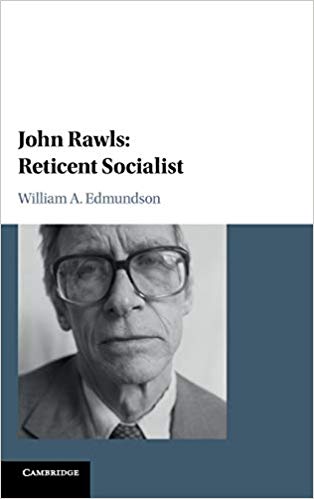
John Rawls had good reason to be a reticent socialist and political liberal

31u2bmz6ytl._sx312_bo1,204,203,200_

John Rawls: Reticent Socialist by William A. Edmundson has provoked a renewed attempt, written up in Jacobin and Catalyst, to link the totemic American liberal political philosopher with an explicitly socialist program to fix the problems of 21st century capitalism, and especially the domination of the political process by the super-rich. I found the book a powerful and enlightening read. But I think it ultimately shows that Rawls was right not to weigh his philosophy down with an explicit political program, and that socialists have yet to respond effectively to James Buchanan’s exploration of the challenges of non-market decision-making – challenges that bite more when states take on more explicit economic tasks. The large-scale public ownership of industry at the core of Edmundson’s democratic socialism is plausibly compatible with a stable, liberal political community in some circumstances but it is unclear how such a regime is supposed to reduce the scope of social domination compared with a private-property market economy in similar circumstances once we look at public institutions with the same skeptical attention normally reserved for private enterprise. A draft review is below.

Continue reading

Nightcap

  1. Was Hayek a One-Worlder? Garreth Bloor, Law & Liberty
  2. George Washington’s maritime world BJ Armstrong, War on the Rocks
  3. Cable TV really does matter for political outcomes Tyler Cowen, Marginal Revolution
  4. Sovietology Sheila Fitzpatrick, London Review of Books

Freire’s book (in Portuguese) is up and it’s open access; Van de Haar’s glowing profile

Lucas had a busy, productive 2018 elsewhere, but he assures me that 2019 will be the year he gets back on track for blogging. I’ve uploaded his 2013 book on the rise of the state in the early modern period (“Do Império ao Estado: Morfologias do sistema internacional”) to the side bar, or you can access the whole thing here (pdf).

I don’t know about you, but I am really looking forward to Dr Freire’s thoughts!

Elsewhere, Garreth Bloor has paid a glowing tribute to Edwin’s lifelong work on international relations over at Law & Liberty. The context is in a review of Yoram Hazony’s recent book on nationalism, and I don’t actually agree with much of what Bloor says, but it’s really cool to see Edwin’s important work getting the attention it deserves.

Venezuela: a nightmare coming to an end?

Yesterday, January 23, Juan Guaidó, the head of Venezuela’s National Assembly, declared himself acting president of the country. Mr. Guaidó claims that the election that brought Nicolas Maduro to a second six-year term was not fair and that therefore Mr. Maduro is a “usurper” and the presidency is vacant. Donald Trump immediately recognized Guaidó as president and so did Brazil’s Jair Bolsonaro and the entire Lima Group (Argentina, Brazil, Canada, Chile, Colombia, Costa Rica, Guatemala, Honduras, Mexico, Panama, Paraguay, Peru, Guyana and Saint Lucia).

Venezuela does not have a very democratic history, but things began to deteriorate in 1999 when Hugo Chávez came to power as president. He ruled the country until his death in 2013 and was succeeded by his vice-president Nicolas Maduro. Initially, Chávez didn’t look so bad, but he became increasingly more dictatorial through his government.

Hugo Chávez was the first president linked to Foro de São Paulo to come to power. He was succeeded by Lula da Silva in Brazil, Evo Morales in Bolivia, and many others. Foro de São Paulo (or São Paulo Forum) is a conference of leftist political parties and other organizations from Latin America and the Caribbean launched by the Brazilian Workers’ Party (PT) in 1990 in the city of São Paulo. The aim of the Foro was to build mutual support between these organizations, especially considering the collapse of the Soviet Union.

It can be said that Foro de São was exceedingly successful for a while. At one point in the 2000s, a great part of Latin America was ruled by politicians connected to it. However, the problem with socialism, as Margaret Thatcher once said, is that “eventually you run out of other people’s money.” PT’s rule in Brazil began to fall in 2013 when a great number of Brazilians started protesting against Dilma Rousseff’s government. Dilma was impeached in 2016, and her predecessor and mentor Lula da Silva was jailed in 2018 by Operation Carwash. Jair Bolsonaro, Brazil’s new president, is a fierce anti-communist. His election also marks a turn of events not only in Brazil but in the whole in Latin America. Maduro can no longer count on the support he received from Brazil, the continent’s greatest economy.

With money running out and corruption escalating, the decline of socialism in Latin America is just a matter of time, just as it was in Europe. Wind of Change.

Jacques the Moron

The verbal assaults against Pres. Trump, both oral and printed, have become almost mechanical. The concerted attempt to make his presidency seem illegitimate has largely become successful for much of the America population thanks to this systematic demeaning of the man. The above-board conspiracy has mostly won. I am not referring to criticism of Mr Trump’s policies based on facts and analysis. That’s fine and necessary, of course. (I have done some of this myself, right on my FB and on this blog.) I refer to personal attacks. Individuals with zero achievements, many demonstrable morons themselves, routinely call the president a moron. (I am not making this up; I could name names; perhaps I will, right here.)

When opponents are not content with opposing President Trump but insult him too, they also insult me. I voted for Mr Trump for the same reasons million others did. First, his name was not Clinton; second, I thought it was important to seize the chance to appoint a conservative Supreme Court Justice (or two). Since he has taken office, Mr Trump has surprised me pleasantly. There is no doubt in my mind that the current general American prosperity has a great deal to do with his policies, beginning with the general tax cut. Incidentally, I am well aware of the fact that the drop in unemployment began with the Obama administration. Another administration might have stopped it, or slowed it down. So, I have had two years to recant my vote. I have not. If you call the man I voted for a moron; you are calling me a moron.

I am not inclined to be indulgent with respect to the insult because I believe I know where it comes from thanks the many hours I spent at the faculty club. It’s a social class reaction; it’s the offended retort of those who think they are superior because they have read three books. It’s the cry of anguish of the semi-washed against the great unwashed (the “deplorables” in Mrs Clinton precise and unforgettable formula). Those who insult Pres. Trump, and therefore, me, are elitists with little reason to consider themselves an elite of any kind. Obviously, those who merely oppose his policies don’t need to call him names; they just have to describe that which they object to.

The daily name calling is wearying. It will leave a mark on my soul. I am far from sure that I will find it in me to forgive, or if I will ever forget. I think a ditch has been dug that will not be filled.

Nightcap

  1. Don’t believe the myth that this is a nation of Little Englanders Alex Massie, CapX
  2. The American Greatness narrative: a look under the hood Samuel Goldman, Law & Liberty
  3. In South Africa, minorities are at risk (even though it’s Not Yet Genocide) Mpiyakhe Dhlamini, Rational Standard
  4. Military dictatorship in Brazil: was it worth it? Bruno Gonçalves Rosi, NOL

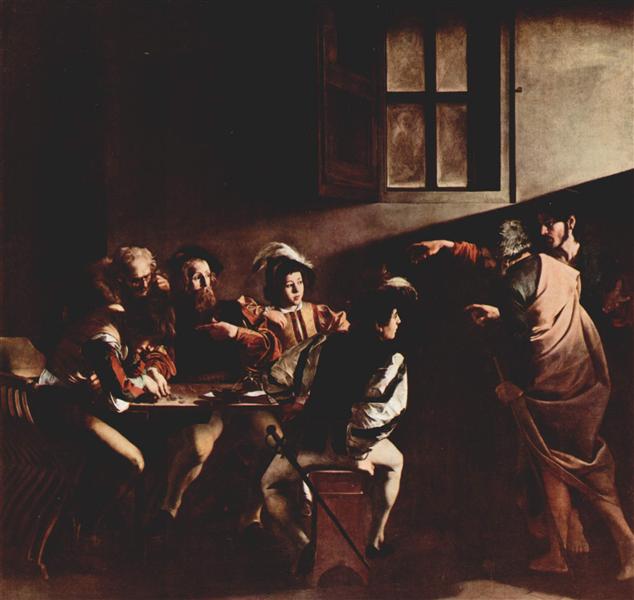
Afternoon Tea: The Calling of Saint Matthew (1600)

From Caravaggio, one of Jacques’ favorites:

nol art caravaggio calling of saint matthew
Click here to zoom

Spaghetti Monsters and Free Exercise

Should Flying Spaghetti Monster worshipers be allowed to wear colanders on their heads in drivers’ license photos? Maybe so. Today, four conservative justices hinted that someone might want to bring them a good Free Exercise case soon so they can unseat a long-standing and long-criticized case called Employment Division v. Smith. That case, penned by Justice Scalia, had in turn uprooted several decades-worth of precedent that had built up a robust bulwark of religious rights under the First Amendment’s Free Exercise Clause.

It’s a funny twist. Liberal justices like Justice William Brennan had built up strong protections under the Free Exercise Clause, such as allowing Amish to pull their children from high school early because of their faith, or allowing Saturday Sabbath worshipers to enjoy certain exceptions to work requirements for unemployment benefits. Then the penultimate conservative justice, Antonin Scalia, dealt a severe blow to those precedents in Smith. Scalia said that religious practices did not merit exemption from generally applicable laws.

Now, the conservative justices want to rethink Smith, while the liberal justices may hang back. Perhaps the shift in the culture wars has caused this parallel shift in jurisprudential alliances. In any case, I think we should welcome reconsideration of Smith.

Scalia’s opinion in Smith raised some legitimate concerns. He argued that if we allowed judges to have a heavy hand in deciding which religious practices deserved special exemptions from the law and which did not, then judges would inevitably engage in subjective judgment calls and descend into the very parochialism that the First Amendment is designed to thwart. He also worried that allowing exemptions from generally applicable law would court anarchy—we would have a legal code peppered with holes for a thousand individualized religious beliefs and practices. Both are legitimate concerns.

Smith did prompt a strong legislative response. Congress and quite a few states thereafter passed Religious Freedom Restoration Acts (RFRAs) that basically revived the pre-Smith law. But legislatures can and do exempt some laws from RFRAs, and many states do not have them.

My primary issue with Justice Scalia’s Smith opinion is that his worry about subjective judgment calls seems to prove too much. Judges are called upon to make these kinds of sensitive and controversial decisions all the time. We rely on things like tenure and salary protection to shelter their independence and impartiality as much as we can, but these kinds of difficult decisions arise in innumerable other contexts. I would prefer a robust and imperfectly enforced Free Exercise Clause to one that does almost nothing at all.

Likewise, the concern about courting anarchy may be overblown. Laws and religious practices usually do not clash in a fundamental way, and under the pre-Smith “compelling interest” test, legislators can still forbid child sacrifice while allowing Muslim police officers to keep their beards. Plus, freedom of speech and many other rights already require exceptions to the scope of otherwise legitimate laws—they just can’t be applied in certain circumstances. The Free Exercise Clause is not unique in that way.

If the Court does confront Smith, it may also have to deal with the Flying Spaghetti Monster problem. That is—the Court may have to address a question which it has mostly avoided: what is a “religion” under the First Amendment. Does the Church of the Flying Spaghetti Monster count? Should Pastafarians be allowed to wear colanders on their heads in drivers’ license photos while everyone else has to go bareheaded? What about the Church of Diego Maradona, a real church dedicated to the Argentine soccer legend? Clearly, asking a court to define a “religion” raises the same concerns of parochial judgment calls that drove the decision in Smith. But maybe the answer is to let them all in, with perhaps just a low-threshold sincerity requirement. Beyond the occasional colander-clad guy in the DMV line, we haven’t seen a huge number of people adopting faux beliefs just so they can get a religious exemption for smoking dope. But then, there is an International Church of Cannabis that would surely see a surge in conversions if Smith is overturned.

Nightcap

  1. The marvel of the human dad Anna Machin, Aeon
  2. No exit? Scott Sumner, EconLog
  3. Big Water and Latin American borderlands Benjamin Nobbs-Thiessen, H-Borderlands
  4. The material power of ideas and knowledge Henry Farrell, Crooked Timber