His ancestors had fought their way from Central Asia slaughtering, looting, burning, and worse. At night, they often slept in the saddle, on their horses that looked as wild as they did.
He was a large, muscular man with a fierce face, a slick mustache, and hairy forearms. First, he put his long sharp blade to my throat, then, he set me on fire; finally, he tried to break my cervical vertebrae with his bare hands.
“Tesekkur ler,” I said, handed him fifty million liras.
I had not had the time to visit the barber before leaving California. That’s how I got a straight razor shave and haircut, my ear and nose hair singed with flaming alcohol, and a vigorous cricking of the neck to finish. It all happened in the open air, in a street lined with rug shops, in Seljouk, the tourist town next to the great ancient archaeological site of Ephesus, Turkey.
[Note: this is a piece by Michalis Trepas, who you might recognize from the now-defunct NOL experiment “Be Our Guest.” Michalis is a newly-minted Notewriter, and this is the first of many more such pieces to come. -BC]
The Treasury and the Federal Reserve System have reached full accord with respect to debt-management and monetary policies to be pursued in furthering their common purpose to assure the successful financing of the Government’s requirements and, at the same time, to minimize monetization of the public debt.
– Joint announcement by the Secretary of the Treasury and the Chairman of the Board of Governors, and of the Federal Open Market Committee, of the Federal Reserve System, issued for release on Mar. 4, 1951
The Allied High Commission appreciates that these responsibilities [for the central bank] could not, without serious inconvenience, be given up so long as no legislation has been enacted establishing a competent Federal authority to assume them.
– Letter from the Allied High Commission to Chancellor Adenauer, Dated Mar. 6, 1951
A Financial Fable by Carl Barks, a short story starring Donald Duck and his duck-relatives, was published in Mar. 1951. It featured concepts like supply/ demand, money shocks, inflation and the ethics of productive labor, from a rather neoclassical perspective. Read today, it seems out of synch with the postwar paradigm of a subordinated monetary policy to the activist state and, more generally, with what came to be known as the Golden Age. As you have already probably noticed, this March also marks the 70th anniversary of two more instances against the currents of the time. It was back then that two main traditions of central bank independence – based on political consensus and judicial (“Chevron”) deference in the case of US, based on written law and judicial review in the case of Eurozone (read: Germany) – were (re)rooted. In the following lines, I offer an outline focused on institutional interplay, instead of then usual dramatis personae.
The first instance is the well-known Treasury – FED Accord. Its importance warrants a mention in nearly every institutional discussion of modern central bank independence. The FED implemented an interest rates peg – kind of capping the yield curve – in 1942, to accommodate public debt management during World War II. The details were complicated, but we can still think of it as a convenient arrangement for the Executive. The policy continued into the early 50s, with the inflationary backdrop of the Korean War leading to tensions between a demanding Executive and an increasingly resistant central bank. Shortly after the dispute became more pronounced, reaching the media, the two institutions achieved a compromise. The austere paragraph cited above ended the interest rates peg and prompted a shift of thinking within – and without – the central bank, on monetary policy and its independence of fiscal needs.
The second one is definitely more obscure, and as such deserves a little more detail. The Bank deutscher Länder (BdL) was established in 1948, in the Allied territory of occupied Germany. It integrated central banking institutions, old and new, in a decentralized fashion á la US FED. Its creation underpinned the – generally successful – double reform of that year (a currency conversion with a simultaneous abolition of price controls), which reignited free market forces (and also initiated the de facto separation of the country). The Allied Banking Commission (ABC) supervised the BdL and retained the sole right to issue direct instructions, a choice more practical than doctrinal or ideological. As the ABC gradually allowed a greater leeway to the central bank, while fending off even indirect German political interventions, the resulting institutional setting provided for a relatively independent BdL.
In late 1950, the Occupational Authority wanted out and an orderly transfer of powers required legislation from the Federal Government. Things deadlocked around the draft of the central bank law, the degrees of centralization and independence being the thorniest issues. The letter cited above, arriving after a few months of inertia, was the catalyst for action. The renewed negotiations concluded with the “Interim Law” of 10 Aug. 1951. The reformed BdL was made independent of instructions from the Federal Government, while at the same time assuming an obligation to support government’s general economic policy – without prejudice to its monetary duties.
This institutional arrangement was akin to what the BdL itself had pushed for, a de jure formalization of its already de facto status. Keep in mind that the central bank enjoyed a head start in terms of reputation and experience versus the Federal Government, after all. But it can also be traced to the position articulated by the free market-oriented majority in the German quasi-governmental bodies back in 1948, a unique blend of explicit independence from/ cooperation with the government. The 1951 law effectively set the blueprint for the final central bank law, the Bundesbank Act of 1957. The underlying liberal creed echoed in the written report of the Chairman of the Committee for Money and Credit of the parliament:
The security of the currency… is the highest precondition for the retention of a market economy, and hence in the final analysis that of a free constitution for society and the state… [T]he note-issuing bank must be independent of these [political bodies] and subject only to the law.
The Financial Fable was the only story featuring Disney’s characters that made it to an important history of comics book, published in 1971. Around that time, the postwar consensus on macroeconomic stabilization policy was reaching its peak. A rethinking was already underway on the tools and goals of monetary policy, taking it away from the still garbled understanding of the period. It took another decade or so for both sides of the Atlantic to recalibrate their respective monetary policies. The accompanying modern central bank independence, with its foundations set in 1951, became a more salient – and popular – aspect a bit later.
Long story short: In my thirties, I am part of a French crew going to film a commercial in Casamance. That’s the southern and forested part of Senegal, on the west coast of Africa. (It’s close to where the old and successful TV series “Roots” was filmed.) Senegal is a former French colony. French is widely spoken there, including by all formally educated Senegalese. We ride in a short caravan of VW buses from the local biggish city and into the forest. It’s hot. The commercial will be filmed the next day on a river next to the edge of the tropical forest. Where we will stay tonight, and probably the next night, is kept secret.
In the middle of the caravan, there is an older model Peugeot sedan, or maybe, it’s even a Mercedes. It’s the only air-conditioned vehicle in the procession. The star of the future commercial rides in it, in full comfort. She is actually a top model of near-world class fame. The client is a big French company selling informal but fairly chic women’s apparel internationally, kind of pricey apparel. The advertising agency in charge does not have any reason to try and cut corners. It’s gone for the best, or for the very-next-to-best talent in that line of work. The model is a tall, lithe blonde (of course) with a long elegant neck, long legs, long arms, and a torso like a ten-year old boy’s. She has a beautiful face, of course, not like some of my ex-girlfriends, for example, but like something a bit out of this world, ethereal, if you will. She is alone in the car, like royalty.
After about an hour, or 25 miles, riding on good dirt roads we, arrive at our place of rest in late afternoon. It’s a magnificent three story building of Moorish style made entirely of dried mud. I will learn later that local people erected it with their bare hands. There are windows on each of its façades that are separated by thick vertical ribs from bottom to top. The windows have no glass panes but each is neatly covered with fine white mosquito netting. There is just one small entrance on the ground floor near where we stop. It takes a while for all of use to file in for checking as one would in a regular hotel and, that gives us time to admire again the building’s dramatic architecture. Inside, there is a normal counter with two clerks taking our names and assigning us mostly each to a small room. There is enough light coming in from the outside for the registrations to proceed normally.
The rooms have no door but the walls are so thick that one would have to contort one’s neck quite a bit to get a good view of the inside of any of them. Each has a wooden table and two chairs. The broad bed is fixed to the wall and made of the same adobe material. There is a thin mattress, two pillows, and cotton blankets on each bed. All those items are sparkling white. Myself, I like it a lot already in that hotel that’s barely a hotel. As the night begins falling, quickly as it does in the tropics, a local teenager barefoot and in shorts coughs politely at the entrance to my room. I invite him in and he lights the oil lamp mounted on the wall and shows me where the matches are, just in case.
Evening preparations are interrupted by a shrill voice protesting in accented French. (The protester is Danish or Swedish; French is not her native language.) Miss Near-World Class Model is complaining because her room is on the third floor and there are no elevators. The producer immediately has her baggage moved to a new room on the second floor. She does not like it there either because there is no view, that floor being beneath the tree branch line. Back to the third floor she goes. Twenty minutes later, begins another vivacious exchange between Miss Near-World Class Model and the producer. I eavesdrop, of course. (Well, I am professional social scientist; what do you think?) It seems they had agreed that she would receive her fee in the form of a round-trip business class ticket Paris-New York. (It’s a common way to avoid some taxes.) Now Miss Near World Class Model demands that the ticket be for the costly supersonic Concord. I, and probably everyone else in the auditory loop, thinks it’s just a tantrum. The Concord shaves something like a little over one hour off that trip. She can’t be in that much of a hurry. She just wants bragging rights. Plus, we are in the middle of Africa, years before cell phones. There is nothing the producer can do right now except, perhaps, perhaps, promise. And that may be the whole point of the argument, before her works begins, in only a few hours.
Quickly, the whole company, around twenty-five of us, is called to dinner. It takes place under the trees, around a nice big wood fire. We all sit on the ground and each of us is handed a miraculously hot, big recipient made of clay (same as the building behind us) filled with a sort of rice porridge with hard-boiled eggs and pieces of hard chicken. There are old French biscuits for dessert. We drink the bottled water and the beer some of us were smart enough to buy while we were going through the town. Everyone is in a good mood and, probably being put in mind of the Boy-Scout camps of their childhood; a few begin singing. Two local young men enter the circle with their small hand drums. Most of the crew joins in and that bunch of white city people from far away have one of the best evenings in their lives, in the Casamance forest.
Everyone is in bed before ten nevertheless. That’s because the first and main scene of the commercial we are there to film is supposed to be caught against a rising sun. Our princess is nowhere to be seen or heard. She is not currently berating anyone. She may be eating cold sandwiches in her lonely room. Except that, around nine, she sends someone to tell the producer she is scared to sleep by herself in her room with no door. He proposes the company of any number of vigorous youthful dudes in the crew, including me. On her declining, he persuades a very young woman, an assistant’s assistant probably, to spend the night with Miss Model.
To be fair, Miss Model’s conduct is neither that surprising nor that awful in context. Put yourself in her position. The wildest place she has ever been is probably a rock club in Copenhagen or in Stockholm. No one around her in the crew can provide the comfort of her native language. She is almost certainly uncomfortable in French, which is not even her second language. (English is more likely.) Is it possible that being suddenly surrounded by black people dredges up primitive racist fears in a female citizen of a country with no colonial African past, and therefore no experiences of proximity to black people? To ask the question is to answer it. Finally, there is the tenacious influence of envy that gnaws at the hearts of simple-hearted girls, beginning in a high school. Miss Model has probably only five or six rivals to whom she compares herself, other tall, lithe, career-oriented young women in the same league as she is: Mary-Ann gets to fly in the Concord; I will die if I have to fly a regular commercial jet!
The next morning, everyone is forced to wake up at five. (Can’t miss the sunrise, remember?) Someone has managed to produce some coffee, weak stuff, obviously brewed and boiled in a large pot but hot enough, with milk and sugar. There is also day-old, or two-day old, French bread. Unfortunately, though there are flush toilets at every story – with a big bucket of river water near the commodes – there is no real running water. So, washing off your face demands a harsh decision. You hope you actually packed up towelettes. How do I know it’s river water in the buckets? Well, I am an experienced fisherman.
Some of the crew go directly to the river’s side to check on the physical preparations. The director goes there specifically to greet the twenty or so locals who will be an important part of the video. They must be shivering, wearing only a loincloth – as instructed – before sunrise, standing near the long canoe they will be paddling up river in a short time. Most are postal workers and teachers, and such. (They all have to know French well to be able to follow the director’s instructions. Real paddlers, if they were to be found, probably couldn’t.) Some are receiving last minute initiation to paddling. The storybook – such as it is – is a collection of colonial clichés, of course. Nobody cares then. (It’s the seventies.) The African extras care least of all. They will be earning fat money, paddling five times five minutes, if that, and sitting under a tree shooting the breeze between cuts.
Meanwhile, the rest of us are still near the hotel building; we stand around downing coffee and smoking cigarettes waiting for our marching orders. It’s a bit like being a recruit in the armed forces again: hurry up and wait. Miss Model is nowhere to be seen. No one says anything but I know I am worried. If she had another tantrum and managed to get a ride to town during the night, the whole project is dead. Then, she appears in the dimly lit doorway.
Her hair is impeccably combed and held in place in a style markedly different from yesterday’s. I am guessing this is the hairdo the storybook calls for. She is wearing perfectly pressed white linen pants and a simple yet somehow elegant form-fitting pink t-shirt. I am guessing, again, that those are clothes from the collection we will be advertising in the commercial. She is carrying a squarish box by its handle. A young local woman who might be a hairdresser is waiting for her. (I think she is a hairdresser because, unlike other women in the area, she is not wearing a head scarf and her hair is processed.)
The African woman points to a downed tree trunk with a clean towel set on top. Miss Model sits on it and opens her case without a word. The local woman squats and hold a large mirror to her face. I get drafted to hold a flashlight just so, between her face and the mirror. I watch in amazement Miss Model create a work of art on her face in the semi-penumbra. She uses at least twenty different colors of make-up held in tiny square containers in her square case. I observe that she relies on six different brushes and several crayons in addition to four shades of lipstick. She handles her tiny tools without hesitancy. A few times, she signals to me to adjust the direction of the cone of light. Her other helper, being a woman, seems to know exactly what to do with the mirror. Miss Model soldiers on for forty-five minutes or more. Now, I have often looked at people working but I have never seen such attention to detail or such concentration, such seriousness. There, under a canopy of strange and vaguely threatening trees, in the middle of Africa, and in the darkness, Miss Model gives us all a lesson in perfect, cool professionalism.
Soon, she stands up and mutters a few words of thanks to the mirror lady and, in absent minded fashion, to me. The director has been standing there, watching and saying nothing. He guides her to the river for the opening shot just as the first premises of a rising sun show themselves.
If I forgot that I am talking here about a four-minute commercial destined only to be shown at intermission in French movie theaters, I would say the rest of the day is a triumph. Everyone does his or her job swiftly and intelligently; the parts fall into place with ease. The paddlers get into the spirit of the thing. They forget they are going to have to go back to work in an ironed white shirt tomorrow, or the next day. They produce from deep in their chests the satisfying sound of men pulling hard although they have only gone about fifty yards for each cut. It helps a lot that they have seen the same movies that inspired the storybook.
Miss Model herself responds exceedingly well to the modest requests for minimal acting in the storybook: She is asked to stand prettily in the bow of the long black canoe paddled by twenty half naked black men. She holds one hip slightly and graciously askew the better to display the embroidered back pocket of her pants. She has been told not to smile to avoid drawing attention away from the t-shirt she is modeling. There are several takes. In the end, she acquits herself fabulously. The apparel merchant, the sponsor, will be more than happy. And, I know you are curious about this: The producer was inflexible, Miss Model did not fly to New York and back on the Concord.
I am reading a lot on federation lately, for an article I would like to contribute to Brandon’s special issue of Cosmos + Taxis. I am going back to the debate about federalizing (parts of the) the democratic world which was very lively in the 1930s and 1940s. Reading the texts, for example the best-selling Union Now! (1939) by American journalist Clarence Streit, you can feel the scare for the authoritarian rulers and their nationalistic and militaristic policies. As an anti-dote, Streit proposed the federation of all the grown democracies in the world at that time, 15 in total, spread over the globe. This Union of the North Atlantic had to include a union citizenship, a union defense force, a union customs-free economy, union money and union postal and communications system After the war broke out, Streit published a new version, now calling for a union between Britain and the USA. Needless to say, none of these or other proposals went anywhere. Still some interesting perpetual questions remain.
Ludwig von Mises and Friedrich Hayek also wrote on federation during this period, as I described in Classical Liberalism and International Relations Theory (2009). I now went back to their writings, which is a treat. It is nice to have a fresh look, I also have deeper insights now (at least – I think!) than I had about 15 years ago when first encountering these ideas.
One of the divides between Mises and Hayek (which they never openly discussed, as far as I am aware) revolved around the alleged pacifying effect of federations. Mises made the point that joining a federation would lead to a larger loss of sovereignty than was normally conceived in the debate. It was not just about pooling some powers at the federal level. In an interventionist world, Mises argued, the number of policies that are dealt with from the center, or the capitol, continually rise. After all, the call for intervention will be made from all corners of the federation, all the time. This leads to a call for equal treatment, which in turn lead to a larger number of policies and regulations administered from the capitol. Consequently, the member states increasingly lose sovereignty and eventually end up as mere provinces. This would be a new cause of division, especially when the member states of the new federation used to be powerful countries on their own. Hence, a federation divides, not unites. Therefore, he proposed a much more radical solution in his plan for Eastern Europe: no federation but a strict central union (administered by foreigners, in a foreign language he even once suggested) where the members would basically have no say at all over all the important legislation normally associated with sovereignty. The laws and regulations would be limited, ensuring maximum economic and political freedom for the individual citizen.
This blog is not meant to discuss the merits of Mises’ ideas. It solely aims to point at a division between Mises and Hayek. Hayek, and most thinkers on federation with him, Streit included, had different expectations about the political effects of federation. They expected that federation would be a force of unity. In a federation you arrange the most difficult and divisive policies at the center (for example defense, foreign policy and foreign trade), while leaving all other policies to the constituent parts. This allows room for different policies in those states, while taking away their instruments to start violent conflict. Yes, this would mean less sovereignty, but also less trouble, while the freedom within the federation still ensured as much or as little additional policies as the individual states see fit. Hayek would favor his idea the rest of his life, also proposing it for the Middle East, for example.
Who was right? That is impossible to say, I think. There are elements of both Misesian and Hayekian arguments in the real-life experiences of federations around the globe. For some it is indeed a good way to pool the core of sovereignty, while remaining as diverse as possible. Although most them do not disintegrate with violent conflict, the increase of all kind of policies at the federal center has certainly happened. However, this is not unique to federations and most importantly, it is not a question of formal legal organization. It is a question of mentality of both politicians and populations. This is another reason to keep fighting ‘the war of ideas’, because ideas have the power to change societies.
John Rawls, the most influential political philosopher of the 20th century, was born 100 years ago today. He died one year before I first read A Theory of Justice as part of my undergraduate degree in philosophy at University College London. This year, Edward Elgar publishes Neoliberal Social Justice: Rawls Unveiled, my book which updates Rawls’ approach to assessing social institutions in light of contemporary economic thought.
Mike Otsuka (now at the LSE) introduced us first to the work of Robert Nozick and then to Rawls, the reverse of what I imagine is normally the case in an introductory political philosophy course. Most people ultimately found Rawls’ the more attractive approach whereas I was drawn to Nozick’s insistence on starting strictly from the ethical claims of individuals. I wondered why something calling itself ‘the state’ should have rights to coerce beyond any other actor in civil society.
Years of working in public policy and studying political economy made me recognise a distinctive value for impersonal institutions with abstract rules. Indeed, I now think the concept of equal individual liberty is premised on the existence of such institutions. Although the rule of law could theoretically emerge absent a state, states are the only institutions that have been able to generate it so far. Political philosophy cannot be broken down into applied ethics in the way Nozick proposed.
Some classical liberals and market anarchists are increasingly impatient with the Rawlsian paradigm. Michael Huemer, for example, argues that Rawls misunderstands basic issues with probability when proposing that social institutions focus on maximising the condition of the least advantaged. Huemer argues that Rawls ultimately offers no reason to pick justice as fairness over utilitarianism, the very theory it was directed against.
I think these criticisms are valid for rejecting the blunt assessments of real-world inequalities that some Rawlsians are apt to make. But I do not think Rawls himself, nor his theory when read in context, made these elementary errors. Rawls’ principles of justice apply to the basic structure of social institutions rather than the resulting pattern of social resources as such. Moreover, the primary goods that Rawls take to be relevant for assessing social institutions are essentially public goods. It makes sense to guarantee, for example, basic civil liberties to all on an equal basis even if turns out to be costly. I can think of two reasons for this:
In a society not facing acute scarcity, you would not want to risk placing yourself in a social position where your civil liberties could be denied even if it was relatively unlikely.
Living in a society where basic liberties are denied to others is going to cause problems for everyone, whether through regime instability or fraught social and economics relationships that are not based on genuine mutual advantage but coercion from discretionary powers.
To be fair to utilitarians, J.S. Mill went in this direction, although one had to squint to see how it fit into a utilitarian calculus. But if Rawls was ultimately defending a more principled approach to social relationships using the tools of expediency, I see that as a valuable project.
So, I think that the Rawlsian approach is still a fruitful way to evaluate the distinctive problem of political order. His theory offers the resources to resist not just utopian libertarian rights theorists, but also socialists and egalitarians who similarly fail to account for the distinctive role of political institutions for resolving problems of collective action. Where I think Rawls erred when endorsing what amounts to a socialist institutional framework is on his interpretation of social theory. Rawls argued that people behave pretty selfishly in market interactions but could readily pursue the public good when engaged in everyday politics. I argue otherwise. Here is a snippet from Neoliberal Social Justice (pp. 96-97) where I make the case for including a more consistently realistic account of human motivation within his framework:
Problems of justice are not purely about assurance amongst reasonable people or identifying anti-social persons. Instead, we must consider the anti-social person within ourselves: the appetitive, biased, narrow-minded, prejudicial self that drives a great deal of our every-day thoughts and interactions (Cowen, 2018). If we are to make our realistic selves work with each other to produce a just outcome, then we should affirm institutions that allow these beings, not just the wholesome beings of our comfortable self-perception, to cooperate. We have to be alive to the fact that we are dealing with agents who are apt to affirm a scheme as fair and just at one point (and even sincerely mean it), then forgetfully, carelessly, negligently or deliberately break the terms of that scheme at another point if they have an opportunity and reason enough to do so. Addressing ourselves as citizens in this morally imperfect state, as opposed to benighted people outside a charmed circle of reasonableness, is helpful. It means we can now include such considerations within public reason. The constraints of rules emerging from a constitutional stage may chafe at other stages of civil interaction. Nevertheless, they may be fully publicly justified.
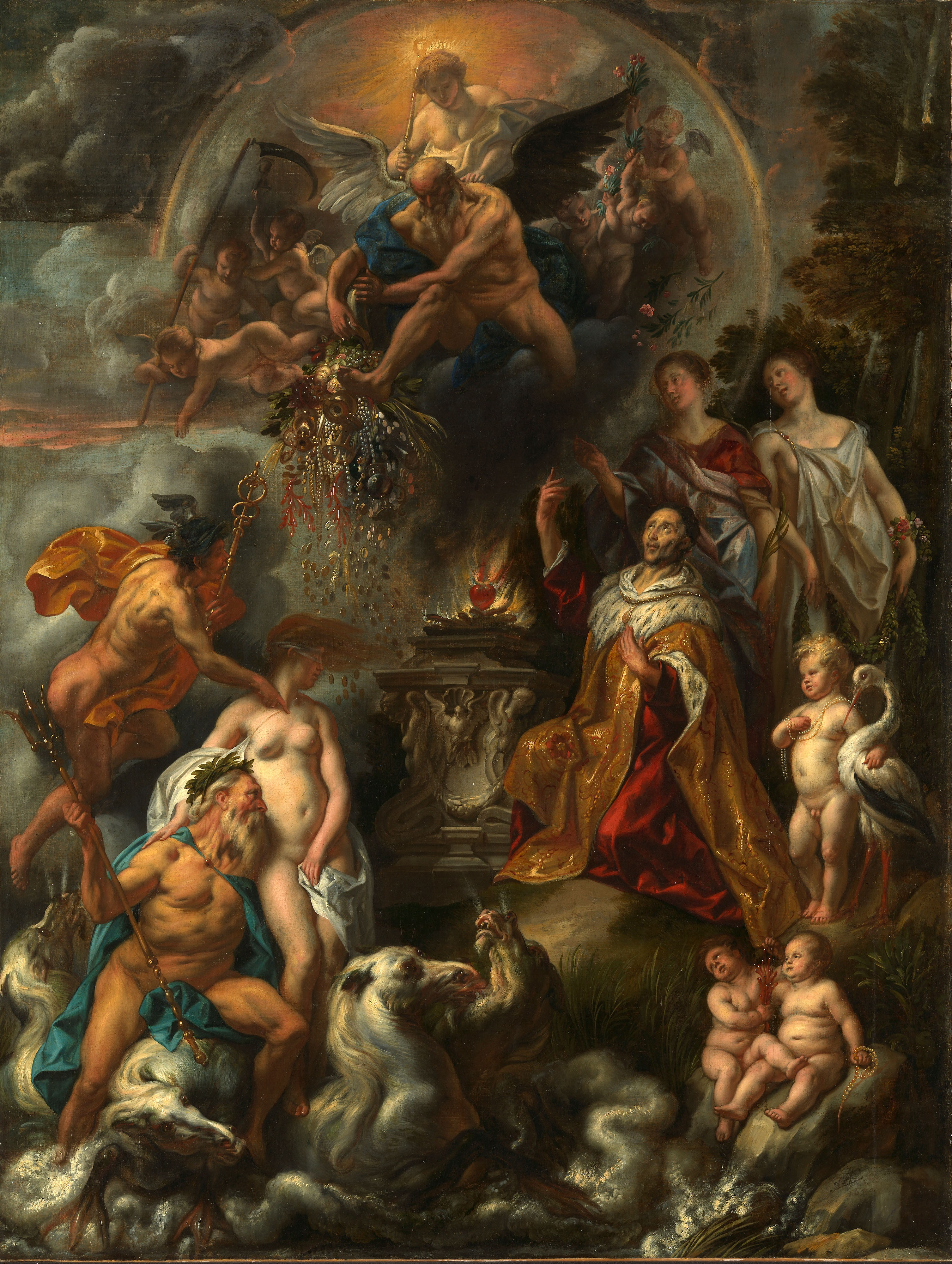
This is by Jacob Jordaens, a Flemish painter, and it is not even one of his most famous paintings. Here’s Jordaens’ wiki page. The Peace of Westphalia ended the 30 Years War. The Habsburgs weren’t necessarily the bad guys. The Peace of Westphalia didn’t establish state sovereignty in a system of equal (in theory) nation-states within an interstate order. The Peace of Westphalia solved a religious constitutional question within the Holy Roman Empire and ended the war between the Dutch and the Spanish. The Westphalian state system that we speak of and live in today is not appropriately named. Here’s the best article (pdf) I’ve read on the Peace.
If we were to appropriately name the interstate order that we have today, it would be named the Napoleonic interstate system. Alas. It’s called the Westphalian system. The US, and a couple of other big states like China and Russia, have trouble fitting in to the “Westphalian” state system because they established their own regional state systems long before being wrangled into European imperial entanglements. It goes without saying that polities in Africa, Asia, and the Americas also had trouble fitting into the “Westphalian” state system.
What if one of the regional orders established by the US, Russia, or China were embraced as the new global order, instead of the “Westphalian” (really Napoleonic) system based on nation-state sovereignty? I don’t think this would be a bad thing, and in their own way, the US, China, and Russia have been trying to do this since the end of World War II.
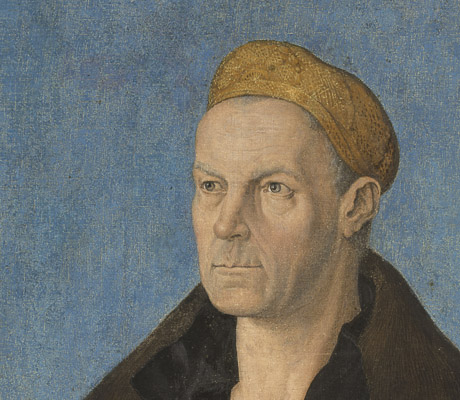
The most important historical question to help understand our rise from the muck to modern civilization is: how did we go from linear to exponential productivity growth? Let’s call that question “who started modernity?” People often look to the industrial revolution, which is certainly an acceleration of growth…but it is hard to say it caused the growth because it came centuries after the initial uptick. Historians also bring up the Renaissance, but this is also a mislead due to the ‘written bias’ of focusing on books, not actions; the Renaissance was more like the window dressing of the Venetian commercial revolution of the 11th and 12th centuries, which is in my opinion the answer to “who started modernity.” However, despite being the progenitors of modern capitalism (which is worth a blog in and of itself), Venice’s growth was localized and did not spread immediately across Europe; instead, Venice was the regional powerhouse who served as the example to copy. The Venetian model was also still proto-banking and proto-capitalism, with no centralized balance sheets, no widespread retail deposits, and a focus on Silk Road trade. Perhaps the next question is, “who spread modernity across Europe?” The answer to this question is far easier, and in fact can be centered to a huge degree around a single man, who was possibly the richest man of all time: Jakob Fugger.
Jakob Fugger was born to a family of textile traders in Augsburg in the 15th century, and after training in Venice, revolutionized banking and trading–the foundations on which investment, comparative advantage, and growth were built–as well as relationships between commoners and aristocrats, the church’s view of usury, and even funded the exploration of the New World. He was the only banker alive who could call in a debt on the powerful Holy Roman Emperor, Charles V, mostly because Charles owed his power entirely to Fugger. Strangely, he is perhaps best known for his philanthropic innovations (founding the Fuggerei, which were some of the earliest recorded philanthropic housing projects and which are still in operation today); this should be easily outcompeted by:
His introduction of double entry bookkeeping to the continent
His invention of the consolidated balance sheet (bringing together the accounts of all branches of a family business)
His invention of the newspaper as an investment-information tool
His key role in the pope allowing usury (mostly because he was the pope’s banker)
His transformation of Maximilian from a paper emperor with no funding, little land, and no power to a competitor for European domination
His funding of early expeditions to bring spices back from Indonesia around the Cape of Good Hope
His trusted position as the only banker who the Electors of the Holy Roman Empire would trust to fund the election of Charles V
His complicated, mostly adversarial relationship with Martin Luther that shaped the Reformation and culminated in the German Peasant’s War, when Luther dropped his anti-capitalist rhetoric and Fugger-hating to join Fugger’s side in crushing a modern-era messianic figure
His involvement in one of the earliest recorded anti-trust lawsuits (where the central argument was around the etymology of the word “monopoly”)
His dissemination, for the first time, of trustworthy bank deposit services to the upper middle class
His funding of the military revolution that rendered knights unnecessary and bankers and engineers essential
His invention of the international joint venture in his Hungarian copper-mining dual-family investment, where marriages served in the place of stockholder agreements
His 12% annualized return on investment over his entire life (beating index funds for almost 5 decades without the benefit of a public stock market), dying the richest man in history.
The story of Fugger’s family–the story, perhaps, of the rise of modernity–begins with a tax record of his family moving to Augsburg, with an interesting spelling of his name: “Fucker advenit” (Fugger has arrived). His family established a local textile-trading family business, and even managed to get a coat of arms (despite their peasant origins) by making clothes for a nobleman and forgiving his debt.
As the 7th of 7 sons, Jakob Fugger was given the least important trading post in the area by his older brothers; Salzburg, a tiny mountain town that was about to have a change in fortune when miners hit the most productive vein of silver ever found by Europeans until the Spanish found Potosi (the Silver Mountain) in Peru. He then began his commercial empire by taking a risk that no one else would.
Sigismund, the lord of Salzburg, was sitting on top of a silver mine, but still could not run a profit because he was trying to compete with the decadence of his neighbors. He took out loans to fund huge parties, and then to expand his power, made the strategic error of attacking Venice–the most powerful trading power of the era. This was in the era when sovereigns could void debts, or any contracts, within their realm without major consequences, so lending to nobles was a risky endeavor, especially without backing of a powerful noble to force repayment or address contract breach.
Because of this concern, no other merchant or banker would lend to Sigismund for this venture because sovereigns could so easily default on debts, but where others saw only risk, Fugger saw opportunity. He saw that Sigismund was short-sighted and would constantly need funds; he also saw that Sigismund would sign any contract to get the funds to attack Venice. Fugger fronted the money, collateralized by near-total control of Sigismund’s mines–if only he could enforce the contract.
Thus, the Fugger empire’s first major investment was in securing (1) a long-term, iterated credit arrangement with a sovereign who (2) had access to a rapidly-growing industry and was willing to trade its profits for access to credit (to fund cannons and parties, in his case).
What is notable about Fugger’s supposedly crazy risk is that, while it depended on enforcing a contract against a sovereign who could nullify it with a word, he still set himself up for a consistent, long-term benefit that could be squeezed from Sigismund so long as he continued to offer credit. This way, Sigismund could not nullify earlier contracts but instead recognized them in return for ongoing loan services; thus, Fugger solved this urge toward betrayal by iterating the prisoner’s dilemma of defaulting. He did not demand immediate repayment, but rather set up a consistent revenue stream and establishing Fugger as Sigismund’s crucial creditor. Sigismund kept wanting finer things–and kept borrowing from Fugger to get them, meaning he could not default on the original loan that gave Fugger control of the mines’ income. Fugger countered asymmetrical social relationships with asymmetric terms of the contract, and countered the desire for default with becoming essential.
Eventually, Fugger met Maximilian, a disheveled, religion-and-crown-obsessed nobleman who had been elected Holy Roman Emperor specifically because of his lack of power. The Electors wanted a paper emperor to keep freedom for their principalities; Maximilian was so weak that a small town once arrested and beat him for trying to impose a modest tax. Fugger, unlike others, saw opportunity because he recognized when aligning paper trails (contracts or election outcomes) with power relationships could align interests and set him up as the banker to emperors. When Maximilian came into conflict with Sigismund, Fugger refused any further loans to Sigismund, and Maximilian forced Sigismund to step down. Part of Sigismund’s surrender and Maximilian’s new treaty included recognizing Fugger’s ongoing rights over the Salzburg mines, a sure sign that Fugger had found a better patron and solidified his rights over the mine through his political maneuvering–by denying a loan to Sigismund and offering money instead to Maximilian. Once he had secured this cash cow, Fugger was certainly put in risky scenarios, but didn’t seek out risk, and saw consistent yearly returns of 8% for several decades followed by 16% in the last 15 years of his life.
From this point forward, Fugger was effectively the creditor to the Emperor throughout Maximilian’s life, and built a similar relationship: Maximilian paid for parties, military campaigns, and bought off Electors with Fugger funds. As more of Maximilian’s assets were collateralized, Fugger’s commercial empire grew; he gained not only access to silver but also property ownership. He was granted a range of fiefs, including Arnoldstein, a critical trade juncture where Austria, Italy, and Slovenia border each other; his manufacturing and trade led the town to be renamed, for generations, Fuggerau, or Place of Fugger.
These activities that depended on lending to sovereigns brings up a major question: How did Fugger get the money he lent to the Emperor? Early in his career, he noted that bank deposit services where branches were present in different cities was a huge boon to the rising middle-upper class; property owners and merchants did not have access to reliable deposit services, so Fugger created a network of small branches all offering deposits with low interest rates, but where he could grow his services based on the dependability of moving money and holding money for those near, but not among, society’s elites. This gave him a deep well of dispersed depositors, providing him stable and dependable capital for his lending to sovereigns and funding his expanding mining empire.
Unlike modern financial engineers, who seem to focus on creative ways to go deeper in debt, Fugger’s creativity was mostly in ways that he could offer credit; he was most powerful when he was the only reliable source of credit to a political actor. So long as the relationship was ongoing, default risk was mitigated, and through this Fugger could control the purse strings on a wide range of endeavors. For instance, early in their relationship (after Maximilian deposed Sigismund and as part of the arrangement made Fugger’s interest in the Salzburg mines more permanent), Maximilian wanted to march on Rome as Charlemagne reborn and demand that the pope personally crown him; he was rebuffed dozens of times not by his advisors, but by Fugger’s denial of credit to hire the requisite soldiers.
Fugger also innovated in information exchange. Because he had a broad trading and banking business, he stood to lose a great deal if a region had a sudden shock (like a run on his banks) or gain if new opportunities arose (like a shift in silver prices). He took advantage of the printing press–less than 40 years after Gutenberg, and in a period when most writing was religious–to create the first proto-newspaper, which he used to gather and disseminate investment-relevant news. Thus, while he operated a network of small branches, he vastly improved information flow among these nodes and also standardized and centralized their accounting (including making the first centralized/combined balance sheet).
With this broad base of depositors and a network of informants, Fugger proceeded to change how war was fought and redraw the maps of Europe. Military historians have discussed when the “military revolution” that shifted the weapons, organization, and scale of war for decades, often centering in on Swedish armies in the 1550s as the beginning of the revolution. I would counter-argue that the Swedes simply continued a trend that the continent had begun in the late 1400’s, where:
Knights’ training became irrelevant, gunpowder took over
Logistics and resource planning were professionalized
Early mechanization of ship building and arms manufacturing, as well as mining, shifted war from labor-centric to a mix of labor and capital
Multi-year campaigns were possible due to better information flow, funding, professional organization
Armies, especially mercenary groups, ballooned in size
Continental diplomacy became more centralized and legalistic
Wars were fought by access to creditors more than access to trained men, because credit could multiply the recruitment/production for war far beyond tax receipts
Money mattered in war long before Fugger: Roman usurpers always took over the mints first and army Alexander showed how logistics and supply were more important than pure numbers. However, the 15th century saw a change where armies were about guns, mercenaries, technological development, and investment, and above all credit, and Fugger was the single most influential creditor of European wars. After a trade dispute with the aging Hanseatic League over their monopoly of key trading ports, Fugger manipulated the cities into betraying each other–culminating in a war where those funded by Fugger broke the monopolistic power of the League. Later, because he had a joint venture with a Hungarian copper miner, he pushed Charles V into an invasion of Hungary that resulted in the creation of the Austro-Hungarian Empire. These are but two of the examples of Fugger destroying political entities; every Habsburg war fought from the rise of Maximilian through Fugger’s death in 1527 was funded in part by Fugger, giving him the power of the purse over such seminal conflicts as the Italian Wars, where Charles V fought on the side of the Pope and Henry VIII against Francis I of France and Venice, culminating in a Habsburg victory.
Like the Rothschilds after him, Fugger gained hugely through a reputation for being ‘good for the money’; while other bankers did their best to take advantage of clients, he provided consistency and dependability. Like the Iron Bank of Braavos in Game of Thrones, Fugger was the dependable source for ambitious rulers–but with the constant threat of denying credit or even war against any defaulter. His central role in manipulating political affairs via his banking is well testified during the election of Charles V in 1519. The powerful kings of Europe– Francis I of France, Henry VIII of England, and Frederick III of Saxony all offered huge bribes to the Electors. Because these sums crossed half a million florins, the competition rapidly became one not for the interest of the Electors–but for the access to capital. The Electors actually stipulated that they would not take payment based on a loan from anyone except Fugger; since Fugger chose Charles, so did they.
Fugger also inspired great hatred by populists and religious activists; Martin Luther was a contemporary who called Fugger out by name as part of the problem with the papacy. The reason? Fugger was the personal banker to the Pope, who was pressured into rescinding the church’s previously negative view of usury. He also helped arrange the scheme to fund the construction of the new St. Peter’s basilica; in fact, half of the indulgence money that was putatively for the basilica was in fact to pay off the Pope’s huge existing debts to Fugger. Thus, to Luther, Fugger was greed incarnate, and Fugger’s name became best known to the common man not for his innovations but his connection to papal extravagance and greed. This culminated in the 1525 German Peasant’s War, which saw an even more radical Reformer and modern-day messianic figure lead hordes of hundreds of thousands to Fuggerau and many other fortified towns. Luther himself inveighed against these mobs for their radical demands, and Fugger’s funding brought swift military action that put an end to the war–but not the Reformation or the hatred of bankers, which would explode violently throughout the next 100 years in Germany.
This brings me to my comparison: Fugger against all of the great wealth creators in history. What makes him stand head and shoulders above the rest, to me, is that his contributions cross so many major facets of society: Like Rockefeller, he used accounting and technological innovations to expand the distribution of a commodity (silver or oil), and he was also one of the OG philanthropists. Like the Rothschilds’ development of the government bond market and reputation-driven trust, Fugger’s balance-sheet inventions and trusted name provided infrastructural improvement to the flow of capital, trust in banks, and the literal tracking of transactions. However, no other capitalist had as central of a role in religious change–both as the driving force behind allowing usury and as an anti-Reformation leader. Similarly, few other people had as great a role in the Age of Discovery: Fugger funded Portuguese spice traders in Indonesia, possibly bankrolled Magellan, and funded the expedition that founded Venezuela (named in honor of Venice, where he trained). Lastly, no other banker had as influential of a role in political affairs; from dismantling the Hanseatic League to deciding the election of 1519 to building the Habsburgs from paper emperors to the most powerful monarchs in Europe in two generations, Fugger was the puppeteer of Europe–and such an effective one that you have barely heard of him. Hence, Fugger was not only the greatest wealth creator in history but among the most influential people in the rise of modernity.
Fugger’s legacy can be seen in his balance sheet of 1527; he basically developed the method of using it for central management, its only liabilities were widespread deposits from the upper-middle class (and his asset-to-debt ratio was in the range of 7-to-1, leaving an astonishingly large amount of equity for his family), and every important leader on the continent was literally in his debt. It also showed him to have over 1 million florins in personal wealth, making him one of the world’s first recorded millionaires. The title of this post was adapted from a self-description written by Jakob himself as his epitaph. As my title shows, I think it is fairer to credit his wealth creation than his wealth accumulation, since he revolutionized multiple industries and changed the history of capitalism, trade, European politics, and Christianity, mostly in his contribution to the credit revolution. However, the man himself worked until the day he died and took great pride in being the richest man in history.
2021 happens to be the 50th anniversary of the 13-day Indo-Pakistani War of 1971, which also resulted in the creation of Bangladesh. In 2011, I co-edited a book titled Warriors after War which consists of interviews with retired Army officials from India and Pakistan. Here is an excerpt:
Tridivesh Singh Maini recalls that part of the inspiration for this book arose from the history of this incident, and the fact that the original impetus for change had arisen not from politicians but from ex-military figures in Pakistan and India. Subsequently, he carried out the interviews with all the Indian ex-military figures for this volume, while his colleague in Pakistan, Tahir Malik, carried out all but one of the interviews with Pakistani ex-military figures (Brigadier Shaukat Qadir was interviewed by Richard Bonney).
It is difficult to emphasize sufficiently the uniqueness, importance and timeliness of this volume. Relations between Pakistan and India were strained from the outset as a result of the events of Partition in 1947, when the mass migration of the populations in opposite directions and the slaughter that occurred on both sides led to mutual recrimination. (pgs 34-35)
Why is the Republic of India a Civilization-State?
On 26 January 1950, India’s Constitution came into effect amidst severe apprehensions about India’s balkanization. So, seventy-one years later, the Indian democratic republic may still appear to be a historical accident, but it is not. Here is why:
India has always been a fertile territory for experiments in governance, but surprisingly, there is no more than a casual reference to the ideas underlying non-western civilizations in Political Science courses or History of Political Thought. The neglect of Indian polity is particularly striking, for apart from Western political thought, Indic political ideas comprise the most extensive and most crucial body of political philosophy. Moreover, these political ideas are integral to Indic civilization—one of the only surviving non-western civilizations. Today, we know that Western ideas have clearly impacted Indian political thought. Still, what is generally not realized is that India has also contributed to Western political thinking in all probability.
The problem of scant attention given to Indic political thought compared to Indic religion and philosophy was partly remedied with the re-discovery of Kautilya’s Arthashastra —the Indic equivalent of the Machiavellian, The Prince. However, other great works like Kamandaki’s Nitisara— Elements of Polity, the Raj Dharma (administrative ethics) section of the epic, Mahabharata, the epic Ramayana, Digha Nikaya (Collection of Long Discourses), and to some extent antiquated Hitopadesha (Beneficial Advice) also deal with an Indian way of thinking about the state-society relationship.
Drawing from these essential texts and Indic political thinkers, the king’s role is viewed mainly as an administrator—the ruler is not an agent of social change. This view is radically different from its counterparts in the West. In Western political theory—Rousseau, Locke, and Hegel—political order means the subjugation of society to the state. In Indian tradition, the society and culture are always supreme, and the ruler is accountable to dharma (Indic ethics—a common internal bond) and society. Therefore, the conception of the “state of nature” in Hobbes and Rousseau is irrelevant to Indic tradition because ethics and civilization preceded the state’s development in India. In the Ramayana and Mahabharata’s grand narratives, an esoteric reading accounts for personal ethics and the path to profound spiritual freedom. But an exoteric view informs us of political power, administrative ethics, and the limits of provisional freedom. According to these epics, the state is created to protect against the disintegration of social order, and the state is given only those powers required to do so. Thus, a ruler’s powers are not like those of the Leviathan conceptualized in Hobbes.
Despite these radical Indic political concepts, the popular view on ancient and early medieval India is that it was merely a region invested in despotism with no knowledge of Freedom or Liberty. Hegel assumed that only one tribe of men were free in Asia, and others were their slaves. It is worth noting that for almost thousand eight hundred years after the Greek republics collapsed, the Western world also lived through monarchical despotism and tyranny. Likewise, apart from ancient Greece and Rome, in India too, there existed republics and proto democracies. A fair study of Indic history informs you that ancient Indian republics were not only in existence from the 8th century B.C. to 4th century A.D., but they were doing some fascinating experiments in state-society relations. With time, at least four different forms of constitutions emerged.
Arajya: A political community without a king. These communities self-governed using Dharma texts (Indic ethics).
Ganarajya: A state or a political community ruled by a ‘gana’ or an assembly of people.
Youvarajya: A political community ruled by a crown prince.
Dvairajya: A political community ruled by two kings.
For various reasons, Ganarajya and Youvarajya systems thrived much more than the other two.
The ‘Gana‘ seems to be the earliest Indic political forum of the entire community (Jana). The Jana’s formulation of political policies rested with the Samiti (Sanskrit for Committee) and the Sabha (an assembly of elders). Over time, these Ganarajya states developed into Janapada—a self-sufficing political and cultural unit. Every Janapada had its peculiar dialect and customs developed from regional interpretations of Indic Dharma (ethics). Several of these Janapada states even joined hands to form a federation of Mahajanapada (mega-Janapada). Over time, however, powerful Indic monarchies who performed the state’s integrative functions better than the assemblies of Gana overwhelmed them. Fortunately, imperial states incorporated these republics into their fold; republics were not entirely stamped out, even after repeated invasions by the Turks, Mongols, Portuguese, French, and the British.
The Gana-Sabha system emerged from the shadow as soon as these imperial powers became weak. The Sabha system was active in the village setting as Panchayat (village associations) that included both notable big men and peasants, in contestation with each other and in opposition to the state. Here, different qualities of people and opinions were tested, rather than the scene of a pronunciamento by elders. Even the British acknowledged this system. Henry Maine, who was influenced by J. S. Mill, was sent to India in the 1860s to advise the British government on legal matters. He came across several accounts of thriving indigenous systems of autonomous village governments, whose structure and practice shared many characteristics of participatory democracy. Later, Maine articulated a theory of the village community as an alternative to the centralized state. In the Panchayat system, De Tocqueville saw an ideal model of a society with a limited state. He planned to study it, comparable to Democracy in America but overwhelmed by his political duties, he never managed a trip. So, while Indian electoral democracy was only instituted in the first half of the twentieth century, the practice of public reasoning, deliberation, and toleration of a plurality of ideas is a much older phenomenon, dating back to ancient Indic traditions.
During the 1947 Constituent Assembly Debates of post-colonial India, there was an Alexander Hamilton vs. Thomas Jefferson sort of debate between Gandhi’s idea of Indic village-style, decentralized administration vs. B. R. Ambedkar’s —the principal architect of the Indian constitution—healthy centralized state. Although Ambedkar’s view prevailed, the village democracy did not entirely disappear from the Indian constitution. India officially called itself Bhārat Gaṇarājya, and the first two words of the Indian national anthem honor Jana and Gana. Hence, the constitutional democracy of the Indian republic was not an accident; it is a sui generis phenomenon reflecting the plural character and age-old but essential values of Indic civilization. Therefore, modern-day India is a Civilization-State. The West can only describe it from the outside, but it is for India to interpret herself from within—an ongoing process.
Finally, it merits mentioning that Professor of international history Arnold J. Toynbee reminded the world, “India is a whole world in herself; she is a society of the same magnitude as our Western society.”
I wrote an article a few years ago about hyperinflation in ancient Rome (and blogged about it here), arguing that the social trust in issuing bodies has been a foundation for monetary value long before modern institutions.
I got a random notification that someone had actually read and cited my work in a recent article “The US Money Explosion of 2020, Monetarism and Inflation: Plagued by History?” I really liked the author’s concept: inflation during pandemic periods is staved off for years because of saving rates, but then the post-crisis period is actually when the most inflation occurs.
This passed my ‘gut check’: during a crisis, who blows their entire budget? It also passed my historical-precedent check, and not only because he researched the Spanish flu and medieval precedent; in the Roman hyperinflation, the inflation lagged decades behind the expanded monetary volume, and in fact came right as the civil wars that nearly brought the Empire to its knees came to an end.
So, in short, inflation-hawks, you are probably right to fear the dramatic expansion of the money supply; however, you won’t feel vindicated for potentially years to come. In an age where people look for causes today to become results tomorrow (EVERY DAY, the WSJ tells me “stocks moved up/down because MAJOR EVENT TODAY”), we need to lengthen our time horizons of analysis and recognize that, just maybe, the ramifications of today’s policies will not really be felt for years. Or, put in a more dire light, by the time we realize who is right, it will be too late to reassert social trust in monetary value, and the dollar will follow the denarius into histories of hyperinflations.
I remember when Obamacare was first being debated. The political right had so many strong arguments to make and they abjectly refused. Instead, Obama was declared a secret Muslim whose secret plan is to turn the frogs gay.
Here we are with that political tribe having ascended to the White House and now the political Left has so many strong arguments to make. And they’re refusing. Instead, the federal government needs to be made more powerful for the next time a Trump gets elected.
2020 has not been kind to my view of humanity. So I’m listening to The Rational Optimist (finally). And I’ve got to say, it’s just what the doctor ordered. Life is pretty good on balance, even with the bad stuff.
On voting day, with everyone tweeting and yelling and spam-calling you to vote, I want to offer some perspective. Sure, ‘your vote is your voice,’ and those who skip the election will remain unheard by political leaders. Sure, these leaders probably determine much more of your life than we probably would like them to. And if you don’t vote, or ‘waste’ your vote on a third party or write in Kim Jong Un, you are excluded from the discussion of how these leaders control you.
But damn, if that is such a limited perspective. It’s like the voting booth has blinders that conceal what is truly meaningful. I’m not going to throw the traditional counter-arguments to ‘vote or die’ at you, though my favorites are Arrow’s Impossibility Theorem and South Park’s Douche and Turd episode. Instead, I just want to say, compared to how you conduct your life, shouting into the political winds is simply not that important.
The wisdom of the stoics resonates greatly with me on this. Seneca, a Roman philosopher, tutor, and businessman, had the following to say on actions, on knowledge, on trust, on fear, and on self-improvement:
Lay hold of today’s task, and you will not need to depend so much upon tomorrow’s. While we are postponing, life speeds by. Nothing is ours, except time. On Time
Each day acquire something that will fortify you against poverty, against death, indeed against other misfortunes as well; and after you have run over many thoughts, select one to be thoroughly digested that day. This is my own custom; from the many things which I have read, I claim some one part for myself. On Reading
If you consider any man a friend whom you do not trust as you trust yourself, you are mightily mistaken and you do not sufficiently understand what true friendship means. On Friendship
Reflect that any criminal or stranger may cut your throat; and, though he is not your master, every lowlife wields the power of life and death over you… What matter, therefore, how powerful he be whom you fear, when every one possesses the power which inspires your fear? On Death
I commend you and rejoice in the fact that you are persistent in your studies, and that, putting all else aside, you make it each day your endeavour to become a better man. I do not merely exhort you to keep at it; I actually beg you to do so. On the Philosopher’s Lifestyle
Seneca goes on, in this fifth letter, to repeat the stoic refrain of ‘change what you can, accept what you cannot.’ But he expands, reflecting that your mind is “disturbed by looking forward to the future. But the chief cause of [this disease] is that we do not adapt ourselves to the present, but send our thoughts a long way ahead. And so foresight, the noblest blessing of the human race, becomes perverted.”
Good leadership requires good foresight, but panic over futures out of our control pervert this foresight into madness. So, whether you think that Biden’s green promises will destroy the economy or Trump’s tweets will incite racial violence, your actions should be defined by what you can do to improve the world–and this is the only scale against which you should be judged.
So, set aside voting as a concern. Your voice will be drowned out, and then forgotten. But your actions could push humanity forward, in your own way, and if you fail in that endeavor, then no vote will save you from the self-knowledge of a wasted life. If you succeed, then you did the only thing that matters.
Like some of my role models, I am inspired by Isaac Asimov’s vision. However, for years, the central ability at the heart of the Foundation series–‘psychohistory,’ which enables Hari Seldon, the protagonist, to predict broad social trends across thousands of galaxies over thousands of years–has bothered me. Not so much because of its impact in the fictional universe of Foundation, but for how closely it matches the real-life ideas of predictive modeling. I truly fear that the Seldon Fallacy is spreading, building up society’s exposure to negative, unpredictable shocks.
The Seldon Fallacy: 1) It is possible to model complex, chaotic systems with simplified, non-chaotic models; 2) Combining chaotic elements makes the whole more predictable.
The first part of the Seldon Fallacy is the mistake of assuming reducibility, or more poetically, of NNT’s Procustean Bed. As F.A. Hayek asserted, no predictive model can be less complex than the model it predicts, because of second-order effects and accumulation of errors of approximation. Isaac Asimov’s central character, Hari Seldon, fictionally ‘proves’ the ludicrous fallacy that chaotic systems can be reduced to ‘psychohistorical’ mathematics. I hope you, reader, don’t believe that…so you don’t blow up the economy by betting a fortune on an economic prediction. Two famous thought experiments disprove this: the three-body problem and the damped, driven oscillator. If we can’t even model a system with three ‘movers’, because of second-order effects, how can we model interactions between millions of people? Basically, with no way to know which reductions in complexity are meaningful, Seldon cannot know whether, in laying his living system into a Procustean bed, he has accidentally decapitated it. Using this special ability, while unable to predict individuals’ actions precisely, Seldon can map out social forces with such clarity that he correctly predicts the fall of a 10,000-year empire. Now, to turn to the ‘we can predict social, though not individual futures’ portion of the fallacy: that big things are predictable even if their consituent elements are not.
The second part of the Seldon Fallacy is the mistake of ‘the marble jar.’ Not all randomnesses are equal: drawing white and black marbles from a jar (with replacement) is fundamentally predictable, and the more marbles drawn, the more predictable the mix of marbles in the jar. Many models depend on this assumption or similar ones–that random events distribute normally (in the Gaussian sense) in a way that increases the certainty of the model as the number of samples increases. But what if we are not observing independent events? What if they are not Gaussian? What if someone tricked you, and tied some marbles together so you can’t take out only one? What if one of them is attached to the jar, and by picking it up, you inadvertently break the jar, spilling the marbles? Effectively, what if you are not working with a finite, reducible, Gaussian random system, but an infinite, Mandelbrotian, real-world random system? What if the jar contains not marbles, but living things?
I apologize if I lean too heavily on fiction to make my points, but another amazing author answers this question much more poetically than I could. Just in the ‘quotes’ from wise leaders in the introductions to his historical-fantasy series, Jim Butcher tells stories of the rise and fall of civilizations. First, on cumulative meaning:
“If the beginning of wisdom is in realizing that one knows nothing, then the beginning of understanding is in realizing that all things exist in accord with a single truth: Large things are made of smaller things.
Drops of ink are shaped into letters, letters form words, words form sentences, and sentences combine to express thought. So it is with the growth of plants that spring from seeds, as well as with walls built from many stones. So it is with mankind, as the customs and traditions of our progenitors blend together to form the foundation for our own cities, history, and way of life.
Be they dead stone, living flesh, or rolling sea; be they idle times or events of world-shattering proportion, market days or desperate battles, to this law, all things hold: Large things are made from small things. Significance is cumulative–but not always obvious.”
Second, on the importance of individuals as causes:
“The course of history is determined not by battles, by sieges, or usurpations, but by the actions of the individual. The strongest city, the largest army is, at its most basic level, a collection of individuals. Their decisions, their passions, their foolishness, and their dreams shape the years to come. If there is any lesson to be learned from history, it is that all too often the fate of armies, of cities, of entire realms rests upon the actions of one person. In that dire moment of uncertainty, that person’s decision, good or bad, right or wrong, big or small, can unwittingly change the world.
But history can be quite the slattern. One never knows who that person is, where he might be, or what decision he might make.
It is almost enough to make me believe in Destiny.”
If you are not convinced by the wisdom of fiction, put down your marble jar, and do a real-world experiment. Take 100 people from your community, and measure their heights. Then, predict the mean and distribution of height. While doing so, ask each of the 100 people for their net worth. Predict a mean and distribution from that as well. Then, take a gun, and shoot the tallest person and the richest person. Run your model again. Before you look at the results, tell me: which one do you expect shifted more?
I seriously hope you bet on the wealth model. Height, like marble-jar samples, is normally distributed. Wealth follows a power law, meaning that individual datapoints at the extremes have outsized impact. If you happen to live in Seattle and shot a tech CEO, you may have lowered the mean income in the group by more than the average income of the other 99 people!
So, unlike the Procustean Bed (part 1 of the Seldon Fallacy), the Marble Jar (part 2 of the Seldon Fallacy) is not always a fallacy. There are systems that follow the Gaussian distribution, and thus the Marble Jar is not a fallacy. However, many consequential systems–including earnings, wars, governmental spending, economic crashes, bacterial resistance, inventions’ impacts, species survival, and climate shocks–are non-Gaussian, and thus the impact of a single individual action could blow up the model.
The crazy thing is, Asimov himself contradicts his own protagonist in his magnum opus (in my opinion). While the Foundation Series keeps alive the myth of the predictive simulation, my favorite of his books–The End of Eternity (spoilers)–is a magnificent destruction of the concept of a ‘controlled’ world. For large systems, this book is also a death knell even of predictability itself. The Seldon Fallacy–that a simplified, non-chaotic model can predict a complex, chaotic reality, and that size enhances predictability–is shown, through the adventures of Andrew Harlan, to be riddled with hubris and catastrophic risk. I cannot reduce his complex ideas into a simple summary, for I may decapitate his central model. Please read the book yourself. I will say, I hope that as part of your reading, I hope you take to heart the larger lesson of Asimov on predictability: it is not only impossible, but undesirable. And please, let’s avoid staking any of our futures on today’s false prophets of predictable randomness.
In medicine, randomized controlled trials are the most highly regarded type of primary study, as they separately track treatment and control groups to determine whether an observed effect is actually caused by the intervention.
Bias, the constant bane of statisticians, can be minimized further by completing a blinded trial. In a single-blinded trial, the patient population is not informed which group they are in, to prevent knowledge of therapy from impacting results. Placebos are powerful, so blinding has helped identify dozens of therapies that are no better than sugar pills!
However, knowledge can contaminate studies in another way–through the physicians administering the therapies. Bias can be further reduced by double blinding, in which the physicians are also kept in the dark about which therapy was administered, so that their knowledge does not contaminate their reporting of results. In a double-blind trial, only the study administrators know which therapy is applied to each patient, and sometimes an independent lab is tasked with analysis to further limit bias.
Overall, these blinding mechanisms are meant to make us more certain that the results of a study are reflective of an intervention’s actual efficacy. However, medicine is not the only field where the efficacy of many interventions is impactful, highly debated, and worthy of study. Why, then, do we not have blinded studies in political economy?
We all know that randomized controlled trials are pretty much impossible in political economy. North/South Korea and West/East Germany were amazing accidental trials, but we can still hope that politicians and economists make policies that can at least be tracked to determine their ‘change from baseline’ even if we have no control group. Because of how easy it is to harm socioeconomic systems and sweep the ruinous results under the rug, I personally consider it unethical to intervene in a complex system without careful prior consideration, and straight up evil to do so without plans to track the impact of that intervention. So, how can politicians take an ‘evidence-based approach’ to their interventions?
I think that, in recent years, politicians–especially in the US and especially liberals and COVID-reactionaries–have come up with an amazing new experimental method: the triple blinded study. Examples include the ACA, the ARRA, and the recent $3 trillion stimulus package. In a triple blinded study, politicians carefully draft bills so that they are (1) too long for anyone, especially the politicians themselves, to read; (2) filled with a mish-mash of dozens of strategies implemented simultaneously or that are delegated vaguely to administrative agencies; and (3) have no pre-specified metrics by which the policy will be judged, thus blinding everyone to any useful study of signal and response.
I am reminded of one of the most painful West Wing episodes ever made, in which “President Bartlett” is addressing an economic crisis, and is fielding dozens of suggestions from experts–without being able to choose among the candidate interventions. Donna, assistant to his Deputy Chief of Staff, tells a parable about how her grandmother would use ‘a little bit of this, a little bit of that’ to cure minor illnesses. Inspired, Bartlett adopts a policy of ALL suggested economic interventions, thus ensuring that we try everything–and learn nothing. I shudder to think that this strategy was ever broached publicly…and copied from fiction into reality.
In this way, politicians have cleverly enabled us to reduce the bias caused by any knowledge of the intervention or its impact. The patients (citizens), physicians (politicians), and study administrators (economists?) are all kept carefully in the dark so that none of them can know how a policy impacted the economy. Thus, anyone debating any of these topics is given the full freedom to invent whatever argument they want, cherry-pick any data they want, and continue peddling their politics without ever being called to task by the data.
Even more insanely, doctors are held not only to the standard of evidence-based medicine, but also to that of of the precautionary principle–where passivity is preferred to action and novel methods are treated with special scrutiny. “Evidence-based policy”, on the other hand, is a buzzword and not an actual practice to align with RCTs, and any politician who actually followed the precautionary principle would be considered ‘do-nothing’. Thus, we carefully keep both evidence and principles of ‘do no harm’ far from the realm of political action, and continue a general practice across politics of the blind making sure that they lead the blind.
In sum, political leaders, please ignore Donna. Stop intentionally blinding us to policy impacts. Stop doing triple-blinded studies with the future of our country. Sincerely, all data-hounds, ever.
Was the Peace of Westphalia and its implications for state sovereignty one big myth?
The apparently ineradicable notion (repeated even by many recent historians of the war) that the Peace of Westphalia sanctioned the “sovereignty” of Switzerland and the Netherlands and their independence from the empire demonstrates this. In the case of the Swiss it is based on a willful (and sometimes uninformed) interpretation of the relevant clause in the treaties, giving it a meaning that its drafters did not intend. And as to the Dutch the treaties do not even deal with them.
The complete autonomy of Switzerland vis-a-vis the empire was uncontroversial in practice, and the Swiss were reluctant to have anything to do with the peace congress. If they eventually allowed themselves to be represented there by the burgomaster of Basel, it was because this city had only joined the Swiss confederation after the other cantons had had their autonomy recognized in a treaty of 1499. The supreme courts of the empire (more particularly, the Imperial Cameral Tribunal) did not consider Basel to be exempt from their jurisdiction and allowed lawsuits against Basel and its citizens, a situation that had caused continual irritation. For this reason Basel insisted on having the immunity of the entire confederation reconfirmed in such a way that it would cover Basel, too. The request was granted, and a clause to that effect included in the treaties. This clause, which explicitly names Basel as its initiator and beneficiary, restates the immunity (exemptio) of the Swiss cantons from the jurisdiction of the empire and their complete autonomy (plena libertas).
Read the rest (pdf). All you Holy Roman Empire fans will enjoy it, too.