At a Muslim Wedding

I was on that free diving and fishing trip through Algeria I have written about before. The French, who had seemingly deeply colonized the country, had been gone for a few years. They had left behind their language and many buildings in the big cities and in some other, fertile parts of Algeria. In remote areas though, it was almost as if they had never been there. I was in one of those areas with my then-future-ex-wife (“TFEW”) in our VW camping bus.

It was in the east, in Kabylia, in a small town squeezed between the mountains and the sea. There was a tiny harbor protected by a tiny breakwater that sheltered four or five boats. There was also a café a hundred yards away. A big rock with steep sides emerged within swimming distance of the harbor. The town was a spear fisherman’s dream as well as a vacationer’s dream. It was the kind of place that travel agencies use to arouse you on TV in the winter and never, never deliver.

When we arrived, in the middle of a hot afternoon, there was no human being in sight; even the café was empty. I was an instinctive believer in the adage that it’s easier to ask for forgiveness than for permission even before I heard it spoken. So, we parked at the harbor and had our cheese, bread, and figs lunch. I prepared instant coffee on the stove. I thought I was giving whatever authorities might exist in the town ample time to chase us off if they wished. Nobody came.

Toward evening, I walked to the café where four or five men were sitting and talking quietly. I said Hello in French and they replied in the same language. I could read the curiosity in their eyes but they were too polite to inquire. So, I ordered some tea and explained briefly what I was doing in Algeria. This interested them. Being a fisherman works everywhere as an introduction. Everyone knows what fishing is (unlike “touring,” for example). Every man either is a fisherman or wishes he were. Or has a brother-in-law who is a fisherman. One of the men volunteered that the café served wine. I ordered a glass for myself and offered to treat the men. Only one accepted.

My companion and I has a small dinner under the light of an oil lamp and went to sleep in the back of the bus. In the morning, I quickly located a bakery by smell. There was hot fresh bread. (Good bread is an undeniable gift of French colonialism.) After breakfast; I cinched on a light weight belt and grabbed my speargun; I put on my mask and snorkel and my flippers. I entered the clear water of the harbor and swam to the offshore rock. The sea was bountiful. There were groupers there that did not even know I was a predator and various edible fish that seemed to only have Arabic names. (If you don’t believe me, I have a picture.)

The location was so idyllic that we lingered on. In truth, we didn’t even have anyplace to go in a hurry anyway. We ate fresh fish at every meal, with fresh bread and tomatoes, plus some fruits. There were no authorities. Only the village kids came to visit. They were sweet and full of good questions. We gave them fish. I had become almost an old-timer at the café. One of the guys there told me his name was Pierre. He was the same guy who had accepted a glass of wine the first day; I should have known. I never got the story of why he had stayed behind after all the other French left. Maybe, there was a woman involved. Or, he had no relatives in France. Asking would have been pushy

One morning, early, two older children with solemn expressions came by with a message. There was going to be a wedding the next day and we were invited. We were both flattered and intrigued. The TFEW immediately went into a flurry of activity looking for a suitable present for the bride. It was no easy task because we were camping, with minimalist baggage. Eventually, she found a small silk kerchief that she thought might do because, frankly, the locals seemed so poor. She (and I too) was thinking in terms of what we knew about: American and French weddings, pretty much variations on the same basic model: The bride is the queen and she gets presents, the bride’s mother is the dictator, the groom is a little drunk, so are many of the guests, including children. There is dancing. Most unmarried women are a little or much turned on; single guys try their luck.

On the wedding day, we cleaned up as well as we could, birdbath manner. My companion even washed her hair in cold water. Fortunately, she was wearing it in a very short afro, almost a buzz cut. She put on a light cotton mumu that looked almost ironed. It was a decent, loose garment but with discreet curves in the right areas. I thought she looked more than presentable. I don’t know about myself. I had on clean jeans and my only shirt with a collar. The kids had been vague about time. Around noon, we walked up the steep street with the same children guiding us.

A whole other street, a flat one, had been blocked off and long tables, benches and chairs lined up on the sidewalks. It appeared that our being invited had not been such an extraordinary honor after all. We guessed the whole village was invited and it would have been unseemly to leave the tourists out. (But wait….) However, we saw only male human beings on the street, from boys in short pants to bent old geezers. A band played somewhere close-by but we couldn’t see it and there were no dancers in sight. The action took place behind bed sheets hung from a rope that stretched across the street. We were instructed with smiles to sit down. After a few minutes, young men came bearing enamel basins of food. They placed a piece of mutton next to us on the table oilcloth and a bowl of semolina (grits, more or less) with two spoons. Another boy set a recently rinsed glass full of limonade in front of each of us. We noticed that other guests were waiting for our seats.

We were going to hurry off the table but a tall, handsome man in a dark suit – the only suit in sight – came by. He was the groom and he had taken it to heart to greet us personally, which he did graciously, in perfect French. We were told later that he was a fighter pilot back from training in the Soviet Union who had returned to his native town just to get married. The man was elegant and he had a great deal of presence. He would not have been out of place in an upscale bar in Palo Alto, California where we lived most of the time. I told him that my wife had a small gift she would like to give to the bride in person. He said not to move, that he would send us someone quickly.

After a short time, an older man came to tell my companion to follow him. He took her a few feet away behind a low wall where I could still see her. There, he handed her over to two old crones. One of them had red dyed hair that would not have fooled a blind man ten feet away. The three women walked away through an unlit area but in the direction of a brightly lighted structure where I lost sight of them.

About ten minutes later, the TFEW came back by herself steaming. (I was a grown man; I felt the vibes; I knew the signs.) So, I asked, did you meet the bride and did you give her the present? She said she had and she had and the bride, sitting all made up and coiffed in a gilded armchair, surrounded by her handmaidens, seemed touched. But, she said, you won’t believe what happened before that. Just as we reached the bridal pavilion, one of the two old women held me by the shoulders while the other lunged for my crotch and tried for a grab.

What do you think? Would I make this up? Do I have the talent, the imagination?

Several things. First, yes, of course, this is intended to be a pop-sociological story. It’s a commentary on something. Your guess.

Second, it should be obvious that I liked everyone I met during that stay and in that episode, every single person. That’s more than I can say for the people with whom I cross paths daily in California, for example. And, don’t get me started on the French! (Many of whom are holes in the ice as my decorous granddaughter would say.) Now, I know why I liked them but it’s hard to tell why they were so likable. Everyone in the small town was courteous and generous if he had a chance to be, even if only by offering a glass of hot tea after my long stay underwater. Again, I can’t tell why they were so gracious. Perhaps small towns are like that. Perhaps people used to be generally like that when they live in places small enough to be real communities. I can’t really believe this though because I have read too many stories (beginning with Maupassant’s), seen too many movies, where small town people behave in a completely beastly manner.

In the absence of perfect sampling, I tend to put some faith in cultural redundancy: If blondes keep treating me shabbily, I begin suspecting that there is something wrong with blondes (or about blondes and me). So, I have been treated courteously by Muslims and by people who appeared to be Muslims whenever I spend time in Muslim surroundings, even thousands of miles apart. So, until proven otherwise, I think it’s their culture that makes them friendly. Yet, naturally, I find the crotch grabbing incident and what I take to be its many implications repulsive. I don’t think it would have happened anywhere in the formerly Christian West.

The gesture and its sexual implications have a historical association with Islam, I believe. (See how carefully I chose my words.) Yet, there is almost certainly nowhere in the Islamic Scripture that mandates, commands, or even condones such behavior. Contrary to many Muslim apologists I hear on TV and on radio, that’s not the end of the story, as far as I am concerned, however. You are responsible for the baggage your religion carries. So, there is absolutely nothing in the Christian Scriptures ordering that theological deviants be burned alive. And yet, it happened in Christian lands, over and over again. Historically, it’s a sort of Christian specialty although Christ would not have applauded the practice, I am pretty sure. If you are a Christian, it’s disingenuous to say that burning people alive has nothing to do with you. It’s as much part of your heritage as are the glorious Gothic cathedrals.

And, yes, you are right; I loaded the dice by entitling this story “A Muslim Wedding.” I could have called it equally well: “An Algerian Wedding,” or “A Kabyle Wedding” (for the area), or “An Amazigh Wedding” (after the local people’s ethnicity), even “A Village Wedding.” Was I wrong? You decide.
Maternal Pride

An old friend of mine from way back then came to visit me recently. She came with her husband and her three handsome sons. The sons are all in their early twenties. A propos of I don’t know what, one said he had to leave in order to take a shower. I advised him in my best avuncular manner not to wash all the pheromones off of himself.

My friend immediately asserted that no matter how long a hot shower her sons took, no matter how much they soaped and scrubbed, how much they shampooed, they still exuded abundant pheromones.

Nothing like the heart of a mother.

Theory versus Common Sense? The case of Free Trade

[…] the [World Baseball Classic] allows Organized Baseball to sustain the structures that constitute its inner purity, maintaining the boundaries of its regular and post seasons above all against all challenge by foreign teams, all the while increasing its global reach in recruiting talent and vending its commodity […A]ll the champions and perennial powers of the world’s other leading leagues need not apply.

[…] To call [Organized Baseball] an empire, or even a monopoly, is to seriously underestimate it. It is to fail to see the form of power it wields in shaping the separateness of its own commodious world, controlling access, avoiding and deflecting competition, limiting liability, sustaining and elaborating fictions of separate but equal, and mostly separate.

[…] For all of our ease in understanding objections to racism, for all that we can see the flaws in separate but equal when it generated the Major Leagues and the Negro Leagues, most of us now, not only but especially Americans, have no inkling how strange and immoral will someday seem our sanguine acceptance of the legal fortresses of limited liability and nation-state self-determination. (170-172)

These passages are from the last few pages of American anthropologist John D Kelly’s short book The American Game: Capitalism, Decolonization, World Domination, and Baseball. You can read it for yourself, but my short summary of the book is that it pleads for free trade. Not the theoretical free trade of economists, mind you, but of a practical free trade that opens up borders to labor (Kelly points out that it is really hard to play in the Majors if you are not an American, but shortsightedly blames US policy when other nation-states harbor just as much of the blame; if anything, the US has one of the more open immigration policies in the world today) and to marketplace competition (i.e. capital) in the realm of goods and services. I don’t know if this is a conclusion that Kelly would be comfortable being associated with, given that he is a man of the Left, but what would you call a world where baseball teams from Cuba, the US, the Netherlands, Japan, etc. compete with each other on an even playing field for labor, fans, and prestige?

The stubbornness of the Left is sometimes astounding. Kelly is right to lament the fact that the American baseball league (“Organized Baseball”) wields so much power in international baseball, but he doesn’t spell out an explicit remedy for solving this issue. Instead, it seems as if he is mystified as to how this could possibly happen. He understands and acknowledges that Organized Baseball derives much of its power from being located in the world’s most powerful nation-state, but he also understands that free trade (of labor and capital) is the answer to this issue without explicitly acknowledging this fact.

It seems to me that this is an issue where libertarians and internationalist Leftists can work together, provided we clarify a few concepts. Free trade is the answer for a lot of problems in the world today. Internationalists on both the Left and the Right realize this (see also Delacroix). The New Left intelligentsia, though, wants a practical free trade, and it often accuses economists of arguing for a theoretical free trade. But this critique is made in bad faith: Because economists are more familiar with the theoretical version of free trade, they are, as a whole, more willing to make compromises in the form of small steps towards more free trade. The New Left intelligentsia, instead of taking into account all the various options that can be done to move toward a freer world, including political limitations on what can be done to open societies up more to each other, has decided instead to poo-poo the small steps advocated by economists, and all in the name of practicality!

I agree with Kelly and others about the nation-state being a tool of segregation in today’s world. Unlike the New Left, though, I wholeheartedly embrace the pragmatic steps being taken to erode this segregation through the peaceful medium of free trade, even if it is not True Free Trade.

What is a nation?

I know Michelangelo has already asked and answered this question, and NOL has dealt extensively with “the nation” before, but:

Nations are now defined not as races or peoples but by their possession of a state, and states are legitimate only if they express political will of a nation. The strange new idea of nation-building was born, the other side of the coin of state-building in the decolonizing world. It is a game played by given rules, above all that no other forms of political will and action were legitimate, especially wars of conquest.In outcome, the poor, the small, and the marginal gain the freedom of self-determination, the telos of independence, but their democratic rights extinguish utterly at the border. They have right of influence anywhere else.(137-138)

I have just two thoughts about this nugget of insight from American anthropologist John D Kelly, writing on the Wilsonian ideal in his book The American Game: Capitalism, Decolonization, World Domination, and Baseball. 1) The “given rules” Kelly writes of are still a factor in today’s world. You can most clearly see them via international governing organizations (IGOs) like the UN, World Bank, IMF, WLO, etc. Given rules are handed down to former colonies by IGOs not as a way to control these colonies but to guide them gently into the modern era. This may seem quaint, but this is how Wilson and his ilk viewed their rules and their fellow man in the colonies of Africa and Asia. If you think about institutions, even weak ones like IGOs, you know that the rules and ideals that such institutions were created to embody are hard to break; often a critical juncture is needed to do so. So the given rules of the international system are, I would argue, still based on condescending early 20th century notions about non-European peoples. This is partly why Scots and Catalonians are allowed to vote on their secessionist arguments while Kurds and Balochs and Biafrans are labelled terrorists or rebels, and states like Montenegro and Kosovo are allowed to enter the international system with virtually no hiccups while Kurdistan, Balochistan, and South Ossetia are ignored by IGOs and only informally recognized when an official state like the US requires an ally to fight an enemy.

2) This is hard for me to admit as a libertarian, but the Wilsonian ideal has helped to almost entirely eliminate old-school imperialism (violent conquest followed by oppressive government and extractive economic policies) from the earth.

McCloskey, Western equality, and Europe’s Jews

Warren shot me the following email a few days ago:

Brandon, do you know the name Deirdre McCloskey?

She is a first-rate economist with extensive expertise in history, literature and anthropology.  She recently finished a trilogy, the third volume of which is “Bourgeois Equality.” It’s a fat book but you would be well rewarded for time invested.  You don’t have to read the first two volumes to benefit from the third.

The purpose of the trilogy is to explain why we’re 30 times richer than our forebears of 250 years ago, as best that can be estimated.  Conventional answers like the industrial revolution and rule of law don’t go far enough.  The answer lies in attitudes toward commerce.

I haven’t read McCloskey’s book yet, but it’s been on my amazon wishlist for awhile and thanks to Warren’s prodding it’ll be my next purchase. (Here is all of NOL‘s stuff on McCloskey so far, by the way.)

My first instinct on this topic is to think about Europe’s Jews. Bear with me as I lay out my thoughts.

McCloskey’s book, which as far as I can tell takes readers to the Netherlands and the United Kingdom from the 17th to 19th centuries, is about how Europeans began to reconceptualize equality in a way that was very different from notions of equality in the past.

A very basic summary is that notions of equality in Europe prior to the modern era largely aligned with notions of equality elsewhere in the world. Basically, an established hierarchy based on either inherited land ownership or clerical ranking was justified in all cultures by a religious appeal: “we’re all Christians or Buddhists or Muslims or fill-in-the-blank, so don’t even worry about what we have and you don’t have.” This way of thinking was irrevocably altered in 17th century northwestern Europe. Once I actually read McCloskey’s book, I can give you more details (or, of course, you can just read it yourself).

This argument, that northwestern Europe became free and prosperous because of a change in ideas about equality, is of course very broad and qualitative, but I buy it. The big “however” in this line of reasoning is Europe’s treatment of its Jews.

I forget where I heard the argument before, but somebody or some school of thought has argued that because Europe’s Jews were forced by legislation to go into “dirty trades” like commerce, they became more broadly open-minded than other ethnic groups in Europe and therefore more prosperous. Dutch and British bourgeois culture no doubt had a Jewish influence, and because bourgeois culture is internationalist in scope this Jewish influence must have penetrated other European societies, but anti-Semitism in these other bourgeois centers was more rampant than than it was in the UK and the Netherlands. Why was this?

My main guesses would be “Protestantism” (because Protestants at the time were more open-minded due to being at odds with the Catholic Church), or “the seafaring character of British and Dutch societies.” These are just guesses though. Help me out!

Memorial Day in the Days of Trump

It disturbs me that in my area of the Central Coast of California, Memorial Day is almost entirely a beach day, a sailing day, a fishing day, and a barbecue day. There is little here to mark the day as one of remembrance for those who died to protect our precious republic (and by the way, to save many innocent civilians, including me). Most of the local people are too sophisticated and too lazy to do anything out of the ordinary on that weekend except pretend it’s summer. And then, some of the population is gone because the university lets out on Memorial Weekend and many students go somewhere else. They are replaced to a large extent by visitors from Silicon Valley forty minutes away on a hard mountain road, and from as afar as the agricultural Central Valley, hours away. The ones and the others want to sit on the beach or go on rides on our famous old fashioned Boardwalk, a sort of permanent carnival. The ocean water is still too cold for almost all adults but the kids will wade in a little. (Frankly, I think few adults around – except surfers – here know how to swim in the ocean but that’s neither here nor there.)

I know that the locals don’t care much about the meaning of Memorial Day because there are only three American flags on my long street, and two belong to my household.

In the vicinity of Santa Cruz, there is one Saturday morning Memorial Day parade. It’s held in Felton, a small, funky town not ten minutes from Santa Cruz proper. It’s in the mountains (as opposed to near the sea). The real estate there is a little cheaper than in Santa Cruz. It’s home to a certain horsey set, not the kind that rides knees to the chest, English style, but those who ride on a Western saddle, with their legs comfortably extended. Its downtown stretches over half of a street with a couple of grocery stores, other small businesses, and one Chinese restaurant (not that good, to tell the truth). But, this is Santa Cruz county so, there is also a mediocre Mexican restaurant that doubles as a fantastic music venue.

In spite of physical proximity, the culture in Felton is strikingly different from the culture of university-anchored, progressive, mock-sophisticated, vegetarian/organic, and often transgender Santa Cruz. For one thing, its population is visibly different. The people at the parade in Felton are mostly light-skinned or Portuguese-washed out olive (but see below), and many of their children have blond hair. Everyone is badly dressed, not poorly dressed just dressed carelessly, even the young women.

The thin crowd does not include many brown skins. I can guess the reasons. The large Hispanic population around here is almost entirely from Mexico. It lives in another part of the county and in Santa Cruz proper. It’s not that Felton discriminate, it’s that immigrants tend to agglutinate around where the first immigrants from their countries take root. It’s almost a random process, in historical terms. Many immigrants and their children appear to be dimly aware of this country’s military history. Mexico had no military history for more than eighty years, after all. This does not promote attention to such fine points. Incidentally, Mexican immigrants and their children don’t, by and large, understand Cinco de Mayo either although it’s an official California holiday made up just for them. Hispanics are welcome in Felton, I believe, but they don’t come and their absence makes a difference. The local culture is different where they are numerous.

The parade in Felton inspires something close to pity but also a little melancholy. It starts at 10 am sharp, as announced. It includes no marching band and few flags. The cub-scouts do carry flags. They look bedraggled although they are on parade. The Mom who is a cub-scout leader is wearing jeans, some example! There is a bagpipe band – something I always enjoy – but it includes only three bagpipes. Mostly, the parade consists of people in automobile vehicles. There are several fire trucks of course. This feels good because, in these parts, fire brigades are mostly composed of volunteers, an American institution if there ever was one. The other cars are there for no particular reason I am able to grasp except one car. There is a guy driving his period muscle car in average condition with the words “For sale” painted in several places. That’s American commercial ingenuity, I think.

From all cars but that one, and from the firetrucks as well, jets of candy aimed at the little children brought by parents to see the parade are issued. There is so much candy that boys on either side of the street start a candy fight during a lull in the parade. Two middle aged women quietly fill a backpack with candy. One is white, the other black. If this is not proof of harmonious race relations, I don’t know what is, really!

The people in the parade and the people at the parade strike me as absent from the current American cultural narrative. You don’t find them in books, you don’t find them in movies, you don’t even find them in TV series anymore. They barely exist in popular music, even in country music. There are pockets of them all over the country, mostly larger pockets than in Felton. No wonder they feel forgotten and are pissed off in often inarticulate ways. No wonder election analysts and the political class is disconcerted by the rise of a Donald Trump. They were mostly invisible until now.

I am sorry conservative rationalists like me missed the boat.

The State versus Society, Part 12,908

Taken together, the evidence suggests that the Kuba state is associated with a deterioration of intrinsic motivations to follow the rules. This does not mean that the Kuba Kingdom was not a successful and well-functioning state. From the historical and anthropological literature, we know that it was. Although the state was prosperous and orderly, the evidence suggests that it eroded the intrinsic propensity of its subjects to follow rules even when enforcement is absent. (28)

Here (pdf)

Liberty and the Novel II (Austen and After)

(Click for Part I) In Austen’s novels, we find something ‘unheroic’ in that they are concerned with the search of upper class women, bound by codes of gentility, for both a satisfying place in the world and emotional authenticity through marriage. Though there is none of the religious fervour of Pilgrim’s Progress, the message is sent that an ideal community is a small rural community guided by sincerely godly priest, concerned with the daily lives of his congregation.

There is none of the extremism of Quixote’s fantasies and adventures, but the simultaneous process of  triumph over illusion and the growth of inner authenticity, is there in Pride and Prejudice, Sense and Sensibility, Mansfield Park, Emma, Persuasion, and Northanger Abbey, as the characters find marriages worthy of their growing ethical capacities in self-judgement and judgement of others.

Ethical growth means confirming a place in the landowning classes and taking a decidedly ambiguous attitude to making new money in trade. Landed property and religion are the starting points of an ethically tolerable community for Austen. We can see the growth there of what we might now think of as social and political values based on self-ownership and individual responsibility though somewhat constrained by respect for earlier aristocratic expression of these values.

We can see a version of Lukács’ split between heroic progressive bourgeoise and backward looking conformist bourgeoise there. Though it is absurdly crude to take 1848 as the line of of separation between the two tendencies, it is useful to think about the distinction as it evolved over time, including the events of 1848. Over time the basic bourgeois goals of rule of law, individual rights, representative government, and free trade tend to be achieved. The word radical is used less and less for the advocate of bourgeois individualism and more and more for advocates of a socialist state.

In literature the themes of the individual triumphing over circumstances, enduring disaster, awaking from illusions, developing individual moral strength, and finding some moment of authenticity continues. The novel keeps developing as a form, but in many people’s opinion, including my own, it reaches a peak in the early twentieth century (James Joyce, Franz Kafka, Marcel Proust, Virginia Woolf, Thomas Mann) which it has never matched, though ambitious and admirable novels continue to be written.

The more straight forward kinds of heroism are not so prevalent as in earlier novels, but the irony and ambiguity about heroism develops what was already in the genre and intensifies individualism, even while questioning it. Some of these writers were sympathetic to socialism though born into a largely bourgeois liberal world, at least compared with developments after World War One.

Coincidentally or not, this coincides with the transitions from a limited-state individualist nineteenth century liberal politics to the welfarist-administrative state we now know and which is stronger than ever, despite all the cries of ‘neoliberalism’ and ‘market fundamentalism’ that arise in reaction to any attempt to limit the statist drift.

There is a danger of rivaling Lukács’ tendency towards a moralising tendentious Marxism from a pro-liberty point of view, but I am anyway tempted to say that the reduction of the significance of the novel is a symptom of societies which aim to remove individual responsibility in the struggle with circumstances. Or I can put it in terms more amenable to those who welcome the welfarist-administrative tendency. The novel has lost some part of its significance as individualist ways of thinking are less influential in politics.

In fact I can wholly agree with this stereotypical imaginary progressive that Ayn Rand’s attempts to revive the grand individualist heroic aspects of the earlier novel are rather embarrassing. The Peruvian novelist Mario Vargas Llosa (Aunt Julia and the ScriptwriterThe War of the End of the World, The Feast of the Goatetc), who is an eloquent liberty advocate, is a far better novelist, and is as good as anyone currently active, so still not rising to the level of the Modernist greats of about one hundred years ago. Liberty advocates are also part of this cultural shift or loss, however you prefer to see it.

(crossposted at Stockerblog)

Liberty and the Novel I (Before Austen)

I’ve been working on Jane Austen and ethics recently. These ethical investigations have overlapped with considerations of politics and liberty, with regard to the progress of such ideas in the early nineteenth century when Austen was writing, along with the immediately preceding and following periods.

There is a well known Marxist view of the history of literature, which is that the novel (and other literary genres, but mostly the novel) can be seen as developing along with the development of the bourgeoisie, so that is progressive and emancipatory until the turning point year of 1848 when the bourgeois class at least in part turns against the progressive-democratic, working class, and national revolutions of the European Springtime of the Nations.

At this point the capitalist class flees from democracy, allying with the royalist and aristocratic forces to prevent a revolution that might overturn property relations as well as pre-democratic political forms. After 1848, the novel largely becomes inward looking and alienated from social reality, because of the ties of writers and readers to a bourgeois class trying to hold back socialist working class politics, or at least fears to ally with it.

The classic exponent of this view is the Hungarian philosopher Georg Lukács who was born into the Habsburg Empire and so wrote in German, very much continuing themes from German language philosophy, literary studies, and social science. The relevant texts include The Historical Novel and Studies in European Realism.

I do not write to advocate Lukács’ literary history and of course even less do I advocate his Leninist politics. However, he undoubtedly makes an important contribution. Not many people now, Marxist or otherwise, would advocate the more schematic elements of his literary history. Nevertheless he was continuing ideas he had before his turn to Marxism, as expressed in Theory of the Novel and Soul and Form and he was onto something with regard to the heroic and less heroic phases of literature.

The novel itself has non-heroic and even anti-heroic aspects. If we take Miguel de CervantesDon Quixote (1605 and 1615) as the starting point of the modern novel, a debatable proposition but not outrageously so, then the novel is something that starts with the mockery of the heroes of medieval knightly romance through a character trying to imitate them in real life Castile. It is a crude piece of social history to say this, but nevertheless it is roughly true that Don Quixote coincides with the growth of commercial Europe, trading across the Mediterranean and the Atlantic, as there is a growth of cities along with the increase in membership of the merchant and financial classes.

This is the sweet commerce rightly advocated by Charles-Louis de Secondat, Baron Montesquieu, but also the violent consolidation of European states and the growth of their overseas empires. This is not all pleasant, but then that makes it to some degree ‘heroic’, as heroism refers to struggle and triumph with limited regard for other concerns. The ‘heroism’ of Quixote is to observe the Spain of his time in his bizarre adventures, learning from experience and awakening from his illusions, if only on the point of death. He becomes disillusioned by experience so achieving a more inner awareness freed from the illusions of romances in an idea of authenticity which has its own romance. A romance that is very visible in the subsequent development of the novel.

Other inputs into the development of the novel include John Bunyan’s The Pilgrim’s Progress (1678), a religious story from England of salvation in an allegory focused on a hero called Christian. There was nothing new about texts of salvation, but this is a novel length narrative devoted to individual struggles with externalised representations of distractions from faith. It was read very widely in the English speaking Protestant world, turning theological concerns into a popular heroic narrative of release of the self from ungodly illusions, and references to it abound in later literature of a kind less guided by strict Reformation Protestantism. (to be continued)

Also posted at Stockerblog

The Myth of Primitive Communism

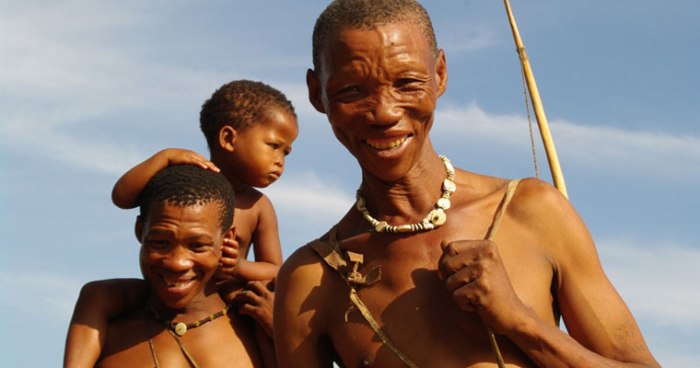
Juhoansi02In my new article at FEE, “The Myth of Primitive Communism,” I argue that hunter-gatherers like the Ju/’hoansi share food with each other, not because they are selfless communists, but because favors and obligations are their most valuable commodities.

Please take a look. I’d be very interested in my fellow Notewriters’ erudite responses.

Why Don’t Tribes Transition to Market Defense?

Ongka
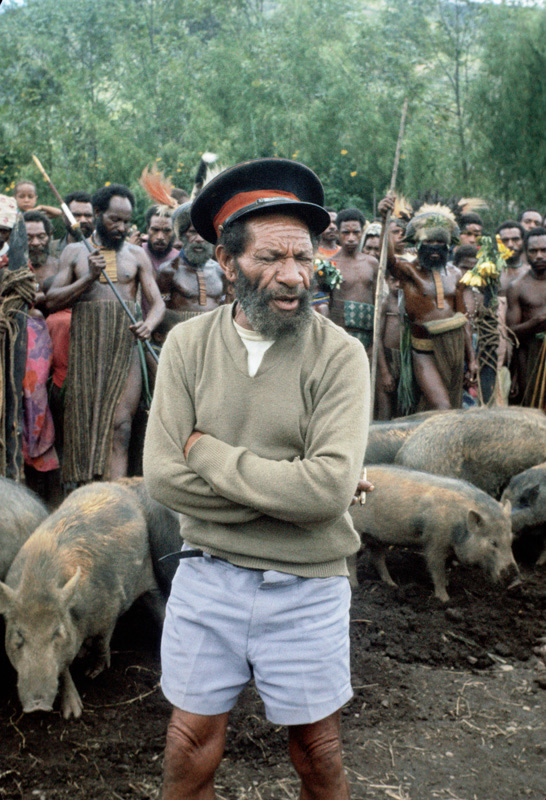
Ongka, a “big man” of the Kawelka tribe. Image from http://www.stewartstrathern.pitt.edu/

Watch almost any anthropological film about a newly discovered “isolated tribe,” and you’re likely to see at least one “tribesman” wearing a t-shirt.

People in bands and tribes and chiefdoms — who have since time immemorial handled most of their economic transactions for food, clothing, and shelter through traditional economies of gift exchange and family sharing — eagerly become buyers and sellers for products on the global market as soon as they get the chance.

They grow coffee beans or trap furs, and they use the money to buy firearms, machetes, cell phones, and jean shorts. In other words, they jump right in to the market. And usually, the tendrils of global trade have arrived way before the anthropologists and their film crews.

But people in the same bands, tribes, or chiefdoms seem to hang on to their family and gift-based economies for political, military, and legal services.

They do not jump to create or hire market solutions (mercenaries, defense corporations), and they instead eventually transform — by hook or by crook — into a state or into a people subjugated by a state.

Why does this happen? Why do we get states for defense and markets for everything else?

Let me back up and explain my terms:

In the examples I’m familiar with, humans use one of four main methods to organize law enforcement and military protection:

1. Kin-based. Your extended family (a “band,” “clan,” or a “lineage”) and maybe an alliance of intermarried and neighbouring extended families (a “tribe” or a “village”), protects you. You are technically free to leave the family or the village, but that could leave you without protection unless you are marrying into a new one.

Examples: Cree, Tahltan, Ju/‘hoansi

2. Prestige-based. A famous leader (a “big man” or “chief”) and his warriors protect you in return for material gifts and social deference. You can pull your support from the leader — more easily if he’s just an informal “big man” and less easily if he’s a formal “chief.” And there are usually other nearby leaders or aspiring leaders who would happily accept your patronage.

Examples: Yanomamo, Kawelka, Trobriander

Systems #1 and #2 are often blended together, as in the Trobriander case, where each man’s connections to the chief are determined partly by family relatedness and partly by gift exchange.

3. State-based. A compulsory ruler (a “king” or “president”) and his warriors protect you in return for taxes and/or labor. You are never free to pull your support, although you are sometimes free to leave through emigration.

Examples: Aztec Empire, Canada, People’s Republic of China

4. Market-based. A private enterprise (a “defense contractor”) protects you in return for money. You are free to pull your support and choose another contractor, or go without.

Example: Detroit’s Threat Management Center

Now, we could also sketch out the same 4 methods for the basic kinds of economic exchange people do for food, shelter, and all the other goods and services in life besides defense. People can give and receive the things they want and need through #1 family networks, #2 prestige-oriented gift exchange, #3 state redistribution, and #4 markets.

What I see throughout the world in the last 500 years is that as globalisation advances, people in all or almost all cultures eagerly take their systems of food, shelter, etc. out of systems #1 and #2 and go into system #4. In other words, people in bands, tribes, and chiefdoms all over the world desperately want the metal tools, firearms, t-shirts, cell-phones, and everything else that the market offers, and so they find ways to sell goods or services and thus money that lets them buy that stuff.

For instance, hunter-gatherers who once collected food to share with their family now collect furs to sell internationally, or instead serve as bush guides to wealthy tourists from foreign cultures.

But people almost never eagerly or rapidly take their law and defense systems out of kin and prestige and into markets.

Instead, they tend to hang on to kin or prestige-based methods of law enforcement and warfare until they (a) get conquered by a state or (b) organize themselves as a state (whether to fend off would-be conquerors or to become conquerors themselves).

So in highland Papua New Guinea for instance, the Dani and the Kawelka were happy to grow coffee beans and other crops to put on the market by the 1970s. But they didn’t start hiring mercenaries for defense. Instead, they stuck to their big men and their tribes until their military organizations were absorbed into state militaries or turned into paramilitary movements aiming to create or seize control of a state.

Markets became the center of food production. States became the center of defense production.

Later on, after states have arrived as military organizations, sometimes they start expanding and controlling parts of the economics of food, shelter, education, etc., through compulsory redistribution.

Conversely, shifts to market-based defense seem to occur after a society has already had state-based defense — like in Moresnet or Kowloon (PDF). And the market organizations arise when, for some reason, the state-based defense system relaxes or collapses.

Why does this bifurcated trend keep happening?

Why do people in these societies transition into markets for most goods and services but states for law and war?

Do state-based militaries and police forces simply outcompete (or outfight) market ones?

Am I missing major counterexamples, or even misunderstanding my own examples?

Declining to Wed Gay Couples: Right or Wrong?

News item: the Georgia governor has just vetoed a bill that would, among other things, have allowed ministers to decline to wed gay couples.

What a tangle. Let’s see if we can sort things out.

First of all, many decent people, your humble servant included, find the concept of “gay marriage” troubling. I believe any two adults (or three or more) should be free to make any contract they like regarding sharing assets, pledging fidelity, and so forth. I just wish they wouldn’t call it “marriage.” That term is taken.

Second, hate is not a crime. Some people express repugnance or hatred for homosexuality. Ayn Rand called the practice immoral, an attitude that is hard to fathom in this day and age but perhaps understandable given the tenor of her times. Some go farther and express hatred for homosexuals per se. But as long as these people refrain from initiating force or fraud, they should not be molested. Boycotts, shunning, and criticism are legitimate responses to such people, but forcible restraint is not.

Third, rights are not granted by governments. Rights derive from our basic nature as humans, as thinkers such as Ayn Rand and Murray Rothbard have so eloquently demonstrated. Contractual “rights” should have a different name, perhaps “privileges.” These are actions that have been legitimized by a voluntary agreement. Thus for example, no one has free speech “rights” on a campus. Students may have free speech “privileges” on a campus if the owners of the campus have granted that privilege in a written or implied contract.

Fourth, freedom of association is a basic human right, and includes freedom of dissociation, whether in personal or business relations. Some years ago I posted a defense of the late Lester Maddox who famously attempted to exclude blacks from his chicken restaurant. My post generated considerable blowback, but I stand by it and note that in this day and age, anyone who tried to exclude blacks would not be elected governor of Georgia as Maddox was, but instead lose most of his customers and close his doors.

In summary, no minister needs permission from the state to deny wedding services to a gay couple. And religion has nothing to do with it. Anyone should free to decline business or personal relationships with anyone, for any reason whatever, or for no reason at all.

Were Confucians the first internationalists?

Sheng [Hong] uses the term in this broader sense, so that we can say that tianxia zhuyi is the idea of a global civilization that encompasses a diversity of cultures. In fact, this interpretation matches with the historical evolution of the Chinese empire, which was a multiethnic body politic based on certain universal civilizational principles and artifacts such as the Chinese script.

It is essential why Sheng makes that distinction. He claims that globalism, which he considers to be a Western term, is actually violating basic principles of economic liberalism in opting for trade liberalization but containing international migration.

That is from Carsten Herrmann-Pillath, a Professor of Business Economics at the Frankfurt School of Finance and Management, in a chapter titled “Smith, Confucius and the Rise of China.” The chapter is in Volume 8 of The Adam Smith Review, edited by Fonna Forman, which in turn was a gift from Edwin to me. There is no mention of Mises or Hayek (or NOL!) in the bibliography. Herrmann-Pillath continues:

So, globalism is a conceptual framework which still builds on the conception of the nation state and hence economic nationalism […] Ideas about the transition from the ‘nation state’ to a new political order based on culture and civilization continue to flourish among Chinese intellectuals until today. (88)

Unlike Chhay Lin and Matthew, I don’t know very much about ancient or medieval Chinese political thought,  but I can buy Sheng’s argument. In fact, I’m surprised it has taken this long for scholars anywhere in the world to realize that certain schools of thought in an empire would be internationalist. What is more curious to me, though, is this “new political order based on culture and civilization.” Why not base it on the individual? It seems to me that basing political orders on hard-to-define terms like “culture” and “civilization” will only lead to major problems, such as cultural chauvinism, down the road.

Prediction: Trump-Sanders 2016

You heard it here first. At some point soon the two populist campaigns will join forces and take the White House with Donald Trump as the president. The odd-couple reality show residuals will foist Bernie to the top of Forbes’ “Lamest Billionaires” list before he’s even sworn in.

idiocracy3

By 2018 the supreme will be hearing disputed disputes over MLB umpires’ decisions. By 2024 they will be the official referees of Wrestlemania. Incidentally, Wrestlemania 42 is where Bernie Sanders will peacefully shuffle of this mortal coil. Conspiracy theorists will insist that he was killed before the event by a Russian assassin and that his aides carried his dead corpse in so that they could attend the event. After that it will only be another 5 years before the last Facebook (by then a branch of the Social Security Administration) comment using the phrase “Feel the Bern” which by then will understood to be a reference yeast infections.

mv5bmjawmju1mta4n15bml5banbnxkftztcwnzaxntc3na-_v1_sx640_sy720_

In fact, lots of good, funny, and interesting things will happen in the future! CSPAN will final get watchable. Even better news: selling the broadcast rights to the State of the Union Address will finally put a dent in the debt. And as budgets shift away from bureaucracies towards more explosive, entertaining, and big-data-y ventures, red tape will whither away. With a good dose of good luck, the world going to hell in a hand basket might be the best thing that’s ever happened to us.

Asking the Wrong Question

How do the United States and others achieve victory against Islamic State without empowering sectarian actors who will seek to poison the reconciliation that Iraq needs to hang together?

That’s the question posed by Craig Whiteside, an associate Professor of Theater Security Decision Making for the Naval War College at the Naval Postgraduate School, over at War on the Rocks. Dr Whiteside’s recommendations (“avoid all cooperation with sectarian militias, continue to target Islamic State with minimal collateral damage, patiently train and equip the security forces, ensure it’s done by Iraqis with subtle, behind the scenes help”) are just what you’d expect from a military strategist with a PhD, but his question highlights well what’s wrong with current thinking on non-state actors in Washington and also explains why central planning fails in areas other than managing an economy.

Whiteside’s line of thought is pretty standard, and it goes something like this: Islamic State is bad and Iraq is good. Islamic State is bad not because it lawlessly slaughters more people than Iraq (obviously not true, especially when you account for the Hussein regime), but because it is a non-state actor with political, economic, cultural, and military capabilities that threaten the existence of state actors. Hence his worry over how to defeat Islamic State while still keeping Iraq in one piece.

This is a terrible way to think about international relations and strategy, and it governs the logic of the republic’s finest thinkers.

Why not think about the situation in the Levant in the following way instead:

There is a “world order” of sorts that is composed of states. The states themselves have been patched together over the course of centuries. The world order itself has been patched together over the course of centuries.

Iraq is a state that was patched together by the UK and France, in accordance with the logic of the world order at the time. Thus, Iraq was able to become a legitimate member of organizations like the UN, FIFA, OPEC, etc. However, because Iraq was patched together by the world order rather than by the people of Iraq (acting through contentious factions), it can only, ever “hang together” under a regime governed by a strong man.

The appearance of Islamic State in what is now Iraq is just an attempt by Iraqis to govern themselves. Islamic State is an attempt, made possible by the power vacuum left by the invasion and occupation of the US and its allies, to join the world order (hence the “state” in Islamic State). It’s a horrible attempt, which is just what you’d expect from a people who have likely never had a chance to experiment in self-governance. Nevertheless, people in what is now Iraq are trying to patch together their own states.

The world order should recognize these attempts instead of trying to maintain the status quo. Change can be a good thing. As an example, just compare the brutality of the Hussein regime, a legitimate state actor, with that of Islamic State. It’s not even a contest, especially in terms of people murdered.

Wouldn’t recognizing Whitehead’s “sectarian actors,” instead of seeking to isolate or destroy them, be a much better avenue to peace and prosperity in the region? Recognition by the world order, haphazardly and pragmatically patched together itself, would bestow responsibility onto non-state actors. It would signal a trust in the ability of Iraqis to govern themselves. It would help to rationalize diplomacy and trade in the region. And it would put an end to the vicious cycle of strong men in the Middle East.

Instead of asking what the US and its allies can do to eliminate violent non-state actors from the region, isn’t it time to start asking what the West can do, as equal partners, to facilitate more self-governance in the Levant?

That central planning suffers from a knowledge problem is a given in many elite economics circles today (even economists at the Federal Reserve recognize it), but I don’t think this argument has extended into other fields of thought or other bureaucracies yet. A fatal conceit indeed.