During his inauguration ceremony, the newly elected mayor of New York City Zohran Mamdani pledged to run the city as he had run his campaign, as a committed socialist. He stirred much discussion during his speech when he claimed that “We will replace the frigidity of rugged individualism with the warmth of collectivism.” A variety of public thinkers and politicians commented on this statement, taking it as a moment to reflect on what they perceived as a referendum on uniquely American ideals.
“Let the land produce living creatures according to their kinds: the livestock, the creatures that move along the ground, and the wild animals. Each according to its kind.” I didn’t know who said it, but I began to live somehow. At first, I was a microscopic cell that grew and divided; my cells formed into tissues, which then developed into organs, and systems emerged afterwards. All these vital parts of mine were sewn up together into a body clothed in white fur, and hooves that made a closing to the ends of my limbs.
Onyinyechi Ndukaire is a writer residing in Lagos, Nigeria. She believes in the power of stories and how it has and will shape the world; that is why she tells them. Her works have been published in Isonomia Quarterly, Brittle Paper, Arts Lounge, and elsewhere. Write: ndukaireonyinyechi@gmail.com.
Beginning in about late fourteenth-century England, a movement of Christians known as the Lollards challenged many of the doctrines of the medieval Church. They raised questions about who possessed the legitimate authority to interpret Scripture, administer sacraments, compel oaths, and govern Christian life. They insisted on the primacy of Scripture over ecclesiastical hierarchy and disputed church dogma on transubstantiation, clerical celibacy, pilgrimages, and prayers for the dead. The movement unsettled the religious, legal, and political structures through which the ecclesiastical authorities exercised rule.
The poem below adopts the voice of an orthodox clerical opponent responding to such challenges.
Isonomia Quarterly readers have likely asked the following question: Why are Hayekian ideas so unpopular? Equality under the law and global federalism—two of Hayek’s most cogent ideals—are consequential from numerous perspectives and justified by many strong arguments. A dozen phrases pass through the mind—”The best arguments persuade,” “The truth will out,” “Survival of the fittest beliefs,” “Truth emerges from the marketplace of ideas”—to accost reality. Unfortunately, society is not a truth table, where the input of truth entails the output of further truths. Truth tables are constructs of logic, and reality is not beholden to the results of formal logic and its apparatuses.
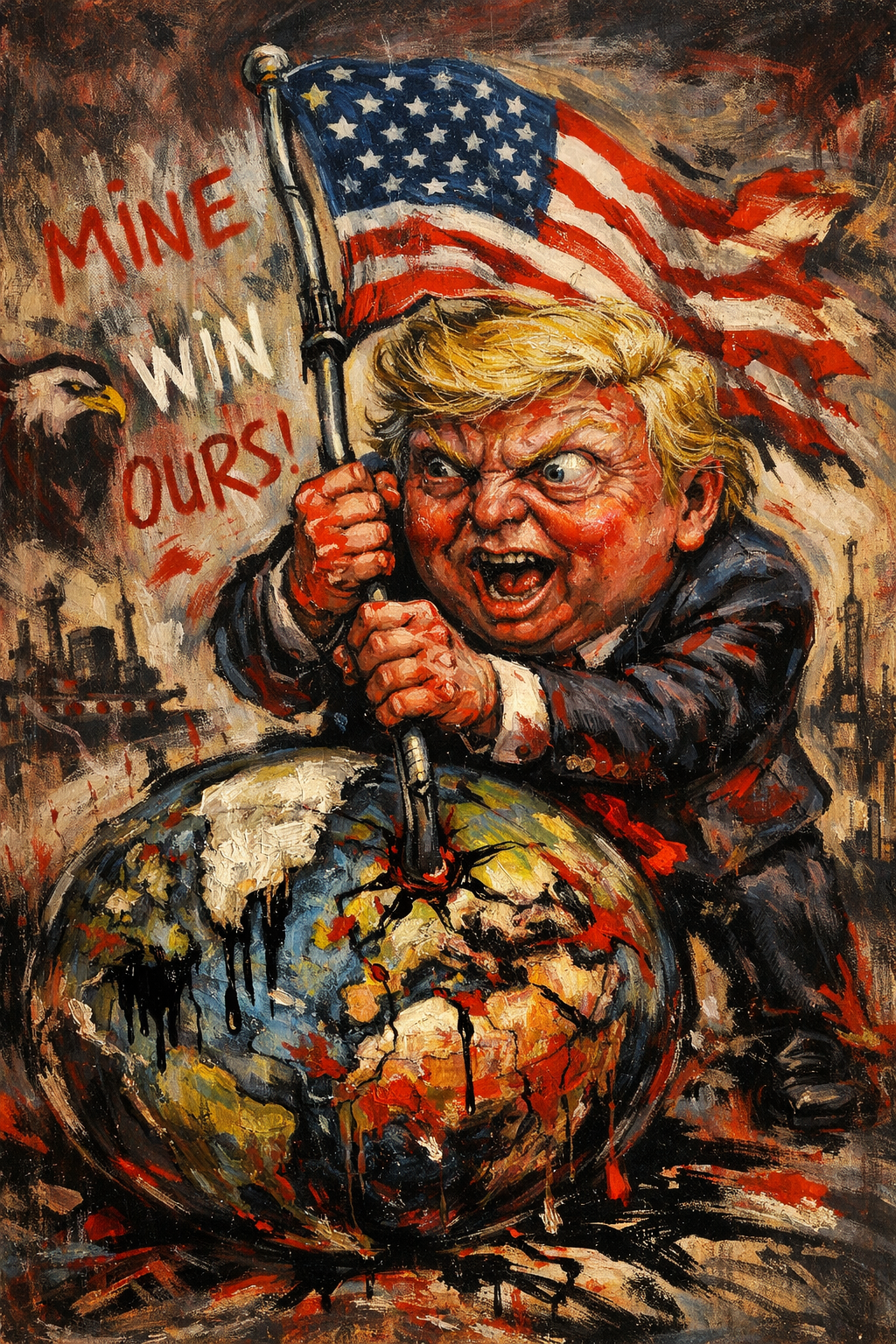
Sarcasm aside, I think it is worth revisiting why Trump’s foreign policy turn towards a radical sort of imperialist interventionism is so evil and unsurprising. I was confident back in 2016 that he was always going to be an old-school imperialist who uses US military conquest purely for resource extraction in a way that would be far worse than neocon warmongering. I wrote at the time, following Zach Beauchamp (who continues to emphasize this point), that Trump’s foreign policy was neither the neo-conservative interventionism of the Clintons and Bushes of the world, nor the principled anti-interventionism of libertarian scholars like Christopher Coyne and Abigail Hall, nor even the nationalist isolationism of paleoconservatives like James Buchanan. Instead, Trump’s foreign policy has always (quite consistently, since he was still a pro-choice democrat in the 90s) been about advancing inchoate national economic and political interests—which really just means the interests of the politically connected.
But I do not want to revisit Trump’s imperialist foreign policy just to gloat. I also want to revisit and restate why this foreign policy is unbelievably unjust and self-destructive. What I wrote back in 2016 is still worth reposting at length:
First, Trump’s style of Jacksonian foreign policy is largely responsible for most of the humanitarian atrocities committed by the American government. Second, Trump’s economic foreign policy is antithetical to the entire spirit of the liberal tradition; it undermines the dignity and freedom of the individual and instead treats the highest good as for the all-powerful nation-state (meaning mostly the politicians and their special interests) as the end of foreign policy, rather than peace and liberty. Finally, Trump’s foreign policy fails for the same reasons that socialism fails. If the goals of foreign policy are to represent “national interest,” then the policymaker must know what that “national interest” even is and we have little reason to think that is the case, akin to the knowledge problem in economic coordination.
… This is because the Jacksonian view dictates that we should use full force in war to advance our interests and the reasons for waging war are for selfish rather than humanitarian purposes. We have good reason to think human rights under Trump will be abused to an alarming degree, as his comments that we should “bomb the hell out of” Syria, kill the noncombatant families of suspected terrorists, and torture detainees indicate. Trump is literally calling for the US to commit inhumane war crimes in the campaign, it is daunting to think just how dark his foreign policy could get in practice.
To reiterate: Trump’s foreign policy views are just a particularly nasty version of imperialism and colonialism. Mises dedicated two entire sections of his chapter on foreign policy in Liberalism: The Classical Tradition to critiquing colonialism and revealing just how contrary these views are to liberalism’s commitment to peace and liberty. In direct opposition to Trump’s assertions that we should go to war to gain another country’s wealth and resources and that we should expand military spending greatly, Mises argues:
“Wealth cannot be won by the annexation of new provinces since the “revenue” deprived from a territory must be used to defray the necessary costs of its administration. For a liberal state, which entertains no aggressive plans, a strengthening of its military power is unimportant.”
Mises’ comments on the colonial policy in his time are extremely pertinent considering Trump’s calls to wage ruthlessly violent wars and commit humanitarian crises. “No chapter of history is steeped further in blood than the history of colonialism,” Mises argued. “Blood was shed uselessly and senselessly. Flourishing lands were laid waste; whole peoples destroyed and exterminated. All this can in no way be extenuated or justified.”
Trump says the ends of foreign policy are to aggressively promote “our” national interests, Mises says “[t]he goal of the domestic policy of liberalism is the same as that of its foreign policy: peace.” Trump views the world as nations competing in a zero-sum game and there must be one winner that can only be brought about through military conquest and economic protectionism, Mises says liberalism “aims at the peaceful cooperation between nations as within each nation” and specifically attacks “chauvinistic nationalists” who “maintain that irreconcilable conflicts of interest exist among the various nations[.]” Trump is rabidly opposed to free trade and is horrifically xenophobic on immigration, the cornerstone of Mises’ foreign policy is free movement of capital and labor over borders. There is no “congruence” between Trump and any classically liberal view on foreign policy matters in any sense; to argue otherwise is to argue from a position of ignorance, delusion, or to abandon the very spirit of classical liberalism in the first place.
…Additionally, even if we take Trump’s nationalist ends as given, the policy means Trump prefers of violent military intervention likely will not be successful for similar reasons to why socialism fails. Christopher Coyne has argued convincingly that many foreign interventions in general fail for very similar reasons to why attempts at economic intervention fail, complications pertaining to the Hayekian knowledge problem. How can a government ill-equipped to solve the economic problems of domestic policy design and control the political institutions and culture of nations abroad? Coyne mainly has the interventionism of neoconservatives and liberals in mind, but many of his insights apply just as well to Trump’s Jacksonian vision for foreign policy.
The knowledge problem also applies on another level to Trump’s brand of interventionism. Trump assumes that he, in all his wisdom as president, can know what the “national interest” of the American people actually is, just like socialist central planners assume they know the underlying value scales or utility functions of consumers in society. We have little reason to assume this is the case.
Let’s take a more concrete example: Trump seems to think one example of intervention in the name of national interest is to take the resource of another country that our country needs, most commonly oil. However, how is he supposed to know which resources need to be pillaged for the national interest? There’s a fundamental calculation problem here. A government acting without a profit signal cannot know the answer to such a problem and lacks the incentive to properly answer it in the first place as the consequences failure falls upon the taxpayers, not the policy makers. Even if Trump and his advisors could figure out that the US needs a resource, like oil, and successfully loots it from another country, like Libya, there is always the possibility that this artificial influx of resources, this crony capitalist welfare for one resource at the expense of others, is crowding out potentially more efficient substitutes.
For an example, if the government through foreign policy expands the supply of oil, this may stifle entrepreneurial innovations for potentially more efficient resources in certain applications, such as natural gas, solar, wind, or nuclear in energy, for the same reasons artificially subsidizing these industries domestically stifle innovation. They artificially reduce the relative scarcity of the favored resource, reducing the incentive for entrepreneurs to find innovative means of using other resources or more efficient production methods. At the very least, Trump and his advisors would have little clue how to judge the opportunity cost of pillaging various resources and so would not know how much oil to steal from Libya. Even ignoring all those problems, it’s very probable that it would be cheaper and morally superior to simply peaceably trade with another country for oil (or any other resource) rather than waging a costly, violent, inhumane war in the first place.
Having said all that, there is plenty I got wrong in picturing Trump as an old-school imperialist. During Trump’s first term, I underestimated the extent to which institutional constraints would stop him from acting on his worst nationalist and imperialist impulses. But this term, those constraints are gone. The Mattises, Tillersons, Boltons, and Pences of the world have been replaced with the Vances, Noems, Rubios, and Hegseths. As a result, thinking of Trump as an old-school imperialist and nationalist is becoming more accurate since he is allowed to act on his irrational, deranged impulses.
Second, I failed to distinguish sufficiently between resource extraction through indirect means of violent regime change, tariffs, weapons supply, and 19th-century colonialist-style direct annexation versions of it. I do still think that if Trump really did what he most consistently wants he would do quite a bit of annexation and old school colonialism (see his comments on Greenland and Canada), but he seems a bit more content than I projected back then to use military force to install stooges and puppet regimes for resource extraction (as he has sought to do in both Gaza and now Venezuela). Which, to your point, is not as different from the Nixon/Bush/Clinton/Reagan type intervention as reactionary centrists would have you believe, but the nakedness of the extractive nationalist motivation does mark a difference that encourages even more brazenly cruel, more illegal, and more strategically incoherent and unpredictable interventionist warmongering.
After all, it doesn’t matter so much the character of public officials as the institutional incentives they face. But in matters of foreign policy problems of temperament and character do matter because the social situation between foreign leaders in diplomacy can often make a huge difference.
I did hedge that by allowing that Trump may be a uniquely unfit person so as to constitute a sui-generis case. But I should have been more emphatic about that: Trump really is a uniquely world-historically dangerous monster, and he has gotten more and more incoherent and impulsive over the years with his cognitive decline.
Finally, the biggest miss in my analysis of Trump’s foreign policy back then is that I put far too much emphasis on Trump’s focus on material goods, thinking he really just thought of geopolitics like a 12-year-old approaches a turn-based strategy game like Risk in just accruing more stuff. But in reality, his approach is far more disturbing and vile than even that. It is not simply about getting oil for US oil companies. In the case of Venezuela, oil execs do not seem so gun-ho. As one private equity investor told the Financial Times last week, “No one wants to go in there when a random fucking tweet can change the entire foreign policy of the country.” Indeed, the political risk is so big there Exonn’s CEO has called Venezuela “uninvestable” and Trump is trying to force oil companies to misallocate capital to Venezuela.
Narrow left-wing materialists’ critiques like mine misfire because they treat material resources as the main thing. It is not the oil per se that Trump wants, but what the oil represents. He is instead approaching international geo-politics like an 8-year-old driven by malignant narcissism: he wants symbols of nationalist masculine domination. Indeed, when asked why he wanted Greenland, Trump was quoted as saying:
Because that’s what I feel is psychologically needed for success. I think that ownership gives you a thing that you can’t do, whether you’re talking about a lease or a treaty. Ownership gives you things and elements that you can’t get from just signing a document.
Indeed, the fact that Greenland looks big on a Mercator projection of the earth has as much to do with why Trump wants it as the oil. As Trump continues his authoritarian assaults on individual liberty domestically and pursues semiotic nationalist domination internationally, one can only vainly pray that something keeps his dark, demonic, twisted sadist fantasies in check without devolving into a true civilization-level threat.
Note: This is the third in a series of essays on public discourse. Here’s Part 1 and Part 2
Three years ago, I started this essay series on the collapse of public discourse. At the time, I was frustrated by how left-wing and progressive spaces had become cognitively rigid, hostile, and uncharitable to any and all challenges to their orthodoxy. I still stand by most everything I said in those essays. Once you have successfully identified that your interlocutors are genuinely engaging in good faith, you must drop the soldier mindset that you are combating a barbarian who is going to destroy society and adopt a scout mindset. For discourse to serve any useful epistemic or political function, interlocutors must accept and practice something like Habermas’ rules of discourse or Grice’s maxims of discourse, where everyone is allowed to question or introduce any idea to cooperatively arrive at an intersubjective truth. The project of that previous essay was to therapeutically remind myself and any readers to actually apply and practice those rules of discourse in good-faith communication.
However, at the time, I should have more richly emphasized something that has been quite obviously true for some time now: most interlocutors in the political realm have little to no interest in discourse. I wish more people had such an interest, and still stand by the project of trying to get more people, particularly in leftist and libertarian spaces, to realize that when they speak to each other, they are not dealing with barbarian threats. However, recent events have made it clear that the real problem is figuring out when an interlocutor is worthy of having the rules of discourse applied in exchanges with them. Here is an obviously non-exhaustive list of such events in recent times that make this clear:
Even the Supreme Court, the institution that ostensibly is most committed to publicly justifying and engaging in good-faith reasoning about laws, is now giving blatantly awful, authoritarian opinions so out of step with their ostensibly originalist and/or textualist legal hermeneutics and constitutionalist principles (not to mention the opinions of even conservative judges in lower courts). It certainly seems the justices are just as nakedly corrupt and intellectually bankrupt as rabble-rousing aspiring autocrats. Indeed, the court is in such a decrepit state of personalist capture by an aspiring fascist dictator that they aren’t even attempting to publicly justify ‘shadow docket’ rulings in his favor. One can only conclude conservative justices are engaging in bad-faith power-grabs for themselves, whether they intend to or not. Although this has always been true of statist monocentric courts to some extent, recent events have only further eroded the court’s pretenses to being a politically
All these were obvious trends three years ago and have very predictably only gotten more severe. You may quibble with the extent of my assessment of any individual example above. Regardless, all but the most committed of Trumpanzees can agree that there is a time and place to become a bit dialogically illiberal in times like these. Thus, it is time to address how one can be a dialogical liberal when the barbarians truly are at the gates. The tough question to address now is this: what should the dialogical liberal do when faced with a real barbarian, and how does she know she is dealing with a barbarian?
This is an essay about how to remain a dialogical liberal when dialogical liberalism is being weaponized against you. This essay isn’t for the zealots or the trolls. It’s for those of us who believed, maybe still believe, that democracy depends on dialogue—but who are also haunted by the sense that this faith is being used against us.
Epistemically Exploitative Bullshit
I always intended to write an essay to correct the shortcomings of the original one. I regret that, for various personal reasons, I did not do so sooner. The sad truth is that a great many dialogical illiberals who are also substantively illiberal engage in esoteric communication (consciously or not). That is, their exoteric pretenses to civil, good-faith communication elide an esoteric will to domination. Sartre observed this phenomenon in the context of antisemitism, and he is worth quoting at length:
Never believe that anti‐Semites are completely unaware of the absurdity of their replies. They know that their remarks are frivolous, open to challenge. But they are amusing themselves, for it is their adversary who is obliged to use words responsibly, since he believes in words. The anti‐Semites have the right to play. They even like to play with discourse for, by giving ridiculous reasons, they discredit the seriousness of their interlocutors. They delight in acting in bad faith, since they seek not to persuade by sound argument but to intimidate and disconcert. If you press them too closely, they will abruptly fall silent, loftily indicating by some phrase that the time for argument is past. It is not that they are afraid of being convinced. They fear only to appear ridiculous or to prejudice by their embarrassment their hope of winning over some third person to their side.
If then, as we have been able to observe, the anti‐Semite is impervious to reason and to experience, it is not because his conviction is strong. Rather, his conviction is strong because he has chosen first of all to be impervious.
What Sartre says of antisemitism is true of illiberal authoritarians quite generally. Thomas Szanto has helpfully called this phenomenon “epistemically exploitative bullshit.”
One feature of epistemically exploitative bullshit that Szanto highlights is that epistemically exploitative bullshit need not be intentional. Indeed, as Sartre implies in the quote above, the ‘bad faith’ of the epistemically exploitative bullshitter involves a sort of self-deception that he may not even be consciously aware of. Indeed, most authoritarians (especially in the Trump era) are not sufficiently self-aware or intelligent enough to consciously realize that they are deceiving others about their attitude towards truth by spouting bullshit. As Henry Frankfurt observed, bullshit is different from lying in that the liar is intentionally misrepresenting the truth, but the bullshitter has no real concern for truth in the first place. Thus, many bullshiters (especially those engaged in epistemically exploitative bullshit) believe their own bullshit, often to their detriment.
However, the fact that epistemically exploitative bullshit is often unintentional, or at least not consciously intentional, creates a serious ineliminable epistemic problem for the dialogical liberal who seeks to combat it. It is quite difficult to publicly and demonstrably falsify the hypothesis that one’s interlocutor is engaging in epistemically exploitative bullshit. This often causes people who, in their heart of hearts, aspire to be epistemically virtuous dialogical liberals to misidentify their interlocutors as engaging in epistemically exploitative bullshit and contemptuously dismiss them. I, for one, have been guilty of this quite a bit in recent years, and I imagine any self-reflective reader will realize they have made this mistake as well. We will return to this epistemic difficulty in the next essay in this series.
To avoid this mistake, we must continually remind ourselves that the ascription of intention is sometimes a red herring. Epistemically exploitative bullshit is not just a problem because bullshitters intentionally weaponize it to destroy liberal democracies. It is a problem because of the social and (un)dialectical function that it plays in discourse rather than its psychological status as intentional or unintentional.
It is also worth remembering at this point that it is not just fire-breathing fascists who engage in epistemically exploitative bullshit. Many non-self-aware, not consciously political, perhaps even liberal, political actors spout epistemically exploitative bullshit as well. Consider the phenomenon of property owners—both wealthy landlords and middle-class suburbanites—who appeal to “neighborhood character” and environmental concerns to weaponize government policy for the end of protecting the economic rents they receive in the form of property values. Consider the similar phenomenon of many market incumbents, from tech CEOs in AI to healthcare executives and professionals, to sports team owners, to industrial unions, to large media companies, who all weaponize various seemingly plausible (and sometimes substantively true) economic arguments to capture the state’s regulatory apparatus. Consider how sugar, tobacco, and petrochemical companies all weaponized junk science on, respectively, obesity, cigarettes, and climate change to undermine efforts to curtail their economic activity. Almost none of these people are fire-breathing fascists, and many may believe their ideological bullshit is true and tell themselves they are helping the world by advancing their arguments.
The pervasive economic phenomenon of “bootleggers and Baptists” should remind us that an unintentional form of epistemically exploitative bullshit plays a crucial role in rent seeking all across the political spectrum. This form of bullshit is particularly hard to combat precisely because it is unintentional, but its lack of intentionality in no way lessens the harmful social and (un)dialectical functions it severe.
Despite those considerations, it is still worth distinguishing between consciously intentional forms of aggressive esotericism and more unintentional versions because they must be approached very differently. Unintentional bullshitters do not see themselves as dialogically illiberal. Therefore, responding to them with aggressive rhetorical flourishes that treat them contemptuously is very unlikely to be helpful. For this reason, the general (though defeasible) presumption that any given person spouting epistemically exploitative bullshit is not an enemy that I was trying to cultivate in the second part of this essay series still stands. In the next essay, I will address how we know when this presumption has been defeated. However, for now, let us turn our attention to the forms of epistemically exploitative bullshit common today on the right. We have now seen how epistemically exploitative bullshit can appear even in technocratic, liberal settings. But that phenomenon takes on a more virulent form when fused with authoritarian intent. This is what I call aggressive esotericism.
Aggressive Esotericism
The corrosiveness of these more ‘liberal’ and technocratic forms of epistemically exploitative bullshit discussed above, while serious, pales in comparison to more bombastically authoritarian forms of it. The truly authoritarian epistemically exploitative bullshiter aims at more than amassing wealth by capturing some limited area of state policy. While he also does that, the fascist aims at the more ambitious goal of dismantling democracy and seizing the entire apparatus of the state itself.
Let us name this more dangerous form of epistemically exploitative bullshit. Let us call this aggressive esotericism and loosely define it as the phenomenon of authoritarians weaponizing the superficial trappings of democratic conversation to elide their will to dominate others. This makes the fascistic, aggressive esotericist all the more cruel, destructive, and corrosive of society’s epistemic and political institutions.
It is worth briefly commenting on my choice of the words “aggressive esotericism” for this. The word “esoteric” in the way I am using it has its roots in Straussian scholars who argue that many philosophers in the Western tradition historically did not literally mean what their discursive prose appears to say. Esoteric here does not mean “strange,” but something closer to “hidden,” in contrast to the exoteric, surface-level meaning of the text. We need not concern ourselves with the fascinating and controversial question of whether Straussians are right to esoterically read the history of Western philosophy as they do. Instead, I am applying the general idea of a distinction between the surface level and deeper meaning of a text, the sociological problem of interpreting both the words and the deeds of certain very authoritarian political actors.
I choose the word “aggressive” to contrast with what Arthur Melzer calls “protective,” “pedagogical,” or “defensive” esotericism. In Philosophy Between the Lines Melzer argues that historically, philosophers often hid a deeper layer of meaning in their great texts. In the ancient world, Melzer argues, this was in part because they feared theoretical philosophical ideas could disintegrate social order (hence the “protective esotericism”), wanted their young students to learn how to come to philosophical truths themselves (hence the “pedagogical esotericism”), or else wanted to protect themselves from authorities for ‘corrupting the youth’ (as Socrates was accused) with their heterodox ideas.
As the modern world emerged during the Enlightenment, Melzer argues esotericism continued as philosophers such as John Locke wrote hidden messages not just for defensive reasons but to help foster liberating moral progress in society, as they had a far less pessimistic view about the role of theoretical philosophy in public life (hence their “political esotericism”). Whether Melzer is correct in his reading of the history of Western political thought need not concern us now. My claim is that many authoritarians (both right-wing Fascists and left-wing authoritarian Communists) invert this liberal Enlightenment political esotericism by engaging—both in words and in deeds, both consciously and subconsciously, and both intentionally and unintentionally—in aggressive esotericism. Hiding their esoteric will to domination behind a superficial façade of ‘rational’ argumentation.
Aggressive esotericism is a subset of the epistemically exploitative bullshit. While aggressive esotericism may be more often intentional than more technocratic forms of epistemically exploitative bullshit, it is not always so. You might realize this when you reflect on heated debates you may have had during Thanksgiving dinners with your committed Trumpist family members. Nonetheless, this lack of intention doesn’t cover up the fact that their wanton wallowing in motivated reasoning, rational ignorance, and rational irrationality has the selfish effect of empowering members of their ingroup over members of their outgroup. This directly parallels how the lack of self-awareness of the technocratic rentseeker ameliorates the dispersed economic costs on society.
Aggressive Esotericism and the Paradox of Tolerance
Even if one suspects one is encountering a true fascist, one should still have the defeasible presumption that they are a good-faith interlocutor. Nonetheless, fascists perniciously abuse this meta-discursive norm. This effect has been well-known since Popper labelled it the paradox of tolerance.
The paradox of tolerance has long been abused by dialogical illiberals on both the left and the right to undermine the ideas of free speech and toleration in an open society, legal and social norms like academic freedom and free speech, and to generally weaken the presumption of good faith we have been discussing. This, however, was far from Popper’s intention. It is worth revisiting Popper’s discussion of the Paradox of Tolerance in The Open Society and Its Enemies:
Unlimited tolerance must lead to the disappearance of tolerance. If we extend unlimited tolerance even to those who are intolerant, if we are not prepared to defend a tolerant society against the onslaught of the intolerant, then the tolerant will be destroyed, and tolerance with them. In this formulation, I do not imply, for instance, that we should always suppress the utterance of intolerant philosophies; as long as we can counter them by rational argument and keep them in check by public opinion, suppression would certainly be most unwise. But we should claim the right even to suppress them, for it may easily turn out that they are not prepared to meet us on the level of rational argument, but begin by denouncing all argument; they may forbid their followers to listen to anything as deceptive as rational argument, and teach them to answer arguments by the use of their fists. We should therefore claim, in the name of tolerance, the right not to tolerate the intolerant. We should claim that any movement preaching intolerance places itself outside the law, and we should consider incitement to intolerance and persecution as criminal, exactly as we should consider incitement to murder, or to kidnapping, or as we should consider incitement to the revival of the slave trade.
His point here is not so much to sanction State censorship of fascist ideas. Instead, his point is that there are limits to what should be tolerated. To translate this to our language earlier in the essay, he is just making the banal point that our presumption of good-faith discourse is, in fact, defeasible. The “right to tolerate the intolerant” need not manifest as legal restrictions on speech or the abandonment of norms like academic freedom. This is often a bad idea, given that state and administrative censorship creates a sort of Streisand effect that fascists can exploit by whining, “Help, help, I’m being repressed.” If you gun down the fascist messenger, you guarantee that he will be made into a saint. Further, censorship will just create a backlash as those who are not yet fully-committed Machiavellian fascists become tribally polarized against the ideas of liberal democracy. Even if Popper himself might not have been as resistant to state power as I am, there are good reasons not to use state power.
Instead, our “right to tolerate the intolerant” could be realized by fostering a strong, stigmergically evolved social stigma against fascist views. Rather than censorship, this stigma should be exercised by legally tolerating the fascists who spout their aggressively esoteric bullshit even while we strongly rebuke them. Cultivating this stigma includes not just strongly rebuking the epistemically exploitative bullshit ‘arguments’ fascists make, but exercising one’s own right to free speech and free association, reporting/exposing/boycotting those, and sentimental education with those the fascists are trying to target. Sometimes, it must include defensive violence against fascists when their epistemically exploitative bullshit manifests not just in words, but acts of aggression against their enemies.
The paradox of tolerance, as Popper saw, is not a rejection of good-faith dialogue but a recognition of its vulnerability. The fascists’ most devastating move is not to shout down discourse but to simulate it: to adopt its procedural trappings while emptying it of sincerity. What I call aggressive esotericism names this phenomenon. It is the strategic abuse of our meta-discursive presumption of good faith.
Therefore, one must be very careful to guard against mission creep in pursuing this stigmergic process of cultivating stigma in defense of toleration. As Nietzsche warned, we must be guarded against the danger that we become the monsters against whom we are fighting. I hope to discuss later in this essay series how many on the left have become such monsters. For now, let us just observe that this sort of non-state-based intolerant defense of toleration does not conceptually conflict with the defeasible presumption of good faith.
In the next part of this series, I turn to the harder question: when and how can a dialogical liberal justifiably conclude that an interlocutor is no longer operating in good faith?
In its proposed form, the bill tinkers with the music lists aired in common areas (lobbies, elevators, corridors etc) of various premises (hotels, traveling facilities, casinos and shopping malls). The programs should consist of a minimum of 45% of either Greek-language songs, or instrumental versions of said songs. The quota leaves out cafes, restaurants and such (thus slinking away from a direct breach of private economic liberty, as interventions like anti-smoking laws in some cases were found as too heavy-handed). The bill also incentivises radio stations to scale up, so to say, the play-time of this kind of songs, by allocating them more advertising time (another thing that is also strictly regulated, obviously), if they comply to some percentage. Finally, there are some provisions regarding soundtracks in Greek movie productions.
There is an international angle in this protectionist instrument (pun intended). Wiki reveals that a handful of countries apply some form or another of music quotas, with France the most prominent among them. The Greek minister also mentioned Australia and Canada in an interview.
The bill aims to protect local music legacy and invigorate modern production, as part of the competent Ministry’s constitutional mandate. But there are some discords, apart from the always funny administrative percentages (and the paraphernalia needed to track who plays what and for how much). What is deemed as eligible Greek music, in the bill’s proverbial ears, misses a tone or two: Foreign-language songs and prototype instrumental compositions, by Greek artists, do not qualify. For example, Greek band VoIC (their latest album’s cover above, source) mix rock with (mostly Greek) folk music, but fall short of the criteria. And given some minister remarks on “Englishisation”, this will be a point of contention.
Bonus tracks:
Cover of a Greek (and Greek-language too!) song, “Misirlou”
Some Russian folk music (especially no34 is excellent) from an indie game (a most fortunate use of local traditional sound)
The death of a black man in Minneapolis, the largest city in the U.S. state of Minnesota, after a white police officer put pressure on his neck led to large-scale protests not only in the United States but also in cities around the world, including Osaka and Tokyo. […] In Japan, discrimination based on differences in appearance and attributes occurs on various levels, including discrimination against black people, but what are the circumstances involved in this? Rather than treating this incident as something that happened in a faraway country and distancing ourselves from it, I would like people to think about it in relation to things that are familiar to them.
In 1990, actor Michael J. Fox played one of his signature roles. As Marty McFly in “Back to the Future III” he traveled to the year 1885, right in the middle of the Wild West. There he showed up in a pink and blue shirt with red embroidery, pearl buttons and pastel yellow fringes. […] The cowboy style has taken over pop culture once again, and it’s bigger, more colorful and more glittery than it has been in a long time. In keeping with the hit film of the year, “Barbie”, fans not only went to the cinema in pink, but also with cowboy hats on their heads here and there. Barbie and Ken also get new clothes after their arrival in the real world. […] As is often the case, only one outshines them all: Beyoncé. She also leaves the competition behind when it comes to cowboy couture. To announce her current “Renaissance” tour, the Texan posed in the spring with a cowboy hat that has countless mirror plates like a disco ball.
This is from FAZ, a daily newspaper in Frankfurt, which is arguably the financial capital of the European Union and authoritatively the financial capital of Germany. The daily is considered to be right-of-center, an equivalent to the Wall Street Journal.
Notice how the author treats American celebrities: as if they’re already well-known and well-established. She’s not putting a qualifier like “the American actress” in her sentences.
Notice, too, how the author treats the cowboy style. No need for an introduction. The German public is well-aware of what this looks like.
No need to clarify that Texas is a state within the American federal union, either…
In a complete reversal of its pre-pandemic policy, Tokyo’s Shibuya Ward wants partygoers to stay away from the area’s busiest neighborhood on Halloween night.
For thousands of people, celebrating Halloween in Shibuya, a popular shopping and entertainment district known for its vibrant youth culture, was an annual event to look forward to.
The strongest arguments for unregulated markets all turn on some variation of the thought that free markets are the most efficient way of satisfying our preferences and hence advancing our good as we conceive of it. There is no reason whatsoever to suppose that free markets are also good at shaping our preferences or forming our conceptions of the good. Hence, the strongest arguments for unregulated markets no longer apply to what has become the largest economic sector in the global economy today. There is no obvious reason to extend laissez faire ideals to the market in attention, and there are especially strong reasons not to extend them to the market in our children’s attention. We have, nonetheless, sleepwalked into a sweeping experiment with this extension. The results of this experiment are now becoming clear:
Read the rest, from Talbot Brewer in Hedgehog Review.
Isn’t this just a variant of “we need government to control/regulate this for the children’s sake”? As a parent I pay closer attention to these types of arguments, but someday my kiddos are going to be adults. Wouldn’t it be better to give them freedom to choose and guidance on consequences?
Meh. This is not good evidence that American society is fragmenting. In fact, I’d say Hanania has got it backwards: politics is fragmenting despite the ongoing homogenization of culture.
Hanania is pushing this narrative of cultural fragmentation because it aligns with his view of “decentralized order.” Many libertarians in the United States continue to try to maintain an uneasy peace with Leftists by paying strong tribute to one of the Left’s most endearing values: multiculturalism/identity politics. Libertarians like Hanania think that by showing how markets and decentralized orders enhance multicultural societies, they are making inroads with the Left, or at least maintaining that aforementioned uneasy peace. They’re not wrong, and I’ve done this myself, but when you start fishing for evidence it’s time to rethink your priors, and this is what Hanania does by trying to celebrate cultural fragmentation using online media preferences.
Hanania and others who do this have another motive besides maintaining peace with the Left. They like to use the harmoniousness of multicultural markets to show just how dysfunctional government is. They will contrast harmonious markets with the heavy-handedness of government. “Politics,” these libertarians claim, is holding market-based social harmony back, and in a big way.
The problem with this narrative is that American society is more homogenous than ever before. This is the cold, hard truth, and it’s great news. I can travel from Waco, Texas to Chicago, Illinois and not see anything along the way that I can’t find in Waco. Compare this experience with an American traveling from, say, Provo, Utah in 1960 to Selma, Alabama. There were no “colored” drinking fountains in Provo in 1960. In fact, there probably weren’t any black folks period in Provo in 1960!
Now compare my travel experience from Waco to Chicago with that of somebody traveling from Albany, New York in 1860 to, say, Atlanta, Georgia. One of these places had slaves. Culture shock, from one part of the republic to another.
This doesn’t mean that American society is becoming more conformist, or that there is less cultural diversity, it just means that there is now a set of norms and values that almost all Americans — the vast, vast majority – tacitly agree upon. This is great news!
It’s not just the integration of black folks into mainstream American society that’s great. Immigrants are still assimilating, and after 2 generations they’re as American as apple pie. All of them. There’s not a single immigrant group that hasn’t been able to Americanize. Yes, there’s cultural diversity, especially once you get into the nitty-gritty of “local culture,” but there’s also a total homogenization that’s happened. Again, this is a good thing. This means that America is way more libertarian than you’d think.
It’s not just American culture that has homogenized, either. The people and places that have been allied with, or occupied by, America since the end of World War II have become Americanized. American culture is all-encompassing, including politics. In Europe and Israel, the Americanization is so robust that American media personalities such as Tucker Carlson can give major policy speeches in places like Budapest and small-time rappers from places like Memphis, Tennessee can perform in front of huge Tel Aviv crowds.
The NFL now plays regular season games in Germany and England. Major League Baseball clubs play regular season games in South Korea and Japan. The World Cup will be here, again, in 2026. UEFA is talking about hosting a Champion’s League final in the United States. Those are just examples of the major sports that were once viewed as regional peculiarities by allies on the other side of the ocean. Think about food. And, again, music. And books, and X, and research, and Netflix, and Disneyland. And, as Tucker’s speech in Budapest shows, politics. Local culture has persisted, but so too has the cultural homogenization of places enjoying the protection of the US military.
This is not a bad thing. It’s a great thing!
So what’s the problem? Only the US is experiencing continued economic and demographic growth. Our allies are dying off, and it’s because of their political systems. Demagogues in these countries exploit the Americanization of their societies in order to enact counterproductive policies that seek to revert liberty. You know where I’m going with this, right? Demagogues in the 13 American colonies also sought to extinguish liberty in the name of the local. To bring them to heel, the colonies federated.
We can, and must, do the same thing with our allies today. It’s time to start thinking about ways to help Europe and East Asia (and anyone else who wants to join) federate with us under the constitution.
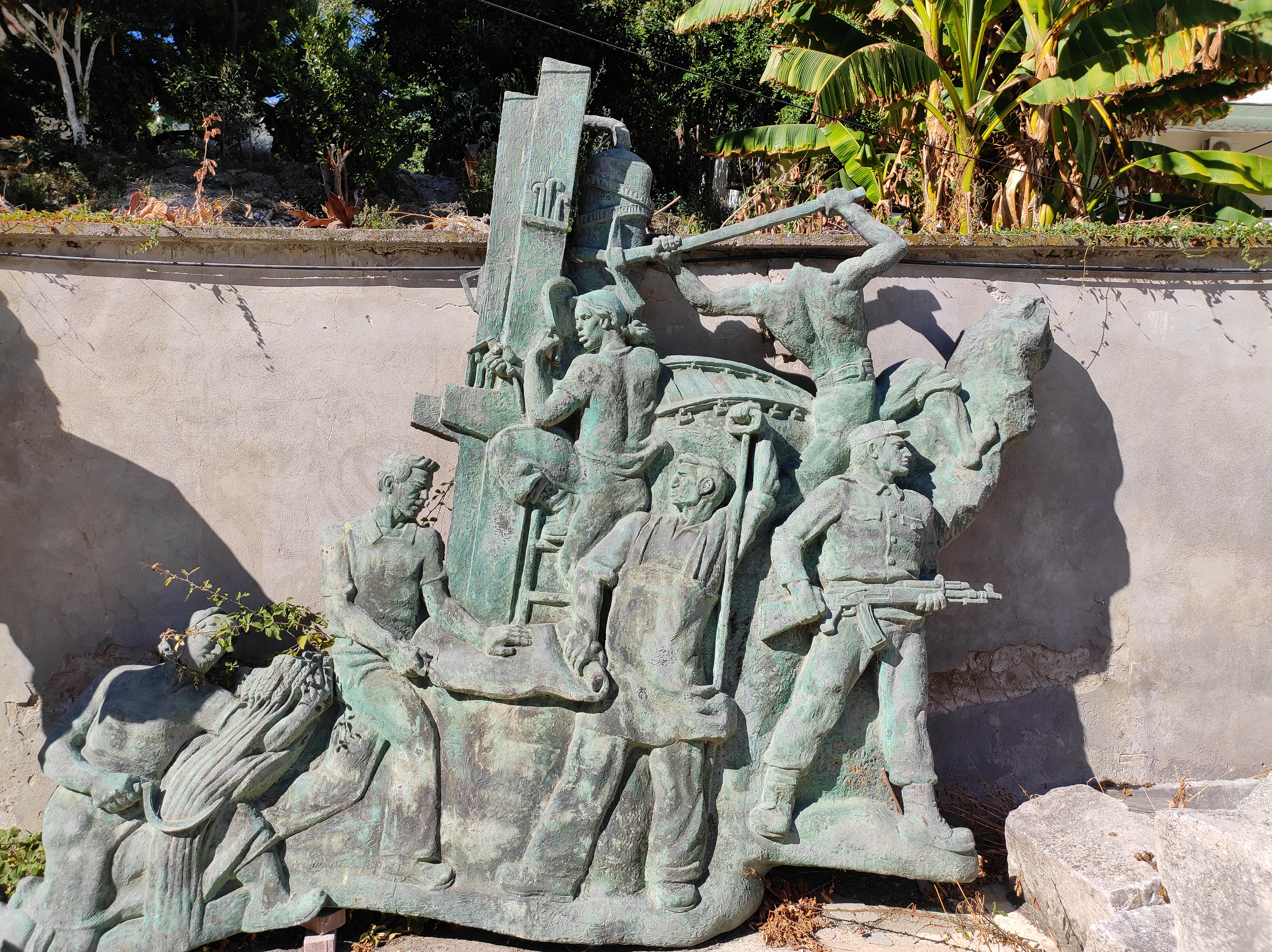
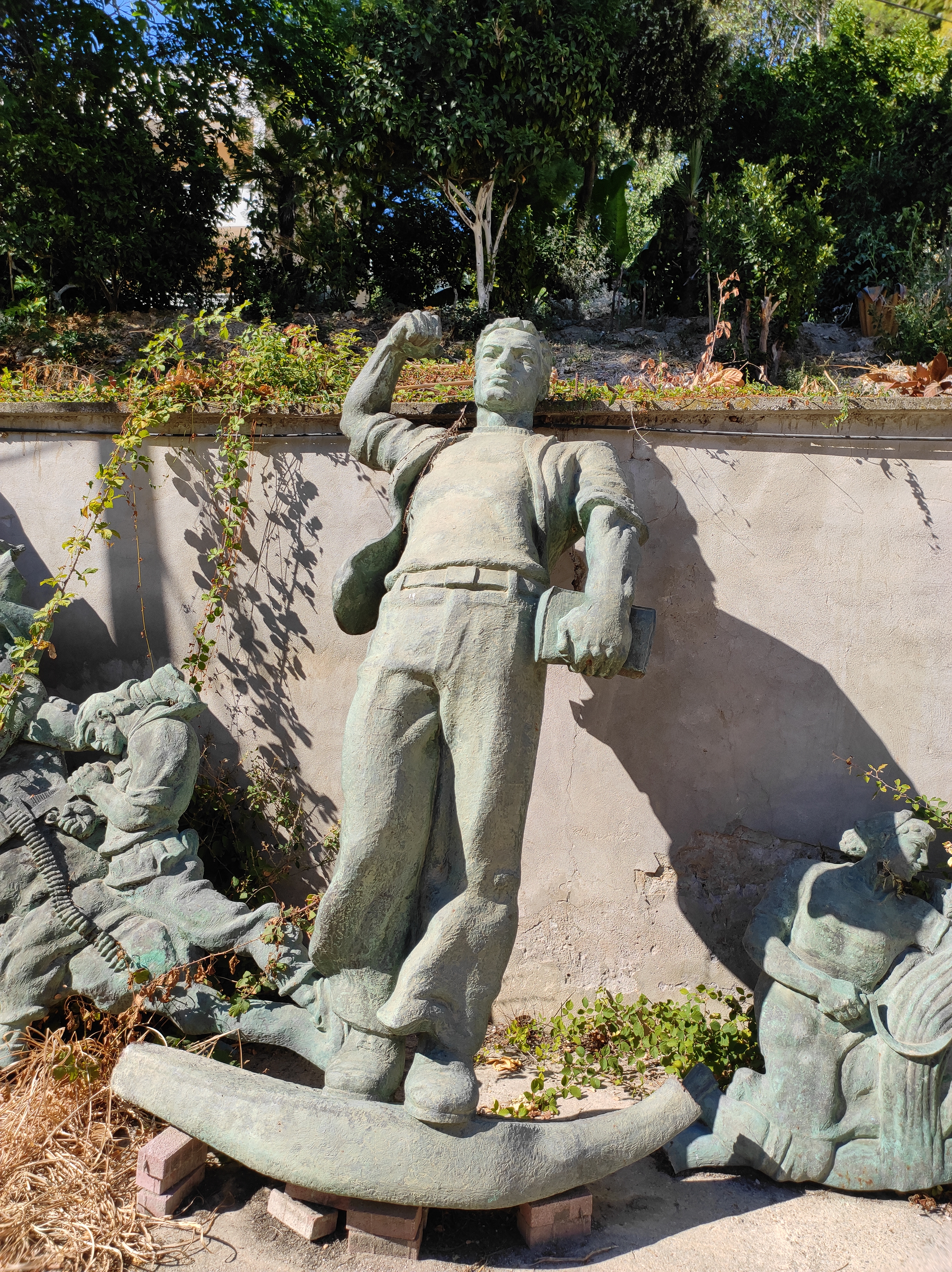
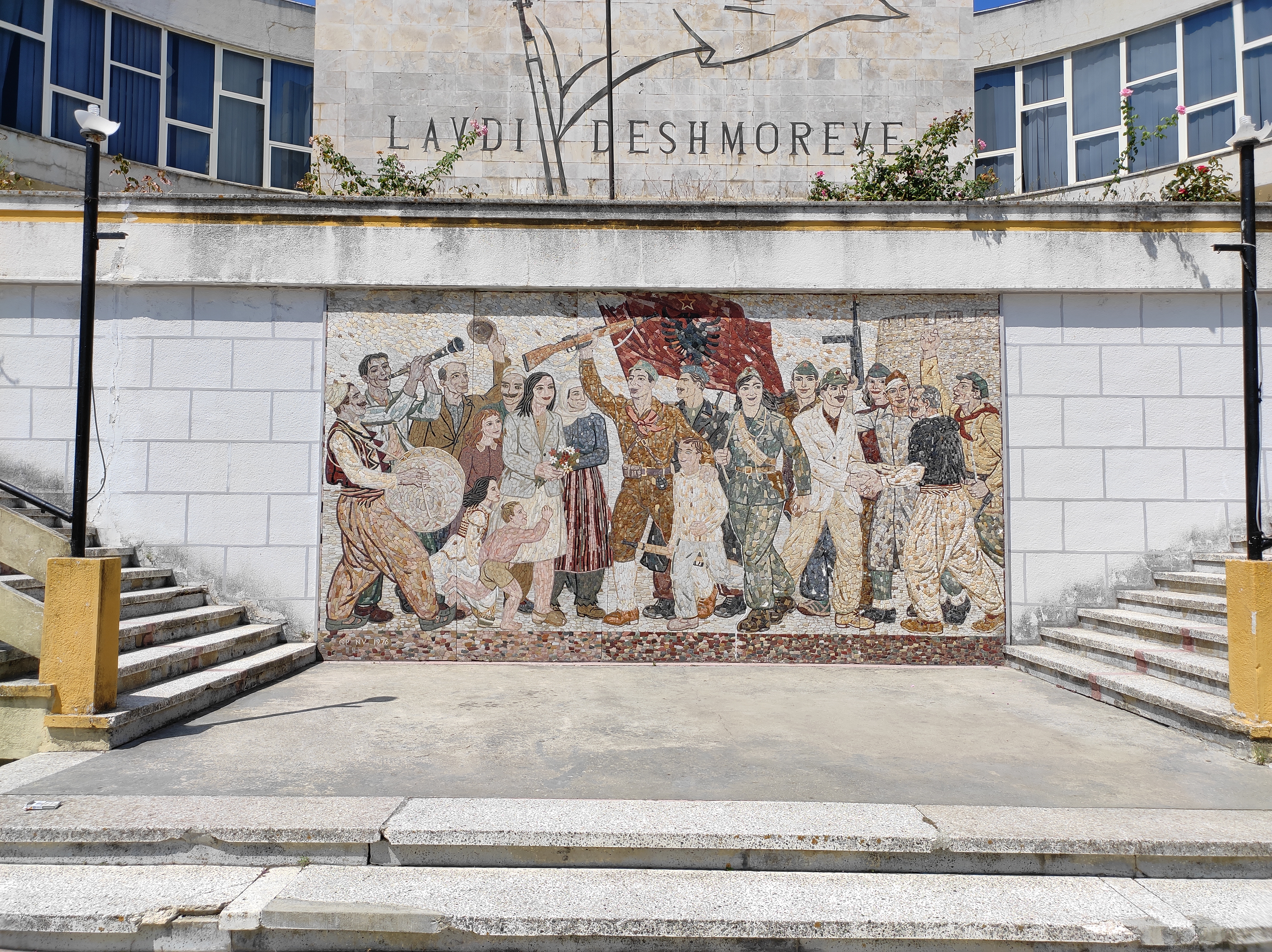
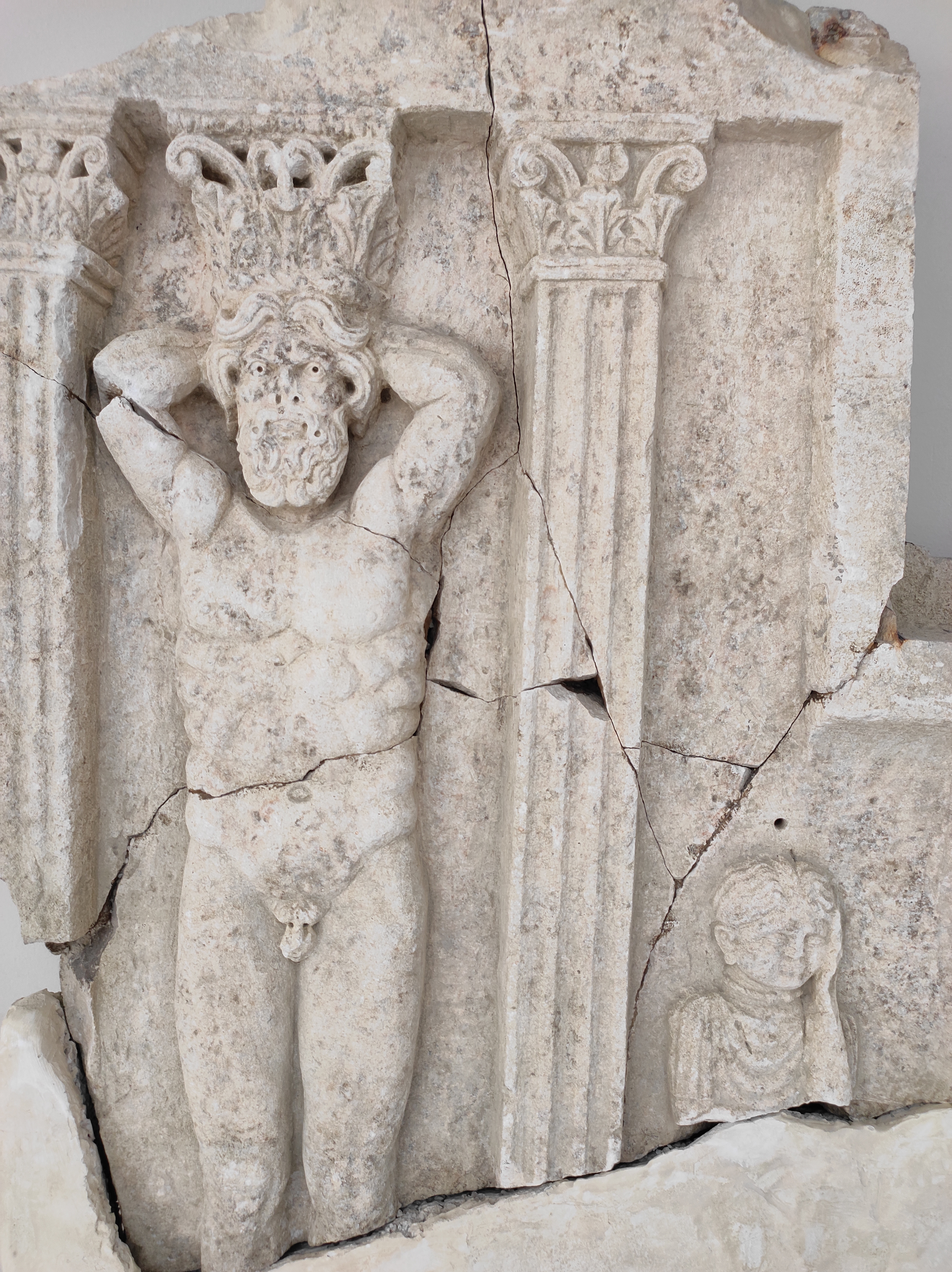
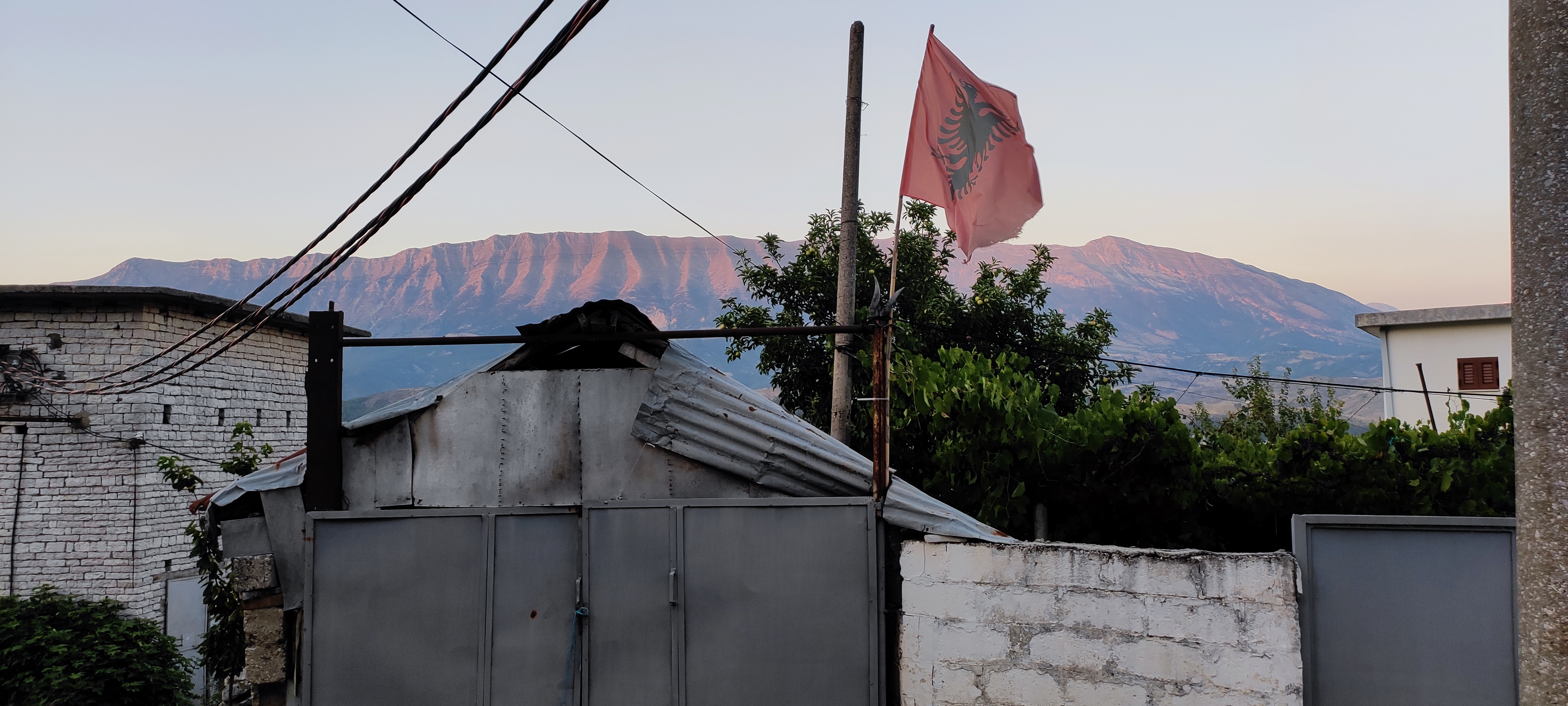
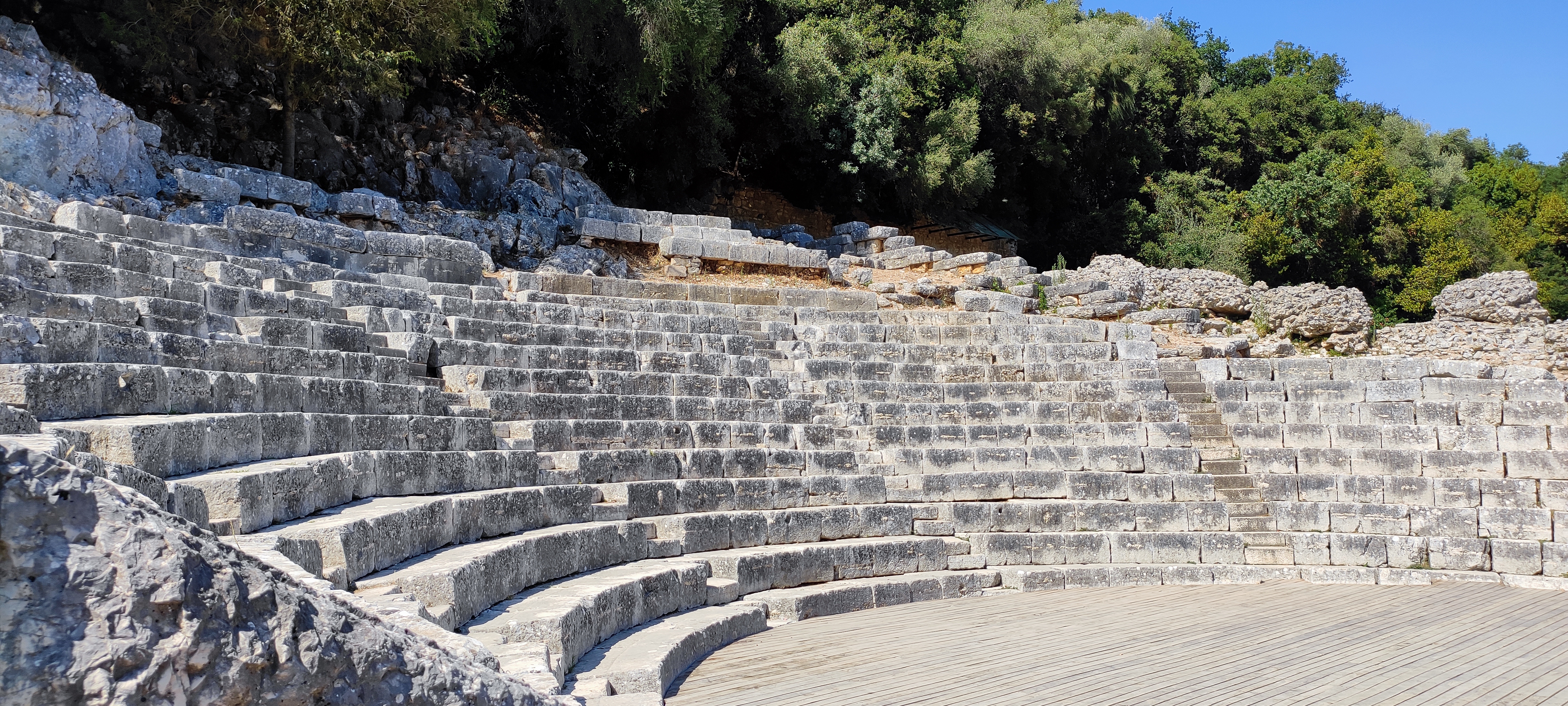
During my long traveling over Europe this summer, among other areas, I ventured to Albania, a country where houses frequently do not have numbers and where I located the building where a friend of my youth now lives by a drawing on a gate. This is a country where the so-called oriental bazaar is buzzing everywhere, where towns literally hang on cliffs, and where one easily runs across the ruins of the Roman, Byzantine, and Ottoman legacy of the country and the “archaeology” of the recent communist past (small concrete family bunkers, tunnels for the former communist nomenklatura, monumental sculptures and mosaics in the socialist realism style).
It was interesting to see how this country, which lived much of the 20th century under the most vicious communist dictatorship (1944-1990), is now trying to live a normal life. To some extent, Albania is very similar to present-day Russia: decades of the negative natural selection under communism killed much of self-reliance, individual initiative, and produced the populace that looks up to the government for the solutions of their problems. For the past thirty years, a new generation emerged, and things did dramatically change. Yet, very much like in Russia, much of the populace feels nostalgia for the “good” old days, which is natural.
According to opinion polls, 46% of the people are nostalgic for the developed communism of dictator Enver Hoxha (1944-1985), an Albanian Stalin, and 43% are against communism; the later number should be higher, given the fact that many enterprising Albanians (1/4 of the population) live and work abroad. During the last decades of its existence, Albanian communism slipped into a wild isolationism of the North Korean style. Except for Northern Korea and Romania, all countries, from the United States, Germany, UK (capitalist hyenas) to the USSR, China, and Yugoslavia (traitors to socialism), were considered enemies. Incidentally, Albanian communism was much darker and tougher than the Brezhnev-era USSR. Nevertheless, as it naturally happened in Russia and some other countries, in thirty years, the memory of a part of the population laundered and cleansed the communist past, and this memory now paints this past as a paradise, where everyone was happy and looked confidently into the future, where secret police and labor concentration camps existed for a good reason, and where the vengeful dictator appears as a caring father.
In the hectic transition to market economy and with the lack of established judicial system, there naturally emerged a widespread corruption, nepotism. But, at the same time, small business somehow flourishes. The masses and elites of the country aspire to be united with neighboring Kosovo since both countries are populated by Albanian majorities. On top of this, Kosovo is the birthplace of Albanian nationalism. However, unlike current Russia, which is spoiled with abundant oil and gas resources (the notorious resource curse factor), corrupt Albanian bureaucrats that rule over a small country exercise caution. Although that small country is too blessed with oil, natural gas, chromium, copper, and iron-nickel, they do not waste their resources on sponsoring geopolitical ventures and harassing their neighbors. For themselves, the Albanians resolved the Kosovo issue as follows: we will be administratively two different states, but de facto economically and socially we will be tied to each other, and all this makes life easier for people, preventing any conflicts. Not a small factor is that, unlike, for example, Russia or Turkey, Albanian nationalism is devoid of any imperial syndromes, and therefore there is no nostalgia for any glorious lost empire. The fact that Albania is a member of NATO also plays a significant role, which forces the Albanian elites behave. Acting smartly, instead of geopolitical games, they decided to fully invest in the development of the tourism business, believing that, in addition to mining their resources, this is the best development option.
I spotted two Bald Eagles today in Cincinnati, which is really fitting for the Fourth of July. The two Bald Eagles—one indolent and one vigilant—capture not only the attitudes of two influential figures in American politics about this national symbol that was hotly debated till 1789, but they also reflect the fractured character of these United States.
You probably already know that Benjamin Franklin was an outspoken detractor of the bald eagle. He stated his disinterest in the national symbol in a letter to a friend: “I wish the bald eagle had not been chosen as the representative of our country; he is a bird of bad moral character; like those among men who live by sharping and robbing, he is generally poor, and often very lousy. The turkey is a much more respectable bird and withal a true, original native of America.”
In contrast, President John F. Kennedy wrote to the Audubon Society: “The Founding Fathers made an appropriate choice when they selected the bald eagle as the emblem of the nation. The fierce beauty and proud independence of this great bird aptly symbolizes the strength and freedom of America. But as latter-day citizens we shall fail our trust if we permit the eagle to disappear.”
The two Bald Eagles, which symbolize, in my estimation, two divergent historical viewpoints, show us that American history is splintered into sharp conceptions of the past as it has been politicizedly revised to forge a more perfect union. There is little question that the tendency toward seeking out varied intellectual interpretations of US history is unabating and maybe essential to the growth of a mature republic. On holidays like the Fourth of July, however, a modicum of romanticism of the past is also required if revisionist histories make it harder and harder for the average person to develop a classicist vision of the Republic as a good—if not perfect—union and make it seem like a simple-minded theory.
The two Bald Eagles aren’t just symbolic of the past; they also stand for partisanship and apathy in the present toward issues like inflation, NATO strategy, Roe v. Wade, and a variety of other divisive concerns. In addition, I learned there is an unfortunate debate on whether to have a 4th of July concert without hearing the 1812 Overture. For those who are not familiar, it is a musical composition by the Russian composer Tchaikovsky that has become a staple for July 4th events since 1976.
In view of this divisiveness here is my unsophisticated theory of American unity for the present moment: Although the rhetoric of entrenched divisiveness and the rage of political factions—against internal conflicts and international relations—are not silenced by the Fourth of July fireworks, the accompanying music, festivities, and the promise of harmony, they do present a forceful antidote to both. So why have a double mind on a national ritual that serves as a unifying force and one of the few restraints on partisanship? Despite the fact that I am a resident alien, I propose preserving Tchaikovsky’s 1812 Overture, arousing the inner dozing Bald Eagle, and making an effort to reunite the divided attitude toward all challenges. The aim, in my opinion, should be to manifest what Publius calls in Federalist 63 the “cool and deliberate sense of community.”
Today’s food-for-thought menu includes Eco-Feminism, Indics of Afghanistan, the Fetus Problem, a Mennonite Wedding, the Post-Roe Era, and the Native New World. I’m confident the dishes served today will stimulate your moral taste buds, and your gut instincts will motivate you to examine these themes in greater depth.
Note: I understand that most of us are unwilling to seek the opposing viewpoint on any topic. Our personal opinions are a fundamental principle that will not be altered. However, underlying this fundamental principle is our natural proclivity to prefer some moral taste buds over others. This series represents my approach to exploring our natural tendencies and uncovering different viewpoints on the same themes without doubting the validity of one’s own fundamental convictions.As a result, I invite you to reorder the articles I’ve shared today using moral taste buds that better reflect your convictions about understanding these issues.For instance, an article that appeals to my Care/Harm taste bud may appeal to your Liberty/Oppression taste bud. This moral divergence reveals different ways to look at the same thing.
The Nature-Culture Conflict Paradigm today reigns supreme and seeks to eradicate cultures, societies, and institutions that advocate for and spread the Nature-Culture Continuum Paradigm. Do you see this conflict happening? If so, can you better care for the environment by adopting a Nature-Culture Continuum paradigm? Is there anything one may learn from Hindu philosophy in this regard?
Due to a focus on other issues in Afghanistan, such as terrorism, food and water shortages, and poverty, the persecution of religious minorities in the nation is not as generally known, despite the fact that it has been a human rights crisis for decades. Ignorance of this topic poses a serious risk to persecuted groups seeking protection overseas. Western governments have yet to fully appreciate the risks that Afghan Sikhs and Hindus endure. I also recommend this quick overview of the topic: 5 things to know about Hindus and Sikhs in Afghanistan.
As I’ve discovered, abortion was one of the earliest medical specialties in American history when it became entirely commercialized in the 1840s. As a result, the United States has been wrestling with moral issues about abortion for 182 years! The abortion debate has gone through rights-based assertions and advanced to claims about the policy costs and benefits of abortion and now appears to have returned to rights-based arguments in the last 50 years. Regardless of where you stand on this debate, this much is clear: in the U.S., the circle of moral quandary surrounding abortion never closes. Nevertheless, what is the source of the moral ambiguity surrounding abortion? Can the philosophy of biology help us better comprehend this moral quandary?
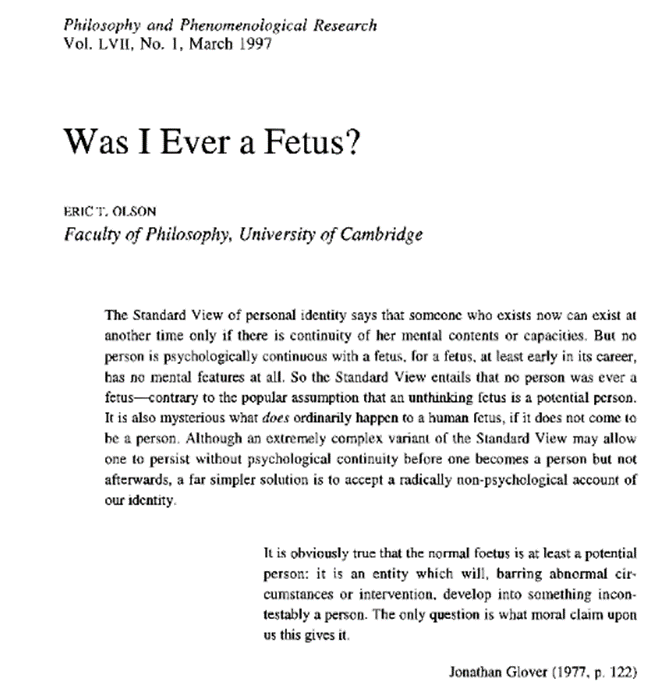
Some philosophers would argue that the issue of biological individuality is central to this moral dispute. But why is biological individuality even a point of contention? Counting biologically individual organisms like humans and dogs appears straightforward at first glance, but the biological world is packed with challenges. For instance, Aspen trees appear to be different biological units from above the ground; nonetheless, they all share the same genome and are linked beneath the ground by a sophisticated root system. So, should we regard each tree as a distinct thing in its own right or as organs or portions of a larger organism?
Similarly, humans are hosts to a great variety of gut bacteria that play essential roles in many biological activities, including the immune system, metabolism, and digestion. Should we regard these microorganisms as part of us, despite their genetic differences, and treat a human being and its germs as a single biological unit?
Answers to the ‘Problem of Biological Individuality’ have generally taken two main approaches: the Physiological Approach, which appeals to physiological processes such as immunological interactions, and the Evolutionary Approach, which appeals to the theory of evolution by natural selection. The Physiological Approach is concerned with biological individuals who are physiological wholes [Human + gut bacteria = one physiological whole], whereas the Evolutionary Approach is concerned with biological individuals who are selection units [Human and gut bacteria = two distinct natural selection units].
Is a fetus an Evolutionary individual or a Physiological individual? If we are Evolutionary individuals, we came into being before birth; if we are Physiological individuals, we come into being after birth. While the Physiological Approach makes it evident that a fetus is a part of its mother, the Evolutionary Approach makes it far less clear. But is there an overarching metaphysical approach to solving the problem of biological individuality? Can metaphysics (rather than organized monotheistic religion) lead us to a pluralistic zone where we can accept both perspectives with some measure of doubt?
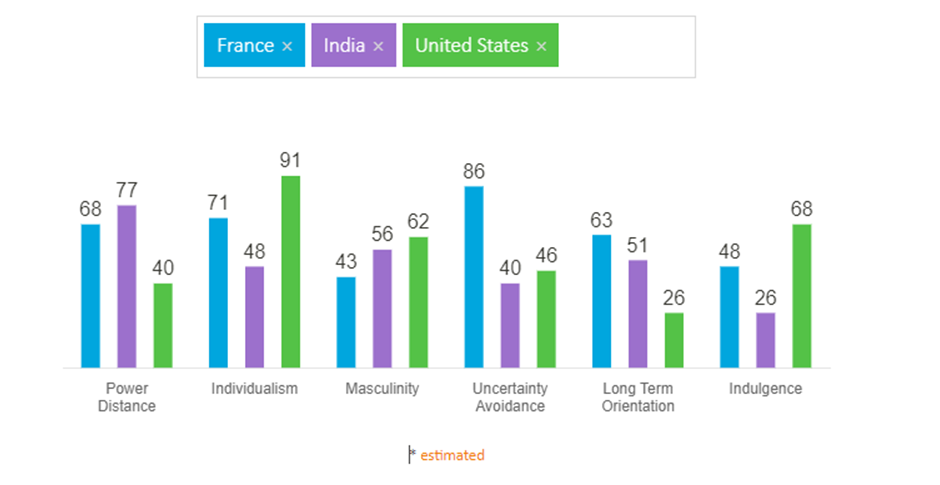
Do you consider the United States to be a high-power-distance or low-power-distance culture? Coming from India, I used to see the U.S. as the latter, but in the last 12 years of living here, it is increasingly becoming the former.
Does your proximity to an authority strengthen or lessen your loyalty?
Is there a flaw in the mainstream discussion of the U.S. Constitution that the abortion debate has brought to light? In my opinion, although predating the U.S. federal constitution and being significantly more involved in federal politics and constitutional evolution, each American state’s constitution is widely ignored. Keep in mind that state constitutions in the United States are far more open to public pressure. They frequently serve as a pressure release valve and a ‘pressuring lever’ for fractious U.S. national politics, catalyzing policy change. Regrettably, in an era of more contentious national politics, mainstream U.S. discourse largely ignores changes to state constitutions and spends far too much time intensely debating the praise or ridicule the federal Constitution receives for specific clauses, by which time the individual states have already shaped how the nation’s legal framework should perceive them. Altogether, a federal system, where individual state constitutions are ignored, and conflicts are centralized, is the American political equivalent of Yudhishthira’s response to the world’s greatest wonder in the thirty-three Yaksha Prashna [33 questions posed by an Indic tutelary spirit to the perfect king in the Hindu epic of Mahabharata].
The emergence of a distinctly Native New Worldis a founding story that has largely gone unrecorded in accounts of early America. Here’s an excerpt from the article:
To round off this edition, a Western movie question: Are there any examples of American Westerns developed with the opposing premise—valuing the First Nation’s People’s agency, which has gained historical support? Why not have a heroic Old World First Nation protagonist who safeguards indigenous practices and familial networks in a culturally diverse middle ground somewhere in the frontier country, shaping and influencing the emerging New World? Can this alternate perspective revitalize the jaded American Western movie genre?

















 Notes On Liberty