During his inauguration ceremony, the newly elected mayor of New York City Zohran Mamdani pledged to run the city as he had run his campaign, as a committed socialist. He stirred much discussion during his speech when he claimed that “We will replace the frigidity of rugged individualism with the warmth of collectivism.” A variety of public thinkers and politicians commented on this statement, taking it as a moment to reflect on what they perceived as a referendum on uniquely American ideals.
Note: This is the third in a series of essays on public discourse. Here’s Part 1 and Part 2
Three years ago, I started this essay series on the collapse of public discourse. At the time, I was frustrated by how left-wing and progressive spaces had become cognitively rigid, hostile, and uncharitable to any and all challenges to their orthodoxy. I still stand by most everything I said in those essays. Once you have successfully identified that your interlocutors are genuinely engaging in good faith, you must drop the soldier mindset that you are combating a barbarian who is going to destroy society and adopt a scout mindset. For discourse to serve any useful epistemic or political function, interlocutors must accept and practice something like Habermas’ rules of discourse or Grice’s maxims of discourse, where everyone is allowed to question or introduce any idea to cooperatively arrive at an intersubjective truth. The project of that previous essay was to therapeutically remind myself and any readers to actually apply and practice those rules of discourse in good-faith communication.
However, at the time, I should have more richly emphasized something that has been quite obviously true for some time now: most interlocutors in the political realm have little to no interest in discourse. I wish more people had such an interest, and still stand by the project of trying to get more people, particularly in leftist and libertarian spaces, to realize that when they speak to each other, they are not dealing with barbarian threats. However, recent events have made it clear that the real problem is figuring out when an interlocutor is worthy of having the rules of discourse applied in exchanges with them. Here is an obviously non-exhaustive list of such events in recent times that make this clear:
Even the Supreme Court, the institution that ostensibly is most committed to publicly justifying and engaging in good-faith reasoning about laws, is now giving blatantly awful, authoritarian opinions so out of step with their ostensibly originalist and/or textualist legal hermeneutics and constitutionalist principles (not to mention the opinions of even conservative judges in lower courts). It certainly seems the justices are just as nakedly corrupt and intellectually bankrupt as rabble-rousing aspiring autocrats. Indeed, the court is in such a decrepit state of personalist capture by an aspiring fascist dictator that they aren’t even attempting to publicly justify ‘shadow docket’ rulings in his favor. One can only conclude conservative justices are engaging in bad-faith power-grabs for themselves, whether they intend to or not. Although this has always been true of statist monocentric courts to some extent, recent events have only further eroded the court’s pretenses to being a politically
All these were obvious trends three years ago and have very predictably only gotten more severe. You may quibble with the extent of my assessment of any individual example above. Regardless, all but the most committed of Trumpanzees can agree that there is a time and place to become a bit dialogically illiberal in times like these. Thus, it is time to address how one can be a dialogical liberal when the barbarians truly are at the gates. The tough question to address now is this: what should the dialogical liberal do when faced with a real barbarian, and how does she know she is dealing with a barbarian?
This is an essay about how to remain a dialogical liberal when dialogical liberalism is being weaponized against you. This essay isn’t for the zealots or the trolls. It’s for those of us who believed, maybe still believe, that democracy depends on dialogue—but who are also haunted by the sense that this faith is being used against us.
Epistemically Exploitative Bullshit
I always intended to write an essay to correct the shortcomings of the original one. I regret that, for various personal reasons, I did not do so sooner. The sad truth is that a great many dialogical illiberals who are also substantively illiberal engage in esoteric communication (consciously or not). That is, their exoteric pretenses to civil, good-faith communication elide an esoteric will to domination. Sartre observed this phenomenon in the context of antisemitism, and he is worth quoting at length:
Never believe that anti‐Semites are completely unaware of the absurdity of their replies. They know that their remarks are frivolous, open to challenge. But they are amusing themselves, for it is their adversary who is obliged to use words responsibly, since he believes in words. The anti‐Semites have the right to play. They even like to play with discourse for, by giving ridiculous reasons, they discredit the seriousness of their interlocutors. They delight in acting in bad faith, since they seek not to persuade by sound argument but to intimidate and disconcert. If you press them too closely, they will abruptly fall silent, loftily indicating by some phrase that the time for argument is past. It is not that they are afraid of being convinced. They fear only to appear ridiculous or to prejudice by their embarrassment their hope of winning over some third person to their side.
If then, as we have been able to observe, the anti‐Semite is impervious to reason and to experience, it is not because his conviction is strong. Rather, his conviction is strong because he has chosen first of all to be impervious.
What Sartre says of antisemitism is true of illiberal authoritarians quite generally. Thomas Szanto has helpfully called this phenomenon “epistemically exploitative bullshit.”
One feature of epistemically exploitative bullshit that Szanto highlights is that epistemically exploitative bullshit need not be intentional. Indeed, as Sartre implies in the quote above, the ‘bad faith’ of the epistemically exploitative bullshitter involves a sort of self-deception that he may not even be consciously aware of. Indeed, most authoritarians (especially in the Trump era) are not sufficiently self-aware or intelligent enough to consciously realize that they are deceiving others about their attitude towards truth by spouting bullshit. As Henry Frankfurt observed, bullshit is different from lying in that the liar is intentionally misrepresenting the truth, but the bullshitter has no real concern for truth in the first place. Thus, many bullshiters (especially those engaged in epistemically exploitative bullshit) believe their own bullshit, often to their detriment.
However, the fact that epistemically exploitative bullshit is often unintentional, or at least not consciously intentional, creates a serious ineliminable epistemic problem for the dialogical liberal who seeks to combat it. It is quite difficult to publicly and demonstrably falsify the hypothesis that one’s interlocutor is engaging in epistemically exploitative bullshit. This often causes people who, in their heart of hearts, aspire to be epistemically virtuous dialogical liberals to misidentify their interlocutors as engaging in epistemically exploitative bullshit and contemptuously dismiss them. I, for one, have been guilty of this quite a bit in recent years, and I imagine any self-reflective reader will realize they have made this mistake as well. We will return to this epistemic difficulty in the next essay in this series.
To avoid this mistake, we must continually remind ourselves that the ascription of intention is sometimes a red herring. Epistemically exploitative bullshit is not just a problem because bullshitters intentionally weaponize it to destroy liberal democracies. It is a problem because of the social and (un)dialectical function that it plays in discourse rather than its psychological status as intentional or unintentional.
It is also worth remembering at this point that it is not just fire-breathing fascists who engage in epistemically exploitative bullshit. Many non-self-aware, not consciously political, perhaps even liberal, political actors spout epistemically exploitative bullshit as well. Consider the phenomenon of property owners—both wealthy landlords and middle-class suburbanites—who appeal to “neighborhood character” and environmental concerns to weaponize government policy for the end of protecting the economic rents they receive in the form of property values. Consider the similar phenomenon of many market incumbents, from tech CEOs in AI to healthcare executives and professionals, to sports team owners, to industrial unions, to large media companies, who all weaponize various seemingly plausible (and sometimes substantively true) economic arguments to capture the state’s regulatory apparatus. Consider how sugar, tobacco, and petrochemical companies all weaponized junk science on, respectively, obesity, cigarettes, and climate change to undermine efforts to curtail their economic activity. Almost none of these people are fire-breathing fascists, and many may believe their ideological bullshit is true and tell themselves they are helping the world by advancing their arguments.
The pervasive economic phenomenon of “bootleggers and Baptists” should remind us that an unintentional form of epistemically exploitative bullshit plays a crucial role in rent seeking all across the political spectrum. This form of bullshit is particularly hard to combat precisely because it is unintentional, but its lack of intentionality in no way lessens the harmful social and (un)dialectical functions it severe.
Despite those considerations, it is still worth distinguishing between consciously intentional forms of aggressive esotericism and more unintentional versions because they must be approached very differently. Unintentional bullshitters do not see themselves as dialogically illiberal. Therefore, responding to them with aggressive rhetorical flourishes that treat them contemptuously is very unlikely to be helpful. For this reason, the general (though defeasible) presumption that any given person spouting epistemically exploitative bullshit is not an enemy that I was trying to cultivate in the second part of this essay series still stands. In the next essay, I will address how we know when this presumption has been defeated. However, for now, let us turn our attention to the forms of epistemically exploitative bullshit common today on the right. We have now seen how epistemically exploitative bullshit can appear even in technocratic, liberal settings. But that phenomenon takes on a more virulent form when fused with authoritarian intent. This is what I call aggressive esotericism.
Aggressive Esotericism
The corrosiveness of these more ‘liberal’ and technocratic forms of epistemically exploitative bullshit discussed above, while serious, pales in comparison to more bombastically authoritarian forms of it. The truly authoritarian epistemically exploitative bullshiter aims at more than amassing wealth by capturing some limited area of state policy. While he also does that, the fascist aims at the more ambitious goal of dismantling democracy and seizing the entire apparatus of the state itself.
Let us name this more dangerous form of epistemically exploitative bullshit. Let us call this aggressive esotericism and loosely define it as the phenomenon of authoritarians weaponizing the superficial trappings of democratic conversation to elide their will to dominate others. This makes the fascistic, aggressive esotericist all the more cruel, destructive, and corrosive of society’s epistemic and political institutions.
It is worth briefly commenting on my choice of the words “aggressive esotericism” for this. The word “esoteric” in the way I am using it has its roots in Straussian scholars who argue that many philosophers in the Western tradition historically did not literally mean what their discursive prose appears to say. Esoteric here does not mean “strange,” but something closer to “hidden,” in contrast to the exoteric, surface-level meaning of the text. We need not concern ourselves with the fascinating and controversial question of whether Straussians are right to esoterically read the history of Western philosophy as they do. Instead, I am applying the general idea of a distinction between the surface level and deeper meaning of a text, the sociological problem of interpreting both the words and the deeds of certain very authoritarian political actors.
I choose the word “aggressive” to contrast with what Arthur Melzer calls “protective,” “pedagogical,” or “defensive” esotericism. In Philosophy Between the Lines Melzer argues that historically, philosophers often hid a deeper layer of meaning in their great texts. In the ancient world, Melzer argues, this was in part because they feared theoretical philosophical ideas could disintegrate social order (hence the “protective esotericism”), wanted their young students to learn how to come to philosophical truths themselves (hence the “pedagogical esotericism”), or else wanted to protect themselves from authorities for ‘corrupting the youth’ (as Socrates was accused) with their heterodox ideas.
As the modern world emerged during the Enlightenment, Melzer argues esotericism continued as philosophers such as John Locke wrote hidden messages not just for defensive reasons but to help foster liberating moral progress in society, as they had a far less pessimistic view about the role of theoretical philosophy in public life (hence their “political esotericism”). Whether Melzer is correct in his reading of the history of Western political thought need not concern us now. My claim is that many authoritarians (both right-wing Fascists and left-wing authoritarian Communists) invert this liberal Enlightenment political esotericism by engaging—both in words and in deeds, both consciously and subconsciously, and both intentionally and unintentionally—in aggressive esotericism. Hiding their esoteric will to domination behind a superficial façade of ‘rational’ argumentation.
Aggressive esotericism is a subset of the epistemically exploitative bullshit. While aggressive esotericism may be more often intentional than more technocratic forms of epistemically exploitative bullshit, it is not always so. You might realize this when you reflect on heated debates you may have had during Thanksgiving dinners with your committed Trumpist family members. Nonetheless, this lack of intention doesn’t cover up the fact that their wanton wallowing in motivated reasoning, rational ignorance, and rational irrationality has the selfish effect of empowering members of their ingroup over members of their outgroup. This directly parallels how the lack of self-awareness of the technocratic rentseeker ameliorates the dispersed economic costs on society.
Aggressive Esotericism and the Paradox of Tolerance
Even if one suspects one is encountering a true fascist, one should still have the defeasible presumption that they are a good-faith interlocutor. Nonetheless, fascists perniciously abuse this meta-discursive norm. This effect has been well-known since Popper labelled it the paradox of tolerance.
The paradox of tolerance has long been abused by dialogical illiberals on both the left and the right to undermine the ideas of free speech and toleration in an open society, legal and social norms like academic freedom and free speech, and to generally weaken the presumption of good faith we have been discussing. This, however, was far from Popper’s intention. It is worth revisiting Popper’s discussion of the Paradox of Tolerance in The Open Society and Its Enemies:
Unlimited tolerance must lead to the disappearance of tolerance. If we extend unlimited tolerance even to those who are intolerant, if we are not prepared to defend a tolerant society against the onslaught of the intolerant, then the tolerant will be destroyed, and tolerance with them. In this formulation, I do not imply, for instance, that we should always suppress the utterance of intolerant philosophies; as long as we can counter them by rational argument and keep them in check by public opinion, suppression would certainly be most unwise. But we should claim the right even to suppress them, for it may easily turn out that they are not prepared to meet us on the level of rational argument, but begin by denouncing all argument; they may forbid their followers to listen to anything as deceptive as rational argument, and teach them to answer arguments by the use of their fists. We should therefore claim, in the name of tolerance, the right not to tolerate the intolerant. We should claim that any movement preaching intolerance places itself outside the law, and we should consider incitement to intolerance and persecution as criminal, exactly as we should consider incitement to murder, or to kidnapping, or as we should consider incitement to the revival of the slave trade.
His point here is not so much to sanction State censorship of fascist ideas. Instead, his point is that there are limits to what should be tolerated. To translate this to our language earlier in the essay, he is just making the banal point that our presumption of good-faith discourse is, in fact, defeasible. The “right to tolerate the intolerant” need not manifest as legal restrictions on speech or the abandonment of norms like academic freedom. This is often a bad idea, given that state and administrative censorship creates a sort of Streisand effect that fascists can exploit by whining, “Help, help, I’m being repressed.” If you gun down the fascist messenger, you guarantee that he will be made into a saint. Further, censorship will just create a backlash as those who are not yet fully-committed Machiavellian fascists become tribally polarized against the ideas of liberal democracy. Even if Popper himself might not have been as resistant to state power as I am, there are good reasons not to use state power.
Instead, our “right to tolerate the intolerant” could be realized by fostering a strong, stigmergically evolved social stigma against fascist views. Rather than censorship, this stigma should be exercised by legally tolerating the fascists who spout their aggressively esoteric bullshit even while we strongly rebuke them. Cultivating this stigma includes not just strongly rebuking the epistemically exploitative bullshit ‘arguments’ fascists make, but exercising one’s own right to free speech and free association, reporting/exposing/boycotting those, and sentimental education with those the fascists are trying to target. Sometimes, it must include defensive violence against fascists when their epistemically exploitative bullshit manifests not just in words, but acts of aggression against their enemies.
The paradox of tolerance, as Popper saw, is not a rejection of good-faith dialogue but a recognition of its vulnerability. The fascists’ most devastating move is not to shout down discourse but to simulate it: to adopt its procedural trappings while emptying it of sincerity. What I call aggressive esotericism names this phenomenon. It is the strategic abuse of our meta-discursive presumption of good faith.
Therefore, one must be very careful to guard against mission creep in pursuing this stigmergic process of cultivating stigma in defense of toleration. As Nietzsche warned, we must be guarded against the danger that we become the monsters against whom we are fighting. I hope to discuss later in this essay series how many on the left have become such monsters. For now, let us just observe that this sort of non-state-based intolerant defense of toleration does not conceptually conflict with the defeasible presumption of good faith.
In the next part of this series, I turn to the harder question: when and how can a dialogical liberal justifiably conclude that an interlocutor is no longer operating in good faith?
How exactly do dialogical illiberals view themselves during a heated discussion without epistemic norms? Dialogical illiberals of all political stripes–from populist conservative culture warriors to sanctimoniously censorious progressives, from screeching parents at public school board meetings to ostensibly liberal democrats, from nationalistic xenophobes to anti-fascist anarchists—view themselves as soldiers under siege in a war using their ideas as the only defensive tool to keep the barbarians at the gates. They view every conversation, every intellectual exchange as a zero-sum game, and their interlocutor is either on their side or the side of the putative barbarians–no in-between. I admit I have fallen into this habit of thinking in years past, but it is an extremely unproductive mindset and contributes to dialogical illiberalism for three main reasons.
Sometimes, in the case of progressives fighting racists or anti-populist liberals and anti-fascist anarchists fighting actual fascist terrorists, the barbarians are a very real, significant threat. However, for one, they often radically overestimate the magnitude of the threat or engage in dangerous forms of concept creep about who counts as a barbarian. Whoever they are talking with is not often part of the barbarians, but they get so in the habit of outgrouping anyone who doesn’t agree with them,they start seeing barbarians everywhere. They then are viciously uncivil towards potential allies or people with whom they have fruitful disagreements that truly are not the sort of “dangerous” disagreements that are helpful to barbarians.
Second, this “activist vs. barbarians” mentality just poisons the well and makes it difficult for these activist gatekeepers to rationally engage with basically anyone who has normative or empirical disagreements with them in good faith. They view themselves as a warrior fighting barbarians rather than more humbly as a curious person trying to find wisdom to cope with this world from wherever they can. It makes them engage in motivated reasoning for why your disagreement makes you on the barbarians’ side or why their view is the true “American” or “liberal” or “radical” view rather than engaging with the substance of the disagreement rationally. It makes them embrace subrational forms of communication that are just toxic, and more interested in signaling their ingroup bona fides to other members of their ingroup than trying to persuade people who might not be in the “outgroup” exactly, but that they irresponsibly paint as being in the outgroup.
It is a very similar toxic social and psychological dynamic to what drives so many sources of illiberal intolerance both large and small–from McCarthyism, to the religious banning of “heresy,” to book bannings, to horrible screeching on social media that makes everyone dumber and unhappier. As Arnold Kling would put it, this “civilization vs. barbarism” language game is a deeply conservative one. But in recent years, few have noticed how even progressives and radical leftists fall into this small-c conservative mode of thinking indefensibly when they consider themselves as activists first and foremost. It is no coincidence that many leftists trapped in the contra barbarian mindset start rationalizing illiberal attitudes more generally.
Third, it makes them rather arrogantly over-estimate their own activist powers in implausible ways. Chances are, the argument you are making, the candidate you are trying to convince me to vote for, or the direct action you are defending isn’t going to be the thing that stops the barbarians. The social world is complicated, and you humbly should be willing to be open to the possibility that your political action might actually backfire and help them. It might help, or it might not, depending on the circumstances. Better to humbly admit your epistemic and practical limitations in changing the world and be open to other perspectives from good-faith interlocutors than just thinking that someone who has a substantive disagreement with you about political action or an idea is either a contemptuous barbarian or a “useful idiot” for the barbarians simply in virtue of your disagreement.
Be realistic, you and I are not heroic activists trying to save our beatific political visions from evil barbarians. Better to think of ourselves as curious individuals trying to learn what we can to cope with the perplexing quandaries of modernity.
Older readers of NOL may have noticed I have been absent from the blogosphere for the last four or so years. Part of this has been that I have rather intentionally taken a somewhat monkish vow of silence on many things that perplex me about the contemporary world. On many of these issues—the growing tide of global populist authoritarianism, the policy and cultural responses to COVID, and increasing political polarization to name a few—I still don’t know what is true or if I am equipped to say much other than express a vague, general sense that almost everyone in those debates has gotten something fundamentally wrong. Consequently, I have taken time in a philosophy grad school program to think about more fundamental issues rather than get lost in the daily obsessions of the internet. Now, I am done with that venture and have decided for various personal reasons to not pursue an academic career so I will have more time to write more freely here.
I think even more than my being epistemically overwhelmed by the…everything…of the last few years or even the time and energy constraints of grad school, a bigger reason why I have been loathe to blog or engage in public discussion has been a sense of frustration, exhaustion and melancholic angst with the state of public discourse, especially online. It seems like nearly everyone today—from partisan activists to family members, to friends, to even respected thinkers whose ideas have influenced me in the past, seem to be guilty of contributing to this problem. I surely do not exclude myself from these criticisms of the zeitgeist, for the zeitgeist very much lives in my head. For now, rather than discuss any substantive issues, I am going to start a series about some meta-issues that have poisoned our public discourse and made it unpleasant and even psychologically impossible for me, and I am sure others, to write publicly.
For now, I just want to narrow in on identifying the symptoms of our ruined discourse. I am talking about how almost every one of almost every ideological stripe these days constantly displays a vicious lack of charity to almost everyone they engage with who they vaguely associate with some outgroup. An illiberal intolerant attitude where their first impulse is to try to censor ideas that they find disagreeable. For the politically engaged and outraged, it seems like no disagreement can be a good-faith one. So many seem to just assume that almost anyone they disagree with is acting in bad faith. To be sure, many people are acting in bad faith, but that is no reason to become the monster one is fighting or assume that as the default with every interlocutor. So many people treat nearly every difference of opinion, no matter how great or small, not as potentially interesting differences in values that can be commensurably discussed or interesting empirical disagreements, but as “dangerous” ideas that need to be quashed.
I am talking about the tendency for people—everywhere from cable news, to Thanksgiving tables, to Twitter–to “nutpick” outgroups to outrage other members of their ingroups. How so much of political discourse has substituted sub-rational bumper stickers, memes, and tweets for substantive positions and arguments. How so many clearly rationalize terrible arguments they should know better than to make because said arguments have ideologically convenient or politically expedient conclusions. How so many seem more interested in morally grandstanding to their favored ingroup than trying to learn more from those with whom they have fruitful differences. How for some people to even listen to you, they make you engage in some sort of ideological purity test. How they engage in dishonest guilt by association to try to assassinate the character of people they might have minor disagreements with. How they generally view anyone with whom they have disagreements contemptuously.
Of course, much of this has always been an element of how hooligans engage in democratic politics. However, the degree to which it has reached a fever pitch is a change from a few decades ago. Further, this loathsome creeping intolerance and lack of epistemic virtue have now seeped from screeching political rallies, Twitter, or Yahoo News comment sections to many self-important elites who fancy themselves above the fray of the irrational cacophony of political discourse, and often help shape that discourse. I am talking the sort of people who stridently read or write for NY Times and The Atlantic, legal professionals, elites in the ivory tower where I once delusionally hoped to find a bubble of safety.
The problem goes by many names—right-wing reactionaries call it “wokeness” or “cancel culture” when done by the left, leftists and progressives call it fascist authoritarianism when right-wingers do it. To some varying extent, both are correct about each other and wrong about themselves. To be clear, I do think the right’s illiberal authoritarianism is very much a bigger threat in this political moment, but rather than spending time unproductively fanning the flames of that culture war debate, let me neutrally call the problem dialogical illiberalismin the small “l” sense of liberalism. It is a form of brain rot that seems to have infected every one of all political persuasions to varying degrees of significance—from conservative culture warriors to socialist Breadtubers, to ostensibly “liberal” centrists, to anarchist antifascist activists, to even my (former) ingroup of some libertarian academics. None of you are free from sin.
In the extreme, the dialogical illiberal is not just an unreasonable conversation partner, but a dialectical rent-seeker demanding the state coercively censor those with whom they disagree. For now, I want to focus on the merely dialogical and social form of this illiberalism simply to avoid getting lost in the complicated intricacies of liberal free speech norms and First Amendment legal disputes. Those are complicated debates worth having but beyond the scope of this series. Suffice it to say, I have little patience for this form of actively statist censoriousness in whatever form. But I think its increasing prevalence has its roots in a culture of dialogical illiberalism that has evolved in the norms of public discourse, which is what I am interested in analyzing here.
This is where, usually, thisgenreof article goes into some detailed examples and case studies of “the problem” to convince you it is real. Typically, these are rather dishonestly cherry-picked to support whatever implicit tribal position the author happens to have. Frankly, I have no interest in such a performative exercise here—it is better left to the reader. It would just distract us by tempting us to engage in the accidental details of some particular examples rather than stepping back and seeing the bigger picture. I don’t wish to miss the trees for the forest, and neither should you. Suffice it to say, if you are unconvinced of that what I am talking about is a genuine problem, this series of posts probably isn’t for you. You have either been living under a rock (in which case I urge you to return because ignorance is sometimes bliss), are unusually patient with bad argumentation (in which case, I envy you), or might be part of the problem.
I imagine you are nodding your head in agreement and recalling times when this has been done to you or by someone in some other political tribe to someone in your tribe. I encourage you to stop this now and try to recall a time when someone you respect and agree with was being unreasonable and uncharitable to someone else, or perhaps when you yourself have done this in a social media exchange, or with a family member or friend. I know I have. If you are completely incapable of doing this, I encourage you to save yourself some time and stop reading now—this series isn’t for you. Perhaps return to Twitter.
Perhaps at this point, you are trying to rationalize your own version of dialogical illiberalism as somehow justifiable. If you can give an original good faith argument for it, go ahead and I might consider moderating my hardline position against dialogical illiberalism. Perhaps you are thinking something like this: “But they really are so terrible and bad-faith that we should not take them seriously as debaters. You are just engaging in toxic both-sideism!” Perhaps you are right about “them,”—whoever that outgroup might be in your head. However, that is no reason to become just like “them” to the point that you cannot engage with nearly anyone in good faith. Maybe you should reflect on whether you are projecting a caricature of “them” on people who genuinely are not one of “them.” Again, avoid becoming the monster you are fighting. If you do not wish to make that effort, return to the Twitter mob.
Most readers will agree with something like this, to put it bluntly: political discourse is terrible because politically active people are massive assholes to each other. I wish to understand why people of all ideological stripes have become such massive assholes and how I can stop being one myself. If you are interested in trying not to be an asshole too, perhaps you will join me.
I don’t have an explicit plan for this series, I am not sure how many posts it will comprise. But I expect to focus on topics such as how dialogical illiberals psychologically think of themselves while they are engaging in bad-faith discussion, the role of social media in making the problem worse, the extent to which the incentive structure of democratic institutions leads to dialogical illiberalism, the chilling effect this lack of civility has on discourse, and other cultural causes and effects of dialogical illiberalism.
If you wish, consider this an exercise in therapeutic edification for me and, if you feel similarly, perhaps for you. I am not trying to make an argument trying to convince you of much substantively. If you change your mind about something, consider that a bonus. My goals here are to express my frustration with this moment in American cultural discourse, diagnose some of what I see as the psychological and social factors contributing to the problem, and hopefully come away making myself (and, with any luck, the reader) closer to the sort of person who is not part of the problem.
I do not have all the answers and do not think I will find them here, but I do have two ground rules I hope to establish: 1) It will be hard at times for me not to hide my frustration with people who are characteristically dialogical illiberals, I am sure that has already come through. But, when possible, my hope is to analyze these individuals with the empathetic self-detachment of a good philosophical anthropologist. Do, please, call me out in the comments when I fall short of that ideal. 2) To make my biases clear: I am a very idiosyncratic sort of radical liberal/anarchist/left-libertarian hybrid. I am very much on the left side of the culture wars instinctively, while at the same time I am strongly disposed to think any policy solutions the state could enact are bound to fail. Consequently, I am more likely to be harsher to the dialogical illiberalism on the right side of the political spectrum, yet more knowledgeable of the dialogical illiberalism on the left side. You do not have to be on the same side of those anti-statist policy conclusions or be sympathetic to my radically leftist cultural tendencies to learn something from this series. My aim here is not to convince you to join my oddly specific and strange “team.” I think that sort of mindset is what encourages the dialogical liberalism I am chiding to begin with. I will try to bracket my cultural and policy views where possible and focus more on the meta-issues poisoning our discourse, but I cannot help that those views will often seep through.
On May 4, 1919, a student protest against the ceding of Chinese territory to Japan by the Versailles Treaty initiated a reassessment of China’s attitude to its own past in the face of Western modernity and domination. The May Fourth Movement, as this ongoing reassessment came to be called, rejected the early liberal emphasis on piecemeal reform and constitutionally limited, elite-led government, but its own brand of liberalism remained indebted to the categories and concerns of late Imperial and early Republican liberal debates.
This is from the amazing Leigh Jenco, and it’s titled “Chinese Liberalism.” Read the whole thing (pdf).
On Anders Chydenius. The Governor of Bank of Finland in a 2019 speech outlined his work, to stress the “joint Nordic and American societal heritage, which is fundamentally linked to economic liberalism and the market economy”.
This week Kevin Vallier published a new entry on neoliberalism in the Stanford Encyclopedia of Philosophy:Neoliberalism (Stanford Encyclopedia of Philosophy). It is a well-written, well-researched piece. However, it is also symbolic for the greatest deficiency of American classical liberals: they are unable or unwilling to defend the name, or label if you like, of the ideas they are associated with. Given the influence of American academia and thinks tanks on the rest of the world this is especially important. It has happened before, and it is happening now. It sucks.
This is how Vallier starts his entry:
“Though not all scholars agree on the meaning of the term, “neoliberalism” is now generally thought to label the philosophical view that a society’s political and economic institutions should be robustly liberal and capitalist, but supplemented by a constitutionally limited democracy and a modest welfare state. Recent work on neoliberalism, thus understood, shows this to be a coherent and distinctive political philosophy. This entry explicates neoliberalism by examining the political concepts, principles, and policies shared by F. A. Hayek, Milton Friedman, and James Buchanan, all of whom play leading roles in the new historical research on neoliberalism, and all of whom wrote in political philosophy as well as political economy. Identifying common themes in their work provides an illuminating picture of neoliberalism as a coherent political doctrine.”
The problem is in the words: ‘“neoliberalism” is now generally thought…’’. Neoliberalism is a hotly debated term, there is certainly no consensus on its meaning. As Oliver Hartwich has emphasized in Neoliberalism, the genesis of a political swearword, it is still most often used as a swearword by the left for all that they think is wrong with capitalism, (classical) liberalism, (more or less) liberal policies by IMF, WTO and World Bank, et cetera. These left wingers are also found in academia, policy and in media circles, which has led to its routine use. However, it is not true that the work of Hayek, Friedman and Buchanan is generally thought to be covered by a neoliberal label. Only those who disagree with it call them neoliberals. It is painful to see that the ideas of these three Nobel Prize winners are now used to explain neoliberalism in a leading online source. They self-identified as classical liberals and just because opponents of their views use a different label is no reason to comply with that malicious practice.
The worse thing is, it has happened before, also commencing in the US. Fairly recently, classical liberals began to use the label libertarian, as the Cato Institute has been promoting, for example on their (very useful) website Libertarianism.org, or in David Boaz’ The Libertarian Mind. Jason Brennan’s Libertarianism, what everyone needs to know is another example. The issue here is that the three aforementioned classical liberals, and others, are now thrown onto the same heap as Rothbard and Rand, to name a few rather different thinkers.
Decades earlier, Hayek and others noted with regret that the Americans were unable to defend the original meaning of the word liberal, with the result that a liberal in the American sense is now what people in other parts of the world call a social-democrat. It is also the reason Hayek and other started to use the name classical liberal.
The result of all this changing of names is confusion and vulnerability. Nobody knows what label belongs to which ideas, which gives rise to a petty industry on liberal labels, yet without any clarity in the end. It also provides ample opportunity for opponents to negatively attack ideas loosely associated with the (classical) liberal movement, which results in a negative image, which also make liberal ideas less attractive for outsiders. The lack of clarity also makes vulnerable for any kind of criticism. Actually, embracing the swearword other use for you, by offering the ideas of your greatest and brightest thinkers, is a shameful act at least.
American classical liberals should stay firm and defend their ideas under the proper labels. There is no reason for change (see my Degrees of Freedom: Liberal Political Philosophy and Ideology), there is only a need for explanation and defense. Giving up clear and proper labels plainly sucks.
Or, some Monday links – on thinkers, their devices and “ad hoc” cities, above/ below the sea surface
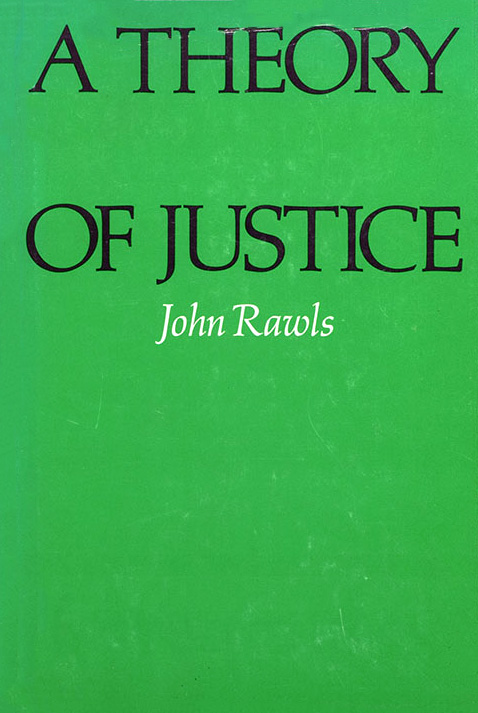
Back in February, Nick Cowen here at NOL pointed the 100th anniversary of John Rawls’ birth. At the time I somehow caught that this year also marks 50 years since his Theory of Justice book publication (a rather banaldiscovery it seems now, but still). The “veil of ignorance” was a strong introduction to the world of ideas and one of the few things to make it past my undergraduate studies.
Beyond those lectures (early 00s), I have yet to read the book. I suspect that it could belong to the “books everyone would like to have read, but almost no one actually reads” list, along with that Beveridge Report (this quip about the Report I read somewhere I cannot remember). Anyway, here be a fresh tribute proper:
As far as round anniversaries involving nice thought experiments go, I would also note that Judith Jarvis Thomson’s “violinist” and Herbert A. Simon’s “alien telescope” papers were published in 1971 and 1991, respectively. The first is a defense of the right to abortion, while the second is a tool to discern social structures (guess what, I have not read the “violinist” paper either. It seems interesting and timely enough – the top courts in US and Germany decided on abortion in 1973/75 – but I firstly found out about it, and some relevant criticisms, only last year. Simon, the Nobel Memorial Prize in Economic Sciences laureate 1978, provided insights across a few fields over the years):
Getting to more recent staff, Brandon the other day expressed his doubts about the new charter city project in Honduras (Próspera). Find below a comprehensive read on the matter:
Now, as a pc gamer of yore, I have been expecting more nods to the underwater city of Rapture from the Bioshock game series, maybe. Rapture was a utopia free of state intervention, purportedly founded top-down on individualistic ideals in 1946, that failed. No, not quite libertarian ideals, more of a wildly objectivist kind, with a paternalistic edge. The adherence to laissez-faire, but not to laissez-passer (the founder forbid any relations with the rest of the world), brought smuggling, inequality and eventually the downfall of the city.
Not Rapture, but close enough style-wise (Moscow State University main building) – source: my own archive
At least this is how I understand it (right, I have not played any of these games. Survival/ horror FPS, nope. I do appreciate the games’ grandeur for 40s-50s ideas and architecture, though). As for any relevance to the Próspera project – come to think of it again – I admit the whole comparison is tempting, but way overblown, ok. Próspera is a public/ private law creature, envisaged in the constitution of a sovereign state. I desist.


 Notes On Liberty