The death knell of Open Borders?

The world of the 1990s and aughts is now gone. A borderless, wall-less world will be relegated to the musty, threadbare realm of academia and on the white papers of a few brave think tanks. The flood of war refugees from Syria has been overwhelming Europe’s political and cultural sensibilities (Europe’s political sensibilities are quite innovative, but it is stagnating culturally; not a good combination for societies trying to manage large influxes of mostly unwelcome refugees). In the US, demagogues on the Right and the Left have been trashing immigrants and the freedom of movement in the name of the Worker.

The freedom of movement of individuals is a fundamental right that I will advocate on behalf of for the rest of my life, and yet I have been cautious in embracing the trendy calls for Open Borders by technocrats and non-paleo libertarians. My caution had less to do with my disdain for the cultures of those respective factions than it did with my inability to imagine a world of Open Borders as the prominent factions presented it. The Open Borders trend brought too many questions to my mind. For example, what if only a few countries recognize Open Borders? Why should people be free to move to one area but not to another? What is fair about any of that?

Open Borders was, in my mind, a short-sighted cultural campaign aimed at furthering freedom. There is nothing wrong with this, of course, as some such campaigns end up furthering freedom in the long run (though these campaigns can also damage the push for more freedoms, too). In this respect, Open Borders was a big success. It brought technocratic Leftists around to the idea of loosening restrictions not only on labor but capital as well. It brought lots of non-Europeans into the libertarian fold. The Open Borders campaign made the unspoken nationalisms of trade protectionism and immigration restriction taboo for smart people.

Yet, as current events so blatantly illustrate, freedom of movement is not in the same camp as, say, freedom of speech. Freedom of speech is culturally sacred to Westerners. Every individual in the West believes that her freedom of speech is inalienable. This, even though free speech is always under political and legal attacks from factions vying for power over others. (These political and legal attacks, of course, are a necessary evil for a free and open society. If this doesn’t make sense, recall that “freedom of speech” is a right protected so well by states like North Korea and Cuba that the rulers of those countries consider it a crime to claim otherwise.) For those who want a world where freedom of movement is in the same camp as freedom of speech, more hard work and more critical thinking is required. My small contribution is below.

If there had been political bonds – a la (con)federation of some kind – between Syria and EU states (or other Arab states), then the horrific violence that has been tearing Syria apart could have been avoided. The opposing parties would have had to spell out their differences in a parliamentary setting, and if they could not come to any kind of agreement then the opposing parties could have hashed out their differences in a legal setting, either by suing each other in the courts or by pursuing secession options (which would have likely led all parties back into parliamentary negotiations). In fact, the legal and political jostling could have been done simultaneously.

Look at the EU. Just look! Open Borders is possible because the states involved in the confederation are bonded together politically. They had come to an agreement about Open Borders (amongst other policies) and how to recognize, respond, and respect such a policy.

Look at the US. Open Borders is possible because the states involved in the federation are bonded together politically. They had come to an agreement about Open Borders (amongst other policies) and how to recognize, respond, and respect such a policy.

Now look at Syria and the EU. Open Borders is not possible because these states have no political bonds. Instead, people are being murdered and driven from their homes. People are being harassed by policemen and bused from one country to another. People are being barred from riding trains. People are dying at sea.

Open Borders is a watered down policy prescription that is too Western-centric (ask me how). It’s better than nothing, mind you (like free trade agreements), but it’s worth reminding ourselves that it’s not a comprehensive answer to the question of freedom of movement. As such, it’s easier to attack or dismiss when things go wrong. Here is yours truly blabbing at the mouth back in May of 2014:

I think that there is a way to incorporate open borders into a One Big Change-style reform while also leaving room for other improvements such as financial competition in the markets (rather than between governments) and competing tax regimes. I’d dig deeper and go a little more structural. I’d federate the entire world, and I wouldn’t make the federation out of the current agglomeration of nation-states, either. I would destroy the states currently in place and federate the administrative units that currently operate underneath the nation-state.

This, I think, would do a great job of incorporating open borders (everyone is part of the same federal union now), financial competition (no more national banks), tax regimes (you can more easily vote with your feet), and a common legal system that protects individual rights such as private property and freedom of religion.

Now, you wouldn’t want to do this in a ‘top-down’ manner. The best way to get the ball rolling on such a proposal would be to tack on a constitutional clause of some sort that merely opens the door to dialogue on closer political ties between peoples. So, in the case of the US, a clause could be adopted that makes it possible for states or disgruntled sub-states to approach the US about collaborating more intimately. An even better option would be to find an already existing clause in the constitution that allows for such a thing. Maybe nothing comes of it. Maybe people balk at American pomposity. At least, at least that is until their strong man starts bombing their neighborhoods or their social democracy starts adding a few extra zeros to its currency…

Holla back!

UPDATE: Re-reading through this made me realize that I’m addressing a different aspect of freedom of movement than the Open Borders crowd. They’re focused on the ‘why’ whereas I’m focused on the ‘how’.

Migration from Bangladesh: Causes and Challenges

Migration and emigration from Bangladesh is a regular phenomenon. Historically, large scale migration from the region constituting present-day Bangladesh started after the tea plantation was introduced in Assam by the British rulers in the early nineteenth century. Large numbers of coolies (porters) were needed for the tea gardens. To fulfil that demand the Assam Company began to import labourers from Bengal (especially from its eastern part) in 1853. In contemporary times, the first batch of emigrants from Bangladesh were the ‘refugees’ seeking shelter in a foreign country, after atrocities started by the Pakistan Army in East Pakistan in 1971. This phenomenon did not stop even after the East Pakistan was liberated and Bangladesh was formed in 1971. Instead, since then many Bangladeshis have been migrating to Europe, West Asia, India, and East Asia. Migration has its impact on the demographic composition of the host countries. For example in some cities of Italy, like Lazio, Lombardy, and Veneto, the migrants from Bangladesh comprise a significant number of the population. In developed countries most of these migrants are engaged in service sector jobs like souvenir selling, or being a vendor, shop worker, restaurant waiter, or domestic maid.

Causes for large scale Migration from Bangladesh

Although its economy is stable, maintaining between 5-6 percent Gross Domestic Product (GDP) growth for the last two decades, it is not viable enough to occupy all skilled, semi-skilled, and non-skilled workers in the country. Statistically, only 26 percent of its population lives below the national poverty line of US$ 2 per day, but a substantive percentage remains unemployed or underemployed. To evade poverty, unemployment, and under employment, many Bangladeshi migrate to other countries. Often, they do so even at the cost of their lives. Many times, such a desperate act has lead them to be trapped in a situation like the one happened in May 2015, when about 8,000 people consisting of Rohingyas from Myanmar and Bangladeshis were stranded at sea close to Thailand. While moving illegally, many Bangladeshis have even lost their lives. The most recent high profile case of death of Bangladeshi migrants occurred on 28 August 2015 in North Africa, where at least twenty four Bangladeshis, including two minor children, died after two boats carrying up to 500 migrants sank off the coast of Libya. The first boat, which capsized early on 27 August 2015, had nearly 100 people on board. The second, which sank later, was carrying about 400 passengers.

As 80 percent of Bangladesh’s geographic area is situated in the flood plains of Ganges, Brahmaputra, Meghna, and many other small rivers, a contributing push factor to the migration is the character of these deltaic rivers. They often change their course, forcing many inhabitants to move to new settlements. The submergence of chors (silt areas) during the flood season forces many inhabitants, deliberately or out of sheer ignorance, to migrate into India. Out of these total number of environmental migrants, only a few return after the normalisation of the situation; others look out for ways to earn their livelihood in their ‘acquired ‘or ‘adopted’ land.

Changing Gender Pattern and Consequences of Migration

Gender-wise, like other countries from the developing world, the migration-related statistics of Bangladesh too is tilted in favour of males, of which there are around three million working in different parts of the world. But in last few years there has been a constant increase in the number of female migrants, who can migrate either alone or as a spouse. As reported in the Daily Star (a well-respected English language daily in Bangladesh), according to the June 2015 statistics of Bangladesh’s Bureau of Manpower, Employment and Training (BMET), a total of 37,304 female workers had gone to different countries in 2012; it has increased to 76,007 in 2014. One country which stands out in terms of employment of female workers from Bangladesh is the United Arab Emirates (UAE). According to the BMET statistics, the UAE is home to 27 percent of the total female migrant workers of Bangladesh. Two basic reasons can explain this rising trend. Firstly, the demand for female workers in the UAE is higher than that of other countries. Secondly, attractive salary in the UAE draws more female migrant workers there than other countries. After the UAE, Lebanon hires a large number of female migrant workers. While the country has only 1.3 percent of total Bangladeshi migrants, it nevertheless has the second highest percentage of female migrants (24.3 percent) compared to all other countries. About 97,000 female workers reside in Lebanon.

Host countries remain hostile to the migrants. Sometimes, under pressure from political and economic constituencies, the host country (ies) restricts its visa policy for the citizens of a particular country or even denies issuing it to them altogether. The migrants are accused of ‘cultural invasion’ through demographic transition. They are also blamed for taking away job opportunities from the locals. Quite often, the migrants face violence from the locals, which is a sign of an extreme form of hatred towards them. Bangladeshi migrants have faced both situations. In 2014 Saudi Arabia stopped issuing visas for Bangladeshis even for the Umrah (a pilgrimage to Mecca performed by Muslims; it can be undertaken at any time of the year, in contrast to the Hajj). The Saudi officials claimed that in 2014 many Bangladeshis for whom Umrah visas were issued did not return to their country after performing the ritual. The Umrah visa was restored on August 5, 2015, after Bangladeshi foreign minister Md Shahriar Alam’s visit to Saudi Arabia, where a request was made to the Saudi State Minister for Foreign Affairs (Nizar bin Obaid Madani) for Umrah visas to be resumed.

Termed as ‘illegal’, the Bangladeshi migrants have faced violence in the Indian states bordering Bangladesh. The radical groups in the area have centuries-old grievances against them. They are considered to be an economic and cultural threat to the region. Many contrasting figures are being presented by these groups to justify their position; in reality, according to the United Nations data of 2013, the number of Bangladeshi in India is around 3.2 million. Migrants from Bangladesh have faced violence not only in India, but in other parts of the world too. In Thailand there have been rampant cases of exploitation of Bangladeshi women working in various sectors, including the flesh trade. In West Asian countries, the women workers are forced to work in many houses as a maid and beaten when they demand salary from their ‘masters’. In Malaysia, too, the cases of abuse of maids is on the rise. Most of these maids are from Bangladesh. In February 2015 Bangladeshi workers faced targeted violence in Rome, Italy.

Conclusions

Remittances play a crucial role in pushing the Bangladeshi economy. According to the World Bank, total remittance received by Bangladesh in 2013 was $14.5 billion, which has increased to $ 15.0 billion in 2014-15. In 2014, the remittances constituted 8.21 % of the GDP of Bangladesh. In January-March 2015 quarter Bangladesh earned $ 3771.16 million of remittance, which is 8.49 percent higher than the previous year. These remittances have helped Bangladesh’s economy maintain its 5.5- 6 percent GDP growth.

Though the migrants are important to Bangladesh’s economy, many serious ill effects of migration too have emerged. Under the guise of migration, human trafficking is taking place from Bangladesh to many parts of the world. Women and children from Bangladesh are trafficked into India, East Asia, and West Asia for commercial sexual exploitation and to serve as bondage labour. To check this activity, especially human trafficking of females, the government of Bangladesh issues licences to the recruiting agencies, which are renewed at regular intervals of time and maintained by the concerned agency. Also, in 2013 the Government of Bangladesh revised the Overseas Employment and Migration Act which includes Emigration Rules, Rules for Conduct and Licensing Recruiting Agencies, and Rules for Wage Earner’s Welfare Fund. Despite all such steps migrants are being exploited by the domestic agencies and they face umpteen challenges in the host country they end up in.

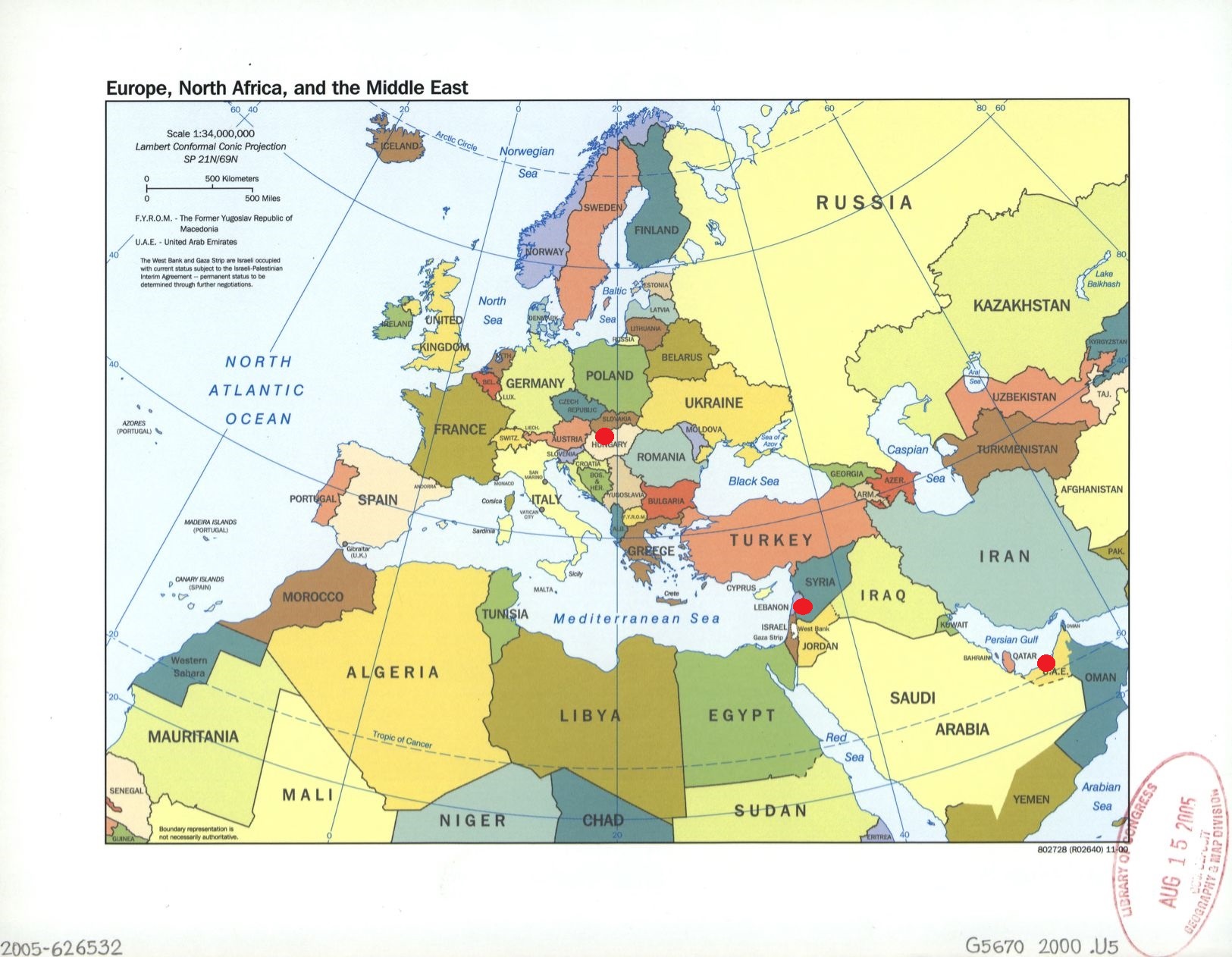
What is the distance between Damascus and Budapest?

According to distancecalculator.com, it’s 2,123 km (or 1,319 miles).

The distance between Damascus and Abu Dhabi? 2,021 km (or 1,256 miles).

If I had to flee a war zone on foot to a wealthy cosmopolitan city I’d rather go through Turkey and Romania than Iraq and Saudi Arabia, too. The West is on the precipice of a damnable moral failure (link, in case you’ve been living under a rock). In the name of fairness, though, a regional perspective ought to be adhered to.

I have a slight digression. Can anybody here imagine what the plight of the war refugees would be like going through post-socialist states like Romania and Bulgaria if they had not been a part of the EU? Let me put this into context a bit more. In order to join the EU, post-socialist states in Eastern Europe had to reform their political and legal systems in a manner that was satisfactory to the traditional Western states of the confederation. A major aspect of these reforms was making sure that governments have a harder time assaulting individual rights. This clause, or whatever you want to call it, for joining voluntarily the EU was less about a cultural chauvinism on the part of the core EU states and more about tempering the overt racist and nationalistic undertones of the post-socialist societies in Eastern Europe. Context matters, especially when there’s a lot of finger-pointing going on.

Here is a map I’ve edited for you:

map west eurasia 2015


The three big red dots represent the cities of Budapest in Hungary, Damascus in Syria, and Abu Dhabi in the United Arab Emirates (UAE). Visual perspectives are great. I already added my two cents about what needs to be done, in fact I did so around this time last year.

Marriage Licenses Should Not Be Granted to Gay Couples

Marriage licenses should not be granted to gay couples nor to straight couples. Marriages should be private consensual agreements between any two competent, consenting adults. Or three or more, for that matter. Governments should not be involved: no licenses, no special privileges, and no special obligations for married couples.

However, the fact that an action is legitimate and non-coercive does not mean any term can be used to describe it. Gay couples should not call their agreements “marriage” because that term is taken. For centuries, it has stood for heterosexual unions in almost all cultures. Marriage might be called a “trade mark.”

Kim Davis is a hero. She is the county clerk in Kentucky who was jailed for contempt because she refused to issue marriage licenses to gay couples.

She bases her stand on her religious beliefs, but that’s not why she is a hero. If she were acting on secular philosophical grounds, her case would be just as strong. She is a hero for standing up to a central government that is smothering civil society, reaching its tentacles into all areas of life and strangling spontaneous freely evolved social order.

Of course, she is guilty of contempt. That’s only right, because the process that has led to her imprisonment is in fact contemptible. She is following a course of civil disobedience that I must admire, and I wish her well.

USA President Elections. View from Russia

Hello, NOL! Long time no blog. Now I want to share my thoughts on upcoming USA president elections in 2016. This event is very important for me, because I’m interested in American culture and history. I also think that this can be a trigger for reloading relationships between both our countries. So, I watch at pre-election race from position of a free thinker, who want to live in peaceful and secure world. It’s stupid to think about futurecoming President as about pro-Russian activist. It’s impossible, because, as we say in Russia, “your own shirt is closer to your body” which means “do good for yourself and your interests, and after all – for the rest of the world”. A kind of egoistic, but it works well. So I hope that President at least will not drag our relationships back in the times of Cold War.

Propaganda works well. A lot of people in Russia don’t even think about “spring” in relationships. More to say, some kind of russian patriots think that USA is a “territory of evil” and don’t want to have any relationships at all. Quite stupid position. Mono-polar world came to end with the Soviet Union and the truth is simple. We can’t develop without each other. It’s bright as day that we can’t affect on USA president elections, it’s USA business. It’s important for all russians to understand position of every single candidate and to have own opinion on this case: what can be done to improve our relationships and who can do that. Who will chose the path of collaboration and consolidation instead of self-destructive isolation?

Your opinions in comments area are always welcome!

Myths of Sovereignty and British Isolation, 20. Concluding Remarks

This series (1, 2, 3, 4, 5, 6, 7, 8, 9, 10, 11, 12, 13, 14, 15, 16i, 16.ii17, 18, 19) has explored a number of ways in which those who support a very sovereign United Kingdom completely separate from the European Union, and even other European institutions like the European Court for Human Rights, which is attached to the Council of Europe rather than the European Union, are attached to unsupportable ideas about the separateness and superiority of England, Britain or the UK.

What Britain’s past was does not prove anything about where it should be now with regard to European institutions, but it is at least possible to say that claims according to which Britain has always stood apart from Europe are false, and so is any connected claim that Britain is somehow fated by history, geography and national character to stand aside from arrangements made by European nations to share sovereignty.

Britain was connected to the rest of Europe through Celtic culture and language, then through the Roman Empire, then through the Saxon conquest, then partial Viking conquest, then Norman-French conquest, then ties with the Netherlands, then a union in the person of the joint monarch with the Netherlands, then a union in the person of a series of kings with Hanover in Germany, then through constant British intervention in European affairs, land holdings which go back to the Channel Islands (originally French), the remains of which still exist in Gibraltar and sovereign military bases in Cyprus, then through postwar European institutions like the Council of Europe (which loosely groups all democracies, broadly defined) and then the European Union.

The peoples of the United Kingdom of Great Britain are rather less firmly committed to maintaining the existing state than the peoples of France and Germany are, the two European nations usually taken by British Eurosceptics as the negative opposite of Britain in all its glory. There is a distinct possibility that Scotland will leave, with strong separatist tendencies in Northern Ireland and to a lesser but real extent in Wales. So Britain is not uniquely well formed and self-confident as a nation.

As with all other nations, Britain was built through war, state appropriation and the enforcement of a national state system. It is not a country of unique liberty, neither does the Anglosphere of UK, USA, Canada, Australia and New Zealand exist as a uniquely coherent transnational grouping based on medieval and early modern English institutions. The Anglosphere countries are diverse, with different historical experiences, with Britain as the odd one out in the sense that all the other Anglosphere countries are still dealing with the status of indigenous peoples who lived there before the relatively recent history of the Anglosphere states.

Other European states have links with ex-colonies, where the language of the colonial power is still widely spoken. More French people live in Britain than those from the Anglosphere (300 000 versus 191 000). Links with the Anglosphere are certainly quite real and exist quite happily alongside EU membership, so the whole idea of making the Anglosphere something that excludes a European path is misleading in any case.

The historical interpretations referred to in this and previous posts are not contentious. No educated and fastidious sovereigntist-Eurosceptic is going to deny them, the trouble is that a lot of less fastidious sovereigntist-Eurosceptic assumptions about history are not in happy accord with these historical realities, and even the more fastidious are trying to emphasise an unrealistic counter-narrative of British distinctness that goes beyond the normal level of distinctness between major nations. Britain has certainly made its contribution to the history of liberty, civil and commercial society, but is not obviously more blessed in these respects than the other most advanced European nations.

The case against the United Kingdom’s participation in the European Union can only be the case against the existence of a transnational political union for any large grouping of European nations. There are problems with the EU and I can agree with many sovereigntist-Eurosceptics on many of these problems, but if we reject the more myth making kinds of nationalism these are problems I suggest that can be addressed with better, more decentralised and flexible institutional arrangements. India, which has a greater population than the EU, and at least as much diversity of language and other aspects of human life survives.

It is of course difficult to know what Europe would look like without the EU and what good things in Europe are due to the EU, but I suggest that it is not a complete coincidence that the period of the EU has been a time of growing democracy and peace, with many countries taking EU membership as part of the path from dictatorship to democracy. The Euro crisis and the more recent Mediterranean refugee crisis are bringing strain to the EU, but that is what happens to political communities, they encounter problems and survive them if they have robust institutions. The economic problems of southern Europe precede the EU and tensions round migration exist in other parts of the world. Britain has anyway remained aside from the Euro, as have Sweden and Denmark, suggesting that the EU can accommodate flexibility and allow member states with doubts about the most ambitious schemes to stand aside from them. This is certainly the path to go down if the EU is to be a robust political community.

The basic point in this series has been that nothing makes British history separate from European history, so that questions about membership of a European political community which pools sovereignty are not answered by looking to a supposed distinct and superior history. Britain is part of Europe and always has been and has frequently shared sovereignty in some way with some mainland European state. Past history does not exclude Britain from Europe and trans-national European institutions, which may or may not be appropriate for Britain and other countries, for reasons in the here and now. As far as history determines Britain’s place, the appropriate place is Europe.

Tricks of Unequal Poverty: A Repost (In Honor of Bernie Sanders)

Note: This is an old post, reproduced today in honor of American Senator and presidential candidate Bernie Sanders

In the previous installment:

I explained how the general standard of living in America, denoted by real income, grew a great deal between 1975 and a recent date, specifically, 2007. This, in spite of a widespread rumor to the contrary. The first installment touched only a little on the following problem: It’s possible for overall growth to be accompanied by some immobility and even by some regress. Here is a made-up example:

Between the first and the second semester, grades in my class have, on the average, moved up from C to B. Yet, little Mary Steady’s grade did not change at all. It remained stuck at C. And Johnny Bad’s grade slipped from C to D.

Flummoxed by the sturdiness, the blinding obviousness of the evidence regarding general progress in the standard of living, liberal advocates like to take refuge in more or less mysterious statements about how general progress does not cover everybody. Or not everybody equally, which is a completely different statement. They are right either way and it’s trivial that they are right. Let’s look at this issue of unequally distributed economic progress in a skeptical but fair manner.

It’s awfully hard to prevent the poor, women and minorities from benefiting

I begin by repeating myself. As I noted in Part One, it’s too easy to take the issue of distribution of income growth too seriously. Some forms of improvements in living standard simply cannot practically be withheld from a any subgroup, couldn’t be if you tried. Here is another example: Since 1950, mortality from myocardial infarctus fell from 30-40% to 5-8%. (from a book review by A. Verghese in Wall Street Journal 10/26 and 10/27 2013). When you begin looking at these sort of things, unexpected facts immediately jump at you.

Fishing expeditions

The US population of 260 millions to over 300 million during the period of interest 1975-2007 can be divided in an infinity of segment, like this: Mr 1 plus Mr 2; Mr 2 plus Mrs 3; Mr 2 and Mrs3 plus Mr 332; Mr 226 plus Mrs 1,000,0001; and so forth.

Similarly, the period of interest 1975 to 2007 can be divided in an infinity of subperiods, like this: Year 1 plus year 2; year 1 plus year 3; years 1, 2, 3 plus year 27; and so forth. You get the idea.

So, to the question: Is there a subset of the US population which did not share in the general progress in the American standard of living during some subperiod between 1975 and 2007?

The prudent response is “No.” It’s even difficult to imagine a version of reality where you would be right to affirm:

“There is no subset of the US population that was left behind by general economic progress at any time during the period 1975- 2007.”

Let me say the same thing in a different way: Given time and good access to info, what’s the chance that I will not find some Americans whose lot failed to improve during the period 1975 to 2007? The answer is zero or close to it.

This is one fishing expedition you can join and never come back empty-handed, if you have a little time.

Thus, liberal dyspeptics, people who hate improvement, are always on solid ground when they affirm, “Yes, but some people are not better off than they were in 1975 (or in ______ -Fill in the blank.)” The possibilities for cherry-picking are endless (literally).

Everyone therefore has to decide for himself what exception to the general fact of improvement is meaningful, which trivial. This simple task is made more difficult by the liberals’ tendency to play games with numbers and sometimes even to confuse themselves in this matter. I will develop both issues below.

To illustrate the idea that you have to decide for yourself, here is a fictitious but realistic example of a category of Americans who were absolutely poorer in 2007 that they were in 1975. You have to decide whether this is something worth worrying about. You might wonder why liberals never, but never lament my subjects’ fate.

Consider any number of stock exchange crises since 1975. There were people who, that year, possessed inherited wealth of $200 million each, generating a modest income of $600,000 annually. Among those people there were a number of stubborn, risk-seeking and plain bad investors who lost half of their wealth during the period of observation. By 2007, they were only receiving an annual income of $300,000. (Forget the fact that this income was in inflation shrunk dollars.) Any way you look at it, this is a category of the population that became poorer in spite of the general (average) rise in in American incomes. Right?

Or, I could refer to the thousands of women who were making a living in 1975 by typing. (My doctoral dissertation was handwritten, believe it or not. Finding money to pay to get it typed was the hardest part of the whole doctoral project.) One of the many improvements brought about by computers is that they induced ordinary people to learn to do their own typing. Nevertheless, there was one older lady who insisted all along on making her living typing and she even brought her daughter into the trade. Both ladies starved to death in 2005. OK, I made them up and no one starved to death but you get my point: The imaginary typists fell behind, did not share in the general (average) improvement and their story is trivial.

So, I repeat, given a some time resources, I could always come up with a category of the US population whose economic progress was below average. I could even find some segment of the population that is poorer, in an absolute sense, than it was at the beginning of the period of observation. Note that those are two different finds. Within both categories, I could even locate segments that would make the liberal heart twitch. I would be a little tougher to find people who both were poorer than before the period observation and that would be deserving of liberal sympathy. It would be a little tough but I am confident it could be done.

So, the implication here is that when it comes to the unequal distribution or real economic growth you have to do two things:

A You have to slow down and make sure you understand what’s being said; it’s not always easy. Examples below.

B You have to decide whether the inequality being described is a moral problem for you or, otherwise a political issue. (I, for one, would not lose sleep over the increased poverty of the stock exchange players in my fictitious example above. As for the lady typists, I am sorry but I can’t be held responsible for people who live under a rock on purpose.)

Naively blatant misrepresentations

A hostile liberal commenter on this blog once said the following:

“Extreme poverty in the United States, meaning households living on less than $2 per day before government benefits, doubled from 1996 to 1.5 million households in 2011, including 2.8 million children.”

That was a rebuttal of my assertion that there had been general (average) income growth.

Two problems: first, I doubt there are any American “households” of more than one person that lives on less than $2 /day. If there were then, they must all be dead now, from starvation. I think someone stretched the truth a little by choosing a misleading word. Of maybe here is an explanation. The commenter alleged fact will provide it, I hope.

Second, and more importantly, as far as real income is concerned, government benefits (“welfare”) matter a great deal. Including food stamps, they can easily triple the pitiful amount of $2 a day mentioned. That would mean that a person (not a multiple person- household ) would live on $1080 a month. I doubt free medical care, available through Medicaid, is included in the $2/day. I wonder what else is included in “government benefits.”

The author of the statement above is trying to mislead us in a crude way. I would be eager to discuss the drawbacks of income received as benefits in- instead of income earned. As a conservative, I also prefer the second to the first. Yet, income is income whatever its source, including government benefits.

The $2/day mention is intended for our guts, not for our brains. Again, this is crude deception.

Pay attention to what the other guy asserts sincerely about economic growth.

Often, it implies pretty much the reverse of what he intends. In an October 2013 discussion on this blog about alleged increasing poverty in the US, asked the following rhetorical question:

“Or have Americans’ standard of living only improved as the gap [between other countries and the US] closed?“

I meant to smite the other guy because the American standard of living has only increased, in general, as we have seen (in Part One of this essay posted). A habitual liberal commenter on my blog had flung this in my face:

“….Since 1975, practically all the gains in household income have gone to the top 20% of households…” (posted 10/23/13)

(He means in the US. And that’s from a source I am not sure the commenter identified but I believe it exists.)

Now, suppose the statement is totally true. (It’s not; it ignores several things described in Part One.) The statement says that something like roughly 60 million Americans are richer than they, or their high income equivalents were in 1975. It also says that other households may have had almost stationary incomes (“practically”). The statement does not say in any way that anyone has a lower income in 1975. At best, the statement taken literally, should cause me to restate my position as follows:

“American standards of living have remained stationary or they have improved….”

You may not like the description of income gains in my translation of the liberal real statement above. It’s your choice. But the statement fails to invalidate my overall assertion: Americans’ standard of living improved between 1975 and 2007.

What the liberal commenter did is typical. Liberals always do it. They change the subject from economic improvement to something else they don’t name. I, for one, think they should be outed and forced to speak clearly about what they want to talk about.

Big fallacies in plain sight

Pay attention to seemingly straightforward, common liberal, statist assertions. They often conceal big fallacies, sometimes several fallacies at once.

Here is such an assertion that is double-wrong.

“In the past fifteen years the 20% of the population who receive the lowest income have seen their share of national income decrease by ten percentage points.” (Posted as a comment on my blog on 10/21/13)

Again, two – not merely one – strongly misleading things about this assertion. (The liberal commenter who sent it will assure us that he had no intention to mislead; that it’s the readers’ fault because, if…. Freaking reader!)

A The lowest 20% of the population of today are not the same as those of fifteen years ago, nor should you assume that they are their children. They may be but there is a great deal of vertical mobility in this country, up and own. (Just look at me!)The statement does not logically imply that any single, one recognizable group of social category became poorer in the interval. The statement in no way says that there are people in America who are poor and that those same people became poorer either relatively or in an absolute sense. Here is a example to think about: The month that I was finishing my doctoral program, I was easily among the 20% poorest in America. Hell, I probably qualified for the 5% poorest! Two months later, I had decisively left both groups behind; I probably immediately qualified for the top half of income earners. Yet, my progress would not have falsified the above statement. It’s misleading if you don’t think about it slowly, the way I just did.

I once tried to make the left-liberal vice-president of a Jesuit university understand this simple logical matter and I failed. He had a doctorate from a good university in other than theology. Bad mental habits are sticky.

B Percentages are routinely abused

There is yet another mislead in the single sentence above. Bear with me and ignore the first fallacy described above. The statement is intended to imply that the poorer became poorer. In reality, it implies nothing of the sort. Suppose that there are only two people: JD and my neighbor. I earn $40, neighbor earns $60. In total, we earn. $100 Thus my share of our joint income is 40%, neighbor’s is 60%. Then neighbor goes into business for himself and his income shoots up to $140. Meanwhile, I get a raise and my income is now $60.

In the new situation, my share of our joint income has gone down to 30% (60/60+140), from 40%. (Is this correct? Yes, or No; decide now.) Yet, I have enjoyed a fifty percent raise in income. That’s a raise most unions would kill for. I am not poorer, I am much richer than I was before. Yet the statement we started with stands; it’s true. And it’s misleading unless you pay attention to percentages. Many people don’t. I think that perhaps few people do.

My liberal critic was perhaps under the impression that his statement could convince readers that some Americans had become poorer in spite of a general (average rise) in real American income. I just showed you that his statement logically implies no such thing at all. If he want to demonstrate that Americans, some Americans, have become poorer, he has to try something else. The question unavoidably arises: Why didn’t he do it?

Was he using his inadequate statement to change the subject without letting you know? If you find yourself fixating on the fact that my neighbor has become even richer than I did because he more than doubled his income, the critic succeeded in changing the subject. It means you are not concerned with income growth anymore but with something else, a separate issue. That other issue is income distribution. Keep in mind when you think of this new issue that, in my illustration of percentages above, I did become considerably richer.

Liberals love the topic of unequal progress for the following reason:

They fail to show that, contrary to their best wish, Americans have become poorer. They fail almost completely to show that some people have become absolutely poorer. They are left with their last-best. It’s not very risky because, as I have already stated, it’s almost always true: Some people have become not as richer as some other people who became richer!

Policy implications of mis-direction about income growth

The topic matters because, in the hands of modern liberals any level of income inequality can be used to call for government interventions in the economy that decrease individual liberty.

Here are a very few practical, policy consequences:

A Income re-distribution nearly always involves government action, that is, force. (That’s what government does: It forces one to do what one wouldn’t do out of own inclination.) That’s true for democratic constitutional governments as well as it is for pure tyrannies. In most countries, to enact a program to distribute the fruits of economic growth more equally it to organize intimidation and, in the end, violence against a part of the population. (For a few exceptions, see my old but still current journal article: “The Distributive State in the World System.“ Google it.) This is a mild description pertaining to a world familiar to Americans. In the 1920s, in Russia, many people (“kulaks”) were murdered because they had two cows instead of one.

Conservatives tend to take seriously even moderate-seeming violations of individual liberty, including slow-moving ones.

B Conservatives generally believe that redistribution of income undermines future economic growth. With this belief, you have to decide between more equality or more income for all, or nearly all (see above) tomorrow?

It’s possible to favor one thing at the cost of bearing the travails the other brings. It’s possible to favor the first over the second. This choice is actually at the heart of the liberal/conservative split. It deserves to be discussed in its own right; “Do your prefer more prosperity or more equality?” The topic should not be swept under the rug or be made to masquerade as something else.

If you are going to die for a hill, make sure it’s the right hill.

PS: There is no “income gap.”

A Different Kind of Pork (in France)

There is a big government crisis in France following the arson of several trucks and blocking of traffic on several main national arteries for several days. The problem is that the French don’t eat enough pork. Pig farmers are angry at the government, of course. (You read this right.)

It’s worth learning French just to read about this, our future under Bernie Sanders.

Growing Poverty in the US: A Repost (In Honor of Bernie Sanders)

This is an old post, reproduced today in honor of American Senator and presidential candidate Bernie Sanders

It’s vital to the liberal narrative that pretty much everything has to go generally downhill (except global warming, of course, which is always going up even when it’s not, like right now). Life has to deteriorate, they think. That things are getting worse is an article of faith among liberals; it’s even a tenet of their faith. (If things are swimming along fine, what excuse is there for government intrusion?) You might even say that most liberals hate most good news. Prominent among the liberals’ permanent myths is the belief that Americans have become poorer except for a tiny minority of the very rich __________% (Fill in the blank.) In its most common version the idea is that Americans’ real standard of living has done nothing but decline since sometimes in the seventies. This, whatever the numbers say.

I, for one, know it’s not true. I was there, after all, from the beginning, even from before the beginning! I remember well how bad the good old days were in many respects. I am distressed that some people with apparently conservative or libertarian ideas have now also espoused this false belief. In this essay in two parts, I try to help readers find their way in the midst of often misleading or downright false statements that seem to support this erroneous belief. As usual, I do not address myself to specialists but rather to the intelligent but ignorant. Specialists are welcome to comment if they agree to do it in English or in some other official language.

Two forewords

1 I don’t contend that I understand what happened to American real incomes during the current crisis, say, between 2009 and 2013. I will say nothing about this recent period. (If I told you what I suspect happened, you might be astounded, though.) I refer in this essay only to the period 1975-2007.

2 I believe poverty and prosperity have to be measured in terms of real income, income as experienced by real human beings: It’s not how many dollar bills you have in your wallet, it’s what your paycheck actually buys that matters. This brings up several tough technical problems we will get into presently or in the next episode. If you think of poverty in different terms, I am not sure I have anything useful to say to you.

The superficial facts

General federal statistics, all OECD figures, all World Bank numbers show that on the average Americans have become considerably richer since 1975. Nevertheless, these statistics, contrary to a now common belief – significantly understate the economic progress of Americans. We, in general, have become vastly richer than were were then.

I will deal later explicitly with the issue of possible differences between what the average shows and the economic progress of sub-categories of the US population. In the meantime, I must point out that some common forms of enrichment cannot be confined to a particular group. Cleaner drinking water, for example, is usually cleaner for everyone. It would be impractical to reserve wells of dirty, polluted water for the poor or for racial minorities. (However, if you search a little you might actually find liberal allegations of such segregation or, at least, the intimations of such. National Public Radio is a good bet.)

Here is what I don’t intended to do, don’t do: I do not accuse government statistics of lying. I help others read them and complement them where they need to be complemented. There is not government conspiracy designed to mislead us about the living standards of Americans, I think.

Major (unintended) sources of bias.

There are three major sources of bias in expressing standard of living that understate, underestimate, understate economic betterment. I explain them below.

Ballooning health expenditures

Since the seventies, most employed Americans have taken most of their pay raises in the form of health benefits. This results from a historically accidental peculiarity of the American wage and benefit system going back to WWII. (It may be getting removed by the implementation of Obamacare as I write in 2013). The large increase in health expenditures provided by employers do not appear in wage statistics. Yet, they constitute consumption in a way similar to straight wages. In fact, wherever people are given a choice between more steak and more health care, they seem to chose more steak and more health care. Health care possesses an interesting characteristic all of its own: While there is a limit to how much steak an individual can ingest, there is no limit at all to how much health care -broadly defined – the same individual can absorb. It’s close to infinite. Why, I am considering right now some surgery to correct a nose I have not really liked for more than sixty years!

Whether it is a wise societal choice to spend apparently limitless resources on health care, much of it for the old and economically unproductive is an interesting issue in its own right. However, it’s not my issue here. Health services have been produced in vast quantities since 1975. They were eagerly consumed by Americans. Health expenditures constitute a part of the standard of living. If you don’t believe this, just ask yourself if the withdrawal of all health care would not be a lowering of the standard of living.

Better quality of common goods

Common objects on which comparisons of living standard across time are based have improved tremendously in quality. This is difficult, sometimes impossible to measure. Indices of comparison across time (1975 to 2007) don’t do a good job of it.

Nominal wages, the numbers printed on your paychecks, have to be corrected for inflation. We all know that a dollar does not buy as much as it did in 1975. (Around that time, my salary of $20,000/year was quite comfortable.) Federal international and private organizations in charge of these things do their very best to correct raw numbers in meaningful ways. However, they meet with several limitations because things of 1975 are often radically different from what bears the same name in 2007.

(Note: The agencies in charge do their best and mostly intelligently. Again, I am not faulting their efforts. Also, I think there is little intellectual fraud involved in this work because their results are among the most and best scrutinized in the history of the world.)

Here is an example: I suspect that the average television set of 1975 was like mine was then: It was small, offered only black and white images, often had scratchy sound, and gave access to little more than three national networks. Watching television then was like eating in a mediocre restaurant that offered only three dishes (and there was maybe a hot dog stand outside).

When economists correct for inflation, they have little choice but to compare that television set with a modern ultra-flat etc… Hence, when they report that the cost of a television set has increased in face dollars by, say, 100%, they are not able to take into account that the actual service (the enjoyment) attached to a contemporary set with precise colors, faithful sound that is a gateway to 300 sources is ten times, or one hundred times, greater than what I derived from my 1975 B&W set.

This example can pretty much be turned into a general rule: Everything is better, works better, tastes better, gives more service than its equivalent back then. When you find a seeming exception, you soon discover that it’s not real. Two examples of exceptions that don’t resist examination:

A     Cars are more expensive now than then by several measures. This means that it takes more days of mean (average) American wages to buy the cheapest car in American than it did then. But the cheapest car on American roads today are vastly better in every way than their supposed equivalent back then. They break down less often; they are safer (weight for weight); they require much less maintenance. (Older people will remember the days when every car required an oil change every 5,000 miles and when prudent car owners changed oil every 3,500 miles.)

In addition, much of the rise in real car prices is due to mandated safety and environmental buffers now built into them that did note exist in 1975. (It’s startling to see in not-so-old movies parents getting into the family car with their children and driving off with no one buckling safety belts because there aren’t any.) No matter how one feels about the current health and environmental restrictions pushing upward car prices, they are undeniably form of consumption. It’s useless to cry,” I don’t want it” when you imposed it on yourself through the political process you deem legitimate in every way.

B     Many older people, and I am often tempted to join them, believe that any number of produce just tasted better back then, produce such as tomatoes and strawberries, for example. This is pure delusion. Here is how I know: Several times, I have steeled my resolve, put cash in my pocket and directed my steps to the local farmers’ market. There, against all my instincts, I purchase a pound of organic tomatoes or a tiny basket of grossly priced strawberries. Now organic produce is not better for you (See “organic food” on this blog.) but it’s often fresher, and often handpicked. Each time, I recovered in my mouth the taste of produce of my youth. Each time, I did the calculations only to rediscover anew that the outrageous cost of the farmer’s market produce was actually less, as a percentage of any income, or in inflation-corrected dollars, than the equivalents did when I was young.

We have become used to paying little for mediocre produce, the better produce of yesteryear are still available. They are not even especially expensive. They appear expensive because we are spoiled by general low food prices.

An then, of course, there is the coffee. It was so vile then, coast-to-coast, in 1975 that if anyone but a drunks’ bar served it today he would probably be indicted. And then, there is bread that would have qualified as light construction material. The list is endless: In the good old days, most things were mediocre to very bad and they were, in fact expensive. Current measures are seldom able to take improvement in quality into account. For this reason, they understate average economic progress in America between 1975 and 2007.

I repeat that this average economic progress is also mostly widespread, available to all parts of the population. There are, in fact, few corner bakeries operating especially in the ghetto and specializing in nutritionally unsound, bad-tasting bread for African-Americans.

There may be an exception to the general rule that things have become cheaper in thirty years with constant quality I am not able to deal with here. It may be a major exception: Housing in all its forms may be more expensive in real terms now than it was in 1975. Much housing is the same now as it was then, so prices matters a great deal. Thus, better quality would not explain superior cost. I am eager to see sources on this issue and to publish them here.

New goods, new services

When comparing the prices of things and services then and now, economists are not able, of course, to take into account objects and services that simply did not exist then. This inescapable fact also understates the real progress in living standards. I repeat: Some good things are not counted at all in comparisons of the standard of living then and now because they did not exist at all then. This fact in itself constitutes an overstatement of the standard of living of then. The Internet and its many manifestations, its many subordinate services, such as Google, are a case in point.

I hasten to add that this judgment does not depend on how much you, personally value the Internet and its multiple offerings. To demonstrate that it’s a form of consumption, it’s enough to observe that few of those who can have access to the Internet actually turn it down. I, for example, like most residents of developed societies probably know more than one thousand people. Of the people I know, only three refuse to gain Internet access (and they periodically cheat by catching a ride on a relative’s network tool!)

I can hear some older readers grumble ( as one did recently on this blog) that newfangled technical innovations, such as the Internet and hugely better television, actually made life worse. I smile sarcastically inside for the following reason: Very few Americans seem to be following the primitivist dream implicit in such judgment and make for the wilderness. This, although it would be easy because there is probably more and more undeveloped, empty space in America as the population become more concentrated in a few mega cities. This is too has improved since 1975: There is more and wilder wilderness.

Summary

Large health expenditures, better products, more products have increased the general standard of living of Americans considerably beyond what wage and income statistics show. This statement is implicitly based on averages. The demonstration above does not exclude the logical possibility that some sectors of American society were worse off in 2007 than they, or their equivalents were in 1975. This issue is dear to liberal sensitivity. I deal with it in Part 2, soon forthcoming.

California Dreaming

Facts first: California, the state, is so far into the red, so overwhelmed with unfulfillable retirement obligations that only a major earthquake can save us. I mean a major earthquake taking place during a Democrat administration that would be eager to make the money of non-California taxpayers pour into our Golden State. Nor is the disaster affecting only the state bureaucracy. Many of us would secretly gloat if it, and only it, just went bankrupt. I wouldn’t even be surprised if one of our artsy craftsy conservatives (you would be surprised) were making ready a new flag for the occasion. Perhaps, it would show a grizzly bear with its foot in a bear trap.

The truth is that private business does not seem to have really recovered since 2008 either. If it had, I reason, you would notice it here in Santa Cruz, Silicon Valley Beach. Nothing further from the truth. There are still many empty window fronts right downtown. And new businesses don’t seem to last. The turnover is higher than it used to be, as if those that tried shouldn’t have because they have financial feet of clay. Just yesterday, a new restaurant left its door ajar before actual opening, for deliveries and such. It occupies a really good spot where a popular drinking hole stood for twenty years. The owner of the new place, a Palestinian immigrant, told me that I was the sixth person in thirty minutes to walk in spontaneously to wish the new business good luck. We are that eager for good economic news.

Anyway, Sunday and Saturday was the annual Cabrillo street music festival and fair. It was surprisingly good. It’s surprisingly good each year; no one should be surprised, really.

Among the street fair exhibitors, you found, of course, the usual insipid watercolors and second year art students’ plein air art of the California hills all in shocking primary colors. I mean boring paintings, of course. And then, there are the pretty non-discriminate earrings from no one knows where that sell only because of the nature of women’s eyes: You put anything on women’s ears, including little broke pieces of mirror, and their eyes shine and sparkle. Yet, yet, there are good surprises, because this is California, I think. Someone is offering earrings and other jewelry made of sea glass, original, at least. (Sea glass is made up of pieces of broken bottles and such that have been rolled by the ocean until their shape, texture, and color have been radically modified for the better.) Further down the street, an older lady is selling colorful birds nesting boxes made of old food cans. A young couple is doing a brisk business in incredible objects. They are attractive belts, laptop cases, and even frankly elegant purses made entirely with old bicycle inner tubes (recycled, I think). Yes, there is a common theme here. Although I am skeptical of the economic rationality of most recycling, I am in love with the ingenuity involved in turning old into new, seeming nothing into something. California for you, even if the original impulse is rooted in the insane fallacies of the climate change cult!

And then, there was music non-stop on an outdoor stage from 10 am to 8 pm. My old friends of Aza gave their usual brilliant performance. They play Amazigh music with a Santa Cruz twist. The Amazigh are the original inhabitants of North Africa, before the Arab conquest. (Saint Augustine was a romanized Amazigh.) They are the same people we often call “Berber” (but we shouldn’t because it really means “barbarians.”) The Amazigh have their own language that is unrelated to Arabic. Their culture is extraordinarily vivacious, especially in Morocco where they are probably a majority of the population though divided into several subgroups. Anyway, these two young Moroccan Amazigh guys, both trained musicians, emigrated to Santa Cruz, separately twenty years ago. They bumped into each other and began playing together. Then, they recruited local musicians to round off their band, to include more instruments. The locals were steeped in rock and roll and some, in (Western) classical music. Several played instruments never heard in North Africa before, such as saxophones. What comes out is profoundly original music. It’s Amazigh music with a zing and a bang and spitting fire. Last summer, they got first prize at an all-Amazigh music festival in the Atlas mountains of Morocco. You might say this Santa Cruz, California-grown ensemble are the world champions of Amazigh music.

There was also a group performing Carnataka stylized dance from South India. Only two of about twenty dancers appeared to me to be of Indian origin. (I am a kind of expert on Indian appearances, don’t ask.) The dance seemed perfectly accomplished to me. (But what do I know?) I didn’t catch where the group hailed from. Might have been Silicon Valley, someplace in California, for sure. One of the last numbers was West African drumming and singing. There were two energetic West African guys on stage beating traditional African drums very loudly and singing in Wolof (I think) plus a pretty African woman dancer. They were accompanied by a white woman on the drum set, I mean the Western-style drum set. Couldn’t have been less “authentic” and, that’s a key to success, to inventiveness, I believe. It’s one of the reasons nearly bankrupt California remains a beacon to the world. Within minutes, the drummers has thirty people dancing on stage with them, nearly all white. (No Mexicans though, Mexicans are a dignified, reserved lot. Perhaps, their California-born children will join later.)

I ended the lovely day a couple of miles away from the festival, near a restaurant at the harbor, having a smoke. A guy in his early fifties was standing nearby puffing away too. He was in very good shape. He wore a t-shirt of a light blue color matching precisely the blue of his eyes. Athletic gay guy for sure, right? He introduced himself as a former Army drill sergeant, which I believed immediately. Nowadays, he said, he was making his living teaching art at San Francisco State. California dreaming never ending!

The blatant fascism of Bernie Sanders

Ezra Klein, a Bruin and also a journalist, recently interviewed Bernie Sanders, an American Senator currently challenging Hillary Clinton for the Democrat Party’s 2016 presidential nomination. Sanders is an old, extremely rich white man who describes himself as a “democratic socialist.” Check this out:

Ezra Klein: You said being a democratic socialist means a more international view. I think if you take global poverty that seriously, it leads you to conclusions that in the US are considered out of political bounds. Things like sharply raising the level of immigration we permit, even up to a level of open borders. About sharply increasing …

Bernie Sanders: Open borders? No, that’s a Koch brothers proposal.

Ezra Klein: Really?

Bernie Sanders: Of course. That’s a right-wing proposal, which says essentially there is no United States. …

Ezra Klein: But it would make …

Bernie Sanders: Excuse me …

Ezra Klein: It would make a lot of global poor richer, wouldn’t it?

Bernie Sanders: It would make everybody in America poorer —you’re doing away with the concept of a nation state, and I don’t think there’s any country in the world that believes in that. If you believe in a nation state or in a country called the United States or UK or Denmark or any other country, you have an obligation in my view to do everything we can to help poor people. What right-wing people in this country would love is an open-border policy. Bring in all kinds of people, work for $2 or $3 an hour, that would be great for them. I don’t believe in that. I think we have to raise wages in this country, I think we have to do everything we can to create millions of jobs.

You know what youth unemployment is in the United States of America today? If you’re a white high school graduate, it’s 33 percent, Hispanic 36 percent, African American 51 percent. You think we should open the borders and bring in a lot of low-wage workers, or do you think maybe we should try to get jobs for those kids?

I think from a moral responsibility we’ve got to work with the rest of the industrialized world to address the problems of international poverty, but you don’t do that by making people in this country even poorer.

There is much, much more stupidity here. The choice between Hillary Clinton or Bernie Sanders – who is supposedly the representative of a new Left – illustrates well why the American Right is currently the faction of Ideas. This is so stupid that I’m flabbergasted. I am literally flabbergasted.

There is no way this guy represents the future of the American Left. No. Way.

Myths of Sovereignty and British Isolation XVI, Britain’s Significant Others: France and Germany (1)

Moving on from the narrative of British history concluded in the last post, some thoughts about the way that Britain has existed as a European nation in comparison with other nations, mostly Germany and France. Britain has been defining itself in comparison with these two, in more or less friendly ways since Germany emerged as a modern unified state in 1871. The comparisons with France go back further, as has been partly explored in the narrative posts from Æthelred II’s (the Unready) marriage to a French princess to the Tudor loss of Calais.

The attitude to Germany has been coloured by the pre-1870 Prussian monarchy which became the imperial family of Germany, while retaining the Prussian royal title, in 1871. Even the Prussian monarchy, though, is new compared with the French state. The Prussian kingdom only goes back to 1701, as an elevated form of the Margravate of Brandenburg in which the Hohenzollern family had been the Margraves since 1415, and even that is rather recent compared with the beginning of the history of France. Anyway, we cannot think of Brandenburg-Prussia as a pre-formation of the German state until the early nineteenth century when it took lands on the Rhineland and emerged as the joint leading power in Germany, along, with Austria, after the European  settlement at the end of the Napoleonic wars.

It is not entirely clear when we can date the beginning of the French state, since the earliest form, or preformation, of it was the Frankish kings who became rulers of some part of what is now France in the fifth century with the collapse of Roman rule in what had been Gaul. The Franks were German and the sense that the aristocracy of France had a different national origin from the common people lingered into the nineteenth century. It is only in the ninth century that Old French emerges as a written language of state business while the title of King of the Franks was separated from that of the dominant ruler of Germany, holding the title of Emperor of the Romans since the Frankish king Charlemagne was crowned by the Pope in 800.

The official title King of France only stated to replace King of the Franks in the late twelfth century, but it is safe to say that something like a swell defined the French state with a very broadly defined sense of shared culture between king and French speaking subjects goes back to the ninth century, after a preformation going back to the fifth century. Of course it should be remembered in relation to that it was only in the nineteenth century that a shared mass competence in the French of Paris prevailed across France including communities which were historically Basque, Flemish, Breton, German, Italian and Occitan (southern versions of French including Povençal), though a linguistic unity of the educated goes back much further.

One aspect of the sketches of French and German history above, is that the history of the dominant power in western Europe is often the history of France and Germany in various sometimes overlapping forms. This continues into the European Union which is at its heart a Franco-German union and that can be seen in the Euro which comes out of the French belief that it could import German economic success and discipline through a common currency, as well as the belief that it could mitigate German influence in Europe after post-Cold War unification though a shared monetary mechanism. One problem with British membership, maybe the most important, is a lack of interest in the French and German belief in a shared destiny best managed by some pooled sovereignty in a unified Europe, largely if not entirely consisting of countries strongly influenced in their history by contacts with France and Germany.

The most important issue in this post, though, is that France has a history as old and as grandiose as that of Britain, in fact preceding the unified British state history of England and Scotland only going back to 1603. The reason for emphasising this is the British sovereigntist-Eurosceptic tendency to regard France, like all European nations other than Britain in their view, as somehow less proud of their nationality, less patriotic, and less real as nations than Britain.

Really this is preposterous nonsense, and it should not be said that all British eurosceptics hold to this view, but it is hard to imagine the Eurosceptic current existing in Britain without this aspect of its culture, and hard to imagine even many of the more fastidious Eurosceptics do not believe this in their guts. The apparent willingness of France to share sovereignty with Germany in the EU even when Germany has become clearly the dominant EU country may to some degree explain this, but does not justify it.

More on this in the next post

Revolution by Tiny Steps

Now, the city council in the People’s Socialist Green Republic of Santa Cruz where I live does not do everything wrong, just many things, like making sleeping illegal. Many more of its decisions are just goofy, like red parking meters to donate to the homeless or declaring the city a “nuclear free zone.” Sometimes, however, it takes intelligent initiatives such as replacing much “ornamental” city -owned shrubbery with real plants including various kinds of attractive cabbage, artichokes and odoriferous, low maintenance plants such as lavender.

There is a restaurant downtown that offers “Mediterranean ” fare. I don’t know exactly what it is but I like the sound of it. The other day,  I am in my car and I have to stop because I see a man in a white cook’s jacket behaving strangely. He is bent over  what appears to be the sidewalk, intent on some task or other. Quickly, I park my car and approach to spy on him. It turns out he is foraging in one of the city’s mini-plantations, between two files of traffic, cutting lavender with small scissors. He is working twenty yards from the Mediterranean restaurant. Thanks to this inventive lawbreaker soon, someone is going to enjoy sherbet flavored with fresh lavender.

California is in a bad drought. The city leads by example. It has practically stopped watering its shrubbery, especially the plants located in ill-favored, non-touristy areas. Two days after catching the lavender thief in the act, I am driving by a large hardware store. Outside a crowd of day laborers – mostly Mexican, 100% illegals, I would guess – gather every day in the hope of scoring some work. Again, I see a man bent over the sidewalk. I slow down enough to also catch him in the act. He looks like a Mexican laborer. He is holding a water bottle in his hand. He uses it to water a single, tiny, unrecognizable plant in what used to be a city sidewalk lawn. He and the survivor plant may have become acquainted during the long hours of fruitless wait for a job.

I wish thousands of my fellow Republicans on automatic trigger about illegal aliens had seen the guy. It would have reminded them of their shared humanity. It might have helped some recognize that yes, you are right and they have no right to be here but sometimes, you are just wrong to be right.

Little individual acts of harmless rebellion like these two give me hope.

From the Comments: Debunking Myths About Islam and Violence

Jacques, a retired sociologist and university professor, has been repeating himself over and over again for the past fifteen years or so. His gripe? The imminent danger of Islam. Or Islamism. It depends on when you began reading him. Until recently, until the time that Delacroix decided to try and pick on me, Jacques’ venom was directed at Islam. Nowadays, it seems his poisonous arguments are directed at Islamism, the political movement. This is a step in the right direction. And yet, though his target his changed, his argument has not. The argument runs something like this:

  • Most, or much, of the violence in the world today is associated with Muslim groups of some kind or other.
  • Therefore, Islam, or Islamism, has an inherently violent penchant that needs to be removed using any method at the West’s disposal (including torture, a separate judicial system for Muslims suspected of being terrorists, and outright war).
  • In addition, Muslims who are not inherently violent (notice: Islam has an inherently violent penchant, except when it does not) are still responsible for terrorism because they do not snitch to government authorities when their fellow Muslims begin growing beards, and they do not speak out against Muslim extremists.

I have already gone the rounds with Delacroix on this narrative. He has been nothing but obstinately ignorant about his own argument, including the pseudo-facts that they rest upon. Maybe I shouldn’t be taken seriously. I’m just a lowly blog editor, after all, and a self-admitted libertarian to boot. The ‘comments’ of the two guys I’m about to highlight should be taken seriously, though. They are both college professors, and both do not self-identify as libertarians (though I think they are). Here is Dr Khawaja attempting to talk some sense into Jacques:

The first point is predictability versus explanation-in-retrospect, and I think you’re proving my point. I agree with your general account of the traits and biographical trajectory of terrorists. They’re often just as you say they are. The problem is, there are lots of non-violent losers with identical traits and trajectories, and no way to sort out the violent from the non-violent before the fact. The explanatory patterns typically emerge after the fact, which is when people tend to jump from explanation-after-the-fact to predictability-ex-ante. I guess I’m just flatly denying that the trajectory of the non-Islamist crazy is–in Western countries–all that different (ex ante) from the Muslim ones. The only “distinguishing” feature is that the latter are Muslim, and alienated from traditional Islam, and born again into something radical. But an enormous number of people have those traits, and simply waste their lives on being born-again Muslims of that sort without ever doing anything violent. My point is, when people–typically young men–start to move in that direction, it usually causes some concern. But “concern” is not the same as alarm at an imminent or even pending attack, and contrary to your suggestion, there is almost no way to predict those unless you’ve been taken into confidence by the would-be perpetrator. And of course, given what he wants to perpetrate, he’d have to be very incompetent to take a would-be snitch into his confidences.

Proviso: what I’m saying above refers to Muslims in Europe and North America. Things are different elsewhere. In the West Bank, if X’s brother, father, uncle, or cousin has been killed by the IDF, X is likely to commit a terrorist act, and if X becomes very religious, you can infer that he’s a member of Hamas. Similar moves are open to someone living in Pakistan. But those are different contexts than France of the US.

I’m not dogmatic enough to insist that the French cleric you quoted must absolutely be wrong. Maybe he has some way of detecting jihadists. But I really doubt it. The problem with French clerics of that sort is precisely their proximity to the government. They tend to speak with a view to pleasing this or that constituency, and what your cleric says is what the French government and people want to hear.

On immigration, granted that you didn’t literally come out and oppose all immigration by Muslims. But that isn’t quite what I accused you of, either. My point is: here we have a humanitarian crisis involving refugees who want asylum in this country. I’m the first to admit that if we admit a large number, some of this number will be terrorists and will perpetrate attacks on us that wouldn’t otherwise have happened (if we hadn’t let them in). My point is: now that we have this crisis, Americans have suddenly decided that a mass influx of refugees has to be constrained by border controls that would ensure that the mass influx remains a trickle. Imagine facing a potential influx of Syrian refugees and applying your stricture that none of them be Muslim literalists. By the time you operationalized that policy, and hired the border control staff to operate it, the year would be 2023, and the refugee crisis would be over. Or to take your other policy: can you really imagine teaching Syrian (or any other) refugees First Amendment law at their point of entry into the US? It can’t be done. It’s just not the way refugee operations work or can work. Imposing strictures like that on refugees is just a way of ensuring that the US never becomes a sanctuary during refugee crises.

I wouldn’t mind that attitude if only it were accompanied by a little bit of candor about history and politics. The US is committed never to become a large-scale sanctuary for, say, Syrian refugees. But now listen to the way politically conscious Americans talk about refugee crises elsewhere. The Arabs of Mandate Palestine were reluctant to open the borders of Palestine to European Jews? Well, that makes them anti-Semites. Common assertion: “The Palestinians remain in UNRWA camps to this day because the surrounding Arab countries, in their greed, refuse to take them in.” This comes from Americans who would never dream of taking them in. Israel, of course, has a very generous refugee policy (for Jews); that gets praise without any recognition that the refugees then function as demographic chips in the settlement game. West Bank settlements are full of Russian “Jews” who know less about the celebration of shabbos than I do.

Do I think the US has a Muslim problem? What makes the question difficult to answer is not any reluctance on my part to tackle the issue head-on, but an ambiguity in the phrase “a Muslim problem.” In one sense, it means “any significant problem stemming from Muslims.” In another sense, it means “a high priority issue facing the country as a whole and stemming from Muslims.” My view is that it has the first, not the second. There are several million Muslims in the country, and on the whole they don’t constitute a political problem. There are pockets of fanatics among them that do constitute a political (security) problem. France may well be different, but I think things are essentially in good shape in the US, despite this or that conspicuous Muslim atrocity.

To come at your question slightly differently: there is a sense in which Islam has a problem, the problem of reconciling itself to modernity. Given that, wherever you have Muslims who haven’t reconciled themselves to modernity, you’re going to get a problem (or problems). So yes, even if we had an isolationist foreign policy, that problem would remain. But that problem is least pronounced in the US, where Muslims basically run the same gamut as Reform to Conservative to Orthodox Jews. Literalist Muslims are no more (or less) a national problem than Orthodox Jews. I don’t mean to deny that they’re both a problem. But I wouldn’t say we have an Orthodox Jew Problem any more than I’d say we have a Muslim or Literalist Muslim Problem. Some places might, but we don’t.

Sorry, I said something confusing: “I don’t mean to deny that they’re both a problem.” I meant to say, “I don’t mean to deny that they’re both problematic,” i.e., give rise to problems. What I’m denying is that the problems are the equivalent of a high-level security threat.

Dr Khawaja blogs over at Policy of Truth and teaches philosophy at Felician College. Dr Amburgey tries to talk some sense into Jacques using a different angle:

“I said “probability.” It’s the concept we use, consciously or not, to approximate rational decisions in our daily lives: Select this birth clinic, rely on this baby food, travel by car, get vaccinated or not, go for this class rather than another. etc.”

I agree with Jacques. I’ll go further, I agree wholeheartedly with Jacques. I don’t subscribe to silly notions of human rationality like some of my colleagues but doing the best we can to make rational decisions is desirable both individually and in matters of public policy. As a consequence it’s useful to consider probabilities in our consideration of Jacques proposals.

Firstly, how does terrorism stack up against other risks in a probabilistic sense?

“Indeed – as we’ve previously documented – you’re more likely to die from brain-eating parasites, alcoholism, obesity, medical errors, risky sexual behavior or just about anything other than terrorism.”
http://www.globalresearch.ca/non-muslims-carried-out-more-than-90-of-all-terrorist-attacks-in-america/5333619

Even if we set aside the consequences of our choices [lifestyle or otherwise] terrorism is dwarfed by other things that kill us. Is it rational to spend more on the military than every other form of discretionary spending combined?
https://www.nationalpriorities.org/budget-basics/federal-budget-101/spending/

Secondly, given that terrorism is a risk how do different forms stack up compared to one another.
According to Jacques…

“We have terrorists of all inspirations in America, I know. The white murderer of black church people in Charleston was a terrorist, pure and simple. He was home bred and home grown. However, we have many, many more terrorists of foreign extraction, almost all with ties to Islam.”

This is, to put it politely, a counterfactual statement. The various public datasets have different observation windows and methodologies. Right now I’m going to use the 1980-2005 FBI data simply because there is a handy pie chart that I can copy from. In decreasing order…

Latino-42%, Extreme left-wing groups-24%, Others-16%, Jewish extremists-7%, Islamic extremists-6%, Communists-5%

The USA certainly has problems. Does it have a ‘muslim problem’? I’d say the numbers speak for themselves.

Dr Amburgey teaches in the business school of the University of Toronto. He doesn’t blog.

Jacques has still not addressed my questions regarding the implications of his policy proposals, by the way, namely that they echo those implemented by the Third Reich. Political Correctness is a corrupting influence on the free and open society (I suspect, in my infinite kindness and generosity, that Political Correctness is Jacques’ real target when he writes about Islam), but so is cultural chauvinism. Two wrongs don’t make a right!

America’s Muslim Problem: What To Do.

There are many people in the US who possess normal common sense and who also have a liberal disposition, “liberal” in the old meaning of the word. I mean before the word came to designate a propensity to force others to do what they don’t want to do, accompanied by intellectual hypocrisy. The word used to mean something like: “well disposed toward others;” it used to refer to habits of tolerance, adding up to giving the other guy the benefit of doubt. I think I am one of those. I am lucid; I see what I see and I don’t pretend I don’t see it; I have no trouble finding something to like in others who are unlike myself. Nevertheless, I draw the line at institutionalized brutality (such as the genital mutilation of little girls) and at intentional cannibalism. The latter means that if you eat your dead to survive (as a Uruguayan rugby team plane-wrecked in the high Andes famously did about thirty years ago); it’s acceptable but if you go a-hunting humans explicitly for the table, I think it’s not cool.

Well, people like me have been struggling to hold their tongues since 9/11 in order to avoid stating the obvious about terrorism , and in order to not be forced to draw the policy consequences of what their eyes behold. We are caught between the rock and the proverbial hard place, largely, I speculate because we wish to avoid bad intellectual company. On the one side, we have paralyzing and contagious political correctness, on the other hand, there is the embarrassing torrent of abuse issuing from political allies who are both uninformed and ill-disposed, so ill-disposed that they are unable to see the obvious contributions of Islamic culture. I mean by this that you don’t have to be a Christian, or to love the Inquisition, or to believe that Christ resurrected to recognize that if Christianity had contributed nothing but Gothic cathedrals, that would still be a lot. Similarly, you don’t have to like Islam the religion to appreciate Arabic calligraphy and the Blue Mosque of Istanbul. Anyway, the pseudo-secret we have been unwilling to admit openly is this: We have a Muslim problem in this country.

We have terrorists of all inspirations in America, I know. The white murderer of black church people in Charleston was a terrorist, pure and simple. He was home bred and home grown. However, we have many, many more terrorists of foreign extraction, almost all with ties to Islam.

The man who murdered four Marines in cold blood in Chattanooga and wounded several several others was an immigrant. Somali refugees and their children have often been implicated in attempted terrorist acts in this country. The convicted and jailed underwear bomber is a Nigerian. We may not be able to do much about US-born terrorists such as Major Hassan (in prison) and preacher Al-Awlaki (pulverized by a drone in Yemen), but we can stem the flow of those with the greatest probability of slaughtering us at home. I said “probability.” It’s the concept we use, consciously or not, to approximate rational decisions in our daily lives: Select this birth clinic, rely on this baby food, travel by car, get vaccinated or not, go for this class rather than another. etc.

There is a young Muslim woman I know well and whom I love like a favorite niece. “Uncle,” she says,” Islamist terrorists are not more my problem than yours.” I disagree because I don’t believe that venomous seeds grow into poisonous plants on their own. They need water and they need good soil. No water, no plant; bad soil, no plant. The water for Islamist terrorism is provided by hundreds or thousands of preachers who preach irresponsibly, good Muslims all who don’t believe they have to be bothered about the effect of their equivocal words once they have left their mouth. (Yes, Mohammed did behead every man of a vanquished enemy tribe on the battlefield. Incidentally, they were Jews. The Prophet then “married ” their wives, he raped them, in others words. Bad example? Talk about this genuine part of Muslim tradition?)

The soil of Islamist terrorism is the passivity of otherwise blameless Muslim communities who cannot help but see fanatics grow before their eyes and decide to keep mum and to do nothing. Here is a simple example of what I mean. The killer of four Marines wore a beard, not any kind of beard, not a Hollywood-inspired beard, not a chic beard, not an old man’s beard like mine. His untrimmed, wide beard is worn only by imitators of the Prophet Mohammed. Few Muslims even wear such a beard. Muslims of all stripes know and recognize this. It take a few weeks to grow such a beard. If your son or your neighbor shows up with one, it should give you pause, if you are a Muslim. You should make a mental note that that young man bears watching. Why would anyone want to imitate the seventh century prophet in the 21st century. Who is wearing robes like Jesus? I am guessing (Guessing) that members of the particular terrorist’s community may have whispered some but just let the matter drop.

Some nation-wide reforms are obviously necessary toward domestic Islamist terrorism. Here are three.

Donald Trump is mostly a rich buffoon but once in a while, he forcefully states the obvious. As he proclaimed, it’s wrong that the people charged with our defense are not themselves allowed to be armed for their own defense. This silly policy should be reversed and all qualified military personnel (and I don’t see why a single one would be unqualified) should be allowed and encouraged to carry a personal weapon. If rural sheriffs’ deputies with three weeks training can carry a weapon, I expect members of our military to be qualified to do the same, strictly for self-defense and as a deterrent, of course. This change from current policy could be tried for a given period and its effects studied. If it were found out that members of the military fall into the habit of gunning one another, or civilians down then, the policy of a defenseless military could always be re-instated. Our society is taking worse risks every day. That was my first point.

Second, romantic libertarians (including many of my friends) have to come to terms with the need for widespread domestic electronic surveillance aimed at preventing domestic terrorism. As is usually the case, the assassin of the Marines in Chattanooga had given signals. He had spent months in Jordan and then made ominous noises on the social media. Of course, most of those who talk big on Twitter never take the next step to real mass killing. The minority who do should be discovered by monitoring the lot in a cheap, economical way because there are so many. To oppose this kind of step is like declaring that the protection of our civil liberties is worth a few massacres each year – which could easily turn into many massacres. Yes, there is a slippery slope there. And yes, such surveillance creates a precedent that might lead to the intimidation of legitimate dissent. Two responses. First, a climate of widespread insecurity also undermines our personal liberties. Witness the creation – with hardly a murmur against – of that very intrusive and yet grossly ineffective Homeland Security apparatus in the aftermath of 9/11. Second, attacks on civil liberties take many forms and are not dependent on the particular bugaboo of electronic surveillance. Witness the still unpunished persecution of conservative political organizations by the Internal Revenue Service.

Civil libertarians, including libertarians would do better and they would be more effective in the long run if they insisted on two things: real effective, strict judicial oversight of surveillance; more restrictive aiming than has prevailed in that area. This would require frank profiling. (More on profiling below.)

The third measure needed is to slow down the growth of Muslim immigration into this country. Islamist terrorists come exclusively or almost exclusively from Muslim communities. The larger the Muslim communities, roughly, the greater the number of potential Islamist terrorists on American soil. This is true both directly and demographically. Some Muslim immigrants become terrorists, others raise American children who become terrorists. Muslim communities everywhere turn a blind eye to the the transformation among some of their members in a radical direction that is the prelude to embracing terrorism. Now, we want to do this in a way that avoids stigmatizing a billion people worldwide, many of whom have a view of Islam that makes no room for social aggression, many of whom are lukewarm faithful, an unknown number of whom are frankly indifferent, no more Muslim that I am. I repeat, in passing, that Muslims globally supply most of the victims of Islamist terrorism but this is not my topic here, I am writing about improving Americans’ safety.

Yes, I know, nearly everyone knows by now that not all Muslims are terrorists (exceedingly few are) and not all terrorists are Muslims. Let’s put this behind us for good. My point is that for practical purposes almost all domestic terrorists are Muslims.

We have to develop a selective tool for keeping out of the country the narrower category of Muslims most likely to become terrorists. I am speaking here of profiling before the fact. Although “profiling” has a bad name, rational action requires it. Here is an example. Looking for car thieves in a particular area, the local police will ignore older church-going black ladies while focusing on white males in their twenties who dress in dirty t-shirts. Profiling! It turn out that one way to interpret Islam insists on its literal relevance in today’s society. The highest Muslim theological authorities including the Grand Mufti of Cairo and religious authorities from Al Azar University periodically remind the faithful that Muslim tradition must be interpreted in the context of our times. This modernizing perspective is equally rejected by ISIS, which practices slavery because it’s explicitly allowed in the Koran itself, and by the Islamic Republic of Iran, which pointedly keeps the stoning of adulterous women on its books for the same reason. (In addition, many Muslims are like their Christian counterparts: They don’t know much about their own religion and what they know is disorganized and often incoherent, what I call “religious bric-à-brac” in an article in Liberty Unbound with a title that includes this word. “Religious bric-a-brac and the Tolerance of Violent Jihad,”).

It turns out that Islamists are also all literalists, strict constructionists, when they are not simply hoodlums. If you prevent literalist Muslims from entering the country , you have gone a long way toward reducing the number of potential terrorists in the US. One article of faith among literalist Muslims is that government must come from God. That’s why the Supreme Leader of the Shiite Islamic Republic is explicitly a cleric, couldn’t be an elected civilian or a general. This belief also explains the search for a Caliphate among Sunni jihadists, a polity where administrative and religious powers are one and the same. But, of course, separation between Church and State, between religion and government is central to our constitutional arrangements. And, there is no compelling reason to accept immigrants, or even visitors, who think of a central tenet of our constitution as anathema. We have every moral right to sift them out. This can be done at low cost and with a fair degree of effectiveness.

Few countries accept everyone without condition; the US does not, never has. It would be a simple matter to make all immigrants, all refugees seeking asylum and, I think all visitors sign a document asserting that they support all features of the US Constitution, including specifically everything that has to do with the relationship between religion and government. These comprise the non-establishment of religion (including Christianity they may be reminded) and an absolute right to blasphemy. As I said, all entrants would be asked to sign a statement to this effect, and they would be told that the list of signatories could be published at any time, anywhere and in any language. Latin Americans would sign because their constitutions are copied largely from ours; Europeans would sign because thy are almost all religiously indifferent or lukewarm; the largest immigrant group, the Chinese wouldn’t care. The only group from which you would expect a significant reluctance to sign would be Muslims, not all Muslims, but Muslims with literalist, fundamentalist tendencies that is, precisely the category most worth excluding. Some would simply cheat, of course, and pretend to agree to what is to them anathema but the possibility of seeing their name publicized would act as a partial deterrent. In addition, such perjury would provide easy ground to prosecute those signing under false pretenses.

Some would protest that such exclusion would be “unfair.” I think that the issue of unfairness dos not arise. This immigrant believes that no one has a right to enter the US.

Arm our defenders; ferret out the wild beasts before they can bite; don’t allow the alligator swamp to become larger. It’s all obvious; it’s all doable. It’s much more than we are doing now.