RCH: 10 Dead Nazis You’ve Never Heard Of

Yup, dead Nazis. That’s the subject of my weekend column for RealClearHistory. An excerpt:

8. Karl Haushofer (died 1946). While it is perhaps unfair to include Haushofer in this list (he denied being a Nazi and his wife and son were, under Nazi law, considered to be “half-Jews”), his ideas about the world and how he went about promoting them are too important to leave out of the Nazi story. Haushofer became a geopolitical theorist after World War I and is credited with introducing to the German public (including the Nazis) the idea of “Lebensraum,” or “living space.” According to Haushofer, Germany could only compete with the Western powers if it had control over areas of Europe stretching from Norway to the Caspian Sea. Once the German military controlled this geographic space, the Nazis could begin exterminating the indigenous people there to make room for German colonists. Haushofer also viewed Japan as a natural ally of Germany and was instrumental in convincing the Nazis to partner up with Tokyo. One of Haushofer’s former students, Rudolf Hess, was one of Hitler’s closest confidants, and it’s unlikely that Haushofer, bitter about the terms of peace imposed on Germany by France and the U.K. after World War I, did not exploit his former student’s position as Deputy Führer. He and his wife committed suicide together in 1946. Their son had been murdered by the S.S. in April of 1945.

Please, read the rest (if you haven’t already!).

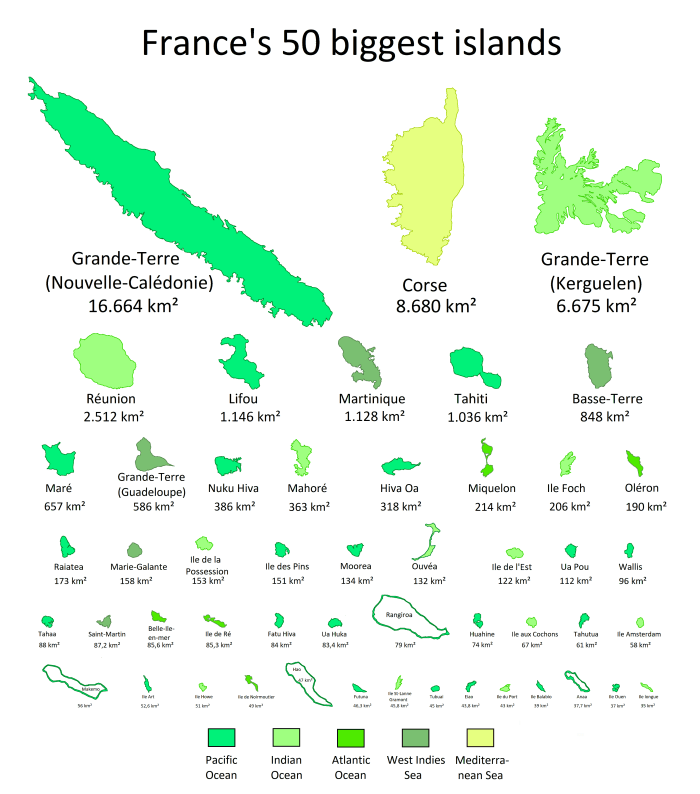
Eye Candy: France’s 50 largest islands

NOL French islands worldwide
Click here to zoom

This is pretty cool. France still has an overseas presence in the Pacific, the Caribbean, the Mediterranean, the Indian and Antarctic oceans, and the Atlantic (including St. Pierre and Miquelon, an archipelago just off the coast of Newfoundland, a province of Canada). Here’s a good Wikipedia list of France’s islands. It’s in French. Translate it to English, if you must. Browse and soak it all in. Here is Jacques at NOL on all things French. And here is Vincent at NOL on all things Quebec, which is a French-speaking province in Canada.

Nightcap

  1. Is Heaven’s Gate really a bad movie? Rick Brownell
  2. You can’t go home again, America Emma Ashford, War on the Rocks
  3. Nostalgia and democracy Seth Cotlar, Age of Revolutions
  4. Aleppo after the fall Robert Worth, New York Times Magazine

A short note from New Delhi on the 2018 Eastern Economic Forum

Chinese President Xi Jinping recently attended the Eastern Economic Forum (EEF), hosted by the Russian city of Vladivostok, which was held on September 11th and 12th of 2018. President Xi (who became the first Chinese President to attend the EEF) met with Russian President Vladimir Putin for the third time in as many months. Significantly, Japanese Prime Minister Shinzo Abe also attended the Forum, which was titled “The Russian Far East: Expanding the Range of Possibilities.”

Both Xi and Putin repeatedly referred to not just their close personal rapport (Chinese President Xi Jinping, while referring to their individual ties, stated that his and Putin’s ‘friendship was getting stronger all the time’), but also the deepening of economic and strategic ties between Russia and China, as well as the convergence on key global issues (neither side missed the opportunity to target the US for it’s inward looking economic policies).

China was also participating in military exercises, held in Siberia, which have been dubbed ‘Vostok 2018’ (Beijing clarified that these military exercises were not targeted at any third party). The military exercise (September 11-17, 2018) involves 300,000 troops, 1,000 planes, and a number of warships. China sent over 3,000 People’s Liberation Army personnel for the military exercises.

China-Russia Economic Times

A number of issues were discussed during the course of the Forum. Both sides agreed that there was a need to accelerate bilateral economic ties. Trade has witnessed a significant rise in recent years, while in 2017 it was estimated at over $80 billion. In 2018, bilateral trade could surpass $100 billion. Chinese investments in Russia have also been increasing. According to the Russia-China Investment Fund (RCIF; set up in 2012), 150 representatives from China and Russia have already identified 73 projects estimated at $100 billion. Also according to the RCIF, 7 projects estimated at well over $4 billion have already been undertaken.

Both sides also agreed to promote stronger synergies between the Belt and Road Initiative (BRI) and the Eurasian Economic Union (EEU).

Given the fact that the Forum was held in Russia’s Far Eastern Region (RFE), the need to increase Chinese investment in the RFE was high on the agenda. President Xi stated that China has always been a key participant in development projects in the Eastern parts of Russia. China’s Shandong Hi-Speed Group is also likely to invest in highway projects in the RFE.

Recent years have witnessed an increasing Chinese economic presence in Khabarovsk, which is the second largest city in the Eastern Region and 800 kilometres from Vladivostok. It may also be pertinent to point out that a large number of Russians have been uncomfortable with the growing Chinese economic clout, as well as immigrants. In 2010, the Chinese population in the Russian Far East was estimated at less than 30,000, though according to some estimates the population is much higher.

Protectionism

Both Russia and China warned against growing economic protectionism. Xi stated that he was all for greater international cooperation, and even lashed out at the growing tendency towards protectionism. Xi’s views were echoed by Putin, who stated that ‘the world and global economy are coming up against new forms of protectionism today with different kinds of barriers which are increasing.’

Putin made the point that protectionism was a threat, especially to Asia-Pacific (significantly, the current Trump administration has been using the term ‘Indo-Pacific,’ much to the chagrin of the Chinese).

What was also significant was that Xi came down heavily on ‘unilateralism’ at a time when China itself is being accused of ‘expansionist tendencies’ and promoting ‘Debt Trap Diplomacy.’ What was even more interesting was a reference to ‘UN Charter.’

The message emanating from the forum was clear: that the economic as well as strategic partnership between Moscow and Beijing is likely to strengthen, and both will try to develop an alternative narrative to that currently emerging from Washington.

Significance of meeting: Why India would be watching

New Delhi would be observing the Forum and meetings between Putin and Xi, since it’s own relations between Russia and China are of vital importance. While Russia is important in the security context, economic ties with Beijing are important for New Delhi.

New Delhi attaches immense significance to ties with Moscow

There are many in analysts in New Delhi who argue that India should be cautious in strengthening strategic ties with the US, given that this could cause friction in New Delhi’s relations with Moscow (Russia’s improved defense ties with Pakistan are often cited as a consequence of New Delhi moving too close to Washington DC). There are others who argue that New Delhi’s ties with Moscow are robust and time-tested, and will not be impacted by close ties with Washington DC. Russian President Vladimir Putin will be visiting India in October 2018 (for the 19th annual India-Russia Summit), while Indian External Affairs Minister Sushma Swaraj, during her Moscow visit, met with Deputy Prime Minister Yuri Borisov. Both of them jointly chaired the 23rd India-Russia Inter-Governmental Commission on Trade, Economic, Scientific, Technical, and Cultural Cooperation (IRIGC-TEC) meeting. A number of issues, including the need to boost bilateral trade and enhance people-to-people contact, were discussed. Significantly, this was Swaraj’s third visit to Russia in 11 months and she stated that India accorded ‘high priority’ to ties with Russia.

The fact that Swaraj’s visit to Russia took place after a successful 2+2 dialogue with the US, where a number of important defense agreements including COMCASA were signed, shows that New Delhi realizes the importance of ties with Russia. India is likely to sign a deal with Russia for the procurement of the S-400 air defence system, even though the USA has not given India any assurances with regard to a waiver from CAATSA (Countering America’s Adversaries through Sanctions Act) if India purchases defence equipment from Russia. During the visit, India is also likely to go ahead with an agreement with Russia for four frigates for the Indian Navy. While two of these will be manufactured in Kaliningrad, two will be manufactured in Goa.

New Delhi-Beijing ties

The issue of trade tariffs, which was highlighted by Putin and Xi, has also not gone unnoticed by New Delhi. One of the reasons (apart from the desire for peace and tranquility on borders) why India has been pro-actively reaching out to China is a convergence on economic issues. In fact, days after the 2+2 Summit, US President Trump, while referring to India and China, stated that the US has been providing subsidies to India and China for far too long and can not afford to do so any longer.

In terms of investments, there has not been much progress so far due to political disputes, but there is scope for greater economic cooperation between both countries through enhanced connectivity. New Delhi, on its part, should be open to projects like BCIM Corridor (Bangladesh, China, India, Myanmar). The recent proposal out of Beijing to start a railway line from Kunming to Kolkata may not seem possible in the short run, but in the long run it is definitely worth examining, and would give a boost to economies of India’s Eastern and North Eastern states. Interestingly, on September 9th, 2018, Myanmar signed a memorandum of understanding (MoU) with China for agreeing to establish the China-Myanmar Economic Corridor (CMEC). New Delhi should see this connectivity project as an opportunity rather than an obstacle.

Conclusion

New Delhi, while enhancing strategic cooperation with Washington, needs to keep in mind that there is a plethora of economic as well as other issues of global importance where New Delhi can find common ground with Beijing and Moscow. India bilaterally shares robust economic ties with China, and a strategic relationship with Russia. All three countries are also working closely in BRICS as well as SCO. New Delhi also needs to keep in mind that while strategic ties with Washington are important, Trump’s unpredictability will compel New Delhi to keep all its options open and think in a nuanced manner. While historically New Delhi shares close ties with Moscow, the logic of geography can not be ignored in the context of India-China ties.
Nightcap

  1. The Alps Rhys Griffith, History Today
  2. London: imploding with cool Ian Jack, NY Review of Books
  3. Should you start your day at 2:30 am? Bryan Lufkin, BBC
  4. Bringing back the Sabbath (against work) William Black, Aeon

Nightcap

  1. The lost cause of the confederation Michael Koplow, Ottomans and Zionists
  2. When Concorde was the future Stuart Nathan, 1843
  3. Young and Russian in DC Ben Schreckinger, Politico
  4. The 50-year fall of the American middle class Regina Munch, Commonweal

Nightcap

  1. Liberals don’t know much about conservative history Geoffrey Kabaservice, Politico
  2. The American right wing Arnold Kling, askblog
  3. In defense of endless war Christopher Hitchens, Slate
  4. Remembering the French war in Afghanistan Olivier Schmitt, War on the Rocks

Pakistan-China ties and CPEC

Abdul Razak Dawood, Prime Minister Imran Khan’s Adviser on Commerce, Textile, Industry & Production and Investment, told the Financial Times that the previous Pakistan Muslim League (Nawaz ) government did not get a good deal for Pakistan in CPEC (China Pakistan Economic Corridor), and that Pakistan has lost out as a result of poor negotiations.

Dawood also made the point that some of the CPEC projects could be put on hold for a year, and CPEC can be stretched up to five years. Said Dawood: ‘Perhaps we can stretch CPEC out over another five years or so.’

Interestingly, during Chinese Foreign Minister Wang Yi’s  recent Pakistan visit, Pakistan’s Foreign Minister, Shah Mehmood Qureshi, assured the former that Pakistan would accord high priority to CPEC — which was of immense economic and strategic importance for Pakistan. Qureshi also stated that projects would be implemented at the earliest outset. Even the normally outspoken Pakistan Finance Minister, Asad Umar, was cautious, and categorically said that ‘We don’t intend to handle this process like Mahathir.’ Imran Khan also met with Wang Yi, and a statement from the Pakistani side read as follows:

‘The Prime Minister reiterated that the Government is committed to the implementation of the CPEC.’

Wang Yi on his part emphasized on the fact that CPEC was not responsible for Pakistan’s debts. He also stated that Beijing was willing to re-negotiate a Free Trade Agreement which, according to many in Pakistan, was heavily skewed in favour of China and has faced domestic opposition.

During the course of a meeting between the Planning, Development and Reforms Commission of Pakistan and the National Development and Reforms Commission (NDRC) of China, two interesting aspects were added to the existing agreement. The first, that third countries would be allowed to invest in the upcoming 9 Special Economic Zones (SEZs) of CPEC. The Chinese delegation during the meeting is supposed to have conveyed the point that it was open to investment from countries which were friendly to both Pakistan and China to invest in the SEZs. Some of the potential countries discussed were Turkey, Russia, and Saudi Arabia

Second, ‘social sector’ schemes and regional development schemes were added to the existing CPEC projects. Social sector schemes include drinking water, health, education, and technical training. The inclusion of these areas was done keeping in mind the priorities of the current government.

Is a significant re-think towards CPEC possible?

There is no doubt that Islamabad’s dependence upon China would have increased as a consequence of its current economic situation and it’s deteriorating ties with Washington (days before US Secretary of State Mike Pompeo landed in Islamabad, military aid to the tune of $300 million was withdrawn). Yet, some re-think vis-à-vis CPEC can not be ruled out because a number of Pakistani politicians have expressed discomfort with the lack of transparency regarding the project.

Transparency with regard to the CPEC project

When in opposition, Imran had himself spoken about the need for greater transparency and openness with regard to the project. Before the elections in July 2018, many analysts argued that the Chinese would be far more comfortable with parties like the PPP and the PML-N as opposed to Imran Khan.

The protests of Khan and his party (PTI) against the previous PML-N government were also viewed with skepticism by the Chinese who believed that these protests would be detrimental to the progress of the project. Khan during his meeting, in 2016, with the Chinese Envoy to Pakistan tried to address the apprehensions of the Chinese by saying he was all for the project.

One of the objections of Pakistani politicians from Non-Punjabi provinces (across parties), as well as analysts, was that the project was Punjab Centric. In November 2017, members from the Senate, including the then-ruling party, PML-N, had spoken about the lack of transparency of CPEC, and had also alluded to the fact that China was benefitting at Pakistan’s expense.

Apart from domestic politics, the firm stance taken by Malaysian Prime Minister Mahathir Mohammad with regard to some Chinese projects (the Malaysian PM scrapped projects worth $20 billion) is also important and has forced a rethink in Pakistan . An editorial in Dawn titled ‘Rearranging CPEC’ also cited Mahathir’s stance against Chinese projects. While it is unlikely that Pakistan may follow suit as was stated by the Finance Minister, Asad Umar, as well as by Abdul Razak Dawood himself (Dawood in fact had to clarify that his remarks with regard to CPEC had been quoted out of context), there will be groups in Pakistan (especially members of the business community) who could nudge the current government towards tweaking the CPEC agreement further as well as resetting the Pakistan-China economic relationship to some extent.

China itself can not afford to ignore Mahathir’s stance, as well as his statement about the rise of a ‘new colonialism’. The address of Chinese President Xi Jinping at the Africa-China Summit, as well as Wang Yi’s statements during his Pakistan visit, are clear indicators that China is not taking Mahathir’s statements lightly. Whether Imran Khan can be a Mahathir of course is a different issue.

Lack of options and GHQ

While there may be certain personalities within the current government who are making the right noises with regard to the CPEC project, Islamabad’s economic situation has reduced its options.

Apart from this, the Pakistan army (which runs the show when it comes to complex foreign policy issues) has robust ties with Beijing, and will prevent any drastic changes to the CPEC agreement. During his meeting with Wang Yi, Pakistan’s Chief of Army Staff, General Qamar Javed Bajwa, assured the visiting Chinese Minister of full support. The Chinese also had a robust relationship with former Pakistan Army Chief, Raheel Sharif.

A re-think on CPEC, as well as Pakistan-China economic relations (highly unlikely in the short run), would benefit not just Pakistan, but could have broader ramifications, and may compel more countries to rethink their ties with China.

Mahathir Mohammad deserves credit for highlighting the shortcoming of China’s infrastructural projects as well as its economic ties with certain countries. This debate is not likely to die down soon, though not every country is in a position to take a bold stand like Mahathir. Imran Khan, in private, may be supporting Mahathir’s approach towards China, but can not afford to do so publicly.

RCH: The United States and the Middle East

My latest for RealClearHistory is all about ‘Murica and the Mideast. An excerpt:

2. The Iranian Regime. During the Cold War, the U.S. government supported a number of regimes that were illiberal in the name of fighting communism. The necessity of such tactics are beyond the scope of this article, but the Pahlavi “dynasty” of Persia was one such illiberal regime. The Pahlavis were anti-Communist and pro-Western, which meant that women could dress how they pleased and go to university, and that religion was pushed to the sidelines of political life. This made the Pahlavi’s enemies of not only the socialist reformers of Persia, but also the majority of the conservative religious clergy. One Pahlavi was ousted by a joint British-Soviet invasion in 1925, and his son was deposed in the 1979 revolution that turned Persia into Iran. After the British-Soviet invasion, the United States became heavily involved in Persia and supported the secular autocrat almost blindly, which is why the anti-Shah revolution of 1979 was also anti-American.

Please, read the rest.

Nightcap

  1. The criminal as entrepreneur Cedric Muhammad, American Affairs
  2. Did the British Empire depend on separating families? Sumit Guha, Not Even Past
  3. What does nationalism mean in a contested state? Daniel Solomon, New Republic
  4. ‘In the long run we are all dead’ Adam Tooze, London Review of Books

Nightcap

  1. 9/11: Lessons Irfan Khawaja, Policy of Truth
  2. Thwarting Trump, or the voters? Ross Douthat, NY Times
  3. The role of religion in Anglophone democracies Bruce Clark, Erasmus
  4. A tale of two Asia policies Zack Cooper, War on the Rocks

Rule of Law: the case of open texture of language and complexity

This article by Matt McManus (@MattPolProff) recently published at Quillette made me remember H.L.A. Hart’s theory of law and the problems derived from the open texture of language, a concept borrowed by him from Friedrich Waismann, an Austrian Mathematician and philosopher of the Vienna Circle. Many authors would rather distinguish “open texture” from vagueness: being the latter a proper linguistic matter, the former is related to the dynamic of the experience. As Kyle Wallace summarized the problem: “certain expressions are open textured simply because there is always the possibility that in some new experience we may be uncertain whether or not the new expression is applicable.”

However, Brian Bix, in his “H.L.A. Hart and the ‘open texture’ of language,” argues that, despite the concept of “open texture” being a loan from Waismann’s philosophy, the use gave to the term by Hart is not derogatory at all. With respect to Hart’s point of view, the “open texture” of the law is rather an advantage, since it endows the judges with a discretionary power to adjust the text of the law to the changing experience.

Concerning individual liberty, the laudatory qualification of the open texture of the law made by Hart and Bix might be shared by the jurists of the Common Law tradition, but it hardly would be accepted by anyone from the Civil Law System. According to the former, every discretionary power enabled to the judges helps to prevent the political power from menacing individual liberties, while, following the latter, the written word of the law, passed by a legislative assembly according to constitutional proceedings, is the main guarantee of individual rights.

But the subject of the open texture of the language of the law acquires a new dimension when it is related to the coordination problem derived from the limits to knowledge in society. As it was distinguished by F. A. Hayek in the last chapter of Sensory Order, we could talk about two types of limits to knowledge: the relative and the absolute. The relative limit to knowledge depends upon the sharpness of our instruments used to gather information, whereas the absolute limit to knowledge is sealed by the increasing degrees of abstraction that constitute every classification system. Since every new experience demands the rearrangement of the current system of classification we use to order our perception of reality, the description of this feedback process requires a supplementary system of classification of a higher level of complexity. The progress of the subject of knowledge into higher levels of abstraction reaches an unconquerable limit when he is tasked with the full study of himself.

Thus, we could ascertain that the judiciary function would be enough to fulfill the problems that could arise from the open texture of law, since the judge pronounces the content of the law not in general terms, but in concrete definitions in order to solve a case. In this labour, the judge not only applies the positive law, but he might “discover” abstract principles that become relevant in order to the given new experiences that begot the controversy over the content of the law he is due to solve. This function of “immanent critique” of the positive law by the judiciary system is well discussed by F. A. Hayek in the fifth chapter of his Law, Legislation and Liberty. Since the judiciary function solves in every concrete case the coordination problem derived from the fragmentation of knowledge in society, the open texture of the law does not make it opaque to the citizens.

That notwithstanding, the open texture of the law remains as a systemic limit to the legislative assemblies to define the whole content of the law. Thus, since the whole content of the law can only be achieved in a given concrete case by a judge solving a particular controversy, every central planner would have to accomplish his model of society not through decisions based on principles, but on expediency. Central planning and rule of law will be always set to collide. In this sense, the concept of open texture of the law might work as a powerful argument for the impossibility of every central planning to be performed, sooner or later, under the rule of law.

Nightcap

  1. Nationalism, Israel, and Hitler Alberto Mingardi, EconLog
  2. How Russia became Russia Harish Yagneshwar, Pragati
  3. Europe’s deep localism and populism Angelo Codevilla, Hoover
  4. Steve Bannon in Bosnia Krithika Varagur, NY Review of Books

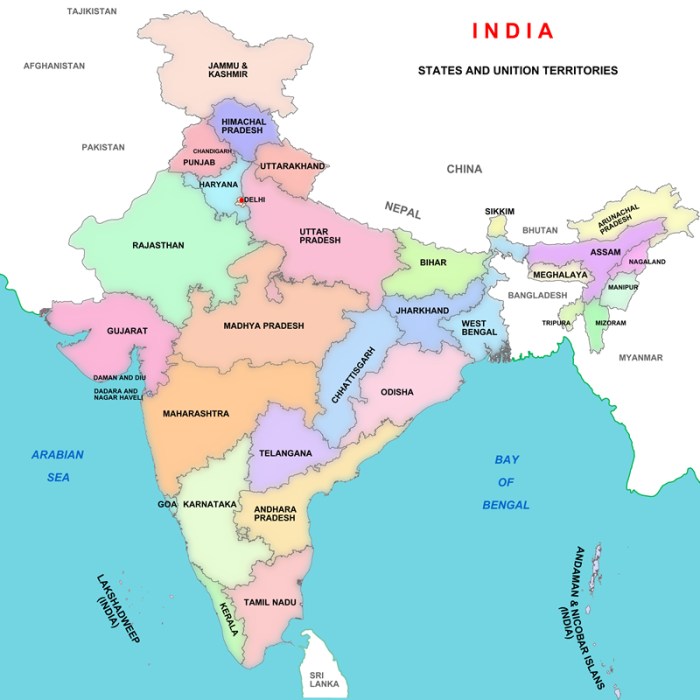
Eye Candy: the states in India’s federation

NOL India's states
Click here to zoom

Stay tuned for more on India from a sub-state perspective. I’m going to find the GDP (PPP) per capitas of these states. I’m going to find their population densities. I’m going to find their literacy rates and their life expectancy rates. I’m going to find out much more about India over the coming 12 to 16 months.

In the meantime, here are all of NOL‘s posts from Tridivesh, a resident of New Delhi. And here are all of NOL‘s posts from Shree, a resident of New York.

Nightcap

  1. Why don’t Japanese and Taiwanese militaries talk to each other? Katsuya Yamamoto, National Interest
  2. The fraud of foreign aid Kenan Malik, Guardian
  3. What V. S. Naipaul taught me about posturing P. Kishore Saval, American Affairs
  4. India’s stealth war on liberal democracy Shikha Dalmia, the Week