The burden of imperialism, the virtues of immigration, and the importance of data

One thing I have noticed about the terrorist attacks in Paris is the relatively little that imperialism is brought up. The Muslims of France hail from parts of the world that were once a part of the official French empire. This empire is still a force in much of its old official boundaries. The British and the Dutch also have problems with Muslims that were once a part of an official empire. The Germans and the Turks are a different case, as the Ottoman and German empires had more of a deal between themselves in regards to cheap labor than the cases of Western Europe, but the relationship is still not one of immigration – not in the sense that is perceived by Americans, Canadians, and Australians.

I wonder how much of the tension between natives and immigrants is due to the imperial relationship of the sides involved. I would wager quite a bit. I also have to wonder about the role of land in all of this. Land, of course, is the ugly cousin of labor and capital, two of the three factors of production utilized by economics (there is a fourth sometimes cited, entrepreneurship, but I am not yet convinced that this belongs and neither are many economists).

Immigration is different than what the former imperial states of Western Europe are dealing with. I know the similarities are seemingly the same, but they are not. I would be happy to flesh this out more in the ‘comments’ threads if anyone takes issue with it.

Here is the abstract from an excellent article in Social Forces on the futility of deriving any conclusions about a society based on simple perceptions:

We investigate the thesis widely credited to Max Weber that Protestantism contributed to the rise of industrial capitalism by estimating the associations between the percentage of Protestants and the development of industrial capitalism in European countries in the mid- to late nineteenth century. Development is measured using five sets of variables, including measures of wealth and savings, the founding date of the principal stock exchange, extension of the railroads network, distribution of the male labor force in agriculture and in industry, and infant mortality. On the basis of this evidence, there is little empirical support for what we call the “Common Interpretation” of Weber’s The Protestant Ethic, namely the idea that the strength of Protestantism in a country was associated with the early development of industrial capitalism. The origin of the Common Interpretation and its popular success are probably derived largely from selected anecdotal evidence fortified, through retrospective imputation, by the perceived well-being of contemporary Protestant countries.

The article is titled “The Beloved Myth: Protestantism and the Rise of Industrial Capitalism in Nineteenth-Century Europe” and it can be read here (pdf). As you read through analyses of the terrorist attacks in Paris, be sure to keep this in the back of your mind.

By the way, the piece is co-authored by Jacques, who has failed to adhere to his own standards when it comes to discussing Islam.

Friends of Liberty and Friends of Montaigne II: Marie de Gournay (Expanding the Liberty Canon series)

Marie Le Jars de Gournay (1565-1646) was a minor aristocrat from Sancerre in central France who became a leading scholar and writer of her time, and an important advocate of women’s liberty through her scholarly career against the dismissive attitude of powerful men of the time, and through her writing in favour of equality between men and women. She was a friend of Michel de Montaigne, one of the great historical advocates of liberty if in a rather enigmatic manner, and he even treated her as an adoptive daughter. After the death of Montaigne, she lived on the Montaigne estate as a guest of the family, while preparing the third edition of Montaigne’s Essays, a contribution to the history of thought and thinking about liberty in itself.

Gournay’s work in the transmission of Montaigne’s thought is though just one episode in a life of writing covering translations of the classics, literary compositions, and essays. Two essays in particular mark important moments in the case for liberty to apply equally between the two sexes: The Ladies’ Complaint and Equality of Men and Women. In these brief, but rich texts, Gournay argues that there can be no liberty, where goods are denied, so since women have been deprived of the goods of equal esteem, there is no liberty.

She points to the frequency and intensity of denial of equal esteem to women and contests it through the examples in which women have been esteemed, or we can see that women have performed great deeds on a level with great men. The argument is very much that of a Renaissance Humanist, that is someone educated in the languages, history, and literature of antiquity, as great expressions of human spirit and with the assumption that these are the greatest expressions of human spirit. Greatness of literary, intellectual, and statecraft in modern languages, modern thought, and modern states, is possible where  continuing from the classical tradition. Since the emphasis is on pagan classical antiquity, the Humanists to some degree placed humanity above Christian theological tradition, though some Christians were also Humanists and secular Humanist achievements to some degree interacted with scholarship of the Hebrew and Greek languages of the Bible, along with the Greek and Latin used by church thinkers.

Gourany’s concerns are largely secular but she does deal with the place of women in the Bible. For the Hebrew Bible (Old Testament) She points out that if the Queen of Sheba (often thought to refer to an ancient queen of Yemen, or possibly Sudan) visited King Solomon, because she knew of his great wisdom then she too must have had an interest in wisdom, and had some high level of scholarship, learning, and intellectual work herself.

With regard to the New Testament, she comments on St Paul’s injunction in his Epistles that women be silent in church and not take the role of priest. Gournay argues that Paul was not writing out of contempt for women, but fear that men would be distracted and tempted by women speaking out in church serves whereto as part of the congregation or as priests. The limitation on the role of women is not therefore based on beliefs about the supposed inferiority of women, but control of male desire.

On the role of women in the Bible, Gournay argues that in general we should not argue that it supports an inferior role for women, given that God created both men and women in the beginning, and given that men are commanded to leave their parents in order to find a wife. The connection between man and woman, and the idea that a man’s life is completed by association with a woman, is the main message of Christian scripture for Gournay.

Looking at the more secular aspects of Greek and Roman antiquity, Gournay deals with philosophical and with historical concerns. On the philosophical side she notes the importance that Plato gives to the priestess Diotima (unknown outside Plato’s writings) in his dialogue The Symposium, which appears to recount conversations about love in a dinner and drinking party in Athens attended by some of the leading people of the time.

Plato shows Socrates presenting the views of Diotima as the correct ones on love, and Socrates, the teacher of Plato, always appears in Plato’s dialogues as a representative of truth. So Gournay points out, it must be conceded that Plato claims that his ideas, and those of Socrates, are in some degree dependent on the thought of women of their time. In that case, Aristotle made himself absurd when  he claimed that women were defective and inferior, since he was the student of Plato and therefore was in some way formed by ideas that Plato said came from Diotima.

Plato’s student Aristotle may have claimed women were inferior by nature to men, but Antisthenes, a follower of Socrates regarded women and men as equal in virtue. Gournay also refers to the tradition according to which Aspasia, female companion of the Athenian democratic leader Pericles (admired by Plato and Aristotle though they did not share his democratic principles) was a scholar and thinker of the time. There is a lack of contemporary sources confirming this view, but this applies to much about the antique world, so Gournay’s suggestions about Aspasia are just as strongly founded as many claims about antiquity, and the investigation of tradition is itself an important part of any kind of intellectual history.

Moving onto Roman historiography, Gournay points out the role take by women in the tribes of Germany and Gaul, according to Tacitus. Women serve as judges of dispute and as battlefield participants inciting male warriors to fight fiercely. So she can point to a revered classic source, which suggests that women had roles in ancient France and Germany denied to them in those countries in early modern times. In general, as she points out, the antiques often referred to a tribe of female warriors, known  as Amazons, which may have some historical origin in Scythian tribes from north of the Black Sea.

Gournay uses her formidable Humanist learning to demonstrate the ways in which equality between men and women had been recognised in the ancient past, on some occasions in some places at least. Showing that women have been recognised as equal to men in some contexts is evidence that the lower status of women in many societies is a result of socially embedded prejudices rather than any difference in abilities. As Gournay notes, rectifying denial of rights to women is part of the basis for real enduring liberty.

Florentine Liberty I: Machiavelli, The Prince (Expanding the Liberty Canon series)

I have already addressed Machiavelli’s Discourses on the First Ten Books of Titus Livy here and I may well come back to them later. However, in the present post I will discuss the famous Machiavelli text, which is concerned with states headed by princes rather than republics, the subject matter of the Discourses. This will itself be the the first half of a two part discussion of liberty in Florence, with a second half on Guicciardini.

The city state of Florence had a history self-government, often republican rather than princely, going back to the eleventh century, when it broke away from the control of German emperors. Its role in republican political thought goes back to the thirteenth century as does its role as an early centre of capitalism, suggesting a connection between the economic development and the movement of political thought.

The first notable republican writer was Dante’s guardian Brunetto Latini (1210-1294). That is Dante Alighieri, the author of the great epic poem The Divine Comedy, one of the very great figures in the history of European literature. So not only was Florence the focus of late Medieval republicanism and capitalism, it was a focus of the development of literature in modern European languages, and of literary Italian in general. Dante created a modern language text on a level with Homer and Virgil, so putting Italian on a level with Latin and Ancient Greek, and confirming the development of modern languages, other than the Latin of church scholars, as instruments of thought and artistic creation. Indeed Latini even has a small role in the Divine Comedy, though rather ungratefully he is placed in Hell. This seems to be based purely on his same sex activities rather than any bad character beyond breaking church positions on sexual conduct. After the secular scholar Latini, the next Florentine given a place in the history of republican political thought is Remigio dei Girolami (1235-1319), a Dominican scholar whose philosophy was influenced by Thomas Aquinas. After that the scholar and city Chancellor Leonardo Bruni (1370-1444) keeps the republican tradition renewed. Detailed examination of these figures is perhaps a bit out of the scope of a historical survey series, but they certainly provide a rich tradition for Machiavelli and Guicciardini to examine and employ.

I have referred to this period in the history of Florence as late Medieval, but it can just as much be described as Renaissance. The great growth of classical learning and artistic creativity associated with the European fifteenth and sixteenth centuries had its beginnings in thirteenth century Florence and northern Italy, due to the commercial city states where there was patronage of the arts and there was contact with the Greek learning of the now highly weakened Byzantine Empire, which stemmed from Greek and Roman antiquity. Averroism, as in the legacy of the twelfth century Muslim philosopher from Cordoba, Ibn Rushd known in the Latinate world as Averroes. A period of Muslim influence, or sometimes dominance in Sicily from the ninth to the thirteenth century meant that Muslim thought was part of the general Italian heritage.

Niccolò Machiavelli (1469-1527) was a product of Florentine republican tradition and the general Italian Renaissance. He lived through periods of secular republican, religious republican, and secular princely rule in Florence. The religious period should be given some attention, as though Machiavelli himself was highly secular (possibly a non-believer, but a variety of views exist on that issue), the events of the religious republican period made a deep impression on him. From 1494 to 1498, the politics of Florence were dominated by the Dominican friar (like Girolami mentioned above), Girolamo Savonarola, who pushed Florence towards religious purification in anticipation of apocalyptic events. The apparent craziness was accompanied by some intellectual and literary sophistication, and was not just a pure descent into fanaticism. In the end the Pope found Savonarola too troubling too ignore so that he took action that ended with the execution of Savonarola as a heretic. Despite his lack of religious enthusiasm, Machiavelli shared a belief in the special role of Florence, though his vision of the city was as the descendent and repetition of the Roman republic rather than as the starting point of a Christian apocalypse. He wanted purification of a kind, if through the placing of laws above individuals, rather than religious observance, and an end to a corrupt aristocratic domination.

The Prince both pays tribute of a kind to Savonarola as a prophet without arms and sets Machiavelli on a path of hoped for cooperation with the dominant family, the Medici who had replaced republican with princely rule, arresting and torturing Machiavelli in the process, as he was a civil servant and diplomat in the former republic. The part admiration for Savonarola comes from an antique tradition of revering founders of republics and great law givers to states of any kind. This reaches a peak in Cicero who described founders of republic as god like. However secular Machiavelli was, he was aware of ancient Jewish history as recorded in the Hebrew Bible and the law giving role of Moses, which is one model of state foundation for Machiavelli and therefore of possible conditions for liberty, since liberty requires law rather than personalised rule.

The Prince is the product of a man who though very talented at the life of a private scholar which he pursued after his political fall, wanted to be working on public affairs even under a prince rather than a republic. It is a lengthy job application to Lorenzo Piero de ‘Medici (not to be confused with his grandfather Lorenzo the Magnificent) and despite composing the longest and best covering letter in all history, Machiavelli did not become a counsellor to a prince. So, we should not regard Machiavelli as a successful ‘Machiavellian’ and perhaps think again about any preconception that The Prince is some key to all knowledge in the dark arts of power and a place of voyeuristic pleasure in observing the inner workings of the state.

Machiavelli does offer his potential employer (who may never have read this extraordinary application material) some ruthless sounding advice on how a prince should gain and maintain power, including the execution of those who create the most obstacles to power. This is not exactly shocking advice for the time. The death penalty was widely used and extra-legal killings for political reasons were normal if not in line with the sort of moral standards rulers publicly proclaimed. The whole outrage of the church and others at the suppose shocking immorality of The Prince is one rather absurd and lengthy exercise in hypocrisy. There was certainly little Machiavelli could have taught Popes of the time in the darkest arts of power. Condemnation of Machiavelli was due to his making public unpleasant realities so that anyone who could read would now be aware of how kings used their power. The book was not published in Machiavelli’s time, so the torrent of vilification came after his death.

The more brutal aspects of The Prince do not even begin to match the horrors of dynastic wars and religious persecution at the time, particularly if we take into account the behaviour of colonists of the time. Machiavelli recommends none of these things which political and religious leaders of the time were willing to have on their conscience. Some passages recommend complete colonisation of newly acquired territories as one means of maintain control, in preference to partial colonisation which is as close as Machiavelli gets to advocating generalised suffering for civilians. In any case he does not recommend the kind of massacre and rapine normal at the time, and the main thrust of the argument is not towards conquest, but a state which has some community with its citizens.

Machiavelli was sceptical of the military value of walls and fortresses compared with a citizen army willing to defend its own land. Opposition to royal fortresses was opposition to one of the main forms of state control at the time. The prince is expected to dispose of individuals dangerous to assuming power, but this is advice to princes who newly have power and need to consolidate it, not advice on long term methods of government. The long term approach is to respect law, respect the property of citizens, and leave women free from forced advances. The prince is advised to hunt a lot as a means to improved military abilities, in knowing the terrain of his own land in detail so knowing how to defend it. The martial interests are presented as the prince’s main area of interest, so that the prince is more of a commander in chief of the military than a man of political power. The idea of a monarch who is mostly a chief of the military was a republican idea at the time and anticipates liberal ideas about the limited scope of any state apparatus.

The relationship between morality and political principles is where Machiavelli departs from antique republican thinkers like Aristotle and Cicero who present politics as the extension of virtue and moral principles. Machiavelli even overturns some of their ethical limits on power. He does so through a sophisticated dialogue with Aristotle, Cicero, and Seneca, which largely does not mention them by name but is very recognisable to those who have studied them, which was a high proportion of likely readers of Machiavelli in his own time. Both Aristotle and Cicero refer to the tyrannical ruler as a wild beast or worse. This itself refers to an antique way of thinking about ethics as self-control, which puts us above the supposed level of animals. Machiavelli challenges this by advising the prince to be a mixture of human and beast, and as beast to combine the cunning of a fox with the fierceness of a lion. None of this is Machiavelli advocating tyranny, it is an appreciation of power and desire which ancient thought was not good at accommodating. The good ruler rules from a desire to pursue the good life and be a friend of citizens in ancient thinking. They could not think of power and self-referring desire except as negatives, even if their own actions went against their words. Cicero’s political career included a willingness to go to the limits of law and beyond where he saw it as necessary to defend the republic, he simply had no language to explain this in the moral terms he used. His main political work, The Republic includes the positive contribution of Scipio Africanus the Younger, the Roman general who physically destroyed the city of Cartage and slaughtered every last inhabitant.

Cicero, like other ancients, had difficulty in discussing politics as power and civilised individual action as based on desire, rather than a morality of self control, so they had little way of accommodating theories of power and desire. This is why there are no ancient writers praising commerce except maybe within very limited and constrained circumstances and then only in a very minimal way, even Seneca who was a major money lender of the whole empire. Machiavelli did have  vocabulary and understanding of power in politics and desire in human action. He was convinced that general application of moral principles about always being truthful, merciful, generous, and so on, were not adequate to understanding the possibilities of human creation in politics and in commerce. Moral outcomes mattered to him, and he is clear in The Prince that some acts are too immoral to accept for any reason, but he thought moral outcomes come from skill in political arts and in trade offs between different moral demands. If one can sincerely claim to be always purely moral and never accept a lesser evil for a greater good, then one maybe has the right to be shocked by Machiavelli, but who can claim such a thing?

The Prince conforms to the wish of a prince to have power and glory and use violence to seize power where the chance arises. However, as far as possible, it always pushes the prince to do so through through respecting the rights of citizens, working to gain their consent, respect peace and stability, and the regular application of law. The prince is urged to avoid the virtue of generosity, because the ‘generosity’ of princes comes from taxations and is therefor a burden on citizens undermining their economic welfare. So that is the wickedness of Machiavelli! Avoid so called virtues which harm those they are supposed to benefit. It is advice to the prince to work so much through law, public good, and concentrating on his military duties, that a republic is bound to emerge under the nominal rule of a prince. That is the goal of all the wickedness in service of dark power.

Expanding the Liberty Canon: Icelandic Sagas of the Middle Ages

A first in this series, a discussion of literary texts rather than a text covering political ideas through philosophical, historical, legal, or social science writing. One good reason for the new departure is simply that the sagas of Iceland have become a focus of debate about the possibility of a society with effective laws and courts, but no state.

It has become a celebrated case in some pro-liberty circles largely because of an article by the anarchy-capitalist/individualist anarchist libertarian thinker David Friedman (son of Milton) in ‘Private Creation and Enforcement of Law: A Historical Case’, though it has also been widely studied and sometimes at full book length by scholars not known for pro-liberty leanings. I somewhat doubt that Iceland of that era could be said to have purely private law, but I will let the reader judge from the descriptions that follow.

Other important things also come up in discussing the sagas. There is the issue of how much political ideas, political theory, or political philosophy just reside in written texts devoted to theories, institutions, and history, and how much they may reside in everyday culture, collective memory, and the literature of oral tradition. This becomes a particularly important issue when considering cultures lacking in written texts, but nevertheless has ethics, law, and juridical practice of some kind. The modern discipline of anthropology has provided ways of thinking about this, but rooted in older commentaries on non-literate societies, as in the Histories of Herodotus (484-425 BCE) and indeed the texts by Tacitus, considered here last week, on ancient Britons and Germans.

The Icelandic sagas present the ‘barbarians’ in their own words, though with the qualification that the sagas were largely from Pagan-era Iceland and then were written down in Christian-era Iceland. You would expect some alterations of a kind in the sagas as they are transferred from memory and speech to writing, and the religious transformation may have led to some element of condemnation of the old Pagan world colouring the transcription.

Nevertheless we have tales of Pagan warrior heroes in a society with very little in the way of a state, written down only a few centuries later (maybe three centuries), which is a lot closer in time than the absolute minimum of seven centuries between whatever events inspired the Homeric epics, the Iliad and the Odyssey, and the writing down of the oral tradition in the eighth century BCE.

The comparison with Homer is worth making, because the Sagas present warrior-heroes whose extreme commitment to the use of individual violence to maintain and increase status echoes that of the heroes in Homer. The all-round enthusiasm for inflicting death and injury as a way of life, and a basis of status, may of course lead us to regard these as more action heroes than moral heroes. In the Homeric context, and discussions of other pre-urban societies dominated by a warrior aristocracy, the word ‘hero’ often has a descriptive political and social aspect, which is more relevant than any sense of moral approbation in the term hero.

The classic discussions of warrior ‘hero’ societies since Homer and Tacitus are Giambattista Vico’s New Science (1744) and Friedrich Nietzsche’s On the Genealogy of Morality (1887), and these should be seen in the context of Enlightenment writing on ‘savage’ and ‘barbarian’ stages of history. Nietzsche’s contribution comes from the time in which anthropology is beginning to emerge as a distinct academic discipline, tending at that time anyway to concentrate on ‘primitive’ peoples.

The Sagas give a literary impression of a society in which the state has not developed as an institution, which could be regarded as evidence of ‘primitiveness’. However, the Icelanders had originally left the monarchical state of Norway, which features heavily in the Sagas, and they were in touch with the monarchical state of England, in a sense which could include Viking raids, as well as warrior service to Anglo-Saxon kings. So it would not be correct to say that the Icelanders were at some early, simple stage where they did not know anything different, as they had chosen to reject monarchical institutions, or at least had never found it worth the trouble to go about creating a monarchy with a palace, an army, great lords, taxes, and law courts appointed from above.

What the Icelander had was a dispersed set of rural communities, in which there were no towns. The centre of the ‘nation’ was not a capital city, but an assembly known as ‘althing’, which combined representative, law making, and judicial functions, with the judicial function predominating. There was not much in the way of political decision-making since there was no state, and the laws were those that existed by custom, not through deliberate law-making.

The judicial function was exercised through judgements, which were essentially mediations on disputes that could also be brought before lower level assemblies-courts. The right to participate in the assembly with a vote was restricted to a class of local notables, though not a hereditary aristocratic class.

Judging by the Sagas, the judgments of the Althing may have been influenced by the numbers present on either side, particularly if they were armed. Only one person was employed by the Althing, a ‘law speaker’, whose compensation was taken from a marriage fee. At least in the earlier years of the Icelandic community, from 870 to 1000, there seems to have been nothing else in the way of a state. Conversion to Christianity in about 1000 led to tithes (church taxes) and a good deal more institutional interest in what religion Icelanders might be practising. In the thirteenth century the tendency towards more, if still very little, state was completed by incorporation into the domains of the King of Norway.

The Sagas do not give a complete institutional description, but are a large part of the evidence for what is known about pre-Christian Iceland. The stories of warrior-heroes and families often takes us into the judicial life of the community, as violent disputes arise. There is no police force of any kind, so disputes initially dealt with by force, including killing.

Sagas which concentrate on warrior heroes suggest that considerable property and local influence could be built up through individual combats in which the winner kept the property of the loser, that is the person who died in the combat. The more family based sagas suggest that at least some of the time, combat might lead to the loser ceding some land rather than having to fight to the death.

Presumably, in some cases, the warrior honour culture led to anyone challenged to combat being forced by custom to agree to do so, which gave particularly effective warriors a chance to become major land owners through willingness to issue challenges. The warrior-oriented sagas really suggest a society in which some part of the population were constantly using deadly violence to protect and advance their status, or simply in reaction to minor slights on honour, and the use of such violence could lead to the killing of a defenceless child.

The use of murderous violence against those unwilling, or unable, to fight back was deterred and punished to some degree by a system of justice which was in large part voluntary. There was no compulsion to attend the Althing, or lower assemblies, and no means to enforce attendance except the violence of those wishing to make a legal complaint, should they wish the accused to be present. The punishments, even for the most extreme violence, were never those of physical punishment, prison, or execution.

Judgments required economic compensation, or at the most extreme outlawed the guilty party, who appears to have been largely given the time and opportunity to leave Iceland unmolested before the most severe consequences out outlaw status could be applied. Outlawing of course removes legal protection from the person punished who can therefore be murdered, or s subject to some other harm, without a right to legal complaint. Outlawing often seems to have been the result of non-payment of compensation demanded by the court.

The judicial system was essentially voluntary, and judging from the sagas a lot of disputes were settled by private violence, which could include murder of supposed witches and torture of prisoners. Victims of violence, or other harms, were only protected by law as far as they or their friends, neighbours, or families, were willing and able to go to court, demand an official judgement authorising punishment, and enforce it.

Slavery was normal, but there was some legal protection of slaves, in so far as anyone in their community was interested in ensuring enforcement. Jealousy and competition between neighbouring families may have helped produce legal protectors for the socially weak, but this is maybe not the most reassuring form of protection.

For liberty community fans of the example of Iceland from 870-1000, it is a example of how anarchism can work; that is, it is an example of how there can be law and a judicial system without a state beyond judicial assemblies and the one employee of the most important assembly.

Medieval Iceland was a functioning society, which was perhaps not as sophisticated as England, France, the German Empire (Holy Roman Empire), the Byzantine Empire (which appears in the Sagas as the Greek Empire), or caliphate of Cordoba, just to name the most powerful European states of the time, but did leave a significant literary legacy in the Sagas, as even the most violent warrior-heroes wrote poetry some times. It was a rural seagoing trading community, in which violence was no more prevalent than other parts of Medieval Europe, and a tolerable existence was maintained in the face of a very harsh nature.

The arguments for a less enthused attitude toward Iceland as a liberty-loving model include the very simple nature of the society with no towns, the existence of slavery, and the lack of comprehensive enforcement of law. In general there is the oddity of taking as model of anything a situation in which there was no protection from violence, and no other harms, unless someone or some group with some capacity to exert force, brought a case to the attention of the court and was able to enforce any decision.

Medieval Iceland was a society in which violence was not always punished and where those inclined to use violence for self-enrichment could live without consequences, either through ignoring laws, or making use of laws and customs, which created opportunities to take property on an issue of ‘honour’. The courts and laws of Medieval Iceland were maybe adequate for creating some restraint on a community containing a significant proportion of Viking raiders regarding murderous violence on a systematic scale as legitimate and even as an honourable way to increase wealth.

On the whole I lean more in the second direction, I certainly see no reason to see near-anarchist Iceland as better for liberty in its time than the self-governing merchant towns of the Baltic, the Low Countries, and northern Italy. There is no evidence that Medieval Europeans were ever inspired to take Iceland as a great example of anything. The intermittently contained violence of slave owning landholders is not a great justification for the semi voluntary legal system, and near non-state.

Having said that, the emphasis on justice as mediation, and on punishments limited to exile and compensatory payments, does have something to say to those who prefer to limit the power of the state over individuals, who wish to prevent the punishment of crime become the reason for an incarcerating state, trying to extend that model of power into every aspect of social life.

The system of law without state compulsion did not succeed in sustaining itself beyond a few centuries, but that is enough to suggest that there are some possibilities of viable modern national communities existing with less of a centralised state and coercive judicial-penal-police apparatus than is now normal. The limitations of Saga Icelandic liberty apply to the antique slaveholding republics, and in some part to European states and the USA when some forms of liberty were increasing while plantation slavery was expanding. The Icelandic Medieval example is at the very least worth contemplation with regard to the possibilities of limiting the coercive state.

Note on texts. As with other classics, many editions are available and I usually leave readers of these posts to find one in the way that is most convenient for them. In this case though, I would like to point out the following extensive and scholarly edition, which includes some useful historical background as well as literary discussion.

The Sagas of the Icelanders: A Selection,  Viking [hah Viking!]-Penguin, New York NY, 2000.

Anti-Sikh Riots, Eastern Europe’s Normalcy

Here is a pdf from economists Andrei Shleifer and Daniel Treisman on life in Eastern Europe 25 years after the fall of the Berlin Wall:

Twenty-five years after the Berlin Wall came down, a sense of missed possibilities hangs over the countries to its east. Amid the euphoria that greeted the sudden implosion of communism, hopes ran high. From Bratislava to Ulaan Bataar, democracy and prosperity seemed just around the corner.

Yet, a quarter century on, the mood has changed to disillusion. With a few exceptions, the postcommunist countries are seen as failures—their economies peopled by struggling pensioners and strutting oligarchs, their politics a realm of ballot stuffing and emerging dictators.

Wars—from Nagorno-Karabakh to Yugoslavia, Chechnya, and now Eastern Ukraine— have punctured the 40 years of cold peace on the European continent, leaving behind enclaves of smoldering violence. Russian President Vladimir Putin’s consolidation of autocracy and imperial aggression seem to many emblematic of a more general rot spreading from the East.

[…]

We find that objective evidence contradicts the conventional view. Media images aside, life has improved dramatically across the former Eastern Bloc. Since the start of transition, the post-communist countries have grown rapidly. Their citizens live richer, longer, and happier lives. In most regards they look today just like other countries at similar levels of economic development. They have become normal countries—and in some ways “better than normal.”

If only this picture would garner as much attention as wars, protests, and economic downturns.

This week marks the 30th anniversary of the vicious anti-Sikh riots that occurred after Indira Gandhi was assassinated. Akhilesh Pillalamarri has a thoughtful piece.

More on the inherent conservatism of the Left

I’ve blogged about the reactionary nature of the Left before, and in 2012 I went so far as to write, in response to a Marxist historian’s essay on capitalism and gay identity, that:

Capitalism has brought about the [gay rights] movement’s flourishing, and the government is holding it back. This fact is true not just in the realm of gay identity, but in the realm of all other social, political, and economic aspects of as well. Leftists would also do well to remember that their movement, as it stands now, as it stood three decades ago, is, for all intents and purposes, one of conservatism, obstinate ignorance, and embarrassing causality.

Many others have noticed the reactionary nature of the hard Left as well (and don’t forget to read Rick’s thoughtful musings on the Left-Right divide), but it is always nice to come across writings that bolster one’s own argument. James Peron has more on “The Lament of the Conservative Left” in the Huffington Post. Riffing off of an article by the prominent socialist David Selbourne, Peron writes:

Note the disdain for individual social freedom as being “without regard to the interests of the social order as a whole.” Doesn’t that sound just like a religious conservative?

[…]

Socialism was not a “revolutionary” alternative to liberalism. It was a conservative reaction against it. Ludwig Mises said: “It was Liberalism that undermined the power of the classes that had for centuries been closely bound up with the Church. It transformed the world more than Christianity had ever done. It restored humanity to the world and to life. It awakened forces which shook the foundations of the inert traditionalism on which Church and creed rested.”

[…]

Socialism […] grabbed the methods of conservatism, embracing state power as the means of planning permissable changes and preventing others. It embraced change to a limited degree, unlike conservatives, but wanted to direct it. Liberalism, to the socialist, meant unplanned change. It was this concept of an “invisible hand” that disturbed them. The socialist, in his heart, is a conservative, just one who wants some of what liberalism has to offer.

Indeed. Read the rest, and remember: “Liberalism” in much of the world means “classical liberalism” rather than the ideology of the Democrat Party in the United States.

Deviant Tendency: An inside look at the politics of Iran

[Editor’s note: the following is a short essay by Payam Ghorbanian. Payam was born in Tehran, Iran. He got his bachelor of science in Engineering from Zanjan University in Zanjan, Iran. He has been participating in liberal political activities and he was involved with some think tanks in Iran. He is doing research in the field of international relations and Iran’s foreign policy as an independent activist. He is now living in San Jose, California.

I am excited to post his thoughts because of their potential as a conduit for intercultural dialogue and exchange. I have left his essay largely intact, but did break up some of his longer paragraphs for clarity’s sake. Thanks to Payam for taking the time to write this, and you can find his other essay at Notes On Liberty here, here, and here]

Last month was kind of exciting for me. Mahmoud Ahmadinejad’s brother said “… my brother has gotten rid of his deviant friends…”. The term “Deviant Tendency” has been using in Iran for calling Mr. Esfandiar Rahim Mashaei and his followers. Mr. Mashaei had been represented by Ahmadinejad for being the next president of Iran but the Guardian Council of the Constitution turned that willing down. Therefore Ahmadinejad left his office while he was so disappointed and at that time he said that the council has just deprived Iran of having a distinguished president. Although with “Approbation Supervision”, which implies the right for acceptance or rejection of elections legality and candidate’s competency, probably just the supreme leader and his followers can be qualified through the barrier of the Guardian Council.

I do not really care about this rumor whether or not Ahmadinejad and Mashaei are separated, the issue would be what Mr Mashaei’s political and social views are and what it is wrong with that. Also why the supreme leader and his followers do not like him? Why they tried to make him isolated even though he has no official title? As you might know during the second term of Ahmadinejad’s presidency, Mashaei was the chief of staff of the president of Iran. But why are they still scared of him? I should mention this that from my point of view, I am 100 percent sure that they (Ahmadinejad and Mashaei) just made this ending relations story up to have this chance for getting qualified for the next presidency election. But why are the supreme leader’s followers so excited of hearing that rumor? Apparently they still like Ahmadinejad but just him and as they said there would not be another chance for the combination of Ahmadinejad plus Mashaei to survive.

Now pay attention to these quotes:

“The area of Islamism has come to end, we had an Islamic revolution in 1979 but the area of Islamism is finished”

or

“Today, Iran is friend with American and Israeli people, No nation in the world is our enemy.”

These sentences and quotes have been told by the nearest person to Mahmoud Ahmadinejad, who is Mr. Rahim Mashaei. Obviously one could talk about these ideas in the free world and no one is going to be prosecuted because of that. However, talking about ending of Islamism inside a revolutionary country like Iran would be insane. I believe these types of moderation comments about Islam and also talking about people of Israel and United States not to be enemy of the Iranian people were all about politics, and Mr. Mashaei did not believe in what he said. But what were his points at that time?

It was the time that Green Movement and protestors confronted against rigged election. I would say Mashaei did all these things to reduce pressures over Ahmadinejad and in order to deceiving and poisoning the people’s mind, those people of the middle class who desperately believe in the new relations between Iran and the free world. Also I believe Mashaei did all these things to be a target instead of AhmadiNejad, which is literally about what old friends do for each other.

In Iran and especially in Shia beliefs of Islam, an ultimate savior of humankind and the final Imam of the twelve Imams will emerge with Jesus Christ and will set the kingdom of heaven on the earth to bring peace and justice to the world. It is the belief that the twelfth Imam disappeared hundreds of years ago and went into occultation state, but he will definitely re-appear around the end of the world, before the Day of Judgment. Before the Islamic revolution in Iran and probably before uprising of Ayatollah Khomein, there was a common trend that Shia would wait up until its survivor comes back. However, Khomeini argued that government should be run with traditional Islamic rules and for this to happen a leading Islamic jurist must provide “Guardianship” and as he said “Wilayat” over the people. This guardianship would be remained till the Twelfth Imam returns.

At that time this theory was accepted by the revolutionists and as the result of that, the last king of Iran felt down and “Wilayat AL Faqih” (guardianship of the Islamic Jurists) popped up. The terms of your majesty were destroyed and the Imam and the Wilayat was established and then the supreme leader was considered as the twelfth Imam’s deputy, which means that his orders are the lord’s orders and any questions or criticizes would be called as hostility against the twelfth Imam. This chart will help you out to understand more clearly about the hierarchy of Imams in Shia.

When I was living in Iran I always heard some rumors about the distinguished people who they or their followers believe that they are in connection with the twelfth Imam. They claim they can talk to him in person and get orders from him without any problem. Probably in the past they could take advantage of people’s stupidities. However, they had never been accepted by the politicians inside Iran before Ahmadinejad’s presidency started. Now you can tell why they have been called as Deviant Tendency. Mashaei claimed that he could talk to the twelfth Imam in person and he believed that when we can have access to the real source, why we should follow his deputy, who does not have any confirmation from the real lord.

chart of persian imams

Before Mashaei tried to extend his theory, the revolutionary guard crippled all of his ambitions subsequently. His followers were arrested and he was about to get caught too but it seemed that Ahmadinejad was completely in agreement with what he was saying. Ahmadinejad tried to protect Mashaei but as you know he lost the protection of the supreme leader. As a result, his authority dropped considerably. He got teased and he lost his connections and finally he got kicked out of the power circle and all of these were about his friendship with Mashaei, which he truly believed in him.

And now the new game has just started. First it was announced by Ahmadinejad’s brother that there would not be any connection between his brother and the deviant tendency. Then Ahmadinejad had a speech in Mashahd, one of the most religious cities in Iran where the 8th Imam of Shia has been buried, and he said:

“… the only way to overcome the enemies of the nation is standing on the value of our goals in the same way that Khomeini has showed us. I would totally remain on that way to serve the nation and revolution and its values and principles.”

He also tried to imply on revolution principles, the principles that revolutionists believe has been neglected after Rohani became a president.

Another Liberty Canon: Kierkegaard

Søren Kierkegaard (1813-1855) is well known for his contributions to philosophical and religious thought, and for the literary qualities of his work in these areas. He has not been so well known as a contributor to political thought, though there is now a growing amount of scholarly commentary in this area.

Generally his politics has been seen as directed by an extreme kind of conservative reaction against changes, and particularity movements of  democratic and constitutional change in Denmark in his own time. The sense that he was conformable with the most absolute and conservative kind of monarchism possible has been accompanied by the sense that he was anti-political, that he just did not like politics, which connected with the supposed conservatism, because if there is no need for change in political structures, there is no need for political discussion and thought.

These positions might have some appeal to some libertarian-conservative fusionists, and do have some basis in some aspects of Kierkegaard’s thought. However, his thought cannot be properly characterised overall in this way, which would connect Kierkegaard at a relatively popular level with the political thinking of J.R.R. Tolkein, or at the more historical scholarly level with Robert Filmer, the English ultra-monarchist criticised at length by John Locke, or the Savoyard (French-Italian) ultra-monarchist critic of the French Revolution, Joseph de Maistre.

More justified connections can be made with David Hume, for example. Hume was cautious about both political change and claims that the authority of existing political institutions rests on either reverence for the past, or very deliberate conscious popular consent. Hume thought that though societies with political and legal institutions probably did originate with a contract of sorts between government and governed, such contracts cannot bind future generations, and the ‘contract’, or set of relations, between individuals and the state, are open to reform and renegotiation.

Kierkegaard’s comments on the politic currents of his time, suggest that he had a strong understanding both of the belief in the absolute authority of existing institutions, and of the wish to create a new absolute, in a spirit of revolution. His own view is that negotiation and renewal are desirable, and are certainly inevitable, which he saw as the need to revise historical contractual agreements.

Kierkegaard certainly did not wish for individuals to make politics the highest aspect of their lives, as this would detract from the individual relation with God, which was the central interest of this passionately religious man. However, that is not to say that Kierkegaard thought Christianity gives the answer to everything in worldly life, or that Kierkegaard had nothing else driving him. A passion for writing, which has a strong element of self-exploration even if though the medium of fiction and the pseudonyms, which are used in his books, or as fictional authors for many of his widely read books.

The writing and self-exploration converge, for Kierkegaard, in the understanding and communication of the deepest relation of the self with itself as necessarily a relation with God. The recognition of something more than momentary about the existence of the self, leads to a recognition of an absolute aspect of the self, and a struggle with any dissolution of the self into a series of moments. This was Kierkegaard’s way of exploring the value of the individual, and the word ‘individual’ is frequently and frequently orientates his writing. In this, he provided a great way of thinking about the value of the individual for any political thought concerned about the liberty of the individual, and why that should be at the centre of politics.

Kierkegaard saw in the more absolute kinds of political thought a desire for a version of God, and in doing so provided the basis for distinguishing between a politics that recognises limits to what it hopes for from the state and collective action, and a politics that tries to impose itself on society by turning the state into a substitute for God.

Kierkegaard was very critical of the state church, even though his brother had made a career in it, and suggest that dependent on the state weakened religion, as other forms of dependence create other forms of weakness. He did not argue for a pure nightwatchman state, or individualist-anarchism, but he did argue for caution about how much the state does, and for taking individual responsibility for assisting those who have met with misfortune.

In his emphasis on the individual in his understanding of Christianity, Kierkegaard also understood that Christianity places an enormous burden on the individual compared with earlier forms of thinking, in which the individual is primarily thought of as part of a family or state. Kierkegaard was particularly concerned with the ancient Greek and Roman city states in this context, including the literature they produced. He placed value on his own small city of Copenhagen for preserving some of the value of ancient city-state, where the individual can draw strength from connection with others in a very concrete community, without wanting to see the individual subsumed into any kind of communal or collective identity.

For Kierkegaard, the more worldly part of our lives rests on more than living under a state defined  by law or a society defined  by universal rights, necessary though these are. We need engagement with our social world, including its political debates. Though Kierkegaard was a great loner in some respects, he did walk regularly though crowded parts of the city, live near the centre, accept that he would be recognised,  contributed to magazines, and existed as a public figure, which was sometimes uncomfortable for him, but was never a role he excluded.  He was attacked as an eccentric in the press and condemned as a diabolical figure by some of the church establishment, but like his hero Socrates reacted with humour, intelligence and the assumption that the independent, even self-contained, individual deals with difficult public controversies. In his ways of bringing together an antique commitment to public life and a more modern sense of strong individuality, Kierkegaard made a remarkable contribution to themes which preoccupied the major classical liberal thinkers, like David, Hume, Benjamin Constant, John Stuart Mill, and many others.

It is not possible to recommend specific political theory texts by Kierkegaard, and just about everything he wrote can be read with great reward in association with the issues discussed above. A good starting point for a focus on the more political Kierkegaard though is the literary reflections in Two Agesfollowed up by the three masterpieces of 1843 that established his importance. The most immediately readable is RepetitionFear and Trembling is also relatively short. Either/Or is long and complex, but very rewarding and can itself be followed up by reading its sequel Stages on Life’s Way.

New Issue of Econ Journal Watch: Does Economics Need an Infusion of Religious or Quasi-Religious Formulations?

The new issue of Econ Journal Watch is out and EJW has teamed up with the Acton Institute to feature ‘religion and economics’ as the topic for a symposium.

As some of you may know, my fellow Editor-in-Chief Fred Foldvary is an editor for the journal, and Warren is the math reader, so this project holds a special place here at NOL. I just wish they’d be a little less humble about their endeavors elsewhere and share this type of stuff themselves (this humility is a recurring problem in the libertarian quadrant of the blogopshere)!

At any rate, here is the lineup:

The Prologue to the symposium suggests that mainstream economics has unduly flattened economic issues down to certain modes of thought (such as ‘Max U’); it suggests that economics needs enrichment by formulations that have religious or quasi-religious overtones.

Robin Klay helps to set the stage with her exploration“Where Do Economists of Faith Hang Out? Their Journals and Associations, plus Luminaries Among Them.”

Seventeen response essays are contributed by authors representing a broad range of religious traditions and ideological outlooks:

Pavel Chalupníček:
From an Individual to a Person: What Economics Can Learn from Theology About Human Beings

Victor V. Claar:
Joyful Economics

Charles M. A. Clark:
Where There Is No Vision, Economists Will Perish

Ross B. Emmett:
Economics Is Not All of Life

Daniel K. Finn:
Philosophy, Not Theology, Is the Key for Economics: A Catholic Perspective

David George:
Moving from the Empirically Testable to the Merely Plausible: How Religion and Moral Philosophy Can Broaden Economics

Jayati Ghosh:
Notes of an Atheist on Economics and Religion

M. Kabir Hassan and William J. Hippler, III:
Entrepreneurship and Islam: An Overview

Mary Hirschfeld:
On the Relationship Between Finite and Infinite Goods, Or: How to Avoid Flattening

Abbas Mirakhor:
The Starry Heavens Above and the Moral Law Within: On the Flatness of Economics

Andrew P. Morriss:
On the Usefulness of a Flat Economics to the World of Faith

Edd Noell:
What Has Jerusalem to Do with Chicago (or Cambridge)? Why Economics Needs an Infusion of Religious Formulations

Eric B. Rasmusen:
Maximization Is Fine—But Based on What Assumptions?

Rupert Read and Nassim Nicholas Taleb:
Religion, Heuristics, and Intergenerational Risk Management

Russell Roberts:
Sympathy for Homo Religiosus

A. M. C. Waterman:
Can ‘Religion’ Enrich ‘Economics’?

Andrew M. Yuengert:
Sin, and the Economics of ‘Sin’

Not too shabby, eh? I’ll admit upfront I haven’t been able to read any of the articles yet, but once I find some work out here in Austin I’ll be able to patch together a schedule that’ll allow for a little leisure. You can always download the entire issue, too (pdf). Econ Journal Watch is an important project that is dedicated to exploring and criticizing the underlying assumptions of the discipline of economics, but it is done in a way that is classy, professional, and informative.

The Discovery Doctrine of Land Ownership

The legal basis for land ownership in the Americas is “Christian Discovery.” This land doctrine derives from the 15th century theology of the Catholic Church. The moral origin of the Vatican’s land doctrine is its old claim of the supremacy of Christianity over all other religions. The “Christian discovery” doctrine is not in the US Constitution, yet it has been adopted by the US government and upheld by the courts.

Bully’s Justice” by George Zebrowsky, an eye-opening article on Christian Discovery, was published in the June/July 2014 issues of Free Inquiry. Under Christian Discovery, the first Christians to “discover” land previously unknown to the Christian chiefs of state, and held by non-Christians, have a legally legitimate claim to that land. The indigenous and current dwellers have no legal property rights.

A court case in 2005 showed that the Christian Discovery doctrine is still in force. The Onondaga Indian (native American) nation in the State of New York sought federal-court recognition to title of ancestral lands. Also in 2005 the Oneida and Cayuga Indian nations had their land claims dismissed by the US Supreme Court. The Onondaga claim was dismissed in 2010 based on the 2005 Supreme Court decision.

The Supreme Court stated that “Under the doctrine of discovery,” the ownership of “lands occupied by Indians when the colonists arrived became vested in the sovereign, first the discovering European nation and later the original states and the United States.”

There are three moral justifications of land ownership. First is natural moral law, the universal ethic that is inherent in human nature and is a moral imperative for humanity. Second is tradition. Third is force. Natural moral law invalidates both tradition and force as moral rationales.

The laws of the United States derive from English common law, the US Constitution, natural moral law, and the Vatican’s doctrine of land discovery. The US Constitution recognizes the supremacy of natural moral law in its Ninth Amendment, and it also recognizes common law. The US Constitution does not recognize the legality of tradition, force, or the Christian Discovery doctrine, yet the US Supreme Court continues to adhere to Christian Discovery.

As stated in “Bully’s Justice” (p. 28), this Doctrine of Discovery is “one of the rare principles of American law that came not from English common law or from the pen of some Enlightenment philosopher but rather from the Vatican.” The US Supreme Court recognized the doctrine in Johnson v. M’Intosh in 1823 under Chief Justice John Marshall.

The doctrine of Christian Discovery originated in 1455 when Pope Nicholas V issued the papal bull Romanus Pontifex. Without any Biblical justification, this declaration justified the conquest of African lands by the king of Portugal. Pope Alexander VI extended the doctrine to the Spanish conquests in the Americas. The doctrine of Christian Discovery authorized European Christian explorers and their monarchs the rationale to claim lands not occupied by Christians. The doctrine deprived the indigenous inhabitants of any legal land rights.

As ultimate legal owner of the land, the state can then lease land to private tenants, and it can sell or transfer land titles to private persons, but such titles are always secondary to the state as senior and supreme owner, as the state can tax land, control its use, and forcibly buy back title with eminent domain.

The current Pope has expressed concern with global inequalities, but he has not gone to the core cause of inequality and poverty: privileged land tenure and the denial of labor’s self-ownership rights. The Catholic Church would have to confront its old doctrine on the conquest of land, and this is cannot do, and therefore popes must confine their concern about poverty and inequality to laments and exhortations. Now come economists such as Thomas Piketty calling for massive redistribution to treat the effects of income inequality, but refusing to acknowledge the origins and remedies in land and labor.

The Christian Discovery doctrine is based on supremacism, the belief that one’s religion, culture, and traditions are superior to those of others, justifying the use of force to maintain this supremacy. Such supremacy has been adopted by several religions, but this violates the human equality that is the basis of natural moral law and that has been recognized in declarations of human rights. Such constitutional cognitive dissonance does not seem to bother legal authorities.

If we seriously apply natural moral law to the question of land ownership, we need to confront both the false justifications of Christian Doctrine of Discovery and also the aboriginal land claims. As stated by John Locke in his Second Treatise of Government, human moral equality implies that one may fully own land only so long as there is free land of that quality available to others. When such land is scarce and has a price, the analysis of Henry George kicks in, that one may have possession conditional on paying the land rent to the members of the relevant community in equal shares.

Therefore the native American Indians may not take full ownership of their former lands. The land rent belongs not to them but to all humanity, or at least to all Americans. Also, the rental value of land due to civic improvements is a return on the capital goods, not the natural spacial resource.

Justice requires the abolition of the supremacist Doctrine of Discovery and its replacement with natural moral law. Some compensation and restoration of rights of possession are due to the aboriginal inhabitants, but history cannot be erased, and the current residents, users, and title holders, having followed the current rules, also deserve some consideration.

Global Warming and Scholarly Conspiracies, etc. Part Two

In Part One of Scholarly Conspiracies, Scholarly Corruption and Global Warming, I drew on my own experience as a scholar to describe how the scientific enterprise can easily become corrupted for anodyne, innocent reasons, for reasons that are not especially cynical. I argued, of course, that this can especially happen in connection with such big, societal issues as climate change. I concluded that the findings of scientists do not, as a matter of principle, merit the quasi-religious status they are often granted. It follows from this that the Left’s attempt to stop any debate on the ground that science has spoken is grotesque.

I should have added in Part One that at different times in my career, I may have benefited by the kind of corruption I describe as well as having been hurt by it. Of course, one thing does not compensate for the other. Corruption is corruption; it constitutes more or less wide steps away from the truth whether I profit by it or whether it harms me. These things just add up, they don’t balance each other out.

Once you open your eyes, it’s not difficult to find gross derailments of the scientific enterprise. To be more precise, the transformation of limited scientific results into policy often gives rise to abuses. Sometimes, they are gross abuses verging on the criminal.

A recent book describes in detail how the slim results of 1950s studies that were obviously flawed both in their design and with respect to data collection were adopted by the American scientific establishment as policy. They resulted in a couple of generations of Americans being intellectually terrorized into adopting a restrictive, sad, un-enjoyable diet that may even have undermined their health. The book is The Big Fat Surprise by Nina Teicholz .

For most of my adult life, I limited my own intake of meats because saturated fats were supposed to give me cardiac illness and, ultimately heart attacks. I often thought something was fishy about the American Heart Association severity concerning saturated fats because of my frequent stays in France. There, I contemplated men of all ages feasting on pork chops fried in butter followed by five different kinds of cheese also eaten with butter. Then, they would have a post-prendial cigarette or two, of course. None of the men I knew exercised beyond walking to shop for pâtés, sausages, and croissants sweating butter (of course). Every time, I checked – often – Frenchmen had a longer life expectancy than American men (right now, it’s two and half years longer.)

Yet, such was the strength of my confidence (of our confidence) in the official medical-scientific establishment that I bravely followed my stern semi-macrobiotic diet even while in France. In my fifties, I developed Type Two diabetes. None of my four siblings who lived and ate in France did. I understand well the weakness of a such anecdotal evidence. And I know I could have been the one of five who hit the wrong number in the genetic lottery. (That would have been the inheritance from my grandfather who died at 26 of a worse illness than diabetes, a German bullet, in his case.) Yet, if there are quite a few cases like mine where siblings constitute a natural control for genetic factors, it would seem worth investigating the possibility that a diet high in carbohydrates is an actual cause of what is often described as an “epidemic” of Type II diabetes. If there are many more cases than there were before the anti-fat campaign, controlling for age, something must have changed in American society. The diet low on saturated fats pretty much forced on us since the fifties could be that societal change.

I am not saying that it is. I am saying it’s worth investigating, with proper design and normal rules of data selection. I am not holding my breath. I think the scientific establishment will not turn itself around until its biggest honchos of the relevant period pass away. Teicholz’s book may turn out to have many defects because she is more a journalist than a scientist. I am awaiting with great attention the rebuttals from the scientific establishment, or – you never know – their apologies.

And then, there is the old story of how it took twenty years for the American Medical Association to change its recommendation on how to treat the common duodenum ulcer after an obscure Australian researcher showed that it was almost always caused by a bacterium. (The story was told about twenty years ago, in Atlantic Monthly, I think I remember. You look it up.)

The de facto scientific establishment is not infallible but it usually wants to pretend that it is. It’s aided in its stubbornness by the religiously inspired passivity of ordinary people who were raised with misplaced all-around reverence for science and anything that appears, rightly or wrongly, “scientific.”

The climate change lobby, wrapped in a pseudo-scientific mantle still thrives in several policy areas in spite of most Americans’ relative indifference to the issue. Two of its main assets are these: First it is well served by irresponsible repetition of a simplified form of its message that amounts to constant, uncritical amplification; second, even well-educated people usually don’t pay a lot of attention to detail, don’t read critically because they are busy.

Now, I am not going to spend any time denouncing the myriad airheads with short skirts who add their own climate change sage commentary to their presentation of ordinary weather reports. (I am a man of vast culture, I listen to the same tripe in three different languages!) As I keep saying, I don’t beat on kindergartners. Let’s take National Geographic, instead, that justifiably respected monument to good information since 1888.

The October 2013 issue presents another striking photographic documentary intended to illustrate fast climate change. One of the photographic essays in the issue concerns, predictably, the alleged abnormal melting of glaciers. The talented photographer, James Balog, contributes his own completely superfluous, judgmental written commentary:

We know the climate is changing…. I never expected to see such huge changes in such a short period of time.

The guy is a photographer, for God’s sake! He has an undergraduate degree in communications. His credentials to pronounce on long-term climate change are…? Even the National Geographic, generally so careful about its assertions, couldn’t resist, couldn’t bring itself to tell him, “This is outside your area of competence, STFU!” Why not let the janitor also give his judgment in the pages of National Geographic? This is a free country after all. Most people simply don’t have the energy to notice thousands of such violations of good scientific practice.

Now to inattention, still with the venerated National Geographic. The September 2013 issue, entitled “Rising Seas” presents a truly apocalyptic future in case global warming is not controlled. As is usually the case with N.G. the article is chock-full with facts from studies. The article is also tightly argued. N.G. is normally careful about what it asserts. To make things even clearer, it offers a graph on pp. 40 -41 purporting to demonstrate a disastrous future for the earth starting very soon.

Being a leisurely retired man endowed with an unusually contrary personality, being furthermore well schooled in elementary data handling, I did the obvious with the graph, the obvious not one educated person in 10,000 would think of doing, or care to do. I took my desk ruler to the graph itself. Here is what I discovered:

Between 1880 and 2013, there was less than a one foot rise in the oceans level according to National Geographic. Of course, those 123 years cover the period of most rapid rise in the emission of alleged greenhouse gases. Imagine if National Geographic had an article entitled:

“Less Than Foot-Rise in Ocean in Spite of More than 120 Years of Greenhouse Emissions”

Many citizens would respond by thinking that maybe, possibly there is global warming but it’s not an urgent problem. Let’s take our time looking into the phenomenon more carefully, they would say. Let’s try and eliminate alternative explanations to greenhouse gases if we find that there is indeed abnormal warming. After all, how much of a rush would I be in even if I were convinced that water rises in my basement by almost one tenth of an inch each year on the average?

This is not an absurd mental exercise. The business of science is to try to falsify and falsify again. When you get interesting results, the scientific establishment (if not the individual scientist author of the findings) is supposed to jump on them with both feet to see if they stand up. Instead in connection with global warming, scientists have allowed the policy establishment and those in their midst that influence it to do exactly the reverse: If you see anything you like in a scientific study, try hard for more of the same. If you find something that contradicts your cause, bury it if you can, ignore it otherwise. You will get plenty of help in doing either.

Scientists have become collectively a complicit in massive anti-scientific endeavor with many religious features.

I am finally proofing the print copy of my book:

I Used to Be French: an Immature Autobiography.

Scholarly Conspiracies, Scholarly Corruption and Global Warming: Part One

97 % of scientists, blah, blah…. Ridiculous, pathetic.

Thus challenged, some people I actually like throw reading assignments at me. Some are assignments in scholarly journals; some, sort of. Apparently, I have to keep my mouth shut until I reach a high degree of technical competence in climate science (or something). I don’t need to do these absurd assignments. I am not blind and I am not deaf. I see what I see; I hear what I hear; it all sounds familiar. Been there, done it!

A long time ago, I accepted a good job in France in urban planning after receiving my little BA in sociology from Stanford. I was a slightly older graduate and I had no illusions that I knew much of anything then. I had some clear concepts in my mind and I had learned the basic of the logic of scientific inquiry from old Prof. Joseph Berger and from Prof. Bernard Cohen. I had also done some reading in the “excerpts” department including the trilogy of Max Weber, Emile Durkheim and Karl Marx. Only a couple of weeks after I took my job, my boss sent me to a conference of urban sociologists in Paris. Having been intellectually spoiled by several years in the US and conscious of my limited knowledge of urban planning, I asked many questions, of course.

In the weeks following the meeting, I became aware of a rumor circulating that presented me as an impostor. This guy coming out of nowhere – the USA – cannot possibly have studied sociology because he does not know anything, French sociologists thought. I had to ask how the rumor started. I was aware that I knew little but, but, I did not think it was exactly “nothing.” Besides, most of my questions at the conference had not been answered in an intelligible manner so, I was not convinced that my comparison set – French sociologists working in city planning – knew much more than I did.

Soon afterward, I wrote a “white paper.” It was about the eastern region where I had been tasked to plan for the future until 2005 (the year was 1967) as part of a multidisciplinary team. The white paper gave a list of social issues city planners had to face at this point, the starting point of the planning endeavor. As young men will do, I had allowed myself short flights of speculation in the white paper, flights I would not have indulged in a few years later. My direct supervisor, an older French woman who was supposed to be sociologist, read the whole ambitious product, or said she had, and made no comments except one. She took exception to one of my speculative flights in which I made reference to the idea that much societal culture rises up from the street. It was almost an off-hand remark. Had that part been left out, the white paper would have been pretty much the same. The supervisor insisted I had to remove that comment because, she said exactly, ”Marx asserts clearly that culture comes from the ruling class.” She told me she would not allow the white paper to be presented until I extirpated the offending statement.

In summary: The woman had nothing to say about the many parts of the report that were instrumental to the endeavor that our team was supposed to complete, about that for which she and I were explicitly being paid. She had nothing to say about the likely mistakes I exhibited in the report because of my short experience. Her self-defined role was strictly to protect what she took to be Marxist orthodoxy even if it was irrelevant. There was a double irony there. First, the government that employed us was explicitly not in sympathy with any form of Marxism. The woman was engaging in petty sedition. Second, Karl Marx himself was no lover of orthodoxies. He would have abhorred here role. (Marx is said to have declared before his death, “I am not a Marxist”!)

In any event, I was soon rid of the ideological harridan and I was able to do my job after a fashion. For those who like closure: I went back to the US to attend graduate school, at Stanford again. Two years later, my old boss called me back. He had come up in the world. He was in charge of a big Paris metropolitan area urban research institute. He begged me, begged on the phone to go back to France, and take charge of the institute’s sociology cell. He said that he understood not a word of what the “sociologists” there said to him. He added that I was the only sociologist he had ever understood. I yielded to his entreaties and I promised him a single year of my life. I interrupted my graduate studies and flew to Paris. In the event, I gave the sociologists at the institute one month warning. Then, I summoned each one of them to explain to me orally how his work contributed to Paris city and regional planning. (“What will it change to the way this is currently being done?” I asked.) They did not respond to my satisfaction and I fired all six of them. I replaced them with people who could keep their Marxism under control. My boss was grateful. I could have had a great career in France. I chose to return to my studies instead.

Three years later, having completed my doctorate, I found my self at critical juncture common to all those who go that course. You have to turn your doctoral thesis into papers published in double-blind refereed journals. (Here is what this means: “What’s Peer Review and Why It Matters“)

That’s a lot like leaving kindergarten: no more cozy relationships, no more friends assuring you that your work is just wonderful; the real world hits you in the face. The review process in good journals is often downright brutal. Anyone who does not feel a little vulnerable at that point is probably also a little silly. To make matters worse, the more respected the journal, the harder it is to get in and the better your academic career. As a rule, if you have not achieved publication in a first-rate journal in the first three or four years after completing your doctorate, you will be consigned forever to second-tier universities or worse.

Be patient, I am just setting the stage for what’s coming.

Much of my early scholarly work happened to take place within a school of research dominated by “neo-Marxists.” It was not my choice. I was interested in problems of economic development that happened to be largely in the hands of those people. My choice was between abandoning my interests or buckling up and taking my chances. I buckled up, of course. My first article to be published was innovative but a little esoteric. (Delacroix, Jacques. “The permeability of information boundaries and economic growth: a cross-national study.Studies in Comparative International Development. 12-1:3-28. 1977.) I presented to a specialized journal and therefore not one that could be called “first tier.” It happened to contain nothing that would offend the neo-Marxists. It took less than six months to have it accepted for publication.

The second published paper out of my dissertation struck at the heart of neo-Marxists convictions. It demonstrated – using their methods – that the parlous condition of the Third World – allegedly caused by capitalist exploitation – could be remedied through one aspect of ordinary good governance. I submitted it to one of the two most respected journals (the American Sociological Review). All the reviewers who had the technical skills to review my submission were also neo-Marxists or sympathetic to their doctrine. The paper reported on a study conducted according to methods that were by now common. Having the paper accepted for publication took more than three years. It also took a rare personal intervention by the journal’s editor whom I somehow managed to convince that the reviewers he had chosen were acting unreasonably. (The paper: Delacroix, Jacques. “The export of raw materials and economic growth: a cross-national study.American Sociological Review 42:795-808. 1977.) No need to read either paper.

Am I telling you here a story of conspiracy or a story of academic corruption? Yes, I faced a conspiracy but it was not a conspiracy against me personally and it was mostly not conscious. The only people – but me- who had the skills to pass judgment on my paper were not numerous. They were a small group that shared a common understanding of the reality of the world. It was not a cold, cerebral understanding. Those people formed a community of sentiment. They believed their work would contribute to the righting of a worldwide injustice, a “global” injustice committed against the defenseless people of underdeveloped countries. Is it possible that their ethical faith influenced their judgment? To ask the question is to answer it, I think. Did their faith induce them to close their eyes when others from their own camp cut some research corners here and there? On the contrary, were their eyes wide open when they were reviewing for a journal a submission whose conclusion impaired their representation of the world? In that situation, did they overreact to an uncrossed “t” or a dotted “i,” in a paper that undermined their beliefs? Might be. Could be. Probably was. Other things being equal, they may have just thought, it would be better if these annoying Delacroix findings were not publicized in a prime journal. Delacroix could always try elsewhere anyway.

So, yes, I faced corruption. It was not conscious, above-board corruption. It was not cynical. It was a corruption of blindness, much of it deliberate blindness. The blindness was all the more sturdy because it was seldom called into question. Those who would have cared did not understand the relevant techniques. Those who knew them shared in the blindness. This is a long way from cynical, deliberate lying. It’s just as destructive though. And it’s not only destructive for the lives of the likes of me who don’t belong to the relevant tribe. It’s destructive of what ordinary people think of as the truth. That is so because – however unlikely that sounds – the productions of elite and abstruse journals usually find their way into textbooks, even if it take twenty years.

Are the all-powerful editors of important journals part of the conspiracy? Mine were not but they tended to adhere to imperfect rules of behavior that made them objective accomplices of conspiracies. Here is the proof that the editor of the particular journal tried to be impartial. Only a month after he accepted my dissenting paper, the editor assigned me to review a submission from the same neo-Marxist school of thought that trumpeted another empirical finding proving that, blah, blah…. After one reading of the paper, my intuition smelled a rat. I spent days in the basement of the university library, literally days, taking apart the empirical foundation of the paper. I found the rat deep in its bowel. To put it briefly, if you switched a little thing from one category to another, all the conclusions were reversed. There was no imperative argument to put that one thing in one category rather than in the other. The author had chosen that which put his labor of love in line with the love of his neo-Marxist cozy-buddies. If he had not done it, his pluses would have become minuses, his professional success anathema. In the event, the editor agreed with my critique and dinged the paper for good. Nothing worse happened to the author. No one could tell whether he was a cheat. Or, no one would. No one was eager to. The editor was not in appetite for a fight. He let the whole matter go.

Myself, I came out of this experience convinced that it was likely that no one else in the whole wide world had both the skills and the motivation to dive into the depth of the paper to find that rat. It’s likely that no one else would have smelled a rat. It’s possible that if I had not still been smarting from three years of rejection of my own work, I would not have smelled the rat myself. The editor had the smarts, the intuition fed by experience, I would say, that he could put to work my unique positioning, my combination of competence and contrariness. He put it to work in defense of the truth. That fact is enough to exonerate him from complicity in the conspiracy I described. To answer my own question: Do I think that powerful scientific journal editors are often part of a conspiracy of the right thinking, of an orthodox cabala? I think not. Do they sometimes or often fall for one? Yes.

For those who like closure: My interests switched later to other topics. (See vita, linked to this blog’s “About me.”) I think the neo-Marxist school of thought to which I refer above gradually sank into irrelevance.

After that experience, and several others of the same kind, do I have something better to propose? I don’t but I think the current system of scholarship publication does not deserve anything close to religious reverence. Even if there were anything close to a “consensus” of scientists on anything, that should not mean that the book is closed. Individual rationalism also matters. It matters more, in my book.

What does this story of reminiscences this have to do with global warming, climate change, climate disruption , you might ask? Everything, I would say. More on the connection in part Two. [Update: Here is part 2, as promised! – BC]

Slavery and the footnotes

I came across this old essay on slavery by economist Gordon Tullock (h/t Tyler Cowen) and what struck me (aside from an excellent presentation of the economics of slavery) was this footnote on the inevitable dissolution of Marxism (this paper was written in 1967):

It may be that the dissolution is not the first step toward the total elimination of this powerful religion, but merely a breaking away of the talmudic encrustation of the true scribes and pharisees of the Second and Third Internationals. Such a development is not uncommon in the history of other religions. My personal opinion is that the disintegration which we now see is more fundamental, however, and I doubt that Marxism will survive the century as a living faith.

In my own experience in the classrooms of powerful and plebeian universities alike, Marxism has indeed disintegrated into virtually nothing. Marxism has, rather, become a sort of an embarrassing older uncle that professors chuckle about in a manner that is more reminiscing than bitter. They all realize that Marxism led to very bad things, but they are unable to acknowledge that capitalism – Marxism’s Other – has brought about peace and prosperity for untold billions.

It would be wise for us, therefore, to continue to focus on this dead religion. Deep-seated beliefs are hard to let go of, even after these beliefs have been shown – theoretically and empirically – to lead to horrors of the worst kind. “Yes,” the embarrassed former adherents grudgingly admit, “communism has failed miserably, but socialism has not. It has not even been tried, and besides, it is capitalism that is responsible for the world’s ills today.”

This is not obstinance. This is deceit, plain and simple.

So how do we go about combating obvious deceit (rather than the sophisticated theories of 20th century Marxists)?

I think the answer is to just debunk their examples on a case by case basis, in as public as a forum as you can muster. Famines in east and central Africa, for example, have often been attributed to capitalism because of the policies of the World Bank and IMF. Libertarians ought to agree with most of this, and then simply point out that the World Bank and the IMF are central planning agencies designed, created, and supported by governments in the West. Once this fact -which is not quite as simple as it appears – is acknowledged, you can go from there and take a public choice route, an Austrian route, or even a populist libertarian route to explain why capitalism is not responsible for famines.

Wars, genocides, ethnic cleansing campaigns, etc., can all be explained (and eliminated) if libertarians focus on the role of the State in all of these ills rather than on the theoretical or empirical weaknesses of socialist explanations and proposals.

Climate Change and Flat Earthers

“There has been no universal trend in the overall extent of drought across the Unites States since 1900.”

“Trends in severe storms, including the intensity and frequency….are uncertain and being studied intensively.”

Both quotes are from the fine lines in the 829-page quadrennial National Climate Assessment. That’s the report Pres. Obama flogged on national television recently for nearly an hour. The president insisted something had to be done right now.

I have not read the report, of course, why should I ? (See below.)

(The first quote is in the report according to a Wall Street Journal editorial on 5/9/14. The second is in the report according to my frequent reader and commenter McHenry. He is a young man who does, or used to, believe in the threat of man-made climate change. He has good scientific training.)

A few months ago, when the Great Lakes were 90% frozen, that great scientist, Secretary of State Kerry relegated me to the ranks of “Flat Earthers.” He did this because I am very skeptical (and growing) of the climate change thesis. (See definition below.)

Of course, anyone who has been observing him from his political beginnings knows that John Kerry has no scientific competences, no competences about anything at all, except windsurfing and marrying rich widows. (I don’t knock either, no sir!) It’s also possible that he knows some French. That would tend to contribute to his misinformation, I think.

I suspect, in fact, I am almost sure, that Mr Kerry’s self-assurance is based on the belief that 97% of scientists, blah, blah, blah…

The climate change thesis deconstructs as follows:

1 There is a global rise in temperature.

That’s from some undetermined date. Hasn’t been any for the last fifteen years according to federal government’s own reports.

2 It’s caused by human activity.

This includes the burning of fossil fuels, of course but yet, there is no call for an increase in nuclear energy production which is a reliable and lasting way to relieve worldwide reliance on fossil fuels. No reason is ever given for this absence. Sometimes, perfectly serious climate change partisans also include among the causes of man-made global warming belching and flatulence by the large worldwide cattle population. The latter “cause,” of course, calls for a quick conversion to vegetarianism. (That is where secret evangelists show their hand.)

3 The world, or parts of it, or us, or some of us, are in imminent danger of a variety of catastrophes that will be caused by climate change.

Note that the three propositions are logically linked: If there is no global rise in temperature, we don’t care about human activity. If human activity does nothing to the globe ( to what, exactly?) there is no emergency. If there is a global rise in temperature and it’s not man-made, there is not much we can do. If there is global warming and it is the result of human activities and it does no harm, there is nothing we should do. If it does both harm and good (longer growing seasons in the north, access to minerals near the North Pole) then, there is something important to discuss internationally.

As the evidence in support of the thesis becomes more complicated and contradictory, the alarmist cries are becoming shriller. This makes a sort of macabre sense. Simple rationality is getting lost along the way. What we are told about urgent policy requirements does not fit with the evidence that is presented by the same people who demand urgently a new policy of de-industrialization. The climate change book is like a novel whose cover would proclaim “Joe Is the Killer” while the inside pages would sow doubt on the idea that Joe has ever killed, or even harmed anyone, has ever so much as spat on the sidewalk.

Sometimes, downright fraud is also prominently involved. That’s the case for the “97% of scientists” that I think certified incompetents like Sec. Kerry rely on. Personally, I have always known and said that there was nothing to the number. There is no 97% of anything anywhere, except in some banana republics and in North Korea. Now, we have good evidence of fraud on this matter.

In past postings on the climate change or global warming, I have been at great pains to declare, even to prove my ignorance in matters of climate science. I did this because I wanted to step resolutely away from jargon-filled experts’ and pseudo-experts’ discussions that can only befuddle people who have to make a living, rear children, prepare their taxes, pay a mortgage, go to the gym.

In fact, I have fair general scientific training: I easily recognize a good study design. (They don’t grow on trees!) I can spot bad measurements from a mile away, like a jealous wife a single long hair of the wrong color on her husband’s lapel. I also possess a skill that is rare in the general literate population but common among those who have acted as referees for scholarly journals: a keen sense of studies’ formal conclusions that shout when the findings would only merit whispering.

Note that I don’t claim I have ever committed this last little sin myself when I was a scholar. It’s damned tempting though. How can you admit, “Yes, I and two colleagues worked hard on this study for three years and, frankly, what we found does not amount to a hill of beans.”

And then, there is the vertiginous, nightmarish situation where you would have to report, “The consensus is that X causes Y. Our study, carefully conceived in every way – go ahead and check everything – suggests that X does not cause Y.” This is like yelling, “Go ahead, don’t publish my study!” (I actually published two such studies in my time, one at the beginning of my career, one at the end. The last one took twenty years! See on my vita linked to this blog: Delacroix, Jacques. “The export of raw materials and economic growth: a cross-national study.” American Sociological Review. 42:795-808. 1977. Delacroix, Jacques and François Nielsen. “The beloved myth: Protestantism and the rise of industrial capitalism in 19th century Europe.” Social Forces 80-2:509-553. 2001.)

There is also a general, well known anti “negative findings” bias in all scientific disciplines. Few journals have the intestinal fortitude to publish articles that proclaim: “We did not find anything.” I doubt that the climate sciences constitute an exception. Do you?

Here is a fictitious but realistic example of such a conclusion:

“Humans have been pumping ‘greenhouse gases’ into the atmosphere with increasing intensity* for one hundred and ten years and yet, there is no rise in the frequency of droughts.”

How does this work for your career, do you think?

Here is an example of bad design, specifically.

Several years ago in one of the respected American scientific magazines there appeared an article authored by three Australian professors with impeccable scientific credentials. (I am very sorry I don’t have the reference. However, my memory forgets but it does not make up stuff.) The article purported to tackle the issue of long term global warming. It was an attempt to recoup after the disaster of the “hockey stick scandal”** which involved downright cheating.

The issue is this: If it was warmer in 1000 that it is today, it’s hard to argue that gases specific to industrial societies are an exclusive or even a primary cause of global warming. (It’s difficult but not impossible; it would involve heavy scientific lifting.)

Anyway, that article relied on one form of measurement of temperature, tree rings, I think, for the longest period, extending from about year 1000, to about year 1800. Then the authors switched to other, probably better, more sensitive measurements, based on other than tree rings, for the period extending from about 1800 to the present.

That’s impossibly bad scientific design, of course. Here are the reasons. If the first measurement somehow underestimates temperature then, it’s necessarily true that temperatures in the other period from 1800, will appear higher. If the second type of measures somehow overstates or simply detects more accurately high temperatures, the years 1800 to present will necessarily seem warmer. Both false effects would tend to be seem true irrespective of the real temperatures in both periods .

It tuns out that 1800 to present is the period of interest. If you are going to prove a sharp rise of temperature coinciding with industrialization, you have to demonstrate a big uptick for that period . The design is thus not neutral with respect to results. It favors some rather than others.

It’s such breathtakingly bad design that I had to read the article twice to believe it. (That’s what caused me to check the authors’ academic credentials. As I said, they were excellent.)

The alert reader will have noticed that the potential bias I describe above can work either way: If the measurements to 1800 overestimate temperatures while the measurements from 1800 to present happen to underestimate temperatures, you may find that you have demonstrated that there is no warming that corresponds to the industrializing period although one exists. You might even show that temperature has declined on the whole although it has actually risen.

Now, suppose that the study of reference showed precisely either no change or change in the “wrong” direction. That would be no change in global temperatures, 1000 to 2000, or a slight decline of temperatures beginning, say, in 1810.

My educated first guess is that, in the intellectual climate of the past fifteen years, the authors would not then have presented their research for publication. My second, also well informed guess, is that if they had presented it, the journal editor would have turned them down. He would have turned them down irrespective of his religion toward climate change. That’s because, journals don’t like negative results of the form: “Nothing happened.” See above.

That’s in addition to the fact that many editors are members of the same intellectual class that has lost its way on climate as it lost its way previously on communism and on Third World revolutions (another story I plan to tell soon on this blog).

In conclusion: Our current system of scholarly publication almost guarantees that there is little chance that scientific findings of high quality that contradict the belief in the thesis described above will see the light of day. It does not take a real conspiracy to arrive at such a situation, just the perpetuation of well-established bad habits.

How about the three credentialed Australian professors who committed the dramatically faulty research design? Are they scum? That’s were religion comes in. It’s helpful in pretending that the bad actions you commit are not really sinful. Did you know that the crusaders who captured Jerusalem in 1099 put all its inhabitants to the sword while shouting “God wants it”?

So, OK, I am a Flat Earther. It’s not so bad, really. One of these days, I will figure out the truth by noticing that no one ever falls off the earth, no matter how far he travels. I might even figure out why some get back home simply by moving in a straight line. Paying attention to negative evidence like this pays off. On the other hand, those who live inside a square box will never learn anything. Their blindness is dangerous for everyone.

* I don’t know the actual numbers but I would be surprised if we did not, collectively, burn one hundred times more than we did in 1800. One thousand times would not surprise me, not even 10,000 times.

**Look it up. Great story!
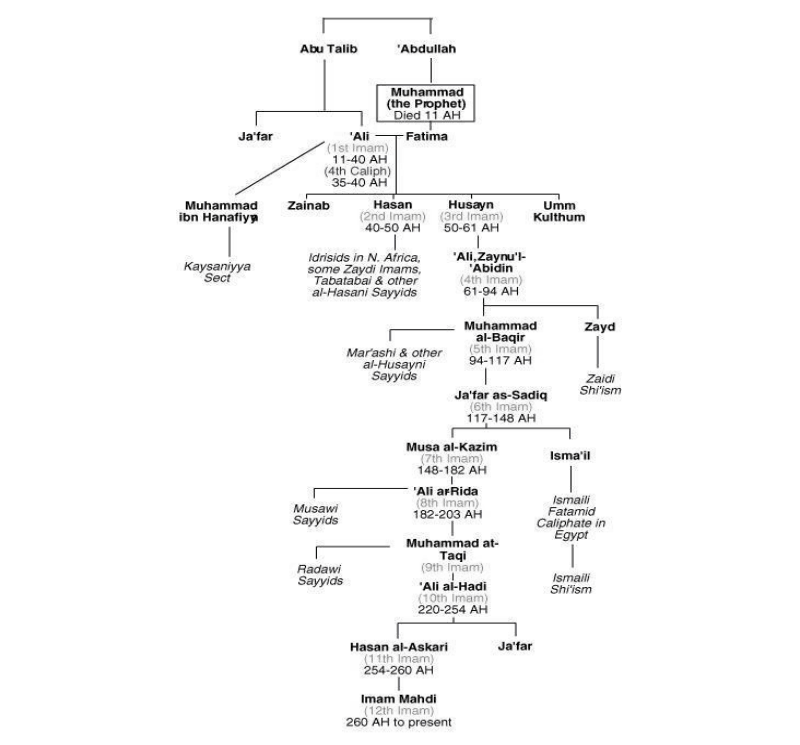
Kidnapped Girls: a Victory for Twitters and for Ms Obama!

The Twitters campaign and Mrs Michele Obama won a huge victory in the matter of the 300 Nigerian girls kidnapped by Islamist terrorists that the Obama administration does not want to call “Islamist” or “terrorists.”

No, none of the school girls has been returned to her family. In fact, it looks today like some or many of the girls will never be returned to their Kaffir (infidel) families because they have converted to Islam. There is an impious part of me that thinks that it would not take two weeks to convert me to anything if I had a gun pointed at my head. I would even convert to global warmism.

Some other girls, Christian girls, will be “married” by force to good Muslims. That’s rape, in my book. I keep asking Muslims and people who are better informed than I to contradict me and to affirm that the rape of non-Muslims girls is haram under Islam. Still waiting.

The Twitter campaign and the First Lady’s speech have succeeded in enlarging beyond their wildest dreams the reputation of the religious Nazis that is Boko Haram. Its leaders are now in a good position to negotiate anything they want with a Nigerian government softened by an indignant world public opinion. They will ask for the release of their fellow criminals and for money to buy even more and better weapons to kidnap even more school girls, to massacre even more civilians.

“We can’t be the policemen of the world” is a favorite of cliché today. I hear it from all sides. Nobody is stepping in to replace the US as sheriff yet. Perhaps Putin’s Russia or the People ‘s Republic of China will make a move soon. In the meantime, looking forward to that day, terrorism is spreading.

I keep wondering where are Reverend Jesse Jackson and President Carter, our normal hostage negotiators. Are they secretly afraid that Boko Haram would cut off their heads at the earliest opportunity if they meddled ? I wonder why.

Changing the subject, here is a quiz:

There is a largish country where more than thirty people are currently either on death row or serving a life sentence for blasphemy. The country is:

a Pakistan;

b Brazil;

c Russia;

d South Africa.

(The correct answer is in the Wall Street Journal 5/9/14 but don’t cheat.)