LARB can’t figure out why South Korea’s government is so bad at marketing campaigns

Colin Marshall is a blogger for the Los Angeles Review of Books (LARB), a great publication that has featured NOL‘s own Barry Stocker before. Marshall is puzzled by the fact that Seoul’s best marketing comes from independent filmmakers rather than the South Korean government. I guess I shouldn’t say “puzzled” because Marshall has a theory as to what is to blame, but I thought the piece was interesting because it highlights so well why libertarianism is so important.

Here is a link to Marshall’s piece. It is filled with lamentations about the Korean government’s inability to produce good marketing for the country. Instead of going for the jugular, though, and pointing out that incentives matter, here is where Marshall pins the blame:

I often wonder whether the problem has to do with the difficulty Koreans have in seeing Korea clearly, at least when looking for its good points; when dwelling on the negative, they suffer from no such lack of perceptual acumen. Many an acquaintance here has asked me, indeed insisted I reveal to them, what displeases me about Korea. For years I didn’t have a straight answer, but then I realized that nothing bothers me quite so much as Korea’s culture of complaint itself.

Got that? Marshall is wondering aloud (blaming) Korean culture for the bland marketing campaigns of the Korean government, even though he recognizes the brilliant marketing campaign of the independent filmmaker in the beginning of his piece. Not only does he blame Koreans for a problem that affects all governments, he attacks the “culture of complaint” that Koreans are well-known for.

Complaining, critiquing, one’s culture is a necessary component for a free and open society (Chhay Lin wrote about this at NOL awhile back, regarding Cambodia).

Am I engaging in bad faith here? Is Marshall really that ignorant of markets and alternative orders that he fails to understand why the Korean government cannot produce anything creative? Is Marshall so stupefied by the predictable failure of the Korean government to produce anything creative that he would stoop to insulting his hosts? Help me out here, folks.

Nightcap

  1. ISIS never went away in Iraq Krishnadev Calamur, the Atlantic
  2. In search of “real” socialism Kristian Niemietz, CapX
  3. Localism and its trade-offs Jason Sorens, Law & Liberty
  4. Latin America’s greatest storyteller Thomas Meany, Claremont Review of Books

RCH: 10 rivalries that shaped world history

My weekend column for RealClearHistory, in case you missed it, was fun to write. An excerpt:

4. The Mughals versus the Persians (1600s -1739). The Mughal Empire, an Indian polity that ruled over much of the subcontinent, fought three wars against two Persian dynasties (Safavids and Afsharids) and lost all of them. Much of the fighting was done around the city of Kandahar, in what is now Afghanistan. Kandahar was for a long time an important fortress for empires and dynasties that lorded over both Persia and India. While the Mughals had their pride stung by the losses, they could at least find solace in the fact their realm was the most economically successful on the planet at the time. India and Iran have long been weary regional rivals and sometime allies, but geographic distance and terrain have made outright wars between the two civilizations rare and limited. The rivalry between Iran and India has been a cultural one rather than a military one.

Read the rest (if you haven’t already!).

Nightcap

  1. Thinking about the Holodomor Flagg Taylor, Law & Liberty
  2. Neoliberalism is not dead Scott Sumner, EconLog
  3. Social generativity and complexity Daniel Little, Understanding Society
  4. We don’t need the UN to regulate baby formula Ryan McMaken, Mises Wire

Eye Candy: garbage versus trash (American dialects)

NOL garbage versus trash USA

I’ve always said “garbage,” but down here in Texas they use the word “trash.” I have no idea where I found this, and I can’t verify the source, but it looks right to me.

Any contrary arguments about this map?

Nightcap

  1. Radical republicans and early modern democrats, Dutch style Dirk Alkemade, Age of Revolutions
  2. Did socialism keep capitalism equal? Branko Milanovic, globalinequality
  3. John McCain in 1974 Arnold Isaacs, War on the Rocks
  4. U.S.-Soviet hotline a symbol of Cold War cooperation Rick Brownell, Historiat

Nightcap

  1. Things I hate about the US constitution Ilya Somin, Volokh Conspiracy
  2. At the Khmer Rogue tribunal MG Zimeta, London Review of Books
  3. Reductionism and anti-reductionism about painting Irfan Khawaja, Policy of Truth
  4. A foreign policy for the Left Samuel Moyn, Modern Age

Nightcap

  1. The dark side of war propaganda Bradley Anderson, American Conservative
  2. Is internationalism liberal or imperialist? Arnold Kling, askblog
  3. Internationalism is federalist, Arnold! Brandon Christensen, NOL
  4. ISIS and Sykes-Picot Nick Nielsen, The View from Oregon

RCH: death and taxes

I’ve been so busy I forgot about my Tuesday column over at RealClearHistory (I have a Friday column, too). Last week’s column was about the trial and execution of two Italian-born anarchists in Massachusetts:

The anarchism of Nicola Sacco and Bartolomeo Vanzetti was left-wing and violent. Very violent. The two young men were admirers of Luigi Galleani, an Italian anarchist who advocated violence as the best way to achieve a more anarchist world. Sacco and Vanzetti, the executed, were part of an American syndicate dedicated to Galleani’s ideals. This syndicate was responsible for bombings, assassination attempts, printing and distributing bomb-making books, and even mass poisonings in the United States. The Galleanists were so violent that they sat atop a list of the federal government’s most dangerous enemies. On April 15, 1920, an armed robbery at the Slater and Morrill Shoe Company in Braintree, Mass., went awry and two men, a guard and an accountant (“paymaster”) were killed by the robbers. Sacco and Vanzetti were accused, convicted, and sentenced to death.

This week’s column focused on Shays’ Rebellion:

The Shaysites, as supporters of Daniel Shays came to be known, eventually grew to thousands of men, and the movement grew confident enough that it planned to seize a federal armory. However, the governor of Massachusetts, James Bowdoin, directed a local militia leader (William Shepard) to protect the armory. The armory, though, was federal property, and the militia was operating under state direction, so the seizure of the armory in the name of protecting it from rebels had the potential to ignite a powder keg of legal ramifications throughout the war-torn eastern seaboard.

Y’all stay sane out there!

Nightcap

  1. In Japan, ghost stories are not to be scoffed at Christopher Harding, Aeon
  2. Montesquieu was the ultimate revisionist Henry Clark, Law & Liberty
  3. Did British merchants cause the Opium War? Jeffrey Chen, Quillette
  4. The eclipse of Catholic fusionism Kevin Gallagher, American Affairs

Nightcap

  1. What do we mean by “meaning”? Scott Sumner, Money Illusion
  2. The Sōseki of Prague Duncan Stuart, 3:AM Magazine
  3. The Civic Sacred Cow Wayland Hunter, Liberty Unbound
  4. The (American) Civil War’s Most Infamous Atrocity Rick Brownell, Historiat

Nightcap

  1. The science war Peter Boettke, Coordination Problem
  2. On wider access to culture Chris Dillow, Stumbling & Mumbling
  3. Spaceship Earth explores Culture Space Robin Hanson, Overcoming Bias
  4. The liberal dream is freedom plus groceries (and that’s okay) Brad DeLong, Grasping Reality

Nightcap

  1. What would it take to build a tower as high as outer space? Sun & Popescu, Aeon
  2. Progressive/libertarian: the alliance that isn’t Bryan Caplan, EconLog
  3. An atlas of diplomacy Francis Sempa, Asian Review of Books
  4. How to save the Catholic Church Rachel Lu, the Week

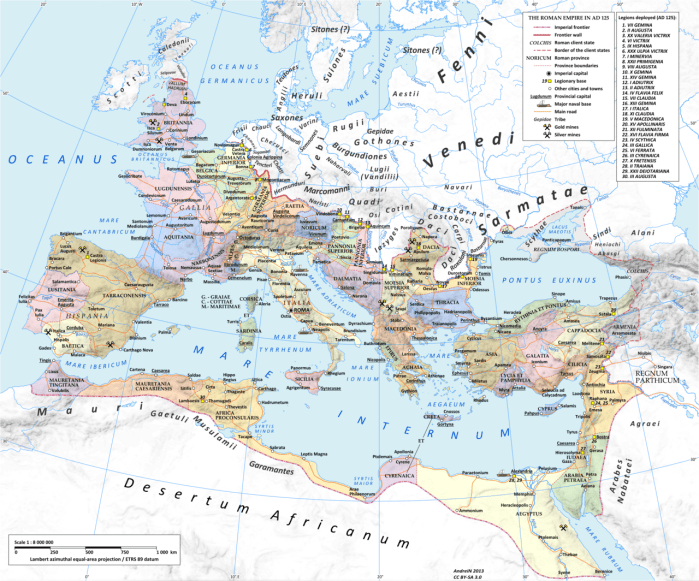
Eye Candy: the provinces of ancient Rome

NOL ancient Rome's adminstrative units.png
Click here to zoom

This is a beautiful map of Rome’s administrative units. There’s not much more to say, really.

Here is Barry on Roman law. Here is Mark on the Roman economy. Have a good week!

Nightcap

  1. The transformation of the liberal political tradition in the nineteenth century Pamela Nogales, Age of Revolutions
  2. Kurds have conditions for an alliance with Shiites in Iraq Omar Sattar, Al-Monitor
  3. Mau-Mauing Myself Harry Stein, City Journal
  4. Is the sharing economy exploitative? Per Bylund, Power & Market