- Noise, interests, and democracy Chris Dillow, S&M
- Meritocracy and its discontents Wilfred McClay, Hedgehog Review
- Something must be done Lee Jones, Disorder of Things
- Nuclear power and the environmentalists Scott Sumner, EconLog
Nightcap
- In defense of Ted Cruz Thomas Knapp, TGC
- The political economy of exit clauses and secession (pdf) Huysmans & Crombez, CPE
- A republic of equals and unequals (pdf) John Meadowcraft, Public Choice
- An empire of stupidity Nina Herzog, LARB
Nightcap
- Sweet Home Hialeah César Baldelomar, Commonweal
- The totalitarianism of origins Tal Fortgang, Law & Liberty
- Moralism, nationalism, and identity politics Andrew J Cohen, RCL
- A practical approach to legal-pluralist anarchism Jason Morgan, JLS
A Near-World Class Model in the African Forest
a story, by Jacques Delacroix
Long story short: In my thirties, I am part of a French crew going to film a commercial in Casamance. That’s the southern and forested part of Senegal, on the west coast of Africa. (It’s close to where the old and successful TV series “Roots” was filmed.) Senegal is a former French colony. French is widely spoken there, including by all formally educated Senegalese. We ride in a short caravan of VW buses from the local biggish city and into the forest. It’s hot. The commercial will be filmed the next day on a river next to the edge of the tropical forest. Where we will stay tonight, and probably the next night, is kept secret.
In the middle of the caravan, there is an older model Peugeot sedan, or maybe, it’s even a Mercedes. It’s the only air-conditioned vehicle in the procession. The star of the future commercial rides in it, in full comfort. She is actually a top model of near-world class fame. The client is a big French company selling informal but fairly chic women’s apparel internationally, kind of pricey apparel. The advertising agency in charge does not have any reason to try and cut corners. It’s gone for the best, or for the very-next-to-best talent in that line of work. The model is a tall, lithe blonde (of course) with a long elegant neck, long legs, long arms, and a torso like a ten-year old boy’s. She has a beautiful face, of course, not like some of my ex-girlfriends, for example, but like something a bit out of this world, ethereal, if you will. She is alone in the car, like royalty.
After about an hour, or 25 miles, riding on good dirt roads we, arrive at our place of rest in late afternoon. It’s a magnificent three story building of Moorish style made entirely of dried mud. I will learn later that local people erected it with their bare hands. There are windows on each of its façades that are separated by thick vertical ribs from bottom to top. The windows have no glass panes but each is neatly covered with fine white mosquito netting. There is just one small entrance on the ground floor near where we stop. It takes a while for all of use to file in for checking as one would in a regular hotel and, that gives us time to admire again the building’s dramatic architecture. Inside, there is a normal counter with two clerks taking our names and assigning us mostly each to a small room. There is enough light coming in from the outside for the registrations to proceed normally.
The rooms have no door but the walls are so thick that one would have to contort one’s neck quite a bit to get a good view of the inside of any of them. Each has a wooden table and two chairs. The broad bed is fixed to the wall and made of the same adobe material. There is a thin mattress, two pillows, and cotton blankets on each bed. All those items are sparkling white. Myself, I like it a lot already in that hotel that’s barely a hotel. As the night begins falling, quickly as it does in the tropics, a local teenager barefoot and in shorts coughs politely at the entrance to my room. I invite him in and he lights the oil lamp mounted on the wall and shows me where the matches are, just in case.
Evening preparations are interrupted by a shrill voice protesting in accented French. (The protester is Danish or Swedish; French is not her native language.) Miss Near-World Class Model is complaining because her room is on the third floor and there are no elevators. The producer immediately has her baggage moved to a new room on the second floor. She does not like it there either because there is no view, that floor being beneath the tree branch line. Back to the third floor she goes. Twenty minutes later, begins another vivacious exchange between Miss Near-World Class Model and the producer. I eavesdrop, of course. (Well, I am professional social scientist; what do you think?) It seems they had agreed that she would receive her fee in the form of a round-trip business class ticket Paris-New York. (It’s a common way to avoid some taxes.) Now Miss Near World Class Model demands that the ticket be for the costly supersonic Concord. I, and probably everyone else in the auditory loop, thinks it’s just a tantrum. The Concord shaves something like a little over one hour off that trip. She can’t be in that much of a hurry. She just wants bragging rights. Plus, we are in the middle of Africa, years before cell phones. There is nothing the producer can do right now except, perhaps, perhaps, promise. And that may be the whole point of the argument, before her works begins, in only a few hours.
Quickly, the whole company, around twenty-five of us, is called to dinner. It takes place under the trees, around a nice big wood fire. We all sit on the ground and each of us is handed a miraculously hot, big recipient made of clay (same as the building behind us) filled with a sort of rice porridge with hard-boiled eggs and pieces of hard chicken. There are old French biscuits for dessert. We drink the bottled water and the beer some of us were smart enough to buy while we were going through the town. Everyone is in a good mood and, probably being put in mind of the Boy-Scout camps of their childhood; a few begin singing. Two local young men enter the circle with their small hand drums. Most of the crew joins in and that bunch of white city people from far away have one of the best evenings in their lives, in the Casamance forest.
Everyone is in bed before ten nevertheless. That’s because the first and main scene of the commercial we are there to film is supposed to be caught against a rising sun. Our princess is nowhere to be seen or heard. She is not currently berating anyone. She may be eating cold sandwiches in her lonely room. Except that, around nine, she sends someone to tell the producer she is scared to sleep by herself in her room with no door. He proposes the company of any number of vigorous youthful dudes in the crew, including me. On her declining, he persuades a very young woman, an assistant’s assistant probably, to spend the night with Miss Model.
To be fair, Miss Model’s conduct is neither that surprising nor that awful in context. Put yourself in her position. The wildest place she has ever been is probably a rock club in Copenhagen or in Stockholm. No one around her in the crew can provide the comfort of her native language. She is almost certainly uncomfortable in French, which is not even her second language. (English is more likely.) Is it possible that being suddenly surrounded by black people dredges up primitive racist fears in a female citizen of a country with no colonial African past, and therefore no experiences of proximity to black people? To ask the question is to answer it. Finally, there is the tenacious influence of envy that gnaws at the hearts of simple-hearted girls, beginning in a high school. Miss Model has probably only five or six rivals to whom she compares herself, other tall, lithe, career-oriented young women in the same league as she is: Mary-Ann gets to fly in the Concord; I will die if I have to fly a regular commercial jet!
The next morning, everyone is forced to wake up at five. (Can’t miss the sunrise, remember?) Someone has managed to produce some coffee, weak stuff, obviously brewed and boiled in a large pot but hot enough, with milk and sugar. There is also day-old, or two-day old, French bread. Unfortunately, though there are flush toilets at every story – with a big bucket of river water near the commodes – there is no real running water. So, washing off your face demands a harsh decision. You hope you actually packed up towelettes. How do I know it’s river water in the buckets? Well, I am an experienced fisherman.
Some of the crew go directly to the river’s side to check on the physical preparations. The director goes there specifically to greet the twenty or so locals who will be an important part of the video. They must be shivering, wearing only a loincloth – as instructed – before sunrise, standing near the long canoe they will be paddling up river in a short time. Most are postal workers and teachers, and such. (They all have to know French well to be able to follow the director’s instructions. Real paddlers, if they were to be found, probably couldn’t.) Some are receiving last minute initiation to paddling. The storybook – such as it is – is a collection of colonial clichés, of course. Nobody cares then. (It’s the seventies.) The African extras care least of all. They will be earning fat money, paddling five times five minutes, if that, and sitting under a tree shooting the breeze between cuts.
Meanwhile, the rest of us are still near the hotel building; we stand around downing coffee and smoking cigarettes waiting for our marching orders. It’s a bit like being a recruit in the armed forces again: hurry up and wait. Miss Model is nowhere to be seen. No one says anything but I know I am worried. If she had another tantrum and managed to get a ride to town during the night, the whole project is dead. Then, she appears in the dimly lit doorway.
Her hair is impeccably combed and held in place in a style markedly different from yesterday’s. I am guessing this is the hairdo the storybook calls for. She is wearing perfectly pressed white linen pants and a simple yet somehow elegant form-fitting pink t-shirt. I am guessing, again, that those are clothes from the collection we will be advertising in the commercial. She is carrying a squarish box by its handle. A young local woman who might be a hairdresser is waiting for her. (I think she is a hairdresser because, unlike other women in the area, she is not wearing a head scarf and her hair is processed.)
The African woman points to a downed tree trunk with a clean towel set on top. Miss Model sits on it and opens her case without a word. The local woman squats and hold a large mirror to her face. I get drafted to hold a flashlight just so, between her face and the mirror. I watch in amazement Miss Model create a work of art on her face in the semi-penumbra. She uses at least twenty different colors of make-up held in tiny square containers in her square case. I observe that she relies on six different brushes and several crayons in addition to four shades of lipstick. She handles her tiny tools without hesitancy. A few times, she signals to me to adjust the direction of the cone of light. Her other helper, being a woman, seems to know exactly what to do with the mirror. Miss Model soldiers on for forty-five minutes or more. Now, I have often looked at people working but I have never seen such attention to detail or such concentration, such seriousness. There, under a canopy of strange and vaguely threatening trees, in the middle of Africa, and in the darkness, Miss Model gives us all a lesson in perfect, cool professionalism.
Soon, she stands up and mutters a few words of thanks to the mirror lady and, in absent minded fashion, to me. The director has been standing there, watching and saying nothing. He guides her to the river for the opening shot just as the first premises of a rising sun show themselves.
If I forgot that I am talking here about a four-minute commercial destined only to be shown at intermission in French movie theaters, I would say the rest of the day is a triumph. Everyone does his or her job swiftly and intelligently; the parts fall into place with ease. The paddlers get into the spirit of the thing. They forget they are going to have to go back to work in an ironed white shirt tomorrow, or the next day. They produce from deep in their chests the satisfying sound of men pulling hard although they have only gone about fifty yards for each cut. It helps a lot that they have seen the same movies that inspired the storybook.
Miss Model herself responds exceedingly well to the modest requests for minimal acting in the storybook: She is asked to stand prettily in the bow of the long black canoe paddled by twenty half naked black men. She holds one hip slightly and graciously askew the better to display the embroidered back pocket of her pants. She has been told not to smile to avoid drawing attention away from the t-shirt she is modeling. There are several takes. In the end, she acquits herself fabulously. The apparel merchant, the sponsor, will be more than happy. And, I know you are curious about this: The producer was inflexible, Miss Model did not fly to New York and back on the Concord.
Nightcap
- The highway to serfdom (pdf) Gus DiZerega, Cosmos + Taxis
- Russia’s greatest river Farah Abdessamad, ARB
- A marketplace and a temple (h/t Michalis) Michael Kulikowski, LRB
- “politics are now entirely a consumer-branding exercise” Antonio Garcia-Martinez, TPR
Does federation unite or divide?
I am reading a lot on federation lately, for an article I would like to contribute to Brandon’s special issue of Cosmos + Taxis. I am going back to the debate about federalizing (parts of the) the democratic world which was very lively in the 1930s and 1940s. Reading the texts, for example the best-selling Union Now! (1939) by American journalist Clarence Streit, you can feel the scare for the authoritarian rulers and their nationalistic and militaristic policies. As an anti-dote, Streit proposed the federation of all the grown democracies in the world at that time, 15 in total, spread over the globe. This Union of the North Atlantic had to include a union citizenship, a union defense force, a union customs-free economy, union money and union postal and communications system After the war broke out, Streit published a new version, now calling for a union between Britain and the USA. Needless to say, none of these or other proposals went anywhere. Still some interesting perpetual questions remain.
Ludwig von Mises and Friedrich Hayek also wrote on federation during this period, as I described in Classical Liberalism and International Relations Theory (2009). I now went back to their writings, which is a treat. It is nice to have a fresh look, I also have deeper insights now (at least – I think!) than I had about 15 years ago when first encountering these ideas.
One of the divides between Mises and Hayek (which they never openly discussed, as far as I am aware) revolved around the alleged pacifying effect of federations. Mises made the point that joining a federation would lead to a larger loss of sovereignty than was normally conceived in the debate. It was not just about pooling some powers at the federal level. In an interventionist world, Mises argued, the number of policies that are dealt with from the center, or the capitol, continually rise. After all, the call for intervention will be made from all corners of the federation, all the time. This leads to a call for equal treatment, which in turn lead to a larger number of policies and regulations administered from the capitol. Consequently, the member states increasingly lose sovereignty and eventually end up as mere provinces. This would be a new cause of division, especially when the member states of the new federation used to be powerful countries on their own. Hence, a federation divides, not unites. Therefore, he proposed a much more radical solution in his plan for Eastern Europe: no federation but a strict central union (administered by foreigners, in a foreign language he even once suggested) where the members would basically have no say at all over all the important legislation normally associated with sovereignty. The laws and regulations would be limited, ensuring maximum economic and political freedom for the individual citizen.
This blog is not meant to discuss the merits of Mises’ ideas. It solely aims to point at a division between Mises and Hayek. Hayek, and most thinkers on federation with him, Streit included, had different expectations about the political effects of federation. They expected that federation would be a force of unity. In a federation you arrange the most difficult and divisive policies at the center (for example defense, foreign policy and foreign trade), while leaving all other policies to the constituent parts. This allows room for different policies in those states, while taking away their instruments to start violent conflict. Yes, this would mean less sovereignty, but also less trouble, while the freedom within the federation still ensured as much or as little additional policies as the individual states see fit. Hayek would favor his idea the rest of his life, also proposing it for the Middle East, for example.
Who was right? That is impossible to say, I think. There are elements of both Misesian and Hayekian arguments in the real-life experiences of federations around the globe. For some it is indeed a good way to pool the core of sovereignty, while remaining as diverse as possible. Although most them do not disintegrate with violent conflict, the increase of all kind of policies at the federal center has certainly happened. However, this is not unique to federations and most importantly, it is not a question of formal legal organization. It is a question of mentality of both politicians and populations. This is another reason to keep fighting ‘the war of ideas’, because ideas have the power to change societies.
Nightcap
- Aliens Robin Hanson, Overcoming Bias
- War, Peace, and the State (pdf) Murray Rothbard, The Standard
- The new ruling class (h/t Michalis) Helen Andrews, Hedgehog Review
- Free speech and socialist dictatorships Sharansky & Troy, Tablet
A Tribute to Mary Lasker
In the early twentieth century, cancer assumed a more prominent place in the popular imagination as the threat of contagious diseases reduced and Americans lived longer. In this regard, the American Society for the Control of Cancer (ASCC), founded in 1913, had identified three goals: education, service, and research. However, until midcentury, largely due to the limited budget, the society contributed little to cancer research.
Enter Mary Woodard Lasker
One of the most powerful women in mid-twentieth-century New York City, and perhaps North America, Lasker demonstrated that women could command transformations in medical institutions. Born in Wisconsin in 1900, Mary Lasker, at the age of four, found out that the family’s laundress, Mrs. Belter, had cancer treatment. Lasker’s mother explained, “Mrs. Belter has had cancer and her breasts have been removed.” Lasker responded, “What do you mean? Cut off?” Decades later, Mary Lakser would mention this early memory that had inspired her to engage in cancer work.
After having established herself as an influential New York philanthropist, businesswoman, and political lobbyist, when Mary Lasker inquired about the role of the ASCC in 1943, she learned that the organization had no money to support research. Somewhat astounded by this discovery, she immediately contemplated ways to reorganize the society. She wanted to recreate the society into a powerful organization that prioritized cancer research.
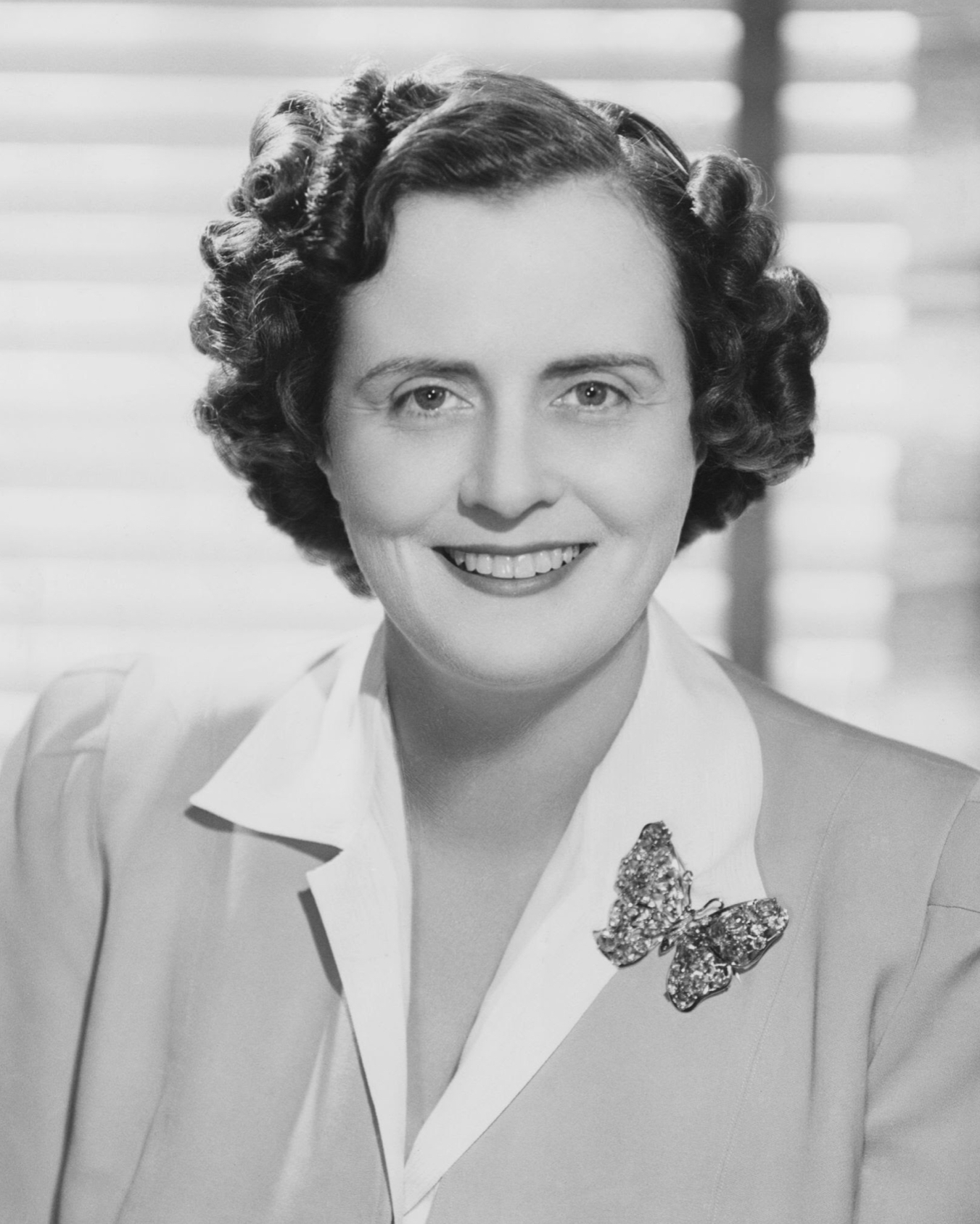
Well-versed in public relations, connected to the financial and political circles of the country, Lasker played a central role in the mid-1940s. Despite notable opposition, Lasker convinced the ASCC to change the composition of the board of directors to include more lay members and more experts in financial management. She urged the council to adopt a new name, the American Cancer Society. She also convinced them to earmark one-quarter of its budget for research. This financial reorganization allowed the ACS to sponsor early cancer screening, including the early clinical trials. The newly formed American Cancer Society articulated a mission that explicitly identified research funding as its primary goal.
By late 1944, the American Cancer Society had become the principal nongovernmental funding agency for cancer research in the country. In its first year, it directed $1 million of its $4 million in revenue to study. Her ardent advocacy for greater funding of all the medical sciences contributed to increased funding for the National Institutes of Health and the creation of several NIH institutes, including the Heart, Lung, and Blood Institute.
Mary Lasker continued to agitate for research funds but resisted any formal association. As she explained it, “I’m always best on the outside.” Undoubtedly, Mary Lasker’s influence and emphasis on funding cancer research contributed to promoting the Pap smear in U.S. culture. As a permanent monument to her efforts, in 1984, Congress named the Mary Woodard Lasker Center for Health Research and Education at the National Institutes of Health.
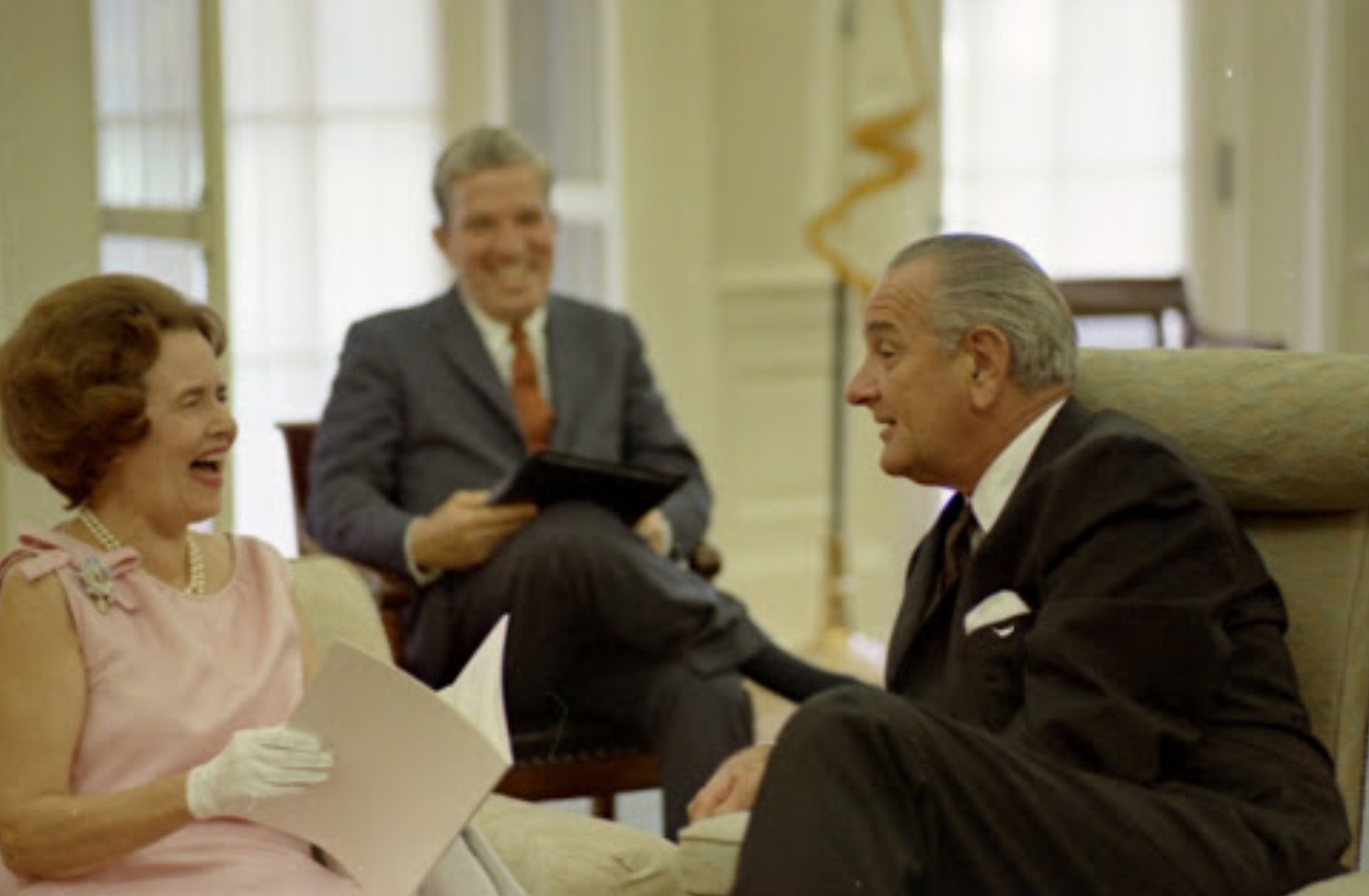
A portion of a letter ACS administrative director Edwin MacEwan wrote to Lasker encapsulates her contribution to our society. He wrote, “I learned that you were the person to whom present and potential cancer patients owe everything and that you alone really initiated the rebirth of the American Cancer Society late in 1944.”
“If you think research is expensive, try disease.”
—Mary Woodard Lasker (November 30, 1900 – February 21, 1994)
Source:
- The Lasker Foundation (http://www.laskerfoundation.org/about/)
- Mary Lasker Papers, Columbia University Rare Book and Manuscript Library, New York, N.Y.
- Early Detection: Women, Cancer, & Awareness Campaigns in the Twentieth-century United States by Kirsten Elizabeth Gardner
John Rawls at 100
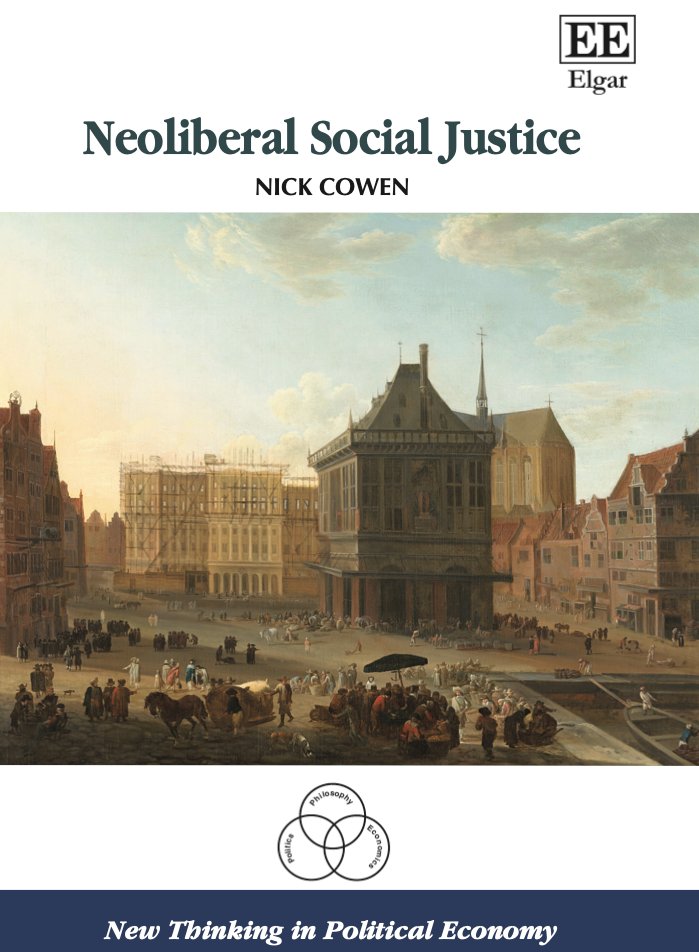
John Rawls, the most influential political philosopher of the 20th century, was born 100 years ago today. He died one year before I first read A Theory of Justice as part of my undergraduate degree in philosophy at University College London. This year, Edward Elgar publishes Neoliberal Social Justice: Rawls Unveiled, my book which updates Rawls’ approach to assessing social institutions in light of contemporary economic thought.
Mike Otsuka (now at the LSE) introduced us first to the work of Robert Nozick and then to Rawls, the reverse of what I imagine is normally the case in an introductory political philosophy course. Most people ultimately found Rawls’ the more attractive approach whereas I was drawn to Nozick’s insistence on starting strictly from the ethical claims of individuals. I wondered why something calling itself ‘the state’ should have rights to coerce beyond any other actor in civil society.
Years of working in public policy and studying political economy made me recognise a distinctive value for impersonal institutions with abstract rules. Indeed, I now think the concept of equal individual liberty is premised on the existence of such institutions. Although the rule of law could theoretically emerge absent a state, states are the only institutions that have been able to generate it so far. Political philosophy cannot be broken down into applied ethics in the way Nozick proposed.
Some classical liberals and market anarchists are increasingly impatient with the Rawlsian paradigm. Michael Huemer, for example, argues that Rawls misunderstands basic issues with probability when proposing that social institutions focus on maximising the condition of the least advantaged. Huemer argues that Rawls ultimately offers no reason to pick justice as fairness over utilitarianism, the very theory it was directed against.
I think these criticisms are valid for rejecting the blunt assessments of real-world inequalities that some Rawlsians are apt to make. But I do not think Rawls himself, nor his theory when read in context, made these elementary errors. Rawls’ principles of justice apply to the basic structure of social institutions rather than the resulting pattern of social resources as such. Moreover, the primary goods that Rawls take to be relevant for assessing social institutions are essentially public goods. It makes sense to guarantee, for example, basic civil liberties to all on an equal basis even if turns out to be costly. I can think of two reasons for this:
- In a society not facing acute scarcity, you would not want to risk placing yourself in a social position where your civil liberties could be denied even if it was relatively unlikely.
- Living in a society where basic liberties are denied to others is going to cause problems for everyone, whether through regime instability or fraught social and economics relationships that are not based on genuine mutual advantage but coercion from discretionary powers.
To be fair to utilitarians, J.S. Mill went in this direction, although one had to squint to see how it fit into a utilitarian calculus. But if Rawls was ultimately defending a more principled approach to social relationships using the tools of expediency, I see that as a valuable project.
So, I think that the Rawlsian approach is still a fruitful way to evaluate the distinctive problem of political order. His theory offers the resources to resist not just utopian libertarian rights theorists, but also socialists and egalitarians who similarly fail to account for the distinctive role of political institutions for resolving problems of collective action. Where I think Rawls erred when endorsing what amounts to a socialist institutional framework is on his interpretation of social theory. Rawls argued that people behave pretty selfishly in market interactions but could readily pursue the public good when engaged in everyday politics. I argue otherwise. Here is a snippet from Neoliberal Social Justice (pp. 96-97) where I make the case for including a more consistently realistic account of human motivation within his framework:
Problems of justice are not purely about assurance amongst reasonable people or identifying anti-social persons. Instead, we must consider the anti-social person within ourselves: the appetitive, biased, narrow-minded, prejudicial self that drives a great deal of our every-day thoughts and interactions (Cowen, 2018). If we are to make our realistic selves work with each other to produce a just outcome, then we should affirm institutions that allow these beings, not just the wholesome beings of our comfortable self-perception, to cooperate. We have to be alive to the fact that we are dealing with agents who are apt to affirm a scheme as fair and just at one point (and even sincerely mean it), then forgetfully, carelessly, negligently or deliberately break the terms of that scheme at another point if they have an opportunity and reason enough to do so. Addressing ourselves as citizens in this morally imperfect state, as opposed to benighted people outside a charmed circle of reasonableness, is helpful. It means we can now include such considerations within public reason. The constraints of rules emerging from a constitutional stage may chafe at other stages of civil interaction. Nevertheless, they may be fully publicly justified.
Nightcap
- Extending human habitability to outer space Claire Webb, Noema
- A widow on imagination Victoria Ritvo, Bat City Review
- Assigning blame for the blackouts in Texas (h/t Mark from Placerville) Judith Curry, Climate Etc.
- The failure of Welsh devolution Rhianwen Daniel, spiked!
Nightcap
- That brutal uncivilizer of nations (pdf) Jens Bartelson, CAL
- “[…] the Taliban, who have long made international recognition and legitimacy a priority.“
- The end of the interstate system (pdf) Giovanni Arrighi, JW-SR
- Habsburgs, Ottomans, and British anti-slavers (pdf) Allison Frank, AHR
Nightcap
- Driving alone, listening to talk radio Addison del Mastro, New Urbs
- My history of manual labor Tyler Cowen, MR
- My first year in the Covid lockdown Maria Farrell, Crooked Timber
- Biden finally called up Netanyahu Michael Koplow, Ottomans & Zionists
- The Strastnoy of Ayn Rand Roderick T. Long, Policy of Truth
- Brand India Ravinder Kaur, Aeon
Power outages in Texas
From an email I sent my principles of economics students:
Since we can’t have classes this week and the midterm is postponed a week, I felt chatty and wanted to share at least a few thoughts about why so many people are without power.
tl;dr: see the graph below. Prices are fixed. Supply shifts left, demand shifts right = instant shortages. This is not an easy problem to solve.
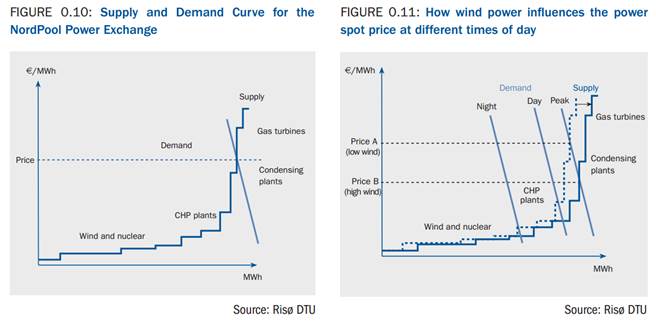
Issue #1 is that bad weather events increase demand – demand shifts to the right. Issue #2 is that energy prices are really sticky. We’ll be getting to this in March, but in energy markets we sign contracts with our energy providers that lock in the price of electricity for 1-2 years at a time. When demand increases, the price doesn’t! Further, some contracts allow us to smooth the bill out over 12 months, so if I need extra $12 of electricity today, I don’t actually pay for it today: I’ll pay for it by having a $1 higher electricity bill over a 12 month period. That does two things. a) It means that energy demand curves are really vertical, a small change in price doesn’t change my electricity consumption much; and b) when demand increases, prices don’t. That ruins the market price signal that tells you and me to conserve electricity. Issue #3 of course is that it is really amazingly expensive to increase electric capacity. That means that energy supply curves are also really vertical. Even if energy firms COULD raise prices, they can’t increase the quantity supplied in the short run. In the longer run, we have time to build more plants and add capacity, but in the short run we’re stuck with what we have.
The graph above shows the marginal cost of different types of energy. Some are energy that is easy to turn on and off, but expensive (eg. oil). Some are energy that is really, really hard to turn on and off at will (eg. nuclear) but very cheap. And producing more energy than you need is bad. So you build enough cheap stuff that you know for 100% positive will always be needed, and then you build expensive stuff to handle changes in demand. That’s the short version, anyway. It means that producing a little extra electricity is really expensive and there is a hard limit to much extra we can produce – eventually supply curves are completely vertical!
My friends on the right tend to send blame towards green energy. And they have a point! Renewables are temperamental – with too many clouds solar doesn’t do anything, and frozen blades can’t turn wind energy turbines. The impact of the storm is to shift energy supply curves to the left, and the more the grid relies on renewables, the bigger that shift is. The basic problem renewables have had is that it’s really difficult to STORE their energy for future use. If we could create really large energy reservoirs, we could store Texas’ abundant solar and wind energy for a literally-rainy day.
So we have supply curves shifting left at the same time demand curves are shifting right and prices can’t move … the final result is massive shortages! Now what could be done about that?
My friends on the left tend to blame deregulation. Sadly, not one of them is spelling out exactly what regulation they think would solve this problem. Let me be generous to them and imagine they mean the following: if the government ran (rather than regulated) the energy grid, they would build a greater capacity than we typically use.
And they have a point. Energy is like the opposite of the hotel industry. In the hotel industry, you don’t build the hotel based on AVERAGE, normal operations. In Stephenville, you build a hotel large enough to accommodate people who come for graduation. The cost of having unused rooms is fairly low – you still need to keep the room cool in case someone needs it, and you want to hire someone to dust it, but it just sits there most of the time. Then you rake in big money when demand suddenly increases. The energy industry is the opposite: it is very expensive to build capacity and it is also expensive to maintain it. Whether you are a private firm or a government, the money to maintain unused generators has to come from somewhere.
How do we afford that? In the market, energy prices are actually set a little bit higher than equilibrium so that supply > demand. That ensures we have plenty of electricity to handle normal, typical demand fluctuations. We pay for that excess capacity during the normal part of the year so that when temperatures are particularly high or extra low, the grid can handle it.
The government has a different problem, though. If electricity is publicly-run, they will tend to set the price lower than the market would and make up the differences with taxes. That further divorces energy use from the price paid. We would have a higher quantity demanded at all times (wasteful). Add in that governments generally do a bad job running businesses (wasteful) and in order to have that excess capacity we would have to be willing to pay higher taxes (and lower energy bills) for many years to make up for the extra expense. Most governments, like most markets, will therefore tend to undersupply for an emergency because the voters don’t want to pay higher taxes and there is no such thing as a free lunch. So it’s not 100% clear that this would solve the problem. Europe has power outages that affect millions too.
Why? Healy and Malhotra: Governments respond to incentives, and voters give the wrong incentives: “Do voters effectively hold elected officials accountable for policy decisions? Using data on natural disasters, government spending, and election returns, we show that voters reward the incumbent presidential party for delivering disaster relief spending, but not for investing in disaster preparedness spending. These inconsistencies distort the incentives of public officials, leading the government to underinvest in disaster preparedness, thereby causing substantial public welfare losses. We estimate that $1 spent on preparedness is worth about $15 in terms of the future damage it mitigates. By estimating both the determinants of policy decisions and the consequences of those policies, we provide more complete evidence about citizen competence and government accountability.”
Bottom line: there isn’t an easy solution to weather events that happen once in a hundred years, whether it’s floods or hurricanes or … whatever this white, powdery substance is that’s blanketing my lawn. The basic problem is scarcity in a market where price signals don’t work (by design) at a time when supply shifts left and demand shifts right. To the extent climate change means more frequent extreme events, this will be a growing problem.
Nightcap
- Depicting extraterritoriality Mathew Hart (interview), JHIBlog
- America’s plot for world domination Robert Merry, TAC
- Beyond the !Kung (but no Wilmsen?) Manvir Singh, Aeon
- In high praise of Parler Eugene Volokh, Volokh Conspiracy
Exit, federation, and scale (from the comments)
I think you make an interesting point, but allow me a bit of push back. The world government would set the rules of how federated entities would interact. This would be like standards and protocols. You are correct that a set of shared standards can allow for enhanced competition, of the good variety (what I call constructive competition). This would be a good thing.
However the same shared standards would lock in the world to one set of protocols, thus reducing the discovery via variation and selection of the shared institutions themselves.
Thus we would see more short range constructive competition between states, and less long term exploration of new and potentially better institutional standards.
This is from Rojelio. He is pushing back against my argument in favor of world government from a libertarian point of view. He’s right, of course. There’s two points I need to do a better job of clarifying when I advocate for world government from a libertarian point of view:
- I don’t think federating the entire world is a good idea. I think the piecemeal federation of political units is what libertarians ought to aim for. (I think the US interstate order is the best avenue for achieving this aim.) A healthy “world federation” would govern (say) 85% of the world’s population. This brings me to my second point I need to clarify.
- The importance of exit needs to be addressed and institutionalized in a proper federal order. This is difficult to do, but not impossible. My argument is to make exit difficult, but not too difficult. The difficulty of exit should be somewhere on the scale between a constitutional amendment (too difficult) in the US order and Brexit (too easy) in the Westphalian order.
The bottom line is that a more libertarian world will likely be composed of a large federal polity that protects the freedoms of the vast majority of its citizens better than most nation-states do today. The other 15% of the world would live under despotism (which will center around “cultural cores”), or under sparsely-populated democratic republics (i.e Australia), or within free-riding microstates that otherwise rely on the protection of the large federal unit.
If, say, England, Tamaulipas, and Duyên hải Nam Trung Bộ were to federate with the United States tomorrow, these polities would not be agitating for exit after 10 years of experimentation in self-governance. If, say, Texas or Vermont wanted to exit after 10 years of federation with those 3 polities, they would have to go through a process (via all of the legislative branches involved) to do so. A simple majority vote would be disastrous. It is unlikely, then, that Texas or Vermont would leave such a federation. Pure freedom would be unrealized, but billions of people would be much freer.
 Notes On Liberty