How to Extirpate Poverty

To “extirpate” means to complete eliminate, from the Latin word meaning to pull out by stem and root. To extirpate poverty means to eliminate its cause, so that it does not come back. Fundamentally, poverty comes from a low wage level, so we need to examine what makes a wage level low.

The wage level of an economy can be thought of as the wages paid to unskilled people. Those with greater skill and talent get higher wages, so some think that the solution to poverty is better education. But a stagnant economy also depresses the return to human capital, the extra wage for those who are more productive. In a thriving productive economy, even those with few skills are better off than skilled labor in a depressed economy. Indeed, in an unproductive economy, those with skills often find little market for their human capital.

The wage level of an economy is set by marginal labor, those who work at the least productive land in use. The classical “law of wages” says that when workers are mobile, the wage at the margin of production will set the wage level for the rest of the economy.

The margin of production has several edges. There is the horizontal extensive margin of land that is just barely worth using, land so unproductive it fetches no rent. There is the vertical extensive margin of the space above a city, into which taller buildings can rise, without increasing the site rent. There is also the intensive margin of adding more workers to land already being used. The wage at the intensive margin will equalize to that of the extensive margin. Workers are paid what they add to production, which is called their marginal product. Continue reading
Unemployment: What Is It?

Unemployment has regained center stage now that the debt crisis has receded from that position, at least for a time. Unless things change dramatically over the next year unemployment will be the number one issue in the forthcoming presidential election. Hardly any proposal will escape being labeled “job-killing” or “job-creating” or both.

To begin with some basics, what is work and what is a job? For economists, work is any activity that we would not perform without tangible compensation, usually money. In our work lives almost all of us are also motivated by nonmonetary considerations, and to the extent we diverge from the most remunerative activity available to us, we are blending work and leisure. A retired person who takes up college lecturing may do the work primarily for the satisfaction it brings. If his salary were withdrawn and he continued to teach, he would be enjoying leisure.

The goal of all economic activity is consumption, which to economists means not just mundane goods like faster cars but also “noble” ends like cathedrals. Jobs are therefore not ends in themselves, as much as public discussion would suggest otherwise. They are means to acquire income to be used for consumption and saving, in addition to personal satisfaction, learning opportunities, or socializing.

A person who lacks a job is unemployed if he or she wants work, has suitable skills, and has realistic expectations about compensation. These are vague terms; they make unemployment a murky concept. That goes double for underemployment, though both remain very real phenomena. Continue reading

Religion or Institutions: A Final Word

Over at Facts Matter, I believe I finally settled the issue of whether or not Islam is to blame for the violence in the Middle East. I put the nail in the coffin with this:

Still no evidence. I am, again, arguing about the real color of a unicorn’s horn…

Dr J asks:

Refresh my memory: Blasphemy laws where? “Popping up….”

Right now? Post-socialist Europe. And post-coup Thailand. And post-monarchist Nepal. Go ahead: Google it!

Are you implicitly stating that Russia is part of the historical West? Peter the Great just another Montesquieu?

Nope. You didn’t specify that the examples had to be from the traditional West. Speaking of moving the goalposts:

Death for converting, anywhere? (I did add this.)

Can you provide me with an instance of this happening in a Muslim state?

One more from Dr J:

With what penalties? (Death or more?)

Fines as far as I know. Again, can you give me an instance of a death sentence carried out in a Muslim state in the name of blasphemy?

David: rather than try to rebut every one of your points, I think I’ll just let your comments stand on their own. For your own benefit, insert the word “Muslim” in place of the word “Christian” throughout your lengthy defense of the latter.

If you do this, you’ll not only be proving my point, but you’ll have a better understanding of what is going on in the Middle East today. The difference between the United States and, say Russia or Egypt, is institutional.

Max Weber famously argued that Protestantism was responsible for the rise of capitalism in the West. There was something about Protestantism that changed the way northern Europeans thought about the world, as well as how they justified their actions. He was wrong, of course, but his argument continues to influence large swathes of opinion today. Why? Because of “selective anecdotal evidence that is fortified by the perceived well-being of contemporary Protestant states.”

The myth of Islam’s violent penchant should die with the same last breath of the imperialist’s claim of superior foresight. If anybody wants to go a couple more rounds in the ‘comments’ section here, I’d be glad to take you on. If you are hesitant, ask yourself if this is because you are afraid you might be proven wrong, or because you know deep down inside that you are absolutely correct about Islam’s mythical penchant for violence.

The Predictable Failure of the Iraq War

I’ve gone over the knowledge problem associated with foreign policy before, and I believe it is sufficient to say that libertarians were right in deflating predictions by hawks that the illegal invasion and occupation of Iraq would go over smoothly. Hawks on both the Left and the Right oversimplified the situation in the Middle East. Their condescending tone towards both the Iraqi people and the broader Middle East guaranteed failure from the outset. Anybody who believes that a state – no matter how wealthy and powerful – can just waltz in to another state – no matter how poor and weak – and impose its will upon it is a fool.

Gene Healy reports from DC:

In a 2001 debate on Iraq with former CIA Director James Woolsey, my Cato Institute colleague, then-Chairman William Niskanen, argued that “an unnecessary war is an unjust war” and one we would come to regret having fought.

Niskanen was right. A new report from the Watson Institute for International Studies at Brown University tallies up the costs: nearly 4,500 U.S. troop fatalities, an eventual budgetary cost of some $3.9 trillion and more than 130,000 civilians as “collateral damage.”

[…]

Bill Niskanen, who passed away last year at the age of 78, never tired of reminding conservatives that war is a government program — and an especially destructive one at that.

If you add up the harsh economic sanctions imposed upon the Iraqis by the Democrats earlier in the decade, the 130,000 civilian toll increases significantly (to about half a million, most of whom were children).

Only a foreign policy based around commerce, peace and honest friendship will succeed in both the short and the long runs. Luckily for us, it appears that there is a growing consensus on this argument among the population of the United States. It helps that most advocates of the war are either remorseful or they are becoming more and more discredited by the day. From Hitlery Clinton to Dubya to John McCain, the old guard is steadily giving way to a breath of fresh air. Air that is more suitable for a republic dedicated to individual liberty.

Cooling of relations between the U.S. and Russia

Добрый день, читатели сообщества! Сегодня я хотел бы поделиться с Вами моими соображениями касательно последних событий в мире, имеющих отношение к России и США. В частности, меня интересует проблема некоторого ухудшения отношений между нашими странами. Началось все, если рассматривать только недавние события, с дела о смерти Магнитского и принятии закона, запрещающего депутатам из России иметь счета в зарубежных банках. После этого рассматривались несколько дел о смерти русских детей в американских семьях – и как следствие – принятие закона, запрещающего американским семьям усыновлять моих соотечественников из детских домов. Закон, понятное дело, чудовищный. Я не понимаю, почему депутаты, которым слегка ограничили права решили отыграться на русских детях. Русский народ, кстати, тоже не понимает. Данный закон, принятый несколько месяцев назад собрал большое количество негативных откликов со стороны граждан России, однако он так и не был отменен. В этом вопросе я полностью поддерживаю Америку и право американских семей усыновлять детей из России. Законы остаются в силе, а наши отношения между странами ухудшились. Большое количество детей лишились своего права на счастье. Что скрывать, средняя американская семья способна предоставить ребенку из России больше, чем средняя русская. Дело, в основном, в различии материальных уровней и сложившемся менталитете. Именно с финансовой стороны вопроса, а также со стороны “возможностей”, одинокие дети могут получить в Америке больше вариантов развития. Не буду касаться такого понятия как “патриотизм” и “любовь”, так как боюсь быть непонятым в сообществе, равно как и непонятым моими русскими друзьями. Я стараюсь трезво оценивать вещи, не углубляясь в эфемерные материи.

Тем не менее, закон принят, и русские сироты навсегда потеряли возможность перебраться в Америку. Возможно, многие обвинят меня в излишнем либерализме или про-западных взглядах, но я со своей позиции не сверну. Есть некоторые вещи, на которые нельзя закрывать глаза.

Rebirth of Competitive Federalism

Before I begin I have a confession, I am a Party man. That being said, I have ties to the Liberty movement beginning when I was at Florida State and I am well-versed in Libertarian Theory and the Austrian School. I believe in a concept, which was termed recently “Competitive Federalism”. I first heard the term used by former Senator Jim DeMint at a Gala for the James Madison Institute on Wednesday (March 13th). The Liberty Foundation recently released a report outlining the idea, written by Opportunity Ohio President Matt Mayer, linked above. Senator DeMint described the idea by discussing the on-going competition between Governors Rick Scott and Rick Perry over the State-level Job Creation numbers, working to create a business-friendly regulatory environment (history here and here). This healthy State versus State competition is what our Country needs to revitalize the economy and clean up the statutory mess at both the Federal and State level.

This idea has been something that I have been thinking about for a long time, through my search to define for myself where I stood on the political spectrum. Through college, there seemed to be a constant need for those politically involved or politically interested to define themselves with labels. What I discovered is my views aren’t all that hard to pin down, but there is no true label for them. Personally, I am conservative, but I don’t believe everyone must live their life how I choose to live mine. I espouse the belief that competitive federalism should guide our policy debate; as for many, I believe the Constitution is the guideline for which we were meant to restrain our Federal Government, and I believe the Federal level is not the place for the Social battles unless absolutely necessary.

Some battles are meant to be fought at the State level; if California as a State decides to vote for one issue and I don’t agree with it, I should have the ability to vote with my feet. This would create a much more hospitable environment in the movement as a whole, and open up the floor for the other issues looming over our heads. Winning the battles over these pertinent issues is the only way to move the National Discourse forward. While Social issues are vital to how we live our lives day-to-day, moving them back to the States where possible allows us to build a true coalition for issues such as Tax Reform, Governmental Spending, Education, Transportation, and Trade.

Look for more posts in my series on Labels and defining political views in a changing landscape in the coming weeks.

Pot Shops and the Evils of Government

It seems to me that few people dare entertain the thought that government is inherently bad, that it’s bad even when it’s honest and well-intentioned. That was pretty much what the founders of this republic thought but the idea is almost lost. Even when ordinary people think of bad, oppressive government, they usually have the distant federal government in mind. But it’s too far, precisely, too large, it has too many tentacles. Perhaps it’s easier to understand the moral issue if you consider something smaller and closer. The city of Santa Cruz in California (population about 50,000) just gave us a clear example of well-intentioned government action with predictably bad consequences. It’s small and it’s innocent. Repeat: innocent.

The city council just decreed that there could be only two medicinal marijuana shops in the city. Two consequences.

1 The council has created by decision a quasi-monopoly. Absent such restrictions, there might have been one hundred pot shops at first. After a short time, the number would have dwindled to a small number, possibly only two. But the winners would have been those offering the best combination of price and quality. The latter, understood widely to include possibly diversity of products and quality of service, an essential ingredient in serving presumably sick buyers.

Instead, we are going to end up with the first two applicants. That’s if the decision-making process is honest. Those two may be the worst possible or they may just be mediocre. The city’s decision is another factor, a small factor to be sure, of local high cost of living and a low level of satisfaction. Multiply this decision by 10 million and you have the Soviet Union’s economy. (Reminder: The Soviet Union did not just deny freedom, it denied a decent standard of living and the dignity that comes with not having to scramble for oranges.) Continue reading

Senate Democrats want Crazies with Guns out in the Street

You may have heard or read somewhere that there is a Senate amendment to ObamaCare that prohibits the government from registering guns and ammunition.

Well, the amendment (3276, Sec. 2716) is real, but what it says, as any fact-checking site worth its salt will tell you, is slightly different. It just says that certain other provisions in ObamaCare shall not be construed as the authority to do this. It is not an actual ban on doing it.

Ironically, all the liberals whining about guns and mental health and how Republicans hate sick people and want the insane to run through the streets heavily armed is turned upon its head. Continue reading

Porn Preferences in China

I’ve always said you can tell a lot about a culture by their sexual mores (Montesquieu would agree!). From Shanghaiist:

That Japanese porn, both gay and straight, is more popular than anything else is perhaps not surprising. Very little pornography is produced within mainland China (though some is), and China’s obsession with AV stars is well known. What’s interesting is the racial homogeneity of the top 10. Chinese porn watchers don’t appear to be very interested in anyone not of asian heritage, a mild xenophobia that’s shared with Korea and Japan, both of which also prefer to watch asians getting fucked or doing the fucking.

Pardon their French. There is more:

Of China’s neighbours, only India and Kazakhstan search for members of other races getting their sex on.

Do read the whole thing. There is a link at the end to a Buzzfeed article showing the top porn searches for all countries.

The World of the Inuktitut

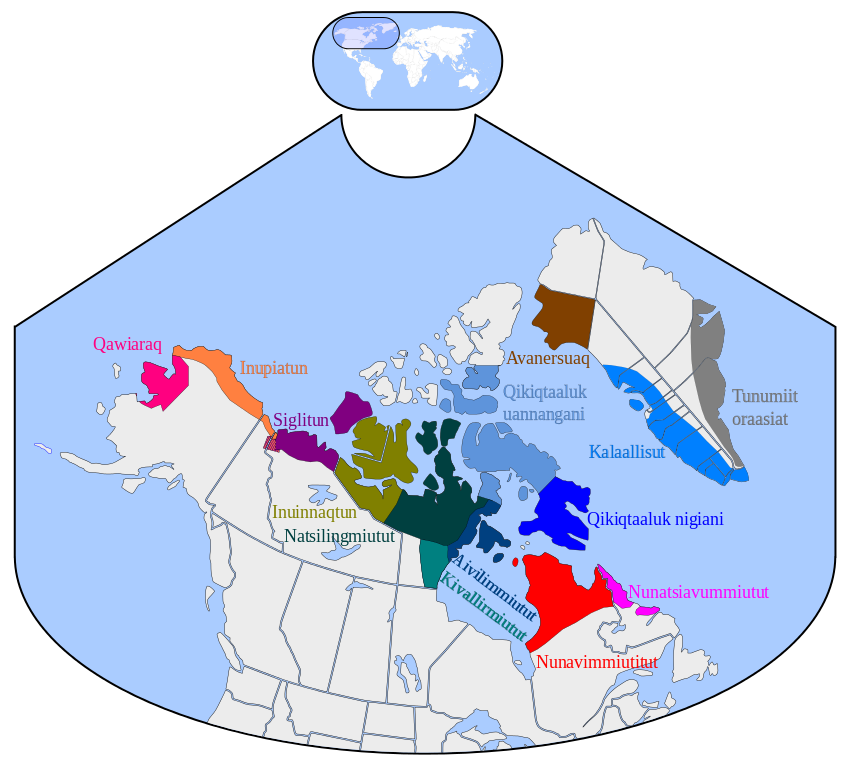
Check out this sweet map of the Eskimo world today. It is broken down by linguistic groups. I wonder if these linguistic groups consider themselves ethnically distinct as well as linguistically distinct.

The Eskimo World

Here is a Wiki article on Nunavut, an experiment in Canada with indigenous self-governance (don’t get me started!).

And an article on Danish colonialism in Greenland (possibly gated).

Updated: I changed the title from ‘Eskimo’ to ‘Inuktitut’ because I just learned that the former is used as a pejorative term in Canada and Greenland (like the n-word here in the States). Inuktitut is term preferred by those highlighted in the map above. I’m not politically correct by any means, and in the US the term ‘Eskimo’ doesn’t carry any negative connotations, but being polite and being politically correct are two very different things.

More on Rand Paul’s Filibuster

Anthony Gregory explains its importance in this short video.

Religion or Institutions? An Ongoing Dialogue

Dr. Delacroix and I are continuing our back-and-forth over at Facts Matter. My latest volley:

Religion is often such an important part of a given culture that it is commonly treated separately giving the false impression that it’s a different subject in its own right [Dr. Delacroix]

This is true up to a point. Once a society adopts one of the “great religions” as their own, though, the cultural-religious blend disappears and two distinct categories arise. Small tribes with their parochial animist beliefs are one thing, but large nations sharing a holy book are quite another.

As it stands, the stonings of women in Saudi Arabia are political acts, not cultural ones. Thus the Saudis (or their enemies) are using religious undertones to their political advantage. The violence and backwardness of the region – which I readily admit is prevalent – goes back to institutions and their political and economic ramifications.

The lack of books in the Arab world is another case in point. During the late Ottoman era, and during the era of European imperialism, Arabs gobbled up books left and right. Once Arab socialism and other anti-colonial movements began to isolate their societies, the demand for books was severed.

What do you think would happen if the states of Iraq and Egypt, for example, suddenly lifted their controls on trade, universities, the press and the internet? Would Arab culture or Islam hinder the thirst for knowledge in the citizens of these countries?

Cue Marvin Harris.

Research Readings

I’m trying to get through the rest of Eugene Rogan’s The Arabs: A History and Steven Gregory’s Devil Behind the Mirror for classes, but I’ve also stumbled across what looks to be a pretty fascinating research paper on neoliberalism by a political scientist at a university in Canada. The abstract:

This article examines and theorizes neoliberal ideas related to the scale as pects of multilevel governance. It argues that neoliberalism contains a self conscious normative project for multilevel governance which is consistent across the federal, regional and global levels. It further argues that the underlying logic of this project can be usefully theorized through various critical understandings of the separation of the economic and the political in neoliberalism and, in particular, through Stephen Gill’s concept of new constitutionalism. To demonstrate these points, the article draws on the normative work of neoliberal organic intellectuals – including Hayek, Friedman, Buchanan and various neoliberal think tanks – on ‘market-preserving federalism’ and the more recent extrapolation of these ideas to the regional and global levels.

The full article is here, but it is probably gated. *sigh* It’ll be interesting to see what the author comes up with. I’ll keep y’all posted.

Cutting the Three Lifelines in Full Daylight; Boy Rape from Unexpected Quarters

I would never have thought that one can become bored with emergencies. It sounds like a contradiction in terms. Yet, here I am. I am bored with the procession of disasters that hit us every other day as a result of Obama administration actions or pronouncements. Also, I am not man enough to pay as much attention as I did a year ago. I have indignation fatigue. I should be energized by the thought of the unfairness of the crushing burden the Obama spending is placing on young people. I don’t feel it much because the young voted overwhelmingly from Obama and it seems they are the most obdurate about waking up from the dream. The ungenerous thought that they made their bed and they should lie in it dominates my reactions.

About indignation fatigue: The powers may have planned it that way. If a boxer gets punched fifty times in three minutes, he does not feel the pain as clearly as when the blows come every thirty seconds. Be it as it may, the new dispensation forces me to be more selective in what I expose myself to. Also, in what I write and what I talk about on the radio (“Facts Matter” KSCO radio Santa Cruz, Sundays 11am to 1pm, available on-line in real time.)

The recipes for sabotaging a modern, advanced capitalist economy such as this one are similar to the formulas to control it. I say, “such as this one” because I think that what I am saying below would apply equally to Germany, or to Japan, or to Finland. It would be the same play-book. This short essay is not about American exceptionalism, a political and a moral concept. It’s about the nuts and bolts of the only economic system that has brought prosperity to huge numbers, capitalism. Continue reading

Rand Paul: Filibusterer Extraordinaire

Rand Paul’s filibuster of John Brennan is now going on 8 hours.

Mr. Brennan thinks that the use of drone strikes to kill enemies of the republic is perfectly legal, even on American soil.

No word – yet – on whether Mr. Brennan thinks it would be perfectly legal for a Republican to use drone strikes to kill American citizens.