Immigration in the Time of Joe Biden: What to Do (Part 6 of 11)

Work Targeted Immigration

Of the roughly 1,2 million admitted in 2016, only a little more than 10%, 140,000 were granted admission on the basis of some occupational qualification or other work-related fact. This is a small number for a mostly prosperous population of 320,000,000. The possibility that this small number outstrips either our economic capacities or our economic needs is difficult to consider.

One important problem is which workers to admit. The federal government cannot, in principle, determine by itself what categories of foreign workers are required. The current system, under which industry associations and sometimes single companies lobby the government for foreign visas is probably the best we can do. I mean that every other system imaginable is liable to be worse in some respect or other. It’s liable to be worse, in particular because it could induce the creation and/or growth of even more eternal government bureaucracies. Congress can help by quickly enlarging the number of such work visas available in any given year. (As it has done recently, in late 2020.) Greater flexibility than is current, trying to map quickly changes in real labor markets are desirable. I have not thought about how to achieve such flexibility. I don’t think though that the federal government should indirectly, through targeted visas predict winning and losing economic sectors.

We do know from experience that loosely defined “high tech” fields as well as agriculture are perennially short of workers. There must be others. The most efficient and least expensive way to provide such would be a system that is not a system in a government sort of way but a situation where foreigners find and walk to waiting jobs as needed. This non-system violates some of the strictest requirements of sovereignty, of course. Yet, it may be preferable to the current situation. A single inventive alteration in our immigration policies would go a long way toward helping fill low-skilled labor skills, including agricultural ones.

[Editor’s note: this is Part 6 of an 11-part essay. You can read Part 5 here, or read the essay in its entirety here.]
Vaccine Apartheid and Intellectual Property

Introduction

In recent weeks there has been a growing clamor with regard to addressing the issue of vaccine ‘apartheid’, or the inequity in access to vaccines (as of April 2021, the more affluent countries, which account for less than 20% of the global population, had bought 60% of confirmed orders – well over 4.6 billion doses).

African leaders have red-flagged the issue of lack of access to vaccinations and also how, due to poor access, rate of vaccination is slow. South African President Cyril Ramaphosa has commented

…no one is safe until everyone is safe, so all of us must be treated equally across the world and vaccines must be treated as a public good, available at affordable prices right across the board.

The rise in daily cases (more than 20 million Indians have been infected) and mortalities (in the month of April itself, there have been an estimated 40,000 casualties) as a result of COVID-19 in recent weeks in India has further brought this issue to center stage. Apart from the government being ill-prepared for the second wave, and the virtual collapse of the health system (even in the national capital there has been a shortage of beds and oxygen), the third wave is being attributed to the slow rate of vaccination: only 2% of the population has been fully inoculated with both doses, while less than 10% has received one dose. One of the reasons cited for the slow rate of vaccination has been India’s inability to ramp up its vaccine production which could be eased out if the World Trade Organization (WTO) provides an intellectual property waiver.  

During an online address, US Trade Representative Katherine Tai underscored the point that addressing the issue of vaccine inequity is important not just from the point of public health but also from an economic standpoint.

One of the ways for increasing vaccination, as discussed earlier, is increasing the production and for this an Intellectual Property (IP) Waiver is essential. Both the Chief of the World Health Organization (WHO), Tedros Adhanom, as well as former British Prime Minister Gordon Brown, have repeatedly made this point. Both Brown and Tedros said that removing a waiver during an emergency situation was essential and this should be on the agenda of the G7 Summit to be held in June in the UK.

South Africa and India have, since October 2020, been seeking a waiver on certain provisions of the WTO’s Agreement on Trade-Related Aspects of Intellectual Property Rights (TRIPS).   

Pressure on the US to provide Intellectual Property waivers

There has been growing pressure on the Biden administration to address the issue of vaccine apartheid and this has grown in recent days and weeks. 

More than 170 heads of state and several Nobel Laureates wrote to US President Biden in favour of removing US IP rules for production of vaccines. This includes former French President Francois Hollande, Former British PM Gordon Brown, and Nobel Laureates Professor Joseph Stiglitz and Professor Francoise Barre-Sinoussi.

10 Democratic Senators have also written to Biden to support the temporary TRIPS waiver.

Biden administration assistance to India and possibility of intellectual property waiver 

In recent weeks, with the increasing number of cases in India, the Biden administration has unequivocally stated that it will assist India in dealing with the COVID-19 threat. Apart from President Biden and other senior officials from his administration who have assured all necessary help, Anthony Fauci, the Chief Medical Advisor to the President, has asked pharmaceutical companies to help out either by ramping up their production or by transferring their technologies. Said Fauci:

You can’t have people throughout the world dying because they don’t have access to a product that rich people have access to.

US National Security Advisor Jake Sullivan, in a media interview, also stated:  

We believe that the pharmaceutical companies should be supplying at scale and at cost to the entire world so that there is no barrier to everyone getting vaccinated.

On Wednesday, May 6, 2021, the Biden administration announced that it supported the waiver on Intellectual Property protections for COVID-19 vaccines. US Trade Representative Katherine Tai, in a statement, said:

This is a global health crisis, and the extraordinary circumstances of the COVID-19 pandemic call for extraordinary measures. The Administration believes strongly in intellectual property protections, but in service of ending this pandemic, supports the waiver of those protections for COVID-19 vaccines.

Why this announcement is important 

The announcement is a significant development, given the pressure from numerous quarters, especially pharmaceutical lobbies. Founder of Microsoft and philanthropist Bill Gates, in a media interview, spoke against waiving patents. Said Gates:

It’s not like there’s some idle vaccine factory, with regulatory approval, that makes magically safe vaccines.

Gates, through the Bill and Melinda Gates Foundation, has sponsored Gavi: the Vaccine Alliance, a public-private global health partnership which seeks to increase low-income countries’ access to immunization. Gavi, alongside WHO, runs the COVAX to improve access to vaccines in low- and middle-income countries.

A trade group, PhRMA, has also warned against an IP waiver, and a number of Republicans have argued against such a step and wrote a letter to US Trade Representative Katherine Tai.

Conclusion 

In conclusion, the Biden administration’s decision on May 6, 2021, needs to be hailed; it is important to address all issues which are obstructing the ramping up of global manufacturing of vaccines and preventing a faster rate of vaccination in less affluent countries. All stakeholders need to act fast to prevent the pandemic from spreading and taking more lives. Globalization, multilateralism, and talk of liberal values are of no use if the issue of vaccine apartheid is not addressed on a war footing.

Immigration in the Time of Joe Biden: What to Do (Part 5 of 11)

Closing All the Borders

I focus on the southern border because Canadians do not tend to emigrate in mass to the US, being rather disdainful of their loud and agitated American cousins. Canadians also guard their border rather competently. Moreover, the southern border is the access route for a potential hundreds of millions of destitute people from Latin America. It may be also that it’s becoming increasingly the entry point for many others from underdeveloped countries everywhere, including terrorists. That would be because the countries of Latin America do not guard their own borders rigorously, as a rule. Violent jihadists from Yemen can easily enter Mexico as tourists, for instance. (Maria Anastasia O’Grady reports in the Wall Street Journal of 4/26/21 that 20,000 “undocumented immigrants” entered Panama through its physically very rough southern border in 2020. She says the number appears to be increasing in 2021. She asserts also that these migrants largely originate from outside continental Latin America.)

Closing our southern border is not that difficult in principle. Former President Trump showed the way. A physical wall supplemented in places by sophisticated electronic devices (especially in remote areas where allowing wild life to circulate between the US and Mexico forbids a solid wall) would work fine. This can probably be done at a long term cost that compares favorably to the expenses occasioned right now, for example (April 2021) by the necessity to deal in a panic mode with large immigrant surges. What’s required is the political will to do so. It has been lacking for a long time in a large fraction of the US population or, at least, the Democratic Party thinks so.

If the political will to enforce the border were more widespread, we would find penalties against employers of illegal immigrants imposed more frequently and systematically than is the case now. The penalties applied to employers would also be high enough to be more frightening to them. We also indicate our lack of collective seriousness by keeping low the personal penalties imposed for illegal border crossing. It’s now a misdemeanor associated with a $50 to $250 fine. This is not much to people – even poor people – who pay thousands for help crossing the border.

There is a second border issue that almost never makes the news. It’s likely that as many immigrants, and as many illegal immigrants come by plane and even by ship as walk or drive across the southern border. Controlling these should not, in principle, be difficult either. It has long been the practice to hold carriers who bring travelers to the country responsible for their possessing a proper visa. Presumably, the practice has withstood legal challenges. It could be enlarged to make carrier responsible also for foreign visitors not overstaying their visas. There is no reason why the carriers could not be compensated for this service. Tax credits come to mind. It would be cheaper than any other, civil service-based, solution.

We now have a kind of system of randomly open borders. It’s probably possible to bring sufficient numbers of citizens and of their elected reps to agree that there is border and that it should normally stay closed through a Grand Bargain on immigration. First, the Republican Party should come forward finally to solve the problem of illegal residents brought to the US by their parents when they were children (the so-called “Dreamers”). This continuing issue is a blotch on American honor, to my mind.

The Republican Party could also offer to trade cooperation on the matter of closing the border against the acceptance of greatly increased numbers of refugees and asylees. (Those who want to be here and whom we don’t necessarily want.) The Republican Party has nowhere to go but up in this respect anyway. Those refugees admitted in 2019 and in 2020 were a ridiculously low number for a US population of about 320 million. There were a total of 76,00 refugees and asylees admitted in 2019; only 18,000 refugees were permitted in 2020; I have no information about the number of asylees in the same year. (The Biden administration announced in mid April 2021 that the cap on numbers of refugees would remain the same as in 2020. Then he seemed to walk the position back. As of this writing, we don’t know what his administration will do. Does it?) By way of comparison, Canada admitted 102,000 refuges in 2018. Its population is 37 million. Germany with a population four times smaller than ours took in 101,000 refugees in 2019. Tiny Switzerland admitted almost as many. These figures are for illustration only. One must keep in mind that refugee admissions numbers can vary greatly from year to year depending on geopolitical events.

In general, the recipe for success in controlling nation-states’ borders is straightforward: Keep the doors closed until there is a legal reason to open them. Be clear and thorough about what legal reasons are. Don’t confuse again pity and necessity. This formula does not solve the problem of walk-in refugees who avoid legal entry points. A wall largely supplemented by making all applications take place outside the country – with a few exceptions – would solve that problem. I deal with this issue [here] under: “A Different Way to Process Refugees:…”

[Editor’s note: this is Part 5 of an 11-part essay. You can read Part 4 here, or read the essay in its entirety here.]

Immigration in the Time of Joe Biden: What to Do (Part 4 of 11)

The Nation-State and Borders

Nation-states have to possess immigration policies or they cease to exist. I mean any number of things by “cease to exist,” including falling apart organizationally and economically, to the point of being unable to provide a minimum degree of order, of predictability. (This last sentence might rub pure libertarians the wrong way. I am willing and eager to engage them on the topic of nation-states, societies, and social order.) This failure to function can be the result of an influx of large numbers of immigrants unable to provide for themselves, obviously. I am not suggesting that this is the only possible cause. It’s one cause and it’s staring us in the eyes as I write (April 2021, three and half months into the Biden presidency).

More prosaically, but also a little mysteriously, “cease to exist” may simply refers to the nation-state becoming something else, subjectively less desirable than what it was. The insulting word “nativism” does not do justice to the complex and subtle issues involved here.

Right now, for example, many French people believe that the large presence in their midst of un-assimilated Muslim immigrants endangers the fundamental building blocks of their society’s ethics and laws. These would include, for example, the separation of church and state (of religion and government) and the equality of men and women. Many French people who are not “white supremacists,” (or, more pertinently perhaps, not Christian supremacists) are calling for an end to all Muslim immigration. (Note that I have said nothing about whether I believe their fears are justified.)*

Guarded national borders have been the conventional way to protect the nation-state since the mid-19th century. They don’t have to be but other available methods are even less palatable to those who love freedom. If, for example, every resident of the US carried a personally identified GPS that it is illegal to turn off, it would be easy to monitor the totality of the population. Those moving about without an authorized GPS would stand out. Legal immigrants might be given a GPS with a different signal. Legal visitors who are not immigrants would get yet another with a signal set to come off on or just before their visa expiration. Illegal immigrants would carry no authorized GPS. This absence would designate them the attention of immigration authorities. (Of course, fake GPS would soon be for sale but they would be more difficult to create than are current SS card and other such paper or plastic documents.) And, thinking about it, a microchip painlessly implanted under each person’s skin might work even better! See what I mean about guarded borders not being so repugnant after all?


*The French left-wing media do not offer substantive arguments to calm the widespread alarm raised by the center, by the right, by many others. Instead, they try to make the alarmed feel guilty of “Islamophobia,” supposedly a close cousin of racism. This accusation quickly losses forces because many people realize that Islam is a set of beliefs and of values that Muslims are free to abandon, unlike race. At least, they may abandon it in the French legal context. (In several Muslim countries, such “apostasy” is theoretically punished by death.) By the way, a month before this writing, I talked on a Santa Cruz beach with a pleasant young French Muslim, a pure product of French public schools born in France. He told me calmly that he believed French law should forbid blasphemy.

With all the agitation and all the negative emotions, people with Muslim names appear well represented at all levels and in all sectors of French society. (Firm numbers are hard to come by because the French government does not allow its various branches to collect information on religious affiliation nor on ethnicity.) And, by the way, I just love what Arabic influence has done to French popular music and songs.

[Editor’s note: this is Part 4 of an 11-part essay. You can read Part 3 here, or read the essay in its entirety here.]

If We Ignore Climate Change Horrible Things are Gonna Happen…

There is a good chance American society will soon be committed to huge new expenditures based on the urgency to do something about the anticipated ravages of climate change. Some of the monster amounts (in trillions) the Biden administration is asking for will, in fact, be spent on making everything in sight electric, especially (but not limited to) automobiles. This is happening at a time when fossil fuels prices are near a historical low and we, in the US, are awash in clean energy in the form of natural gas and nuclear power. There is no “proven reserves” limitations on either as there was in my youth with respect to petroleum, for example. (You read that right. When I was thirty, the “proven reserves of petroleum,” oil in the ground, were a fraction of the amount of petroleum we have actually extracted and used since then!)

As a fairly idle retired old dude, I follow a variety of media almost copiously. I do it daily in two languages, English and French. In both languages, the news and a wide variety of programs, including practically all documentaries, take the reality of “climate change” as unquestioned and unquestionable. In my heart though, I am sure the French anchor and the American news commentator who casually mention “climate change” have only the vaguest idea of what the two magic words mean. I would bet large amounts on my guess.

This whole thing puzzles me because it seems to me the quasi-religious zeal that used to accompany the mention of most climate topics has abated a lot in, say, ten years. Perhaps, it’s because successful religions need not be clamorous. Still it perplexes me that millions, in America and world-wide, are accepting the prospect of multi-generational debt and probably of a reduced standard of living in the absence of a clear explanation of what events/developments they are avoiding through such meek assent.

I, for one, have not come across an explanation although I almost certainly spend more time with the media than most well educated people. I am aware that the UN Intergovernmental Panel on Climate Change threatens us with a one degree centigrade rise in mean global temperatures before the end of this century if we don’t mend our collective ways. (Or, is it 1.5 C? I don’t care to check. See why below.) I tend to think that that which cannot be expressed with figures probably should not become the object of government policy. And if it does, it should only come to the attention of local government whose subjectivity I understand best. But the warnings on climate change are often in fact expressed in a quantitative manner. This one, at least, satisfies my criterion, this criterion, this way: one degree centigrade (or, maybe, 1.5 C).

What is discreetly but stubbornly missing in the associated narrative is this: Why should I care? If the +one C. change happened even suddenly, say, within ten minutes, it wouldn’t be enough to cause me to go and get a sweater. I doubt it would even be sufficient to get me to roll down my sleeves.

So, please, Ms. and Mr. Media (and yous and theys) try to remember to remind me of what horrors are awaiting us if we don’t mind climate change enough. Please, limit yourselves to whatever noxious effects have clear and fairly abundant scientific backing (say, two published studies in double-blind refereed journals). Please, include the references or, better, links, so that I and my fellow “deniers” can try and read the studies if the spirit so moves me and us. And no, I shouldn’t have to be on my own to go searching for the scientific backing that you keep implying supports your (your) beliefs that I, we, don’t share, at this point. If you don’t do so, at least once in a while, it proves that your ideas are bankrupt. It also means that the giant expenditures you are forcing on us are based on wanton lies.

One last thing: Don’t bother lecturing me on clean air and clean water; I am in favor of both. And, I agree that we use too much plastic.

Is a Persian-Saudi thaw on the horizon?

Introduction

Saudi Crown Prince Mohammed Bin Salman’s (MBS) recent comments, where he batted for better bilateral ties with Iran, have understandably drawn attention given that, in recent years, ties between both countries had hit rock bottom. Said MBS in a television interview on April 27, 2021:

At the end of the day, Iran is a neighbouring country and all that we hope for is to have good
relations.

MBS did not deny that Riyadh had differences with Tehran over a number of issues (specifically Iran’s nuclear program and some of the proxies which it was supporting in the Middle East).

The Saudi crown prince also said that his country wanted Iran to prosper, and to contribute to regional and global growth. Both countries have been jostling with each other for influence in the Middle East. In recent years, tensions have exacerbated as a result of Iran’s support for the Houthi rebel movement in Yemen, while a coalition of Sunni Arab forces has been backing pro-government forces. Riyadh, which like other GCC states has moved closer to Israel, has also accused Tehran of meddling in Iraq and Jordan, and for plotting a strike on Saudi oil installations in 2019. In 2016, both countries had cut diplomatic ties after Iranian protesters attacked the Saudi Embassy in Iran as a mark of protest against the kingdom’s execution of a respected Shiite cleric, Sheikh Nimr al-Nimr.

Iran’s reaction to Saudi Crown Prince statement

Iran reacted positively to the Saudi crown prince’s statement, saying that this augured well for the bilateral relationship. Officials from Iran and Saudi Arabia had held talks in Baghdad in April (these talks were facilitated by Iraq) on a number of crucial issues.

Many analysts argue that MBS’ recent remarks are an indication of his acceptance of the Biden administration’s policy towards the Middle East, which is vastly different from that of the Trump administration. Not only has the Biden administration released a report which clearly holds MBS responsible for the murder of Egyptian journalist Jamal Khashoggi (former President Donald Trump, who shared a close rapport with MBS, refused to release the report), but it has also withdrawn support for the Saudi war in Yemen. Biden did refrain from imposing sanctions on MBS, since a US return to the Joint Comprehensive Plan of Action (JCPOA)/Iran nuclear agreement would be smoother if the Saudis do not create unnecessary impediments. The US President’s decision to not impose sanctions on MBS drew flak from many within his own party, though senior officials have reiterated the point that an excessively aggressive approach vis-à-vis Saudi Arabia will harm US interests in the Middle East.

Progress made during negotiations

In recent weeks some tangible progress has been made during negotiations, held at Vienna, on the Iran nuclear deal. However, Iran’s Foreign Ministry spokesman, Saeed Khatibzadeh, while commenting on the headway which had been made, said:

We are on the right track and some progress has been made, but this does not mean that the talks in Vienna have reached the final stage.

The Biden Administration has faced criticisms for being status quoist on the Iran issue, but it has been pro-active in trying to move ahead on the issue of the Iran Nuclear Agreement, and has been working closely with E3 countries (UK, France, Germany).

At a time when some progress has been made with regard to the revival of the Iran Nuclear deal, and many are referring to the possibility of an interim deal, MBS’ comments are significant given Riyadh’s stiff opposition to the revival of the Iran Nuclear Deal till only a few months ago.

Conclusion

In conclusion, the recent talks held between Iran and Saudi Arabia and MBS’ tone need to be welcomed. While, unlike Trump, Biden has not allowed Saudi Arabia to direct his Iran policy, he is mindful of the fact that for any meaningful progress vis-à-vis Iran, Riyadh can not be ignored. If Iran and Saudi Arabia work towards improving their relations there could be some major changes in the geopolitical dynamics and economic landscape of the Middle East. An improvement of ties between Shia Iran and Sunni Saudi Arabia also reiterates the point that complex issues can not be viewed through simplistic binaries.

Immigration in the Time of Joe Biden: What to Do (Part 3 of 11)

Numbers Matter

Numbers have a way of sobering the imagination while dispelling some absurd beliefs. In 2016, about 1,200,00 people were admitted into the US. (Some had been physically in the country for a long time, due to technicalities not worth discussing here.) This is all about being a legal immigrant. If there were only 200 annual candidates to admission to the US, for example, no one would be speaking about immigration. But the figure of legal admissions has been consistently over one million in past years, with many candidates rejected. The proportion of the population born abroad is currently as high, – or as low – as it has ever been, somewhat under 15%. Many people, especially conservatives, vaguely feel that it’s too many. (The fact that many of those tell themselves fairy tales about the quality of past immigration in contrast to current immigration makes matters worse, of course. This is another story, something we can talk about if anyone asks.)

Quantitative limitations on immigration ought to be subject to cold- blooded assessments. First, there must be a mental recognition that the world’s misery is immense and that the US cannot take care of all of it however much Americans would like to. (Personally, I think it’s honorable for us Americans to take charge of our share of misery and of a little more than our share; it’s good for our collective soul and we can afford it.) Second, as I will explain below, the numbers of immigrants we agree to accept for reasons of either the mind (those we want) or the heart (those who want us) are subject to a near automatic multiplier. I explain this [here] under: “The Family Multiplier:….”

[Editor’s note: this is Part 3 of an 11-part essay. You can read Part 2 here, or read the essay in its entirety here.]

Biden’s Summit on Climate and Xi’s Belt and Road Initiative

Introduction 

US President Joe Biden hosted a Summit on Climate (April 22-23, 2021) which was attended by 40 world leaders, including Chinese President Xi Jinping. Ever since taking over as President, Biden has sent out a strong message that the US would take a leadership role as far as climate issues are concerned. During his address at the Summit, the US President also dubbed this decade as decisive. Said Biden: 

Scientists tell us that this is the decisive decade – this is the decade we must make decisions that will avoid the worst consequences of the climate crisis. 

Under the Trump Administration, the US had withdrawn from the Paris Agreement, while one of Biden’s first steps was getting the US to re-join the Paris Agreement, and he has also made a commitment of $1.2 billion to a Green Climate Fund.  Another important component of Biden’s climate change agenda includes an infrastructural package, which seeks to invest in clean energy transition. The Biden Administration has also been laying emphasis on creating clean energy jobs, and greater investment in Research and Development (R and D) related to clean energy. 

US-China scope for cooperation? 

While ties between US and China have witnessed a serious deterioration in recent weeks, Chinese President Xi Jinping attended the Climate Change Summit. Days before the Climate Summit, Xi, while addressing the Boao Forum at Hainan, was critical of the US for promoting a cold war mentality, but did clearly leave the door open for cooperation with the US in dealing with common challenges posed by climate change.

In spite of the downward spiral in bilateral relations, Biden and members of his administration have also repeatedly stated that there is scope for the US and China to work together.

Biden’s Climate Change envoy, John Kerry, had visited China earlier this month, and during the course of his trip exchanged notes with China’s special envoy for climate change, Xie Zhenhua. A joint statement released by both sides stated

The United States and China are committed to cooperating with each other and with other countries to tackle the climate crisis, which must be addressed with the seriousness and urgency that it demands,

An invitation to Chinese President Xi Jinping to attend the Summit was extended during Kerry’s visit, though China did not give any confirmation (Xi gave his confirmation to attend the Summit one day before).

Agenda of the Summit

During the summit, the US President made a commitment that US would reduce its greenhouse gas emissions by around 50% below its 2005 emissions levels, by 2030. (Former US President Barack Obama had made a commitment to reducing emissions around 26-28% by 2025.) Biden’s announcement has been hailed by some, and being cited as a reiteration of the point that Biden wants to show the way on climate change. Biden’s announcement may be opposed by certain quarters within the US who feel that the US should not be compelled to reduce emissions drastically.

Before the Summit, China had made it clear that it would not toe the US line. During John Kerry’s China visit the Chinese Vice Foreign Minister, Le Yusheng, said:  

Some countries are asking China to achieve the goals earlier. I am afraid this is not very realistic.

While addressing the summit, Chinese President Xi Jinping reiterated a commitment he had made last year while addressing the United Nations General Assembly (UNGA): that China would achieve carbon neutrality by 2060, and to peak carbon emissions by 2030. He reiterated the need for global cooperation. 

How Biden and Xi linked their commitment to environment with their economic visions 

What was interesting was that both Biden and Xi Jinping also linked the climate goals to their economic goals. Xi Jinping spoke about a focus on a ‘green’ Belt and Road Initiative (BRI). Interestingly, the mega connectivity project, often dubbed as China’s ‘Marshall Plan,’ has often been criticised not just for its lack of transparency, but also for the fact that it is not environmentally friendly (in fact many observers have argued that Biden’s infrastructural plan is a counter to China’s BRI).

Biden has repeatedly spoken about creating clean jobs and infrastructure and repeated the same during his address. 

Conclusion

In conclusion, while Washington-Beijing ties are likely to face numerous strains, climate change seems to be one area where there is space for cooperation between the two. While the US under Biden is likely to follow a significantly different approach from that under Trump, China is unlikely to budge from its commitments. What would be interesting to see is whether Beijing actually addresses criticisms of the BRI not being environmentally friendly. While China and the US may find some common ground on climate change, it is likely that the Biden administration, given its focus on the environment, may come down more harshly on the BRI and may come up with an alternative.

Immigration in the Time of Joe Biden: What to Do (Part 2 of 11)

Does America Need Immigrants?

By way of honest introduction, let me say that I think American society needs immigrants. I also think it will draw them either through an orderly process or through a disorderly one. Two big reasons US society needs immigrants. (There are other reasons.) First we have chronically unmet labor needs. As I write, more than a year into the pandemic, the unemployment rate of 6.2 is unusually high (not very high) as compared to mean unemployment for the past 70 years. Yet, many jobs are going unfilled according to newspapers, national and local, and to other media, including Fox News, repeatedly. I know the overgenerous subsidization of unemployment during COVID plays a role in the lack of responsiveness to job offers. I don’t think it explains everything, especially toward the top of the income structure and also toward the bottom where many just don’t qualify for benefits.

The second reason American society needs immigrants is that it is aging fast. It’s aging fast enough to threaten the future viability of such essential social programs as Social Security and Medicare unless we have an unprecedented rise in per worker productivity (which is not out of the question given fast technical progress, and a greater acceptance of artificial intelligence and of robotization). The bad news is that the current mean number of children per US woman (including permanent immigrants with a superior fertility) is only 1.7. That’s much below the generally recognized replacement rate of 2.1. If current trends continue, we will be seeing dwindling numbers of physically active younger people struggling to support a growing population of old people. (Current trends do not have to continue, I know.) I realize that there are solutions to this problem other than immigration including making many or all work latter into their lives, or even earlier. Still immigration looks like the quickest solution. In the short term, its concreteness, its immediacy, makes this solution pretty much irresistible. One more reason to think it through.

[Editor’s note: this is Part 2 of an 11-part essay. You can read Part 1 here, or read the essay in its entirety here.]

Immigration in the Time of Joe Biden: What to Do (Part 1 of 11)

Mike B., a Facebook friend and an immigrant like me, invited me to give my views about what should be the US immigration policy. I can only do a little here but, it’s worth the effort. Let me point out first that I have a fairly up-to date, reasoned description of American legal immigration (legal) posted here. I mention this because I have learned through the social media and also, by watching Fox News, that American conservatives are often ill-informed about the relevant laws and facts. I will pretend below that I have been selected by a Republican partisan Congressional commission to make immigration policy recommendations (unfortunately, on a pro bono basis). Below are some disparate thoughts on the topic. (I am not worried because the competition appears to be today sparse and shallow.) Here they are, more or less in order of priority.

Lightly Rethinking the Main Issues

First things first. Hardly a day goes by when I don’t hear a fellow conservative, a local or a national pundit, even a Congressperson, declaring directly or by implication, that there are proper, legitimate, legal ways to emigrate to the US that contrast with the illegal kind. That’s mostly not true. There is nearly zero way for the average unmarried Mexican, for example, to move to the US. It’s not a racial issue: The average Norwegian is even less likely to be able to do so. (See my longform essay here at NOL for a classification of different kinds of admissions.) Incidentally, an unmarried Mexican has a better chance because one quick way to be admitted is to marry a US citizen. (Has to be a real marriage. You may be fined for not sleeping in the same bed as your supposed spouse!)

Next, two changes in our collective ways of thinking about it must precede any significant reform of our immigration system, I believe. First, Americans, and especially, their lawmakers, must free themselves from an important conceptual confusion that’s obvious in the public discourse. It’s about the relationships between American society and potential immigrants. We must remember to distinguish clearly between immigrants we want to come in and immigrants who want to come in. The two categories should be treated differently as a matter of policy. The fact that there is always some overlap between the two – there are foreigners who want to join us that we would like to have – does not change this fact. Ignoring the distinction causes us too often to treat the ones with more sympathy than is warranted, and the others insultingly. It muddles our thinking.

Put another way: We should respond differently to the same 26-year- old male stranger in the strength of his age with no English when we think he has come to eat from our plate and when he is the guy who arrived to move the truck parked across our driveway.

Secondly, it’s useful to frame the problems (plural) that immigration poses as a balancing act between our economic and other societal needs (think bilingual au pair girls), on the one hand, and the requirements of sovereignty, on the other. The first force opens doors, the second tends to close them. At any rate, there are doors. Doors can be shut or open; there is nothing in-between.

[Editor’s note: this is the first part in an 11-part essay. You can read the essay in its entirety here.]

Monday’s hints and suggestions, rumors and hunches

Or, some Monday links – on thinkers, their devices and “ad hoc” cities, above/ below the sea surface

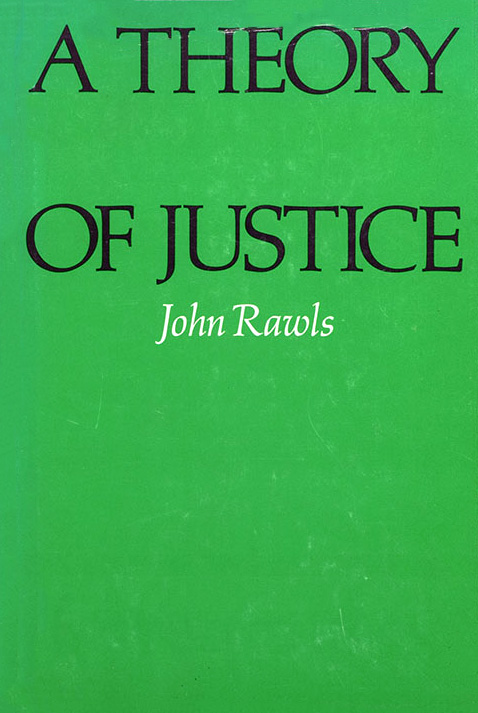
Back in February, Nick Cowen here at NOL pointed the 100th anniversary of John Rawls’ birth. At the time I somehow caught that this year also marks 50 years since his Theory of Justice book publication (a rather banal discovery it seems now, but still). The “veil of ignorance” was a strong introduction to the world of ideas and one of the few things to make it past my undergraduate studies.

The 1st American edition – source

Beyond those lectures (early 00s), I have yet to read the book. I suspect that it could belong to the “books everyone would like to have read, but almost no one actually reads” list, along with that Beveridge Report (this quip about the Report I read somewhere I cannot remember). Anyway, here be a fresh tribute proper:

On the Legacy of A Theory of Justice (Law & Liberty, there are responses to the main essay, too)

As far as round anniversaries involving nice thought experiments go, I would also note that Judith Jarvis Thomson’s “violinist” and Herbert A. Simon’s “alien telescope” papers were published in 1971 and 1991, respectively. The first is a defense of the right to abortion, while the second is a tool to discern social structures (guess what, I have not read the “violinist” paper either. It seems interesting and timely enough – the top courts in US and Germany decided on abortion in 1973/75 – but I firstly found out about it, and some relevant criticisms, only last year. Simon, the Nobel Memorial Prize in Economic Sciences laureate 1978, provided insights across a few fields over the years):

The trolley problem problem (Aeon)

Organizations and Markets (Journal of Economic Perspectives)

Getting to more recent staff, Brandon the other day expressed his doubts about the new charter city project in Honduras (Próspera). Find below a comprehensive read on the matter:

Prospectus On Próspera (Astal Codex Ten)

Now, as a pc gamer of yore, I have been expecting more nods to the underwater city of Rapture from the Bioshock game series, maybe. Rapture was a utopia free of state intervention, purportedly founded top-down on individualistic ideals in 1946, that failed. No, not quite libertarian ideals, more of a wildly objectivist kind, with a paternalistic edge. The adherence to laissez-faire, but not to laissez-passer (the founder forbid any relations with the rest of the world), brought smuggling, inequality and eventually the downfall of the city.

Not Rapture, but close enough style-wise (Moscow State University main building) – source: my own archive

At least this is how I understand it (right, I have not played any of these games. Survival/ horror FPS, nope. I do appreciate the games’ grandeur for 40s-50s ideas and architecture, though). As for any relevance to the Próspera project – come to think of it again – I admit the whole comparison is tempting, but way overblown, ok. Próspera is a public/ private law creature, envisaged in the constitution of a sovereign state. I desist.

Why Bioshock still has, and will always have, something to say (Ars Technica)

Ideology in Bioshock: A Critical Analysis (Press Start)

“The Legacy of Colonial Medicine in Central Africa”

Between 1921 and 1956, French colonial governments organized medical campaigns to treat and prevent sleeping sickness. Villagers were forcibly examined and injected with medications with severe, sometimes fatal, side effects. We digitized 30 years of archival records to document the locations of campaign visits at a granular geographic level for five central African countries. We find that greater campaign exposure reduces vaccination rates and trust in medicine, as measured by willingness to consent to a blood test. We examine relevance for present-day health initiatives; World Bank projects in the health sector are less successful in areas with greater exposure.

Woah, this, from Sara Lowes and Edward Montero, is crazy (link fixed) and hopefully gives pause to colonialism’s few living defenders…

Charter cities aren’t all that libertarian, and I doubt they’ll work either

Is economist Tyler Cowen bullish on a new charter city in Honduras? He says he’ll go and report on it if it ever gets off the ground. But let’s be honest with ourselves, it’s not going to ever get off the ground. Why? Two reasons. First (from Cowen’s excerpt):

It has its own constitution of sorts and a 3,500-page legal code with frameworks for political representation and the resolution of legal disputes

This is too many rules and not enough boundaries. A constitution of sorts? 3,500 pages of legal code, based off of…what, exactly? Some guys decided that they could purchase sovereignty (not a bad idea, actually) and then create – out of thin air and by using heterodox economic theory as their guide – all of the rules and regulations that this sovereign body would need to govern effectively? Did I get this right?

Second, when has a top-down central planning ever worked for something like this? Top-down central planning barely works for corporations when they reach a certain size threshold, and we all know how well this type of planning works in the public sphere. Even the U.S. federation – which can be considered a sort of top-down plan from a certain point of view – was built on top of already existing politico-legal institutions. Hong Kong and Singapore, two city-states that have long been the apple of libertarian eyes, were around long before they became city-states in the Westphalian state system. The British just grafted their imperial system onto already-existing indigenous politico-legal orders.

This charter city in Honduras is (I am assuming) not grafting itself onto an already existing indigenous politico-legal order. It is trying to forge an entirely new system out of thin air. That’s too rich for my blood.

Francophonie et connerie

Comme c’est souvent le cas le soir, je lézarde devant TV5, la chaîne francophone internationale. C’est l’heure du journal télévisé. L’annonceur, francais selon sa diction, annonce gravement que ce jour est l’anniversaire de la mort des époux Rosenberg, exécutés en 1953 “parce qu’ils étaient Communistes”. Comme, à cette époque, il y avait au moins 100 000 Communistes aux Eats-Unis, ces deux-là n’auraient vraiment pas eu de chance!

Un autre jour, je regarde un documentaire français: “Gharjuwa, épouse de la vallée.”  C’est sur une ethnie népalaise qui pratique la polyandrie: une femme, plusieurs maris. Le sujet est intrinsèquement intéressant, Et puis, le fait que la femme polygame ait le gros sourire aux lèvres tout le long de l’interview confirme pas mal de mes à-priori sur ce qui rend les femmes heureuses, en fin de compte! (Ce n’est pas sorcier.) Et puis, le tout se passe dans un environnement montagneux magnifique. Comme c’est le cas pour la plupart des documentaires français que je connais, la photo est excellente.

L’une des tâches de la femme polygame est de préparer la bière. Une voix masculine dit le commentaire en Français. Soyons francs: je ne sais pas si c’est le commentateur qui a rédigé le texte. En tous cas, il nous avise de ce qu’au Népal, la bière ménagère se prépare en faisant “cuire ensemble” une céréale (ou plusieurs; maïs ou blé noir, ou les deux, je ne suis pas sûr) et de la levure. Je fais un retour en arrière mental. C’est bien ce qu’il a dit. Mais, la levure, c’est ce qui transforme les sucres des céréales en alcool et en CO2. Mais la levure se compose d’organisme vivants qui trépassent vite à la chaleur. Pas question de la faire cuire avant qu’elle ait fait son travail. Ou alors, on a de la bouillie plutôt que de la bière. La description qu’on nous donne  est donc aussi fausse qu’absurde.

A priori, selon son accent et sa diction, le commentateur est français ou belge. Il vient donc d’un pays célébré dans le monde entier pour ses vins et aussi pour ses bières, ou alors, massivement, seulement pour ses bières. Des pays respectés aussi pour la supériorite de leur boulangerie et de leurs pâtisseries levées. Vins, bières, pains, pâtisseries exigent la maîtrise des levures. Comment peut-on être aussi ignorant d’une partie aussi importante de sa culture materiélle pourtant séculaire? Et puis, je sais bien qu’en principe, l’ignorance et la connerie sont des choses différentes. Pourtant, il y a des cas où on a du mal a distinguer l’une de l’autre. Je me demande comment on peut avoir été élevé dans la culture française ou la culture belge et être si profondément mal informé, à moins d’être également stupide.

Mais j’éprouve aussi de l’indignation comme ainsi dire au second degré: Comment les public francais et autres francophones peuvent-ils laisser passer de telles manifestations d’ignardise grossière sans se plaindre, sans réagir? Le fait est courant, répandu selon mon usage de l’éventail, il est vrai limité, de media francophones à ma disposition. J’ai d’ailleurs inventé la formule suivante, (en Anglais) : “Si vous voulez apprendre rapidement quelquechose de faux, suivez simplement les cinq premières minutes d’un documentaire en Français!”

J’ai du mal à souscrire à l’idee que la langue francaiss, la langue de Diderot, serait intrinsèquement porteuse d’insouciance vis-à-vis de la vérité toute simple bien que cela ne soit pas complètement impossible.

Je m’interroge donc sur les possible causes sociologique de ce qui me paraît plus qu’un accident. Je veux parler de l’apparente indifférence aux faits associée à l’usage de la langue française contemporaine. Je ne sais pas s’il s’agit vraiment d’ un phénomène culturel en profondeur: Les faussetés ne dérangent simplement pas beaucoup les Francais. (Il me semble, subjectivement, que les autres francophones, Canadiens, et Belges, par exemple, sont moins coupables.) Je me demande si les causes des ces frequentes débâcles factuelles sont plus tortueuses et donc, moins directement culturelles:

“France 2 fait un documentaires sur les Népalaise à plusieurs maris. C’est chouette. Je vais téléphoner à Robert pour lui demander s’il peut prendre mon neveu Charlot pour le narrer. Justement, en ce moment, il ne fait pas grandchose.”

De vraies questions. Toutes les réponse m’intéressent, celles provenant de France autant que celle émanant d’autres pays francophones. Ecrire à jdelacroixliberte@gmail.com.

Le beau et ignare documentaire en question sort de chez Atmosphère  Production  avec le concours du Centre national du cinéma. (“Evidemment”, j’ai envie de d’ajouter.)

Former president Lula out of jail… again

Former Brazilian president Luiz Inácio Lula da Silva is currently considered innocent and can run for president in 2022 if he wishes. Lula was arrested in April 2018 under Operation Car Wash, conducted by judge Sérgio Moro in the Brazilian southern city of Curitiba, in the state of Paraná. In November 2019, the Supreme Federal Court ruled that incarcerations with pending appeals were unlawful and Lula was released from prison as a result. Yesterday, March 8, 2021, the Supreme Court Justice Edson Fachin ruled that all Lula’s convictions must be nullified because Lula was tried by a court that did not have proper jurisdiction over his case. This is so complicated that I had to check in Wikipedia to make sure I’m getting the basic facts straight.

Now I wonder: what changed between April 2018 and November 2019? And what changed yesterday? Don’t know! Was Lula illegally arrested in April 2018? What kind of country is this, in which people are arrested unlawfully?! Why it took Edson Fachin almost three years to realize that Sérgio Moro had no jurisdiction in this case?! Is Brazilian law really so complicated that it takes even to a supreme court judge three years to realize that something is wrong? What is going to happen to Lula now? After all, he was in jail unlawfully for more than a year! But mind this: Edson Fachin didn’t say that Lula is innocent! He said that Sérgio Moro had no jurisdiction to judge him. Theoretically, Lula can be judged by a new court, with the same proofs, and be condemned… again. You know, Seinfeld was right:

“What are lawyers, really? To me a lawyer is basically the person that knows the rules of the country. We’re all throwing the dice, playing the game, moving our pieces around the board, but if there’s a problem, the lawyer is the only person that has read the inside of the top of the box. I think one of the fun things for them is to say, ‘objection.’ ‘Objection! Objection, Your Honor.’ Objection, of course, is the adult version of, ‘’fraid not.’ To which the judge can say two things, he can say, ‘overruled’ which is the adult version of ‘’fraid so,’ or he could say, ‘sustained,’ which is the adult version of ‘Duh.’”

I’m afraid that in the case of Brazil, if the supreme court judges don’t quite understand the rules of the game, neither can I.