Deprivations Of Liberty Seen Through Ekphrastic Poetry

I’ve discovered and admired a wide variety of original thinkers during my eleven-year stay in the United States, from philosopher Eric Hoffer to economist and social theorist Thomas Sowell. From American history professor Barbara J. Fields to American political philosopher Harvey Mansfield. From Tyler Cowen, an American economist, and David Boaz, a libertarian thinker, to Paul Graham, an English-born American venture capitalist and essayist. One among them is Natasha Trethewey, a two-time US Poet Laureate.

My favorite contemporary American poet, Natasha Trethewey’s poems have an Ekphrastic quality because she graphically and implicitly explores her individuality and deprivations of liberty through deeply evocative accounts of her past and personal photographs rooted in her experience of race and culture.

As it is World Poetry Day, I thought I’d share three of her poems that appeal to me. But first, a little background on her: She was born on the centennial of Confederate Memorial Day in the Deep South to an African American mother and a white father when interracial marriage was still illegal in Mississippi. Though her father, poet Eric Trethewey, had an early impact on her, her mother, Gwendolyn Ann Turnbough’s tragic death, according to Trethewey, prompted her first attempt at writing poetry.

I hope you enjoy these poems and explore more of her work.

History Lesson

I am four in this photograph, standing   

on a wide strip of Mississippi beach,   

my hands on the flowered hips

of a bright bikini. My toes dig in,   

curl around wet sand. The sun cuts   

the rippling Gulf in flashes with each   

tidal rush. Minnows dart at my feet

glinting like switchblades. I am alone

except for my grandmother, other side   

of the camera, telling me how to pose.   

It is 1970, two years after they opened   

the rest of this beach to us,   

forty years since the photograph   

where she stood on a narrow plot   

of sand marked colored, smiling,

her hands on the flowered hips   

of a cotton meal-sack dress.

[Natasha Trethewey, “History Lesson” from Domestic Work.]

Southern History

Before the war, they were happy, he said.
quoting our textbook.  (This was senior-year

history class.)  The slaves were clothed, fed,
and better off under a master’s care.

I watched the words blur on the page.  No one
raised a hand, disagreed.  Not even me.

It was late; we still had Reconstruction
to cover before the test, and — luckily —

three hours of watching Gone with the Wind.
History, the teacher said, of the old South —

a true account of how things were back then.
On screen a slave stood big as life: big mouth,

bucked eyes, our textbook’s grinning proof — a lie
my teacher guarded.  Silent, so did I.

[Natasha Trethewey, “Southern History” from Native Guard.]

Flounder

Here, she said, put this on your head.

She handed me a hat.

You ’bout as white as your dad,

and you gone stay like that.

Aunt Sugar rolled her nylons down

around each bony ankle,

and I rolled down my white knee socks

letting my thin legs dangle,

circling them just above water

and silver backs of minnows

flitting here then there between

the sun spots and the shadows.

This is how you hold the pole

to cast the line out straight.

Now put that worm on your hook,

throw it out and wait.

She sat spitting tobacco juice

into a coffee cup.

Hunkered down when she felt the bite,

jerked the pole straight up

reeling and tugging hard at the fish

that wriggled and tried to fight back.

A flounder, she said, and you can tell

’cause one of its sides is black.

The other side is white, she said.

It landed with a thump.

I stood there watching that fish flip-flop,

switch sides with every jump.

[Natasha Trethewey, “Flounder” from Domestic Work.]

Talking about Trethewey’s poetry, Jericho Brown, a Pulitzer Prize-winning poet, says, “Her contribution is that of someone who sees us in individual and human ways and not only representations of resistance. Her black Union soldiers fall in love, her overworked grandmother plays a mischievous trick on a foreman, her black stepfather is a murderer, and her white father, who loves her, can’t resist microaggressions against her. I mean she allows her characters — her own history — to be as complex as history really is. This makes space for readers like me who are interested in life and not a caricature of life, readers who understand that poems must face us to our good and our evil and our personhood no matter what color we are.” Apart from Brown’s insight into Trethewey’s poetry invoking a strand of individuality that goes beyond trying to paint groups of people as symbols of resistance, I have often wondered what it is about her poems that appeal to me. Though I have no firsthand experience of what a troubled relationship with racial identity feels like, I suppose it may have something to do with my uneasy alliance with the English language itself—the medium of Trethewey’s craft. English is both the language of enslavement and revolt in a multilingual India. Though a colonial language, India has adopted English as its father tongue, yet we don’t fall under the Anglosphere-type of society. For most Indians, including me, English is characterized by ambiguity and conflict with our mother tongues, often mirroring a flounder-like situation—flip-flopping, switching sides with every jump, privileging one or the other, yet interpreting each other in the search for liberty.

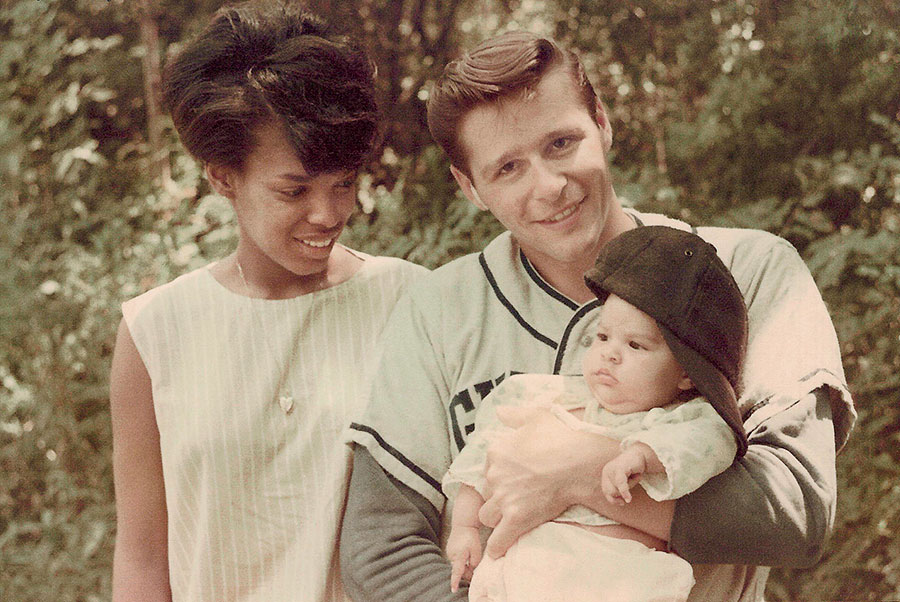
Trethewey with her parents, Gwendolyn and Eric (also a poet), in Mississippi in 1966. The couple would separate seven years later. [https://www.chicagomag.com/chicago-magazine/august-2020/the-reckoning-of-natasha-trethewey/}

Here’s some more from Natasha Trethewey

Knowledge

South

Providence

The Federation of Free States: Growing pains

We’re continuing our thought experiment on adding more states to the American republic.

Our initial experiment added 29 states to the union in 2025. After a few decades of relative success (the entire world grew economically from 2025 to 2045), the bicameral Congress of free states was willing to accept several new members, who in turn were willing to trade their sovereignty for two seats in the Senate. The polities that joined the federation of free states in the second peaceful geographic expansion of the Philadelphian federal order were varied, but only somewhat predictable. The Madisionian compound republic rearranged the map once again. Here is what it looks like in 2045:

The red places were “states” in 2025, the orange places are new “states” in 2045.

As you can see, most of the expansion came in North America, East Asia, and West Africa. The experience of Canaan, England, and Wales hasn’t been bad, but enough nationalist-secessionist sentiments remain in these three “states” that none of their neighbors thought that giving up their sovereignty for Senate seats was worth it. All three economies grew, and peace finally came to Canaan, but if peace, wealth, and security from predation were the only things that people wanted then we wouldn’t be people. We’d be something else entirely. People want freedom, and the compound republic – the federation of free states – did not yet show in 2045 it was capable of extirpating the menace of nationalism from human existence.

The success of the ranching states of Mexico – Coahuila, Tamaulipas, and Nuevo León – within the United States prompted several more Mexican states to apply for statehood, but the pushback against too many states joining the union was stern. Yucatán and Chihuahua were added as is, giving the Senate four more seats, but the states of Zacatecas, Durango, and San Luis Potosí had to combine into one state (they called it San Luis Potosí, and it’s about the size of Nevada) in order to join the Philadelphian world order.

The prairie provinces of Canada also did well for themselves since 2025. So well, in fact, that five more provinces applied to join. However, Congress did not want to add five more states with such sparse populations, so the Atlantic provinces of Nova Scotia, Prince Edward Island, New Brunswick, Newfoundland, and Labrador merged to become a state that they called Nova Scotia, a massive landmass with enough people for only one or maybe two representatives. By the way, from 2025 to 2045, several old American states — Washington, Oregon, and Vermont – all held referendums on whether to leave the Madisonian republic and join Canada (or go it alone), but the referendums have proved to be unsuccessful.

Liberia’s success in the American federation is perhaps the most encouraging progress of all. Crime rates skyrocketed once Liberia joined the union, but this only shows how the American legal system does such a wonderful job of protecting property rights. Violent crime dropped, but crimes involving property rights reached an all-time high, which means that property rights in Liberia are finally being protected by a state strong enough to do so. The GDP (PPP) per capita of Liberia quadrupled from 2025 to 2045. Several neighboring states took notice, but only one, Sierra Leone, joined the federation outright.

Several Nigerian and Ghanaian polities joined the republic. All of the polities started out as administrative units within Ghana and Nigeria, and there were too many that wanted to join. So, they borrowed from San Luis Potosí’s playbook and merged with each other before applying for statehood as larger polities. From Nigeria, the states of Oyo (made up of five Nigerian states), Biafra (made up of eight states), Benin (made up of four states), and Bayelsa (three states) all joined. The states are all from the south of Nigeria.

Ghana sent three states to the republic: Ashanti (made up of five Ghanaian provinces), Volta (made up of three provinces), and Cape Coast (three provinces). The 11 provinces that made up the three new states were all from Ghana’s south. It should be noted the the Ashanti region had a relatively strong sense of nationalism when it applied for membership to the federation, and that the extirpation of this nationalism in exchange for self-government in a compound republic was not a problem for its inhabitants.

Colombia and Panama. The Caribbean experience has had less of a “wow factor” than Liberia or Mexico. Economic growth in Antilles was a little bit better than the regional average, but not by much. The big change was demographics, as many seniors from the original 50 states moved to Antilles, and many young people from Antilles moved to the original 50 states. The crime rate was similar to that of Liberia, too, with violent crimes dropping but property crimes increasing a little bit. Most of the countries in Central America (sans Costa Rica) and all of the Pacific countries in South America applied for membership in one form or another. However, only four states were added in 2045: three from Colombia and the whole of Panama. The four states got together and pulled out a map of 19th century Gran Colombia to put together a plan for federation. Isthmo (Panama), Cundinamarca (made up of eight Colombian states), Magdalena (made up of six states), and Cauca (five states) all joined the federation of free states.

Things went so well in East Asia and the Pacific that the entire country of Vietnam applied lock, stock, and barrel. Like Japan, South Korea, and the Philippines in 2025, Vietnam had too many states for the federation so six regions joined instead: Bắc Trung Bộ, Bắc Bộ, Tây Nguyên, Đông Nam Bộ, Tây Nam Bộ, and Đồng Bằng Sông Hồng. The Vietnamese now enjoy the military and economic benefits that come with being federated with the compound republic of the United States.

Further thoughts

The Canadian and West African states are the only ones with English-language speakers. Nevertheless, English continues to be employed as the lingua franca of the federated polity. This has produced a class division between those who can speak English and those who cannot, and eventually English will be spoken by nearly everybody in the polity (now numbering just over one billion souls), but the native languages are unlikely to disappear. They’ll continue to evolve on their own lines, and most people in the federation will simply be able to speak more than one language. The English of the Constitution and Bill of Rights will no doubt become antiquated as English evolves, but it’s already pretty antiquated today (2022) and there’s been no real challenge in 250 years to English’s status as the lingua franca of the republic.

Reactions to the compound republic from other states

Perhaps the most interesting aspect of the United States’ decision to apply federation to its foreign policy is the reaction of other states. The Russians, who it could be argued had an alternative to the Westphalian order in the 19th century (and this is why it pursued its own foreign policy agenda throughout the Cold War, rather than for the exportation of the Revolution), are still doing what they’ve been doing since 2000: recognizing small states along their vast border and slowly chipping away at the losses of their empire. States such as Donetsk, South Ossetia, and Crimea are recognized as states by Russia, Belarus, and, say Kazakhstan, but in 2045 the compound republic decided to build upon its foreign policy of federation by recognizing these claims to independence. This means that post-Soviet states like Ukraine and Georgia lose territory, but it doesn’t necessarily make Russia stronger and it doesn’t mean freedom is in decline. Out of two states (in this example), five now exist, and there’s nothing to suggest that they won’t lean on the compound republic rather than the Russian Federation.

The CCP turned inward, especially once the compound republic called its bluff on Taiwan. Like Russia, it has been argued that an alternative state system to Westphalia existed prior to 19th century European imperialism. The Belt and Road Initiative was supposedly part of the Tianxia state system, but regardless of whether or not you buy this argument (I don’t), China’s expansion ceased once Japan, South Korea, and Taiwan joined the Philadelphian union. The CCP became even more repressive and paranoid. The non-Han grew more despondent, and the non-Mandarin speaking Chinese, especially those living along the wealthy seaboard of the South China Sea, grew angry.

The Europeans and their interstate system continued to try to keep the Westphalian European Union alive, but without the abrogation of state sovereignty, the EU continued to be ineffectual. The French, taking a page from the American playbook, revived an old effort to federate with its former colonies. The French continued to adhere to a Westphalian logic in this effort, and the French Union floundered as badly as the European Union. The key to Madisonian compound republic’s success has been its abrogation of state sovereignty (which is “traded” for seats in the Senate). Portugal reached out to Brazil and Angola to discuss a Lusophone federation, and ties became closer, but Westphalian sovereignty trumped all discussions of cooperation and the Portuguese found themselves in the same situation as the French: members of two ineffectual confederations that are built upon Westphalian nation-state sovereignty.

The remnants of the British and Spanish Empires (Peru, Argentina, Australia, India, Pakistan, Sri Lanka, New Zealand, Iraq, Egypt, Saudi Arabia, the British Caribbean, etc.) continued along the same path as the Europeans. Economic growth continued at its slow pace, but compared to the societies living within the compound republic, it was becoming clear that the Westphalian remnants were losing ground, especially in regards to liberty, equality under the law, and democratic governance.

In 2045, the American republic added 22 more states, making the federation a conglomerate of 101 “states” and the District of Columbia. Liberty is on the rise, and despotism is getting cornered.

Things (and few Links) Korea, in times before, and after, the light

No squids, or parasites. Butt-kicking for goodness, from an imaginary country.

The proverbial light being internet, and in the meantime, adulthood. Martial Arts gyms were a bit of a curiosity here in Greece, when I started training in Tae Kwon Do as a teen (c. 1995). Sparse, definitely not next to each and every school, with a wild array of possible outcomes, ranging from genuine fighting skills to pure edgelord bs. No accessible standard for the “average services consumer” (apart from 70s/ 80s movies and some illustrated paper magazines – which were mostly promotional). So I joined the gym, whose owner and chief instructor was my uncle’s friend. The man was well versed in TKD and a few other styles. He did his own thing, a TKD base, sprinkled with Kick Boxing/ Muay Thai and some elementary grappling. I fell for it.

Experience is one thing. Getting the full picture can be another. Back then I learned that TKD is indeed Korean (hard to miss the fact, as there was also a South Korean flag on the wall, to which we observed respect), maybe or maybe not its national sport, not much more. As I quit four years later, in order to prepare for the nationally held university admissions tests (a Greek, but also a Korean, thing, more on this later), I left my black tipped red belt, and my relationship with this sketchy distant land, there. Twenty years later, I enrolled to another gym, and revisited the “martial arts” section, this time also thru the power of the net and the wisdom of my years (yeah!). What I saw was…interesting. Note: The martial arts content is generally sub-par, in my view. Too little good writing, too much sectarianism.

The TKD we trained in was of the International TKD Federation (ITF) kind, one of the two main branches in an art that has also many smaller organizations. TKD is not ancient, it only got assembled and standardized in mid-20th century, as South Korea built its national identity away from Japanese influence. The predefined sets of moves (Katas in Karate), called tuls (ok that I already knew), have names I consistently misheard. And then there were the critiques. Oh my. Post after post slamming TKD, its usefulness, its application, its training methods. This cancellation is already dated, it started like in early 00s and closed its circle in early 10s, but obviously I had not gotten the memo, and it pinched me more than it should.

I agree with the first line of criticizing. The spread of gyms, next to each and every elementary school (a sound decision business-wise), brought some softening of the art (for reference, in our gym the floor was covered with that rough, gray, rippled mat that you usually see in an office lobby, perfect for skinning bare feet. We got colored soft mats two years later). The second line is also credible. The early 90s saw a revolution in martial arts, with the advent of Mixed Martial Arts (another sound business decision, btw). The rise of the so-called “pressure tested” styles brought salience and “weights-n-measures” to a world rich in claims, but often poor in evidence. Nothing really novel, though. The underlying force is, of course, competition, which should be familiar to anyone taking interest in social systems and relations. With the renewal also came the blanket thrashing of traditional styles, deserved or not.

Coming to assess my TKD training, I get to see the holes in it, notably the low amount of free sparring and the “choreography” of self-defense scenarios. However, the athleticism was real, as was the fixation to perfect form (either in performing a basic punch or a complicated tul). And the sweat. Also, I lucky stroke with the gym selection, since the master had, as I understand now, introduced the then new, mixed normal in martial arts training. Another positive sign was that the gym competed in kick boxing/ Muay Thai tournaments (the older students, not we teens). So, bruised and battered, but not cancelled in toto.

Understanding Korea’s Unique Situation: Routledge’s New Handbook of Contemporary South Korea (LA Review of Books, from the same guy Brandon complimented, back-handedly, here)

That university admission is the only way forward for young Koreans and Greeks alike surprised me, somewhat. But taking into account that both countries entered the post-war landscape relatively late (the Greek civil war ended in 1949, the Korean war lasted until 1953), ravaged, poor and reliant on external aid, the differences get ironed out. Lacking a large enough private sector to offer vocational training and career opportunities, a university degree seems appealing enough as an investment to future. South Korea did its homework more consistently, however, and its top universities are ranked in the tens or fist hundreds of the world’s finest, while the Greek ones are way lower. It also became an export powerhouse and a “middle power” in world politics, through authoritatively introduced liberal economics reforms:

From hermit kingdom to miracle on the Han (Peterson Institute for International Economics)

My second martial art, Hapkido, is Korean, too. It was also developed in mid to later 20th century and has a complex, fascinating history. It even played a – shady – role during Park‘s presidency. It is a solid art, but even more organizationally fractured than TKD or others. Unfortunately, I only trained for six months, as covid-19 (and life) blew me away. There is always some catch-up to do, it seems.

(Monday’s) comic book edition

The Code is dead, to begin with. Watchmen (DC) is awesome, a near-Orwell experience. On comics historical curios and intellectual drifts. Here goes.

Vol. 1 – That other 50s scare and all

Somewhere somehow I picked up the Comics Code Authority story. It goes like this: The rise of mass-media in early 50s saw a creeping moral panic against the more “graphic” content of comic books (think horror, violence and the like). In 1954, the Senate Subcommittee on Juvenile Delinquency investigated the supposedly detrimental influence of comic books, taking into account speculative, biased evidence. The emerging threat of government regulation prompted the creation of the Code by the comic publishers, so that they could check content themselves. The self-censoring initiative could use some tuning: It was overly strict, shaking-up and aggressively downsizing the industry. Thus, a government “nudge” led to a private sector (over)reaction, with ill effects. The sector, however, adapted and continued, underground or otherwise.

*The* seal – source

Ironically, it was another government nod that galvanized a Code overhaul in 1971, as the Nixon administration asked Stan Lee of Marvel to incorporate an anti-drugs storyline in Amazing Spiderman. The arc proceeded without CCA approval in mid-1971 (funnily, just before the international monetary system entered turmoil). And it was in 1973 (say hello to the first oil crisis) that the depiction of murder in a popular comic book (Amazing Spiderman, again) marked the passage from the campy superheroes of the Silver Age (c. 1956 – 1970) to a more diverse and socially attuned bunch in the Bronze Age (c. 1970 – 1985). As the disillusionment of the 70s gave its place to cynicism in the 80s, so did the comic heroes matured, with works like Watchmen and The Dark Knight Returns. The archetypes formed in the period (Dark Age, typically 1985-1996), grim and complex, redefined the genre and are still here today.

The Code was updated again in 1989, but failed to stay relevant in the face of increasing bypassing/ sidelining via new distribution methods (all hail the market in action). Just 20 years ago, Marvel abandoned it. 10 years later, in 2011, the last adherents, DC and Archie, finally desisted, too.

Vol. 2Randian Quests & Answers

Α couple of (relatively) fresh articles flashed from The Comics Journal:

Mysterious Travelers: Steve Ditko and the Search for a New Liberal Identity

How Ayn Rand Influenced Comic Books

Not an exactly nuanced analysis, the second one (it contains a few useful links though), but still, both presented things to consider. As it turns out, the co-creator (along with aforementioned Stan Lee) of f – Spiderman, Steve Ditko, endorsed objectivist ideals in early 60s (he even contributed a piece to Reason back in 1969). Here is another scholarly short paper on his impact:

“A Is A”: Spider-Man, Ayn Rand, and What Man Ought to Be (PS: Political Science & Politics)

If mid-60s Peter Parker, “[c]old, arrogant, detached from the lives of others, but driven to follow his purpose and pursue higher ends”, seems objectivist enough, then the Question and Mr. A., Ditko’s creations in late 60s, are the real thing. These two were featured in smaller publications, and later provided the inspiration for Rorschach (Watchmen).

Fists will fly – source

The character was intended not only as a tribute to Ditko, but also as a stark criticism for randian convictions, meant to make a bad example of them. However, the controversial fictional zealot resonated (a bit too well perhaps) with the audience. Indeed, the character delivers some of the most memorable quotes ever, his unflinching crusade against the morally bankrupt (political class included) is iconic, and his damaged humanity invites some sympathy.

Depending on priors and inclinations, one can certainly discern smatterings of Rand’s ideas in Rorschach (“no gray”, believing in “a day’s work for a day’s pay”, among others). But I think that his trope could be assigned to other venues, too. For example, a fantasy aficionado will see a Paladin gone (very) wrong, maybe, or a casual will stick to the apparent right-wing leanings per se, and so on.

The other route of Rand influence is traced to Frank Miller and his Dark Knight take on Batman. The arc of a lone (capitalist) hero versus media-induced apathy and the corrupted establishment (and said establishment’s lapdog, Superman) has a libertarian facet, yes. I will get it (next week probably), read it and, then, return.

The Harem Pants

It was market day. If you are a serious traveler, you never miss open air markets. They are invariably pleasurable as well as educational. All the female merchants there in that Turkish market, all from the interior of the country, were wearing broad, long, flowing, so-called “harem pants.” An older lady with gray hair showing crossed our path wearing such pants, silky ones, with a black on gray subtle motif my wife immediately liked. You know what to do, I told my wife. (A long time earlier, I had demonstrated to her that it was possible to buy a woman’ clothes off of her ten minutes after meeting her. That story is told elsewhere.) At first, she demurred.

I saluted the gray-haired lady and I expressed to her with gestures that my wife admired her pants. She took us to a stall that sold an inferior version of the same item. No, I insisted with a smile, she wants yours. To tell all, I was a little concerned that she might misunderstand me to be proposing to her that the three of us perform exotic acts together. But what we wanted soon seemed to dawn on her. I guessed she was a bit shocked but also intrigued. Soon, several other market women joined us, plus a little girl who had a bit of school English. When the female passel disappeared behind a truck, I discreetly walked away.

I walked around the market; I bought a brass pepper grinder to waste time. Then, I guessed to myself that my wife understood men well enough to find me, eventually. I made my way to the tea stall in the middle of the market. Soon, several wide-eyed boys surrounded me. Then, one at a time, older men joined me on the benches set out in the open. Each one of them offered me a cigarette and each tried to buy me a glass of tea. Seeing no toilet anywhere, I declined the tea each time with a big smile and a hand on my heart.

Are you married? One asked. How many children? Do you have pictures? Here are mine. And, finally: How old are you? I told the truth, as usual. One by one, they felt my biceps, then my thighs. I asked each politely one by one how old he was. As it happens, older Turkish men are all terrific liars, no exception. Men obviously in their early sixties would announce on their fingers: I am 83. I am 86. One said, I will be 95 next year. Then, they took turns blustering, I thought, I guessed, I imagined, about how good they looked for their age. It took all my willpower to refrain from challenging each and every one of the old bastards to an arm-wrestling match to teach them a little humility.

Subsequently, for the remainder of my stay, every mature Turkish man I met who was not trying to sell me a rug displayed precisely the same kind of loud vanity. I am suppose it keeps them young. It certainly beats the despicable Western custom of old geezers casually competing with each other about who has the worse health problems. Give me a braggart every time over a whiner!

Anyway, at some point, we got into the meat of things: American, yes? Yes, I confirmed. Bush? The oldest man asked with a raised eyebrow. I lifted my conservative thumb up. He replied immediately: Bush, good! Saddam… He drew his hand across his throat. Exactly! I confirmed eagerly. The American intervention in Iraq was about three months old then. Saddam Hussein was hiding in a dirt hole at the time. There were smiles all around.

The market was in a pretty seaside town. There were no American tourists in sight in the Near-East that summer. One old guy said to me, Tell the Americans to come back, please; these fucking European come here with three hundred Euros and they think they are kings. No, I don’t know any Turkish but I certainly caught the words “Americans,” “Europeans,” “Euros,” and,”sultan.” How do I know he used the expletive? Well, I can read faces.

An hour had passed pleasantly but I was vaguely, and only very slightly, worried about my wife. I did not think there was any danger, but was not like her to stay away because she is the kind of woman who gets periodically lost between our house, where we have lived for ten years, and the grocery store where she shops every week. I called over a couple of twelve year-olds (who may have been really twenty-five, according to Turkish males’ general apprehension of temporal reality).

I borrowed a gold-plated fountain pen from one of the old men. On a paper bag, I drew a chesty female silhouette and pounded my own (flat) chest. Wife of mine, I said. My wife is from India. Hindi! I added. Everyone murmured favorably about my artistic talent.

One of many wonders of globalization is that all around the less-developed world many people know and love Bollywood movies. “Hindi” struck a chord. I gave the boys one million liras each and sent them searching, paper bag drawing in hand. (What with inflation, a million liras does not buy nearly as much as it used to!) I wished them well in my heart, hoping they would not get into trouble inspecting too closely the bosoms of all and every woman at the market.

I located my wife, eventually. She had traded the old lady’s used but beautiful harem pants against two new ones, plus one for each of three other women present at the negotiation, plus a whole outfit for the little girl who had acted as an interpreter. But the pants she had acquired were truly magnificent! (My wife has many wonderful qualities and enormous artistic talent but a wily bargainer, she is not.)

The transaction completed at last, she had failed to find me, she said. This, although I was right in the middle of the market, surrounded by a small but loud crowd. Instead, guided by some obscure female atavism, something probably hard-wired, against all precedents in her life, she had decided to walk back to the hotel by herself. She was in her fifties at the time. She has luxuriant gray hair but she was tall and thin, yet curvy. With the gray and black, silky harem pants streaming around her long legs and her narrow hips, she must have cut a striking figure in the eyes of dozens of appreciative Turkish male spectators on the way. If this was her last huzzah, she could not have chosen a better venue; bless her occasionally exhibitionist little heart!

This is just a story; there is no deep meaning to it (as far as I now).

Three Astonishing Women

I leave my newspaper on the table outside as I dart inside the coffee shop to get more sugar. When I return, four or five seconds later, a middle-aged woman is walking briskly across the street holding my newspaper in her hand.

Hey, I shout fairly amicably, I was not finished with my paper!

She turns around and throws the paper on the table near me. I don’t want your stupid paper, she says. What would I do with it? I am legally blind.

Fact is that she is wearing unusually thick glasses. Point well taken. What do I know?


I drive into an unevenly paved parking lot behind a woman in a big van. As she makes a right-hand turn, I spot a blue handicapped placard hanging from her rear-view mirror. Just as she is about to position her van in the reserved handicapped space, its engine stops. After several useless attempts to re-start it, she steps out of the vehicle and begins pushing.

I am a real sweetheart and also an old-fashioned guy so, my first reflex is to get out and give her a hand. I abstain because I soon judge her efforts to be useless. She is pushing that heavy van up a significant bump. I think there is no way the two of us can vanquish gravity and place the van in its right spot.

Then, the woman braces herself; the back of her dress rises and her big calves become like hard river stones; she harrumphs once and the van ends up perfectly parked in the handicapped space. I learned another lesson: Don’t judge a book by its cover.


Speaking of parking makes me think of the last time I went to the California Department of Motor Vehicles (DMV). I just wanted a copy of a trailer permit. I had duly paid for the original when I had obtained it. As is normal, I was in a foul mood much before I reached there. Less logically, my irritation grew as I advanced up the line, as I got nearer the end of my ordeal.

The employee to whose window I am directed is a plump young Latina with thick eyelashes and a pleasant yet officious face. I explain my request. She goes tick, tick, tick on her computer and, quickly enough, she hands me the copy I want.

It’s $16.75, she says.

That’s ridiculous, I explode. That fee for a simple copy is an abuse of power. I changed my mind; I don’t want it anymore. Keep it!

Well, I will just have to give it to you, says the DMV employee with a big smile.

I practically fall on my butt in the midst of dozens of still pissed-off but unbelieving customers. I guess I don’t know everything about women, as I often think, just many things.

This is just a story; it has no deeper meaning, as far as I know.

American Classical Liberals Suck

This week Kevin Vallier published a new entry on neoliberalism in the Stanford Encyclopedia of Philosophy: Neoliberalism (Stanford Encyclopedia of Philosophy). It is a well-written, well-researched piece. However, it is also symbolic for the greatest deficiency of American classical liberals: they are unable or unwilling to defend the name, or label if you like, of the ideas they are associated with. Given the influence of American academia and thinks tanks on the rest of the world this is especially important. It has happened before, and it is happening now. It sucks.

This is how Vallier starts his entry:

“Though not all scholars agree on the meaning of the term, “neoliberalism” is now generally thought to label the philosophical view that a society’s political and economic institutions should be robustly liberal and capitalist, but supplemented by a constitutionally limited democracy and a modest welfare state. Recent work on neoliberalism, thus understood, shows this to be a coherent and distinctive political philosophy. This entry explicates neoliberalism by examining the political concepts, principles, and policies shared by F. A. Hayek, Milton Friedman, and James Buchanan, all of whom play leading roles in the new historical research on neoliberalism, and all of whom wrote in political philosophy as well as political economy. Identifying common themes in their work provides an illuminating picture of neoliberalism as a coherent political doctrine.”

The problem is in the words: ‘“neoliberalism” is now generally thought…’’.  Neoliberalism is a hotly debated term, there is certainly no consensus on its meaning. As Oliver Hartwich has emphasized in Neoliberalism, the genesis of a political swearword, it is still most often used as a swearword by the left for all that they think is wrong with capitalism, (classical) liberalism, (more or less) liberal policies by IMF, WTO and World Bank, et cetera. These left wingers are also found in academia, policy and in media circles, which has led to its routine use. However, it is not true that the work of Hayek, Friedman and Buchanan is generally thought to be covered by a neoliberal label. Only those who disagree with it call them neoliberals. It is painful to see that the ideas of these three Nobel Prize winners are now used to explain neoliberalism in a leading online source. They self-identified as classical liberals and just because opponents of their views use a different label is no reason to comply with that malicious practice.  

The worse thing is, it has happened before, also commencing in the US. Fairly recently, classical liberals began to use the label libertarian, as the Cato Institute has been promoting, for example on their (very useful) website  Libertarianism.org, or in David Boaz’ The Libertarian Mind.  Jason Brennan’s Libertarianism, what everyone needs to know is another example. The issue here is that the three aforementioned classical liberals, and others, are now thrown onto the same heap as Rothbard and Rand, to name a few rather different thinkers.

Decades earlier, Hayek and others noted with regret that the Americans were unable to defend the original meaning of the word liberal, with the result that a liberal in the American sense is now what people in other parts of the world call a social-democrat. It is also the reason Hayek and other started to use the name classical liberal.  

The result of all this changing of names is confusion and vulnerability. Nobody knows what label belongs to which ideas, which gives rise to a petty industry on liberal labels, yet without any clarity in the end. It also provides ample opportunity for opponents to negatively attack ideas loosely associated with the (classical) liberal movement, which results in a negative image, which also make liberal ideas less attractive for outsiders. The lack of clarity also makes vulnerable for any kind of criticism. Actually, embracing the swearword other use for you, by offering the ideas of your greatest and brightest thinkers, is a shameful act at least.

American classical liberals should stay firm and defend their ideas under the proper labels. There is no reason for change (see my Degrees of Freedom: Liberal Political Philosophy and Ideology), there is only a need for explanation and defense. Giving up clear and proper labels plainly sucks.         

The Great American Racial Awakening (Part Three): “It Wasn’t Me!” and Something to be Done.

American society, American whites, non-black minorities, and even some African Americans, have not fully absorbed the fact that American slavery was a long story of atrocities. It was also an endeavor of mass rape, as the light skin color of many African Americans demonstrates. (It was rape by definition; human “property” does not have the ability to give consent.) Soon after the abolition of slavery, incapacitating legally defined inferior treatment of black Americans descended on much of the country. In the South – the historical home of slavery – extra-judicial murder was frequent enough to keep many blacks timid and in partial subjection; sometimes, the resort to intimidation rose to mass murder. Incidentally, this forgetfulness is why I am glad that National Geographic, first, and Pres. Biden second, recently chose to showcase the 1921 Tulsa race massacre. Whatever the latter’s real motivation, that may be the first good thing he did.

Of course, the question should arise, must arise, of responsibility regarding both slavery and segregation. This for two reasons. First, long lasting acts of inhumanity should not go un-described lest ignorance do harm in the next generations. Second, the treatment of African Americans was, for centuries so spectacularly at variance with long standing Anglo-American tradition that some sort of explanation is required. But there can be no explanation, of course without a recognition of who the actors were, of their identification. In fact, there are voices among the pushers of Wokeness claiming that all whites are guilty by definition. (I choose my words with here care.) “It wasn’t me; I wasn’t even here,” reply many white conservatives. Below is an examination of the white case I know best, mine,

I am immigrant. I landed in the US as an adult for good in 1963. It was too late to contribute much to racial segregation. If one of my approximately 30 family antecedents since 1865 had made it to American shores before me, I think the news would have reached me through family lore. So, I am almost certainly innocent on the account of aiding segregation, including trans-generationally innocent. Slavery is another issue.

Assessing my antecedents’ possible contributions to slavery is more dicey because of the greater remoteness in time but, especially, because of the multiplicity of family lines one would have to follow. (I think that to arrive even at 1800, one would have to research up to 64 linkages.) It seems that both sides of my family going back to my great-great-grandparents at least come from eastern and northern France, hundreds of mile from the western coast slaving ports. This does not exclude the possibility that one young man or other among those who sired me found his way there and signed up for a slaving voyage or two without leaving a record worthy of notice. There is also no obvious record of anyone with my last name, or my mother’s maiden name being a slave owner in America. This leaves open the possibility that some of the other branches with different surnames reached here and held slaves. As they say, “Absence of evidence is not evidence of absence.”

Still, on the whole, my antecedents are less likely to have profited from slavery than many, many people of coastal African descent, for example. Late into the 19th century, for example, the economy of the west African kingdom of Benin was centered on slave trading, including feeding the remaining cross-Atlantic trade. It would be surprising if some descendants of American slaves or some recent Nigerian immigrants were not also descendants of Benin slavers. Also, take the Kenyan Obamas, for example, with their Arabized first names… (“Barack” means “blessed,” in Arabic, a pious way to say “luck,” or “lucky;” and the aunt the president would not acknowledge was named “Zeituna,” Arabic for “Olive.” No olives grow in Kenya, I am sure. So, why “Olive”?) How did these names happen given that they are not Muslims? Could it be that the older Obamas were involved with the Arab slave traders of Africa’s east coast (who plied their trade much longer than anyone based in America)?

This mindless genealogical excursion is coming to an end, finally. There was a point to it though. It is this: It’s easy enough for many, possibly for most white Americans to argue that they should not be held to account either for slavery or for racial segregation because they were not here, in America, when those happened. What’s more, it’s likely that none of their ancestors were. The immigrant (legal, I hope) who landed yesterday from Russia certainly can make that claim, same as I do. It seems to me that the claim is largely irrelevant. In fact, and thinking realistically and cynically, if we looked for culpability through blood lines, we shouldn’t be surprised to find that the average African American of today is more related to slave owners of the past than is the average white American. (This speculation is based on the pretty good assumption that most of today’s white Americans trace all their American ancestry to post-1863 immigration.)

Thus my point here is not that American conservatives should wallow forever in useless guilt (like a liberal wimpette) because of some supposed culpability based on race. Neither do I think that they should help feed – by supporting this claim – a sense of impunity among black criminals preying mostly on innocent African Americans. Nor do I suggest that my fellow conservatives should yield to any of the endless, diffuse race-based blackmails filling our media today (in 2021). My point rather is that we, Americans, including, and especially American conservatives, should fix what we can. I explain the ethical reason why we must do so below.

Yesterday’s immigrant, and I, and most Americans probably, live, exist, some thrive, in part thanks to the existence of a federal state that guarantees our safety from exterior threats. It’s the same federal state that makes possible a certain peacefulness, a degree of predictability of daily life without which we couldn’t even contemplate the pursuit of happiness. The fact that it does so with a heavy hand and at a high cost that I often deplore, does not change the basic fact that it does. If your libertarian beliefs make it difficult to think of this, look at Nigeria for the past ten years and at Mexico during its current elections (June 2021). However, the same federal state, in a straight historical line again, the very same federal state, engaged without discontinuity, in slave catching for fifty or one hundred years. It went on until the very eve of the Civil War. I don’t mean that the Federal Government went hunting for slaves in Africa but that it cooperated in returning runaway slaves to their owners. The practice was thunderously re-affirmed as late as 1857 in the Supreme Court’s Dred Scott Decision. For all, we know, slavery as a regional economic system might have collapsed early if the long boundary between free and slave states had been one great big open door devoid of federal interference.

It seems to me that there is no way to affirm honestly: Yes, I am appreciative for the benefits I derive from the Federal Government but I am in no way responsible for any of its past actions. Rather, I think, the following conservative principle must prevail:

The Federal Government is my servant; I am responsible to repair what my servant damaged.

I hasten to say that I don’t know how to compensate anyone for the great physical and emotional damage slavery and then, segregation inflicted on their ancestors. I confess this while noting that financial compensation for pain and suffering stands right in the middle of the mainstream of Anglo-American legal tradition. I want to focus instead on something more tangible: income.

Money often comes down through the generations. It also often fails to so come down, it’s true. This is a complicated matter. What is sure is that if the ancestor has not money, the descendant will not inherit his money. If the ancestor has no money to transmit because he is lazy, a drunkard, a whore-monger, or even simply handicapped, it’s not really any of my business as a citizen of this federal state. If, on the other hand, the descendant inherits nothing because of something my servant did to his ancestor, it’s clearly my responsibility to try and do something about it.

An unresolved concrete matter from both slavery and segregation is one of unpaid wages, and of income that could not be realized in part because of the actions of the Federal Government. I mean, my Federal Government, yesterday’s immigrant’s Federal Government, and also my Hispanic neighbors’ Federal Government. I think we all owe some compensation to our fellow citizens who have slave ancestors. (I am also ignoring here the possibility that segregation adversely affected black immigrants, people with no US slave background, because, I think, there were hardly any until recently. In general, I am skeptical of immigrants’ claims, as I indicated earlier.)

Forty-five years ago, economists Fogel and Engerman showed in Time on the Cross: The Economics of American Negro Slavery that slavery could fairly rigorously be subjected to conventional quantitative economic analysis, including if memory is correct, that of wage equivalencies. (The fact that the book soon became controversial only means to me that many readers don’t know how to read figures, or don’t care to.) It shouldn’t be beyond the power of modern economists to give us a rough estimate of the wages slaves would have been paid if they had not been slaves. The figure might seem surprisingly low, incidentally, because slaves were housed and fed, after a fashion, and housing and food constituted the two main recurring expenses of unskilled free workers.

Whatever the case may be, Americans in general, or just conservatives, could announce an overall amount of wages owed to slaves and, separately, of potential income black citizens lost to segregation, both augmented by accumulated interest. Proposals for discharging this collective debt should be submitted to broad public discussion. Ideally, personally, I would prefer a single payment or partial payments spread over how long it would take all made to those contemporary citizens who can show slave ancestry in the US. Since I have no illusion that any method of direct payment to individuals would have any chance of being accepted because of ambient puritanism, my fallback position would be educational/ training grants awarded to any descendant of slaves upon reaching legal maturity. I like this solution because there is good evidence that education is a reliable income and wealth multiplier. Enhanced education/training thus creates -however slight – the possibility that American society might leave that particular portion of a more general problem behind forever. Help with down payment on real estate would also probably be favored by many and for the same reason. (It seems that owning a house is the main mean of saving for most Americans.) There are many other possibilities.

Ideally, the funds for this historical compensation would come from a voluntary levy, from a subscription (a method for financing public goods not tried often enough in my view). African Americans with slave ancestors and ancestors hurt by segregation number no more than 45 million. My back-of-the envelop suggests that if everyone else reserved 1 % of his income for slavery and segregation reparation that particular debt might be extinguished in less than a lifetime. (Just a general idea; my calculations are not to be trusted literally, of course) Failing a voluntary levy, a new dedicated federal tax could accomplish the same end, of course.

Do I hope that this kind of limited compensation to the descendants of slaves could be managed in a fair, organized, decent way? Not really. I think though that it could put a damper on the present liberal temptation to replay the whole long, disastrous War on Poverty of Pres. Johnson. It would point to another way to deal with a festering wound. In any case, the inability to describe how a mission ought to be conducted should never stop us from admitting openly, even announcing, that the mission is necessary. The main virtue of this proposal would be to free to some extent those who contribute from the moral servitude resulting form our having servitude imposed on others with the help of our servant, the federal state. Acting in good faith toward other individuals is its own reward. It may even inspire others.

Beyond this, I think the Woke culture is going to collapse soon under the weight of its own ridiculousness. In the meantime, it will have ruined the careers of a few important people, including highly visible liberals who did not have sufficient alertness to duck in good time and to offer proof of their virtuousness without being asked. Even academia will regain its senses eventually though it will take some time because it’s so well protected from reality. I am betting that what will be left of this (2020-2021) societal frisson of righteousness will be the empty and therefore poisonous word “equity.” It will no doubt be used and used again until it ends exhibited in the pantheon where the Left keeps the equally empty and equally poisonous terms: the “rich,” and “fair share.” We may not prevent this but we, conservatives can keep the voice of sanity alive.

I conclude by affirming to my possibly scandalized conservative friends that nothing in this three-part essay alters my view of the broader American political context of today (2021). Pres. Biden’s administration is the worst in my long lifetime. Like everything that dampens economic growth, its policies will turn out to be especially noxious for African Americans. And liberals and progressives will blame our “selfishness,” of course.
Libertarianism and the new generation

Computer use as an adult: check my bills, check my savings, look at pricing for home improvements, check the scores, send & answer emails, read blogs if I’m lucky.

Has there been any foundational libertarian academic work done in the last 35 years? I mean, when I was in college, you read Ayn Rand, Milton Friedman, Murray Rothbard, Mises, and Nozick. These were the people you read if you wanted to familiarize yourself with common libertarian sentiment on questions of public policy (“economics”), ethics, foreign affairs, and cultural shifts.

What do the kids read nowadays? I’m in favor of overhauling the canon. I’d keep Nozick and Rand, but whose work should we consult on matters of public policy (“economics”) and foreign affairs? I think I’m going to have to be the one who answers the foreign affairs question, but what about econ? Whose work is the new Mises/Friedman? Whose going to overtake Rothbard and come up with a libertarian manifesto for a new generation?

Has our time come and gone already? If we don’t need new voices and fresh perspectives, then we’ve already lost the war of ideas.

The Great American Racial Awakening (Part Two): “Get over it!”

For most of my fifty-plus years living in this country, I have thought that white Americans have not digested the facts of slavery beyond the most basic level. I think they have avoided emoting about them and also about the much nearer-in-time ninety years of segregation in some of the country, at least. (Reading the memoirs of traveling black Jazz musicians led me to believe that segregation was not just in the South. They tell how on arriving in a new town anywhere in the country, the first thing they did was inquire about lodging accepting blacks if arrangements had done been made in advance.)

It’s hard to tell what liberals know and feel about the country’s racial history broadly defined. First, since most of them vote Democrat, they have an internal conflict of interest that must stand in the way of both clarity of mind and of sincerity of expression. Historically, their party is the party of unfailing support for slavery and then, it morphed into the party of racial segregation. I don’t know how you deal with this on an individual level. Second, I find it personally hard to tell what really moves liberals because many are the kind of people who tear up at the violent spectacle of three puppies wrestling in their containment basket.

I am pretty familiar however with my fellow conservatives’ expressed views of the whole matter. (Of course, I don’t know what they feel their hearts of hearts.) Three responses keep coming up. The first is a reference to the hundreds of thousand dead of the Civil War, implying it was payment enough for the evils of slavery. No, I am sorry, the Civil War only stopped the evil of slavery. It did not make up for it. It did not stop the transmission of its perverse effects through the generations. I does not help that some conservatives include the Confederate dead who gave their lives in defense of slavery even if it was not always clear to them.

The second common response is a nonchalant: “Get over it; it was long time ago.” That’s not a reasonable response, I believe, as a conservative, specifically. I think many good things, and many bad things, come down through families, even from ancestors way back. My own narrow experience tells me that it’s so. My paternal grandfather was killed in WWI, in 1916, exactly, twenty-six years before I was born. That’s more than one hundred years ago. My mother was thus brought up in an all-female family. Had that not been the case, she would have raised her own children differently, I think. Note that I don’t say, “better” because, I don’t know. It’s just that she would have been a different person herself, a different woman. Again, I am only trying to make the point that family experiences reach far forward in time.

I knew my maternal grandmother well. Though there were merrier aspects to her personality (as I recount in my book, I Used to be French…..) she was a mostly silent presence for all the time I knew her. I don’t know that she may have a had a wealth of experience, or simply stories, she would otherwise have shared with me. I was brought up without a grandfather. (There was an other one but alcoholism had made him dysfunctional.) Had I had a grandpa, I am certain I would have been a different man, a nicer one. Incidentally, I only came to realize this clearly when I became a grandfather myself, a very distinctive and nurturing role. If the repercussions of the simple and common fact of not having a grandfather can be carried across a hundred-plus years, I tell myself, imagine the cumulative, tenacious effect of having had all slave predecessors for hundreds years. In my book, it’s not that consequences of slavery might live on today among African Americans, it’s that they surely do. It seems to me that this is hardly open for discussion. (Though w you should feel free to argue with me on this point.)

Another detour is in order here. I am only discussing the burden of the majority of black Americans who do have slave ancestors. The implied moral calculus is not relevant to the large and growing minority of black Americans who are immigrants and children of immigrants. (The fact that their numbers are increasing fast, in itself, speaks volumes.) Don’t like it here for whatever reason? Go back to Jamaica; go back to Nigeria; go back to Haiti. This calculus also does not concern the invented category “Hispanics.” Except for the special case of Puerto Ricans, they are also practically all immigrants and descendants of immigrants. They have no right to complain just because heir parents or other ancestors had the good sense to cross the border, often at great cost and at great risk, so they could enjoy a standard of living and a freedom vastly superior to those they left behind. In most cases, such American Hispanics are entitled to citizenship in their ancestral land or, they can regain it easily. Even Puerto Ricans, whose country the US annexed without consultation, have the latitude to go home where they are unlikely to be exposed to racism. All those so-called minorities can thus easily avoid current alleged white American racism and, to the extent that they carry a special burden, it’s because of choices their own antecedents made. It seems to me none has any right to blame America nor to expect favored treatment on this account.

Expecting the descendants of slaves to “get over it,” is not reasonable, as I said. The likelihood is quite high that the adverse consequences of slavery have followed their ancestors, their parents through the years like a pig moving through a python. There is not particular ground to believe that these negative effects must automatically become diluted over time. This assessment is possible (and, I think, only fair) irrespective of whether we know what to to about it. Recognizing that a problem exists does not require that one know its solution.

In the next and last installments of this three-part essay, I will look at resolutions after introducing the third common attitude of conservatives: “It wasn’t me.”

The Great American Racial Awakening: A Conservative Approach (Part One)

When the so-called progressive forces opened America wide to everything black after the police murder of George Floyd, I feared the worst. I thought I would be daily embarrassed by an endless parade of black affirmative action wonders. I was thinking of mediocre or frankly bad African American actors, would-be pundits, pseudo-intellectuals, and demagogues promoted solely because of their race in an act of mendacious collective contrition. (And it’s true that the Democratic Party, the current home of “progressives,” has a lot to be contrite about, going back to its foundation.) I had learned that fear from thirty years in academia, of course, as well as from the continuing demonstration of lack of acumen of the media in staging again and again Al (“Honest”) Sharpton and the seemingly immortal Reverend Jackson.

Here, a detour is in order. What I saw in academia was not the admission, or hiring or promotion of wholly incompetent individuals because of their race (except one time). What I witnessed instead was the fact that people who were qualified overall, were given a solid bump up because of their race. In the last academic hiring in which I was involved, for example, the favored job candidate was more than qualified, rather overqualified for my department, in fact. At 28, she was hired at the same salary I had achieved after twenty years. She was black, of course. Not good for race relations! End of detour.

To my great and pleasant surprise, this obvious orgy of promotion of the embarrassingly incompetent but racially endowed is not most of what happened in the past year. Instead, I began seeing more black faces and hearing more black voices in the English language media I normally follow. This happened without any loss of average quality. In the inside “culture and lifestyle” pages of my daily Wall Street Journal, for example, plays and movies by black authors and directors were reviewed instead of the usual whites’. I found nothing shameful there; in fact, it was a little bit refreshing. Whether this speaks to the quality of black culture producers or to the ordinary mediocrity of the WSJ inside pages, I am not sure. My point is that the descent into the intolerable I had feared and expected did not happen.

On the other hand, and as might be expected, National Public Radio crawled forward and backward to be ahead of the game and to do more for black authors, and black everything, and black everywhere, than anyone else. But in doing so, NPR fulfills all my usual expectation rather than my specific post-Floyd killing expectations. NPR is often unbearable because of its piousness, both sincere and contrived. And, I am well informed about this because I listen to NPR every weekend, have for years. First, it’s good for my moral character, like a cold shower upon getting up in the morning. Second, I want to be well informed about my enemies’ thinking and NPR gives me this in the most concentrated, efficient form possible. In addition, I frankly like a few of its weekly narrative offerings, such as “How I Built It” and the “Moth Radio Hour.”

To my mind, the Great American Racial Awakening is all pretty superficial. I think (I intuit) that few deep transformations will afflict it. My mind says, “Don’t panic!”

My optimism is rooted in the belief that the more grotesques forms of the new consciousness are going to be sloughed off naturally. For example, I am betting what within a short time, a combination of state actions, school board reactions, and quiet teachers’ rejections is going to push into oblivion the delirious statement that mathematics is “racist.” “Critical Race Theory,” that the schools are supposedly forced to teach, does not worry me much because no one knows what it is, not even those who are cramming it down our throats. (Perhaps two dozens academics really know what it is. They don’t matter.) I think it’s only a fancy word standing for a certain brand of historical revisionism. It seems to me it’s an attempt to make Americans re-focus and look at their history from a different angle. I will address this re-focusing in my next installment. I will do it explicitly as a conservative.

Monday’s Reserved Judgements (and Satisficing Hopes)

Or, some Monday links on central banks, manners over matters and hard-boiled decisions

That bond salesman from the Jazz Age was right. Reserving judgement, at least sometimes, allows for a fairer outcome. Take for example the Brick film (2005), a neo-noir detective story set in a modern Southern California high school. Here in Greece it made some ripples, then it was forsaken for good. Not sure about its status in the US or elsewhere, but “overlooked”/ “underrated” seem to go with it in web searches. I agree now, but when I first watched it, its brilliance was lost to me ( and no, it was not allegedly “ahead of its time”, as some lame progressive metal bands of late 90s hilariously asserted when they zeroed in sales…).

The theatrical release poster – source

The film’s peculiarity was obvious from the titles. A couple of gals left the theater like 10’ in. My company and I were baffled for most part, by the gritty atmosphere. And I have not even begun with the dialogue. The language was something from off the map. As late Roger Ebert noted:

These are contemporary characters who say things like, “I got all five senses and I slept last night. That puts me six up on the lot of you.” Or, “Act smarter than you look, and drop it.”

You see, the whole thing was intended to serve tropes, archetypes and mannerisms from the hard-boiled fiction of 1920s-30s. A manly man vs crime and (corrupted) government, and so on and so forth. We went there, un-f-believably how, clueless about all these. We did, however, make a recurring joke from the following lines:

Brendan: You and Em were tight for a bit. Who’s she eating with now?
Kara: Eating with?
Brendan: Eating with. Lunch. Who.

Seen in this light, everything made sense to my gusto. Anyway, seems that reserving judgements not only does better assessments, but also protects the lazy unaware.

Now, I have previously indicated that I have a soft spot for the “technology of collective decisions” that are central banks. I usually reserve my judgements on them, too. This comment summarises recent developments, including a few interesting links:

In which the Rich Get Richer (Economic Principals)

A new paper by Carola Binder examines central bank independence vis-à-vis a technocratic – populist merge in the age of digital media:

Technopopulism and Central Banks (Alt – M)

The author argues that central banks, supposedly the bastions of technocratic approach, tend to “respond” (i.e. be nudged by and directly appeal) to a perceived “will of the people”, as it is expressed on-line or via events like the “FED Listens” series. This bend acts as a claim to legitimacy and accountability, in exchange of trust and extended discretion, leading to a self-reinforcing circle almost beyond the democratic election process. In other words, not quite the “Bastilles” contra “modern Jacobinism” (to remember how Wilhelm Röpke deemed independent central banks in 1960). A way out could be made, concludes the author, by introducing of a rule-based monetary policy.

Central banks, as institutional arrangements developed mostly during the 20th century, share a common mojo and tempo with the FED. They gradually assumed more independence, and since the emergence of modern financial markets, (even more) power. This rise has been accompanied by increasing obligations in transparency and accountability, fulfilled through an ever-expanding volume of communication in terms of hearings, testimonies, minutes, speeches etc. This communication also plays a role in shaping economic actors’ expectations, a major insight that transformed our understanding of macroeconomic outcomes. Andy Haldane talks all these, along with other delicious bits, in an excellent speech from 2017 (his speeches have generally been quite something):

A Little More Conversation A Little Less Action (Bank of England)

Plot twist: The endeavor of more communication has a so-so record in clarity, as documented by the rising number of “education years” needed to follow and understand central banks’ messages. The same trend goes for the pylons of rule of law, the supreme courts, at least in Europe. We certainly have come a long way since that time at the 70s, when a former Greek central bank Governor likened monetary decisions to a Talmudic text, ok, but we are not there yet.

As a parting shot, let us return just over a year back, when the German Federal Constitutional Court delivered a not exactly reserved decision (5 May 2020) about the European Central Bank’s main QE program. The FCC managed to:

  • scold the top EU Court for flawed reasoning and overreach in confirming the legality of the program in Dec 2018 (the FCC had stayed proceedings and referred the case to the Court of Justice of the EU, for a preliminary ruling in Jul 2017. Europe’s top courts are not members of the Swift Justice League, apparently).
  • indirectly demand justifications from ECB, which is beyond its jurisdiction as an independent organ of EU law, by
  • warning the German public bodies that implement ECB acts to observe their constitutional duties, while
  • effectively not disrupting the central bank’s policy.

Notorious FCC, aka Bundesverfassungsgericht – source

The judicial b-slapping provoked much outcry and theorising, but little more, at least saliently. The matter was settled by some good-willed, face-saving gestures from all institutions involved, while it probably gave a push to the Franco-German axis, to finally proceed in complementing monetary policy measures with the EU equivalent of a generous fiscal package. The rift between the EU and the German (in this case, but others could follow) respective legal orders may never be undone, though. If anyone feels like delving deeper into the EU constellation, here is a fresh long slog:

Constitutional pluralism and loyal opposition (ICON Journal)

I don’t. But then again, maybe I will act smarter than I look.

Julian Simon’s life against the grain

I did not meet many of the postwar great thinkers of classical liberalism. There are two exceptions. In 2005 I had a chat with James Buchanan to ask him if I could translate the talk he gave to an audience of graduate students at the IHS summer seminar at the University of Virginia at Charlottesville. He agreed and I translated and published his ideas on ‘the soul of classical liberalism’ in a Dutch liberal periodical.

The other exception is Julian Simon. Perhaps not in the same league as Buchanan, he was certainly a maverick thinker and a classical liberal great. A navy officer, business man, and advertising expert who turned to academia, he is known, to name just a few, for his arguments in the field of population growth, immigration studies and of course the book The Ultimate Resource. In it he argues that all raw materials become cheaper, while humans are the ultimate resource, among many other issues. He also won a famous wager with his critic Paul Ehrlich, stating that the prices of the raw materials Ehrlich could choose (in fact copper, chromium, nickel, tin, tungsten) would decrease (inflation adjusted) over the period of a decade they agreed upon. But that is just the tip of iceberg of this most interesting man. You should really read his autobiography A Life Against the Grain, whenever you have the chance.

In 1995 a friend of mine and I founded the Dutch Benedictus de Spinoza Foundation, meant to group young people educated in (classical) liberalism. In our first public Spinoza-lecture in 1996 Simon agreed to be the speaker. If memory serves right he was on his way to or from a Mont Pelerin Society meeting in Vienna, and was willing to make a small detour. We spent two full days with him, touring The Hague, arranging an interview in a national paper, have a formal dinner with Simon as gues of honor and speaker, and so forth. He was the most congenial guest one can wish. He clearly did not want to be among the hot shots only. In fact he insisted that we should visit ‘the worst neighborhood of the city’. So we went to one of the poorest parts in town, which he found delightful, not because of the (relative) poverty, but because of the multicultural experience and multicultural food at the market.  An other remarkable feature was that in the half hour before we opened the lecture hall, he wished to take a nap on the floor right there!

In his autobiography he is open about his many rejected papers throughout his career, and the way he described how difficult it is to convince academic colleagues of a point that goes against conventional wisdom. No matter how strong the counter-evidence, people will choose to ignore the new facts or insights and keep the author out of the inner circle for as long as possible. I must say it sounds familiar to me, as an author who has attempted to change the views of (classical) liberals and IR theorists on international relations and (classical) liberalism. Even the obvious fact that trade cannot possibly foster peace seems impossible to establish. Alas, reading Simon one also learns to never give up, the truth shall be told, although there is no guarantee of success!

Who invented chicken nuggets?

Some dude named Robert C Baker:

Baker’s innovation was to mold boneless bite-size morsels from ground, skinless chicken (often from the little-used parts of the bird), and encase them in a breading perfectly engineered to solve two key problems: It stayed put through both frying and freezing, critical for mass production and transportation. 

Like all things “American,” chicken nuggets started with World War II:

During World War II, chicken became many Americans’ primary source of protein after the U.S. military commandeered red meat for soldiers, creating a beef shortage at home. The massive chicken demand incentivized businesses to produce the birds more cheaply, says anthropologist Steve Striffler

Read the rest, and I’d be in big trouble without Chicken McNuggets on road trips…

Francophonie et connerie

Comme c’est souvent le cas le soir, je lézarde devant TV5, la chaîne francophone internationale. C’est l’heure du journal télévisé. L’annonceur, francais selon sa diction, annonce gravement que ce jour est l’anniversaire de la mort des époux Rosenberg, exécutés en 1953 “parce qu’ils étaient Communistes”. Comme, à cette époque, il y avait au moins 100 000 Communistes aux Eats-Unis, ces deux-là n’auraient vraiment pas eu de chance!

Un autre jour, je regarde un documentaire français: “Gharjuwa, épouse de la vallée.”  C’est sur une ethnie népalaise qui pratique la polyandrie: une femme, plusieurs maris. Le sujet est intrinsèquement intéressant, Et puis, le fait que la femme polygame ait le gros sourire aux lèvres tout le long de l’interview confirme pas mal de mes à-priori sur ce qui rend les femmes heureuses, en fin de compte! (Ce n’est pas sorcier.) Et puis, le tout se passe dans un environnement montagneux magnifique. Comme c’est le cas pour la plupart des documentaires français que je connais, la photo est excellente.

L’une des tâches de la femme polygame est de préparer la bière. Une voix masculine dit le commentaire en Français. Soyons francs: je ne sais pas si c’est le commentateur qui a rédigé le texte. En tous cas, il nous avise de ce qu’au Népal, la bière ménagère se prépare en faisant “cuire ensemble” une céréale (ou plusieurs; maïs ou blé noir, ou les deux, je ne suis pas sûr) et de la levure. Je fais un retour en arrière mental. C’est bien ce qu’il a dit. Mais, la levure, c’est ce qui transforme les sucres des céréales en alcool et en CO2. Mais la levure se compose d’organisme vivants qui trépassent vite à la chaleur. Pas question de la faire cuire avant qu’elle ait fait son travail. Ou alors, on a de la bouillie plutôt que de la bière. La description qu’on nous donne  est donc aussi fausse qu’absurde.

A priori, selon son accent et sa diction, le commentateur est français ou belge. Il vient donc d’un pays célébré dans le monde entier pour ses vins et aussi pour ses bières, ou alors, massivement, seulement pour ses bières. Des pays respectés aussi pour la supériorite de leur boulangerie et de leurs pâtisseries levées. Vins, bières, pains, pâtisseries exigent la maîtrise des levures. Comment peut-on être aussi ignorant d’une partie aussi importante de sa culture materiélle pourtant séculaire? Et puis, je sais bien qu’en principe, l’ignorance et la connerie sont des choses différentes. Pourtant, il y a des cas où on a du mal a distinguer l’une de l’autre. Je me demande comment on peut avoir été élevé dans la culture française ou la culture belge et être si profondément mal informé, à moins d’être également stupide.

Mais j’éprouve aussi de l’indignation comme ainsi dire au second degré: Comment les public francais et autres francophones peuvent-ils laisser passer de telles manifestations d’ignardise grossière sans se plaindre, sans réagir? Le fait est courant, répandu selon mon usage de l’éventail, il est vrai limité, de media francophones à ma disposition. J’ai d’ailleurs inventé la formule suivante, (en Anglais) : “Si vous voulez apprendre rapidement quelquechose de faux, suivez simplement les cinq premières minutes d’un documentaire en Français!”

J’ai du mal à souscrire à l’idee que la langue francaiss, la langue de Diderot, serait intrinsèquement porteuse d’insouciance vis-à-vis de la vérité toute simple bien que cela ne soit pas complètement impossible.

Je m’interroge donc sur les possible causes sociologique de ce qui me paraît plus qu’un accident. Je veux parler de l’apparente indifférence aux faits associée à l’usage de la langue française contemporaine. Je ne sais pas s’il s’agit vraiment d’ un phénomène culturel en profondeur: Les faussetés ne dérangent simplement pas beaucoup les Francais. (Il me semble, subjectivement, que les autres francophones, Canadiens, et Belges, par exemple, sont moins coupables.) Je me demande si les causes des ces frequentes débâcles factuelles sont plus tortueuses et donc, moins directement culturelles:

“France 2 fait un documentaires sur les Népalaise à plusieurs maris. C’est chouette. Je vais téléphoner à Robert pour lui demander s’il peut prendre mon neveu Charlot pour le narrer. Justement, en ce moment, il ne fait pas grandchose.”

De vraies questions. Toutes les réponse m’intéressent, celles provenant de France autant que celle émanant d’autres pays francophones. Ecrire à jdelacroixliberte@gmail.com.

Le beau et ignare documentaire en question sort de chez Atmosphère  Production  avec le concours du Centre national du cinéma. (“Evidemment”, j’ai envie de d’ajouter.)