From Japanese artist Katsushika Hokusai:
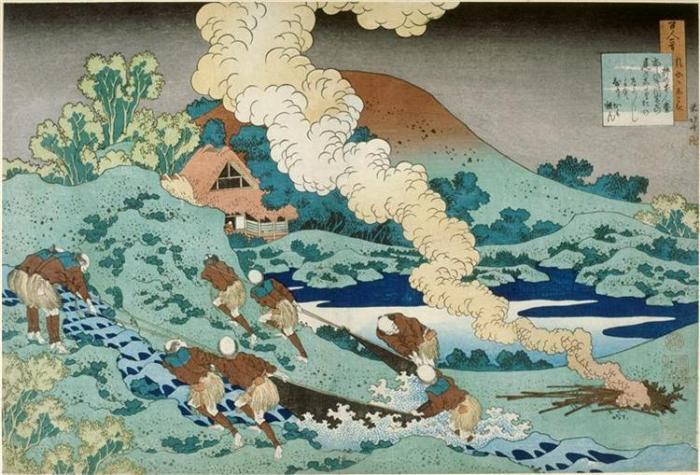
This one can be found at the Guimet Museum in Paris, in case you’re ever there…
From Japanese artist Katsushika Hokusai:
This one can be found at the Guimet Museum in Paris, in case you’re ever there…
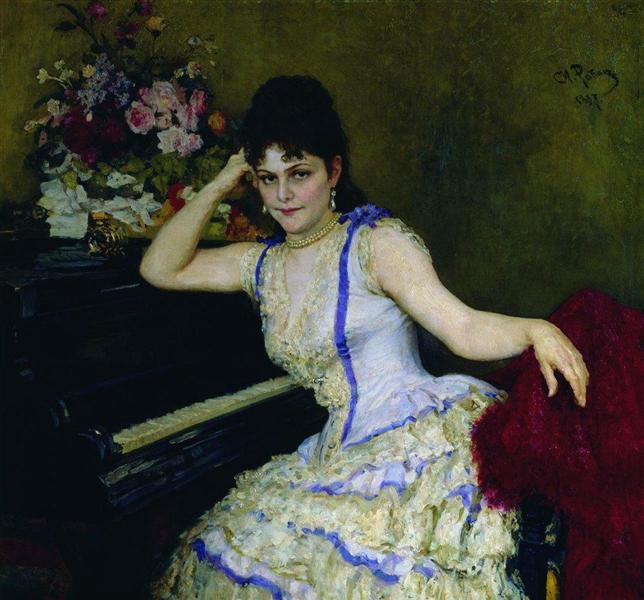
From Ilya Repin, a painter from the Russian Empire:
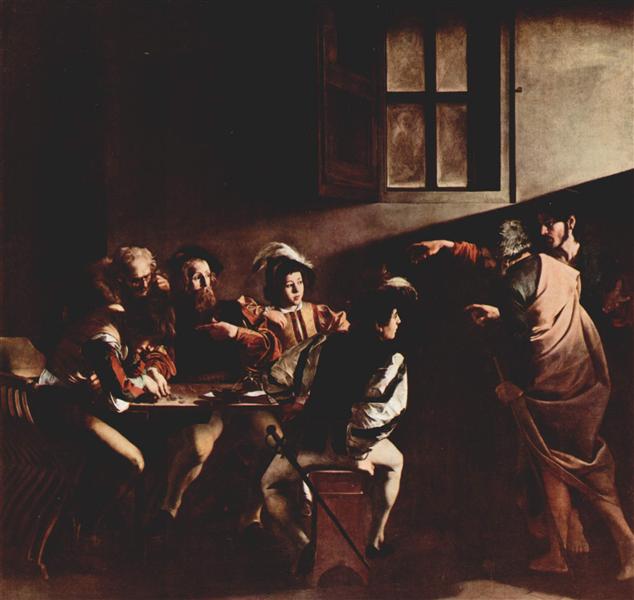
From Caravaggio, one of Jacques’ favorites:
I understand things are not the same everywhere in the World, but until just a few years ago, to call yourself “right-wing” in Brazil was virtually unthinkable. The reasons for that are not totally clear, but the fact is that “right-wing” was a name with a very bad connotation. Brazil went through a military dictatorship from 1964 to 1985. This dictatorship was set in place to prevent a perceived communist threat in the country, especially after the Cuba Revolution of 1959. Therefore, it was an anticommunist dictatorship.
My understanding is that, because of that, to be “right-wing” in Brazil was understood as “being in favor of dictatorship”, and left-wing to be “for democracy”. Of course, examining things with just a little more care, nothing could be further from the truth. Fidel Castro and Che Guevara were no democrats. Actually, the military dictatorship in Cuba lives on. Mao Zedong was a horrendous dictator. So were Stalin and Lenin. There is no reason to believe that Trotsky would have been any less authoritarian.
There is no reason to believe that the socialists/communists in Brazil would have been democratic once in power. But they didn’t come to power, and because of that people could fuel the romantic image of revolutionaries unjustly persecuted by the military. Although I disagree with Brazilian philosopher Olavo de Carvalho in many points, I believe he is totally right on this: the military in Brazil was great in fighting the communist guerrilla. Thanks to them, we don’t have something similar to FARC in Brazil today. But when it came to propaganda and cultural war they were just awful. Communists in Brazil (and in other places) were great in selling the image of Che Guevara as a romantic hero fighting against the evil North-American Imperialism.
And this is the paradigm I grew up with. Either you are a freedom fighter, opposing evil capitalists and imperialism, or you are subservient to foreign powers and injustice. Considering this background, of course, nobody would like to be called right-wing. However, things changed.
One of the things that made me turn right was studying the right-wing political ideologies. I discovered that classical liberals and conservatives were not against the poor, just the opposite. The best example I can think of is Adam Smith: his Wealth of Nations is actually a love letter for those who are oppressed by unjust economic exploitation. What Adam Smith was trying to find out is what makes the lives of the simple people better. His answer, in a nutshell, was the free market. Similarly, the Founding Fathers were trying to give the common folk a better living without oppression. And they did. Very different from all the leftist revolutions. In short, free markets and liberal democracy work.
The second thing that made me turn right was the hypocrisy of some leftists. I realized that they want you to have freedom of choice, but only if you choose what they want. If you feel you have homosexual inclinations, they want you to have the freedom to embrace homosexuality. And so do I! But God forbid (or Marx forbid) you decide (for whatever reason) to fight homosexuality and become (or remain) straight. They want women to have the freedom to get jobs. But they don’t want them to have the freedom to stay home to raise the kids. The examples are many, but the summary is this: I realized that many leftists are not ready to defend your right to be different.
I’m really sorry that things come down to what two consenting adults do in a closed room. I really am. But it seems to me that much of the leftist agenda is to have the freedom to choose only if you choose what they want. And this is what made me turn right: to accept other peoples choices as much as I want them to accept mine. Liking it or not.
This is from the Austrian painter Egon Schiele:

Schiele was a buddy of Gustav Klimt’s but he died at the age of 28 in the Spanish flu pandemic.
Doing the economist’s job well, Nobel Laureate Paul Romer once quipped, “means disagreeing openly when someone makes an assertion that seems wrong.”
Following this inspirational guideline of mine in the constrained, hostile, and fairly anti-intellectual environment that is Twitter sometimes goes astray. That the modern intellectual left is vicious we all know, even if it’s only through observing them from afar. Accidentally engaging with them over the last twenty-four hours provided some hands-on experience for which I’m not sure I’m grateful. Admittedly, most interactions on twitter loses all nuance and (un)intentionally inflammatory tweets spin off even more anger from the opposite tribe. However, this episode was still pretty interesting.
It started with Noah Smith’s shout-out for economic history. Instead of taking the win for our often neglected and ignored field, some twitterstorians objected to the small number of women scholars highlighted in Noah’s piece. Fair enough, Noah did neglect a number of top economic historians (many of them women) which any brief and incomprehensive overview of a field would do.
His omission raised a question I’ve been hooked on for a while: why are the authors of the most important publications in my subfields (financial history, banking history, central banking) almost exclusively male?
Maybe, I offered tongue-in-cheek in the exaggerated language of Twitter, because the contribution of women aren’t good enough…?
Being the twenty-first century – and Twitter – this obviously meant “women are inferior – he’s a heretic! GET HIM!”. And so it began: diversity is important in its own right; there are scholarly entry gates guarded by men; your judgment of what’s important is subjective, duped, and oppressive; what I happen to care about “is socially conditioned” and so cannot be trusted; indeed, there is no objectivity and all scholarly contribution are equally valuable.
Now, most of this is just standard postmodern relativism stuff that I couldn’t care less about (though, I am curious as to how it is that the acolytes of this religion came to their supreme knowledge of the world, given that all information and judgments are socially conditioned – the attentive reader recognises the revival of Historical Materialism here). But the “unequal” outcome is worthy of attention, and principally the issue of where to place the blame and to suggest remedies that might prove effective.
On a first-pass analysis we would ask about the sample. Is it really a reflection of gender oppression and sexist bias when the (top) outcome in a field does not conform to 50:50 gender ratios? Of course not. There are countless, perfectly reasonable explanations, from hangover from decades past (when that indeed was the case), the Greater Male Variability hypothesis, or that women – for whatever reason – have been disproportionately interested in some fields rather than others, leaving those others to be annoyingly male.
Note that none of this excludes the possibility of spiteful sexist oppression, but it means judging academic participation on the basis of surveys responses or that only 2 out of 11 economic historians cited in an op-ed were women, may be premature judgments indeed.
Jair Bolsonaro was elected president in Brazil. Donald Trump in the US. In other countries, similar politicians are gaining popular support. Some are calling these politicians “populists”. I don’t really know what they mean by this term. The populists that I know better are Getúlio Vargas, Brazil’s president for almost 20 years in the mid-20th century and Juan Peron, a leading political figure in Argentina in the same time period. What they had in common? Both fought the communist influence in Latin America, favored the labor movement and were anti-liberal. They were also extremely personalist, leading to something that could be understood as a cult of personality. I completely fail to see important similarities between Trump and Bolsonaro on the one hand and Vargas and Peron on the other. But I can see some similarities between Trump and Bolsonaro. The latter two both came to power against what the left became in the last few decades.
Once upon a time, there was a young German philosopher called Karl Marx. He was very well read but wasn’t very bright on economics. Anyway, he decided that he would correct the classical liberal economic theory of Adam Smith. The result was that Marx concluded that in the center of the economy, and actually in the center of history itself, was the class struggle between the workforce and the bourgeoisie. Of course, although appealing on the surface, Marx’s economic theory is pure nonsense. Maybe Marx himself knew it, for at the end of his life he was more interested in living a peaceful life in London than in leading a revolution. But this didn’t stop Marxists from starting Revolutions throughout the world, beginning in Russia.
Ludwig Von Mises brilliant pointed out that Marxism would never work as the economic foundation of a country, for it ignored private property. Without private property, there is no price formation and without prices economic calculation is impossible. In doing so, Mises founded the Austrian School of Economics. The economic debate between Austrians and Marxists ensued, but arguing with a Marxist is like playing chess with a pigeon. He will climb on the board, knock down the pieces and believe that he won. Regardless, facts don’t care about your feelings, and reality proved again and again that Mises was right.
However, at the same time, something else was happening. In Italy, a Marxist named Antonio Gramsci concluded that armed revolution was not the best way to power. He believed that a cultural approach would be better. Some German scholars in Frankfurt concluded pretty much the same. Their question was “why the proletariat will not follow us?”. The answer was that they were too alienated by capitalist culture.
Following Gramsci and the Frankfurt School, Marxists all over the world gave up studying economics and decided to study culture. They concluded that everyone can feel oppressed. The class struggle seized to be between factory workers and factory owners and turned into a fight between man and woman, black and white, gay and straight. Identity politics was born.
And that’s how the “populists” came to power. It is not so much that the common people (and especially conservatives and libertarians) are crazily in love with Bolsonaro or Trump. It is just that people eventually get tired of being called oppressors. The left, once legitimately concerned with the conditions of the poor, ignored that the best solution for poverty is the free market. Instead, they decided they would crush the common people they swore to protect, calling them homophobic, misogynists and so on. Common people answered by voting for whoever was on the other side of the political spectrum.
From the Bulgarian artist Ivan Milev:
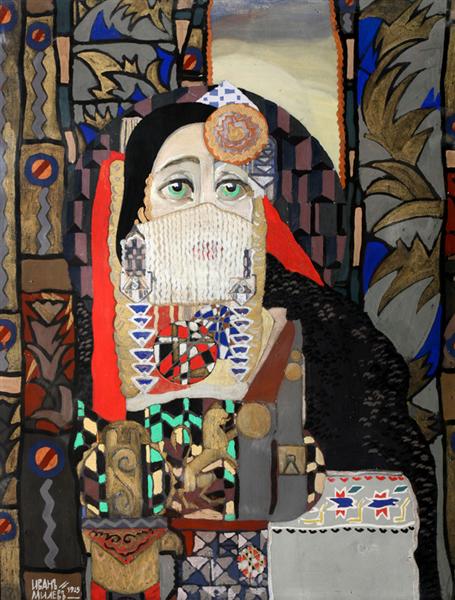
Bulgaria is a lot closer to the Orient than, say, France or the U.K. Just look at the style of fashion worn by this woman. It’s amazing!
This is from Russian painter Ilya Repin:
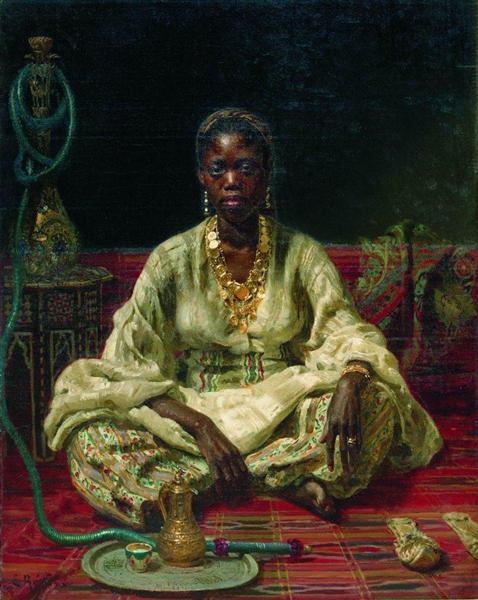
From the Japanese artist Katsushika Hokusai:

Timely, both in our post-truth world and for my current thinking, Bobby Duffy of the British polling company IPSOS Mori recently released The Perils of Perception, stealing the subtitle I have (humbly enough) planned for years: Why We’re Wrong About Nearly Everything. Duffy and IPSOS’s Perils of Perception surveys are hardly unknown for an informed audience, but the book’s collection and succint summary of the psychological literature behind our astonishingly uninformed opinions, nevertheless provide much food for thought.
Producing reactions of chuckles, indignation, anger, and unseeming self-indulgent pride, Duffy takes me on a journey of the sometimes unbelievably large divergence between the state of the world and our polled beliefs about the world. And we’re not primarily talking about unobservable things like “values” here; we’re almost always talking about objective, uncontroversial measures of things we keep pretty good track of: wealth inequality, share of immigrants in society, medically defined obesity, number of Facebook accounts, murder and unemployment rates. On subject after subject, people guess the most outlandish things: almost 80% of Britons believed that the number of deaths from terrorist attacks between 2002 and 2016 were more or about the same as 1985-2000, when the actual number was a reduction of 81% (p. 131); Argentinians and Brazilians seem to believe that roughly a third and a quarter of their population, respectivelly, are foreign-born, when the actual numbers are low single-digits (p. 97); American and British men believe that American and British women aged 18-29 have had sex as many as 23 times in the last month, when the real (admittedly self-reported) number is something like 5 times (p. 57).
We can keep adding astonishing misperceptions all day: Americans believe that more than every third person aged 25-34 live with their parents (reality: 12%), but Britons are even worse, guessing almost half (43%) of this age bracket, when reality is something like 14%; Australians on average believe that 32% of their population has diabetes (reality more like 5%) and Germans (31% vs 7%), Italians (35% vs 5%), Indians (47% vs 9%) and Britons (27% vs 5%) are similarly mistaken.
The most fascinating cognitive misconception is Britain’s infected relationship with inequality. Admittedly a confusing topic, where even top-economists get their statistical analyses wrong, inequality makes more than just the British public go bananas. When asked how large a share of British household wealth is owned by the top-1% (p. 90), Britons on average answered 59% when the reality is 23% (with French and Australian respondents similarly deluded: 56% against 23% for France and 54% against 21% for Australia). The follow-up question is even more remarkable: asked what the distribution should be, the average response is in the low-20s, which, for most European countries, is where it actually is. In France, ironically enough given its current tax riots, the respondents’ reported ideal household wealth proportion owned by the top-1% is higher than it already is (27% vs 23%). Rather than favoring upward redistribution, Duffy draws the correct conclusion:
“we need to know what people think the current situation is before we ask them what they think it should be […] not knowing how wrong we are about realities can lead us to very wrong conclusions about what we should do.” (p. 93)
Another one of my favorite results is the guesses for how prevalent teen pregnancies are in various countries. All of the 37 listed countries (p. 60) report numbers around less than 3% (except South Africa and noticeable Latin American and South-East Asian outliers at 4-6%), but respondents on average quote absolutely insane numbers: Brazil (48%), South Africa (44%) Japan (27%), US (24%), UK (19%).
Note that there are many ways to trick people in surveys and report statistics unfaithfully and if you don’t believe my or Duffy’s account of the IPSOS data, go figure it out for yourself. Regardless, is the take-away lesson from the imagine presented really that people are monumentally stupid? Ignorant in the literal sense of the world (“uninstructed, untututored, untaught”), or even worse than ignorant, having systematically and unidirectionally mistaken ideas about the world?
Let me confess to one very ironic reaction while reading the book, before arguing that it’s really not the correct conclusion.
Throughout reading Duffy’s entertaining work, learning about one extraordinarily silly response after another, the purring of my self-indulgent pride and anger at others’ stupidity gradually increased. Glad that, if nothing else, that I’m not as stupid as these people (and I’m not: I consistently do fairly well on most questions – at least for the countries I have some insight into: Sweden, UK, USA, Australia) all I wanna do is slap them in the face with the truth, in a reaction not unlike the fact-checking initiatives and fact-providing journalists, editorial pages, magazines, and pundits after the Trump and Brexit votes. As intuitively seems the case when people neither grasp nor have access to basic information – objective, undeniable facts, if you wish – a solution might be to bash them in the head or shower them with avalanches of data. Mixed metaphors aside, couldn’t we simply provide what seems to be rather statistically challenged and uninformed people with some extra data, force them to read, watch, and learn – hoping that in the process they will update their beliefs?
Frustratingly enough, the very same research that indicate’s peoples inability to understand reality also suggests that attempts of presenting them with contrary evidence run into what psychologists have aptly named ‘The Backfire Effect’. Like all force-feeding, forcing facts down the throats of factually resistent ignoramuses makes them double down on their convictions. My desire to cure them of their systematic ignorance is more likely to see them enshrine their erroneous beliefs further.
Then I realize my mistake: this is my field. Or at least a core interest of the field that is my professional career. It would be strange if I didn’t have a fairly informed idea about what I spend most waking hours studying. But the people polled by IPSOS are not economists, statisticians or data-savvy political scientists – a tenth of them can’t even do elementary percent (p. 74) – they’re regular blokes and gals whose interest, knowledge and brainpower is focused on quite different things. If IPSOS had polled me on Premier League results, NBA records, chords or tunes in well-known music, chemical components of a regular pen or even how to effectively iron my shirt, my responses would be equally dumbfunded.
Now, here’s the difference and why it matters: the respondents of the above data are routinely required to have an opinion on things they evidently know less-than-nothing about. I’m not. They’re asked to vote for a government, assess its policies, form a political opinion based on what they (mis)perceive the world to be, make decisions on their pension plans or daily purchases. And, quite a lot of them are poorly equipped to do that.
Conversely, I’m poorly equipped to repair literally anything, work a machine, run a home or apply my clumsy hands to any kind of creative or artful endeavour. Luckily for me, the world rarely requires me to. Division of Labor works.
What’s so hard with accepting absence of knowledge? I literally know nothing about God’s plans, how my screen is lit up, my car propels me forward or where to get food at 2 a.m. in Shanghai. What’s so wrong with extending the respectable position of “I don’t have a clue” to areas where you’re habitually expected to have a clue (politics, philosophy, virtues of immigration, economics)?
Note that this is not a value judgment that the knowledge and understanding of some fields are more important than others, but a charge against the societal institutions that (unnaturally) forces us to. Why do I need a position on immigration? Why am I required (or “entitled”, if you believe it’s a useful duty) to select a government, passing laws and dealing with questions I’m thoroughly unequipped to answer? Why ought I have a halfway reasonable idea about what team is likely to win next year’s Superbowl, Eurovision, or Miss USA?
Books like Duffy’s (Or Rosling’s, or Norberg‘s or Pinkers) are important, educational and entertaining to-a-t for someone like me. But we should remember that the implicit premium they place on certain kinds of knowledge (statistics and numerical memory, economics, history) are useful in very selected areas of life – and rightly so. I have no knowledge of art, literature, construction, sports, chemistry or aptness to repair or make a single thing. Why should I have?
Similarly, there ought to be no reason for the Average Joe to know the extent of diabetes, immigration or wealth inequality in his country.
From my favorite artist, the Austrian Gustav Klimt:
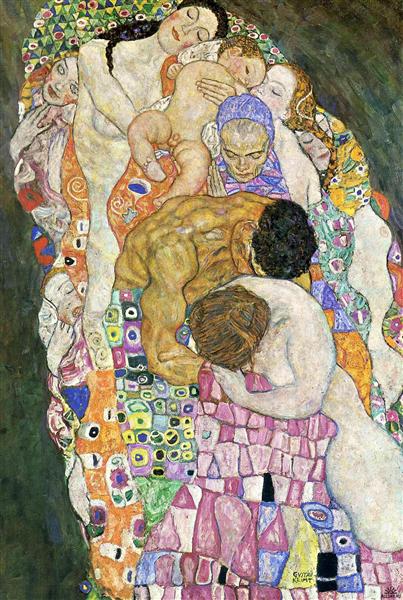
My son was born a few hours ago. If all went according to plan (I scheduled this post last weekend), I am in a state of pure love and joy as a another Christensen is added to the troop.
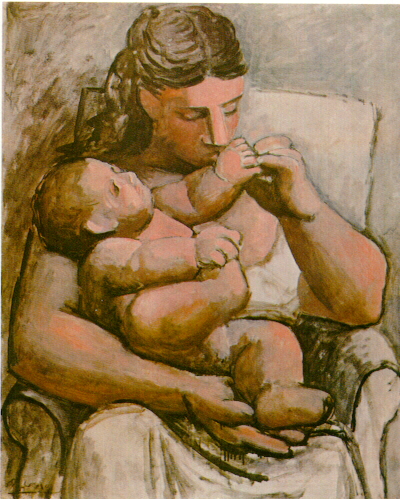
A Pablo Picasso classic. This one is in a private collection somewhere.
On the new year day, searching on Youtube for something to watch, by chance, I stumbled upon a low budget and poorly made Western Yellow Rock (2012). By now, I watched enough of Hollywood products that were tailored to current “diversity” ideology and PC tastes. At least, some of them (e.g. Django Unchained, Black Panther, Dances with Wolves) were well crafted . But this Yellow Rock really “rocks.” It totally “overwhelmed” me.
An official plot description is rather innocent:
“A man searching for his missing son hires a group of rugged cowboys to take him into territory controlled by the Black Paw Indians. When they come upon an ancient burial ground, their own greed tears them apart, as the posse turns on itself.”
Yet, in reality, from the first scenes, you are literally plunged into the “diversity pulp fiction”: caricature whisky-drinking and swearing white male rednecks (the posse) approach a camp of no less caricature noble American Indians who are taken care of by an all-female team of noble physicians and nurses. The head of the posse claims that he is looking for his missing son. Yet, in reality, they need to secure a permission from the tribe to cross Indian lands to reach an abandoned gold mine to get hold of some sacks with gold dust. Through their wooden characters, from the very beginning, producers defined clearly ideological sides: noble victims (Native Americans), allies (white women), and oppressors (white males). Not a single shade of grey. The only exception is a white male alcoholic scout who takes the posse into the wild. As a victim of his addiction, he is also somewhat qualified to be noble, and, in fact, he acts as an ally too.
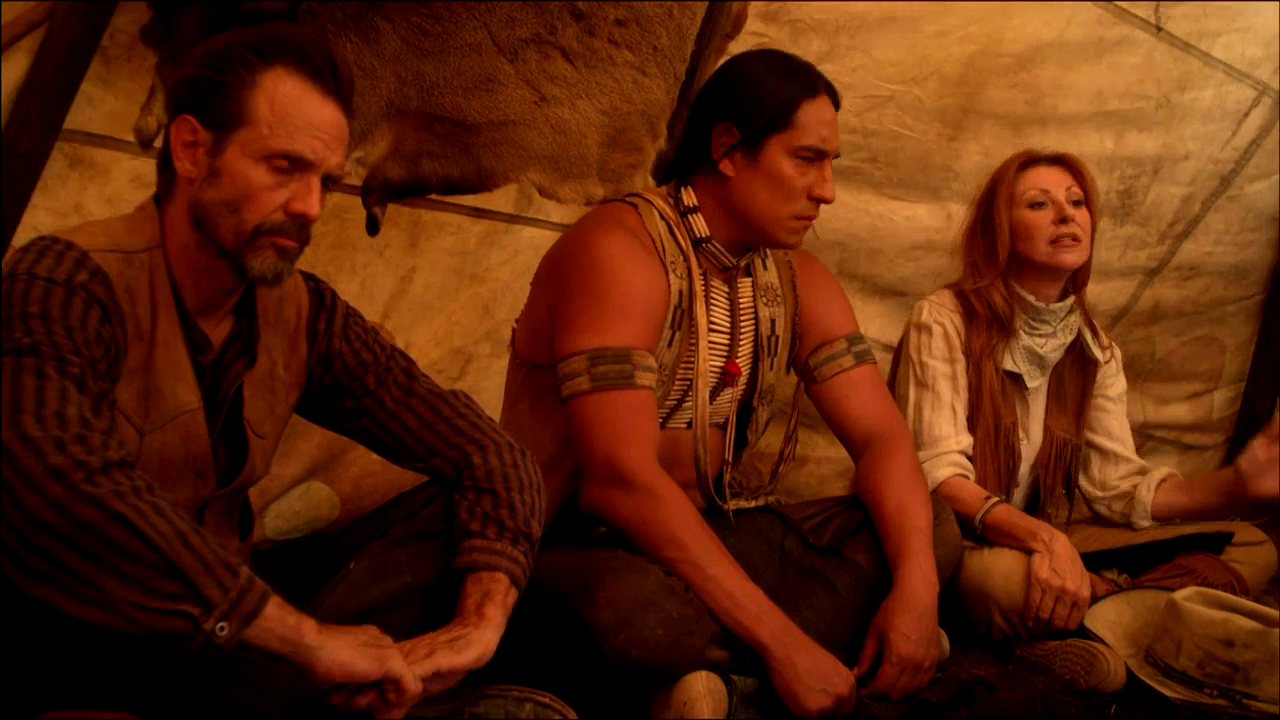 The cliche plot is painfully predictable: the posse of the “whitey” wants to cross straight across Indian burial grounds, although the “Injuns” warn them not to do it. Of course, by violating the sacred land, the “whitey” offend local spirits, who send against the rednecks a pack of wolves who appear as grotesque caricature shiny silver wolves resembling their brethren from New Age postcards and posters. Finally, the evil posse, which en route harasses an accompanying female physician and a male Indian, finds the gold. Yet, driven by an expected greed, the members of the posse take on each other. The rest of them are finished by the physician who is able to snatch a gun and by Black Paw Indians who arrive just in time to commit the act of justice. The movie ends with a scene of a slow motion collective execution of the last greedy redneck by a group of the Black Paws who repeatedly shoot the guy holding tightly a sack of gold. When the justice warriors lean over the dead corpse, they find out that gold dust somehow miraculously turned into regular dust; elements of paranormal and New Age mystique are rather common in latter day Westerns.

I would not have ventured into the description of this “movie” unless it had not provoked me to jump to an obvious conclusion: at times a trashy cultural product might serve as a good learning tool. Trashy stuff highlights dominant ideological cliches and sentiments more than any other more or less well crafted movie. Like an imbecile who mimics the behavior of surrounding people, such “masterpieces” clone the mainstream ideology that is superimposed on people in public schools and colleges. To me, Yellow Rocks demonstrated how deeply the educational system (film studies along with the rest of humanities) and print media has ingrained in the minds of movie makes the pillars of what people on the right label Cultural Marxism and that people on the left call Critical Theory. In its turn, this elusive theoretical “beast” served as a major fountainhead of the Multiculturalism ideology.

Watching that particular movie, I suddenly felt catapulted to the “good old” Soviet Union. Replace noble Indians+female do-gooders with noble workers (proletarians) and greedy white evil males with greedy capitalists and you will get a solid Soviet movie tailored according to the cliches of Socialist Realism. For those who do not know what Socialist Realism is, I want to note that it was a Stalinist doctrine that required from movie makers, poets, writers, and the rest of the intellectual gang to depict the surrounding life not as it was but as should be in the ideal future. I have also realized that comparing old Soviet and communist Chinese movies with current multikulti products in European and American realms might have a pedagogical value. It will allow us to trace the genetic links between the Marxism of old that had been obsessed with political economy and class warfare and the current Cultural Marxism that is obsessed with racial and gender identity wars. In the 1920s and the 1930s, both in the Soviet Union and Western progressive subculture the ultimate noble savage was a metaphysical muscular male proletarian.


Since the 1960s, “noble savages” of old Marxism became replaced by the new cultural left with new “noble savages”: third world, people of “color,” females, gays….The list of victims who are simultaneously to act as redeemers from the evil Western civilization is not yet complete.
In a typical Soviet heroic movie a people-friendly misfit character without a stable class-based moral compass chaotically fought against oppression. He or she needed a solid back up form a wise muscular industrial proletarian who, with his working class salt of the earth wisdom, was to take this character to the highest level of consciousness. In Yellow Rock, the alcoholic scout similarly was upgraded by female and Indian wisdom. Incidentally, the same trope one can observe in the third part of the famous (and well made) Hunger Games trilogy that I watched again last night. The major character, Katniss Everdeen, a noble female warrior, was not complete without receiving an endorsement (in the final scene of that trilogy) from the victim/redeemer of a “higher caliber.” After Everdeen defeats dictator Snow, an aged cunning white male, a black female elder approaches Everdeen and gently leads her to the center of the new power, where masters of the multikulti paradise gathered to usher the new world.

This is by the Russian painter Ilya Repin:
Nikolai Gogol, a famous Russian author, went mad in his 40s and burned the manuscript for the second part of Dead Souls, a classic novel about Russian life in the 19th century.

 Notes On Liberty