From my favorite artist, the Austrian Gustav Klimt:
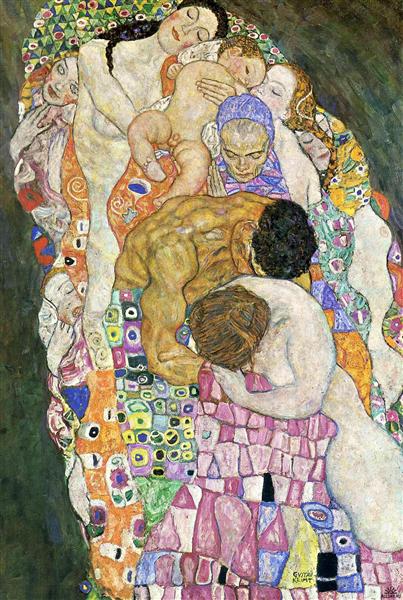
My son was born a few hours ago. If all went according to plan (I scheduled this post last weekend), I am in a state of pure love and joy as a another Christensen is added to the troop.
From my favorite artist, the Austrian Gustav Klimt:
My son was born a few hours ago. If all went according to plan (I scheduled this post last weekend), I am in a state of pure love and joy as a another Christensen is added to the troop.
That’s the subject of my weekend column over at RealClearHistory. An excerpt:
4. The Confederacy was, for all intents and purposes, an independent country. When Lincoln issued the Emancipation Proclamation, the Confederacy had long since declared independence from the United States and set up a federal government of its own. Montgomery, Ala. acted as its capital city until 1861, when the Confederacy’s government moved to Richmond, Va. Lincoln viewed Richmond’s diplomacy with the British and French as the most dangerous element of the Confederacy’s secession. If Richmond could somehow manage to get a world power on its side, the consequences for the future of the republic would be dire. For London and Paris, the calculations were a bit different. If either one joined the side of the Confederacy, the other would officially join the north and a global war could ensue. The Confederacy lobbied especially hard for the British to fight on their side, but there was one issue London’s hawks, the factions that wanted a war with Washington, couldn’t get past.
Please, read the rest.
My son is being born right about now (I scheduled this post). I hope everything goes well (it’s a c-section). Wish me luck!
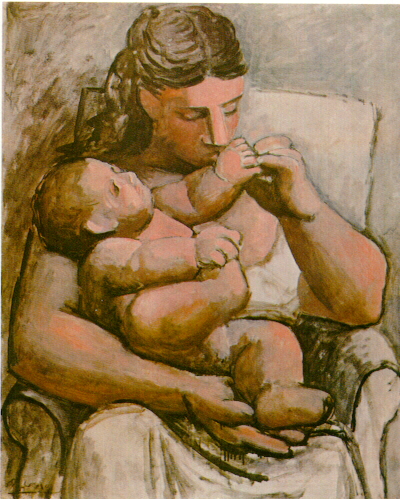
A Pablo Picasso classic. This one is in a private collection somewhere.
I’m back at it over at RealClearHistory. An excerpt:
When the Indian wars were underway, the battles were characterized as two very different peoples fighting against each other. Today, this view is still espoused, but the logic underneath has changed. Today, the American Indian fighting the American soldier has come to be viewed as more of a civil war than a clash of civilizations. The Native Americans are deeply intertwined in our culture, our history. As historical research gets better, thanks in part to the fact that our society continues to get wealthier and wealthier, the indigenous actors who helped shape American history receive more attention, empirically and theoretically.
Crazy Horse’s last battle in Montana against the U.S. Army highlights this civil war better than most. The Sioux and Cheyenne were not being pursued to be eliminated, but to be domesticated and transformed, by a benevolent government with the best of intentions, into American citizens.
Please, read the rest.
This is by the Russian painter Ilya Repin:
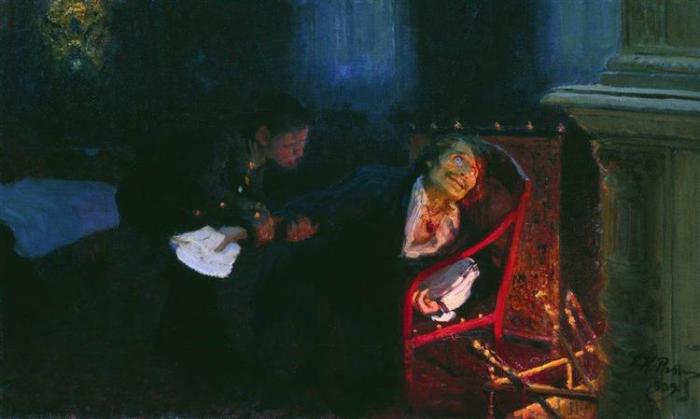
Nikolai Gogol, a famous Russian author, went mad in his 40s and burned the manuscript for the second part of Dead Souls, a classic novel about Russian life in the 19th century.
By the Austrian painter Gustav Klimt:
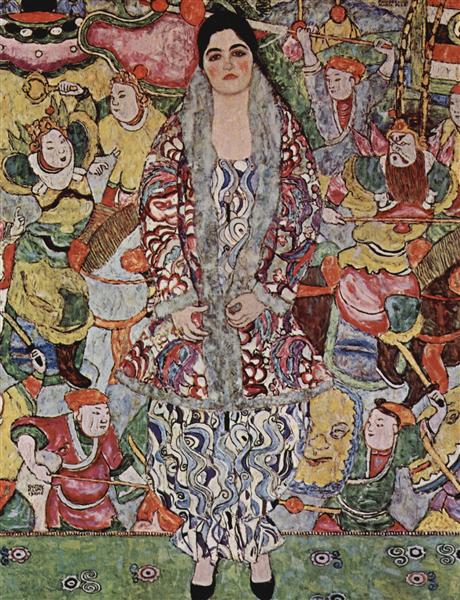
This beauty is in a private collection, somewhere on this planet…
 Notes On Liberty