- High Hitler (drugs, drugs, drugs!)
- every generation gets the drugs it deserves
- Lawsplainer on federal and state marijuana laws
- why illegally obtained evidence is generally inadmissible in court
- Putin and patriotism: national pride after the fall of the Soviet Union (excerpt)
- long, fraught history of Pakistan and the US
- Old Dogs, New Tricks: Turkey and the Kurds
- Good piece, but I’m still waiting for a great book (or article) on the Hanseatic League. All the great ones are probably in German…
Pakistan
Pakistan’s long struggle for democracy could get a boost from Trump, Rand Paul, and …the Saudis
In recent days, all eyes have been on President Trump’s January 1 tweet, which sent out an unequivocal message that it cannot be business as usual with Pakistan unless the latter takes concrete action against terror groups like the Haqqani Network. Said Trump in his tweet:
The United States has foolishly given Pakistan more than 33 billion dollars in aid over the last 15 years, and they have given us nothing but lies & deceit, thinking of our leaders as fools. They give safe haven to the terrorists we hunt in Afghanistan, with little help. No more!
Trump’s tweet was followed by the US decision to withhold Foreign Military Fund (FMF) aid (worth 255 million USD) due to Pakistan’s inaction against terror groups. The Department of Defense has also suspended Coalition Support Fund (CSF) money to Pakistan (worth 900 million USD). In all, over 1.1 Billion USD has been suspended. Kentucky Republican Senator Rand Paul will be introducing a bill for ending all US aid to Pakistan. Said Paul:
I’ve been fighting to end Pakistani aid for years. But now we have a breakthrough. President Trump has publicly called to end their aid, and is currently holding up over $200 million of it. I want to end all of it.
The Kentucky senator has argued that the money provided to Pakistan can be used for building infrastructure in the US.
Reactions in Pakistan to Trump’s tweets were predictable. While some opposition parties said that US President’s assertive attitude vis-à-vis Pakistan is a failure of the present Pakistan Muslim League (PML-N)-led government to put forward Pakistan’s view point effectively, the PML-N government criticized the US President’s remarks and said that it was ready to provide audits, and that it has been on the front line in the war against terror. Pakistan Foreign Minister, Khawaja Asif, in response to Trump’s tweets stated:
Pakistan is ready to publicly provide every detail of the US aid that it has received over the last 15 years.
In the midst of all this, a number of noteworthy developments have taken place.
First, both Nawaz Sharif, President of Pakistan Muslim League and former PM, and Shahbaz Sharif, Chief Minister of Punjab province and PML-N’s PM candidate, met with the Saudi Crown Prince Mohammad Bin Salman on the night of January 1, 2018. There were speculations of various kinds with regard to the meeting. The first was that an agreement was being worked out where Nawaz Sharif would be exiled to Saudi Arabia in order to avoid the corruption cases filed against him in Pakistan. This, however, was flatly denied by his daughter Maryam Nawaz Sharif. A spokesman for the former PM also issued a strong denial in a press release. Said the spokesman:
He has always utilised these relations for national interest and never for his personal benefits.
The other major speculation was that the Sharifs met with the Saudi Crown Prince in light of the recent statements made by President Donald Trump, and had gone as a result of an understanding with the Pakistan army. Irrespective of whatever the reality was, it clearly shows that the Sharifs are still extremely relevant, not just because of their political influence in the province of Punjab, but also their strong networks in Saudi Arabia.
Second, Nawaz Sharif, who has – in spite of considerable domestic constraints – made concerted efforts at improving ties with India, had according to some news stories met with Pakistan National Security Advisor (NSA) Lt Gen Nasser Khan Janjua on December 28th, at the former’s Raiwind residence in Lahore. During this meeting, Sharif spoke about the need for mending fences with neighboring countries. The meeting was however dismissed as a false report.
Third, most interestingly the former PM, while reacting to Donald Trump’s attack on Pakistan as regrettable, launched an all out attack on the army and dictatorships in a speech on January 3, 2018. While he blamed Pervez Musharraf for capitulating to the US in 2002, the former PM also accused the army of propping up leaders through secret deals. He was alluding to the leader of the Pakistan Tehreek-E-insaaf (PTI) Imran Khan. Sharif also called for self introspection, and that it was time for Pakistanis to “ask ourselves why the world does not take us seriously.”
A few points need to be kept in mind:
First, Nawaz Sharif – who has been written off – remains the tallest and most mature political leader who realises the importance of strong ties with neighbors, and realizes the pitfalls of excessive dependence upon one country. During his speech on January 3, 2018 he categorically stated:
I would like to advise Prime Minister Abbasi to develop a policy that ensures we don’t need US aid so that our image is not attacked in this manner.
Second, Sharif’s aggressive approach towards the army may not be appreciated by many in, or outside of, Pakistan. The Saudi Prince is supposed to have put forward his discomfort with Nawaz’s approach towards the army, saying it will destabilise Pakistan. Nawaz is not likely to cave in easily, and is likely to use every opportunity to attack the army, and will make attempts to restore civilian supremacy. This is clearly evident from his speech on January 3, 2018.
Third, post the 2018 Parliamentary elections which PML-N is likely to win, efforts will be made to reach out to India, since a better economic relationship with India will fit in with the overall goal of Pakistan becoming more self-reliant. PML-N would also like to send a clear message to Pakistan’s army about who the real boss is. The Pakistani army will off course continue to sabotage such efforts, but Nawaz Sharif seems determined to make one last ditch effort. This will off course require PML-N to take decisive action against terror groups targeting India.
External forces should stop treating the Pakistani army with kid gloves. While the US has taken the lead in taking a strong stand against the Pakistani army, China too needs to do a rethink of its short term goal of using Pakistan to contain India. Terrorism and instability will have an impact on China in the near run as well as long run. The outside world, while being firm with the Pakistani army, should continue to make efforts aimed at strengthening democratic forces within Pakistan.
India needs to work harder, both in its own backyard and in its near-abroad
While there is absolutely no doubt that Donald Trump has on more than one occasion sent harsh warnings to Islamabad – calling upon Pakistan to give up its support for terrorist groups or face the consequences – Trump’s predecessors had begun to reduce aid to Pakistan. During the Obama years, for example, American aid to Pakistan dropped from over 2 Billion USD in 2014, to a little over 1.1 Billion USD in 2016.
In his latest tweet, Trump minced no words, saying that Pakistan had fooled the US all these years, and that US will not take this lying down:
The United States has foolishly given Pakistan more than 33 billion dollars in aid over the last 15 years, and they have given us nothing but lies & deceit, thinking of our leaders as fools. They give safe haven to the terrorists we hunt in Afghanistan, with little help. No more!
Trump tweeted early morning on New Year’s Day.
Earlier in the year, during his August speech pertaining to Afghanistan, Trump had categorically stated that it no longer could be business as usual, and that Pakistan needed to stop extending support to the Haqqani network and other groups. Said the US President:
We have been paying Pakistan billions and billions of dollars, at the same time they are housing the same terrorists that we are fighting. But that will have to change. And that will change immediately.
A number of senior officials in the Trump Administration, such as the Secretary of State Rex Tillerson, Defence Secretary Mattis, and Vice President Mike Pence have hinted that harsh steps for Islamabad are a real possibility, some of which include not just withdrawal of aid to Pakistan, but also the removal of Pakistan’s non-NATO ally status.
During his recent visit to Afghanistan, Pence stated that President had put Pakistan on notice. Said Pence: “President Trump has put Pakistan on notice. As the President said, so I say now: Pakistan has much to gain from partnering with the United States, and Pakistan has much to lose by continuing to harbor criminals and terrorists.”
In an oped written for the New York Times, Tillerson stated:
Pakistan must contribute by combating terrorist groups on its own soil. We are prepared to partner with Pakistan to defeat terror organisations seeking safe havens, but Pakistan must demonstrate its desire to partner with us.
China – which has strategic and economic interests in Pakistan, with the primary one being the China-Pakistan Economic Corridor (CPEC) – has stood by Pakistan. While reacting to Trump’s August 2017 address, State Councillor Yang Jiechi said:
“We should attach importance to Pakistan’s important role in Afghanistan and respect Pakistan’s sovereignty and legitimate security concerns.”
India’s reactions
New Delhi has understandably been closely observing these events. Trump’s warnings to Pakistan are viewed as positive news for India, and the Trump Administration has also pleased New Delhi by speaking against violent groups that are targeting India. The US, for example, has lent support to India’s demand for declaring Jaish-E-Muhammed (JEM) Chief, Masood Azhar, a designated terrorist by the UN (this move has of course been stalled by China).
Realists in New Delhi will however be keeping an eye on the following issues.
First, sections of the political class in Pakistan, as well as old hands in the American administration will not allow things between Islamabad and Washington to go downhill. A number of Pakistani politicians, such as Sherry Rehman, have already stated that while Pakistan should have its own independent policy, and it should not be submissive, it need not be excessively aggressive. While such politicians may not publicly say so, the fact is that there is a large swath of the Pakistani population which may not be very comfortable with the US, but is even more uncomfortable with the increasing Chinese presence in Pakistan as a consequence of CPEC.
In the US too, there are sections in the State Department which follow the approach of engaging with moderate forces in Pakistan given the country’s strategic importance. There is a section of the US establishment which does not want Pakistan to totally drift away from Washington’s orbit, mostly because China is beginning to take a larger role in the whole of South Asia, including Afghanistan. One of the declarations of the first Foreign Minister-level trilateral dialogue between China, Pakistan, and Afghanistan was the extension of (CPEC) into Afghanistan.
Said the Chinese Foreign Minister:
So China and Pakistan are willing to look at with Afghanistan, on the basis of win-win, mutually beneficial principles, using an appropriate means to extend CPEC to Afghanistan.
Both New Delhi and Washington will closely watch this development.
Apart from Beijing, Pakistan will rely on Saudi Arabia to soften Washington’s approach vis-à-vis Pakistan. The Sharif brothers, both Nawaz and Shahbaz, have strong connections in Saudi Arabia and while there were speculations that the Saudis were trying to broker a deal between the Pakistani military and the Sharifs, there is also a view that there’s an understanding between the Pakistani army and the Sharifs, and that the latter would use their links in the Saudi establishment to soften the Trump Administration, which has strong ties with Riyadh.
In conclusion, there is an increasing awareness with regard to the nexus between the Pakistani army and terror groups targeting India. Yet New Delhi should be more realistic in its calculations, and it needs to not just bank on Washington. Instead, India should also leverage its economic ties with Riyadh and Beijing to put more pressure on Pakistan. While there is no doubt that strategic convergence with Washington has increased phenomenally, Trump’s harsh words against Pakistan are not just driven by any conviction, but also by simple transactionalism. This very transactionalism has also created space for China to become more pro-active in South East Asia and South Asia. New Delhi thus needs to be pragmatic, deft, and leverage its economic rise more effectively.
BC’s weekend reads
- the Kurdish bourgeoisie is against separatism (kinda, sorta)
- Qatar waives visas for 80 nationalities amid Gulf boycott
- doesn’t Pakistan already suck? Isn’t that why this is happening in the first place?
- “Similar moves are open to someone living in Pakistan. But those are different contexts than France or the US.“
- I read this twice, very carefully, but am unconvinced (the use of stats is amateurish)
- “The music was acid house, the drug: Ecstasy.“
- The Plastic Pink Flamingo, in America [pdf]
Regional jealousies and transboundary rivers in South Asia
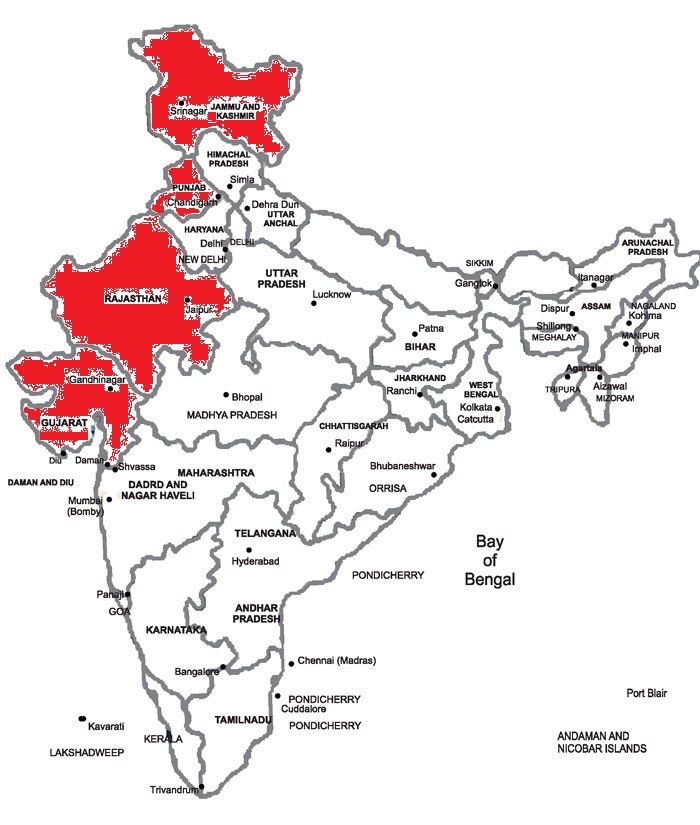
In the final reckoning, Pakistan got about 80 per cent of the Indus and India 20 per cent. India has limited rights on the western rivers and cannot undertake projects on those rivers without providing all the details to Pakistan and dealing with Pakistan’s objections. Why did India put itself in that position? The answer is that if Pakistan got the near-exclusive allocation of the three western rivers, India for its part got the eastern rivers. This was important from the point of view of the Indian negotiators because the water needs of Punjab and Rajasthan weighed heavily with them in seeking an adequate allocation of Indus water for India. Yet, Punjab had a serious grievance over the signing of the IWT [Indus Waters Treaty] by the union government. Citing provisions of the IWT which caused transfer of three river waters to Pakistan, Punjab had terminated all its water-sharing agreements with its neighbouring states in 2004.
The demand of Kutch (in Indian Gujarat), which used to fall into a catchment area of River Indus, decades back, was not taken into consideration despite many petitions, arguing about their historical claim on its water, sent by the prominent Kutchi leaders, in 1950s, to India’s Ministry of Irrigation and Power. Also people from the Indian side of Kashmir always show their ire against the IWT. On 3 April 2002, the Jammu & Kashmir Legislative Assembly, cutting across party affiliations, called for a review of the treaty. The state government has been contending that in spite of untapped hydroelectric potential, the state has been suffering from acute power deficiency due to restrictions put on the use of its rivers by the Indus Treaty. They claim that their interests were not taken into consideration and their views were not taken while signing the treaty. (6-7)
This is from my latest paper, “Disputed Waters: India, Pakistan and the Transboundary Rivers,” published by Studies in Indian Politics, and which you can find here.
Here is a map of all the Indian states mentioned in the excerpt above:
Narratives, Impacts and the Actors: Bangladesh’s 1971 Liberation War
That’s the subject of my newest paper, which was just published by India Quarterly. Here is the abstract:
Both the Bangladesh state and society are yet to settle the questions over and narratives related to the Liberation War of 1971. Broadly, there are two groups with contradictory and conflicting interpretations of the events related to that war. This has also led to the mushrooming of militant groups in the country. The beginning of trial of perpetrators of Liberation War crimes since 2010 and the execution of a few of the leaders has further polarised the society and politics of Bangladesh. The existing debates over the Bangladesh Liberation War cannot be studied without looking into the roles of India and Pakistan. The two countries have their own interpretations and political fallout of the 1971 liberation war.
Mohammad Iqbal’s writings on Islam and on the partition of India
That is the topic of a paper of mine that has just been published in the Journal of Punjab Studies. Here is the abstract:
Iqbal was a poet, religious philosopher, political activists, and supporter of autonomy to Muslim majority provinces in British India, but cannot be regarded as the ‘main’ architect of Pakistan. His basic concern was over the falling status of Muslims of India during British rule and ways to arrest the situation. His speech in 1930 at Allahabad session of the All India Muslim League is being always cited as his support to Pakistan, but later on he never made his position very clear over the issue of partition of British India. Yet his contribution to the formation of Pakistan cannot be entirely ruled out because he was speaking out the minds of the Muslim minorities who, by 1920s, not not only raised the demand, but started whispering about having a separate socio-political space. He was a towering figure of Islamic modernism, a great poet and also a religious philosopher, whose thinking still has considerable significance. His writings are still being read and researched in India and Pakistan.
The link to the whole paper can be found here [pdf].
“Conflicts in South Asia Will Go On and On”
That is the title of my recent article (pdf) on the long-term effects that the British partition of its Indian colony has had on South Asia. Here is the abstract:
This brief article, an extended review of two recent important publications, problematises the continuity of inter-state and intra-state conflicts since the partition of British India in 1947. Territory and identity are the main triggers of those conflicts, many of which will remain, while others will take on new forms relating to resource scarcity, mainly water. Conflicts are unlikely to be settled fully through various interventions, as sub-dimensions will linger on, develop new roots and new issues will constantly crop up. The article argues that past, present and future are visibly and invisibly connected through the fallout of patterns of myth and memory, dissatisfaction with the status quo and present conditions and often completely unrealistic expectations of a better future. Identifying elements of interconnectedness as central, the review assesses the contributions these two new studies make for a deeper understanding of the scenario of continuing conflict within the context of South Asian Studies.
It’s been published by South Asia Research, and is pessimistic throughout…
South Asia and the Glass Ceiling
That is the broad topic of my latest article (pdf), which was just published by Pakistan Journal of Women’s Studies: Alam-e-Niswan. Here is the abstract:
South Asia is one of the most violent societies in the world, and also the most patriarchal. Both characteristics have led to continuity of violence, in which women are the silent and non-recognised victims. The situation is such despite the fact that women have occupied the highest office in their respective countries. The post-1991 wave of globalisation has led to the emergence of two parallel societies, based on different values, in almost all South Asian countries. In both societies women are being exploited and violence has been unleashed on them. Revolution in information and communication technology has helped in the dissemination of patriarchal values through ‘objectification’ of women in the name of ‘liberation’ from the grip of tradition. These patriarchal trends are clearly reflected in the making of domestic policies as well as formulating foreign policies of South Asian states. In such a situation, an academic argument for feminist foreign policy is relevant, though not encouraged by social actors.
You can also find the article on my ‘About…‘ page here at NOL.
Four of my papers on South Asia
The following two are downloads:
- Water Conflicts in South Asia: India’s Transboundary River Water Conflicts with Pakistan, Bangladesh, and Nepal (docx)
- Radicalism in Bangladesh: Causes, Consequences, and Concerns (docx)
And these two are pdfs that can also be found on my ‘About…‘ page:
- Water Disputes between Punjab and Sindh: A Challenge to Pakistan (pdf)
- Afghanistan Quagmire and India-Pakistan “Strategic” Rivalry: Is Cooperation Possible? (pdf)
I hope they can be widely circulated.
Migration from Bangladesh: Causes and Challenges
Migration and emigration from Bangladesh is a regular phenomenon. Historically, large scale migration from the region constituting present-day Bangladesh started after the tea plantation was introduced in Assam by the British rulers in the early nineteenth century. Large numbers of coolies (porters) were needed for the tea gardens. To fulfil that demand the Assam Company began to import labourers from Bengal (especially from its eastern part) in 1853. In contemporary times, the first batch of emigrants from Bangladesh were the ‘refugees’ seeking shelter in a foreign country, after atrocities started by the Pakistan Army in East Pakistan in 1971. This phenomenon did not stop even after the East Pakistan was liberated and Bangladesh was formed in 1971. Instead, since then many Bangladeshis have been migrating to Europe, West Asia, India, and East Asia. Migration has its impact on the demographic composition of the host countries. For example in some cities of Italy, like Lazio, Lombardy, and Veneto, the migrants from Bangladesh comprise a significant number of the population. In developed countries most of these migrants are engaged in service sector jobs like souvenir selling, or being a vendor, shop worker, restaurant waiter, or domestic maid.
Causes for large scale Migration from Bangladesh
Although its economy is stable, maintaining between 5-6 percent Gross Domestic Product (GDP) growth for the last two decades, it is not viable enough to occupy all skilled, semi-skilled, and non-skilled workers in the country. Statistically, only 26 percent of its population lives below the national poverty line of US$ 2 per day, but a substantive percentage remains unemployed or underemployed. To evade poverty, unemployment, and under employment, many Bangladeshi migrate to other countries. Often, they do so even at the cost of their lives. Many times, such a desperate act has lead them to be trapped in a situation like the one happened in May 2015, when about 8,000 people consisting of Rohingyas from Myanmar and Bangladeshis were stranded at sea close to Thailand. While moving illegally, many Bangladeshis have even lost their lives. The most recent high profile case of death of Bangladeshi migrants occurred on 28 August 2015 in North Africa, where at least twenty four Bangladeshis, including two minor children, died after two boats carrying up to 500 migrants sank off the coast of Libya. The first boat, which capsized early on 27 August 2015, had nearly 100 people on board. The second, which sank later, was carrying about 400 passengers.
As 80 percent of Bangladesh’s geographic area is situated in the flood plains of Ganges, Brahmaputra, Meghna, and many other small rivers, a contributing push factor to the migration is the character of these deltaic rivers. They often change their course, forcing many inhabitants to move to new settlements. The submergence of chors (silt areas) during the flood season forces many inhabitants, deliberately or out of sheer ignorance, to migrate into India. Out of these total number of environmental migrants, only a few return after the normalisation of the situation; others look out for ways to earn their livelihood in their ‘acquired ‘or ‘adopted’ land.
Changing Gender Pattern and Consequences of Migration
Gender-wise, like other countries from the developing world, the migration-related statistics of Bangladesh too is tilted in favour of males, of which there are around three million working in different parts of the world. But in last few years there has been a constant increase in the number of female migrants, who can migrate either alone or as a spouse. As reported in the Daily Star (a well-respected English language daily in Bangladesh), according to the June 2015 statistics of Bangladesh’s Bureau of Manpower, Employment and Training (BMET), a total of 37,304 female workers had gone to different countries in 2012; it has increased to 76,007 in 2014. One country which stands out in terms of employment of female workers from Bangladesh is the United Arab Emirates (UAE). According to the BMET statistics, the UAE is home to 27 percent of the total female migrant workers of Bangladesh. Two basic reasons can explain this rising trend. Firstly, the demand for female workers in the UAE is higher than that of other countries. Secondly, attractive salary in the UAE draws more female migrant workers there than other countries. After the UAE, Lebanon hires a large number of female migrant workers. While the country has only 1.3 percent of total Bangladeshi migrants, it nevertheless has the second highest percentage of female migrants (24.3 percent) compared to all other countries. About 97,000 female workers reside in Lebanon.
Host countries remain hostile to the migrants. Sometimes, under pressure from political and economic constituencies, the host country (ies) restricts its visa policy for the citizens of a particular country or even denies issuing it to them altogether. The migrants are accused of ‘cultural invasion’ through demographic transition. They are also blamed for taking away job opportunities from the locals. Quite often, the migrants face violence from the locals, which is a sign of an extreme form of hatred towards them. Bangladeshi migrants have faced both situations. In 2014 Saudi Arabia stopped issuing visas for Bangladeshis even for the Umrah (a pilgrimage to Mecca performed by Muslims; it can be undertaken at any time of the year, in contrast to the Hajj). The Saudi officials claimed that in 2014 many Bangladeshis for whom Umrah visas were issued did not return to their country after performing the ritual. The Umrah visa was restored on August 5, 2015, after Bangladeshi foreign minister Md Shahriar Alam’s visit to Saudi Arabia, where a request was made to the Saudi State Minister for Foreign Affairs (Nizar bin Obaid Madani) for Umrah visas to be resumed.
Termed as ‘illegal’, the Bangladeshi migrants have faced violence in the Indian states bordering Bangladesh. The radical groups in the area have centuries-old grievances against them. They are considered to be an economic and cultural threat to the region. Many contrasting figures are being presented by these groups to justify their position; in reality, according to the United Nations data of 2013, the number of Bangladeshi in India is around 3.2 million. Migrants from Bangladesh have faced violence not only in India, but in other parts of the world too. In Thailand there have been rampant cases of exploitation of Bangladeshi women working in various sectors, including the flesh trade. In West Asian countries, the women workers are forced to work in many houses as a maid and beaten when they demand salary from their ‘masters’. In Malaysia, too, the cases of abuse of maids is on the rise. Most of these maids are from Bangladesh. In February 2015 Bangladeshi workers faced targeted violence in Rome, Italy.
Conclusions
Remittances play a crucial role in pushing the Bangladeshi economy. According to the World Bank, total remittance received by Bangladesh in 2013 was $14.5 billion, which has increased to $ 15.0 billion in 2014-15. In 2014, the remittances constituted 8.21 % of the GDP of Bangladesh. In January-March 2015 quarter Bangladesh earned $ 3771.16 million of remittance, which is 8.49 percent higher than the previous year. These remittances have helped Bangladesh’s economy maintain its 5.5- 6 percent GDP growth.
Though the migrants are important to Bangladesh’s economy, many serious ill effects of migration too have emerged. Under the guise of migration, human trafficking is taking place from Bangladesh to many parts of the world. Women and children from Bangladesh are trafficked into India, East Asia, and West Asia for commercial sexual exploitation and to serve as bondage labour. To check this activity, especially human trafficking of females, the government of Bangladesh issues licences to the recruiting agencies, which are renewed at regular intervals of time and maintained by the concerned agency. Also, in 2013 the Government of Bangladesh revised the Overseas Employment and Migration Act which includes Emigration Rules, Rules for Conduct and Licensing Recruiting Agencies, and Rules for Wage Earner’s Welfare Fund. Despite all such steps migrants are being exploited by the domestic agencies and they face umpteen challenges in the host country they end up in.
My latest book review: Rafia Zakaria’s “History of Pakistan”
The other pertinent issue raised by Rafia is about the patriarchal structure, which is a political institution now sanctioned by religious practices and with social acceptance. The plight of women is considered to be a private affair but it is a political programme through which one gender controls the activities of the other. It defines values and sets up norms to control and regulate the body of women. This control and regulation becomes strong in conflict-affected societies where the level of violence is high. The stronger group tries to abduct and carry out violence against women from other communities while the minority, in the name of protection of its ‘honour’, puts all forms of restrictions on their women and carries out violence against them within their own community.
Change is on the way in India, but is this a good thing?
From Niharika Mandhana in the Wall Street Journal:
India’s voters chose a Hindu-nationalist, pro-business politician to be their next prime minister—tossing out the party that has led the country for most of the past 67 years in a historic political realignment.
Riding a wave of voter discontent with the incumbent [and hard Left-wing] Congress party and a sharply slowing economy, the Bharatiya Janata Party [BJP], led by Narendra Modi, was on track Friday evening to win 282 of the 545 seats in the lower house of Parliament[…]
If so, it would be the first time in three decades that a single party has won so decisively and captured an outright legislative majority, something that would give the BJP a strong position from which to push its governing agenda.
And what, exactly, is the Hindu nationalist and pro-business BJP’s governing agenda?
Mr. Modi hasn’t detailed his economic plan, but in a country with a strong legacy of state economic control, his slogans for small government, private enterprise and reduced bureaucracy have excited pro-market economists and given Mr. Modi a right-of-center image.
Still, Mr. Modi and his party’s economic agenda is far from clear. The BJP, for instance, is unlikely to roll back expensive food subsidies and opposed foreign investment in the retail industry […] But economists and analysts expect Mr. Modi will try to rein in India’s famed bureaucracy, and stimulate international trade and investment in other areas. On the campaign trail he has talked about rolling out a “red carpet” for business rather than “red tape.”
I think Prime Minister Modi will probably not be able to get through India’s massive parliament as easily as his supporters hope. On foreign policy Mandhana reports:
On the world stage, Indians have also grown frustrated with a foreign policy that some saw as too soft on rival neighbors Pakistan and China. Mr. Modi is expected to build a more robust one based on trade, particularly with countries in South and Southeast Asia.
Analysts generally view Mr. Modi as more hawkish than his predecessors from Congress, a reputation some say gives Mr. Modi a better shot at making peace with Pakistan.
This, I think, is the most troubling aspect of Modi’s election victory. The BJP is, as the article states, a Hindu nationalist party (nevermind for the moment that Hinduism is a religion, not a nation) and its nuclear-armed neighbor (Pakistan) is basically a “Muslim nationalist” (again, bear with me in the horrible terminology) state.
If Modi lets the radicals in his party take the lead on foreign policy, and Mamnoon Hussain (a member of the center-right – for Pakistan – Pakistan Muslim League) in Pakistan lets the radicals dictate foreign policy in Islamabad, the world could suddenly get a lot hotter in South Asia.
Still, I think Modi’s election is a good thing overall for India (and South Asia). The Left-wing Congress Party has been impoverishing India for half a century now, so even if the BJP is pro-business rather than pro-market I think prosperity will increase slightly and the potential for better foreign policy decisions is definitely there.
Addendum 5/17: Here is Geeta Anand and Gordon Fairclough with more on India (also in the Wall Street Journal).
The Intricacies of Political Life in Afghanistan and Pakistan: Is Islam Prominent?
Riffing off of Dr Delacroix’s piece on Afghanistan, and reading through the comments, I thought it’d be a good idea to “go with the flow” (as they say in Santa Cruz). Anatol Lieven has a must-read piece in the National Interest on the US government’s failures in Afghanistan and Pakistan. Among the gems:
I have been struck, both in the United States and in Britain, by the tendency of officers and officials to speak and write as if protecting the lives of troops from Taliban attack is the first duty of the U.S. and British states. In fact, it is the duty of soldiers to risk their lives to protect the civilian populations of their countries, and the only valid reason why the U.S. and British militaries are in Afghanistan at all is to protect their fellow citizens from terrorism. If that equation is reversed, and the needs of the war in Afghanistan are actually worsening the terrorist threat to the U.S. and British homelands, then our campaign there becomes not just strategically but morally ludicrous.
Indeed, one of the most common leaps of logic that neoconservatives and Leftists make in regards to foreign policy and the rule of law is the role of militaries in society. If there is to be a role for the state, it should be limited to maintaining a domestic court system, providing for the defense of the state, and signing trading pacts with other polities. Anything more than this results in things like exploitative generational gaps, trouble paying the bills, and terrorist attacks.
Lieven continues, explaining the geopolitical situation in Afghanistan and Pakistan: Continue reading
 Notes On Liberty