Symposium: Washington Consensus Revisited (Journal of Economic Perspectives)
Three Days at Camp David: The Fiftieth Anniversary (The International Economy)
Friends, Romans, Countrymen (Lapham’s Quarterly)
Symposium: Washington Consensus Revisited (Journal of Economic Perspectives)
Three Days at Camp David: The Fiftieth Anniversary (The International Economy)
Friends, Romans, Countrymen (Lapham’s Quarterly)
Introduction
After the triumph of Ebrahim Raisi in the June 2021 Iranian Presidential election, the US and other countries, especially the E3 (the UK, Germany, and France), which are party to the JCPOA/Iran Nuclear deal would have paid close attention to his statements, which had a clear anti-West slant. Raisi has made it unequivocally clear that while he is not opposed to the deal per se, he will not accept any diktats from the West with regard to Iran’s nuclear program or its foreign policy in the Middle East.
In addition to Raisi’s more stridently anti-US stance, at least in public, what is likely to make negotiations between Iran and the US tougher is the recent attack on an oil tanker, off Oman, operated by Zodiac Maritime, a London based company owned by an Israeli shipping magnate, Eyal Ofer. Israeli Foreign Minister Yair Lapid did not take long blame Iran for the attack, referring to this as an example of ‘Iranian terrorism’ (current Israeli PM Naftali Bennett’s policy vis-à-vis Iran is no different from that of his predecessor Benjamin Netanyahu). After Raisi’s win in June, Israel had reiterated its opposition to negotiating with Iran, and the Israeli PM termed the election of hardliner Raisi as a ‘wake up call’ for the rest of the world. Two crew members — a Romanian and a Briton, were killed in the attack.
While the Vienna negotiations between Iran and other signatories to JCPOA (the US is participating indirectly) have made significant progress, Raisi could ask for them to start afresh, in which case the US has said that it may be compelled to take strong economic measures, such as imposing sanctions on companies facilitating China’s oil imports from Iran (ever since the Biden administration has taken over there has been a jump in China’s oil purchases from Iran).
It would be pertinent to point out that pressure from pro-Israel lobbies in the US, as well as apprehensions of Israelis themselves with regard to the JCPOA, were cited as one of the reasons for the Trump administration’s maximum pressure policy vis-à-vis Iran, as well as the Biden administration’s inability to clinch an agreement with the Hassan Rouhani administration. While at one stage the Biden administration seemed to be willing to get on board the JCPOA unconditionally, it is not just domestic pressures, but also the fervent opposition of Israel to the JCPOA which has acted as a major impediment. While GCC countries Saudi Arabia and UAE were fervently opposed to the JCPOA and also influenced the Trump administration’s aggressive Iran policy, in recent months they have been working towards improving ties with Iran, and have softened their stance.
Washington should refrain from taking any harsh economic steps
At a time when the Iranian economy is in doldrums (the currency has depreciated and inflation has risen as a result of the imposition of sanctions and of Covid-19), Washington would not want to take any steps which result in further exacerbating the anti-US feeling in Iran. While commenting on the attack on the Israeli managed tanker, US Secretary of State Anthony Blinken said:
We are working with our partners to consider our next steps and consulting with governments inside the region and beyond on an appropriate response, which will be forthcoming
There is no doubt that the maximum pressure policy of the Trump administration of imposing harsh sanctions on Iran did not really benefit the US, and Joe Biden during the presidential campaign had been critical of the same. Reduction of tensions with Iran is also important given the current situation in Afghanistan, and Tehran’s importance given its clout vis-à-vis the Taliban.
US allies and their role
US allies themselves are looking forward to the revival of the JCPOA, so that they can revive economic relations with Iran. This includes the E3 (Germany, the UK, and France) and India. As mentioned earlier, GCC countries like Saudi Arabia and UAE, which in recent years have had strained ties with Iran, are seeking to re-work their relations with Tehran as a result of the changing geopolitical environment in the Middle East.
The role of US allies who have a good relationship with both Israel and Iran is important in calming down tempers, and ensuring that negotiations for revival of JCPOA are not stalled.
Conclusion
It is important for Biden to draw lessons from Trump’s aggressive Iran policy. Biden should not allow Israel or any other country to dictate its policy vis-à-vis Iran, as this will not only have an impact on bilateral relations but have broader geopolitical ramifications. Any harsh economic measures vis-à-vis Iran will push Tehran closer to China, while a pragmatic policy vis-à-vis Tehran may open the space for back channel negotiations.
Raisi on his part needs to be flexible and realize that the most significant challenge for Tehran is the current state of its economy. Removal of US sanctions will benefit the Iranian economy in numerous ways but for this he will need to be pragmatic and not play to any gallery.
The verdict on former officer Chauvin seems extreme to me. I think manslaughter would have been enough. Of course, it’s possible that I don’t understand the legal subtleties. Also, I did not receive all the information the jurors had access to. Also, I didn’t have to make up my mind under the pressure of fearing to trigger a riot in my own city.
As usual, I react to what did not happen. In the sad Floyd case, a bell weather for a new anti-racist movement in the US, the prosecution did not allege anything of a racial nature. Let me say this again: for some reason, the prosecutor did not claim that the victim’s race played a part in his death. Strange abstention because such a claim would have almost automatically brought to bear the enormous weight and power of the Federal Government. (The Feds are explicitly in charge of dealing with suspected violations of civil rights.)
Personally, I think we have a general problem of police brutality in this country. I mean that American cops are entirely too prompt to shoot. I also believe this is largely a result of permissive training on the matter. American police doctrine gives cops too much leeway about when to shoot a suspect. It does not do enough to support alternatives, including less than lethal means of incapacitation. Here is a small piece of supporting evidence: An American is about ten times more likely to be killed by the police than a French person. One can try to claim that French criminals and French suspects are ten times less dangerous than their American counterparts. Read this aloud and think it through. (Of course, there is always the possibility that your average French suspect, with his funny beret and a baguette tucked under his arm, is in a bad position to shoot at police at all.)
As for the widespread claim that American police killings of civilians are racially motivated, a proof of racism- systemic or otherwise – this case has simply not been made. Here are a handful of relevant numbers: In the USA, a black person interacting with the police has no greater chance of being killed than a white person. A black person interacting with a black police officer has the same chance of being killed as one interacting with a white officer. It’s true that a black person, on the average is more likely to be interacting with police than a white person. If racism plays a role in the killing of black people by police, that is where it is lodged. Police, white and black, are more likely to stop blacks than whites. Can you guess any reason why? Can the reason be other than racism? Below is a link to a wider essay on the topic:
Systemic Racism: a Rationalist Take
Introduction
Chinese Foreign Minister Wang Yi met with a nine-member delegation of the Taliban on July 28, 2021. The delegation was led by Abdul Ghani Baradar, who heads the Taliban’s political office in Doha. In July 2021, the Taliban had visited Russia and the Kremlin envoy for Afghanistan, Zamir Kabulov, had met with the delegation. Kabulov said that the Taliban had assured him that the territory of Afghanistan will not be used against Russia or any of its allies in Central Asia.
The meeting between Yi and the Taliban delegation is the first high level public meeting after the Taliban has managed to gain control over a significant portion of Afghanistan’s territory, including Badakshan province, which shares a border with China’s western Xinjiang region (given the changing geopolitical dynamics, Beijing had of course opened its back channels earlier with the Taliban). It would be pertinent to point out that China has previously hosted Taliban delegations in 2015 (Urumqi, Xinjiang) and in 2019 (Beijing).
Significance of meeting
Wang Yi’s meeting with the Taliban delegation is significant for more than one reason; it comes days after Pakistan Foreign Minister Shah Mehmood Qureshi had undertaken a two-day visit to China (July 23-July 24, 2021) for a strategic dialogue. During this meeting, both sides had agreed to work jointly to address the security challenges posed by the situation in Afghanistan. Apart from supporting peace talks and reconciliation, China had also made it clear that action needed to be taken against terror groups, which pose a security threat to Beijing, and both Islamabad and Beijing need to work jointly in this direction. In a press release posted on the website of the Chinese Foreign Minister, Wang Yi said:
We will work together to combat terrorism and push all major forces in Afghanistan to draw a clear line against terrorism, firmly combat the East Turkestan Islamic Movement (ETIM) and other terrorist forces, and resolutely stop Afghanistan from becoming a hotbed of terrorism.
China believes that the recent terror attack in Khyber Pakhtunkhwa (KPK province), which had resulted in the killing of 13 individuals (including 9 Chinese nationals) in a bus explosion (engineers and staff working on the Dasu Project were in the bus), was a possible handiwork of the East Turkistan Islamic Movement (ETIM). Beijing also sent a delegation to Pakistan to be part of an enquiry being conducted by Islamabad into the attack.
Finally, the meeting between Wang Yi and the Taliban delegation took place at a time when US Secretary of State Anthony Blinken was in India, and during his discussions with the Indian side Afghanistan was high on the agenda. Blinken had expressed concern about the rise in atrocities committed by the Taliban, and also said that the Taliban could not gain legitimacy by such steps and ultimately:
There’s only one path. And that’s at the negotiating table to resolve the conflicts peacefully, and to have an Afghanistan emerge that is governed in a genuinely inclusive way, and that is representative of all its people.
Beijing’s recognition of Taliban’s importance
At the same time, Wang Yi was unequivocal in flagging the threat to China from ETIM, and asked the Taliban to ‘completely sever ties’ with the group. The Taliban, on its part, assured Wang Yi that Taliban will not allow anyone to use Afghan soil against China. Wang Yi’s meeting send outs a strong message that Beijing clearly recognizes the role of the Taliban in resolving the current situation. The Taliban had also assured China earlier that it would ensure the safety of Chinese investments. Taliban spokesman Suhail Shaheen had, in a media interview in July 2021, stated:
China is a friendly country and we welcome it for reconstruction and developing Afghanistan…if [the Chinese] have investments, of course we will ensure their safety.
Difference between China-Russia and the US
The US approach vis-à-vis Afghanistan has been different from that of Beijing. While flagging its concerns, Beijing, realizing the ground realities, has sent out a clear message that it is willing to do business with the Taliban; the statements of Blinken, on the other hand, indicate US hesitancy vis-à-vis the Taliban. What is extremely interesting, however, are Blinken’s remarks during his visit to India stating that China’s involvement in Afghanistan could be positive. Given the fact that numerous commentators have been arguing that China and the US need to find common ground and that a zero-sum approach will not benefit anyone, this is a very interesting remark and should be welcomed since all stakeholders will need to work jointly in order to find a solution.
Conclusion
In conclusion, the situation in Afghanistan is perpetually evolving and requires all stakeholders in the region and outside to adopt a nuanced approach. The priority in the short run is to navigate the turbulence. In the midst of strained ties between Washington and Beijing, the US Secretary of State’s remarks regarding Beijing’s role in Afghanistan need to be welcomed.
Japan’s Offbeat Olympics Opening Ceremony (Hyperallergic)
Stick a logo on it: the Olympics and the mediocrity of contemporary design (Prospect)
The Best-Selling Car in America, Every Year Since 1978 (Visual Capitalist)
In the past few months, I have been exposed to more works by African Americans and to more documents about the black condition in America than usual. So far, I haven’t learned anything really new, perhaps because I am a sociologist by trade with an interest in slavery going back fifty years. All the same, I appreciate the refresher. This is a good point to warn that I am at odds with many of my fellow conservatives about the debt, if any the US, owes in connection with slavery and in connection with Jim Crow. (See: Systemic Racism: a Rationalist Take; and also, my shorter: The Great American Racial Awakening: A Conservative Approach (Part One).) I also insist that mine – insisting on the recognition of some sort of debt – is the true conservative position. This position in no way entails accepting passively everything the woke movement is telling us about current racism in America.
Recently, I watched almost all of the good PBS documentary “Driving while Black.” The first part illustrates well, with both many historical documents and the memories of older people, how African Americans used to travel with the help of special guidebooks designed to ensure they did not inadvertently find themselves in hostile territory. It was worse than traveling in a foreign country whose language you don’t know, it seems. (I did this myself in Croatia, in 1962, before mass tourism spread far and wide some knowledge of English.) It was a concerted collective effort to escape the consequences of explicit deliberate racist policies (as well as of widespread racist sentiment).
Then, the emphasis of the documentary shifts to the creation of the Interstate Freeway system. The narration comments on the fact that the development of the freeways involved the clearing out, the destruction of many local black communities, including their many Mom-and-Pop businesses. I am guessing there is no doubt it did. But the commentator keeps the topic closed as if the last had been said thus giving the impression that black communities were targeted for destruction out of racial prejudice (in thematic continuity with the first part of the documentary). Some may have been so targeted, or even all, but there is another explanation that makes racial prejudice a superfluous explanation.
One of the considerable, but variable costs of public way construction (roads and railways) is the expropriation of the land on which the public way is to stand. In many cases – that, I think, have rational technical explanations – the land to be expropriated is occupied by structures with commercial value. It’s common practice, and I would argue, good practice, to try as much as is possible to find a path that minimizes the cost of the relevant expropriations. (In the US, in the past 80 years, public pathways have been financed by the taxpayers. As a taxpayer, I wouldn’t want planners to deviate from this practice.) An unintended consequence of this rational practice is that black-owned and black-leased building are over-represented among those destroyed on the occasion of freeway building. No racism has to be involved though it may be.
This is just a prominent instance of a general, diffuse problem: Authors, journalists, politicians impute authoritatively a racist cause to inferior black outcomes where racism may or may not be involved. There is often not even a pretense of causal analysis, not even of merely mental analysis. The simply plausible magically becomes reality. Yet, it’s true that African Americans, more often than whites, often end up with the some of the worst jobs, some the worst commercial services, and as of lately (2021), even with some of the worst health outcomes.
It should be obvious that any of the above, and many other noxious outcomes, may be the pure products of mere poverty or of inferior education, or of both. African Americans are, in fact, poorer than average. So, before claiming that racism, or a systemically racist policy is at work, it would be logical to figure out if the bad outcomes may not be entirely explained by poverty. Saying the same thing in a different way: If whites in similar economic circumstances experience the same bad outcomes, or worse ones, the racial explanations are superfluous. Incidentally, racism could still be at work but it would appear much less self-evident to the general sympathetic public. It would happen like this: African Americans have the same high rate of diabetes as whites at the same education and economic level but, for the latter, diabetes is a product of poverty and ignorance, and for African Americans, it comes from poverty, ignorance, plus something else. See how credible such a statement would be. Or this: Poor whites lag in vaccinations because they also tend to be uneducated but equally poor and equally uneducated African Americans lag in vaccinations because of the racist treatment to which they are subjected.
Exploring this kind of issue, the relative weight of self evident factors in determining bad outcomes is comparatively easy. Such quest would rely on fairly available public data and on methods (multivariate analysis with econometric evaluation) that were already not new when I was pursuing a doctorate in the 1970s. There must be hundreds of sociologists and of economists equipped to conduct this kind of research in the USA. I am following multiple media in a haphazard manner, it’s true, though with a conservative bias, from the Wall Street Journal to internet trash. I do this every day for hours. Yet, I never bump into the fruits of such reasonably principled research. Of course, Stanford and Hoover Institution black economist Thomas Sowell has conducted just such analysis for many years but he is never cited by anyone to the left of dead center. Instead, his existence is sometimes acknowledged as that of beloved but slightly screwy old uncle who may even have passed on. In my book, the seeming absence in the public arena of reasoning guided or influenced by such obvious research should be enough to make one suspicious. I think this stream of public reasoning is being suppressed. (Please, go ahead and show me that it’s abundantly represented, via any media, contrary to my impression.)
Technical note: I hate to break the hearts of my possible liberal – and even progressive – readers but the following is correct: If proper analysis demonstrated that income level, level of wealth, and educational status together are not sufficient to account for inferior black outcomes, that would not be enough to pin the blame on racism, be it of a personal or systemic nature. This is another issue that’s being kept in the dark as far as I know.
The end of the documentary, “Driving While Black,” mentions briefly the possibility that the Civil Rights Act of 1964 also destroyed thriving black communities. It did so by suddenly giving black shoppers attractive alternatives such as (then) Safeway. I am not sure how I would bet about this right now, as I write, but it’s possible to imagine that the Civil Rights Act was more destructive in this respect than the construction of the Interstate Freeway system. The documentary had the opportunity to raise the question. It did not. This good document would have gained immeasurably in intellectual credibility if it had. My impression is that currently, there are few critics of any race that would have the intestinal fortitude to do so. (Again, please, show me that my impression is wrong.)
I am concurrently reading a novel by a prolific African American author: The Son of Mr. Suleman, by Eric Jerome Dikey. First, it’s delightful novel and I enjoy every minute of it. The writing is effervescent even if it often verges on being in a language I don’t quite understand. (For me, it’s a bit like reading Portuguese, a language I have not studied but that is close enough to my own native French and to the Spanish that I have studied that I can usually make it out.) The reading is also a bit jarring for one strange, specific reason. The novel accomplishes with ease what good novels do: through action, dialogues, monologues, and disquisitions, they transport the reader into a world that he would otherwise likely not discover. In this case, the hero is a vigorous black man in his thirties plying his ill-defined trade in the second-rate academic venues of Memphis, Tennessee. Except for the academic setting, this is pretty far from this California old white man’s experience.
The jarring starts in the first few pages with a Trumpdetestation statement that appears utterly unrelated to anything beginning in the story. Thereafter, every so many pages, appears a politically, cliched affirmation about racism that ads nothing to the story. It’s as if the author felt like – or had been ordered to – assert with an imposed frequency, his membership in the mainstream of conventional African American struggle against racism. These interruptions are all the more ludicrous because, again, the normal course of the novel does a talented job of describing racism from the inside, so to speak. Bizarrely, the hero is being periodically sexually exploited by a rich, powerful, attractive, white, and, you guessed it, blonde woman. And, as one might almost expect, the hero blames his troubles mainly on racism. But the fact that he is an adjunct professor would be enough to explain his misery. Let me explain for my overseas readers: That’s a category of university faculty members who carry full course loads but are slated to never get tenure. (Yes, in American universities, tenure, “titularisation” is neither automatic nor a function of years taught. It’s competitive. It’s an “up-or-out” process. A teacher who does not win tenure has to find a job somewhere else.) In the last school were I taught, there were dozens of such adjunct personnel. They were all white. At any rate, in spite of all this, I warmly recommend this book.
At this point in the year, I am pleased to have been exposed to material on race relations that would normally not have been on my menu; nevertheless, I am struck by the many failures to take advantage of the situation to gain intellectual heft with other than whining and guilt-devoured white liberals. I suspect there is a convergent attempt, a cultural movement of the left, to remain vague in order to avoid revealing or admitting the obvious: that the past 60 years have seen enormous progress toward racial equality and justice in America. There was a chance to sing to other than the choir and it’s being largely wasted.
Vaccine Mandates and Personal Liberty Can Coexist (Bloomberg)
Although the sentiment may seem paradoxical, libertarians should cheer this week’s decision by a federal judge upholding Indiana University’s vaccine mandate for students.
So argues professor Stephen L. Carter in this interesting piece. In short, a mandate checks the boxes if it is instated in a decentralized and narrow fashion.
Berlin in 1946 was a cultural battlefield unlike any before (Crime Reads)
Dismal Economics (Project Syndicate).
A review of four books challenging mainstream, neoclassical economics. In The Corruption of Economics, the author Mason Gaffney (btw, he passed away just over a year ago) proposes that the 19th century’s American universities perceived Georgist ideas as a threat to their vested interest in land-owning, and actively suppressed them. His work on the Stratagem against Henry George has been referenced in a NOL piece by – the also late – Fred Foldvary.
Guest post by Dr Wesley Key

When Boris Johnson became Prime Minister in July 2019, he promised from outside 10 Downing Street that “we will fix the crisis in social care once and for all.” With his premiership since being dominated by Brexit and then Covid-19, little has since been heard about how this may be achieved, but reports in July 2021 suggest that a rise in the basic rate of income tax or in National Insurance Contributions (NICs) is being considered in order to increase Social Care funding for England. Such a move would break a Conservative manifesto pledge and would also be highly contentious in terms of intergenerational fairness.
Other potential options put forward to help to fund Social Care (and other public services) in England have included: An extra tax on people aged 40-plus (similar to the system in Japan), levying NICs on private pension income, reducing tax relief on pension contributions (to a maximum of 20% for higher rate taxpayers), raising the Upper Earnings Limit (UEL) for NICs, and making workers over state retirement pension age liable to pay NICs at the same rate (or a reduced rate) as ‘working age’ employees. Work by the IFS in 2018 implied that NICs paid by workers over state pension age could potentially raise £1-1.5 billion annually, not accounting for the behavioural changes that such a policy would inevitably lead to. Regardless of the amount of revenue raised, such a system would be morally justifiable in terms of: Older workers losing their current privileged position within the personal taxation system; older people who are sufficiently healthy to carry on paid employment helping to fund the social care needs of others in their birth cohort who are in poorer health (perhaps due to working in more physically demanding job roles earlier in life).
Whilst this reform would see the national insurance system return closer to its Beveridgean roots (Beveridge did not intend that NICs were solely a way of accumulating state pension entitlement), it would be insufficient to properly fund a Social Care system that included a lifetime cap on care costs along the lines of that proposed in the Dilnot Report on Social Care: Commission on Funding of Care and Support, 2011. It is therefore also recommended that the UEL for National Insurance contributions is significantly increased, along with the NICs rate for earnings above the UEL, as it is iniquitous that, in 2021-22, earnings over £967 a week are liable to just 2% NICs, compared to 12% NICs paid on earnings of £184-967 a week.
By reforming National Insurance in the above ways, this could help to better fund England’s creaking Social Care system, potentially enabling a lifetime care costs cap to be introduced, and without raising taxes on employees aged under 66 who earn less than £50,000 per year. Such an approach would be compatible with Boris Johnson’s 2019 pledge to ‘fix’ social care and with retaining his expanded support base among lower paid working age people across the Midlands and Northern England. It would also be justified in terms of intergenerational fairness in a period when government spending on pensioners has risen by more than spending on younger age groups.
In discussing the push to vaccinate against COVID-19 in developed economies like the US, UK, etc., what gets lost in political rhetoric is the importance of effective vaccination among the immunosuppressed, especially the HIV+ group.
In groups with underlying immunosuppression [i.e., people with hematological malignancies, people receiving immunosuppressive therapies for solid organ transplants, or other chronic medical conditions], there have been reports of prolonged COVID-19 infection. The latest one is from South Africa, where an HIV+ patient experienced persistent COVID-19 infection –of 216 days– with moderate severity. The constant shedding of the SARS-CoV-2 virus accelerated its evolution inside this patient. This is possible because suboptimal adaptive immunity delays clearance of the SARS-CoV-2 virus but provides enough selective pressure to drive the evolution of new viral variants. In this case, the mutational changes of the virus within the patient resembled the Beta variant.
The largest population of immunosuppressed [HIV+] is in South Africa. So an alternative to chasing variants like Delta and Beta after their largescale emergence or trying to convince people who reject vaccination in the Global North is to tackle super-spreading micro-epidemics of novel variants among the immunosuppressed in the Global South. Since Novovax and J&J are demonstrably ineffective among the immunosuppressed, the Moderna vaccine is the best bet to slow down the emergence of future variants.
Who has millions of unused mRNA Covid-19 vaccines that are set to go to waste? The answer is the United States. As demand dwindles across the United States and doses will likely expire this summer, why not use them in the Global South, especially South Africa, by a concerted international effort?
I am guest editing a special issue at the academic journal Cosmos + Taxis. It’s been challenging. The most challenging part has been finding reviewers, but the process is slowly coming along nicely. I have a longer update later this week, but for now, I hope all of you will think twice before arguing that non-intervention is the libertarian foreign policy position. It’s not. Federation is.
But it’s more complicated than that. More later. Ciao ciao
The struggle against climate change is making fast policy progress in the civilized world. It’s got to the point where I can foresee the authorities confiscating my good Toyota pick-up truck that has given me good service for eight years and continues to act just right. In California, they make no mystery of their intent to force me to replace it with a small electric sedan I won’t be able to afford. In the meantime, the same California is not able to guarantee enough electric power to keep my light bulbs lit 24/7; another story, obviously, a good one.
My problem is that I have not changed my stance on the credibility of the climate change narrative since I bought the truck. So, I feel tyrannized.
Recently, there was a long lasting, intense heat wave in the western United States where several people died of heat stroke. As I write, severe flooding seems to be ending in Germany, in Belgium, and in France. In the first country, at least one hundred people drowned.
Being a retired old guy, I listen to the media, or watch it, or read from it a good portion of the day. I do this daily, in at least two languages, English and French. There isn’t a day in my life when I don’t hear heat waves, or floods, or this and that blamed on “climate change.” The media personalities and journalists who assert those links all have one thing in common: None possesses the credentials to judge whether such a link exists at all. Climate change ideology has spread so successfully that every Dick, Tom, and Harry with a B.A. in Communications (or less) feels free to pronounce on such causal relationships as if they were simply mentioning that the sun rises in the east. Well, it’s not like this at all, not by a long shot.
Before I go on, we need a reminder: I mean by “climate change”: the narrative that includes all three statements below:
1 the climate is changing significantly in ways that affect people adversely;
2 this change is due to human activity and specifically the release of so-called “greenhouse gases,” (Human activity includes such things as manufacturing, reliance internal combustion engines, including in cars, cattle raising);
3 the adverse effects are such that we, collectively, need to address them right now.
Baselines Climate Change Advocates endlessly publicize: hottest year in 37 years, or most hurricanes in a period of two years since 1920, or highest tide since 1882. All such announcements are worthless and therefore misleading. There is no evidence of change without a baseline and the baseline has to make sense. It cannot be picked opportunistically, of course (as was done on the occasion of the “hockey stick” scandal; look it up). It cannot be selected mindlessly. Let me give you areal example. It may well be that the Greenland glaciers are melting unusually fast. And, of course, it could be a result of human caused global warming (oops, climate change). But, we know – because a noted environmentalist told us (Jared Diamond) – that the Norse inhabitants of Greenland were raising cattle there around 1100. You can’t do this today in Greenland because it’s too cold. So, if it was warmer there a thousand years ago, what’s left of the inference that it’s what happened in only the past 150 years of Industrial Revolution, etc (make it 160, 200, no matter) that produces the heat that melts glaciers? My point here is that what you infer from change observed from a bad baseline is not only a little off; it’s simply wrong. Climate Change enthusiasts and passive believers alike do this all the time. They also don’t accept corrections based on a more reasonable baseline.
Measurements The Climate Change narrative is chronically plagued with measurement issues and downright falsehoods. If you want to tell me anything about the condition of my house and you begin with a statement to the effect that one wall has sunk by 240 inches without my noticing, you are done; I have no reason to listen to anything else you have to say. Be gone!
I don’t normally read scholarly research supporting the climate change narrative. I shouldn’t have to. I am just a citizen. If you want me to alter my life drastically, it’s up to you to give me good reasons in a language I can grasp without two or three doctorates (additional doctorates, in my case). I do read the reports made of it by non-scholarly sources that I think intellectually respectable. The Wall Street Journal is one. (More on this below.)
Here, there are two nested problems with ways to assess climate events commonly found in the media. People have a tendency to confirm what they hear by saying, Yes, it’s never been so hot, ever. The first problem is that when this is said, the reference is almost always to the person’s personal experience. That can seldom exceed 90 years, a period insufficient to cover anything blamed on the 150-plus years since the beginning of the Industrial Revolution. The second problem is that, obviously, almost everyone has bad memory and forgets events at random. Here is an example: When I was a small child, I remember distinctly newspaper photographs of the sea frozen in the English channel, together with one radio comment to the same effect. My siblings living at the same time in the same place, remember no such thing. They have forgotten or I have produced a fabricated memory. Either way….
This past weekend’s Wall Street Journal takes apart a more sophisticated kind of measurement fallacy, one committed by a fairly respected federal agency. (Roger Pielke Jr, WSJ; 7/17-18/21; p. C4.) The National Oceanic and Atmospheric Administration announced that natural disasters causing one billion dollars of damage or more were seven times more numerous in 2020 than they were in 1980. The NOAA adjusted for inflation, of course. It did not compare 1980 dollars with 2020 dollar. Good enough, right? Not so. How much damage a given disaster causes depends on its severity but it also depends on how much is available to be damaged. There is incomparably more value to be obliterated today in America than there was in 1980. The same tornado occurring on the same day in the middle of the Sonora desert will cause much less damage than it would in Time Square, perhaps a million times less. That’s not a small error. The NOAA mistake is monumentally misleading. If you corrected for the amount available to be damaged, you might find that there was actually seven times more destruction in 1980 than in 2020. (I am not accusing anyone, except of gross incompetence. It’s not all bad faith.)
To aggravate again the severity of my judgment is the fact that real scientists with real credentials almost never step out of the ivory tower to condemn publicly the thousands of false statements made in their name every day.
Things have not changed much in eight years with respect to credibility. I don’t have any reason to change my mind and to consider the narrative favorably because it has not improved in rigor or in accuracy. They may be able to tear me off the seat of my pick-up truck but that will not alter my judgment that the repression is based on snake oil merchandising and on primitive superstitions. Yes, you can quote me.
Also lingo. And beards.
Why Cuba is having an economic crisis (Noahpinion)
The Language of Totalitarian Dehumanization (Quillette)
On the Cuba events. Governments and protests, now that’s a strained relationship. Talking about the so-called “Second World” countries, Nikita Khrushchev did not even know what booing is, until he encountered it in his visit to London in 1956.
Few years later, during a massive strike in the Russian city of Novocherkassk, a crowd stormed the central police station. Whether it was a genuine assault, or a naive display of defiance from a people inexperienced in protesting, the government’s fearful puzzlement turned to cold, brutal aggression. Unarmed protesters at the center of the city, mistakenly thinking that those days were over, remained steadfast at the face of warnings to disperse. That is, until security forces opened direct fire against them. The ensuing massacre was covered-up for three decades. Since this was an à la Orwell un-event, no high-ranking officials’ records were stained.
Khrushchev’s aloof ignorance strikes a nerve, contrasted with the people’s heartbreaking one. Both glimpses are captured in the brilliant (though somewhat uneven) Red Plenty, by Francis Spufford.
All things said, Karl Marx Loved Freedom (Jacobin). More beards.
The Greek government, like its French counterpart, is escalating the push for vaccinations. As constitutional scholars argue the limits of state power regarding personal freedom and the public good, historical precedents are brought forth (for the US, c. early 1900s), involving mandatory vaccinations, quarantines and discrimination. The discussion draws from equal protection of the laws jurisprudence and smoothly led me to Yick Wo v. Hopkins (1886):
Yick Wo v. Hopkins established fair implementation of statutes (History Net)
The decision set a milestone and has been cited some 150 times.
The backdrop of the case is rich. As it turns out,
An 1880 ordinance of the city of San Francisco required all laundries in wooden buildings to hold a permit issued by the city’s Board of Supervisors. The board had total discretion over who would be issued a permit. Although workers of Chinese descent operated 89 percent of the city’s laundry businesses, not a single Chinese owner was granted a permit.
Oyez
The regulation was one in a series of many that reflected the anti-immigrant (especially anti-Chinese) sentiment, following the influx due to the Gold Rush (1849).
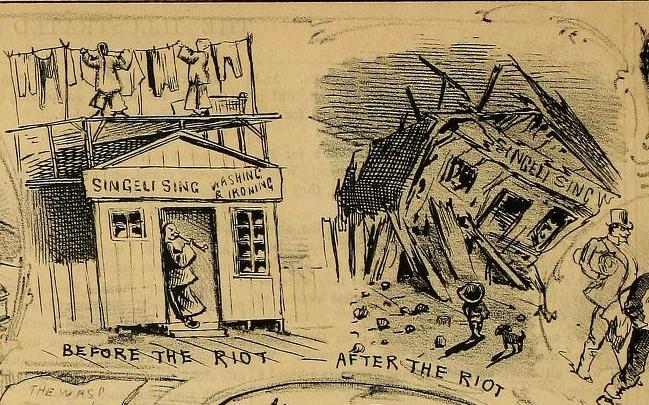
Yick Wo: How A Racist Laundry Law In Early San Francisco Helped Civil Rights (Hoodline)
A particularly badass line, from the unanimous opinion authored by Justice Stanley Matthews, shows that the Court did not hold back:
Though the law itself be fair on its face and impartial in appearance, yet, if it is applied and administered by public authority with an evil eye and an unequal hand, so as practically to make unjust and illegal discriminations between persons in similar circumstances, material to their rights, the denial of equal justice is still within the prohibition of the Constitution.
Introduction
On July 7, 2021 Iran hosted talks between the Afghan Government and the Taliban (the Taliban delegation was led by Sher Mohammad Abbas Stanikzai). The same day, the Taliban attacked the Badghis provincial capital Qalat-i-Naw (Badghis is one of thirty-four provinces in Afghanistan). Iranian Foreign Minister Javad Zarif emphatically stated that the Afghan people should decide their own future, while also stating that there was a major threat to security. As of Friday, the Taliban claimed to have captured 85% of Afghanistan’s territory (it is tough to verify such claims however).
Zarif also underscored the point that dialogue was the only option for finding a way out of the current imbroglio in Afghanistan:
…commitment to political solutions the best choice for Afghanistan’s leaders and political movements
Tehran, which shares a 945 kilometre border with Afghanistan, also hosts 3 million Afghan refugees and migrant workers, and has expressed its concern with regard to the growing turmoil in the country as a result of US withdrawal of troops.
Important symbolism
If one were to look beyond the Afghan-Iran bilateral relationship, as well as the fact that Tehran is likely to be impacted by events in Afghanistan, the meeting is an attempt by Iran to send out a message to Saudi Arabia (which for long has positioned itself as the key geopolitical player in the Middle East) and the US with regard to its geopolitical relevance.
Tehran’s ties with Riyadh have witnessed an upswing in recent months, with Saudi Arabia expressing its keenness to resolve bilateral issues. Senior officials from both countries met in Iraq in May. Saudi Crown Prince Mohammed bin Salman, in a media interview in April 2021, clearly batted in favour of better Saudi-Iran ties, while not denying that differences did exist between both sides. Talks were held between Saudi and Iranian officials in April and May in Baghdad and are likely to shift to Oman.
Iran-US ties
Iran’s ties with the US under the President-elect Ebrahim Raisi, a hardliner in comparison to outgoing president Hassan Rouhani, are likely to face more challenges (at least in the short run). The Biden administration had made attempts to rejoin the Iran Nuclear deal/Joint Comprehensive Plan of Action (JCPOA), but it had limited time. (The US had signed in 2015, but the Trump Administration withdrew from the JCPOA in 2018.)
While the Iranian Presidential election was held in June, the Vienna negotiations (in which US participated indirectly) began only in April 2021. Some ice has been broken between Iran and the US, but no real outcome should be expected till August, when Raisi takes over. Iran’s announcement that it would begin producing enriched uranium metal has also drawn severe criticism from the E3 countries (France, Germany, and the UK) and could act as an impediment to the renewal of the JCPOA. It would also be pertinent to point out that, due to domestic pressures, it was very tough for both sides to move away from stated positions (while the US had said it would remove sanctions once Iran fully complies with the terms and conditions of the 2015 deal, Iran stated that it could only do so after US removed economic sanctions).
Need for US-Iran engagement on Afghanistan
Biden has shown pragmatism on a number of foreign policy issues. A strong example of this is how, in spite of his criticism of Russia, he has not refrained from engagement and finding common ground with Moscow. Similarly, realising Turkey’s importance in Afghanistan (Turkey had offered to safeguard Kabul Airport after the withdrawal of US troops), he has sought to improve ties with Istanbul. During a meeting between Biden and Turkish President Reccep Tayyip Erdogan, on the sidelines of the NATO Summit, a number of issues were discussed and both sides agreed that the meeting was positive. During the Summit, Turkey — a NATO member — made a commitment that it would keep its troops in the country, to safeguard Kabul Airport.
It is important that the US engages with Iran in a more pro-active manner (albeit indirectly), and not just on JCPOA but also Afghanistan; so far Biden has publicly spoken about the role of Russia but given the tensions with Tehran he has not really made a mention – though there has been a growing chorus by US allies for a back channel with Iran on Afghanistan. Given the fact that the US is engaging with Iran indirectly on JCPOA and other changes taking place, some engagement would already be going on but this needs to be substantial and more effective. On the other hand, Beijing, Moscow, and Tehran have been working to find a common strategy to counter the likely security challenges in Afghanistan.
Neither Tehran nor Washington can engage publicly, but it is important for Biden to open an effective back channel to Iran via US allies in the GCC, such as Oman, Saudi Arabia, and the UAE. Iran, in spite of moving closer to Beijing and Moscow in recent years as a result of Trump’s flawed Iran policy, would not like to send out a signal that it is blindly kowtowing to any external force, including China (the Iran-China 25 year agreement was viewed with suspicion in Iran by many including Former Iranian President Mahmoud Ahmadinejad who called it a suspicious deal), and a working relationship with Washington on the Afghanistan quagmire would only produce benefits.
In conclusion, the Biden Administration should give priority to the relationship with Iran seeing the changing political landscape. While due to domestic pressures and lobbies within the US, progress with regard to Washington getting back on board the JCPOA has been impeded, it is important that the US does not miss out on pro-active back channel diplomacy and engagement with Iran on Afghanistan.
Somaliland just held elections recently. Political scientist Scott Pegg was there as an international observer. I reprint his report with his permission:
I was in Somaliland as an international election observer for their parliamentary and local council elections on May 31st. The blog I did with Michael Walls has lots of cool photos in it if you want to see low-tech democracy in action in an extremely poor country in the Horn of Africa: https://defactostates.ut.ee/blog/observing-somaliland%E2%80%99s-2021-parliamentary-and-local-council-elections.
So, the biggest problem by far with Somaliland elections is that there is almost no policy or ideological differences between the candidates (everyone wants them to be recognized, everyone wants to promote livestock exports, etc.). Candidates will loudly proclaim how they fundamentally differ from their opponents but then when you ask them something like “give me three key issues you disagree about,” they start mumbling and deflecting. Unfortunately, much of their politics is clan-based (and often sub-clan based). When I was there for the 2017 presidential elections, a seasoned political observer who is a friend of mine gave me this incredible breakdown of “we’ve got this clan, that sub-clan and the other sub-clan, they’ve got this clan, that sub-clan and the other sub-clan and the only unknown variables are this clan and that sub-clan.” It was exactly like John King pulling up different electoral maps on CNN, just without the maps and the technology. Based on his analysis, I asked if I could get posted to either Burco (where I was sent in both 2017 and 2021) or Boroma because they were what he correctly predicted were the equivalents of “swing states” in their election. So that’s the depressing part.
The inspiring part is that there are several minor issues or problems, but the elections themselves are incredibly peaceful, festive, free, fair and orderly. The single biggest problem I saw this time was an unsealed ballot box. The polling station staff knew it was a serious problem and had already called the regional electoral headquarters to ask for additional seals to be brought out. Yet, the box is sitting in the middle of the room in full view of all voters and all observers and no one is tampering with it in any way. I initially thought the polling station I saw close was closing early and leaving a few dozen voters in line locked out of the process. Then, I soon discover that it is a 20 minute break for evening prayer time, after which they resume voting and stay open 90 minutes late to accommodate everyone who was in line before the polls close. They weren’t supposed to do that, it was technically wrong, but it wasn’t anything that was done with any kind of fraud or malicious intent and all the voters were totally cool with it. The one area where they totally violate international norms is on the secrecy of the ballot. Voters can vote in secret but large numbers of them just don’t care if people know who they are voting for and walk into the polling station loudly proclaiming I want to vote for X or Y candidate. The election staff either shows them how to do this or does it for them and then shows the ballot to all observers so they can see the voter’s intent was carried out. Alternatively, some voters vote in secret but then go up to the political party observers and say something like can you verify that I actually voted for X and Y candidates, which they then do honestly and scrupulously. They have assorted small problems or mistakes, but absolutely zero fraud, systemic irregularities or malevolent intent. Watching the process on election day is truly inspiring and I wish more Americans who are so jaded and cynical about our democracy could see it.
For more on Somaliland at NOL, start here. You can check out Scott Pegg’s excellent scholarship here.
Gangsters vs. Nazis (Tablet)
How the Jewish mob fought American admirers of the Third Reich. An excerpt:
Judd Teller, a reporter for a New York Jewish daily, relates how he met one day with “several men who said they were from ‘Murder, Incorporated’ and wanted a list of ‘Nazi bastards who should be rubbed out.’” Teller took the request to Jewish communal leaders. They told Teller that if the plan would be put in motion, “the police would be informed promptly.” Teller relayed this warning to his Murder, Inc. contact. Upon hearing this, the mobster angrily replied, “Tell them to keep their shirts on. OK, we won’t ice [murder] the bodies; only marinate them.” According to Teller, this is exactly what they did. He said the attacks by the Jewish mobsters was sufficient “marination” to drastically reduce attendance at Nazi Bund meetings, and discouraged Bundists “from appearing in uniform singly in the streets.”
The Inimitable Orwell (Commonweal)
On the Politics and the English Language essay. I try to stick to the six rules, but I fear I am not totally “outright barbarous”-proof. Another list with writing rules – a more light-hearted one – comes from Umberto Eco, the noted Italian scholar:
Umberto Eco’s 36 Rules for Writing Well (Openculture)
Speaking of proper phrasing, here is a passage from Lysander Spooner (Thomas L. Knapp posted it in the comments section of a NOL piece by Jacques Delacroix):
[W]hether the Constitution really be one thing, or another, this much is certain — that it has either authorized such a government as we have had, or has been powerless to prevent it. In either case it is unfit to exist.
Now, I may have found the second prospective opening for my public policy course, should I ever offer one (the absurd part is that I lack almost everything else to supply it, demand included). It is pithy, sharp and, importantly, timeless. The alternative one-liner I would possibly pen day one at the imaginary class:
Property imposes obligations. Its use by its owner shall at the same time serve the public good.
Weimar Constitution (1919), art. 153(c)
While not as punchy as Spooner’s aphorism, it has qualities and can raise eyebrows. Both phrases are metal. Independent of context, they have more or less exactly what it takes to pick and stick. Perhaps both of them should set the opening, leaving the audience free to choose the way forward.
Back to Spooner. Another prominent figure (of American individualist tradition this time) I had not heard of till this day.
Lysander Spooner (Online Library of Liberty). The particular passage comes from his No Treason. No. VI. The Constitution of No Authority (1870).

I took note that he challenged the government monopoly in mail services (a field with quasi-military structure, typically used as a matrix to consolidate state bureaucracy/ power, btw) with his American Letter Mail Company, on ethical and economic grounds. The state finally forced him out of business in 1851, though competition temporarily drove fees down.
(If you care about post stamps – I don’t – USPS to issue Ursula K. Le Guin stamp this month (Book Riot). I enjoyed Le Guin’s Earthsea and plan to read The Dispossessed, a veiled study of social systems I hear, before summer end)
If anything, Spooner seems to have shared the fiery convictions and language of his contemporaries at the First International. That was a time of memorable lines, obviously. This easily comes to mind:
The history of all hitherto existing society is the history of class struggles.
The Communist Manifesto (1848)
They also sported some serious beards. Those of Spooner and Marx are respectable, but I would award James Guillaume’s bonus points for the extra menacing vibe.


_-_Local_Chips_(cropped).jpg)
