Old Property

Property is the basis for every right and ounce of autonomy we have. James Madison called property “that dominion which one claims and exercises over the external things of the world, in exclusion of every other individual.” Madison went on to argue that basically every right we enjoy is reducible to a property right. We have property in our opinions, in the free use of our faculties, in the safety and liberty of our body, and so on. He believed that “Government is instituted to protect property of every sort” and a government can only be just if it “impartially secures to every man, whatever is his own.”

But government has not remained impartial in this endeavor. It has become a massive property owner in its own right.  It has also become a gatekeeper, setting the terms for individuals’ uses of their own property. It has also become a broker and redistributor of property. And finally, it has =become a creator of property in the form of entitlements–what Charles Reich famously called “new property.” It’s this last role that I’d like to discuss here.

Government’s role as a creator of property has muddled and watered down the strength of property rights. The problem began when U.S. courts started grappling with claims that individuals had been deprived of a constitutional right when government stripped them of a government-created entitlement, such as social security.

Courts confronted with this problem basically held that while constitutional rights do attach to entitlements, the government has an increased authority to limit the rights to those entitlements. Essentially, since the government created the entitlement, the government can define the scope and terms of that entitlement.

This “new property” doctrine then became entangled with a different idea altogether. The United States Constitution protects against deprivations of life, liberty, and property without due process of law. The Constitution, however, does not define property. Courts have held instead that state law defines property , and the Constitution then protects rights to that property.

That does not mean, however, that all property can be whisked away at a whim as if it is all “new property.” Rather, even though state law may establish what property is, states do not have the power to mutate and redefine all property rights on a whim. In essence, there is “new property” and then there is “old property.”

“Old property” is a bundle of long-recognized property rights rooted in common law. But just because those rights have arisen from common law courts over the centuries does not mean that these are property rights created by government in the same sense as less-protected “new property.” There is a fundamental difference, for constitutional purposes, between government recognizing a boundary line and creating a food stamp program. In some sense, this difference strikes a deeper philosophical chord, one that distinguishes between positive law and natural law–or fundamental rights that are acknowledged and respected by government, and entitlements that are created and controlled by government.

What are these fundamental property rights? Most are intuitive and understood by babies as soon as their hands are capable of grasping. They include the right to exclude others (the first property right understood by all children everywhere), the right to quiet enjoyment, the right dispose of the property by sale or lease, the right to develop and improve the property, etc. That right extends to chattel and land–things the government does not create but simply exist and are brought under human ownership through a first-in-time rule or a transfer.

The idea that “new property” deserves lesser protection because government dictates its bounds has bled over into the “old property” rights. This stems from confusion between government recognizing the existence of a fundamental right and government creating an entitlement. Extensive permitting regimes have only exacerbated this confusion. When local governments demand a permit before a property owner can do something with their land, the government looks upon that permit as an entitlement–a privilege and not a right. Thus, “new property” ideas come to overlay and suffocate “old property.” As permitting regimes expand, the world of “old property” retracts. But that permit is not a “new property” entitlement–it’s a condition placed upon a fundamental background right–an intruder upon natural law. When a permitting authority tries to strip away or deny a permit, that denial should be subjected to the full rigor of constitutional scrutiny offered to “old property,” not the weak sauce protections for entitlements.

If a government is only just if it limits itself to protecting what is ours, as Madison believed, then we don’t have many just governments left to us. Courts could help by establishing a clearer distinction between the old and the new forms of property so that governments can’t get away with redefining or stripping away fundamental property rights.

Free Immigration is not a Classical Liberal Right

My eye caught this article, which stands in a long tradition among libertarians.

It is the kind of fairy tale theory that gives liberal thought a bad name in general, and classical liberal thought in particular, as it is often confused with libertarianism in the US.

My problem with arguments like these is that they make logical sense, but are practically non-sensical at the same time. I am more than willing to admit that in the ideal libertarian world free immigration indeed is a right. Yet I do not think arguments like these help us to get that libertarian ideal one inch closer. On the contrary, I am afraid it only fosters disdain and outright disbelief, even among potential supporters.

The main problem of course is that there is no ideal libertarian world. Yet libertarians all too often do not seem to care about that. They rather continue to argue about what fairy tales makes the most logical sense, rather than using their sometimes brilliant minds to come up with ideas and theories to actually foster a more liberal world. Let alone a classical liberal or a libertarian world.

To make a case for free immigration on the basis of rights is to deny the property rights of current populations. Roughly, that argument goes like this: in this world most immigrants will make some claim to these existing property rights once they arrive in their host country. Higher taxation to pay for the immigration system is one thing, but also think of housing, claims to health and medical systems, social welfare programs, schools, roads, et cetera. The majority of the current population has put money into (these) public goods, certainly in Europe, and thus property rights were created. These  should be protected and can only consensually be changed.

Also, there are more intangible effects, think for example of the change in culture and social cohesion, certainly before the new arrivals are fully integrated. Hayek warned against precisely these destabilizing effects of large groups of immigrants entering a relatively homogenous territory, drawing on his own Viennese experience in the interwar years. He openly supported Margaret Thatcher to this end in a letter to The Times on February 11, 1978, which were followed by further explanations in the same newspaper in the weeks thereafter.

This is not to say we should all build (or rather attempt to build) walls, or close off borders completely. Some form of immigration is indeed called for, if only out of humanitarian perspective. That is something completely different than free immigration though.

Bad Religion

The Heidelberg Catechism is one of my all-time favorite Christian documents. Written in 1563, mostly by Zacharias Ursinus, the Heidelberg (as it is sometimes called) is composed by 129 questions and answers (the classical format of a catechism), supposed to be studied in 52 Sundays (that is, one year). I believe it is very telling that, being a catechism, the Heidelberg was written thinking mostly about younger people, even children. Ursinus himself was only about 29 years old when he wrote it. Maybe it is a sign of the times we live in that the Heidelberg sounds extremely deep for most readers today.

Throughout its questions and answers, the Heidelberg covers mostly three Christian documents: The Ten Commandments, the Lord’s Prayer (“Our Father who art in Heaven…”) and the Apostle’s Creed. The catechism is also divided into three main parts: Our sin and misery (questions 3-11), our redemption and freedom (questions 12-85), our gratitude and obedience (86-129). Probably an easier way to remember this is to say that the Heidelberg is divided into Guilt, Grace, and Gratitude. That is also, according to many interpreters, the basic division of the Apostle Paul’s Letter to the Romans, historically one of the most important books in the Bible.

I mention all these characteristics about the Heidelberg Catechism because I think they are worth commenting on. As I learned from a friend, that is the Gospel: Guilt, Grace, and Gratitude. As C.S. Lewis observed in Mere Christianity, Christians are divided on how exactly this works, but all agree that our relationship with God is strained. That is the guilt. However, in Jesus Christ, we can restart a peaceful relationship with God. That is the grace. This should be followed by a life of gratitude. That is the way the Gospel is good news. If you don’t emphasize these three points you are not really presenting the Biblical gospel. To talk about grace without talking about guilt is nonsense. To talk about guilt and not grace is not good news at all. To talk about guilt and grace but not of gratitude is antinomianism. To talk about gratitude (or obedience) without talking about guilt and especially grace is legalism. But also, notice how unbalanced the three main parts are: Ursinus dedicated way more space for grace and gratitude that he did for guilt.

That’s not accidental. Also, it is very interesting that he talks about the Ten Commandments when he is dealing with gratitude. It didn’t have to be this way. Ursinus could have included the Law when talking about guilt. He could use the law to show how miserable we are for not fulfilling it. But instead, he wanted to show that obeying God is a sign of gratitude. You are free already. Obeying will not make you any more saved. But it is certainly the behavior of a truly restored person.

If you read so far, I should first thank you for your attention, but also say that I am completely unapologetic for speaking so openly on Christian themes. At some point in history, Christians decided to adapt to the modern culture. That was the birth of Christian Liberalism. Modern man, some of them assumed, could no longer believe in stories of gods and miracles. Modern science was able to explain things that societies in the past thought to be supernatural occurrences. The Bible was at worst pure nonsense or at beast a praiseful reflection of the piety of people in the past, but certainly not a supernatural revelation from God. But if you take away the supernatural elements of the Bible, what do you have left? Good morals, some thought. I believe they were wrong.

The social gospel is one consequence of Christian liberalism. The central miracle in the Bible is that Jesus, a mortal man, was dead for three days and resurrected. That is indeed a miracle. Make no mistake: people in the first century knew as well as we do that people don’t come back to life after three days. Maybe they knew it better than we do, for in the 21st century, for many of us, death is not a part of everyday life. For them, it certainly was. Christians have believed through almost two thousand years that Jesus’ death and resurrection have something to do with us being reconciled to God. But if Jesus didn’t resurrect, and no one really heard from God that he is angry, what do we have left? The answer, according to Christian liberals, is social justice. Reform society. I believe that for this, they own society at large an apology, and I will explain why.

I heard from too many people that the reason they don’t go to church is that Christians are hypocrites. “Do as I say, but not as I do”. Maybe they are right. The balance between guilt, grace, and gratitude if fundamental for Christianism to work. Salvation (reestablishing a rightful relationship with God) is by grace, not by works. Say that salvation is by works and you set the board in a way that you are sure to lose. As I already mentioned, I think it is just wonderful that the Heidelberg Catechism talks about the Law of God (The Ten Commandments) when it is discussing gratitude, not guilt, and I believe this is a great lesson for us today.

I say all this today because I believe that political correctness is (at least to a great degree) the bastard son (or daughter) of the social gospel. See the recent Gillette commercial that caused so much controversy, for example. Are they really saying anything wrong? Don’t men behave sometimes in ways that are less than commendable? I believe we do. Especially coming from a Latino culture as I do, I am more than willing to say that men all too often are disrespectful towards women and also towards other men. However, how the people at Gillette know this? If there is no God, or if he didn’t speak, how can you tell what is ethically commendable behavior and what is not?

I am no specialist, but as far as I know, more than enough atheist philosophers are willing to admit that in a sole materialist worldview there are no universal grounds for morality. As the poet said, “if there is no God, then all things are permissible”. It is always important in a conversation like this to explain that I am not saying that atheists cannot be ethical people. That is absolutely not what I am saying. Some of the best people I ever met were atheists. Some of the worst were Christians who were at church every single Sunday. With that explained, what I am saying is that there is no universal guide for human behavior if there is no God and everything just happened by chance. There are particular guides, but not a universal one, and to adhere to them is really a matter of choice.

The way that I see it, people at Gillette want men to feel bad and to change their behavior. They want men to feel guilty and to have gratitude. But where is the grace? I believe that is why this commercial irritated so many people. It makes people at Gillette look self-righteous or legalistic. Or both! But it definitely doesn’t help men to change their ways, supposing that there is something to change. I believe there is. There is a lot to change! But political correctness is not the way to do it.

Government shutdown – private vs. public responses

The recent shutdown of the government in America has caused a midsize crisis for state employees leaving them unpaid for 35 days straight. Although the shutdown ended on the 25th of January, one can still draw a conclusion about the crisis handling from a public and a private perspective.

A failure of government

When you take a closer look at the history of governmental crisis management, you mostly look at a huge collection of mismanagement. In the last few years there has been a tremendous amount of intriguing works dealing with the failures of public crisis responses, especially the case of hurricane Katrina (Wikipedia here lists more than 100 references), which has been one the of most investigated disasters in recent history.

Crisis can provoke the good as well as the bad inside humans. One might think of the countless volunteers after nature catastrophes doing their very best to help. On the other hand, there have also been stories of grieving and plundering mobs on the streets, after hurricane Katrina for example. So, what we can say for sure is that crises push human behaviour to the extremes. Keeping this in mind it sounds reasonable to leave it to the government to set up an agenda of rules to coordinate humanitarian efforts. However, the government fails most of the time to deliver effective responses to crises, whether they are man-made or exogenous.

Not being able to find an agreement over the federal budget indicates that the government also has very limited options to offer to their employees. And indeed, Lara Trump gave some very handy advice to unpaid workers: “Listen, it’s not fair to you, and we all get that, but this is so much bigger than any one person. It is a little bit of pain but it’s going to be for the future of our country. […] Their children and their grandchildren will thank them for their sacrifice right now.” Yes, please explain to your children how you nearly starved to death because of a dispute over a wall. Sounds reasonable.

Whereas Donald Trump’s kind of clumsy attempt to clarify Ross Wilbur’s statement that government workers should take out loans (Maybe a small loan of a million dollars, huh?) was not too stupid at all. He emphasizes that worker should “work along” with local grocery shop owners they know. He was very clear that employees could not expect help from the government, but instead, they should look out for support on a local level. I do not think that this is a good method of communicating this issue, but it is for sure a very honest one.

Mac & Cheese

A 35-day shutdown, so to speak nearly a missed monthly wage, might not sound unbearable for a central European. But keeping in mind the saving habits of many Americans, a huge amount of government workers are facing existential problems. A recent FED survey found out that about 40% of the American population is not able to cover a 400$ emergency expense without selling or borrowing something.

Witnessing the inability of the government to provide payments for their workers, private enterprises reacted in a remarkable way. The huge food company Kraft rented space for pop-up stores in Washington in which they gave away food entirely for free. One of the most demanded products was Mac & Cheese. The celebrity Chef José Andrés provided free groceries for affected government worker through his NGO “World Central Kitchen.” When the government stopped caring, people started to do so.

Learnings

The overwhelming care for the unpaid government workers by the private sector further strengthened the role and importance of individual responsibility. In situations of crises, people tend to be less submissive to authority and focus on voluntary cooperation of human beings. I feel like it is important to mention here that I do not want to praise crises as a suitable method of bringing people together. But when we take a closer look at the history of humanity it becomes evident that instead of governmental decisions, voluntary human cooperation made our modern life possible. And in times of crises, people become clear about the relevance of these values and processes, which normally guide human progress subconsciously and unnoticed. Private responses to crises are a sign to me that humans are capable to display kindness, cooperation, and humanity beyond the borders of government.

John Rawls had good reason to be a reticent socialist and political liberal

31u2bmz6ytl._sx312_bo1,204,203,200_

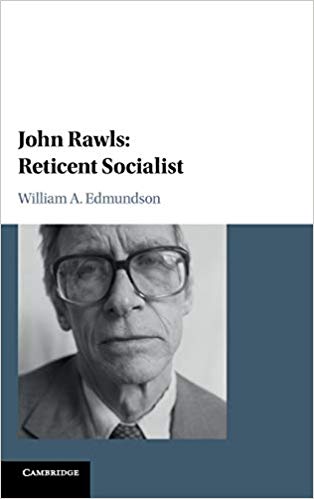
John Rawls: Reticent Socialist by William A. Edmundson has provoked a renewed attempt, written up in Jacobin and Catalyst, to link the totemic American liberal political philosopher with an explicitly socialist program to fix the problems of 21st century capitalism, and especially the domination of the political process by the super-rich. I found the book a powerful and enlightening read. But I think it ultimately shows that Rawls was right not to weigh his philosophy down with an explicit political program, and that socialists have yet to respond effectively to James Buchanan’s exploration of the challenges of non-market decision-making – challenges that bite more when states take on more explicit economic tasks. The large-scale public ownership of industry at the core of Edmundson’s democratic socialism is plausibly compatible with a stable, liberal political community in some circumstances but it is unclear how such a regime is supposed to reduce the scope of social domination compared with a private-property market economy in similar circumstances once we look at public institutions with the same skeptical attention normally reserved for private enterprise. A draft review is below.

Continue reading

Selective Moral Argumentation

There are two competing approaches to moral theory. Consequentialism posits that actions and policies should be judged by their consequences: an action (or policy) is good if its predictable consequences are good. Deontologist perspectives, on the other hand, claim that actions should be judged according to their own worth, irrespective of consequences.

Note that the differences between these approaches lies not in the specific policies advocated but in their modes of arguing. Consider the death penalty. Consequentialists are generally against killing people because it’s not a good idea, but will support the death penalty if it can be shown that it is a cost-effective way of reducing crime. The deontologist opposition against the death penalty is absolute, but a deontologist may also support the death penalty because criminals deserve it, even if that’s not an efficient way to reduce crime.

I used to believe that specific individuals are either consequentialists or deontologists, i.e. some people are very sensitive to consequentialist reasoning while others were immune to it, and vice versa. At the very least, I expected individuals to combine both approaches in a consistent way (for example, by being consequentialists only two-thirds of the time). But now I think this is putting the cart before the horses: what happens in practice is that an individual first decides which policy she wants to defend, and then employs the mode of argument that is more favorable to the policy in question.

Throughout the 1960s and 1970s, right-wing military dictatorships were pretty common in Latin America. These governments often committed heinous crimes. When, years or even decades after the fact, the issue of punishing those responsible came to the fore, right-wingers opposed the move from a consequentialist perspective –social peace is worth preserving, isn’t it?–, while left-wingers took the deontologist stance –surely those who committed crimes against humanity should be harshly punished. But when the discussion turned about pardoning left-wing guerrillas, as in the 2016 peace referendum in Colombia, the tables turned: now the right found intolerable that criminals would be pardoned for the sake of social peace. (It is worth noting that in Argentina, where several former military commanders, including some with atrocious human rights records, contested and won elections after the return to democracy, the right never raised deontologist objections against them.)

I see the same pattern in Mexico today. During the electoral campaign last year, then candidate Andrés Manuel López Obrador was harshly criticized for raising the possibility of an amnesty for members of drug cartels in order to pacify the country. To be sure, there are many ways in which such a strategy could go wrong; but the criticism focused on the moral horror of pardoning drug dealers. Predictably, now that the government of López Obrador cut fuel supplies in order to prevent gasoline theft –something against which his predecessors had done nothing–, his opponents have found the virtues of consequentialism: the policy is creating (serious) fuel shortages. As you may guess, the government highlights the importance of combating criminals, without paying much attention to the consequences.

All of this reinforces the point repeatedly made by Cowen and Hanson: politics is not about policy, but about the relative status of different social groups. That said, the fact that we (unconsciously?) pick our preferred policies/stances first and decide how to defend them afterwards only begs the question: what determines whether we end up positioning ourselves in one side of the political spectrum or another? And given that we sometimes (but rarely) switch sides, what are the motivations behind these changes?

Timothy C. May, crypto-anarchist hero (1951 – December 15, 2018)

Tim May
Timothy C. May

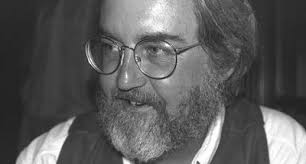
News has arrived that Timothy May, the founder of the crypto-anarchist movement has died on December 15th, 2018. He has been a hero and inspiration for many in the crypto-anarchist/anarcho-capitalist community for his ideas to spread freedom and privacy through the use of cryptography.

Once an Intel senior engineer, he has written extensively about privacy, cryptography, and internet freedom. Without a doubt, he has been a great influence on the likes of John Perry Barlow (declaration of independence for cyberspace), Nick Szabo (smart contracts and Bitgold), Wei Dai (B-money), and Satoshi Nakamoto – the inventor of Bitcoin and blockchain. He has also contributed extensively to the Cypherpunks electronic mailing list, the same list that Satoshi initially used to spread his Bitcoin whitepaper and to invite cryptographers to join further developments of Bitcoin.

In his Crypto Anarchy and Virtual Communities (1994) paper, May describes Crypto anarchy as

the cyberspatial realization of anarcho-capitalism, transcending national boundaries and freeing individuals to make the economic arrangements they wish to make consensually.

He furthermore writes that

Digital cash, untraceable and anonymous (like real cash), is also coming, though various technical and practical hurdles remain. “Swiss banks in cyberspace” will make economic transactions much more liquid and much less subject to local rules and regulations.

Acknowledging the possible negative sides of crypto anarchism, May sees the development of crypto anarchism as mostly good. He believes that criminal activity within a crypto anarchist community are mostly exceptions and not the rule. He writes,

Is this a Good Thing? Mostly yes. Crypto anarchy has some messy aspects, of this there can be little doubt. From relatively unimportant things like price-fixing and insider trading to more serious things like economic espionage, the undermining of corporate knowledge ownership, to extremely dark things like anonymous markets for killings.

But let’s not forget that nation-states have, under the guise of protecting us from others, killed more than 100 million people in this century alone. Mao, Stalin, Hitler, and Pol Pot, just to name the most extreme examples. It is hard to imagine any level of digital contract killings ever coming close to nationstate barbarism.

Few mainstream news outlets today will write about Timothy May’s death and impact on our world, but for us who aspire to uphold Bitcoin’s initial principle to make (financial) freedom and privacy absolute, he will always be remembered for his inspiring contributions to secure our rights to life, liberty, and property.

No Country for Creative Destruction

Imagine a country whose inhabitants reject every unpleasant byproduct of innovation and competition.

This country would be Frédéric Bastiat’s worst nightmare: in order to avoid the slightest maladies expected to emerge from creative destruction, all their advantages would remain unseen forever.

Nevertheless, that impossibility to acknowledge the unintended favourable consequences of competition is not conditioned by any type of censure, but by a sort of self-imposed moral blindness: the metaphysical belief that “being” is good and “becoming” is bad. A whole people inspired by W. B. Yeats, they want to be gathered into the artifice of eternity.

In this imaginary country, which would deserve a place in “The Universal History of Infamy” by J.L. Borges, people cultivate a curious strain of meritocracy, an Orwellian one: they praise stagnation for its stability and derogate growth because of the stubborn and incorruptible conviction that life in society is a zero-sum game.

Since growth is an unintended consequence of creative destruction, they reason additionally, then there must be no moral merit to be recognised in such dumb luck. On the other hand, stagnation is the unequivocal signal of the good deeds to the unlucky, who otherwise could suffer the obvious lost coming from every innovation.

In this fantastic country, Friedrich Nietzsche and his successors are well read: everybody knows that, in the Eternal Return, the whole chance is played at each throw of the dice. So, they conclude, “if John Rawls asked us to choose between growth or stagnation, we would shout at him: Stagnation!!!”

But the majority of the inhabitants of “Stagnantland” are not the only to blame for their devotion to quietness. The few and exceptional proponents of creative destruction who live in Stagnantland are mostly keen on the second term of the concept. That is why some love to say, from time to time, “we all are stagnationist” – the few contrarians are just Kalki’s devotees.

These imaginary people love to spend their vacations abroad, particularly in a legendary island named “Revolution”. Paradoxically, in Revolution Island the Revolutionary government found a way to avoid any kind of counter-revolutionary innovation. It is not necessary to mention that Revolution Island is, by far, Stagnantlanders’ favourite holiday destination.

They show their photos from their last vacation in Revolution Island and proudly stress: “Look: they left the buildings as they were back in 1950!!! Awesome!!!” If you dare to point out that the picture resembles a city in war, that the 1950 buildings lack of any maintenance or refurbishment, they will not get irritated. They will simply smile at you and reply smugly: “but they are happy!”

Actually, for Stagnantlanders, as for many others, ignorance is bliss, but their governments do not need to resort to such rudimentary devices as censure and spying to prevent people from being informed about the innovations and discoveries occurring in other countries, as Revolutionary Island rulers sadly do. Stagnantlanders simply reject any innovation as an article of faith!

Notwithstanding, they allow to themselves some guilty pleasures: they love to use smartphones brought by ant-smuggling and to watch contemporary foreign films which, despite being realistic, show a dystopian future to them.

As everything is deteriorated, progress is always a going back to an ancient and glorious time. In Stagnantland, things are not created, but restored. As with Parmenides, they do not believe in movement, but if there has to be an arrow of time, you had better point it to the past.

Moreover, Stagnantland is an imaginary country because it does not only lack of duration, but of territory as well. As the matter of fact, no man inhabits Stagnantland, but it is indeed stagnation that inhabits the hearts of Stagnantlanders. That is how, from dusk to dawn, any territory could be fully conquered by the said sympathy for the stagnation.

Nevertheless, if we scrutinise the question with due diligence, we will discover that the stagnation is not an ineluctable future, but our common past. Human beings appeared very much earlier than civilisation. So, all those generations must have been doing something before agriculture, commerce, and institutions.

Before the concept of creative destruction had been formulated by Joseph Schumpeter, it was needed a former conception about how people are conditioned by institutions: Bernard Mandeville pointed out how private vices might turn into public benefits, if politicians arranged the correct set of incentives. The main issue, thus, should be the process of discovery of such institutions.

That is why the said aversion to competition and innovation is hardly a problem of a misguided sense of justice, but mostly a matter of what we could coin as “bounded imagination”: the difficultly of reason to deal with complex phenomena. Don’t you think so, Horatio?

What is ‘Good’? What was Arendt pursuing?

Arendt is not the most consistent or coherent philosopher. Her writings display shades of sentimental as well as stoic rationality. Some might scoff at the progression of her thoughts. But the depth of her emotion is what grants her literature the luminescence that we need in times of moral darkness. The world was left waiting for what could have been a monumental work on political judgement when Arendt passed on before getting a chance to complete the final segment of The Life of Mind. The piece entitled ‘Judgement’ was left with an epigraph:

Victrix causa deis placuit, sed victa Catoni.

Taken from Lucan’s Pharsalia, it translates to ‘the victorious cause pleased the gods, but the defeated one pleases Cato.’ It refers to the Roman philosopher and thinker Cato’s life and beliefs. He chose to commit suicide rather than give in to the faction he thought was ‘wrong’. Thus, what is ‘good’ would remain good even if it is defeated a hundred times. His stoicism and moral stubbornness is perhaps what Arendt wanted us to inculcate as a way of moral disciplining of the mind. But also of relevance is the presumption that there is, in fact, something good that is universal and not subject to fluctuations of regions, religion, class or caste. It is like music? Only humans have the capacity to perceive beats, melody, pitch and a number of other variables that combine to make music as we know it. Irrespective of how isolated or engaged our culture might have been with a globalized world, we carry within us the ability to differentiate good music from bad. What differs is our perception of what is happy from sad. A Balinese music for cremation might sound quite happy and serene to the uninitiated. Similarly, perhaps we possess the capacity to ascertain the ‘good’ pursuits from the bad. While culture, upbringing and circumstances of nature might affect the way we perceive the degree to which we are obligated to act upon the thus discovered moral, no (non-sociopathic) human can deny the existence of the goodness of the moral once confronted with it.

I remember asking my professor once about what he thought was that one universal value in constitutions around the world that need protection from majoritarian attempts at amendment. He answered, without blinking, equality. I knew there was something within the wide array of norms that we associate with equality that I know is a good that commands universality. However, there was enough in the substantive affirmations of equality that had room for reasonable disagreement such that as an unbiased spectator I would not be able to dismiss one side over the other. Perhaps the universal principle requires a Humean recognition or a Kantian deliberation. Either way, that it exists and is worth pursuing is an unquestionable precursor to an Arendtian enquiry into the state of things.

There are some hints as to what she might have thought definitely existed within the set (and let us treat it as a set of values/ideals/principles for nothing if not humility about the extent of our understanding and knowledge) of what is ‘good’. Political freedom features quite prominently into her thought. The freedom to participate in public affairs as equals seems to have a place of prominence for Arendt. Not so much the concept of equality extended to realms outside the political. We are not born equal and cannot and should not try to find a natural occurrence of equality for that would require an unjust comparison of the distinctions and characteristics that distinguish individuals. The last blog post talked about Arendt’s insistence on separating the political from social and personal realms. While identity politics is often engaged to make a case for equality, and Arendt had nothing against the ideal of equality, she believed that it is in the political realm that we needed to affirm the ideal of equality most vehemently and zealously. This is because it affects directly our participation in the political which in turn affects everything about our existence in the world.

A better way to read Arendt is to go meta-psychological on her. Perhaps one of the ‘good’  values within the set is a form of communicative rationality, the desire and pursuance of a method of thinking representatively. And perhaps, just as liberation is a necessary precursor to freedom, so is the engagement of Arendtian judgment to finding that which is ‘good’.

The Shelf Life of the Self: Arendt on Identity Politics

Demands for separating one’s public and private identities are neither new nor simple. As the argument goes, many a political philosopher have claimed that to engage in worthwhile and productive politics, we must shed our private identities to better see, so to speak, the concerns that need a more universal outlook. Thus, to better communicate and deliberate upon political questions within a polity, say a nation, the citizens need to view themselves as citizens alone sans any group affiliation based on gender, religion, race and caste. This is not to snub the importance of social identities in general but only in so far as they affect our political judgement. On the other hand, the response to such a proposal has predictably highlighted the benefits, both political and moral, that one’s private identity has on their political participation. After all, the walls between the identities are not quite as impervious to each other as the philosophers are making it to be. Our individual selves are more than just a simple addition of our social, cultural and personal experiences. How we think about political dilemmas is often and quite rightly influenced by what we anticipate from a rival social group. A female advocating the freedom to make reproductive choices is not just assessing the positions of the stakeholders involved, as Arendt’s call for ‘enlarged mentality’ would require of her. The said female also has to keep in mind the gender hierarchies at play around her.

Arendt was famously non-feminist. She believed that the transposition of the private and the social identities into our political identities can destroy the very fabric of political communication and thus, political judgement. To resolve political dilemmas facing our society, Arendt believed we needed the exact opposite of what identity politics has to offer. Our private and social selves come with a shelf life. They end where the political begins. According to Arendt, the politicization of personal and social identities brings to the fore a self-defined and accepted discrimination that takes us away from the equality that politics demands of us. To think representatively, we need to not only be treated as but also feel like political equals.

While identity politics does well to highlight a history of suppression, it also contributes to a further strengthening of political cleavages that prevent us from ever going back to the ideal state that was disturbed by the suppression. Identity politics causes harm to inter-sectionalities because it forces us to choose between conflicting identities. But more importantly, it conflates the many dimensions of our self with the identity that we have thus chosen to speak through, politically. This conflation results in a demonization of everything that does not conform to our sense of identity, resulting in a fear of the unknown (of which Martha Nussbaum has talked about in the Monarchy of Fear). In the creation of this battleground, we forget that the other side is human. Just like us. And it is easy to not think about our moral obligations to each other when the enemy has been dehumanized and reduced to a label.

Arendt on identity politics deserves much greater scrutiny. Especially because of the overwhelming reliance of social cleavages but current political leaders. The era of identity politics has given us a society with walls that mask themselves as political ideologies but are nothing more than a refusal to recognize that the other side is human too. An essential step in Arendtian judgement is to accept the inherent and equal worth of each individual, irrespective of their social identity. We would do well to find common grounds in our humanity, first.

The Negative Capability of a Good Legislator

In a former post, we had explored the idea of considering the law as an abstract machine which provides its users with information about the correct expectancies about human conduct that, if fulfilled, would contribute to the social system inner stability (here). The specific characteristic of the law working as an abstract machine resides in its capability of dealing with an amount of information more complex than human minds. This thesis had been previously stated by Friedrich Hayek in his late work titled “Law, Legislation and Liberty”, aimed to provide the foundations to a proposal of an constitutional reform that would assure the separation of the law from politics -not in the sense of depriving politics from the rule of law, but to protect law from the interference of politics.

Paradoxically, the said opus had many unintended outcomes that surpassed the author’s foresight. One of them was the coinage of the notion of “Spontaneous Order”, which Hayek himself regretted about, because of the misleading sense of the word “spontaneous”. At the foreword of the third volume of the cited “Law, Legislation and Liberty”, he explained why he would prefer to use of the term of “Abstract Order”. Notwithstanding its creator’s allegations, the label of “Spontaneous Order” gained autonomy from him in the realm of the ideas (for example, here).

Why better “abstract order” than “spontaneous”? Because while no “concrete order” might be spontaneous, we could nevertheless find normative systems created by human decision, besides the spontaneous ones (see “Law, Legislation and Liberty”, Chapter V). Moreover, we do not see spontaneous orders whose rules fail to provide stability to the system, because of “evolutionary matters”: such orders could not endure the test of time. Nevertheless, for the same reason, we could imagine a spontaneous order whose rules of conduct became obsolete due to a change in the environment and, thus, fails to enable the social system with the needed stability.

Spontaneity is, thus, not the central characteristic of the law as a complex order. What delimits law from a “concrete order” is the level of abstraction. An alternative name given by Hayek to designate the concrete orders was the Greek term “taxis”, a disposition of soldiers for battle commanded by the single voice of the general. Concrete orders could be fully understood by the human mind and that is why they are regarded as “simple phenomena”: the whole outcome of their rules could be predicted by a system of equations simpler than the human mind.

Notwithstanding a single legislator could sanction a complete set of rules to be followed by the members of a given society, the inner system of decision making of those individuals are more abstract that the said set of rules and, thus, the human interactions will always result in some subset of unintended consequences.

These unintended consequences should not necessarily be regarded as deviations from the social order, but indeed as factors of stabilisation -and, thus, all abstract orders are, in some sense, still spontaneous. These characteristics of the law as a complex order concern on the information about the final configuration of a society given a certain institutional frame: we can establish the whole set of institutions but never fully predict its final outcome. At this stage, we reach what Hayek called in The Sensory Order “an absolute limit to knowledge”.

We now see that the legislator could sanction a complete system of rules -a system that provides solutions for every possible concrete controversy between at least two contenders-, but he is unable to be aware of the full set of consequences of that set of rules. We might ascertain, then, that being enabled with a “negative capability” to anticipate the outcome of the law as a complex phenomenon is a quality to be demanded to a good legislator.

By this “negative capability” we want to designate some understanding of the human nature that allows to anticipate the impact of a given norm among the human interactions. For example, simple statements about human nature such as “people respond to incentives”, or “all powers tend to be abusive”. These notions that are not theoretical but incompletely explained assumptions about human nature are well known in the arts and literature and constitute the undertow of the main narratives that remain mostly inarticulate.

Precisely, as Hayek stated, every abstract order rests upon a series of inarticulate rules, some of which might be discovered and  later articulated by the judges, while other rules would remain inarticulate despite being elements of the normative system.

However, we praise Negative Capability as a virtue to be cultivated by the legislator, not by the judge. The function of the judge is to decide about the actual content of the law when applied to a particular case. It is the legislator the one who should foresee the influence to be exerted by the law upon a general pattern of human behaviour.

Notwithstanding Negative Capability could be dismissed in order of not being a scientific concept, this negative attribute is one of its main virtues: it means lack of ideology, in the sense given to that term by Kenneth Minogue. While an ideological political discourse reassures itself in a notion of scientific truth, at least a legislator inspired by common and humble ideas about human nature would be free from that “pretence of knowledge”.

The Factual Basis of Political Opinions

“Ideology is a menace” Paul Collier says in his forthcoming book The Future of Capitalism and I couldn’t agree more: ideology (and by extension morality) “binds and blinds”, as psychology professor Jonathan Haidt describes i. And ideology, especially utopian dreams by dedicated rulers, is what allows – indeed accounts for – the darkest episodes of humanity. There is a strange dissonance among people for whom political positions, ideology and politics are supremely important:

  • They portray their position as if supported by facts and empirical claims about the world (or at least spit out such claims as if they did believe that)
  • At the same time, believing that their “core values” and “ideological convictions” are immune to factual objections (“these are my values; this is my opinion”)

My purpose here is to illustrate that all political positions, at least in part, have their basis in empirically verifiable claims about the world. What political pundits fail to understand is not only that facts rule the world, but that facts also limits the range of positions one can plausible take. You may read the following as an extension of “everyone is entitled to his or her own opinions, but not to his or her own facts”. Let me show you:

  • “I like ice-cream” is an innocent and unobjectionable opinion to have. Innocent because hey, who doesn’t like ice-cream, and unobjectionable because there is no way we can verify whether you actually like ice-cream. We can’t effortlessly observe the reactions in your brain from eating ice-cream or even criticize such a position.
  • “Ice-cream is the best thing in the world”, again unobjectionable, but perhaps not so innocent. Intelligent people may very well disagree over value scales, and it’s possible that for this particular person, ice-cream ranks higher than other potential candidates (pleasure, food, world peace, social harmony, resurrection of dinosaurs etc).
  • “I like ice-cream because it cures cancer”. This statement, however, is neither unobjectionable nor innocent. First, you’re making a causal claim about curing cancer, for which we have facts and a fair amount of evidence weighing on the matter. Secondly, you’re making a value judgment on the kinds of things you like (namely those that cure cancer). Consequently, that would imply that you like other things that cure cancer.

Without being skilled in medicine, I’m pretty sure the evidence is overwhelmingly against this wonderful cancer-treating property of ice-cream, meaning that your causal claim is simply wrong. That also means that you have to update your position through a) finding a new reason to like ice-cream, thus either invoking some other empirical or causal statement we can verify or revert back to the subjective statements of preferences above, b) renege on your ice-cream position. There are no other alternatives.

Now, replace “ice-cream” above with *minimum wages* and “cancer” with “poverty” or any other politically contested issue of your choice, and the fundamental point here should be obvious: your “opinions” are not simply innocent statements of your unverifiable subjective preferences, but rely on some factual basis. If political opinions, then, consists of subjective value preferences and statements about the world and/or causal connections between things, you are no longer “entitled to your own opinions”. You may form your preferences any way you like – subject to them being internally consistent – but you cannot hold opinions that are based on incorrect observations or causal derivations about the world.

Let me invoke my national heritage, illustrating the point more clearly from a recent discussion on Swedish television.  The “inflammatory” Jordan Peterson, as part of his world tour, visited Norway and Sweden over the past weekend. On Friday he was a guest at Skavlan, one of the most-viewed shows in either country (boasting occasionally of more viewers than the largest sport events) and – naturally– discussed feminism and gender differences. After explaining the scientific evidence for biological gender differences*, and the observed tendency for maximally (gender) egalitarian societies to have the largest rather than smallest gender-related outcomes, Peterson concludes:

“there are only two reasons men and women differ. One is cultural, and the other is biological. And if you minimize the cultural differences, you maximize the biological differences… I know – everyone’s shocked when they hear this – this isn’t shocking news, people have known this in the scientific community for at least 25 years.”

After giving the example of diverging gender rates among engineers and nurses he elaborates on equality of opportunity, to which one of the other talk show guests, Annie Lööf (MP and leader of the fourth largest party with 9% of the parliamentary seats) responds with feelings and personal anecdotes. Here’s the relevant segment transcribed (for context and clarity, I slightly amended their statements):

Peterson: “One of the answers is that you maximize people’s free choice. […] If you maximize free choice, then you also maximize differences in choice between people – and so you can’t have both of those [maximal equality of opportunity and minimal differences along gender lines]”

Lööf: “because we are human beings [there will always be differences in choice]; I can’t see why it differs between me and Skavlan for instance; of course it differs in biological things, but not in choices. I think more about how we raise them [children], how we live and that education, culture and attitudes form a human being whether or not they are a girl or a boy.”

Peterson: “Yes, yes. That is what people who think that the differences between people are primarily culturally constructed believe, but it is not what the evidence suggests.”

Lööf: “Ok, we don’t agree on that”.

So here’s the point: this is not a dispute over preferences. Whether or not biology influences (even constitute, to follow Pinker) the choices we make is not an “I like ice-cream” kind of dispute, where you can unobjectionably pick whatever flavor you like and the rest of us simply have to agree or disagree. This is a dispute of facts. Lööf’s position on gender differences and her desire to politically alter outcomes of people’s choices is explicitly based on her belief that the behaviour of human beings is culturally predicated and thus malleable. If that causal and empirical proposition is incorrect (which Peterson suggests it is), she can no longer readily hold that position. Instead, what does she do? She says: “Ok, we don’t agree”, as if the dispute was over ice-cream!

Political strategizing or virtue signalling aside, this perfectly illustrates the problem of political “opinions”: they espouse ideological positions as the outcome of enlightened or informed fact-based positions, but when those empirical statements are disproved, they revert to being expressions of subjective preference without a consequent diminution of their worth! Conservatives still gladly hum along to Trump’s protectionism, despite overwhelmingly being contradicted in the factual part of their opinion; progressives heedlessly champion rent control, believing that it helps the poor when it overwhelmingly hurts the poor. And both camps act as if the rest of us should pay attention or go out of our way to support them over what, at best, amounts to “I like ice-cream” proposals.

Ideology is a menace, and political “opinions” are the forefront of that ideological menace.

____

*(For a comprehensive overview of the scientific knowledge of psychological differences between men and women, see Steven Pinker’s The Blank Slate – or Pinker’s much-viewed TED-talk outline.)

Small thought on the fundamental revolution of Blockchain

Mankind made a huge leap forward regarding human organization when it implemented the Constitution. Man was no longer to be ruled by kings and despots, but by a document that stipulated the rule of law. Still, we had the issue of who was going to interpret these laws and who was allowed to add new rules.

Now, we have made another revolutionary leap forward in human organization. We don’t need a third party – kings, governments, courts – to interpret the laws anymore if we have self-executing smart contracts that eliminate the need to trust these third parties. Trust is established through mass collaboration and clever code. On top of that, everyone is free to opt-in, to submit new rules, and to participate in a set of rules. No one is forced to participate. You can always secede. We have had many secessions in the blockchain space. Bitcoin Cash seceded from Bitcoin Core, Ethereum seceded from Ethereum Classic etc. It is therefore a peaceful means to organize human beings.

This is, in my opinion, the fundamental revolution of blockchain: a peaceful trust machine for social agreements and human organization.

Blockchain trust

From the Comments: How can we not consent to government if we obey it voluntarily?

Irfan Khawaja has a good argument on Yoram Hazony’s new book on nationalism, which is being thoroughly and thoughtfully dissected by Arnold Kling:

Does anyone understand the point that Kling and/or Hazony are making about the relation between legitimacy based on voluntary acceptance, and consent? On the one hand, the claim is that in a legitimate government, we obey the law “voluntarily”; on the other hand, the claim is that we do not consent to government. How can we not consent to government if we obey it voluntarily? Coming the other way around: how can we obey it voluntarily if we don’t consent to it? Even if Hazony wants to broaden consent beyond the Lockean account, that’s still a broadening of the conditions of consent, not a nullification of the role of consent. The combination of claims that Kling attributes to Hazony does not seem coherent.

Well?

As a reminder, this is not a philosophical argument. Well, it is but it isn’t. I suspect this is about Israel and Palestine as much as it is about logical rigor. Stay tuned, and don’t be shy about having your say!

Philosophy of science and free speech

Here’s a link to an article I wrote just published in FEE.

I consider this part of an ongoing, gradual effort to incorporate Paul Feyerabend into the liberty canon. It’s probably a mistake, but I’m doing it anyway.

I also want to give a shoutout to the person that commented I’m “pretending that Ayn Rand didn’t exist.” Of course I know what Ayn Rand is, that’s the island next to Great Britain.