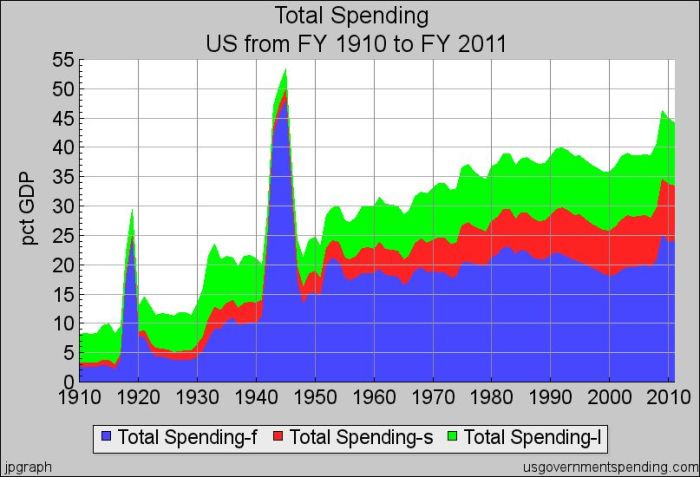
Herewith, a modest proposal: abolish all federal taxes and substitute fees for state membership in the Union. $7 billion annually for each representative in Congress plus $7 billion for each Senator would cover current Federal spending. Each state would have to come up with this sum annually, raised in any way they see fit.
Comments:
Smaller states would pay more per capita since they have more Senators per capita. That seems only fair.
Where would states get the money? Same places the Feds get it: taxation and borrowing. The states would have to pay close attention to their credit ratings to keep borrowing costs low. That would of course require that they exercise fiscal prudence.
States would have to compete among themselves to find revenue sources that minimize the damage done to the private economy.
Citizens would have greater influence over their state politicians than they have over the Feds.
Crony capitalists, rent-seekers and their ilk would be slowed down by the need to devote more attention to 50 state governments and less to the central government.
What about deadbeat states? They would lose their votes in Congress until they paid up. Conversely, wealthy states might be allowed to purchase extra seats in Congress.
Might this scheme encourage secession? Yes! Got a problem with that?
Wouldn’t this be a heavy burden on state taxpayers? Decidedly. With about 235,000 households per Congressman, that works out to $30,000 per household per year. But who’s bearing that burden now? Santa Claus?
The Federal debt is a thornier issue. Should it be paid off by the states? A drastic remedy would be to hand over securities to the states for payment as they come due. About $7.5 trillion per year would be required (counting gross debt rather than debt in the hands of the public). This would roughly triple the state taxpayer burden—admittedly a non-starter. Repudiation would be another remedy. Mandatory rollover would be another. No good solutions here.
Today is F.A. Hayek’s birthday, and if he would have been alive he would have been 117 years old now. Hayek is one of the most seminal economists and social philosophers of the 20th century. His works have left a deep impression on me when I first encountered them at the age of 20. The first three works of Hayek that I read were: 1. The Constitution of Liberty; 2. The Road to Serfdom; and 3. an essay entitled The Use Of Knowledge In Society. They have greatly influenced my views on political philosophy and the social sciences.
However, it was not so long ago that another illustrious philosopher, Ludwig Wittgenstein who was a second cousin and 10 years senior to Hayek, was born 127 years ago. In the same year that I became acquainted with Hayek, I also read Wittgenstein’s Tractatus Logico-Philosophicus or to put it more precisely: I attempted to read it. The work is incredibly dense and until today I still don’t feel confident that I have a sensible understanding of the book. Nonetheless, as a small tribute to both of them, I thought it would be nice to post a memoir that Hayek wrote of Wittgenstein.
Wittgenstein
F.A. Hayek – Remembering My Cousin, Ludwig Wittgenstein
BETWEEN THE RAILS and the building of the railway station of Bad Ischl there used to be ample space where, sixty years ago, in the season, a regular promenade used to develop before the departure of the night train to Vienna.
I believe it was on the last day of August 1918 that here, among a boisterous crowd of young officers returning to the front after visiting their families on furlough in the Salzkammergut district, two artillery ensigns became vaguely aware that they ought to know one another. I am not sure whether it was a resemblance to other members of our families or because we had actually met before that led us to ask the other, “Aren’t you a Wittgenstein?” (or, perhaps, “Aren’t you a Hayek?”). At any rate it led to our travelling together through the night to Vienna, and even though most of the time we naturally tried to sleep we did manage to converse a little.
Some parts of this conversation made a strong impression on me. He was not only much irritated by the high spirits of the noisy and probably half-drunk party of fellow-officers with which we shared the carriage without in the least concealing his contempt for mankind in general, but he also took it for granted that any relation of his no matter how distantly connected must have the same standards as himself. He was not so very wrong! I was then very young and inexperienced, barely nineteen and the product of what would now be called a puritanical education: the kind in which the ice-cold bath my father took every morning was the much admired (though rarely imitated) standard of discipline for body and mind. And Ludwig Wittgenstein was just ten years my senior.
What struck me most in this conversation was a radical passion for truthfulness in everything (which I came to know as a characteristic vogue among the young Viennese intellectuals of the generation immediately preceding mine only in the following university years). This truthfulness became almost a fashion in that border group between the purely Jewish and the purely Gentile parts of the intelligentsia in which I came so much to move. It meant much more than truth in speech. One had to “live” truth and not tolerate any pretence in oneself or others. It sometimes produced outright rudeness and, certainly, unpleasantness. Every convention was dissected and every conventional form exposed as fraud. Wittgenstein merely carried this further in applying it to himself. I sometimes felt that he took a perverse pleasure in discovering falsehood in his own feelings and that he was constantly trying to purge himself of all fraud.
THAT HE WAS VERY highly strung even at that time cannot be doubted. Among the remoter relatives he was thought of (though hardly known by them) as the maddest member of a rather extraordinary family, all of whom were exceptionally gifted and both ready and in a position to live for what they most cared for. Before 1914 I had heard much of (though being too young to attend) their famous musical soirees at the “Palais Wittgenstein”, which ceased to be a social centre after 1914. For many years the name meant to me chiefly the kind old lady who, when I was six years old, had taken me for my first car-ride—in an open electromobile round the Ringstrasse.
Apart from an even earlier memory of being taken to the luxurious apartment of an extremely old lady and being made to understand that she was the sister of my maternal great-grandfather— and, as I now know, Ludwig Wittgenstein’s maternal grandmother—I have no direct knowledge of the Wittgenstein family at the height of their social position at Vienna. The tragedy of the three elder sons apparently all ending their lives by suicide had attenuated it even more than the death of the great industrialist at its head would otherwise have done. I am afraid that my earliest recollection of the name of Wittgenstein is connected with the shocked account of one of my Styrian maiden great-aunts, surely inspired by envy rather than malice, that their grandfather “sold his daughter to a rich Jewish banker. . . .” This was the kind old lady I still remember—just.
I DID NOT MEET Ludwig Wittgenstein again for ten years; but I heard from him from time to time through his eldest sister who was a second cousin, an exact contemporary and a close friend of my mother. The regular visiting had made “Aunt Minning” a familiar figure to me (actually, she spelt her name, which is an abbreviation of Hermine, with a single “n”, but this would sound odd to English ears), and she remained a frequent visitor. Her youngest brother’s problems evidently occupied her much, and though she deprecated all talk about the “Sonderling”, the crank, and strongly defended him when occasional and undoubtedly often much-distorted accounts of his doings circulated, we did soon learn of them. The public eye did not take notice of him while his brother Paul Wittgenstein, a one-armed pianist, became a well-known figure.
But I did, through these connections, become probably one of the first readers of Tractatus when it appeared in 1922. Since, like most philosophically interested people of our generation I was, like Wittgenstein, much influenced by Ernst Mach, it made a great impression on me.
The next time I met Ludwig Wittgenstein was in the spring of 1928 when the economist Dennis Robertson, who was taking me for a walk through the Fellows’ Gardens of Trinity College, Cambridge, suddenly decided to change course because on the top of a little rise he perceived the form of the philosopher draped over a deckchair. He evidently stood rather in awe of him, and he did not wish to disturb him. Naturally, I walked up to him, was greeted with surprising friendliness, and we engaged in a pleasant but uninteresting conversation (in German) about home and family to which Robertson soon left us. Before long Wittgenstein’s interest flagged, and evident signs of his not knowing what to do with me made me leave him after a while.
IT MUST HAVE BEEN almost twelve years later that the first of the only real series of meetings I had with him took place. When I went to Cambridge in 1939 with the London School of Economics I soon learned that he was away working at some war hospital. But a year or two later I encountered him most unexpectedly. John Maynard Keynes had arranged for me to have rooms in the Gibbs building of King’s College, and after a while I was asked by Richard Braithwaite to take part in the meetings of the Moral Science Club (I think that was the name) which took place in his rooms just below those I occupied.
It was at the end of one of these meetings that Wittgenstein quite suddenly and rather dramatically emerged. It concerned a paper which had not particularly interested me and of the subject of which I have no recollection. Suddenly Wittgenstein leapt to his feet, poker in hand, indignant in the highest degree, and he proceeded to demonstrate with the implement how simple and obvious Matter really was. Seeing this rampant man in the middle of the room swinging a poker was certainly rather alarming, and one felt inclined to escape into a safe corner. Frankly, my impression at that time was that he had gone mad!
It was some time later, probably a year or two, that I took courage to go and see him, after having learnt that he was again in Cambridge. He then lived (as always, I think) in rooms several flights up in a building outside the College. The bare room with the iron stove, to which he had to bring a chair for me from his bedroom, has often been described. We talked pleasantly on a variety of topics outside philosophy and politics (we knew that we disagreed politically), and he seemed to like the very fact that I strictly avoided “talking shop”, not unlike one or two other curious figures I have met in Cambridge. But, though these visits were quite pleasant and he seemed to encourage their repetition, they were also rather uninteresting and I went along only two or three times more.
After the end of the War, when I had already returned to London, a new kind of contact by letter began when the possibility arose, first to send food parcels, and later to visit our relatives in Vienna. This involved all kinds of complicated contacts with bureaucratic organisations about which, he rightly assumed, I had found out details before he did. In this he showed a curious combination of impracticability and meticulous attention to detail which must have made all contacts with the ordinary business of life highly unsettling for him. However, he did manage to get to Vienna fairly soon after me (I had succeeded for the first time in 1946), and I believe he went there once or twice again.
I THINK IT WAS in the course of his return from his last visit to Vienna that we met for the last time. He had gone to see his dying sister Minning once more, and he was (though I did not know it) himself already mortally ill. I had interrupted the usual railway journey from Vienna via Switzerland and France at Basel and had boarded there the sleeping-car at midnight the next day. Since my fellow occupant of the compartment seemed to be already asleep I undressed in semi-darkness. As I prepared to mount to the upper berth a tousled head shot out from the lower one and almost shouted at me, “You are Professor Hayek!” Before I had recovered sufficiently to realise that it was Wittgenstein and to register my assent, he had turned to the wall again.
When I woke up next morning he had disappeared, presumably to the restaurant car. When I returned I found him deeply engrossed in a detective story and apparently unwilling to talk. This lasted only until he had finished his paperback. He then engaged me in the most lively conversation, beginning with his impressions of the Russians at Vienna, an experience which evidently had shaken him to his depth and destroyed certain long-cherished illusions. Gradually we were led to more general questions of moral philosophy, but just as it was getting really exciting we arrived at the port (in Boulogne, I believe). Wittgenstein seemed very anxious to continue our discussion, and indeed he said that we must do so on board ship.
But I simply could not find him. Whether he regretted having become so deeply engaged, or had discovered that, after all, I was just another Philistine, I do not know. At any rate, I never saw him again.
Sometimes, I feel that some authors simply evolve separately from all those who might be critical of their opinions. I feel that this hurts the discipline of economics since it is better to confront potentially discomforting opinions. And discomforting opinions are never found in intellectually homogeneous groups. However, a recent paper in the American Economic Review by Alan Blinder and Mark Watson suffers exactly from this issue.
Now, don’t get me wrong, the article is highly interesting and provides numerous factoids worth considering when debating economic policy and politics. Basically, the article considers the differences in economic performance under different presidents (and their party affiliation). Overall, it seems that Democrats have a slight edge – but in large part because of “luck” (roughly speaking).
However, no where in the list of references do we find an article to the public choice theory literature. And its not as if that field had nothing to say. There are tons of papers on policy decisions and the form of government. In the AER paper, this can be best seen when Blinder and Watson ask if it was Congress, instead of the president, that caused the differences in performance. That is a correct robustness check, but it is still a mis-specification. There is a strong literature on “divided government” in the field of public choice.
In the case of the United States, this would be presidents and congresses (or even different chambers of congress) of different party affiliation. Generally, government spending is found to grow much more slowly (even relative to GDP) when congress and the White House are held by different parties. Why not extend that conclusion to economic growth? I would not be surprised that lagged values of divided government (mixed partisanships in t minus one) would have a positive on non-lagged growth rates (growth in t-zero).
Now, this criticism is not sufficient to render uninteresting the Blinder-Watson paper. However, it shows that some points fall flat when two fields fail to link together. Public choice theory, in spite of the wide fame of James Buchanan (Nobel 1986), Gordon Tullock and affiliates (or off-spawns) like Elinor Ostrom (Nobel 2009), is still clearly unknown to some in the mainstream.
Coming out of their book, I could not help feel depressed and simultaneously vindicated in my classical liberal outlook of the world. While they avoid the Pikettyesque tendency to create “general laws” of inequality, their results suggest that inequality has risen in spite of massive government intervention since the 1920s.
To be clear, Unequal Gains is probably the best book you can get on understanding the dynamic of inequality. Although I am biased in their favor since both authors have given me great help in my academic career, the book should overthrow Capital in the 21st century as the reference work on inequality. Throughout the book, they use normal economic theory to explain why inequality increased or decreased (discrimination, capital flows, immigration, changes in labor force participation, urbanization, relative factor scarcities, uneven supply shocks, changes in returns to human capital, regional income differences). They constantly eschew general laws. From the book, we should understand that inequality is context-specific. Like a recipe, difference mixes of the ingredients of inequality will yield different courses. This is the main strength of the book (plus the tons of data).
And this is also why it is depressing. The vast majority of inequality before 1910 in the United States would have been the result of market forces (immigration, urbanization, capital flows, relative factor scarcities, regional income differences) and not of governmental decisions. I believe that the pre-1910 level of inequality is sensibly overestimated and that, while not gigantic, government policies did have a non-negligible role in raising inequality. Nonetheless, most of these inequalities are hard to judge negatively. More immigrants from poor Italy may depress (I do not agree with that claim, but people like G.Borjas of Harvard could make this claim) wages in the United States in 1900 and increase inequality, but the migration of the Italian to America leaves no one worse off while improving the living standard of the Italian migrant. Urbanization, as part of the industrialization, is a hard process to fault and criticize. So, inequalities before 1910 are simply an issue of explaining their levels and trends.
After 1910 however, there is what Lindert and Williamson call the “great leveling” where there is an important decrease in inequality which ends in 1970. This is where I become depressed. In my paper, I highlighted that most of the fall in inequality between 1910 and 1970 occurs because or regional convergence, gender wage convergence and racial wage convergence. Between the 1910s and 1970s, differences in per capita state-level incomes narrowed dramatically (and they have since slightly widened). Between 1910 and 1970, thanks to the migration of blacks to the north, wages between whites and blacks grew closer together. Between 1910 and 1970, thanks to the arrival of household amenities like running water, appliances and electricity, women joined the labor force and the gender wage gap narrowed. None of these factors have anything to do with redistributive policy. Now, I am not claiming that redistributive policy had no impact on inequality measures (that would be empirically false). What I am claiming is that numerous forces were at play – some of which were related to non-governmental factors. Between 1910 and 1970, if one looks at ratios of government spending to GDP, there is a massive increase in the size of government. And yet, many factors of convergence had little to do with government.
Since the 1970s, inequality has surged again – and this is in spite of the fact that governments are growing larger in many respects. While spending is at all levels seems to be either stable or growing, regulatory barriers like licensing regulations and rent-seeking arrangements in the form of corporate bailouts have multiplied. Thus, the rise of inequality occurs in spite of a very active state. Not only that, but I am working on papers with John Moore of Northwood University to study inequality from 1890 to 1940 because we believe that the level is overestimated and misunderstood and (by definition) that this affects the trendline of inequality in the 20th century. If inequality in the 1920s falls slightly, the U-shaped curve of inequality (very high before 1910 falling to 1970 and increasing thereafter) described by Piketty and others becomes a flatter upward slopping curve (maybe more like a J-shaped curve). If me and John are correct (we are still crunching numbers and collecting data) inequality increased with state intervention.
And that is highly depressing. Now, I am a classical liberal who believes that state intervention should be limited. But it is not beyond to recognize that when the state throws tons of money of something, it might get a few things the way it wants (a broken clock is still right twice a day). Thus, I expected some social programs to have an impact (and I still believe that on a case-by-case basis, some social programs do reduce inequality) but I did not expect such a disappointing performance. One could even say “depressing” performance.
Nonetheless, I would suggest to everyone to read Unequal Gains and throw out Capital in the 21st century.
Note: To be clear, Lindert and Williamson are not making the claim I am making here. While their book is predominantly a “positive economics” work, they do propose some policy courses to reduce inequality and argue favorably for redistributive policy. This is merely my “positive take” on their book.
I have recently returned home from 4 days of Prague, Czech Republic, where I attended two conferences: Austrian Economics Meeting Europe and the Prague Conference on Political Economy. After having been secluded from Austrian economists and Libertarians for almost 2 years, it felt like a homecoming to be surrounded again by people who share similar thoughts. This was after all the only place in the last two years where I was able to fully express my (´controversial´) ideas about society. Being surrounded by tremendously smart people – you have to be rather smart and geeky to give up part of your free time or professional work in order to visit conferences and discuss philosophy, politics and economics – within the beautiful city of Prague made it a wonderful experience.
The AEME came about after the summer of 2014 when those from Europe who visited Mises University that year decided to come together again to discuss classical liberal ideas in the spirit of Carl Menger, Ludwig von Mises, Friedrich von Hayek and Murray Rothbard. The first AEME event took place in 2015 in Vienna, Austria, the city where the Austrian School of economic thought emerged from the works of Carl Menger, Eugen von Böhm-Bawerk, Friedrich von Wieser, and others. The Austrian School is famous for its methodological struggle against the Prussian Historical School and their idea that economics is culture- and time-specific and therefore does not contain universal validity. The Austrian School is also famous for such theoretical contributions as the subjective theory of value (as opposed to Marx’ labour theory of value), theory of marginal utility, opportunity cost doctrine, Austrian business cycle theory, the time structure of production and consumption, methodological individualism and the economic calculation problem that was first formulated by Ludwig von Mises in 1920 and later expanded upon by Friedrich von Hayek to show that pricing systems in socialist economies were necessarily deficient. From a socio-political perspective, the School argues for limited government and some even for libertarian anarchism.
AEME participants sharing their last evening in Prague in a local pub
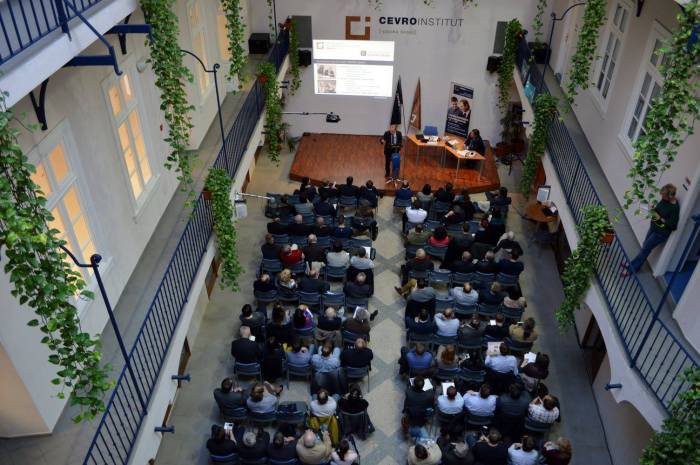
What was great about the second AEME is that it took place right before the PCPE conference at the CEVRO Institute. Most of us who attended AEME have stayed two extra days to attend the PCPE conference as well. The CEVRO Institute is a private university founded in 2005 that is located in the very centre of the city of Prague. The university prides itself in its emphasis on freedom, markets, and its innovative character that is for example manifested in its PPE (Philosophy, Politics, Economics) programme taught by such international illustrious professors as Michael Munger who is also director of Duke University’s PPE programme, Peter Boettke who is the director of the F.A. Hayek Program at George Mason University, David Schmidt who is director of the Center for the Philosophy of Freedom at the University of Arizona, Boudewijn Bouckaert who was the former dean of the Faculty of Law at the University of Ghent, and Josef Sima who is the president of the CEVRO Institute. The institute has invited several prominent speakers for its conference. Prof. Mark Pennington (London School of Economics) was for example invited to present “Why most things should probably be for sale”. Prof. Benjamin Powell who is the director of the Free Market Institute at Texas Tech University, the University to which I almost applied to to pursue my PhD in the academic year of 2015 but eventually decided to work as a software engineer, was there as well to speak about “Migration, Economic Calculation, and the European Situation.” Prof. Mario Rizzo (New York University) had the honour to be the keynote speaker and spoke about “The four pillars of new paternalism” which was followed by commentaries from Prof. Pascal Salin, former president of the Mont Pelerin Society.
Mario Rizzo’s welcome speech to PCPE
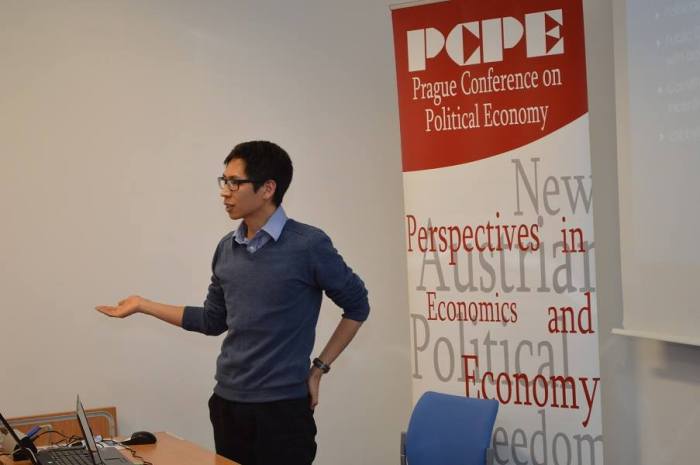
The second day of the PCPE conference, there were 27 speakers spread over 9 sessions on such topics as economic theory, anarcho-capitalism, the Austrian School, entrepreneurship, cryptocurrencies, the role of family and more. I was one of the speakers and spoke on the “Philosophical investigation of seasteading as the means to discover better forms of social organization”. The thesis of my talk was that one core focus of political philosophy is to deal with the realities of value pluralism and political disagreements. I contended that the most common form of social organization, representative democracy, does not satisfactorily deal with these realities. Therefore, we should look for political possibilities beyond representative democracies and that in order to discover these possibilities, we should experiment with new forms of social organizations. By approaching the issue from a meta-system level perspective and realizing that governments are resistant to structural societal changes we should then introduce competition into the industry of governments. Seasteading, the creation of habitable dwellings on the oceans, could serve as a means to introduce more competition in the industry and lessen political tensions between citizens who hold different comprehensive doctrines.
Me speaking at PCPE about Seasteading as the means to deal with such political realities as value pluralism and political disagreements
If I could mention one thing that has made the most remarkable impression on me, it would be the warning issued by Prof. Stephen Baskerville (Patrick Henry College, USA) that the most immediate threat to our liberties is feminism and the social justice movement. He maintained in his talk that there is an ensuing crisis of the family which is perpetuated by the state. According to Prof. Baskerville, family courts can enter homes uninvited, take away people’s children, confiscate their property, and incarcerate them without trial, charge or counsel. With over 50% of all first marriages ending in divorce and more than half of all these divorces involving children, the greatest threat to our liberties is the colluding social work state bureaucracies with radical feminism. These groups have colluded to suppress information on such injustices. Listening to Baskerville’s talk, I felt the great urgency to engage in an intellectual battle against feminism and the social justice movement.
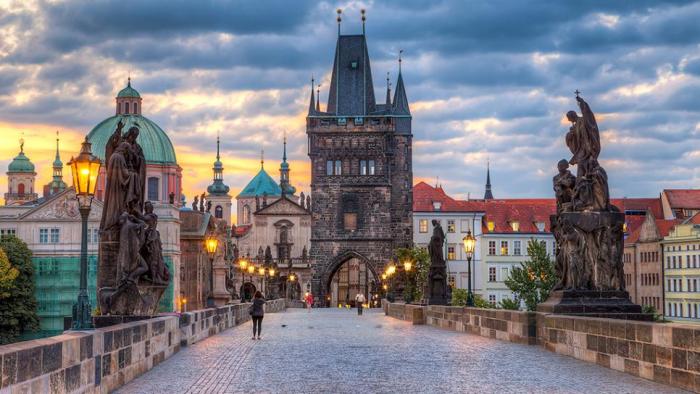
Other than the many intellectually invigorating moments, the city itself provided many magnificent sites. To mention several sights: we visited a beer garden, experienced a classical music concert at the Mirror Chapel, walked over the Charles Bridge, and visited the Prague Castle.
The beautiful Charles Bridge crossing the river Vltava
All in all, the city of Prague, AEME and PCPE were an unforgettable experience! It has already been decided that next year’s AEME conference will take place in Krakow, Poland. The conference will be open for anyone who is interested in Austrian economics and libertarianism. For more information on AEME and the papers that were presented in the previous editions, you can find our website here. In case you are interested in studying at the CEVRO Institute and its MA PPE programme with specializations in “Austrian Economics”, “Studies of Transition”, and “International Politics”, you can visit their website here.
Ronald Coase’s theory of the nature of the firm rescued, for neo-classical economics, the existence of firms or corporations as rational entities […] Markets always come first, and the problem of the existence of firms is depicted as the problem of why a rational manager would rely on employees rather than markets. State planning and private firms are taking over what already exists, integrated by the price mechanism of markets, and are successful to the extent that they lower costs, since there are a variety of costs involved in market transactions. Thus marginalist analysis implies that an equilibrium will always be found between planning structures and integration by price mechanism, especially since, as Coase says in “The Nature of the Firm,” “businessmen will be constantly experimenting, controlling more or less” and “firms arise voluntarily because they represent a more efficient method of organizing production.” The rise of the firm, as Coase imagines it, is always a movement from many pre-existing contracts to a controlling structure, “For this series of contracts is substituted one.” (94)
The emphasis is mine. Kelly continues:
This imaginary fits poorly the situations that were precisely the actual origins of firms, as when banks gave mortgages to planters, or stock markets funded companies of young agents, prepared to cut plantations into captured wilderness for tropical commodities […] usually employing labor moved long distances and disciplined by direct violence. There is more in the universe than Coase’s imagination, more motives for controlling powers of firms than their cost efficiencies. (94-95)
Kelly goes on to give a brief account of 1) how corporations created commodity production out of thin air, 2) how these corporations were tied to European imperialism, and 3) how they used slaves and indentured servants even when it would have been cheaper to hire the locals.
I want to address Kelly’s summary of Coase’s paper (here is a pdf, by the way, in case you want to follow along), mostly because I’ve never read it although I know it’s important, but first I want to make a couple of digressions. Libertarians would more or less answer Kelly’s three charges listed above as follows: 1) yes, and this is a good thing, 2) state-sponsored corporations and private firms are two distinct entities with two very different incentive structures, and 3) see #2. There is also an issue of accuracy in regards to Kelly’s brief summary of world history since 1600. I don’t want to get into the details here, but I do want you to recognize that I am reading Kelly critically. My last digression is simply to point out that libertarians and Weberian Leftists like Kelly have more in common than we think.
To get back to Coase’s paper, and Kelly’s critique of it, I want to highlight one sentence from Kelly’s book in particular and then turn it over to the peanut gallery in the hopes of gaining some insight:
Markets always come first, and the problem of the existence of firms is depicted as the problem of why a rational manager would rely on employees rather than markets.
Is this the puzzle Coase was trying to grapple with in his paper? I ctrl+f’d Coase’s paper (“employe” – not a typo) and couldn’t find anything that actually confirms Kelly’s summary, but it would be an interesting project (if I am right in stating that Kelly’s summary of Coase’s paper is not accurate) to follow this line of thought and delve into Kelly’s insight about the reliance that entrepreneurs/firms have on employees (rather than markets)…
Part of my research is located between philosophy and specific disciplines in the humanities and social sciences. I’m currently working on a project on several facets of economic life in the ancient Near East. I’m very serious about it, and even did some study in Akkadian, Sumerian, and Hebrew to understand some of the debates on the interpretation of primary sources.
Some crucial questions that anybody in my situation have to ask relate to theory: Was there any such thing as an economy, to begin with? Okay, the answer is straightforward: people were indeed allocating scarce resources, trading them, producing them, and so on. I don’t know of anyone who doubts that, and in case anyone tries, I’d point them to the enormous amount of ancient Mesopotamian contracts, receipts and court cases dealing with the issue, not to mention the famous “law codes” of Hammurabi and other kings.
The answer to next question, though, is less obvious: Can we apply contemporary economic theory to interpret, understand, explain, model, etc. economic behaviour in the ancient world? So far, I’ve identified three schools of thought on this matter in the field of Ancient Near Eastern Studies.
First, there are those who focus on particulars on the “micro” level. Their research is predominantly concerned with the publication, translation, and commentary on hundreds and hundreds of inscribed clay tablets containing valuable information about everyday life in the ancient world. These scholars won’t have much to say in terms of generalisation, because the questions they address are a degree further removed from the questions we tend to ask, say, in economics or sociology.
A common type of research in this line (and, frankly, a type of research I wouldn’t mind executing someday) looks at the complete set of cuneiform tablets found in a specific place and tries to elucidate some patterns within that set of texts. I’ve heard, for example, of someone who did his PhD on the archives of a certain family in Babylon which was involved in trade. That scholar didn’t stop at telling the story of that family, but also synthesised a considerable amount of information about economic transactions and the everyday struggles for that town in that particular period. He also pointed out some interesting linguistic features present in the contracts, letters, and receipts that he transcribed, translated and published as part of his thesis.
In this kind of research, the emphasis is on detailed observation and description, and on a modest type of generalisation to a mid-range view of the local situation. It doesn’t really deal with the economy in general and, arguably, doesn’t make much room for any of today’s economic theories to be used.
The second school of thought borrows from economic sociologists and anthropologists the idea that any economy is intrinsically linked to the way a specific society operates in a given period of history. The works of Karl Marx, Max Weber and, more recently, Karl Polanyi and Immanuel Wallerstein are examples of broad statements of this thesis. Polanyi, in particular, has applied some of this thinking to ancient economies, arguing that, in the ancient Near East, there was no such thing as a “market” in the modern sense. If that’s indeed the case, then the task is to develop a new economics (or at least a new economic theory) to account for phenomena which are particular to that historical context.
In this second kind of research, a key procedure is to ask what the ancients thought they were doing when they were engaged in economic activity. This is analogous to the anthropologist’s “thick description” of a culture in its own terms. Hermeneutics and interpretation should play a major role. We’d need to read those primary sources in search for clues about the ancient view of the economy. Did they imagine the economy as we imagine it today? Or was it something different in their view? What were the words and notions they used to describe economic activity? And so on.
However, how would we know what to look for in the first place? Wouldn’t the very notion of an “economy” be alien to the ancient mind, at least until much later with the Greeks and Romans? Because of this tricky implication, people in this line of research may choose to ignore any subjective or discursive features and may opt instead for a reduction of ideas to material factors, perhaps driven by a Marxist philosophy.
Then, thirdly, there’s the view that presupposes the applicability of contemporary economics to ancient economies. So far, I’ve come across two lines of research, both of which seem underexplored because of the lack of interest of economists in the ancient world, or lack of ability to tackle primary sources. The first line of research looks at the relationship between institutions and the general operation of the economy. I’d place this within the broader approach of neo-institutional economics, or also the so-called law and economics tradition of economic thought.
One interesting question that has been asked in this line of research has to do with the impact of government regulations in the everyday functioning of the economy. For example, how clear were property rights? If we look at the “law codes” of ancient Mesopotamia, we see a large number of definitions of what was allowed and what was forbidden, but were those rules enforced? Were they simply a suggestion? Sometimes, there’s a contrast between what the law code says and what local judges decided in a concrete court case. This way of researching ancient economies, in my view, is more productively executed as teamwork, with an economist and a specialist in ancient texts, languages, and archaeology joining forces.
A second way of applying contemporary economic science to ancient economies resembles the mainstream way of doing research. A model is constructed on the basis of some initial hypothesis, and then the hypothesis is tested against “data”. An important problem with this is that there’s a dearth of concrete and unambiguous information amenable to this sort of treatment. However, this is not the case for all periods. As a matter of fact, we do happen to have access to sizeable sets of information about prices and wages for Babylonia in the Hellenistic period. The crucial source is a set of records that people made correlating the position of the stars and planets with all sorts of information, including economic information. Some preliminary analysis of those series has suggested that prices, for example, behaved more or less like a mainstream economist would expect them to behave.
This issue of the dearth of data leads me to the following thought. I believe that even a mainstream economist should be open to the possibility of another style of economics in the study of ancient economies. I don’t think economists should give up studying them altogether. Some cross-theoretical dialogue with those engaged in other ways of thinking about ancient economies may be in order. However, I understand that many on both sides of the attempted dialogue will feel uncomfortable. After all, a mainstream economist and a Marxist don’t just disagree on method. They also disagree on politics, ethics, the meaning of life, and a number of other issues.
As a possible avenue of research, then, I’d like to suggest a more deductive approach in theory construction and a more discursive approach in the study of historical patterns. From the deductive system we’d know how an economy works in general, even if there are historically-specific possibilities to tackle. From the discursive approach we’d be able to make the most of the “data” that we do have in abundance – thousands of clay tablets with textual information – and with that illustrate the general points.
In my view, this would look like a combination of Austrian political economy with rigorous philological use of primary sources. It would be the sort of research programme to be tackled with a team of people, good libraries, near a museum and in constant dialogue, learning, and interaction. Both fields could potentially benefit from the original interdisciplinary research programme that would emerge.
In my new article at FEE, “The Myth of Primitive Communism,” I argue that hunter-gatherers like the Ju/’hoansi share food with each other, not because they are selfless communists, but because favors and obligations are their most valuable commodities.
Please take a look. I’d be very interested in my fellow Notewriters’ erudite responses.
This week’s episode of EconTalk was fantastic, and in particular drew an important parallel between the complexity of the human brain and the complexity of market economies. The guest was discussing radical nanotechnology (basically the idea that engineers could out do bacteria by applying good design principles in place of random mutation and natural selection), and Russ pointed out that the logic is basically the same as in Socialism. Radical nanotechnology runs into a fundamental problem as long as it ignores the emergent processes occurring at the molecular/cellular level.
Later, the guest discusses the issue of artificial intelligence and points out that the fundamental unit of biological computing is not the neuron (which we simulate on computers using neural networks), but the molecule. In other words, natural intelligence is the outcome of a complex process that isn’t simple enough for us to easily replicate on a computer.
All that in mind, the idea of socialism* is like the idea that we could replace a brain with a pocket calculator. Yes, the idea is to get a very powerful calculator, but the problem is that it’s replacing a computer that’s far more complex and sophisticated.
* i.e. Centralized control of the means of production… socialism has nothing to do with sharing (you’re thinking “Egalitarianism”) and everything to do with control, and particularly the attempt to rationalize complex systems.
Watch almost any anthropological film about a newly discovered “isolated tribe,” and you’re likely to see at least one “tribesman” wearing a t-shirt.
People in bands and tribes and chiefdoms — who have since time immemorial handled most of their economic transactions for food, clothing, and shelter through traditional economies of gift exchange and family sharing — eagerly become buyers and sellers for products on the global market as soon as they get the chance.
They grow coffee beans or trap furs, and they use the money to buy firearms, machetes, cell phones, and jean shorts. In other words, they jump right in to the market. And usually, the tendrils of global trade have arrived way before the anthropologists and their film crews.
But people in the same bands, tribes, or chiefdoms seem to hang on to their family and gift-based economies for political, military, and legal services.
They do not jump to create or hire market solutions (mercenaries, defense corporations), and they instead eventually transform — by hook or by crook — into a state or into a people subjugated by a state.
Why does this happen? Why do we get states for defense and markets for everything else?
Let me back up and explain my terms:
In the examples I’m familiar with, humans use one of four main methods to organize law enforcement and military protection:
1. Kin-based. Your extended family (a “band,” “clan,” or a “lineage”) and maybe an alliance of intermarried and neighbouring extended families (a “tribe” or a “village”), protects you. You are technically free to leave the family or the village, but that could leave you without protection unless you are marrying into a new one.
2. Prestige-based. A famous leader (a “big man” or “chief”) and his warriors protect you in return for material gifts and social deference. You can pull your support from the leader — more easily if he’s just an informal “big man” and less easily if he’s a formal “chief.” And there are usually other nearby leaders or aspiring leaders who would happily accept your patronage.
Systems #1 and #2 are often blended together, as in the Trobriander case, where each man’s connections to the chief are determined partly by family relatedness and partly by gift exchange.
3. State-based. A compulsory ruler (a “king” or “president”) and his warriors protect you in return for taxes and/or labor. You are never free to pull your support, although you are sometimes free to leave through emigration.
Examples: Aztec Empire, Canada, People’s Republic of China
4. Market-based. A private enterprise (a “defense contractor”) protects you in return for money. You are free to pull your support and choose another contractor, or go without.
Now, we could also sketch out the same 4 methods for the basic kinds of economic exchange people do for food, shelter, and all the other goods and services in life besides defense. People can give and receive the things they want and need through #1 family networks, #2 prestige-oriented gift exchange, #3 state redistribution, and #4 markets.
What I see throughout the world in the last 500 years is that as globalisation advances, people in all or almost all cultures eagerly take their systems of food, shelter, etc. out of systems #1 and #2 and go into system #4. In other words, people in bands, tribes, and chiefdoms all over the world desperately want the metal tools, firearms, t-shirts, cell-phones, and everything else that the market offers, and so they find ways to sell goods or services and thus money that lets them buy that stuff.
For instance, hunter-gatherers who once collected food to share with their family now collect furs to sell internationally, or instead serve as bush guides to wealthy tourists from foreign cultures.
But people almost never eagerly or rapidly take their law and defense systems out of kin and prestige and into markets.
Instead, they tend to hang on to kin or prestige-based methods of law enforcement and warfare until they (a) get conquered by a state or (b) organize themselves as a state (whether to fend off would-be conquerors or to become conquerors themselves).
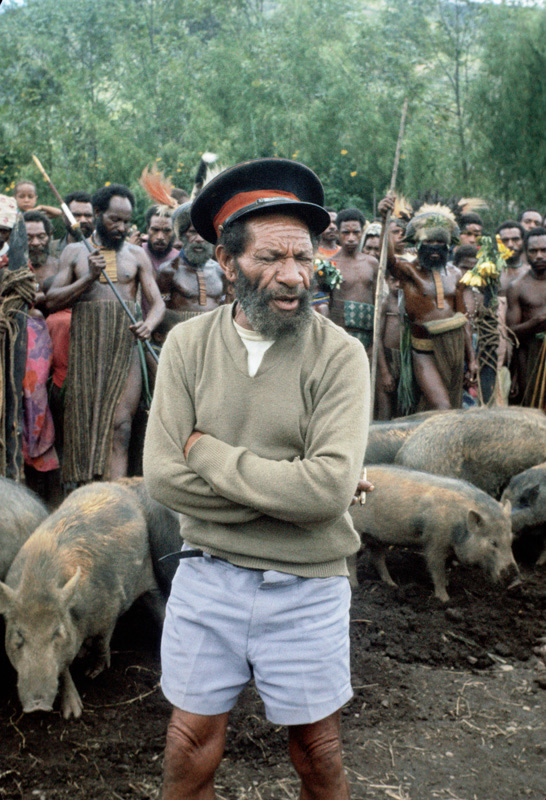
So in highland Papua New Guinea for instance, the Dani and the Kawelka were happy to grow coffee beans and other crops to put on the market by the 1970s. But they didn’t start hiring mercenaries for defense. Instead, they stuck to their big men and their tribes until their military organizations were absorbed into state militaries or turned into paramilitary movements aiming to create or seize control of a state.
Markets became the center of food production. States became the center of defense production.
Later on, after states have arrived as military organizations, sometimes they start expanding and controlling parts of the economics of food, shelter, education, etc., through compulsory redistribution.
Conversely, shifts to market-based defense seem to occur after a society has already had state-based defense — like in Moresnet or Kowloon (PDF). And the market organizations arise when, for some reason, the state-based defense system relaxes or collapses.
Why does this bifurcated trend keep happening?
Why do people in these societies transition into markets for most goods and services but states for law and war?
Do state-based militaries and police forces simply outcompete (or outfight) market ones?
Am I missing major counterexamples, or even misunderstanding my own examples?
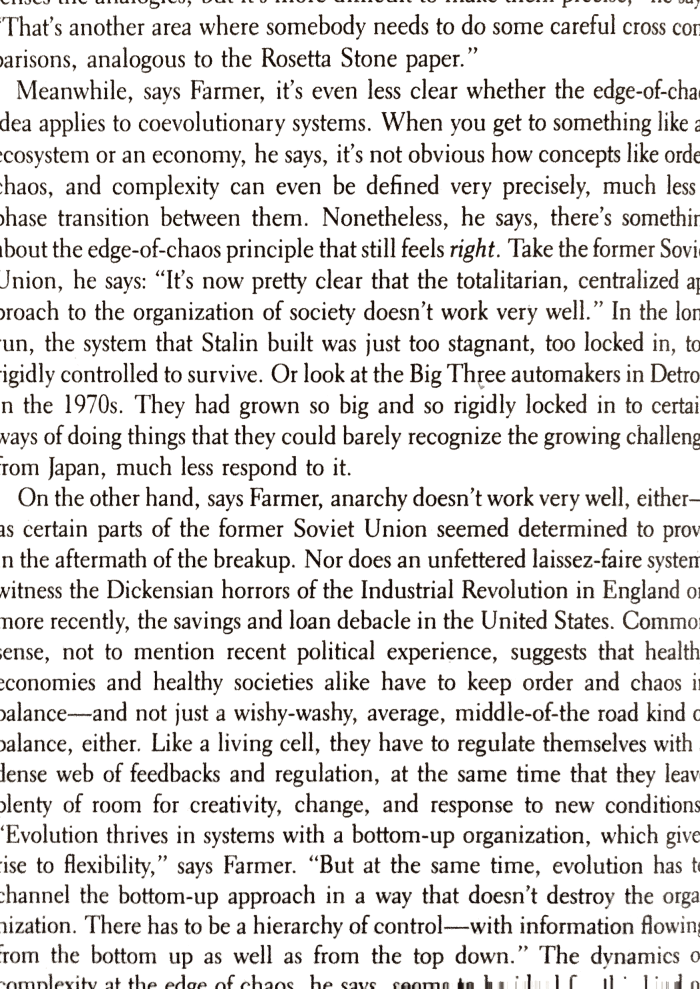
This book was written in 1993 so I’m pretty late to the show, but it’s worth raising the issue: complex systems require governance, but that need not mean government.
In the copy below the author is writing about how complex systems–systems with components that affect one another in simple ways resulting in emergent orders at the system-wide level–occupy an interesting space between chaos and order. Too much order and you end up with something fixed and unchanging. Too much chaos and you’ve got noise.
The second full paragraph misses an important point that should have been obvious to the author and the researchers who he’s paraphrasing. The government is an endogenous element in the wider economy. If we think of the economy as a network of people (individual nodes) who cluster into sub-networks (organizations), the government is just a collection of nodes and clusters that follow different rules than the rest. Granted, these clusters often serve important roles (e.g. courts). But the anarchist branches of economics have pretty clearly demonstrated that removing the state from these roles doesn’t always lead to chaos. Ripping the state out like a band-aid would be an awful idea, but gently scaling (scoping?) back the state need not be a disaster.
This band between chaos and order is wider than they’re giving it credit for. We can only examine this band from our own perspective… as human beings who are tiny components of this much larger network of networks. The range of configurations that could allow a peaceful, flourishing society is essentially infinite. Yes, governance is necessary, but strengthening any particular set of nodes cannot allow for governance of the system as a whole. It can only allow for governance of a sub-set of the wider network.
pp. 171-172 of Competition and Entrepreneurship has J.K. Galbraith asserting, “that independently determined consumer desires [do not] dictate the pattern of production. The ‘institutions of modern advertising and salesmanship…cannot be reconciled with the notion of independently determined desires, for their central function is to create desires–to bring into being wants that previously did not exist.'”
Beyond the obvious first step (recognizing that consumers’ desires could not possibly be determined independently of the market process), this raises an interesting hypothesis: Advertisers should a) recognize that they’re selling snake oil and consume significantly less than similar people, or b) be particularly excited about the prospects of new and exciting products generally. In either case advertising should affect them differently than regular consumers and they should consume a different amount than consumers generally. At the very least, their consumption patterns should be different from regular consumers in the particular goods that they are advertising.
The criticism of advertising as socially wasteful (i.e. using up resources without actually making consumers better off) may hold up if evidence is found in support of the above hypothesis. In the case of pattern ‘a)’ it may be clear that advertising is manipulative and anti-social. But in the case of pattern ‘b)’ or the null (advertisers buy the same junk as the rest of us) we either have to abandon the criticism of advertising or come up with some ad hoc story about how everyone is stupid and their preferences shouldn’t matter.
I am currently writing a piece with Pierre Desrochers (University of Toronto at Mississauga) regarding environmental trends and economic theory for the conference of the Association for Private Economic Education (see here). In the process of writing up the first draft of the article, I had to revisit another article I wrote (with Desrochers) and I found a passage which now offers me a greater value than when I initially wrote it. In that piece, me and Desrochers basically argued that rising prices for certain environmental goods may not always indicate rising scarcity. In fact, we argued that prices could increase even if a resource grew in abundance. Here is the passage from our article currently undergoing revise and resubmit:
Thirdly, technological innovations that increase productivity might drive up the price of a commodity without this truly reflecting the scarcity of the resource. Whale oil is a case in point. The decline of the whaling industry in the United States began around 1850 at which point real prices began to increase (Bardi 2007). However, economic historians agree that this was not because of resource depletion or overfishing (Davis, Gallman and Hutchins 1988). Brook Kaiser (2013) thus found that the increasing demand for illuminants created pressures on prices, which in turn motivated the development of substitutes like petroleum-derived kerosene. However, whale bone and oil prices did not fall as kerosene production expanded and, in spite of falling demand, prices stayed high and even increased. The answer to this conundrum is opportunity cost as the important surge in American labor productivity was greater than the observed increase in productivity in the whaling industry. This meant that the opportunity cost of using workers, capital and other resources in the whaling industry was great. These workers, capital goods and other resources were progressively reallocated to other industries. In the process, the whaling industry faced higher costs relative to productivity. While marginal players in the whaling industry exited, the supply of inputs to the whaling industry decreased and prices had to be increased [by the remaining firms in order for economy-wide equilibrium to be achieved]. Hence, prices in that situation are not reflective of depletion or expansion of resource stock.
I wanted to write something on this, but Selgin got there faster. Indeed, the historical evidence of free banking in Canada, Scotland, Sweden and the limited experiences observed in France and elsewhere provide a strong backing for soundness of private money. Selgin is right to emphasize this.
However, I can provide a small piece of evidence to support his case. It is not only scholars like Selgin who believe that the historical experience of Scotland was positive. As far back as 1835 and as far away as Canada, the robustness of the Scottish free banking experience was lauded. Consider the following quote from a report to the House of Assembly of Upper Canada (modern day Ontario):
“In Scotland, private banking has long existed and fewer failures have occurred there than in any other part of the world; their Joint Stock Banking Companies embrace some of the following principles by which the public are quite secured and the institutions useful as Banks of Deposit and circulation, while the stock is above par, and proved to be a good investment”
This report was actually presented in Canada arguing that Scottish free banking was a solution to a longstanding problem in the colony : dearth of small denominations. The “big problem of small change” was a real issue in the colony and created important frictions. The problem was most likely created by the fixing of exchange rates between the different currencies at levels dissonant with the actual value of different currencies so that “bad money drove out good money” (see Angela Redish’s work). The report recommended legislative actions to encourage the formation of banks that would issue private notes to solve this problem. Newspapers in the neighboring colony of Lower Canada also praised (in the early 1830s) the role that banks played in easing the problem of “poor money”.
I have made an initial foray on this with Mathieu Bédard of Aix-Marseille School of Economics (and we plan to make another few) and showed that the role of free banking in improving economic growth was considerable exactly because of the issue of private money. While Canada is a small, it provides some additional support to the claim that private money can indeed exist, survive and be superior to state money.
Source: House of Assembly of Upper Canada. 1835. Report of the Select Committee to which was referred the subject of The Currency. Toronto : M.Reynolds Printer.
P.S. Below there is a picture of a half-penny issued by the Quebec Bank in 1837 showing that there was even private coinage in Canada.
Whoa! Yeah, I’m going to do this, but let me start with some caveats. First, this is an argument, not the argument. Every silver lining has a storm cloud, and acknowledging the silver lining doesn’t mean you’re in favor of tornadoes. Second, I’m being sloppy with the term libertarian; classical liberal is closer to the truth, but doesn’t make for as good a title. Most importantly, I think my argument is swamped by the traditional libertarian arguments against the FDA. All that said, this argument has some interesting implications for how we think about intervention generally. Here goes…
The human body is a complex system that we do not fundamentally understand. Although every complex system is unique, they have similarities. In the case of both the human body and society/markets, interventions lead to unintended consequences which can offset the (ostensible) gains from the intervention. At the end of the day, although the FDA intervenes in the complex system of human society, it also prevents intervention in the complex system of human physiology.
The Hippocratic Oath instructs its speaker to not play God and to avoid over-treatment, and the justification for that is made clear in a recent Econ Talk. The guest was on to promote his book which discusses the problem of medical reversal–the phenomenon of medical practices that are adopted and subsequently abandoned after evidence shows the practice to be ineffective or worse. From this position he argues that the FDA’s mandate to ensure not just safety, but efficacy, is especially important. His argument is that because of the cost of type II error the FDA ought to go further.
Let’s look at two extreme cases. In the “anything-goes” world, we might have a lot of people trying good and bad interventions with a lot of harm being done to the unlucky ones. You and I know that the real problem is one of information and that in a perfect world we would have “anything-goes-that-consumers-with-access-to-good-information-from-Consumer-Reports-®-or-a-competitor” but this world still leaves us with the problem (which we face in today’s FDA-evaluated world) that consumer trial-and-error is a poor substitute for randomized control trials.
At the other extreme we have the “first-do-no-harm-second-do-real-good” world of an ideal FDA. This world has very steep type I errors but instead of two steps forward, one step back, we would have one step forward, then another, and never any steps back…. but of course each step forward would cost a few billion dollars.
Neither extreme is ideal, but the second world is one where standards of evidence are taken very seriously. In that world I’d be a third grade teacher instead of a college professor. The standards of evidence are at the core of the problem of medical reversal, but also the problem of economic intervention (which is far less likely to be reversed, even in the face of good evidence indicating that it should be).
As far as medical intervention is concerned, my position is bullish on better efficacy evaluation of medical procedures but still bearish on the FDA itself. But looking at the FDA from this angle opens up an interesting thought experiment: what might be the effects of an Economic Intervention Standards Authority? In practice it would probably be awful (my guess is a federal bureau that attempts to quash Tiebout competition), but in a libertarian utopia it would be the bureaucracy that libertarian kids with administrative bents would dream of heading.