Afternoon Tea: “Independent Indians and the U.S.-Mexican War”

This cross-border conversation had a broad and tragic context. In the early 1830s, following what for most had been nearly two generations of imperfect peace, Comanches, Kiowas, Navajos, and several different tribes of Apaches dramatically increased their attacks upon northern Mexican settlements. While contexts and motivations varied widely, most of the escalating violence reflected Mexico’s declining military and diplomatic capabilities, as well as burgeoning markets for stolen livestock and captives. Indian men raided Mexican ranches, haciendas, and towns, killing or capturing the people they found there, and stealing or destroying animals and other property. When able, Mexicans responded by attacking their enemies with comparable cruelty and avarice. Raids expanded, breeding reprisals and deepening enmities, until the searing violence touched all or parts of nine states.

This is from Brian DeLay, a historian at Cal-Berkeley. Here is a link.
Nightcap

  1. The Statue of Liberty is a deeply sinister icon Stephen Bayley, Spectator
  2. From socialist to left-liberal to neoconservative hawk David Mikics, Literary Review
  3. Populism in Europe: democracy is to blame, so what is to be done? Philip Manow, Eurozine
  4. When Medicaid expands, more people vote Margot Sanger-Katz, the Upshot

Nightcap

  1. Cameroon, Nigeria, and Ambazonia Adewale Maja-Pearce, London Review of Books
  2. Upholding the Jihadist’s Veto Rose & Mchangama, Quillette
  3. Russia’s Syria problem keeps getting worse Robert Hamilton, American Interest
  4. Monuments and Indian massacres (Denver edition) Karen Brady, Not Even Past

RCH: The Successful Failure of Truman Assassination Attempt

The Truman assassination attempt by Puerto Rican nationalists is the topic of my Tuesday column over at RealClearHistory. An excerpt:

Torresola and Collazo didn’t have much of a plan. They took a train from NYC to D.C. and approached Blair House, planning to shoot their way to Truman. Torresola walked up to the guest house and shot guard Leslie Coffelt four times at point-blank range, and Collazo started a gun fight with several guards. Torresola tried to find Collazo, leaving Coffelt for dead, but Coffelt somehow managed to get off a shot and it hit Torresola in the head, immediately killing him. Collazo was shot several times but managed to survive. It was the heaviest and longest gun fight in Secret Service history.

Please, read the rest.

RCH: America and Russia use to be friends

It’s true, and it’s the subject of my latest Tuesday column over at RealClearHistory. Check it out:

The two future superpower rivals had more in common than mere future greatness, though. Both were expanding rapidly, gobbling up huge swaths of territory at the expense of isolated polities like the Khiva Khanate and the Sioux confederacy, and hapless autocracies like Mexico and the Ottoman Empire. Russia and the United States also shared common foes – France and the U.K. – due mostly to the fact that American and Russian expansion was beginning to step on French and British toes. Both empires – one democratic, the other autocratic – also had looming labor crises that overshadowed everything they did in international affairs: slavery and serfdom.

Yes, I’m writing about the widely-ignored Crimean War. Please, read the rest, and don’t forget to tune in Friday for ten cool facts about the Crimean War!

RCH: 10 key World War I events in October

I’ve been busy in real life, so my weekend column over at RealClearHistory is a bit lightweight, but I thought some good stuff came out of it. I can definitely build off of it in future columns. An excerpt:

4. Battle of Fort Dipitie (1915). In October of 1915 the United States had managed to keep out of the tragic events going on in Europe, but Washington had still managed to find military action in its backyard, as troops had been sent to Haiti at the behest of the island nation’s dictator, Vilbrun Guillaume Sam. The Battle of Fort Dipitie was a relatively minor affair, with only one Marine being wounded and fewer than 100 people dying altogether, but the entire occupation of Haiti by the U.S. military was frowned upon by most of the American public. The occupation of Haiti inspired decorated Marine General Smedley Butler to write his classic 1935 book War is a Racket.

Please, read the rest.

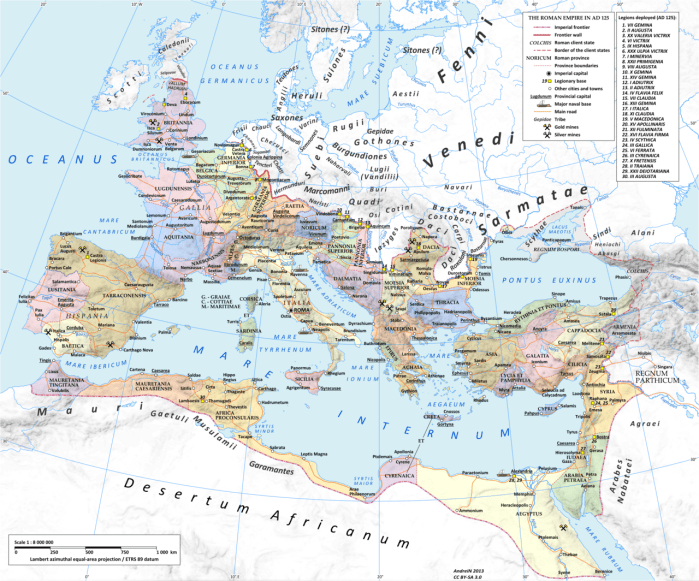
Eye Candy: the provinces of ancient Rome

NOL ancient Rome's adminstrative units.png
Click here to zoom

This is a beautiful map of Rome’s administrative units. There’s not much more to say, really.

Here is Barry on Roman law. Here is Mark on the Roman economy. Have a good week!

Nightcap

  1. Reclaiming Full-Throttle Luxury Space Communism Aaron Winslow, Los Angeles Review of Books
  2. Elves and Aliens Nick Richardson, London Review of Books
  3. Imperialism, American-style Michael Auslin, Claremont Review of Books
  4. The Congo reform project: Too dark altogether Angus Mitchell, Dublin Review of Books

RCH: Imperialism and the Panama Canal

Folks, my latest over at RealClearHistory is up. An excerpt:

The political ramifications for Washington essentially stealing a province from Colombia were huge. The United States had just seized a number of overseas territories from Spain in 1898, and the imperial project was frowned upon by numerous factions for various reasons. The U.S. foray into imperialism led to governance issues in the Caribbean, where Washington found itself supporting anti-democratic autocrats, and confronting outright ethical problems in the Philippines, where the United States Army was ruthlessly putting down a revolt against its rule. So acquiring a “canal zone” in a country that was baited into leaving another country was scandalous, especially since Colombia’s reluctance to cooperate with France and the U.S. was viewed as democratic (the Colombian Senate refused to ratify several canal-related treaties with France and the U.S.), and the two Western powers were supposedly the torchbearers of democracy. To make matters worse, many elites in Panama, after agreeing to secede in exchange for protection from Colombia, felt betrayed by the terms of the Panama Canal Zone, which granted the United States sole control over the zone in perpetuity.

Please, read the rest.

Nightcap

  1. The underbelly of state capacity Bryan Caplan, EconLog
  2. Realities and uncertainties of American Empire AG Hopkins, Defense-In-Depth
  3. Emancipation and representation in 1848 Senegal Jenna Nigro, Age of Revolutions
  4. The Koreas are moving ahead Ramon Pacheco Pardo, the Hill

Nightcap

  1. Was Cairo’s Grand Opera House a tool of cultural imperialism? Adam Mestyan, Aeon
  2. Back in the USA, from Japan Scott Sumner, TheMoneyIllusion
  3. Why we must rethink our outdated ideas about international trade Richard Baldwin, Chicago Booth Review
  4. The complicated legacy of colonial contact William Buckner, Quillette

Lunchtime Links

  1. 25 years after Waco Freedom of Conscience and the Rule of Law
  2. The US-Japan Alliance and Soviet competition | Some thoughts on “Thinking About Libertarian Foreign Policy”
  3. Japan’s rent-a-family industry | In Search of Firmer Cosmopolitan Solidarity
  4. The story of the skull of a victim of the Indian Uprising of 1857 | Myths of Sovereignty and British Isolation, III
  5. Reviving India’s classical liberal party | Classical Liberalism and the Nation State
  6. The decline of regional American art | A History of Regional Governments
  7. Michelle Pfeiffer keeps getting better and better | On the paradox of poverty and good health in Cuba
  8. “It was the most devastating loss in the history of the Library.” | No, natural disasters are not good for the economy

What on earth was the Dervish state?

That’s the topic of my latest column at RealClearHistory. An excerpt:

2. Sovereignty and suzerainty are concepts that have little to no bearing on today’s world, but perhaps they should. Prior to the end of World War II, when the U.S. and U.S.S.R. became the globe’s alpha powers, suzerainty was often used by imperial powers to manage their colonies. Suzerainty is a formal recognition, by a power, of a minor polity’s independence and autonomy, and a formal recognition by the minor polity of the power’s control over its diplomatic and economic affairs. Suzerainty was used especially often by the British and Dutch (and less so by France and other Latin states, which preferred more direct control over their territorial claims), as well as the Ottoman Empire. The U.S.-led order has focused on sovereign states rather than unofficial spaces, and this has led to many misunderstandings. Somalia, which has long been a region of suzerains, is a basketcase today largely because it is approached by powers as a sovereign state.

Please, read the rest. The Dervish state was an ally of the Ottoman and German empires during World War I.

Nightcap

  1. A Brief History of Tomorrow David Berlinski, Inference
  2. The Invention of World History S. Frederick Starr, History Today
  3. Actually, Western Progress Stems from Christianity Nick Spencer, Theos
  4. Correcting for the Historian’s Middle Eastern Biases Luma Simms, Law & Liberty

Nightcap

  1. Why French Federation Failed in Africa Tom Westland, Decompressing History
  2. Russia’s Centuries-Old Relationship with Kurds Pietro Shakarian, Origins
  3. Religious identity is once again trumping civic ties Ed West, Spectator
  4. The New Rise of Old Nationalism Mohsin Hamid, Guardian