That’s the title of this excellent piece by Toby Green, a historian at King’s College London. Green does a wonderful job of highlighting all of the problems that African societies face today: corruption, poverty, and my personal favorite, “neoliberalism.” Neoliberalism is just shorthand for loans that Western financial institutions give to African states. These loans are usually only given if African states promise to follow certain guidelines that Western financial institutions have drawn up. The end result is corruption and poverty.
I can agree that it’s a terrible system, even if I think the name Green has given it is dumb.
Throughout the piece, Green makes a good case for fundamental change in Africa. The problem is that he mistakenly thinks that this change can occur via the states that are currently in place in Africa. He mistakenly thinks that Ghana, Nigeria, Uganda, or Angola, to name some of the more prominent examples, have what it takes to enact the changes necessary for a fundamental shift.
Green argues that “unipolar American and Western European hegemony” (which by definition cannot be unipolar if there’s two poles, unless…) is responsible for Africa’s problems, and that the continent’s early independence leaders should be looked to for guidance. The problem with this, as Hendrik Spruyt has pointed out, is that the continent’s early independence leaders didn’t listen to anybody but themselves. They simply sought to graft their visions of what Africa should be onto the existing colonial governance system of the various European powers.
These early independence leaders sought to forge nations out of the colonies that the Europeans had haphazardly patched together. There were other elites on the African continent who wanted something different from what Africa’s early independence leaders wanted. Some of these elites were nationalists who wanted their states to be fully recognized equals on the world stage, just like the early independence leaders. The difference between these nationalists, and the early independence leaders, was that they wanted to abolish colonial boundaries and restore pre-colonial boundaries which would then be recognized as states within the Westphalian states-system. Like so:
| Early Independence Leaders | Other, actual Nationalists |
| Wanted African states to inherit colonial boundaries | Wanted African states to abolish colonial boundaries and restore old ones to prominence |
| Wanted to create and forge national identities out of these colonial boundaries | Wanted to harness the power of already-existing national identities by tying them to internationally-recognized states |
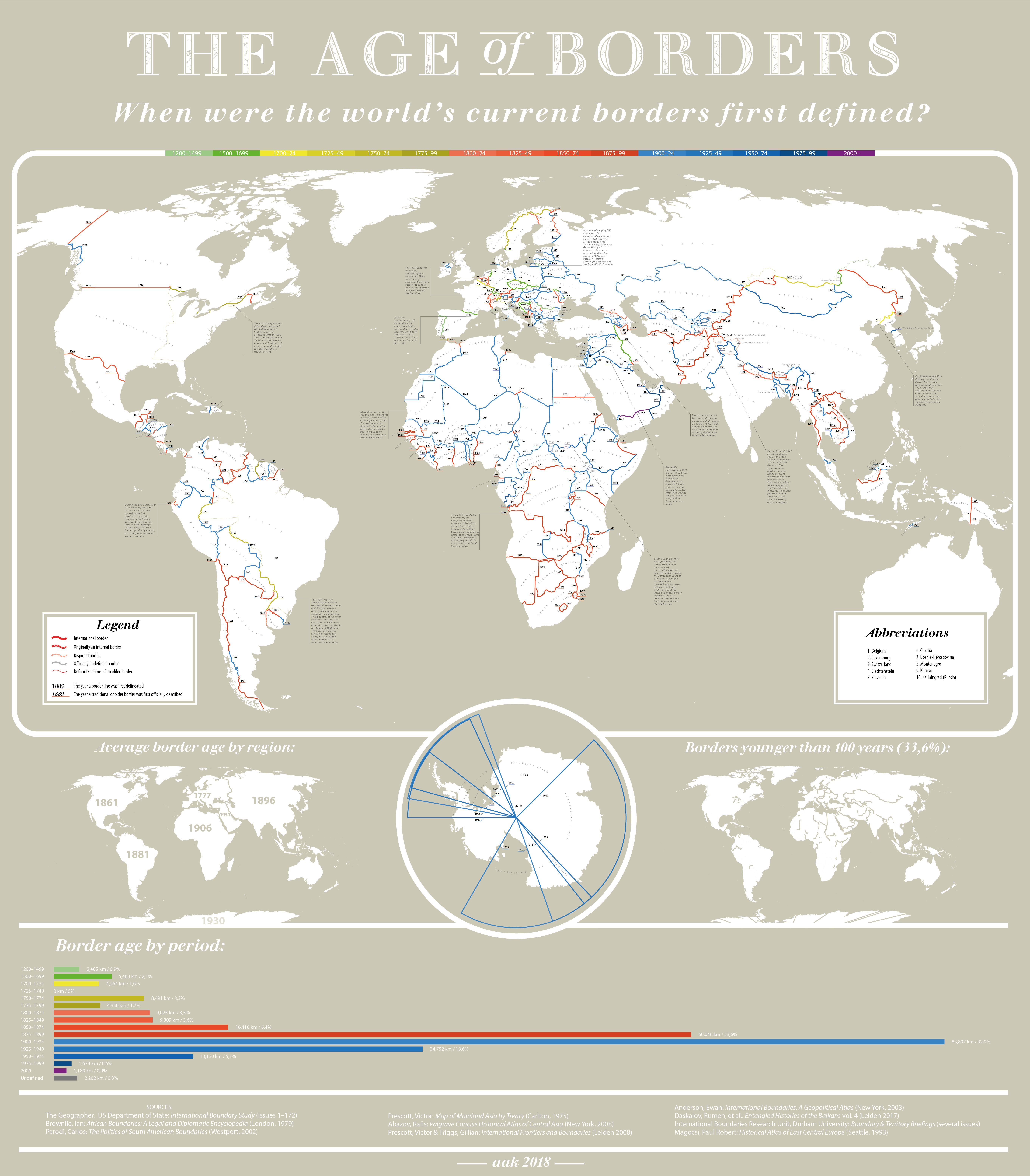
The early independence leaders obviously won out. The borders of European colonialism were maintained and enshrined within the Westphalian states-system that soon encompassed the globe.
Green and other Leftists think that the above column on the left is a perfectly acceptable way to continue, and that the problem is not the states-system that Africa’s early independence leaders established, but rather the “unipolar hegemony of America and Europe.” Without a rethink of the fundamentals, Green and other Leftists are going to continue inadvertently contributing to the immiseration of Africa.
Don’t get me wrong! The current loan system is awful. It’s terrible. But it’s exactly what you’d expect to get from an order like the one outlined above.
If people are serious about unleashing Africa then they need to look to the above column on the right. The map of the nations that were ignored by Africa’s early independence leaders (ignored, and eventually slaughtered, oppressed, persecuted, and imprisoned) is still there. You can find good maps of nations in Africa — often condescendingly referred to as “ethnic groups” rather than nations – that are superimposed on the map of African postcolonial states. Here’s the best one in the world at the moment.
Green implicitly recognizes that there’s something wrong with the postcolonial African state of Africa’s early independence leaders. He can tell that the column on the left is somehow off:
[…] in many African countries, traditional chiefs [are] more respected than elected officials […] A more damning indictment of the failings of the democratic model promoted across Africa […] is hard to find.
What he can’t seem to do is see that the column on the right lines up almost perfectly with the views that Africans have of their chiefs. Now, the chiefs are by no means revered by everybody in Africa, and there is a strong, if minute, anti-chief current throughout the continent because not everybody wants an Africa based on the tenets of nationalism. The columns above only highlight two strains of thought on how Africa should be governed. There are others, most notably Islamist proposals, but the one that libertarians (and, indeed, most Leftists) should find most attractive is that of the African federalists.
African federalists competed with the two nationalist camps when it became apparent that things were about to change vis-à-vis Africa’s relationship with Europe. While the nationalists embraced decolonization, which meant independence from European colonial rule, the federalists embraced integration with their colonizers. They argued that African colonies could, and should, federate with European countries. This federation would mean that African provinces would stand on equal footing with older provinces of European states. African provinces would be able to practice self-government without resorting to autarky. Like so:
| Early Independence Leaders | Other, actual Nationalists | Federalists |
| Wanted African states to inherit colonial boundaries | Wanted African states to abolish colonial boundaries and restore old ones to prominence | Wanted African colonies to become represented provinces in federated European polities |
| Wanted to create and forge national identities out of these colonial boundaries | Wanted to harness the power of already-existing national identities by tying them to internationally-recognized states | Wanted full citizenship rights within the federated polities that would replace the old European empires |
In hindsight, the federalists were right to deplore the idea of independence from Europe. The Westphalian nation-state, at least as it was envisioned by Africa’s early independence leaders, has been a disaster for Africa. It’s also clear that the federalists had an uphill climb, not only because decolonization-nationalism were all the rage but also because several of the Europeans who ran the colonies did not themselves have federated orders. The French and Portuguese had no experience with federalism, and the Spanish and British had weird federalisms based on monarchical principles. The Dutch and the Americans both had good models to emulate, but they didn’t have any African colonies and the idea of African colonies federating with Dutch or American states was out of the question in the 1960s and 1970s. That doesn’t have to be the case for today.
There’s nothing in this world that says the ideas of Africa’s federalists can’t be put in to practice today. There’s nothing to prevent the world’s most powerful polity, the compound republic of the United States, from entertaining the ideas put forth by Africa’s federalists. Nothing, that is, except the conservatism of Western and Western-educated elites, who believe that Africa’s early independence leaders were somehow right, because even though the results of their actions have gone horribly wrong, their ideals were pure in motive.
 Notes On Liberty