A short reflection on the unintended political consequences of the right of due process

Some days ago, The Economist published an article about the spread of the morality councils in the villages of China, whose members meet to praise the ones who they regard as well-behaved and humiliate the others who don’t. The publication used its characteristic sense of irony by pointing out that, finally, the highest ranks of the villagers found a way to exercise their “right to speak”.

Nevertheless, the said irony might lead us to a different kind of reflection on the political right to speak and the rights of due process, such as public hearings, an impartial tribunal, and an opportunity to be heard. Public hearings and impartiality are interrelated since it would be much harder for a tribunal to deliver an arbitrary adjudication if it is overseen by the society. But the public watch of the trials and the right to be heard are even more interrelated. Through these devices, the whole civil society wields the power to take notice of both the claims of the prosecution and of the ones of the prosecuted individuals, and, thus, form its judgment about the impartiality of the tribunal.

Moreover, public hearings endow the prosecuted individuals with the opportunity to exert their political right to speak without any restraint. In a political context of heavy or increasing authoritarianism, any procedures -even the one of a morality council- could resound with the voice of the contrarian. Thus, the right of due process could have -although unintended- political consequences.

Daron Acemoglu and James A. Robinson relate a poor justice system with the causes of why nations fail, exemplified by government exerting their interference over the judiciary power. Thus, extractive political institutions encroach upon the economic institutions, turning them extractive as well. Nevertheless, defending the procedural rights of the due process could work as a way to contribute to restore both inclusive political and economic institutions.

Of course, a tight authoritarian regime, such as China’s, is aware of the political consequences of free speech, even in the realm of a judiciary process. However, this insight could be profited by the countries where democracies are feeble but still exist. Promoting oral and public judiciary procedures, even for the most insignificant matters, and the right of the prosecuted individual to be heard is not just an issue of lawyers, but acquire a political dimension. The rights of due process endow the civil society with powerful tools to get familiar with main strands of the Rule of Law and the dissidents with the opportunity to exercise their own right to speak.

The immunities of the due process have a long history of discovery and extension to all human beings, beginning with the Magna Carta Libertarum of 1215, that is not fulfilled to this day. It should be something to be pondered that they are historically previous to Modern democracy. Surely, they are a logical condition as well.

Some Monday Links

Pop Culture Has Become an Oligopoly (Experimental History)

Linked to a relevant piece here some months ago. Still cannot decide if arguments like these are up to some serious insight, or they’re just glorified presentations of common sense (or both, or neither). Enjoyable, worth a look, nonetheless.

Devouring the Heart of Portugal (Damn Interesting)

The leak:

A Return to Fundamentals (City Journal)

What the Leaked Abortion Opinion Gets Wrong About Unenumerated Rights (Reason)

The meaning of Hayek’s main views on monetary theory

The one who is set to determine what Friedrich Hayek’s monetary theory consisted of will discover that his was a labyrinthic exploration conducted to dead-ends, which taught him what paths not to follow.

In his first years of research, Hayek was focused on the business cycle theory and on the monetary effects on the business cycles, his main objective being the pursuit of a neutral currency. This means, a monetary system that does not interfere in the price system, i.e., that the variations in relative prices express only the variations in the relative scarcity of goods, without any monetary disturbances. In this first stage, Hayek concentrated on the study of what he called “Cantillon effects,” in which the variations in the money supply did not affect prices simultaneously but were transmitted from capital goods firstly to consumer goods later, generating thus an intertemporal distortion or falsification in relative prices.

This distortion in the intertemporal value of goods is expressed in the distortion in the interest rate. It is worth clarifying about this last aspect, that for the Austrian School of Economics, which was where Hayek came from, time preference is the predominant element in the interest rate and that the monetary element represents, precisely, a disturbance in said time preference scale.

The monetary disturbances on the interest rate had two main consequences for Hayek: the first, the generation of cycles of boom and recession; the second, a process of continuous decapitalization of the economy.

In turn, in this first stage of Hayekian economic thought, stability in the purchasing power of money would not necessarily mean a neutral monetary system: that the money supply accompanies an increase in money demand, for example, could lead to a cycle of boom and recession with an initial stage of stability in the general level of prices, since the increase in the money supply would first be channeled into the capital goods market, generating an effect similar to an initial drop in the interest rate, which would then rise when the increase in the money supply reached the market for consumer goods.

In this last stage, the demand for consumer goods would increase, but the supply of such would not be able to satisfy it, since the resources -induced by the initial drop in the interest rate- had previously been redirected to the production of capital goods.

For Hayek, therefore, crises were not generated by underconsumption, but quite the opposite, by pressure on the demand for consumer goods. If this additional demand for consumer goods was not validated by further increases in the money supply, adjustment and recession would ensue. It is what was called The Concertina Effect -which later received severe critics from Hayek’s former disciple and translator Nicholas Kaldor.

But if indeed the monetary authority validated the expectations of consumers permanently, in order to avoid the slump, this would induce a gradual substitution in the production of consumer goods for capital goods. A process of a sort that John Maynard Keynes had already mentioned in his “A Tract on Monetary Reform” -to which Hayek adhered: The phenomenon of capital consumption that caused high inflation. Such a process of erosion of the capital structure of an inflationary economy would be the central theme of Hayek’s studies on the Ricardo Effect, which John Hicks proposed to rename the Ricardo-Hayek effect. This theme of his youth will accompany him both in the works of his adulthood and in his old age, as exposed in his essays “The Ricardo Effect” (1942) and “Three Elucidations of the Ricardo Effect” (1969).

To summarize, Hayek’s initial concern on monetary theory was not focused on the stability of the price level but rather on the attainment of the neutrality of money. His most relevant conclusions on this subject could be found in his short note titled “On Neutral Money” (originally published as “Über ‘neutrale Geld’” in 1933), in which he stated what follows:

“Hence the relationship between the theoretical concept of neutrality of the money supply and the ideal of monetary policy is that the degree to which the latter approximates to the former provides one, probably the most important though not the sole, criterion for assessing the maxims of monetary policy. It is perfectly conceivable that monetary influences would always give rise to a ‘falsification’ of relative prices and a misdirection of production unless certain conditions were fulfilled, e.g., (1) the flow of money remained constant, and (2) all prices were perfectly flexible, and (3) in the conclusion of long-term contracts in terms of money, the future movement of prices was approximately correctly predicted. But the implication is, then, that if (2) and (3) are not given, the ideal cannot be attained by any kind of monetary policy at all.”

In turn, in 1943, he rehearses the proposal of “A Commodity Reserve Currency“, with the purpose of giving a functional meaning to the phenomenon of hoarding: an increase in the purchasing power of money caused by a monetary demand for a reserve of value would translate into in a greater demand for primary goods by the monetary authority, which would curb the fall in prices and the monetary disturbances on the level of activity. Correlatively, a rise in spending would be offset by the sale of raw materials by the monetary authority and the concomitant sterilization of means of payment, thereby decompressing inflationary pressures. The big problem with such a proposal was the instrumentation itself: having a reserve system for a basket of raw materials is laborious and costly; in the same way that the choice of goods that make up said basket of goods is not exempt from controversy.

That is way Hayek’s attitude towards the inevitability of monetary shocks to the real economy is one of apparent resignation. When it comes to describing the incidence of the money multiplier by the banking system, Hayek points out that not much can be done about it, other than to understand that this is how capitalist economies work.

However, in 1976 – 1977, Hayek returned to contribute to monetary theory from his proposal of competition of currencies in “Denationalisation of Money”, where he questioned whether the monopoly of money was a necessary attribute of the nation state -something that dates back to the times of Jean Bodin- and proposed that the different countries that made up the then European Economic Community, instead of issuing a common currency, compete with each other in a selection process of currencies by the public.

Although Hayek is credited with having outlined inflation targeting in that book and is regarded as an inspiration to the private and crypto currencies, his main contribution remains yet to be assessed: The competition of currencies is not the best monetary system but the best procedure to discover a better one.

Previously, in his essay of 1968, “Competition as a Discover Procedure”, Hayek had stated that: “Competition is a procedure for discovering facts, which, if the procedure did not exist, would remain unknown or would not be used.” Thus, we will never define by ourselves, speculatively, how it would work the perfect monetary system, but the competition of currencies would enable us with a more powerful tool to discover which monetary system would better adapt to the changing conditions of the economic environment. The denationalization of money is not a monetary system by itself, but a device to improve the existing ones.

Nightcap

  1. Hamas’ Gaza-last strategy Michael Koplow, Ottomans & Zionists
  2. Race/Ethnicity, Religious Involvement, and Domestic Violence” (pdf) Christopher Ellison, et al, VAW
  3. Love in the ruins of the sexual revolution Josh Herring, Law & Liberty
  4. The logistical state Chris Shaw, Libertarian Ideal

May the Fourth…

On May 4, 1919, a student protest against the ceding of Chinese territory to Japan by the Versailles Treaty initiated a reassessment of China’s attitude to its own past in the face of Western modernity and domination. The May Fourth Movement, as this ongoing reassessment came to be called, rejected the early liberal emphasis on piecemeal reform and constitutionally limited, elite-led government, but its own brand of liberalism remained indebted to the categories and concerns of late Imperial and early Republican liberal debates.

This is from the amazing Leigh Jenco, and it’s titled “Chinese Liberalism.” Read the whole thing (pdf).

Nightcap

  1. Foucault, Max Weber, and Hayek Eric Schliesser, Digressions & Impressions
  2. It’s been a bad week in America Andrew J Cohen, Prosocial Libertarians
  3. Summer 2008 redux? David Glasner, Uneasy Money
  4. Meanwhile, in Iraq…

Nightcap

  1. The Moral Order of Classical Liberalism” (pdf) Antonio Masala, R-IWC
  2. Artificial States” (pdf) Alesina, Easterly, and Matuszeski, JEEA
  3. Artificial States?” (pdf) Juliet Jane, Political Geography
  4. The Market Provision of National Defense” (pdf) Coyne, et al, JPE

Some Monday Links

The Life of Democracy’s Interpreter (Law & Liberty)

Blah Blah Blah: The Lack of Small Talk Is Breaking Our Brains (The Walrus)

Why Complex Systems Collapse Faster (Tablet)

Revolución on the cookie factory floor (Narratively)

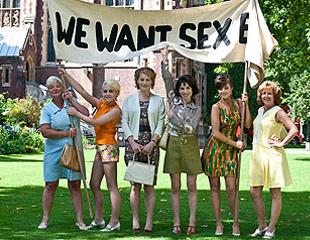
It reads: We Want Sex Equality – source

This story reminded me of a film I want to properly watch again, Made in Dagenham (2010), a bittersweet, feel-good take of the 1968 machinists’ strike against sexual discrimination at workplace, in East London. The Equal Pay Act was enacted in May 1970.

A few words — and many quotations – about the influence of Ludwig Wittgenstein on Friedrich Hayek

In a brief autobiographical note, Friedrich Hayek refers to the influence he had received in his younger years from both his teacher Ernst Mach and his distant cousin Ludwig Wittgenstein:

But I did, through these connexions, become probably one of the first readers of Tractatus when it appeared in 1922. Since, like most philosophically interested people of our generation I was, like Wittgenstein, much influenced by Ernst Mach, it made a great impression on me.”

F. A. Hayek – Remembering My Cousin, Ludwig Wittgenstein

This can be seen in the analytical rigor present in his essays published in the 1920s and in his book Monetary Theory and the Trade Cycle (Geldtheorie und Konjunkturtheorie) (1929), translated by N. Kaldor and H. M. Croome from the German. However, such influence was not exclusively limited to Hayek’s youth. He was also present in the conception and writing style of The Sensory Order, published in 1952, and Law, Legislation and Liberty, the first volume of which, Rules and Order, was published in 1973.

From my point of view, the following aphorism of the Tractatus Logico-Philosophicus is the one that best allows us to appreciate the reflection of said work in Hayek:

4.12 „Der Satz kann die gesamte Wirklichkeit darstellen, aber er kann nicht das darstellen, was er mit der Wirklichkeit gemein haben muß, um sie darstellen zu können -die logische Form.

Um die logische Form darstellen zu können, mußten wir uns mit dem Satze außerhalb der Logik aufstellen können, das heißt außerhalb der Welt.“

Which could be translated as follows:

4.12 “The proposition can represent the whole of reality, but it cannot represent what it must have in common with reality to be able to represent it – the logical form.

To represent the logical form, we should have to be able to station ourselves with the proposition somewhere outside the logic, i.e.: outside the world.”

This statement about the limits of representation later finds its correlation in the following aphorisms from Hayek’s The Sensory Order, about the limits of knowledge and of the transmission of information:

8.14. While there can thus be nothing in our mind which is not the result of past linkages (even though, perhaps, acquired not by the individual but by the species), the experience that the classification based on the past linkages does not always work, i.e., does not always lead to valid predictions, forces us to revise that classification (6.45-6.48). In the course of this process of reclassification we not only establish new relations between the data given within a fixed framework of reference, i.e., between the elements of given classes: but since the framework consists of the relations determining the classes, we are led to adjust that framework itself.

Note that if there is something that “does not always work,” then we are confronted with the limits to our representation. I think that the said “framework of reference” could play the role of the “logic form” and what Hayek is describing here is the dynamics of a negative feedback process.

8.18. The new experiences which are the occasion of, and which enter into, the new classifications or definitions of objects, is necessarily presupposed by anything which we can learn about these objects and cannot be contradicted by anything which we can say about the objects thus defined. There is, therefore, on every level, or in every universe of discourse, a part of our knowledge which, although it is the result of experience, cannot be controlled by experience, because it constitutes the ordering principle of that universe by which we distinguish the different kinds of objects of which it consists and to which our statements refer.

Here, the subject, instead of being outside the world is inside another universe of discourse.

8.67. Apart from these practical limits to explanation, – which we may hope continuously to push further back, there also exists, however, an absolute limit to what the human brain can ever accomplish by way of explanation—a limit which is determined by the nature of the instrument of explanation itself, and which is particularly relevant to any attempt to explain particular mental processes.

Nevertheless, there are certain universes of discourse that human beings can never access to -so, they are outside their world.

8.69. The proposition which we shall attempt to establish is that any apparatus of classification must possess a structure of a higher degree of complexity than is possessed by the objects which it classifies; and that, therefore, the capacity of any explaining agent must be limited to objects with a structure possessing a degree of complexity lower than its own. If this is correct, it means that no explaining agent can ever explain objects of its own kind, or of its own degree of complexity, and, therefore, that the human brain can never fully explain its own operations. This statement possesses, probably, a high degree of prima facie plausibility. It is, however, of such importance and far-reaching consequences, that we must attempt a stricter proof.

Here, Wittgenstein’s logic form delimits the said structures of a higher degree of complexity which the subject given in a simpler universe of discourse could never trespass.

8.81. The impossibility of explaining the functioning of the human brain in sufficient detail to enable us to substitute a description in physical terms for a description in terms of mental qualities, applies thus only in so far as the human brain is itself to be used as the instrument of classification. It would not only not apply to a brain built on the same principle but possessing a higher order of complexity, but, paradoxical as this may sound, it also does not exclude the logical possibility that the knowledge of the principle on which the brain operates might enable us to build a machine fully reproducing the action of the brain and capable of predicting how the brain will act in different circumstances.

8.82. Such a machine, designed by the human mind yet capable of ‘explaining’ what the mind is incapable of explaining without its help, is not a self-contradictory conception in the sense in which the idea of the mind directly explaining its own operations involves a contradiction. The achievement of constructing such a machine would not differ in principle from that of constructing a calculating machine which enables us to solve problems which have not been solved before, and the results of whose operations we cannot, strictly speaking, predict beyond saying that they will be in accord with the principles built into the machine. In both instances our knowledge merely of the principle on which the machine operates will enable us to bring about results of which, before the machine produces them, we know only that they will satisfy certain conditions.

Thus, the knowledge of the principle enables us to build an abstract machine such as language, the price system, or the law, in order to form expectations of future human actions. Since such abstract machine would be built using the knowledge of the principle, it would not be deliberated designed but grown from the experience.

While Ludwig Wittgenstein confronted the subject of knowledge against the limits of the conceptual representation and threw him into the silence and into the realms of mysticism, Friedrich Hayek, on the other hand, chooses to place the said limit instance in an order of discourse more complex than the human mind, which could be the market, the language itself, or the extended society.

For Hayek, the social order works as an abstract machine, which continuously processes information and appears in the event horizon of the subjects to confirm or readjust their own classificatory systems. These classificatory systems that, in an abstract plane, each individual has and that are in a continuous process of readjustment based on the novelties that come from the spontaneous order, are abstract but, at the same time, empirical.

Among such abstract orders are the normative systems and the first volume of Law, Legislation and Liberty is devoted to their study.

‘Learning from experience’, among men no less than among animals, is a process not primarily of reasoning but of the observance, spreading, transmission and development of practices which have prevailed because they were successful-often not because they conferred any recognizable benefit on the acting individual but because they increased the chances of survival of the group to which he belonged. The result of this development will in the first instance not be articulated knowledge but a knowledge which, although it can be described in terms of rules, the individual cannot state in words but is merely able to honour in practice. The mind does not so much make rules as consist of rules of action, a complex of rules that is, which it has not made, but which have come to govern the actions of the individuals because actions in accordance with they have proved more successful than those of competing individuals or groups.”, Chap. 1, Reason and Evolution

Here we find a process of natural selection of rules of conduct, thus, provided not by representational reason, but from experience.

The first of these attributes which most rules of conduct originally possessed is that they are observed in action without being known to the acting person in articulated (‘verbalized’ or explicit) form. They will manifest themselves in a regularity of action which can be explicitly described, but this regularity of action is not the result of the acting persons being capable of thus stating them. The second is that such rules come to be observed because in fact they give the group in which they are practised superior strength, and not because this effect is known to those who are guided by then. Although such rules come to be generally accepted because their observation produces certain consequences, they are not observed with the intention of producing those consequences-consequences which the acting person need not know.  Chap. 1, Reason and Evolution

Here we find a concept that Hayek will use extensively along the rest of Law, Legislation and Liberty, the articulated and the unarticulated. In the terms previously used in The Sensory Order, the unarticulated is what belongs to another universe of discourse, of a more complex level.

The process of a gradual articulation in words of what had long been an established practice must have been a slow and complex once the first fumbling attempts to express in words what most obeyed in practice would usually not succeed in expressing only, or exhausting all of, what the individuals did in fact take into account in the determination of their actions. The unarticulated rules will therefore usually contain both more and less than what the verbal formula succeeds in expressing. On the other hand, articulation will often become necessary because the ‘intuitive’ knowledge may not give a clear answer to a particular question. The process of articulation will thus sometimes in effect, though not in intention, produce new rules. But the articulated rules will thereby not wholly replace the unarticulated ones, but will operate, and be intelligible, only within a framework of yet unarticulated rules. Chap. IV, The Changing Concept of Law

Thus, the process of articulation of new rules is not a labor of creation of new ones, but of discovering them through the limits of the universe of discourse of the individuals.

The contention that a law based on precedent is more rather than less abstract than one expressed in verbal rules is so contrary to a view widely held, perhaps more among continental than among Anglo-Saxon lawyers, that it needs fuller justification. The central point can probably not be better expressed than in a famous statement by the great eighteenth-century judge Lord Mansfield, who stressed that the common law ‘does not consist of particular cases, but of general principles, which are illustrated and explained by those cases’. What this means is that it is part of the technique of the common law judge that from the precedents which guide him he must be able to derive rules of universal significance which can be applied to new cases.

The chief concern of a common law judge must be the expectations which the parties in a transaction would have reasonably formed on the basis of the general practices that the ongoing order of actions rests on. In deciding what expectations were reasonable in this sense he can take account only of such practices (customs or rules) as in fact could determine the expectations of the parties and such facts as may be presumed to have been known to them.

And these parties would have been able to form common expectations, in a situation which in some respects must have been unique, only because they interpreted the situation in terms of what was thought to be appropriate conduct and which need not have been known to them in the form of an articulated rule. Chap. IV, The Changing Concept of Law

Here, “rules of universal significance” should be understood as knowledge of the principle. The general practices denote that the said order, despite of being abstract, is, nevertheless, empirical. The common expectations are readjusted through a process of articulation of rules which redefine the universe of discourse of the individuals of a given community or society.

This conception of rules allows us to a better comprehension of the notion of natural rights, since they are empirical, despite their enforcement:

Whether we ought to call ‘law’ the kind of rules that in these groups may be effectively enforced by opinion and by the exclusion from the group of those who break them, is a matter of terminology and therefore of convenience. For our present purposes we are interested in any rules which are honoured in action and not only in rules enforced by an organization created for that purpose.

It is the factual observance of the rules which is the condition for the formation of an order of actions; whether they need to be enforced or how they are enforced is of secondary interest. Factual observance of some rules no doubt preceded any deliberate enforcement. The reasons why the rules arose must therefore not be confused with the reasons which made it necessary to enforce them. Chapter V. Nomos: The Law of Liberty.

Finally, despite being the enforcement of natural rights a matter which depends upon a political decision, the authority is a subsystem inside of the same level of discourse of the individuals of the same political order. Thus, the political authority could not trespass the limits of the knowledge of the said empirical order without consequences concerning its stability. It should deal with the rules which act as the framework of individual interaction using just knowledge of the principles, articulated in general and abstract rules. As we succinctly have seen, the youth influence of Ludwig Wittgenstein on Friedrich Hayek endured until the last books of the latter. I dare not say that the Tractatus encloses the clues of interpretation of the most intricated works of F. A. Hayek, but its reader will find some common ground upon which to build a more prolific interpretation of his legacy.

Nightcap

  1. Expansion and Incorporation into the US Republic (pdf) Max Edling, JICH
  2. The Savage Constitution (pdf) Gregory Ablavsky, DLJ
  3.  
  4. The Emergence of Sovereignty (pdf) Julia Costa Lopez, ISR

Nightcap

  1. The International Dimension of the US Constitution (pdf) Tom Cutterham, JAS
  2. How China avoided Soviet-style collapse Adam Tooze, Noema
  3. Really good essay on sovereignty (pdf) David Strang, SSSC
  4. Foreign Relations between Indigenous Polities 1800-1920 (pdf) Brian DeLay, CHAW

Nightcap

  1. Rod Dreher is an unfamiliar figure in Britain Sebastian Milbank, the Critic
  2. Cosmopolitanism and International Economic Institutions” (pdf) Turkuler Isiksel, Journal of Politics
  3. In search of Islamic liberty Emina Melonic, Modern Age
  4. From Group Selection to Ecological Niches” (pdf) Jack Birner, Rethinking Popper

From the Comments: French social scientists

This is about: “Rethinking the State: Genesis and Structure of Bureaucracy.” [link] Pierre Bourdieu has not known what he was talking about as long as I have been an adult. He is equal to himself; he still does not. His talent – that he shares with many French intellectuals – is to persuade others to pretend that they do understand. Don’t take my word for it. Read the opening sentence of the current piece and ask yourself honestly what it means. And no, don’t blame the translation. I have not read this piece in the original French but I have read many opening statements in French by Bourdieu and, they are worse. (I am competent to read French including “sociologie.” ) In fact, I wouldn’t be surprised if the translators had actually improved the first sentence in this particular piece. Another thing about contemporary French social scientists (but not historians) is that it’s seldom quite clear what the relationship is – if any – between their narrative and facts on the ground. Don’t get me started!

This is from Jacques on one of my “nightcaps.”

I Don’t Want to Fight to the Last Ukrainian

I hope the brave Ukrainians will soon decide to stop dying. I seems to me they have to. The Russians have demonstrated that their armed forces are too incompetent to conquer Ukraine and to reduce it to a satellite. Their capacity to bomb and pound whole cites into a fields of rubble, however, is not in doubt. Even if the Ukrainians managed to expel all Russian troops from all of their country, the Russians could still destroy most Ukrainian cities from their own territory. It does not take much talent if you don’t mind the expense of throwing the same missiles over and over against the same large targets. And the expense may not matter so much while several NATO countries are still paying their fossil fuel bills to the Kremlin. And, if the Ukrainians succeeded in bringing the war to Russia itself to make the attacks cease, they would immediately face a measure of abandonment by world public opinion, including by NATO countries. In addition, even a slight invasion of Russia would probably trigger a wave of self-righteous Russian patriotism. The reluctant Russian soldiers and sailors we have seen in largely pathetic action thus far might soon be replaced by enthusiasts eager to sacrifice themselves for the motherland.

It seems to me the Ukrainians have established they are able to preserve their independence and their recently earned democracy. Yet, it appears that Pres. Zelenskyy has announced his government’s determination to boot every armed Russian from every square inch of Ukrainian soil. Such a project involves going on the offensive against an entrenched enemy because the Russians have been present in the Dombas eastern region, in some guise or other, since 2014. Attacking an entrenched enemy is always very costly in lives as the Russian military’s own failed attempt to take the Ukrainian capital showed anew. I hear in the mass media military experts of diverse nationalities assert that it takes many tanks, among other equipment, and mastery of the skies. The Ukrainians have few of the first and little hold over the other. So, the Ukrainian president’s inflexibility is a signal that many more Ukrainians will die. I can’t help but wonder why it should be so, or what for, except that Zelenskyy may be making the bet that the Russian invaders will soon fold and retreat from every area that was Ukrainian in 2013. Zelenskyy may know things I don’t know, of course but from where I sit, in the calm, his attitude seems unnecessarily dangerous. Let me explain.

After eight years of war – even if most was low intensity war – a good half of the Donbas region, most of its cities, including the puppet “people’s republics” of Donetsk and Luhansk, is probably inhabited almost entirely by Russian speakers who are pro-Russians. The others must have left long ago or been driven out. Making the existing pro-Russia population of Donbas submit would place the current elected Ukrainian government in the same situation as the Russians now are in some other parts of Ukraine: occupiers, hated, unable to reduce the local population’s resistance, liable to commit atrocities out of sheer frustration. The currently virtuous Ukraine Republic could quickly be transformed into the kind of vicious monster it is now facing on the rest of its territory.

The prized Crimean peninsula was annexed outright by Russia in 2014, soon after it was seized, and following a questionable referendum. However, since its annexation there have been few protests there against Russia. I don’t think there is a pro-Ukrainian popular movement in the Crimea. (I believe that if there were, I would have heard of it. Correct me if I have been inattentive.) It’s also good to remember that the ties between Crimea and Ukraine may well be historically shallow. Khrushchev gave it to the Ukraine Soviet Republic in 1954 (yes, 1954) pretty much as a gift. In the 2001 count, the last conducted under Ukrainian rule, only 24% of Crimeans were identified as Ukrainians. It’s notable that in the several years between the Russian annexation and the current invasion of Ukraine, it seems there have been few serious statements by any country, including Ukraine, to the effect that the latter had to be reversed. (Correct me if I am wrong.)

As I write (4/26/22) Ukraine’s military position appears strong but it’s facing an offensive where Russia’s military inferiority may not compensate for Ukraine’s smaller numbers and lack of heavy materiel and airplanes. This is the right time to make peace proposals. It appears that Putin is not the kind of person who will admit defeat or even that his project was ill-thought out and ill-planned. Even if he is not actually insane – which have has been suggested by several credible sources – an oblique approach seems well advised here This might be done, perhaps by asking various Russian oligarchs – who stand to lose even more by continued hostilities – to contact Russian general officers who are probably not eager to be dragged further in a reputational mud hole, or who might want to save what’s left of their army.

I think a peace agreement would grant Russia control of all of the Donbas which again – it had already mostly under its control – and an extension south through devastated Mariupol to form a land bridge between Russia proper and Crimea. Some of the arguments against such a resolution smack of the 19th century. First, President Zelenskyy speaks of the territorial integrity of his country as if it were a sacred concept. Yet, we know of a number of countries that lost territory and subsequently did well in every way. At the end of WWII, for example, Germany was amputated of about ¼ of its territory. Yet, it emerged in insolent health ten years later.

A main objection to Ukraine relinquishing the Donbas is that it’s its most industrialized section. This sounds like more 19th century thinking. The Donbas has a considerable steel industry and a heavy metallurgical industry because it also possesses coal mines (with coal difficult and expensive to mine). This raise the question of whether the country should exchange the lives of many of its young men again an energy source that seems to be on its way out anyway and the kind of associated heavy manufacturing favored by Stalin. The examples of Singapore and of geographically nearer Switzerland come to mind. Both countries maintain a superior standard of living without the benefit of either rich energy sources or of conventional metal-based manufacturing. These examples make it easy to argue that the real riches of a country may be its people rather than so many million tons of coals. One more reason to be stingy with Ukrainians’ lives.

If the Ukrainian government made what it probably now thinks of as the sacrifice to sue for peace immediately or soon, it would gain a big prize. I mean that it would be able to keep the big port city of Odesa which is now almost intact. With Odesa, the Ukraine would retain a single access to the sea which is probably more important economically than any coal mines. Odesa was about 2/3 Ukrainian in the last count with Russians making up less than one third. It does not pose the same kind of retention problems as Donbas.

One last but major consideration. The Ukrainian government is fond of affirming that its country is fighting for all of us, not just for itself, against Russian totalitarianism and aggression. This is an almost necessary argument to prime the military and economic pump from the West. It may even be partially true. Yet, right now, – and paradoxically not a little thanks to Putin’s wake-up call- it’s pretty clear NATO can take care of its own. I mean this, even given the lightly brandished nuclear threat. I am pretty sure the Russian General Staff has in its possession a list of its military installations that would be wiped out in the first round of riposte to a nuclear event, a second list of fossil fuel extraction and transformation sites that would be gone on the second round, and a list of Russian cities that would suffer the fate of Mariupol on the third.

I think NATO has the means to return Russia to the Third World status it ever only barely escaped. I also think the Russian military knows this. So, I am very much against the possibility of the West fighting for its freedom and for its prosperity to the last Ukrainian. That’s so, even if the Ukrainians insist they would like too. I am filled with horror at the thought of being even a smidgen responsible for making even more Ukrainian orphans and widows.

And yes, the peace I envision would be another form of rewarding aggression. However, in this case, there is a good trade-off. Russia would acquire some industrial territory in the old mold at the cost of having demonstrated to the world a surprising degree of military incompetence. We, in the US, should keep supporting the Ukrainian war effort just to say “Thanks” for this demonstration.

Nightcap

  1. The Rise of the Bureaucratic State” (pdf) James Q Wilson, Public Interest
  2. Rethinking the State: Genesis and Structure of Bureaucracy” (pdf) Pierre Bourdieu, ST
  3. State Capacity, Bureaucratic Politicization, and Corruption” (pdf) Katherine Bersch, et al, Governance
  4. Why are skyscrapers so short? Brian Potter, Works in Progress