Libertarianism and the shutdown

Yesterday, Paul Krugman published a deceptive, sloppy, and self-contradictory opinion article in the New York Times entitled “Trump’s Big Libertarian Experiment.” The premise: the shutdown delivers what all libertarians want, and the shutdown (this is strongly implied) demonstrates just how silly libertarians are.

This is nonsense. First off, Trump is decidedly not a libertarian. Second, government shutdowns have occurred for decades–are all of these “libertarian” experiments? Finally, no libertarians that I’m aware of have ever favored mercurial spending freezes that sweep the rug out from under people who’ve come to rely on government programs. Principled reform is a bit different from abrupt financial lurches.

The disruption and harm caused by sudden spending jolts have no bearing on whether a libertarian society could work or not. Krugman points out that businesspeople are already enraged that the Small Business Administration has ceased issuing loans, an organization that many libertarians have claimed is unnecessary. Of course they’re angry–they expected something that suddenly has ceased. That has absolutely nothing to do with whether the SBA is necessary; it just demonstrates that people get ticked off when their expectations are suddenly dashed. The shutdown proves nothing about whether the private market could ultimately supply any benefits offered by the SBA.

He also says that work at the FDA has dwindled. Routine inspections have ceased. He has zero evidence that this has caused even an iota of harm to anyone, but the implication is clear: we’ll all be confined to the toilets soon as E. coli swamps the country. He marshals no evidence to confront whether state regulators can adequately fill this role, or whether tort law and market forces can suffice.

Libertarians envision a society in which many roles currently served by government can find contractual and common-law counterparts (or not, if it turns out no one wants the service). Libertarians certainly don’t believe in blasting holes in long-standing social structures without warning, without forethought, or without transition.

Ironically, to the extent we do confront Krugman’s silly claims, it appears that the shutdown’s impact has been minimal despite huge numbers of furloughed employees. The New York Times, aside from Krugman’s disposable rhetoric, also published a comparison of the number of furloughed employees (800,000 by their estimation) to private industries. The number of furloughed employees, for example, exceeds twice the number of people employed by Target. I don’t think this tells us what the New York Times thinks it tells us. These stats beg the question as to whether these positions are necessary at all. That said, any negative impact from the shutdown that actually does exist–aside from the furloughed workers losing money–should be attributed to social and economic disruption resulting from spending turbulence, not to the actual necessity of the government programs affected.

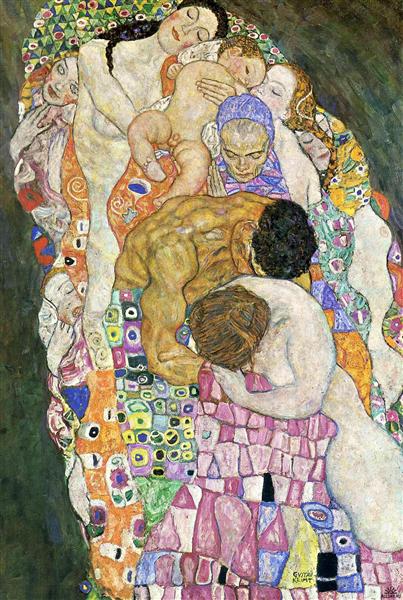
Afternoon Tea: Death and Life (1916)

From my favorite artist, the Austrian Gustav Klimt:

nol art klimt death and life 1916
Click here to zoom

My son was born a few hours ago. If all went according to plan (I scheduled this post last weekend), I am in a state of pure love and joy as a another Christensen is added to the troop.

RCH: Five facts about Emancipation Proclamation

That’s the subject of my weekend column over at RealClearHistory. An excerpt:

4. The Confederacy was, for all intents and purposes, an independent country. When Lincoln issued the Emancipation Proclamation, the Confederacy had long since declared independence from the United States and set up a federal government of its own. Montgomery, Ala. acted as its capital city until 1861, when the Confederacy’s government moved to Richmond, Va. Lincoln viewed Richmond’s diplomacy with the British and French as the most dangerous element of the Confederacy’s secession. If Richmond could somehow manage to get a world power on its side, the consequences for the future of the republic would be dire. For London and Paris, the calculations were a bit different. If either one joined the side of the Confederacy, the other would officially join the north and a global war could ensue. The Confederacy lobbied especially hard for the British to fight on their side, but there was one issue London’s hawks, the factions that wanted a war with Washington, couldn’t get past.

Please, read the rest.

My son is being born right about now (I scheduled this post). I hope everything goes well (it’s a c-section). Wish me luck!

Nightcap

  1. Mexico’s democracy is already in bad shape Noel Maurer, The Power and the Money
  2. Gorsuch and Sotomayor join forces in defense of Sixth Amendment rights Joe Setyon, Hit & Run
  3. How the Latin East contributed to a unique cultural world Jonathan Rubin, Aeon
  4. “…he amused himself by creating passports, certificates, permits, government memos, and identification papers.” Paul Grimstad, New Yorker

Nightcap

  1. The death of right-libertarianism Chris Dillow, Stumbling & Mumbling
  2. The danger of government-issued photo ID Pierre Lemieux, EconLog
  3. The Trump re-election campaign Tyler Cowen, Bloomberg
  4. My problem with Trump’s wall Don Boudreaux, Cafe Hayek

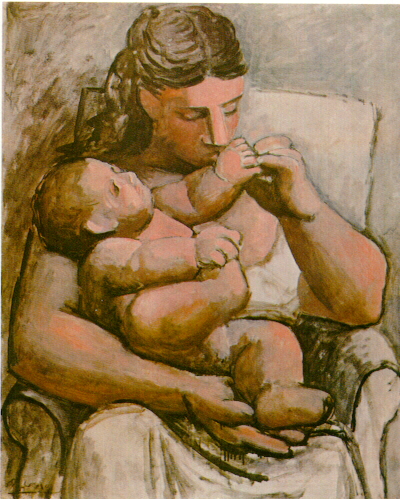
Afternoon Tea: Mother and child (1921)

nol art picasso mother and child 1921
Click here to zoom

A Pablo Picasso classic. This one is in a private collection somewhere.

Nightcap

  1. Egypt banned the sale of yellow vests. Are the French protests spreading? Adrián Lucardi, Monkey Cage
  2. Castro’s Revolution on Its 60th Anniversary Vincent Geloso, AIER
  3. Americans Are Losing Faith in Free Speech. Can Two Forgotten Philosophers Help Them Regain It? Bill Rein, FEE
  4. Do Congresswomen Outperform Congressmen? Tyler Cowen, MarginalRevolution

In the Spirit of Socialist Realism: Sampling American Multikulti Cinema

On the new year day, searching on Youtube for something to watch, by chance, I stumbled upon a low budget and poorly made Western Yellow Rock (2012). By now, I watched enough of Hollywood products that were tailored to current “diversity” ideology and PC tastes. At least, some of them (e.g. Django Unchained, Black Panther, Dances with Wolves) were well crafted . But this Yellow Rock really “rocks.” It totally “overwhelmed” me. 

An official plot description is rather innocent:

“A man searching for his missing son hires a group of rugged cowboys to take him into territory controlled by the Black Paw Indians. When they come upon an ancient burial ground, their own greed tears them apart, as the posse turns on itself.”

Yet, in reality, from the first scenes, you are literally plunged into the “diversity pulp fiction”: caricature whisky-drinking and swearing white male rednecks (the posse) approach a camp of no less caricature noble American Indians who are taken care of by an all-female team of noble physicians and nurses. The head of the posse claims that he is looking for his missing son. Yet, in reality, they need to secure a permission from the tribe to cross Indian lands to reach an abandoned gold mine to get hold of some sacks with gold dust. Through their wooden characters, from the very beginning, producers defined clearly ideological sides: noble victims (Native Americans), allies (white women), and oppressors (white males). Not a single shade of grey. The only exception is a white male alcoholic scout who takes the posse into the wild. As a victim of his addiction, he is also somewhat qualified to be noble, and, in fact, he acts as an ally too.
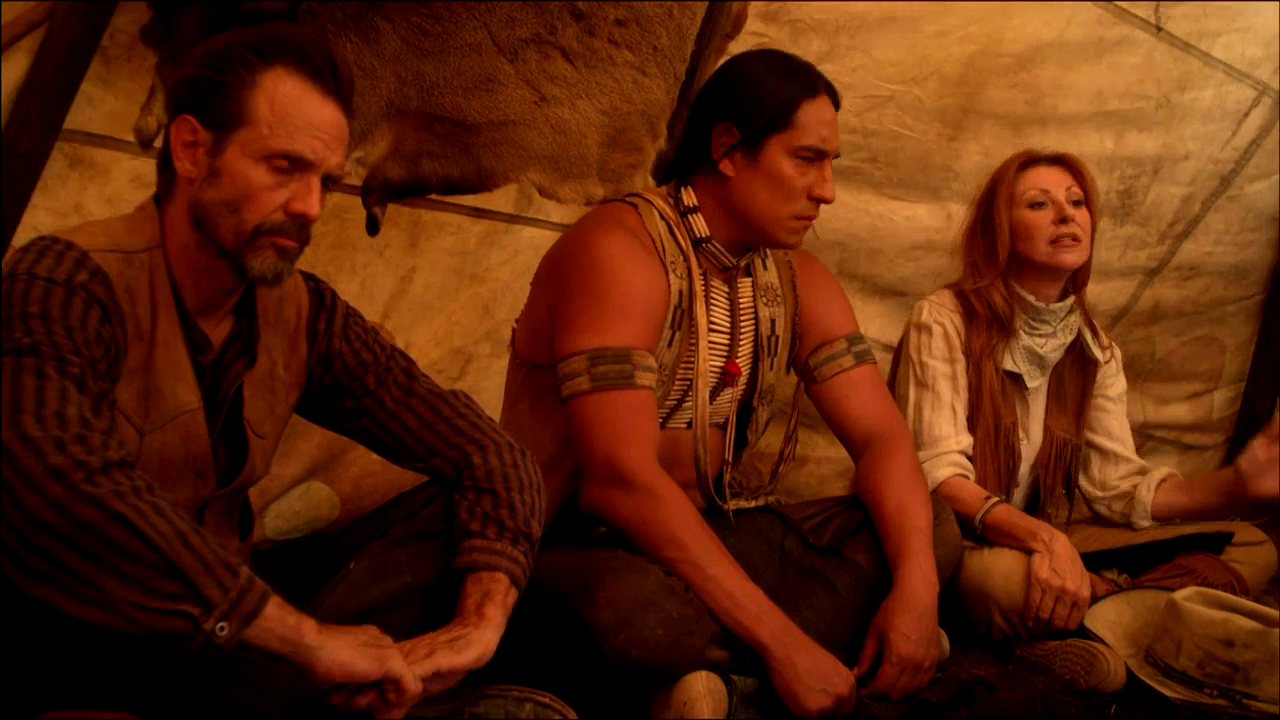
nol_4The cliche plot is painfully predictable: the posse of the “whitey” wants to cross straight across Indian burial grounds, although the “Injuns” warn them not to do it. Of course, by violating the sacred land, the “whitey” offend local spirits, who send against the rednecks a pack of wolves who appear as grotesque caricature shiny silver wolves resembling their brethren from New Age postcards and posters. Finally, the evil posse, which en route harasses an accompanying female physician and a male Indian, finds the gold. Yet, driven by an expected greed, the members of the posse take on each other. The rest of them are finished by the physician who is able to snatch a gun and by Black Paw Indians who arrive just in time to commit the act of justice. The movie ends with a scene of a slow motion collective execution of the last greedy redneck by a group of the Black Paws who repeatedly shoot the guy holding tightly a sack of gold. When the justice warriors lean over the dead corpse, they find out that gold dust somehow miraculously turned into regular dust; elements of paranormal and New Age mystique are rather common in latter day Westerns.

nol_2

I would not have ventured into the description of this “movie” unless it had not provoked me to jump to an obvious conclusion: at times a trashy cultural product might serve as a good learning tool. Trashy stuff highlights dominant ideological cliches and sentiments more than any other more or less well crafted movie. Like an imbecile who mimics the behavior of surrounding people, such “masterpieces” clone the mainstream ideology that is superimposed on people in public schools and colleges. To me, Yellow Rocks demonstrated how deeply the educational system (film studies along with the rest of humanities) and print media has ingrained in the minds of movie makes the pillars of what people on the right label Cultural Marxism and that people on the left call Critical Theory. In its turn, this elusive theoretical “beast” served as a major fountainhead of the Multiculturalism ideology.

nol_34

Watching that particular movie, I suddenly felt catapulted to the “good old” Soviet Union. Replace noble Indians+female do-gooders with noble workers (proletarians) and greedy white evil males with greedy capitalists and you will get a solid Soviet movie tailored according to the cliches of Socialist Realism. For those who do not know what Socialist Realism is, I want to note that it was a Stalinist doctrine that required from movie makers, poets, writers, and the rest of the intellectual gang to depict the surrounding life not as it was but as should be in the ideal future. I have also realized that comparing old Soviet and communist Chinese movies with current multikulti products in European and American realms might have a pedagogical value. It will allow us to trace the genetic links between the Marxism of old that had been obsessed with political economy and class warfare and the current Cultural Marxism that is obsessed with racial and gender identity wars. In the 1920s and the 1930s, both in the Soviet Union and Western progressive subculture the ultimate noble savage was a metaphysical muscular male proletarian.

Since the 1960s, “noble savages” of old Marxism became replaced by the new cultural left with new “noble savages”: third world, people of “color,” females, gays….The list of victims who are simultaneously to act as redeemers from the evil Western civilization is not yet complete.

In a typical Soviet heroic movie a people-friendly misfit character without a stable class-based moral compass chaotically fought against oppression. He or she needed a solid back up form a wise muscular industrial proletarian who, with his working class salt of the earth wisdom, was to take this character to the highest level of consciousness. In Yellow Rock, the alcoholic scout similarly was upgraded by female and Indian wisdom. Incidentally, the same trope one can observe in the third part of the famous (and well made) Hunger Games trilogy that I watched again last night. The major character, Katniss Everdeen, a noble female warrior, was not complete without receiving an endorsement (in the final scene of that trilogy) from the victim/redeemer of a “higher caliber.” After Everdeen defeats dictator Snow, an aged cunning white male, a black female elder approaches Everdeen and gently leads her to the center of the new power, where masters of the multikulti paradise gathered to usher the new world.

nol_9

RCH: Crazy Horse’s last battle

I’m back at it over at RealClearHistory. An excerpt:

When the Indian wars were underway, the battles were characterized as two very different peoples fighting against each other. Today, this view is still espoused, but the logic underneath has changed. Today, the American Indian fighting the American soldier has come to be viewed as more of a civil war than a clash of civilizations. The Native Americans are deeply intertwined in our culture, our history. As historical research gets better, thanks in part to the fact that our society continues to get wealthier and wealthier, the indigenous actors who helped shape American history receive more attention, empirically and theoretically.

Crazy Horse’s last battle in Montana against the U.S. Army highlights this civil war better than most. The Sioux and Cheyenne were not being pursued to be eliminated, but to be domesticated and transformed, by a benevolent government with the best of intentions, into American citizens.

Please, read the rest.

Nightcap

  1. South America’s other ‘Easter Island’ Christopher Baker, BBC
  2. The narrative of homophobia in Africa Nsubuga Ssemugooma, Africa is a Country
  3. Young Murray Rothbard: an autobiography Murray Rothbard, Mises Institute
  4. Rebuilding a fragile political order Nathaniel Peters, Law & Liberty

Afternoon Tea: The Self Immolation of Gogol (1909)

This is by the Russian painter Ilya Repin:

nol art repin the self immolation of gogol 1909
Click here to zoom

Nikolai Gogol, a famous Russian author, went mad in his 40s and burned the manuscript for the second part of Dead Souls, a classic novel about Russian life in the 19th century.

Fantasy and politics

I wish fantasy novels offered more political diversity. I adore fantasy, but I’ve begun to chafe at the ironic lack of creativity when it comes to political regimes. The genre may be missing a great opportunity. Or maybe I’m reading the wrong books.

While I don’t really mean this as a criticism so much as an observation, monarchy and feudalism abound in most other-world fantasies. Or the politics are indistinct. Despite my deep love for Tolkien, he falls into this category as well–either political control is unclear in regions like the Shire, or the region is ruled by an absolute ruler. His most well-known series culminates with the return of the benevolent dictator to the throne, Aragorn King of all the Dunedain (granted, there is intentional Christian symbolism here).

Modern fantasists follow a similar trend. Brandon Sanderson’s books, while wonderful, tend to involve worlds replete with absolute rulers. In fact, in the original Mistborn trilogy, a naive emperor tries to impose a more representative system of government, fails, and then decides that a firm hand is what’s called for. He and other authors like Robert Jordan dabble with some interesting political ideas and do provide a great deal of political detail, but they ultimately tend toward absolutism of some variety. Terry Pratchett’s main city-state on Discworld, Ankh-Morkpork, is ruled over by an absolute ruler, but Pratchett at least takes plenty of opportunity to poke fun at the masses’ constant yearning for a noble king to tell them what to do. Really, all these books are splendid, and politics are typically not their centerpiece–I just think some more variety may be valuable to the genre. (I’m not pointing fingers, as I’m guilty of the same problem–my forthcoming fantasy novel takes place in an empire with an absolute ruler and a largely meaningless parliament).

Fantasists could perhaps take a page from their science fiction comrades, where experiments with politics seem more common. Fantasy authors could do more than tinker with small tweaks to the monarchy and mercantilism of a pre-enlightenment age.  I can’t help but roll my eyes when I hear Tyrion Lannister on Game of Thrones gushing about how Daenaerys Targaryen is the only person who can swoop in and save the Seven Kingdoms from itself. That’s remedial polisci–surely we can do better. Who wouldn’t want to read about an anarcho-capitalist Iron Islands or a post-communist King’s Landing?

If you have any good recommendations for other-world fantasies that take up this challenge, I’d love to hear them!

Nightcap

  1. Political capitalism Peter Boettke, Coordination Problem
  2. Even Utah has gone soft on pot Jacob Sullum, Reason
  3. The art of war Peter Miller, Views
  4. NAFTA – The “worst” trade deal ever Livio Di Matteo, Worthwhile Canadian Initiative

Nightcap

  1. On being black in Baltimore Olga Khazan, the Atlantic
  2. What Europeans talk about when they talk about Brexit London Review of Books
  3. Time to worry James Grant, Weekly Standard
  4. The English question Paul Harris, Aeon

Some challenges Brazil has to overcome to achieve development

Now it is true. As I predicted some time ago, Jair Bolsonaro became Brazil’s president. Bolsonaro is not the brightest guy in the room, but I believe he has some qualities a leader requires. Above all, Bolsonaro shows conviction, a quality central to leadership, as Albert Mohler observes. Bolsonaro has the conviction that socialism/communism is the wrong way, and that Brazil has to try an alternative. The alternative, he has grown to understand, is the free market.

In his first remarks as president, Bolsonaro said that Brazil is “leaving socialism.” Some Brazilian friends, even people with high education, found this quote preposterous. In their view, Brazil can’t abandon socialism because she never tried it. That’s quite scary! After almost two decades of rule of the Worker’s Party (PT) there are people in Brazil who believe that Brazil never tried socialism.

It must be observed that PT is a big party, with many internal tendencies. Still, historically the party has the objective of turning Brazil into a socialist country. It is quite shocking that some people haven’t realized this!

On the other hand, many Brazilians still charge capitalism for all the country’s problems. The difficulty with this is that, if we take capitalism as free-market, Brazil has never been capitalist. Brazil’s economic history, in a nutshell, is of government control of the economy.

One of the challenges Brazil has, as surprising as it may be, is to teach people what is socialism and what is capitalism. The other is to make people understand that socialism is just bad. It has been tried. It failed, as it should. Capitalism, understood as economic freedom, worked everywhere. And there is no reason to believe that it wouldn’t work in Brazil.