From Class to Identity: The Cultural Turn in the Left Thought Collective (1950s-1980s)

Class to Culture


This is a draft of a book chapter that has been published as Andrei Znamenski, “From Class to Culture: Ideological Landscapes of the Left Thought Collective in the West, 1950s–1980s.” In Bolgov R. et al. (eds) Proceedings of Topical Issues in International Political Geography. Cham, Switzerland: Springer, 2021, pp. 337-354.


Ideologies never die, they metamorphose and are reborn in a new form just when they are thought buried forever.

– Pascal Bruckner, French philosopher and writer (2006)

In 2010, sociology professor Rick Fantasia, a member of the Democratic Socialists of America, struggled to explain the results of US Congress elections that were disastrous to democrats and that, at that time, brought a majority to the republicans.  Fantasia was part of a Social Forum, a 15,000-strong army of left activists who gathered in Detroit, Michigan.  Observing this convention, he noted that most people who arrived at this convention mostly represented various minority organizations that were either involved into identity politics or represented immigrant workers.  Fantasia also noted a heavy presence of countercultural and environmentalist elements, including New Age seekers.  At the same time, the activist scholar pointed out that one important element was missing: working-class people, especially white workers.  With frustration, Fantasia noted that there were only a few white working-class people: “The whites were mostly educated members of the middle class, organizers, activists, representatives of philanthropic organizations and academics.” The described gathering and the expressed concern were a microcosm that reflected the shift in the entire ideology and the social base of the current Western left for the past fifty years.

What worried Fantasia was not some aberration or a temporary flaw in the left strategy and tactics. In fact, this was the result of a natural evolution of the left mainstream.  Since the 1960s, it drifted away from concerns about an economic growth and class-based politics, which were associated with the old left.  Instead, the left began shifting toward culture, race, and identity issues as well as environmentalism.  This metamorphosis is sometimes labeled by a loose umbrella expression the “cultural turn.” On the level of ideas, this turn is usually associated with the emergence of the often-mentioned post-modernism and includes several intellectual trends and political practices that developed in the wake of traditional socialism that was heavily informed by Marxism.  The most important among these trends are post-colonial studies, critical theory, feminism, multiculturalism, and political correctness.   Some authors on the right refer to all this by an umbrella term “Cultural Marxism” – a pejorative expression that serves to point to genetic links between the current cultural left and the old Marxism-driven left.

This essay explores the sources of the cultural turn among the left and the development of their passion for identity matters, which resulted in the phenomenon pinpointed by Fantasia.  Although there have been tons of writings about the cultural left and the origin of their woke culture, our intellectual mainstream is still dominated by the following popular notions.  On the right, it is a widespread conviction that evil “Cultural Marxism,” primarily through the malicious activities of the Frankfurt School, set out to erode the Western civilization.  In the meantime, the easily triggered left have been ascribing any critique of PC thought collective and its “sacred cows” of race and gender to the evil forces of fascism and racism. If we “deconstruct” the history of the left’s gradual evolution toward culture and identity, we might problematize both approaches and tone down the heated debates around that issue.  Moreover, the understanding of the gradual evolution of the contemporary left from economic determinism and fixation on the proletariat to the privileging of culture, identity, and lifestyles will help us understand better how and why literally every aspect of human life became politicized in the eyes of the current left.  In other words, the history of the cultural turn will shed more light on the origin of the popular left meme that personal is political. 

The goal of this essay is to paint a bigger picture by showing that, besides the often-mentioned Frankfurt School, there were other essential sources that fomented the cultural or identitarian turn on the left.  Thus, to understand the formation of this turn, on needs to address the significance of the year 1956 and celebrity sociology W. Right Mills’ crusade against “Victorian Marxism.”  We also need to bring up the writings of C.L.R. James, William Dubois, France Fanon who were the first to refurbish popular Marxism’s memes (the proletariat, class domination and oppression, the new man, false consciousness, and center-periphery) and its Eurocentric nature along racial and non-Western lines.  Most important, one needs to examine the activities of British group of communist historians, Birmingham Institute of Cultural Studies, and New Left Review.  Without them, it will be hard to understand the historical role of the 1960s-1970s’ New Left, which acted as an intellectual bridge between old economic- and class-based Marxism and current cultural left that is heavily steeped in identity politics.

How Do We Call It? Critical Cultural Theory, Cultural Marxism, and the Identitarian Left

In existing debates about the cultural turn, the term “Cultural Marxism” has aroused most controversy.  Current identity-oriented progressive writers and scholars do not like this expression. Their favorite term of choice is Critical Theory and the host of expressions derived from it: Critical Cultural Theory, Critical Racial Theory, Critical Legal Studies and so forth.  However, earlier left authors did not see any problems with “Cultural Marxism.”  In fact, between the 1970s and the 1990s, they pointed that this very expression captured well the essence of the socialist ideology that was undergoing an adjustment to the new times. For example, in his “British Cultural Marxism”(1991) Ioan Davis and Dennis Dworkin in his Cultural Marxism in Postwar Britain: History, the New Left, and the Origins of Cultural Studies (1997) did not see any problems in using that expression.  Moreover, from about 2004 to as late as 2021, progressive social scholar Douglas Kellner did not find it problematic to generalize about “Cultural Marxism and Cultural Studies.”
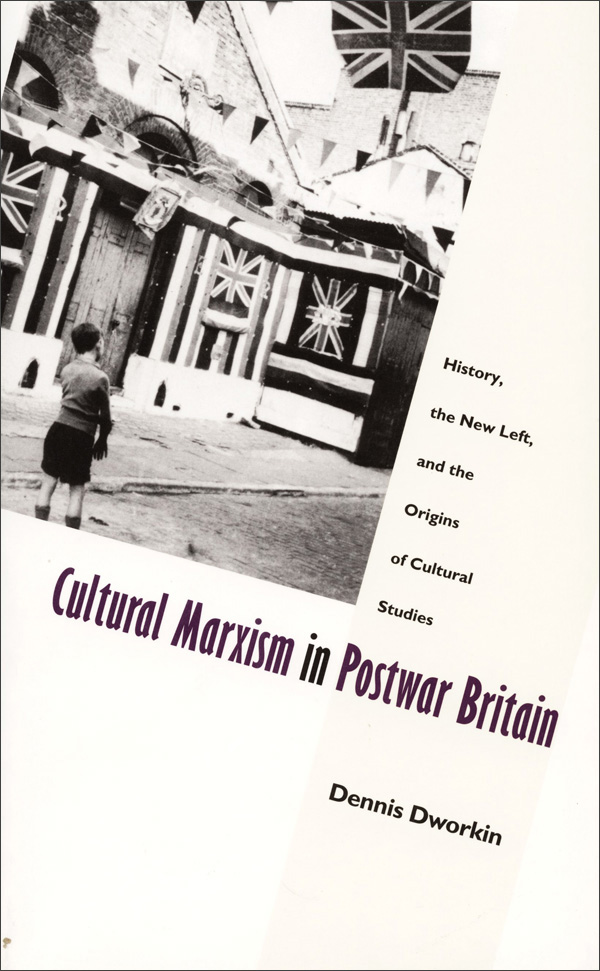
dworkin

The most aggressive among current cultural left, especially journalists who did not take time to explore the history of Marxism and neo-Marxism, have been quick to label Cultural Marxism as a hate taboo term that promotes fascist, Nazi, and anti-Semitic ideas.  Using such smear metaphors, they want to intellectually link all critics of the identitarian left on the right to Hitler’s propaganda workers who had talked about “Cultural Bolshevism.”  Moreover, downplaying the historical links between pre-1960s “scientific socialism” and the current cultural left, some identity-oriented left authors have claimed that they in fact moved beyond Marxism and that they are not Marxists anymore.
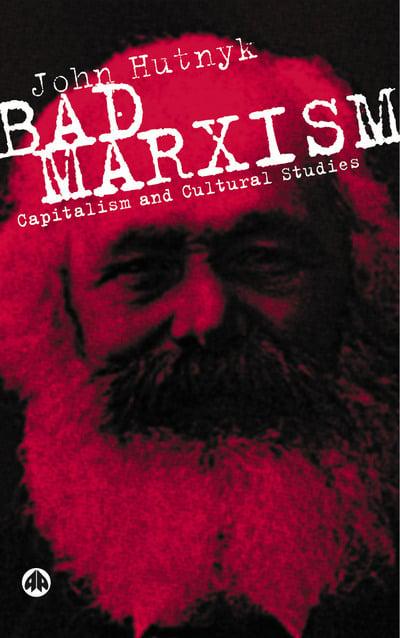
bad marxism

In their turn, many among traditional Marxist leftists, who still try to stick to the class-based approach, agree that the cultural left have nothing to do with Marxism.  These “traditionalists” label their wayward cultural comrades as traitors to the cause and dismiss them as “bad Marxists”. Several scholars (historian Paul Gottfried and philosopher Helen Pluckrose), who are critical of both traditional Marxism and the current identitarian left, too have argued against using the expression Cultural Marxism.  Correctly stressing that the post-Marxist left stopped prioritizing economic determinism and class and assimilated ideas from outside of Marxism, Gottfried and Pluckrose have stressed that the current cultural left hardly have any links to Marxism.

Several conservative authors (e. g. Kerry Bolton and Jeffrey D. Breshears), who generalized about Cultural Marxism, have come to view it as a grand conspiracy on the part of the left.  They have portrayed it to as a sinister plan masterminded by the so-called Frankfurt School that allegedly sought to uproot Western civilization and Christianity.  The most grotesque versions of the Cultural Marxism conspiracy theory link it exclusively to the activities of German-Jewish scholars (who had indeed dominated the Frankfurt School (see Benjamin Ivry, Deconstructing the Jewishness of the Frankfurt School (2015). That theory goes as follows. A group of mostly Jewish intellectuals, who were part of radical socialist and communist forces in the 1920s’ Germany, were upset about the failure of the 1917 Communist revolution in Europe and decided to modify the Marxist-Leninist project of world revolution by mixing Marx and Freud.

FrankfurtSchool

Their goal was to smash capitalism not through the cultivation of the working-class indignation but through undermining Western culture and civilization (traditional family, gender hierarchies, and sexual norms).  In the 1930s, being kicked out by national socialists from Germany, the Frankfurt School cabal moved to the United States, where it became the “Trojan horses” of the radical left, setting out to undermine the culture and values of the United States – the economic and political hub of the Western civilization. One of the major proponents of this view has been writer William Lind (“The Roots of Political Correctness,” 2009), who in fact was instrumental in popularizing the expression “Cultural Marxism.” It is mostly by drawing on his writings that the left journalists came up with the argument that this expression serves as an anti-Semitic dog whistle.

While authors like Lind singled out the Frankfurt School to be demonized as the major intellectual culprit, left authors, who have been peddling so-called neoliberalism, became similarly obsessed with searching for the shadow of the Mont Perelin society in any movement that advocated free market and individual liberty.  The irony of the situation is that both pejorative memes “Cultural Marxism” and “neoliberalism” do describe social trends that have been unfolding in society.  They are not the products of the grand conspiracies but reflect what has been going on in the intellectual culture and on the ground among various segments of society.  Incidentally, several scholars (Keith PrestonAlexander Zubatov, Allen Mendenhall, and Dominic Green) have recently explored the content of Cultural Marxism, trying to separate the conspiracy elements from actual intellectual links between Marxism of old and the current cultural left. Although I believe that this term can be useful especially when we need to stress the continuity between the old Marxian socialism and the present day cultural left, who operate with many ideological pillars inherited from the old creed (e.g. oppression/domination narrative, false consciousness and so forth), it indeed might be too narrow. So, I personally prefer to use such broad definitions as the “cultural left” and “identitarian left.”

Behind the rise of the cultural left, there stood a large thought collective that did reflect genuine concerns of various segments of the left and social movements.  The writings of the Frankfurt scholars, who both analyzed Western society and did issue utopian suggestions about how to transform it, were marginal until the 1960s.  Their scholarship, which helped to shift the left’s priorities from class to identity and culture, would have remained marginal had it not been for wide and vocal audiences that for various reasons picked up and consumed them. To summarize, the “Frankfurters” were not a sinister alien cabal that was preying on Judeo-Christian civilization with the sole purpose to destroy it.  One can describe their effect on society by an old saying: when a student is ready, a teacher comes.  In the 1960s and the 1970s, their ideas, which had earlier been marginal, suddenly began to resonate with thousands of progressives in the West and beyond.  Such “Frankfurters” as Herbert Marcuse (1898-1979), Theodore Adorno (1903-1969), and Erich Fromm (1900-1980) described the development of mass consumer society, patriarchic family, the effects of propaganda on masses, criticized industrial society, and Western mass culture, frequently issuing sweeping condemnation of the entire “soulless” Western civilization.

The reason these ideas came in vogue was simply because, by the 1960s, the West and the rest of the world experienced profound socio-economic changes: the decline of traditional working class and the rise of intellectual professions, the massive involvement of women into all spheres of life and the end of the male-oriented societal ethic, which until the 1960s had been considered normal, the emergence of new technologies, an industrial pollution, and concerns about how to better handle an economic growth.  Furthermore, the world saw the rise of Third World national liberation movements, the collapse of old colonial empires, and the emergence of minority movements in Western countries. Finally, the Soviet Union, which for a large portion of the left earlier had been the great new hope, lost its image as the ultimate socialist utopia.  Facing those changes, the old left began to crumble. There was a need to refurbish the left ideology and identity. In the 1960s and the 1970s, during student antiwar movements, the rise of Third World national liberation movements, civil rights protests among the people of “color,” the expansion of women and gays rights movements, the ideas disseminated by the above-mentioned intellectual “power centers” of the left resonated well with thousands of protesters. One cannot simply dismiss these collectives and their ideas as something imposed from above on the “innocent populace.” 

Toward “Socialist Humanism” and Away from Traditional Marxism (1956 and beyond)

1956 was a pivotal year for the socialist thought collective.  This was the year when the Soviet nomenklatura elite partially exposed Stalinism, trying to polish the tainted image of socialism.  The communist bureaucracy was tired of living in a constant fear, and, after the death of Stalin, it sought to secure its privileges and to somehow reform communism to make it more appealing.  During the same year, taking advantage of the limited destalinization, people of Hungary openly rose in an anti-communist revolt against the Soviets.  The suppression of the Budapest rebels by the Soviet tanks was a devastating blow at the moral of the millions of left idealists around the world who still believed that the Soviet Union was acting on the side of the forces of light.  There was a growing frustration with the Soviet model of socialism that was tied to a total nationalization and centralized planning. Moscow was rapidly losing its status as the utopian place.  It was natural that the year of 1956 signaled the emergence of the so-called New Left who sought to disentangle themselves from the Soviet experience.

In the meantime, the working-class people in the West dramatically improved their living conditions and did nor express any desire to go to barricades to battle capitalism.  Social democrats were shedding the last vestiges of Marxism, and communist parties were increasingly losing their membership.  For example, the French Communist Party, one of the largest pro-Soviet left movements in the West, which had 320,000 members in 1956, by 1962 shrank down to 225,000.  Similarly, pro-Soviet Communist Party USA, which had between 75,000 to 80,000 members in 1945, declined to fewer than 3,000 in 1958. It was not the expected immiseration of working-class masses but an increased prosperity, bourgeois culture, and boredom that became a great challenge.  The left, especially their radical wing, were poised to turn into rebels without a cause.  The major character from John Osborn play (1956) expressed it best when he uttered a phrase that became classic: “There aren’t any good, brave causes left.” In 1960, Raymond Williams (1921-1988), an influential UK socialist novelist and theoretician,  admitted that not only the Marxist prophecy about the immanent collapse of capitalism failed but also the entire hubris of traditional Marxism was under threat: “The Marxist claim to special insight into these matters of life and death of an economic system makes concessions of error less easy.”

There was not much to gain for the left by sticking to the economic playing field, where “rotten” capitalism was improving people’s living standards and securing an economic growth. Those who wanted to keep radical left agenda alive had to rekindle the traditional left subculture. The Trotskyites, cosmopolitan Marxist-Leninist heretics, who were the victims of vicious political assaults from their Stalinist rivals, did arouse a sympathy among dissident communists who were seeking a socialist alternative beyond the Soviet experience.  After all, the Trotskyites were the first to struggle to preserve the radical elan of the Marxist creed, while simultaneously attacking both capitalism and Stalinism.  Yet, with their old and worn out mantra about the primacy of an economic basis, vanguard party, and false claims about an increasing misery of the industrial working class, they were out of touch with reality.  The Trotskyites simply appeared as reenactors of the bygone era and could not generate any visible support among workers, quickly degenerating into an esoteric intellectual sect.

Cornelius Castoriadis, a prominent left theoretician, captured well the whole dilemma faced by the left who were frustrated about the proletariat that failed to fulfill its prophetic mission: “The proof of the truth of the Scriptures is Revelation; and the proof that there has been Revelation is that the Scriptures say so.  This is a self-confirming system. In fact, it is true that Marx’s work, in its spirit and its very intention, stands and falls along with the following assertion: The proletariat, as it manifests itself as the revolutionary class that is on the point of changing the world. If such is not the case – as it is not – Marx’s work becomes again what in reality it always was, a (difficult, obscure, and deeply ambiguous) attempt to think society and history from the perspective of their revolutionary transformation – and we have to resume everything starting from our own situation, which certainly includes both Marx himself and the history of the proletariat as a component.”  Issues that became more relevant by the 1960s were the US war in Vietnam, the rise of Third World anticolonial movements, civil rights struggle, and women liberation.  Traditional working-class issues became less irrelevant, whereas the issues of race, gender, and culture that earlier had occupied a marginal place on the left’s agenda, now were coming to the forefront.  The mainstream radical left had to rethink their creed and agenda and customize it to the changes.

In contrast, by the 1960s, Moscow, which had billed itself as Red Jerusalem and the vital center of left radicals appeared as conservative, oppressive and ideologically suffocating.  In the 1930s and the 1940s, the sympathetic left somehow could excuse Stalin’s socialism along with its police state, terror, and labor concentration camps as a temporary mobilization scheme that was needed to successfully fight fascism and railroad backward Russia into the radiant world of modernity.  Yet, after 1956, it became harder to justify the continuation of that politically correct line.  For example, in response to Soviet defector Victor Kravchenko’s revelations of Stalin’s crimes in 1946, European communists and their fellow travelers still felt no shame in dismissing the existence of  GULAG concentration camps as fake news, and large segments of public swallowed it. Yet, ten years later, when Stalin’s heir Nikita Khrushchev himself indirectly revealed the brutal reality of Soviet communism, the cannibalistic nature of the Bolshevik-made regime was impossible to deny.  Without wishing this, the Soviets, who themselves denounced Stalin, the “red pope” of communism, made a huge crack in the entire building of the socialist faith. 1956 produced thousands of apostates.  Several of them released a volume of their testimonies with a revealing title God That Failed.

The-God-That-Failed

Since 1956, to dissociate themselves from the Soviet brand of socialism, the Western left sought to humanize Marxism. Hence, a natural shift away from economic determinism and economic efficiency toward the issues of culture and identity. Later, this trend manifested itself in the emergence of such contemporary memes as “socialism with a human face,” “democratic socialism,” “socialist humanism,” and “Marxism-Humanism.”   A Jamaican-born UK Marxist sociologist Stuart Hall, one of the fountainheads of the cultural turn on the left, remembered that he and his comrades wanted to find a new political space through the rejection of both Western social democracy and Stalinism. The expression “Stalinism” became an important euphemism for those among the radical left, who wished to exorcise Stalin from communism and socialism, but who simultaneously wanted to preserve the reputation of these two sacred words untarnished.

“Sense of Classlessness” and British Cultural Studies, 1950s-1970s

One of the major trailblazers of the drift toward humanized Marxism and culture and away from economic determinism was a dissident group of British Marxist intellectuals who were later labelled as the New Left. Several of them came from so-called Communist Party Historians Group that was set up within the British Communist Party in 1946. Others were communist fellow travelers or independent Marxists.  At the end of the 1950s, when the Moscow commanding heights began to question Stalin’s infallibility, these historians, sociologists, and literary scholars either quit on the party or drifted away from traditional Marxism-Leninism, challenging its Stalinist theory and practice.  These dissident intellectuals included such prominent figures as E. P. Thompson (1924-1993), Herbert Hoggart (1918-2014), Christopher Hill (1912-1996), Raymond Williams (1921-1988), Christopher Hill (1912-2003) Stuart Hall (1932-2014), Raphael Samuel, (1934-1996), John Saville (1916-2009), Eric Hobsbawm (1917-2012), George Rudé (1910-1993) Rodney Hilton (1916-2002).  Several of them (Hall, Hobsbawm, Hoggart, Thompson, and Williams) had a profound impact on Western social scholarship, especially in English-speaking countries. For example, Hall and Williams literally laid the foundations of current cultural studies. In their turn, Thompson and Hobsbawm had a huge impact on history scholarship, helping to shift its mainstream direction toward writing about the past “from below.”

These New Left dissidents began to question the old Marxist notion that the end of capitalism was linked to the increasing immiseration and economic degradation of the proletariat.  Instead, they started arguing that the need for socialism was arising from the bourgeois affluence and consumerism. Furthermore, these ex-communists cracked the traditional Marxist conviction that economic class interests conditioned politics, social life, people mindsets, and culture.  Gradually shedding off economic determinism, these left scholars who had invested their whole careers into “scientific socialism,” found a new outlet to continue their intellectual pursuits – retrieval of the popular culture of working-class people.

Their intellectual quest eventually gave rise to New Left Review.  Launched in 1960, it became the major periodical of the Western New Left.  In fact, the very expression “the New Left” originated from a collective that congregated around this journal and that was hanging in and around the Partisan Coffee House in Soho, a bohemian area of London, and the Birmingham Institute of Cultural Studies. Searching for a new identity, the New Left changed the very concept of political, moving away from the traditional left “sacred sites” such a factory and a trade union to the realm of labor culture, folklore, lifestyles, and individual behavior.  Hall, who was part of this ideological collective, noted that he and his comrades were looking for a better place to ground their radical socialism. Incidentally, one of his speculative essays carried a characteristic title “A Sense of Classlessness.” Hall specified that the major way for him and his comrades to anchor themselves was politicizing various issues surrounding college life, high schools, movie theaters, art and other walks of life and institutions.  Jumping ahead, I want to stress that for the current cultural left politicizing the issues of lifestyle is one of the major ways of sustaining their identity.  Hall defined the New Left ideological search as “the proliferation of potential sites of social conflict and constituencies for change.” The famous slogan of radical feminism “the personal is political” captured well the essence of that quest.  Overall, as Hall stressed, all kinds of issues, including personal troubles and complaints could be amplified and opened to politicization.

Screenshot (3)

Trying to downplay the old mantra about how economy conditioned the minds of proletarians, these anti-Stalinist dissidents shifted attention to learning about the wisdom of working class by exploring its culture and folklore.  One of the first timid steps was made by Thompson, a professional historian and one of those communist dissidents.  Although Thompson continued to romanticize the labor as the ultimate savior of humankind from capitalism, the scholar nevertheless admitted that the cause of the intellectual bankruptcy of Marxism-Leninism was its economic determinism.  Drawing on Marx’s The Eighteenth Brumaire of Louis Napoleon (1852)one of a few foundational texts in classical Marxism that did recognize a relative autonomy of political culture, Thompson invited to pay more attention to the spontaneous agency of people over the working of invisible natural laws.  Simultaneously, he criticized contemporary Marxism for downplaying moral and ethical issues. Thompson is mostly known for multiple editions of his The Making of the English Working Class (1963) that became a staple reading in history and humanities courses throughout English-speaking world.  In this book, he drew attention to the radical culture of English labor.

Williams, political scientist and literary scholar who belonged to the same collective, moved far further toward embracing a cultural approach to the proletarian “chosen people.”  Formally remaining a member of the British Communist Party, in the 1950s, Williams gradually drifted away from it toward the Labour (social democratic) platform.  Unlike Thompson, who was still trapped within the old Marxist bubble, Williams went full ahead in fomenting the cultural shift in Western Marxism and one of the most influential thinkers for the entire Anglo-American left social scholarship community. Moreover, to dramatize his opposition to the economic materialism and determinism of traditional Marxism, Williams labelled his method as “cultural materialism”; because of Williams’ aggressive media presence, his ideas about the working-class culture and group identity trickled down into Western humanities, where later they were used as a methodological blueprint for feminist, racial, gay, and queer theories.

To legitimize the cultural shift, the dissidents had to appeal to the authority of foundational Marxist texts and use relevant quotes from its founders.   Just as their Soviet counterparts who, when partially cleansing the house of Stalinism, turned to Marx and Lenin, the Western New Left had their intellectual “Reformation” by invoking the early writings of Marx.  Besides such writings as The Eighteenth Brumaire of Louis Napoleon, they particularly became interested in so-called Economic and Philosophic Manuscripts (1844), vague and abstract notes made by young Marx about humanism and alienation.  Excavated and published by Bolshevik scholars in Moscow in the 1920s, those notes appeared to contemporary radical socialists as irrelevant: they did not yet contain the famous pillars of Marxist “science” such as surplus value, the primacy of economic basis, socio-economic formations, and the salvational role of working class.  In the wake of the 1917 revolution, being busy with class battles and ready to harness the “laws of history” in order to usher in the radiant communist future, Bolsheviks and their radical left allies in other countries did not pay much attention to those manuscripts, considering them raw speculations of the great mind in its infancy.  Yet, during the unfolding New Left revisionism, which aimed to mute economic determinism and the Stalinist totalitarianism, amplifying instead the significance of the human being, culture, and identity, those vague notes suddenly became relevant and “mature.” What especially resonated with the British dissident Marxists and the New Left in general was Marx’s generalizations about alienation of human beings in modern Western society.

The ultimate task was to revise the traditional Marxist canon, which preached that economic basis conditioned political and cultural “superstructure,” and to place instead an emphasis on the “superstructure.” In his Culture and Society (1960), Williams furnished relevant quotations from the writings of Marx and Engels to make a case that the cultural superstructure should not be reduced to the economic basis.  Instead of old speculations about the economic conditions of the working class in England, the historian was on the quest for the traditional working-class culture, which he romanticized as organic, wholesome, and authentic.  Moreover, Williams sought to separate it from “artificial” bourgeois mass culture.  A sympathetic contemporary aptly remarked that the intellectual quest of Williams and his New Left colleagues who sought to pinpoint an “authentic” proletarian culture was an attempt to merge “imaginative literature and socialist humanism.”

cuture and society

Marxist sociologist Hoggart, who founded the Birmingham Center for Contemporary Cultural Studies in 1964, too portrayed the idealized working-class culture as organic and natural, contrasting it to the “non-authentic” bourgeois culture.  According to Hoggart, mass bourgeois culture was undermining and phasing traditional and wholesome working-class ways.  It was natural that Williams and Hoggart, who celebrated the bygone traditional labor culture, became drawn to Romantic poets and writers who celebrated Merry Ole England.  In fact, their intellectual speculations surprisingly resembled dismissive rants of conservative critics regarding modern British culture.  Irving How, a walk away American Trotskyite and socialist sceptic who was observing these cultural speculations of his English  comrades, could not resist making a comment: “I suspect that in their stress upon the working-class neighborhood and its indigenous culture men like Williams and Hoggart are turning to something that is fast slipping away.”

Another prominent member the same group of dissident Marxists historian Hobsbawm, whose books became must read in many history and anthropology courses, gives us an example of a true-believer who was literally tormented by the idea of how and where to find a “class-savior” at that age of “classlessness.” Unlike his wayward comrades such as Thompson, Hobsbawm, chose to remain in the British Communist party.  Moreover, at the turn of the 1950s, still infested with the idealism about the proletariat as the ultimate victim-savior, the historian put his two cents in the famous debate about the effect of the Industrial Revolution on the living conditions of the working class in England.  In the spirit of classical Marxism, Hobsbawm was trying to argue that by 1800 the life of the factory laborer had become miserable if compared with the preindustrial Britain.  By the way, it was the very same debate that also produced collective volume Capitalism and Historians (1954), in which F. A. Hayek and his colleagues challenged arguments of Hobsbawm, Thompson and the like, arguing that the living condition of workers had significantly improved.  In the end of the 1950s, being unable to operate on the familiar economic playground of classical Marxism, Hobsbawm slowly began to drift toward new “pastures” in the Third World.  At the turn of the 1960s, he took several trips to Latin America, exploring revolutionary movements in that part of the world, falling for Cuba and engaging Peruvian peasants into talks about the level of their oppression.  At some point, Hobsbawm became so excited about the revolutionary potential of Latin America that he defined it as the engine of the future socialist revolution.

In 1959, he published Primitive Rebels.  This book that became a runaway bestseller in the English-speaking world was also translated in all major European and Asian languages.  In fact, the enthusiastic reception of the text demonstrated that he did tap in the popular longing among the left to find new “chosen ones” to letch on.  Although the current identitarian left will find that title too patronizing and Eurocentric, Primitive Rebels did clear the ground for the cultural turn in the general shift away from the proletariat.  The book represented a history account that romanticized people whom Hobsbawm defined as social and noble bandits, from English Robin Hood types and Sicilian mafia to peasant communism in Italy and Ukraine and Spanish anarchists of the 1910s-1930s.  The indirect message of the book was that all those segments fomented a spontaneous social justice by undermining oppressive systems.  In fact, the most recent American paperback edition of the book has been advertised as a timeless text that would be relevant to Black Lives Matter activists who sought to protect black ghettos from alleged police brutality.

Those independent New Left, who were not constrained by ties to the communist movement like Hobsbawm, went further and began to completely debunk the role of workers as the “chosen people” destined to save the world from capitalism. In 1960, American sociologist C. Wright Mills (1916-1962), an emerging intellectual guru of the New Left, openly challenged the “labor metaphysic” of the old comrades.  He scorned the romancing of the proletariat as “Victorian Marxism” and a survival of the past. Trying to fill the old Marxist clichés with a new content, the sociologist insisted that in the new “post-industrial” conditions, the true catalyst of revolutionary changes would be the intellectuals in the West, Soviet bloc countries, and the Third World.  People like Thompson, who continued to believe in the proletarian class struggle, were confused and upset about such flamboyant attack on the sacred pillar of Marxism.  On the one hand, they wanted to exorcise Stalinism and economic determinism from “scientific socialism.” Yet, on the other hand, they were too attached to the old ideological meme of proletarians as the “chosen people” to simply cast aside this foundational stone of the Marxist theology. Still, blended with “racialized Marxism” of Dubois, James, and Fanon, Mills’ heretical ideas, Thompson, Hoggart, and Williams and Hobsbawm scholarship opened doors to the emergence of the identitarian left.
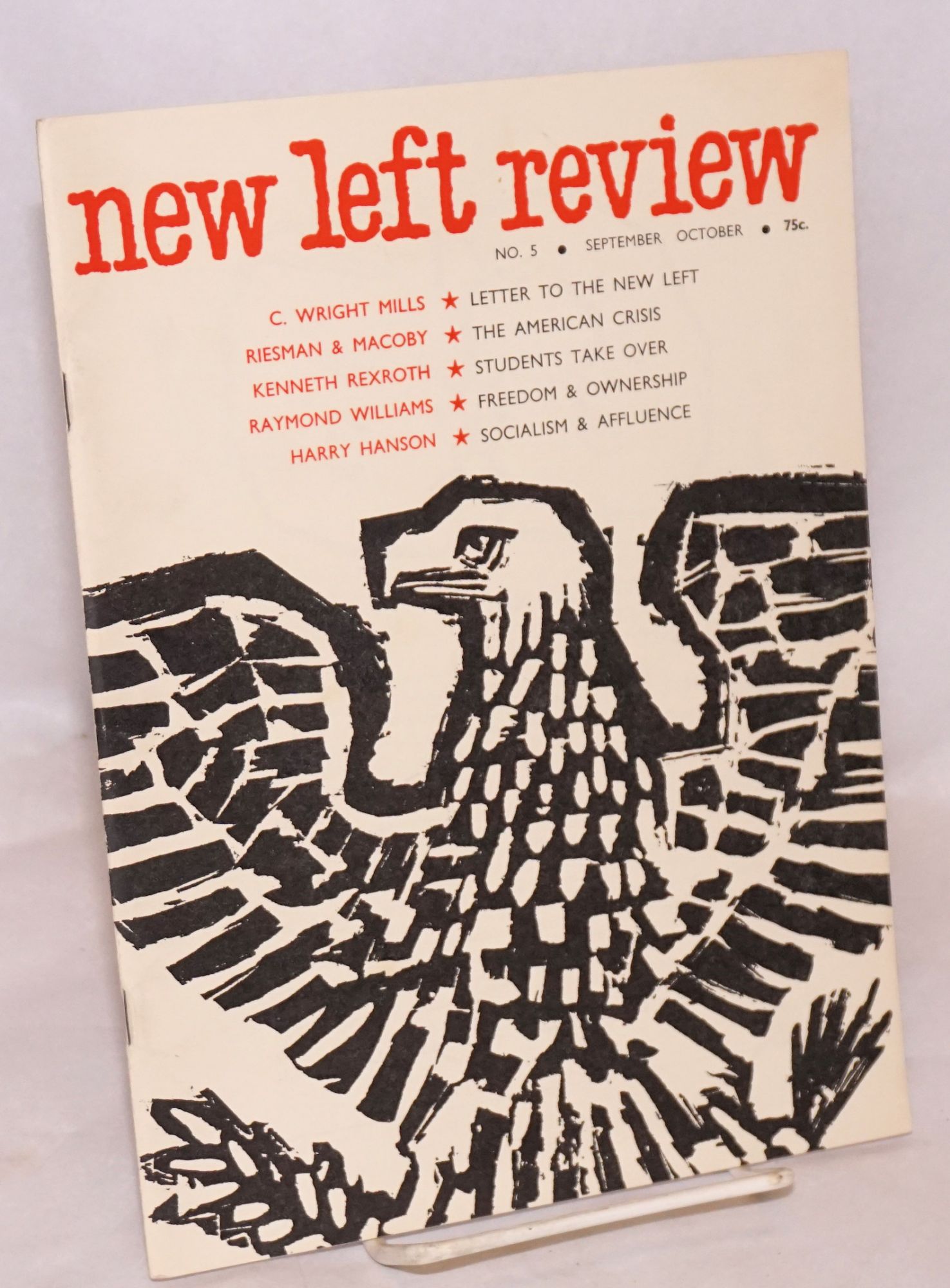
letter

C.L.R. James, William Dubois, Frantz Fanon, and the “Curse” of the Western Civilization

Moving further away from the sacred pillars and sites of traditional Marxism (a factory, economic growth, the working class, and the Soviet Union), such activist intellectuals as Hall became known as the New Left.  From the economic critique of capitalism, which did not make sense at the time when this very capitalism improved workers’ living standards, the New Left gradually began to take on the Western civilization in general, bourgeois life-styles and culture, embracing the Third World and non-Western cultures.  The slowdown of class battles and sluggish radical socialist activism in the West contrasted with the great awakening in the Third World, where emerging national liberation movements challenged European colonialism. Cast against the “dormant” and “corrupted” Western working-class, the Third World appeared to the New Left as the potential hub revolutionary activism.
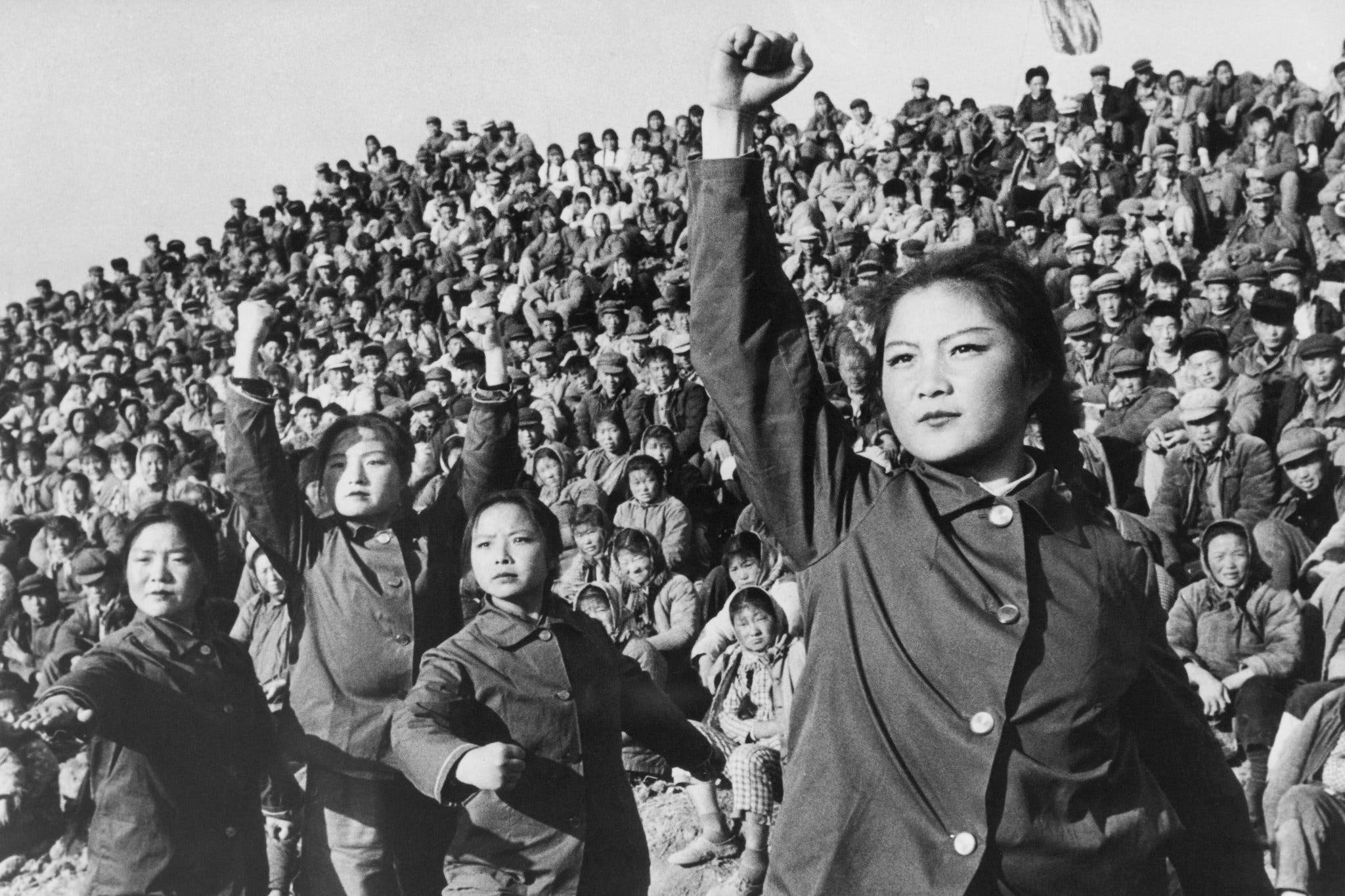
fanatic chnse youth

It was increasingly clear that the Europe-centered old left hardly had anything to offer in the new socio-political circumstances. Hall remembered, “I was troubled by the failure of Orthodox Marxism to deal adequately with either ‘Third World’ issues of race and ethnicity, and questions of racism, or with literature and culture.” Another Caribbean expat and his French counterpart Aime Cesaire, a budding New Left intellectual from Martinique, declared his resignation from the French Communist Party, rebuking Eurocentric paternalism of the communists.

To be exact, there were already several major writers on the left who had inaugurated this drift away from the West toward the Third World, culture, and identity matters.  In fact, Vladimir Lenin, one of the giants of the radical left, had opened a space for the cultural rereading of Marxism by endorsing the anti-colonial resistance as the European proletariat’s ally and pointing to the commonality of interests between the European “wretched of the earth” and the colonized people.  Moreover, feeling the need to placate various local nationalisms in the emerging Soviet Union and to win allies in the non-Western colonial periphery, Lenin drew a distinction between “bad” regressive nationalism of the bourgeois West and “good” progressive nationalism of the colonial periphery. Without wishing it, Lenin made a crack in classical Marxism that had taught that colonialism had been progressive because it had brought industry to the undeveloped parts of the world.  Earlier, it was assumed that boosting the expansion of capitalism sped up the formation of the proletariat – capitalism’s gravedigger – and the movement toward the radiant communist future.

Among the influential early voices that triggered the identitarian revision of Marxism was W. E. B. Dubois (1868-1963), an African American social scholar, nationalist, Soviet fellow-traveler, and a convert to communism at the end of his life.  The other one was C.L. R. James (1901-1989), an independent Marxist novelist and theoretician from a British Caribbean colony of Trinidad. The third was Frantz Fanon (1925-1961), yet another Caribbean-born black intellectual from the French-owned island of Martinique, who was instrumental in merging Marxism, Pan-Africanism, and Third World nationalism.  Since the 1960s, the New Left and their successors among the cultural left have been holding all three in a high esteem.  In fact, in academia there grew entire publication industry around those personalities.

Early in his career, along with socialism, Dubois absorbed then popular race and “folk soul” ideas when he was studying in Germany between 1892-1894, applying them to his budding Black nationalism.  In his 1897 “The Conservation of Races,” Dubois called for the cultural unity of the “Black race” to replicate the efforts of the Teutons, Slavs, Anglo-Saxons, Latins, Semites, Hindu, and Mongolians who were busy, as he explained, consolidating their own civilizations.  Dubois viewed the American blacks as the enlightened vanguard of the black race that was to perform that job of consolidation.  He envisioned such racial solidarity as a counterweight to the contemporary domination of the “whiteness of the Teutonic” and their soulless civilization that was fixated on individualism and economic enterprise. Very much like his racially-conscious Germanic contemporaries, who lamented the degradation of the Aryan soul by corrupt forces of modern industry and commerce, Dubois generalized about the bourgeois civilization of the West corrupting Africa – the primal and vital center of the black race.

In his Souls of Black Folk (1903) and Negro (1915), he spoke in favor of segregating “black culture” from “white civilization” and speculated about an abstract black soul, race, and culture devoid of any local and linguistic differences.  In fact, later in 1934, Dubois severed his connections with the National Association for the Advancement of Colored People that was working to eliminate racial segregation in the United States because the organization’s activities contradicted the racial utopia he contemplated. Interestingly, in his novel Dark Princess (1928), Dubois portrayed the Atlas Shrugged-type society of non-white expatriates who formed the Great Council of the Darker Peoples.  Represented by “dark” superheroes, that society was planning to take over and engineer a happy future on the planet after white institutions collapsed.

Dubois relied on European romantic memes of the noble savage (collectivist, generous, wholesome, happy, simple), which he applied to all blacks as a race.  Also, drawing on his parochial experience as a black American, the writer singled out race as the central factor in the world history, and slavery as the experience that defined not only the past history but also conditioned future behavior of his “tribe.”  Dubois assumed that the sheer presence of “black blood” in an American automatically made such a person a carrier of the “soul experience” of being a slave; incidentally, none of Dubois ancestors had been in bondage.  Dubois welcomed the 1917 Bolshevik Revolution that he considered as a scorching wind that was to cleanse the modern world, washing away bourgeois civilization.  Since the Soviet Union crusaded against the West, he automatically viewed that country as an ally: the enemy of my enemy is my friend.  By 1935, Dubois came to conclusion that the Soviets would destroy the “rotten” Western civilization and help to construct a new non-Western cultural order.  The writer praised Stalin as a great liberator, and the 1956 revelations of the Soviet crimes did not shatter this conviction.   Reflecting contemporary political preferences of Third World anti-colonial leaders and spokespeople, he called the Soviet Union and China the shining models of the future.  His conversion to communism and subsequent move to Ghana in 1961, where he became a senior advisor to Kwame Nkrumah, the head of the country who claimed building socialism, was symbolic. Here on the African soil, his black nationalism, which was saturated with romantic memes of European primitivism, met Marxian socialism. There is no need to stress that Dubois writings has been a must read in many humanities and social science courses across Western academia since at least the 1970s.

The evolution of C.L.R James, who became another must reference for Western social scholarship, moved in a reverse direction, although the result was essentially the same.  From early on, in the 1930s and the 1940s, he prophesized his loyalty to Marxism. Yet, gradually, James began to play down class exploitation, amplifying the significance of racial and colonial oppression.  It was natural because these issues were personally more relevant to him than far-away class battles in distant and alien Europe.  James at first embraced anti-Stalinist Trotskyite version of communism and its prophecy of the world revolution.  Yet, later, driven by anti-colonial concerns and by a desire to identify a new reliable revolutionary force to act as a surrogate proletariat, he shifted his attention to the Third World.

clrjames

Essentially, both Dubois and James were refurbishing the classic Eurocentric prophecy of Marxism along the Third World lines. Marx had welcomed colonialism as a progressive system that was sucking underdeveloped areas into the global commodity economy, pushing the world closer to capitalism and creating an economic basis for a leap into the radiant communist future.  For him, slavery was an archaic mode of production that, at the dawn of human history, had boosted economic development and then perished, giving rise to more progressive stages of human evolution such as feudalism and then capitalism. According to the founder, slavery survived in some backward areas of the globe (US South, Latin America, Africa) that did not catch up yet with the industrial West.  In contrast, James and Dubois argued that slavery was not a vestige of the bygone socio-economic formation, but, more than the exploitation of European proletariat, was an essential part of modern capitalism.

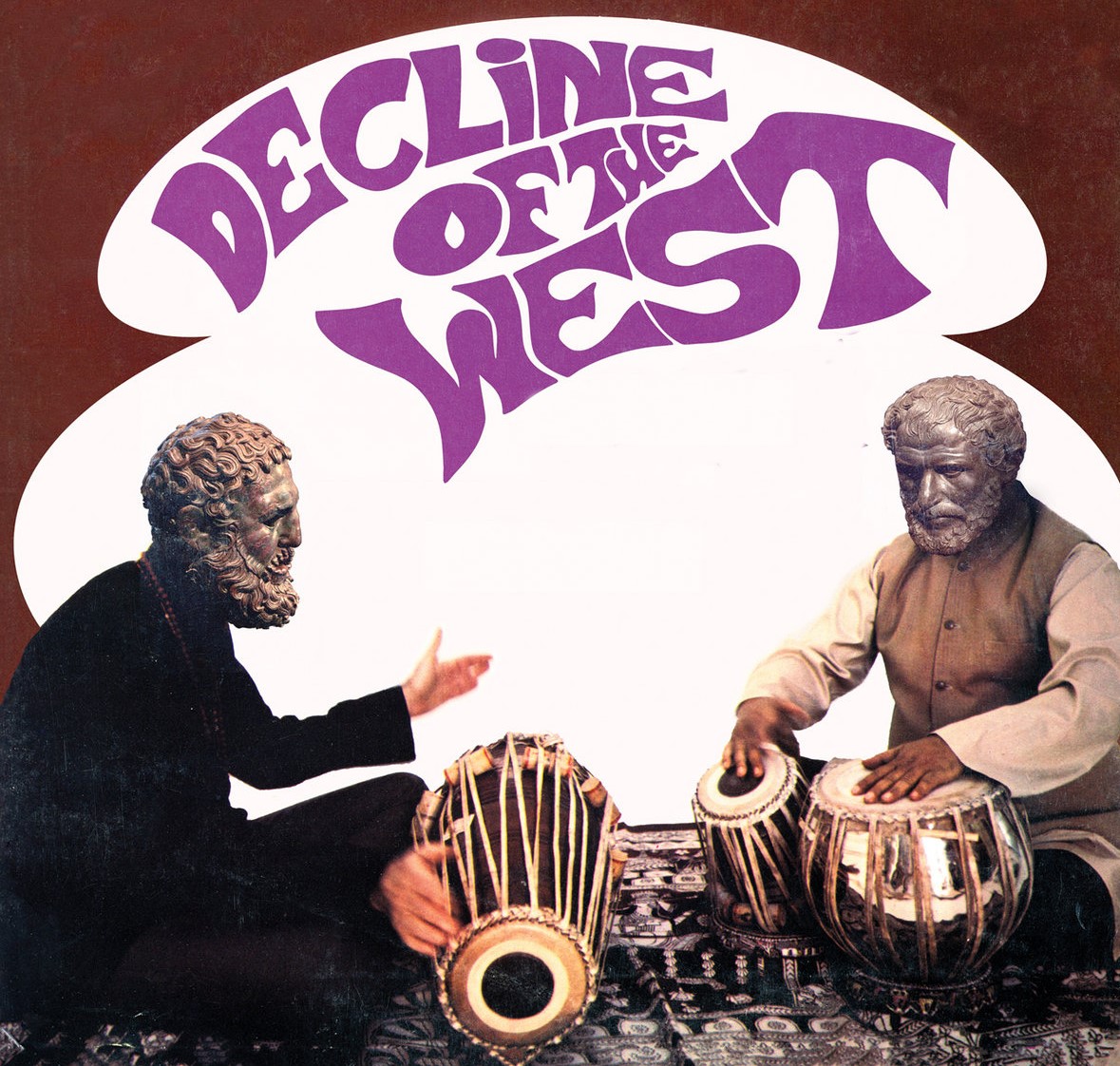
They insisted that slavery and exploitation of colonies were the vital resource that made possible the rise of capitalism.  Moreover, they became convinced that the entire Western prosperity was accomplished at the expense of non-Western people.  Again, in contrast to Marx who viewed capitalism as a progressive stage on the way to communism, James and Dubois began to argue that capitalism was not a progressive but a regressive system – a European cultural institution imposed on the rest of the world for the purposes of exploitation.  It is notable that, when singling out two pivotal books that had affected his worldview, besides Leon Trotsky’s History of the Russian Revolution (1932) James mentioned The Decline of the West (1918) by Oswald Spengler. The latter text, which was saturated with a deep pessimism, prophesized the decline of the Western civilization.  Incidentally, Spengler too greatly affected Dubois who began taking for granted that the West was in perpetual decline.  Both found in the German philosopher’s text what they were looking for: a radical criticism of the entire Western civilization.

The crucial role in shifting Marxism toward race and identity issues belonged to Fanon, a popular anticolonial writer whose landmark text The Wretched of the Earth (1961) became a book of choice for the whole generation of the Third World national liberation activists in the 1960s-1970s.  Fanon’s bashing of the West also won him numerous disciples in the countercultural circles and among the New Left in Europe and the United States.  As Kalter reminds to us, since the 1980s, assimilated by the academic left (post-colonial studies and critical race theory) into educational system and media, his writings later became an important intellectual fountainhead for identity studies and identity politics.

A psychotherapist by profession, Fanon was a French-speaking intellectual who took part in the Second World War and then in the Algerian War of independence (1954-1962).  In his writings, he focused not on economic liberation but on the cultural and psychological decolonization of the Third World.  Drawing on Marxist class clichés, Fanon revised them along racial lines: “You are rich because you are white, you are white because you are rich.” Fanon insisted that the colonial periphery became the mentally  imperiled by Western values, which natives needed to shed off because these were “white values”: “Come, comrades, the European game is finally over, we must look for something else. Let is not imitate Europe. Let us endeavor to invent a man in full, something which Europe has been incapable of achieving.” In his view, Europe was deadly sick and the keys to the  liberation of humanity were in the hands of the Third World that was destined to shape the New Man; incidentally, the latter meme also originated from Marxism.  Fanon’s friend Jean-Paul Sartre, a famous French philosopher and Soviet apologist, felt happy that “the most ardent poets of negritude are at the same time militant Marxists.” Yet, repeating the mantra of the old left, Sartre said that the mingling race with that class was “not a conclusion” but a transitional stop on the way to a greater color-blind commonwealth.  When Fanon read these Sartre’s words, he felt utterly offended as if he was robbed of his identity.  Contrary to what his philosopher friend believed, for Fanon, “racialized Marxism” was the conclusion.
declne of the west

Traumatized by the brutalities of the French he witnessed during the Algerian liberation war, Fanon insisted that nothing connected the colonizers and the colonized except racist violence. Ignoring the multitude of social, economic, and cultural relations in the contemporary colonial and post-colonial periphery, he argued that “the colonial world is a Manichean world.”  In his irreconcilable “black and white” world, oppressed victims held the ultimate truth because of their sheer status of being colonized people.  To Fanon, morality and truth were relative.  They depended on how well these two things served a liberation cause.  This included lying and committing violence, provided these vices served a good cause.  Stressing that truth was a matter of political expediency, he wrote, “Truth is that which hurries on the break-up of the colonialist regime; it is that which promotes the emergence of the nation; it is all that protects natives, and ruins foreigners.  In this colonialist context there is not truthful behavior: and the good is quite simply that which is evil to ‘them’.”

28976

To overcome their oppressive state, the colonized had to take the place of their masters by resorting to a redemptive violence.  The natives, who wasted their energy in mutual tribal conflicts and indulged into ecstatic tribal dances, were to channel their energy into the anti-colonial violence against whites. In fact, violence occupied an important place in the entire Fanon’s liberation philosophy.  In The Wretched of the Earth (1961), he romanticized violence and attributed to it pedagogical value: “Violence alone, violence committed by the people, violence organized and educated by its leaders, makes it possible for the masses to understand social truths and gives the key to them.””  Fanon viewed violence not only as a tool of liberation and education but also as a powerful vehicle of a nation-building and racial consolidation.  In the process of their struggle, oppressed natives were expected to nourish the sense of a unified collective: “Individualism is the first to disappear,” and “the community triumphs.”

Using Marxist class categories and simultaneously filling them with a new content, Fanon argued that in undeveloped colonial countries the only revolutionary class was peasants. These rural masses carried armed struggle from the countryside into cities.  This meant that the class that was to liberate the colonial periphery and the rest of humankind from capitalism was not industrial workers (proletarians) but the Third World peasantry.  With such a view, Fanon naturally came to idealize Third World peasant collectives as the cradle of the ideal human commonwealth.  Invoking the romantic meme of European primitivism, he contrasted “evil” Western individualism with the “noble” African culture of collectivism represented by village councils, people’s committees.  According to Fanon, the anti-colonial struggle was to rekindle and strengthen those collectives.  Moreover, a solidarity nourished during an anti-colonial war was to heal a corrupt indigenous bourgeoise – the creature of the West. Through its involvement into the common anti-colonial movement, this bourgeoise would reunite itself with its indigenous soil, merging with common into a united Gemeinschaft-type people’s community.

noble savage

Out of anti-colonial sentiments of such Third World intellectuals as Fanon and their colleagues from Western countries, there grew natural animosity to the West, which was responsible for colonialism, and the idealization of non-Western societies as the holders of a revolutionary potential and better forms of life. The fact that in the 1950s and the 1960s, the West was involved into two bloody colonial wars (France in Algeria, and the United States in Vietnam) amplified those sentiments.  As a result, since the 1960s, for the left, the major existential enemy was shifting from capitalism as an economic system to Western civilization that was associated with colonialism, consumerism, and moral decay.  In 1966, writer Susan Sontag conveyed well that negative attitude, which was becoming part of the intellectual mainstream, by saying that the white West was the “cancer of human history.”

cancer


There was now much talk on the left about humans being enslaved and alienated by the technology-driven individualistic civilization of the West and less talk about an economic growth, progress, and capitalism robbing workers of a surplus value.  In fact, economic progress became a curse phrase.  The idealization of the non-Western, tribal, and the primitive became a natural intellectual offshoot of such ideological pursuits.  Reflecting on the cultural turn that was launched in the 1960s, Marxist sociologist Harold Bershady stressed that this trend carried obvious reactionary notions: “It was a kind of left-wing conservatism.” Gradually ditching the failed argument of the old left, who had insisted that capitalism had been profoundly inefficient and could not provide material affluence, the New Left were switching to the moral and cultural critique of that very affluence that now was declared a major vice.  Sontag again spelled out this message in her flamboyant style: “America is a cancerous society with a runaway rate of productivity which inundates the country with increasingly unnecessary commodities”; in an ironic twist, such utterances turned out to be Freudian slips: the writer died from cancer.

Ayn Rand, a rising countercultural icon on the right who, in contrast to the Marxist ultimate proletarian “savior,” invented her own version of a “noble savage” in a form of heroic capitalist “savior” entrepreneur, responded to those sentiments with a loaded sarcasm: “The old-line Marxists used to claim that a single modern factory could produce enough shoes to provide for the whole population of the world and that nothing but capitalism prevented it. When they discovered the facts of reality involved, they declared that going barefoot is superior to wearing shoes.” Among others, unnecessary commodities included TV sets, comics magazines, soap operas, the variety of household items. Incidentally, in the 1970s and the 1980s, such romantic neo-primitivist attitudes helped the left to find a common ground with environmentalists who began to preach an apocalyptic vision of the global collapse of natural habitat if not arrested by massive government regulations.

Conclusions

The frustration with the economic growth and the incorporation of the non-Western ones and radical environmentalism into the socialist agenda was a natural offshoot of the “going primitive” trend that looked beyond Europe and North America for major revolutionary hubs.  Exorcising the proletarian messiah class from the popular Marxian socialism and moving toward identity and the idealization of non-Western “others” was not a straight-forward process. In the 1960s-1970s, among the New Left, communist dissidents, and Trotskyite fossils, there was still a desire lingering on to somehow continue the revolutionary elan of the proletariat.  At the same time, among those elements one could detect the growing trend toward romancing the working-class culture and its “organic” anti-bourgeois ways.   The Birmingham School of Cultural Studies and dissenting communist historians such as E. P. Thompson, who aspired to cleanse Marxist theory from economic determinism and who elevated the proletarian culture and consciousness, prepared a fertile intellectual ground for the later cultural turn in the left thought collective. 

Before the current left completely ditched the working class from the pedestal and developed a an “acute identity syndrome,” the New Left segment acted as an intellectual bridge between classical Marxian socialists and the current identitarian left.  In the 1960s and the 1970s, the New Left gradually transferred the metaphysical characteristics ascribed to the proletariat to the non-Western “others,” domestic people of “color,” chronically unemployed, social deviants, women, and gays. Communist bohemian historian Hobsbawm with his bookish “social bandits” and his attempts to probe Latin American peasants for their revolutionary potential is an excellent snapshot of how that process was unfolding.

Just like the proletariat of the old, the new victim groups were thought to become the oppressed redeemers – the new “noble savages” of the left.  On the one hand, such revision of traditional Marxism gave an opportunity to the New Left to disentangle themselves from the Old Left.  Yet, on the other hand, this very revisionism allowed them to continue the familiar Marxist tradition in the new intellectual garb. The new groups designated to the role of the oppressed ones were lumped together in an abstract category of the poor and disadvantaged.  In the same manner, old Marxism generalized about the proletariat as a homogenous impoverished class, downplaying ethnic, religious, and economic differences within this group.

In the 1960s, the most passionate New Left revisionists who became hooked on the Mills’ message of bashing the “Victorian Marxism” cast the newly found surrogates into authentic, uncorrupt and holistic people, the caretakers of the egalitarian ethics and natural goodness. Thus, in a religious-like manner, New Left activist Casey Hayden, the spouse of famous Tom Hayden, described her feelings about the new “chosen ones”: “We believed that the last should be the first, and not only should be the first, but in fact were first in our value system. They were first because they were redeemed already, purified by their suffering, and they could therefore take the lead in the redemption of us all.” Another New Left writer characteristically titled his book about “unspoiled” and “authentic” rural blacks in Mississippi A Prophetic Minority (1966).

Those conservative and libertarian authors who are fixated on the Frankfurt School have failed to pinpoint the variety of intellectual fountainheads that contributed to the cultural turn.  So have those in the current left mainstream who downplay their genetic links with Marxian socialism. Besides the Frankfurt School, there were other essential intellectual sources on which the left heavily drew when refurbishing their political religion in the 1960s and the 1970s.  This essay has highlighted the role of the British “cultural Marxists” as well as their intellectual predecessors and contemporaries who “racialized” Marxism.  Moreover, because of the worldwide hegemony of English language, the writings of C.L.R. James and William Dubois, popular translations of Frantz Fanon, and British Cultural Studies along with New Left Review played more important role in fomenting the cultural turn than the often-spoken Frankfurt School.  In fact, it was NLR that popularized “frankfurters’” writings that regular educated readers had a hard time to digest. 

The names and schools profiled in this essay do not exhaust other potent sources of the cultural left, which still await their comprehensive study.  For example, a future researcher cannot bypass secularized Protestantism of northern Europe and North America and its links with the current woke culture.  It is impossible to reduce the virulent and aggressive moralism of the current secular social justice warriors, the Unitarian Universalist movement, and several other progressive Protestant denominations in the United States to the intellectual evolution of Marxian socialism in the direction of identity matters.  Although many of the above-mentioned elements have been feeding on the New Left neo-Marxist writings, they obviously drew too on the secularized Puritan tradition that, according to famous H. L. Mencken, had been always haunted by the “fear that someone, somewhere, may be happy.”  In Multiculturalism and the Politics of Guilt: Towards a Secular Theocracy (1992), Paul Gottfried briefly outlined how via the social gospel tradition, radical Puritanism of some Protestant denominations gradually mutated into virulent cultural moralism and how in the current “theology” of the left, the old Christian concept of sin and salvation became replaced with sensitivity training and social therapy sessions. Most important, we need to keep in mind that British Cultural Studies, dissenting Marxist intellectuals who idealized working class anti-bourgeois culture, Mills and the American New Left, the Frankfurt School, and the latter-day social justice “evangelicals” cross-fertilized each other, spearheading what later produced the identitarian woke tradition, which currently represents the progressive mainstream.
Be Our Guest: “Resolved: Human Government is Despotism”

Jack Curtis is back with another guest post, this time on despotism. Here’s a sneak peak:

All human government is to some degree despotic; if it were not there would be no need for organized force. The more realistic issue seems to be: How much despotism should be tolerated in return for the benefits of human organization? And, with homo sapiens involved, that depends upon whom you ask.

Read the rest. It’s excellent, as usual. If you’ve got something to say, and nowhere to say it, why not Be Our Guest?

Feyerabend and the libertarians

I’ve still been reading through Feyerabend’s Against Method, and following along what Rick and Bill have to say about his arguments, but it’s slow going. Sometimes slow is better than fast, especially these days.

Awhile ago Irfan Khawaja, a philosopher who has been purged from at least one libertarian inner circle and blacklisted from several others, sent me a bunch of journals: Critical Review, Raritan, and New Left Review. (I still owe him for the postage. Holla at me Dr K!) These have been veritable gold mines of insider knowledge, and I came across a 1990 article by James McCawley in Critical Review that aptly sums up my own raw thoughts on Feyerabend. Namely, the question of Feyerabend’s own brand of politics. Was Feyerabend unwilling to accept political anarchism even though he was a methodological anarchist?

I still don’t have a solid answer to this question, though the evidence so far points to an affirmative. If he wasn’t a political anarchist, what was he? Certainly not a Stalinist, but my guess is that his politics wouldn’t have been as original as his philosophy. I suspect he was, at heart, a democratic socialist along with most of his peers.

One of the more insider-y aspects of the McCawley piece was Ayn Rand’s dislike of Feyerabend’s methodological anarchism. McCawley points out that Rand read and responded to an early piece of Feyerabend’s, and that if Rand had been a little more tolerant, she and Feyerabend could have some stimulating (though no less heated) exchanges over the years. Alas.

Be Our Guest: “Rights and Government Confiscation During COVID-19”

John A Lancaster has a new guest post up. Peep an excerpt of his definition of rights:

When extended into the realm of human contact, rights must be expressed through voluntary exchange. Any exchange that is not the product of consent necessarily entails an entity seizing use of facilities outside the entity’s personal vessel, which they have no right to do (theft).

Click here to read the thought-provoking rest. And don’t forget: if you’ve got something to say, and nowhere to say it, Be Our Guest!

The state as the illusionary Deus Ex Machina

The 20th century was a century in which societies consolidated the belief that governments should provide certainty and protection from collective risks and developed the expectation that governments are well equipped to do so through large-scale interventions in the social environment.

The image of the state was transformed from that of an alien and often hostile apparatus in the service of the king and nobility to that of a collective organization entrusted with society’s safety and prosperity. This view grew stronger in the years of war-like economy and post-war reconstruction during the 21st century. Nationalism gave it the face of a father taking care of his extended family. Socialism gave it the image of a collective machine serving the interests of the working class. Democracy promised to tame its power, make it accountable to its subjects and harness it for the provision of public goods, whose definition was open to public deliberation.

The image of the state was also shaped by a growing belief in the use of science to give meaning to the ‘common good’ and offer prescriptions as to how a powerful central planner should work to achieve it. The state and science together provided a replacement for the loss of divinity. They offered a rationalization of power as enlightened parenthood. They created a secular Deus Ex Machina. Governments cultivated this paradigm as they were strengthening their role and clout over society through increasing levels of taxation, regulation and distribution, which in turn fostered public expectations for state effectiveness and political accountability. Recurrent failures led to policy re-adjustments some of which were historical political transitions. Yet all these transitions were responses that complied with this paradigm and sought to re-establish confidence in it.

Consider one of the most discussed economic and political transitions, the neoliberal turn. In light of recurrent economic crises, most prominently long-standing stagflation in the 1970s, neoliberalism best describes a re-adjustment of the role of government in the economy through privatizations, a drift away from Keynesianism to monetarism, and the re-regulation of economic structure. In the field of ideology, there was an effort to reshape public perceptions of what the state should not do with the promotion of economic freedom. Governments – most of them very reluctantly, such as both the Conservative and Labour governments in the late 1970s and the Ford and Carter administrations, while others very enthusiastically such as the Reagan and Thatcher governments – adopted versions of a ‘take some economic decisions back to you’ approach.

In the so-called neoliberal era, the state did not become less interventionist overall. Instead, governments redefined the nature of interventions in some areas to forms of surveillance of the responsibilities and individual risks that were given back to businesses and workers. Neoliberalism was a large-scale intervention in itself. It was an effort to revamp the economy and protect the capacity of states to extract resources from the market for political allocation. Governments preserved interventions that privileged the few and maintained those that continued to offer a safety net for the many (such as health insurance, progressive taxation and welfare state spending).

A remarkable juncture occurred when the 2009 crisis posed a systemic threat. Governments intervened to patch the financial system from a sequence of cascading events – partly the result of imbalances attributed to its own macroeconomic policies. The management of collective risk came center stage.

Terrorism is another case of the interventionist state. Spectacular terrorist attacks triggered a war-like response that combined the use of the criminal justice system with extra-judicial actions, including the mobilization of security and military forces and the introduction of new intrusive norms of intelligence collection and surveillance.

It is easy to discern that, over time, demand for drastic state action is more pronounced in the presence of dramatic single-source events or cascading events that are traceable as a single sequence. While millions are killed by car accidents and diseases, large-scale massacres such as the 9/11 or unravelling developments from the collapse of a major bank trigger a collective alarm. The public expects the state to intervene and give a heroic fight against the visible threat on behalf of society.

The most extreme version of the protective state is the current general lockdown. Not knowing any way out, governments can only deliver a form of collective protection that requires a general population quarantine. They offer society the kind of shield that a medieval wall and a locked gate offers in times of siege. Society both expects and accepts this.

Yet in the current pandemic governments still cannot deliver a cure. If a safe vaccine is not found, if the epidemic does not recede with growing immunity, if seasonal change doesn’t make any difference with contagion and if an effective anti-viral treatment is not found, governments will oversee their economies in rapid collapse and will soon have to make tough choices about how to turn the epidemic into a chronic manageable condition. For the time being, citizens remain disciplined in their lock-down and are the ones demanding strict measures. Governments know that, like in terrorism, citizens can be overwhelmed by fear as well as managed through fear.

In our efforts to understand what has happened and to make informed guesses about what could happen, metaphors can help or distort our perception. Societies have subscribed to an ideal image of political power that metaphorically resembles the biblical God: omnipotent, omniscient and benevolent. They call for a divine intervention, they express their dissatisfaction when they see no signs of it but they never question its raison d’ être. But there is an ontologically different metaphor. In Greek mythology gods are superhuman creatures struggling for domination and survival with their own moral regards, vices and ignorance as they mess around with the world of humans. They struggle to rule based more on terror than wisdom, imposing justice that serves their order. Humans have to worship them in order to appease them. I find this imagery closer to a realist depiction of government.

Life

Screenshot 2020-03-26 at 12.15.15

No matter how old, frail or vulnerable it may be, a life isn’t something to take or risk at another’s discretion. Nor does it undermine culpability when someone dies as a result of negligence. The common law ‘eggshell skull’ rule reflects this moral principle.

During the Coronavirus pandemic, some erstwhile defenders of the famous Non-Aggression Principle (NAP) appear to have forgotten that natural rights are conceived to protect life as well as liberty and property. They seem to think that the liberties we ordinarily enjoy have priority over the right to life of others. The environment has changed and, for the time being, many activities that we previously knew to be safe for others are not. They are not part of our set of liberties until a reformed set of rules, norms and habits establishes a sufficiently hygienic public environment. To say that bans on public gatherings violate natural rights a priori is as untenable as G.A. Cohen’s claim that a prohibition on walking onto a train without a valid ticket is a violation of one’s freedom.

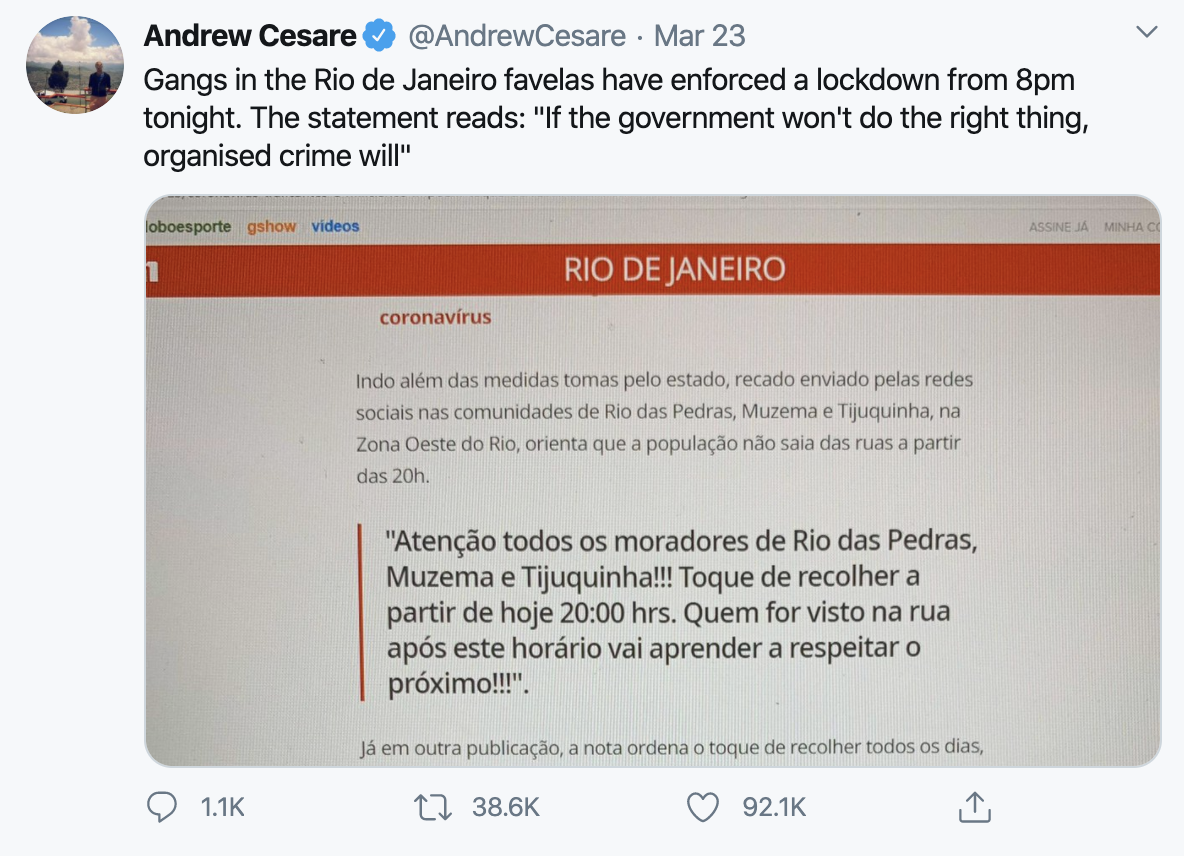
The clue for anarcho-capitalist state-sceptics that this is a genuine shift in social priorities is that even organized criminal gangs are willing to enforce social distancing. You do not have to believe that the state itself is legitimate to see that the need for social distancing is sufficiently morally compelling that it can be enforced absent free agreement, just as one does not need free agreement to exercise a right to self-defense.

Not every restriction is going to be justified, although erring on the restrictive side makes sense while uncertainty about the spread of infection persists. Ultimately, restrictions have to balance genuine costs with plausible benefits. But rejecting restrictions on a priori grounds does not cohere with libertarian principles. Right now, our absolute liberties extend to the right to be alone. Everything else must be negotiated under uncertainty. Someone else’s life, even two-weeks or so in the future, is a valid side-constraint on liberty. People can rightfully be made to stay at home if they are fortunate enough to have one. When people have to travel out of necessity, they can be temporarily exempted, compensated or offered an alternative reasonable means of satisfying their immediate needs.

A PPE pandemic reading list

I haven’t written for a while – other duties get in the way – but I’d like to suggest this reading list in Philosophy, Politics, and Economics for the present time of crisis and perplexity. The main reason is that everyone seems to be an expert in Economics, Epidemiology, and Political Philosophy these days, assuming that from “facts” we can easily derive “values” and answer the question, “what is to be done?” I think this is at best a naïve attitude and at worst the same rationalistic hubris we experience everytime a political issue is simplified and reduced to a matter of “science”. Yes, there are facts and they shouldn’t be ignored, but it’s not easy to decide what is to be done, morally and politically, in light of those facts.

The first item on the list is Leviathan by Thomas Hobbes. A classic, and a reminder that people choose all the time to sacrifice some degree of liberty in the altar of survival (or a chance to survive), but also a reminder that Leviathan may turn from friend to foe, from protector to persecutor – and there is very little we can do about it. The second item is John Locke’s Second Treatise of Government, which then explores this topic in light of the fact that civil government shouldn’t have absolute power. It makes an attempt to show us how that power can, or should, be limited within a certain sphere of responsibility. Though it’s still there to protect us.

In this time of pandemic, people feel tempted to panic. People and politicians are calling for dramatic measures, and one reason is that the use of government coercion – which, according to Locke, ought to be limited – might be necessary to force people to cooperate, for example, by staying home. This is a proposed solution to the dilemmas of collective action posed by the problem that some may “free-ride” on the rest, and, as a result, the disease will keep spreading, frustrating any attempt to slow it down. Against dramatic, desperate and, perhaps, arrogant, use of political power, and in favor of prudence and wisdom, Edmund Burke’s collection of writings from the period of the French Revolution can be a beacon of light. On the other hand, explaining the dilemmas of collective action and suggesting ways of solving them, Mancur Olson offers an insightful look at incentives and group behavior in The Logic of Collective Action.

However, the idea that government coercion is the only solution to dilemmas of collective action (such as imposing a quarantine, for example) doesn’t hold water. In fact, other economists follow Olson in saying the problem is real and challenges a strict individualist way of thinking, but, adding to Olson’s point, they also acknowledge the role of private action and sanctions in fostering cooperation. Elinor Ostrom’s Governing the Commons is a wonderful study that opens up a number of possibilities for private enforcing of collective action to preserve and promote the frugal allocation of common goods. This can be complemented by The Quest for Community, an overlooked work by sociologist Robert Nisbet, where it becomes clear that, between individuals, the state, and the market, there’s room for other associations and communities that strengthen civil society – particularly in this challenging time. Nisbet’s lesson invites liberty-loving people to reflect on whether a hyper-individualistic view of the world ends up pitting helpess individuals against Leviathan instead of offering the buffer zone of community in between. This is something Alexis de Tocqueville discussed in the 19th century.

And just for the sake of dealing with the issue that “is” doesn’t easily lead to “ought”, and that science might have facts and an explanation for them, but does not easily conduce to a proper discussion on values policy, I must finish this PPE pandemic reading list with F. A. Hayek’s The Constitution of Liberty. On Chapter 4, for example, Hayek introduces a constrast between “rationalist liberalism” and “anti-rationalist liberalism”. Rationalist liberals assume too easily that knowledge of the facts on the ground will give them what they need to re-design a society governed by reason. Hayek warns us against this technocratic assumption and offers a defence of “anti-rationalist liberalism”. Anti-rationalist liberals understand the importance of spontaneous order and of constraining power (even at a time of crisis) while prudently balancing the values of liberty and safety in light of past experience and tradition.


Three Additional readings:

Buzan, Waever and De Wilde, Security: A New Framework for Analysis (1997). In a liberal democracy, the state steps in suspending some civil liberties only if it can persuade citizens that there’s a threat that justifies it. This book offers a framework to interpret how such threats are constructed in official and non-official discourse, and to what extent this construction of a threat can be effective.

Robert Higgs, Crisis and Leviathan (2013). 25th anniversary edition. Looks at US history and how government employed crises to its advantage and the advantage of the ruling elites. In particular, security and economy related issues are dealt with.

Sanford Ikeda, Dynamics of the Mixed Economy (2002). Shows that a time of crisis might be a time for further interventionism in the economy, as Higgs (see above) suggests, but might also be a time for disintervention, as seems to be the case with part of the agenda today (FDA deregulation, etc.) This is based on Ludwig von Mises’ view that interventionist economies are not very stable and are always swinging as a pendulum between socialism and capitalism.


The Vexing Libertarian Issue of Transition

I have appointed myself an old sage to the world. When your knees are creaky and every snotty eighteen-year-old treats you patronizingly, the least you can do to compensate is award yourself wisdom. Anyway, long story short, it’s a good excuse to spend much time on Facebook. I feel I am rendering a public service. I am continuing my teaching career there. It’s unpaid but the conditions are much better and all the students actually want to be in class.

Of course, it’s also true that Facebook is addictive. It’s not a bad addiction. For this old guy, it’s almost incredible to have frequent conversations with an MD in Pakistan, my niece in India, an old girlfriend in Panama, a young friend’s wife in Japan, and of course, many different kinds of French people. I even have a Facebook friend who lives in the mountains of Algeria; we have lively talks in French. Recently, a young woman who described herself as a Myanmar village girl reached out. (I know what you are thinking but if she is really one of those internet sex trolls, I salute the originality of her marketing strategy.) At all times a day and night, I have at least one Facebook friend who is not asleep. It’s pleasant in these days of confinement.

The same confinement, perhaps, slows me down and makes me more likely to tally up everything. As a result, a new impression has pierced my consciousness. Expressing contempt for democracy seems to be in vogue among people who identify as libertarians (with a small “l,” big “L” Libertarians have nearly vanished from my world. It could just be me.) This contempt reminds me that I have been asking the same question of libertarianism for now about fifty years, all with not much success.

I refer to the question of transition. I mean, what is it supposed to look like moving from wherever we are, in terms of governance, to a society with a drastically diminished government interference in individual lives? I have been receiving evasive answers, answers that don’t make even superficial sense, and swift escapes effected by changing the subject.

Let me say right away that I am not looking for a crushing reading assignment (a common punitive, passive-aggressive maneuver among intellectuals). Mine is a simple question. One should be able to sketch a rudimentary answer to it. Then, it would be up to me to follow through. Then, no excuse!

To my mind, there are only two extreme transition scenarios. One is the Somali scenario. The state falls apart under its own incapacity to limit internal aggression. It disappears or nearly so. When the point is reached where government authority extends only three blocks from the presidential palace to the north and east, and one block from the south and west, you pretty much have a stateless society. Goal reached!

The second scenario is a gradual change from the current “democratic” arrangements. I mean by this fair and reasonably honest elections followed by a peaceful transfer of power. I mean freedom of expression. And, disturbingly, this also includes courts of law. This is disturbing because courts without enforcement of their decisions are not really courts. This fact implies the threat of coercion, of course.

Now, I can imagine a situation like right now with the Corona Virus epidemic when governments (plural) demonstrate on a large scale their inability to do the obvious. The citizens often react to this sort of demonstration by asking for better and more government. However, it does not have to be that way. The combination of wide communication through the internet and – like now – of enforced leisure – may switch the dial. It’s conceivable that large numbers will get the idea that government that is at once heavy-handed, expensive, and incapable is not a good answer to much of anything. With that scenario one can imagine a collective demand for less government.

Strangely, this sort of scenario may be on display in France now, as I write. Well, this is not so strange after all. A deeply statist society where govt absorbs 55% of GDP and up may be exactly the best place to figure out that more government is not the answer. From this thought to the idea that less government may be the answer there is but one step. My intuition though is that it’s a big step. That’s because few people understand markets. No one but a handful of college professors seems to have read the moral philosopher Adam Smith. (Tell me that I am wrong.)

So, I would like for those who are more advanced than I am on this issue of transition (a low bar) to engage me. I am not interested in the same old ethical demonstrations though. Yes, the state is an instrument of coercion and therefore, evil. I already know this. In the meantime, the First Amendment to the Constitution of the United States does a fair job of protecting my freedom of speech, my freedom, of thought, my freedom of religion. I am not eager to leave this behind for the complete unknown. Are you? Why? How?

“There’s Nothing Morally Wrong With Not Wanting to Work Hard at School”

That’s a point I agree with in an opinion piece I recently stumbled across.

And it relates to a larger point that’s been brewing in my head the longer I hang around campus. Most of these kids simply shouldn’t be here. They don’t want it enough, and they really don’t need it. There’s nothing wrong with the fact that they don’t want to work hard enough to make school a valuable experience. College is a distraction for most kids who really should be getting work experience instead.

I’d love to live in a world where people valued education and pursued it for its own sake. I’d love to find out my garbage man is a lover of classic Russian literature. But I actually live in a world where people value schooling which they pursue for credentials. And any education they get along the way is an accidental byproduct. The one things students seem to learn is how to flatter their professors. Sure, they learn while they’re at school (how can you be 18 and not learn something?!), but I’m far from convinced that they learn because of school.

The trouble is that the one thing schools have been effective at teaching students is how important school is. Is it so important that nearly a quarter of “amusement and recreation attendants” should have bachelor’s degree or higher? I won’t argue that carnies should be high school drop-outs like in the good old days. But if I had the choice between one who passed my class (with a C+) and one who spent an extra couple years learning how to make sure a bolt is tightened properly, I know who I want operating my teacups.

As a society, we’re fooling ourselves. We’ve set up a system where we convince kids that they need a degree to live a good life, and it becomes a self-fulfilling prophecy as college graduates go on to uncritically hire college graduates. That leaves an unsustainable tension: most students (rightly) don’t want to work hard at school, but they want to go to school. “Society” wants them to work hard at school, but doesn’t want to deny anyone a degree. At best we end up wasting everyone’s time. At worst, we set kids up for failure then leave them with student loans. In either case we erode standards and diminish the signalling value of school along with the educational value. We need someone to go into high schools to tell kids that there’s nothing morally wrong with opting out of college entirely.

Brazil, the country of Carnival (?)

Maybe for most English speakers it isn’t even known, but we are in the Carnival week. Carnival is a festive season that occurs before the liturgical season of Lent. The main events typically occur during February or early March. It typically involves public celebrations, including events such as parades, public street parties and other entertainments. I’m unashamedly taking some elements from Wikipedia here to try to explain it. It is basically equivalent to Mardi Gras. Carnival (or Carnaval, as we say it in Portuguese) is a big thing in Brazil. Or maybe not. That’s what this post is about.

Carnival is a Christian feast, at least in its origin. It occurs right before lent. Lent is the forty days that antecede the Passover. The idea was that people would fast (at least to some degree) during the forty days of lent. Therefore, Carnival was the last opportunity for forty days to indulge in some pleasures of the flesh. Carnival literally means “remove meat”, from the Late Latin expression carne levare. “Farewell to meat” is another possible translation. However, carne is not solely meat in Latin; it also refers to the flesh, especially in the Christian association between sin and flesh. Carnaval, therefore, is the feast of the flesh – taken literally or not. At least in Brazil, to my knowledge, the relationship between Carnival, Lent and Passover is little known. I believe that most people just take it to be a major party that happens sometime between February and March.

Brazil is popularly known as the country of Carnival, Samba and Soccer. Of these three, I kind of like the last one. Not so much the first two. To my knowledge, Carnival has always been very popular in Rio de Janeiro, at least since the early 19th century. At that time, it was known as Entrudo, a celebration in which mostly people throw water on one another, like in a water balloon fight. However, there were some improvements: people started throwing some liquids other than water if you know what I mean and that even at strangers. The party was also an opportunity for slaves to poke on their masters. Carnaval eventually became associated with the slaves’ African culture, and I suppose that’s how the Christian origins were somewhat lost. Today, Carnaval in Rio is strongly associated with Samba music.

I haven’t done a very scientific research for this, but to my knowledge, most people in Rio actually don’t like Carnaval. Carnaval is a street party, with all that comes with it: people leave tons of trash behind; people get drunk, and often violent; the music can get really loud and sometimes going on for hours, even into the night. Given the specific nature of the festival, there are people having sex on the street and other things happening as well. It is hard to say this without sounding moralistic, but the thing is that Carnaval ends up being the most anti-libertarian thing one can imagine. If “don’t do onto others what you don’t want to be done onto you” is the golden rule we’re trying to put into practice, Carnaval is the undoing of this.

In the late 19th century, some authorities already realized that the festival was getting out of control and tried to organize it somehow, mostly to no avail. But things really got out of control in the early 20th century. Coming out of the monarchy, Brazilian intellectuals were dedicated to the task of identifying the Brazilian identity. Sérgio Buarque de Holanda made a huge contribution to this with is Roots of Brazil (Raízes do Brasil), in which he said that Brazilians had a hard time understanding and applying the impersonal relationships necessary for a modern capitalistic society. Another major contribution in this conversation was done in 1933 by anthropologist/sociologist Gilberto Freyre in his book Casa-Grande e Senzala (English: The Masters and the Slaves). In this book, Freyre argued that the Brazilian national identity was the result of miscegenation (both biological and cultural) between masters and slaves.

On the one hand, I want to say that Freyre’s argument was revolutionary because he was saying that Brazilians were not an “inferior race” because of race-mixing. Just the opposite: Brazilian culture was permeated by highly positive elements exactly because of miscegenation. Consider that Freyre was saying that in the 1930s, when race-mixing was still a major taboo in the US, not to mention Nazi Germany. But on the other hand, I believe that Freyre contributed to a movement that gave up trying to “civilize” Brazil.

The topic of civilization is always a polemic one because it implies that some cultures are superior to others. I don’t want to go that way. But I also don’t want to be a cultural relativistic. Some cultures are superior to others in some aspects. There is nothing culturally superior in leaving tons of trash in the streets after a street party. There is nothing culturally superior in imposing your music taste on others. There is nothing superior in imposing your take on sexuality on others.

In the late 19th century, some authorities were trying to organize Carnaval in Rio de Janeiro because things were getting out of control. In the early 20th century, most authorities gave up that enterprise because they decided that Rio de Janeiro (and Brazil) is that “mess”. Instead of trying to correct the bad aspects of Carnaval, they decided to celebrate it as the very essence of Brazilian culture. Eventually, into the 20th century, Carnaval became a great example of panem et circenses policy.

I understand that in the early 21st century more and more people in Brazil are getting sick and tired of Carnaval, and that has some connections with politics. Typically (though definitely not always) people on the left want to celebrate Carnaval. People on the right typically (though definitely not always) don’t want to. Some people on the left are already saying that Bolsonaro’s government represents the taking over of government by Christian fundamentalists. I doubt. They may be right at a very low degree. But for the most part, what is happening is that Brazil is too diverse for a single project of nation to work for everybody. Ironically Gilberto Freyre was right: we are the result of this mixture, and this is not a bad thing. People only need to learn to respect the opinions, tastes and preferences of the other elements in this mix.

Edge of Democracy in Brazil?

The past few days Brazilian internet was packed with commentaries about The Edge of Democracy (Portuguese: Democracia em Vertigem), a 2019 Brazilian documentary film directed by Petra Costa that was nominated for Best Documentary Feature at the 92nd Academy Awards (and lost). To be honest, I didn’t watch this movie and I’m not planning to. My life is already quite busy as it is. However, judging by the trailer and by what people were saying, “The film follows the political past of the filmmaker in a personal and intimate way, in context with the first term of President Lula until the events leading to the impeachment of Dilma Rousseff, analyzing the rise and fall of both presidents and the consequent sociopolitical crisis that swept the country. The arrest of Lula paved the way for the rise of Jair Bolsonaro and his eventual presidency” (from Wikipedia). Vox says this: “Filmmaker Petra Costa grew up in a politically involved family in Brazil, and that’s her starting point for The Edge of Democracy, in which she traces recent developments in Brazilian politics and shows how the country moved so quickly from a fledgling democracy toward far-right authoritarianism”. So, it seems to me that the movie is about how Brazil was becoming a vibrant democracy under the rule of the Workers’ Party and now it’s becoming a far-right autocracy. Judging by that, these are some thoughts on how I see democracy in recent and past Brazilian history.

Brazil was a Portuguese colony, but this was different from America being an English colony. There were not thirteen colonies in Brazil. Portugal’s oversight of Brazil was stronger than England’s over America. There was basically no space for local rule in Brazil. Therefore, Brazil came from its colonial days with basically no self-government experience.

Brazil became independent from Portugal in 1822. But again, this was different from America’s independence. In 1808 the Portuguese royal family came to Brazil, running away from Napoleon. Brazil became a United Kingdom with Portugal in 1815. Dom João VI, the Portuguese king, gave in to the court’s pressure and went back to Portugal in the early 1820s. However, he left his son Dom Pedro I as prince regent in Brazil. And at this Pedro declared Brazil’s independence in 1822.

Dom Pedro I was crowned as Emperor of Brazil and ruled until 1831. Suffering multiple pressures, he went back to Portugal like his father before him. From 1831 to 1840 Brazil was ruled by several regents. In 1840 Dom Pedro I’s son, Dom Pedro II, became emperor. He ruled until 1889, when he was deposed by a military coup.

Brazil has been a republic ever since, but not like America. We didn’t simply have presidential elections every four years. The first two Brazilian presidents were virtually military dictators. Civilians came to power in 1894 and ruled until 1930, but these were not exactly democratic times. Mostly the country was ruled by coffee oligarchs.

The last of these coffee planter presidents ruled until 1930. Then Getúlio Vargas came to power in a coup. He ruled until 1945. Vargas was deposed but continued to be a major political player. So much so, that he came to the presidency in the 1950s. He committed suicide in 1954, while still in office. Basically, the country was still under Vargas’ shadow from 1945 to 1964. And that’s when the military came to power.

Brazil was under military governments from 1964 to 1985. This is the historical period that people tend to remember and refer to the most. The military came to power because the population asked them to. There was a great fear of communism, and the army would theoretically defend Brazil against this. I am not saying that this fear was justified or that military governments was the right solution, but this is how most people thought at that time.

The last military president surrendered power in 1985. Since then, Brazil has been ruled by civilians. The Workers’ Party (or Partido dos Trabalhadores, PT, in Portuguese) became one of the most competitive political forces in Brazil in this period. Officially founded in 1980, it always had Luiz Inácio Lula da Silva as one of its main leaders. The Workers’ Party always presented itself as broadly leftist, without further specification. Among its founders were sympathizers of Roman Catholic Liberation Theology, radical socialists who defended armed opposition to the dictatorship, and union workers (Lula among them).

Lula was presidential candidate in 1989, 1994 and 1998, always coming in second place with about 30% of the votes. During those years Lula and the Workers’ Party were radically opposed to the economic reforms Brazil was going through. Like in other countries, Brazil was suffering from the crumbling of years of populism. The Washington Consensus was the order of the day, but the Workers’ Party was against everything it called “neoliberalism”. “Out with FHC (Fernando Henrique Cardoso, Brazil’s president from 1995 to 2002) and the IMF” was their usual chant. The party even defended not paying Brazil’s staggering international debts. Lula still hung out with socialist leaders, mostly Fidel Castro. However, in 2002 he presented a different platform. Advised by advertising professional and political strategist Duda Mendonça, he announced that, if elected president, he wouldn’t undo FHC’s economic reforms. Plagued by several international economic crises (Mexico, Asia, Russia, Argentina), Brazil was having a hard time entering the free-market world. The once highly popular FHC came out from office with low popularity. The combination of these factors (FHC’s low popularity at the time and Lula’s promise to pursue a less radical path) opened the way for the Workers’ Party to come to Brazil’s presidency.

In the first years of his government Lula was true to his promise. He not only maintained but deepened FHC’s economic reforms. After the initial shocks, Brazil slowly reacted to the free-market medicine and the economy started to grow. This guaranteed Lula’s reelection in 2006, although by then major corruption scandals already surrounded his presidency, centrally the Mensalão scandal. This scandal broke in 2005 when it was discovered that the Workers’ Party gave monthly payments to several deputies from other parties to vote for legislation that was favored by the ruling party. Although the investigations implicated some of Lula’s closest allies, the president himself managed to get off scot-free.

Lula’s second term in office marked a change from the first and even from his party’s historical stand up until then. The Workers’ Party since its inception always posed as a firm adversary to corruption. Political corruption is hardly something new in Brazil. Going back to the beginning of this text, one of Brazil’s historical problems has always been the difficulty of separating public and private. This was ironically famously observed by Raymundo Faoro, one of the Workers’ Party initial supporters. In Donos do Poder (Owners of the Power) Faoro observed that Brazil has always been led by ruling elites who saw public property as their property. In this scenario the very idea of corruption becomes fuzzy since ruling elites believe they are not stealing – they are simply using what is rightly theirs! It is against this scenario that Faoro and others proposed a technocrat professional bureaucracy. After the Mensalão scandal, however, the Workers’ Party became cynical towards corruption. Their usual response to it became to say that previous governments also did it, that they didn’t invent corruption or simply to say that Lula was an innocent man being politically persecuted by the elites. In sum, Workers’ Party officials and supporters were divided between those who, while not denying the veracity of the corruption scandals, tried to minimize it, and those who completely denied it.

Lula left his second term in office still high on popularity. So much so that he was able to elect his successor, Dilma Rousseff. Dilma, however, would face several difficulties in her presidency. Number one, although somewhat forgotten by the general public, the corruption scandals were still a reality that would surface every now and then. Second, Brazil was suffering the effects of the 2008 world economic crisis. Finally, Dilma was herself a shamefully inept leader.

As I mentioned before, Lula came to power in 2003 mainly because he and others in the Workers’ Party were able to (partially) come to terms with the fact that the Washington Consensus is called a consensus for a reason: as much as some things in political economy are debatable, some are not – centrally, you can’t spend money that you don’t have forever. Dilma would have none of that. Although she is famously very confused in the way she speaks, all things point to the fact that Dilma is trapped in a painfully outdated Keynesian mentality. Trapped in this mentality, she overspent – against Brazilian law. For this reason, she was impeached.

Dilma’s impeachment was followed by a short government of her vice-president, Michel Temer, and now the country is governed by Jair Messias Bolsonaro. Bolsonaro was for many years an obscure politician from Rio de Janeiro, elected mostly to corporately defend the military as workmen. Almost an unofficial union leader for soldiers. Bolsonaro, however, is also an admirer of the Brazilian army in general. He graduated from Academia Militar das Agulhas Negras, something akin to West Point. As a reformed army captain, he fiercely believes that the military did save Brazil from communism in the 1960s. As I mentioned before, that’s exactly what people in the 1960s believed. I’m not saying that they were right.

Ironically, leftists greatly benefited from the military governments of the 1960s-1980s. The guerrilla in Brazil’s countryside was crushed by the armed forces and the urban armed resistance was mostly weak and disorganized. Some important leaders in the Workers’ Party came precisely from these two. But Brazilian armed forces were shamefully unprepared to fight a cultural war. While some sectors of the left were still following Mao Zedong or Che Guevara, trying to reach power by force, others were reading Gramsci and the Frankfurt School, following a more cultural path to power.

In any case, the left was very good at posing as victims. In the years that followed the military governments, there was a tendency to romanticize the resistance. Some people, artists and politicians, made whole careers on that. To be “persecuted by the dictatorship” became a major asset.

But the truth is that Brazilian left never fought for democracy. This isn’t meant to depreciate them. It’s just a statement of fact. Actually, what I meant in the first paragraphs was to show that Brazil has a very weak democratic tradition. Beginning very early in the 20th century, shortly after the Russian Revolution, communists tried to take power in Brazil by force. Again, this is just a statement of fact. This continued up to the early 1960s when, fueled by Cold War fear (some might say paranoia, I don’t really mind), people begged the armed forces to take power. Has it not lasted for so long, the military governments would probably have been long forgotten or taken as something positive. But because they lasted for so long, the left was able to play its cards and pose as democratic victims of an authoritarian regime.

And this is, I believe, how we come to 2020. Bolsonaro has, I believe, a wrong idea about the military governments. Even if they were truly necessary to avoid a communist coup, they shouldn’t have lasted for so long. Besides that, the military presidents had their ups and downs in how they governed the country. Bolsonaro mostly can’t see that. The left, on the other hand, romanticizes the dictatorship. Some of them seem to actually believe in the lie that they were fighting for democracy. They were not. Had they won the war against the military forces, Brazil would have become something akin to Castro’s Cuba or Mao’s China. Had the military not won against the guerrillas, Brazil would have something akin to Colombia’s FARCs.

In sum, Brazil is still trapped in things that happened in the 1960s. Socialists, of course, wanted a big state. That’s basically their ideology. Ironically, in order to fight that, the military built an equally gigantic state. Petra Costa’s family got rich, fabulously rich, during the military governments. Today her family has contracts with the Workers’ Party. Some things change, but others remain the same: some people don’t care if governments are red or blue. All they care about is the green of the dollars. And a smaller state would be bad business for this kind of people.

The Least Empathic Lot

On standard tests of empathy, libertarians score very low. Yet, the world’s “well-known libertarian bias” coupled with many people’s unwarranted pessimism makes us seem like starry-eyed optimists (“how could you possibly believe things will just work themselves out?!”).

Under the Moral Foundations framework developed and popularized by Jonathan Haidt, he and his colleagues analyzed thousands of responses through their YourMorals.org tool. Mostly focused on what distinguishes liberals from conservatives, there are enough self-reported libertarians answering that the questionnaire to draw meaningful conclusions. The results, as presented in TED-talks, podcast interviews and Haidt’s book The Righteous Mind: Why Good People Are Divided by Politics and Religion contains a whole lot of interesting stuff.

First, some Moral Foundations basics: self-reported liberals attach almost all their moral value to two major categories – “fairness” and “care/harm.” Some examples include striving for equal (“fair”) outcomes and concern for those in need. No surprises there.

Conservatives, on the other hand, draw fairly evenly on all five of Haidt’s different moralities, markedly placing weight on the other three foundations as well – Authority (respect tradition and your superiors), Loyalty (stand with your group, family or nation) and Sanctity (revulsion towards disgusting things); liberals largely shun these three, which explains why the major political ideologies in America usually talk past one another.

Interestingly enough, In The Righteous Mind, Haidt discusses experiments where liberals and conservatives were asked to answer the questionnaire as the other would have. Conservatives and moderate liberals could represent the case of the other fairly well, whereas those self-identifying as “very liberal” were the least accurate. Indeed, the

biggest errors in the whole study came when liberals answered the Care and Fairness questions while pretending to be conservatives.

Within the Moral Foundations framework, this makes perfect sense. Conservatives have, in a sense, a wider array of moral senses to draw from – pretending to be liberal merely means downplaying some senses and exaggerating others. For progressives who usually lack any conception of the other values, it’s hard to just invent them:

if your moral matrix encompasses nothing more than Care and Fairness, then to imagine a political opponent is to reverse one’s own position for those foundations – that Conservatives act primarily on other frequencies, on other foundations, wouldn’t even occur to them.

Libertarians, always the odd one out, look like conservatives on the traits most favoured by liberals (Fairness and Care/Harm); and are indistinguishable from liberals on the traits most characteristic of conservatives (Authority, Loyalty, and Sanctity). Not occupying some fuzzy middle-ground between them, but an entirely different beast.

Empathy, being captured by the ‘Care’ foundation, lines up well with political persuasion, argues Yale psychologist Paul Bloom in his Against Empathy: The Case for Rational Compassion. Liberals care the most; conservatives some; and libertarians almost none at all. Liberals are the most empathic; conservatives are somewhat empathic; and libertarians the least empathic of all. No wonder libertarians seem odd or positively callous from the point of view of mainstream American politics.

Compared to others, libertarians are more educated and less religious – even so than liberals. Libertarians have “a relatively cerebral as opposed to emotional cognitive style,” concluded Haidt and co-authors in another study; they are the “most cerebral, most rational, and least emotional,” allowing them more than any others to “have the capacity to reason their way to their ideology.”

Where libertarians really do place their moral worth is on “liberty” (a sixth foundation that Haidt and his colleagues added in later studies).  Shocking, I know. Libertarians are, in terms of moral philosophy, the most unidimensional and uncomplicated creatures you can imagine – a well-taught parrot might pass a libertarian Turing test if you teach it enough phrases like “property rights” or “don’t hurt people and don’t take their stuff.”

The low-empathy result accounts for another striking observation to anyone who’s ever attended an even vaguely libertarian event: there are very few women around. As libertarians also tend to be ruthlessly logical and untroubled by differential outcomes along lines of gender or ethnicity – specifically in small, self-selected samples like conferences – they are usually not very bothered by the composition of their group (other than to lament the potential mating opportunities). The head rules, not the heart – or in this case, not even the phallus.

One of the most well-established (and under-appreciated) facts in the scientific community is the male-female divide along Simon Baron-Cohen’s Empathizing-Systemizing scale. The observation here is that males more often have an innate desire to understand entire systems rather than individual components – or the actions or fates of those components: “the variables in a system and how those variables govern the behaviour of that system,” as Haidt put it in a lecture at Cato. Examples include subway maps, strategy games, spreadsheets, or chess (for instance, there has never been a female world champion). Women, stereotypically, are much more inclined to discover, understand, mirror and even validate others’ feelings. Men are more interested in things while women are more concerned with people, I argued in my 2018 Notes post ‘The Factual Basis of Political Opinion’, paraphrasing Jordan Peterson.

The same reason that make men disproportionately interested in engineering – much more so than women – also make men more inclined towards libertarianism. A systemizing brain is more predisposed to libertarian ideology than is the empathizing brain – not to mention the ungoverned structure of free markets, and the bottom-up decentralized solutions offered to widespread societal ills.

Thus, we really shouldn’t be surprised about the lack of women in the libertarian ranks: libertarians are the least empathic bunch, which means that women, being more inclined towards empathy, are probably more appalled by an ideology that so ruthlessly favours predominantly male traits.

As I’ve learned from reading Bloom’s book, empathy – while occasionally laudable and desirable among friends and loved ones – usually drives us towards very poor decisions. It blinds us and biases us to preferring those we already like over those far away or those we cannot see. The “spotlight effect” that empathy provides makes us hone in on the individual event, overlooking the bigger picture or long-term effects. Bloom’s general argument lays out the case for why empathy involves in-group bias and clouds our moral judgements. It makes our actions “innumerate and myopic” and “insensitive to statistical data.” Empathy, writes Bloom:

does poorly in a world where there are many people in need and where the effects of one’s actions are diffuse, often delayed, and difficult to compute, a world in which an act that helps one person in the here and now can lead to greater suffering in the future.

In experiments, truly empathizing with individuals make us, for instance, more likely to move a patient higher on a donation list – even when knowing that some other (objectively-speaking) more-deserving recipient is thereby being moved down. Empathy implores us to save a visible harm, but ignore an even larger (and later) but statistically-disbursed harm.

Perhaps libertarians are the “the least empathic people on earth.” But after reading Bloom’s Against Empathy, I’m not so sure that’s a bad thing. Perhaps – shocker! – what the world needs is a little bit more libertarian values.

Sunday Poetry: Hermann Hesse’s Stages

Not much to say about this one. Helps me to take the edge off stressful times.

Phases

As every flower fades and as all youth
Departs, so life at every stage,
So every virtue, so our grasp of truth,
Blooms in its day and may not last forever.
Since life may summon us at every age
Be ready, heart, for parting, new endeavour,
Be ready bravely and without remorse
To find new light that old ties cannot give.
In all beginnings dwells a magic force
For guarding us and helping us to live.
 
Serenely let us move to distant places
And let no sentiments of home detain us.
The Cosmic Spirit seeks not to restrain us
But lifts us stage by stage to wider spaces.
If we accept a home of our own making,
Familiar habit makes for indolence.
We must prepare for parting and leave-taking
Or else remain the slaves of permanence.
 
Even the hour of our death may send
Us speeding on to fresh and newer spaces,
And life may summon us to newer races.
So be it, heart: bid farewell without end.
 
I wish you all a pleasant Sunday.

Computational Economics is the Right Perspective

Here’s a vastly oversimplified picture of mainstream economics: We pick some phenomenon, assume all the context into the background, then build a model that isolates only the variables specifically relevant to that phenomenon.

Once you’ve simplified the problem that way, you can usually build a formal mathematical model, make a few more (hopefully) reasonable enough assumptions, and make some strong ceteris paribus claims about your chosen phenomena.

That’s a reasonable enough approach, but it doesn’t shed much light on big picture issues. I’m interested in root causes, and this “reduce things to their component parts” approach doesn’t give enough of a big picture to find those roots.

How do we broaden our perspective? One approach is to return to the more “literary” approach of the pre-Samuelson days. A bit of philosophy of science has me convinced that the primary flaw of such an approach is rhetorical. Written and mathematical arguments leave some assumptions in the background, but the latter is more convincing to a generation of economists trained to be distrustful of natural language (and too trusting of algebra).

As a pluralist, I think we should use as many approaches as we can. Different schools of thoughts allow you to build different imaginary worlds in your mind. But the computational approach isn’t getting enough play. I’d go so far as saying agent based modeling is the right form of mathematics for social science.

What does this mean? In a nutshell, it means modelling processes, simulating those processes, and seeing how interactions between different agents leads to different sorts of outcomes.

A common trope among Emergent Order folks is how ants are individually stupid but collectively brilliant. Neoclassical economics runs into the opposite problem: individually brilliant individuals who get trapped in Prisoners’ Dilemmas.

Computational economics starts with models that are more like ants than homo economicus. Agents are essentially bundles of heuristics/strategies in an out-of-equilibrium world. But these competing (and cooperating) strategies can interact in interesting ways. Each agent is a part of all the other agents’ environment, so the mix of strategies is a function of the success of the strategies which is a function of the mix of strategies in the environment.

In essence, computational economics starts from what the mainline economists have long recognized: human society is a complex, interwoven, recursive process. The world is, essentially, a sort of meta computer with a complex web of programs interacting and evolving. We don’t need to assume in any sort deus ex machina (that’s a bit of an overstatement, but we haven’t got time to explore it this week), we just need replicating entities that can change over time.

Such a view, to my mind, provides an end run around rationality assumptions that can explain the brilliance of entrepreneurship (without making heroes out of the merely lucky) as well as the folly unearthed by Behavioralist economics (without the smugness). We’ve always known it. It’s all just evolution. But the methodology hasn’t made its way into the main stream of economics. If there are any undergrads reading this on their way to a PhD program, let me know in the comments so I can point you in some interesting directions!

Nomic-nomics?

Perhaps the coolest thing I’ve found on the Small Internet so far is the game Nomic. From where I found it:

Nomic was invented in 1982 by philosopher Peter Suber. It’s a game that starts with a given set of rules, but the players can change the rules over the course of the game, usually using some form of democratic voting. Some online variants exist, like Agora, which has been running since 1993.

It’s a game that’s about changing the game. Besides offering a tempting recreational opportunity, I think this could be formalized in such a way to make it rival the Prisoners’ Dilemma (PD) in shedding light on the big social scientific questions.

The PD is a simple game with simple assumptions and a variable-sum outcome that lets it work for understanding coordination, competition, and cooperation. One of my favorite bits of social science is Axelrod’s Evolution of Cooperation project. It’s basically a contest between different strategies to an iterated PD (you can play a variation of it here). That the “tit for tat” strategy is so successful sheds a lot of light on what makes civilization possible–initial friendliness, willingness to punish transgressions, and willingness to return to friendliness after punishing these transgressions.

A fantastic extension is to create a co-evolutionary simulation of a repeated PD game. Rather than building strategies and pitting them against each other, we can be totally agnostic about strategies (i.e. how people behave) and simply see what strategies can survive each others’ presence.

The evolutionary iterated PD is about as parsimonious a model of conflict/cooperation as we could make. But there is still a lot of structure baked in; what few assumptions remain do a lot of heavy lifting.

But if the structure of the game is up for grabs, then maybe we’ve found a way to generalize the prisoners’ dilemma without assuming on extra layers of complexity.

Of course, the parsimony of the model adds complexity to the implementation. Formalizing Nomic presents a formidable challenge, and getting it to work would surely create a new

But even if it doesn’t lend itself to simulation, it strikes me as the sort of exercise that ought to be happening in classrooms–at least in places where people care about building capacity for self governance (I’ve heard such places exist!).

Let’s play!

A bit of stage setting, then let’s start a game in the comments section. I get the impression that this game is nerdier than Risk, so you’ve been warned (or tempted, as the case may be).

The basic premise is that are mutable rules and immutable rules (like Buchanan’s view of constitutions). Players take turns to propose rule changes (including transmuting rules from a mutable to an immutable state). As part of the process, we will almost surely redefine how the game is won, so the initial rule set starts with a pretty boring definition of winning.

We’ll use Peter Suber’s initial rules with some variations to suit our needs. The rules below will be (initially) immutable.

117. Each round will happen in a new comment thread. A new round cannot start until the rule change proposed in the previous round has been voted on. If technical problems result in having to start a new comment thread, that thread should include the appropriate reference number and it will be understood to be part of the same comment thread.

I will take the first move to demonstrate the format in the comments section.

118. The final vote count will be determined after 24 hours of silence. Players may discuss and cast votes, and change their votes. But after 24 hours of no new comments, the yeas and nays will be tallied and the outcome determined accordingly. In cases requiring unanimity, a single nay vote is enough to allow a player to start a new round without waiting the full 24 hours. The final vote will still occur (for purpose of calculating points) after 24 hours of silence.

Despite being numbered 118, this rule will take priority over rule 105.

119. Anyone who is eligible to comment is eligible to play. If it is possible to start a new round, anyone may start that round. In the event that two people attempt to start a round at the same time (e.g. Brandon and I post a comment within a couple minutes of each other) priority will be given to whichever was posted first and the second comment will be voided.

120. The game will continue until someone wins, or everyone forgets the game, in which case the winner will be the last person to have had their comment replied to.