Some derivations from the uses of the terms “knowledge” and “information” in F. A. Hayek’s works.

In 1945, Friedrich A. Hayek published under the title “The Use of Knowledge in Society,” in The American Economic Review, one of his most celebrated essays -both at the time of its appearance and today- and probably, together with other studies also later compiled in the volume Individualism and Economic Order (1948), one of those that have earned him the award of the Nobel Prize in Economics, in 1974.

His interpretation generates certain perplexities about the meaning of the term “knowledge”, which the author himself would clear up years later, in the prologue to the third volume of Law, Legislation and Liberty (1979). Being his native language German, Hayek explains there that it would have been more appropriate to have used the term “information”, since such was the prevailing meaning of “knowledge” in the years in which such essays had been written. Incidentally, a similar clarification is also made regarding the confusions raised around the “spontaneous order” turn, which he later replaced by that of “abstract order”, with further subsequent replacements:

Though I still like and occasionally use the term ‘spontaneous order’, I agree that ‘self-generating order’ or ‘self-organizing structures’ are sometimes more precise and unambiguous and therefore frequently use them instead of the former term. Similarly, instead of ‘order’, in conformity with today’s predominant usage, I occasionally now use ‘system’. Also ‘information’ is clearly often preferable to where I usually spoke of ‘knowledge’, since the former clearly refers to the knowledge of particular facts rather than theoretical knowledge to which plain ‘knowledge’ might be thought to prefer” . (Hayek, F.A., “Law, Legislation and Liberty”, Volume 3, Preface to “The Political Order of a Free People”.)

Although it is already impossible to substitute in current use the term “knowledge” for “information” and “spontaneous” for “abstract”;  it is worth always keeping in mind what ultimate meaning should be given to such concepts, at least in order to respect the original intention of the author and perform a consistent interpretation of his texts.

By “the use of knowledge in society”, we will have to refer, then, to the result of the use of information available to each individual who is inserted in a particular situation of time and place and who interacts directly or indirectly with countless of other individuals, whose special circumstances of time and place differ from each other and, therefore, also have fragments of information that are in some respects compatible and in others divergent. 

In the economic field, this is manifested by the variations in the relative scarcity of the different goods that are exchanged in the market, expressed in the variations of their relative prices. An increase in the market price of a good expresses an increase in its relative scarcity, although we do not know if this is due to a drop in supply, an increase in demand, or a combined effect of both phenomena, which vary joint or disparate. The same is true of a fall in the price of a given good. In turn, such variations in relative prices lead to a change in individual expectations and plans, since this may mean a change in the relationship between the prices of substitute or complementary goods, inputs or final products, factors of production, etc. In a feedback process, such changes in plans will in turn generate new variations in relative prices. Such bits of information available to each individual can be synthesized by the price system, which generates incentives at the individual level, but could never be concentrated by a central committee of planners. In the same essay, Hayek emphasizes that such a process of spontaneous coordination is also manifested in other aspects of social interactions, in addition to the exchange of economic goods. They are the spontaneous –or abstract- phenomena, such as language or behavioral norms, which structure the coordination of human interaction without the need for a central direction.

“The Use of Knowledge in Society” appears halfway through the life of Friedrich Hayek and in the middle of the dispute over economic calculation in socialism. His implicit assumptions will be revealed later in his book The Sensory Order (1952) and in the already mentioned Law, Legislation and Liberty (1973, 1976 and 1979). In the first of them, we can find the distinction between relative limits and absolute limits of information / knowledge. The relative ones are those concerning the instruments of measurement and exploration: better microscopes, better techniques or better statistics push forward the frontiers of knowledge, making it more specific. However, if we go up in classification levels, among which are the coordination phenomena between various individual plans, which are explained by increasingly abstract behavior patterns, we will have to find an insurmountable barrier when configuring a coherent and totalizer of the social order resulting from these interactions. This is what Hayek will later call the theory of complex phenomena.

The latter was collected in Law, Legislation and Liberty, in which he will have to apply the same principles enunciated incipiently in “The Use of Knowledge in Society” regarding the phenomena of spontaneous coordination of individual life plans in the plane of the norms of conduct and of the political organization. Whether in the economic, legal and political spheres, the issue of the impossibility of centralized planning and the need to trust the results of free interaction between individuals is found again.

In this regard, the Marxist philosopher and economist Adolph Löwe argued that Hayek, John Maynard Keynes, and himself, considered that such interaction between individuals generated a feedback process by itself: the data obtained from the environment by the agents generated a readjustment of individual plans, which in turn meant new data that would readjust those plans again. Löwe stressed that both he and Keynes understood that they were facing a positive feedback phenomenon (one deviation led to another amplified deviation, which required state intervention), while Hayek argued that the dynamics of society, structured around values such like respect for property rights, it involved a negative feedback process, in which continuous endogenous readjustments maintained a stable order of events. Hayek’s own express references to such negative feedback processes and to the value of cybernetics confirm Lowe’s assessment.

Today, the dispute over the possibility or impossibility of centralized planning returns to the public debate with the recent developments in the field of Artificial Intelligence, Internet of Things and genetic engineering, in which the previous committee of experts would be replaced by programmers, biologists and other scientists. Surely the notions of spontaneous coordination, abstract orders, complex phenomena and relative and absolute limits for information / knowledge will allow fruitful contributions to be made in such aspects.

It is appropriate to ask then how Hayek would have considered the phenomenon of Artificial Intelligence (A.I.), or rather: how he would have valued the estimates that we make today about its possible consequences. But to adequately answer such a question, we must not only agree on what we understand by Artificial Intelligence, but it is also interesting and essential to discuss, prior to that, how Hayek conceptualized the faculty of understanding.

Friedrich Hayek had been strongly influenced in his youth by the Empirical Criticism of his teacher Ernst Mach. Although in The Sensory Order he considers that his own philosophical version called “pure empiricism” overcomes the difficulties of the former as well as David Hume’s empiricism, it must be recognized that the critique of Cartesian Dualism inherited from his former teacher was maintained by Hayek -even in his older works- in a central role. Hayek characterizes Cartesian Dualism as the radical separation between the subject of knowledge and the object of knowledge, in such a way that the former has the full capabilities to formulate a total and coherent representation of reality external to said subject, but at the same time consists of the whole world. This is because the representational synthesis carried out by the subject acts as a kind of mirror of reality: the res intensa expresses the content of the res extensa, in a kind of transcendent duplication, in parallel.

On the contrary, Hayek considers that the subject is an inseparable part of the experience. The subject of knowledge is also experience, integrating what is given. Hayek, thus, also relates his conception of the impossibility for a given mind to account for the totality of experience, since it itself integrates it, with Gödel’s Theorem, which concludes that it is impossible for a system of knowledge to be complete and consistent in terms of its representation of reality, thus demolishing the Leibznian project of the mechanization of thought.

It is in the essays “Degrees of Explanation” and “The Theory of Complex Phenomena” –later collected in the volume of Studies in Philosophy, Politics, and Economics, 1967- in which Hayek expressly recognizes in that Gödel’s Theorem and also in Ludwig Wittgenstein’s paradoxes about the impossibility of forming a “set of all sets” his foundation about the impossibility for a human mind to know and control the totality of human events at the social, political and legal levels.

In short, what Hayek was doing with this was to re-edit the arguments of his past debate on the impossibility of socialism in order to apply them, in a more sophisticated and refined way, to the problem of the deliberate construction and direction of a social order by part of a political body devoid of rules and endowed with a pure political will.

However, such impossibility of mechanization of thought does not in itself imply chaos, but on the contrary the Kosmos. Hayek rescues the old Greek notion of an uncreated and stable order, which relentlessly punishes the hybris of those who seek to emulate and replace the cosmic order, such as the myth of Oedipus the King, who killed his father and married his mother, as a way of creating himself likewise and whose arrogance caused the plague in Thebes. Like every negative feedback system, the old Greek Kosmos was an order which restored its lost inner equilibrium by itself, whose complexities humiliated human reason and urged to replace calculus with virtue. Nevertheless, what we should understand for that “virtue” would be a subject to be discussed many centuries later from the old Greeks and Romans, in the Northern Italy of the Renaissance.

Nightcap: Primitive communism

I should be jealous of Manvir Singh. He’s an anthropologist who publishes stuff in the academic and popular press. The stuff he publishes is the stuff I am interested in. It’s the stuff I would have published if I had gone into academia. I’m not jealous, though. I’m on the path that I’m meant to be on. And I would never have gotten away with popularizing this:

Hunters’ privileges are inconvenient for narratives about primitive communism. More damning, however, is a starker, simpler fact. All hunter-gatherers had private property, even the Aché.

Read the rest.

“What’s in a name?”

The following piece was first published in my personal newsletter. I am sharing it with the NOL community as introduction to displays of social ignorance and the role I think it plays in social Marxism.

He may call himself Mr Pelham to his heart’s content. He is Lord Hexam in this house.

~ Downton Abbey

Carson the butler says this in response to learning that Lady Edith Crawley’s husband, Mr. Bertie Pelham, has just inherited the Marquessate of Hexam from a cousin. Bertie doesn’t want to assume the title until his cousin is buried, but Carson reminds the staff that system of aristocracy doesn’t work like that. The king is dead, long live the king. Mr Pelham is now Lord Hexam whether he wills or not. A little knowledge of the system and possibly a little less cognitive bias might have prevented an embarrassing episode.

Back in March 2021,  The Independent issued a small clarification without any fanfare: On 12 March 2021 we published an article headlined: ‘I’m a black British member of the aristocracy. I love the royal family — but I know what Meghan said was true,’ written by Alexander Maier-Dlamini in which he was described as the “Marquess of Annaville – the last of the Irish peerages”. This was incorrect, there is no Marquess of Annaville in the Irish peerage. The article in question ran in the midst of the fallout from the Duke of Sussex and his wife’s interview with Oprah in which they described his family as racists and British and American society as equally racist, just in different ways. In particular Meghan Sussex implied that her son was denied a title due to his mixed-race heritage (he has a title, Earl of Dumbarton: the parents won’t use it.). The Marquess of Annaville threw his weight behind the Sussexes, arguing that he knew they were right because of his personal experiences. However, there is no Marquess of Annaville.

The fake Marquess turned out to be a 22-year old American student from New Rochelle, New York, with very little knowledge of titles, peerages, aristocracy, or manner in which any of those structures worked. The only true things about the man’s claims are that his name is Alexander Maier-Dlamini, his spouse’s last name is Dlamini (which wouldn’t be part of Alexander’s title), and he is Black. Correctly, he is African-American, but that was not his claim: since he purported be a peer of the United Kingdom, by extension he was claiming to be Black British. After Debrett’s proved that there was no Marquessate of Annaville, he confessed to his fraud.  In a statement he said, “There is no title in the peerage related to me whatsoever. I do apologize greatly to those institutions involved with a mechanism like this, many of which I’m obviously not familiar with.” “Not familiar with” is an understatement.

Alexander Maier-Dlamini

The fact that The Independent ran this man’s op-ed represents an appalling lack of due diligence. The Independent quietly deleted the article, but not before I and a horde of netizens read it. In almost no time, other publications and the general public established that there was no Marquessate of Annaville, a fact that the newspaper could have been checked by a quick search of Debrett’s online database, or Burke’s Peerage database. These two resources both require subscriptions to access the databases, but considering The Independent is a major publication, it is reasonable to expect them to pay for such things as part of basic due diligence. But there were other tells which make the fact that no search was done on the fake marquess inexcusable.

He signed his article “Lord Alexander Maier-Dlamini, Marquess of Annaville.” This is a mix of forms. The first, “Lord Alexander Maier-Dlamini,” is the form for a younger son, and it is incorrect to use this for the peer, i.e. the holder of the title. Alexander Maier-Dlamini claimed to be the Marquess, and therefore would be the peer. The correct form for the peer is either: 1) Alexander Maier-Dlamini, Marquess of Annaville, or 2) Lord Annaville. This is very basic information that is part of simply being socially aware and is freely available. Back when I was interning at AEC in Vienna, Debrett’s website provided free information on the etiquette of writing titles. The fact that The Independent didn’t catch Maier-Dlamini’s incorrect use of form is beyond me.

According to one of the netizens who helped catch him, even after apologizing for his fraud, Maier-Dlamini continued to publish as a fake aristocrat under the name “Lord Zigmund Annaville,” purportedly the brother of “Lord Alexander.” There are two things to notice that are wrong: 1) “Zigmund” is a phonetic spelling of the German “Sigmund,” and while it has been used historically, it has not been used in mainstream European society since at least the 1800s; an aristocratic family is unlikely to make that mistake; 2) Annaville is the peerage, not the family name, so a younger son would not use it. Peers and their wives (but not the husbands of female peers) may use their peerage as their last name. So it is correct to refer to Catherine, Duchess of Cambridge as Catherine Cambridge. It would not be correct to call her younger son, Prince Louis of Cambridge, “Louis Cambridge.” If Lord Zigmund really existed, his correct form would be “Lord Zigmund Maier.” He would use the family name.

As a commentator at the time pointed out in an article I haven’t been able to find, claiming to be the 11th Marquess should have been enough to trigger red flags with the people over at The Independent. Assuming an average of three generations per century (father, son, grandson), the peerage would have been created around the 1600s, possibly even earlier, and the family could potentially be much older. Marquesses tend to be senior peers of whatever realm they are in, so therefore it is impossible for no one to have heard of a Marquess of Annaville if the title really existed. Given the presence of the aristocracy in British history, the Marquesses of Annaville or other members of the Maier family would have been all over the history books.  For a comparison, the 11th Duke of Marlborough died in 2014. The Dukedom was created in 1689 as an upgrade for the then-Earl of Marlborough. The Churchill family (they re-hyphenated their name to Spencer-Churchill in the mid-twentieth century) is one of the most storied in British history, having produced Sir Winston Churchill, who was never confused about whether he was Winston Churchill or Winston Marlborough. He easily could have been: when he was born, he was second in line behind his father Lord Randolph Churchill. Fortunately for history, the 8th Duke married late in life and had a son; if he had not, Winston could have been the duke in World War II and as a peer would have been barred from becoming Prime Minister. From what I know, Lord Randolph Churchill and Winston were a little squiffy when their brother and uncle’s new wife produced a son, who effectively destroyed their hopes of acceding to the title. Perhaps one can attempt to be charitable and assume that Alexander Maier-Dlamini thought peerages worked like the U.S. presidency: the incumbent vacated after at most eight years. Hypothetically, this could explain why the Annaville title was so far along in holders but no one could remember the incumbent’s predecessors.

As part of his op-ed, Maier claimed that he was constantly having to explain his lineage and how he came to be a marquess as no one believed a Black man could be a titled aristocrat. In doing so, he revealed the time contradiction — if the Annaville title was an old one, everyone would have remembered his father’s marriage to his mother when it was announced twenty some-odd years ago. No, this is not an assumption; in order for a son to inherit his father’s titles, the father has to have been married to the mother at the time of the child’s birth, otherwise the child is illegitimate and cannot claim his father’s titles. A marriage for someone as important as a Marquess would have been announced in the major newspapers. Of course Maier-Dlamini also revealed his ignorance of the existence of the Black and other minority life peers sitting in the House of Lords in Parliament.

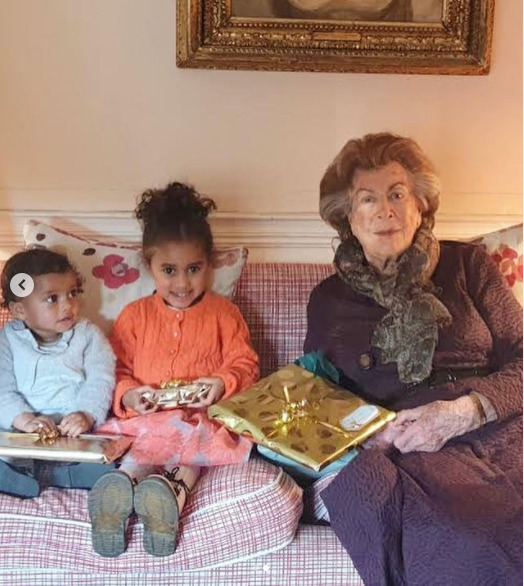
For the other part of his claim that people racially profiled him, it is believable that that detail missed vetting given how many people seem to be unaware that there are plenty of people of African or other minority descent married into the British aristocracy, in addition to the ones  holding peerages in their own rights. The Marchioness of Bath, wife of the 8th Marquess, is the daughter of an Oxford-educated Nigerian chief. Her words in response to questions about being a Black marchioness were, “I see my role as a practical thing: as a wife, mother and someone with a responsibility to maintain this incredible estate. I aspire to a future where [my skin colour] is not a defining characteristic.” Lord Mountbatten’s great-granddaughter and first cousin twice removed (granddaughter of first cousin) of Prince Philip is married to a Black man, with whom she has three children. She and they are in the line of succession for both the Earldom of Burma and the British throne. She put up a picture of her children and grandmother, Lady Pamela Hicks, Lord Mountbatten’s second daughter on Instagram in April 2021, a month after The Independent ran its fake story.

Lady Pamela Hicks and two of her great-grandchildren

There’s probably no connection, but one wonders. And lest anyone think that it’s African-Americans who seem to have trouble with the British aristocracy, indisputably Black American Candace Owens is married to the Honourable George Farmer, son of Michael Farmer, Baron Farmer. Owen’s and Farmer’s son is a mixed-race member of the aristocracy. Her retort in response to issues of titles and race was “If you have seen a picture of Archie and you believe he suffered anti-black racism, then call me a Nigerian prince and give me your credit card number.” In claiming racist profiling, Alexander Maier-Dlamini revealed that he was unable to transcend the boundaries of his own limitations and concocted stories which might fit the experiences of a young man from New Rochelle, but which reveal that he didn’t do the most basic research on the group of people whose membership he claimed.

Alexander Maier-Dlamini’s failure to research or to understand the intricacies of aristocracy is his own. The Independent giving him a platform is theirs. It would be nice to say that The Independent’s editors suffered from bias confirmation, that psychological condition where because the data appear to fit preformed conclusions, one doesn’t check. The reality, though, is that there were so many signs that Maier-Dlamini was a fraud that there is no explanation for the editors’ failure. Even the most bias-blinded person should be able to stop and say “wouldn’t a real aristocrat know whether he is Lord Annaville or Lord Alexander?” Since the answer is “yes, a real aristocrat would know.” That should have triggered a fact check.

A Note on “Hayekian” Empirical Normative Systems

In the first volume of Law, Legislation and Liberty (1973), we will find the most daring theses of Friedrich Hayek regarding the problem between law and politics. Just as his economic work of the 1930s and 1940s had been, in his opinion, misunderstood by his colleagues; just as he was surprised to hear the fervent readers of The Road to Serfdom (1945) attribute positions to him that he had not exposed there; also his legal-political work triggered simplifying interpretations that conceal the main contributions, still relevant for this time.

In Norms and order –that is the title of that first volume- the author does not propose to abandon legislation and return to customary law, nor to replace the political decisions of the administration of state affairs by a government of judges. On the contrary, it is stated there with a clarity that leaves no room for doubt that the powers of the state must be organised and operate in accordance with the rules and procedures of public law, made up of legislative bodies endowed with rules with a clear teleological content.

On the other hand, the genuinely innovative thesis that Hayek exposes in the aforementioned volume consists in affirming that the interactions between individuals in the scope of their exchanges destined to cooperate freely and voluntarily in the coordination of their respective life plans are structured around a set of abstract rules –that is, lacking a specific purpose- and general rules whose observance could occur in practice without the need for a positive enunciation. It is for this reason that Hayek affirms that the law is not created, but discovered, and that it is not legislated, but rather evolves.

On this last point, John Gray at his time, many years after Hayek’s death, lamented that his former mentor had spent the last years of his life discussing pseudoscientific ideas around alleged evolutionary theories. However, such suspicion cannot fall in any way on the triptych of “Law, Legislation and Liberty” (1973; 1976 and 1979).

What is found in the said work is an express taking sides with a tradition of thought that extends from the Late Middle Ages, the Renaissance and the beginnings of Modernity: the school of natural law understood as something different from an ideal, derived from reason, about what should be, but to a set of normative beliefs effectively extended in a given population, which condition their behaviour, contribute to the formulation of a critical judgement about the value of actions and allow the formation of expectations about the expected behaviour of peers and, therefore, facilitate the ideation and coordination of individual plans.

For Hayek’s own epistemological conceptions, this tradition of thought acts as a kind of discovery mechanism on certain aspects of the legal phenomenon and the structural characteristics present in all human interaction and therefore his constant appeal to the history of ideas.

Hayek, in a peaceful and incontrovertible way for any specialist in the matter, syndicates Hugo Grotius as the initiator of the rationalist and idealist school of natural law, although holding him responsible, as he did, for the evolution of the identification of legislation as the only and exclusive source of law could be considered as an overly emphatic statement, which would abandon the very premises of cultural evolutionism to which Hayek himself adhered: if Grotius’ theses were so successful, it was largely due to the subsequent advent of the national states.

Although the truth is, however, that the characterization of Natural Law as a derivative of reason later allowed, in the 20th century, to receive from legal positivism the rejection of all Natural Law as “metaphysical”, thus leaving the formulation of the Law at the mercy of politics and, with it, in a serious crisis the very notion of “Rule of Law”.

It is for this reason that Hayek set out to rehabilitate the empiricist current of Natural Law, which seeks normative statements not in the derivations of reason, but in the discovery of notions about what could be considered right behaviour towards others through the investigation of patterns of behaviour actually observed in a given community that is structured around peaceful exchanges repeated over time.

The archetypal example of such kinds of normative structures given in practice, independently of their enunciation by any type of legislator, is represented by the communities of merchants: a repeated series of regular exchanges generates certain expectations about the conduct to be observed by the members of said group of merchants, which also allow to conceive and coordinate other business plans. For this reason, many times, conflicts between merchants are resolved through friendly settlers, or arbitrations, and judges resort to the opinion of specialised experts in a certain commercial area to dictate their decisions.

Such examples do not constitute proof that all law is spontaneous, but rather a powerful counterexample to the theses that hold, on the one hand, that legislation is the only possible source of law and those that, on the other, affirm that all law must be derived from reason.

Although both antithetical visions are synthesised in the figure of the rational legislator, whose legislative enunciations are derivatives of public reason, this in turn receives -in the first half of the 20th century and today- challenges from Realistic doctrines, which state that legislative activity is not a product of public reason, but of the exercise of political will.

It is in relation to this contest that Hayek plays the card of cultural evolutionism and of the legal system as a spontaneous order. In this sense “Law, Legislation and Liberty” is a new elaboration of “The Road to Serfdom”.

This theoretical controversy maintains its full validity to date: the confrontation that the predominant species of Liberalism, of an idealistic and rationalist nature, seems to be losing against Political Realism, which places political will above a system of human coexistence based on rules and not on discretionary decisions. In Hayek’s case, he sides with a rule-based political system, but what sets him apart from prevailing Liberalism is that such rules are not derived from reason, but rather emerge from experience.

This experience not only produces norms of just conduct to be discovered by the courts and enunciated by legislators, but it is also responsible for structuring the very apparatus for understanding such norms. It is for this reason that Hayek himself, in his book The Sensory Order (1952), called his particular philosophical vision “pure empiricism.”

Of course, an empiricist conception of Natural or Fundamental Rights – based on Adam Ferguson, David Hume and Edmund Burke, among others – is not exempt from difficulties, the main one being the task of identifying those empirical norms that effectively contribute to maintain a peaceful order of coexistence and provide them with the corresponding enforcement.

However, despite such difficulties, affirming that the existence of Natural Rights emerges from the experience that structure a peaceful order of coexistence and that they are the ones that legitimise the exercise of power and not vice versa, already constitutes in itself an affirmation worthy of being considered and, eventually, defended.

The case for Taiwan’s statehood

When Russia invaded Ukraine a few short weeks ago, some people began to worry that China might try to do the same thing with Taiwan. I didn’t worry about this myself, as China is mostly a paper tiger, but also because the US has close military ties with Taiwan. Taiwan has close economic relationships with several wealthy democratic states in East Asia, too. Contrast this geopolitical context with Ukraine, and the parallels, while tempting, do not add up.

The whole debate and worry over Taiwan got me thinking again about federation as a libertarian foreign policy. Why shouldn’t Taiwan just join the United States? Here are the most common objections to such a federation:

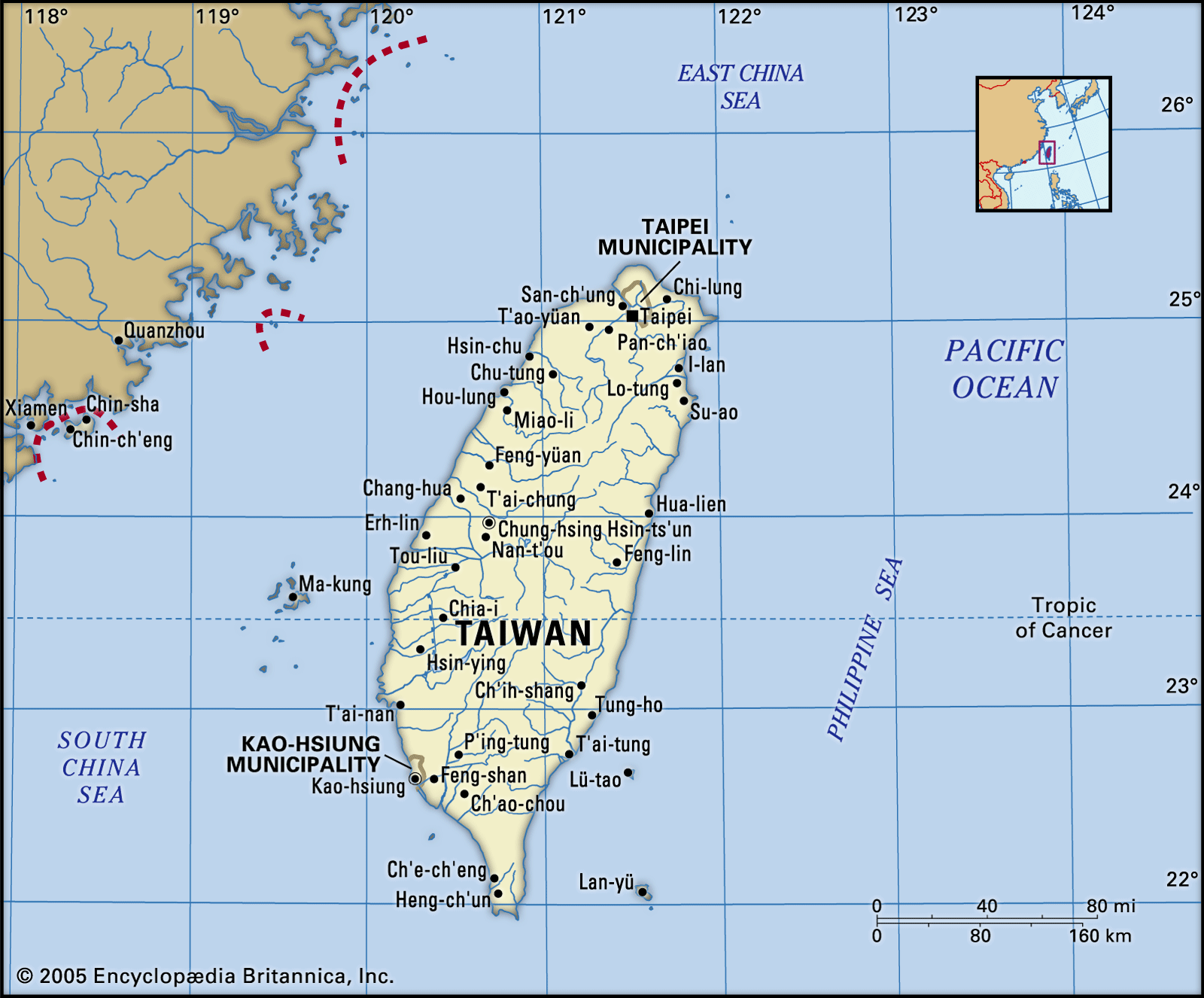
Geography. This is probably one of the strongest cases against Taiwan joining the US, since it’s so far away from not only the mainland but Hawaii, too. Aaaand it’s just off the coast of China, which would likely cause friction with the regional power were Beijing to suddenly find itself neighboring a transoceanic republic.

(Source)

This is all much ado about nothing. A plane ride from Dallas to Taipei is 14 hours if you take out the layovers. Somebody living in Kaohsiung could send me an email after reading this essay and I could access it within minutes. Geography still matters, but its not an insurmountable barrier to a freer, more open world via the federative principles of the United States constitution.

Culture. A big complaint I see about adding “states” to the American republic is “culture.” Fellow Notewriter Edwin does this all the time, and it can make sense, on the surface, in some cases, but not in Taiwan’s, and not in the Indo-Pacific more generally.

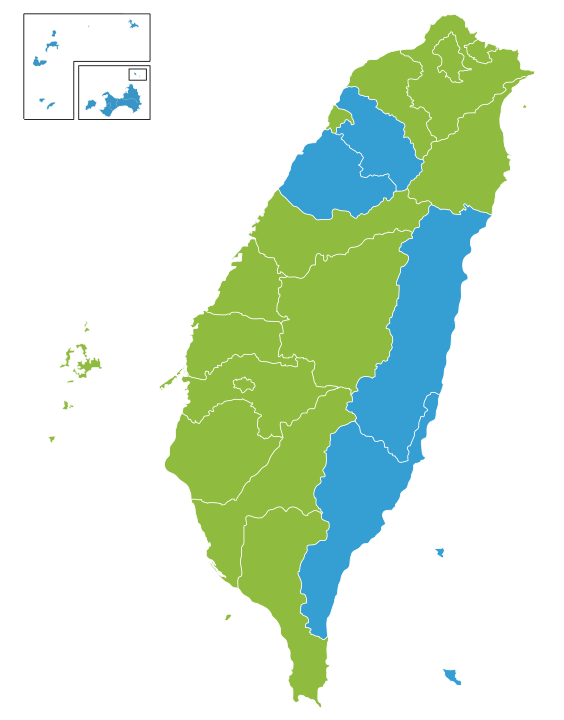
Look at Taiwan’s 2020 presidential election results:

(Source)

Look familiar? There’s only two colors. It’s a contest between a left-wing and right-wing, and both wings are committed to, and bound by, liberty and democracy. There are no “ethnic” parties, no “religious” parties, and no radical parties, mostly because Taiwan has the same electoral system as the US does: a “first-past-the post” one. So the cultural angle is even weaker than first imagined. Taiwan started out as a nationalist holdout against the Communist Party, but today nationalism doesn’t carry a whole lot of weight. Adding Taiwan to the republic would be like adding another California or Hawaii, albeit with more conservative votes. It’s plausible that adding Taiwan would give Democrats two more reliable seats in the senate, but this is merely cause to invite a polity that would reliably vote Republican to also join the United States.

Self-determination / cultural autonomy. There’s an argument in some circles that joining the US would be akin to losing self-determination and even cultural autonomy. I don’t see how any of this could be true. Even today, people in American states retain a “state-centric” identity when it comes to thinking about their place in the US. That Taiwanese would be able to add “American” to a plethora of other identities already at their disposal could only be a good thing.

China. Would China fight a war against the US over Taiwan statehood? Maybe, but given Russia’s poor showing in Ukraine, the war would end quickly, at least from a Taiwanese statehood perspective. The CCP’s military has no fighting experience, unproven tech, unproven hardware, and…no fighting experience. The worst that would happen, I think, is that the CCP threatens war, maybe sends some warships to the strait, maybe fires some rockets over the island and flies some fighter jets over the island, but that’s about it. The CCP just doesn’t have the muster to fight a war against the United States over Taiwan.


These four objections are so common that I can’t help but be exasperated by their banality, especially given the rich tradition of republican security theory and federalist thought over the past three or four thousand years. There are two reasons for Americans, and especially libertarians, to support Taiwan’s federation with the US:

The free riding problem. The first thing that all libertarians complain about when it comes to “foreign policy” is the free riding problem. This is a problem in political economy where agents will enjoy the benefits of a policy at the expense of other agents who are required to bear the costs. Libertarians aren’t wrong to complain about the free riding problem. It’s a big problem. Think of a Russian attack on NATO ally Lithuania.

Taiwan has a fairly hard guarantee of US military support were the Communist Party of China to attack it. This, the argument goes, allows Taiwan to be a bit more reckless than it otherwise would be when dealing with Beijing. Therefore, according to non-interventionists, the US should simply stop guaranteeing Taiwan’s military security and just trade with the people of the island instead. It would be an awful scenario to face were Taiwan to goad China into attacking it and thus draw the US into a war with China.

Federating would end the free riding problem once and for all. Taiwan’s citizens would be American citizens. They would benefit, and pay the costs, associated with such citizenship.

Sovereignty. Taiwan is not a sovereign nation-state, as China has blocked all of the island’s attempts to become so, and it never will be so long as nation-state status depends upon recognition by large states such as Russia and China (as well as the US). This actually makes it easier for Taiwan to join the republic. The American senate is a tool of international diplomacy that was utilized to bind independent states together in a federal union by trading their sovereignty for seats in a powerful upper house of Congress. Taiwan wouldn’t have to go through the arduous process of debating whether or not its sovereignty is worth the price of admission into a North American federal order, because its status as a Westphalian sovereign nation-state is non-existent.

By incorporating Taiwan into its federal order, the US could revamp the liberal world order, and it could do so by adhering to the principles which made it a beacon for liberty in the first place.

Deprivations Of Liberty Seen Through Ekphrastic Poetry

I’ve discovered and admired a wide variety of original thinkers during my eleven-year stay in the United States, from philosopher Eric Hoffer to economist and social theorist Thomas Sowell. From American history professor Barbara J. Fields to American political philosopher Harvey Mansfield. From Tyler Cowen, an American economist, and David Boaz, a libertarian thinker, to Paul Graham, an English-born American venture capitalist and essayist. One among them is Natasha Trethewey, a two-time US Poet Laureate.

My favorite contemporary American poet, Natasha Trethewey’s poems have an Ekphrastic quality because she graphically and implicitly explores her individuality and deprivations of liberty through deeply evocative accounts of her past and personal photographs rooted in her experience of race and culture.

As it is World Poetry Day, I thought I’d share three of her poems that appeal to me. But first, a little background on her: She was born on the centennial of Confederate Memorial Day in the Deep South to an African American mother and a white father when interracial marriage was still illegal in Mississippi. Though her father, poet Eric Trethewey, had an early impact on her, her mother, Gwendolyn Ann Turnbough’s tragic death, according to Trethewey, prompted her first attempt at writing poetry.

I hope you enjoy these poems and explore more of her work.

History Lesson

I am four in this photograph, standing   

on a wide strip of Mississippi beach,   

my hands on the flowered hips

of a bright bikini. My toes dig in,   

curl around wet sand. The sun cuts   

the rippling Gulf in flashes with each   

tidal rush. Minnows dart at my feet

glinting like switchblades. I am alone

except for my grandmother, other side   

of the camera, telling me how to pose.   

It is 1970, two years after they opened   

the rest of this beach to us,   

forty years since the photograph   

where she stood on a narrow plot   

of sand marked colored, smiling,

her hands on the flowered hips   

of a cotton meal-sack dress.

[Natasha Trethewey, “History Lesson” from Domestic Work.]

Southern History

Before the war, they were happy, he said.
quoting our textbook.  (This was senior-year

history class.)  The slaves were clothed, fed,
and better off under a master’s care.

I watched the words blur on the page.  No one
raised a hand, disagreed.  Not even me.

It was late; we still had Reconstruction
to cover before the test, and — luckily —

three hours of watching Gone with the Wind.
History, the teacher said, of the old South —

a true account of how things were back then.
On screen a slave stood big as life: big mouth,

bucked eyes, our textbook’s grinning proof — a lie
my teacher guarded.  Silent, so did I.

[Natasha Trethewey, “Southern History” from Native Guard.]

Flounder

Here, she said, put this on your head.

She handed me a hat.

You ’bout as white as your dad,

and you gone stay like that.

Aunt Sugar rolled her nylons down

around each bony ankle,

and I rolled down my white knee socks

letting my thin legs dangle,

circling them just above water

and silver backs of minnows

flitting here then there between

the sun spots and the shadows.

This is how you hold the pole

to cast the line out straight.

Now put that worm on your hook,

throw it out and wait.

She sat spitting tobacco juice

into a coffee cup.

Hunkered down when she felt the bite,

jerked the pole straight up

reeling and tugging hard at the fish

that wriggled and tried to fight back.

A flounder, she said, and you can tell

’cause one of its sides is black.

The other side is white, she said.

It landed with a thump.

I stood there watching that fish flip-flop,

switch sides with every jump.

[Natasha Trethewey, “Flounder” from Domestic Work.]

Talking about Trethewey’s poetry, Jericho Brown, a Pulitzer Prize-winning poet, says, “Her contribution is that of someone who sees us in individual and human ways and not only representations of resistance. Her black Union soldiers fall in love, her overworked grandmother plays a mischievous trick on a foreman, her black stepfather is a murderer, and her white father, who loves her, can’t resist microaggressions against her. I mean she allows her characters — her own history — to be as complex as history really is. This makes space for readers like me who are interested in life and not a caricature of life, readers who understand that poems must face us to our good and our evil and our personhood no matter what color we are.” Apart from Brown’s insight into Trethewey’s poetry invoking a strand of individuality that goes beyond trying to paint groups of people as symbols of resistance, I have often wondered what it is about her poems that appeal to me. Though I have no firsthand experience of what a troubled relationship with racial identity feels like, I suppose it may have something to do with my uneasy alliance with the English language itself—the medium of Trethewey’s craft. English is both the language of enslavement and revolt in a multilingual India. Though a colonial language, India has adopted English as its father tongue, yet we don’t fall under the Anglosphere-type of society. For most Indians, including me, English is characterized by ambiguity and conflict with our mother tongues, often mirroring a flounder-like situation—flip-flopping, switching sides with every jump, privileging one or the other, yet interpreting each other in the search for liberty.

Trethewey with her parents, Gwendolyn and Eric (also a poet), in Mississippi in 1966. The couple would separate seven years later. [https://www.chicagomag.com/chicago-magazine/august-2020/the-reckoning-of-natasha-trethewey/}

Here’s some more from Natasha Trethewey

Knowledge

South

Providence

2022 Hayek Essay Contest

The Mont Pelerin Society (MPS) announces Friedrich A. Hayek Fellowships for its 2022 Biennial Congress and General Meeting, which will be hosted October 4-8, 2022 in Oslo, Norway.

The MPS encourages members to share this announcement with any eligible and interested individuals (see Rules of Eligibility and Submission Guidelines below), who would like to submit an essay and receive consideration for a Fellowship to attend the meeting:First prize: $2500 cash award + travel grant*Second prize: $1500 cash award + travel grant*Third prize: $1000 cash award + travel grant**Travel grant includes coach class airfare, registration fee, and most meals. Hotel, other food, and other expenses will be the responsibility of the attendee.

The essays will be judged by an international panel of three members of the Society. Essays structured as a professional scholarly journal article are especially encouraged.
 Contest ThemeThe MPS welcomes submissions addressing the following questions related to the meeting theme:What type of international order is most conducive to the preservation of liberalism?What is the appropriate role for the subsidiarity principle and/or secession?What cultural domestic underpinnings are necessary for successful international orders?How does trade policy relate to and/or influence the larger institutional international order?Submissions may also address one or both of the following quotes from Hayek.
“An international authority which effectively limits the powers of the state over the individual will be one of the best safeguards of peace. The international Rule of Law must become a safeguard as much against the tyranny of the state over the individual as against the tyranny of the new super-state over the national communities. Neither an omnipotent super-state, nor a loose association of ‘free nations’, but a community of nations of free men must be our goal.”
– Hayek, Friedrich (1944, 1976) The Road To Serfdom. Routledge & Kegan Paul. p. 175.
“Since it has been argued so far that an essentially liberal economic regime is a necessary condition for the success of any interstate federation, it may be added, in conclusion, that the converse is no less true: the abrogation of national sovereignties and the creation of an effective international order of law is a necessary complement and the logical consummation of the liberal program.”
– Hayek, Friedrich (1939) The Economic Conditions of Interstate Federalism, reprinted in Individualism and Economic Order (1949, 1976). Routledge & Kegan Paul. p. 269.
More information on the conference theme can be found here:
About MPS Oslo 2022.
Rules of Eligibility and Submission GuidelinesThe Hayek Essay Contest is open to all individuals 36 years old or younger. Entrants should write a 5,000 word (maximum) essay. Essays are due on Tuesday, May 31, 2022 and the winners will be announced on Thursday, June 30, 2022.Essays must be submitted in English only. Electronic versions should be sent to: MPS Young Scholars Program Committee. Authors of winning essays must present their papers at the General Meeting to receive their award.Download the Contest Announcement as a PDF Document:
2022 MPS Hayek Essay Contest.

Please contact the MPS Young Scholars Program Committee to address questions or request additional information.

Podcast Institute of Economic Affairs

I had a chat on classical liberalism, liberal international relations theory the standoff with Russia. It is about 25 minutes or so.

Race versus class: Identifying the difference

If a person were to receive a letter with the salutation “Hey girl!” and the closing “Kindly,” one would naturally start to make conclusions about the author. One might conjecture from the salutation that the letter is between intimates, though it could equally signify that the author is unaware of appropriate salutations for written communications. The closing “Kindly” would probably trigger a second of cognitive dissonance. “Kindly” has passive aggressive undertones, which is one reason etiquette guides discourage using it. This type of analysis — what sort of person wrote this letter? — relates to social class.

In October 2021, The New York Times’s literary arm, New York Times Magazine, published a story on a multi-year tussle between writers Dawn Dorland and Sonya Larson. In the process of lawsuits, Dorland’s side subpoenaed Larson’s group chats with other writers in which those who also knew Dorland discussed in frank terms how irritating they found her. As part of a court order to indicate types of research Larson did for her work, her lawyers submitted a list of resources which included a handful of academic research on the subject of “White Savior” complexes. To be fair to Larson, it is important to her short story that one character is Asian-American and the other is Caucasian, so it is logical that Larson would read some sources on the subject, as well as the others submitted which were on topics such as alcoholism or psychological conditions. However, as Larson herself is a mixed-race Asian-American and Dorland is Caucasian, followers of the case latched on to the detail as representative of the underlying problem between the two writers. In my opinion, dragging race into the Dorland-Larson debacle represents a problem of vocabulary: modern society has taken to using political race-based terms to describe issues of social class.

The salutation and closing described in the first paragraph come from an email Dorland wrote to Larson. The author of the New York Times Magazine story on Dawn Dorland and Sonya Larson chose to interpret Dorland’s sign off, “kindly,” as a sign of her altruistic mindset.  

To summarize a situation that occurred over several years, Dorland donated a kidney and created a Facebook group as a platform where she talked about her experiences in real time; Larson wrote a short story in which she used elements of some of Dorland’s story; the story won literary accolades; Dorland accused Larson of plagiarism and contacted the Boston Book Festival for promoting the story along with some of Larson’s other work; Larson sued Dorland for tortious interference and the courts found in Larson’s favor; Dorland countersued Larson for copyright violation; the courts ruled for Larson, citing that Larson hadn’t used enough of Dorland’s writings on the topic to qualify remotely as copyright violation; Dorland maintained that Larson had violated her rights and mounted a campaign to discredit Larson within professional literary circles.

Larson is the daughter of educated professionals. Her Caucasian-American father and her Asian-American mother are university professors. That said, her maternal grandparents were working-class immigrants who worked hard for their children’s futures. Dorland had an unstable childhood as the child of itinerant agricultural workers; eventually she ended up in Los Angeles. She obtained two graduate degrees, one from Harvard Divinity School and an MFA from University of Maryland. Given that she took a degree at a top university, one can argue that she had a ticket into the American bourgeois, if not the grands bourgeois. In this way, the American system worked: she was not denied opportunity based on parental background; she was welcomed as an equal within a professional network. In a broad sense, the two women were on a level of some parity: Larson was an established writer, but Dorland was a Harvard graduate.

The decision to project a racial narrative onto the debate was not Larson’s as is evident in the legal documents her lawyers submitted and the story itself. Those who latched onto a racial interpretation of the debacle missed to a great extent that while the story contained a traditional dichotomy, working-class minority woman opposed to a wealthy, though uncultured Caucasian for narrative purposes, the dynamic between the real people was, if anything, reversed. Based on cultural norms from around the world, who would start life higher, the child of a university professor, or the child of an itinerant laborer? In real life, a dynamic that works for fiction can be, and often is, inverted.

In one of the ping pong lawsuits, Dorland sued Larson for Intentional Infliction of Emotional Distress, citing that “Larson abruptly ceased speaking with Ms. Dorland” and had moved to “ostracize Ms. Dorland from their mutual acquaintances in the writing community.” The judge dismissed the IIED suit out of hand. Dorland’s charges were based on an earlier claim that she and Larson had been close personal friends. And this is where class differences start to show up. As a citizen journalist has found, Dorland met Larson around 2007 by dint of attending writing workshops at the arts center where Larson worked, but they were not the close friends Dorland portrayed in her lawsuits. Larson categorically stated via her lawyers that they “were never alone in the same room,” which implies all of the social activities close friends do, e.g. going to restaurants, cafés, or movies together, never occurred. This does not ipso facto mean Dorland lied; rather, the difference can indicate that there was a misunderstanding of proximity. Dorland rubbed shoulders with Larson for around seven years before moving away from Boston; Dorland attended Larson’s partner’s mother’s funeral; according to Dorland’s testimony, Larson attended Dorland’s going away party and presented a “meaningful gift.” Finally, and of more immediate interest to the judiciary, Dorland told Larson about her familial history. Depending on who is asked, this last is interpreted as either a sign of a friendship or as a sign that Dorland was an over-sharer. Both women could be correct in terms of their assessment of their friendship. What could be glancing and low-commitment contact in Larson’s social strata — in the American upper-middle class, one does not attend a goodbye party without a gift and one makes an effort to put some thought into it (after seven years, one should know enough about the recipient to choose an item that won’t trigger allergies and is in a pleasing color; this is simply common courtesy) — might be signs of deep friendship in Dorland’s. The lack of clarity in this is one reason the court ruled that there was no Intentional Infliction of Emotional Distress.

At this point, any racial issues remained part of the fictional short story. However, once the case went public, the racial dynamic took over the narrative in certain quarters. The polemic therefore bore little resemblance to the original problems between Dorland, Larson, and Larson’s friends. The latter two had problems with behaviors which were low-class, though neither Larson nor her friends are people who are likely to use that term. Use of racial language obscures the class issue, which undeniably matches contemporary sensibilities. After all, discussing the case in terms of class — on one side, a woman reveals medical procedures and conducts herself in a manner others might perceive as overly familiar, overly ebullient, while on the other side, a group of more established professionals decry her lack of gravitas, dignitas, or sense of privacy, while possibly sending out a snobbish aura — opens up an uncomfortable recognition of the existence of class divides, something which American society would prefer to ignore.

Throughout all of human history, societies have had acceptable and unacceptable behaviors. These are often cast in terms of upper- or lower-class. This is normal for humans. Attempting to deflect the matter is to ignore a fundamental part of how humans negotiate with each other. Creating a red herring of race issues serves no one. To the contrary, doing so increases problems as questions of conduct take on a political tone. Which is even less helpful as politics are polarizing enough without conflating class differences with political differences. Anecdotally, I know many people from the right and the left who are upper-class in their manners, tastes, activities, and professions, but equally I also know many people from both sides of the aisle who are decidedly lower-class in their behaviors, dress, entertainments, and lifestyle. Confusing political leanings with social class, as some people I know have, is truly not helpful. Having good table manners, dressing correctly, or behaving appropriately with others is not a matter of conservative or liberal, Republican or Democrat, but if a person has tangled “Conservative” with “polished,” or “slovenly” with “Liberal,” then one will see political boogeymen in every corner of life. 

Monday’s Vintage Whines

  1. Brilliant metal puns shall not be forgotten
  2. I generally like Noah Smith’s economics made simple explanations and have read him since his old blog days (I still check his substack, and Bloomberg, pieces)
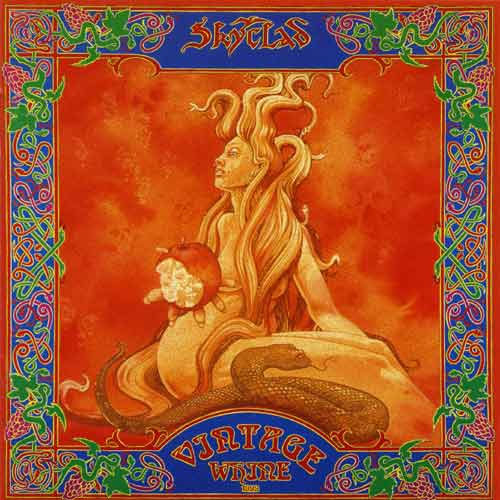
Skyclad rocked (never got interested in their pagan tendencies and gibberish fonts, though) – Source

So, NS reposted The liberty of local bullies, a decade-old critique of libertarianism (using, in perfect economist style, a completely libertarian world as the basic assumption). I am sure almost everything is already said and done (late to the party!), but here goes anyway (from “theoretical” to “real-world” order):

  1. Those cartels that will push anyone not to their liking aside would not necessarily be invincible. Cartels/ trusts/ consortia/ whatever (probably) use government regulations to dig-in even more solidly. Take away the government’s heavy hand, and they get more exposed to competition.
  2. The high transaction costs of moving/ working elsewhere also go the same way.
  3. Liberal thought is not blind to misuses of private power (the usual quote here being *the* Adam Smith). Αt least one European liberal strand requires active trust-busting policies as a prerequisite for protection against such consolidations (ordoliberalism of 1930s-50s). Also, the mother of legislative trust-busting, the US Sherman Act of 1890, was signed by a Republican President. Since NS hedges as he gears his offensive to American expressions of the liberty creed, I am at a loss if this law could claim a liberal (libertarian?) root.

The Misdiagnosis That Continues To Save Lives: Origin Story Of The War On Cancer

In 1969, Colonel Luke Quinn, a U.S. Army Air Force officer in World War II, was diagnosed with inoperable gallbladder cancer. Surprisingly, he was referred to Dr. DeVita, the lymphoma specialist at National Cancer Institute, by the great Harvard pathologist Sidney Farber — famous for developing one of the most successful chemotherapies ever discovered. Nobody imagined back then that Colonel Luke Quinn, a wiry man with grey hair and a fierce frown with his unusual and likely incurable cancer, would significantly impact how we look at cancer as a disease.

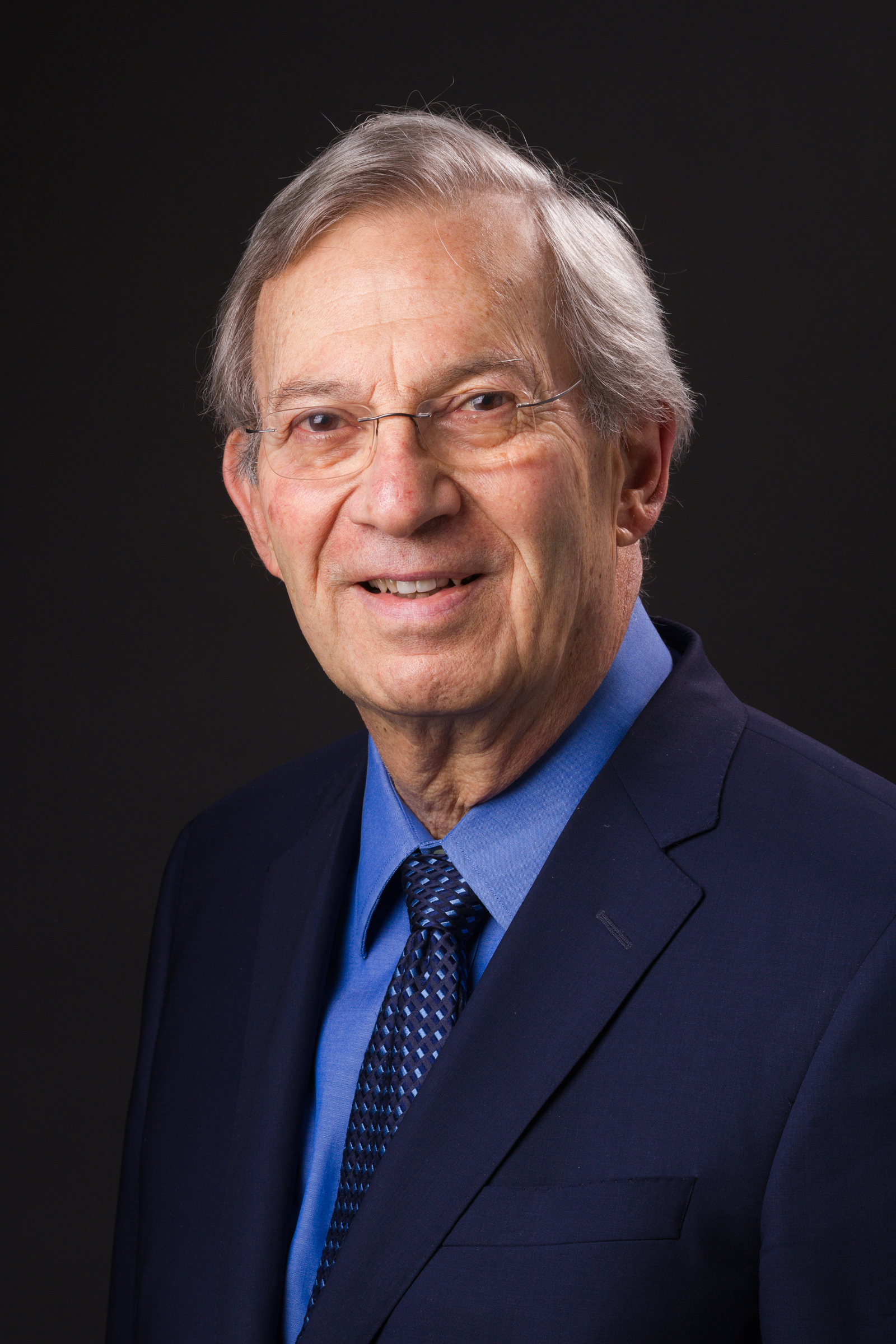
Vincent DeVita Jr, MD; Author: The Death of Cancer

Having been coerced to take up the case of Colonel Luke Quinn, despite gallbladder cancers not being his specialty, Dr.DeVita began to take a routine history, much to the annoyance of Luke Quinn who was used to being in command. Though Quinn glared at Dr.DeVita for reinitiating another agonizing round of (im)patient history, he said he had gone to his primary care physician in D.C. when his skin and the whites of his eyes had turned a deep shade of yellow — jaundice. Suspecting obstructive jaundice—a blockage somewhere in the gallbladder, Quinn was referred to Claude Welch, a famous abdominal surgeon at Mass general who had treated Pope John Paull II when he was shot in 1981. Instead of gallstones, the renowned surgeon found a tangled mass of tissue squeezing Quinn’s gallbladder—gallbladder cancer was pretty much a death sentence. On the pathologist’s confirmation, Quinn, being declared inoperable, was sent to Dr.DeVita at NCI as he wanted to be treated near his home. 

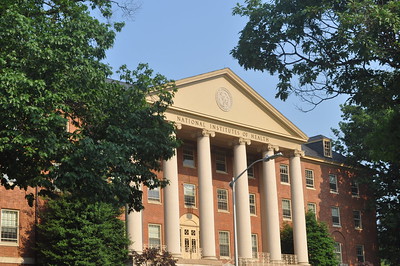
James H. Shannon Building (Building One), NIH campus, Bethesda, MD

Dr.DeVita, however, noticed something quite odd when he felt Quinn’s armpits during a routine examination. Quinn’s axillary lymph nodes—the cluster of glands working as a sentinel for what’s going on in the body—under his arms were enlarged and rubbery. These glands tend to become tender when the body has an infection and hard if it has solid tumors—like gallbladder cancer; they become rubbery if there is lymphoma. Being a lymphoma specialist, the startled Dr. DeVita questioned the possibility of a misdiagnosis—what if Quinn had lymphoma, not a solid tumor wrapping around his gallbladder leading to jaundice?

On being asked for his biopsy slides to be reevaluated, the always-in-command Colonel Luke Quinn angrily handed them over to the pathologist at NCI and sat impatiently in the waiting room. Costan Berard, the pathologist reviewing Quinn’s biopsy slides, detected an artifact in the image that had made it difficult to differentiate one kind of cancer cell from the other. Gallbladder cancers are elliptical, whereas Lymphoma cells are round. The roundish lymphoma cells can look like the elliptical gallbladder cancer cells when squeezed during the biopsy. This unusual finding by Berard explained why Quinn’s lymph nodes were not hard but rubbery. The new biopsy showed without a doubt that Quinn had non-Hodgkin’s lymphoma —the clumsy non-name we still go by to classify all lymphomas that are not Hodgkin’s disease. 

COSTAN W. BERARD, MD (1932-2013)

The NCI was working on C-MOPP, a new cocktail of drugs to treat non-Hodgkin’s lymphoma that had shown a two-year remission in forty percent of aggressive versions of this disease. The always-in-command WW II veteran had somehow landed in the right place by accident! It was a long three months for the nurses though, as they hated him for leaning on the call button all-day, for complaining bitterly about the food, for chastising anyone who forgot to address him, Colonel Quinn, and for never thanking anyone. But incredibly, he was discharged without any sign of his tumor; he had gone from certain death to a fighting chance. 

The fierce and unpleasant Colonel Quinn is crucial because his initial misdiagnosis unknowingly spurred the creation of a close network of influential people during his remarkable escape from certain death. He could do this because he was a friend and employee of the socialite and philanthropist Mary Lasker—the most consequential person in the politics of medical research. Read my earlier piece on her

Mary Lasker on her living room sofa; Mid 1950s. Courtesy of the Albert and Mary Lasker Foundation.

Mary Lasker, the timid, beehived socialite circumvented all conventions of medical research management and got the U.S. Congress to do things her way. Mary’s mantra was: Congress never funds a concept like “cancer research,” but propose funding an institute named after a feared disease, and Congress leaps on it. Her incessant lobbying with the backing of her husband, Albert Lasker and her confidante, Florence Mahoney, wife of the publisher of The Miami News, helped create the National Cancer Institute, the National Heart Institute, the National Eye Institute, the National Institute of Mental Health, the National Institute of Dental and Craniofacial Research, the National Institute of Arthritis and Metabolic Diseases, the National Institute of Aging, and the National Institute of Child Health and Human Development. 

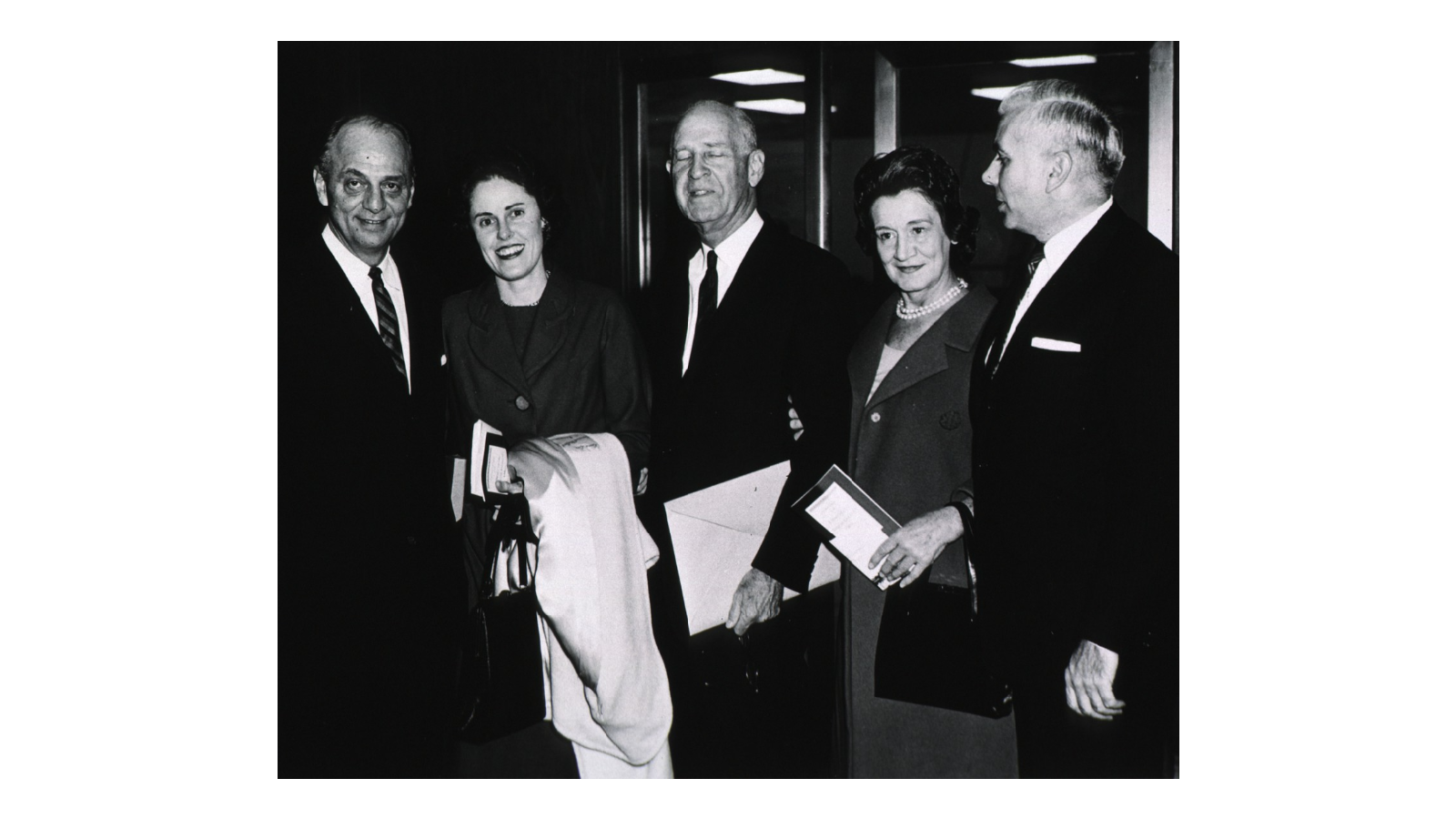
From Left to Right: Luther Terry, Mary Lasker, Lister Hill, Florence Mahoney, and Boisfeuillet Jones [Credit: The National Library of Medicine]

Though Mary Lasker knew the value of independent investigators pursuing their unique research interests, she supported projects only when a clinical goal was perceptible, like curing tuberculosis. In 1946, Mary, having noticed microbiologist Selman Waksman’s work on streptomycin—a new class of antibiotics effective against microbes resistant to penicillin—persuaded him and Merck pharmaceutical company to test the new drug against TB. By 1952 Mary’s instinct had won over Waksman’s initial skepticism as the widespread use of streptomycin halved the mortality from TB! Mary Lasker’s catalytic influence on basic research leading to a Nobel Prize-winning discovery is a case in point.

Her clout over Congress was in its prime through the 1950s and 60s when the National Cancer Institute (NCI) was developing the first cancer cures. It was also the period when Colonel Luke Quinn became her influential lieutenant. The Congress believed Luke Quinn represented the American Cancer Society, but he was Mary’s lobbyist in reality. When Quinn got sick, Mary used her contacts to get Welch and Sidney Farber, but it got her special attention when Quinn’s incurable torment was overcome. The ongoing public concern for cancer and Albert Lasker’s death due to pancreatic cancer made it an ideal disease for Mary to draw the battle lines. Quinn’s recovery convinced her that the necessary advance in basic research had occurred to justify taking the disease head-on. In April 1970, she began building bipartisan support by having the Senate create the National Panel of Consultants on the Conquest of Cancer. She prevailed over the Texas Democrat senator Ralph Yarborough to appoint her friend, a wealthy Republican businessman Benno C. Schmidt —the chairman of Memorial Sloan Kettering board of managers—to be the chairman on the conquest of cancer panel. She backed him up by arranging Sidney Farber as the co-chairman. The panel also included Colonel Luke Quinn and Mary herself.

In just six months, the panel issued “The Yarborough Report.” The report, mainly written by Colonel Luke Quinn and Mary Lasker, made far-reaching recommendations, including an independent national cancer authority. It recommended a substantial increase in funding for cancer research from $180 million in 1971 to $400 million in 1972 and reaching $1 billion by 1976. Finally, it recommended that the approval of anticancer drugs be moved from the FDA to the new cancer authority. Senator Edward Kennedy presented the recommendations as new legislation for the Ninety-Second Congress. Though not a Senate staff member, Colonel Quinn, trained by Mary in the art of testifying before the Congress, orchestrated the hearings, set the agenda, and selected the people who would testify.

Washington Post: 9 December 1969;  Citizens Committee for the Conquest of Cancer. 

The Nixon administration did not immediately embrace the bill as he wasn’t thrilled by Edward Kennedy’s involvement. Being Ted Kennedy’s close friend, Mary asked him to withdraw as a sponsor. Under Senator Pete Domenici, the bill renamed the National Cancer Act had to pass in the House. Paul Rogers, who headed the House Health subcommittee—Colonel Quinn and Mary Lasker had no influence over him—objected to removing the NCI from the NIH umbrella. He cautioned the NIH would face similar threats of separation in other disease areas. A revised bill agreed to this demand and kept the NCI under the NIH but gave it a separate budget and a director appointed by the President. 

https://ascopost.com/issues/may-25-2021/how-the-national-cancer-act-of-1971-revolutionized-cancer-care-and-what-lies-ahead/

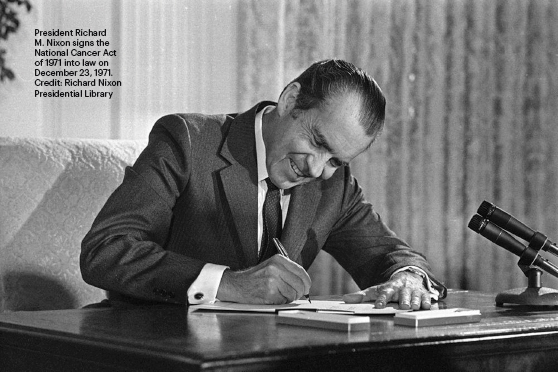
On December 23, 1971— fifty years to this day—the National Cancer Act was signed as a Christmas gift to the nation by President Richard Nixon, two years after Colonel Luke Quinn walked into the NCI with a wrong diagnosis. Though Quinn ultimately died of his relapsed cancer, a few months after the signing of the Cancer Act, the war on cancer had commenced with cancer research on the fast track. It was a victory for Mary Lasker, perhaps the most effective advocate for biomedical research that Washington had ever seen.

WASHINGTON: March 12 —Luke C. Quinn:au, a Capitol Hill spokesman, for the American Cancer Society, died of the disease yesterday in the National Institutes of Health

In hindsight, Mary Lasker’s triumph came with two significant disappointments. First, her crusade had failed in transferring the authority for approval of anticancer drugs from the FDA to the NCI—a failure that would plague the National Cancer Program well into the future. Second, the premise of the National Cancer Act that the “basic science was already there” and a quantitative boost in resources was all that was needed to bring victory was flawed. In combination, the two disappointments—the subjects of a future blog post—have spotlighted a perceived progress gap in cancer research by the tax-paying general public rather than underlining the tremendous conceptual progress made due to the War on Cancer. 

A dividing breast cancer cell.
Credit: National Cancer Institute / Univ. of Pittsburgh Cancer Institute

Ultimately, this blog is for you to appreciate the 50th anniversary of the lucky accidents and the incredible effort in creating the National Cancer Act. At the same time, personally, cancer researchers—the boots on the ground—like me who experience the non-triviality of progress in cancer will dwell on the insistence of simplistic linear views of progress in cancer research for public consumption.

Classical liberalism and the Russia crisis

HIGH DEMAND FOR HIGH CHEEKBONES

New York Post reports that another prominent “Pocahontas” has been exposed as a fraud. The most recent one was American “Cherokee” Senator Elizabeth Warren who had masqueraded as a woman of “color” to have a good boost in her early career of a lawyer and academic; later, when exposed, she became a butt of jokes for drawing attention to her “indigenous” high cheekbones. Now it is “Canadian Metis” Carrie Bourassa, scientific director of the Canadian Institutes of Health Research’s Institute of Indigenous Peoples’ Health. I wonder why they so eagerly seek to pass for Indians and join the “oppressed.” I suspect that the moral, political, and financial pie that society of “systemic racism” offers to real,  partial, and aspiring Indians is so rich and tasty that it is unbearably hard to resist a temptation not to have a bite of it. Incidentally, her detractors, who became suspicious that she was not a true Indian “Aryan,” do not even catch the irony of the whole situation: Bourassa claimed the Metis lineage; the Metis is a group that had in fact originated as the offspring of Native Americans (or First Nations, according the Canadian political jargon) and early Europeans; therefore, by default they are already not true “Aryans.” Yet, along with the “First Nations,” the Metis have been recognized by the Canadian government as a historically oppressed group that has been singled out for a special political, social, and financial treatment as a protected community. When a government creates moral and financial incentives to be indigenous, it unavoidably has to deal with the host of emerging “tribes,” “first nations,” and “high cheekbone” individuals on both sides of the US-Canadian border. In the meantime, let’s wait for a next episode of that exciting post-Modern politico-economic western that has been on for the past fifty years.


A Liberal View on Trade and Development

This is the pre-edited text of an article that will shortly be published in World Commerce Review (https://www.worldcommercereview.com)

The liberal tradition in political thought is by no means unified. The original ideas developed in the (Scottish) Enlightenment, most importantly by David Hume and Adam Smith, have been modified extensively. This has led to different definitions and practical applications of individual freedom, the core idea of liberalism, but also of most other ideas associated with the liberal tradition.[i] Regardless this proliferation, the wide liberal support for free trade and globalization as a means to alleviate poverty and foster human development more broadly has been rather constant, although the ideal of trade free from all government interference has never been within reach. With the World Trade Organization at shambles, the increase of bilateral and regional trade treaties which often hamper free trade more than fostering it, and a general anti-liberal sentiment across the globe, the liberal ideals may not be a very popular at present. However, this does not say anything about their empirical or moral validity. Liberal recipes to fight poverty and to foster development still work and need support, both through domestic and international policies. 

Global inequality

In international relations inequality is the norm, in many different fields. Often this is not problematic in liberal eyes, as long as individuals get the chance to use their talents in the way they see fit. Grave hindrances, for example caused by a lack of basic needs and insufficient protection of classical human rights should be removed, as they often make individual flourishing impossible.

In contrast to what is often thought, liberals are convinced it is possible for all countries to implement policies that foresee in these basic liberal preconditions. Most often, bad circumstances don’t just happen to countries, nor should they be seen as the inevitable result of regrettable historical events such as slavery, imperialism, let alone the alleged detrimental effects of capitalism. As Lomasky and Téson show, the fate of the inhabitants of developing countries lies not in the hand of failing rich countries, but are mainly due to poor domestic policies, lack of, or failing, domestic institutions and a no respect for classical human rights, such as freedom of opinion, right to property, or a free press.[ii] 

Evidence

Of course, this is a broad topic, which can be approached from many angles. In this short piece, the focus is on the above-mentioned classical liberal rights and measures, but also includes broader topics such as governance and the development of human capital, in Sub-Sahara Africa. This is made visible through an -admittedly- rough measure: the outcomes and ranking of countries in a number of well-known and internationally respected indexes. These indexes compare countries on domestic policies.

A presentation of this kind has to be treated with caution. Methodologically, the indexes are different and a comparison is not always easy or fully warranted. Definitions and operationalizations differ, just like the way results are aggregated into (final) scores.

Nevertheless, these indexes provide a useful indication of good policies from a liberal view. Especially for the countries of Sub-Sahara Africa, which mostly contain low income countries. Contrary to some assumptions that is no barrier for some governments to implement different policies. Being a low income country does not automatically lead to bad policies!

Indexes

Given space limitations, the five indexes are introduced by a broad outline. Please use the references for further information. For practical purposes 5 indexes are used, published in 2018 and 2019.     

  • Since the 1970s, Freedom House publishes the Freedom in the World Index, which determines how individual rights and liberties are applied and protected, on the basis of 25 indicators. It groups countries in ‘free’, ‘partly free’ and ‘not free’. The top 5 free countries in Sub-Saharan Africa are Ghana, Botswana, Namibia, Benin and Senegal.[iii]
  • The International Property Rights Index is published by the American Property Rights Alliance (PRI), expressing the degree of protection of property rights, both material and intellectual, per country. The PRI emphasizes that property rights are also human rights, and that they are essential for economic and social development. In 2019 Rwanda (42nd), South-Africa, Botswana, Ghana, Burkina Faso and Tanzania (73th) were the highest ranking Sub-Saharan countries.[iv]
  • Transparency International publishes The Corruption Perception Index, ranking countries to the degree there is corruption and fight corruption, surveyed among business people and experts. Corruption undermines the trust people have in the political and social-economic systems within societies. In the ranking, Sub-Saharan Africa is perceived as the region with the most corruption, still the countries that score best are Seychelles, Botswana, Cape Verde, Rwanda and Namibia.[v]
  • The Ibrahim Index measures the governance of African countries, defined as ‘the provision of political, social and economic public goods and services that every citizen has the right to expect from their government, and that a government has the responsibility to deliver to its citizens’. In the overall governance category, we find Namibia, Botswana, Ghana, South Africa and Rwanda.[vi] 
  • The World Bank publishes the Human Capital Index, which focuses on different indicators, such as infant mortality, life expectancy, and the chances on education for girls and boys. Countries that score best are: Zimbabwe, Gambia, Ghana, Namibia, Botswana and Senegal.[vii]          

This leads to the following summary:

IndexTop
Freedom in the WorldGhana, Botswana, Namibia, Benin, Senegal
International Property RightsRwanda, Zuid-Afrika, Botswana, Ghana, Burkina Faso, Tanzania
Transparency InternationalSeychellen, Botswana, Kaapverdië, Rwanda, Namibië
IbrahimNamibië, Botswana, Ghana, Zuid-Afrika, Rwanda
Human CapitalZimbabwe, Gambia, Ghana, Namibië, Botswana en Senegal

Especially Botswana, Namibia and Ghana succeed in implementing relative liberal policies, with South Africa, Senegal and Rwanda following their lead. It must be noted that a position on an index is always relative. None of the Sub-Saharan countries are in the absolute top, although some score surprisingly high. Also, this is not to claim these are countries without problems, or that they are liberal countries, let alone liberal-democratic ones. Their absolute rankings do not warrant such a suggestion. It does indicate that being a low-income country does not need to be a barrier to implement relatively liberal policies, which provide individual citizens more (social-economic) opportunities than is the case in other Sub-Saharan countries. Hence, the liberal emphasis on domestic policies is fully warranted.

Liberal international policies

Liberals believe domestic policy is most important to promote development. Still, the perennial practice in international relations also is: what can other countries do in support of this? The short liberal answer is one of restraint: stay clear, do not (militarily) interfere, be modest about the possible success of ‘helping’, while ensuring the best global economic conditions.

The latter is done through ensuring free trade, also the foreign economic policy liberals are most strongly associated with. The popularity of free trade has known its high and low tidings, ever since the Ancients.[viii] Therefore the current low esteem of free trade is nothing new. There have always been people who distrust trade, for economic, political or moral reasons.[ix] On the other hand, there are also too many liberals who have claimed way too much on behalf of free trade, especially its peace-enhancing effects, which are erroneous.[x] The lack of support for trade still deserves to be fought. Friedrich Hayek and Milton Friedman, to name two great thinkers, have shown the importance of continuing to argue against the topical grain.

The evidence continually shows the superior results of even relatively free trade, which has real effects for the improvement of the life of (poor) people. Countries that are committed to free trade become richer and are able to create more possibilities for (economic and human) development. Columbia University’s Arvind Panagariya is just one of the many who found clear evidence for that. In his book Free Trade and Prosperity he shows that developing countries have enormously profited from the recent wave of increasingly free world trade.[xi] The World Bank is even clearer:

Trade is an engine of growth that creates better jobs, reduces poverty, and increases economic opportunity. Recent research shows that trade liberalization increases economic growth by an average by 1.0 to 1.5 percentage points, resulting in 10 to 20 percent higher income after a decade. Trade has increased incomes by 24 percent globally since 1990, and 50 percent for the poorest 40 percent of the population. As a result, since 1990, over one billion people have moved out of poverty because of economic growth underpinned by better trade practices.[xii]

Yet, in contrast to Richard Cobden’s famous argument, it must be acknowledged free trade is no panacea. Domestic policies are needed to see that trade benefits find their way to the wider population. Also, when some groups are out-competed at the world market, they (temporarily) need domestic support. Still, the less than perfect trade arrangements of the last decades have had enormous positive effects on development.

Foreign Aid

By way of a closing remark, in contrast to trade, governmental development aid is not supported by liberals. It still largely is, as Lord Peter Bauer had it, ‘bringing money from the poor in the rich countries, to the rich in the poor countries’. The research of his modern day successors, most notably William Easterly and Dambisa Moyo, largely confirm this.[xiii] The structural effects of governmental foreign aid are minimal and often detrimental, resulting in ‘aid addiction’ in the receiving countries. Liberal have the same doubts about the structural effects of aid by private donors such as NGO’s (positive local effects are possible, for example in health care or education). Yet as long as these private donors donot use public money, this remains a case between donor and recipient. However, in liberal eyes it fails as an international policy to foster development.

Conclusion

Inequality and poverty remain a global reality, which can have detrimental effects to the development of individuals. Liberals think this should change, but emphasize this is mainly done through improved domestic policy in low-income countries based on proven liberal principles. This is not just theory, it is a real possibility, as the some of the countries in Sub-Sahara Africa show. The best way the world can assist in this process is to provide truly free trade, while abandoning governmental foreign aid. Global development is too important to not make the effort.  

Dr Edwin van de Haar is an independent scholar specialized in liberal international political theory and political economy (see www.edwinvandehaar.com). This article is based on a chapter published in a Dutch volume entitled Difference There Must Be. Liberal Views on Inequality, published by the liberal think tank Prof. Mr. B.M. Telders Foundation (www.teldersstichting.nl) 


[i] Edwin R. Van de Haar, Degrees of Freedom. Liberal Political Philosophy and Ideology (New York and London: Routledge, 2015).

[ii] Loren E. Lomasky and Fernando R. Tesón, Justice at a Distance. Extending Freedom Globally (Cambridge: Cambridge University Press, 2015).

[iii] Freedom House, Freedom in the World 2019 (Washington DC).

[iv] Property Rights Alliance, Property Rights Index 2019 (Washington DC).

[v] Transparency International, Corruptions Perceptions Index 2019 (Berlin).

[vi] Mo Ibrahim Foundation. 2018 Ibrahim Index of African Governance (London and Dakar).

[vii] World Bank, Human Capital Index 2018 (Washington DC).

[viii] Ronald Findlay and Kevin O’Rourke, Power and Plenty. Trade, War, and the World Economy in the Second Millennium (Princeton and Oxford: Princeton University Press, 2007).

[ix] Douglas A. Irwin, Against the Tide. An Intellectual History of Free Trade (Princeton: Princeton University Press, 1996); Jagdish Bhagwati, In Defense of Globalization (Oxford & New York: Oxford University Press, 2004); Razeen Sally, Trade Policy, New Century. The Wto, Ftas and Asia Rising (London: Institute of Economic Affairs, 2008).

[x] Edwin R. Van de Haar, “The Liberal Divide over Trade, War and Peace,” International Relations 24, no. 2 (2010); “Free Trade Does Not Foster Peace,” Economic Affairs 40, no. 2 (2020).

[xi] Arvind Panagariya, Free Trade and Prosperity: How Openness Helps the Developing Countries Grow Richer and Combat Poverty (Oxford: Oxford University Press, 2019).

[xii] www.worldbank.org/en/topic/trade/overview#1 (accessed 19 November 2021)

David Hume and Adam Smith

I recently wrote a short piece for Adam Smith Works, on the influence of David Hume on Adam Smith, in the field of trade and international politics.

You may find it here: https://www.adamsmithworks.org/speakings/van-de-haar-insights-of-david-hume