Sunday Poetry: Rilke’s “Autumn Day”

It has been a more than stressful week. To indulge in Rilke’s dreamy thoughts is not only a perfect stress-relief but also a chance to reminisce about the most beautiful moments of this autumn.

Rainer Maria Rilke – Autumn Day

“Lord: it is time. Great was the summer’s feast.
Now lay upon the sun-dials your shadow
And on the meadows have the winds released

Command the last fruits to round their shapes;
Grant two more days of south for vines to carry,
to their perfection thrust them on, and harry
the final sweetness into heavy grapes.

Who has not built his house, will not start now.
Who is now by himself will long be so,
Be wakeful, read, write lengthy letters, go
In vague disquiet pacing up and down
Denuded lanes, with leaves adrift below.”


I wish you all a pleasant Sunday.

Rawls, Antigone and the tragic irony of norms

Is civil disobedience justified when it invokes a moral objection to target a law that has been enacted through a legitimate process? The reason societies seek to establish a legitimate process in law making is because they want to set up common rules and norms which people who disagree with them will still have to abide by. However, history shows us many instances in which, even in a democratic system, civil disobedience both triggered and animated a debate on legitimately enacted rules and, often, led to their revision as well as the reform of the procedural rules that allowed their enactment in the first place.

Rawls’ position on civil disobedience struggles with this question. His position is that, once society has set up principles of justice in an institutional setting, acts of civil disobedience are just insofar as they appeal to the sense of justice of the majority and should be willing to bear the consequences of their actions. We may read the Rawlsian perspective as follows: these acts are still of value because they re-launch a process of public reasoning regarding the law itself.

However, the implications from this statement are broader and baffling. First, we don’t know how far this revision can go. Will it be allowed to cast doubt on the basic principles of justice which society previously agreed to observe? Can it challenge the procedural source of legitimacy for the contested norms?

Second, civic disobedience cannot be reduced to appeals to a sense of justice demanding the revision of law through the same process. Instead, the rationale behind civil disobedience reminds us that there will always be competing conceptions of justice that go as far as challenging the source of legitimacy – what some have come to accept as the just process may no longer seen as just by others. A society’s prior decision at a single historical moment that this is a just process for law making does not end the debate over different perceptions of justice concerning both norms and processes.

Moreover, acts of civil disobedience appear in moments in which different moral norms clash and judgment should be passed regarding which one takes precedence over the other. Episodes in the US history, particularly regarding the civil rights of African Americans, epitomize the important role of acts of disobedience in invoking a higher moral ground against norms approved by the majority through the institutions of a democratic system. We have learnt from history that these moments spawned animosities and brought about new episodes of conflict. They were emotionally disturbing episodes.

This implies that social contract theories tend to adopt an a-historical approach to norm-building and a, strangely- a-social view of public reasoning. Norm-building is seen as cleansed of emotions and often dismissive of the idea that there will be unintended and unforeseen consequences. A reduced historical and social conception of justice is what acts of civil disobedience reminds us of. The process of defining justice as norms and as process remains an open turf for never-ending, reflective social interactions that no constitutional moment can capture, crystallise and entrench indefinitely.

These three elements – the historicity and sociability of norms, normative contradiction, and the emotional dimension in the conflict over norms – is manifested in Sophocles’ masterpiece, Antigone. Sophocles’ theatrical play on civil disobedience was written around 441 BC, about 2,400 years before Rawls’s work. It conveys a nuanced message on norms, normative debates, public deliberation and reasoning, and sees the social nature of all as a human tragedy.

The play is set in the aftermath of a civil war in Thebes and the final battle which Thebes survives the attack of seven exiled Theban generals. One of the generals, Polynices, son of King Oedipus, fights his own brother, Eteocles, a defender of the city. In that fight, the two brothers kill each other.

Creon, the legitimate King of Thebes and uncle of the two brothers, issues a public order for Eteocles to be buried with honours and for Polynices to be left outside the walls to rot unburied as punishment for his betrayal. Creon also orders that whoever tries to bury Polynices’s body shall be arrested and executed.

Polynices’s sister, Antigone, defies Creon’s order and secretly buries her brother in accordance with the religious tradition that demands that the dead must be buried. Soon after, Antigone gets arrested and is brought by guards before Creon and the city. She chooses not to apologize for her actions or claim ignorance of law. Instead, she confronts Creon by invoking that the law of the gods is superior to the law of men.

Creon sentences her to death, publicly stating that everyone should be treated equally before the law. He would make no exception for her niece. Creon presents himself as a just leader who firmly adheres to ‘equality before the law’ even if that means he would sentence to death one of closest family members. The law, he stresses, is above everyone.

Antigone’s public act with an emotional appeal to the law of gods initially fails to trigger sympathy from the people of Thebes and Creon insists on his sentence. Antigone is taken off stage to be buried alive in a cave.

Creon’s own son and Antigone’s fiancé, Haemon, rushes to defend Antigone but he too fails to convince his father to change his decision. Even against his son, Creon reiterates his conviction that the law takes precedence over personal relations. But gradually the people of Thebes, the chorus of the play, changes its stance and starts showing more sympathy to Antigone’s drama.

In the next scene, a respected prophet named Tiresias makes a public interference. He tells Creon and the city that their neglect of the moral law will displease the gods and will bring more sorrow and pain to Creon’s family and the city of Thebes. The leader of the chorus changes his mind and asks Creon to reconsider his decision and set Antigone free. We are witnessing here that public is changing its views following a morally charged debate triggered by an act of civil disobedience. Antigone disobeyed the law guided by her love for her brother, but she was also honouring the law of the gods. Creon decides to spare Antigone. Emotions and fears have a drastic effect on public perceptions political decision making.

But Creon’s decision came too late. Antigone committed suicide. So did Haemon and, following the news of his death, her mother and Creon’s wife, Eurydice. The play ends with Creon devastated, isolated, discredited and vulnerable, and the city of Thebes descending back into chaos.

Rather than a clear clash between a hero and a villain, the two protagonists are tragic figures and so is the city itself. Creon wants to demonstrate that he is a prudent ruler who obeys the law that he rightfully sets. But he has to listen to the people he commands. His confrontation with Antigone is his own public act in which he defends his decision. The chorus, representing the people, initially sides with Creon but turns against him after observing a human drama unfolding and after hearing the menacing words of a prophet about the incoming doom. Perceptions of justice are drastically reshaped through an interplay of feelings, reasons and fears. Deliberation is emotionally charged.

Unlike Rawls, Sophocles’ theatrical play presents us with a richer blend of public reasoning, emotions, emotive responses, and unforeseen and unintended consequences in a debate over clashing norms and perceptions of justice. Creon – the personification of equal rules for everyone including his own relatives – is the legitimate political authority but his decision creates a personal and civic catastrophe. Thebes descends into a spiral of death and civil unrest. A just act of disobedience triggers a spiral of turmoil and tragedy. Emotions and personal affections guide decisions that produce unforeseen dramatic developments for the protagonists and the city as a whole.

The Greek drama is purposefully presented as a morally inconclusive story. Antigone had no initial intentions to make her actions a public statement and did not wish to bring down the entire political system. But after her arrest she did make a dramatic public defence of her stance invoking the moral law. Creon was surprised and angered, torn between his adherence to the rule of law and his duty towards his family. The Theban public watches all this astounded, emotional and anxious. This is far from a society that can be equilibrated into an orderly state. It cannot even rest secure about its own convictions.

Sophocles grasped much of what political theory tends to shy away from: the complexity and ambiguity surrounding normative thinking in human societies that tends to bring about tragic or fatal results for every system of norms shaken by its own contradictions. In short, Sophocles lyrically presents us the tragic irony of norms creation. Rather than taking a nomothetic stance, his play helps us reflect on the tragedy of human interactions from a nearly anthropological viewpoint.  

Sophocles allows the audience to pass their own judgment through both logical and emotional engagement. The audience is baffled by the merits of each of the opposing viewpoints – Creon’s defence of formal equality before the law and Antigone’s defence of a higher moral ground. But it is also touched and distraught by how tragic the protagonists are, trapped in the consequences of their own moral standing and reasoning. In Sophocles’ play, society is watching and reflecting on behaviors and norms through pathos, ethos and logos. After each performance, the verdict is a flow of tears rather than a canonical judgment.

You’re Not Worth My Time

In our polarized and politically intolerant times, intellectuals worry about the divisions in our societies. You might call it inequality or absence of social mobility, racism or rigid social structures but all pundits seem to agree that despite our apparent cosmopolitanism, many people’s opinions on lifestyles, politics, or economics are diverging. More so, their opinions about others’ opinions is less accepting. We disapprove of people that believe the wrong things, and we shun them in favor of like-minded people.

Economists like Paul Collier (The Future of Capitalism), Raghuram Rajan (The Third Pillar), and Branko Milanovic (Capitalism, Alone) are producing well-publicized books about how the social world of our current societies are collapsing – “coming apart at the seams”, as Collier phrases it. A recent book on technology and the environment by MIT researcher Andrew McAfee, states the following:

more and more people are choosing to have fewer ties to people with dissimilar values and beliefs, opting instead to spend more time among the like-minded. The journalist Bill Bishop calls this phenomenon ‘the big sort’. (2019:227)

The observation could have come straight out Jonathan Haidt, a scholar I greatly admire. Why do we do this Bishop-style sorting? A common assessment is that having people challenging my beliefs hurts my identity and I don’t like it. We rather go for echo chambers.

Let me be contrarian and obnoxious for a minute and defend this Big Sort: is it really that bad to distance oneself from those with different views and opt for like-minded people?

The Irrelevance of Political Opinion

It’s long been recognized by social scientists that politics drive people apart (together with ‘Economics’, ‘Religion’ and ‘Abortion’, forming the acronym R.A.P.E, the avoidance of which is key to successful social conversations). From being friendly customers in a decentralized marketplace, politics urges us to become enemies and opponents, demands that we confiscate one another’s stuff rather than cooperate in creating value for each other. Bringing up your position on some labor market reform or the taxation of the rich (of which your familiarity is probably quite limited) is likely to deteriorate a relation rather than improve it.

Here’s the thing: Life is much more important than politics. Life is the experiences we’ve had, the sunrises we’ve seen, the friends and relationships we’ve had and lost and the stories that came with them. Not to mention the food we ate and the things we did. What your stance is on the environment or what you think the long-term consequences of QE is going to be are all very secondary issues. They might be much more interesting to those of us who care about such things, but for the majority of people, they remain pretty immaterial.

What happens when you trumpet these R.A.P.E. topics in your indecent search for like-minded people – or even an experience-widening tolerant search for opponents? Consider the typically loud liberty-minded American: within five minutes in his (yes, his) presence, you know what his views are and he throws them in people’s faces whether they like it or not. Your group of acquaintances, likely consisting of people who couldn’t care less, gets annoyed. While some people may engage in serious conversations about politics or economics (or religion or abortion) once in a while, their lives are generally concerned with more worthwhile topics. Having some loud-mouthed libertarian invade their everyday life with provocative statements and logical argument is not just annoying, it is bad manners.

I can lecture anyone and everyone I meet on the brilliancy or markets or how Scottish banks operated in the 18th century, with the sole outcome that I will have no friends or even acquaintances. Sharing your political and economic views rarely endear you to other people; it merely makes you a nuisance.

In short: Don’t be an arse. Stop ruining our great time with mindless, hurtful, harmful politics.

What about the perspectives and knowledge of others?

If you must invade others’ lives with your pesky politics, speaking to people with diverging opinions and different background might be interesting and fruitful. Key words “might be”. More accurate words: “is rarely”.

It is true that you might learn some exciting things from random strangers, but it’s unlikely. Most people are less informed about the world than I am (if you doubt that, ask your conversation partners to take Rosling’s Gapminder test) – what are they going to “teach” me but inaccuracies and misinformation…?

Sure, my car-loving friends can teach me something *fascinating* about some new car, a topic a could care less about. My baseball-crazy friends could recount the latest Sox game or why Tom Brady is the greatest – oh, ye, that’s a different sport. Soz. But is an environmentalist really going to teach me anything worth knowing about the impacts of climate change? (No, how could they – they don’t understand markets or even capitalism). Is an Occupy Wall Streeter going to lecture me about how financial markets work and what banks really do? How is my mother contributing to my perspectives on monetary policy when the sheer extent of her monetary wisdom comes from a novel where the ostensibly private Federal Reserve was purchased and controlled by some millionaire?

Don’t get me wrong: these are all amazing people that I highly cherish. I enjoy spending time with them and sharing stories about life. Point is: I’m under no illusion that they offer intellectually valuable perspectives that I could benefit from.

If I wanted to get such perspectives, I’d much rather spend time around two kinds of people: smart or curious. The majority of people you meet are neither:

Smart People are those who actually know things about the world, and I don’t meant boring things like why Israel celebrates this or that holiday, why the sky is blue (OK, that could be cool) or how one assembles a roof out of palm leaves. I mean a fair and favorable view of markets and a data-driven optimism. I mean a basic grasp of statistics. I mean a big picture understanding of what matters and the intellectual capabilities to explore them.

Curious people are those of whatever political persuasion that have thick enough skin to have their positions questioned and willing to reason to reach mutual understanding. One does not have to be smart or well-informed to be interesting – it’s enough to be sceptical and hungry for knowledge.

They rarely make ’em like that no more. So I take my probability-informed chances and avoid politically-minded people.

Elitist and Snobby?

Probably. But consider this: I have 24 hours a day, of which I sleep maybe 8. For maybe another 8 a day, I need to produce value, and so can’t be interrupted by loud and obnoxious libertarians (or environmentalists, or anthropologists or whoever). The last third of my days contain a lot of tasks: washing, workout, food, reading, wonders of the world. At best, it leaves a couple of hours a day for curious intellectual disputes. Let’s say 3. Statistically, I have another 56 years to live, for little over 60,000 hours worth of intellectual endeavors. There is an almost an endless supply of materials from interesting people out there – actually smart people: authors of books and journal articles, podcast interviews, lectures etc, all on topics that interest me. And more is produced every day. For every hour you take away from me with your “enriching perspectives” and uninformed opinions, I lose an hour of engaging with the treasure trove of actually smart people. Besides, the depth of their knowledge, the clarity of their formulation, the well-researched (and sourced!) material and examples they bring are almost certainly better than whatever you’re about to bring me. Consider the opportunity cost for me of having to listen to you “bumble-f**k your way through it“, as my beloved Samantha (Lily Collins) says in Stuck in Love. Even if you only take 10 minutes of my time, is whatever you’re about to say better than 1/360,000 of the sum of humanity’s current (and future) literary, statistic and economic treasure?

I don’t think so either. It’s simply not worth it.

This is a good reason to stick to people of similar mindset – people who are curious and open to having every argument re-examined, every proposition questioned. People with thick enough skin and sharp enough intellect not to mistake your objection for insult. People who might jump that 1/360,000 bar.

It’s not really the content of someone’s ideas that we’re shunning; it’s the intolerance and ignorance that we’re avoiding, carefully taking the opportunity cost into account. Talking to people who don’t share those views – the meta-views of intellectual discourse if you wish – is mostly a waste of time. The book on my desk is almost certainly more valuable.

With all due respect, you’re simply not worth my time.

Sunday Poetry: Arthur Schnitzler’s “Dream Story”

Schnitzler’s Masterpiece “Dream Story” for sure is a contender for the best-written dialogues and endings in the history of literature. Nobody manages it to merge dream and reality in such a sophisticated yet subtle way as Schnitzler.

And if you are a cinematic enthusiast, Stanley Kubrick’s filming of the novel called “Eyes Wide Shut” is well worth a glimpse.

The grey dawn was creeping in through the curtains when Fridolin finished. Albertina hadn’t once interrupted him with a curious or impatient question. She probably felt that he could not, and would not, keep anything from her. She lay there quietly, with her arms folded under her head and remained silent long after Fridolin had finished. He was lying by her side and finally bent over her, and looking into her immobile face with the large, bright eyes in which morning seemed to have dawned, he asked, in a voice of both doubt and hope: “What shall we do now, Albertina?”

She smiled, and after a minute, replied: “I think we ought to be grateful that we have come unharmed out of all our adventures, whether they were real or only a dream.” (My emphasis.)

“Are you quite sure of that?” he asked.

“Just as sure as I am that the reality of one night, let alone that of a whole lifetime, is not the whole truth.”

“And no dream,” he said with a slight sigh, “is entirely a dream.”

She took his head and pillowed it on her breast.

“Now I suppose we are awake,” she said, —” for a long time to come.” He was on the point of saying, “Forever,” but before he could speak, she laid her finger on his lips and whispered, as if to herself: “Never inquire into the future.” So they lay silently, dozing a little, dreamlessly, close to one another—until, as on every morning at seven, there was a knock on the door; and, with the usual noises from the street, a victorious ray of light. Through the opening of the curtain, and the clear laughter of a child through the door, the new day began.

As always, I wish you all a pleasant Sunday.

My Startup Experience

Over the past 4 years, I have had a huge transition in my life–from history student to law student to serial medical entrepreneur. Essentially, I have learned a great deal from my academic work that taught me the value that we can create if we find an unmet need in the world, create an idea that fills that need, and then use technology, personal networks, and hard work to create novelties. While startups obviously tackle any new problem under the sun, to me, they are the mechanism to bring about a positive change–and, along the way, get the resources to scale that change across the globe.

I am still very far from reaching that goal, but my family and cofounders have several visions of how to improve not only how patients are treated but also how we build the knowledge base that physicians, patients, and researchers can use to inform care and innovation. My brother/cofounder and I were recently on an entrepreneurship-focused podcast, and we got the chance to discuss our experience, our vision, and our companies. I hope this can be a springboard for more discussions about how companies are a unique agent of advancing human flourishing, and about the history and philosophy of entrepreneurship, technology, and knowledge.

You can listen here: http://rochesterrising.org/podcast/episode-151-talking-medical-startups-with-keith-and-kevin-kallmes. Heartfelt thanks to Amanda Leightner and Rochester Rising for a great conversation!

Thank you!

Kevin Kallmes

The Myth of the Nazi War Machine

Nazism and fascism, in the popular imagination, are associated with evil, immoral, inhumane treatment across conquered groups and their own subjects alike. These evil actions loom even larger because the thought of an entire society dedicated to military industry, extending its reach across and beyond Europe, inspires ghastly fears not only of evil intent but also astonishing military might that could overwhelm the Allies with the technological wonder of the V2 rocket, the deadly and ever-present U-boat threat, and the German “Royal Tiger” tank that was so well armored that Sherman-fired shells literally bounced off of it. This vision of the Nazis as conquering through technological and industrial superiority is not just a mistake of modern historians, but is actually based on the overestimation of their foes by the Allies and on the disastrously misplaced overconfident messaging of the Germans, Italians, and Japanese that their technology, industrial power, and elan gave them even a chance of victory. The miscalculation of the Hitler in extrapolating his successes in Poland and France to assuming his alliance could overwhelm the combined defenses of over 1.5 billion people represents the most astonishing delusion in military history.

The inspiration for this comes from Victor Davis Hanson’s fascinating economic and industrial history, The Second World Wars. One of his major arguments is that the Axis leaders lost because their commitment to their ideology became a fantasy that they had abilities that directly contradicted the reality of their actual abilities and those of their opponents. I heartily recommend the book and this shorter interview where he lays out the book’s central concepts. My major takeaway was that this fantasy has gone beyond the minds of Hitler, Tojo, and Mussolini, and the vision of a vast industrial empire looming over the world is now imprinted on our memory of World War II. I think it is past time that we recognize Nazism as not only immoral but also incompetent. Below, I hope to share some astonishing statistics that show beyond a shadow of a doubt that the modern concept of Nazi military might is a myth.

  1. The Allies rode in cars, the Germans rode horses. In 1939, the only transportation available to 85% of German infantry other than walking was horses. By 1945…it was still 85%. In total, the US and UK produced almost 4 million general-use vehicles, compared to 160,000 German vehicles. That is a 25-fold advantage. The Allies also had 1 million infantry-supporting artillery compared to less than 100,000 for all of the Axis.
  2. Where were the supplies? The Allies had 46 million tonnes of merchant shipping vessels to the Axis’ 5 million, five times as much aluminum (key for engines and planes), and by 1943 had cut off all German access to rare metals such as tungsten, one of the key metals used in munitions, manufacturing, and electronics. The US supplied Britain and the USSR through the Lend-Lease Act with almost $700 billion (inflation-adjusted 2019 dollars) in supplies throughout the war, which is roughly double the entire German annual GDP in 1939.
  3. The Allies swam to victory on a sea of oil. Though Rommel came within a battle of accessing the British Middle-Eastern oil fields, the Axis still had astonishingly little fuel (which they needed to power their King Tiger, which drank a gallon of gas every 700 yards, the vast Luftwaffe that put over 130,000 planes into action, and their gigantic battleship Bismark). The Axis as a whole used 66 million metric tonnes of oil, while the Allies used a billion. A 15X advantage.
  4. The panzers were neither numerous nor superior technologically. The Mark 1 and 2 panzers that conquered France were actually less numerous and less technologically advanced than France’s. While blitzkrieg and elan overwhelmed the French, even the Mark 4–the most commonly used panzer in the late war–underperformed Shermans in infantry support and reliability and were even considered inferior to the Soviet T34 by Hitler himself. Even including the outmoded Czech tanks repurposed by the Germans, they fielded only 67,000 tanks on all fronts to face 270,000 Allied tanks (with no help from Italy, with a pitiful 3,300 tanks, and Japan largely ignored mobile land armor and created only 4,500 tanks). The environment of idealogical zeal in Germany prevented a military researcher from telling Hitler about the true tank numbers of the Soviets, as Hitler himself recognized later in the war by repeating that if he had known the true number of T34’s he faced, he would never have invaded. The US and USSR deployed massive numbers of upgraded Shermans and the workhorse T34s, while Germany sank huge investments into specialized and scary duds the Royal Tiger–300,000 man-hours and ten times as much as a Sherman. Only 1,300 Royal Tigers were ever produced, and their 70 tonnes of weight, constant mechanical issues, and cost undercut their supremacy in tank-on-tank duels. The US and Britain used precision bombing to inflict major tank losses on Germany, and while German tanks outfought Soviet tanks roughly 4:1, by 1945 the Soviets still had 25,000 tanks against the Germans’ 6,000.
  5. Collaboration helps both tech and strategy. The Allies worked together–the Sherman’s underpowered 75mm (corrected) could be upgraded with a British gun because of interoperability of parts, and the US and Brits delivered over 12,000 tanks and 18,000 planes to the Soviets under Lend-Lease; the Germans did not even have replaceable parts for their own tanks, and the Germans never helped their Italian allies (who had lost a land invasion even to the collapsing French) develop industrial capabilities. Bletchley Park gave advance warning to US merchant convoys, but the Italians and Japanese found out that Hitler had invaded the USSR only after troops had crossed into Ukraine.
  6. Fascism is not industrially sound. Even though the Nazis put an astonishing 75% of their GDP toward the military by 1944 and despite taking on unsustainable debt to sustain their production, their GDP in 1939 was $384 billion, roughly equal to the Soviets and $100 billion less than the UK and France combined. By the end of the war, this fell to $310 billion, compared to a whopping $1.4 trillion US GDP. However, even these numbers do not fully represent how non-mechanized, non-scalable, and non-industrial Germany was even under military dictatorship. While German science and engineering had been pre-eminent pre-WW I, the central control and obsession with infeasible, custom projects before and during the war meant that the Germans had a lower percentage of their population that could be mobilized for wartime production than their opponents, not to mention that their GDP per capita was half of that of the US, and yet the Axis still took on opponents that had productive populations five times their size.
  7. The V2 was a terrible investment. After losing the Battle of Britain (largely because of inferior training, radar, and plane production), the Nazis tried to use ballistic missiles to bomb the Brits into submission. The less technologically sophisticated V1 delivered a respectable 1,000 kg of explosives, but despite launching over 10,000, by mid-1944 the British countermeasures stopped 80% of these, and many misfired, failed to explode, or had guidance system malfunctions. The V2 was more sophisticated, but was never mass produced: only 3,000 were launched, and more Nazis were killed as part of the development of the rocket than Brits by their launch. The V1 and V2 programs combined cost 50% more than the Manhattan project, and even compared to the US’s most expensive bombing program (developing the B29), the cost-per-explosives-delivered was thirty times higher for the V2.
  8. The Luftwaffe was completely overmatched even by the RAF alone. Before the Battle of Britain, the Luftwaffe (2,500 planes) outnumbered the RAF (about 1,500), and the RAF was using more outdated Hurricanes than they were the newer Spitfire; however, the Brits scaled up training and production and even put novel innovations into their manufacturing within the 3 months of battle.
  9. The Germans underestimated the scalability of their opponent’s production. By the end of the war, the Brits manufactured 177,000 planes, 44,000 more than Germany. Crucially, though they started the war with far fewer experienced pilots, the Brits used this production advantage to train their pilots far better (in fact, the Brits had over 40,000 training aircraft). The US was similarly underprepared in terms of both aircraft production and training, but within a year had increased production from one B-24 every two weeks in 1940 to one every two hours in 1942. The US manufactured almost 300,000 planes by the end of the war, with far superior bombers (the figher-resistant B-17 and the giant, sophisticated Super Fortress B-29). However, the German air force personnel still needed to be more numerous than either the US or Britain because of the lack of mechanization.
  10. The Germans could not replace their pilots. By early 1945, the Germans were losing 30% of their pilots every month, even after giving up on bombing campaigns because of high pilot and plane attrition. They never scaled training and were sending completely green pilots against well-trained Allied opponents who had numerical, technological, and experience superiority by 1943 and air supremacy by 1944.
  11. The Germans did not deploy new air technologies to their advantage. While the jet engine and V2 rockets would revolutionize air power after the war, they did not impact the outcome of the war except to drain German R&D. Germany also failed to develop a functional heavy bomber, did not update their fighters’ technology during the war, never fully or effectively deployed radar, and never matched the Allies’ anti-aircraft defenses.
  12. The Allies could win through strategic bombing, but the reverse was not true. Both sides targeted industry and killed civilians en masse in strategic campaigns, but Germany never had the ability to strategically reduce their enemies’ production. Though Germany dropped 760,000 tonnes of ordnance on the Soviets and systematically destroyed production west of the Urals, the Soviets moved their industry to the East and continued outproducing their opponents with respect to tanks, vehicles, artillery, machine guns, and munitions. The Germans never produced a functional 4-engine bomber, so they could not use strategic bombing to undercut industry beyond this; the Blitz killed 40,000 civilians and destroyed over a million homes, but never developed into a threat against British military production. This also cost the Luftwaffe over 2,200 planes and 3,500 of their best pilots. However, nearly every major German and Japanese city was reduced by an unbelievable 3.5 million tonnes of ordnance dropped by the Allies, which killed over 700,000 German and Japanese civilians and destroyed the majority of both empires’ military production.
  13. The U-boat campaign became a colossal failure by 1943. Though the unrestricted submarine warfare of 1940-41 was sinking enough merchant vessels to truly threaten British supplies, Allied countermeasures–code-cracking, sonar, depth charges, Hedgehogs, Squids, and the use of surface aircraft to screen fleets–systematically destroyed the U-boats, which had losses of over 80% by the end of the war. In fact, the Germans barely managed to exceed the total merchant losses inflicted in World War I, and in May-June 1943 only sank two ships for every U-boat lost, ending the Battle of the Atlantic in just two disastrous months. The US was producing ships and supplies so quickly and in such vast quantities that the U-boats needed to sink 700,000 tonnes of shipping every month just to keep up with this production, which they did in only one month (November 1942); this number sank to less than a tenth of that by early 1943.
  14. The US actually waged a successful submarine campaign. Unlike the Germans, the US completely neutered the Japanese merchant fleet using submarines, which also inflicted over 55% of total Japanese fleet losses during the war, with minimal losses of submarine crews. Using just 235 submarines, the US sank 1,000 ships, compared to roughly 2,000 sunk by Germany (which cost almost 800 U-boat losses).
  15. Naval war had changed, and only the US responded. After the sinking of the HMS Prince of Wales near Singapore, all nations should have recognized that naval air forces were the new way to rule the waves. And yet, the Germans only ever built a single aircraft carrier despite their need to support operations in North Africa, and built the Tirpitz, a gigantic Bismarck-class battleship (that cost as much as 20 submarines), which barely participated in any offensive action before being destroyed by successive air raids. Germany never assembled a fleet capable of actually invading Britain, so even if they had won the Battle of Britain, there were no serious plans to actually conquer the island. Japan recognized the importance of aircraft carriers, and built 18, but the US vastly overmatched them with at least 100 (many of them more efficient light carriers), and Japan failed to predict how naval air supremacy would effectively cut them off from their empire and enable systematic destruction of their homeland without a single US landing on Japanese home soil.
  16. The Nazis forgot blitzkrieg. The rapid advances of Germany in 1939 is largely attributable to the decentralized command structure that enabled leaders on the front to respond flexibly based on mission-driven instructions rather than bureaucracy. However, as early as Dunkirk (when Hitler himself held back his tank forces out of fear), the command structure had already shifted toward top-down bureaucracy that drummed out gifted commanders and made disastrous blunders through plodding focuses on besieging Sevastopol and Stalingrad rather than chasing the reeling Soviets. Later, the inflexibility of defenses and “no-retreat” commands that allowed encirclement of key German forces replayed in reverse the inflexibility of the Maginot line and Stalin’s early mistakes, showing that the fascist system prevented learning from one’s enemy and even robbed the Germans of their own institutional advantages over the course of the war.
  17. Even the elan was illusory. Both Germany and Japan knew they were numerically inferior and depended on military tradition and zeal to overcome this. While German armies generally went 1:1 or better (especially in 1941 against the Soviets, when they killed or captured 4 million badly-led, outdated Soviet infantry), even the US–fighting across an ocean, with green infantry and on the offensive against the dug-in Germans–matched the Germans in commitment to war and inflicted casualties at 1:1. At the darkest hour, alone against the entire continent and while losing their important Pacific bases one by one, the Brits threw themselves into saving themselves and the world from fascists; only secret police and brute force kept the Nazis afloat once the tide had turned. The German high command was neutered by the need for secrecy and the systematic replacement of talented generals with loyal idiots, and the many mutinies, surrenders, and assassination attempts by Nazi leaders show that the illusory unity of fascism was in fact weaker under pressure than the commitment and cooperation of democratic systems.
  18. The Nazis never actually had plans that could win an existential war. Blitzkrieg scored some successes against the underprepared Poles and demoralized French, but these major regional victories were fundamentally of a different character than the conflicts the Nazis proceeded to start. While the Germans did take over a million square miles from the Soviets while destroying a 4-million-strong army, the industry was eventually transferred beyond the Urals and the Soviets replenished their army with, over 4 years, a further 30 million men. But most of all, even if Hitler somehow achieved what Napoleon himself could not, neither he nor Tojo had any ability to attack Detroit, so an implacable, distant foe was able to rain down destruction without ever facing a threat on home soil. The Nazis simply did not have the technology, money, or even the plans to conquer their most industrially powerful opponent, and perhaps the greatest tragedy of the entire war is that 60 million people died to prove something that was obvious from the start.

Overall, the Nazis failed to recognize how air and naval air superiority would impact the war effort, still believed that infantry zeal could overcome technological superiority, could not keep pace with the scale of the Allies’ industry or speed of their technological advances, spent inefficiently on R&D duds, never solved crucial resource issues, and sacrificed millions of their own subjects in no-retreat disasters. Fooled by their early success, delusions of grandeur, and belief in their own propaganda, Hitler and his collaborators not only instituted a morally repugnant regime but destroyed themselves. Fascism a scary ideology that promises great power for great personal sacrifice, but while the sacrifice was real, the power was illusory: as a system, it actually underperformed democracy technologically, strategically, industrially, and militarily in nearly every important category. Hopefully, this diametrical failure is evidence enough for even those who are morally open to fascism to discard it as simply unworkable. And maybe, if we dispel the myth of Nazi industry, we can head off any future experiments in fascism and give due recognition to the awe-inspiring productivity of systems that recognize the value of liberty.

This is in no way exhaustive, and in the interest of space I have not included the analogous Italian and Japanese military delusions and industrial shortcomings in World War II. I hope that this shortlist of facts inspires you to learn more and tell posterity that fascism is not only evil but delusional and incompetent.

All facts taken from The Second World Wars, Wikipedia, or general internet trawling.

Sunday Poetry: Stefan Zweig’s “Royal Game”

A Sunday is perfect for me to cure hangovers, slurp coffee in bed, and most vital, for a couple rounds of chess. The miraculous yet material nature of chess could not have been better described than by Stefan Zweig in his “Royal Game“:

“I was well aware from my own experience of the mysterious attraction of the royal game, which among all games contrived by man rises superior to the tyranny of chance and bestows its palm only on mental attainment, or rather on a definite form of mental endowment. But is it not an offensively narrow construction to call chess a game? Is it not a science, a technique, an art, that sways among these categories as Mahomet’s coffin does between heaven and earth, at once a union of all contradictory concepts: primeval yet ever new; mechanical in operation yet effective only through the imagination; bounded in geometric space though boundless in its combinations; ever-developing yet sterile; thought that leads to nothing; mathematics that produce no result; art without works; architecture without substance, and nevertheless, as proved by evidence, more lasting in its being and presence than all books and achievements; the only game that belongs to all peoples and all ages; of which none knows the divinity that bestowed it on the world, to slay boredom, to sharpen the senses, to exhilarate the spirit?”

I wish you all a pleasant Sunday.

Davies’ “Extreme Economies” – Part 2: Failure

In the previous part of this three-part review, I looked at Davies’ first subsection (“Survival”) where he ventured to some of the most secluded and extreme places of the world – a maximum security prison, a refugee camp, a tsunami disaster – and found thriving markets. Not in that pejorative and predatory way markets are usually denounced by their opponents, but in a cooperative, resilient and fascinating way.

In this second part, subtitled “The Economics of Lost Potential”, Davies brings us on a journey of extreme places where markets did not deliver this desirable escape from exceptionally restrictive circumstances.

There might be many reasons for why Extreme Economies has become a widely read and praised book. Beyond the vivid characters and fascinating environments described by Davies, this swinging between opposing perspectives is certainly one. Whether your priors are to oppose markets or to favour them, there is something here for you. Davies isn’t “judgy” or “preachy” and the story comes off as more balanced because of it.

If the previous section showed how markets flourish and solve problems even under the most strained conditions, this section shows how they don’t.

Darien, Panama

We first venture to the Darien Gap, the 160-kilometre dense rainforest that separates the northern and southern sections of the Pan-American Highway – an otherwise unbroken road from Alaska to the southern tip of Argentina.

To a student of financial history, “Darien” brings up William Paterson’s miserable Company of Scotland scheme in the 1690s; trying to make Scotland great (again?), the scheme raised a large share of scarce Scottish capital and spectacularly squandered it on trying to build a colony halfway around the world. In the first chapter of subsection ‘Failure’, Davies skilfully recounts the Darien Disaster, “Scotland’s greatest economic catastrophe” (p. 114).

Judging from Davies’ ventures into the jungle bordering Panama and Colombia, it wouldn’t be a far cry to call the present state of affairs a similar economic catastrophe. Rather than failed colonies, the failed potential of Darien lies elsewhere: its environmental challenges coupled with the trade and markets that failed to emerge despite readily available mutual gains for trade.

A stunning landscape of mile after mile filled with rainforests and rivers and the occasional lush farmland, the people of the Gap make a living through extracting what the land provides. If you’re deep into environmentalism, you might even say unsustainably so. Davies’ point is to illustrate a more well-known economic problem: when unowned or communally owned resources suffer from the tragedy of the commons – the tendency is for such resources to be overexploited and ultimately destroyed.

Whether through logging companies exceeding their quotas or locals chopping trees out of desperation to survive, the story in Darien is altogether conventional. At the edge of the Gap, “the people of Yaviza do what they can. [T]he environment is an asset, and for many people living in Yaviza getting by is only possible by chipping a bit off a selling it” (p. 120).

What’s striking here is that in times of need (as Davies himself showed in the chapter on Aceh) that’s exactly what we want assets to do! We can show this in down-to-earth, real-world examples like Acehnese women drawing on their jewellery as emergency savings, or in formal economic models such as the C-CAPM, the Consumption Capital Asset Pricing Model, familiar to every business and finance student.

On a much cruder level: if the mere survival of some of the poorest people on earth depend on chopping down precious trees – well, precious to far-away Westerners, anyway – accusing those people of destroying our shared environment is mind-blowingly daft. To rationalise that equation, you have to put a very large value on turtles and trees, and a very small value on human life.

Elinor Ostrom, whose Nobel Prize in economics was awarded to her work on common pool resources, emphasised three ways to solve tragedies of the commons: clear boundaries (i.e. individual property rights); regular communal meetings such that members can voice opinions and amicably resolve conflicts; a stable population so that reputation matters and we can socially police deviant behaviour (p. 125).

The Darien Gap has none of those. Property rights are routinely ignored; the forest includes many different populations (indigenous tribes, farmers, ex-FARC fugitives, illegal immigrants); and those populations fluctuate a lot, meaning that most interactions are one-shot games where reputation becomes useless. End result: extensive, illegal, unsustainable logging mixed with armed strangers.

What I can’t quite wrap my head around is that almost all (market and non-market) interactions that all of us have daily are with strangers: the barista, the people we walk past on the street, the new client you just met or the customer support agent you just talked to. All of them are strangers. A large share of interactions with other humans in the last few centuries of human societies have been one-offs, yet very few of them have spiral into the lawlessness that Davies describes in Darien. Be it the Leviathan, secure property rights, the doux commerce thesis or some wider institutional or cultural reason, but the failure of Darien to establish well-functioning formal and informal markets of the kind we saw in the book’s first part are intriguing.

While a fascinating chapter, it might also be Davies’ worst chapter, factually speaking. He claims, mistakenly, that “globally, deforestation continues apace with 2016 the worst year on record for tree loss”. On the contrary, we’re approaching global zero net deforestation. More specifically, Davies claims that Colombia and Panama are particularly at risk here, with rates deforestation “increased sharply”. A quick look through UN’s Global Forest Resource Assessment report (latest figures from 2015), these two countries are indeed chopping down their forests – but by less than any other time period on record.  Moreover, the Colombian net deforestation rate of 0.05% per year is easily exceeded by a number of countries; not even Panama’s dismal 0.3%/year (worse than the Brazilian Amazon) is particularly high in a global or historical perspective.

To make matters worse, the figure on p. 158 titled “The World’s Disappearing Tropics” might win an award for the most misleading graph of the year: by making the bars cumulative and downplaying the annual deforestation, it suggests that the forests are rapidly disappearing. The only comparison to relevant numbers (remember, Rosling teaches us to Always Be Comparing Our Numbers) is the tired “football pitches”. That’s hugely misleading. A vast amount of football pitches cleared in the Amazon this year still only amounted to 0.2% of the Brazilian Amazon; in other words, Brazilians could keep chopping down trees for a few good decades without making much of a dent to that vast rainforest.

davies

Moreover, the only reference point we’re given is that over a period of almost twenty years, an area the size of France has been deforested – but that’s equivalent to no more than one-tenth of only the Amazon forest, and the tropics have many more forested areas than that. The graph aims to intimidate us with ever-rising bars signalling the loss of forests; with some proper numbers and further examination it doesn’t seem very bad at all. On the contrary, locals (and yes, international logging companies) use the assets that nature has endowed them with – what’s so wrong with that?

Finally, the “missing market” that Davies observes in the Gap involves countless of illegal immigrants from around the world that trek through the jungles in search of a better life in the U.S. We have cash-rich Indians, willing to pay people to guide them through unknown and dangerous terrain, and local tribes and farmers and ex-FARC members with such knowledge looking for income; setting up a trade between them ought to be elementary.

Instead, it’s not: “in this place of flux,” writes Davies, “reputation does not matter, interactions are one-offs” (p. 137). Overturning the market quip that “trading is cheaper than raiding”, in the Darien Gap raiding is cheaper than trading. One might of course object that the failures of rich countries to offer more liberal immigration rules for people willing to go this far to get there illegally is hardly a market failure – but a failure of government regulation and incompetent bureaucracies.

Kinshasa, Democratic Republic of the Congo (DRC)

A 12-million people city sprawled on the banks of the Congo river, so unknown to Westerners that most of us couldn’t place it on a map. Democratic Republic of the Congo, the country with more people in extreme poverty than any other, is frequently described as “rich”. Or, with Davies’ euphemism “unrivalled potential” (p. 143).

Congo, the argument goes, has “diamonds, tin and other rare metals, the world’s second-largest rainforest and a river whose flow is second only to the Amazon. [it] shares a time zone with Paris [and the] population is young and growing”. It is one of the poorest countries but “should be one of the richest” (p. 143).

No, no and no. Before any other consideration of the remarkable day-to-day trading and corruption that Davies’ interview subjects describe, this mistaken idea about wealth must be straightened out. Wealth isn’t what could be if this or that major obstacle wasn’t in the way (Am I secretly a great singer, if I could only overcome the pesky fact that I have a voice unsuited for singing and lack practice?). This is almost tautological; what we mean by a country being poor is that it cannot overcome obstacles to wealth.

All wealth has to be created; humanity’s default position is extreme poverty.

And natural resources do not equate to wealth – there is even more support suggesting the opposite – in which case Japan and Singapore ought to be poor and Venezuela and DRC rich. My own sassy musings are still largely correct:

As Mises taught us half a century ago – and Julian Simon more recently – wealth (or even ‘goods’ or ‘commodities’ or ‘services’) are not the physical existence of those objects somewhere in the ground, but the satisfaction and valuation derived by the human mind. The object itself is only a means to whatever end the actor has in mind. Therefore, a “resource” is not the physical oil in the ground or the tons of iron ore in the Australian outback, but the ability of Human Imagination and Ingenuity to use those for his or her goals. After all, before humans learned to harnish the beautiful power of oil into heat, combustion engines and industrial production, it was nothing but a slimy, goe-y liquid in the ground, annoying our farmers. Nothing about its physical appearance changed over the centuries, but the mental abilities and industrial knowledge of human beings to use it for our purposes did.

Still, “modern Kinshasa is a disaster everyone should know about” (p. 172). No country has done worse in terms of GDP/capita since the 1960s. And we don’t have to go far to figure out at least part of the reason: the first rule of Kinshasa, says one of Davies’ interviewees, is corruption (p. 145). Everyone “steals a little for themselves as the funds pass through their hands, and if you pay in at the bottom of the pyramid there are hundreds of low-level tax officials competing to claim your cash.” (p. 185). Mobutu, the country’s long-time dictator, apparently said “if you want to steal, steal a little in a nice way” (p. 159).

Whether small stallholders at gigantic market or supermarket-owning tycoons, workers or university professors, pop-up sellers or police officers, everyone in Kinshasa uses every opportunity they can to extract a little rent for themselves – out of desperation more than malice. And everyone hates it: “The Kinoise”, writes Davies, “understand that these things should not happen, but recognize that their city’s economy demands a more flexible moral code.” (p. 168).

Interestingly enough, DMC is not a country whose state capacity is insufficient; it’s not a “failed state”, an “absent or passive” government whose cities are filled with “decaying official buildings and unfilled civil-service positions.” (p. 148). On the contrary:

The government thrives, with boulevards lined with the offices of countless ministries thronged by thousands of functionaries at knocking-off time. The Congolese state is active but parasitic, a corruption superstructure that often works directly against the interests of its people.

Poorly-paid police officers set up arbitrary roadblocks and extract bribes. Teachers demand a little something before allowing their pupils to pass. Restaurant owners serve their best food to their civil service regulators, free of charge, to even stay in business. Consequently, despite an incredibly resilient and innovative populace, “these innovative strategies are ultimately economic distortion reflecting time spent inventing ways to avoid tax collectors, rather than driving passengers or selling to customers” (p. 162).

But, like the ingenious monetary system of Louisiana prisons, the most fascinating aspect of Kinshasa’s economy is its use of money. Arbitrage traders head across the river to Brazaville in neighbouring Republic of the Congo equipped with dollars which they swap for CFAthe currency of six central African countries, successfully pegged to the euro. With ‘cefa’ they buy goods at Brazaville prices, goods they bring back over the river and undercut exorbitant Kinshasa prices. Selling in volatile and unstable Congolese francs carries risk, so Kinshasa’s streets are littered with currency traders offering dollars – at bid-ask spreads of less than 2%, comparing favourably with well-established Western currency markets. Before most transactions, Kinoise stop by an exchange trader sitting outside restaurants or malls, to acquire some Congolese francs with which to pay. Almost, almost dollarisation.

In Kinshasa, people rely on illegal trading as a safety net when personal disaster strikes or the state’s required bribes become too extortionary. Davies’ point is a convincing one, that “a town, city or country can get stuck in a rut and stay there” (p. 174).

Judging from his venture into Kinshasa, it’s difficult to blame markets for that. I don’t believe I’m invoking a No True Scotsman fallacies by saying that a market whose participants spent half their time avoiding public officials and the other half bribing them to avoid arbitrarily made-up rules, is pretty far from a free market.

Believing the opposite is also silly – that markets and mutual gains from trade can overcome any obstacles placed before them. Governments, culture or institutions have power to completely eradicate the beneficial outcomes of markets – Kinshasa’s extreme poverty attests to that.

Glasgow, the last part of ‘Failure’, is discussed in a separate post.

Rethinking the Yellowbelt: Report Release

After a full year of research, the largest, most comprehensive report on the economics, politics, history, and policies of zoning in Toronto is available for download.

The full report is available both on the Housing Matters website, and quickly downloadable here: Rethinking the Yellowbelt

The “Yellowbelt” refers to the portion of the city that’s zoned exclusively for detached homes. The report goes into detail explaining when and why such a zone came into existence, where it spreads in the city, who is hurt by the existence of this zone and how; and what it will take to change the system.

A summary of the report follows. Of course, the report itself goes into much more detail.

Continue reading

Wiener Moderne and Austrian Economics – A product of times of turmoil

There are some certain incredibly rare constellations of time and space which result in one of a kind decades. The peak of Greek civilization from 5th to 4th century BC, the Californian Gold Rush from 1848–1855 and the Fin de Siecle from 1890-1920. The latter one is of specific interest to me for a long time. Some of the most worlds most famous painters (Gustav Klimt, Oskar Kokoschka), philosophers (Ludwig Wittgenstein, Karl Popper, Edmund Husserl) or authors (Georg Trakl, Hugo von Hofmannsthal, Arthur Schnitzler) coined the decade. Even more intriguing for me is that the Viennese intellectual live happened in very close circles. All intellectuals being witnesses of the downfall of one of the greatest empires of the 19th century, each discipline coped with this fate in their very own way. Especially if one compares the movements of that time in literature and economics, it becomes clear that the self-imposed demands of the authors and scientists on their science differ considerably.

The Wiener Moderne:  Flight into the irrational

Driven by the predictable crumbling of the Austro-Hungarian empire, the anticipated increasing tensions in the multi-ethnic empire and the threating of financial recession, the civil society was teetering on an abyssal edge. Furthermore, the Halleyscher comet was predicted to “destroy” the world in 1910, the titanic sunk in 1912, a European war was lingering just around the corner. Concerning the breakdown of stable order, people sought a way out of ruins of what once has been a stable authoritarian order. When existential threats become more and more realistic, one would expect cultural life to totally drain or at least decrease sufficiently. However, the complete opposite was the case.

At first, art merely revolted against the prevailing naturalism. Why would anybody need a detailed, accurate depiction of reality if reality itself is flawed with incomprehension, irrationality and impenetrability? Missing a stable external framework, many writers turned the back against their environment and focused on the Ego. To express the inner tensions of most contemporary people, many authors sought to dive deep into the human consciousness. Inspired by the psychoanalytical insights provided by Sigmund Freund, who had vivid relationships with many important authors such as Arthur Schnitzler, human behaviour and especially human decision making became a topic of increasing interest. Therefore, news ways of narrating such as interior monologue were founded.

Many writers such as Albert Schnitzler, Hugo von Hofmannsthal and Georg Trakl found in transcendence a necessary counterbalance to supra-rational society. Reality and dream blurred into a foggy haze; rational preferences gave way to impulsive needs; time horizons shortened, emotions overcame facts. The individual was portrayed without any responsibility towards society, their family or other institutions. In the Dream Story (By far my favourite book) by Arthur Schnitzler, the successful doctor Ferdinand risks his marriage and his family to pursue subconscious, mysterious sexual needs. If you have the time, check out the movie based on the novel “Eyes Wide Shut” by Stanley Kubrick, truly a cinematic masterpiece.

Karl Kraus, on the other hand, founded the satirical newspaper “The Torch” in 1899 and offered often frequented point of contact for aspiring young talented writers. The content was mostly dominated by craggy, harsh satirical observations of the everyday life which sought to convince the public of the predictable mayhem caused by currents politics. Franz Wedekind, Adolf Loos and Else Lasker-Schüler could use the torch as a stepping stone for their further careers.

What they have in common is their understanding of their craftmanship: It is not of the concern of art to save civilization or to convince us to be better humans, but to describe, document and in a way aestheticize human behaviour. This does by no way means that the Viennese authors of the early 20th century were not politically or socially involved: Antisemitism (Karl Kraus & Arthur Schnitzler), Free Press (Karl Kraus), Sexuality (Franz Wedekind and Arthur Schnitzler) were, for example, reoccurring themes. However, in most works, the protagonist struggles with these problems on an individual level, without addressing the problem as a social problem. Also, the authors seemed to lack the entire puzzle picture: Although many individual pieces were criticized, the obvious final picture was rarely recognized (Especially Schnitzler).

Economics – Role of the scientist in society

Meanwhile in economics another exciting clash of ideas took place: The second wave of the Historical School economist, mainly Gustav Schmoller, Karl Büchner and Adolph Wagner, were waging a war against Austrian School of Economics, mainly Carl Menger. The Historical School sought to identify the patterns in history through which one could deduce certain principles of economics. Individual preferences are not the result of personal desires, but rather the sum of social forces acting on the individual depending on space and time, they asserted. Thus, instead of methodological individualism, methodological collectivism must be used to conduct economic research. To determine the historical-temporal circumstances, one must first collect an enormous amount of empirical material, based on which one could formulate a theory. Austrian Economists, in turn, claim that individual preferences stem from personal desires. Although the Austrian emphasize the constraints emerging from interpersonal interactions, they rejected the idea, that free individuals are confined in their will through culture and norms. Thus, economics is a science of aggregated individual preferences and must be studied through the lens of methodological individualism.

As Erwin Dekker (Dekker 2016) has argued, the works of Austrian Economists must be seen as an endeavour to understand society and civilization in the first place. One must carefully study human interaction and acknowledge the ridiculously small amount of knowledge we actually possess about the mechanism of a complex society before one can “cure” the many ills of humankind. With the socialist calculation debate, Austrian Economist tried to convince other academics of the impossibility of economic calculation in the absence of prices.

Apart from their academic debates, they were very much concerned with the development of common society: Authoritarian proposal, the constant erosion of norms as a foundation for civil society, the increasing overall hostility lead them to the decision to leave the ivory tower of economics and argue for their ideas in public discourse. “The road to serfdom” is THE peak of this development. Hayek impressively explains to the general public the fragility of liberal democratic order and how far-reaching even well-intended governmental interferences can eventually be. Joined by Karl Popper’s masterpiece “The open society and its enemies”, Austrian Economist were now defending the achievements of liberal democracy more vigorously than ever.

Conclusion

It would be exaggerated to claim that the literary-historical “flight into the irrational” had excessive influence on the economic debate between the historical school and the Austrian school. Nevertheless, it has already been proven that intellectual Viennese life took place in a few closely networked interdisciplinary circles. There is no direct connection between the Viennese literary circles and famous contemporary economic circles such as the Mises-Kreis. However, the intellectual breadth of contributions and the interwoven relationships of many contributors became an important point of study in recent years (See: Dekker 2014). Especially Sigmund Freud could have been a “middle man” between Austrians (especially Hayek) and the authors of the Wiener Moderne (especially Schnitzler).

What definitely is remarkable is how different the various scientists and artist reacted to the existential threats of the early 20th century.
Resignation? Internal Exile? Counterattack? There were many options on the table.

The “flight into the irrational” pursued by many, by far not all, authors of Wiener Moderne was a return to surreality, irrationality and individualism. Austrian Economist, however, went from individualism to social responsibility. According to them, scientists had an obligation to preserve that kind of liberal democratic system, which fosters peaceful human cooperation. To achieve this shared goal, many Austrian Economists left the ivory tower of academic debates, where they also fought for the same purpose, and temporarily became public intellectuals; starting a much more active defence of liberal democracy.

Perspective and riches

Sometimes working in the arts can be quite disorienting, especially in terms of what comes out of the mouths of colleagues. For example, a close friend was in rehearsal and an ensemble member, having spent the first hour staring at her, suddenly demanded: 

“Are those real diamonds [pointing at a simple crystal strand bought at H&M]?” 

“What?! These?! No.”

“Oh, okay. I was trying to figure out how rich you are.” 

There were so many things wrong with this actual exchange that it is hard to know where to start. The main, collective reaction was: “Who openly admits to sitting there thinking things like that?” The episode embarrassed everyone except the person who asked the offensive question. Aside from the immediate disruptive effect it had, the incident was indicative of a greater socio-cultural problem, a shameless voyeurism that, while not new, has reached a fevered pitch today.

While one could easily say that reality TV and Instagram are primary causes, there are plenty of examples which predate these media, most memorably Gustave Flaubert’s Madame Bovary and its prescient view of tabloid and celebrity culture. What is new, though, is the idea that the envious and their curiosity have any legitimacy. We have come from Flaubert’s view that Emma Bovary was a colossal idiot to articles published by the BBC lamenting “invisible poverty.” The BBC writer’s examples of “invisible poverty” were an inability to afford “posh coffee,” a qualifier which he declined to define, and neighbors wondering if a “nice car” was bought on auto loan or owned outright. Like the question about diamonds, not only should such matters be outside the concern of others, to think that they are appropriate, or even a valid source of social strife, is disgusting and disturbing. 

In his book Down and Out in Paris and London, George Orwell complained about being sent to Eton, where he spent his school years feeling as though everyone around him had more material wealth. The essence of his lament was that he wished his parents had sent him to a small grammar school where he could have been the richest student. He also claimed, in a wild generalization, that his feelings on the matter were universal through the British upper-middle class. Further, he said that it was his time in secondary school, not as commonly claimed his time as a civil servant, which fueled his turn toward Marxism, following the traditional logic of grabbers – “they have so much and therefore can spare some for me.” 

The most baffling part for Orwell was the way that the upper-middle class, which included his family, was willing to move to far-flung corners of the globe and live in conditions the lowest British laborer would not accept in exchange for educational opportunity for their children and a high-status, reasonably wealthy retirement for themselves. For a comprehensive analysis of the phenomenon of self-sacrifice, its role in the development of capitalism, and why only the century upper- and upper-middle classes were the ones willing to make such exchanges, see Niall Ferguson’s Colossus

It is important today for us to become more critical regarding complaints about society and anecdotes that are presented as proof regarding unfair societal mechanisms that prevent social mobility. An example of the reason we must be careful is art recent article published by written by a Cambridge undergraduate for The Guardian, who identifying as working class and having many problems along those lines, cited as her biggest complaint the Cambridge Winter Ball. Her problem was not that she hasn’t been able to attend, but that she had had to work for an hour in order to get into the Ball for free. This is a questionable example of social immobility. Her complaint about the Ball was that there were others who could pay the £100 entrance fee upfront. From this, she assumed a level of privilege that might not necessarily exist, i.e. “the other students could part with 100 pounds.” 

Another example of failure to understand the availability of resources and extrapolating a false conclusion of social immobility is the Columbia University FLiP (First-generation, Low-income People) Facebook page, which was, through 2018, their primary platform. In response to Columbia University’s study on their first-generation low-income population, many of the complaints related to books and the libraries. FLiP students didn’t know that books were available in the library, and so they had purchased study materials while their “wealthier” peers simply borrowed the library copy or spent the necessary number of hours in the library working. Ironically, this complaint is not valid if you also consider that Columbia does an immersive orientation in which new students are taken into the libraries and are shown the basics of the book search system, card operations, checkout procedure, etc. In response to the publicity surround the FLiP drive[1] the university opened a special library for these people where there is no official checkout; all loans are on the honor system. On a hilarious side note, in the middle ages libraries would chain books to lecterns to keep the students from walking away with them.

While we may have moved away from a society that encouraged living modestly to avoid arousing the envy of one’s neighbors, we now live in a culture in which our neighbors’ jealousy is too easily aroused. Chaos is the natural resting state of existence, but people have lost the ability to construct order for themselves out of it. It is possible to argue that modern people have not been taught to do so; after all, no one comes into the world knowing the underlying skills that are the foundation of the “invisible poor” complaints, e.g. social interactions, sartorial taste, self-sacrifice, etc. To tell the truth, mankind’s natural state is closer to the savages of the middle ages whose covetous inclinations necessitated the chaining of library books. On the one hand, we have progressed tremendously past such behavior and in doing so created order from chaos; but on the other hand, the external signs of progress are now under fire as symbols of privilege. Chillingly, the anti-civilization narrative, because that is ultimately what it is, is being incorporated into an anti-capitalist agenda through the conflation of “civilized” with “privileged,” which in turn is conflated with “rich.” 


[1] It is also revealing that the sign off for these people while the drive lasted was FLiP [school name]. Yes, one must wonder if even the acronym was picked for its stunning vulgarity. 

Joker: an evidence-based criminology review (spoilers)

joker-phoenix-1135161-1280x0

Last Friday, Joker hit cinemas to much acclaim and some anxiety. Hot takes claim it glamorizes violence while the Slate pitch is that it’s boring. Having seen it over the weekend, I don’t see anything more transgressive about it than the various Batman films to which Joker is a sort of prequel, but it is more entertaining.


The film uses both narrative and moral ambiguity driven by the theme of mental illness. We are not quite sure what’s real and what’s not. And what (if anything) is responsible for catastrophic events that turn wannabe standup-comedian Arthur Fleck into the Clown Prince of Crime. This ambiguity is in league with contemporary criminology. Many researchers now suspect that crimes are typically the result of multiple, incremental causes (little things going wrong) that together add up to sometimes catastrophic outcomes.


So with spoilers already skulking in the alleyways over the fold, let’s review some of 
Joker’s overlapping narrative alongside some theories of crime (some of which I draw from my forthcoming book chapter on evidence-based policing).


Continue reading

Davies’ “Extreme Economies” – Part 1: Survival

Late to the party, I relied on the quality-control of the masses before I plunged into Richard Davies’ much-hyped book Extreme Economies: Survival, Failure and Future – Lessons from the World’s Limits (see reviews by Diane Coyle and Philip Aldrick). I first heard about it on some Summer Reading List – or perhaps Financial Times’ shortlist for best books of 2019. What really prompted me to read it, however, was an unlikely source: The Guardian’s long-read in late-August. Davies adopted his Louisiana Prison chapter and described the intricate ways prisoners and guards in maximum-security prison Louisiana State Penitentiary (“Angola”) exchange value using the top-up debit card Green Dot and single-use MoneyPak cards. I was hooked.

Davies’ captivating and personal writing in that 4000-word piece made me want to read the full thing. Once I got around to it, I couldn’t put it down – which is the best compliment an author can get. At little over 400 pages of easy non-jargon prose, it doesn’t take too long to get through – and the nine case-study chapters can easily be read on their own. Further attesting to the brilliance of the book are the many questions it raised with me, insights to investigate further.

The book’s structure is simple to follow: three themes ‘Survival’ (“The Economics of Resilience”), ‘Failure’ (“The Economics of Lost Potential”) and ‘Future’ (“The Economics of Tomorrow”), each containing three fascinating places, wrapped between an introductory and a concluding chapter.

The motivation for the book is a mixture of John Maynard Keynes and a Scottish 19th century civil engineer named David Kirkaldy. The latter’s big idea was studying “why materials buckled and bent under pressure” (p. 31); to fully grasp the potential for something, we need to examine why they fall apart. From Keynes Davies took the idea that the future is already partly here:

“We can get a glimpse of the future today, if we know where to look. The trick was to identify a sustained trend – a path most people are following – and look at the lives of those experiencing the extremes of that trend. […] to zoom forward in time, he said, we need to find those whose lives are like this already.” (p. 31)

Davies ventures to nine places of the world, all extreme in some aspect, and investigates the everyday economic challenges that people face and the ingenious ways in which they do – or do not – solve them. By carefully looking at the present, he posits to gauge something about the future.

In this first part – ‘Survival’ – I look at Davies’ three selections (Aceh, Indonesia; Zaatari, Jordan; and Louisiana, U.S.). The next part contains the case studies of ‘Failure’ (Darien, Panama; Kinshasa, DRC; Glasgow, Scotland) and the concluding part looks at ‘Future’ (Akita, Japan; Tallinn, Estonia; and Santiago, Chile). As I have personal experience of living in two of these places while knowing virtually nothing about many of the others, I reserve some complementary reflections on Glasgow and Santiago when appropriate.

Aceh, Indonesia

On Dec 26, 2004, an Indian Ocean earthquake created a tsunami that devastated coastlines from Thailand to Madagascar. Two-thirds of the 230,000 human lives lost were in Indonesia, mostly in the Aceh province on the northern tip of Sumatra, closest to the earthquake’s epicentre. Pictures taken before and after show how complete the destruction was; except for a few sturdy mosques, nothing was left standing.

A few years later, the busy streets and crowded beaches were pretty much back to normal. How?

Davies’ story does not emphasise aid flows or new investment by outsiders, but “informal systems of trade, exchange and even currency” (p. 49), an aspect that generally “goes unmeasured an unassessed” (p. 65). Aceh’s catastrophe is a story of human resilience and of intangibles.

The people Davies interviewed told him how the ancient Aceh practice of keeping savings in wearable and portable gold – necklace, rings, bangles – provided survivors who had lost everything with a source of funds to draw on. Importantly, a gold dealer told him, as the market price of gold is set internationally, the massive sell orders coming in simultaneously did not affect prices very much. Additionally, the dealer’s knowledge of market prices and contacts in Jakarta allowed him to quickly set up his business again. Buying Acehnese’s gold during those crucial months, way before foreign aid or government could effectively respond, provided people with funds to rebuild their lives. Traditional practices “insulated Aceh and provided its entrepreneurs with rapid access to cash” (p. 49).

Another insightful observation is the role played by intangibles – the knowledge of how and where and when that most of our economies depend on. Sanusi, 52-year-old coffee trader, lost everything: his shop, his equipment, his family. Amid his devastation he realized that one thing that the tsunami had not destroyed was his knowledge of the coffee business – where to source the best beans, how to make it, where and when to sell the coffee. He patched together some spare planks, used his business contacts to provide him with trade credit and had his rudimentary coffee business set-up in time for the arrival of coffee-drinking construction and aid-agency workers.

Davies also gives us a very balanced GDP discussion here, as the years after the December 2004 disaster saw huge GDP growth. Most economists would reflexively object and invoke Bastiat’s Broken Window Fallacy. Yes, Davies is well aware, but he’s getting at something more subtle:

“GDP aims to capture what a country’s residents are doing now, rather than what they have done previously. [It is] all about current human activities – spending, wages, income, producing goods – rather than the value embodied in physical assets such as building and factories. Far from being a mean or cold measure, economists’ favourite yardstick is a fundamentally human one.” (p. 53, 65)

To GDP, what you produced in the past is of no consequence. Clearly, when the tsunami devastated the coastline of Aceh, killing hundreds of thousands of people in the process and wiping away houses, factories and equipment, that made everyone poorer – their assets and savings and capital were literally washed away. Considering the massive construction boom that followed, only partly financed by outside aid and government money, it is not incorrect to say that GDP boomed; it is only incorrect to believe that people were made better off because of the disaster. Bastiat teaches us that they were not.

I think of this as the difference between your total savings (in cash, stocks, bank accounts, houses, jewelry) and your monthly income, a difference between “stock” and “flow”. If, like many Acehnese that Davies interviewed, your earnings-potential depend on your knowledge of your industry, your most valuable assets remain untouched even after a complete disaster. Your savings – your capital, your stuff – are completely eradicated, but the basis for your future income remains intact. With some minor equipment – a trade credit, some furniture, a shop patched together with flotsam – you can quickly approach the production and income you had before. GDP attempts to measure that income – not the current value of total assets.

“The people here,” Davies concludes, “lost every physical asset but the tsunami survivors retained skills and knowledge from before the disaster, and rebuilt quickly as a result.” (p. 66).

Zaatari, Jordan

Following the Syrian civil war and its exodus of refugees, camps were set up in many neighbouring countries. Often run by the UN, these camps ensure minimum survivability and life-support for refugees and are rather centrally-planned; the UNHCR hands out blankets, assigns tents and provides in-kind goods and services (food, medicine etc).

In April 2013, the Zaatari camp in the northern Jordan desert had grown to over 200,000 inhabitants, with daily inflows of up to 4,000 refugees. It was too much – and the UNHCR “ran out of manpower” (p. 70). They rationalised operations, focused on their core tasks – and left individuals alone to trade, construct and flourish on their own. It became a lesson in anarchic cooperation and of the essentiality of markets – and, like the Louisiana prison economy below, an ingenious monetary system.  It “did not happen by design, but by accident”, Davies writes, and constitutes “an economic puzzle worth unpicking” (p. 72) only if you doubt the beneficial consequences of markets and free people. If you don’t, the result is predictable.

Every month, the Zaatari camp administrators load up payment cards for the refugees with 20 dinars (£23) per person, spendable only in the two camp supermarkets. Designed to be a cashless economy, the money flowed directly from donors to the supermarkets: “refugees cannot transfer cash between wallets, so aid money designated for food cannot be spent on clothes, and the winter clothing allowance cannot be spent on food” (p. 79).

This extreme and artificial economy teaches us something universal about markets; imposed orders, out of touch with market participants’ demands, malfunctions and create huge wastes. Complete monetary control by outsiders, Davies writes, “fails the basic test of any well-functioning market – to be a place where demand meets supply” (pp. 80-81). Supermarkets lacked the things refugees wanted, and they stocked up on things that reflected kickbacks to donor countries (Italian spaghetti or Brazilian coffee), entirely out of sync with Syrian cuisine and preferences. And the unorganic, artificially-set prices were entirely detached from the outside world.

Yet, the refugee city of Zaatari is a flourishing economy where people build, make and trade all kinds of things. How did this happen? Innovative Syrians found a way around their monetary restrictions: the economy of Zaatari “rests on the conversion of homes to business and flipping aid credit, via smuggling, into hard cash” (p. 88). Informal and free markets, at their best.

Along most of the camp’s boundaries, there are no fences, only roads – and the huge number of children playing ball games on the concrete roads or running in and out of the camp, makes identifying who’s a refugee and who’s a teenage smuggler next to impossible. What the refugees did was:

  • buy some item in the supermarket using the e-card credits provided by UNHCR
  • sell it to smugglers for less than their outside market value and obtain hard cash in return
  • smugglers slip out of the camp and sell the goods to Jordanians and other driving past, taking a cut for themselves.

Bottom line: refugees turned 20 dinars of illiquid and restricted e-credit into hard cash, spendable on anything anywhere in the camp. The productive powers of 200,000 refugees was unleashed. In Zaatari, the presence of smugglers allowed large-scale interactions with the outside world – and so the artificially-created closed-loop payment system did not remain closed. Instead, it was connected to the outside Jordanian economy through smuggling!

The take-away point is to cherish market activities, even informal ones, since they “matter to everyone and are fundamentally human” (p. 102). Governments plan and creates problems; markets solve them.

Louisiana State Prison

Analogous to the Zaatari refugees, prisoners in Louisiana’s maximum-security prison (“Angola”) find themselves in a similar economic squeeze: unsatisfied demand and large shortage of goods, artificial constraints on what prisoners can and cannot own. Prisons are places where official prices don’t work: paltry “incomes” through mandatory work stand in no relation to the officially-mandated prices of goods that prisoners can buy at commissary. Accusations of modern slavery comes to mind. The “official price system,” Davies writes, “has been intentionally broken” (p. 119).

To escape their formal and restricted economy, prisoners have long relied on smuggling. Radford’s famous article about cigarettes becoming money in a WWII Prisoners-of-War camp applied – until Angola officials decided to ban tobacco from the premises. Cash too risky to hold; age-old money banned. What now? Fintech to the rescue!

Louisiana prisons “have a remarkable new currency innovation, something far better than tobacco or cans of mackerel”. Physical dollar bills are not handled, bank accounts that leave digital traces are not linked to individuals: “people pay each other with dots”, says an ex-convict that Davies interviewed (p. 132).

Contrary to the belief that smuggling into prisons happen through corrupt prison guards only, prisoners have some power; they can stage riots or make guards’ everyday-life very hard by misbehaving in every imaginable way. That power gives prisoners and guards alike incentives to trade with another – but prisoners don’t have anything to offer, apart from occasional or indivisible services like car repairs or (like Andy Dufresne in the movie Shawshank Redemption) accounting services. And paying guards in commissary products is not gonna cut it.

Here’s how Angola prisoners solved their monetary constraints, obtaining means of payment to smuggle in items their economy’s participants demanded:

  • set up an account with Green Dot, providing a pre-paid debit card without requirements of ID or proof of address.
  • buy a second card, a single-use scratch card called MoneyPak, used to load the first card with anywhere between $20 and $500. These cards are usable anywhere that accepts VISA and Mastercards, and easily bought/cashed out at Walmarts or pharmacies.
  • Scratch away MoneyPak’s 14-digit number (“the dots”), and transfer those digits to somebody else, be it another prisoner or guard.
  • that person goes online, logs into their Green Dot account, enters the combination and credit is added to their debit card.

The dots, Davies describes, “are a currency close to cash: an instant, simple and safe transfer of value over long distance” (p. 134). Even prison economies, argues Davies, “show that the human urge to trade and exchange information is impossible to repress” (p. 136).

The Economics of Resilience

The power of informal economies are great – and essential to people cut off from regular economic processes. Through natural disasters, in refugee camps or in prisons, innovative people find ways around their imposed-upon constraints and “establish a trading system if theirs is damaged, destroyed or limited in some way”. (p. 135)

Aceh, Zaatari and the Angola prison show “three places where markets, currencies, trade and exchange exist despite all odds.” (p. 139).
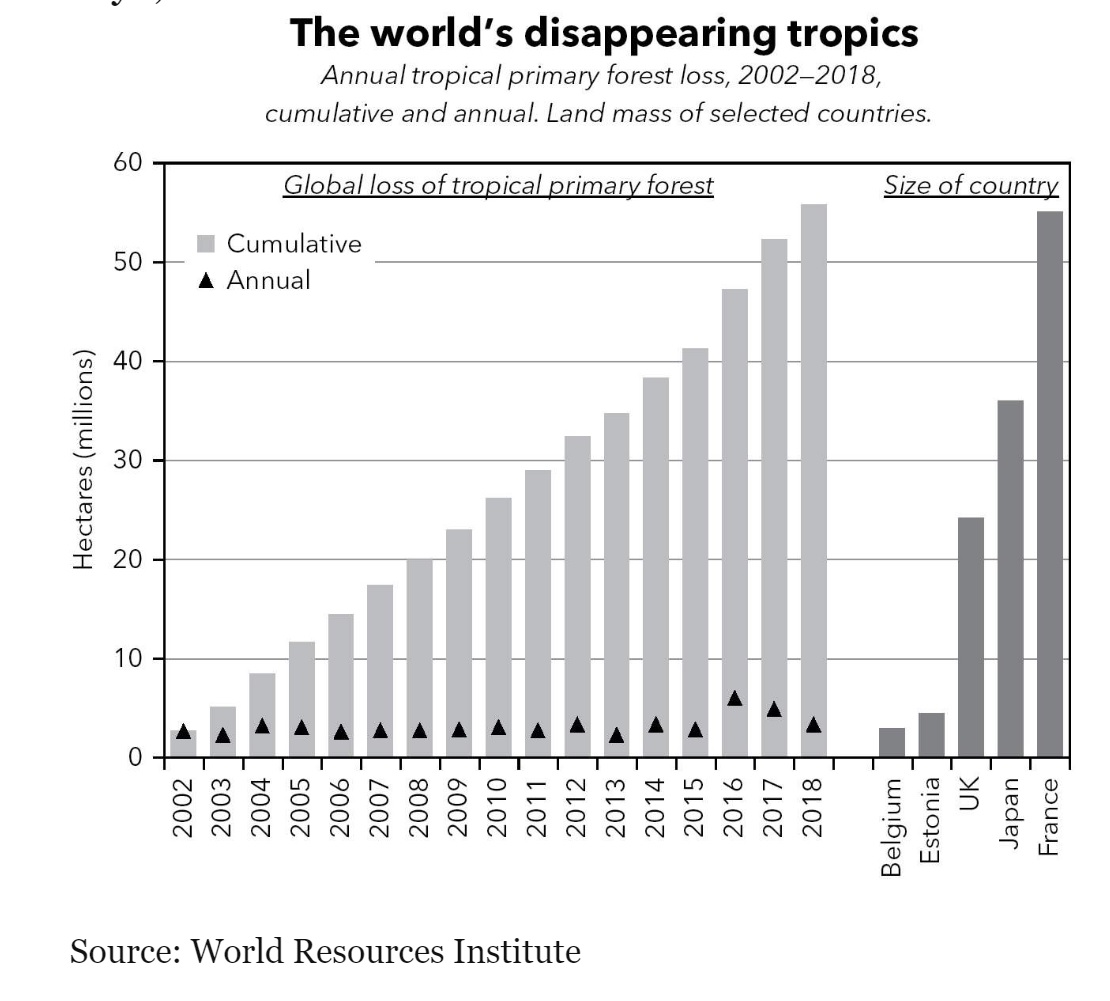

Creativity of Hong Kong protesters: Protest Songs

The Hong Kong protests are sometimes called “open-source protests”, “decentralized protests” or “water revolution” due to its leaderless and organic nature. It’s a great example of how order can emerge within a decentralized social organization.

The protests may seem chaotic, but if one looks closer one can easily identify the diversity of roles that protesters and different communication tools are playing – making up an harmonious order. Below, you can find the different groups and tools within the movement that I have been able to identify.

Communication channels LIHKG, Reddit, Twitter, Telegram, Facebook and more… Communication channels with high encryption standards and servers outside of Hong Kong are preferred as to maintain more privacy and to make it harder for the HK government to close down the servers or seize account information of protesters
Protest songs Glory to Hong Kong, We Will Fight for Hong Kong, Sing Hallelujah to the Lord, Do you hear the People sing, Below the Lion Rock, Boundless Oceans Vast Skies, Raise the Umbrellas, Add Oil etc…
Teargas ‘fire fighters’ Fire fighters whose main role in the protests is to extinguish the police’s tear gas
Dunkirk moment When the police shut down the Hong Kong metro system (MTR) after the protests at the HK Airport, most protesters either had to walk home or take the buses back to Hong Kong central. As buses were checked by the police to find, and in many cases arrest, the protesters, some sympathizers of the protests took their cars to HK Airport and give them a ride home
Pro-HK pr Artists mobilize themselves in Telegram groups – some are as large as containing 200+ artists – to create art and other pr material to support the protests
Suppliers and first-aid people Suppliers donate anonymous travel cards, cash, clothes, vouchers, temporary housing etc… The first-aid people give medical care to those injured in the protests. They carry around first-aid kits
Protect the Children group Elderly that come between the police and young protesters during confrontations to give the youngsters time to flee

In this post, I’d like to share some protest songs that have emerged in the past few months. Some songs were specifically created during the protests, while others are older songs that have been adopted to emphasize the spirit of the movement.

Compilation of several Protest Songs

Glory to Hong Kong

We will fight for Hong Kong

Be Water

Do you hear the People sing

Boundless Oceans vast Skies

Fly with You (和你飛)

High Wall and Egg (牆與雞蛋)

This song is based on the following quotation from Haruki Murakami’s Jerusalem Prize acceptance speech in 2009:

If there is a hard, high wall and an egg that breaks against it, no matter how right the wall or how wrong the egg, I will stand on the side of the egg. Why? Because each of us is an egg, a unique soul enclosed in a fragile egg. Each of us is confronting a high wall. The high wall is the system which forces us to do the things we would not ordinarily see fit to do as individuals… We are all human beings, individuals, fragile eggs. We have no hope against the wall: it’s too high, too dark, too cold. To fight the wall, we must join our souls together for warmth, strength. We must not let the system control us – create who we are. It is we who created the system.

No Withdrawal, No Surrender, No Retreat (不撤∙不散∙亦不退)

Welcome to the Black Parade

Where to view live videos on the Hong Kong protests?

I’ve been following the Hong Kong protests very closely since it started. Watching the live videos of the protests gives you a better impression of what Hong Kong is really like at the moment.

In this post, I’d like to share a link where you can view live videos of on the spot journalists:

https://ncehk2019.github.io/nce-live/