Somebody wake Dr Delacroix from his midday, wine-induced nap

For the first time in 112 years, snow has fallen in Cairo, Egypt. I haven’t been to that side of the Mediterranean yet. I don’t know if I’ll ever get to, but I can’t believe it’s snowing there. It seems like it’s been cold everywhere over the past couple of weeks.

Dr Delacroix, if he weren’t off somewhere sulking, would be ecstatic. (h/t Aliens in the Family)

Русские и Евромайдан

Думаю, что все в курсе последних событий на Украине. Постоянные митинги в поддержку Евроинтеграции, подозрительное молчание со стороны правительства, силовой разгон мирных акций демонстрантов, захват правительственных кварталов… На фоне этих событий отношения между Россией и Украиной изменились не только на “высшем” уровне, но и на уровне общения отдельных граждан. Для тех, кто не сильно разбирается в вопросе, поясню, что руководство Украины решило временно заморозить проект о интеграции с Европой, мотивируя это тем, что Украина испытывает на себе давление со стороны России. Вроде как и в Европу хочется – и “старший брат” (то есть Россия) не пускает. С нашей стороны, точнее, со стороны правительства России идет что-то типа шантажа или давления, я пока никак не могу понять. Казалось бы, события мирового уровня не должны были отразиться на взаимодействии простых людей братских народов, однако это далеко не так. Сейчас очень много украинцев считают русских виновными в том, что правительство Украины приостановило Евроинтеграцию. Как будто каждый отдельно взятый гражданин России виновен перед народом Украины. Отсюда следует определенное ухудшение отношений между гражданами двух стран. По крайней мере по общению в интернете, многие злы на русских. При этом, как мне кажется, президент Украины просто пытается усидеть на двух стульях: и в Европу попасть, и с нами отношения не испортить, но такого в принципе не может быть. Украина находится в таком положении, что необходимо принять какое-то одно твердое решение. Как по мне – так лучше бы президент Украины подписал соглашение о Евроинтеграции, по крайней мере отношения между людьми бы нормализовались. По большому счету, это является главным.

Интересно, какие мнения по этому вопросу у моих заграничных коллег, и как в Америке относятся к событиям в Киеве? Я читал, что Барак Обама крайне негативно отозвался о действиях властей Украины и в частности о применении силы против мирных демонстраций. Но меня больше интересует не мнение правящей элиты, а комментарии обычных жителей. Жду развития дискуссии в комментариях!

Middle Eastern Musings: Why I Blog

The news from Syria seems to have dwindled to nothing in the last couple of months. The hawks have focused their continued, never ending ire on the peace process between Tehran and Washington that the Obama administration has courageously initiated. The lack of news is too bad, of course, since the (quite unintended) consequences of Western meddling in the region are now beginning to be felt by everyday Syrians. PRI (“you’re listening to The World”) reports on the misery Syrians are now forced to endure:

It’s been a trying week for Syria. The United States and Britain suspended providing even non-lethal aid to the country. A prominent Syrian opposition leader has gone missing. And now winter has brought snow and cold weather.

The cause of suspended aid? Why, the fact that the anti-Assad national socialists have lost out to the Islamists militarily, politically and economically, of course. Instead of letting the anti-Assad national socialists fight it out with the pro-Assad national socialists and the Islamists – which would have produced a quick winner and thus reduced the suffering of Syrians – the West remained content to heavily arm the least prominent faction involved in the fighting (the anti-Assad national socialists). The result, of course, has been the continued bleeding of Syrian society as a war that could have ended years ago continues to drag on.

In Iran, a mild brouhaha has emerged over the censorship of most of the World Cup draw in Brazil (Iran’s national soccer team made the World Cup, and the draw – a huge deal in most of the sporting world – was held in Brazil, which is hosting the event next year). According to PRI, the state-run media in Iran had to censor most of the draw’s coverage due to the lack of coverage on Brazilian supermodel Fernanda Lima’s big, beautiful breasts.

While the effects of the state-run media are fairly straightforward, I find the cultural implications of this episode to be most fascinating. PRI reports:

The Islamic Republic doesn’t allow women deemed to be dressed immodestly on television, so every time the camera focused on Lima, the picture was dropped on Iranian TV.

This made for terrible viewing for Iranian soccer fans waiting to find out who Iran was going to be playing at the World Cup.

So, who do Iranians blame for this debacle? Lima or FIFA? The many abusive messages left on Lima’s Facebook page seem to suggest they are blaming her.

Comments ranged from insults to suggestions she should have worn a hijab, so everybody around the globe could watch the draw.

The abuse got so bad Lima had to take down her Facebook page. But then, a lot of Iranians started to apologize for the abuse, saying Iranians are not really like this. This, in turn, triggered posts by Brazilians saying, not to worry, Iranians are still welcome in Brazil.

Nationalism is prevalent in Iranian society, but so is a yearning to open up to the world. In my anecdotal experiences, I have found this nationalism to be very common among all young men in the non-Arab Muslim world. I suspect this nationalism is also prevalent in places like the Balkans and Arab Mediterranean world as well. I have no reason for suspecting this, except for the fact that in each of these parts of the world, relatively young states exist but nations are still being defined.

In Western Europe and, to a lesser extent Japan and South Korea, states and nations have long ago melded together through wars, policy battles, trade and sophisticated diplomacy. Along the peripheries of these areas the narrative of nation and state has not occurred, and may never occur (this type of nationalism is altogether absent from the New World republics for a number of fascinating-but-digressing reasons). I think the factions that encourage this narrative, national socialists all of them, are just as bad for their respective societies as are the conservatives (Islamists in the Muslim world, monarchists in other parts, Confucianists-cum-communists in China, etc., etc.). Only liberalism can bring about peace and prosperity to these societies.

The people apologizing for the actions of their fellow Iranians are a natural fit for liberalism’s humble creed. Unfortunately, I think the national socialists and the conservatives know this, and therefore advocate for policies that will keep their societies insular (and apart from the world of ideas that only liberalism has produced).

This brings me to a final thought for the day: What can I do about this, if anything? The regimes that hawks wish to destroy are bad guys, to be sure, but I have yet to see a regime that has been destroyed by an outside power give way to a regime that is benevolent and just. In fact, often these new regimes are worse than those they have replaced. The battle for ideas can only be won with the pen, and wars will only ever be won by ideas.

This realization, I think, is why I continue to write and to blog. Thanks for reading and, more importantly, for adding your thoughts to my own in the ‘comments’ section.

Great (new?) resource for historical economic data

UC Davis’s Global Price and Income History Group has a new website up (at least I think it’s new) and it’s got a lot of really, really good data. (h/t again goes to contributing editor Claudio Shikida)

The Canons of Economics

by Fred E. Foldvary

A “canon” is a set of items which are regarded by the chiefs of a field to be the accepted elements of the domain. Every religion, for example, has a canon of accepted ideas and documents such as the established books of the Bible. Every scientific field has a canon of propositions and facts accepted as genuine by the experts and by those in authority such as editors of the major journals and most members of the departments of the prominent universities.

The canon of economics consists of the propositions, methods, and historical facts accepted as true and applicable by most scholarly economists. This canon appears in textbooks and in the articles of the prominent journals. The ideas and methods outside the canon are referred to as heterodox economics, in contrast to the mainstream or orthodox canon. There have been articles and organizations about the mainstream and alternative canons, but they have not laid out what the canons consist of. Here is my attempt.

The canon of orthodox neoclassical economics consists of 1) supply and demand; 2) graphical curves of equal utility, inputs, and output; 3) marginal analysis (additional amounts of utility, inputs, outputs); 4) the factors or input variables of capital goods and labor; 5) the price level; 6) equations of production and utility; 7) the government-influenced money supply and the market-based velocity of the circulation of money; 8) economic and accounting profit; 9) market failure and government corrections; 10) equilibrium; 11) maximizing and minimizing within constraints; 12) the premises of subjective values, self-interest, scarcity, unlimited desires, and the uncertainty of the future; 13) the “time preference” for present day good relative to future goods; 14) the trade-off between goods and leisure; 15) the trade-off between equity and efficiency; 16) diminishing marginal utility; 17) diminishing marginal products; 18) theory from mathematical models; 19) econometric testing of hypotheses; 20) the producer and consumer surplus.

Neoclassical economics is divided into several sub-schools for macroeconomic theory. The major schools and their canons are:
1) Keynesian or demand-side economics, with the canons of the consumption function, spending multiplier, and the determination of output from autonomous spending and the multiplier.
2) The Monetarist school, its canon being the equation of exchange: Money times velocity equals the price level times real output, hence monetary inflation generally causes price inflation.
3) The New Classical school with its canon of rational expectations, which makes inflationary policy ineffective.
4) The New Keynesian school with its canon of wages, prices, and interest rates stuck above equilibrium; it accepts New-Classical rational expectations but claims that contracts and other rigid conditions make expansionary policy effective in increasing output.

The heterodox Austrian economic school of thought accepts these elements of neoclassical economics:1, 3, 4, 7, 8, 12, 13, 14, 15, 16, 17, 20. Austrians reject the excessive emphasis on 6, 9, 10, 11, 18, 19. The canons of the Austrian school that have not been absorbed into the mainstream are: 1) the time and interest-based structure of capital goods; 2) market dynamics rather than equilibrium; 3) dispersed knowledge; 4) discrete marginal utility based on diminishing importance; 4) axiomatic-deductive theory (praxeology); 5) entrepreneurship as both discovery and creative reconstruction; 6) free-market money and banking; 7) roundabout production; 8) the market as spontaneous order; 9) the failure of government intervention; 10) the evenly rotating economy that illustrates the role of entrepreneurship in the real world of uncertainty and change.

The Marxist school canon includes 1) class struggle, 2) the labor theory of value; 3) the surplus from labor taken by the capitalists who dominate labor; 4) benefits from socializing wealth.

The Georgist or geo-classical school has these canons: 1) land and its rent as major elements of the economy; 2) the margin of production as the least productive land in use; 3) land speculation and the movement of the margin raising rent and reducing wages; 4) the creation of land rentals from public goods; 5) depressions resulting from land-value bubbles; 6) economic effects of replacing market-hampering market-hampering taxes and subsidies with land-value taxation; 7) the surplus as land rent; 8) the ethics of labor and land; 9) harmony between equity and efficiency, and 10) the social behavioral effects of economic justice.

There is also a school of thought called “public choice,” which has been accepted by neoclassical economics as well as by other schools, as a side branch. Its canon includes: 1) self-interest in politics; 2) the rational ignorance of voters; 3) transfer-seeking and getting due to concentrated interests and spread-out costs; 4) vote trading by representatives; 5) bureaucrats maximizing their power and comfort; 6) the primacy of the median voter; 7) constitutional versus operational choice; 8) clubs that provide collective goods to their members.

The classical economics canon, before it turned neoclassical, included these elements: 1) Say’s law, that production pays factors that enable effective demand; 2) the division of labor; 3) economic growth from unhampered production and free trade; 4) the margin of production as the least productive land in use; 5) population growth pushing the margin to less productive land; 6) the three factors of production as land, labor, and capital goods.

A problem in economics today is that each canon excludes the useful elements of other schools. Economics needs a universalist canon that integrates the best elements from all schools of thought. However, economists disagree on what the canon should be. In my judgment, the most glaring omission in the mainstream canon is the neglect of the Austrian-school time-structure of capital goods, its neglect of the creation of land rent by public goods, and its neglect of the benefits of a prosperity tax shift, the replacement of market-hampering taxes with market-enhancing payments of land rent and pollution charges.

Note: This article first appeared in the Progress Report.

Black Immigration: Taking Myself Behind the Barn*

On December 5th 2013, I posted a blog entitled “Equality and Fairness” in which I stated off-handedly:

“(By the way, about half the people with African blood in the US have zero American slave ancestry. Yes, like the president. They are descendants of immigrants like me, people who volunteered to come tot his allegedly racist country.)”

Two people came down on me like white on rice demanding a source for this assertion. The first was Professor Terry because he hates good news. He was so foaming at the mouth that he even forgot for a while Harry Belafonte and other immigrants from the Caribbean obviously with African ancestry. Then he demonstrated his racial expertise on how various degrees of blood admixtures define or don’t define the category “black.” Brandon Christensen, the editor of Notes on Liberty, also challenged me for a source mostly because he pillages me every chance he gets.

I have to report that my fast and superficial search did not help me recover the relevant source. I am ninety per cent sure I read it in the Wall Street Journal sometimes since 2010. It could have been in the Oped pages. Trust me, my failure leaves me deeply ashamed.

At any rate, I cited this number to make a substantive point: Liberals who insist that the US is just about as racist as it was in the good old days of Bull O’Connor (when Martin Luther King was marching) have to deal with the disturbing fact of black immigration to the US. I mean by “black” people who come from Africa and people who would tell you they have some African ancestry. Such people come to this country legally and illegally and they come in large numbers.

I am guessing they come here for the same reason that there is no great exodus of people with African ancestry leaving this country. They come because this is very good country with an open heart and loosely enforced laws (Why, what do you know? The Supreme Court ruled recently that it’s illegal for states to enforce some federal laws.)

Let me cite a specialized website that does not address my still-unsourced assertion but something germane to it:

Black immigrants are a significant group in the United States—more than 3 million people comprising 8 percent of the U.S. foreign-born population. **

More than half come from the Caribbean, with the rest mostly coming from Northern and sub-Saharan Africa. A small number also come from Europe and Canada. Black immigrants account for more than one-quarter of the black population in New York, Boston, and Miami.

Now, the foreign born comprise about 13% of the general US population and African-Americans, in the broadest definition, are also about 13%. Yes, we are far from my original assertion. We don’t know how far exactly because we don’t know how many US-born children and grand-children foreign-born blacks have. But they would have to have on average something like 13 or 14 descendants per couple for their total to approximate half of people living in America who have African ancestry. Even if all black immigrants came from rural backgrounds, that might be too high a figure.

This is bad for for my credibility.

Still, I don’t know that the (unreferenced) estimate regarding immigrants and all their descendants for all times of half is too high, or much too high. This does not matter much from a substantive standpoint anyway. People with African ancestry, the very kind of people most likely to be victims of racism according to an obsolete, jaundiced view of this country come here in large numbers.

I know five personally, four Africans and a West Indian who is an executive chef. He hardly ever flies “home.” One African has a college degree and earns a lot of money right here. Another has an advanced degree and performs stellar scientific research of a nature he could only do in a handful of other countries, none in Africa or in the Caribbean. The third is an extraordinary musician, excellently trained in his country of origin, and whose creativity demonstrates that he has obviously overcome his training. The fourth is another musician, a very young man who may be leading a disreputable life as I write. All four are Africa-born, aliens; all four remain in this country at considerable cost and or risk to themselves. None of the Africans ever complains of American racism except sometimes in the presence of African-Americans, of black people born in the US of American parents (Go figure!)

Of course, they would not complain in my presence because they suspect I keep my robes in the back of my pickup truck. No, that couldn’t be, I am a Republican; the KKK was entirely Democrat!

PS : I used to enjoy occasionally at the gym listening to a mean, swarthy complexioned man on MSNBC. Alas Martin Bashir is gone! I wonder how long it will take MSNBC to find another dark-skinned man with an affected English accent and a potty mouth.

* Dear overseas readers: Feel free to ask questions about vocabulary and idioms. (The “idioms,” the idiot is someone else though.)

** The source for this number will remain a secret for the time being. The source for the other numbers is the US Census 2010.

Around the Web: Globalization, Racism and Surfing

  1. Check out this fascinating reddit thread on ‘blackness’ in the US and the UK. As somebody who has spent a fair amount of time outside of the US, and who is interested in ethnicity from a scholarly perspective, the answers were nothing new to me, but it’s always nice when the streets confirm your suspicions.
  2. A beautiful photo essay on surfing in Liberia. I wish there were a traditional essay to go along with the photos, but it still suffices.

I think there are too many people in the world who don’t think hard enough about the benefits of globalization (i.e. world trade). As populism continues to gain traction here in the US (and elsewhere I presume), I fear that the everyday beauty a more globalized world gives to us will be thrown under the bus in the name of The People.

A (very) Quick Primer on Natural-Rights.

by Adam Magoon

The first step in understanding natural rights theory is to ask a simple but profound question.  Do you own yourself?

Well, let’s start with the definition of ownership.  Dictionary.com gives us “the act, state, or right of possessing something.” Digging deeper we find the definition of possession as “the state of having, owning, or controlling something.” The last part of that definition is key; controlling.  There is a modicum of truth in the old adage possession is 9/10ths of the law.  Nine times out of ten to own something is to control it.

Now getting back to our original question: Do you own yourself?  Well do you control your own body and mind?  We do not need to delve into psychology to answer this question.  I alone can move my arms up and down, I can choose to stand, walk, eat, think, write, create, or to do nothing at all.  I alone am in control over my body.    This is an indisputable fact.  The very act of questioning this fact proves it true; for if you do not have control over your thoughts and actions how could you possibly disagree?

Self-ownership is the cornerstone of libertarian natural rights philosophy and what the libertarian means when he uses the term “natural rights”.

To quote Murray Rothbard: “The fundamental axiom of libertarian theory is that each person must be a self-owner, and that no one has the right to interfere with such self-ownership”

Under this philosophy of self-ownership there are two important subcategories that I will just touch on for further elaboration at another time.

The Non-aggression Principle: is an ethical stance which asserts that “aggression” is inherently illegitimate. “Aggression” is defined as the “initiation” of physical force against persons or property, the threat of such, or fraud upon persons or their property.

This is why the threat of violence cannot be used to negate the concept of self-ownership.  Holding a gun to my head and telling me to raise my arm does not mean you own the right to raise my arm any more than a thief owns the jewelry he stole.  Ownership cannot be transferred through violent means.

And the concept of homesteading which is best explained by John Locke:

“[E]very man has a property in his own person. This nobody has any right to but himself. The labour of his body and the work of his hands, we may say, are properly his. Whatsoever then he removes out of the state that nature hath provided, and left it in, he hath mixed his labour with, and joined to it something that is his own, and thereby makes it his property. It being by him removed from the common state nature placed it in, it hath by this labour something annexed to it that excludes the common right of other men. For this labour being the unquestionable property of the labourer, no man but he can have a right to what that is once joined to. . . .

He that is nourished by the acorns he picked up under an oak, or the apples he gathered from the trees in the wood, has certainly appropriated them to himself. Nobody can deny but the nourishment is his. I ask then when did they begin to be his? . . . And ‘tis plain, if the first gathering made them not his, nothing else could. That labour put a distinction between them and common. That added something to them more than nature, the common mother of all, had done: and so they become his private right. And will any one say he had no right to those acorns or apples he thus appropriated, because he had not the consent of all mankind to make them his? . . . If such a consent as that was necessary, man had starved, notwithstanding the plenty God had given him. We see in commons, which remain so by compact, that ‘tis the taking part of what is common, and removing it out of the state Nature leaves it in, whichbegins the property; without which the common is of no use”

Very quickly I will also mention a couple of the more common arguments that arise when natural rights are discussed.

First, natural rights do not extend from god or any other supernatural or theological forces.  They are based on rational and philosophical thought.  They are what is known as an “a priori”  argument.  To put it simply, natural rights are a logical deduction based on a number of easily recognized facts, primarily the concept of self-ownership.

Second, governments do not, and indeed cannot, grant any rights that natural rights have not already granted.  Let’s look at a current event that everyone always seems to think about backwards; the legalization of drugs for personal consumption.  Because of the right to self-ownership each and every individual already has the right to do whatever they choose with their own body as long as they do so with their own property and do not violently harm others in the process.   Even if the U.S. government “legalized” the use of drugs tomorrow, they are not granting anyone the right to do drugs, they are merely removing their own restrictions on something that is already a right.   The idea that law comes from the state is known as ‘legal positivism’  and proponents are hard pressed to defend actions such as slavery and extermination that were made legal by many nations throughout the course of human history.


Recommended Reading:

http://mises.org/rothbard/ethics/ethics.asp

Is the European Union “socialist”?

The short answer is ‘no’, but first, Justin Raimondo writes:

The EU is a failed socialist experiment that exists to fund a huge (and hugely arrogant) bureaucracy and impose a bloodless ideological abstraction over and above the authentic nationalisms it seems to subsume. It is deeply authoritarian in that it provides no mechanism for member states to withdraw, and its super-centralist model is a prescription for tyranny if ever there was one. When a referendum is held on EU membership, and the results aren’t to the pro-EU side’s liking, the election is simply ignored and the Eurocrats mount yet another campaign until the “right” result is achieved.

I thought I’d highlight this paragraph for a couple of reasons:

1. It explains the tensions inherent in the EU from a nationalist viewpoint (as opposed to the internationalist view most often espoused on this blog), and the tensions between defining the place of centralized and decentralized power in a society. Although Raimondo’s hyperbole might cause some of us to blush, I think it actually adds to the depth of the nationalist argument as it better captures the sentiments of these factions. That is to say, I think the nationalists in this debate are a bit more boorish than the internationalists and as such Raimondo exemplifies their arguments despite being an American.

2. It shows why facts are important and in the long run much more valuable. Socialism, by definition, is the state ownership of the means of production. Is there anything about the EU that suggests it wants to “nationalize” industry? Anything at all? Of course not, which is why you often find populists – even of the “libertarian” kind – to be hyperbolic, arbitrary and vague in their arguments (for a better treatment of populism, see this old piece here at NOL). In the long run getting these definitions right is important. Slandering a faction or an organization you don’t like as ‘socialist’ (or ‘bourgeois’) may earn you a couple of brownie points from the peanut gallery, but you are very likely to steadily lose influence in the arena of ideas by peddling such drivel.

The EU is a confederation of states (much like the pre-Civil War US) and entry and exit are entirely voluntary. The EU, more than any other institution save for perhaps the US military, is responsible for the unencumbered peace throughout Western Europe since the end of World War 2. To suggest that the EU is somehow ‘socialist’ not only confuses younger, more susceptible readers but it also weakens one’s own arguments. If, for example, Raimondo is going to label the EU as ‘socialist’ when it clearly is not, what should I think about his arguments when he labels Israel as ‘fascist’ or Russia as a ‘defender of national sovereignty’?

Foreign policy is an important component of libertarianism, and if we continually allow our arguments to be defined by populist organizations like Raimondo’s antiwar.com then I fear libertarians will continue to be (rightly) ignored in the more traditional venues of foreign policy discussion.

Free Trade in Asia

When you get the chance, check out this working paper on market integration and Asia during the 19th and early 20th centuries by David Chilosi and Giovanni Federico. The abstract:

This paper contributes to the debate on globalization and the great divergence with a comprehensive analysis of trends, causes and effects of the integration of Asia in the world market from 1800 to the eve of World War Two, based on a newly compiled data-set. The analysis finds that: most price convergence occurred before 1870, with only little disintegration in the inter-war years; market integration was determined to a large extent by the fall of Western trading monopolies; it implied significant static welfare gains and emerges as a major cause of substantial improvements in the terms of trade.

Again. the whole paper is worth reading. I think I might be more interested in it because of my own work on Dutch colonialism in southeast Asia and the collapse of the Dutch East Indies Company (a state-sponsored monopoly). With that being said, the paper is one of those “big picture” reads that folks of all disciplines ought to be interested in.

One of the most interesting aspects I found in the paper had to do with foreign trade. It has become popular nowadays to focus on institutions within a society for explanations on why some nations are rich and others are poor. This paper suggests that while institutions may be important, it is just not institutions that are careful to include domestic factions that are important for prosperity. The institutions that are created to deal with foreign affairs (mostly trade and diplomacy) also play an important role in the health and wealth of societies. (h/t goes to co-blogger Claudio Shikida)

A Drip of Local Flavor

The city of Little Falls, New York is missing nearly 400,000 gallons of water.

Located about twenty-five miles from me; the small central New York city is unable to locate over half of water that had been distributed in 2011. This amounts to about $300,000 dollars in wasted tax payer dollars and on top of that the city is expected to raise water rates.

Unsure whether the losses are caused by leaks, faulty meters or anything else the lead plant operator Daniel Benett says “”Some of it may be going in the ground. Some of it may be not captured by meters. We don’t really know. That’s why we’re out trying to fix as many leaks as we can.”

The cost of replacing the system is reported at a million dollars a mile which Benett assured citizens “The labor is the smallest cost ’cause the guys have to be here to work anyhow.”

Which  leads me to wonder what are those workers doing on a regular basis if it would cost no additional labor hours to do additional work.

Lost Innocence.

One of the defining features of a “free society” is that the citizens in such a society are innocent of crimes unless proven otherwise by a body that can be trusted to be impartial in its deliberations. In other words, the right to a fair trial and the belief in innocence until guilt is proven. This natural right was guaranteed to United States citizens in the U.S. BIll of Rights under the 4th, 5th and 6th amendments of the Constitution.

Time and again in modern America that right is ignored by those whose job it is to protect it. Recently a particularly vile example took place near Houston, Texas. The article speaks for itself but to make a long story short police invaded the personal lives and property of two individuals under no legal pretense. The message is clear, we are not secure in our persons or our properties if the police decide we are of particular interest to them. These officers will likely go unpunished and even if disciplinary measures are taken they will not be the same measures as if, lets say, I removed two people from a car at gun point, bound them, and held them hostage for eleven hours. There are two sets of laws, one for the people and the other for the state.

Distribution of Wealth — A Distortion of Focus

A ‘sociology’ paper by LA Repucci

Wealth vs Wages

Much hay is made of the distribution of wealth in the modern United States.  Recently, the Occupy movement has protested the accruing affluence of a shrinking number of individuals that constitute the top ‘1%’ of wealthy within the country.  Data suggests that the top 1% of income earners in the country represent a myriad of professions, investments, and financial instruments as revenue streams, with the largest portion (30.9%) represented as the executive/corporate professionals, as shown by graphic 1.1 below:
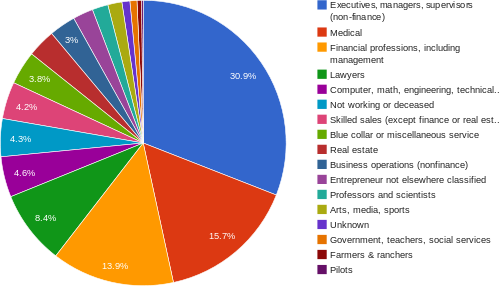
1.1: Top 1% of Wage Earners by Profession, US.  Source, Wikicommons

Analyzing the data from this table paints a picture of broad distribution of wage incomes across a myriad of industries, but fails to account for the disproportionately massive amounts of wealth that aren’t generated by salaries at all, nor are they representative of the fact that the wealthiest legal entities within the US aren’t people — they are tax-sheltered corporate entities:

1.2: Corporate Profits vs Tax Liability

The Corporate Model
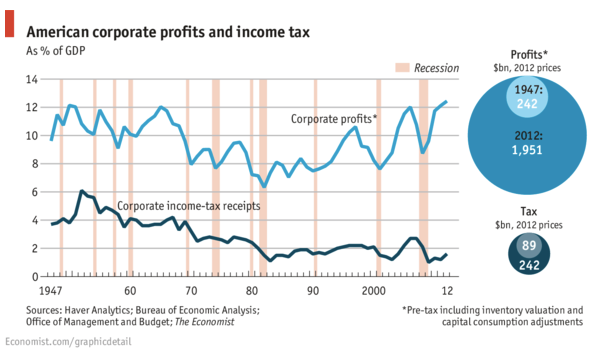
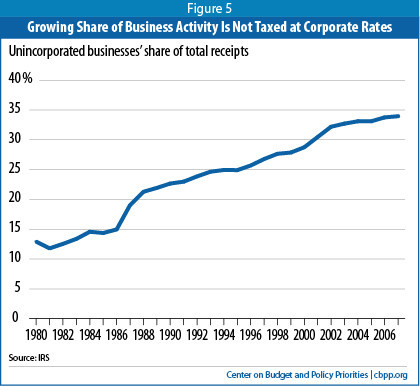
Corporations are paper entities recognized by the state as legal persons.  They exist in order to generate and accrue revenue, and pay stakeholders.  Unlike natural persons, corporate entities are immortal.  Instead of competing on the open marketplace for revenue, the most successful and largest corporations have discovered a way to cut the market out of their revenue streams altogether.  It is simply easier and more cost effective to lobby the state to enact laws that protect their revenue stream and squash market forces than it is to operate within a competitive market.  Progressive, draconian tax structures enacted as a hedge against corporate domination of wealth may be adopted by government in an effort to increase tax revenue from the corporations, but in reality, simply provide further incentive for corporations to allocate resources in an effort to mitigate or outright eliminate their tax liability within the US.  For example, Google, the fastest growing and wealthiest of the new tech giants, pays a majority of it’s taxes in Ireland and Bermuda — nations with a far friendlier income tax policy than the US — and bypass their US tax liability almost entirely due to the so-called ‘loophole’ in the income tax law, resulting in the federal government’s lost tax revenue from one of the largest US corporations in history. This leads increasingly to a larger percentage of individuals, sole proprietors and small-to-mid cap businesses shouldering an increasing burden within the tax structure as shown in 1.3 below.

1.3
The State’s Culpability

The new corporate model of tax evasion coupled with astronomical growth in profits-to-cost relies heavily on the government’s complicit action with regard to tax policy and recognition of corporate person-hood.  It is in a company’s interest to make money — but to ‘saw the ladder off’ below them, they require government cooperation to enact laws that make tax sheltering and corporate personhood possible.  This culture of lobbying and outright appropriation of the legislative process has progressed to the point that there is little differentiation between the state and the corporation.  Insurance companies write health care laws, and banking institutions write tax laws and set monetary policy.  The roots of this collaboration run deep through US history, crystallized notably by the creation of the Federal Reserve Bank in 1913 on Jekyll Island by J.P. Morgan, Paul Warburg and other global-level financiers with the collusion of Senator Nelson Aldrich, who had close ties to both Morgan and Nelson Rockefeller. (Further reading: ‘The Creature from Jekyll Island’ by E.B. White)  The Federal Reserve Act of 1913 was signed into law by then US President Woodrow Wilson, and effectively turned over control of the nation’s monetary policy, issuance of currency, and anti-market fixing of interest rates to a private bank set up as a for-profit corporation called the Federal Reserve Bank, effectively undoing the American Revolution and the work of his predecessor, President Andrew ‘Old Hickory’ Jackson.  The ‘Fed’ as it is known today, continues to be the sole issuer of paper money accepted for the payment of taxes in the US.  While the people remain ‘free’ to trade in whatever currency or barter they choose, all state and federal taxes in the US must be paid in Federal Reserve Notes, giving the Fed a monopoly on currency.
The Corporate-State Combine

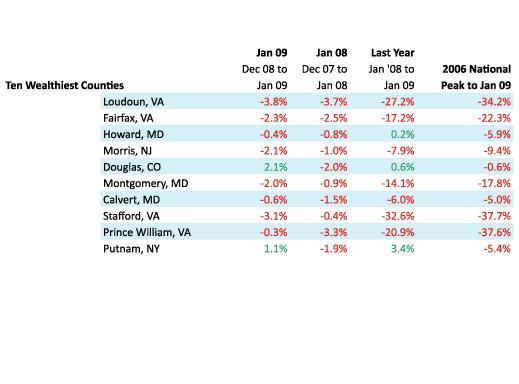
A century of the above-outlined activities of corporate entities have led to an overlap between the banking community and government that often goes understated.  JP Morgan/Chase market their banking services directly to government, as clearly outlined in their marketing materials: https://www.jpmorgan.com/pages/jpmorgan/cb/government. It is no surprise that most of the nominees for president, cabinet members, the Fed and legislators exist in a professional ‘revolving door’ environment that moves them from banking to high office and back over the course of their careers.  For example, both major party candidates for president in the last 20 years have had direct professional ties to JP Morgan and Goldman Sachs.  This ‘partnership’ has led to a century of collusion between government and banking, taking an ever-increasing cut of the total wealth out of the real market, and enriching our legislators to the point that many of the wealthiest counties in the nation now surround Washington DC as evidenced in the data provided.  This corporate-government combine acts as a siphon, sucking wealth out of the population through inflation, currency devaluation and increased tax burden, and enriches the corporate interest through outright gifting (TARP, Stimulus, Bailouts, etc) to the wealthiest of the wealthiest of the 1%.  Warren Buffett, one of the wealthiest men in the world and owner of Berkshire Hathaway Ltd. championed bailouts while his firm received the largest portion of us taxpayer money from the TARP program. Buffett himself pounds the table for higher tax rates, while he and his company manage to ‘limit’ their tax liability and avoid paying taxes owed back to 2002.  Mr. Buffett is a major campaign contributor to our current President, Barack Obama.
Solutions

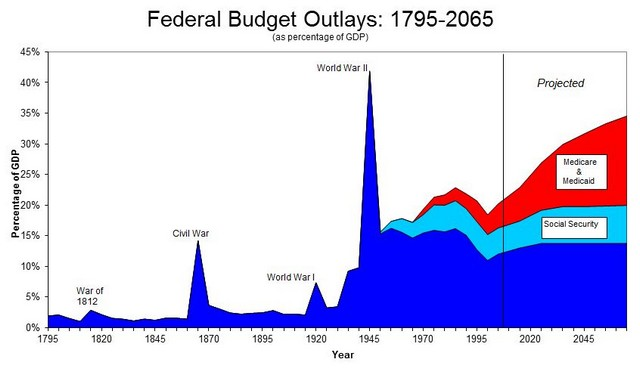
With the compound factors of massive increases in government spending (roughly $20,000 annually per citizen), and the steady evaporation of corporate tax liability (less than 40% of the total tax base of businesses in the US is covered by large-cap corporations) the problem of the distribution of wealth in the US is starkly apparent.  To identify what is going wrong in the economy is one thing — providing real solutions is another entirely.  Both major political parties offer their version of the fix — the right would suggest cutting government spending on services and lowering the tax base to broaden it and encourage large cap corporate interests to pay their income taxes in-country.  The left advises steeply progressive tax laws on private citizens (one would assume the left would suggest tax reform for large corporations, but the democrat party has been in charge of the tax law for decades with no such legislation to speak of), and consumption and indulgence taxes on goods and services, combined with further devaluation of the dollar through Quantitative Easing (QE) and raising (or outright elimination of) the debt ceiling.

While it would seem that these two paths are the only potential ‘fixes’ to our nation’s distribution of wealth problem, neither of these plans would provide real, permanent relief to the average citizen who is continually squeezed out of the middle of the economy, with an ever-increasing portion of their revenue taken by the state through tax, and devalued by the state through inflation.  Indeed, it would seem that our problem is not ‘distribution of wealth’, but rather, the redistribution of wealth through taxation and devaluation of the dollar.  Looking at the problem from this perspective, the solutions become simpler and multi-fold.

Monetary Policy/END THE FED

Should the Federal government enact law that checks the monopoly power of the Fed to issue currency by accepting in payment of taxes any and all used currencies in the market, the nation would be free to adopt currencies other than the dollar.

Bitcoin, a decentralized crypto-currency, is a notable example of a market solution to the problem of distribution of wealth.  Though Bitcoin has it’s detractors and a relatively small market cap, it’s value has continued to skyrocket on the open market, and is in the early stages of large-scale adoption and public use.  Bitcoin requires no bank or government to ‘mint’ it as a currency, and is freely traded electronically between users with no bank needed.

Similarly, gold and silver have been used for thousands of years the world over as viable hard currencies.  Hard currencies cannot be devalued through running of a printing press like paper currencies, nor through the click of a button like crypto-currencies.  As there is a finite amount of gold and silver in the market, it’s value has a ‘hard floor’ — it is always worth at least it’s value as a raw material.

The fact that the Federal government will only accept Federal Reserve Notes (which, in itself violates the constitutional directive for the US Treasury to mint coin, not a private bank) in payment of taxes effectively gives the FED a monopoly on currency.  The last US President to order the Treasury mint silver certificates was John F. Kennedy.

Commercial Policy/END CORPORATE PERSON-HOOD

Corporations are legal ‘persons’ with the ability to lobby the legislature directly, resulting in tax laws and policies that favor them over natural citizens of the US.  This has resulted in laws being written directly by corporations, including insurance companies’ authorship of the Affordable Healthcare Act.   The insurance companies’ stock has risen by a factor of 2-5 due to the implementation of the law, while the cost of health insurance for the average citizen has skyrocketed.  Ending corporate person-hood would go a long way to ending the power of lobbyists to purchase legislators, and result in elected officials representing the people who elect them.

Tax Policy/END THE TAX

‘Taxes’, ‘tariffs’, or any other name the state wishes to apply, are simply pseudonyms for extortion — that is, the violation of individual property rights through threats of aggressive reprisal.  When private entities such as a thief or mob perform the same action, we rightly call it theft.  It is completely inconsequent what a thief does with your money once he has violated your rights to acquire it, even if he assures you that it is to your personal, direct benefit that he take your property from you by force.  To fix the distribution of wealth, and as well to return to a moral society where one does not live on the property of his neighbor through state-sponsored theft, all taxes should be eliminated.  If a portion of the population would like to provide a service or product to their neighbors, let them do so legitimately through voluntary free association and exchange.  The state spends more than it takes in in taxes, and floats the rest on credit.  This activity has crippled the purchasing power of the dollar, which has lost 99% of its total purchasing power on the market in the 100 years the Fed has controlled the nation’s currency.

Bibliography:

Wikimedia Commons. N.p., n.d. Web. 04 Dec. 2013.

JP Morgan.com “State and Local Government.” N.p., n.d. Web. 06 Dec. 2013.

Cogan, John F. Federal Budget Deficits: What’s Wrong with the Congressional Budget Process. Stanford, CA: Hoover Institution, Stanford University, 1992. Print.

The Unwritten Rules of Integrity in the Free Market

Benjamin Franklin is quoted as saying, “Only a virtuous people are capable of freedom.” The Founding Fathers alleged many times that liberty would not work unless they had a morally righteous citizens, and well-informed intelligent citizens. Part of economic liberty and the free market, and the way to ensure it works, runs by unwritten rules. It assumes that people will take responsibility for their own negative actions.

According to studies done by the Huffington Post and other sources, it can be estimated that almost one half of Wal-Mart employees live off of public assistance because their wages are too low to function in today’s society (food costs, rent costs, etc.). As a result, the petite bourgeoisie, middle-middle class, and blue-collar working-class fund the public assistance through tax dollars for employees of a one-percenter, the Walton family. The Waltons are number six on Forbes list of American billionaires, and yet the middle classes have to fund the survival of their proletariat abyss.

The behavior of the Walton family is inherently no different than a man who impregnates a woman, and abandons her and the child, causing the child and its mother (in many situations) to require a subsidized income from the taxpayers. The father’s behavior is now at the expense of everyone else. The child’s father cannot just walk away and say “oh, don’t infringe on my liberty,” and neither should the Waltons (and other shareholders) be able to.

In the United States, the Founding Fathers intended for a particular code of ethics to be followed. Keep in mind that ethics is not synonymous with morality. It should be assumed that a free market capitalist will practice ethics by taking responsibility for his actions, cleaning up after himself, and taking care of his workers as needed. This has nothing to do with either social justice or human rights, but is simply a civic responsibility to prevent a burden on society. Here is the economic libertarian argument in favor of self-regulation, and eventually raising of the minimum wage.

No matter how many times an Ayn Rand libertarian simply screams, “economic liberty, economic liberty,” or “the Walton family owes nobody higher wages in a free market,” we are still living in the cynical real world that exists as of now. And in this world, the reality is that the middle classes are paying for the public assistance of Wal-Mart employees because the shareholders and executives do not want to raise their wage. Forbes list billionaires are embezzling money from the working US taxpayer. That means that the Waltons are objectively a parasite on the economy.

Of course there are many other things that must be taken into account for the bigger picture. Raising wages always inevitably means raising prices, no matter what. Wage-raising means nothing, because the product purchased will take the same percent from the wage as it did when the wage was low. It causes inflation. Many Ayn Rand fanboys and Austrian economists would also make the argument that, “the Waltons pay so much in taxes for people’s food stamps that they can’t afford to pay workers any more. If food stamps were cut, they would pay more.” This is an issue involving serious mathematical analysis of markets and economics and cannot be fixed with a simple world view, whether it is blind faith in Atlas Shrugged or the bleeding heart of a social justice activist.

Well Atlas has not shrugged as of yet, and public assistance is not going away anytime soon. Until it does go away, then all capitalist bosses who underpay their workers causing them to get on public assistance, must be viewed as economic parasites, and the enemy of economic liberty and the middle classes. This is not small mom-and-pop business, but big, heavily regulated corporations, especially Wal-Mart and McDonald’s.

Just because a capitalist SHOULD do something does not mean that the Federal government should MAKE him do something. Here is an example of the civic responsibility of a successful capitalist. If a worker breaks his leg on the job, that capitalist employer should pay to fix his leg, so the worker he can get back to work, and provide for himself. A.S.A.P. If the capitalist just says “oh sorry… it’s economic liberty,” then the worker will get let go, will get on public assistance, and will objectively become a burden on the taxpayer. But that capitalist who caused that situation is the far greater parasite.

Costco is known to pay their workers a fairly high wage. They also sell more expensive, high quality products wholesale. That is simply called a high standard of living. A well-paid worker buying a well-made product. This is also known as a first world economy. You can be an economic capitalist and still a social collectivist. McDonalds and Wal-Mart produce a third world product. As a result, they pay a third world wage, they sell to third world markets, and create a third world society. They deteriorate American society and make it rot. In order to make a little extra profit, Wal-Mart and McDonalds are literally willing to let the US devolve into a cesspool.

There are many different ideologies on the left and the right who support this idea. Just because a market is free does not mean the market is free to take a dump everywhere and turn society into a cesspool for the sake of “economic liberty”. For example, Dr. Ron Paul, as would be expected of someone his age, believes in American-made, and an end to outsourcing. That does not mean he believes in federal regulations enforcing that scenario, but it is still the world he WANTS to see. Pat Buchanan, who identifies as paleoconservative instead of libertarian, believes in US non-intervention, closed borders, and economic nationalism. He ran for president unsuccessfully on the Reform Party ticket in 2000, like Ross Perot did in 1996, who also cannot be called a libertarian. On what is known as the “far right fringe,” or ultra-nationalism, there is great hatred towards free markets, libertarianism, Ayn Rand, and borderless capitalism, mostly due to illegal immigration, outsourcing, and backroom corporate deals with China.

One such capitalist from the 20th century was Mr. Henry Ford, a right-wing extremist with voluntarily progressive economic practices. Henry Ford is well-known for his paranoid rants about “the Jews” infiltrating labor unions to bring the communist revolution to the US, as was a typical canard from the era. The way he dealt with his Red Scare paranoia, however, was peculiar, yet constructive. He began paying his workers at the motor plants higher wages, so he could build a product that his workers could afford. He wanted to give the communist-infiltrated unions no excuse to organize and agitate on his plant grounds. As a result, he could not be the evil, greedy capitalist they wanted to paint him as. With happy, well-paid workers, professional labor leaders from communist or socialist organizations had no audience at Ford’s motor plant.

The libertarian in me knows all too well that Wal-Mart and McDonalds are ALREADY meeting the tax bracket and red tape that federal regulations are throwing up, which kill mom-and-pop businesses in record numbers. Progressives must understand that just “raising the minimum wage”, because their hearts bleed for human rights will not be a long-term solution. The populist in me however, realizes that corporate shareholders evading a living wage is not a long-term solution either. Any Atlas Shrugged disciple who puts the “economic liberty” of the Waltons above the well-being of the working-middle classes who have to pay taxes for Wal-Mart employees’ public assistance is just as delusional and ignorant as liberal activists who support policy based on emotion.

Equality and Fairness

Yesterday, President Obama gave a stirring speech on income inequality and he declared war on it. The President is a rich man who was abandoned by his drunken immigrant father. He was brought up by his hippie mother. She had a doctorate. It took her twenty years to earn it. (I don’t mean to say that she was idle during most or any of these twenty years.)

I am an immigrant myself. I came to this country with no money (that’s NO money), no degree, no skill, nothing. (I was white, it’s true, still am.)

(By the way, about half the people with African blood in the US have zero American slave ancestry. Yes, like the president. They are descendants of immigrants like me, people who volunteered to come to this allegedly racist country.)

I have an American doctorate too. It did not take me twenty years.

Fifty years after reaching this country , I live modestly but with no serious wants. And I live in a very desirable place, even by world standards.

I bet you filled in the blank: “Poor guy, poor immigrant worked hard all his life, blah, blah…”

But I didn’t. Nearly every time I found myself at a crossroad, I chose the other path; I selected psychic income over money income; I wanted more free time rather than a bigger car, or a bigger house. Now, does President Obama mean that I should feel bitter toward the other guy in initially similar circumstances who chose the income, who put in fifty hours weeks, and who is now worth several times what I am worth?

Does the President mean that I should be bitter because so many men my age are richer than I am ? Men who live in Cleveland and such?

Does President Obama really mean that I should enlist the services of government to take that other old guy’s money by force to give it to me? And next, will they take from me, equally by force, my golden memories of the three months I spend spear-fishing on the Caribbean coast of Mexico?

That would be fair, or would it?

And do we prefer to live in a society that gives even a poor immigrant the kind of choices I had or in a society where nearly everyone gets about the same regardless of personal preferences?