China versus the Communists; American civil liberties

I don’t know about you but I’ve come across my fair share of anti-Asian bigotry over the past few weeks. This is not a good trend.

Here is my public service announcement for the week: China is not the Communist Party. Billions of Chinese citizens are lorded over by a Communist Party. Singapore, Hawaii, California, Taiwan (see this great article), Sydney, Malaysia, Hong Kong, and Jakarta have all managed to avoid repressing data and silencing scientists.

You’re welcome.

Jacques has been subtly prodding me to write an essay complaining about the loss of civil liberties in the United States due to coronavirus (“every true libertarian is doing it”), but I just can’t muster up the willpower. I realize that civil liberties will be attacked by governments. Covid-19 is a crisis, after all, but I don’t think the attempts so far are unjustified. Hear me out:

There is a global pandemic and the virus causing all of the mayhem is one we know little about. It’s a deadly virus. It’s highly contagious. Governments have attempted to protect lives. They’ve done a terrible job, and factions are trying to use the crisis to push their agendas.

Predictable, but what about the pandemic? I don’t want to get the plague. I don’t want my small children or my wife to get the plague. And I certainly don’t want to be responsible for passing the plague on to family members who are most susceptible to the virus (my children’s grandparents).

The backlash against government stabs in the dark have already begun. Small businesses and many, many workers have been screwed. If the trade-off, though, is between small businesses/lower wage workers going broke or my family members dying unnecessarily, bye Felicia.

In politics, sometimes it’s good to play offense and sometimes it’s better to play defense. Libertarians can play offense here and there, such as when the economy is roaring, or when wars are unjustified. In a crisis like this, though, it’s best to wait and see what happens. It’s best to play defense and wait for a good place to counterattack. It’s bad enough that crackpots and racist frat boys claim the mantle of Libertarian (we wouldn’t want to be intolerant, after all), but when our leading lights start downplaying this plague before anybody really knows what’s going on, it just gives liberty a bad name.

Nightcap

  1. The subversive legacy of Christianity Helene Guldberg, spiked!
  2. Coronavirus in NJ: waiting for the surge Irfan Khawaja, Policy of Truth
  3. Thandika Mkandawire, RIP Isabel Ortiz, Jacobin
  4. The pandemic and the Will of God Ross Douthat, New York Times

A Reflection on Information and Complex Social Orders

In the year 2020, occidental democracies face a time of lock-downs, social distancing, and a sort of central planning based on epidemiological models fueled by testing methodologies. An almost uniform consensus on the policy of “flattening the curve and raising the line” spread worldwide, both in the realms of politics and science. Since the said public policy is not for free, but nevertheless it is out of discussion, the majority of the efforts are focused on gathering data concerning the rate of infection and fatalities and on achieving accurate and fast methods of early detection of the disease (COVID-19). The more the data is collected, the more efficient the policy of “flattening the curve” will be, i.e.: minimizing the economical costs. Technology -in a broad sense- seems to be the key ingredient of every successful policy.

Nevertheless, since the countries that undertook the said task are democracies -and they were urged to do so because they are democracies-, there is a lot more than data provided by technology to take into account. Science and technology could reach a conclusive study about infection and fatality rates, but the outcomes of the societal discussions about the value of life and the right of every individual to decide upon the way of conducting their own plans of life will always remain inconclusive. Those discussions are not only philosophical and, fundamentally, are not only to be conducted in the terms of an academic research, since the values at stake entitle every human being to have their own say and, at the same time, are so deeply rooted in the upbringing of the individuals that seldom they might be successfully articulated -and surely that is why such questions are of philosophical interest.

In the race to determine the political agenda, technology plays with a significant advantage over philosophy: in times of emergency, conclusive assertions -despite proving right or wrong afterwards- enable political leaders with a sense of determination that any philosophy can hardly achieve. It is true that philosophical considerations mark the legitimate limits of science and its uses, but the predictable models and plausible scenarios depicted by the technology might lift the barriers of what had been considered at the time as politically illegitimate, i.e.: to describe a given situation as a state of exception.

However, there is still a dominion in which philosophical considerations might have high expectations of winning the competition against technology: the making of the abstract criteria to judge the fulfillment of the due procedures to be followed by the authorities given the account of the data gathered by the technology. Such philosophical considerations on which base authorities should personally account for their decisions, despite having been discussed by academics and writers, have being treated for centuries in particular legal procedures that crystallized the standards of conduct of the Civil Law (the diligence of a good father of a family, or of a good businessman, etc) or Common Law concepts (the reasonable person, the ordinary prudent man of business) or more recent -in terms of the evolution of the law- formulae, such as the Hand’s rule.

Such legal standards, concepts or formulae do not oblige the political authorities in their public sphere, but they perform as an incentive to be taken into account by the agent who is invested with the public authority; since he, eventually, will be personally accountable for his decisions. Moreover, those legal parameters to judge the personal responsibility of the agent in charge of the political authority are a true guarantee for the public servants, more reliable than the changing public opinion measurements to be provided by the technology.

Notwithstanding the Realist assertion about the division between law and politics might earn certain relevance in times of turmoil, individual rights and legal procedures should endure in the long run, in order to work as a benchmark to judge the personal performance of the political agents.

Such times of political and social upheaval are useful to test political theories and doctrines as well. Certain strains of Political Liberalism -particularly Classical Liberalism- have been largely criticized for -supposedly- trying to replace the political with the law. However, the law is there to remind the political agents that the state is an abstraction run by individuals who are expected to be personally accountable for their decisions. In this case, the true function of the law, although conceding that it should remain outside of the political sphere, is to provide the correct incentives for the political agents, who are not mere abstractions -and so, maximize their own plans- to take their own decisions. If technological devices might be the key instruments for public policy, the rule of law is its inescapable framework -or at least so it is, of course, for every democracy.

Nightcap

  1. Life after the plague Helen Dale, Law & Liberty
  2. Believing in witches and demons Jan Machielsen, JHIblog
  3. What comes next? Dalibor Rohac, American Interest
  4. Modi’s ghastly Delhi dream Kapil Komireddi, Critic

Coddle the Old, Spoil Them; Everybody Else, Back to Work!

I am more worried by the day about the economic consequences of the current isolation policy intended to change the shape (not the numbers) of the corona-virus epidemic in America. This, in spite of the a large infusion of (national debt) money, that I would approve regretfully if it were my sole decision. (Note: I am not an economist but I have been reading the Wall Street Journal daily for thirty years. I am also a scholar of organizations including businesses.) What inspires most of my fear is that the issue of small-scale entrepreneurship is seldom discussed, as if it did not exist.

I believe that the larger businesses, those that survive the current crisis, may well come back with a roar (as the president seems to predict for the whole US economy.) The problem is that small businesses, restaurants, but also dry cleaning establishments, hair dressers, bookstores, and the like, have short financial lifelines. Many must be dying like flies, right now. It will be difficult or impossible for them to make a comeback once the health emergency is gone. Also we can’t count on fast replacement of those failed business by new entrepreneurs. The collection of small business that accrued over many years at a particular location is not going to be replaced in the course of a few months, I think. (Yes, I know something about this topic. Ask me.)

All the above, in spite of large infusion of my granddaughter’s money by the federal department. (She is 11.) And, repeating myself, I would do it too if it were my decision, but regretfully.

The ruinous strategy of idling much of the workforce could have been avoided and could still be modified quickly, it seems to me. The alternative solution would be to confine all the sick and most of the aged, and to keep children out of school (because they are veritable cesspools, as everyone knows).

Everyone else would be invited to go back to work by agreement with his employer. Some financial dispositions should be offered at state’s expense to help parents who lose income because they must stay home to care for their children. Under such conditions, the economy would grow again and many irreplaceable small businesses would survive. Sweden is currently trying something like this policy. That country never ordered most people to stay home. I hope this experiment stays in the news. It may not because the liberal media are afraid of rational responses and of responses that don’t proceed from panic.

I only know two people who have consistently advocated for an American policy and a California policy of confining only the old and the sick. The two are myself and Jimmy Joe Lee, a singer composer musician from Boulder Creek, near Santa Cruz. Both of us are old dudes. We are both close to the center of virus’ target. I am 78 and Jimmy Joe may be even slightly older. (OK, let the whole truth come out: He is taller, straighter than I am and a much, much sharper dresser.) I am just pointing to the obvious: neither of us is speaking out of selfishness.

Now, let’s imagine the old are confined from, say, the age of 65, even 60. First, some of them wouldn’t even know anything has changed because they don’t go out much anyway. For the rest of us, all you would have to do is serve us promptly two hot meals a day. They would have to be of gourmet quality. That would be easy to achieve because so many expensive restaurants are idle and hurting. It would be a nice touch if the meals were brought and served by a youngish woman wearing a short skirt. We may not remember why we like it but we do. Yes, and speaking for myself and I am sure, for Jimmy Joe, don’t forget to send along each meal a couple of glasses of really, really good old wine. I assure you that however extravagant you went with that last component of our confinement regimen, it would be a lot cheaper than what you are currently doing. At least, promise to think about it.

Mass Hysteria and the Great Economy-Killing: Lessons from 1856 South Africa

Xhosa 1

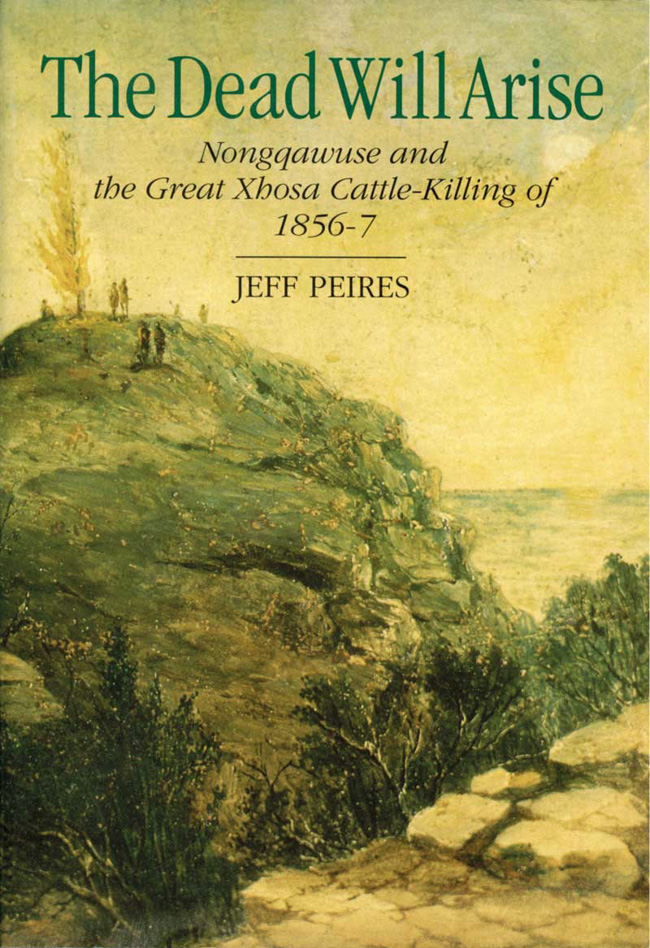
In 1856, a teenage Xhosa girl Nongqawuse (1841-1898) had a prophetic vision that spread like a fire among that nation that resided in South Africa. The prophecy came amid a lung virus infection that spread among some Xhosa stock; it was rumored that the sickness came from the imported European cattle.  In her vision, which the girl duly delivered to her people, two spirits of ancestors had visited her and ordered Xhosa people to destroy all their cattle, corn, tools and foods.  The spirits insisted that these had been all contaminated. In return, the ancestors would bring the dead back to life, drive away the hated British, and launch the paradise on the earth, which was to bring the limitless supply of food, stock, and household items.

The spirits also “ordered” people  not to do any work but to wait and see the fulfillment of the prophecy.  At first, some Xhosa skeptics laughed at this, but soon when her uncle, a powerful and charismatic witchdoctor Mhalakaza, vouched for her and validated the prophecy by his expert opinion, people took it seriously, especially after all powerful chiefs sided with the uncle.  In fact, by killing his own cattle, Mhalakaza set a personal example. The supreme chief Sarili added to this his own spin by insisting that, besides the cattle slaughter, all European clothing should be ditched because it was unclean.  He insisted that his people, indigenous in their “naked attire” and coated in red clay, were “clean” compared to the whites who wore clothes.   Moreover, the “doctor” set a deadline for the paradise to materialize. It was to happen at the end of 1856 on a day of a full moon.

Xhosa 2

Society became divided into “believers” and “non-believers” who were a minority.  The greater part of the Xhosa became agitated and followed the command of the superior forces by slaughtering over 400,000 cattle and destroying their food supplies along with other “contaminated” items.  They also decided to sow no crops for future.  When on the designated day of the full moon no miracle arrived, fearing for his life, Mhalakaza disappeared.  From his hideout he had a message sent to the people that the spirits were angry with the Xhosa who did not slaughter all their stock.  For this reason, the fine new cattle did not emerge from the ground and the dead did not resurrect.  Within twelve months, with about 100,000 people starving themselves to death, the Xhosa population dropped by 80%.  For more about the Xhosa stock “pandemic” craze, see Jeffrey Brian Peires, The Dead Will Arise: Nongqawuse and the Great Xhosa Cattle-Killing Movement of 1856-1857 (Johannesburg and Bloomington: Indiana University Press, 1989).

Xhoas 3

Nightcap

  1. On poverty and famine Frances Woolley, Worthwhile Canadian Initiative
  2. Lessons from 1918 Michael Shurkin, War on the Rocks
  3. A history of capitalism via coffee David Pilling, Financial Times
  4. Urbanization and its discontents Timothy Taylor, Conversable Economist

Nightcap

  1. Another wasted crisis? Chris Dillow, Stumbling & Mumbling
  2. Come home America, we’re at war Richard Reinsch II, RealClearPolicy
  3. Vouchers fight pandemics Robin Hanson, Overcoming Bias
  4. Singapore: the Sino-Semitic connection Adam Garfinkle, American Interest

Again: Never reason from a fatality change

The future isn’t written yet

Last week Richard Epstein predicted around 500 fatalities in the United States (I originally misread his estimate to be 50,000 for the US, not the whole world). His estimate was tragically falsified within days and he has now revised his estimate to 5,000. I still think that’s optimistic but I am hopeful for less than 50,000 deaths in the United States given the social distancing measures currently in place.

Today, several US peers have become excited about a Daily Wire article on comments by a British epidemiologist, Neil Ferguson. He has lowered his UK projections from 500,000 to 20,000 Coronavirus fatalities. The article omits the context of the change. The original New Scientist article (from which the Daily Wire is derivative with little original reporting) explains that the new fatality rate is partly due to a shift in our understanding of existing infections, but also a result of the social distancing measures introduced.

The simple point is:

Policy interventions will change infection rates, alter future stresses on the health system, and (when they work) lower future projections of fatalities. When projections are lower, it is not necessarily because the Coranavirus is intrinsically less deadly than believed but because appropriate responses have made it less deadly.

Life

Screenshot 2020-03-26 at 12.15.15

No matter how old, frail or vulnerable it may be, a life isn’t something to take or risk at another’s discretion. Nor does it undermine culpability when someone dies as a result of negligence. The common law ‘eggshell skull’ rule reflects this moral principle.

During the Coronavirus pandemic, some erstwhile defenders of the famous Non-Aggression Principle (NAP) appear to have forgotten that natural rights are conceived to protect life as well as liberty and property. They seem to think that the liberties we ordinarily enjoy have priority over the right to life of others. The environment has changed and, for the time being, many activities that we previously knew to be safe for others are not. They are not part of our set of liberties until a reformed set of rules, norms and habits establishes a sufficiently hygienic public environment. To say that bans on public gatherings violate natural rights a priori is as untenable as G.A. Cohen’s claim that a prohibition on walking onto a train without a valid ticket is a violation of one’s freedom.

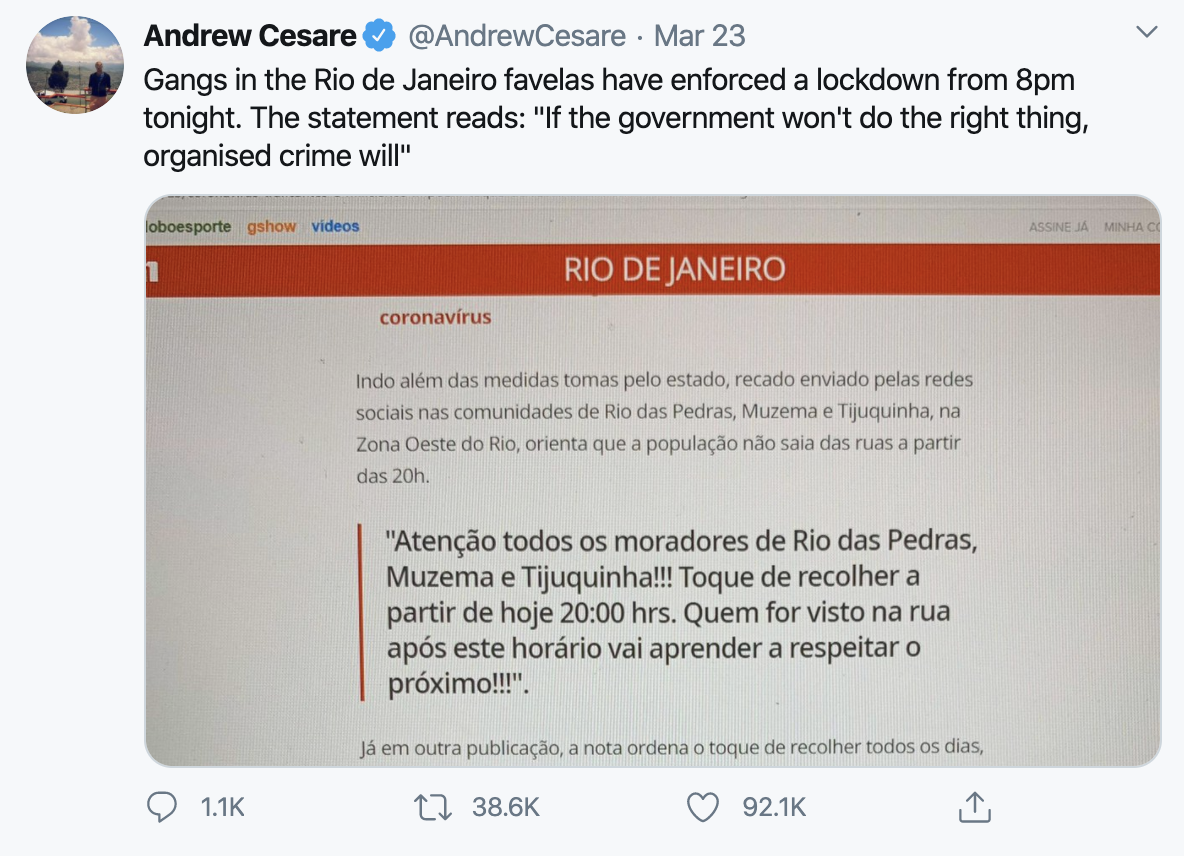
The clue for anarcho-capitalist state-sceptics that this is a genuine shift in social priorities is that even organized criminal gangs are willing to enforce social distancing. You do not have to believe that the state itself is legitimate to see that the need for social distancing is sufficiently morally compelling that it can be enforced absent free agreement, just as one does not need free agreement to exercise a right to self-defense.

Not every restriction is going to be justified, although erring on the restrictive side makes sense while uncertainty about the spread of infection persists. Ultimately, restrictions have to balance genuine costs with plausible benefits. But rejecting restrictions on a priori grounds does not cohere with libertarian principles. Right now, our absolute liberties extend to the right to be alone. Everything else must be negotiated under uncertainty. Someone else’s life, even two-weeks or so in the future, is a valid side-constraint on liberty. People can rightfully be made to stay at home if they are fortunate enough to have one. When people have to travel out of necessity, they can be temporarily exempted, compensated or offered an alternative reasonable means of satisfying their immediate needs.

Pandemic responses are beyond Evidence-based Medicine

critical-appraisal-of-randomized-clinical-trials-14-638

John Ioannidis, a professor of medicine at Stanford University, fears that the draconian measures to enforce social distancing across Europe and United States could end up causing more harm than the pandemic itself. He believes that governments are acting on exaggerated claims and incomplete data and that a priority must be getting a more representative sample of populations currently suffering corona infections. I agree additional data would be enormously valuable but, following Saloni Dattani, I think we have more warrant for strong measures than Ioannidis implies.

Like Ioannidis’ Stanford colleague Richard Epstein, I agree that estimates of a relatively small overall fatality rate are plausible projections for most of the developed world and especially the United States. Unlike Epstein, I think those estimates are conditional on the radical social distancing (and self-isolation) measures that are currently being pushed rather than something that can be assumed. I am not in a position to challenge Ioannidis’ understanding of epidemiology. Others have used his piece as an opportunity to test and defend the assumptions of the worst-case scenarios.

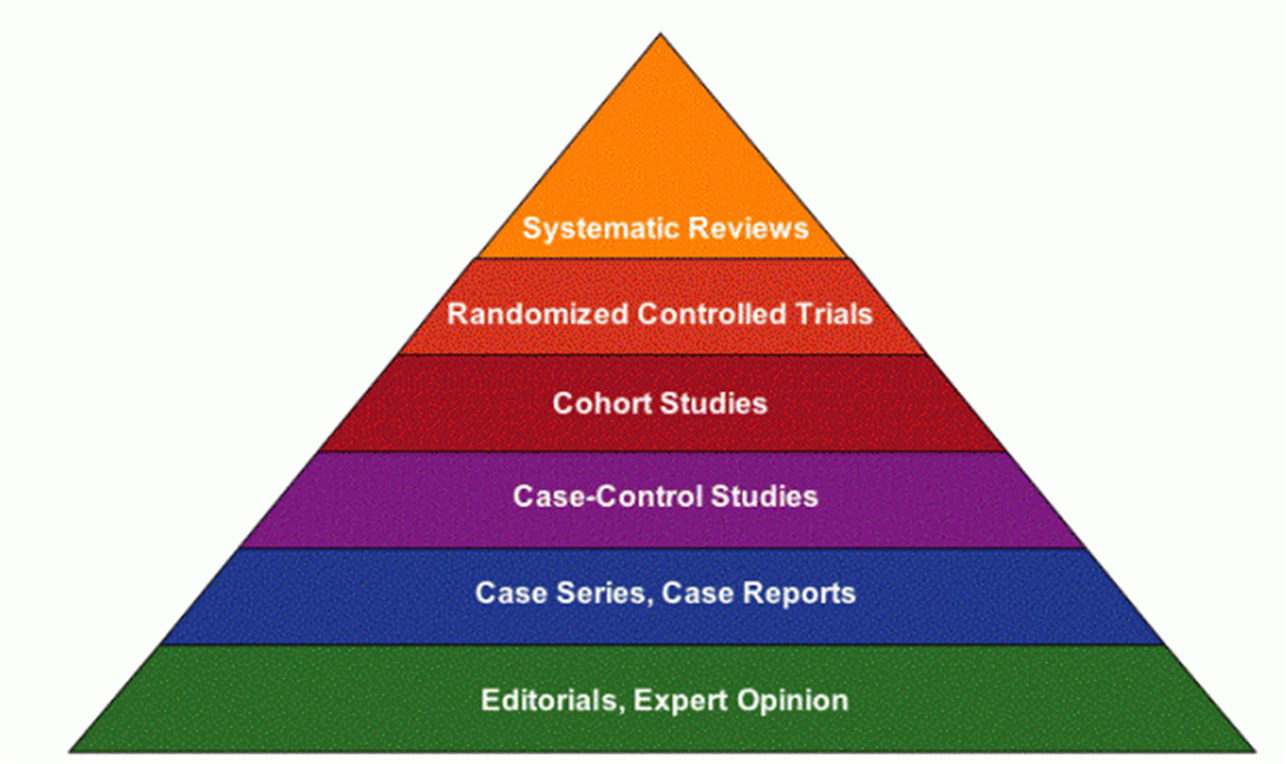
Nevertheless, I can highlight the epistemic assumptions underlying Ioannidis’ pessimism about social distancing interventions. Ioannidis is a famous proponent (occasionally critic) of Evidence-based Medicine (EBM). Although open to refinement, at its core EBM argues that strict experimental methods (especially randomized controlled trials) and systematic reviews of published experimental studies with sound protocols are required to provide firm evidence for the success of a medical intervention.

The EBM movement was born out of a deep concern of its founder, Archie Cochrane, that clinicians wasted scarce resources on treatments that were often actively harmful for patients. Cochrane was particularly concerned that doctors could be dazzled or manipulated into using a treatment based on some theorized mechanism that had not been subject to rigorous testing. Only randomized controlled trials supposedly prove that an intervention works because only they minimize the possibility of a biased result (where characteristics of a patient or treatment path other than the intervention itself have influenced the result).

Picture4

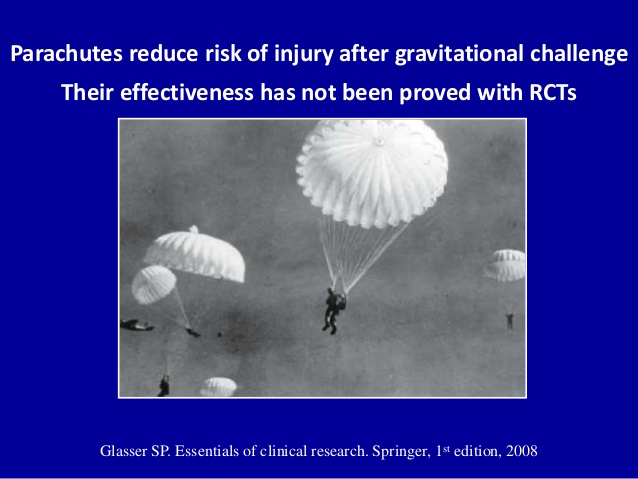
So when Ioannidis looks for evidence that social distancing interventions work, he reaches for a Cochrane Review that emphasizes experimental studies over other research designs. As is often the case for a Cochrane review, many of the results point to uncertainty or relatively small effects from the existing literature. But is this because social distancing doesn’t work, or because RCTs are bad at measuring their effectiveness under pandemic circumstances (the circumstances where they might actually count)? The classic rejoinder to EBM proponents is that we know that parachutes can save lives but we can never subject them to RCT. Effective pandemic interventions could suffer similar problems.

Nancy Cartwright and I have argued that there are flaws in the methodology underlying EBM. A positive result for treatment against control in a randomized controlled trial shows you that an intervention worked in one place, at one time for one set of patients but not why and whether to expect it to work again in a different context. EBM proponents try to solve this problem by synthesizing the results of RCTs from many different contexts, often to derive some average effect size that makes a treatment expected to work overall or typically. The problem is that, without background knowledge of what determined the effect of an intervention, there is little warrant to be confident that this average effect will apply in new circumstances. Without understanding the mechanism of action, or what we call a theory of change, such inferences rely purely on induction.

The opposite problem is also present. An intervention that works for some specific people or in some specific circumstances might look unpromising when it is tested in a variety of cases where it does not work. It might not work ‘on average’. But that does not mean it is ineffective when the mechanism is fit to solve a particular problem such as a pandemic situation. Insistence on a narrow notion of evidence will mean missing these interventions in favor of ones that work marginally in a broad range of cases where the answer is not as important or relevant.

Thus even high-quality experimental evidence needs to be combined with strong background scientific and social scientific knowledge established using a variety of research approaches. Sometimes an RCT is useful to clinch the case for a particular intervention. But sometimes, other sources of information (especially when time is of the essence), can make the case more strongly than a putative RCT can.

In the case of pandemics, there are several reasons to hold back from making RCTs (and study designs that try to imitate them) decisive or required for testing social policy:

  1. There is no clear boundary between treatment and control groups since, by definition, an infectious disease can spread between and influence groups unless they are artificially segregated (rendering the experiment less useful for making broader inferences).
  2. The outcome of interest is not for an individual patient but the communal spread of a disease that is fatal to some. The worst-case outcome is not one death, but potentially very many deaths caused by the chain of infection. A marginal intervention at the individual level might be dramatically effective in terms of community outcomes.
  3. At least some people will behave differently, and be more willing to alter their conduct, during a widely publicized pandemic compared to hygienic interventions during ordinary times. Although this principle might be testable in different circumstances, the actual intervention won’t be known until it is tried in the reality of pandemic.

This means that rather than narrowly focusing on evidence from EBM and behavioral psychologists (or ‘nudge’), policymakers responding to pandemics must look to insights from political economy and social psychology, especially how to shift norms towards greater hygiene and social distancing. Without any bright ideas, traditional public health methods of clear guidance and occasionally enforced sanctions are having some effect.

Screenshot 2020-03-23 at 23.57.13

What evidence do we have at the moment? Right now, there is an increasing body of defeasible knowledge of the mechanisms with which the Coronavirus spreads. Our knowledge of existing viruses with comparable characteristics indicates that effectively implemented social distancing is expected to slow its spread and that things like face masks might slow the spread when physical distancing isn’t possible.

We also have some country and city-level policy studies. We saw an exponential growth of cases in China before extreme measures brought the virus under control. We saw immediate quarantine and contact tracing of cases in Singapore and South Korea that was effective without further draconian measures but required excellent public health infrastructure.

We have now also seen what looks like exponential growth in Italy, followed by a lockdown that appears to have slowed the growth of cases though not yet deaths. Some commentators do not believe that Italy is a relevant case for forecasting other countries. Was exponential growth a normal feature of the virus, or something specific to Italy and its aging population that might not be repeated in other parts of Europe? This seems like an odd claim at this stage given China’s similar experience. The nature of case studies is that we do not know with certainty what all the factors are while they are in progress. We are about to learn more as some countries have chosen a more relaxed policy.

Is there an ‘evidence-based’ approach to fighting the Coronavirus? As it is so new: no. This means policymakers must rely on epistemic practices that are more defeasible than the scientific evidence that we are used to hearing. But that does not mean a default to light-touch intervention is prudent during a pandemic response. Instead, the approaches that use models with reasonable assumptions based on evidence from unfolding case-studies are the best we can do. Right now, I think, given my moral commitments, this suggests policymakers should err on the side of caution, physical distancing, and isolation while medical treatments are tested.

[slightly edited to distinguish my personal position from my epistemic standpoint]

Coronavirus and the BRI

The Corona Virus epidemic has shaken the world in numerous ways. The virus, which first emerged in the Chinese city of Wuhan (Hubei province), has led to the loss of over 12,000 lives globally. The three countries most impacted so far have been Italy (4,825 lives lost), China (3,287 lives lost), and Iran (1,500 lives lost) as of Saturday, March 21, 2020.

While there are reports that China is limping back to normalcy, the overall outlook for the economy is grim, to say the least, with some forecasts clearly predicting that even with aggressive stimulus measures China may not be able to attain 3% growth this year.

The Chinese slow down could have an impact on the country’s ambitious Belt and Road Initiative (BRI). While China has been trying to send out a message that BRI will not be impacted excessively, the ground realities could be different given a number of factors.

One of the important, and more controversial, components of the BRI has been the $62 billion China Pakistan Economic Corridor (CPEC), which has often been cited as a clear indicator of ‘Debt Trap Diplomacy’ (this, some analysts argue, is China’s way of increasing other country’s dependency on it, by providing loans for big ticket infrastructural projects, which ultimately lead to a rise in debts).

The US and multilateral organizations like the International Monetary Fund (IMF) have predictably questioned the project, but even in Pakistan many have questioned CPEC, including politicians, with most concerns revolving around its transparency and long-term economic implications. Yet the Imran Khan-led Pakistan Tehreek-E-Insaaf (PTI) government, and the previous Pakistan Muslim League (Nawaz) (PML-N) government, have given the project immense importance, arguing that it would be a game changer for the South Asian nation.

On more than one occasion, Beijing has assured Pakistan that CPEC will go ahead as planned with China’s Ambassador to Pakistan, Yao Jing, stating on numerous occasions that the project will not be hit in spite of the Corona Virus. Senior officials in the Imran Khan government, including the Railway Minister Sheikh Rashid Ahmed and Foreign Minister Shah Mehmood Qureshi, in an interview with the Global Times, stated that while in the short run Corona may have an impact on CPEC, in the long run there would be no significant impact.

Analysts in Pakistan however, doubt that there will be no impact, given the fact that a large number of Chinese workers who had left Pakistan are unlikely to return. Since February 2020, a number of reports have been predicting that the CPEC project is likely to be impacted significantly.

Similarly, in the cases of other countries too, there are likely to be significant problems with regard to the resource crunch in China as well as the fact that Chinese workers cannot travel. Not only is Beijing not in a position to send workers, but countries hit by COVID-19 themselves will not be in a position to get the project back on track immediately, as they will first have to deal with the consequences of the outbreak.

Some BRI projects which had begun to slow down even before the outbreak spread globally were in Indonesia and Bangladesh. In Indonesia, a high speed rail project connecting Jakarta with Bandung (estimated at $6 billion) has slowed down since the beginning of the year, and ever since the onset of the Corona Virus, skilled Chinese personnel have been prevented from going back to Indonesia. Bangladesh too has announced delays on the Payra Coal power plant in February 2020. As casualties arising out of the virus increase in Indonesia and other parts of Asia and Africa, the first priority for countries is to prevent the spread of the virus.

While it is true that Beijing would want to send a clear message of keeping its commitments, matching up to its earlier targets is not likely to be a mean task. Even before the outbreak, there were issues due to the terms and conditions of the project and a number of projects had to be renegotiated due to pressure from local populations.

What China has managed to do successfully is provide assistance for dealing with COVID-19. In response to a request for assistance from the Italian government, China has sent a group of 300 doctors and corona virus testing kits and ventilators. The founder of Ali Baba and one of Asia’s richest men, Jack Ma, has also taken the lead in providing assistance to countries in need. After announcing that he will send 500,000 coronavirus testing kits and 1 million masks to the United States, Ma pledged to donate more than 1 million kits to Africa on Monday March 17, 2020, and on March 21, 2020, in a tweet, the Chinese billionaire said that he would be donating emergency supplies to a number of South Asian and South East Asian countries — Afghanistan, Bangladesh, Cambodia, Laos, Maldives, Mongolia, Myanmar, Nepal, Pakistan, and Sri Lanka. The emergency supplies include 1.8 million masks, 210,000 test kits, 36,000 protective suits and ventilators, and thermometers.

China is bothered not just about it’s own economic gains from the BRI, but is also concerned about the long term interests of countries which have signed up for BRI.

The Corona Virus has shaken the whole world, not just China, and the immediate priority of most countries is to control the spread of the pandemic and minimize the number of casualties. Countries dependent upon China, especially those which have joined the BRI, are likely to be impacted. What remains to be seen is the degree to which BRI is affected, and how developing countries which have put high stakes on BRI related projects respond.


Never reason from a fatality rate


Richard Epstein has produced several posts and a video interview arguing that the mainstream media is overreacting to the Coronavirus pandemic. Richard understands the potential seriousness of this situation and the proper role of government. He recognises the value of the Roman maxim Salus populi suprema lex esto – let the health of the people be the highest law. In public health emergencies, many moral and legal claims resulting from individual rights and contracts are vitiated, and some civil liberties suspended.

Nevertheless, along with Cass Sunstein, Richard claims that this particular emergency is likely to be overblown. His justification for this is based on data for infection and fatality rates emerging from South Korea and Singapore that appear (currently) under control with only a relatively small proportion of their population infected. This was achieved without the country-wide lockdowns now being rolled out across Europe. Extrapolating from this experience, Richard suggests that the Coronavirus is not too contagious outside particular clusters of vulnerable individuals in situations like cruise ships and nursing homes.

The line of argument is vulnerable to the same criticism that one should never reason from a price change. The classic case of reasoning from a price change is reading oil prices as a measure of economic health. When oil prices drop, it could herald an economic boom or, paradoxically, a recession. If the price dropped because supply increased, when OPEC fails to enforce a price floor, then that lower price should stimulate the rest of the economy as transport and travel become cheaper. But if the price drops because economic activity is already dropping, and oil suppliers are struggling to sell at high prices, then the economy is heading towards a recession. The same measure can mean the opposite depending on the underlying mechanism.

The same logic applies to epidemics. The transmission rate is a combination of the (potentially changing) qualities of the virus and the social environment in which it spreads. The social environment is determined, among other things, by social distancing and tracking. Substantial changes in lifestyle can have initially marginal, but day after day very large, impacts on the infection rate. When combined with the medium-term fixed capacity of existing health systems, those rates translate into the difference between 50,000 and 500,000 deaths. You can’t look at relatively low fatality rates in some specific cases to project rates elsewhere without understanding what caused them to be the rate they are.

Right now, we don’t know for sure if the infection is controllable in the long run. However, we now know that South Korea and Singapore controlled the spread so far and also had systems in place to test, track and quarantine carriers of the virus. We also now know that Italy, without such a system, has been overrun with serious cases and a tragic increase in deaths. We know that China, having suppressed knowledge and interventions to contain the virus for several months, got the virus under control only through aggressive lockdowns.

So the case studies, for the moment, suggest social distancing and contact tracing can reduce cases if applied very early on. But more draconian measures are the only response if testing isn’t immediately available and contact tracing fails. Now is sadly not the time for half-measures or complacency.

I believe that Richard’s estimated fatality rates (less than 50,000 fatalities in the US) are ultimately plausible, but optimistic at this stage. Perversely, they are only plausible at all insofar as people project a much higher future fatality rate now. People must act with counter-intuitively strong measures before there is clear and obvious evidence it is needed. Like steering a large ship, temporally distant sources of danger must prompt radical action now. We will be lucky if we feel like we did too much in a few months’ time. Richard believes people are more worried than warranted right now. I think that’s exactly how worried people need to be to adopt the kind of adaptive behaviors that Richard relies on to explain how the spread of infection will stabilise.

Nightcap

  1. Why didn’t we see this coming? Scott Sumner, MoneyIllusion
  2. Against ageism Irfan Khawaja, Policy of Truth
  3. Expose the young Robin Hanson, Overcoming Bias
  4. Humility, not certainty Victor Davis Hanson, City Journal

Nightcap

  1. What’s the difference between Italy and the rest of the Western world? Scott Sumner, EconLog
  2. Viruses, civil rights, jails, and prisons Premal Dharia, Slate
  3. Is YIMBYism the answer to California’s housing crisis? Apoorva Tadepalli, New Republic
  4. Even Hayek quoted FDR Peter Canellos, Politico